本文へジャンプ

【2階建茅葺き 江戸〜大正の「宿店」/福島市民家園-4】


昨日のブログ記事へはいろいろな反応があって興味深かった。書いている本人も気付かされることが多かったのですが、いちばん大きかったのは「古民家」として現代に移築保存されているような建築は、一般的には建築当時から「立派な」建築と見なされている建物が多く、その当時の一般のひとびとの住んでいた建物とは言えないと深く気付かされたこと。
 住宅建築もこうした見方を加味して考えて行かなければならないとキモに銘じさせられた。同時に歴史・民俗という実像への視線をあらためて考える契機になった。
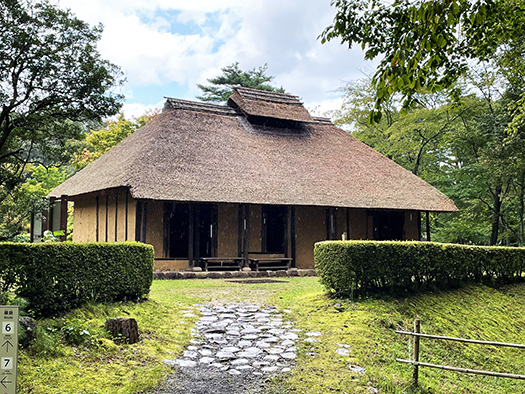
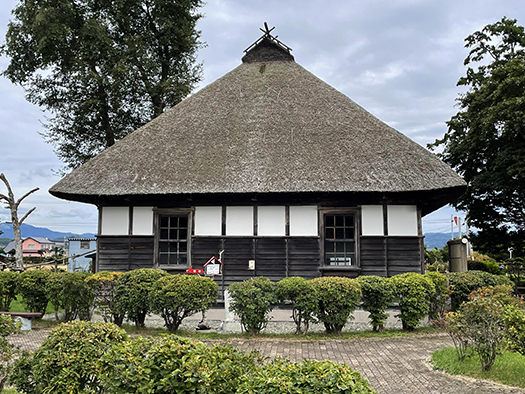
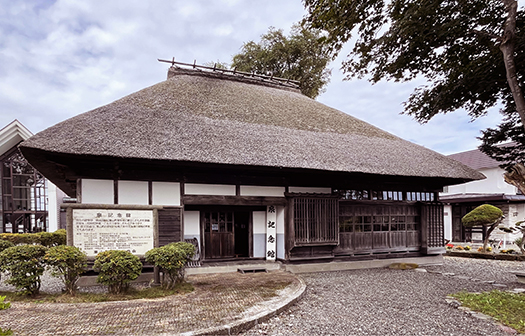
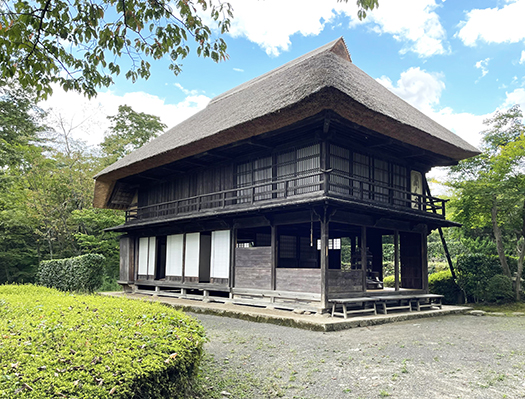
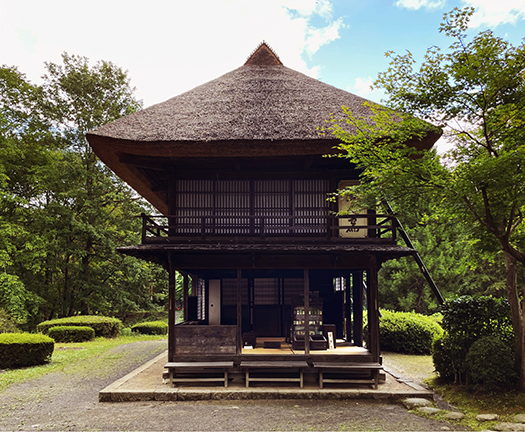
 本日参観するのは内心、初見でビックリさせられた建物。古民家建築の常識的な理解として都市集住型の建築では「瓦屋根」を見る機会が多くそこで2階建ては良くあるけれど、この建物は屋根が茅葺きで2階建てでいわば現代住宅的なプロポーションを見せていたこと。
 名称は「旧筧家宿店」。福島市上烏渡字観音寺14番地に建てられていた。建築年代は江戸末期以前は確実で明治10年代に増築された事実が確認されると。ここは現在でも東北自動車道・福島西ICにほど近く、江戸期〜大正期には旧会津街道と旧米沢街道の分岐点に建っていた。
 その後、万世大路(福島と米沢を結ぶ道路)の開通や鉄道の奥羽本線や岩越鉄道(〜現在のJR磐越西線は福島県郡山から新潟県を結ぶ鉄道)の開通などで旅宿客が激減し営業を停止したのだという。要するに時代の変遷の中での人流の変化によって興亡をみせた商家建築。都市にあったそういった用途の建築はどんどんと不燃化ということで瓦屋根に変化していったのだけれど、東北福島では江戸期由来のいわば街道宿の姿が、残っていたようなのだ。
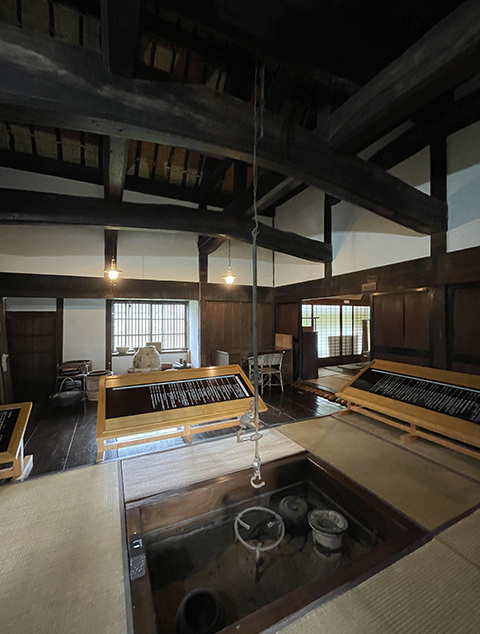
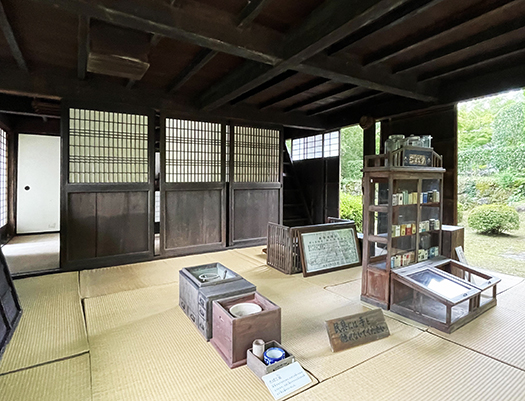
 さらに驚くほどに1階部分が開放的に作られていて、奥の座敷2室との仕切りがある以外の3方向が全開放されている。上部が重量感があってこれでは構造的にどうなのかと不安になるほど。たぶんそういった「目印」感があって、旅宿としてのランドマークだったのか。
 このあたりは江戸期の街道筋旅宿の建築のありように精通していないので不明だけれど、たしかに「目に付く」という機能性は確実にあったに違いない。
 機能性の面では、旅宿開業にあたって自宅主屋の「座敷」を使用するという発想は、この地方の宿店のありようを継承している、と説明書きにある。しかしたぶんこれは日本建築文化に於いて普遍的な発想だったのではないか。実は昨日のブログに感想を寄せていただいたTさんの示唆に富んだご意見。そもそも立派な座敷というのは、日本の住文化の中で「接遇」のために精一杯の「高級感」「おもてなし」を心がけた空間だっただろうという。
 この辺の空間創造の動機部分って、民俗としてもたいへんに興味深い。

English version⬇

2-story thatched building, Edo – Taisho period “Shukumoten” / Fukushima City Minka-en-4
Remnants of a roadside inn from the Edo period. The thatched roof visually appeals to the “sense of relaxation” and the two-story building is a landmark. Appealing to Japanese people who love to travel. The building is a landmark for Japanese people who love to travel.

It was interesting to see the various reactions to yesterday’s blog post. The most significant was the realization that many of the buildings that have been moved and preserved today as “old private houses” are generally considered “magnificent” buildings from the time of their construction, and cannot be said to have been inhabited by ordinary people in those days. Residential architecture should also take this view into account.
 It is important to remember that residential architecture must be considered in light of this viewpoint. At the same time, it was an opportunity for me to reconsider my perspective on the real image of history and folklore.
 The building I will visit today is one that surprised me at first sight. As a common understanding of old private house architecture, it is common to see “tiled roofs” in urban residential architecture, and two-story buildings are common there, but this building had a thatched roof and was two stories high, showing the proportions of a modern residence, so to speak.
 The name of the building is “Kyu Kakei Jyuten” (old Kakei family’s inn). It was built at 14 Kannonji, Kamikarasuwatari, Fukushima City. The construction date is certain to be before the end of the Edo period, and it is confirmed that the building was extended in the 10th year of Meiji era. It is still located near the Fukushima Nishi Interchange on the Tohoku Expressway, and during the Edo and Taisho periods, it stood at the junction of the old Aizu-kaido road and the old Yonezawa-kaido road.
 Later, with the opening of the Manyo Highway (a road connecting Fukushima and Yonezawa) and the opening of the Ou Main Line and the Iwakoshi Railway (the current JR Banetsu Nishi Line connecting Koriyama, Fukushima Prefecture, to Niigata Prefecture), the number of travelers declined sharply and the business was discontinued. In short, merchant house architecture rose and fell with changes in the flow of people over time. While such buildings in urban areas were gradually converted to noncombustible structures with tiled roofs, Tohoku Fukushima still retains the appearance of the highway inns that were originally built in the Edo period.
 The first floor is surprisingly open, and except for the partitions between the two tatami rooms in the back, all three sides of the building are open to the public. The upper part of the building is so heavy that one wonders if this is structurally sound. Perhaps it was a landmark as a traveling inn because of such a “landmark” feeling.
 I am not familiar with the architecture of roadside inns in the Edo period, so I am not sure, but it certainly had the functionality of being “conspicuous.
 In terms of functionality, the description says that the idea of using the “tatami room” of the main house to open a traveling inn was inherited from the innkeepers in this region. But perhaps this was a universal idea in Japanese architectural culture. This is actually a thought-provoking comment from Mr. T, who commented on yesterday’s blog. He said that a splendid tatami room would have been a space in the Japanese residential culture where people tried their best to create a sense of “luxury” and “hospitality” for the sake of “hospitality”.
 The motive behind the creation of such a space is very interesting as a folklore.


【江戸時代中期「土座」の農家住宅/福島市民家園-3】


さて先般取材してきた「福島市民家園」の家その3。やはり住宅系ブログとして実際の住宅取材とその写真を整理していると心理が落ち着く。いろいろなネタは書きますが、やっぱり住宅にテーマを戻すと「ホーム感」が静かに盛り上がって無心になれる。ありがたいなぁと思う。そろそろ仕事人生終了後という友人たちも多いけれど、人によっては満たされない心の空洞を感じていると思われる人もいる。そういったことを考えると、こうして同じテーマに向き合い続けられるのは稀有な幸福。
 この家は福島市大笹生安養寺に建っていた住宅で、なんと江戸時代中期18世紀後半の建築。一昨日まで掲載した北海道栗山の開拓者の家は明治30年代頃の年代なので、約130年前くらい。それと比較してもさらに100年は遡ることになる。栗山の家はこの福島県の北方の隣県、宮城県南部なので、ほど近い位置に立地していたことになる。
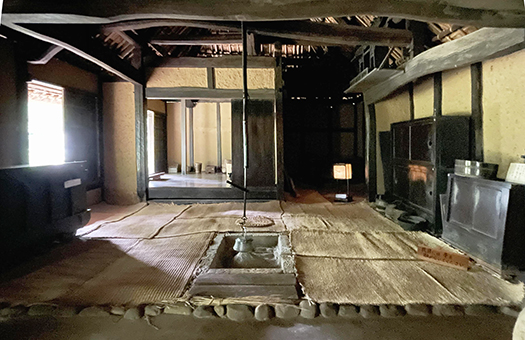
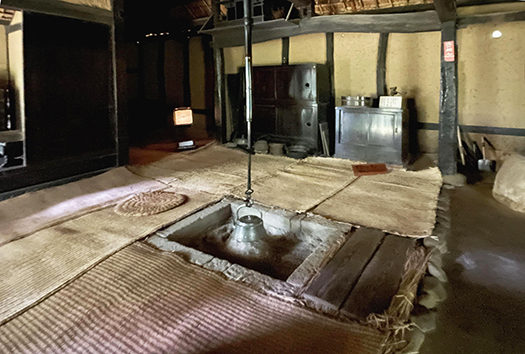
 この家で特徴的なのは床面。室内の床は「土座」と呼ばれるスタイルで、土間の上に筵を敷き並べて床が構成されている。「え?土間か」と驚かされる。寒冷地域の常識として「凍結深度」という冬期間の土壌の凍結の深さを表す数値がある。空気の寒冷が土壌に冷気を蓄積させるのだ。たとえば札幌などでは60cmが土壌凍結の深さレベルでそこまで基礎を下げなければ建物に不同沈下の危険性が高まる。そもそも床下が凍結している土壌と直接接しているということは、寒さが直接人体に伝わってくる。
 しかし同時代、蝦夷地アイヌチセもまた土座なので、囲炉裏による常時燃焼加熱があれば相対的に土壌凍結は解消されていくのかも知れない。土壌にはその地域の年平均気温相当レベルの「地熱」があるので、一定の表面加温があれば、その地熱レベルまで室温上昇させることが可能だったかもしれない。このあたり、現代の家づくりとは違いが大きすぎてあまり実証研究がされていない。
 しかし視覚的には凸凹のある床面空間からはその特異性が伝わってくる。日本語表現に「地下(じげ)人」という言葉があるけれど、この空間からはいかにも語感に直接性が感じられる。生々しい日本人意識、その「社会的格差」の蓋然性が伝わってくる思い。床に「上がる」という言語表現の視覚化。
 江戸期の建築においてすら「床を上げる」だけの資力を持たない農家が一般的だったということだろう。この家屋の中で仏壇などが置かれ座敷として使われた箇所は、床上げされていた。またほかの福島市民家園建築ではこういう床面は見られなかった。床上げできるかどうかということがひとつの貧富の差、空間格差の表現だったと認識できる。
 東北地方では南部とは言え温暖地とは言えない福島でも、一般の日本人の住空間は歴史的にながくこのレベルだったのだろう。江戸期という経済発展期・安定期においてすらこうだったのだから、室町・戦国以前の頃の住空間というものも推して知るべし。

English version⬇

Doza” farmhouse in the mid-Edo period / Fukushima City Minka-en-3
The Doza space testifies to the origin of the Japanese word for “going up” to the floor. I tried to imagine the comfort of this space, which was always heated by a sunken hearth. The house is heated constantly by the sunken hearth.

As a housing blog, I find it calming to organize photos and interviews of actual houses. I write about all sorts of things, but when I return to the theme of housing, the “sense of home” quietly rises and I can be at peace. I am grateful for that. I have many friends who are almost at the end of their working lives, but some people seem to feel a void in their hearts that they cannot fill. Considering this, it is a rare happiness to be able to continue to face the same theme in this way.
 This house was built in Oosasao Anyoji Temple in Fukushima City in the late 18th century, in the middle of the Edo period. The pioneer house in Kuriyama, Hokkaido, which we had posted until the day before yesterday, dates from the 1890s, so it is about 130 years old. Compared to that, it goes back another 100 years. The Kuriyama house is located in the southern part of Miyagi Prefecture, a neighboring prefecture to the north of Fukushima Prefecture, so it was situated in close proximity to the house.
 What is unique about this house is the floor surface. The indoor floor is a style called “doza,” in which the floor is composed of a straw mat laid on top of an earthen floor. One is surprised, “What? Doza? In cold regions, there is a common knowledge called “freezing depth,” which indicates the extent to which the soil freezes during the winter. The coldness of the air causes cold air to accumulate in the soil. In Sapporo, for example, 60 cm is the depth at which the soil freezes, and if the foundation is not lowered to this level, the risk of unequal subsidence increases. The fact that the subfloor is in direct contact with frozen soil means that the cold is directly transmitted to the human body.
 However, in the same period, the Ainu Chise in Ezo also sat on the ground, so if there is constant combustion heating by hearths, the soil freezing level may be relatively lowered. Since the soil has “geothermal heat” at a level equivalent to the annual average temperature of the area, it may have been possible to raise the room temperature to that geothermal level if there was constant surface heating. Not much empirical research has been done in this area because the differences from modern house construction are too great.
 Visually, however, the uneven floor space conveys its peculiarity. There is a Japanese expression “jige-jin” (underground), and this space conveys a directness to the word. The space conveys the raw Japanese consciousness and the probability of its “ascending orientation. The visualization of the linguistic expression of “going up” to the floor.
 It is likely that even in the architecture of the Edo period, farmers generally did not have the resources to raise the floor. In this house, the floor was raised in the area used as a tatami room where a Buddhist altar was placed. This type of floor was not seen in any other Fukushima City Minkaen buildings. The ability to raise the floor is an expression of the disparity between the rich and the poor, and the disparity in space.
 Even in Fukushima, which is located in the southern Tohoku region but not in a warm climate, the living space of the general Japanese population has historically been at this level. Since this was the case even during the Edo period (1603-1867), a period of economic development and stability, one can only imagine what the living space was like during the Muromachi and Sengoku periods.

【オホーツク美幌の「板前農家」そばを食す】


 娘からの情報で、行列の出来ている蕎麦店を教えられた。そういう情報にはたいへん弱いので、さっそくものは試しと食べに行ってみた。ちょうど不動産関係の要件もあって、清田区里塚のセカンドハウスに向かう予定でその途次に店があった。
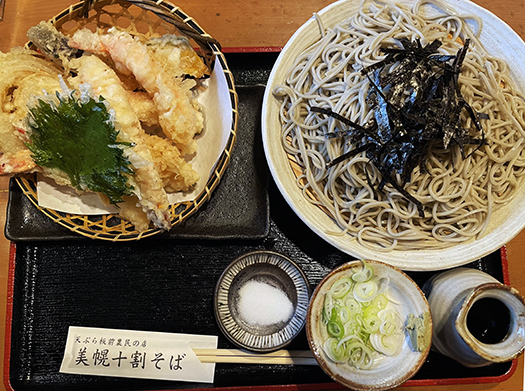
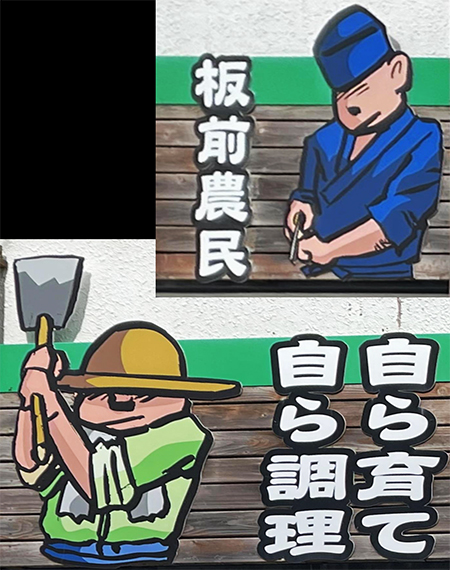
 写真の通り「板前農民」というキャッチで「自ら育て、自ら調理」というコンセプト。行ってみたら11時の開店早々15分後くらいに到着したのだけれど、20人くらいの行列。すでに開店しているのでなかに同数くらいは入っているだろうから、普通は諦めてしまうところだけれど、娘からの情報がアタマにくっついているので、覚悟を決めて待つこと約1時間。ようやく写真のように「天ぷら蕎麦」にありつくことが出来た次第であります。後で確認したら「新そば」の初出日ということで常連ファン大集合だったよう。
 きのうまで空知南部の栗山のことを書いていたので、こういう北海道内での各地域の独自性・風土性に敏感になってきている。「シン民俗」っていう造語をきのう書いたのですが、柳田國男さん的な民俗の派生形態、日本中の多様な地方から北海道という日本民族文化にとって未踏の大地に移住してきた人びとの生き様が、独特の北海道の「シン民俗」を生成させてきていると思う。そんな雰囲気つながりが、この蕎麦店の心意気に感じられていた。
 すっごい量が多いよ、との娘からの情報だったけれど、蕎麦の切り方がけっこう「太麺」だったせいか、お、案外少量じゃないのかと錯誤した(笑)。ところがどっこい、食べ始めてみると蕎麦の山がなかなか減少していかない。大皿に盛りつけてあるのだけれど、目測に相違してどうも「深さ」があるよう。
 で、天ぷらの方ですがこれもエビが5本も揚げてある。そのほかに丸く切ったタマネギ、カボチャ、半切りのナス。これもなんとか野菜優先に平らげたけれど、エビの方は2本がやっと。
 で、カミさんにエビ食の応援を頼んだのですが、彼女は悩んだ末にふつうのざるそばにしたところが、「サービスで」ということで野菜の天ぷらも付いてきていた。う〜む超満腹。
 ふたたび蕎麦に挑み始めたけれど、夫婦とも「ふ〜ふ〜」の混声合唱状態。カミさんも完全にオーバー気味で「もうムリ」。ここで、娘からの情報がふたたびアタマに再生。「残すひとが多いようで、持ち帰り用の容器を手早く出してくれる」とのことだったので頼んだら、すぐに持ってきてくれた。
 わたしも体重管理の成果で10%ほど体重減しているので、食事量はだいぶ落ちてきている。結局、この昼食で昨日の食事は完全終了(笑)。家に戻っても夕食の元気はまったく出てこない。というか立ちんぼでの行列が予想以上に体力消耗で、帰宅後は爆睡〜爆睡という状態。まぁ契約関係の書類確認などでの精神疲労も加わっていたことはありそうですが。
 本日朝になって、「あれ、けっこうウマかったな」とようやく平常が戻って来ています(笑)。

English version⬇

Eating soba at “Itamae Farmhouse” in Bihoro, Okhotsk.
I was expecting to make buckwheat noodles, but I chose to eat buckwheat noodles (laugh). But the training continues. Lunch at a buckwheat noodle restaurant that grows and cooks its own buckwheat noodles. The day ended with a full stomach. …

My daughter told me about a buckwheat noodle restaurant with a long line of customers. Since I am very susceptible to such information, I decided to give it a try and went to eat there right away. I was going to visit a second house in Satozuka, Kiyota-ku, Tokyo, and the restaurant was right next to the house.
 As you can see in the photo, the restaurant is called “Itamae Farmer” with the concept of “grow your own food and cook it yourself. I arrived about 15 minutes after the restaurant opened at 11:00 a.m., but there was a line of about 20 people. Since the restaurant had already opened, there were probably about the same number of people inside, so normally I would have given up, but my daughter’s information was stuck in my head, so I braced myself and waited for about an hour. Finally, I was able to get a bowl of “Tempura Soba” as shown in the photo. Later, I found out that it was the first day of the “new soba” season, so there was a large crowd of regular customers.
 Since I had been writing about Kuriyama in southern Sorachi until yesterday, I have become sensitive to the uniqueness and local characteristics of each region in Hokkaido. I coined the term “shin-minzoku” yesterday, and I believe that the way of life of people who have migrated from various regions of Japan to Hokkaido, a land unexplored by the Japanese ethnic culture, has created a unique Hokkaido “shin-minzoku”. Such a connection with the atmosphere was felt in the spirit of this soba restaurant.
 My daughter had informed me that it was a very large portion of soba, but I was under the illusion that it was not as large as I had expected, perhaps because the soba was cut in a rather “thick” style (laugh). However, when we started eating, the pile of Soba did not seem to decrease. Although it was served on a platter, it seemed to be deeper than I had guessed.
 As for the tempura, there were five deep-fried shrimps. There were also round slices of onion, pumpkin, and half-sliced eggplant. I managed to eat these vegetables first, but I could barely manage to eat two prawns.
 I asked my wife to support me in eating the shrimp, but after much deliberation, she decided to go with the regular zarusoba, which came with vegetable tempura as a “service. She was very full.
 We started to try the soba again, but both of us were in a chorus of “mmmmmmmmmm! My wife was also completely overloaded and said, “I can’t eat any more. At this point, the information from our daughter replayed in our minds. I asked her for a take-out container, and she brought it to me right away.
 I have lost about 10% of my body weight as a result of weight control, so the amount of food I eat has been decreasing considerably. After all, this lunch was the end of yesterday’s meal (laugh). When I returned home, I had no energy at all for dinner. In fact, the line at the stand-up bar was more physically draining than I had expected, and I went to sleep after returning home. Well, I guess I was also mentally fatigued from checking the documents related to the contract.
 Today in the morning, normalcy has finally returned to me, saying, “Oh, that was pretty tasty.


【茅葺きと洋式上下窓・栗山の開拓指導者の家-2】


わが家の北海道入植地の隣町であったのになぜかスルーしてきてしまっていた栗山町。知るほどにその存在の大きさに深く驚かされる。このブログにさまざまに情報をいただく住宅研究者のTさんから、また栗山町についての気付きのあるご連絡。
 この栗山町は開拓以来の挑戦者スピリット旺盛で、農業生産でも革新的な挑戦が継続して、北海道での稲作についても最初期から挑戦を行ってきたのだという。さらに商品作物の最たる存在とも言えるユリ根についても挑戦して大成功を収め、大正期には栗沢町からの「皇室献上品」となっていたのだと。
 この情報に接して、深く「えぐられる」思い。というのは、以前にも書き記したことがあるかも知れませんが、わたしの父母は隣町の「栗沢町」でまるで「農業試験場みたいだ」と人から言われるほどに商品性の高い作物生産に取り組んでいて、そのひとつの成果としてこのユリ根を生産し、それに留まらず、父はそうしたユリ根を周辺地域から集めて、遠く大阪の市場にまで遠距離出荷していたのだ。農家というよりも商家としての家系伝承の血が騒いだのだと思っていたのですが、この栗山で特産品だったことを知るに及んで、いきなりこの時期、大正末から昭和初期当時の地域を覆っていた時代相が、深々と襲ってきたように感じられるのだ。
 いわば家系伝承に近かった父母の活動痕跡が、このような隣村の活動などと連動した活発な人間活動、地域経済活動の一端であったことが明確に浮かび上がってくる。いわば点が線になり、そしてこの時代の北海道人の活発な生き様総体を浮き彫りにさせてくれるのだ。
 そうか、そうやって父母たちは時代の中で必死に生きてきたのだと、あらためて頓悟させられた。今回の栗山探訪、ひとつの「なつかしい」導きであるのかも知れない。
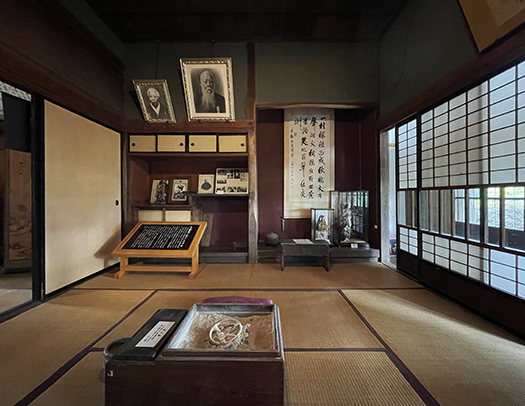
 写真は昨日に引き続き、栗山の開拓主導者・泉麟太郎邸の様子。1枚目は玄関から入ってすぐの居間の様子。玄関はやや引き込んだ位置で、茅葺き屋根が差し掛かっていて、雨や雪から人間を保守する一種の「風除室」的な空間であるけれど、土間空間は板敷き部分を含めて3畳ほどで土間主体の農家住宅ではなく武家の様式だと言える。採暖装置の炉が入口近くに配置されて、外気からひとを迎え入れてくれる。奥の北側に縁があって正面にそれが見晴らせる。野太い梁・柱がいかにも日本的な建築的力感を見る者に与えてくれる。
 そして茅葺き屋根という伝統的建築だけれど、開口部には上下窓が装置されている。こうしたガラス入りの窓は、北海道が日本社会に先駆けた「気密性向上」の象徴。伝統的価値感の中に、明治以来の「進取性」と実用性最優先の北海道住宅らしさが表現されているといえるだろう。

English version⬇

Thatched roof and Western-style upper and lower windows, Kuriyama pioneer leader’s house-2
The thick columns and beams of the Japanese-style structure and the thatched roof give a sense of DNA. There are Western-style exterior fittings such as upper and lower windows with glass. The coexistence of Japanese values and performance rationality. The house is a combination of Japanese values and performance rationality.

Kuriyama is a town adjacent to my family’s settlement in Hokkaido, but for some reason, I had never passed it by. The more I learn about it, the more I am deeply surprised at the magnitude of its existence. Mr. T, a housing researcher who has provided me with a variety of information for this blog, contacted me again with an interesting story about Kuriyama Town.
 He said that Kuriyama-cho has been full of spirit of challenge since its pioneering days and has continued to make innovative challenges in agricultural production, and has been challenging rice cultivation in Hokkaido from the very beginning. They also took on the challenge of cultivating lily bulb, the most important commodity crop, with great success, and in the Taisho Period (1912-1926), it became a “gift to the Imperial Household” from Kurisawa Town.
 I was deeply “gutted” when I came across this information. As I may have mentioned before, my parents were engaged in the production of highly commercial crops in the neighboring town of Kurisawa, which is said by some to be like an agricultural experiment station. He also collected lily roots from the surrounding areas and shipped them long distances to markets as far away as Osaka. I thought it was more in the blood of family lore as a merchant than as a farmer, but when I learned that it was a specialty product in Kuriyama, I suddenly felt a profound attack from the historical phase that covered the area from the end of the Taisho era to the early Showa era.
 The traces of the activities of the parents, which had been passed down from generation to generation, were clearly linked to the activities of the neighboring villages and were part of the active human activities and regional economic activities. The dots become lines, so to speak, and bring into sharp relief the active lifestyles of the people of Hokkaido at this time.
 I realized once again that this is how our parents had lived desperately in this era. This visit to Kuriyama may have been a kind of “nostalgic” guidance.
 The first photo is a view of the living room just inside the entrance. The first photo shows the living room just inside the entranceway, with the thatched roof hanging over the entranceway. A furnace is placed near the entrance to welcome people in from the outside air. There is a porch on the north side of the back of the house, which can be seen from the front. The thick beams and pillars give the house a Japanese architectural power.
 Although the roof is thatched, it is a traditional building with windows above and below the roof. These glass-filled windows symbolize the “airtightness” that Hokkaido pioneered in Japanese society. It can be said that this house expresses the “enterprising” and practicality-first Hokkaido style of housing since the Meiji period in its traditional values.
 

【120年前、明治30年代・栗山の開拓指導者の家】


 きのうからの続き。明治3年5月、戊辰戦争の敗北側・仙台藩の一領域、現角田市から、その士族群が新天地として北海道への入植に旅立った。当初の入植地は室蘭。集団の規模は44戸51名と記されている。婦女子は当面は故地に残して開拓の労働力としての男性たちが主体で、室蘭の輪西地域の原野の伐採、畑起こしに取り組んだのだろうと思われる。以降18年間に渡って牧場・林業・園芸・炭焼き・養蚕さらには「氷」を作って売ったり、さらには製鉄までも手掛けていたという。すごい開墾努力。
 10年経過後の明治14年にはさらに第2陣の開拓民を受け入れて本格的な開拓を進めようとした矢先、明治20年、それらの開拓地に新政府側から「屯田兵」110戸528人が入植し、さらに第2陣として110戸の入植が予定されるに至る。戊辰戦争敗者たちがせっかく開拓した地域を新政府側が「巻き上げる」に等しい。狭隘な輪西地域は共存は困難を極め、やむなく角田からの一統は、新天地をさらに奥地に求めることになった。その無念さは、察するにあまりあるけれど、先人たちはそれも受忍して栗山、当時の「アノロ」原野に向かうことになった。当たり前だけれど、明治初年の権力状況がそのまま反映した背景事情に思いが募る。
 このさらなる移住に際しても、冷静に計画を立案し「夕張開墾企業組合」という合資組織を立ち上げたのだという。事に当たってこういった経済的基盤を整備して財政的メドをも付けていた。移動に際しての最終困難であった夕張川渡河の局面では、アイヌ人による輸送舟はたった1人しか乗られず、いわば人身御供のように乗船したのは、万一のことがあってもその後の開墾労作業に影響の少ない女性が渡ったのだという。その状況を追記するとまことに万感が胸に痛みとして迫ってくる。
 いま室蘭本線という室蘭から岩見沢までの地方線があるけれど、その路地に沿って移動したことになる。
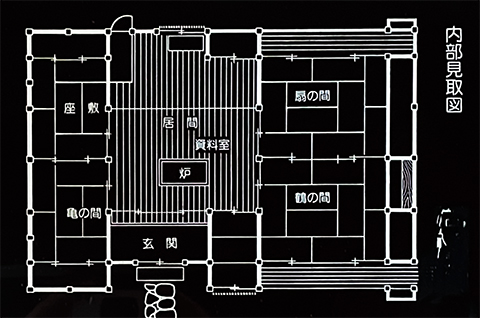
 しかしこの栗山にいまも記念館として残る開拓の主導者・泉麟太郎邸には、いかにもな武家様式が見られるのだと。たしかに間取りには農作業を主とした「土間」がなく、間取り図は南が下の図面だけれど、北側にも縁が設けられている。寒冷対応よりも、格式優先・伝統最優先の「屋敷」建築。

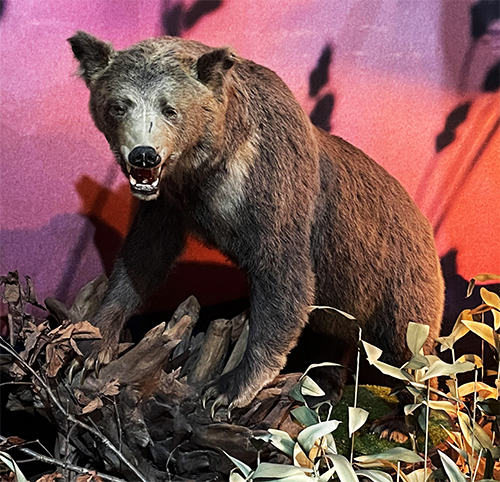
 写真は開拓・開墾作業を示したジオラマで目に飛び込んできたヒグマ。平野部であり木の伐採などを行えば、畑地を獲得することは出来ただろうけれど、木材伐採の斧や農地開墾のクワなどでかれらとも立ち向かって、追い払い、人跡を記していったのだろう。ヤワになった現代人であるわたしにはヒグマと聞いただけで震え上がってしまうけれど、淡々と人間社会領域を拡大していく先人には、まことにアタマが下がる。

English version⬇

120 years ago, in the 30s of Meiji era, Kuriyama pioneer leader’s house
The new Meiji government dealt harshly with the defeated samurai families in the management of Hokkaido. However, they responded with careful and calm pioneering plans and carried them out. It is amazing. The home of a pioneer leader in Chestnut Mountain in the Meiji 30’s.

 Continued from yesterday. In May of the 3rd year of Meiji, a group of samurai from a region of the Sendai clan, now Kakuda City, on the losing side of the Boshin War, left to settle in Hokkaido as a new land. The initial settlement was in Muroran. The size of the group is described as 44 households with 51 members. It is thought that the women and children were left behind for the time being, and the men were mainly used as pioneer laborers, clearing the wilderness in Muroran’s Rinsei area and cultivating the fields. Over the next 18 years, they were involved in ranching, forestry, horticulture, charcoal making, sericulture, making and selling “ice,” and even iron manufacturing. What an amazing effort to cultivate land!
 In 1887, just as they were about to accept the second group of settlers and proceed with full-fledged cultivation, 110 households of 528 “Tondenbei” from the new government settled in those settlements, and another 110 households were scheduled to be settled in the second group. The new government was “taking over” the areas that had been cultivated by the losers of the Boshin War. The narrow Wansei area was extremely difficult to coexist with, and the Kakuda lineage had no choice but to seek a new land further into the country. The regret of the situation is hard to imagine, but the predecessors accepted the situation and headed for Kuriyama, then known as the “Anoro” wilderness. It is only natural, but the background circumstances reflecting the power situation at the beginning of the Meiji period are very interesting.
 In this further emigration, they calmly drew up a plan and established a joint-stock organization called the “Yubari Development and Reclamation Enterprise Cooperative Association. They had also established an economic foundation and made financial preparations for the move. The final difficulty in the migration was the crossing of the Yubari River, where only one Ainu person was allowed to board the boat. When I write about this situation, I feel a pain in my heart.
 Now there is a local line called Muroran Main Line from Muroran to Iwamizawa, and it was along this route that the woman crossed.
 The house of Izumi Rintaro, the pioneer who led the development of Kuriyama, still remains as a memorial museum, and it is decorated in a samurai style. Indeed, there is no “earthen floor,” which was mainly used for farming, and although the floor plan is drawn with the south side down, there is an edge on the north side as well. The “yashiki” architecture prioritizes style and tradition rather than cold weather.

 The photo shows a brown bear that caught my eye in a diorama showing pioneering and land reclamation work. Although it would have been possible to acquire farmland by felling trees in the plains, the bears must have confronted them with axes for cutting timber and with staggers for cultivating farmland, drove them away, and left a human trail behind. As a modern, more experienced person, I shudder at the mere mention of the word “brown bear,” but I am truly impressed by our ancestors’ efforts to expand the human social sphere.


【明治開拓入植、仙台藩角田から北海道栗山へ】


 北海道の中央部の栗山町へは、その西端にある「小林酒造」側からは数回訪問していたのだけれど、今回たまたま、より南側から町中央部に向かったことで、まったく違った印象を持った。
 わたしはこれまでの仕事経験で東北各地と縁が深まっていたのだけれど、そういう身体感覚経験からどうも宮城県南部地域との空気感の親和性を車窓から入ってくる景色に感じていた。こういう感覚はちょっと理知的に、科学的に説明出来る部分とは思えないのだけれど、強くあったと思うのだ。
 きのうのブログでも「なつかしい」感じと書いたけれど、そのあとで徐々にこの栗山町の歴史を掘っていく内に、宮城県角田市とのつながりを知るに及んで、北海道的な「民俗」性のひとつの手掛かりかも知れないと思う気持ちが強まってきている。
 実は別進行している案件に絡んで日本民俗学の祖・柳田國男さんの事跡を探究しているのだが、柳田さんも、また柳宗悦の「民藝運動」でも、北海道はほぼそういう意味での興味を深くは持たれないままに今日社会に至っている。しかし、日本の民の一部である北海道民は、遠く本州以南の故郷の土地を離れて開拓の鍬をこの地でふるってきた人びとの血脈であるのだ。
 そして日本住宅の決定的な弱さである室内気候の安定性を比類なく向上させた実績をすでに獲得してきている。日本人の「生きる力」としての「民俗性」は正統に評価されて然るべきだと、個人的には思ってきている。・・・おっと、少し横道。
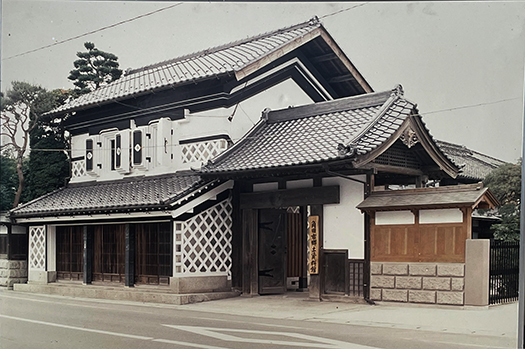
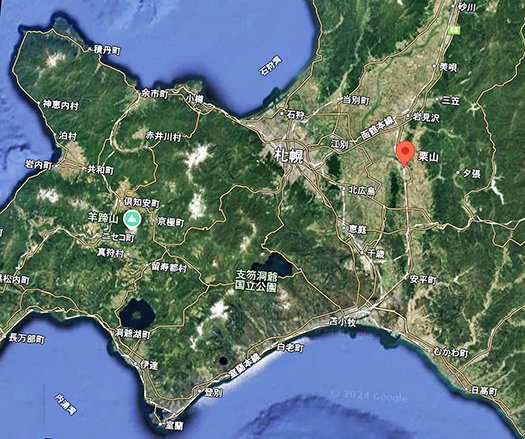
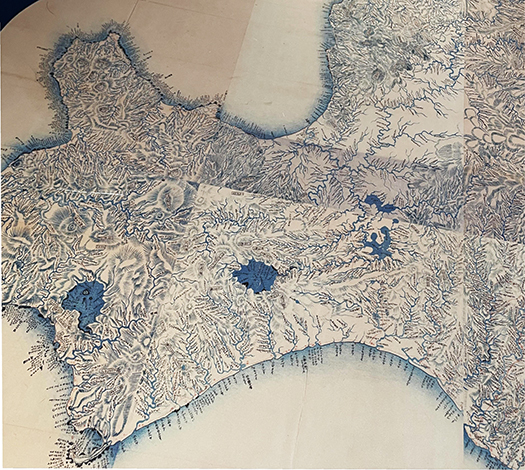
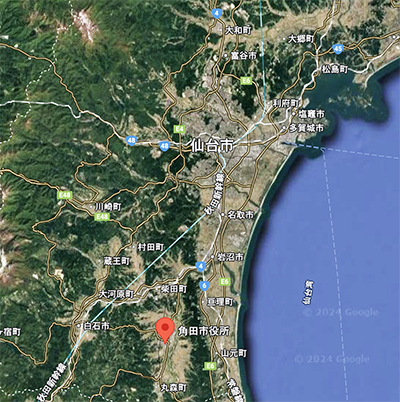
 この栗山には明治期に対新政府との戦いに敗れた仙台藩の内、角田地域を領していた一統が北海道開拓に向かい、最初の地・室蘭からさらに奥地のこの栗山、当時はアノロ原野と呼ばれたこの地に移住して開墾してきた歴史を持っているのだという。上の写真と図は、一度訪問した記憶がある宮城県角田市の郷土記念館建築と、北海道の名付け親・松浦武四郎の探検図、そして現在のGoogleマップ。

Screenshot


 どうもわたしの仕事の個人史的にも重なるので、いろいろと「とっかかり」がたくさんあって興味をそそられている次第。きのうの「ヤリキレナイ川」という数十年ぶりの再発見もあったので、なにか数寄の琴線を強く刺激されているようにも思える。
 祖父以来のわたしの家系の北海道移住はこの栗山町の西北側隣の「栗沢町」で、それもいちばん岩見沢市に近い地域。わが家の視線としては、岩見沢からやがて札幌へと推移して行ったので、どちらかというと栗山町はもっとも縁遠くなってしまっていたのかも知れない。反省しつつ、謹んですこしづつ、掘ってみたいと思っている。

English version⬇

[Meiji pioneer settlement, from Kakuda in the Sendai clan to Kuriyama in Hokkaido.
My family lived in Kurisawa, the northwest neighbor of Kuriyama, and then headed for Sapporo, so my orientation was strongly in the opposite direction. I would like to reflect on this and follow in the footsteps of my predecessors. I would like to follow in the footsteps of my predecessors.

 I had visited Kuriyama Town in central Hokkaido several times from the west end of the town, from the side of the Kobayashi Sake Brewery, but this time I happened to be heading toward the center of the town from a more southerly direction, which gave me a completely different impression.
 My work experience has deepened my connection with the Tohoku region, and my physical sensory experience has led me to feel an affinity with the southern part of Miyagi Prefecture, as I looked out the car window at the scenery. I don’t think this kind of feeling is something that can be explained scientifically, but I think it was strong.
 As I wrote in yesterday’s blog about the “nostalgic” feeling, as I gradually dug into the history of Kuriyama, I came to know about its connection with Kakuda City in Miyagi Prefecture, and I began to feel that it might be a clue to the “folk” character of Hokkaido.
 In fact, I have been exploring the history of Kunio Yanagida, the founder of Japanese folklore, in connection with another ongoing project, but neither Mr. Yanagida nor Muneyoshi Yanagi’s “Mingei Movement” have been deeply interested in Hokkaido in that sense, until now. However, the people of Hokkaido, who are part of the Japanese people, are descended from people who left their homelands far south of Honshu and wielded the plow of pioneering in this land.
 And they have already achieved an unparalleled improvement in the stability of the indoor climate, a critical weakness of Japanese housing. Personally, I have come to believe that “folklore” as the “power of life” of the Japanese people should be legitimately evaluated. Oops, a little digression.
 Kuriyama is said to have a history of cultivation by a line of the Sendai clan that was defeated in a battle against the new government in the Meiji period (1868-1912), and which had taken possession of the Kakuda area, and moved from Muroran, their first settlement, to Kuriyama, then known as the Anoro Plains. The photos and diagrams above show the architecture of the local memorial museum in Kakuda City, Miyagi Prefecture, which I remember visiting once, the exploration map of Takeshiro Matsuura, the godfather of Hokkaido, and the current Google map.

 I am intrigued by the many “triggers” for my interest, as they overlap with the personal history of my own work. Yesterday, I rediscovered the “Yarikirenai River” for the first time in several decades, so it seems to me that I am being strongly stimulated by a few old heartstrings.
 My family’s first immigration to Hokkaido since my grandfather was to Kurisawa-cho, the northwestern neighbor of Kuriyama-cho, and the area closest to Iwamizawa City. My family’s sightline has shifted from Iwamizawa to Sapporo, so Kuriyama-cho may have been the furthest away from my family’s heart. With regret, I would like to dig a little deeper.

【ついに発見 伝説の「ヤリキレナイ」川】


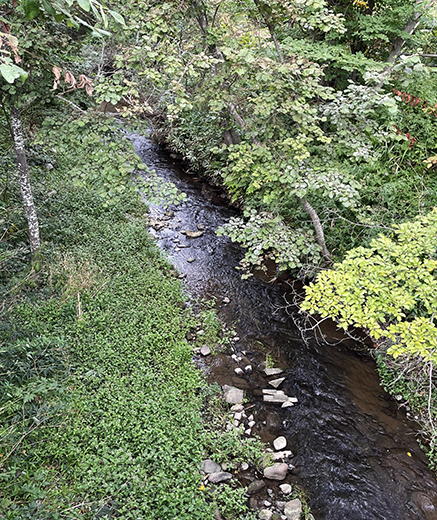
子どもの頃から、北海道の川の名前で「ヤリキレナイ」川というのがあるということは聞いていた。子どもたちの耳に大人たちの「ヤリキレナイ」という言葉に込められた独特の厭世感情を感じて、ああ人生にはなんてイヤなことがあるんだろうと、恐れおののくこころを抱いていた。
 そういう大人的なイヤイヤ感を刺激する「川」というのは、なんという怖ろしい川なのかと想像力を掻き立てられ続けてきた。
 昨日はカミさんと最近よく野菜類を買い出しに出掛ける北広島市のお隣の長沼町・道の駅へ。またまたコールラビとか、ソー麺カボチャ、収穫期のタマネギ大量買いなどを楽しんでおりました。野菜中心の食事を心がける人間でも最大の楽しみは食なので、せめてもこういう楽しみを持つと幸せを感じさせてくれる(笑)。野菜のバラエティに目覚めると、これまた奥が深いのです。
 で、長沼からカミさんの発案で隣接の栗山町の日帰り温泉に向かった次第。カーナビに入力して向かったのですが、北海道生まれ育ちのわたしたちにも、まわりの風景がちょっと違う。なんか無性に「なつかしさ」に満ちているけれど、車窓からの風景感が新鮮。
 到着してからも、栗山のJR駅(苫小牧から岩見沢まで)の路線も乗ったことがないことに気付いた。ということで一種の迷宮に迷い込んだ感があって、栗山町の歴史資料館にまで探訪してしまっていた。これは面白い新発見。「いいね、こういうの」ということで高齢者のあらたな楽しみ領域発見になった。
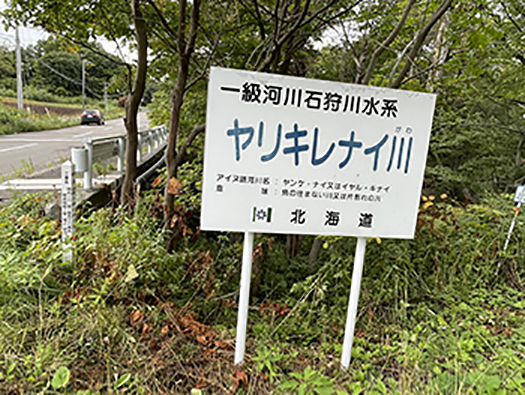
 ・・・その「探訪結果」についてはまたにして、その後カーナビに自宅を目的地として登録し、帰り道を走り始めた。栗山町から江別東の高速ICを目指して走り始めて十数分、上の写真のような「案内板」と遭遇してしまったのであります。「おお」
 さっそくクルマを降りて(カミさんは無関心に車内残留)写真撮影などをしていたのであります。
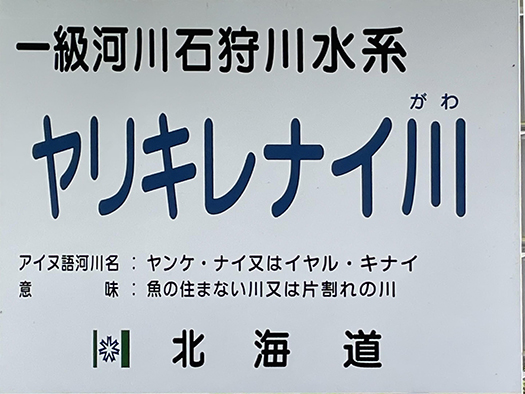
 ふつうはWEB検索などをかけて疑問点は解決することができますが、この「ヤリキレナイ」川についてはこの案内板ではじめて少年期からの疑問点が解決してくれた。アイヌ語の「ヤンケ・ナイ、またはイヤル・キナイ」が直接の語源だそうで、「魚の住まない川、または片割れの川」という意味。さらに片割れの川という意味は「近くに流れる由仁川と双生児の片割れ」ということだそうです。
 しかしイヤル・キナイという言葉からは「やる気がない」とも受け取れそうでいよいよ面白い。こういうアイヌ語に、やりきれないという日本語を宛てたのも秀逸。「北海道の民俗」を志向しているわたしには、こういったユーモア精神はひとつの手掛かりとも思えている次第です。さてどうかなぁ・・・。

English version⬇

Finally discovered: The legendary “Yarikirenai” river.
The river that bears the pessimistic murmurings of adults who sigh, “No, no, I can’t do it anymore. We finally step into the reality of the fear in children’s hearts. A gentle murmur. A gentle murmur.

Ever since I was a child, I had heard that there was a river in Hokkaido called “Yarikirenai” river. As a child, I felt the peculiar pessimistic feeling that adults put in the word “yarikirenai” in my ears, and I had a fearful feeling in my heart that, oh, what an unpleasant thing there is in life.
 The “river” that stimulates such a sense of dislike in adults has always stirred my imagination as to what kind of a scary river it is.
 Yesterday, my wife and I went to a roadside station in Naganuma, a town next to Kita Hiroshima City, where we often go shopping for vegetables these days. We enjoyed buying kohlrabi again, somen squash, and a large quantity of onions in the harvest season. Even for those of us who try to eat a vegetable-based diet, the greatest pleasure is food, so at least having this kind of pleasure makes me feel happy (laughs). When you wake up to the variety of vegetables, it is also very deep.
 So, at my wife’s suggestion, we left Naganuma for a day trip to a hot spring in the neighboring town of Kuriyama. We entered the information into the car navigation system and headed there, but even for those of us born and raised in Hokkaido, the scenery around us was a little different. It was filled with a sense of nostalgia, but the scenery from the car window was fresh and new.
 After arriving at the station, we realized that we had never ridden the JR line in Kuriyama (from Tomakomai to Iwamizawa). This gave me a sense of being lost in a kind of labyrinth, and I even ended up exploring the Kuriyama Town History Museum. This was an interesting new discovery. This was an interesting new discovery for the elderly.
 After that, I registered my home as my destination in the car navigation system and started driving home. Ten minutes after I started driving from Kuriyama-cho to the highway IC of Ebetsu-higashi, I came across the “information board” as shown in the photo above. Oh!
 I immediately got out of the car (my wife remained indifferently in the car) and started taking pictures.
 Usually, I can solve my questions by searching on the web, but this information board was the first time for me to solve my questions about the “Yarikirrenai” River since I was a young boy. It is said to be directly derived from the Ainu word “yanke nai, or Iyarukinai,” meaning “a river where no fish live, or a river with one half. Furthermore, the meaning of “one half of a river” is said to mean “one half of a twin to the Yuni River that flows nearby.
 However, it is interesting to note that the word iyar kinai can also be taken to mean “unwillingness to do something. It is also excellent that the Japanese word for “unwillingness” was added to the Ainu word. As I am interested in the “folklore of Hokkaido,” this kind of humorous spirit is one of the clues I am looking for. I wonder how it will turn out….

【少年期妄想〜蝦夷地石狩川「ゴジラ」雲】


 昨日受診して教えられたまま投薬を受け、大人しくしています。おかげさまで喉の痛みもキレイさっぱりと消えて、出張取材の疲れも徐々に消えてきて、ゆとりが生まれてきました。
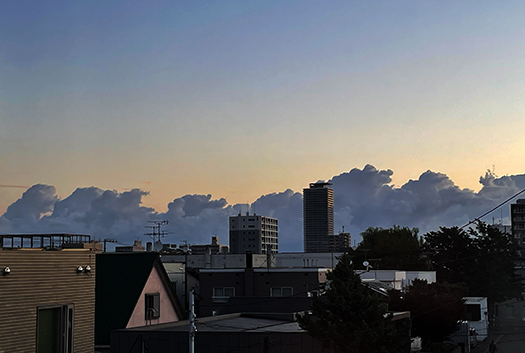
 「ゴジラ雲」について先日ちょっと書いたのですが、個人的には少年期の記憶の大海のなかにさまざまなその表情が残っていて、いつも脳内に残響してくる光景。一昨日あさ、ふと気付いてわが家の3階から遠望を撮影してみたのが、上の写真。
 わが家は、石狩平野の南方山岳地帯を背にして、まっすぐにアジア大陸・ロシア方向をにらむ地理配置にあたる。朝方の風景で画面右側が東で、左が石狩川河口方面にあたる。札幌からこの石狩川の流路方面を見晴らすとこういった「雲」の表情が日常的に見られるのですね。
 日本海方向からの「偏西風」が吹き流れていて、石狩川の水流から立ち上る上昇気流・水蒸気に接触することで、流路に沿った雲がごらんのように発生するのだと思います。
 ちょうど少年期に観ていた映画「ゴジラ」のような造形のこうした雲にこころが吸い取られていた。
 イマドキは秋の訪れを感じさせるような、やや清涼感のある大気のなかをゴジラの「行進」がゆったりと表れる。いまは地元の三角山のふもとに近い位置から見ているのですが、少年期にはほぼ同じ方向で、北大植物園の西南側から樹木越しにこのようなゴジラ雲が行進していた。
 まだ150年ほどの時間しか経過していない北海道ですが、今後とも日本人がこの地で暮らしていくとき、いわゆる「民俗」として、こうした雲形の光景というのはそのテーマ素材を提供するのではないだろうか、と夢想することがあります。ちょうど関東平野で「坂東太郎」という雲形がある「民俗」のコアになっていることともつながる可能性がある。
 そういうことが民族史の中に根付いていくとすれば、桃太郎やカチカチ山みたいな民俗伝承性を持ったわかりやすいストーリーが必要かも知れないけれど、現代社会でそういう機縁があるとは思えない。現代人は現代人的なスタイルで、そういった「伝承性」に挑戦していく必要があるのかもしれない。
 案外この写真のような背景のなかでSFとしてのゴジラを実際に歩かせる、ということが民俗に永続していくのにキャッチーであるかも知れない。そんな突き抜けたような発想力が、1世紀くらい経過したら北海道らしい民俗性として評価されるかも知れない。地元民からそういう発想が生み出されてこないモノだろうか、と期待している。妄想だけれど(笑)。

English version⬇

Boyhood Delusion – Ishikari River “Godzilla” Clouds in Ezochi
This is a delusional version of the Nodo-Ache Akari. How about the movie Godzilla rampaging through such a photographic background? A battle between humans and Godzilla like Momotaro (laughs). …….

 I went to see the doctor yesterday, received medication as I was taught, and have been quiet. Thanks to this, the sore throat has gone away clean and clear, and the fatigue from the business trip interview is gradually disappearing, giving me a sense of relaxation.
 I wrote a little about “Gojira Clouds” the other day, but personally, I still remember the various faces of Gojira Clouds in the ocean of my boyhood memories, and it is a scene that always reverberates in my brain. The day before yesterday morning, I suddenly realized that I had taken a distant view from the third floor of our house.
 Our house is located against the southern mountainous area of the Ishikari Plain, with the Asian continent and Russia in the distance. In the morning scene, the right side of the picture is to the east, and the left side is the mouth of the Ishikari River. When we look out from Sapporo toward the Ishikari River, we can see this kind of “cloud” expression on a daily basis.
 I believe that westerly winds from the Sea of Japan blow and flow along the Ishikari River, and when they come into contact with the updrafts and water vapor rising from the water flow of the Ishikari River, clouds along the flow path are generated, as you can see.
 My heart was absorbed by these clouds, which were shaped like the movie “Godzilla,” which I had just watched as a boy.
 In the present day, Godzilla’s “march” slowly appears in the slightly cooler atmosphere that reminds us of the coming of autumn. Now I am watching from a position near the base of the local Triangle Mountain, but in my boyhood, in almost the same direction, such a Godzilla cloud was marching through the trees from the southwest side of the North University Botanical Garden.
 Although only about 150 years have passed in Hokkaido, I sometimes dream that when Japanese people continue to live here in the future, such cloud-shaped scenes may provide thematic material for their so-called “folk customs. This may be connected to the fact that in the Kanto Plain, “Bando Taro” cloud formations are the core of a certain “folk custom.
 If such a thing were to take root in the history of a people, it might be necessary to have an easy-to-understand story with folkloric traditions like Momotaro or Kachikachiyama, but I don’t think such an opportunity exists in modern society. Perhaps it is necessary for modern people to challenge such “folklore” in a modern style.
 It may be a catchy idea to make Godzilla actually walk as science fiction against the background of this picture, which will be perpetuated in the folklore. Such an out-of-the-box idea may be appreciated as a folklore characteristic of Hokkaido after a century or so has passed. I am hoping that the local people will come up with such an idea. It is just a fantasy (laughs).


【喉痛で病院へ。「咽喉頭逆流症」との診断】


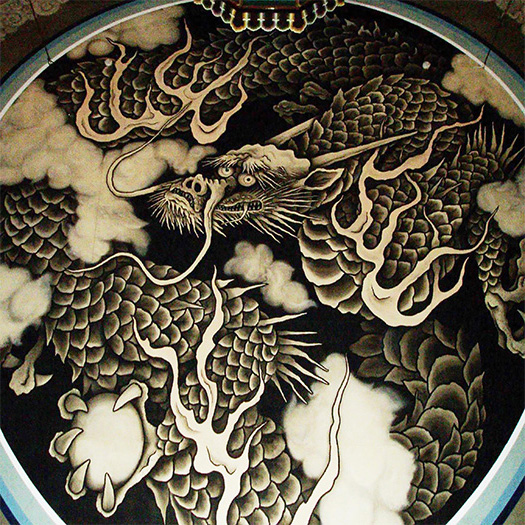
 写真は本文とはまったく関係ありません(笑)。日本の宗教画の定番、天井画として一般的な龍の図柄ですね。わたしの心象願望としては、病魔退散、であります。
 昨日朝、のどの違和感があって寝ていられず、早々に起き上がっていた。寝ている姿勢ではどうしてものどの違和感が昂進する。しかし眠たいので、夜中に2度ほど起きてうがいしてまた寝る⇒またのどの違和感という繰り返しでした。
 まぁ最後は起きていればのどの違和感は静まるので、やむなく早めに起きていることにして、デスクワークに向かって午前中にメドを付けてから病院へ。いくつかの専門病院が集まっているビルの中、わたしの「かかりつけ医」の糖尿病専門医さんにとりあえず向かったのですが、向かいに「耳鼻咽喉科」があって数回診てもらったことがあることを思い出して、今回はこっちに直行することに。
 のどの痛みということで、やはりコロナ云々の可能性・疑いへの対応で玄関に入る前にいったんは電話をして、その上で承諾されてから入室。
 通常の「予約客」のみなさんの合間を見てようやく診察していただけることに。状況説明をした結果、すぐに「カメラ」での詳細診断。麻酔をしてから10分後ほどで処置されて患部の詳細な画像も見ることが出来た次第。
 耳鼻科専門のお医者さんの見立てで「咽喉頭逆流症」という疾患名。「より深刻な病変、たとえば喉頭ガンなどの疑いはまったくありません。要するに胃酸の逆流症で、寝ている姿勢で発症する」との説明。あまり重度の病変ではなく、投薬などの治療で十分に改善が期待できるとのこと。
 「逆流症」については身の回りの同年齢層で非常に多くのひとが発症しているので、かなり内容は聞き及んでいる。そうか、最近の体調の優れないときの原因は、この疾患に起因しているのかも知れないと類推が拡張していた。
 たまたま発症前の夕食でちょっと辛めの中華の料理を食べて、その最中から鼻水がけっこう出ていたのですが、きっかけになった可能性があると気付いた。そして食後ほどなく就寝するというライフサイクルだと、より発症しやすいことも理解できた。投薬以降、けさはまったく違和感は解消されております。高齢期を迎えて、体調管理にはより注意深く対処していかねばと再度思い知らされました。ということで本日は、まったくの個人的備忘録ブログにて失礼。
 一方できのうは中国で悲惨な事件、家族が付き添って登校中の日本人少年が殺害される異様な事態。戦後のニッポン社会そのものが問われるような胸騒ぎがしてきています。・・・

English version⬇

[Went to the hospital with a sore throat. Diagnosis of Reflux Disease
Many people around me suffer from this gastric acid reflux disease. It is not a more serious disease and can be treated by improving lifestyle. I will do my best to rebuild my way of life. ・・・・.

 The photo has nothing to do with the text (laughs). It is a dragon, a common ceiling painting in Japanese religious paintings. My mental image of the dragon is that it is a sign of the end of illness.
 Yesterday morning, I could not sleep because of discomfort in my throat and had to get up early. The discomfort in my throat is always aggravated when I am in a sleeping position. However, I wanted to sleep, so I got up twice in the middle of the night, gargled, and went back to sleep => throat discomfort again, and so on.
 Well, in the end, the throat discomfort would subside if I stayed awake, so I decided to stay up early and headed to my desk to meditate in the morning before going to the hospital. I went to my “family doctor”, a diabetes specialist, in a building where several specialty hospitals are located, but I remembered that there was an ENT across the street and I had seen him several times.
 I had a sore throat, so I called once before entering the front door in response to the possibility/suspicion of corona, and was then allowed to enter the room.
 After I had been admitted, I entered the room and was finally able to see the doctor. After explaining the situation, a detailed diagnosis with a “camera” was made immediately. About 10 minutes after the anesthesia was given, I was able to see a detailed image of the affected area.
 The otolaryngologist gave me the name of “pharyngolaryngeal reflux disease. There is no suspicion of a more serious lesion, such as cancer of the larynx. In short, it is reflux of gastric acid, and it occurs in the sleeping position,” he explained. It is not a very serious lesion and is expected to improve with medication and other treatments.
 I have heard a lot about reflux disease, as many people in my age group have suffered from it. I was beginning to think that this disease might be the cause of my recent poor physical condition.
 I happened to eat a slightly spicy Chinese dish at dinner before the onset of the disease and had quite a runny nose during the meal, but I realized that it could have been the trigger. I also understood that I was more likely to develop the disease if I went to bed shortly after eating. Since the medication, Kesa’s discomfort has been completely resolved. I was reminded once again that I must be more careful in managing my health condition as I enter my old age. So, please excuse me for today’s blog, which is a personal reminder.
 On the other hand, there was a tragic incident in China yesterday, where a Japanese boy was murdered while on his way to school accompanied by his family. I am getting a nagging feeling that the postwar Japanese society itself is being questioned. ・・・・.
 

【桑の木の中の養蚕民家、湧き上がる暮らしパワー】


 さてようやく日常のワークデスクに戻って、いろいろな連絡事項の進捗確認をしていたら、直近のひとつの交信先から返書が届けられていた。どんな返信かと確認したら、なんともありがたい感想とともにこころよい受諾の内容。ほっとひと安心すると同時に、当方の提供した諸資料も内容を深くご理解いただいたことが伝わってくる文面。
 本当に心底がご理解いただけたと感謝。だんだんと伝わってくる心意がありがたい。つくづくと人間のコミュニケーション営為というものに感銘を受けていた。
 そういった主要実務の進行の合間に、粛々と6.43GBもの膨大な今回の取材写真データの整理整頓作業に取り組み始めています。写真整理はわたしの個人的な手法・我流でやっているのですが、このプロセスは当然ながら「ナマデータ」と対話しながらのものになる。
 その撮影時の空気感、自分がそのときに思っていたことの追体験にもなる。なので、なるべく時間を置かずに自分の「空間記憶」を鮮明化させる大きなポイントだと考えています。
 でも、きのう1日で仕掛かり終えた分量は全体の2-3%程度でしょうか。この作業だけでもたぶん1週間程度は掛かりそうであります。でも、住宅取材をながくやってきた人間としては、そのなまなましい「手道具」感が強く感覚させられるものでもあるのですね。
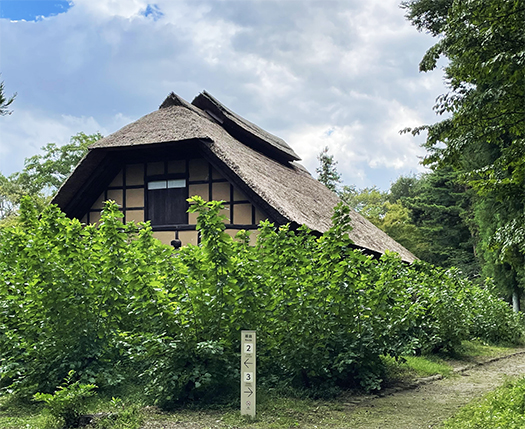
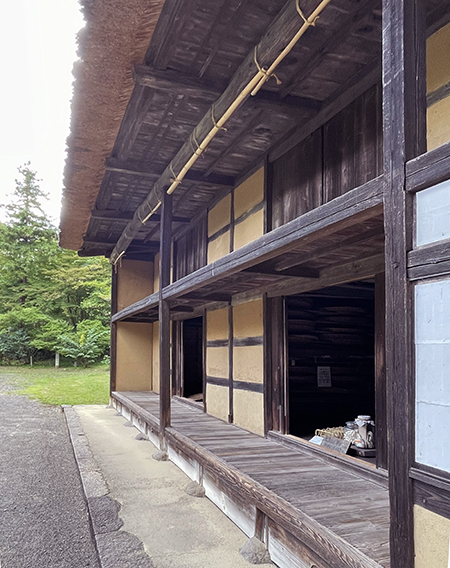
 そういうなかで今回のツアーの口切りとしてこの福島市民家園の住居群はあった次第。最初の家はこの養蚕民家。移築前は福島県伊達市にあった旧小野家住宅。江戸期〜明治期から戦前期まで日本の養蚕業は貴重な外貨を稼ぐメイン産業。欧米、とくにフランスで養蚕が不振に陥ったとき、日本の養蚕業が大発展した経緯がある。その養蚕業でも福島県北部地域は最先進地帯だった。北海道の旭川近郊で養蚕農家の古民家を取材したことがあるけれど、たしかその家もこの福島県地域からの移住者だった。
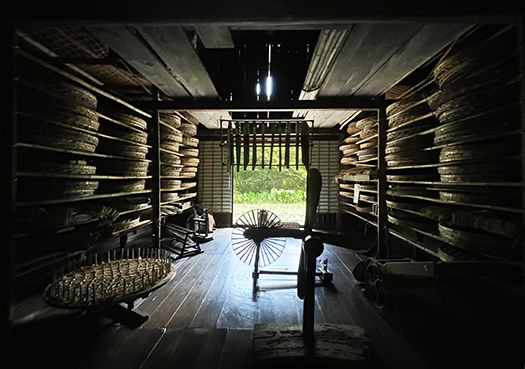
 室内に均質な採光を得るために切妻の屋根をカットさせた半切妻(あづま)屋根であり、屋根裏と中2階も蚕室として使われていた。北海道の家もほぼそっくりの構成だった。その建物が桑の葉たちに囲まれて建てられていて、誇らしく、またあたたかく訪問者を迎えてくれていた。

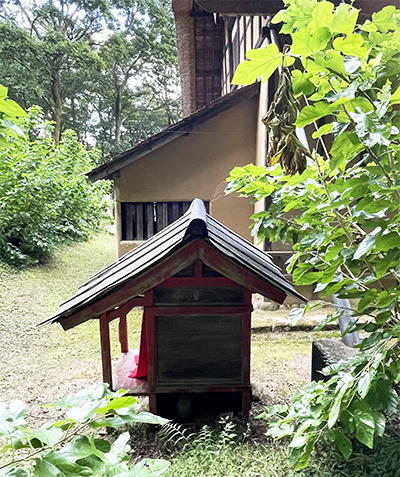
 建築年代は1873(明治6)年。世界の市場経済に参入したての日本社会だったけれど、その生産される生糸の量も品質も、いきなり世界レベルのものが出荷された。極東アジアの果ての島国が世界の列強たちに伍して行けたのは、なによりもこのような優しい雰囲気の中から蚕たちが生み出してくれたのだと考えると、味わい深い。建築としても、いかにも民俗性を重厚に訴求してくる。最後の写真は養蚕の民の「祈り」の表徴。

English version⬇

Sericultural silkworm houses in mulberry trees, the power of life that springs from them.
Sericulture, the largest foreign currency earning industry that supported Japanese society from the Edo period and Meiji period to the prewar period. More than a house, it is an “industrial heritage”. The spirit of our ancestors, the heart and soul of Made in Japan. The spirit of our ancestors, the heart and soul of Made in Japan.

 Finally, I returned to my work desk and was checking the progress of various communications when I received a reply from one of the most recent correspondents. When I checked what kind of reply I received, I found a heartwarming acceptance with a very grateful impression. I was relieved and at the same time, the letter showed that they deeply understood the contents of the materials we had provided.
 We were truly grateful for their deep understanding. I am grateful for the cordiality that is gradually being conveyed to me.
 I was deeply impressed by the appreciation of human communication activities.
 In between the progress of these major tasks, I have started to organize the huge 6.43 GB of photo data from this project. I am organizing the photos in my own way, but this process naturally involves talking to the “real data.
 It is also a way to relive the atmosphere of the shoot and what I was thinking at the time. So I consider it a major point to clarify my “spatial memory” with as little time as possible.
 But the amount I finished working on in one day yesterday was probably about 2-3% of the total. This work alone will probably take about a week. However, as someone who has been covering housing for a long time, I feel a strong sense of the “hand tools” that are used in this project.
 The houses in the Fukushima City Minka-en were the first stop on this tour. The first house was this silkworm farmhouse. Before its relocation, it was the former Ono family residence in Date City, Fukushima Prefecture. From the Edo and Meiji periods to the prewar period, sericulture in Japan was a main industry that earned valuable foreign currency. When sericulture was in slump in Europe and the United States, especially in France, the Japanese sericulture industry made great progress. The northern part of Fukushima Prefecture was the most advanced region in the sericultural industry. I once visited an old sericultural farmhouse near Asahikawa in Hokkaido, and I believe that the family had migrated from the Fukushima area.
 The house had a half-gabled roof that was cut off to allow for uniform lighting inside the house, and the attic and mezzanine floor were used as a silkworm room. The house in Hokkaido was almost exactly the same configuration. The building was proudly and warmly welcoming visitors, surrounded by mulberry leaves.
 The building was constructed in 1873. Although Japanese society had just entered the global market economy, the quantity and quality of the raw silk produced was suddenly world-class. It is fascinating to think that an island nation on the edge of Far East Asia was able to compete with the world powers thanks above all to the silkworms produced in such a gentle atmosphere. As an architectural structure, it also has a profound folkloric appeal.The last photo is a symbol of the “prayer” of the sericultural people.