本文へジャンプ

【徳島剣山斜面・木地師の暮らし② 四国住空間探訪-14】


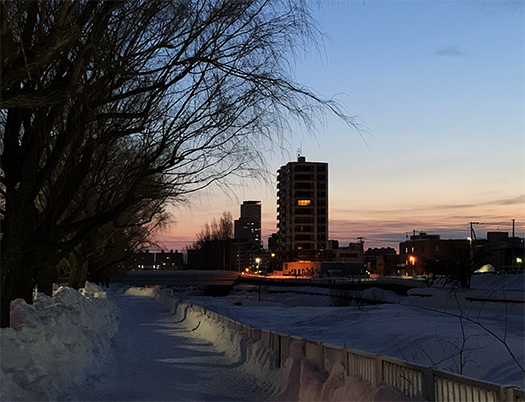
札幌が大雪に見舞われて必死の雪かき作業に追われる中、
世界ではロシアによるウクライナ侵略が公然と行われるおぞましい事態。
ロシアは北海道が隣接して向き合っている国。
こういう侵略国が平然と存在し、隣国にあるのが冷厳たる現実。
推移には目が離せないところですが、この事態がどういう影響を及ぼしていくか
世界は一挙に不透明な領域に入ってきたと思います。
とくにエネルギー問題は相当の影響を受けることは間違いがない。
欧州はロシアのガスパイプラインがエネルギーの生命線。
洋上風力だ、太陽光発電だと将来安定性の不透明な脱炭素に依存を強めた結果、
その不確実性、予測不可能性に翻弄され、その足下を冷酷に計算したロシアは
天然ガスという生命線、生殺与奪権を掌握し露骨な国益貫徹の戦争を仕掛けてきた。
自由主義世界はこのロシアの無法に対してどう立ち向かえるのか、
第2次大戦後の国連体制ではこの国が「常任理事国」だという現実。
戦後という虚構がガラガラと崩壊に向かう可能性も高まる。
自衛が危うい日本の国家体制もはげしく揺さぶられていると言えますね。

ということで落ち着きませんが、どんな時代でも命は繋いでいかなければならない。
四国の住環境探訪シリーズ、淡々と継続していきたいと思います。
きのう書いた「落とし込み構法」の追記です。
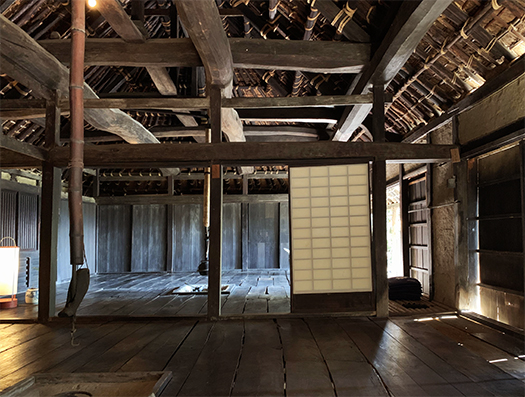
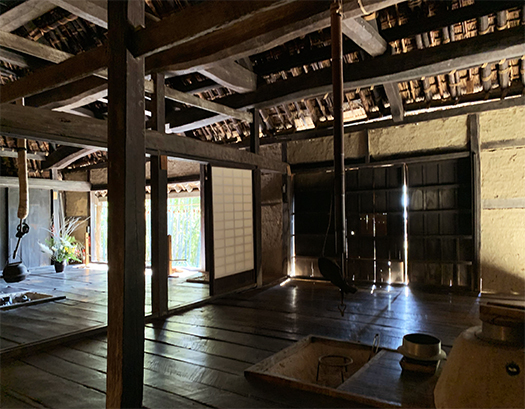
梁や指物に穴を開けて上から柱を落とし込んで固定させており、
「こき」とも呼ばれるこの地方独特の構法。1間毎に柱を立てている。
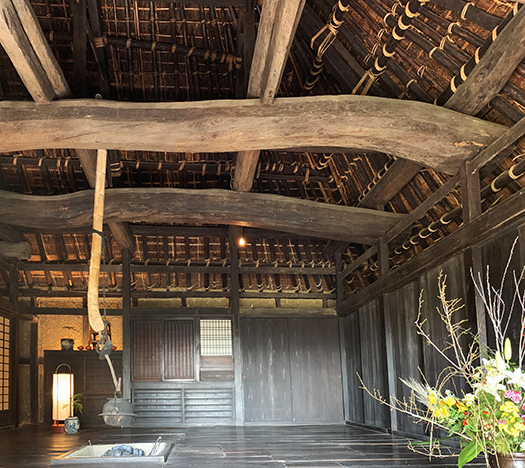
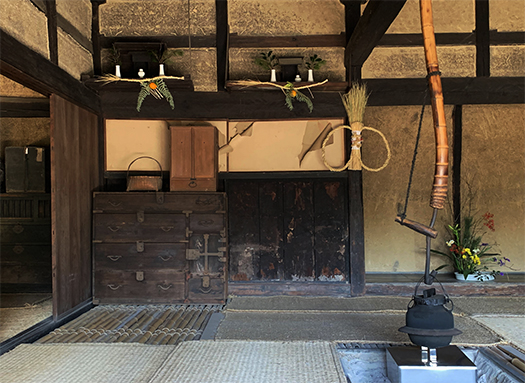
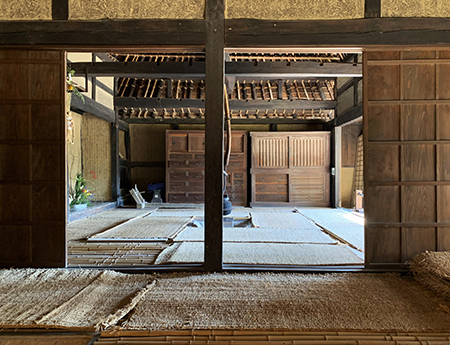
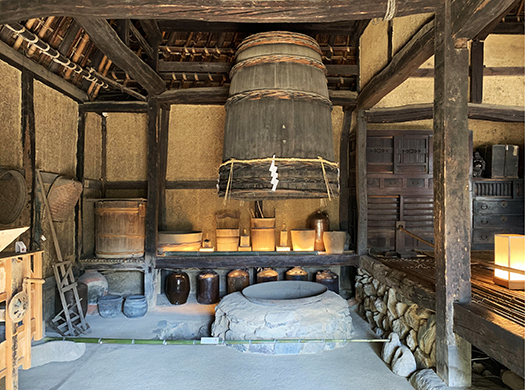
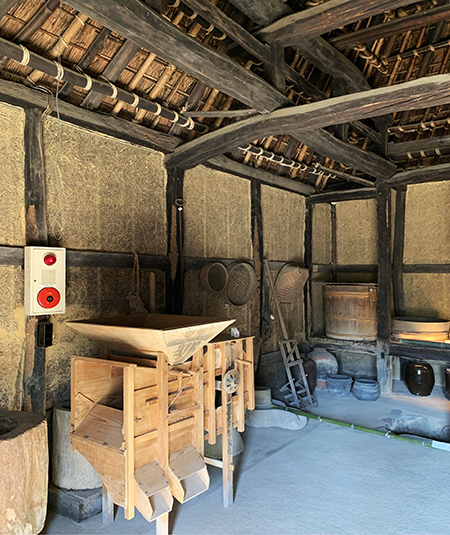
写真上の様子を参照ください。室内壁が無いので梁組を強固にして建物を支える。
その梁も長大で野太いものが使われており豪壮で力強い空間構成。
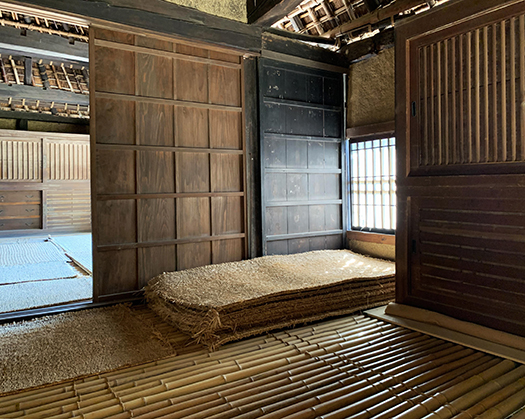
いずれの部屋も壁や天井板が無く屋根裏が丸見えで、構造体が剥き出し。
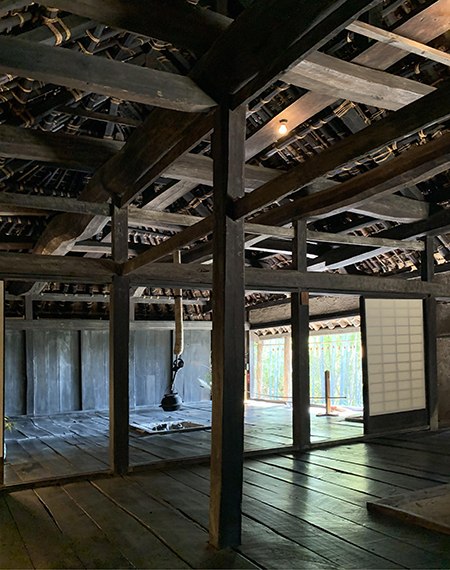
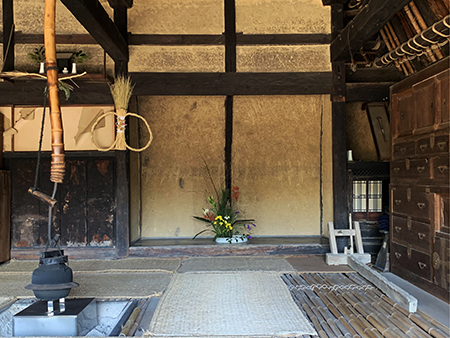
2枚目の写真では右側土間寄り中央にカマドを設けてある。
さらにその火力にプラスして囲炉裏も装置されていて、
居間兼食堂として使われていたようです。
これだけの火力集中ですが、正面に見える板外壁の素寒貧さはすごい。
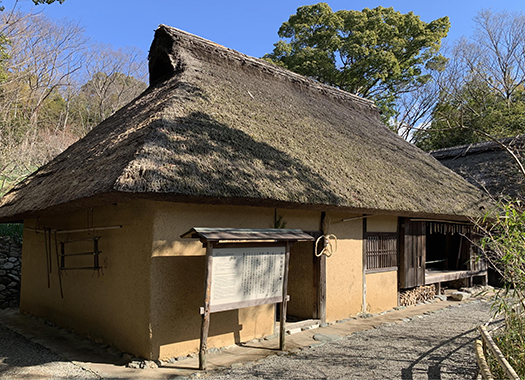
この家は急峻な標高1000m程の急勾配の山間部に建てられたものの移築で、
冬の寒冷に対してこれで立ち向かっていたと考えると怖ろしい。
山間でバイオマス原料は比較的容易に獲得できる環境とはいえ、
暮らしのきびしさは視覚的にも十分に伝わってあまりある。
手前側に寝所スペースがあって、食事後の動線配置もわかりやすい。
暮らしぶりが具体的に見えてくる。
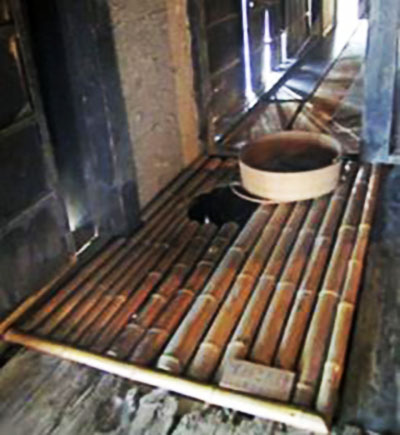
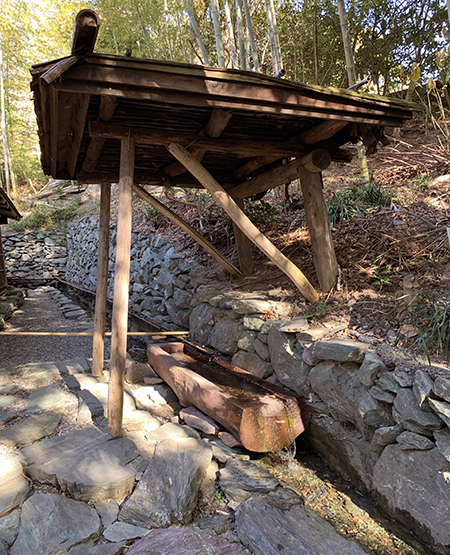
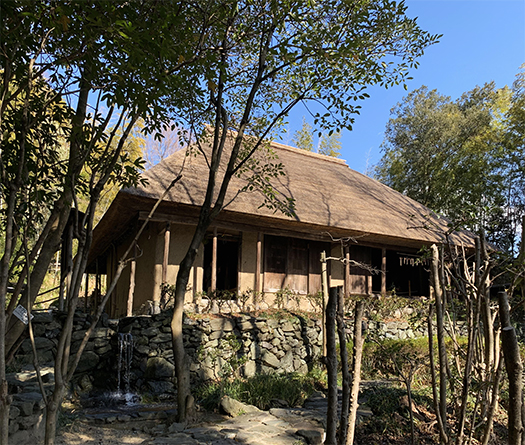
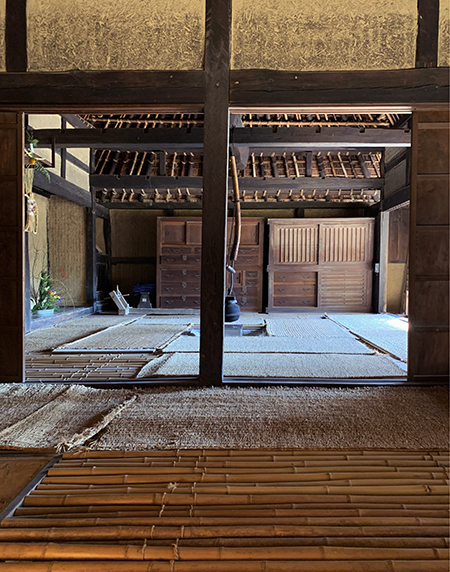
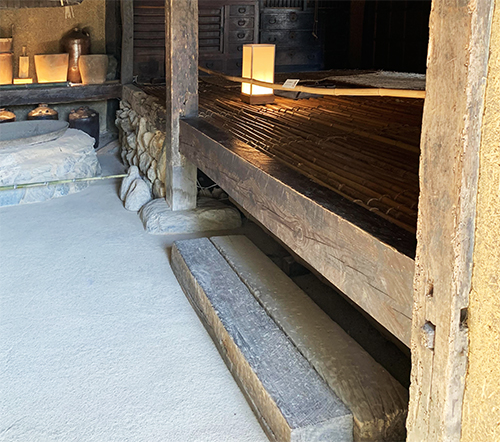
こちらの写真は竹簀の子敷きの「流し」で、
移築された環境でも、対面側の外部には流水が流れていましたが、
あるいは山間の移築前の土地でもそういう環境にあったのかもと思われました。
カマド、囲炉裏、流しと生存装置の配置ぶりを見ると興味深いですね。

English version⬇

[Tokushima Kenzan Slope / Kijishi’s Life ② Shikoku Living Space Exploration-14]
While Sapporo was hit by heavy snow and was busy shoveling snow,
The horrifying situation in which Russia’s invasion of Ukraine is openly carried out in the world.
Russia is a country where Hokkaido faces each other.
The reality is that such an invading country exists calmly and is in a neighboring country.
Keep an eye on the transition, but what kind of impact will this situation have?
I think the world has entered an uncertain territory all at once.
There is no doubt that energy problems in particular will be significantly affected.
In Europe, Russia’s gas pipeline is the lifeline of energy.
As a result of increasing dependence on decarbonization, which is uncertain about future stability in offshore wind power and solar power generation,
Russia, which was at the mercy of its uncertainty and unpredictability, ruthlessly calculated its feet
He has seized the lifeline of natural gas and the right to kill and kill, and has launched a blatant war of national interests.
How can the liberal world confront this Russian lawlessness?
The reality is that this country is a “permanent member” in the UN system after World War II.
There is also a high possibility that the post-war fiction will rattle and collapse.
It can be said that Japan’s national system, whose self-defense is at stake, has been shaken violently.

That makes me uncomfortable, but life must be connected in any era.
I would like to continue the Shikoku living environment exploration series.
It is a postscript of the “drop-in construction method” that I wrote yesterday.
A hole is made in a beam or a joiner, and a pillar is dropped from above to fix it.
A construction method peculiar to this region, also called “Koki”. Pillars are erected every 1 ken.
Please refer to the situation on the photo. Since there are no interior walls, the beams are strengthened to support the building.
The beams are also long and thick, and the space composition is magnificent and powerful.
In each room, there are no walls or ceiling boards, the attic is completely visible, and the structure is exposed.
In the second photo, a kamado is provided in the center near the right side of the soil.
Furthermore, in addition to the thermal power, the hearth is also equipped,
It seems that it was used as a living room and dining room.
This is the concentration of firepower, but the poverty of the outer wall of the board that can be seen in front is amazing.
This house was built in a steep mountainous area with an altitude of about 1000m, but it was relocated.
It’s scary to think that I was facing the cold of winter.
Although it is an environment where biomass raw materials can be obtained relatively easily in the mountains,
The harshness of life is well communicated visually.
There is a sleeping space on the front side, and it is easy to understand the flow line arrangement after meals.
You can see how you lived concretely.

This photo is a “sink” of a bamboo duckboard.
Even in the relocated environment, running water was flowing to the outside on the opposite side,
Or it seems that the land before the relocation in the mountains was in such an environment.
It is interesting to see the arrangement of the Kamado, the hearth, the sink and the survival device.

【落とし込み木組み「木地師」の家① 四国住空間探訪-13】


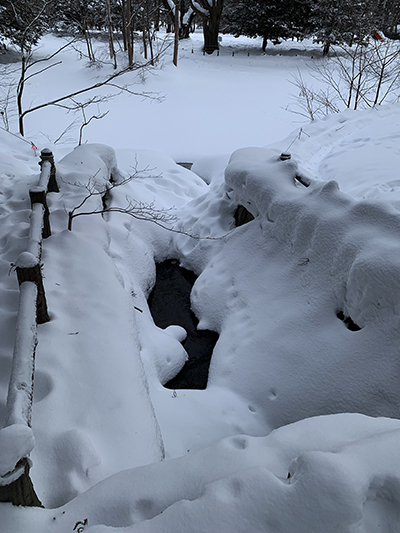
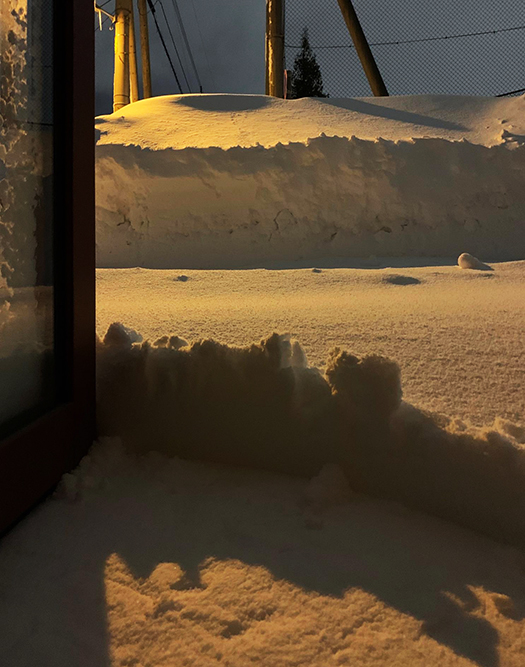
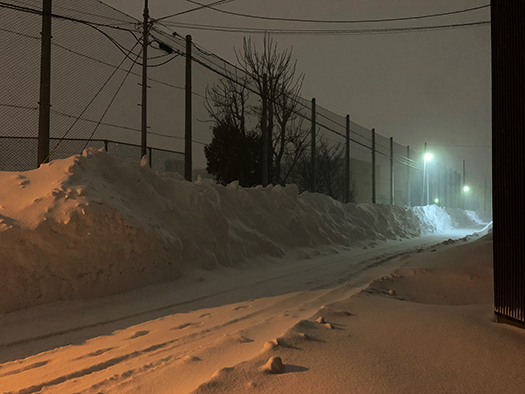
ようやく札幌、大雪警報が解除された1日でした。
そうは言っても一昨日夜からきのう朝までで10数センチの追い打ち積雪があり、
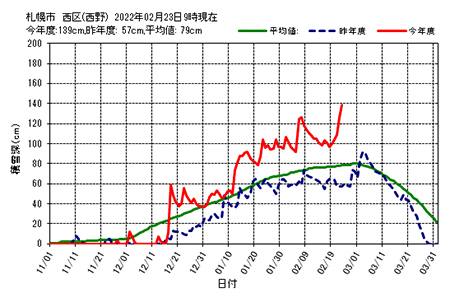
わたしの住む札幌市西区では2月23日午前9時現在で139cmの積雪深。
これは平年値の79cm、昨年度の57cmと比較して超絶のレベル。
平年値対比では実に1.76倍、昨年対比では2.44倍となっています。
もう〜〜、いらない(笑)。
と泣き叫んでいましたが、やむなく黙々と除雪作業に邁進。
その間は無念無想なので気付きませんが、終わると筋肉痛の襲来。
3回目の接種副反応もありましたが、雪かきの蓄積疲労と同化・重複倍増感。
カラダを休ませたいけど、雪かきは待ってくれない(泣)。

ということですが、これは北国の定め。受忍してせめてもの
健康増進機会とむしろ喜ばしいものと無理矢理錯覚して取り組みたいと思います。

さてブログ記事としての基本、住宅探訪シリーズでめったに行けなかった
「四国シリーズ」連載に復帰したいと思います。
上の写真たちは徳島県美馬郡一宇村(いっちゅうそん)の旧下木家住宅。
四国は中央構造線が東西に走っていてそこに四国山地が連なっている。
その東端側の山地、徳島県の西側という地理的位置。
この地域に木製家具・民具としての盆や碗を作る職人さん「木地師」たちが
ケヤキや樫の木の豊富なこの地域に定住し「木地屋」村落を作っていた。
たぶんかれらは良質の木材を求めてこの地にたどりついたのではないか。
京大阪といった大消費地に舟便でほど近い徳島の立地を感じる。
たぶん制作された木製品群は河川を下って徳島の港から大阪や堺に向かったか。
かれらの家の代表としてこの旧下木家住宅が四国村に移築されている。
1781年の棟札があるということで今から241年前の建築。
木組みの構造で、この地域の大工棟梁が元祖といわれる工法を取っている。
上屋梁、下屋梁に穴を開けて1本の柱に通す「落とし込み」方式だという。
手間は掛かりそうだけれど構造として頑丈なのだと。
上屋梁というのは上の写真、1枚目2枚目で確認もできる。
一方、下屋梁というのは本体構造の外周部の「下屋」のことかとも不明。
たぶん、上屋梁に対応する床板で見えない足下の横架材か。
どちらにしても構造としての「緊結度」剛性が高くなるのはわかる。
木地師たちがこうした構法に対して賛同しただろうことははるかに想像できる。
「おれも木の細工職人として、この構法は気に入った」
「そうだべ、柱を立ててそこに上から梁を落とし込むときに
ギシギシと材木同士が掛け声を掛け合っているみたいで、ホント頑丈なんだよ」
といった会話が想像できる。プロはプロを知る(笑)かと。
現代ではこうした木造の最先端は断熱気密という領域に立ち至っているけれど、
技術を進化させようという心意気には共通性があるのだと思う。

English version⬇

[House of Kijishi, a drop-in wooden frame ① Shikoku living space exploration-13]
It was the day when the heavy snow warning was finally lifted in Sapporo.
That said, there was a dozen centimeters of additional snow from the night before yesterday to yesterday morning.
In Nishi-ku, Sapporo, where I live, the snow depth is 139 cm as of 9 am on February 23.
This is a transcendental level compared to the average value of 79 cm and last year’s 57 cm.
Compared to the average value, it is 1.76 times, and compared to last year, it is 2.44 times.
I don’t need it anymore (laughs).
I was crying, but I was forced to silently push forward with the snow removal work.
During that time, I’m reluctant, so I don’t notice it, but when it’s over, myalgia strikes.
There was also a third inoculation side reaction, but assimilation and double sensitization with accumulated fatigue of snow shoveling.
I want to rest my body, but I can’t wait for snow shoveling (crying).

That being said, this is a northern rule. Be patient and at least
I would like to forcibly illusion that it is an opportunity to improve health and something that is rather pleasing.

Well, the basics as a blog article, I could rarely go in the housing exploration series
I would like to return to the “Shikoku Series” series.
The photos above are the former Shimogi family residences in Ichiu Village, Mima District, Tokushima Prefecture.
In Shikoku, the Median Tectonic Line runs from east to west, and the Shikoku Mountains are connected there.
The geographical location of the mountainous area on the eastern end, the west side of Tokushima Prefecture.
Craftsmen “Kijishi” who make trays and bowls as wooden furniture and folk tools in this area
He settled in this area, which is rich in zelkova and oak trees, and created a “Kijiya” village.
Perhaps they arrived here in search of good quality timber.
I feel the location of Tokushima, which is close to large consumption areas such as Kyo-Osaka by boat.
Perhaps the wood products produced went down the river from the port of Tokushima to Osaka and Sakai.
This former Shimoki family house has been relocated to Shikoku Village as a representative of their house.
It was built 241 years ago because it has a 1781 building tag.
It has a half-timbered structure, and the carpenter’s ridge in this area uses a construction method that is said to be the originator.
It is said that it is a “drop-in” method in which holes are made in the upper and lower beams and passed through a single pillar.
It seems to take time, but it is sturdy as a structure.
You can also check the roof beam in the photo above, the first and the second.
On the other hand, it is unclear whether the Shimoya beam is the “Shimoya” on the outer circumference of the main body structure.
Maybe it’s a horizontal lumber under your feet that you can’t see on the floorboards that correspond to the roof beams.
In any case, it can be seen that the “tightness” rigidity of the structure is high.
It is far more imaginable that the Kijiya would have agreed with such a construction method.
“As a woodworker, I like this construction method.”
“Yeah, when you put up a pillar and drop a beam from above.
It seems that Rumex japonicus and lumber are talking to each other, so it’s really sturdy. ”
I can imagine a conversation like that. Do professionals know professionals (laughs)?
In modern times, the cutting edge of such wooden structures has reached the area of ​​heat insulation and airtightness.
I think there is something in common with the willingness to evolve technology.

【大雪が止まらない札幌 3回目ワクチン接種】


昨日はスタッフにも基本的にはテレワークを推奨しておりました。
都合、除雪は3−4回取り組んでいましたが、全然大雪は止まりません。
石狩湾からの雪雲のなだれ込みの気象状況は一向に変化の兆しがない。
石狩方面から南東方向へ雪雲が間断なく続いて3日程度。
札幌から新千歳空港方向へと大雪地帯が広がっている状況。
昨日仙台へと移動出張を予定していたスタッフは移動のための高速道路も閉鎖、
そして新千歳空港も全日にわたって除雪が追いつかずに全便欠航。
都市間交通機能としての飛行機がまったく動かないという孤島状態。
これまでもドカ雪が3度ほどはあったこの冬ですが、
それらをまとめて吹っ飛ばすような盛大な暴風雪・大雪停滞の札幌です。

そういうなかですが、昨日は市内数カ所に出向いていました。
事務所からメイン道路に出る8m道路でさっそく停車中車両を発見。
メイン道路直前、10mほどのところでスタックしている。
え、なんで?どうしたの?という状況。
「雪でタイヤが埋まっているようなんです」という付近の方の証言。
見ると後輪タイヤが雪山方向にやや滑っている様子がわかる。
当方は4WD車両なので急ぎでなければ救出したいところですが、
時間約束もあるのでルート回避して出先に向かいました。
たぶん雪道運転でのアクセル踏みっぱなしによるタイヤのカラ回転ですね。
「ゆったり雪道と対話するように」運転すれば回避できると思うのですが、
しかし視界もよく見えないときもあるので焦るのでしょうね。
メイン道路以外の脇道を見ると大型トラックなども難渋しているし、
道路幅が1車線のみになっているので、ほぼ進入は諦めるべきレベル。
除排雪がそれなりにされているメイン道路から外れないようにしていました。
用事が済んで帰ってきたらくだんのスタック車両はいなくなっていた。
で、帰社するとスタッフから「ずいぶん早かったですね」という感想。
メイン道路だけで通行している分には通行車両は全般的に少なめ。
まぁ大雪とケンカしても敵うわけはないので、従順にしているのが正解。

その後、夕方にワクチン接種3回目のために近隣の区役所区民センターへ。
歩いて片道5分程度なので、クルマは使用せずに歩行移動。
予約時間からは早めに到着したのですが、天候もあってか
空いているようで、すぐに接種することができました。
前回の2回目にはやや強めの倦怠感に至ったので早急にベッドへ。
なんですが、今朝早めの起床では今のところ、スッキリしているようです。
この調子では今朝も降り止んでいない雪の除雪作業にあたることができそう。
もうほとんど条件反射のように定時間的に体が除雪モードになっている(笑)。
ワクチン倦怠感の代わりに全身筋肉疲労、節々痛みではありますが、
本日も黙々と雪かき、頑張りたいと思います。
通常の民家探訪記事は明日には復元したいと思います、よろしく。さて・・・。

English version⬇

[Sapporo 3rd vaccination where heavy snow does not stop]
Yesterday, I basically recommended telework to the staff.
For convenience, I have been working on snow removal 3-4 times, but heavy snow does not stop at all.
There are no signs of change in the weather conditions of the avalanche of snow clouds from Ishikari Bay.
Snow clouds continued from the direction of Ishikari to the southeast without interruption for about 3 days.
The heavy snowfall area is spreading from Sapporo to New Chitose Airport.
The staff who was planning a business trip to Sendai yesterday also closed the highway for movement,
And at New Chitose Airport, all flights were canceled because snow removal could not catch up all day.
An isolated island where airplanes as an intercity transportation function do not move at all.
This winter, when there have been three heavy snowfalls,
It is Sapporo with a big blizzard and heavy snow stagnation that blows them all together.

Under such circumstances, yesterday I went to several places in the city.
I found a stopped vehicle on the 8m road that goes out from the office to the main road.
Just before the main road, it is stuck about 10m.
Huh? Why? What’s wrong? The situation.
The testimony of a nearby person, “It seems that the tires are filled with snow.”
If you look at it, you can see that the rear tires are slipping slightly toward the snowy mountains.
Since we are a 4WD vehicle, I would like to rescue it unless I am in a hurry,
I had a time promise, so I avoided the route and headed for the destination,
Maybe it’s the tire rotation caused by keeping the accelerator depressed while driving on a snowy road.
I think it can be avoided if you drive calmly and “to interact with the snowy road”.
However, there are times when you can’t see well, so you may be impatient.
If you look at the side roads other than the main road, it is difficult for large trucks etc.
The width of the road is only one lane, so you should almost give up on the approach.
I was trying to keep the snow removal from the main road where it was done.
When I got home after my errands, the stack vehicle was gone.
Then, when I came back, the staff said, “It was a lot earlier.”
The number of passing vehicles is generally small because it is only on the main road.
Well, even if you fight with heavy snow, you can’t fight, so the correct answer is to be obedient.

After that, in the evening, I went to the nearby ward office inhabitant center for the third vaccination.
It’s about 5 minutes on foot, so you can move without using a car.
I arrived early from my reservation time, but maybe due to the weather
It seemed to be vacant and I was able to inoculate immediately.
The second time last time, I got a little stronger fatigue, so I went to bed immediately.
However, it seems to be refreshing so far when I get up early.
With this condition, it seems that we will be able to remove snow that has not stopped falling this morning.
Almost like a conditioned reflex, my body is in snow removal mode on a regular basis (laughs).
Instead of vaccination fatigue, general muscle fatigue and pain in the joints,
I would like to do my best today by shoveling snow silently.
I would like to restore the usual private house exploration article tomorrow, thank you. Now···.

【冬のトドメの一撃か? 2022暴風雪 in札幌】


東京では雪が降る降るといわれて空振り気味だったようですが、
札幌では危惧された通りの暴風雪が真っ正直に襲ってまいりました(泣)。
今朝早く、目が覚めてあさ4時くらいですが、
ドアを恐る恐る慎重に開けたら、ご覧のような状況で軽い雪質で
まぁなんとか除雪に取りかかれそうであります。ホッとひと安心。
ようやく前面道路にも夜間に除雪が入ってくれたようで
雪山がさらに大きく迫ってきておりますが、道路幅は拡張してくれた。

日曜日の段階から暴風雪気象警報が札幌市からもアナウンスされていたので
スタッフにも安全優先でテレワーク勧奨を行っていましたが、
警報が深夜だったので、スタッフへのメール送信も深夜。
ということでほぼ定数の出社数。おかげさまで出社スタッフには
それほどの困難はなかったと言うことでした。昨日は取材日程も組まれていたし
関連の来客も多数。わたし自身も道庁建築指導課のテレワーク会議に出席と
多忙な日程を消化しておりましたが、大荒れの天気の中では、
テレワーク環境での作業経験知の蓄積が大きいと実感します。
この道庁の会議もテレワークスタイルで過不足なく進行していました。
脱炭素エネルギーについては手法が温暖地域対応型のツール優先になっているので、
積雪寒冷地ではまことに五里霧中の対応にならざるを得ない。
屋根に上げるPVは積雪寒冷地では冬期間3ヶ月程度は実質的に稼動しない。
クルマもEVに市場転換の趨勢ですが、これも寒冷地実用性は明示できていない。
現代生活の基本、住宅と移動手段のエネルギー問題が未分明なまま
掛け声だけは進んでいくし、設備機器供給側は温暖地の市場性最優先で
投資を集中させて行っている。積雪寒冷地は今後どう対応していくべきか、
北欧、カナダの現在のエネルギー施策を要研究と提起させていただいた。
北海道の住宅は東京の言うことを聞くよりも北欧・北米と対話する中で
日本のなかで独自の戦略を構築してきたのだと思います。
気候環境条件で親和性の高い北欧北米で、具体的な脱炭素をどう進めているのか。
同様の前提条件の社会がどういう知恵と工夫を蓄積しているか情報交流が重要。
過去の高断熱高気密技術ではやはり実地での見学交流が有効だった。
コロナ禍で人間の移動も制限されている中でのエネルギー論。
言葉だけの交流では行動指針レベルまで意見交換することができにくい。

現実にいまの札幌の気象環境はまさに災害的。
こういう状況では太陽光発電などは影もカタチもない。
そしてEV車の充電インフラもまったく進まない中で、
火力発電の脆弱なインフラに頼り切りの発電と働かないPVという条件地域。
公共交通手段も雪で途絶するような地域環境での人間の暮らしと移動確保について
リアリティを持ってどう進めていけるのか。
長期的な寒冷地エネルギー戦略が不可欠だと強く思わされる。
大雪災害での筋肉疲労に見舞われながら、寒冷地でどういう脱炭素があり得るか。
暴風雪並みに先が見えにくい状況ではないのでしょうか?

English version⬇

[Is it a finishing blow of winter todome? 2022 Storm Snow in Sapporo]
It was said that it would snow in Tokyo, and it seemed like it was a little empty.
In Sapporo, a blizzard on the street that was feared struck honestly (crying).
I woke up early this morning and it was about 4 o’clock,
If you open the door with great care, you can see the situation with light snow.
Well, I’m about to get rid of snow. Relieved and relieved.
It seems that snow was finally removed at night on the front road.
The snowy mountains are getting closer, but the road width has expanded.

Since the blizzard weather warning was announced by Sapporo City from the stage of Sunday,
We also recommended telework to the staff with a priority on safety,
Since the alarm was late at night, sending an email to the staff was also late at night.
Therefore, the number of employees attending the office is almost constant. Thanks to the staff who came to work
It wasn’t that difficult. The interview schedule was set up yesterday
There are also many related visitors. I myself attended the telework meeting of the Building Guidance Division of the Prefectural Government
I was digesting my busy schedule, but in the stormy weather,
I feel that I have a great deal of experience and knowledge of working in a telework environment.
This prefectural meeting was also proceeding in a telework style without excess or deficiency.
As for decarbonization energy, the method is prioritized as a tool for warm regions.
In cold regions with snow, we have no choice but to deal with the situation in the Gori fog.
The PV raised on the roof does not actually operate for about 3 months in winter in cold regions with snow.
The market for cars is also shifting to EVs, but the practicality of cold regions has not been clarified.
The basics of modern life, the energy issues of housing and transportation remain unclear
Only the shouts will go on, and the equipment supply side will give top priority to marketability in warm regions.
We are concentrating our investment. How should we deal with snowy cold regions in the future?
I have proposed the current energy measures of Scandinavia and Canada as research required.
Housing in Hokkaido is in dialogue with Scandinavia and North America rather than listening to what Tokyo says
I think we have built a unique strategy in Japan.
How are you proceeding with concrete decarbonization in Northern Europe and North America, which have a high affinity for climatic and environmental conditions?
Information exchange is important as to what kind of wisdom and ingenuity the society with similar preconditions has accumulated.
In the past, high heat insulation and high airtight technology was effective for on-site tour exchanges.
Energetics in the midst of the corona wreck, which limits the movement of humans.
It is difficult to exchange opinions up to the level of action guidelines by exchanging only words.

In reality, the current weather environment in Sapporo is truly disaster-prone.
In such a situation, solar power generation has no shadow or shape.
And while the charging infrastructure for EV cars has not progressed at all,
A region where power generation depends on the fragile infrastructure of thermal power generation and PV that does not work.
About securing human life and movement in a local environment where public transportation is also disrupted by snow
How can we proceed with reality?
It seems strongly that a long-term cold climate energy strategy is essential.
What kind of decarbonization can occur in cold regions while suffering from muscle fatigue caused by a heavy snow disaster?
Isn’t it difficult to see ahead like a blizzard?

【地域産業「土佐紙」コウゾ蒸し小屋 四国住空間探訪-12】


わたしたち現代人はあらゆるモノが近代的大量生産で作られる社会にいる。
資本主義的に原材料からその集散、生産過程の合理化、
出荷体制の整理と、流通過程のプロセスなどすべてが合理主義で貫徹し
激しい競争原理の中で需要と供給、価格がバランスしている社会。
こうした社会以前のモノの価値感、尺度というものを実感することは
ほとんどその機会がないと思う。
四国の人々の暮らしの歴史時間が凝縮している古民家空間では
そういった価値感の一端をうかがい知ることができる。
きのうまでみた伊予・愛媛の山間地域の河野家でも生業としての
「土佐紙」の生産過程、その原材料・コウゾの採集から加工生産までが
家内制手工業で生産されている様子が見られた。
現代の紙とはまったく価値観が違う「土佐紙」という商品経済が
この山深い四国でもながく息づいてきた様子を知ることができた。
紙というのは長く貴族社会、上流階級だけの独占に近く、
江戸期になってようやく教育の普及に伴って大衆化していった。
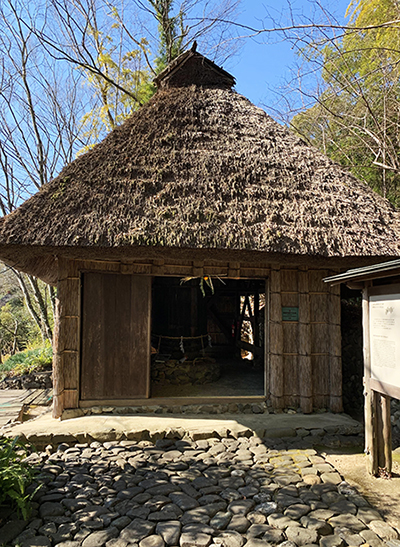
そのようななかで四国村野外博物館には「土佐のコウゾ蒸し小屋」がある。
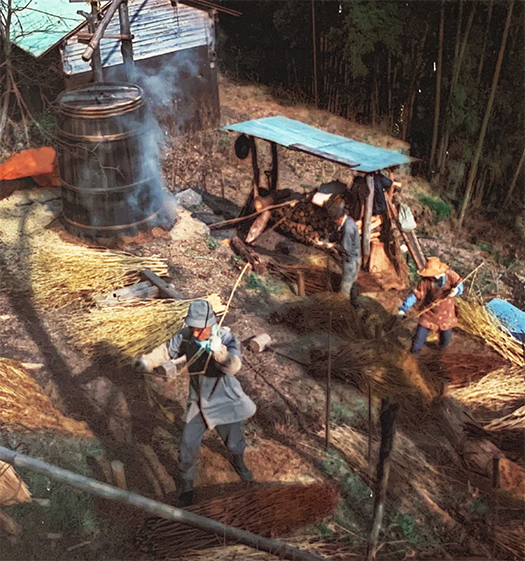
もと高知県高岡郡檮原町に所在した土佐紙の原料、楮や三椏を蒸すための小屋。
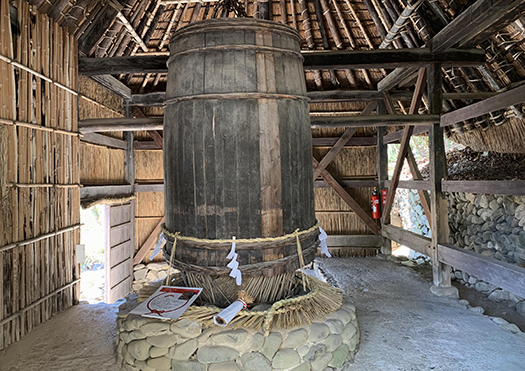
内部に石で窯を築き蓋として釜にかぶせる大桶を上げ下げする装置をもつ。
寄棟造茅葺で外壁をも茅で葺いている点に特徴がある。

土佐は高級和紙の産地。この小屋では伝統の和紙づくりが行われていた。
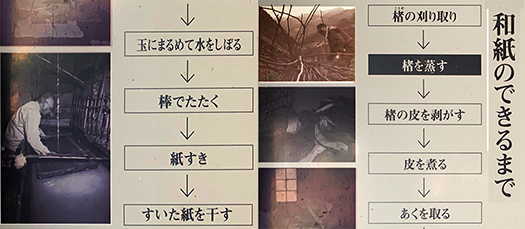
切りそろえた楮やみつまたを束にして釜に立て、上から桶をかぶせて蒸す。
取り出して皮を剥ぎ、黒皮を取り、水に浸した白皮をモチにして棒でたたく。
最後に水に入れてすくい上げ紙に漉く・・・和紙作りは手のかかる作業だった。

それこそ貴族政治の時代から連綿として続いてきた地場産業。
奈良、平安時代から文書記録の最重要物資として土佐紙があり、
その生産がこの地域で営まれてきたというはるかさに、
北海道からの旅人としてはまことに強いインパクトを受ける。
そしてその産業基盤としての建築が残されていて、さらに生業として
民家での暮らしにながく根がらみしてきている様子を知ることで
その重さが伝わってくる思いがする。
現代の家づくりでよく「自然環境との調和」というフレーズが使われる。
それは主として「見える部分」での感覚の問題と捉えられているけれど、
こういうふうに生活丸ごとのありようとしての実態証言をみると
底の浅さを思い知らされるように感じられる。
このような環境、生業で先人は命を繋いできていた。
出版という紙を大量消費する人間として、初めてこういう歴史時間に触れました。

English version⬇

[Regional industry “Tosa paper” Kozo steamed hut Shikoku living space exploration-12]
We modern people are in a society where all things are made by modern mass production.
Capitalist from raw materials to their collection and distribution, rationalization of production process,
Arrangement of the shipping system and the process of the distribution process are all rationalistic.
A society in which supply and demand are balanced in a fierce competition principle.
To realize the value and scale of things before society
I think I rarely have that opportunity.
In the old folk house space where the historical time of the lives of the people of Shikoku is condensed
You can get a glimpse of such a sense of value.
Even the Kono family in the mountainous area of ​​Iyo and Ehime, which I saw until yesterday, also worked as a livelihood.
The production process of “Tosa Paper”, from the collection of its raw materials and mulberry to processing production
It was seen that it was produced by the cottage industry.
A commodity economy called “Tosa Paper” that has completely different values ​​from modern paper
I was able to see how it has been breathing for a long time even in this mountainous Shikoku.
Paper has long been a noble society, close to the monopoly of the upper class,
Only in the Edo period became popular with the spread of education.
Under such circumstances, the Shikoku Village Open-Air Museum has a “Tosa Kozo Steamed Hut”.
It was originally located in Ochi, Yusuhara Town, Takaoka District, Kochi Prefecture. A hut for steaming mulberry and mitsumata, the raw material for Tosa paper.
It has a device that builds a kiln with stones inside and raises and lowers a large tub that covers the pot as a lid.
It is characterized by the fact that the outer wall is also thatched with a hipped roof.

Tosa is a production center of high-quality Japanese paper. Traditional Japanese paper was made in this hut.
Put the chopped mulberry and mitsumata in a bundle and put them in a kettle, cover them with a tub from above, and steam them.
Take it out, peel it off, remove the black skin, and use the white skin soaked in water as a mochi and hit it with a stick.
Finally, put it in water and scoop it up and make it into paper … Making Japanese paper was a laborious task.

That is the local industry that has continued since the era of aristocracy.
Since the Heian period in Nara, Tosa paper has been the most important material for document recording.
To the extent that its production has been carried out in this area,
As a traveler from Hokkaido, it has a really strong impact.
And the architecture as the industrial base is left, and as a living business
By knowing how the roots of living in a private house are becoming more and more entrenched
I feel that the weight is transmitted.
The phrase “harmony with the natural environment” is often used in modern home building.
It’s mainly seen as a sensory problem in the “visible part”,
Looking at the actual testimony of the whole life like this
It feels like you are reminded of the shallowness of the bottom.
In such an environment and livelihood, our ancestors have been able to save their lives.
For the first time as a person who consumes a large amount of paper called publishing, I came into contact with this kind of historical time.

【日本人とハレのしつらえ・河野家③ 四国住空間探訪-11】


どうも個人的にこちらの河野さんの家の内観の雰囲気に惹かれている。
一番上の写真は神棚を正面に見て「オモテ」の室内を開口部側から見た。
空間構成としては柱梁の野太い空間区画が印象的で
土壁素材と足下横架材などの質感・色合いなどの経年感が好ましい。
自在鉤の選択眼にも魅せられる。
ほかの構成素材がきれいな幾何形体なのにこの曲がりようが
いかにもこの家の雰囲気に「画竜点睛」を与えているように思う。
たぶん「根曲がり」の竹が使われているのだろうと思うのですが、
床材の竹の表情がまっすぐが基本であるのに、これだけが
強く個性を主張してくれていて、非常に印象を強めている。
この家のインテリアは床と屋根傾斜なり部分に顕れている丸い木材のリズム感。
とくに床材の竹は一生懸命に規則正しい連続感で建築に奉仕しているのに、
一転して、根曲がりの「クセ」を誇らしげに見せている。
「おお、この手があったか(笑)」と一気にくつろがされるような機縁。
こういう素材選択にこの家の家人の心ばえを知らされる。
正直そのものの地域の素材まんまだけれど、
そのなかでも人間くささを感じさせる絶妙な空間演出。
囲炉裏との距離感もいかにも整頓感が強く感じられる。
神棚の下の壁はほかが土壁なのに土佐紙とおぼしき紙を貼ったり、
室内に板壁をあしらったりしている。
変化に富んでいるようで静謐な納まりを感じさせてくれる。
訪問したときは正月飾りが古民家空間を彩っていて
その配置ぶりなども、感覚的に肌合いの親近感を強く訴えてくる。
そうなんですね、気心を知った親戚の家の和みを感じる。

開口部前の「門松」は実は松ではなく「樫」の木でつくられている。
樫の木の堅さにあやかって「家運がいつまでも続きますように」という願掛け。
主屋の戸口や神棚には「輪じめ」の注連縄が飾られている。
たいへんユーモラスでユニークな造形ぶりから「メガネ」とか「エビ」と称される。
山間のきびしい風土の中での日々の暮らしの過酷さの中で
それでも暮らしの句読点として正月の「ハレ」を飾る心理。しつらえ。
日本人としての生活伝統の折り目感覚がクッキリと浮かび上がってくる。

別に人間のだれかに会ったワケではないけれど、
「河野さんに会ってきた」みたいな気分がジワジワ湧いてくる(笑)。
古民家探訪のコアのような部分かも知れません。

English version⬇

[Preparation of Japanese and Halle, Kono family ③ Shikoku living space exploration-11]
I’m personally attracted to the atmosphere of Mr. Kono’s house.
The top photo shows the inside of the “front” from the opening side with the Kamidana in front.
As for the space composition, the thick space section of the pillars and beams is impressive.
Aged feeling such as texture and color of earthen wall material and foot crossing material is preferable.
I am also fascinated by the selective eyes of the free hook.
Even though the other constituent materials are beautiful geometric shapes, this bend
I think it really gives the atmosphere of this house a “painting dragon dot”.
I think that “root bent” bamboo is probably used, but
The expression of bamboo on the floor is basically straight, but this is the only one
He strongly insists on his individuality and makes a very strong impression.
The interior of this house has a sense of rhythm of round wood that appears on the floor and the slope of the roof.
In particular, the flooring bamboo is working hard to serve the architecture with a regular sense of continuity.
Turning around, he proudly shows the bent “habit”.
“Oh, did you have this hand (laughs)?”
This kind of material selection informs the mindset of the family members of this house.
Honestly, it’s a local material, but
Among them, an exquisite space production that makes you feel human.
The feeling of distance from the hearth is also very tidy.
The wall under the Kamidana is a clay wall, but you can put Tosa paper and paper on it.
There is a board wall in the room.
It seems to be full of variety and makes you feel a quiet fit.
When I visited, the New Year’s decorations colored the space of the old folk house.
The arrangement also strongly appeals to the feeling of familiarity with the texture.
Well, I feel the calmness of the relatives’ homes who knew their spirits.

The “Kadomatsu” in front of the opening is actually made of “oak” trees instead of pine trees.
A prayer that “house luck will continue forever” because of the hardness of the oak tree.
The doorway of the main building and the Kamidana are decorated with “Rinjime” shimenawa.
It is called “glasses” or “shrimp” because of its very humorous and unique shape.
In the harshness of daily life in the harsh climate of the mountains
Still, the psychology that decorates the New Year’s “Hare” as a punctuation mark in daily life. Prepare.
The sense of creases in the tradition of life as a Japanese clearly emerges.

It’s not the reason I met someone else, but
I feel like “I met Mr. Kono” (laughs).
It may be a core part of exploring old folk houses.

【竹床とムシロ敷物・河野家② 四国住空間探訪-10】


伊予の山村での河野家の暮らしその2です。
ハレとケ、という日本家屋の一般スタイルがそのまま間取りになって
オモテとウチ、という2間取りが四国村保存住宅では多い。
この河野家もこの2間取りになっている。
18世紀前半1700年代初めころの建築と推定されているので築300年ほど。
その保存のすばらしさに驚かされる。
写真で見ても立派な木製家具類が装置されていて、
構造材の端正さ、頑丈そうな作りにはため息が出てくる。
床の間など、凜としたデザイン性を感じさせられる。

床材には全面的に竹が使われている。
山村での家づくりとしてはまことに「地域の材料」を活かしている。
結構、床面が土間から高いのだけれど、

こういった高床でありながらしっかりとした剛性を300年間以上維持してきた。
竹はほぼまっすぐな素材であり、太さもかなり揃っている。
それらを植物性の紐で組み上げている。
竹踏み健康法というのがあるけれど、生活しながらそのまま健康法(笑)。
蒸暑の夏期などには高床でもあり、床下の空気流動でここちよかったと思える。
日中の労働で火照ったカラダが癒されたことだろう。
夏を旨とした室内の基本的な考え方が、この竹床に現れているか。
で、冬期にはその通風環境が一転して厳しい寒さにつながっていく。
そこで通風遮蔽の「断熱保温装置」としてムシロが装置された。
夏冬で、簡易な「模様替え」温度環境対応で過ごしてきた。
そうした環境への対応として各室に囲炉裏が装置されている。
説明文では「山村暮らしの対応」というように記載されているけれど、
さてこの程度の採暖で冬期の暮らしがどうであったか疑問。
しかし、きのう土間の「コウゾ蒸し」装置に触れたけれど、
そういった室内での火力を冬期夜間に利用すればふく射暖房として
活用もできたのだろうと気付く。
日中時間は室外での植物採取、採集などに活用して
日が暮れたら今度は室内で「コウゾ蒸し」などに従事したのだろう。
採暖としてのライフサイクルとしては理に適ってもいる。
暮らしの経済と温熱環境維持が兼用的に実現されてきたのではないか。
編み上げ紐やこのムシロなどはこれも山村周囲の自然林から確保された。

四国村では比較的にこうした山村住宅の事例が多い。
北海道人からすると四国は南国というような刷り込みがあるけれど、
実際に来て見るとたしかに平野部はそれほどの広がりがなく
大部分が山岳地帯地形優勢であることがわかる。
そういった気候風土の中での知恵のある季節対応ぶりが共感を呼ぶ。
河野さん家はこうやっていのちを繋いできた。

English version⬇

[Bamboo floor and Mushiro rug, Kono family ② Shikoku living space exploration-10]
This is part 2 of the Kono family’s life in the mountain village of Iyo.
The general style of Japanese houses, such as Halle and Ke, has become the floor plan as it is.
There are many two floor plans, front and back, in Shikoku Village preserved houses.
This Kono family also has these two floor plans.
It is estimated to have been built in the early 1700s in the first half of the 18th century, so it is about 300 years old.
I am amazed at the wonderfulness of its preservation.
Even if you look at the picture, it is equipped with fine wooden furniture.
A sigh comes out for the neatness of the structural material and the sturdy construction.
You can feel the dignified design of the alcove.

Bamboo is used for the flooring.
When building a house in a mountain village, we really make use of “local materials”.
The floor is quite high from the dirt floor,

Despite these high floors, it has maintained solid rigidity for over 300 years.
Bamboo is an almost straight material, and the thickness is quite uniform.
They are assembled with vegetable strings.
There is a bamboo stepping health method, but it’s a health method as it is while living (laughs).
It is also a high floor in the hot and humid summer, and it seems that the air flow under the floor was nice.
The body that was lit by daytime labor would have been healed.
Does this bamboo floor show the basic idea of ​​the room for summer?
Then, in winter, the ventilation environment changes and leads to severe cold.
Therefore, Mushiro was installed as an “insulation heat insulation device” for ventilation shielding.
In the summer and winter, I have spent time with a simple “remodeling” temperature environment.
A hearth is installed in each room as a response to such an environment.
Although the explanation says “Correspondence of living in a mountain village”,
Now, I wonder how the winter life was like with this level of warmth.
However, although I touched the “Kozo steaming” device in the soil yesterday,
If you use the heat in such a room at night in winter, it will be used as radiant heating.
I realize that I could have used it.
Use it for outdoor plant collection and collection during the daytime
When the sun went down, he probably engaged in “kozo steaming” indoors.
It also makes sense as a life cycle for warming.
It seems that the economy of living and the maintenance of a thermal environment have been realized in combination.
The braided string and this straw mat were also secured from the natural forest around the mountain village.

In Shikoku Village, there are relatively many cases of such mountain village housing.
From the perspective of Hokkaido people, Shikoku is imprinted as a tropical country,
When you actually come and see, the plains are certainly not that widespread.
It can be seen that most of the mountainous areas are predominant in topography.
The wisdom of seasonal response in such a climate is sympathetic.
Mr. Kono’s family has been doing this and connecting the future.

【伊予の山村の生業感・河野家① 四国住空間探訪-9】


古民家への興味でいちばん大きいのは建築というよりも
その暮らしぶりの証言という部分ではないかと思っています。
民俗という部分が正直に表出している様子が共感を誘う。
この「四国村」という野外民俗博物館では四国での暮らし方が
正直にうかがえて、こころに沈殿するような印象をもたらせてくれる。

伊予の国というのはほぼ現在の愛媛県。
歴史年代を通して朝廷の官位としては「大国」として認識されてきた。
守という官職で国によって上下意識があったのですね。
最高位とされるのが宮様が任命される国で、民間人最高の職は「介」となる。
そういうなかで「伊予守」というのはそれらに次ぐ上国とされる。
たぶん四国では歴史的に人口が一番多くて、枢要とみなされていたのでしょう。
現代でもプロ野球の公式戦も松山で行われることが多い。
そして「河野」という姓はこの伊予国に所縁の強い氏族とされる。
家系伝承的にもわたしの三木というのは河野氏族の分枝とされているので
「おお、伊予の河野さんか」と興味をそそられた次第。
しかし現代で親子兄弟の暮らす家でも特別な相似性を見出したりするわけもなく、
こういう部分は単なる「思い込み」にしか過ぎない(笑)。
ただ「こうやって命を繋いできたんだ」という思いはより深く感じさせられる。
そしてふとした住宅の選択の部分で同意できる一端があったりする。
住宅の理解の「手掛かり」とでもいえる部分。
逆にDNA的な興味が「暮らし方への想像力」を加速させる部分があるかも知れない。
わたしは兵庫県や広島県での家系伝承にある古民家には何度も訪問を重ねている。
現代に至って住宅関連の仕事をしてきた人間として
こういう「時間旅行」が可能になっていることに幸福感を抱いています。
歴史を重ねてきた日本人にはこういう好奇心がある程度満たされつつある。
これもひとつの「住文化」探究のありようかも知れない・・・。

こちらの家は「愛媛県南部・小田町の深い谷脇の奥まった急斜面」に
へばりつくように建っていた、と紹介にある。
先日掘り下げてみた平家の落人の家では山間の暮らしで土間もなく
「どうやって命を繋いできたのか」と思える家だったのですが、
こちらの河野家ではちゃんと土間があって
いかにもの「生業感」が伝わってきた次第です。
とくに2枚目の写真は山中での生産活動として「コウゾ蒸し」の装置が見えた。
四国では「土佐紙」という高級和紙が伝統産業として継続してきたとされる。
コウゾというのは山中で採取される植物で和紙の原料。
蒸して加工を加えることで貴重な現金収入を得られたとされている。
各山間農家が自家生産した和紙を「買い子」と言われる仲買人に委託して
それが京大阪の消費地に運ばれて消費されていったのでしょう。
四国村では「土佐のコウゾ蒸し小屋」という保存建築もあり、
以降、紹介したいとも思っています。
山間地域に「へばりつき」ながら命を繋いできた先人の暮らしぶり、
なかなか心を揺さぶられる気がしておりました。

English version⬇

[Iyo’s mountain village’s sense of livelihood, Kono family ① Shikoku living space exploration-9]
The biggest interest in old folk houses is not so much architecture
I think it’s a testimony of how I lived.
The honest expression of the folklore evokes sympathy.
At this outdoor folk museum called “Shikoku Village”, how to live in Shikoku
Honestly, it gives the impression of settling in the heart.

The country of Iyo is almost the present Ehime prefecture.
Throughout history, it has been recognized as a “power” as a court official.
In the official official position of Mamoru, there was a sense of ups and downs depending on the country.
The highest rank is the country where Miya-sama is appointed, and the highest rank for civilians is “suke”.
Under such circumstances, “Iyo Mamoru” is said to be the second highest country after them.
Probably the most populous in Shikoku historically, it was regarded as a key point.
Even today, official professional baseball games are often held in Matsuyama.
And the surname “Kono” is said to be a clan closely related to this Iyo province.
My Miki is a branch of the Kono clan in the folklore.
As soon as I was intrigued, “Oh, Mr. Kono from Iyo?”
However, even in modern homes where parents and siblings live, there is no way to find any special similarity.
This kind of part is just a “belief” (laughs).
However, the feeling that “this is how I have connected my life” makes me feel deeper.
And there is one end that I can agree on in the part of choosing a house.
The part that can be said to be a “clue” for understanding housing.
On the contrary, there may be a part where DNA-like interest accelerates “imagination for the way of life”.
I have visited many old folk houses in Hyogo and Hiroshima prefectures.
As a person who has done housing-related work up to the present day
I am happy that this kind of “time travel” is possible.
This kind of curiosity is being satisfied to some extent by the Japanese who have accumulated history.
This may also be a way of exploring “living culture” …

This house is on the “deep steep slope of the deep valley side of Oda Town, southern Ehime Prefecture”
The introduction says that it was built to cling to.
At the Heike’s deceased house, which I dug down the other day, I lived in the mountains and soon after the soil.
It was a house that made me wonder, “How did you connect your lives?”
In this Kono family, there is a proper dirt floor
It depends on how the “feeling of living” is transmitted.
Especially in the second photo, we could see the “Kozo steaming” device as a production activity in the mountains.
In Shikoku, high-class Japanese paper called “Tosa paper” is said to have continued as a traditional industry.
Kozo is a plant collected in the mountains and is the raw material for Japanese paper.
It is said that valuable cash income was obtained by steaming and processing.
The Japanese paper produced by each mountain farmer is outsourced to a middleman called a “buyer”.
It must have been transported to the consumption areas of Kyo-Osaka and consumed.
In Shikoku Village, there is also a preserved building called “Tosa’s Kozo Steamed Hut”.
I would like to introduce it from now on.
The way of life of the ancestors who have connected their lives while “sticking” to the mountainous area
I felt that my heart was quite shaken.

【脱藩の坂本龍馬も利用か?「茶堂」 四国住空間探訪-8】


四国の古い道沿いにはこうしたお堂があちこちに見られたという。
正面に仏様を祀り、三方は吹き抜けという形状。
この四国村では愛媛県北宇和郡広見村字上川のものが移築された。
嘉永6年(1853年)の落書があり四つ足と呼ばれる茶堂。寄棟造りカヤ葺。
間口2間、奥行1間半で向って右半部は土間、左半部は床張りになっている。
この奥に祭壇を設け地蔵菩薩を祀っている。
移築されるにあたって仏像として流正之氏渾身の作品が供えられ
瀬戸内寂聴さんが開眼会を催されたとのこと。
始原的には村の入口で他所から悪霊が入ってこないよう祈念して建てられたか。
一種の悪魔払いとして機能したと推測される。
やがて村のお盆の祭礼などに利用され、また弘法大師所縁の日には
湯茶などの接遇がされたり、お遍路さんの休憩所として機能したとされる。
霊場を廻っているときにわか雨や雪の時は、ここが利用された。
村の集会所として利用されたり果ては男女の密会にも利用されたとか。
人間集団の暮らしにはアジールという解放区が必要になる
「やむを得ない」事情というものも生起せざるを得ない。
こういった建築がそうしたものとして機能したことはうなずける。
いわば非合理な人間のサガのための「会所」でもあったと思える。
建築が役立つ初源的機会ともいえるのでしょう。その空気感がすごい。
遍路のための公共空間という機能性には民俗性が色濃い。
ムラ社会の包容力という日本人の伝統にリスペクトさせられる。
厳しい生活規範でがんじがらめではあっても、ホンネと建前で、
融通無碍な社会の一断面を覗かせてくれている。すばらしい。

創建年とルート(土佐から愛媛へ抜ける街道)を考えると脱藩した坂本龍馬も
この施設を利用した蓋然性が高いと言われているが、さて。
わたし的には戦国末期に土佐から四国全土に版図を拡大した長宗我部氏の
拡張進路とこうした「街道」がどのような状況だったか興味がある。
坂本龍馬はその長宗我部氏の家臣団が出自である「郷士」層出身。
自由闊達な経済着眼ぶりといい、戦国期で閉塞させられた四国人のパワーが
坂本龍馬という個性を育てたように思われる。
そしてそういった気風はこの「茶堂」のような建築施設を生み出す
「共同」の思想性に揺籃されたように思う。
公共という言葉が一般的に使われるけれど、公と共とは意味合いが違う。
公は文字通り社会機構そのものだけれど、共は民の息づかいが伝わってくる。
公という藩組織を脱藩した坂本龍馬は、共の民俗性に根がらみしているように思う。
その後の自由民権運動といい、四国にはこの「茶堂」の精神文化が
深く根付いているのではないかと思われる。すばらしい。

English version⬇

[Do you also use Ryoma Sakamoto of Dappan? “Chado” Shikoku Living Space Exploration-8]
It is said that such temples were found here and there along the old roads of Shikoku.
The Buddha is enshrined in the front, and the shape is a stairwell on three sides.
In this Shikoku village, the one in Kamigawa, Hiromi-mura, Kitauwa-gun, Ehime Prefecture was relocated.
A teahouse called Yotsu, which has a rakusho written in 1853. Hip-roofed thatched roof.
The frontage is 2 ken and the depth is 1 and a half, and the right half is covered with soil and the left half is covered with floor.
An altar is set up in the back to enshrine the Jizo Bodhisattva.
The work of Masayuki Nagare was offered as a Buddhist statue when it was relocated.
Jakucho Setouchi was held an eye-opening party.
Was it originally built at the entrance of the village in prayer to prevent evil spirits from entering from other places?
It is presumed that it functioned as a kind of Akumaharai.
Eventually, it was used for festivals such as the Obon festival in the village, and on the day of Kobo Daishi’s relationship.
It is said that they were treated with hot tea and served as a resting place for Pilgrimage.
This was used when it was raining or snowing while traveling around the sacred place.
It was used as a meeting place for the village and eventually for a secret meeting between men and women.
Azir, a liberated area, is needed for the lives of human groups
There is no choice but to create “unavoidable” circumstances.
It’s no wonder that these architectures worked as such.
It seems that it was also a “kaisho” for irrational human saga.
It can be said that architecture is a useful primordial opportunity. The feeling of air is amazing.
The functionality of a public space for pilgrimage has a strong folk character.
It is respected by the Japanese tradition of embracing the village-bonded society.
Even though it is a strict standard of life and it is hard to do it, in front of the building with Honne,
It gives us a glimpse of a cross section of a flexible society. wonderful.

Ryoma Sakamoto, who departed from the clan considering the year of foundation and the route (the road leading from Tosa to Ehime)
It is said that there is a high probability of using this facility, but by the way.
For me, Mr. Chosokabe, who expanded the print from Tosa to the whole of Shikoku at the end of the Warring States period.
I am interested in the expansion course and the situation of these “roads”.
Ryoma Sakamoto is from the “Goshi” class, where the vassals of Chosokabe’s vassals came from.
It is said to be a free-spirited economic focus, and the power of the Shikoku people who were blocked during the Warring States period
It seems that he developed the individuality of Ryoma Sakamoto.
And that kind of atmosphere creates a building facility like this “tea hall”
I think I was shaken by the ideology of “joint”.
The word public is commonly used, but it has a different meaning than public.
The public is literally the social organization itself, but the breath of the people is transmitted to both of them.
Ryoma Sakamoto, who has left the clan organization of the public, seems to be rooted in the folklore of the same.
It is called the Freedom and People’s Rights Movement after that, and the spiritual culture of this “tea hall” is in Shikoku.
As soon as I think it is deeply rooted. wonderful.

【四国村を彩る石の造形・文化 四国住空間探訪-7】


わたしどもの社屋はコンクリートブロックが主体構造。
外皮にもレンガを積んでいて、石系の素材で基本構成されている。
わたし自身は父母がはじめた食品製造業の生産施設として「室〜むろ」があって、
それが北海道での最初期のコンクリート建築だったことから、
親近感を感じていた。元はアメリカからの開拓期の技術導入だという。
兼用住宅として新築することになってそれにまったく気付かないまま、
コンクリートブロック外断熱工法を選択して竣工式をやったときに
「えっと、何しゃべろうかな」という機会が訪れた。
で、ブロックの壁を見続けていたら父母の建てた建築が思い起こされた。
まったく無意識だったのだけれど「そうか、そういう機縁か」と
驚いていた記憶が鮮明に残っている。
なんとも「ぼーっ」と生きていることかと苦笑させられた。
イマドキならばチコちゃんに蹴飛ばされそう(笑)。
一方、カミさんもどうも石が好きだったようで、
工法としてコンクリートブロックの家に興味が強かったそうです。
そういえば娘も幼い頃よく行っていた滝野公園の砂利道で
無心に石をいじり回していた(笑)。

っていう経緯があるのですが、四国の住空間を保存している屋島の四国村は
有名な庵治石の産地がすぐ対岸にあって、そこに居を構えていた
彫刻家・造園家の流正之氏による石の造形や敷石が満ちあふれている。
庵治石はお墓の素材としてポピュラーな石材として知られているけれど、
コンクリートブロックとも相似性が感じられる。
加工しやすいというような属性要因が大きいのでしょうか?
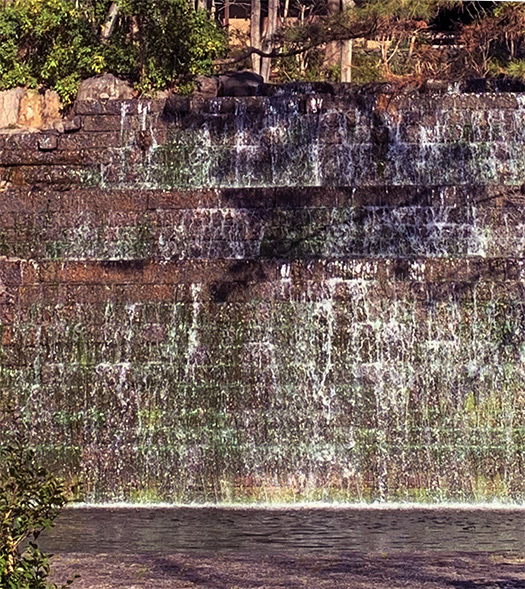
四国村の流正之氏作品としては、一番上写真の「染が滝」が白眉。
これは明治、大正期の民家の基礎に使われていた石をふんだんに用いている。
流れる滝の水音と多くの人々の暮らしの営みを足下で支えた礎石たちが、
なにか音楽にも似たハーモニーを感じさせてくれる。
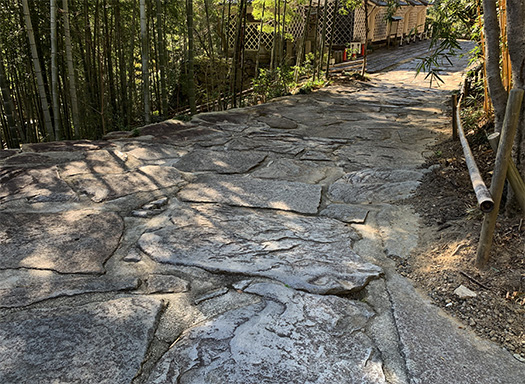
3番目の写真は庵治の石切り場から切り出された花崗岩の敷石の様子。
豪快で様々な表情をみせる花崗岩の美しさが底光りしている。
流正之氏は2018年に亡くなったけれど、その名をあまり知らなかった頃に
札幌に来られたとき、建築家グループの会合にいきなり
「みなさ〜ん、流正之で〜す」と大声で入り込んできて心を鷲づかみされた(笑)。
そう、石の訴求力にも似た人間力を感じていたのでしょうか。
四国村でその造形をたくさん見て、また足下で見て踏んで強く感覚させられた。
欧米はずっと石の住宅文化だけれど日本は基本、木の住宅文化。
しかし石もまた人間感受性に大きく係わってきていて根源的だと思います。
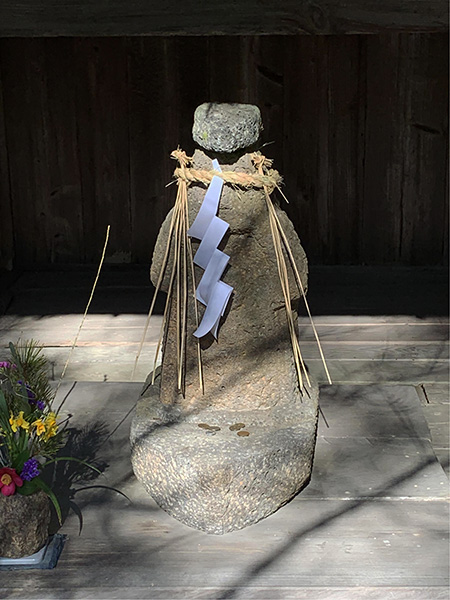
飛鳥の石舞台など、スピリチュアルなパワーを感じさせられる。
人間、最後は石だという実感も年とともに強くなってきます(笑)。

English version⬇

[Shikoku Village Coloring and Culture Shikoku Living Space Exploration-7]
Our company building is mainly composed of concrete blocks.
Brick is also piled up on the outer skin, and it is basically composed of stone-based materials.
I myself have “Muro-Muro” as a production facility for the food manufacturing industry that my parents started.
Because it was the earliest concrete building
Somehow I continued to feel a sense of intimacy.
Without noticing it at all, it was decided to build a new house as a dual-purpose house
When the completion ceremony was held by selecting the insulation method outside the concrete block
The opportunity came, “Well, what should I talk about?”
So, as I kept looking at the walls of the block, I was reminded of the architecture that my parents had built.
I was completely unconscious, but I said, “Yes, that’s the reason.”
The memory that I was surprised at remains vivid.
He was made to laugh at how he was alive.
If it’s imadoki, it’s likely to be kicked by Chico-chan (laughs).
On the other hand, Kami seemed to like stones too.
For that reason, he was very interested in concrete block houses.
By the way, on the gravel road in Takino Park, where her daughter used to go when she was young.
She was reluctantly messing around with stones (laughs).

There is a history of that, but Shikoku Village in Yashima, which preserves the living space of Shikoku,
The famous Aji stone production area was right on the opposite bank, and I settled there.
It is full of stone sculptures and paving stones by sculptor and landscape architect Masayuki Nagare.
Aji stone is known as a popular stone material for graves,
Similarity with concrete blocks can be felt.
Is it a big attribute that it is easy to process?
As for the work of Masayuki Nagare in Shikoku Village, “Some ga Taki” in the top photo is a white eye.
This uses abundant stones that were used as the foundation of private houses in the Meiji and Taisho eras.
The cornerstones that supported the sound of the flowing waterfall and the lives of many people at their feet
It makes me feel a harmony similar to music.
The third photo shows the granite paving stones cut out from the quarry in Aji.
The beauty of granite, which is dynamic and shows various expressions, is shining.
Masayuki Nagare died in 2018, but when he didn’t know the name very much
When he came to Sapporo, he suddenly went to an architect group meeting
“Minasa-n, Masayuki Nagare-su” came in loudly and grabbed his heart (laughs).
Yes, did he feel a human power similar to the appealing power of stones?
I saw a lot of the sculptures in Shikoku Village, and when I saw them under my feet, I was strongly impressed.
Western countries have always been a stone housing culture, but Japan is basically a wooden housing culture.
However, I think that stones are also fundamentally related to human sensitivity.
You can feel the spiritual power of Asuka’s stone stage.
The feeling that human beings are stones at the end grows stronger with age (laughs).