本文へジャンプ

【事業魂の象徴・民芸建築へ再生/日本人のいい家㉞-10】


きのうの続篇です。
この絵の画家・棟方志功さんは民芸運動の象徴的アーティスト。
絵画を依頼された大原総一郎氏に「美尼羅牟抄」(ビニロン)と名付けた
この絵画4点を描き上げて奉呈した。
この家の購入当時、大原家は富山に倉敷レイヨン工場建設中だったことは既報。
住宅の取材でその施主さんの事業背景まで調べるのは普通はない(笑)。
しかしこういう古民家の場合、多くの調査が可能になってくる。
北前船廻船問屋の事業についてもいろいろ資料を当たることが可能で、
しかも北海道の漁業資源が主要な交易品でもあるので
北海道側の消息と照合させることも可能になってくる。
通常の住宅取材のスパンを超えていわば全体の背景把握ができる。
で、今回の住宅は明治初年の創建時のみならず、昭和24年の
所有権移転でいわば第2の住まいとしての人生も掘り下げ可能。
もっといえば、そこから市に寄贈されて以降の第3の運命もある。

この元廻船問屋の商家を買い取った大原家当主の総一郎氏は、
家系の総意としての「民芸」運動への最大の支援者であり理解者。
この家の「用の美」に徹しつつ品格をもったたたずまいに打たれたことだろう。
とくに別棟の蔵の端正な美には魅了されたに違いない。
鏝絵に込められた左官職人の心意気をまっすぐに受け止める感受性。
民芸運動を指揮した柳光悦は棟方志功の版画芸術を発掘していた。
いわば民芸運動のシンボルとして掘り起こしたこの芸術的感受性の持ち主を
スポンサーである大原家当主はこの家に招いて、床の間を飾る絵を依頼する。
そのときの言葉が雑誌「民芸」に収められている。・・・
かれは得意のドイツ語でニーチェの「ツァラトゥストラかく語りき」を朗々と歌い上げた。
「棟方さん、私はこの事業に社運を賭けています。いや私自身、大原家のすべての
財産を掛けているのです。その思いをこの詩に重ね私なりに翻訳しました。
この詩と私の思いを象徴する作品を、美しいたたずまいのこの家の床の間に
掛ける絵を描いてください。」
詩を書き写した紙片を手渡された棟方は何度も読み返した。熱い思いが伝わってきた・・・。
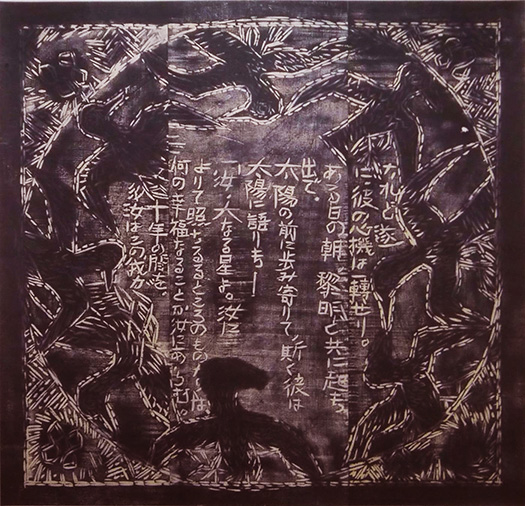

ベートーベン第5番「運命」を思い描きつつ4枚の絵画が誕生した。
完成後、棟方志功自身が晏山寮の床の間に納めに行ったといわれる。
大原氏は小躍りせんばかりに喜んで「ツァラトゥストラかく語りき」を口ずさんだ。
化学繊維という未踏の事業に掛ける事業魂がこの家に木魂した。
築後126年の住宅だが優れた建築は多くの「人の縁」を育むのだとわかる事例。

English version⬇

[Regeneration to folk art architecture that symbolizes the spirit of business / Good Japanese house ㉞-10]
This is the sequel to yesterday.
The painter of this painting, Shiko Munakata, is a symbolic artist of the folk art movement.
He named Mr. Soichiro Ohara, who was asked to paint, “Biniron”.
He drew and dedicated these four paintings.
It has already been reported that the Ohara family was constructing a Kuraray Rayon factory in Toyama at the time of purchasing this house.
It’s not normal to find out about the owner’s business background when interviewing a house (laughs).
However, in the case of such an old folk house, many investigations become possible.
It is possible to find various materials about the business of the Kitamaebune shipping wholesaler.
Moreover, Hokkaido’s fishery resources are also a major trade item.
It will also be possible to match it with the news of the Hokkaido side.
It is possible to grasp the background of the whole, so to speak, beyond the span of ordinary housing coverage.
So, this house is not only when it was built in the first year of the Meiji era, but also in 1945.
With the transfer of ownership, it is possible to delve into life as a second home.
For that matter, there is also a third fate since it was donated to the city.

Mr. Soichiro, the owner of the Ohara family, who bought the merchant house of this former shipping wholesaler,
The greatest supporter and understanding of the “folk art” movement as a consensus of the family.
He must have been struck with dignity while devoting himself to the “beauty of use” of this house.
In particular, he must have been fascinated by the neat beauty of the warehouse in the annex.
Sensitivity to take the plasterer’s spirit in the picture straight.
Koetsu Yanagi, who conducted the folk art movement, was discovering the print art of Shiko Munakata.
So to speak, the owner of this artistic sensitivity that was dug up as a symbol of the folk art movement
The sponsor, the owner of the Ohara family, invites him to this house and asks for a painting to decorate the alcove.
The words at that time are contained in the magazine “Folk Art”.・ ・ ・
He sang Nietzsche’s Thus Spoke Zarathu in his favorite German.
“Mr. Munakata, I’m betting on this business. No, I myself, all of the Ohara family.
I’m hanging my fortune. I overlaid that thought on this poem and translated it in my own way.
This poem and the work that symbolizes my thoughts are placed between the alcove of this beautifully-looking house.
Please draw a picture to hang. ”
Munakata, who was handed a piece of paper with a copy of the poem, read it over and over again. I got a passionate feeling …

Four paintings were born while envisioning Beethoven’s No. 5 “Fate”.
After completion, it is said that Munakata Shiko himself went to the alcove of the Akiyama dormitory.
Mr. Ohara was delighted to make a small leap and hummed “Zaratustra Talking”.
The spirit of the business of chemical fiber, an unexplored business, came to this house.
It is a 126-year-old house, but it is a case where it can be seen that excellent architecture fosters many “human relationships”.

【北前交易者から倉敷・大原家へ/日本人のいい家㉞-9】


さて北前の廻船問屋家その9です。
この森家住宅は昭和24年に創建の森家からクラレの創業家、大原氏に
所有権が移転されている。売りに出され即座に大原家が購入した。
倉敷の伝統的建築群のなかに大原美術館があるけれど、
この大原家は今に至る倉敷の文化風土を育んできた経済家。
売りに出されたこの家を見て大原総一郎氏は
「民芸建築」としてのたたずまいの美しさに惚れ込んだのだという。

ここで「民芸運動」という文化運動に触れることができる。
〜1926年(大正15年)「日本民藝美術館設立趣意書」の発刊により開始。
日常的な暮らしの中で使われてきた手仕事の日用品の中に「用の美」を見出し、
活用する日本独自の運動。21世紀の現在でも活動が続けられている。
「民芸」とは民衆的工芸の意。〜とされるもの。
この文化運動の創始者である柳宗悦は、実業家大原孫三郎(株式会社クラレ、
大原美術館、大原社会問題研究所などの創設者)より経済面の援助を得て、
1936年(昭和11年)東京・駒場の自邸隣に日本民藝館を開設した。
木造瓦葺き2階建ての蔵造りを思わせる日本民藝館本館は、
第二次世界大戦にも焼け残り、戦後も民芸運動拠点として活動を継続。〜
こうした事実から大原家がこの運動のスポンサーと知れる。
そしてその当時の大原家当主の総一郎氏がこの建築を購入したのだ。
写真はこの家に飾られていた画家・棟方志功の軸装絵画(全4点)。

当時大原氏は富山に於いて「倉敷レイヨン工場」建設を進めていて
その工事監督のための宿舎が必要とされていて購入したという。
社運を賭けた工場建設、と自身が語っていた事業計画。
「この家の前に立ったとき、たたずまいの美しさに感じ入ったが、
手入れの行き届いた土間、白壁、黒壁、帯戸、畳の敷き方、
なにひとつ取っても格別の思いが感じられる」という言葉を遺している。
神通川の西側という立地の工場との共通性もあって、
「神通はお産の陣痛にも通ずる」と考え事業計画・工場建設の成功を祈念して
この廻船問屋の建物を「晏山寮〜あんざんりょう」と名付けた。
このような購入に当たっての経緯が、民芸運動誌「民芸」に記載される。

こうしてこの住宅建築は、あらたな息吹を受け入れることになる。
取材者としてはキーワードは「蔵」のような気がしてならない。
長くなったので、あしたもこのテーマの続篇を続けます。

English version⬇

[From Kitamae traders to Kurashiki / Ohara family / Good Japanese house ㉞-9]
By the way, it is the 9th of the shipping wholesaler in front of the north.
This Mori family house was built in 1945 from the Mori family to Mr. Ohara, the founder of Kuraray.
Ownership has been transferred. It was put up for sale and immediately purchased by the Ohara family.
The Ohara Museum of Art is one of the traditional buildings in Kurashiki,
This Ohara family is an economicist who has nurtured the cultural climate of Kurashiki to this day.
Soichiro Ohara saw this house for sale
He is said to have fallen in love with the beauty of his appearance as “folk art architecture.”

Here you can come into contact with a cultural movement called the “folk art movement.”
~ 1926 (Taisho 15) Started with the publication of “Japan Folk Crafts Museum Establishment Prospectus”.
Finding “beauty for use” in the daily necessities of handicrafts that have been used in daily life,
A movement unique to Japan to utilize. Activities are still ongoing in the 21st century.
“Folk art” means folk crafts. What is said to be.
The founder of this cultural movement, Soetsu Yanagi, is a businessman, Magosaburo Ohara (Kuraray Co., Ltd.)
With financial support from the founders of the Ohara Museum of Art, Ohara Institute of Social Affairs, etc.)
In 1936, he opened the Japan Folk Crafts Museum next to his residence in Komaba, Tokyo.
The main building of the Japan Folk Crafts Museum, which is reminiscent of a two-story wooden tile-roofed warehouse, is
It remained unburned in World War II and continued its activities as a folk art movement base after the war. ~
From these facts, the Ohara family is known as the sponsor of this movement.
And Mr. Soichiro, the owner of the Ohara family at that time, bought this building.
The photo is a painting by Shiko Munakata, a painter who was displayed in this house (4 paintings in total).

At that time, Mr. Ohara was constructing the “Kuraray Rayon Factory” in Toyama.
It is said that a dormitory for the construction supervision was needed and purchased.
The business plan that he said was the construction of a factory for the sake of company luck.
“When I stood in front of this house, I was impressed with the beauty of its appearance,
Well-maintained dirt floor, white walls, black walls, obi doors, how to lay tatami mats,
Even if I take one, I can feel a special feeling. ”
There is also a commonality with the factory located on the west side of the Jinzu River,
I pray for the success of business planning and factory construction, thinking that “Jintou also leads to labor pains during childbirth.”
The building of this shipping wholesaler was named “Akiyama Dormitory-Anzanryo”.
The process of making such a purchase is described in the folk art movement magazine “Mingei”.

In this way, this residential building will accept a new breath.
As an interviewer, I don’t feel that the keyword is “Kura”.
It’s been long, so tomorrow I’ll continue the sequel to this theme.

【屋久杉・サクラ 素材の饗宴/日本人のいい家㉞-8】


富山の廻船問屋その8です。
木造住宅では伝統的に「素材自慢」があった。
日光の近くの住宅を取材したときには、東照宮への参道の杉の木を
入手して大黒柱にしたり床柱にしたりという事例があった。
杉の木の素材と言うよりも日光東照宮というネームバリューが
はるかに勝った選択でいかにも自慢らしい(笑)。
また、先日紹介していた宇都宮の豪商宅では大谷石とか、
ケヤキの大木などをご紹介しました。
流通ビジネスに関わる廻船問屋としても、そういう部分は当然力点がある。
先日も小豆島産の大型石版を紹介しましたが、本日は木材2種。

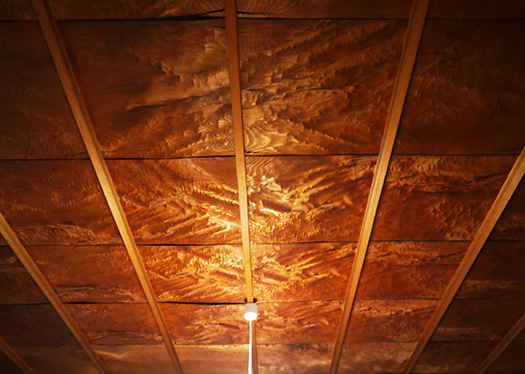
上の写真はサクラ材の天井張り。
座敷の天井板として採用されていたものです。
天井の造作自体は格天井のような格式的なしつらいではないけれど、
ごらんのようになんといってもその木目模様の幽玄さ。
幽玄な模様だけれど、目に鮮やかな赤身で華やかさに満ちている。
模様自体は見る角度によって「龍」のように見えるとされていた。
この部屋でふとんを敷いて就寝時、ボンヤリした意識で見ると
そのような見え方が浮かび上がってくるのかもしれない。
こうした趣味傾向はやはり仏教伝来以来、日本人に刷り込まれたものか。
鎌倉時代の年号を寺号とした建長寺のみごとな天井絵画が代表的だけれど
天井と言えば龍というのが日本的定番趣向。
しかしこの家は商家であり、そこはやや抑えめに素材の表現にとどめ、
そこはかとない演出としたモノでしょうか。
わたしとしてはそういう感覚は持てなかったけれど、
しかし天井の板1枚1枚を丹念に吟味して造作したことは間違いがない。
さすがに尾張藩の伝統的棟梁大工家の仕事にふさわしい。
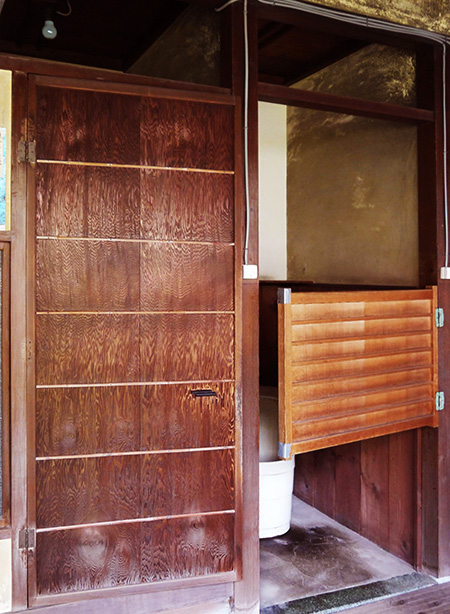
一方の2枚目写真は「来客用の厠」の扉。
これは屋久杉の無垢板を扉に仕上げたモノだということ。
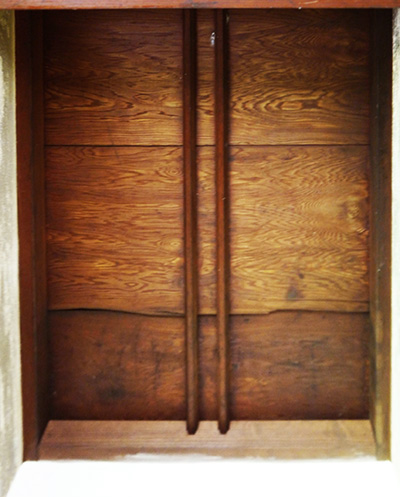
また3枚目の写真は厠の天井張りの様子。
ここでも同じように屋久杉が使われている。
厠という空間にまで贅をこらすというのは、この家の
奥行きのある建築造作ぶりを体感させるものだったのでしょう。


このように明治初期の北前交易の拠点、廻船問屋という商家は
活発な人的交流を見据えた建築趣向を競っていた。
そうした熱気の文化性が遠く北海道でも大いに共有されていた。
北海道建築の初期の華ともいえる道南や日本海側の漁家建築とも
ほとんど共通文化だったのだということがわかる。
北海道にして見れば、官の政策による「洋風住宅化」が推進されると同時に
民の側のこうした住宅文化が興隆していた。
そしてそれが北海道の最初期の建築文化を形成した。
やがて北前交易が鉄道輸送などに取って代えられるけれど、
地域の気質にとって基盤になったことがクッキリと見えてくる。
文化性のマザーの一典型なのだと思う次第です。

English version⬇

[Feast of Yakusugi / Sakura material / Good Japanese house ㉞-8]
This is Toyama’s shipping wholesaler No. 8.
Traditionally, wooden houses have “pride of materials”.
When I covered a house near Nikko, I saw a cedar tree on the approach to Toshogu.
There were cases where they were obtained and used as large black pillars or floor pillars.
The name value of Nikko Toshogu is more than the material of cedar wood.
It’s a far better choice and I’m really proud of it (laughs).
Also, at the wealthy commercial house in Utsunomiya that I introduced the other day, Oya stone, etc.
We introduced big zelkova trees.
As a shipping wholesaler involved in the distribution business, such a part naturally has an emphasis.
I introduced a large lithograph from Shodoshima the other day, but today there are two types of wood.

The photo above is a cherry blossom ceiling.
It was used as the ceiling board of the tatami room.
The ceiling structure itself is not as formal as the ceiling, but
As you can see, the mystery of the wood grain pattern.
Although it has a mysterious pattern, it is full of gorgeousness with bright red meat.
The pattern itself was said to look like a “dragon” depending on the viewing angle.
If you lay a futon in this room and look at it with a sick feeling at bedtime
Such an appearance may emerge.
Is this hobby tendency imprinted on the Japanese since the introduction of Buddhism?
A typical example is the magnificent ceiling painting of Kenchoji Temple, whose temple name is the year of the Kamakura period.
Speaking of the ceiling, the dragon is a classic Japanese taste.
However, this house is a merchant house, and it is a little restrained to express the material,
Is that something that was made into a fragile production?
I didn’t have that feeling, but
However, there is no doubt that each ceiling board was carefully examined and created.
As expected, it is suitable for the work of a traditional carpenter of the Owari clan.
On the other hand, the second photo is the door of the “visitor’s toilet”.
This is a solid Yakusugi board finished as a door.
The third photo shows the ceiling of the toilet.
Yakusugi is used here as well.
It is this house that gives luxury to the space of the toilet
It must have been a deep experience of architectural construction.


In this way, the merchant house called the shipping wholesaler, which is the base of the Kitamae trade in the early Meiji era,
They were competing for architectural tastes with an eye on active human interaction.
The cultural nature of such enthusiasm was far shared in Hokkaido.
Also known as the early flowers of Hokkaido architecture, Southern Hokkaido and the fishermen’s architecture on the Sea of ​​Japan side
It turns out that it was almost a common culture.
Looking at Hokkaido, at the same time as the promotion of “Western-style housing” by government policy
This kind of housing culture on the part of the people was flourishing.
And it formed the earliest architectural culture of Hokkaido.
Eventually, Kitamae trade will be replaced by rail transportation, etc.
It becomes clear that it has become the basis for the local temperament.
I think it’s a typical example of a cultural mother.

【交易ビジネスと茶の湯文化/日本人のいい家㉞-7】


明治初期の廻船問屋その7。
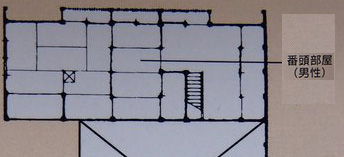
廻船問屋に住み込みの用人さんたちの居室が2階にある。
2階居室はオイの間の吹き抜けを挟んで手前に男性、奥に女中さんたちと
分かれて居住スペースが確保されていた。
女中さんたちの居室はダイドコロ奥の箱階段を上がったところにある。
一方、男性従業員とくに仕事を仕切っている番頭さんの居室。
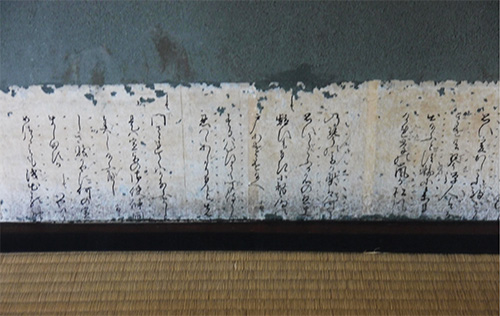
写真がその居室の様子ですが、床の間もある立派さ。
そして正調の茶室仕立てよろしく聚楽の塗り壁と、壁面下部には腰張り。
これは汚れ防止と剥落防止(衣服等の保護も含む)が主なもの。
こういう仕立てを見ると私室というより一種の応接環境。
北前交易を差配する実務者として、交際の範囲も広く、
そういった交際の必要から茶道の作法を身に付けるようにしたのでしょう。
戦国期の堺衆のなかから茶道が生成していった故実を考えると
そうした交際の場を通じて商談が交わされていったのが日本のビジネス。
江戸末期、明治初年という年代でもこういった仕様が見られる。
そうすると座談・話術といったものが重要な交易ツールだった。
番頭さんたちは各湊ごとの交易相手先への出張も機会が多かったでしょう。
大型の商談が惹起したときに、番頭たるもの、主人に十分な判断材料情報を
上梓する必要もある。情報摂取は最大のポイント。
そうした番頭同士での情報交換は茶のような場で活発に展開しただろう。
ギリギリの交渉のなかで落とし所を探ったりするには、
茶道の場がそういう背景装置として機能し続けていたのか。

あるいは下交渉で激しい値段交渉があった末に
「では続きは一服、茶を差し上げてから・・・」みたいに
最後の交渉と、契約の仮締結くらいまで進めたのではないか。
この番頭座敷は右手が目の前の街道に面しているので、
配置が常に往来客の動向に注力しビジネスを見通せるように意図されている。
この時代の居室で2面が外部に開口しているというのは少ないのではないか。
廻船問屋という業態は現代でいえば情報重視型産業とみえる。
番頭にはそういう才覚が求められたのでしょう。
考えてみると戦国期堺も鉄砲・弾薬などで旺盛な交易ビジネスが盛り上がった。
戦国期はポルトガル船の「意図的な漂着」、戦争道具としての鉄砲の伝来。
領国争奪戦争にもっとも効果的な道具の入手手段として交易にスポットが当たった。
初期は鉄砲自体の輸入からやがて弾の材料である鉛、
そして合掌造りでひそかに生産されていた煙硝などの主要ルートとして
自由な海外交易が活況を呈した。そういう情報は茶の湯を介して行われた。
利休など宗匠は茶の湯の管理者として、同時に情報の管理者でもあっただろう。
鎖国政策を経てそうした日本のビジネス伝統が北前交易に生き延びたともいえる。
もちろん戦国期のビジネス規模と比較しても人口規模が倍増以上と言われるので、
相当に交易は大型化してきてもいたのでしょう。
一国規模の経済範囲とは言え、こうした北前交易があったことで、
その後の明治以降の近代化の素地は完成していたと思える。

English version⬇

[Trading business and tea ceremony culture / Japanese good house ㉞-7]
Ship wholesaler in the early Meiji era No.7.
The living room of the servants who live in the shipping wholesaler is on the second floor.
The second floor living room is with men in the foreground and maids in the back across the atrium between Oi.
The living space was secured separately.
The maids’ living room is up the box stairs at the back of Daidokoro.
On the other hand, the living room of a male employee, especially the clerk who divides the work.
The photo shows the room, but it’s a magnificent alcove.
And like a regular tea room, there is a plastered wall of Juraku and a waistline at the bottom of the wall.
This is mainly for dirt prevention and peeling prevention (including protection of clothes etc.).
Looking at this kind of tailoring, it is a kind of reception environment rather than a private room.
As a practitioner who distributes Kitamae trade, the range of dating is wide,
Perhaps he learned the etiquette of the tea ceremony because of the need for such a relationship.
Considering the fact that the tea ceremony was created from the Sakai people during the Warring States period
It is Japanese business that business negotiations were exchanged through such a place of dating.
Such specifications can be seen even in the late Edo period and the first year of the Meiji era.
Then, discussion and talking skills were important trading tools.
The clerk would have had many opportunities to travel to each Minato’s trading partner.
When a large-scale business negotiation is triggered, give sufficient information to the leader and the master to make a decision.
It is also necessary to go up. Information intake is the biggest point.
Information exchange between such leaders would have been actively developed in a place like tea.
To find a place to go in the last minute negotiations,
Did the tea ceremony place continue to function as such a background device?

Or after a fierce price negotiation in the lower negotiations
Like “Then, let’s take a break, give me some tea …”
I think we have advanced to the final negotiations and the provisional conclusion of the contract.
This banto tatami room has your right hand facing the road in front of you, so
The placement is intended to always focus on the trends of traffic and to see the business.
It seems that there are few rooms in this era that have two sides open to the outside.
The business format of a shipping wholesaler can be seen as an information-oriented industry in modern times.
That kind of talent would have been required of the clerk.
When you think about it, Sakai during the Warring States period also had a vigorous trading business with guns and ammunition.
During the Warring States period, Portuguese ships were “intentionally washed ashore” and guns were introduced as war tools.
Trade was spotlighted as the most effective means of obtaining tools for the territorial war.
Initially from the import of the gun itself, lead, which is the material of the bullet,
And as a main route such as smoke glass that was secretly produced by gassho-zukuri
Free foreign trade was booming. Such information was provided via the tea ceremony.
The masters such as Rikyu would have been the managers of the tea ceremony and the information at the same time.
It can be said that the Japanese business tradition survived the Kitamae trade through the isolation policy.
Of course, it is said that the population size has more than doubled compared to the business scale during the Warring States period, so
Trade would have been getting bigger.
Even though it is a nation-wide economic range, the fact that there was such trade in Kitamae
It seems that the foundation for modernization after the Meiji era was completed.

【白壁と鏝絵・蔵の装飾/日本人のいい家㉞-6】


富山の商家その6回目。
江戸期からの商家といえば蔵が定番で付いてくる。
経済は必ず物資の保管ということを前提とする。
蓄積であると同時に大火などでの社会の崩壊から復元のタネを保管する。
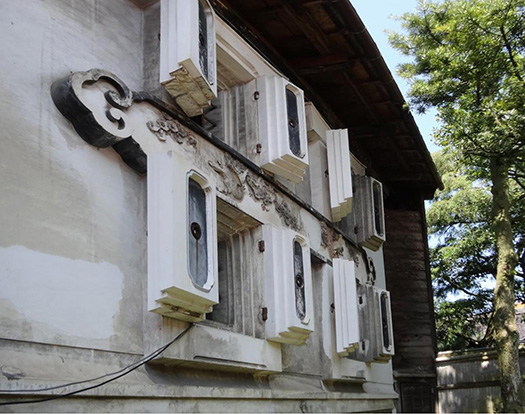
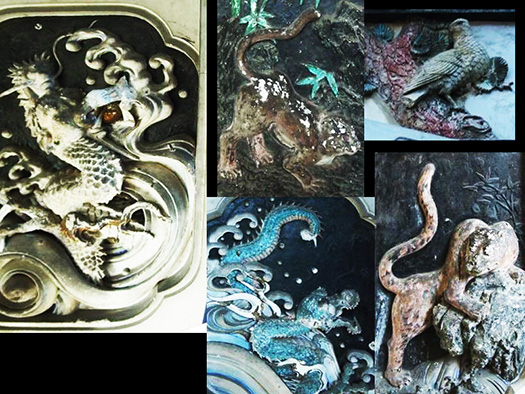
そういった実用性が基本だけれど、この家の蔵は
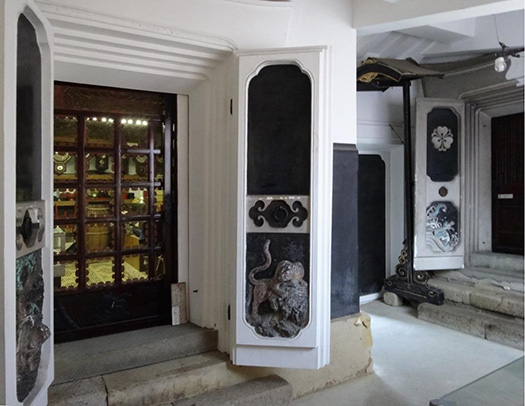
扉などに重厚な絵柄が付けられて一種の芸術作品になっている。
鏝絵(コテ絵)と呼ばれる装飾性の強い表現手法で作られている。

この家の紹介シリーズで以降で触れるけれど、
この家を創業家から購入したのがクラレの創業家・大原氏。
どうも購入時の印象として蔵の造作が大きく与っていたように思われる。
すでに触れたように設計施工は尾張藩の名門大工棟梁家。
その美意識がこの蔵の造作に反映していると思えます。
北前交易の各港ごとの廻船問屋さんたちは
商談などで相互訪問を繰り返したに相違なく、お互いの信用を確認する
そういった意味合いから、贅を尽くした趣向を競ったものか。
龍を描くのは海の交易人としては東アジア世界人として普遍的。
一対の好対照として虎もまた、
営みを「守る」意味合いでは基本的な絵柄といえる。
全体として波濤が基本デザインされているのは海商として当然。
こうした鏝絵(コテ絵)はやはり左官屋さんの領分だったのでしょう。
大工棟梁から声が掛かって、その設計主旨を聞かされ、
顧客の趣味嗜好に似合い、しかも出来映えに心底感動させることができるかどうか
「仕事を任される」という男意気の部分もあったでしょう。
顧客施主はその出来映えに感動できることが長い愛着の根源。

こういった部分の人間の交流というのが注文住宅の醍醐味。
芸術というものとは少し違って、あくまでも職人仕事の範疇にかしこまっている、
けれど、技量に於いては違わぬ仕事をする。
そういった手仕事ぶりというのが表現されている。
この関係性が日本の建築では重要なファクターであるように思える。
現代に至って、こういうものづくりの文化性は大きく減衰している。
もちろん経済原則には従ってあるべきなのだけれど、
作り手と発注者との関係性のありようとしてはコアの部分。
規格的合理性も追求しつつ、どこかでこういう部分も持っていたい。
そんな気持ちを呼び覚まさせてくれます。

English version⬇

[[White wall and decoration of shirakabe / warehouse / Japanese good house ㉞-6]
Toyama merchant house 6th time.
Speaking of merchant houses from the Edo period, the warehouse is a standard item.
The economy always presupposes the storage of goods.
At the same time as accumulating, the seeds of restoration from the collapse of society due to a big fire etc. are stored.
That kind of practicality is the basis, but this house’s warehouse is
It is a kind of work of art with a heavy pattern on the door.
It is made by a highly decorative expression method called iron painting.

As I will mention later in this house introduction series,
Mr. Ohara, the founder of Kuraray, bought this house from the founder.
It seems that the structure of the warehouse was a big factor in the impression at the time of purchase.
As already mentioned, the design and construction was done by the prestigious carpenter builder of the Owari clan.
I think that aesthetic sense is reflected in the structure of this warehouse.
The shipping wholesalers at each port of Kitamae Trading
Confirm each other’s credibility without having to repeat mutual visits in business negotiations, etc.
From such a meaning, is it a competition for a luxurious taste?
Drawing a dragon is universal as an East Asian world trader as a sea trader.
As a pair of good contrasts, the tiger also
It can be said that it is a basic pattern in the sense of “protecting” activities.
As a sea merchandiser, it is natural that the wave is basically designed as a whole.
Such a picture (iron picture) must have been the plasterer’s territory.
A carpenter builder called me and told me the purpose of the design.
Whether it suits the customer’s hobbies and tastes and can really impress the workmanship
There must have been a part of the man’s will to be entrusted with the work.
The root of long-standing attachment is that customer owners can be impressed by the workmanship.

The real thrill of custom-built homes is the interaction between people in these areas.
It’s a little different from art, and it’s in the category of craftsmanship.
However, he does the same job in terms of skill.
That kind of handiwork is expressed.
This relationship seems to be an important factor in Japanese architecture.
In modern times, the cultural nature of such manufacturing has greatly diminished.
Of course, it should follow economic principles,
The core part of the relationship between the creator and the orderer.
While pursuing standard rationality, I would like to have such a part somewhere.
It awakens such feelings.

【通り土間・階段収納・駕籠/日本人のいい家㉞-5】


富山廻船問屋その5であります。
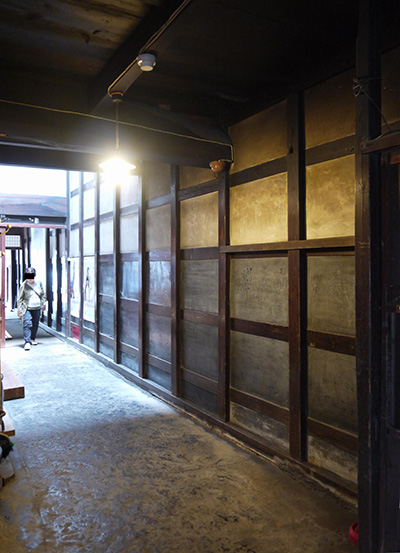
街道に表玄関が面し海運と裏出入が接していたこの家では
「通り土間」空間がその機能性では最重要とも言える。
町家として隣家とは壁を接して建てられているけれど、
写真のように重厚な塗り壁でしつらえられ、
また床材には見事な小豆島産の巨大な一枚岩が使用されている。
活発な大型荷物の搬出入での使用に耐える素材選択がされている。
小豆島は瀬戸内海の島であり大阪城築城などの「天下普請」での石材産地。
こういった建材もそれこそ北前交易で盛んに往来した。
この同時代のニシン御殿栄華の建築で北海道小樽に残る「青山別邸」では
天井材に高価な屋久杉が使われたりしていた。
貴重な海運を使った資材は高価なものが大いに流通していた証拠。
船荷には当然スペース的な限界があって、経済効率を最大化させようと考えれば
自ずと高級な材料に照準が合っていくことは自然な流れ。
こういった国内経済流通基盤があって、北前船寄港地周辺では
活発な地元産品生産努力が傾けられていった。
江戸期までの北海道については開拓努力が遅れた側面が強調されるが
一方ではこのような交易ビジネスの起点として昆布や肥料原料魚などで
本州の食文化やファッション文化の基盤を作っていた。
京都の織物文化による綿織物は魚肥によって生産される綿花が原料。
時代の最先端のファッション産業は人々の購買意欲を刺激し、
江戸後期の産業構造の基幹を形成していた。
北海道の漁業がそういう役割を担っていた。
この敷石には活況を呈した交易ビジネスが表現されている。

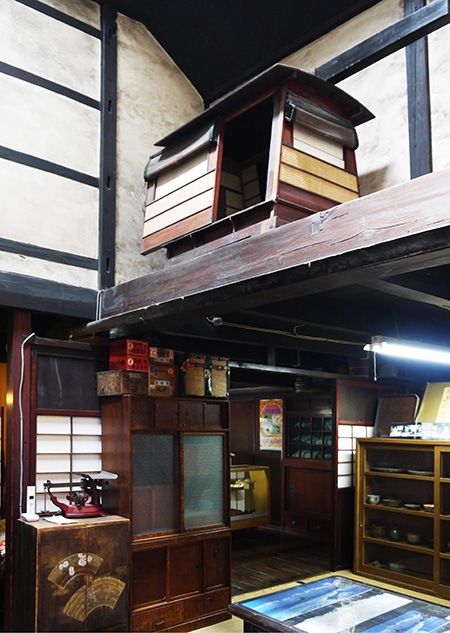
茶の間の通り土間に面した階上には駕籠が乗せられている。
賓客をもてなすに際して酒に酔ったときにでも用意させたものか。
同様の駕籠は能登半島の豪商・時国家でも見た。
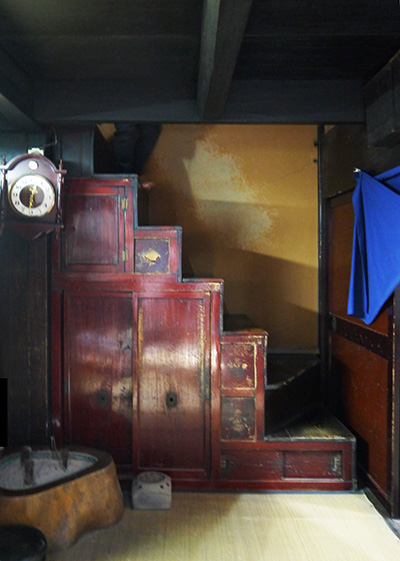
また、わたしの大好きな「箱階段」がダイドコロ奥にあった。
階上には女中さんのための2部屋があって、
4名程度住み込みで働いていたという。
箱階段周辺にはこの商家の日常の運営に必要な道具類であります。

閑話休題。
昨日ようやく札幌市からワクチン接種券が到着。
8日から16日までの期間で順に送付します、とされていたもの。
人によっていろいろな考え方はあろうかと思いますが、
アメリカ・イギリスの例を見れば社会復元にはもっとも効果的。
一刻も早い日常の復活を願って、対応準備したいと思います。

English version⬇

[Street dirt floor, stairs storage, Kago / Japanese good house ㉞-5]
This is Toyama Kaisen wholesaler No.5.
In this house where the front door faces the highway and shipping and back entrance are in contact
It can be said that the “street soil” space is the most important in terms of its functionality.
As a townhouse, it is built with a wall in contact with the neighboring house,
As shown in the photo, it is made with a heavy plaster wall,
In addition, a huge monolith from Shodoshima is used for the floor material.
Materials have been selected to withstand the active loading and unloading of large luggage.
Shodoshima is an island in the Seto Inland Sea and is a stone producing area for “Tenka Fukon” such as the construction of Osaka Castle.
These building materials also came and went actively in the Kitamae trade.
At the “Aoyama Bettei” that remains in Otaru, Hokkaido with the architecture of the herring palace of the same period
Expensive Yakusugi was used for the ceiling material.
Evidence that expensive materials were widely distributed using precious shipping.
Of course, there is a space limit to the cargo, so if you want to maximize economic efficiency
It is a natural process to aim at high-quality materials.
With such a domestic economic distribution base, around the Kitamaebune port of call
Active efforts to produce local products were made.
Regarding Hokkaido until the Edo period, it is emphasized that the development efforts were delayed.
On the other hand, as the starting point of such a trading business, kelp and fertilizer raw fish are used.
It laid the foundation for Honshu’s food and fashion culture.
Cotton fabrics produced by Kyoto’s textile culture are made from cotton produced by fishmeal.
The cutting-edge fashion industry of the era stimulates people’s purchasing motivation,
It formed the backbone of the industrial structure of the late Edo period.
The fishing industry in Hokkaido played such a role.
This paving stone represents a booming trading business.

Kago is placed on the upper floor facing the dirt floor of the living room.
Is it prepared even when you get drunk when you entertain guests?
A similar Kago was also seen in the Noto Peninsula’s wealthy merchant, Tokikuni.
Also, my favorite “box staircase” was in the back of Daidokoro.
There are two rooms upstairs for the maid
It is said that she lived and worked for about four people.
The area around the box stairs is a tool necessary for the daily operation of this merchant house.

Quiet talk break.
The vaccination ticket finally arrived from Sapporo yesterday.
It was supposed to be sent in order from 8th to 16th.
I think there are various ways of thinking depending on the person, but
Looking at the examples of the United States and the United Kingdom, it is the most effective for social restoration.
I hope that my daily life will be restored as soon as possible, and I would like to prepare for the response.

【全56畳の大広間座敷空間/日本人のいい家㉞-4】


富山の廻船問屋・森家のストーリーその4。
きのう見た「オイ」と呼ばれる最重要空間・商談室の奥には
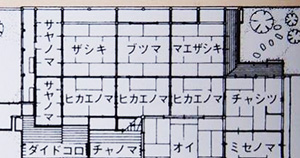
座敷が各前室(ヒカエノマ)を含め3間あって、それぞれ床の間が付設される。
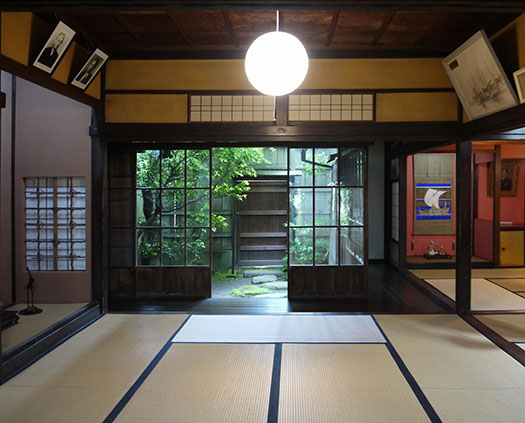
いちばん上の写真は「マエザシキ」から座敷が連続している様子。
奥の「ザシキ」は「サヤノマ」を介して中庭に面している。
通常は奥の座敷は主人夫婦が使用していた空間とされていた。
そうであれば、手前側の2間は来客時の客間として機能したか。
写真は反転して「マエザシキ」から前庭と「チャシツ」を望む。
これらの座敷合計では床の間を含めて56畳・28坪の広大な空間。
展示されている現在ではこの写真のように襖が取り払われて
広大な1室空間が広がっています。
高い吹き抜けが特徴の商談空間と好対照な広がり方向での開放感の実現。
茶室は8畳で赤くベンガラで彩られた床の間の壁が特徴的。
気をつけてみるとこれだけの大空間で柱は広間中に5本だけで、
あとは床柱と連続する構造壁が目に入ってくるのみ。
水平方向への開放感がハンパなく実現されている。
天井が張られているので小屋裏でどのような「構造」があるか不明ですが、
たぶん吹き抜け部分と同様の井形の強固な木組みがあって、
こうした水平的開放空間が実現しているのではないか。
そしてまた、これだけの大空間に対して前庭と中庭への開口部から
ほどよい採光と通風を実現している。
このあたりはやはり京都が育んだ大型木造建築由来の作法なのでしょうか。

この家の大工棟梁は京都で東本願寺を手掛けた名工に依頼したと言うこと。
この家の紹介文には出てこないが、伊藤平左衛門 (9世)という名前が浮かんでくる。
事跡を見ると現代の大物建築家にも相応する建築業績の人物。
1896年より帝室技芸員。藍綬褒章受章者。
考えてみると現代ではこうした作り手の選択方法というのは廃れ気味。
日本は職人仕事へ尊敬の念がなくなった、建築に求める文化性の中身が変わった?
いや、IT事業家オラクルの会長さんがカリフォルニアで数寄屋を建てたように
むしろこういう木造建築文化性は世界の方が認識しつつあるのではないか。
京都での木造建築の歴史伝統という建築文化パワーが明治には存在した。
建築主側からみて「一流の・・・」選択としてあったのだろう。
たしかにこの広間の広大さといい、商談空間の豪放な作りようといい、
宗教建築の大型木造の作法のようなものがあるのかもと思える。
現代で言えばやはり著名建築家と全国ゼネコンみたいな取り合わせが相応か。
タテ方向で大きな吹き抜けを作り平面で大広間をこの住宅サイズで実現するなど
住宅規模の建築趣向ではなくより大型の宗教建築で確立した流儀。
その規範として納得できる作り手選択だったといえるのでしょう。
ビジネス建築なので「東本願寺の・・・」という口上に効果があったかとも思える。

ひるがえって現代では民間住宅の領域に限って言えば
こういった部分の民の「選択基準」というものは不明化している。
極端に言えばハウスメーカーの「有名さ」とかが刷り込み誤解としてあったりする。
ふつうに考えれば著名建築家の関与といったことが相当しているか?
いわば「一流の」という概念がそれに当たるのだろうけれど、
現代ではそういう価値感はこと住宅の領域ではあいまい化。
「良き建築、良き住宅」という価値感がかつては実感として存在していたものが、
現代日本社会では大きく揺らいできていると言える。
大きなテーマなのでうかつに結論づけはできない。
少なくとも、この建物の創建時期・明治初年にはこういう基準が明確だった。
この住宅でのひとつの気付きだと思えます。

English version⬇

[A large hall with a total of 56 tatami mats / A nice Japanese house ㉞-4]
Story 4 of Toyama’s shipping wholesaler, Mori family.
In the back of the most important space, the business meeting room, called “Oi” that I saw yesterday
There are 3 tatami rooms including each front room (Hikaenoma), and each has an alcove.
The top photo shows a series of tatami rooms from “Maezashiki”.
“Zashiki” in the back faces the courtyard via “Sayanoma”.
Normally, the tatami room in the back was the space used by the husband and wife.
If so, did the two rooms on the front side function as guest rooms for visitors?
The photo is flipped over and the front yard and “Chashitsu” are seen from “Maezashiki”.
The total of these tatami mats is a vast space of 56 tatami mats and 28 tsubo including the alcove.
Now that it is on display, the sliding doors have been removed as shown in this photo.
A vast one-room space is spreading.
Realization of a feeling of openness in the direction of expansion, which contrasts well with the business negotiation space, which is characterized by a high atrium.
The tea room is 8 tatami mats and features a wall between the alcove colored in red Bengala.
Be careful, there are only 5 pillars in the hall in such a large space.
All that is left is to see the structural wall that is continuous with the floor pillars.
A feeling of openness in the horizontal direction is realized without hampering.
Since the ceiling is stretched, it is unknown what kind of “structure” there is in the back of the hut,
Maybe there is a strong Igata woodwork similar to the atrium,
Isn’t such a horizontal open space realized?
And again, from the opening to the front yard and the courtyard for such a large space
Achieves moderate lighting and ventilation.
Is this a method derived from the large wooden construction that Kyoto nurtured?

It is said that the carpenter builder of this house asked a master craftsman who worked on Higashi Honganji in Kyoto.
Although it does not appear in the introductory text of this house, the name Ito Heizaemon (9th generation) comes to mind.
Looking at the facts, he is a person with architectural achievements that is suitable for a modern big-name architect.
When you think about it, these methods of selecting creators are becoming obsolete in modern times.
Japan has lost respect for craftsmanship, has the cultural content required for architecture changed?
No, like the chairman of IT entrepreneur Oracle built a sukiya in California
Rather, the world is recognizing this kind of wooden building culture.
The architectural cultural power of the historical tradition of wooden architecture in Kyoto existed in the Meiji era.
From the builder’s point of view, it must have been a “first-class …” choice.
It’s true that this hall is vast, and it’s good to create a business negotiation space.
It seems that there is something like a large wooden manner of religious architecture.
In modern times, is it appropriate to have a combination of a well-known architect and a national general contractor?
Create a large atrium in the vertical direction, realize a large hall with this house size, etc.
A style established with larger religious buildings rather than residential-scale architectural tastes.
It can be said that it was a maker’s choice that was convincing as the norm.
Since it is a business architecture, it seems that it was effective in saying “Higashi Honganji …”.

On the contrary, in modern times, speaking only in the area of ​​private housing
The “selection criteria” of these people are unclear.
In the extreme, the “famousness” of the house maker is imprinted and misunderstood.
Is it equivalent to the involvement of a well-known architect in general?
So to speak, the concept of “first-class” corresponds to that, but
In modern times, such a sense of value is ambiguous in the area of ​​housing.
The value of “good architecture, good housing” used to exist as a real feeling.
It can be said that it has been greatly shaken in modern Japanese society.
It’s a big theme, so I can’t conclude.
At least, these standards were clear at the time of construction of this building, the first year of the Meiji era.
I think this is one of the things I noticed in this house.

【豪壮な吹抜け木組の商談空間/日本人のいい家㉞-3】


この町家商家では入口から入って「トオリニワ」土間通路が建物を貫通している。
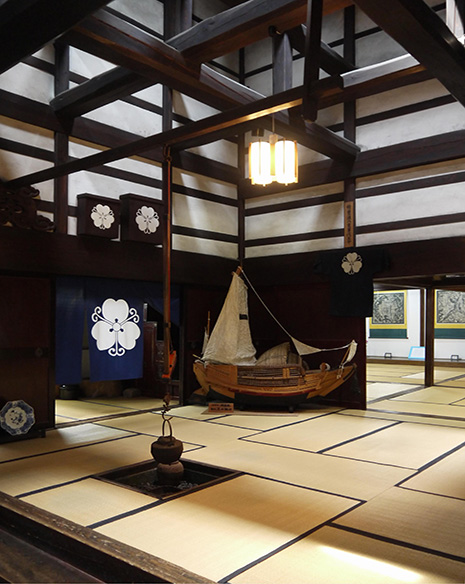
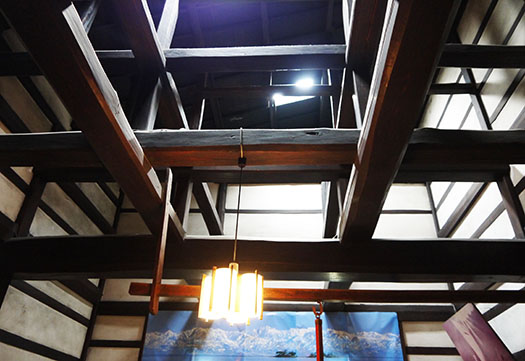
そしてすぐに小屋裏までの吹き抜けが木組みの豪快な空間。
「オイ」と呼ばれる囲炉裏付きの大広間。この囲炉裏では座り方が決まっていて、
北前回船問屋としての大事な商談の場だったとされる。
太い梁は能登産黒松。要所にはあすなろが使用された堅固な造り。
タタミの敷き方で一部「川の流れ」のようなデザインまで。
北前船とは主に「買積み廻船」の名称。買積み廻船とは商品を預かって
運送するのではなく航行する船主自体が商品を買い、それを売買することで
利益を上げる廻船のことを指すという。
買という字は「バイ」と読めるけれど投下資本の「倍儲け」と掛けているとか。
江戸期までは封建制社会で各地域毎の経済主権が独立的で
ものの値段に相当の価格差が存在したとされるので、
地域毎での商品売買で巨額の「差益」を獲得できたという。
藩ごとに独自の経済運営があるなかで横断的に流通する北前交易は
うま味が大きかったのでしょうね。
だいたい、この交易での利潤に対してどのように「課税」したのか、
今日のように国税・地方税の仕分けもない時代、
全国的に共通する税務当局という存在自体がなかったと思われる。
というか、幕藩封建体制を超越できる経済が北前交易だったのだろう。
これら資本が、北海道蝦夷地での財政経営丸投げ政策であった
「場所請負人制」の受注者にもなったのだろう。
場所請けでは年度決算を松前藩なり幕府なりに提出義務があるけれど
そもそも流通販売も同時に押さえているワケだから、
仕入と販売額はどうとでも経理を変更させていただろうことは想像に難くない。
「ことしも一生懸命やったのですが、若干赤字になりました。
お上がやられても赤字だったのですから・・・申し訳ございません」
みたいな口上で財政権力側を欺し、あとで舌を出していたのではないか(笑)。
北前交易の税・財務補足がどうであったか、研究を知りたい。

明治期以降、封建制の崩壊や電信・郵便の登場は相場の地域的な格差が無くなり、
利鞘を稼ぐのは難しくなったことから徐々に北前船は衰退していった。
この商談スペースで地元の産材を購入し、また回船によって移入されてきた
全国各地の産品を地元に販売した。そのためのスペースを用意した。
扱う商品毎の仕入、販売価格の差益について常に情報を収集して
利益確保に血まなこになっていたのだろう。
この吹き抜けの豪放さで客の度肝を抜いて自分ペースで商談を進めたか。
「さすがに豪勢なこと・・・」という気分をビジネス客に刷り込む装置。
なんと天窓から採光も取られているので、
確かにこういう空間は見たことも聞いたこともなかったに違いない。

今回、再度北前交易のことを調べてみると、
江戸期以前には朝鮮半島や中国大陸からの交易船は
瀬戸内海ではなく、日本海を突っ切って越前などに来る方が
海流や風力を利用できたので活発だったということを知った。
そこから京都へは琵琶湖を通ればもっとも早くコストが掛からなかった。
しかしこの海外交易ルートが江戸期の鎖国で途絶えたので
その海運構造が国内交易に向かっていって、主に北海道の漁業産品を
国内流通させることを契機にして北前交易が盛り上がったのだと。
よく昆布ロードといわれるけれど、京都や北陸は昆布だし文化圏。
そして薩摩は密貿易で北海道産の昆布を琉球経由で中国に輸出して
巨利を得続けたとされているのですね。
歴史的に中国社会は海産物は日本列島に依存していた、とくに昆布。
経済がどのように回っていたか、この吹き抜け空間での商談を
じっくりと聞き入ってみたいと思う次第です(笑)。

English version⬇

[Grand atrium wooden group business negotiation space / Japanese good house ㉞-3]
In this Machiya merchant house, the “Toori Niwa” dirt floor passage penetrates the building from the entrance.
Immediately afterwards, the atrium to the back of the hut is a spectacular space with a wooden structure.
A large hall with a hearth called “Oi”. How to sit in this hearth is decided,
Kita It is said that it was an important place for business negotiations as a ship wholesaler last time.
The thick beam is Kuromatsu from Noto. A solid structure using Asunaro at key points.
Depending on how the tatami mats are laid, some designs may look like “river flow”.
Kitamaebune is mainly the name of “purchasing kaisen”. What is a shipping kaisen?
By the shipowner who sails instead of transporting, buys the goods and buys and sells them.
It is said to refer to a kaisen that makes a profit.
The word “buy” can be read as “buy”, but it is multiplied by “double profit” of the invested capital.
Until the Edo period, the feudal society had independent economic sovereignty in each region.
It is said that there was a considerable price difference in the prices of things, so
It is said that a huge amount of “margin” could be obtained by buying and selling products in each region.
The Kitamae trade that circulates across the clan has its own economic management
I think it had a great umami taste.
Mostly, how did you “tax” the profits in this trade?
In an era where there is no distinction between national and local taxes as it is today
It seems that there was no national tax authority.
Rather, the economy that could transcend the feudal system of the Bakuhan system was probably Kitamae trade.
These capitals were the financial management round-throw policy in Ezo, Hokkaido.
It may have become the contractor of the “place contractor system”.
In the place contract, the Matsumae domain or the shogunate is obliged to submit the annual settlement of accounts.
In the first place, because it is a reason to hold distribution and sales at the same time
It’s not hard to imagine that purchases and sales would have changed the accounting.
“I did my best, but I was in the red.
I was in the red even if the government was killed … I’m sorry. ”
I think he was deceiving the financial power side with such a mouth and sticking out his tongue later (laughs).
I would like to know the research on how the tax and financial supplements of Kitamae trade were.

Since the Meiji era, the collapse of the feudal system and the appearance of telegraph and mail have eliminated regional disparities in market prices.
The Kitamaebune gradually declined as it became difficult to earn profit margins.
Local products were purchased in this negotiation space and were imported by kaisen.
Products from all over the country were sold locally. I prepared a space for that.
Always collect information on purchasing and selling price margins for each product we handle
It must have been bloody to secure profits.
Did you take the plunge of the customers with this atrium and proceed with business negotiations at your own pace?
A device that imprints the mood of “a truly powerful thing …” on business customers.
The daylight is also taken from the skylight, so
Certainly, I must have never seen or heard of such a space.

This time, when I look into the Kitamae trade again,
Before the Edo period, trading vessels from the Korean Peninsula and mainland China
It is better to cut through the Sea of ​​Japan and come to Echizen instead of the Seto Inland Sea
I learned that it was active because I could use the ocean current and wind power.
From there to Kyoto, passing Lake Biwa was the fastest and least costly.
However, because this overseas trade route was cut off in the isolated country of the Edo period.
Its shipping structure is heading toward domestic trade, mainly for Hokkaido fishery products.
It is said that the Kitamae trade became popular with the domestic distribution.
It is often called the kelp road, but Kyoto and Hokuriku are kelp soup stock cultural areas.
And Satsuma exports Hokkaido kelp to China via Ryukyu by smuggling.
It is said that you continued to earn huge profits.
Historically, Chinese society relied on the Japanese archipelago for seafood, especially kelp.
How the economy was turning, business talks in this atrium space
I want to listen carefully (laughs).

【海陸交通要衝の商家町家/日本人のいい家㉞-2】


現在この廻船問屋を訪ねると裏はやや離れて港湾施設がある。
神通川の河口で日本海に面する位置に港湾がある。
多少なりとも「汽水」域を確保するのは読者のNさんからの情報では
船に付く虫などの被害から保守するためと言われる。
木造船の時代の水上交通の約束事があったのだと気付かされる。
大正期まではこの家の裏にすぐに船が横付けされていたという。
そして入り口前は北陸街道に面しており参勤交代道路でもある主要幹線。
まことに水陸両用の交通の要衝地。したがって多数の商家が軒を連ねて
結果として日本的な建築街割り、町家形式で建てられている。
希少な海陸の物流利便性を多くの商家が分け合っていた。
こういう「街割り」は自然発生的であるのか、
それとも共助的話し合いか、権力機構による関与であるのか、
経緯はよくわからない。しかし街割り・都市計画としては非常に合理的。
江戸幕府が開かれて政治行政機構はそちらが中心だったとはいえ、
人口・経済という側面からは京大阪・畿内地域は国内の中心地域。
日本海交易というのはまさに江戸期経済の大動脈。
富山地方の経済活動の心臓に当たるような立地条件であったことがわかる。

町家らしく隣家との防火壁であるうだつが見られている。
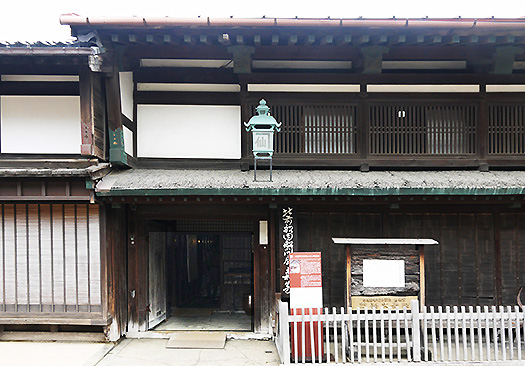
正面外観で入口は建物の左端に開けられている。
そしてこの入口からずっと奥まで「通り庭」が造作され荷物が搬出入される。
物流機能に特化しての造作が明確な設計配置。
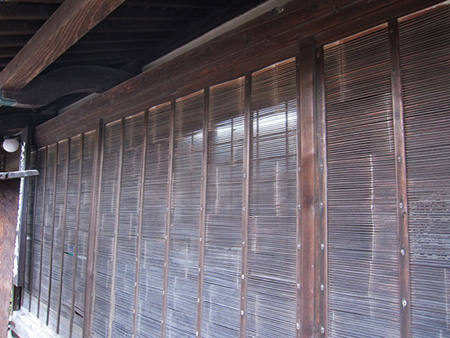
通りに面した入口以外の開口部分は1階ではスムシコという開口部材装置。
木で枠組みされてその枠の中に竹のスダレで作った格子の建具。
2階の居室にはタテ格子が付けられているけれど、
どちらもガラス建材代わりの用を足していた建具仕様だと思えます。
スムシコの下部には荷役の馬を繋ぎ置く「環」があるとのこと。
木造2階建・切妻鉄板葺平入で1−2階の間にはこけら葺きの庇。
外壁は漆喰の白と構造の木材のあらわしという表情。
端正な「用の美」をたしかに感じさせてくれる。
江戸期の町家建築の様式が機能面でもデザイン面でも完成形的。

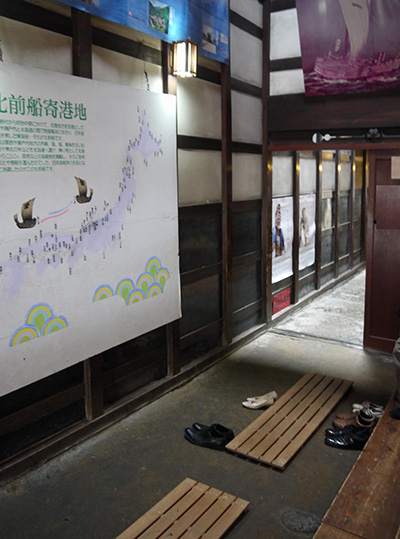
3枚目の写真はこの家の機能である物流、荷さばき機能を実現させた
「トオリニワ」の様子です。
土間部分には大型の1枚石板が使われているということ。
あまりにも頻繁な搬出入作業なので、雨での床面の汚濁を避け、
また強度としても重量物が通っても大丈夫なように造作されたのでしょう。
場合によっては馬も出入りできるほどの道幅にも感じられる。
江戸末期〜明治の活発な北前交易の残照が照り返してくる。

English version⬇

[Commercial Machiya, a strategic point for land and sea transportation / Good Japanese house ㉞-2]
Currently, when I visit this shipping wholesaler, there is a port facility slightly away from the back.
There is a harbor at the mouth of the Jinzu River facing the Sea of ​​Japan.
According to the information from reader N, it is necessary to secure the “brackish water” area to some extent.
It is said to be for maintenance from damage such as insects attached to the ship.
It is noticed that there was a promise of water transportation in the age of wooden ships.
Until the Taisho era, it was said that a ship was immediately laid behind this house.
And in front of the entrance is the main trunk line facing the Hokuriku Highway, which is also a substitute road for attendance.
It is truly an amphibious transportation hub. Therefore, many merchant houses are lined up
As a result, it is built in a Japanese-style architectural district and townhouse style.
Many merchants shared the convenience of rare land and sea logistics.
Is this kind of “town division” spontaneous?
Or is it a mutual aid discussion or involvement by a power mechanism?
I’m not sure how it happened. However, it is very rational for city allocation and city planning.
Although the Edo Shogunate was opened and the political administration system was centered there,
From the aspect of population and economy, the Kyo-Osaka / Kinai area is the central area of ​​Japan.
The Sea of ​​Japan trade is exactly the aorta of the Edo period economy.
It can be seen that the location was such that it was the heart of economic activity in the Toyama region.

Udatsu, which is a fire wall with the neighboring house, can be seen like a townhouse.
From the front, the entrance is open at the left end of the building.
Then, a “street garden” is created from this entrance to the back, and luggage is carried in and out.
Designed and arranged with a clear structure that specializes in logistics functions.
The opening part other than the entrance facing the street is an opening member device called Sumushiko on the first floor.
A lattice fitting made of bamboo blinds in a frame made of wood.
The living room on the second floor has a vertical grid,
Both of them seem to be fitting specifications that used to be used as a substitute for glass building materials.
At the bottom of Sumushiko, there is a “ring” that holds the loading horses together.
It is a two-story wooden building with a gabled iron plate thatched flat, and there is a thatched roof between the 1st and 2nd floors.
The outer wall has the expression of white plaster and structural wood.
It certainly makes you feel the neat “beauty of use”.
The style of Machiya architecture in the Edo period is complete in terms of both functionality and design.

The third photo realizes the functions of this house, such as logistics and cargo handling.
It is a state of “Toori Niwa”.
A large single stone plate is used for the dirt floor.
It’s too frequent to carry in and out, so avoid polluting the floor with rain.
In addition, it must have been designed so that it is safe for heavy objects to pass through.
In some cases, it feels like the road is wide enough for horses to enter and exit.
The afterglow of the active Kitamae trade from the late Edo period to the Meiji era is reflected.

【北前交易廻船問屋・富山「森家」/日本人のいい家㉞-1】


「民芸」という文化運動が存在する。
いわゆる民俗的な「用の美」を尊ぶ文化規範というように言えるでしょう。
戦前期から昭和期にかけて大きな運動体になっていたとされる。
その運動のスポンサーとして大原美術館で知られるクラレの創業家がある。
その3代目の大原総一郎氏が昭和24年、富山に工場建設するときに
この森家建築が売りに出されていて即座に買い入れたという。
民芸運動の数寄者として建築に強い思い入れがあったとされています。
この家に関わる「民芸建築」のことについては後日触れたいと思います。

北海道で生まれ育った人間として、北前船交易というのは大きな興味分野。
現代では物流・人流とも飛行機や鉄道・道路が主体であり、
海の交易路というものへの想像力が失われているけれど、
北海道はながく水産資源が主力産業であり日本海が経済の大動脈。
その産業主体も北陸地方が大きなウェートを占めていた。
いまでも北陸銀行などが支店を構えたりしている。
いや、第一にわたしの祖父一族の北海道移住には北前航路に乗ってきた。
北前船とは江戸時代から明治時代にかけて活躍した主に買積み廻船の名称。
買積み廻船とは商品を預かって運送するのではなく航行する船主自体が商品を買い、
それを売買することで利益を上げる廻船のことを指す。
人的・文化的側面で依存していたけれど様変わりして痕跡も不明になったいく。
そんなことから数度、北陸地域を訪ねることがあった。
2014年に探訪したときの写真記録が中心であります。
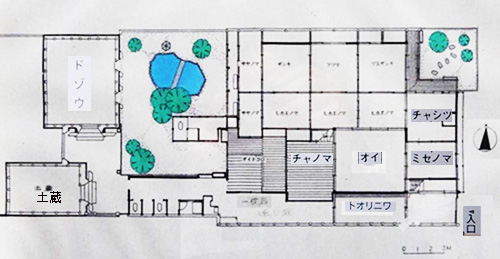
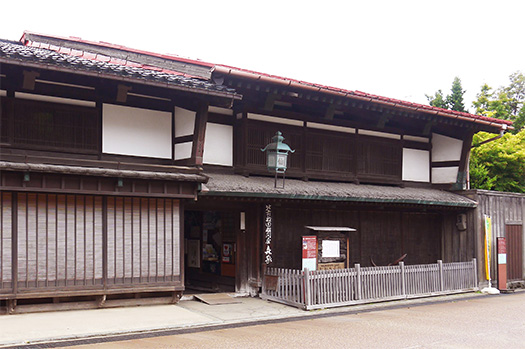
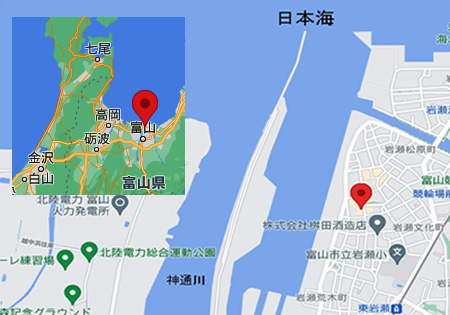
今回取り上げる「北前交易廻船問屋・富山森家住宅」は地図のような位置。
〜富山県富山市東岩瀬町大町通りに位置する大型町屋建築。森家は代々四十物屋仙右衛門を
世襲してきた船持ちの肥料問屋を営んできた家で、江戸時代後期からは
北前船の廻船問屋として大いに栄え財を成した。
旧森家住宅の主屋(明治11年(1878)建築、木造2階建て切妻鉄板葺平入、建築面積263.57㎡、
北土蔵(明治時代前期建築、土造2階建切妻桟瓦葺 建築面積38.89㎡)、
南土蔵(明治時代前期建築、土造2階建切妻桟瓦葺 建築面積22.54㎡)の3棟は
平成6年(1994)に国指定重要文化財に指定。〜という概略。築143年。

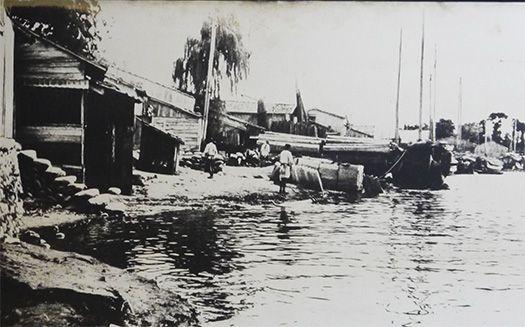
下の写真は展示されていた画像で神通川の港からの交易の様子。
この家では荷物の搬入、搬出が容易に出来るように
正面店部分から背後の蔵や裏の船着場まで通り土間が通っている。
建物としては明治11年建築ということですが、それは明治6年の大火での建て替えで
一族のこの地での消息は江戸期以前からとも推定できるほどに古い。
そういう商家が江戸期の北前交易に事業参入していったというのが実像でしょう。
建築としての基本骨格、ありようは少なくとも江戸後期に刻印された。
表構えはむくりのついたコケラ葺きの庇、スムシコと呼ばれる竹のスダレで作った格子建具。
スムシコの下には馬繋ぎの環がついている。
入口側は旧街道沿いで、海陸の交通の要衝に位置していることがわかります。
しばし、この日本海沿岸の家からその空気感を掘り起こしてみたいと思います。

English version⬇

[Kitamae Trading Ship Wholesaler, Toyama “Mori-ke” / Good Japanese House ㉞-1]
There is a cultural movement called “folk art” in Japan.
It can be said that it is a cultural norm that respects the so-called folk “beauty of use”.
It is said that it was a large movement from the prewar period to the Showa period.
The founder of Kuraray, known for the Ohara Museum of Art, is the sponsor of the movement.
When the third generation Soichiro Ohara built a factory in Toyama
It is said that this Mori family building was for sale and was bought immediately.
It is said that he had a strong attachment to architecture as a scholar of the folk art movement.
I will touch on the points of “folk art architecture” related to this house at a later date.

As a human being born and raised in Hokkaido, Kitamaebune trade is a major field of interest.
In modern times, both logistics and people flow are mainly airplanes, railroads, and roads.
I have lost my imagination for a trade route in the sea,
Hokkaido has long-term marine resources as its main industry, and the Sea of ​​Japan is the main economic artery.
The Hokuriku region occupies a large weight as the industrial entity.
Even now, Hokuriku Bank and others have branches.
No, first of all, I took the Kitamaebune route to move my grandfather and clan to Hokkaido.
Kitamaebune is the name of a shipping ship that was active from the Edo period to the Meiji period.
What is a kaisen? Instead of keeping and transporting goods, the shipowner who sails buys the goods and carries them.
It refers to a kaisen that makes a profit by buying and selling it.
Although it depended on human and cultural aspects, it changed and the traces became unclear.
For that reason, I visited the Hokuriku region several times.
The focus is on photographic records when I visited in 2014.
The “Kitamaebune Trading Ship Wholesaler / Toyama Moriya Residence” featured this time is located like a map.
~ Large Machiya architecture located on Omachi-dori, Higashiiwasemachi, Toyama City, Toyama Prefecture. The Mori family has been visiting Senemon Takagi for generations.
It is a house that has run a hereditary ship-owned fertilizer wholesaler, and since the late Edo period
It made a great fortune as a shipping wholesaler for Kitamaebune.
Main building of the former Mori family residence (built in 1878, wooden two-story gabled iron plate with flat roof, building area 263.57㎡,
Kita Dozo (built in the early Meiji era, two-story earthen gable roof, building area 38.89㎡),
The three buildings of Minami Dozo (built in the early Meiji era, two-story gable roof with a building area of ​​22.54 m2)
Designated as a national important cultural property in 1994. Outline of. 143 years old.

The photo below is the image on display, showing the trade from the port of the Jinzu River.
In this house, you can easily carry in and out your luggage
The dirt floor runs from the front store to the warehouse in the back and the dock in the back.
The building is said to have been built in the 11th year of the Meiji era, but it was rebuilt in the great fire of the 6th year of the Meiji era.
The clan’s fate here is so old that it can be estimated even before the Edo period.
The real image is that such merchants entered the Kitamae trade in the Edo period.
The basic skeleton of architecture, perhaps at least in the late Edo period, was engraved.
The front is a moss-roofed eaves with chestnuts, and a lattice fitting made of bamboo blinds called Sumushiko.
Below Sumshiko is a ring of horses.
You can see that the entrance side is along the old highway and is located at a key point of land and sea transportation.
For a while, I would like to dig up the atmosphere from this house on the coast of the Sea of ​​Japan.