本文へジャンプ

【作家・白洲正子の「能」舞台的外構空間 武相荘-3】


家というのは基本的には夫婦で作って行く好みの私的空間でしょう。
雰囲気にそれぞれの嗜好が反映され夫婦でも違う微妙なゆらぎがあって、
その揺らぎが、たおやかに安らいでいる様子が伝わってくれば、
「いい家」という環境性能を獲得しているのだと思います。
ここで言う「環境」とはしっくりくる、みたいな感受性のこと。
そういう見方でこの「武相荘」は空間の佇まいに余韻が感じられる。

わたしは白洲正子という作家の著作はまったく読んだことがない。
文学ではまったくの門外漢ですが、彼女の経歴を見ていて
「女性として珍しく能舞台に立った」という記述があって強く惹かれた。
名家の女性は幼いときから感受性教育を受ける伝統が日本にはあり
彼女は男性優位とされる能を学ばされたのだという。
能は日本人的な体動作を緊張感豊かに典型化させる芸能であり、
そこから日本文化のコア部分に迫るものがあると思います。
一定の寸法規格の空間に即して、無駄なく体を動作させて
その体動作に合理性と審美性を両立させるものだと思えるのです。
それは「舞台一杯」を無駄なく使い、それを活かしきることにも繋がる。
何歩進めば残り空間でクルッと鮮やかに反転できるか、など空間との対話性。
人間と空間の関係を象徴的に理解させる機縁を芸術化している。
建築空間への審美眼にも通ずる芸能であると。
そのような感受性教育を豊かに受けた女性が、東京市街を離れた鄙に
住まいを求め、その空間にいろいろ「手を掛けた」だろうと思う。
とくにこの地は能ヶ谷という名で、彼女は運命的出会いを感じたかも知れない。
谷という名だけれど住まいは縄文期以来の伝統からかやや高台にある。
彼女と夫の白洲次郎がこの茅葺き農家を購入した1943年段階ですでに100年超の
建築年代の住宅だったと言われている。
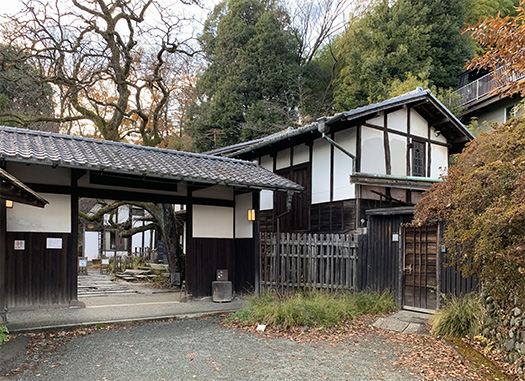
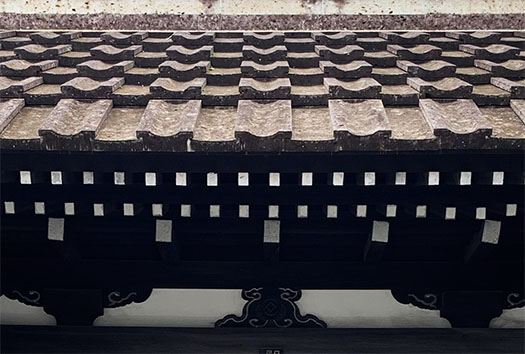
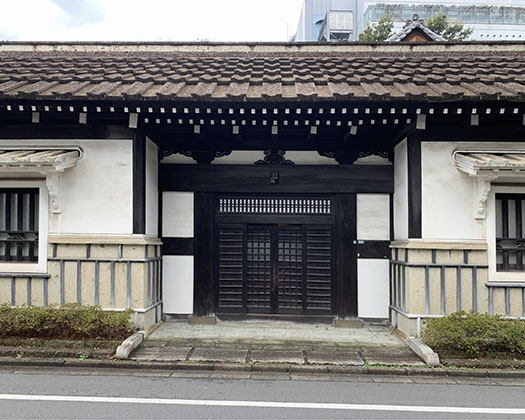
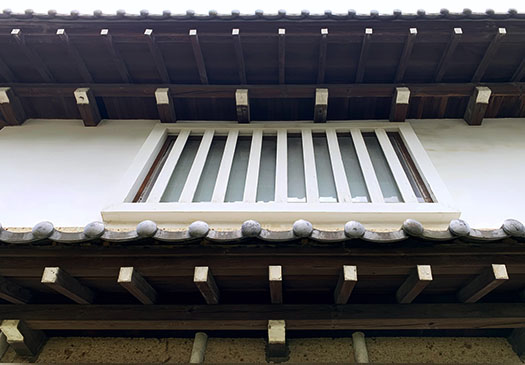
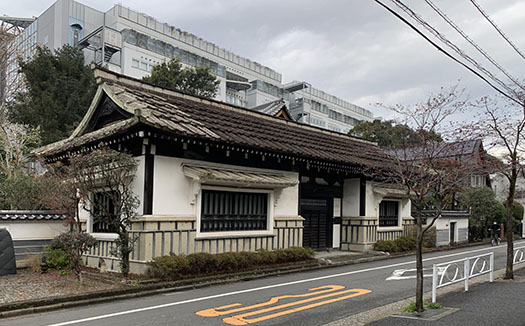
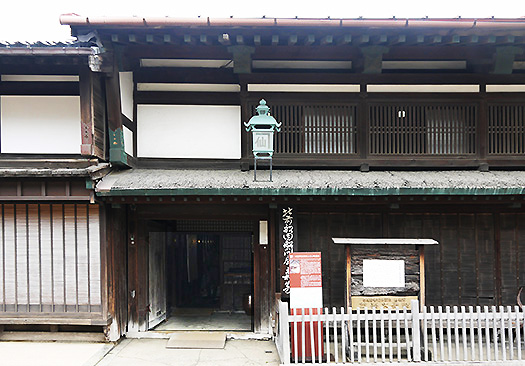
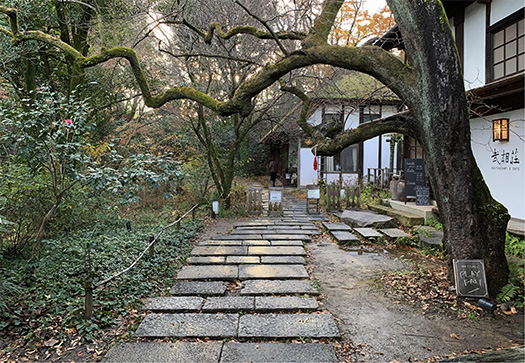
上の写真は農家と言うには破格とも思える「長屋門」から入ってすぐの門かぶり松。
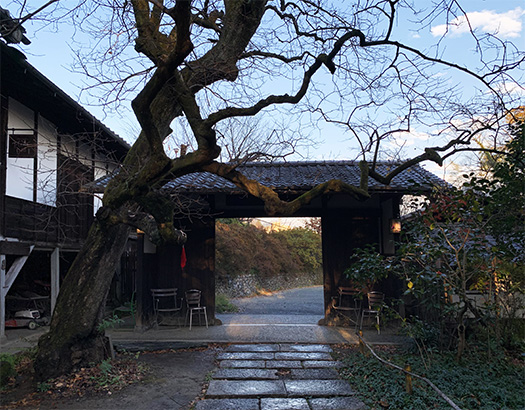
そして奥に入ってからの長屋門見返しショットであります。
長屋門は武家住宅の形式として家格をあらわす建築装置であり
その身分と建築仕様が事細かく規格されているもの。
この農家住宅は江戸期の建築であり長屋門を持つ庄屋家格だったのでしょう。
能を学んだ彼女はこの長屋門にインスピレーションを受けたに違いない。
この「門かぶり松」がいつ植えられていたか不明だけれど、
空間への感性を能で磨いてきた彼女には好ましいと思える感性はあっただろう。
長屋門の高さと左右幅のバランス、その開口部のバランスなど
暮らしの場としての空間の美感として彼女には好ましかったと感じる。

今日の住宅ではこうした外構空間性というものは
ほとんど顧みられなくなっているけれど、ほんの数十年前までは
日本人はこういった空間性への審美眼を強く持っていたのではないか。
武家住宅由来の長屋門がその配置とか、規模感などで
日本人的な空間感受性・美意識を深く涵養してきていたのではないか。
失われた貴重な伝統的空間美について再発見させられる気分がしておりました。

English version⬇

[Writer Masako Shirasu’s “Noh” stage exterior space Buaisou-3]
A house is basically a space you like to make with your spouse.
Each taste is reflected in the atmosphere, and even couples have different subtle fluctuations,
If you can feel that the fluctuation is calm and peaceful,
I think it has acquired the environmental performance of a “good house.”
The “environment” here is a sensitivity that fits nicely.
From that perspective, this “Buaisou” has a lingering finish in the appearance of the space.

I have never read the work of a writer named Masako Shirasu.
She’s a complete outsider in literature, but she’s looking at her career
She was strongly attracted to her description that she stood on the Noh stage, which is unusual for a woman.
There is a tradition in Japan that well-known women receive sensitivity education from an early age.
She is said to have learned the ability to be male-dominated.
Noh is an entertainment that typifies Japanese body movements with a sense of tension.
From there, I think there is something that approaches the core of Japanese culture.
Move your body without waste according to the space of a certain dimensional standard
It seems that the body movement has both rationality and aesthetics.
It also leads to using “the stage full” without waste and making full use of it.
Dialogue with the space, such as how many steps you should take to flip it vividly in the remaining space.
It is an art form of the mechanism that symbolically understands the relationship between humans and space.
It is an entertainment that can be seen as an aesthetic eye for architectural space.
A woman who received such sensitivity education abundantly left the city of Tokyo
She sought a place to live, and I think she would have “worked” on the space.
Especially this place is named Nogaya, and she may have felt a fateful encounter.
Although it is called a valley, the residence is on a slightly higher ground from the tradition since the Jomon period.
It’s been over 100 years since she and her husband Jiro Shirasu bought this thatched farm in 1943.
It is said that it was a house of the construction age.
The photo above is a gate-covered pine tree just after entering from the “Nagayamon”, which seems to be exceptional for a farmer.
And it is a shot looking back at the nagayamon after entering the back.
The nagayamon is a building device that represents the family character as a form of samurai housing.
The status and building specifications are standardized in detail.
This farmhouse was built in the Edo period and probably had a shoya family with a nagayamon.
She must have been inspired by this nagayamon after learning Noh.
I don’t know when this “gate cover pine” was planted,
There would have been a favorable sensibility for her, who had honed her sensibility for space with her ability.
Balance of height and left and right width of nagayamon, balance of its opening, etc.
She feels like her as the beauty of her space as a place of her living.

In today’s houses, this kind of exterior space is
It’s almost neglected, but only a few decades ago
I think the Japanese had a strong aesthetic eye for this kind of spatiality.
The layout of the nagayamon, which is derived from the samurai residence, and the sense of scale
I think he has deeply cultivated Japanese spatial sensitivity and aesthetic sense.
I felt like I was rediscovering the precious and precious traditional space beauty that was lost.

【現代に繋がる日本の支配階層とは? 武相荘-2】


日本の歴史授業では明治以降の歴史はさらっとしかやらない。
現代に直接繋がる権力構造や、反政府勢力のありようなど、
あまりにも生々しい関係性がゴロゴロしているので触れにくいのでしょう。
住宅建築、それも現代まで残っている古民家などを探訪していると
けっこう容易にそういった歴史人間関係であるとかがうかがえて興味深い。
江戸期から明治期にかけては各地方で大地主として存続した豪農層と
明治期以降権力周辺で西洋の社会基盤の情報に強く接していた層が
「有力者層」を形成して日本資本主義の最初の成功者になっていく。
明治最初期のわかりやすい成功者は絹糸産業の主たちであり
横浜から海外輸出される交易の富は莫大だったと言われる。
よく函館では北前交易で儲かった人々はその後横浜に移って
海外交易での成功者になった。結果、函館には資産家の積層は残らなかったと。
そうした層の豪邸が「残すべき資産」として現代にまで残っている。
戦前期まではこれらの層が「支配階層」を形成して
欧米からの資本主義導入・キャッチアップで有利な立場を築いていた。
この白洲次郎氏の来歴をみると家系が明治期に貿易で大成功し、
そして有力家系同士で婚姻関係を形成して人間情報の紐帯を太くしている。
戦前期に白洲次郎自身はイギリス・ケンブリッジに留学し、
その親はアメリカ・ハーバードに留学している。貿易商として重要な人脈を
海外で築いている様子が明瞭に見て取れる。
父親は綿貿易で巨万の富を築いたけれど要するにそうした人脈情報で
圧倒的な「格差」があって、それを非競争的原資にしたことがわかる。
白洲家の会社は昭和初期に倒産しているけれど、その後も息子の次郎氏は
ポンと外車を父親からプレゼントされたりしている。
そしてそういった貿易事業と不可欠な人脈開拓で英国大使時代の
後の総理・吉田茂と知遇を得たりしている。イギリス出張の際には
なんと日本大使館を定宿にしていたというのだから、官民癒着はすごい。
経済規模に於いて英米と新興国日本ではまったくスケールが違い、
新興国としてはとにかく官民の境なく、キャッチアップに励んでいた。
そういう開明的な人士たちにすれば戦争に突入していった祖国の政治状況は
まさに「敗戦必至」と見通していたのだろう。

写真はサンフランシスコ講和会議に向かう機上での吉田茂と白洲次郎。
そのような出自の白洲次郎は占領軍のアメリカ側から
「日本人で稀な原理原則を主張する硬骨漢」とみなされたという。
講和交渉でも日本の立場を強くリードしたとされる。
「アメリカででも成立しない夢想的憲法」と占領軍の憲法押しつけを批判的に語る。
対米交渉の現場で生々しい経緯があっただろうけれど、
そういった書類は死の直前時期に焼却処分されたと娘さんの証言もあると。
英米をよく知る官民の中間的存在として「戦後」骨格形成に深い足跡を残した。
いま私達は、そのはるかな桎梏の中にいるのだと思う。

English version⬇

【What is the Japanese ruling class that leads to the present age? Buaisou-2】
In Japanese history lessons, the history after the Meiji era is only lightly done.
The power structure that is directly connected to the present age, the existence of rebels, etc.
It’s hard to touch because the relationship is so vivid.
When you are exploring residential architecture, old folk houses that remain until the present day
It is interesting to see that it is such a historical human relationship quite easily.
From the Edo period to the Meiji period, with the wealthy farmers who survived as landlords in each region
Since the Meiji era, the people who have been in close contact with information on Western social infrastructure around power
Forming a “major class” and becoming the first successful Japanese capitalist.
The easy-to-understand successes of the early Meiji era were the masters of the silk industry.
It is said that the wealth of trade exported overseas from Yokohama was enormous.
People who often made money from the Kitamae trade in Hakodate then moved to Yokohama.
Became a successful foreign trader. As a result, there was no accumulation of wealthy people in Hakodate.
The mansion of such a class remains as an “asset to be left” to the present day.
Until the prewar period, these layers formed the “ruling class”.
He was in an advantageous position by introducing and catching up with capitalism from Europe and the United States.
Looking at the history of Mr. Jiro Shirasu, the family line was a great success in trade during the Meiji era.
And they form a marriage relationship between influential families and thicken the ties of human information.
Before the war, Jiro Shirasu himself studied abroad in Cambridge, England, and
His parents are studying abroad in Harvard, USA. An important network as a trader
You can clearly see how he is building abroad.
His father made a huge fortune in the cotton trade, but in short, with such network information
It can be seen that there is an overwhelming “gap” and that it was used as a non-competitive resource.
The Shirasu family’s company went bankrupt in the early Showa period, but his son Jiro continued to do so.
His father gave him a pong and a foreign car.
And with such a trading business and indispensable network development, during the time of the British Ambassador
He has been treated with the later Prime Minister, Shigeru Yoshida. When traveling to the UK
It is said that he had settled at the Japanese embassy, ​​so his public-private cohesion is amazing.
In terms of economic scale, the scale is completely different between Britain and the United States and Japan, an emerging country.
As an emerging country, I was trying to catch up without any boundaries between the public and private sectors.
For such open-minded people, the political situation in their homeland that entered the war
It must have been predicted that “the defeat is inevitable”.

The photo shows Shigeru Yoshida and Jiro Shirasu on the plane heading to the San Francisco Peace Conference.
Jiro Shirasu of such origin is from the American side of the occupation army
He is said to have been regarded as “a bony fish who insists on rare principles in Japan.”
He is said to have strongly led Japan’s position in peace negotiations.
He criticizes the occupying forces for imposing a constitution, saying that it is a “fantasy constitution that cannot be established even in the United States.”
There must have been a vivid history in the field of negotiations with the United States,
According to his daughter’s testimony, such documents were incinerated shortly before his death.
As an intermediary between the public and private sectors who are familiar with Britain and the United States, he left a deep mark on “postwar” skeletal formation.
I think we are in that far-off box now.

【「戦後」を作った白洲次郎の家 武相荘-1】


知人のSNS発信を見ていたら町田市の一隅に面白い家があると知った。
町田は一時期、関東での拠点としても考えていた街なのでその来歴としても
興味を持った次第なのです。昨年機会があったので
住宅探訪として「古民家」的なものと考えて訪問してみた次第です。
町田は東京都だけれど神奈川県の北部にまるで「飛び地」のようにある。
東京の人に聞くと「あそこは神奈川(笑)」と答える街。
この家の亭主であった白洲次郎氏にもそういった気分があったのか、
家への名付けを「武相荘」としたのは武州(東京と埼玉)と相州(神奈川)の
端境意識があってそう名付けたとされている。
それに「無愛想」という掛詞をもじらせているあたり、才気のほとばしりを
自らこれ見よがし風なので、どうも、という気分にも襲われる。

白洲次郎さんは日本の実業家。貿易庁長官。兵庫県芦屋市出身。
連合国軍占領下の日本で吉田茂の側近として活躍し終戦連絡中央事務局や
経済安定本部の次長を経て商工省の外局で新設された貿易庁の長官を務めた。
吉田政権崩壊後は実業家として東北電力会長を務めるなど企業役員を歴任した。
〜という人物。家系は神戸圏の武家階級出身。明治期に貿易商として成功を納め、
父親はハーバードを出て本人もケンブリッジに学んでいたという家系。
昨年のNHK大河ドラマの渋沢栄一とも似た経緯の家系と思える。
明治から戦前・戦後と日本の「有力家系」という典型を見るようです。
おおむね近代日本はこういった家系が主流人脈を構成して営まれてきた。
そのなかで戦後日本形成で主導的な役割を担った人物といえるのでしょう。
「欧米社会を深く知る」人間として対英米戦争に日本がなだれ込んでいく時期に
その敗戦の必至なるを見通して農家を購入し、農業をしながら
この「武相荘」に籠もって敗戦を迎えた後、知友の吉田茂に請われて
戦後処理にあたっての基本政策、対米交渉など国家骨格に関わった。

いま訪れると、周辺の主要道路からやや高台に位置し、
下にはユニクロの店舗があるけれど、そういった現代とはタイムスリップ感で
「へぇ〜、いまでもこんな南関東の自然風土が・・・」
というような佇まいを見せてくれています。
「昔はこういう茅葺きの農家住宅がたくさんあった」という白洲の述懐が
展示記録されているのですが、まことに空気感が伝わる。
北海道から来た人間からすると垂涎のような気候風土ぶりがわかる。
札幌から一時期学生〜社会人時代を過ごした地域として
東京・神奈川にはカラダの一部に空気感が蓄積している気分がある。
ただ、この「武相荘」周辺のように都市化・一元化が押し寄せているので
気候風土が感じにくくなっている。そういう感覚が刺激されてきます。
・・・ということで数回「武相荘」探訪記を書いてみます。

English version⬇

[Jiro Shirasu’s house that made “postwar” Buaisou-1]
When I was watching my acquaintance’s SNS, I found out that there was an interesting house in a corner of Machida City.
Machida is a city that I was thinking of as a base in the Kanto region for a while, so even as a history
It depends on my interest. I had an opportunity last year
As a housing exploration, I thought it was an “old folk house” and decided to visit it.
Machida is in Tokyo, but in the northern part of Kanagawa prefecture, it looks like an “exilave”.
A town that answers “that is Kanagawa (laughs)” when asked by people in Tokyo.
Did Jiro Shirasu, the owner of this house, feel that way?
The name of the house was “Buaisou” in Musashi (Tokyo and Saitama) and Sagami (Kanagawa).
It is said that he named it because of his sense of alienation.
In addition, the slogan “unfriendly” is used to give a hint of ingenuity.
It’s a nice looking wind, so I feel like I’m afraid.

Jiro Shirasu is a Japanese businessman. He is the Commissioner of the Trade Agency. Born in Ashiya City, Hyogo Prefecture.
He was active as an aide to Shigeru Yoshida in Japan under the occupation of the Allied Forces, and was the Central Secretariat for the End of War.
After serving as Deputy Director of the Headquarters for Economic Stability, he was Secretary of the newly established Trade Agency as an external agency of the Ministry of Commerce and Industry.
After the collapse of the Yoshida administration, he served as a businessman and chairman of Tohoku Electric Power Co., Inc.
A person named. His family is from the samurai class in the Kobe area. He paid his success as a trader in the Meiji era,
His father is a family who left Harvard and learned from Cambridge.
It seems to be a family with a similar background to last year’s NHK Taiga drama Eiichi Shibusawa.
From the Meiji era to the pre-war and post-war eras, it seems to see the typical “influential family” of Japan.
In modern Japan, these families have generally formed a mainstream network of contacts.
Among them, it can be said that he played a leading role in the shaping of postwar Japan.
At a time when Japan is pouring into the War of 1812 as a person who “knows deeply about Western society”
In anticipation of the inevitable defeat, I bought a farmer and farmed
After being defeated in this “Buaisou”, he was asked by his friend Shigeru Yoshida.
He was involved in the national skeleton such as basic policies for postwar processing and negotiations with the United States.

When I visit now, it is located on a hill slightly above the main roads in the surrounding area.
There is a UNIQLO store underneath, but it feels like a time slip with the present age.
“Hey, even now, the natural climate of South Kanto is …”
It shows the appearance like that.
“In the old days, there were many such thatched-roof farmhouses,” says Hakushu.
The exhibition is recorded, but it really conveys the atmosphere.
From the perspective of humans from Hokkaido, we can see the coveted climate.
As an area where I spent a period of student-working days from Sapporo
In Tokyo and Kanagawa, there is a feeling that a feeling of air is accumulated in a part of the body.
However, as urbanization and unification are rushing around this “Buaisou”
The climate is hard to feel. That kind of feeling is stimulated.
So, I will write a trip to “Buaisou” several times.

【空白からの再起動 貴重な正月休みボケ】


今年の正月カレンダーは休日としてはやや少なめで、あしたからは仕事日。
1−2日が土日に当たってしまったので、帯に短しタスキに長し。
ということで家で過ごすという人が多いように思います。
ただし来週月曜10日が休日なのでどうなんでしょうか、
キッパリハッキリとした休日日程というよりもダラダラ気味か(笑)。

ということでわたしも年末からきょうまで家でノンビリ。
食事の用意支度を中心に考えるモードで過ごしております。
年末買い出ししておいた食材をどうやって料理するか
タイはかなりカタチは変形したけれどなんとか捌いて
「味はさすがにタイだ」という褒め言葉を子どもたちからもらった(笑)。
美味しかったんだから、もうちょっと言い方があるのではとも思ったけれど、
削り残しのウロコが飛び込んで混じったりで、まぁそんなものでしょう。
食のことだけに関心を集中させていると
ほかの人生のことがらが忘却されて頭が空白領域に支配される。
いわば「ボーッ」とした状態。
これがきっと最高の気分、心理効果なのでしょうね。
食事を作って食べて、満腹してそのあとうたた寝して
目覚めると今度は「次、なに食べようか」と考え始める。
まことに原始の人間生活サイクルが彷彿としてくる。
きっとはるかなご先祖さまたちはこのライフサイクルのなかから
ちょっとずつ工夫して行ったのでしょうね。
「モチばっかりだとちょっとおなかに良くないから次、麺類かなぁ」
というような単純思考サイクルの中にどっぷり留まっている。
その合間にちょっとした雪かき運動とか、温泉入浴が点景をつくる。
本当に貴重な「ボーッ」とした状態。

なんですが、さすがに思考が徐々に仕事に復帰、再起動の準備へ。
この「ボーッ」とした状態から復元させてくると
不思議に見え方がちょっとひと味違ってくる部分がある。
でもやがて、本格的に復帰してくると元通の地点に戻っていく。
その定点への忘却と回帰の合間の意味合いは、でもやはりある。
なんというか、これこそリフレッシュなのでしょう。
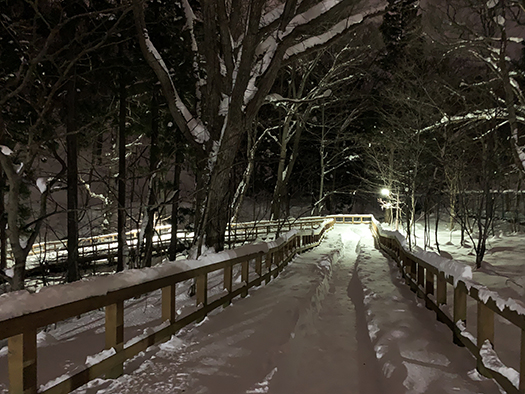
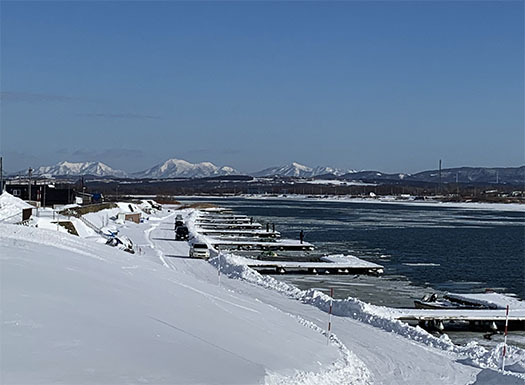
写真は休暇中の札幌周辺の季節風景であります。
札幌はすっかり例年通りの雪景色。
白く地面が覆われてくると安心感という「あたたかさ」を感じる。
雪はそれ以上の凍結から冬中地面を守っていてくれる。
いわば雪の断熱性能。
冬至も過ぎこれから春に向かって陽射しの時間も伸びていく。
ことしも徐々に再起動させて行きたいと思います。
って、まだまだ正月ボケ気味のブログで申し訳ありません。

English version⬇

[Restart from blank] Valuable New Year holiday blur]
This year’s New Year’s calendar is a little small as a holiday, and it’s a work day from tomorrow.
1-2 days hit Saturday and Sunday, so I made it short on the obi and long on the sash.
So I think many people spend their time at home.
However, what about because next Monday 10th is a holiday?
It’s more like a sloppy holiday than a clear holiday schedule (laughs).

That’s why I’m at home from the end of the year to today.
I am spending time in a mode that focuses on preparing meals.
How to cook the ingredients that you bought at the end of the year
The shape of Thailand has changed considerably, but I managed to handle it.
I got a compliment from the children that “the taste is really Thai” (laughs).
It was delicious, so I thought there was a little more to say,
Uncut scales jump in and mix, so that’s probably the case.
If you focus only on food
Other life things are forgotten and the head is dominated by the blank area.
So to speak, it is in a state of being “dumb”.
This is probably the best mood and psychological effect.
Make and eat a meal, get full and then nap
When I wake up, I start thinking “what should I eat next?”
Indeed, the primitive human life cycle is reminiscent of it.
I’m sure far-reaching ancestors are from this life cycle
I think I did it little by little.
“If it’s just mochi, it’s a little bad for my stomach, so I wonder if it’s noodles next.”
I’m stuck in a simple thinking cycle like that.
In the meantime, a little snow shoveling exercise or hot spring bathing creates a scenic spot.
A really valuable “dumb” state.

However, as expected, my thoughts gradually returned to work, and I was preparing for a restart.
If you restore from this “dumb” state
There is a part that looks strangely different.
However, when it returns in earnest, it will return to the original point.
The implications between forgetting to that fixed point and returning are still there.
I wonder if this is refreshing.
The photo shows the seasonal scenery around Sapporo during the holidays.
Sapporo is a snowy landscape as usual.
When the ground is covered with white, you can feel the “warmth” of security.
Snow protects the ground from further freezing during the winter.
So to speak, the heat insulation performance of snow.
The winter solstice has passed and the time of sunshine will increase toward spring.
I would like to restart it gradually.
I’m sorry for the blog that is still out of focus on New Year’s Day.

【日本的埴輪のWelcomeマスク姿にほっこり】


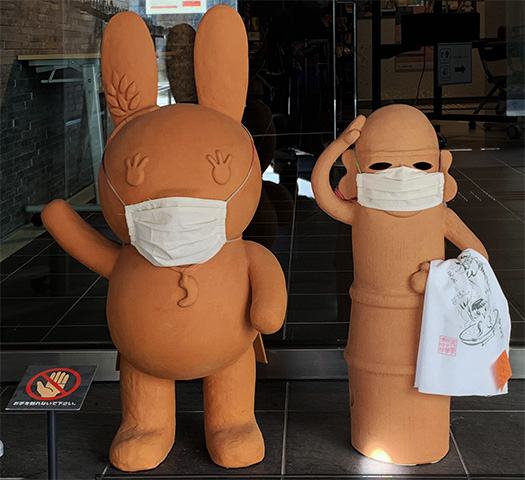
写真は先日訪れた國學院大學博物館の玄関に置かれた埴輪。
國學院は学園敷地自体が旧宮家から贈与されたものであり、
日本文化研究において独特の学風を持った存在。
日本画コレクションで日本有数の存在である近隣の山種美術館への行脚が
個人的な趣味生活でかなり枢要なので、その流れから
ほぼ必ず立ち寄る東京でのスポットであります。
で、感染症の状況推移をみながら徐々に東京との情報交換機会が増えて
立ち寄ったのですが、こんなかわいい出迎えを受けて
思わずシャッターを切らされてしまった(笑)。
負けた。さすがに「国学」研究の積層が感じられる学風そのまま、
埴輪のペアが、マスク着用をアピールしてくれている。
右側の埴輪はどうしてタオルを持っているのかと若干疑問でしたが、
たぶん、手洗いを象徴させているのでしょうか?
博物館訪問の気分に真っ正面から一本、面をとられた心境であります(笑)。

欧米ではマスクを着用強制されることに対して反発を感じる人々が
マスク反対と叫んでデモを行うということを聞きますが、
世界に冠たるマスク着用大国ニッポンでは、こういう文化レベルで
自発的な啓蒙活動が繰り広げられている。
この國學院博物館に限らず、いろいろな公共的空間で工夫を凝らした
「さりげない」公共心の喚起が繰り広げられている。
どうして極東の島国国家社会ではこのような自己啓発的なことが可能なのか、
文化として成立しているのか、と思わず考えてしまう。


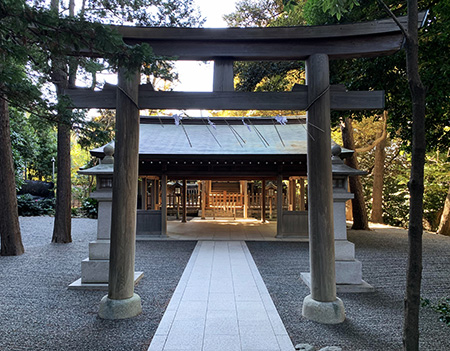
そんなことを考えさせられながら歩いていて学園内にある神社に。
國學院には神道学科もあって全国の神社などから子弟が学んでいる。
そういうことで学内にこのように社が祀られているのですね。
で、考えて見ると海外の国々でこうした宗教的空間が
全国津々浦々、あまねく存在しているという社会は稀有だと気づかされる。
それぞれの社に社伝がありファンタジーが地域で情報共有されている。
日本人というのは、それを信仰しているのかどうかは不明だけれど
正月になれば地元の神社に詣でて、拍手し参拝する習慣を持っている。
そういうとき、神かどうかは別にしてある大きな存在と対話して
自ら「顧みる」一瞬の時間を持っている。
さすがにベラベラとしゃべりながら拝みもしないという人はあんまり見ない。
そして神との一瞬の対話後、気分が清々しいと錯覚している(笑)。
意味不明だけれど、それが良い面を持っているのではないか。
なんとなく自分一個を超えた「公共」「神」という意識を
毎年一回は確認する機会を持っているというのは、
人類世界レベルで考えて見ると非常に稀有なオリジナリティだろう。
そういう特殊な行動習慣を持っていながら、日本の八百万の神々には
強制的な教え、規範強制がほぼ見られない。

そういうのがそれこそ埴輪の時代から、そうなんだなと気付かされて
この埴輪2体に深く1本取られまくっておりました。

English version⬇

[Welcome mask of Japanese Haniwa]
The photo is a haniwa placed at the entrance of the Kokugakuin University Museum that I visited the other day.
Kokugakuin is a school site itself that was donated by the former Miyake.
Existence with a unique academic style in Japanese culture research.
A pilgrimage to the nearby Yamatane Museum of Art, one of Japan’s leading Japanese painting collections
It’s quite important in my personal hobby life, so from that flow
It’s almost always a spot in Tokyo.
So, while watching the transition of infectious diseases, the opportunities for exchanging information with Tokyo gradually increased.
I stopped by, but I received such a cute welcome
I accidentally released the shutter (laughs).
lost. As expected, the academic style that you can feel the accumulation of “Kokugaku” research is as it is
A pair of haniwa appeals to wear a mask.
I was a little wondering why the haniwa on the right had a towel,
Maybe it symbolizes hand washing?
I felt like visiting the museum from the front, and I was taken aback (laughs).

In the West, people who feel repulsive to being forced to wear masks
I hear that you are screaming against the mask and demonstrating,
In Japan, the world’s leading mask-wearing powerhouse, at this cultural level
Voluntary enlightenment activities are being carried out.
Not limited to this Kokugakuin Museum, we devised various public spaces
A “casual” public spirit is being aroused.
Why is such self-development possible in the island nation society of the Far East?
I wonder if it has been established as a culture.

While walking while making me think about such things, I went to a shrine in the school.
Kokugakuin also has a Shinto department, and children are learning from shrines all over the country.
That’s why the company is enshrined in this way on campus.
So, when you think about it, there are religious spaces like this in overseas countries.
It is noticed that a society that exists all over the country is rare.
Each company has a company biography and fantasy is shared in the area.
I don’t know if Japanese people believe in it,
It is customary to visit a local shrine on New Year’s Day, applaud and worship.
At that time, interact with a big being, whether it is a god or not.
He has a momentary time to “look back” himself.
I don’t see many people who talk to Bella Bella and don’t even worship.
And after a momentary dialogue with God, I have the illusion that I feel refreshed (laughs).
It doesn’t make sense, but I think it has a good side.
Somehow, the consciousness of “public” and “god” beyond oneself
Having the opportunity to check once a year means
It is a very rare originality when considered at the human world level.
While having such a special behavioral habit, to the eight million gods of Japan
There is almost no compulsory teaching or norm compulsion.

That’s what I realized from the time of Haniwa.
One of these two haniwa was taken deeply.

【「民藝」統合概念の不在 民藝と北海道-4】


さて、民藝運動について考えて見ましたが、
いろいろな方向から見てやはり「民藝」概念特定の不在が決定的です。
創始者・柳宗悦氏には言語化できないまでも自ら創始した
「民藝」を日本文化の一分野として共有させるに足る統合的概念が
煮詰められた可能性があったのでしょうが、結果としては
共有不能な「直感」が選別基準であったことが決定的なのかと。
わたしが素朴に持った疑問「なぜ北海道には民藝が不在とされるのか?」
について、運動自体としてそれを解決できていないのではないか。
あくまでも運動創始者達の「直感」で触れられたものだけが「民藝」とされた。
たしかにこれでは北海道でかれらによってはさしたる民藝が発掘されず、
いわば空白区を必然化させてしまった。
移住主体の北海道人として共感はできても参加不能な運動のように思える。

写真は柳宗悦氏自邸の瓦屋根で、独特の瓦とその葺き方ですが、
北海道では開拓期から一貫して雪による屋根雪崩とともに瓦が
滑落してしまう現実があり、早々に瓦を放棄して鉄板屋根に移行した。
柳宗悦さんは「用の美」ということを訴えたが、
北海道ではそもそも瓦は「用」を満たしていなかったのだ。
こういう重要な点についての十分な考察を持たないまま、
創始者世代が不在になる中で、北海道への無視が固定化された。
一応確立された「民藝」文化の囲い込みと保守化。
北海道はすでに150年の開拓以降の歴史があり、
全国各地からの移民による混血が進み、そして伝統に変わって
近代的合理主義による日本民族生活の変容もまた進んだ。
民藝そのものが変革の対象になったともいえる。寒冷地生活実態に照応した
あたらな生活文化性を創造しつつあるし、すでに確立した住文化もある。
見てきたようなコンクリートブロック外断熱住宅などは一典型。
性能的合理性は日本民家の居住性能に革命をもたらしたに等しく、
そこで実現された性能レベルを木造でも実現することが目指されて
結果として「高断熱高気密」という民族的住宅技術資産を産み、
いま温暖地域でも急速に普及しつつある。
日本民藝館では民藝的風合いの建築として、組石造外観に着目して
大谷石が外皮面材として民藝の象徴とされたが、
一方北海道ではコンクリートブロックが2重に積まれる本格的組石造が
地域の「民藝」的な民族選択として実現してしまっている。
柳さんが死んで20年ほど経過してこういう大革新が北海道では生まれた。

もし「民藝」に統合概念が成立していれば、
こういった北海道での「暮らし革新」自体を民藝と呼ばない理由がない。
いやそれには使用感を含めた「歴史」熟成が必要だ、というのだろうか。
それでは国による「国宝」認定の基準のようだと思える。
それとも「美観的に・・・」ということか。
それでは創始者が指摘した「高級芸術」への批判のブーメランだと思う。
まさかそういう保守退嬰を創始者たちが望むとはとても思われない。

ことしも引き続き、毎日更新でブログを書き続けます。
始めたことは革新しつつ継続していくことが大切だと考えます。

English version⬇

[Absence of “Mingei” integrated concept Minge and Hokkaido-4]
Well, I thought about the Mingei movement,
From various directions, the absence of a specific concept of “folk art” is decisive.
The founder, Mr. Soetsu Yanagi, founded himself even if he could not verbalize it.
An integrated concept that is sufficient to share “folk art” as a field of Japanese culture
It may have been boiled down, but as a result
Is it decisive that “intuition” that cannot be shared was the selection criterion?
The simple question I had was “Why is there no folk art in Hokkaido?”
Isn’t it not possible to solve it as an exercise itself?
Only the ones touched by the “intuition” of the founders of the movement were regarded as “folk art”.
It is true that this did not excavate any folk art in Hokkaido.
So to speak, the blank area has become inevitable.
It seems to be a movement that I can sympathize with as a migrant-oriented Hokkaido person, but cannot participate.

The photo shows the tiled roof of Mr. Soetsu Yanagi’s house, which is a unique tile and how to roof it.
In Hokkaido, roof tiles have been consistently avalanche due to snow since the pioneering period.
There was a reality that it slipped down, so I quickly abandoned the tiles and switched to an iron plate roof.
Muneyoshi Yanagi complained that it was “beauty for use”,
In Hokkaido, roof tiles did not meet the “use” in the first place.
Without enough consideration of these important points
In the absence of the founder generation, the disregard for Hokkaido was fixed.
Enclosure and conservativeness of the established “folk art” culture.
Hokkaido already has a history of 150 years since its reclamation,
Mixed race by immigrants from all over the country, and changed to tradition
The transformation of Japanese national life by modern rationalism has also progressed.
It can be said that the folk art itself has become the target of change. Corresponding to the actual situation of living in cold regions
We are creating a new lifestyle and culture, and we have already established a living culture.
A typical example is a heat-insulated house outside a concrete block as you have seen.
Performance rationality is equivalent to revolutionizing the living performance of Japanese private houses,
The aim is to achieve the performance level achieved there even with wooden structures.
As a result, it produced a folk housing technology asset called “high heat insulation and high airtightness”.
It is rapidly becoming widespread even in warm regions.
At the Japan Folk Crafts Museum, we focused on the appearance of the kumite structure as an architecture with a folk art texture.
Oya stone was regarded as a symbol of folk art as an outer skin surface material,
On the other hand, in Hokkaido, there is a full-scale kumite structure where concrete blocks are piled up twice.
It has been realized as a “folk” ethnic choice in the region.
About 20 years after Mr. Yanagi died, such a big innovation was born in Hokkaido.

If the concept of integration is established in “folk art”,
There is no reason not to call this kind of “living innovation” in Hokkaido a folk art.
No, does that require “history” aging, including usability?
Then, it seems to be the standard of “national treasure” certification by the country.
Or is it “aesthetically …”?
Then, I think it is a boomerang of criticism of “luxury art” pointed out by the founder.
It seems unlikely that the founders would want such a conservative retreat.

I will continue to blog with daily updates.
I think it is important to continue to innovate what we have started.

【断熱性能と「用の美」 民藝と北海道-3】


民藝運動と北海道の不条理な現実について、それを再構成したい。
そんな思いからそのミッシングリンクを求める思索の行脚であります。

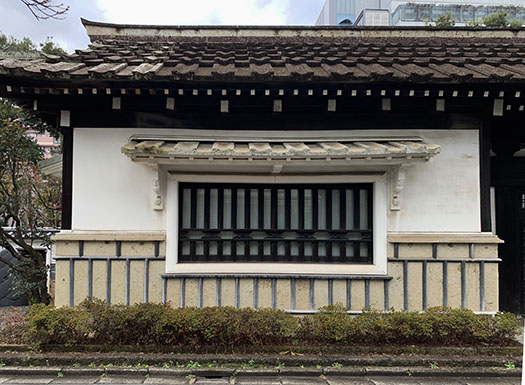
写真は東京駒場の日本民藝館の「西館」とされる旧柳宗悦氏自邸。
そのなかでも窓回りにスポットを当てて見た。
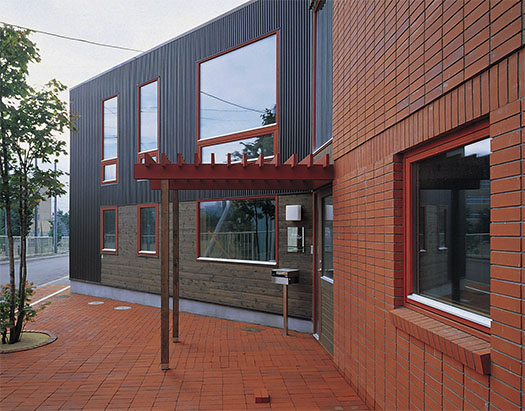
で、その下の写真は北海道札幌のわが家の新築時の窓回り外観。
氏が想像もしなかっただろう、コンクリートブロック外断熱工法住宅。
柳邸は組石造風の印象を「民藝」建築シンボルと意図していることがあきらか。
柳さんはいわば審美眼的な選択として日本の古建築では
大谷石での外装の醸し出す「歳月」感に魅了されていたのでしょう。
そしてそれを引き立てるような漆喰での枠線にも「美」を見出していた。
そうした審美的姿勢から窓も、このようなデザイン仕上げを行った。
性能的にはガラス面の開閉はたぶん引き違いが採用されている。
一方の北海道寒冷地ではコンクリートブロック外断熱という
いわば「実用」として組石造が的確と判断し性能面から採用した。
その窓回りの仕上げは基本的に北欧寒冷地由来の性能・実用性が優先され
トリプルサッシと外滑り出しという日本スタイルではないものを採用した。
面材としてではなく外断熱外皮としてのレンガ壁での開口部の雨水処理など、
実用性優先仕上げだけれど、組積造のテクスチャーがそのままデザイン表出。
しかしその醸し出す陰影感は、上の柳邸が目指したものと不思議な共通性がある。
というか、結果として北海道の外断熱コンクリートブロック住宅は
民藝運動とのDNA的な「繋がり」が表出してしまったのか。
もちろん北海道ではそういうデザイン的な意図はなかったけれど、
いわば実用に徹していった結果、思わぬ共通性に至ったということだろうか。

日本民藝館建築は1936年。創始者・柳宗悦氏没年は1961年。
コンクリートブロック外断熱建築工法は最初期の旧荒谷邸の建築は1980年。
なので、タイムラグは44年あり、氏は北海道でこういう本格的組石造建築が
民家レベルで実現することを想像もできなかったと思われる。
文化の評価者として民藝という概念を創造した柳宗悦氏の想像をはみ出す
民藝「的」建築が、民藝世界からいわば「化外」とされた北海道で
氏の死後20年にして、まったく無関係に成立したのだと思います。
このことは「民藝」運動自体が深化すべきテーマをも示している。
それは「これは民藝でこれは違う」という「判断基準」が
あいまいな「美」でしか示されていなかったこと。直感という
創始者・柳宗悦氏の審美基準を「どう運用すべきか」というテーマを示す。
氏がはるかな先達として想定していたのではと思われる利休などの
茶の湯文化創造者たちは「茶道」といういわば基準を創造し、
利休の賜死という劇性も含めて文化としての永続性を持ったのに対して
創始者死後の「民藝」文化の基準があまり明確ではないのではと思う。
・・・どうもこうした想念にとらわれています。
もしご意見がおありの方、ぜひお聞かせください。

English version⬇

[Insulation performance and “beauty for use” folk art and Hokkaido-3]
I would like to reconstruct the Mingei movement and the absurd reality of Hokkaido.
From such a thought, it is a pilgrimage to seek the missing link.

The photo is the former residence of Mr. Soetsu Yanagi, who is said to be the “West Building” of the Japan Folk Crafts Museum in Komaba, Tokyo.
Among them, I spotted the spot around the window.
And the photo below is the appearance around the window when my house in Sapporo, Hokkaido was newly built.
A house with a concrete block external insulation method that he would not have imagined.
It is clear that Yanagi’s house intends the impression of Kumiishi style as a “folk art” architectural symbol.
Mr. Yanagi is, so to speak, an aesthetic choice in Japanese ancient architecture.
He must have been fascinated by the “years” of the exterior of Oya stone.
He also found “beauty” in the stucco border that complements it.
From such an aesthetic attitude, the windows were also designed and finished in this way.
In terms of performance, the opening and closing of the glass surface is probably a sliding difference.
On the other hand, in the cold regions of Hokkaido, it is called heat insulation outside the concrete block.
So to speak, it was judged to be accurate by Kumiishizo as “practical” and adopted from the aspect of performance.
As for the finish around the window, the performance and practicality derived from the cold regions of Northern Europe are basically prioritized.
We adopted triple sashes and slipping out, which are not Japanese style.
For example, rainwater treatment of openings in brick walls as an outer insulation skin, not as a face material, etc.
Although it is a practical finish, the texture of the masonry is expressed as it is.
However, the sense of shadow that it creates has a mysterious commonality with what the above Yanagi House aimed at.
Or rather, as a result, the external insulation concrete block housing in Hokkaido
Did the DNA-like “connection” with the Mingei movement emerge?
Of course, there was no such design intention in Hokkaido, but
So to speak, as a result of devoting themselves to practical use, I wonder if they have come to an unexpected commonality.

The Japan Folk Crafts Museum was built in 1936. The founder, Muneyoshi Yanagi, died in 1961.
The construction of the former Aratani residence, which was the earliest in the heat insulation construction method outside the concrete block, was in 1980.
So, there is a time lag of 44 years, and he has such a full-scale stone building in Hokkaido.
It seems that I could not have imagined that it would be realized at the private house level.
It goes beyond the imagination of Mr. Soetsu Yanagi, who created the concept of folk art as an evaluator of culture.
In Hokkaido, where the folk art “target” architecture was regarded as “outside” from the folk art world.
Twenty years after his death, I think it was established completely unrelated.
This also indicates the theme that the “Mingei” movement itself should deepen.
It has a “judgment standard” that “this is folk art and this is different”
It was only shown by the ambiguous “beauty”. Intuition
The theme of “how to operate” the aesthetic standards of the founder, Muneyoshi Yanagi, is shown.
Rikyu, who seems to have been supposed to be a far pioneer
The creators of the Chanoyu culture created the so-called “tea ceremony” standard,
While it had permanence as a culture, including the dramatic nature of Rikyu’s death.
I think that the standard of “folk art” culture after the death of the founder is not so clear.
… I’m obsessed with these thoughts.
If you have any opinions, please let us know.

【日本民藝館と宇都宮商家、わが家 民藝と北海道-2】


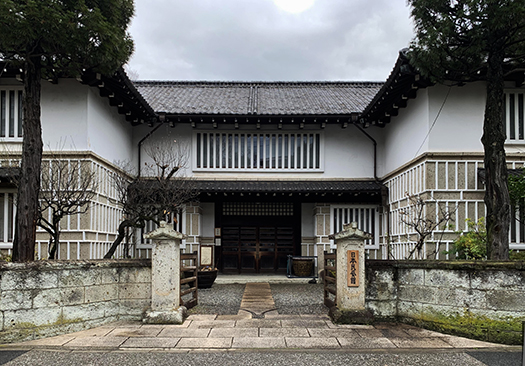
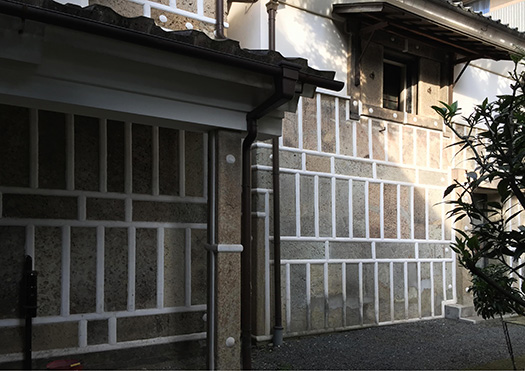
写真は1936年に竣工の東京目黒区駒場に建つ日本民藝館の外観。
この建物は民藝運動創始者の柳宗悦氏の丹精込めた設計になるもの。
和風意匠を基調としながらも随所に洋風を取入れた施設となっている。
2021年に東京都指定有形文化財(建造物)指定された。
この建物と対面した瞬間、柳氏の「民藝」という嗜好世界が一気に伝わってきた。
「そうですか、こういう建築がお好みなのですね(笑)」
という肌感覚での通暁感に満たされた気がしていました。
わたしが好ましいと思っている空間性のひとつの傾向と重なった気がしたのです。
直接的には以下の住宅写真との「雰囲気の通底性」。


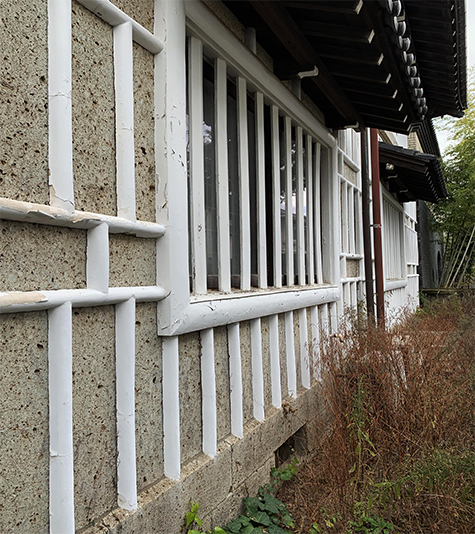
上の写真はこのブログでも取り上げてきていた1851年建築の「宇都宮豪商家」。
太平洋戦争末期の宇都宮空襲でもこの重厚な大谷石外壁が防火の役を果たし、
大火後のひとびとの命を支えてきた建物です。
大谷石がF.Lライトの旧帝国ホテルによって知られる以前の江戸期から
このような建築表情が地域に愛されてきたとされている。
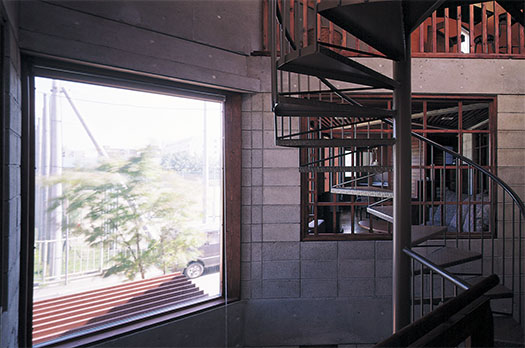
で、その下の写真ははるか後世、1991年竣工のわが家ブロック建築です。
ブロック建築は太平洋戦争後、北海道の寒冷地住宅研究開発のいわば起点になった。
地域がかかえる冬期寒冷の条件に対して、これも地域原産の火山灰を
成型加工してコンクリートブロックにして組石造を構造した。
このコンクリートブロック構造に対して外皮を重ねることで
「外断熱」構成とすることで寒冷地工法技術のひとつとしてほぼ完成された。

歴史としては宇都宮商家⇒日本民藝館⇒わが家という時間経過。
寒冷地北海道は「民藝」運動番外地であり、建築当時前者2棟を意識したことはない。
しかし柳宗悦氏は北海道以外の全国文化を丹念に掘り起こしていたので
この宇都宮商家は地域のシンボル的存在でもありたぶん見知っていただろう。
氏の大谷石採用の動機はこの商家か、帝国ホテルかは不明だけれど、
意識はしていたに間違いないと思っています。
こういう「一般解」はあったと思うけれど大谷石外装の「作法」部分でも
タテヨコの積層のさせ方、漆喰でのつなぎ技法など通底している。
民藝の大きな分野として全国の古建築も検証していたに違いない柳氏が
その集大成であり運動の拠点として考えた建築に於いて
この宇都宮商家の「組積」感を基礎イメージとして抱いたことは重要なポイント。
もちろん構造は木造だけれど耐火性も考えて外装組積を選択した。
「用の美」を主張する民藝運動・柳氏の住宅建築へのひとつのメッセージ。
わたしとしてはそのように受け止めさせていただいた次第です。

同時にこういった民藝の「流れ」とはるかな断絶を感じる北海道では
地域の気候風土と語り合う中からコンクリートブロック外断熱にたどりついた。
大谷石とブロック、漆喰とモルタルと素材選択は違うけれど、
それも地域性と鉄筋配筋の相性などの問題が枝分かれのポイントでしょう。
こういう建物に住み愛している人間としてはるかな空間と時間を経て
この日本民藝館と出会ったときに、「おお、ここで逢うとは思わなかったぜ」
という不思議な邂逅感に満たされていた次第です。
そしてこれが民藝運動と開拓者北海道人との民族的DNAつながりを
強く喚起させる重要なポイントになるのではないかと思い始めたのです。

English version⬇

[Japan Folk Crafts Museum and Utsunomiya Merchant House, My House Folk Crafts Museum and Hokkaido-2]
The photo shows the exterior of the Japan Folk Crafts Museum, which was completed in 1936 in Komaba, Meguro-ku, Tokyo.
This building was designed with great care by Mr. Soetsu Yanagi, the founder of the Mingei movement.
It is a facility that incorporates Western style everywhere while being based on Japanese style design.
In 2021, it was designated as a tangible cultural property (building) designated by the Tokyo Metropolitan Government.
The moment I met this building, Mr. Yanagi’s taste world of “folk art” was immediately transmitted.
“Well, you like this kind of architecture (laughs).”
I felt that I was filled with the feeling of familiarity with my skin.
I felt that it overlapped with one tendency of spatiality that I liked.
Directly, “the atmosphere of the atmosphere” with the following house photograph.

The photo above is the “Utsunomiya Gosho” built in 1851, which was also featured in this blog.
Even in the Utsunomiya air raid at the end of the Pacific War, this heavy Oya stone outer wall served as a fire protection.
It is a building that has supported the lives of people after the great fire.
From the Edo period before Oya stone was known by the former Imperial Hotel of FL Wright
It is said that such an architectural expression has been loved by the region.
And the photo below is a block building of my house completed in 1991, far later.
After the Pacific War, block architecture became the starting point for research and development of housing in cold regions of Hokkaido.
Against the cold winter conditions that the region has, this also uses volcanic ash native to the region.
It was molded into a concrete block to construct a braided stone structure.
By stacking the outer skin on this concrete block structure
By adopting an “external insulation” configuration, it was almost completed as one of the cold region construction methods.

The history is Utsunomiya merchant house ⇒ Japan Folk Crafts Museum ⇒ my house.
Cold region Hokkaido is an extraordinary area for the “Mingei” movement, and I had never been aware of the former two buildings at the time of construction.
However, Mr. Soetsu Yanagi carefully dug up national culture other than Hokkaido.
This Utsunomiya merchant house was also a symbol of the area, and you probably knew it.
It is unknown whether his motive for adopting Oya stone is this merchant house or the Imperial Hotel,
I’m sure I was conscious.
I think there was such a “general solution”, but even in the “manner” part of the Oya stone exterior
The method of stacking vertical and horizontal layers, the technique of connecting with plaster, etc. are common.
Mr. Yanagi must have examined old buildings nationwide as a major field of folk art.
In the architecture that was considered as the culmination of that and as a base for the movement
It is an important point to have this Utsunomiya merchant’s “masonry” feeling as a basic image.
Of course, the structure is wooden, but considering fire resistance, we chose the exterior masonry.
A message to the housing construction of Mr. Yanagi, a Mingei movement that insists on “beauty of use”.
I took it that way.

At the same time, in Hokkaido, where you can feel the “flow” of folk art and a far severance.
While talking with the local climate, I arrived at the insulation outside the concrete block.
The material selection is different between Oya stone and block, plaster and mortar,
The point of branching is the problem of regionality and compatibility of reinforcing bars.
After a long time and space as a person who lives and loves such a building
When I met this Japan Folk Crafts Museum, “Oh, I didn’t think I would meet here.”
I was filled with a mysterious feeling of encounter.
And this is the ethnic DNA connection between the Mingei movement and the pioneer Hokkaido people.
I began to think that it would be an important point to strongly arouse.

【あれ? 地図に北海道がない(泣) 民藝と北海道-1】


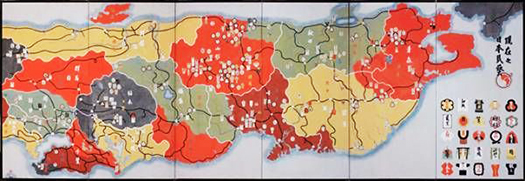
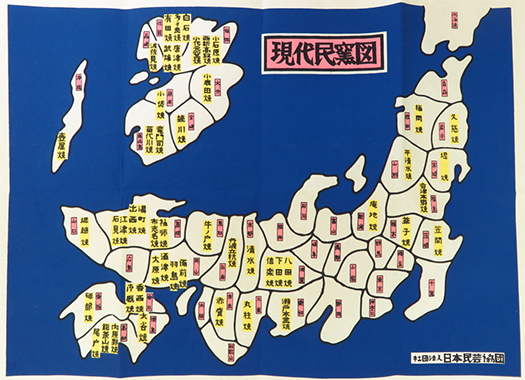
上の図版は日本各地の民藝を紹介するよく知られた全国地図群。
別に悪気があるものでないことは百も承知なのですが、
それでも「民藝」工芸の全国発掘に於いて北海道が除外されていることには
あまり楽しい気分はしない。
民藝運動というものにはるかなリスペクトを持っている者として
この点はやや悲しいなぁと思ってきています。
これについてたぶん日本民藝協会としても議論があって
近年はアイヌ文化について積極的に発掘・称揚されているように思います。
それは喜ばしい面はあるけれど、しかし明治以降の移住開拓民の末裔として
「民藝」創始者の柳宗悦さんの民藝発掘の情熱からきれいに北海道が
除外されていたことには、やむを得ない側面を感じつつ、
北海道人として今後どう考えて行くべきか、ある思いを持っている次第。

わたしは文化運動としての民藝運動には共感は強く持っています。
日本人の暮らし合理性に涵養され育まれてきた美感・感受性への気付き、
その発掘努力には深い敬意を持つところです。
実際に多くの全国の建築を見る中、北海道に繋がる富山の北前交易者の住宅が
民藝運動のスポンサー・大原家によって購入され
床の間には棟方志功の絵が軸装され展示される様子をこのブログでも紹介。


さまざまな職人の手仕事に対する審美眼という視線は深く共感するものです。
こうした取材を通して民藝運動というものの実質をはじめて知ったともいえる。
創始者・柳宗悦さんのポリシーにはものづくりの本質が示されている。
・・・そうであることを知りつつ北海道が空白の民藝地図を見て
わたしたち移住者の営為はどのように考えて行くべきなのか、思い惑う次第。

最近民藝運動にスポットが当たってきている。
東京北の丸公園の東京国立近代美術館で展示会も現在開かれているとのこと。
柳宗悦さん没後60年という節目で開催された。
わたしは駒場の日本民藝館建築見学の経験もあります。
そういった経緯を踏まえながら北海道人として、住宅の取材者として
この柳宗悦さんが始められた民藝運動と北海道移住後150年という
いわば民族の混淆が激しく進行した独特の風土性から
どんな「民藝」がいま、生み出されつつあるのか、
掘り起こしていって見たいと念願しています。
縄文、続縄文、擦文、アイヌ文化と変遷を経てきている北海道島の歴史に踏まえ
この北の島嶼でのものづくりの営為を掘り起こしてみたいと念願する次第。
日本人が暮らし始めて住居建築では本格的に欧米と交流し独自発展させたきた。
年末年始の時期の掘り起こし型ブログ連載記事として
シリーズ的に日本各地との比較文化論的にも考えて見たいところです。

English version⬇

[Ah? There is no Hokkaido on the map (crying) Minge and Hokkaido-1]
The illustration above is a well-known national map that introduces folk art from all over Japan.
I know that it’s not malicious, but
Even so, the fact that Hokkaido is excluded in the nationwide excavation of “folk crafts”
I don’t feel very happy.
As someone who has a great deal of respect for the Mingei movement
I’m feeling a little sad about this point.
There was probably a discussion about this as well as the Japan Folk Art Association.
In recent years, I think that the Ainu culture has been actively discovered and praised.
That’s a good thing, but as a descendant of the migrant pioneers after the Meiji era.
Hokkaido is beautiful from the passion of the founder of “Minbutsu”, Mr. Soetsu Yanagi, to excavate the folk art.
Feeling the unavoidable side of being excluded,
As a Hokkaido person, I have a certain thought about what I should think about in the future.

I have a strong sympathy for the Mingei movement as a cultural movement.
Awareness of the beauty and sensitivity that has been nurtured and nurtured by the rationality of Japanese life,
I have a deep respect for the excavation efforts.
While actually looking at many buildings nationwide, the housing of the Kitamae trader in Toyama, which is also connected to Hokkaido, is
Purchased by the Ohara family, the sponsor of the Mingei movement
In this blog, I also introduced how a picture of Shiko Munakata is displayed on the alcove.

I deeply sympathize with the aesthetics of various craftsmen’s handicrafts.
It can be said that I learned the substance of the Mingei movement for the first time through such interviews.
The policy of the founder, Muneyoshi Yanagi, shows the essence of manufacturing.
… Knowing that, looking at the blank folk art map of Hokkaido
I’m wondering how we migrants should think about their activities.

Recently, the Mingei movement has been spotlighted.
An exhibition is currently being held at the National Museum of Modern Art, Tokyo in Kitanomaru Park, Tokyo.
Muneyoshi Yanagi was held at the milestone of 60 years after his death.
I also have experience in visiting the architecture of the Japan Folk Crafts Museum in Komaba.
Based on such circumstances, as a Hokkaido person, as a housing interviewer
It’s been 150 years since the Mingei movement started by Muneyoshi Yanagi and the move to Hokkaido.
So to speak, because of the unique climate in which ethnic chaos has progressed violently.
What kind of “folk art” is being created now?
I hope to dig up and see it.
Based on the history of Hokkaido Island, which has undergone a transition with Jomon, Zoku-Jomon, Satsumon, and Ainu culture
I hope to dig up the manufacturing activities on this northern island.
Japanese people have begun to live and have developed their own housing architecture by interacting with Europe and the United States in earnest.
As a blog serialized article that digs up during the year-end and New Year holidays
I would like to think about it as a series in terms of cross-cultural comparison with various parts of Japan.

【昭和初期のテレワーク書斎 in 折口信夫「叢隠居」】


感染症の影響から自宅で仕事するテレワークが進んだ。
必然的に自宅のどこで精神集中するかが問題になる。
よく家族とのコミュニケーション重視型では場所の確保が・・・
というような悩み事が聞かれましたね。
日本の住環境での書斎というような装置、空間について
現代住宅ではあんまり注目してこなかったように思います。

写真は國學院大學博物館に展示されている折口信夫「叢隠居」。
折口信夫氏は國學院大學で教授を務めた日本の民俗学、国文学、国語学者。
釈迢空と号した詩人・歌人でもあった。
折口の研究は「折口学」と総称される。柳田國男の高弟として
民俗学の基礎を築いた。自分の顔の青痣をもじって靄遠渓とも名乗った。
昭和14年箱根・仙石原に山荘を建てたものでこれはその書斎。
昭和8年に温泉付き分譲地を購入していた敷地に建てられた。
3枚目の図のような眺望配置を設計してある。
恩師の柳田國男を招いて連句や散策を楽しんだともされる。
昭和20年8月の敗戦の詔勅を聞いて40日間日本の行く末に思いを凝らした。
氏の論文執筆や創作活動の拠点であった。
ようするに80-90年前頃のテレワークスペースと言えるでしょうね。
建築全体を叢隠居と読んでいたけれど中核的空間はこの書斎。
書斎がそのまま叢隠居というような認識だったことでしょう。

床の間があって大きな開口部が好みの景色を切り取って開けられ、
書院として文机がしつらえられ、採光はバツグン。
文机の奥行きはそれほどではなく、むしろ左右幅にはゆとりがある。
左右幅は畳タテ1枚分ほどなので1.8mとゆったりしている。
その上、畳ヨコ1枚分で床の間にも畳が敷かれていて、
窓からの眺望に若干の高低差をつくって
気分転換の視線変化を仕掛けていたようにも感じられる。
その文机左右には収納箇所があるので、
構想を練るのに必要な文書だったりモノであったりが納められ、
知的創造作業にたくさんの刺激を与えていたのでしょう。
一方部屋中央部には四角い文机が置かれて、
第2のワークスペースを構成している。
たぶん窓側の文机とは心理的な区分けが存在していて
こちらの方では知的生産物を「仕上げる」という空間認識が感じられる。
硯や筆が置かれて、いかにも書類を仕上げるスペースっぽい。
場合によっては友人知人をこの書斎に招いて
「折り入って」の相談などが行われていたようにも思われる。
まことに「知的生産本部」というような佇まいを見せる。
外部的な眺望刺激、内部空間的な機能性を伝えてくれている。

障子の存在というのも、明かりは確保できるが外的視覚刺激は
あいまいに制御できるという日本人的な表現・感受性に影響している、
そういった様子までも明瞭に伝わってきて興味深い。

English version⬇

[Telework study in the early Showa period in Nobuo Orikuchi “Sou-inkyo”]
Due to the effects of infectious diseases, teleworking at home has advanced.
Then, inevitably, where in the home you concentrate your mind becomes a problem.
Often, the type that emphasizes communication with the family secures a place …
I heard that you were worried.
About equipment and space such as study in Japanese living environment
I don’t think we have paid much attention to modern housing.

The photo is Nobuo Orikuchi’s “Sou-inkyo”exhibited at the Kokugakuin University Museum.
Shinobu Orikuchi is a Japanese folklore, Japanese literature, and Japanese language scholar who was a professor at Kokugakuin University.
He was also a poet and poet who called Orikuchi.
The study of Origuchi is collectively called “Origuchi studies”. As a high-ranking younger brother of Kunio Yanagita
He laid the foundation for folklore. He also called himself Yaenkei by playing with the blue bruises on his face.
In 1945, he built a mountain cottage in Sengokuhara, Hakone, and this is his study.
It was built on the site where the land with hot springs was purchased in 1933.
He designed the view layout as shown in the third figure.
It is said that he invited his teacher, Kunio Yanagita, to enjoy the renku and walks.
When he heard the imperial rescript of the defeat in August 1945, he pondered the end of Japan for 40 days.
It was the base for his dissertation writing and creative activities.
It can be said that it is a telework space around 80-90 years ago.
I used to read the entire architecture as a Sou-inkyo, but the core space is this study.
The study would have been recognized as a Sou-inkyo.

There is a tokonoma and a large opening can be opened by cutting out the desired scenery.
The writing desk is set up as a shoin, and the lighting is outstanding.
The depth of the writing desk is not so great, but rather there is room in the left and right width.
The width of the left and right is about one tatami mat, so it is as spacious as 1.8m.
On top of that, there is a tatami mat between the floors for one tatami mat.
Make a slight height difference in the view from the window
It feels like I was trying to change my mood.
There are storage areas on the left and right of the writing desk, so
Documents and things necessary for formulating a concept are stored,
It would have given a lot of inspiration to the intellectual creation work.
On the other hand, a square writing desk is placed in the center of the room.
It constitutes a second workspace.
Maybe there is a psychological division from the writing desk on the window side
This person can feel the spatial recognition of “finishing” intellectual products.
It’s like a space where inkstones and brushes are placed to finish documents.
In some cases, invite friends and acquaintances to this study
It seems that consultations such as “breaking in” were being held.
It really looks like an “intellectual production headquarters”.
It conveys the external view stimulus and the functionality of the internal space.

The existence of shoji can secure the light, but the external visual stimulus is
It affects the Japanese expression and sensitivity of being able to control vaguely.
It is interesting to see such a situation clearly.