本文へジャンプ

【本格化する寒さ 冬らしさが暮らしのリズムを生む】


年末最終週になりました。
スタッフは年末休暇時期でまばらな出社状況となります。
札幌ではここ2週間ほどで一気に降雪があっていまの積雪深は50cm前後。
本日も体感的には10cmくらいの降雪があります。
この積雪深は平年値よりも10数cm多めになっていて北の冬、本格化。
あわせて秋からずっと高温傾向が続いていましたが、
12月中旬からはほぼ平年並み以下の気温で推移しております。
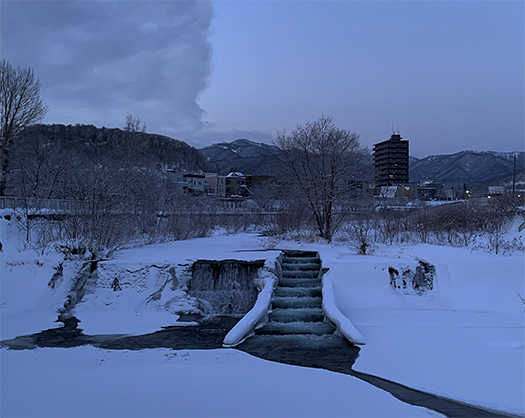
写真上は朝の散歩路でのわが家周辺河川、琴似発寒川橋梁から
山側を見渡したもの。空に雪雲がクッキリと表れていて不気味っぽい。
晴天域と降雪域がここまで明瞭に分かれているのも不思議な感じ。
先日17日わたしが東京出張中にあったドカ雪以来、順調に降り続いている。
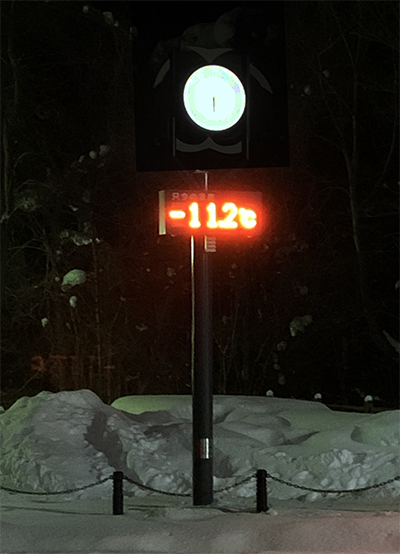
一方、下の写真はこちらも散歩道の円山山麓の温度計。
マイナス11度超という計測結果表示であります。
さすがに2ケタに下がってくると、通常の防寒仕様に加えて
下着レベルでも1段ギアアップして重装備が必要という体感。
まぁ大体、札幌の最寒期の体感気温に近づいてきています。
暖かった10-11月の傾向が12月に一転して本格的冬到来、というところ。
北国住宅として家の中では適温が維持され続けているので、
早朝に起きると窓の外の様子を確認して降雪と外気温の状況チェック。
外気温状況も北国人のDNAには刷り込まれた視覚記憶があって
「おお、これは零下10度越えかなぁ」と予測する日々。

北国としては予測の範囲での寒冷が当たり前のように来たというところ。
常日頃の当然が生起してくれるのは景気環境としてもいいこと。
夏は夏らしく、冬は冬らしいのが経済活動その他にとって良い環境。
雪かき作業もたしかに筋肉痛の元凶であり困ったものではありますが
「環境との対話・共生」をもっとも実感させてくれる契機でもある。
その土地に根付いて生きる実感をカラダに叩き込んでくれる。
まぁ、神の思し召しであり柔軟に生き延びる工夫を考えろということか(笑)。
ということで今朝12.27も6:00に10cmほどの積雪を夫婦で除雪完了。

さて最終週ですが、年を越しての大型案件も進行中ですので、
健康に留意しつつ適度にストレスを掛けながら
コロナ明けの経済活動を見通していきたいと考えます。
言うまでもなく事業環境は大きく変化してきている。
この変化にどう対応していくべきか、知恵と工夫が一層迫られるでしょう。
ブログ記事も鎌倉・建長寺から、次の焦点をどうするかと思案中。
日本人的感受性、精神史という大枠は捉えつつ、
さてどういう焦点に向かっていくべきかというところであります。
道に迷いつつも確実に前に進みたい。今後に乞うご期待。

English version⬇

[The cold winter that is in full swing creates the rhythm of life]
It’s the last week of the year.
Staff will be sparsely attended during the holiday season.
In Sapporo, it has been snowing all at once in the last two weeks, and the snow depth is around 50 cm.
There is about 10 cm of snowfall today as well.
This snow depth is more than 10 cm more than the normal value, and it is in full swing in winter.
At the same time, the high temperature has continued since autumn,
Since mid-December, the temperature has been below normal.
On the photo is from the river around my house on the morning walk, the Kotonihassamu River Bridge.
It overlooks the mountain side, but it is creepy with snow clouds clearly appearing in the sky.
It is strange that the clear sky area and the snowfall area are clearly separated so far.
It has been steadily falling since the snowfall I was on a business trip to Tokyo on the 17th the other day.
On the other hand, the photo below is also a thermometer at the foot of Mt. Maruyama on the walking path.
It is a measurement result display of over -11 degrees.
As expected, when it goes down to double digits, in addition to the usual cold weather specifications
Even at the underwear level, you can feel that you need heavy equipment by increasing the gear by one step.
Well, it’s getting closer to the coldest temperature in Sapporo.
The warm October-November trend turned around in December, and winter has arrived in earnest.
As a northern country house, the optimum temperature is maintained in the house, so
When I wake up early in the morning, I check the outside of the window to check the snowfall and outside temperature.
The outside temperature situation also has a visual memory imprinted in the DNA of the northern people.
Every day I predict, “Oh, this is over 10 degrees below zero.”

As a northern country, the cold within the range of prediction has come as a matter of course.
It is good for the economic environment that the natural things that happen on a daily basis occur.
Summer is like summer, and winter is like winter, which is a good environment for economic activities and others.
Snow shoveling is certainly the cause of myalgia, which is a problem.
It is also an opportunity to realize “dialogue and symbiosis with the environment” most.
It gives you a feeling of living rooted in the land.
Well, it’s God’s will and think about ways to survive flexibly (laughs).
That said, on 12.27 this morning, the couple completed snow removal of about 10 cm at 6:00.

Well, it’s the last week, but since large-scale projects are underway over the year,
While paying attention to your health and applying moderate stress
I would like to see the economic activity after the corona.
Needless to say, the business environment is changing drastically.
Wisdom and ingenuity will be further sought as to how to respond to this change.
The blog article is also from Kenchoji, and I’m wondering what to do with the next focus.
While grasping the outline of Japanese sensitivity and mental history,
Now, what kind of focus should we go to?
I want to make sure to move forward while getting lost. Stay tuned for the future.

【和を以て貴しとなす日本】


〜聖徳太子が制定した十七条憲法の第一条に出てくる言葉で「尊し」でも良いが,
原典は「貴し」。故事ことわざ辞典によれば「何事をやるにもみんなが仲良くやり,
いさかいを起こさないのが良いということ」を意味するという。〜
きのう、建長寺シリーズの最後で東大名誉教授の比較思想学者・中村元氏の
言葉を引用させていただきましたが、日中での禅宗の教義の違いを
指摘した部分で、多民族国家で強権支配が優勢な中国と日本の決定的相違として
寛容と愛情を強調する日本社会というフレーズがあった。
その言葉を読みながら、日本人の精神史という大枠のテーマから、
表題の聖徳太子のことばが大きく脳裏に蘇った次第。
聖徳太子はそれこそ日本に仏教を導入した指導者であり法隆寺、四天王寺の
創建に深く関わっているとされている。
そういう彼にして、導入する律令国家体制・宗教精神性について
一方では日本人的な捉え方を示しているようで興味深い。
律令制度を導入し国家体制を整え仏教を導入して東アジア国際国家とするけれど、
このような、よき日本人的オリジナリティへの気付きも同時に持っていた。
さらには日中外交の基本において「日出ずる国」という表現も用いて
少なくとも対等の立場が基本であると宣言もしている。
日本国家社会内部では和を最優先しつつ、国際的には独立姿勢を鮮明にする。
こういう明確な国家体制を宣命された先人として「聖徳」の名にふさわしい。
ぜひ岸田さんには民主主義陣営の基本をしっかり保守していただきたい。

建築の世界ではこういう「和」の表現として
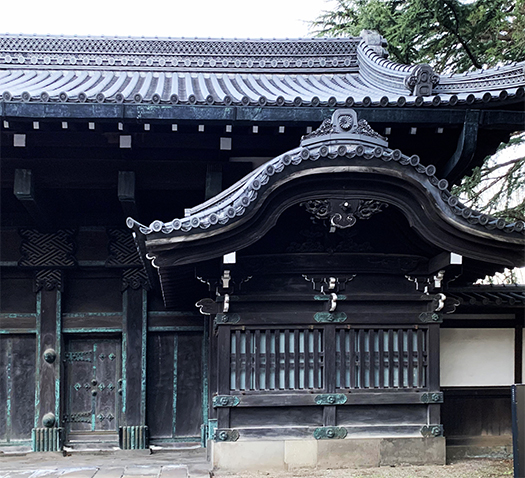
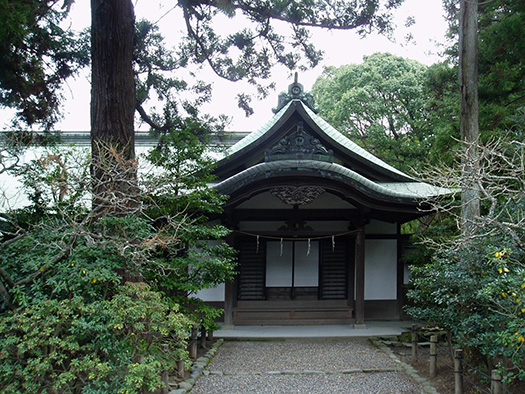
写真上のような「唐破風」が特徴的だと思われます。
〜破風とは屋根の裏側に山形に取り付けられた板部およびその付属品の総称。
唐破風は破風の一つで破風板の中央部を高く左右両端に曲線状に反っているもの。
主としては玄関、門、向拝などに取り付けられる。〜
これは名前に唐とあるけれど輸入されたデザインではなく、
日本オリジナルの建築デザイン表現なのですね。
平安時代ころに始原をさかのぼることができるとされています。
歴史年代を通じてカラフルで目を驚かす文物一般に「唐物」という
言語表現が付されていた、一種「舶来もの」のようなイメージで
日本人がオリジナルで作った破風のスタイルなのに、派手さを表現する
「唐」という冠詞を乗っけたということのようです。
で、この唐破風のデザインはまさに「和を以て・・・」そのもの。
建築とは基本的に四角四面を構造するものですが、
そういう建築にあってなお、豊かな表情を持たせたい始原心理でしょう。
ただこのような円形表現は手仕事の複雑さが要求されるので
その意味でも日本人の特質を表してもいる。

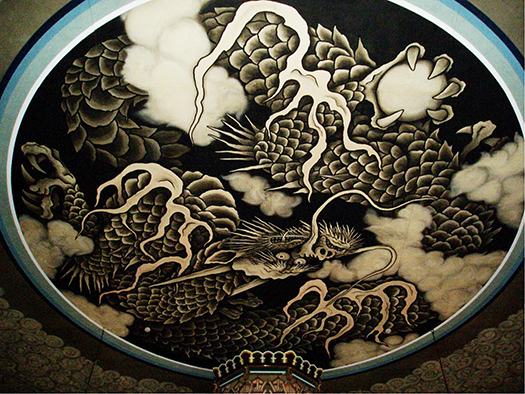
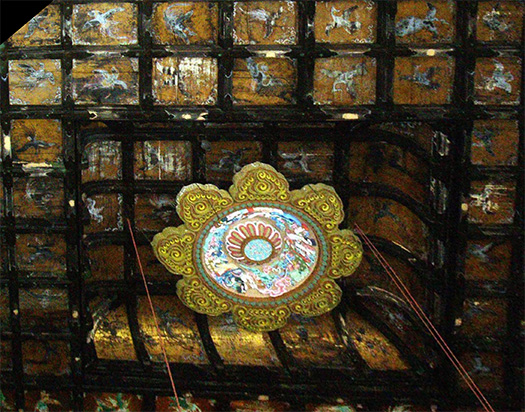
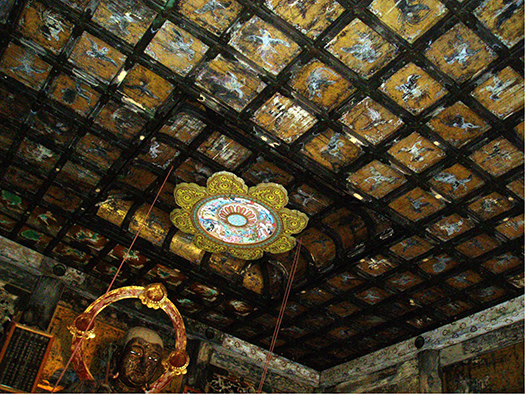
この写真は建長寺方丈内部の様子ですが、なにげにインスピレーションを感じて
画像としておさめたものですが、あとで見返してみると
四角四面な構造の柱梁の空間の画面中心に太鼓が置かれていた。
その太鼓が空間全体の中で「画竜点睛」のようになごみを与えてくれる。
こういう心理は日本人に強い性向であるということなのでしょうね。

English version⬇

[Japan that is precious with harmony]
~ The word that appears in Article 1 of the Seventeen-Article Constitution enacted by Prince Shotoku may be “respect”,
The original text is “noble”. According to the historical proverb dictionary, “Everyone gets along well with everything they do,
It means that it is better not to cause a dispute. ” ~
Yesterday, at the end of the Kenchoji series, Professor Emeritus of the University of Tokyo, Hajime Nakamura, a comparative philosopher
I quoted the words, but the difference in Zen Buddhism doctrine between Japan and China
In the pointed out part, as a decisive difference between China and Japan, which are multi-ethnic nations and predominantly powerful rule
There was the phrase Japanese society that emphasized forgiveness and affection.
While reading the words, from the general theme of Japanese spiritual history
As soon as the words of Prince Shotoku in the title revived in my mind.
Prince Shotoku is the leader who introduced Buddhism to Japan, and of Horyuji Temple and Shitennoji Temple.
He is said to be deeply involved in the founding.
For him, about the ritual national system and religious spirituality to be introduced
On the one hand, he seems to show a Japanese way of thinking, which is interesting.
He introduced the decree system, set up the national system, introduced Buddhism, and made it an East Asian international nation.
At the same time, I was aware of this kind of good Japanese originality.
Furthermore, in the basics of diplomacy between Japan and China, the expression “country of sunrise” is also used.
He also declares that at least an equal position is fundamental.
While giving top priority to harmony within the Japanese national society, we will clarify our stance of independence internationally.
As a predecessor who was proclaimed such a clear national system, it deserves the name of “Seitoku”.
I would like Mr. Kishida to firmly maintain the basics of the democratic camp.

In the world of architecture, as an expression of “wa” like this
It seems that the “Karahafu” as shown in the photo is characteristic.
~ Gable is a general term for the plate and its accessories attached to the back of the roof in a chevron shape.
Karahafu is one of the gables, and the central part of the gable plate is high and curved in both left and right ends.
It is mainly attached to entrances, gates, and worshipers. ~
Although the name says Tang, this is not an imported design.
It’s a Japanese original architectural design expression, isn’t it?
It is said that the origin can be traced back to the Heian period.
Colorful and astonishing artifacts throughout the historical period Generally called “Karamono”
With an image like a kind of “imported thing” with a linguistic expression
Even though it is a gable style originally made by Japanese people, it expresses flashiness
It seems that he was able to ride the article “Tang”.
So, this Karahafu design is exactly “with Japanese …”.
Architecture is basically a structure of squares and squares,
Even in such architecture, it is a primitive psychology that wants to have a rich expression.
However, such a circular expression requires the complexity of handwork.
In that sense, it also expresses the characteristics of the Japanese people.

This photo shows the inside of Kenchoji Hojo, but I felt some inspiration.
I put it as an image, but when I look back on it later
A drum was placed in the center of the screen in the space of pillars and beams with a square and square structure.
The drum gives a mess like a “painting dragon dot” in the whole space.
I think this kind of psychology has a strong tendency toward Japanese people.

【武士道と禅・日本的なるもの 鎌倉建長寺-10】


鎌倉の建長寺をみてきましたが最後にふたたび武家と禅宗の関係について。
武士という「階層」はアジアでは日本でだけ成立した。
朝鮮では両班という階層ができたけれどあれは古代以来の王朝国家での
支配層が身分固定されたものであって
中国の科挙制度とも連動するような身分制度なのだと思う。
ヨーロッパと同様の「騎士」という階層意識と共通する武士という存在は
アジアでは日本でだけ成立し、その階層が権力を握った。
健全な「封建制度」が完全に根付いたという意味ではアジアで特異な社会。
インド哲学者、仏教学者、比較思想学者・中村元氏は『日本人の思惟方法』において、
〜民族性からくる思惟傾向に応じた日本と中国の仏教の性質の相違について、
禅宗においても日本と中国とでは教義が同一でなく、
中国人の思惟方法が非論理的かつ苛酷残忍であることを反映するかたちで、
中国の禅宗も隠遁的・独善的であるのに対し、
日本人の思惟方法が寛容と愛情を強調することを反映するかたちで、
日本の禅宗も宥和的・慈悲的なものへと変化しているのだという。
中国文化において禅は、明時代以降の衰退や元来の多民族国家という社会機構、
また近代の列強支配や戦後の文化大革命などによって、文化「浄化」が
常に一定期間で発生し人々の生活に定着することはなかった〜とされている。
こういうアジア思想史は今日の国際関係の基調をも示しているでしょう。

武家という新興の階層が権力をまとっていくときに
その宗教的表現として禅宗が選択されたのには相互に共通するものがあった。
武士というのは戦士であり常在戦場で常に死を意識する存在。
より内面的な宗教心、克己心強化の方向で精神面は発展していった。
禅宗のもつ内観的姿勢が好ましく受容されたのだろうけれど、
たまたま中国大陸で新興の宗派として盛んだったことも連動した。
鎌倉で武士道と禅宗の接合は始められたが権力が足利氏に移転し
全国支配の合理性から京都に幕府を開いたことから
京都の宗教文化として禅宗はメインカレントになっていった。
夢窓疎石と足利直義の強い紐帯など、武家と禅宗は相互浸透していった。
ただし、武家でも平氏は西国武士の側面が強く禅には傾倒していない。
また、鎌倉政権誕生に深く関わった奥州藤原氏も中尊寺など
宗教心の篤い政権だったが、古代以来の伝統的宗教を尊崇している。
奥州という遠隔地にありながら黄金の経済力で王朝国家最先端の
浄土思想による仏教空間を造営している。
しかし全国的に成立した武権では鎌倉ー足利主流が支配するところとなり
封建主義での各地域支配権を積極的に擁護する思想として
禅宗が武家社会の規範的存在になっていく。
こうした地域自治的な封建主義は日本人に合理的個人主義を涵養し、
明治にいたっての西欧文明期にもその受容マインド基盤になった。
禅宗−武士道の涵養した「個人主義」が西洋文明受容期にも
その精神的基盤を提供し、社会発展を促進させたといえるのだろう。

English version⬇

[Bushido and Zen / Japanese-style things Kenchoji, Kamakura-10]
I have seen Kenchoji Temple in Kamakura, but finally about the relationship between the samurai family and Zen Buddhism.
The “class” of samurai was established only in Japan in Asia.
In the challenge, there was a class called Yangban, but that was the dynasty nation since ancient times.
The ruler’s status is fixed, and it is also called the Imperial Examination System in China.
I think it’s a social division system that works together.
It is common with the class consciousness such as “knight” similar to Europe.
The existence of a samurai was established only in Japan, and that hierarchy took power.
A unique society in Asia in the sense that a sound “feudal system” has completely taken root.
Hajime Nakamura, an Indian philosopher, Buddhist scholar, and comparative philosopher, wrote in “The Japanese Way of Thinking”.
~ Considering the difference in the nature of Buddhism between Japan and China according to the thought tendency that comes from ethnicity,
Even in Zen Buddhism, the doctrine is not the same between Japan and China,
Reflecting that the Chinese way of thinking is illogical and cruel and brutal,
While Chinese Zen Buddhism is also secluded and self-righteous,
In a way that reflects the Japanese way of thinking that emphasizes tolerance and affection.
It is said that Zen Buddhism in Japan is also changing to appeasement and mercy.
In Chinese culture, Zen is a social organization that has declined since the Ming dynasty and was originally a multi-ethnic nation.
In addition, cultural “purification” has been promoted by the rule of modern powers and the Cultural Revolution after the war.
It is said that it always occurred in a certain period of time and did not settle in people’s lives.
This history of Asian thought may also show the keynote of today’s international relations.

When the emerging class of samurai takes power
Zen Buddhism was chosen as its religious expression because it had something in common.
A samurai is a warrior who is always aware of death on the battlefield.
It developed in the direction of strengthening the inner religious spirit and selfishness.
The introspection of Zen Buddhism may have been well accepted, but
It happened to be linked to the fact that it flourished as an emerging sect in mainland China.
In Kamakura, this kind of joining of Bushido and Zen Buddhism was started, but Bushido was transferred to Ashikaga.
Because the shogunate was opened in Kyoto because of the rationality of national rule
It became the main current as a religious culture in Kyoto.
The samurai family and Zen Buddhism penetrated each other, such as Muso Soseki and Ashikaga Tadayoshi’s strong ties.
However, even in the samurai family, Mr. Taira has a strong aspect of the Saigoku samurai and is not devoted to Zen.
In addition, Mr. Fujiwara Oshu, who was deeply involved in the birth of the Kamakura administration, also joined Chusonji Temple.
Although it was a religion-minded government, it reveres traditional religions since ancient times.
The state-of-the-art dynasty with golden economic power despite being in a remote area called Oshu
We are building a Buddhist space based on the Pure Land Buddhism.
However, in the nationwide military power, Kamakura-Ashikaga mainstream will dominate.
As an idea that actively defends the control of each region in feudalism
Zen Buddhism becomes the normative existence of the samurai society.
Such community-autonomous feudalism cultivates rational individualism for the Japanese,
It became the basis of its acceptance mind even during the Western civilization period leading up to the Meiji era.
Zen Buddhism- “Individualism” cultivated by Bushido is also in the period of acceptance of Western civilization
It can be said that it provided the spiritual foundation and promoted social development.

【建築文化としての禅宗庭園 鎌倉建長寺-9】


建長寺は本格的禅宗寺院としては日本で最初期のもの。
鎌倉幕府を挙げての宗教建築文化として、宋の最新宗教文化の移植だった。
その特徴として「作庭」という分野に注目したことがあるのでしょう。
法隆寺にはそういう傾向はないし、高野山でも特記するようでもない。
仏教の発展の結果、こういった建築の分野が大きく成長したものでしょう。
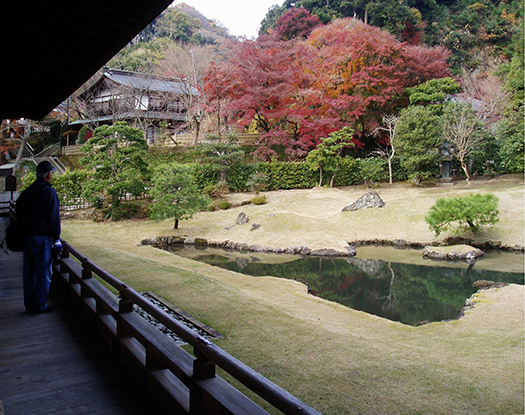
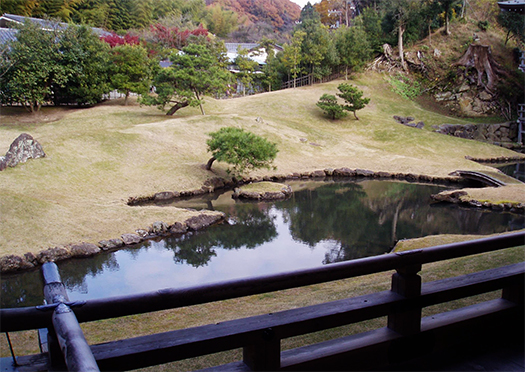
この建長寺の方丈、住持の居住棟に付属して庭園が広がっている。
禅宗文化はまず鎌倉で展開し、その後政治中心が室町幕府とふたたび京都に
回帰していくなかでたくさんの禅寺が京都で建築されて
今日に至る京都文化の中核に位置するようになる。
この建長寺庭園もその後の室町期に活躍した夢窓疎石作庭とながく流布された。
しかし、実際には建長寺開基の蘭渓道隆による作庭だという。
ということは、禅宗文化には建築にともなって重要な建築要素として
庭園文化というものがメインファクターを成していたということ。

蘭渓道隆作庭ということだとしても、夢窓疎石ものちに鎌倉で遊学しているので、
まったく関与していないのかどうかもわからない。
禅宗としての宗教運動の流れの中で、さまざまな交流があったことは自然。
いわば禅宗庭園文化というものが揺籃されてきた、と見るべきかも知れない。
蘭渓道隆は宋からの来日僧だけれど、夢窓疎石は天皇家とも繋がる日本生まれ。
いわば日本人好みに禅宗文化が変容していくなかで名が上がったのではないか。
輸入された建築文化に対してさまざまな日本的感受性が付与されていって
いかにも日本的空間美を反映していった過程がこうしたものだった。
夢窓疎石は7代の天皇が師事したとされるので、
日本の禅宗文化に決定的な刻印を施したといえるのでしょう。
かれが建築し、作庭したという寺院は日本中に多数存在している。
今日に至る日本人の審美眼的DNAに対して非常に大きな関与をしている。
そう考えれば、こういう庭園文化というものの奥行きが知れる。
言ってみれば中国からのアジア文化を受け入れてアレンジさせたものが
ひとつの典型的日本美を形成し、文化としてはその次に日本は
欧米世界と出会って大きな変容を遂げて行くというのが大きな「つかみ」か。

いずれにしても、このような禅宗的な自然との対話、
そしてその審美の尺度も禅宗的な価値感で作られていったということか。
わたしは北海道人なので、こういった自然観ともまた違った
拡張された「花鳥風月」を強く感じる自然環境に抱かれているのですが、
一方でこうした「わびさび」世界にもまた惹かれる。
ちょうど「和の住まい推進リレーシンポジウム in 北海道」という案内が来て
「瓦、縁側、深い軒」という日本建築美云々というテーマが示されている。
https://us06web.zoom.us/webinar/register/WN_SfbP7IM1SHChrqwkGWV9Yw
ほぼ北海道住宅建築には存在しない(笑)建築文化・・・。
こういうのを「国土交通省、経済産業省、林野庁」が推進するという。
なかなかにリアルタイムなデザイン論であるかも知れません。興味深い。

English version⬇

[Zen Buddhist Garden as Architectural Culture Kenchoji Temple-9]
Kenchoji is the earliest full-scale Zen Buddhist temple in Japan.
It was a transplant of Song’s latest religious culture as a religious architectural culture of the Kamakura Shogunate.
Perhaps you have paid attention to the field of “garden making” as its characteristic.
There is no such tendency in Horyuji Temple, and neither Mt. Koya nor anything special is mentioned.
As a result of the development of Buddhism, this field of architecture will have grown significantly.
The garden is attached to the residence building of the priest, Kenchoji Temple.
Zen Buddhism first developed in Kamakura, then the center of politics returned to the Muromachi Shogunate in Kyoto.
Many Zen temples were built in Kyoto as we returned
It will be located at the core of Kyoto culture to this day.
This Kenchoji garden has also been disseminated as the Muso Soseki garden that was active during the Muromachi period.
However, it is said that the garden was actually created by Lanxi Daolong, the founder of Kenchoji Temple.
This means that it is an important architectural element in Zen Buddhism culture along with architecture.
The garden culture was the main factor.

Even if it’s a Lanxi Daolong garden, I’m studying in Kamakura at Muso Soseki.
I don’t know if I’m not involved at all.
It is natural that there were various exchanges in the flow of religious movements as Zen Buddhism.
So to speak, it should be seen that the Zen sect garden culture has been shaken.
Lanxi Daolong is a monk from Song, but Muso Soseki was born in Japan, which is also connected to the Emperor.
So to speak, it seems that the name has risen as the Zen Buddhism culture has transformed into Japanese tastes.
Various Japanese sensitivities have been given to the imported architectural culture.
This was the process that reflected the beauty of Japanese space.
Muso Soseki is said to have been studied by the 7th emperor.
It can be said that the definitive stamp was given to the Zen Buddhism culture in Japan.
There are many temples in Japan that he built and built.
It has a great deal of involvement in the aesthetic DNA of the Japanese people to this day.
If you think so, you can see the depth of this kind of garden culture.
So to speak, the one that accepted and arranged Asian culture from China
Forming one typical Japanese beauty, Japan is next in terms of culture
Is it a big “grab” to meet the Western world and make a big transformation?

In any case, such a dialogue with Zen Buddhism nature,
And the scale of aesthetics was also made with a sense of Zen Buddhism.
I’m from Hokkaido, so it’s different from this view of nature.
I am embraced by the natural environment that makes me feel the expanded “Kacho Fugetsu” strongly.
On the other hand, I am also attracted to this “Wabi-sabi” world.
The information “Japanese House Promotion Relay Symposium in Hokkaido” has just arrived.
The theme of Japanese architectural beauty, “tiles, porch, deep eaves,” is shown.
https://us06web.zoom.us/webinar/register/WN_SfbP7IM1SHChrqwkGWV9Yw
Almost does not exist in Hokkaido residential architecture (laughs) Architectural culture …
It is said that “Ministry of Land, Infrastructure, Transport and Tourism, Ministry of Economy, Trade and Industry, Forestry Agency” will promote this.
It may be quite a real-time design theory. Interesting.

【法堂と開山者・蘭渓道隆手植えの柏槇 鎌倉建長寺-8】


きのう見たとおり、鎌倉幕府創始と深く関わる奥州・平泉の藤原政権。
こちらが創建した中尊寺は頼朝の侵攻時、なんとか存続されることになった。
侵略者頼朝としては、配下の関東御家人・開墾地主層に対して
「御恩」としての奥州の土地分配を平和的に権利移行させるのに
無用の混乱を避けることが優先されたのだろう。
また中尊寺はあらたな支配者に対し迎合的な対応で終始したことが想像される。
その中尊寺は天台宗であり比叡山・慈覚大師円仁の創建とされていたことから
朝廷の保護もあったものと思われる。
関東の武権に立脚した頼朝としても今後の政戦を考えれば、義経を口実として
藤原氏を殲滅したことで全国的な「治政」一元支配が完成したので
将軍権威としての「政治」優先に姿勢に転換して行ったのでしょう。

中尊寺は天台宗、浄土思想が鮮明な宗旨だった。
清衡の「願文」でも浄土に往生するという救済思想が強く感じられる。
この藤原氏の宗教政策に対して鎌倉政権は新宗教としての大陸直輸入の
禅宗寺院を対置していったのがこの建長寺。
鎌倉の宗教政策は、それまでの京都中心の旧仏教、
平泉藤原政権も受容していた天台などの思想ではなく、
このような舶来の新仏教を導入していくことになる。
武士階級の個人主義的・内省的克己心涵養型の禅宗志向が基礎だろうけれど、
政治的には旧時代の宗教政策からの転換を意図していたと思われる。
当初は鶴岡八幡という源氏の素性をあらわす神道を前面に押し出しつつ、
幕府樹立から数十年経過後、こうした仏教政策を推進した。
幕府指導者としての頼朝として、明確な仏教政策を持っていなかったかも。
というか、鎌倉幕府の意思決定主体は開墾地主御家人の連合体なので、
そういった宗教政策について決定を下せる素地がなかったのかも知れない。
あらたな政治権力中枢としての経験値が不足していて
「え、そんなことまで決めなきゃいけないの?」というのが
かれらの実質だったのではないか。道元が鎌倉に招聘されて
鎌倉の禅宗寺院開山者として擬定されていたとき、
幕府の権力者たちが前時代的、原始的な加持祈祷にふけっている様子を見て
開山者となることを辞退したと言われている。
貴族階級からの出自である道元には「こんな連中」という思いもあったのだろう。

そうした経緯から幕府としては当時宋から来日して名高かった蘭渓道隆を
見出してかれを国家事業としての禅宗寺院開山者として指名した。
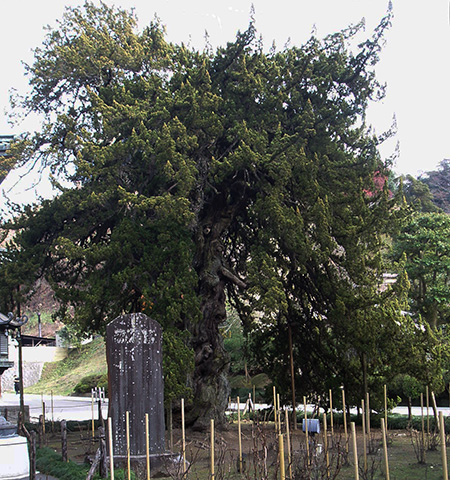
そのようなことなのでこの建長寺には舶来の香木として
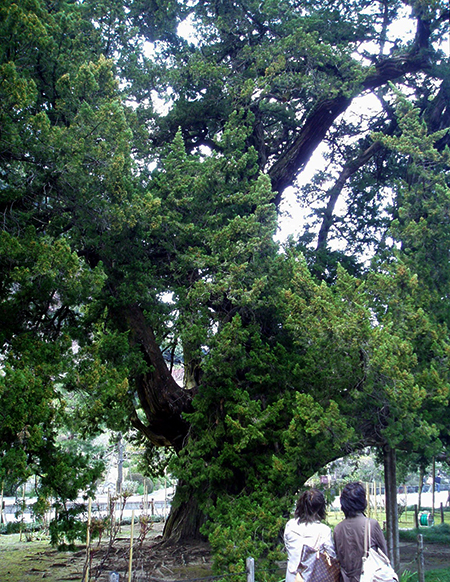
直輸入の柏槇が蘭渓道隆の「手植え」という伝承とともに植えられている。
見たこともない植物と寺院内での公用語に中国語が用いられたことなど、
日本社会に根強い「舶来信仰」の関東での初源を見るような気がする。
はるかな後世の横浜などの「洋風迎合」ぶりとかぶるかも知れない。
蘭渓道隆はしかしその後の蒙古襲来時、スパイ疑惑で一時失権し、
またその後も舶来の導師が住持として迎えられたが根付いたとは思えない。
1293年4月13日、鎌倉は大地震に襲われ建長寺は炎上した。
関東という地域が歴史年代で繰り返し襲われた地震災害の始まりともいえる。

English version⬇

[Hodo and Kaisan, Lanxi Daolong hand-planted Kashiwamaki Kenchoji-8]
As you saw yesterday, the Fujiwara administration of Hiraizumi, Oshu, is deeply involved in the founding of the Kamakura Shogunate.
Chuson-ji, which was built here, managed to survive during the invasion of Yoritomo.
As an invader, Yoritomo, against his subordinate Kanto gokenins and landowners
To peacefully transfer the rights of Oshu’s land distribution as a “gratitude”
Perhaps the priority was to avoid unnecessary confusion.
In addition, it is conceivable that Chuson-ji started with a compliant response to the new ruler.
The Chuson-ji Temple was a Tendai sect and was founded by Ennin, a master of Mt. Hiei.
It seems that there was also the protection of the imperial court.
Yoritomo, who was based on the military power of the Kanto region, used Yoshitsune as an excuse when considering future political warfare.
By annihilating Mr. Fujiwara, a nationwide unified rule of “government” was completed.
He must have changed his stance to prioritize “politics” as a general authority.

Chuson-ji was a sect with a clear Tendai sect and Pure Land Buddhism.
Even in Kiyohira’s “Request”, the relief idea of ​​getting stuck in the Pure Land is strongly felt.
In response to Mr. Fujiwara’s religious policy, the Kamakura administration imported directly from the continent as a new religion.
This Kenchoji Temple is the opposite of the Zen Buddhist temple.
Kamakura’s religious policy was the old Buddhism centered on Kyoto until then.
It is not the idea of ​​Tendai that the Hiraizumi Fujiwara administration accepted, but
This kind of new Buddhism will be introduced.
Although it may be based on the samurai class’s individualistic and introspective self-recharge-type Zen Buddhism orientation,
Politically, it seems that it was intended to shift from the religious policy of the old era.
At first, while pushing the Shinto that expresses the identity of Genji called Tsurugaoka Hachiman to the front,
Decades after the establishment of the Shogunate, he promoted such a Buddhist policy.
As Yoritomo as a leader of the shogunate, he may not have had a clear Buddhist policy.
In fact, the decision-making body of the Kamakura Shogunate is a coalition of landowners and gokenins.
Perhaps there was no basis for making such religious policies.
Insufficient experience as a new political power center
“Well, do I have to decide that?”
Wasn’t it their substance? Dogen was invited to Kamakura
When I was masqueraded as the founder of the Zen Buddhist temple in Kamakura,
Seeing the powers of the shogunate indulging in prehistoric and primitive Kamochi prayers
He is said to have declined to be a pioneer.
Dogen, who was born from the aristocratic class, probably had the idea of ​​”these people.”

From such a background, Lanxi Daolong, who was famous as a shogunate when he came to Japan from Song at that time,
He was found and nominated him as the founder of the Zen Buddhist temple as a national project.
Because of that, as a scented tree that came to Kenchoji
Directly imported Kashiwamaki is planted along with the tradition of “hand-planting” by Lanxi Daolong.
Chinese was used as the official language in the temple and plants that I had never seen, etc.
I feel like seeing the first source of “imported faith” in the Kanto region, which is deeply rooted in Japanese society.
It may be worn for the first time in “Western style acceptance” such as Yokohama in the distant future.
However, when Lanxi Daolong invaded Mongol, he was temporarily forfeited on suspicion of being a spy.
After that, a priest from Japan was welcomed as a priest, but I don’t think it has taken root.
On April 13, 1293, Kamakura was hit by a big earthquake and Kenchoji was on fire.
It can be said that it is the beginning of an earthquake disaster that repeatedly hit the Kanto region in the historical age.

【平泉藤原氏滅亡と幕府誕生 鎌倉建長寺-7】


今回の建長寺シリーズは道元さんの永平寺探訪からの流れですが、
やはり鎌倉の武家政権成立期のことに触れていくほどに
奥州での坂上田村麻呂による征服戦争、アテルイ以来の東北の民による抵抗、
日本史上長期間にわたった奥羽の戦乱との関わりを意識させられる。
陸奧での産金が749年でそこから1189年の藤原氏滅亡まで440年間、
奥州は繰り返し武力紛争が絶えることがなかった。
王朝政府側は東北の民を勝手に蝦夷と決めつけ小中華国家の圧政を押しつけた。
日本の正史の記述で王朝国家としての対東北地域方針として
「討ちて獲るべし」という明確な侵略意図の表記がある。
桓武帝による東北侵略戦争「征夷」という言葉の差別感に驚かされる。
桓武は中国皇帝的な即位儀礼を行い武断的政治路線を取ったといわれる。
東北の民にして見れば、なぜ自分たちが征夷の対象とされるのか
理不尽のきわみと受け取っていたことだろう。
奥州での「産金」が幸でもあり不幸でもあったということなのか。
その王朝政府の征夷方針は、前九年後三年戦役を経て奥州藤原氏政権の確立で
藤原氏4代100年ほどの緊張緩和期間を持った。
度重なる戦費の財政圧力から京都貴族政治で征夷忌避路線が継続したもの。
しかし武士階層の地位向上を狙った源氏勢力は深く侵略のツメを研ぎ続け
祖先の挫折・遺恨を抱き続けた頼朝はついに平泉を殲滅する。
この戦乱の最終帰結として鎌倉幕府の成立があった。

滅ぼされた側、奥州藤原氏の開祖・清衡は中尊寺を建立したが、
そのときの「願文」が残されている。奥州戦乱の当事者の肉声として
歴史的にも興味深く、また源氏による制圧への異議申し立てとも感じる。
以下にその内容の現代語意訳。
〜(奥州では)官軍に限らずエミシによらず古来より多くの者の命が失われました。
・・・命あるものたちの御霊は今あの世に消え去り骨も朽ち、それでも
奥州の土塊となっています。この鐘を打ち鳴らす度に罪もなく命を奪われしものたちの
御霊を慰め極楽浄土に導きたいと願うものであります。
・・・縁があって私は東北のエミシの酋長に連なる家に生まれましたが幸いにも
白河法皇が統治される戦のない世に生れ逢いこのように長生きをして
平和の時代の恩恵に浴しました。そして我がエミシの里では争い事も少なく
捕虜を住まわせた土地や戦場だった所もよく治まっております。
この時代にあって私は分不相応にも祖先の残した事業を引き継ぐこととなり、
誤ってエミシの酋長の座に座ることになりました。今や出羽や陸奥の民の心は、
風に草がなびくように従順です。粛愼(しゅくしん)やユウ婁 (ゆうろう)のような
海外の蛮族もまた太陽に向うひまわりのようによく懐いております。
・・・大門は三つ築垣は三面、反橋は一道(21間)斜橋は一道(10間)
龍頭鷁首(りゅうとうげきす)の画船2隻、左右楽器、太皷、舞装束38人を具します。
これを造るに当たって築山して地形を変え池を掘って水を引き入れました。
草木と樹林を宮殿楼閣の中に配置し人の楽しみとする歌舞を催し、
民衆の仏への帰依を讃えます。そうすればたとえ砦の外の蛮族だとしても、
『この世にも極楽はある』」と言うでありましょう。
千部の法華経に千人の読経者。法華経について、私・清衡は志を忘れず
多年に渡り僧侶に書写させてきたのですが同時にこれを一日に転読させ、
一人で一部、千人で千部を唱和し尽くそうと思います。
集った蚊の羽音は雷鳴を成す。千僧の読経の声はきっと天に達するでしょう。・・・
<中尊寺落慶供養願文より、現代語訳・佐藤弘弥氏:抜粋>〜

歴史は常に勝ったものの正義で正史が描かれていくけれど、
この源氏の奥州征服にはどうしても同意できない部分がある。
これは単なる「判官びいき」だろうか?

English version⬇

[Destruction of Fujiwara Family Hiraizumi and birth of the shogunate Kenchoji, Kamakura-7]
This Kenchoji series was from Dogen’s visit to Eiheiji,
After all, I touched on the period when the samurai government was established in Kamakura.
Conquest war by Sakanoue no Tamura Maro in Oshu, resistance by Tohoku people since Aterui,
It makes me aware of the relationship with the war that lasted for a long time in the history of Japan.
Gold production in the land was 749, and from there until the destruction of Mr. Fujiwara in 1189, 440 years,
In Oshu, armed conflicts continued.
The dynasty government arbitrarily decided on Ezo and the people of Tohoku and imposed oppression on the little Chinese nation.
As a policy for the Tohoku region as a dynasty nation in the description of the official history of Japan
There is a clear description of the invasion intention, “Kill and catch.”
The war of aggression in Tohoku by Emperor Osamu is noticed by the discriminatory feeling of the word “Shogun”.
It is said that Kanmu performed a Chinese emperor’s coronation ritual and took a martial political line.
For the people of Tohoku, why are they the targets of conquest?
It must have been received as unreasonable.
Does it mean that “gold production” in Oshu was both fortunate and unfortunate?
The dynasty government’s conquest policy was to establish the Oshu Fujiwara administration after three years of campaigns nine years ago and three years later.
Mr. Fujiwara had a period of relaxation of tension for about 100 years in his 4th generation.
Due to the repeated financial pressure of war expenses, the conquest aristocratic route continued in Kyoto aristocracy.
However, the Genji forces aiming to improve the status of the samurai class continue to sharpen the claws of the invasion deeply.
Yoritomo, who continued to hold the frustration and grudges of his ancestors, finally annihilated Hiraizumi.
The final consequence of this war was the establishment of the Kamakura Shogunate.

The murdered side, Kiyohira, the founder of Mr. Fujiwara Oshu, built Chusonji Temple, but
The “application” at that time is left. As the voice of the parties to the Oshu War
It is historically interesting, and I feel that it is an objection to the suppression by Genji.
Below is a modern translation of the content.
~ (In Oshu) Many people have lost their lives since ancient times, not only in the government army but also in Emishi.
… The spirits of living things have disappeared into the afterlife and their bones have decayed, yet
It is a mass of soil in Oshu. Every time I ring this bell, I’m innocently killed
We want to comfort the Spirit and lead it to the Paradise Pure Land.
… I was born in a house connected to the chief of Emishi in Tohoku, but fortunately
Born in a warless world where Pope Shirakawa is ruled, and lived long like this
I enjoyed the benefits of an era of peace. And there are few conflicts in my village of Emishi
The land where the prisoners of war lived and the battlefields are well settled.
In this era, I was disproportionately taking over the business left by my ancestors.
I accidentally sat in the position of chief of Emishi. The hearts of the people of Dewa and Mutsu are now
Obedient as the grass flutters in the wind. Like Yilou and Yilou
Barbarians abroad are also fond of sunflowers facing the sun.
・ ・ ・ Daimon has three fences, three sides of the fence, one road (21 spaces) for the arched bridge, and one road (10 spaces) for the diagonal bridge.
It is equipped with two Ryuto Gekisu painting boats, left and right musical instruments, taiko, and 38 dance costumes.
In making this, we built a mountain, changed the terrain, dug a pond, and drew water.
The vegetation and forests are placed inside the palace tower to hold a song and dance that people can enjoy.
Praise the people’s devotion to the Buddha. That way, even if it’s a barbarian outside the fort
Let’s say, “There is paradise in this world.”
Thousands of Lotus Sutras and Thousands of sutras. About the Lotus Sutra, I, Kiyohira, do not forget my ambition
I had a monk copy it for many years, but at the same time I made it transcribed in one day.
I’m going to sing a part by myself and a thousand copies by a thousand people.
The sound of the gathered mosquitoes makes thunder. The voice of the chanting of the Senzo will surely reach heaven.・ ・ ・

Although history has always won, the official history is drawn with justice,
There is a part that I cannot agree with Genji’s conquest of Oshu.
Is it the so-called “judgment biiki”?

【仏殿の本尊・地蔵菩薩 鎌倉建長寺-6】


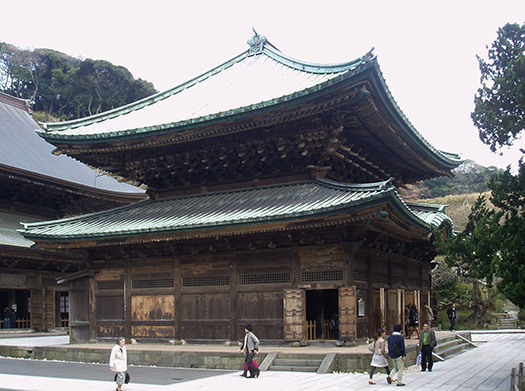
建長寺の本尊が安置されているのは仏殿。
外観からもわかるように「基壇建築」です。
仏教寺院の流れを見てくると、当初の法隆寺など輸入されたはじめには
こうした中国式の基壇建築が建てられた。
1253年段階でも「本格的中国風寺院」の格式として基壇建築が
いわば「正調」として建てられ続けていたように思われる。
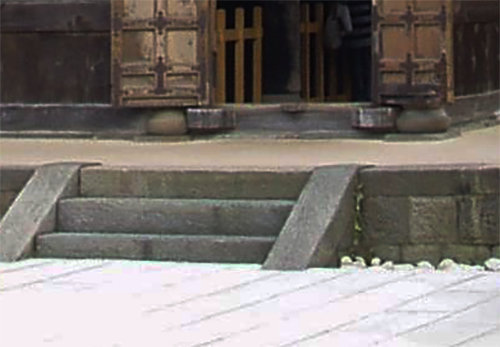
隅角部の足下部分を拡大してみると上の写真。
床下が開口されていなくて雨水は軒の出で防御して
基壇面の外側に落ちるように設計意図されているけれど、
それでも多雨の日本では雨水が基壇面に滞留することも多く、
礎石間に渡される土台の木材の腐朽が不安視されるところ。
こういう問題点を克服可能な建築工法として床上げ工法が進歩した。
床下空間を広大に開放させて湿気の滞留を防御して
床から上の構造部分の耐久性能を高めた工法に進化していった。
この時代、一般庶民の住宅は土間床の竪穴が基本だったので、
木造建築技術はこのような寺院建築などで工法開発が始められた。
貴族階級の寝殿造りはこうした宗教建築の進化した工法が採用され
庶民は見たこともないような「床面の高い」住居に驚愕したことだろう。
いわば身分の「高さ」を端的に表していた建築だったのだろう。
本格的先進建築として「宋直輸入」を象徴させるように
主要な建築ではこうした基壇建築が建長寺では建てられたと推定できる。
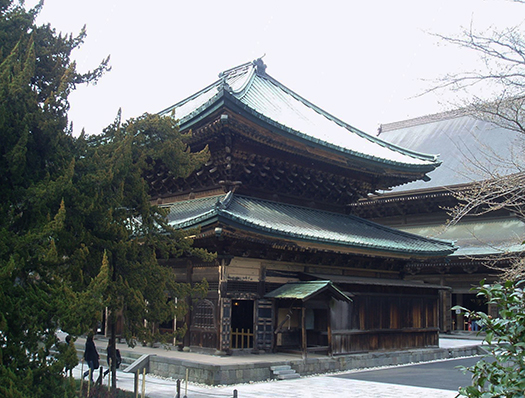
この現存の仏殿建築は江戸期に建てられた4代目ということで、
芝増上寺に建てられていた徳川秀忠夫人・崇源院の霊廟建築の移設。
移設に当たって当初の建築様式・基壇が採用されたか、
あるいは江戸期の霊廟建築も基壇を採用していたのだろうと思われる。
屋根の形状が寄棟、天井の仕上げが禅宗ではふつう平板な「鏡天井」のところ、
和風の仕様である「格天井」が採用され各ブロックに描画されている。
このあたりは江戸期建築の特徴と見なせるのだろう。


年号名が冠された公共建築寺院であるのに、
この建長寺の本尊は「地蔵菩薩」とやや質素な本尊と言える。
前時代の大日如来とか釈迦如来とかの宗教的中心仏像ではない。
これは建長寺が建てられた地域「山ノ内」がもともと鎌倉の「地獄谷」という
処刑場でその霊を祀る心平寺という寺院があってその本尊として地蔵菩薩があった。
仏教的な意味では「広大な慈悲で生あるものすべてをすくうという菩薩。 釈迦入滅後、
弥勒菩薩があらわれるまでの無仏の間衆生を救済するとされる」仏。
こうした因縁にちなんで開山者・蘭渓道隆はこの地蔵菩薩を本尊とした。
宋からの渡来僧として日本で破格の身分上昇を果たしたかれとしては
この地に根付く、という意思を強く持ったのかも知れないし、
鎌倉幕府側として、強い要望を道隆に伝えたものかも知れない。
自らが処断した刑死者に対してその怨霊への怖れが幕府側にあったのか。
裁断者として後ろめたい政治的罪人も多かったかもと妄想が膨らむ・・・。

English version⬇

[The principal image of the Buddhist temple, Jizo Bodhisattva Kenchoji-6]
The principal image of Kenchoji is enshrined in the Buddhist temple.
As you can see from the exterior, it is a “base architecture”.
Looking at the flow of Buddhist temples, at the beginning when the original Horyuji temple was imported
Such a Chinese-style foundation building was built.
Even at the stage of 1253, the foundation building was built as a “genuine Chinese-style temple”.
So to speak, it seems that it continued to be built as “normal”.
The above photo is a magnified view of the foot of the corner.
The underfloor is not open and rainwater is protected by the eaves
It is designed to fall outside the platform, but
Even so, in heavy rain Japan, rainwater often stays on the platform surface,
Where there is concern about the decay of the base wood passed between the cornerstones.
The floor-raising method has advanced as a building method that can overcome these problems.
The underfloor space is vastly opened to prevent the retention of moisture.
It has evolved into a construction method that enhances the durability of the structural parts above the floor.
At this time, ordinary people’s houses were basically pits on the dirt floor, so
As for wooden construction technology, the development of construction methods was started in such temple construction.
The aristocratic Shinden-zukuri has adopted the advanced construction method of such religious architecture.
The common people would have been amazed at the “high-floor” dwellings they had never seen.
So to speak, it was an architecture that simply represented the “height” of status.
To symbolize “Song direct import” as a full-scale advanced building
It can be inferred that such a foundational building was built at Kenchoji Temple in the main buildings.
This existing Buddhist temple architecture is the 4th generation built in the Edo period.
Relocation of the mausoleum building of Mrs. Hidetada Tokugawa and Oeyoin, which was built at Zojoji Temple.
Was the original architectural style / foundation adopted for the relocation?
Alternatively, it seems that the mausoleum architecture of the Edo period also adopted the foundation.
The shape of the roof is a hipped roof, and the finish of the ceiling is usually a flat flat “mirror ceiling” in Zen Buddhism.
The Japanese-style specification “Kaku Ceiling” is adopted and drawn on each block.
This area can be regarded as a characteristic of Edo period architecture.

Even though it is a public building temple with the name of the year
The principal image of this Kenchoji temple can be said to be a rather simple principal image of “Jizo Bodhisattva”.
It is not a religious center Buddha statue such as Dainichi Nyorai or Shaka Nyorai of the previous era.
This is the area “Yamanouchi” where Kenchoji was built, which was originally called “Hell Valley” in Kamakura.
There was a temple called Shinpeiji, which enshrines the spirit at the execution site, and there was a Jizo Bodhisattva as its principal image.
In the Buddhist sense, “a bodhisattva who scoops everything that is alive with vast mercy.
It is said to rescue the sentient beings without Buddha until the Maitreya Bodhisattva appears. “Buddha.
The founder, Lanxi Daolong, made this Jizo Bodhisattva the principal image of the mountain because of this connection.
As a priest from Song, he has achieved an exceptional rise in status in Japan.
He may have a strong will to take root in this land,
It may be that the Kamakura Shogunate side conveyed a strong request to Michitaka.
Was there a fear of the vengeful spirit on the Shogunate side for the prisoner who had been punished by himself?
The delusion swells that there were many political sinners who wanted to blame as a judge.

【時代を主導する武家の内面世界と宗教 鎌倉建長寺-5】


建長寺の創建は1253年。創設者は幕府5代執権・北条時頼。
時代的には京都王権の政治支配が承久の乱によってパワーが衰退し
幕府権力が東国だけではなく全国に拡張した鎌倉幕府絶頂期。
頼朝による武家権力の創始から70-80年経過した時期に当たる。
幕府の滅亡が1333年なので約150年の期間のほぼ半ば。
そういう時代相のなかで武家としての新時代仏教として禅宗が
最新の中国仏教として導入されていったとされる。
開山者には中国からの渡来僧・蘭渓道隆が選択され伽藍配置も中国式とされた。
寺院内では中国語が公用されていたという。

武家権力としては畿内地域の「伝統的」仏教思想に対して
新時代の「国家鎮護」思想を持って統治すると宣言したかったのか。
権力の安定期でもあり北条時頼は熱心な仏教信者であったとされる。
権力が安定してくると統治の平和的浸透のために宗教を利用する考えが
主導的になってくるのが必然の流れなのかも知れない。
前回まで触れてきた歴史の流れで言えば平泉の藤原政権では
創始者の藤原清衡自身が中尊寺の「願文」を残している。
日本史では平泉と奥羽の情勢はメインカレントとは見なされず、
京都中央での源平の興亡が主流のように描かれていくけれど、
武家政権の萌芽はむしろ奥羽での戦乱がその端緒にあたり、
そこでの血みどろの戦争状況が国内情勢の最先端に盛り上がっていって
結果として「関東国」という新国家が全国統一したといえるのではないか。
そもそも関東の開墾地主層が武士「階級」の基盤であり、
かれらが京都中央での「武家貴族」源氏(頼朝にいたる嫡流)を推戴利用し
征夷大将軍という中央からの独立的権力根拠を獲得し
鎌倉に全国の権力を集中させたのが日本史の実相だと思える。
京都政界での得体の知れない宮廷貴族たちの主導権争いという実態から
よりリアルな政治基盤に主役を転換していったという流れ。
そのようななかで基盤を確立させた開墾地主の盟主・北条家は
自らの権力に装飾性を持たせるのに、こうした禅宗を選択した。
この鎌倉での寺院建築に「建長」という年号名を付したのは
武家政権の揺るぎない正統性・基盤を象徴させたと思える。

そうした武家の世の寺院として選択されたのが、禅宗。
それまでの仏教宗派に対し「個人」としての克己心に着目していると思える。
武家という存在は命のやり取りをする役割を担っているので
常に生死の境を意識し続ける存在でもある。
もちろん自らの生死を賭けるとき、その個人の上位概念として
いわば「法人」としての家、家系意識があってその利益のために
自分一個の生命をやり取りするという心象世界を持っている。
そういったかれらにとって、禅の説く精神性がふさわしく感じられたのか。
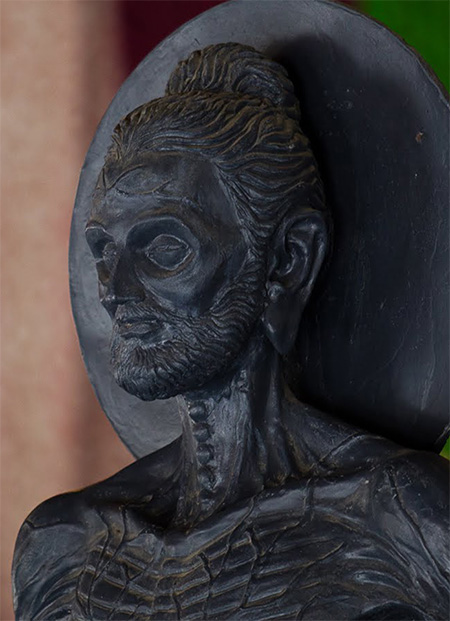
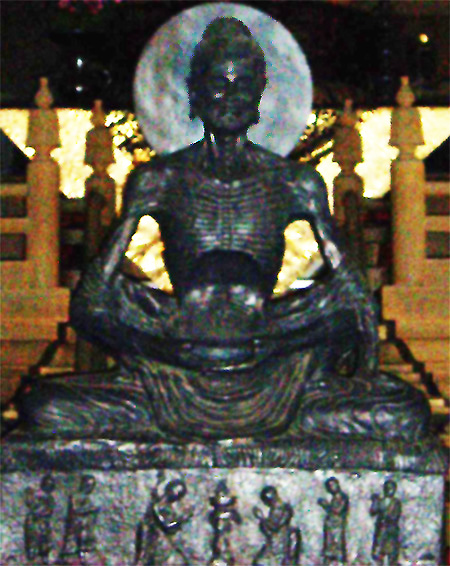
建長寺で見た仏像群のなかで特徴的と思われたのが写真の「仏陀苦行像」。
仏教の創始者であるゴータマブッダさんが悟りを得るのに修行時、
食も取らずに骨が浮き出るほど一心不乱に修行していた様子を
このような仏像に活写してそれを武家たちは拝跪していた。
禅宗寺院が武家に支持されたのには、こういった自分たちの生き様死に様に
もっともその教えがふさわしいと思えたのではないか。

English version⬇

[The inner world and religion of the samurai who lead the era Kenchoji Kamakura-5]
Kenchoji Temple was founded in 1253. The founder is Hojo Tokiyori, the fifth shogunate.
In the era, the political rule of the Kyoto kingship declined due to the Jokyu War.
The heyday of the Kamakura Shogunate, when the power of the Shogunate expanded not only to the eastern country but to the whole country.
It is 70-80 years after Yoritomo’s founding of samurai power.
Since the shogunate was destroyed in 1333, it was almost the middle of the 150-year period.
Zen Buddhism as a new era Buddhism as a samurai in such an era
It is said that it was introduced as the latest Chinese Buddhism.
Lanxi Daolong, a monk from China, was selected as the founder, and the cathedral arrangement was also Chinese style.
It is said that Chinese was officially used in the temple.

As a samurai power, against the “traditional” Buddhist thought of the Kinai region
Did you want to declare that you would rule with the idea of ​​”national protection” in the new era?
It is said that Hojo Tokiyori was an avid Buddhist believer during the stable period of power.
The idea of ​​using religion for the peaceful penetration of governance as power stabilizes
It may be an inevitable flow to become a leader.
Speaking of the history that I touched on until the last time, in the Fujiwara administration of Hiraizumi
The founder, Kiyohira Fujiwara himself, has left behind the “request” of Chusonji Temple.
In Japanese history, the situation in Hiraizumi and Ou is not considered the main current,
The rise and fall of Genpei in central Kyoto is depicted as if it were mainstream,
The sprouting of the samurai government started with the war in Ou,
The bloody war situation there was rising to the forefront of domestic affairs.
As a result, it can be said that the new nation called “Kanto” has been unified nationwide.
In the first place, the landowners in the Kanto region are the foundation of the samurai “class”.
They used the “samurai aristocrat” Genji (a pedestrian style leading up to Yoritomo) in central Kyoto.
Acquired an independent basis of power from the central government, the Shogun General
It seems that the fact of Japanese history is that the power of the whole country is concentrated in Kamakura.
From the fact that the unfamiliar court aristocrats are fighting for the initiative in Kyoto politics
The flow of shifting the leading role to a more realistic political base.
Under such circumstances, the Hojo clan, the lord of the landowner who established the foundation,
I chose these Zen sects to give my power a decorative touch.
The name of the temple building in Kamakura was named “Kencho”.
It seems to have symbolized the unwavering legitimacy and foundation of the samurai government.

Zen Buddhism was selected as the temple of the samurai world.
It seems that he is paying attention to his selfishness as an “individual” with respect to the Buddhist denominations up to that point.
Because the existence of a samurai plays a role in exchanging lives
He is also always aware of the boundary between life and death.
Of course, when betting on one’s life or death, as a superordinate concept of that individual
So to speak, for the benefit of having a family consciousness as a “corporation”
I have a mental world of exchanging one’s own life.
Did they feel that the spirituality that Zen preached was appropriate?
Among the Buddhist statues I saw at Kenchoji Temple, the one that seemed to be characteristic was the “Buddha penance statue” in the photo.
When Gautama Buddha, the founder of Buddhism, trained to gain enlightenment,
It seems that he was practicing so hard that his bones emerged without eating.
The samurai were worshiping it by copying it live on such a Buddha statue.
The reason why Zen Buddhist temples were supported by the samurai was that they lived and died.
I think that teaching seemed appropriate.

【専制体制vs「御恩と奉公」契約社会 鎌倉建長寺-4】


なぜこの建長寺について書くのにその前段の武家政権のことにこだわるか、
自分自身で考えてみると、どうも現代にまで至る大陸アジアと日本の関係がある。
日本史では鎌倉幕府という国家体制が成立するのだけれど、
この体制というのはアジアでは稀有な「封建主義」体制なのだと思うのです。
封建主義とは封土(収穫をうむ領土で褒美や収入として臣下家来に与えるもの)を
与えたり受け取ったりすることによって成立する主人と臣下(家来)の関係。
また、そうした関係が社会の基本なのだ、とする考え方・主張のこと。
この関係というのは個人主義を生んだり資本主義に発展していく基盤の思想。
その基本は「契約社会」ということでしょう。
日本で言えば「一所懸命」ということなのだが、こういう思想が
中国や半島国家では未成熟だったこととの相関でその後の極東アジア史は
大きく転換していったのではないかと思われるのです。
大陸中国では律令で国家制度はできていったけれど、国家権力としては
結局皇帝独裁の専制国家が現代の共産党独裁まで継続してきている。
だから宗教への弾圧が行われた。宗教は地上権力に無限の権力を与えない。
独裁政権にとっては非常に不都合な考え方なので弾圧の歴史が繰り返す。
一方の日本では朝廷の権力がどんどんと開発される新興農地支配に
有効な支配原理原則を提供することができなかった。
日本の場合は米作農業、水源管理型で個別地域独自の原理原則での経済支配が
必要不可欠とされてきて、その地域型権力として封建領主、
関東での開拓地主層が自力で領土防衛する「武士」化していった。
それら同士の平和共存のための政治制度が存在せず、
かれらは常に領土侵食される不安にさいなまれ続けていた。
既存の朝廷権力体制は「荘園」支配の分配機能しか存せず、全国に
中央の勢力所有の荘園というカタチの政治統治しかできなかった。
もちろん中央貴族・寺社勢力に各地域の個別権益を政治判断する能力は
決定的になく、結局地域での安定的政治構造はできなかったのだ。
そういう現状に対して「将軍」たる頼朝は「御恩と奉公」という
明確なルールを定めて武家による「合理的統治」を創始したのだ。
そういった日本の独自発展はその後の「元寇」にも耐えて
本格的に日本はアジア世界からの離脱を始めたのだといえる。

このような経緯がきわめて今日的な意味合いを強く感じさせてくれる。
きめ細かな地域統治の原則である「封建」がしっかり根付くことなく
常に「易姓革命」という暴力的権力支配体制が継続してきた中国では
健全な「御恩と奉公」という「統治の契約化」発展が見られなかった。
そういった連中が元寇として日本の鎌倉幕府体制に攻撃を仕掛けたけれど、
日本社会はその危機を撃退することに成功して契約社会国家体制が存続した。
・・・どうもこうした歴史的分水嶺がこの建長寺建立の時期だった。
現代で共産党独裁の中国はふたたび「元寇」のような状況に立ち至っている。
契約社会対専制独裁という、歴史は繰り返すのではないか。

English version⬇

[Dedicated system vs. “Gon and Hokoku” contract society Kenchoji Kamakura-4]
[Dedicated system vs. “Gon and Hokoku” contract society Kenchoji Kamakura-4]
Why stick to the samurai government in the previous stage when writing about this Kenchoji Temple
When I think about it myself, it seems that there is a relationship between continental Asia and Japan up to the present day.
In Japanese history, the Kamakura Shogunate is a national system, but
I think this system is a rare “feudalism” system in Asia.
Feudalism is a territory that is harvested and is given to vassal servants as a reward or income.
The relationship between the master and his vassals (servants) that is established by giving and receiving.
Also, the idea / argument that such a relationship is the basis of society.
This relationship is the basic idea that gives birth to individualism and develops into capitalism.
The basis is probably a “contract society.”
In Japan, it means “work hard”, but this kind of thought is
Correlation with the immaturity of China and the peninsula nations led to the subsequent history of Far East Asia.
It seems that it has undergone a major shift.
In mainland China, a national system was established by the decree, but as a national power
After all, the tyranny of the emperor’s dictatorship continues to the modern Communist dictatorship.
So there was a crackdown on religion. Religion does not give infinite power to earthly power.
The history of repression repeats itself because it is a very inconvenient idea for the dictatorship.
On the other hand, in Japan, the power of the imperial court is being developed more and more.
Could not provide a valid governing principle.
In the case of Japan, rice farming, water source management type, and economic control based on the principles unique to each region
Feudal lords, who have been regarded as indispensable, as their regional power
The landowners in the Kanto region became “samurai” who defended their territory on their own.
There is no political system for peaceful coexistence between them,
They were constantly suffering from anxiety about territorial erosion.
The existing imperial court power system has only the distribution function of “village” control, and it is nationwide.
Only the political rule of the form of a manor owned by the central power was possible.
Of course, the ability of central aristocrats and temples and shrines to politically judge individual interests in each region is
It was not decisive, and in the end it was not possible to establish a stable political structure in the region.
Yoritomo, who is a “general”, is called “thank you and service” for such a situation.
He set clear rules and started the “rational rule” by the samurai family.
Such unique development of Japan endured the subsequent “Mongol invasion”
It can be said that Japan has begun to withdraw from the Asian world in earnest.

This kind of background makes me strongly feel the meaning of today.
“Feudalism”, which is the principle of detailed regional governance, does not take root firmly
In China, where the violent power control system of the “easy surname revolution” has always continued
There was no sound development of “goon and hōkō”, a “contract of governance”.
Those guys attacked the Kamakura Shogunate system in Japan as a Mongol invasion.
Japanese society succeeded in repelling the crisis and the contracted social state system survived.
… It seems that such a historical watershed was the time when this Kenchoji Temple was built.
In modern times, the Communist Party dictatorship of China has once again reached a situation like the “Mongol invasion.”
The history of contract society vs. tyranny may repeat itself.

【武士道の基本プランナー・頼朝 鎌倉建長寺-3】


建長寺について書き進める予定なのだけれど、
やはり仏教の日本での推移はそのまま権力争奪史に重なる。
朝廷内部の宮廷政治の流れが学校では日本史の基本のように学ぶが、
それは政治現象のごく表面の事柄であって、
基本的には民のナマな経済社会の進展・発展に基本をおいて見る必要がある。
統一国家としては鎮護国家思想と天皇と「日本」国号が定まったのが基本。
そのように定められた国家体制だけれど、その再北限地域、
東北地方では国家支配は貫徹していなかった。
坂上田村麻呂の征夷行動でかろうじて上辺だけは取り繕われたけれど、
事実としては安倍氏や清原氏、奥州藤原氏という地方政権が独立的に蟠踞した。
それに対し「陸奥守」の中央派遣権力は好戦的だったり融和的だったりした。
源頼義・義家父子の時代、かれらが陸奥守として東北を戦乱で蹂躙した。
前九年後三年という地域戦争期を経て奥州藤原氏の100年の平和があった。
はるかな子孫として頼朝は流人として流された関東で開拓地主層と結託する。
平家という中央政界での敵対勢力の盛衰を眺めながら、
一方で家系宿縁の敵である奥州藤原氏への復讐の念を持ち続けただろう頼朝。
この人物の権力把握力の根源は冷酷無比な状況判断のクールさ。
関東の開拓地主という猛獣たちの使い手としての力量を磨いたといえる。
かれらはひたすらに「一所懸命」であり、旺盛な土地支配欲を持っている。
その盲目的我欲に「御恩と奉公」という「名分」を与えて統治力を高めた。
結局武士道とは主従の「契約関係」原則のルールなのだと思う。
それまでの意味不明な王朝政府機構の政治統治に対してはるかに実利的で
自分たちの基本欲求を積極的に認定する権力だったので尊崇した。
「そんなことは後でどうとでもなる。いまは猛獣使い能力向上に徹するべきだ」
対平家の関東支配権戦・富士川の戦いで大勝利したのに
関東武士団は頼朝に関東支配への一層の努力傾注を促した。
頼朝は賢くその要求を受け入れて、自らの源氏が平氏と入れ替わって
王朝政権の担い手になる道を一時保留する選択をしている。
そんなことよりも独立開墾地主相互間での封建領土紛争への対処、
その検断のルール・武士道原則確定がなにより優先されたということだろう。
実際に富士川の戦いに頼朝は関東武士団を指揮して動員することができたけれど、
さりとてかれらは長期間にわたって関東を留守にして遠征軍従事することは
実際問題として不可能だったのだろう。
そんなことをして隣の土地の支配者が攻め込んできて支配権を奪われる危惧が
かれらには常に存在し続けていたといえるのでしょう。
事実頼朝が鎌倉にいて猛獣使いを果たすことでその後かれらは遠征も了解出来た。
「頼朝さん、京都のことはどうでもいい、関東のルールを決めてくれ」
かれらにとっての頼朝の存在価値はそこにあったのだろう。まさに「将軍」。
武士道の基本を決めてくれ、というに等しいといえる。
怜悧な政治判断力を持つ武家貴族頼朝の英雄たる所以ではないか。

・・・どうもなかなか建長寺開山に記事がたどりつけないが(笑)、
わたし的にはこの鎌倉の権力成立過程、武士道の初源について
不分明なところが多すぎるのではないかと思い続けている次第です。

English version⬇

[Basic planner of Bushido, Yoritomo Kenchoji-3]
I’m planning to write about Kenchoji Temple,
After all, the transition of Buddhism in Japan directly overlaps with the history of power struggle.
The flow of court politics inside the imperial court is learned at school like the basics of Japanese history,
It’s just the surface of a political phenomenon,
Basically, it is necessary to look at the development and development of the people’s raw economic society.
As a unified nation, it is basic that the ideology of the guardian state, the emperor, and the “Japan” national name have been decided.
Although it is a national system defined as such, its re-northern limit area,
In the Tohoku region, national rule was not maintained.
Sakanoue Tamura Maro’s conquest action barely repaired only the upper side,
As a matter of fact, the local governments of Mr. Abe, Mr. Kiyohara, and Mr. Fujiwara Oshu independently shook.
On the other hand, the central dispatch power of “Rikuokumori” was warlike or harmonious.
During the time of Minamoto no Yoriyoshi and Yoshiie’s father and son, they overrun Tohoku in a war as Mutsu Mamoru.
After a regional war period of nine years ago and three years later, there was 100 years of peace for Mr. Fujiwara Oshu.
As a far-reaching descendant, Yoritomo colludes with the settlement landowners in the Kanto region, where he was swept away as a drifter.
While watching the rise and fall of hostile forces in the central political world of Heike,
On the other hand, Yoritomo would have continued to have revenge on Mr. Fujiwara Oshu, an enemy of his family.
The source of this person’s ability to grasp power is the coolness of ruthless situational judgment.
It can be said that he has honed his ability as a user of the beasts who are the pioneer landowners in the Kanto region.
They are “hard” and have a strong desire for land control.
The blind selfishness was given the “name” of “gratitude and service” to enhance the governing power.
After all, I think Bushido is the rule of the master-slave “contractual relationship” principle.
Much more pragmatic for the political rule of the previously unintelligible dynasty government
I respected them because they had the power to positively recognize their basic desires.
“I can’t do that later. Now I should focus on improving my ability to use beasts.”
Even though I won a big victory in the battle of the Kanto dominance against the Heike and the battle of Fujigawa
The Kanto Bushidan urged Yoritomo to devote more effort to the Kanto rule.
Yoritomo wisely accepted the request and his own Genji replaced Taira.
He has chosen to suspend his path to becoming a leader in the dynasty’s administration.
Rather than that, dealing with feudal territorial disputes between independent landowners,
It seems that the rules of the inspection and the establishment of the Bushido principle were given the highest priority.
Yoritomo was able to actually command and mobilize the Kanto Bushidan in the Battle of Fujigawa,
It ’s not easy for them to be away from Kanto for a long time and engage in expeditionary forces.
It would have been impossible as a matter of fact.
There is a fear that the ruler of the next land will invade and lose control by doing such a thing.
It can be said that they always existed.
In fact, when Yoritomo was in Kamakura and played a beastmaster, they were able to understand the expedition.
“Yoritomo-san, I don’t care about Kyoto, please decide the rules of Kanto.”
Yoritomo’s existence value for them would have been there. It’s just a “general”.
It can be said that he decides the basics of Bushido.
Isn’t it the reason why he is a hero of Yoritomo, a samurai aristocrat who has a terrible political judgment?

… I can’t quite reach the article about Kenchoji Kaisan (laughs),
Personally, about the process of establishing power in Kamakura, the first source of Bushido
I continue to think that there are too many unclear points.