本文へジャンプ

【武士道の基本プランナー・頼朝 鎌倉建長寺-3】


建長寺について書き進める予定なのだけれど、
やはり仏教の日本での推移はそのまま権力争奪史に重なる。
朝廷内部の宮廷政治の流れが学校では日本史の基本のように学ぶが、
それは政治現象のごく表面の事柄であって、
基本的には民のナマな経済社会の進展・発展に基本をおいて見る必要がある。
統一国家としては鎮護国家思想と天皇と「日本」国号が定まったのが基本。
そのように定められた国家体制だけれど、その再北限地域、
東北地方では国家支配は貫徹していなかった。
坂上田村麻呂の征夷行動でかろうじて上辺だけは取り繕われたけれど、
事実としては安倍氏や清原氏、奥州藤原氏という地方政権が独立的に蟠踞した。
それに対し「陸奥守」の中央派遣権力は好戦的だったり融和的だったりした。
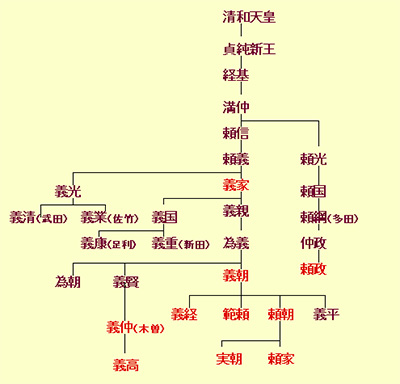
源頼義・義家父子の時代、かれらが陸奥守として東北を戦乱で蹂躙した。
前九年後三年という地域戦争期を経て奥州藤原氏の100年の平和があった。
はるかな子孫として頼朝は流人として流された関東で開拓地主層と結託する。
平家という中央政界での敵対勢力の盛衰を眺めながら、
一方で家系宿縁の敵である奥州藤原氏への復讐の念を持ち続けただろう頼朝。
この人物の権力把握力の根源は冷酷無比な状況判断のクールさ。
関東の開拓地主という猛獣たちの使い手としての力量を磨いたといえる。
かれらはひたすらに「一所懸命」であり、旺盛な土地支配欲を持っている。
その盲目的我欲に「御恩と奉公」という「名分」を与えて統治力を高めた。
結局武士道とは主従の「契約関係」原則のルールなのだと思う。
それまでの意味不明な王朝政府機構の政治統治に対してはるかに実利的で
自分たちの基本欲求を積極的に認定する権力だったので尊崇した。
「そんなことは後でどうとでもなる。いまは猛獣使い能力向上に徹するべきだ」
対平家の関東支配権戦・富士川の戦いで大勝利したのに
関東武士団は頼朝に関東支配への一層の努力傾注を促した。
頼朝は賢くその要求を受け入れて、自らの源氏が平氏と入れ替わって
王朝政権の担い手になる道を一時保留する選択をしている。
そんなことよりも独立開墾地主相互間での封建領土紛争への対処、
その検断のルール・武士道原則確定がなにより優先されたということだろう。
実際に富士川の戦いに頼朝は関東武士団を指揮して動員することができたけれど、
さりとてかれらは長期間にわたって関東を留守にして遠征軍従事することは
実際問題として不可能だったのだろう。
そんなことをして隣の土地の支配者が攻め込んできて支配権を奪われる危惧が
かれらには常に存在し続けていたといえるのでしょう。
事実頼朝が鎌倉にいて猛獣使いを果たすことでその後かれらは遠征も了解出来た。
「頼朝さん、京都のことはどうでもいい、関東のルールを決めてくれ」
かれらにとっての頼朝の存在価値はそこにあったのだろう。まさに「将軍」。
武士道の基本を決めてくれ、というに等しいといえる。
怜悧な政治判断力を持つ武家貴族頼朝の英雄たる所以ではないか。

・・・どうもなかなか建長寺開山に記事がたどりつけないが(笑)、
わたし的にはこの鎌倉の権力成立過程、武士道の初源について
不分明なところが多すぎるのではないかと思い続けている次第です。

English version⬇

[Basic planner of Bushido, Yoritomo Kenchoji-3]
I’m planning to write about Kenchoji Temple,
After all, the transition of Buddhism in Japan directly overlaps with the history of power struggle.
The flow of court politics inside the imperial court is learned at school like the basics of Japanese history,
It’s just the surface of a political phenomenon,
Basically, it is necessary to look at the development and development of the people’s raw economic society.
As a unified nation, it is basic that the ideology of the guardian state, the emperor, and the “Japan” national name have been decided.
Although it is a national system defined as such, its re-northern limit area,
In the Tohoku region, national rule was not maintained.
Sakanoue Tamura Maro’s conquest action barely repaired only the upper side,
As a matter of fact, the local governments of Mr. Abe, Mr. Kiyohara, and Mr. Fujiwara Oshu independently shook.
On the other hand, the central dispatch power of “Rikuokumori” was warlike or harmonious.
During the time of Minamoto no Yoriyoshi and Yoshiie’s father and son, they overrun Tohoku in a war as Mutsu Mamoru.
After a regional war period of nine years ago and three years later, there was 100 years of peace for Mr. Fujiwara Oshu.
As a far-reaching descendant, Yoritomo colludes with the settlement landowners in the Kanto region, where he was swept away as a drifter.
While watching the rise and fall of hostile forces in the central political world of Heike,
On the other hand, Yoritomo would have continued to have revenge on Mr. Fujiwara Oshu, an enemy of his family.
The source of this person’s ability to grasp power is the coolness of ruthless situational judgment.
It can be said that he has honed his ability as a user of the beasts who are the pioneer landowners in the Kanto region.
They are “hard” and have a strong desire for land control.
The blind selfishness was given the “name” of “gratitude and service” to enhance the governing power.
After all, I think Bushido is the rule of the master-slave “contractual relationship” principle.
Much more pragmatic for the political rule of the previously unintelligible dynasty government
I respected them because they had the power to positively recognize their basic desires.
“I can’t do that later. Now I should focus on improving my ability to use beasts.”
Even though I won a big victory in the battle of the Kanto dominance against the Heike and the battle of Fujigawa
The Kanto Bushidan urged Yoritomo to devote more effort to the Kanto rule.
Yoritomo wisely accepted the request and his own Genji replaced Taira.
He has chosen to suspend his path to becoming a leader in the dynasty’s administration.
Rather than that, dealing with feudal territorial disputes between independent landowners,
It seems that the rules of the inspection and the establishment of the Bushido principle were given the highest priority.
Yoritomo was able to actually command and mobilize the Kanto Bushidan in the Battle of Fujigawa,
It ’s not easy for them to be away from Kanto for a long time and engage in expeditionary forces.
It would have been impossible as a matter of fact.
There is a fear that the ruler of the next land will invade and lose control by doing such a thing.
It can be said that they always existed.
In fact, when Yoritomo was in Kamakura and played a beastmaster, they were able to understand the expedition.
“Yoritomo-san, I don’t care about Kyoto, please decide the rules of Kanto.”
Yoritomo’s existence value for them would have been there. It’s just a “general”.
It can be said that he decides the basics of Bushido.
Isn’t it the reason why he is a hero of Yoritomo, a samurai aristocrat who has a terrible political judgment?

… I can’t quite reach the article about Kenchoji Kaisan (laughs),
Personally, about the process of establishing power in Kamakura, the first source of Bushido
I continue to think that there are too many unclear points.

【一所懸命=「所得倍増」侵略計画 鎌倉建長寺-2】


タイムマシンができて日本史で時間旅行ができるようになったら、
やはり平安末期の源氏による権力奪取の瞬間がもっとも刺激的ではないか。
この時代、日本の歴史人口は757万人という推定値がある。
この数字を元に考えると戦争に動員されていた民は相当根こそぎ。
当時の社会を考えれば、農民達はその土地の領主の所有物だっただろう。
こういう動乱期に現代の人間のように「我関せず」という立場はあり得ないし、
実際に農村村落からは戦闘要員として大量動員されたことは疑いない。

奥州藤原氏を潰滅させるのに、頼朝は284,000の軍勢を率いたとされている。
1189年の7月-8月にかけての制圧行動だけれど、
農作業の繁忙期を避けての軍事行動にしても巨大な人口移動。
兵站を考えると気絶しそうだが、もっとも原始的「略奪」兵站だっただろう。
人数の正確性は特定しようもないけれど、平泉政権側にして見れば
まさに存亡の危機であり人口の相当規模が動員されたことはわかる。
一説では20,000が国見峠防衛に当たったとされている。
宮城県側から南下して福島県の国見峠付近で関東軍を迎撃したが、
まさに国土防衛の総力戦。当時の奥羽人口は不明だが現代東北は10%弱比率。
当時の開拓状況を考慮すれば、多めに見て総人口の5%程度ではないか。
奥羽人口を仮に40万人とすれば20,000の総力戦動員の蓋然性は高い。
一方で頼朝側も乾坤一擲の大勝負であり、家系の5-6代前くらいの
頼義・義家の代での苦渋の体験は強く「根に持っていた」だろう。
絶対に藤原氏の息の根を止める強い意志を持って遠征計画を実行した。
そう考えると284,000という人数も蓋然性はあるのかも知れない。
こちらも当時の関東全域の人口推定を奥羽の3倍と見て120万人。
征服側心理としては「一所懸命」思想のリアリズム、
「切り取り次第」という強烈な芳香を放つモチベーションから
農家の次男三男層は目をランランと輝かせ略奪の限りを尽くしたのではないか。
怖ろしい現実だけれど、封建の基盤である一所懸命の考え方は
戦後日本の「所得倍増」計画にも似て関東の民の欲望全開の蠱惑的軍政。
暴力革命家・頼朝は関東独立開墾地主たちのホンネを鼓舞したのだ。
津波のような欲望が奥羽を覆ったと言えるのだろう。
ちなみにこの戦役の「大義名分」を巡って朝廷の方針に頼朝は従わなかった。
戦にあっての将軍は帝の命にも服しないと言い放ったと言われる。
この一所懸命思想での成功体験、奥州侵略の大成功がその後の鎌倉幕府、
ひいては「武士道」の基本骨格を作ったのではないだろうか。
頼朝の政権掌握が成功し、武家政権が本格的に成立したのには
平氏を滅ぼした以上に、平泉政権の根絶やし征服が大きかったと思うのです。
武士の原則「御恩と奉公」「武士道」はこうして強烈な実体を持った。

源平の争乱という武力抗争が展開されて朝廷側としては
旧来の藤原氏などの貴族間の権力闘争の一変形とみていただろうと思う。
局地戦に勝った側に適当に事後的に「院宣」なりを渡して
「勝てば官軍」という政治的認証を与えその勢力に乗っかればいいと
旧来的政治力学の存続が可能だと考えていたと思われる。
そういう思考が根底から「革命」されてしまったということなのでしょう。

English version⬇

[Isshokennmei= “income doubling” invasion plan Kenchoji Kamakura-2]
Once you have a time machine and you can travel back in time in Japanese history,
After all, the moment of power seizure by Genji at the end of the Heian period is probably the most dramatic.
At this time, the historical population of Japan is estimated to be 7.57 million.
Based on this number, the people who were mobilized in the war are quite uprooted.
Given the society of the time, the peasants would have been the property of the landowner.
In such a turbulent period, there can be no position of “not being involved” like modern human beings.
There is no doubt that they were actually mass mobilized as combat personnel from rural villages.

Yoritomo is said to have led 284,000 troops to annihilate Mr. Fujiwara Oshu.
It was a suppression action from July to August 1189,
Huge population migration even for military operations avoiding the busy season of agricultural work.
It seems to be fainting considering the logistics, but it was probably the most primitive “predatory” logistics.
The accuracy of the number of people cannot be specified, but from the perspective of the Hiraizumi administration,
It turns out that it is a crisis of survival and a considerable size of the population has been mobilized.
According to one theory, 20,000 were involved in the defense of the Kunimi Pass.
I went south from the Miyagi prefecture side and intercepted the Kwantung Army near the Kunimi pass in Fukushima prefecture.
It’s a total war of national defense. The population of Ou at that time is unknown, but the ratio of modern Tohoku is less than 10%.
Considering the development situation at that time, it may be about 5% of the total population.
If the Ou population is 400,000, it is highly probable that 20,000 total wars will be mobilized.
On the other hand, Yoritomo’s side is also a big game of Inui, about 5-6 generations before the family line.
The painful experience of Yoriyoshi and Yoshiie would have been strongly “held in the roots”.
He carried out the expedition plan with a strong will to hold Mr. Fujiwara’s breath.
Considering that, the number of 284,000 may be probable.
This is also 1.2 million people, considering that the population of the entire Kanto region at that time is three times that of Ou.
As for the psychology of the conqueror, the realism of the “hard” idea,
From the motivation to give off a strong fragrance “as soon as it is cut”
The farmer’s second son and third son may have shined their eyes and looted as much as possible.
It ’s a scary reality, but the hard way of thinking that is the basis of feudalism is
Similar to Japan’s “income doubling plan” after the war, it is a seductive military administration that fully opens the desires of the people of the Kanto region.
Yoritomo, a violent revolutionary, inspired the Honne of the Kanto independent landowners.
It can be said that tsunami-like desires covered Ou.
By the way, Yoritomo did not follow the policy of the imperial court over the “great cause” of this campaign.
It is said that the shogun in the war said he would not submit to the life of the emperor.
The success experience with this hard thought, the great success of the invasion of Oshu was the subsequent Kamakura Shogunate,
By extension, I think he created the basic skeleton of “Bushido”.
The success of Yoritomo’s administration and the establishment of the samurai government in earnest
I think that the eradication and conquest of the Hiraizumi administration was greater than the destruction of the Taira clan.
The samurai principles of “gratitude and service” and “bushido” thus had a strong substance.

As an armed conflict called the Genpei War, the imperial court side
I think it was a variant of the power struggle between aristocrats such as the old Fujiwara clan.
After the fact, give the “institute” to the side that won the local war.
You should give the political certification that “If you win, the government army” and get on that power.
It seems that he thought that the traditional political dynamics could be maintained.
Perhaps that kind of thinking has been “revolutionized” from the ground up.

【武士道の創始「日本人の心」DNA 鎌倉建長寺-1】


日本人の精神史、こころの進化プロセスの中で
まずは八百万神に由来する神道があって自然崇拝型の精神があった。
そして次いで鎮護国家思想で統一国家を形成確立するのに
仏教が導入され、それが歴史時間とともにさまざまな変化発展を遂げた。
主に仏教寺院を見つめながら、民族のこころの歴史を発掘し続けたい。

前回は平安末期・鎌倉初期の時代相のなかで開かれた永平寺をみた。
永平寺とは永久平和が願とされる平和志向の強い命名だけれど、
一方この時代は日本史にはじめて武家の権力が成立した時代でもあった。
歴史過程では「封建」の思想が本格的に根付きはじめたのだといえる。
「一所懸命」の土地獲得競争が全面展開していく。
剥き出しの土地収奪、有利な土地の争奪が社会の基本価値になった。
それは歴史的には資本主義普遍の「個人主義」を育て上げていく精神。
他のアジア諸国と比較してこの強烈な一所懸命ぶりが日本の特質。
自分一個が死んでも家、家系が繁栄することに武士の本懐があった。
同時期に西洋では「騎士道」が成立したことに世界史の共有性を感じる。
関東の開墾領主たちがさまざまな王朝国家支配のくびきから解放されて
自主独立・関東国という武装権力が成立した。
そこから「武士道」イデオロギーが神道・仏教の流れにあらたに加わった。
日本人の精神史として考えるとこの武士道もさらに大きい要素。
葉隠では「武士道とは死ぬことと見つけたり」という言葉が有名。
実際に武士道精神に基づいて死ぬということではなくとも
さまざまな精神規範において武士道が鑑になっていたことは否めない。
しかしひとつ、わたしは東北を仕事場として活動してきたなかで
平泉に象徴される独立国家の歴史があり、それが鎌倉政権のひとつの
機縁になっていたこと、ある意味では先達として頼朝は認識していただろう。
平泉の独立政権ぶりを大いに参考にしながら武家政権の自立を構想した。
鎌倉の武家政権と平泉政権にはひと繋がりの赤い糸が見えてならない。
奥州藤原氏の覇権成立過程には源氏、源頼義・義家親子2代の関わりがあり
そのことに頼朝は深い宿縁を抱いていたことが容易に想像できる。
そういう意味で頼朝は自覚的「暗殺者」の心理を持っていたのではないか。
弟・義経の血の根絶やしという残忍性は源氏の血生臭い本性だと思うけれど
政治的にはやはり平泉政権の圧殺がその後の武家政権の基礎になったかと思う。
ただ、頼朝の死とその家系の断絶は「因果応報」でもあった気がする。
武士道はいろいろに昇華されて論じられるけれど、
しかし根源は「一所懸命」という止むにやまれぬエゴ、家系単位での幸福追求。
そこには奥州の戦乱が色濃く反映されているのは事実だろう。
逆に言うと奥州藤原氏は武士道の揺籃装置として機能したのかも知れない。

道元さんの永平寺命名にはそういった時代批判精神もあったのかも知れない。
源平争乱の混乱を経て平和への希求がその名に反映したのだろうか。
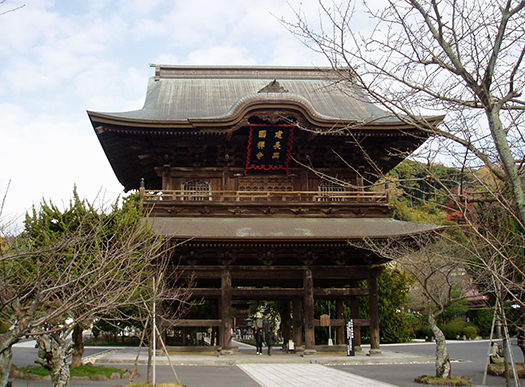
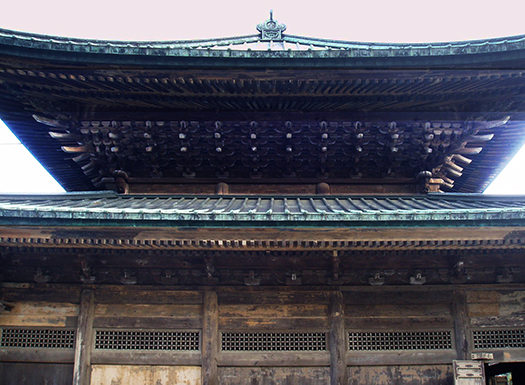
今回はこの1200年代初頭に成立した武士の世という
日本人の精神史での重要な変化を鎌倉建長寺を通して見てみたい。

English version⬇

[The founding of Bushido “Japanese heart” DNA Kenchoji Kamakura-1]
Japanese spiritual history, in the evolutionary process of the heart
First of all, there was a Shinto derived from eight million gods, and there was a spirit of nature worship.
And then to form and establish a unified nation with the idea of ​​a guardian state
Buddhism was introduced, and it has undergone various changes and developments over time.
I would like to continue to discover the history of the hearts of such peoples, mainly looking at Buddhist temples.

Last time, I saw Eiheiji Temple, which was opened during the late Heian period and early Kamakura period.
Eiheiji is a peace-oriented name with a desire for permanent peace,
On the other hand, this era was also the time when the power of the samurai was established for the first time in Japanese history.
It can be said that the idea of ​​feudalism began to take root in earnest in the historical process.
The “hard” land acquisition competition will be fully developed.
Bare land seizure and advantageous land struggle have become the basic values ​​of society.
Historically, it is the spirit of nurturing the universal “individualism” of capitalism.
Compared to other Asian countries, this intense hard work is a characteristic of Japan.
Even if one of them died, the samurai’s true feelings were that the family and family would prosper.
At the same time, I feel the commonality of world history in the establishment of “chivalry” in the West.
Kanto cultivated lords are freed from the yoke of various dynasty state rules
The armed power of independence and Kanto country was established.
From there, the idealism of “Bushido” was newly added to the flow of Shinto and Buddhism.
Considering the spiritual history of the Japanese, this samurai road is an even bigger factor.
In Hagakure, the phrase “Bushido means dying and finding” is famous.
Even if it doesn’t mean that you actually die based on the spirit of Bushido
It is undeniable that Bushido was used as a reference in various spiritual norms.
But one thing, I have been working in Tohoku as a workplace
There is a history of an independent nation symbolized by Hiraizumi, which is one of the Kamakura administrations.
Yoritomo would have recognized that he was a pioneer in a sense.
He envisioned the independence of the samurai government with great reference to Hiraizumi’s independence.
The samurai and Hiraizumi administrations in Kamakura cannot see a connected red thread.
The process of establishing the hegemony of Mr. Fujiwara Oshu involves Genji, Minamoto no Yoriyoshi, and the second generation of Yoshiie parents and children.
It is easy to imagine that Yoritomo had a deep relationship with him.
In that sense, Yoritomo might have had a subjective “assassin” psychology.
I think the brutal nature of his younger brother Yoshitsune’s blood eradication is Genji’s bloody nature.
Politically, I think that the crushing of the Hiraizumi administration became the basis of the subsequent samurai administration.
However, I feel that Yoritomo’s death and the disconnection of his family were also “causal retribution.”
Bushido is sublimated and discussed in various ways,
However, the root is the unavoidable ego of “working hard” and the pursuit of happiness in the family unit.
It is true that the war in Oshu is strongly reflected in it.
To put it the other way around, Mr. Fujiwara Oshu may have functioned as a rocking device for Bushido.

Dogen-san’s naming of Eiheiji may have had such a critical spirit of the times.
Did the desire for peace reflect in its name after the turmoil of the Genpei War?
This time, it ’s called the samurai world that was established in the early 1200s.
I would like to see important changes in Japanese spiritual history through Kenchoji Temple in Kamakura.

【感性に耽溺する 山口蓬春・日本画2022カレンダー】


年相応、ということなのでしょうか、
最近は美術関係の嗜好が極端に日本画に向かって行っている。
高齢化とともに「油」への忌避が無意識にはたらいてくるものでしょうか(笑)。
睡蓮シリーズのモネは別格として、油絵は好みに合わなくなってきた。
そのモネの制作モチーフでもやはり日本画が大きく関わっているとも思える。
やはり鳥獣戯画以来の日本人的感受性に強く惹かれております。

ということで仕事関係先の凸版印刷さんのカレンダーシリーズは
わたしの好きな画材選択で毎年楽しみにさせていただいているのですが、
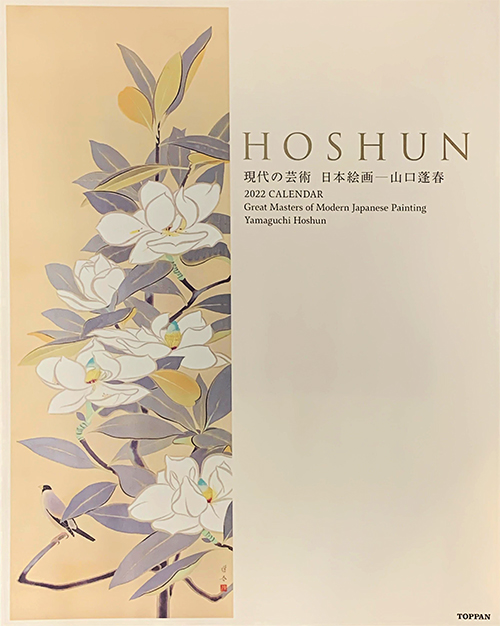
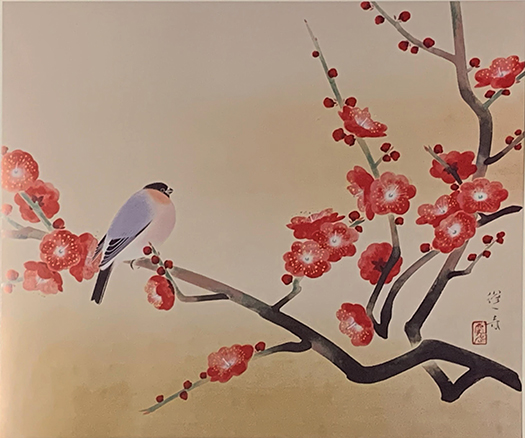
ことしはなんと「山口蓬春」さんの日本画が選択されておりました。
写真はカレンダーの表紙と1-2月の画面を飾る作品。
山口蓬春さんは大好きで葉山に近い氏の自邸跡の美術館には
これまでに4−⒌回訪問して空間を愛でさせていただいている。
作家のアトリエも公開されているので、その空気感にもどっぷり浸った。
美術というのは結局、人間感受性で感覚するものでしょうから、
好きな作家の住んでいた「好みの空間」という建築からも
同意できる嗜好性がたぶんさまざまに見えてくるものなのでしょう。
絵画はもちろんわかりやすいけれど、
同時に自邸空間というものも「人間の間合い」部分まで伝わってくる。
どこが、というような特定はしにくいけれど、
その空間全体にわたってある緊張感のある嗜好性があると思える。
その意味では「完璧」な感受性の発露ぶり。
そういうように鑑賞できるというのはたいへんシアワセだと思っている。

最近高校同期の友人が亡くなった。
彼女は同じクラスでもあったし、美術クラブ部員だった。
わたしは美術は好きだけれど、高校の美術の教師が授業のとき
わたしのデッサンの様子を真後ろからじっくりと見ていると思ったら
「・・・ヘタだなぁ・・・」と深くため息をつかれてしまっていた(笑)。
その様子から自分の生涯から美術制作の志向が完全消滅したのですが、
けっこう東京芸大への進学率も高い高校だったので
彼女にもある種の期待感みたいなものを持ち続けていた。
一度は描いた作品を見てみたいと思っていたけれど、
そういう機会を持つこともなく逝ってしまった。
美を志すひとはやはりなにかを残して欲しいと思った次第。
別に職業作家ということではなくてもいいと思う。ただ、その生きた証を見てみたい。
・・・そういう思いを持っていたら彼女は「書」を残していたと聞いた。
同時代を生きてきた友人がどんな世界観を持っていたのか、
今度そういう機会があれば見てみたいと念じている。

English version⬇

[Yamaguchi Hoshun, Japanese painting 2022 calendar indulging in sensitivity]
Is it suitable for the year?
Recently, art-related tastes are extremely moving toward Japanese painting.
Does the repellent to “oil” work unconsciously with the aging of the population (laughs)?
With the exception of Monet in the water lily series, oil paintings are no longer in my taste.
It seems that Japanese painting has a lot to do with Monet’s production motif.
After all, I am strongly attracted to the Japanese sensitivity since the bird and beast caricature.

That’s why Toppan Printing’s calendar series, which is related to work, is
I am looking forward to choosing my favorite painting materials every year.
This year, the Japanese painting of “Hoshun Yamaguchi” was selected.
The photo is the work that decorates the cover of the calendar and the screen from January to February.
I love Hoshun Yamaguchi, and at the museum of his own residence near Hayama
I have visited 4 ⒌ times so far and loved the space.
The artist’s atelier is also open to the public, so I was completely immersed in the atmosphere.
After all, art is something that you feel with human sensitivity.
From the architecture of “favorite space” where my favorite artist lived
Perhaps there are many different tastes that you can agree on.
The paintings are of course easy to understand,
At the same time, the space of the house is also transmitted to the “human space” part.
It’s hard to identify where, but
There seems to be a tense taste throughout the space.
In that sense, it is a manifestation of “perfect” sensitivity.
I think it’s very exciting to be able to appreciate it like that.

Recently my high school friend died.
She was in the same class and was a member of an art club.
I like art, but when a high school art teacher is in class
If you think you’re looking at my drawing from behind
She was deeply sighed, saying, “… I’m sorry …” (laughs).
From that situation, my intention to produce art completely disappeared from my life.
Because it was a high school with a high rate of going to Tokyo University of the Arts
She had some sort of anticipation for her too.
She once wanted to see her work,
She passed away without having such an opportunity.
She wanted the person who aspires to be beauty to leave something behind.
I don’t think it’s necessary to be a professional writer. I just want to see the living proof.
… I heard she had left her “book” if she had such thoughts.
What kind of world view did her friend who lived in her contemporaries have?
She wants to see if she has such an opportunity next time.

【ようやく冬らしい朝が・・・ in さっぽろ】


師走もついに半ば近くまで経過してきました。
ことしは温暖化の影響からか、赤潮被害が北海道東部太平洋側で見られたり、
水揚げされる魚種に変化が見られるなどしていますが、
ここ数日、朝の気温低下はようやく零下になってきている。
「やだな〜」というのが最初の気分なんですが、
そこは北海道ネイティブ、徐々に「しょがない、元気にやるぞ」と
気分転換してくるようになる。
ようするに気分の夏冬モード変換というDNA的な対応がはたらくのでしょう。

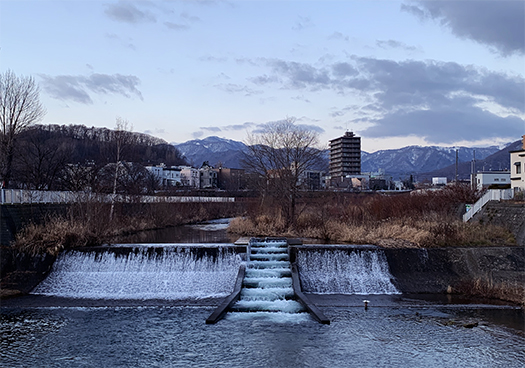
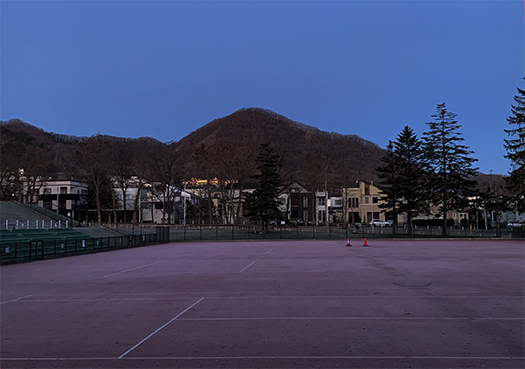
写真はわが家周辺の「琴似発寒川」にかかる橋の上から
周辺の山地を見晴らした様子と、これもわが家からの散歩路の
北海道神宮隣接地から三角山をテニスコート越しに見た様子。
気付きにくいかもですが、コート面が白く凍結していて、清々しい。
山はまだ降雪していなかった日の様子。
一方上の写真は、幾段もの落差緩和のための滝状の水流。
そういえば一昨日だったか、この水流に沿ってキタキツネと目が合った。
警戒の視線を交わし合うけれどすぐに共生感が優勢になる。
ことしはこのような水路を伝ってヒグマたちが札幌市民を脅かした。
この写真の左手側の高台付近でヒグマの目撃があり映像でも捉えられていた。
そしてその後ヒグマはこの水路に沿って山方向に逃走したとされる。
ことしはいまだにときどき札幌市からの通信情報でヒグマの目撃情報が。
降雪があって寒気が深まっていけば、かれらは冬眠してくれるので
しばしの間は対ヒグマの相互安全保障期間が設定されますが、
しかしことしの状況から人間社会の改善点はほとんど見られないので、
来年以降、さらにヒグマと人間社会の遭遇状況が進展する可能性。

そんなすべてを水に流すような水流の豊かさに癒される。
身を切るほどに寒気が深まっているでしょうが、
北海道の寒さの底にはどうもあたたかさも感じられる。
ヘンな言い方なのですが、積雪してくれるとその下の地面は
雪という「断熱材」で保温されて放射冷却がそれほどはたらかなくなる。
春まで雪で景観が保護されてあたたかくなると一気に緑豊かになる。
そういう四季変化の輪廻転生がなかなか「色気がある」。
感染症で社会は大きく揺らぎ、観光はキビシイ状況が続いていますが、
北海道の自然は豊かさをキープしています。
ぜひみなさん、北の地をお見捨てなく・・・。

English version⬇

[Finally a winter-like morning … in Sapporo]
December has finally passed to the middle.
Perhaps because of the effects of global warming, red tide damage has been seen on the Pacific side of eastern Hokkaido.
There are changes in the fish species that are landed, but
In recent days, the temperature drop in the morning has finally fallen below zero.
The first feeling is “No!”
There, a native of Hokkaido, gradually said, “There is no such thing, I’ll do my best.”
You will change your mood.
The DNA-like correspondence of changing the mood to the summer-winter mode will work.

The photo is from the top of the bridge over the “Kotonihassamu River” around my house.
A view of the surrounding mountains and this is also a walking path from my house
A view of Mt. Sankaku over the tennis court from the land adjacent to Hokkaido Jingu Shrine.
It may be hard to notice, but the coat surface is white and frozen, and it is refreshing.
The mountain was on a day when it hadn’t snowed yet.
On the other hand, the photo above is a waterfall-like stream for alleviating the head.
Speaking of which, maybe the day before yesterday, I met a red fox along this stream.
Although they exchange vigilant gazes, the sense of symbiosis eventually becomes predominant.
This year, brown bears threatened the citizens of Sapporo along such a waterway.
A brown bear was witnessed near the hill on the left hand side of this photo and was captured in the video.
After that, the brown bear is said to have escaped toward the mountain along this waterway.
This is still the occasional brown bear sighting information from Sapporo City.
If there is snow and the chills get deeper, they will hibernate.
For a while, a mutual security period against brown bears will be set,
However, since there are few improvements in human society due to this situation,
From next year onward, the encounter between brown bears and human society may develop further.

You will be healed by the abundance of water flow that makes all of that flow into the water.
The chills will be deep enough to cut yourself,
You can feel the warmth at the bottom of the cold in Hokkaido.
It’s a weird way of saying, but when it snows, the ground below it
It is kept warm by the “insulation material” called snow, and radiative cooling does not work so much.
When the landscape is protected by snow until spring and it becomes warm, it becomes lush at once.
Such reincarnation of the four seasons is quite “sex appeal”.
Society has been greatly shaken by infectious diseases, and tourism continues to be difficult.
The nature of Hokkaido keeps its abundance.
By all means, don’t abandon the northern land …

【「基壇」土間と現代「基礎断熱」床暖房土間】


最近仏教寺院シリーズを続けてきて、木造建築の歴史的変遷を見ている。
仏教建築は大陸経由で日本に伝来し飛鳥寺・四天王寺を最初として
建てられてきたけれど、基本的には基壇という石を積層させた高基礎で
その平面に対して石場建てで直接柱を立てていく建築工法。
日本には三内丸山、出雲大社などの大型木造文化が存在していたが、
仏教伝来初期には半島出自の「金剛組」などの木造技術者たちが来日した。
はるかな後世の1200年代初期の永平寺でも宋大工が来日している。
この「基壇面から礎石基礎で柱を立てる工法」が伝来の工法だった。
それに対して、すでに空海の800年代に於いて基壇建築から離れて
「床上げ」して土間床からの離脱を行い、靴脱ぎ床面の方向に「進化」した。
この木造工法の日本での独自進化については
従来それほど大きな注意が払われていないように思える。
なぜこういう「床上げ」が採用されたのかはいろいろな説が考えられる。
ひとつは日本の高温多雨気候では基壇から立ち上げる木造の足下腐食。
これに対し「床下通気」を対置させたのが日本独自木造技術だったのではないか。
ようするに日本の湿潤気候対応での木材保護の考え方。
もうひとつが四季変化が明瞭な日本では冬季、土間床面からの冷輻射が強烈で
それから距離を取って寒冷の緩和を意図したのではないかという点。
心理的にこのふたつの要因動機はどういう比率だったのだろうか。
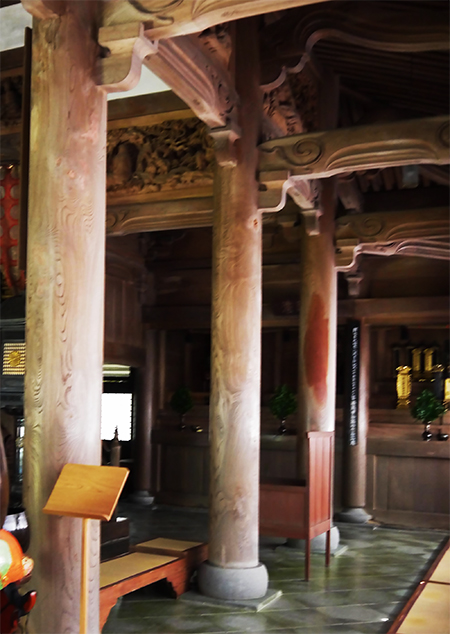
2枚目の写真は鎌倉初期1200年代初期の永平寺で1つだけ基壇建築の仏殿。
石場建ての石は丸い礎石に対して太い柱が立てられている。
大陸では丸い構造柱に対して四角い礎石が基本であるけれど、
ここでは礎石自体も丸い石が採用されている。これも「変化」。

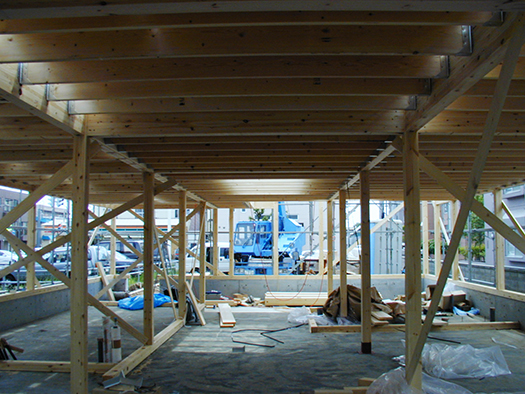
一方ではるかな現代、上の写真は
わが社の事務所建築での「基礎外断熱」での足下部分。
日本では寒冷地木造建築というものへの挑戦が欧米よりはるかに遅れて
明治以降、北海道開拓と並行して工法開発に取り組まれることになる。
現代のコンクリート基礎技術の確立で外周側に基礎の壁が回される。
外周部に基礎が立ち上げられていて、寒冷対策でその外側で断熱する。
土間コンクリート面はその下側で面的に板状断熱材が敷き込まれ、
基礎が「まるっと」断熱され冬期の凍結地盤面からの冷輻射から隔絶できた。
こういう基礎外断熱によって、土間面全体が相対的にあたたかくなった。
工法をさらに補ったのが土間床暖房。寒冷地住宅は革命的快適性を得た。
土間への考え方自体が、現代に至って革命されたと言えるだろう。
このように木造建築の工法変遷を可視化してみると
高断熱高気密という革新と似た大革命として
古代建築技術者たちの「床上げ・靴脱ぎ」革命というものが浮かび上がる。
このような対比的な見方、視点を得ることができたように思っています。

English version⬇

[“Base” soil floor and modern “basic insulation” floor heating soil floor]
Recently, I have continued the Buddhist temple series and have seen the historical transition of wooden architecture.
Buddhist architecture was introduced to Japan via the continent, starting with Asuka-dera and Shitenno-ji.
Although it has been built, it is basically a high foundation with stones called the foundation.
A construction method in which pillars are erected directly on the plane by building stones.
Large wooden cultures such as Sannai Maruyama and Izumo Taisha existed in Japan,
In the early days of Buddhism, wooden engineers such as “Kongou Gumi” from the peninsula came to Japan.
Song carpenters also visited Japan at Eiheiji Temple in the early 1200s, which was a long time ago.
This “construction method in which pillars are erected from the foundation stone foundation from the foundation surface” was the traditional construction method.
On the other hand, already away from the foundation architecture in Kukai’s 800s.
“Raised the floor” to break away from the dirt floor, and “evolved” in the direction of the floor where the shoes were taken off.
About the original evolution of this wooden construction method in Japan
It seems that so much attention has not been paid in the past.
There are various theories as to why such “floor raising” was adopted.
One is the corrosion of the wooden feet that rises from the platform in Japan’s hot and rainy climate.
On the other hand, it may have been Japan’s original wooden technology that made “underfloor ventilation” stand in opposition.
The idea of ​​timber protection in response to the humid climate of Japan.
Another idea is that in Japan, where the changes in the four seasons are clear, cold radiation from the soil floor is intense in winter.
The point is that it was intended to alleviate the cold at a distance.
What was the ratio of these two factors and motivations psychologically?
The second photo is Eiheiji Temple in the early 1200s of Kamakura, and there is only one Buddhist temple with a basic architecture.
The stones built in the stone yard have thick pillars erected against the round cornerstones.
On the continent, a square cornerstone is the basis for a round structural column,
Here, the cornerstone itself is also a round stone. This is also “change”.

On the other hand, in the far modern age, the photo above is
The foot part of “insulation outside the foundation” in our office building.
In Japan, the challenge of wooden architecture in cold regions is far behind that of Europe and the United States.
After the Meiji era, the construction method development will be undertaken in parallel with the development of Hokkaido.
With the establishment of modern concrete foundation technology, the foundation wall will be turned to the outer circumference side.
A foundation is set up on the outer circumference, and heat is insulated on the outside as a measure against cold weather.
The concrete surface of the soil is covered with a plate-shaped heat insulating material underneath.
The foundation was “whole” insulated and isolated from cold radiation from the frozen ground surface in winter.
Due to this kind of external insulation, the entire soil surface became relatively warm.
The soil floor heating supplemented the construction method. Cold-weather housing has gained revolutionary comfort.
It can be said that the way of thinking about Doma itself has been revolutionized to the present day.
Visualizing the transition of the construction method of wooden buildings in this way
As a revolution similar to the innovation of high heat insulation and high airtightness
The “floor-raising / shoe-taking” revolution of ancient building engineers emerges.
I think I was able to gain such a contrasting perspective and perspective.

【凜とした少年・道元さんとしばしの別れ 永平寺-15】


さて永平寺探訪シリーズを全15回にわたって書き続けてみました。
たぶん総文字数は20,000字以上に上っている。
400字詰め原稿用紙(古っ!)換算すると50枚くらいの原稿量。
これくらいひとつのテーマで集中すると面白い掘り起こしができる。
建築的にも人物的にもいろいろな側面がみえてきて自分でも楽しい。

そのなかでも修行僧たちが生涯で2度しか通れないという山門が印象的。
山門をくぐるに際しての掟書にとくに惹かれた。
「どんな社会的地位の者でも仏を求める心が無ければ門より入ることは許さない」
「そうであるが、山門は鍵はかからず扉もない、入り口は常に解き放れている、
善財童子の道心があればいつでも入ることができる」
この「善財童子」という部分に永平寺の存在感が集約されているように思う。
よき宝物であるこどものまっすぐなこころというように読み下せる。
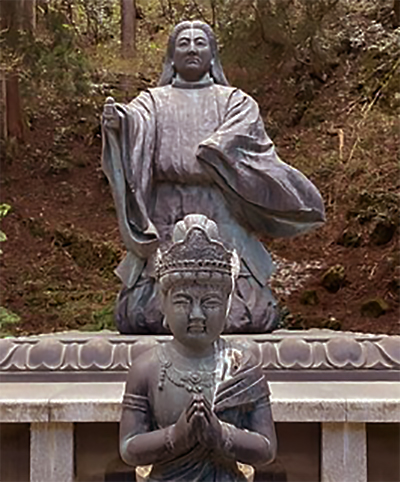
写真は寺域に建てられている「少年道元の像」。
道元の少年時の像がなぜいくつか作られたかのモチーフとして
こうした道元の宗教への姿勢が多くのひとのこころを打ったのではないか。
いつの日か、まっすぐに禅修行に向かう童子が永平寺を目指してくることを
この像は願っているように思われるのです。
輪廻転生ということは「信じるこころ」の基底にあるように思うけれど、
凜としてまっすぐ前を見つめる像の姿には力がある。


日本人のDNAには仏教を信じた多くの人のこころが宿っているのではないか。
感染症の猛威の中で、ゆれ動く社会の実相を見つめながら、
こんな想念が立ち上ってくるように思います。
歴史記録でははじめて「都市」を造成したと思える奈良の都で
本格的なパンデミックとして天然痘が猛威をふるったとき、
鎮護国家思想を領導した天皇聖武の皇后、光明子は
おおみたから・民びとの平癒を祈願して「蒸し風呂」公衆浴場を創始した。
宗教とパンデミックは歴史の中でいつも相互に影響し合ったのではないか。
日本人は地べたの土間床空間の住宅から徐々に床上げされた住宅に移行し
汚濁した土間から「靴脱ぎ」した生活空間に移行した。
清浄を心がける生活空間を獲得していったことは、
繰り返されたパンデミックからの民族の知恵のように思えてならない。
その上、手洗い習慣までも暮らしレベルで日本人は機能獲得してきた。
上の写真は道元が宋から帰国した際、海が荒れたときに
ほとけの化身が舟に乗って現れて道元の道行きを守護したという像。
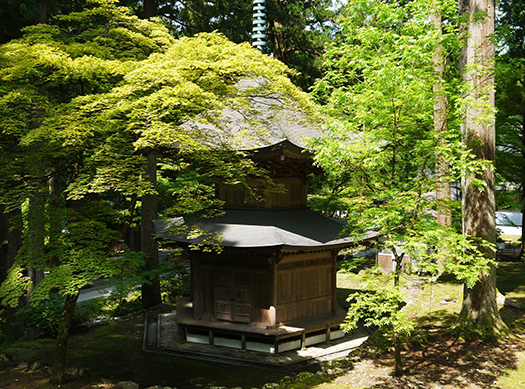
下は信者から奉納された写経を納める納経塔。
ちょっと長くなったので最後は少年・道元さんとお別れを言いたくなった(笑)。
またいつか、永平寺再訪してみたいです。

English version⬇

[Farewell to the dignified boy Dogen-san for a while, Eiheiji-15]
Well, I continued to write the Eiheiji exploration series 15 times in total.
Perhaps the total number of characters is over 20,000.
The amount of manuscript is about 50 when converted to 400-character manuscript paper (old!).
If you concentrate on one theme like this, you can do interesting digging.
I can see various aspects both architecturally and personally, and it’s fun for me.

Among them, the Sanmon, where the monks can only go twice in their lifetime, is impressive.
I was particularly attracted to the rules when passing through the Sanmon.
“Anyone in any social status will not be allowed to enter through the gate without a desire for the Buddha.”
“Yes, but the gate is unlocked and has no door, the entrance is always unleashed,
You can enter anytime if you have the spirit of a good-fortune child. ”
I think that the presence of Eiheiji is concentrated in this “Sudhana” part.
It can be read as a straight heart of a child who is a good treasure.
The photo is the “Shonen Dogen Statue” built in the temple area.
As a motif of why some Dogen boyhood statues were made
Dogen’s attitude toward religion may have hit many people’s hearts.
One day, I hope that a child who goes straight to Zen training will head for Eiheiji Temple.
This statue seems to be hoping.
I think that reincarnation is the basis of the heart that people “believe”.
The appearance of the statue looking straight ahead as a dignity is powerful.

The DNA of the Japanese may contain the hearts of many who believed in Buddhism.
While gazing at the reality of a swaying society in the midst of infectious diseases
I think that such an idea will come up.
In the capital of Nara, which seems to have created the “city” for the first time in historical records
When smallpox raged as a full-fledged pandemic
Empress Komyō, the empress of Emperor Shomu, who led the idea of ​​the guardian state
She founded a “steam bath” public bath to pray for the healing of the people.
Religions and pandemics have always influenced each other in history.
The Japanese are gradually shifting from houses with a ground floor space to houses with raised floors.
We moved from the polluted dirt floor to a living space where we “take off our shoes”.
Acquiring a living space that keeps cleanliness in mind
It must not seem like ethnic wisdom from repeated pandemics.
Moreover, even the habit of washing hands has acquired functions at the living level.
The photo above is when Dogen returned from Song and the sea was rough.
A statue in which an incarnation of Hotoke appeared on a boat and protected Dogen’s way.
Below is the sutra-copying tower that houses the sutras dedicated by the believers.
It’s been a little long, so at the end I wanted to say goodbye to the boy, Dogen-san (laughs).
I would like to visit Eiheiji Temple again someday.

【禅道をあゆむ僧堂・木魚 永平寺-14】


永平寺は禅の道場なので、僧堂と呼ばれる堂社がその中枢。
参観すると時間によっては僧侶さんたちの座禅の様子が見られたりする。
よく見る様子であって、自然にこちら側も身がシャンとさせられる。
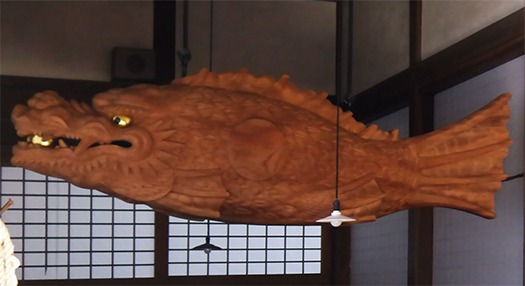
ところが永平寺のなかでも目を抜いて迫ってくるのがこの木魚。
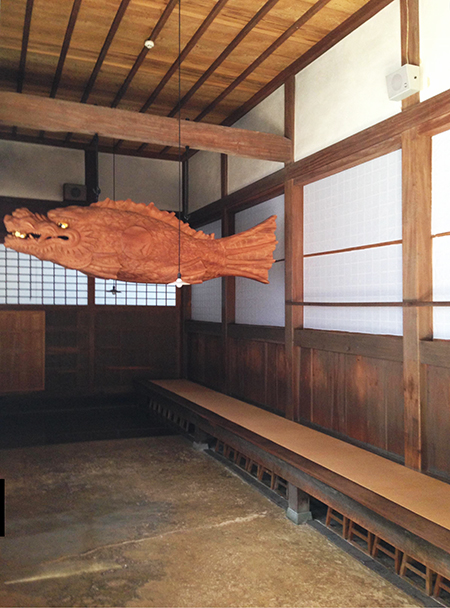
座禅の空間の外側、休息所なのか前室なのか、
ベンチのある前室空間のやや高い位置に配置されている。
全景写真の方では照明も映っているので高さ、大きさもわかると思います。
「木魚」となにげに見たまんまで書きましたが、
一般的には読経のお供で「ポクポク」と伴奏する役割。
しかしここは座禅の場なのでそういった用途ではなさそう。
実際に使われている状況を目撃していないので不明です。
ただし、木魚のおなかのあたりに補強痕跡があり
その位置付近を打撃して音を発生させるのが機能で間違いはなさそう。
だとすると、座禅の時間を堂内に告知するための装置のようにも考えられる。

で、面白みを感じるのがその魚種というか、怖ろしげなる目元。
どうも見た感じはシーラカンスか。
いかにも「偈」を下されそうな恐怖の大王的な印象。
だけれどもカラダはいかにも魚体そのものなのでかわいい。
こういうアンバランスの表現感覚にはどうも一本取られる。
参りました、仰せのごとくに致します的な納得感がある。
〜木魚は読経で打ち鳴らしてリズムを整える。また眠気覚ましの意味もあり、
木魚が魚を模すのは、眠るときも目を閉じない魚が
かつて眠らないものだと信じられていたことに由来する。〜というのが一般知。
以下、Wikipediaの記述の一部にはこういう箇所も見られる。
〜木魚の原型は禅寺で使われていた「魚板」(魚鼓)。黄檗宗の本山である
黄檗山萬福寺や護国山東光寺、韓国の寺院などで見ることができる。
魚板とはその名の通り魚の形をした板であり、午前11時45分にだけ鳴らされる。
魚の形をしているのは、魚は日夜を問わず目を閉じないことから、
寝る間を惜しんで修行に精進しなさいという意味である。
口にくわえた丸いものは煩悩を表し叩くことで吐き出させるという意味。〜
っていうことですが、この木魚に託された煩悩は相当深く深刻にみえる(笑)。
さすがに禅の道場なので、深遠な人間の業の深さを思えば、
このような魔物のようなシーラカンス級のお姿がふさわしいのでしょうか。
おっかなそうだけれど、面白い。


こうやって日本の仏教寺院を巡るブログシリーズをやっていると
これはこれで参観の追体験になっていて、仏を思い彷徨うひとつの道ではとも思う。
もちろん衆生の身なので調子外れだったり、トンチンカンであることは
重々わかっていますが、WEBという環境を活かして
仏について考えるひとつのルートではないかと思い始めてきております。
南無大師遍照金剛、南無大師遍照金剛・・・。

English version⬇

[Zendo Monastery and Mokugyo Eiheiji-14]
Eiheiji is a Zen dojo, so a shrine called a monastery is the center of it.
Depending on the time, you can see the meditation of the monks.
It looks like you look closely, and naturally this side also makes you feel like a shan.
However, it is this mokugyo that stands out and approaches even in Eiheiji.
Outside the zazen space, whether it is a resting place or an anterior room,
It is located at a slightly higher position in the front room space where the bench is located.
In the panoramic photograph, the lighting is also reflected, so you can see the positional relationship.
I wrote “Mokugyo” as I saw it, but
Generally, the role of accompaniment with “pokupoku” as a companion to the sutra chanting.
However, since this is a place for zazen, it does not seem to be used for such purposes.
It is unknown because I have not witnessed the situation where it is actually used.
However, there are traces of reinforcement around the tummy of the mokugyo.
It seems that there is no mistake in the function to generate a sound by hitting the vicinity of that position.
If so, it can be thought of as a device for notifying the hall of zazen time.

And what I find interesting is the fish species, or the scary eyes.
Does it look like a coelacanth?
A great impression of fear that seems to be given a “偈”.
However, the body is really a fish itself, so it’s cute.
This kind of unbalanced expression sense is taken by one.
I’m here, I’m sorry to say that, I have a sense of conviction.
~ The mokugyo adjusts the rhythm by striking it with sutra chanting. It also has the meaning of drowsiness.
The mokugyo imitates a fish because it does not close its eyes even when it sleeps.
It comes from what was once believed to never sleep. It is common knowledge that.
Below, such a part can be seen in a part of the description of Wikipedia.
-The prototype of the mokugyo is the “fish plate” (fish drum) used in Zen temples. This is the head temple of the Obaku sect
It can be seen at Obakusan Mampukuji Temple, Gokokusan Tokoji Temple, and Korean temples.
As the name implies, a fish board is a fish-shaped board that is currently ringing only at 11:45 am.
The shape of the fish is because the fish do not close their eyes day and night.
It means to spare time while sleeping and devote yourself to training.
The round object in the mouth expresses anxiety and means that it is spit out by hitting it. ~
That being said, the anxieties entrusted to this mokugyo seem to be quite deep and serious (laughs).
It’s a Zen dojo, so if you think about the depth of human work,
Is such a monster-like coelacanth-class figure suitable?
It sounds funny, but it’s interesting.

When I’m doing a blog series about Japanese Buddhist temples like this
This is a re-experience of the visit, and I think it is one way to wander around the Buddha.
Of course, because I am a sentient being, I can’t be out of tune or be a tonchinkan.
I know it very well, but taking advantage of the environment of the WEB
I’m starting to think that it’s one route to think about Buddha.
Nanmu Daishi Hensho Kongo, Nanmu Daishi Hensho Kongo …

【建築を結ぶ回廊空間 永平寺-13】


宗祖・道元さんの人物伝的把握から精進料理の発祥までみてきました。
日本人の中で永平寺というイメージは大きく強い影響をもたらしてきた。
禅寺としての「修行の場」ということから多くの僧が
そこで暮らし、学ぶという印象が強い。
で、たくさんの建築群が歴年、建築され続けてきたけれど、
参観に行くとそうした僧侶達の修行中の移動列に出会うことも多い。
朝課という毎日のイベントについては触れたけれど、
いろいろな建築の間を移動する様子にも出くわすことが多いのですね。
必然として総建築面積に比例して「移動空間」もたくさん出来上がっていく。
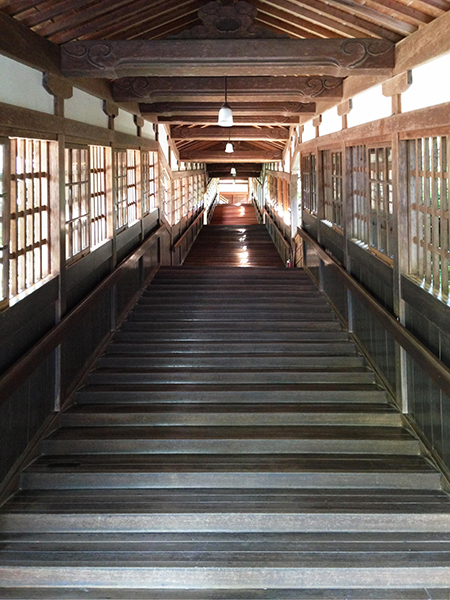
記憶からは主要な建築群はすべて回廊で連結されていたように思う。

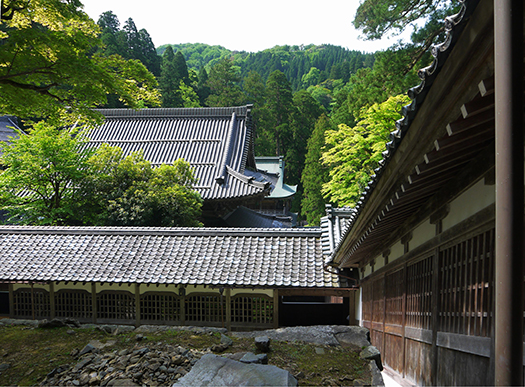
この永平寺では起伏に富んだ敷地地形に沿って
上り下り、平坦といった変化に満ちた移動空間が現出している。
参観途中も多くの僧に出会うことからかれらの日常移動が趣旨であって
参観者・観光客のための便宜を第一に考えたものではなさそう。
同じ曹洞宗の鶴見・總持寺でもこうした移動回廊が多い。
ふつうの住宅建築ではほとんど顧みられなくなった、回廊。
こうした参観機会で集中的に体験できるのは稀有なことだと思う。
永平寺では「一文字廊」という名前まで付いている「建築」がある。
まことに「用」の空間そのものだけれど、わたし的には
建築のひとつの典型として楽しく体験させてもらった。
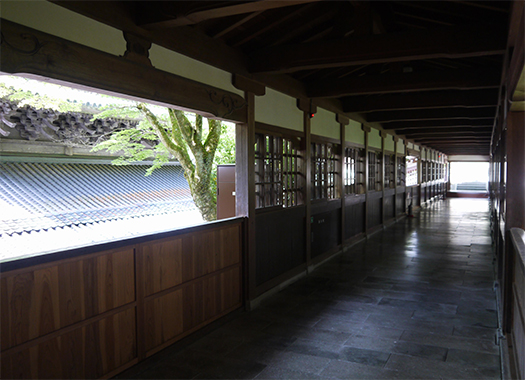
写真で見るように自然の敷地形状・条件に準拠しているので
自然環境と建築との「応答」感が強く感じられ、また多くは窓が開けられ
周辺の森の情景が豊かに視界一杯に広がってくれる。
都市住宅ではいまや希少価値になって来たような自然との応答。
住宅建築はふつうはひとの定置が存在意義だろうけれど、
回廊空間とは、ひとが移動するための建築。
それが一気にたくさんの建築的表情を見せてくれることになる。
いわば木造建築的メリーゴーランドのような印象が深い。
あるいはローラーコースターやスライダーみたいな
空間体験にも繋がっているようで面白い。

ひとが自然環境の中に住む、という意味の中に
周辺環境との「応答」の部分って大きいだろうと思っています。
四季変化というものは人間の感受性を大きく彩ってくれる。
永平寺は温暖地だけれど、冬期には寒冷で降雪も多い環境。
そういった彩りが人間に多くの刺激を与えて、こころを育んでいく。
道元さんはこの地の空気感に深く根がらみのものを感じて
鎌倉幕府の招聘をも辞退したのではないか、
回廊空間には永平寺を包む「場の空気」そのものが息づいている。

English version⬇

[Corridor space connecting architecture Eiheiji-13]
We have seen from the biographical understanding of the founder Dogen to the origin of vegetarian cuisine.
The image of Eiheiji among the Japanese has had a great and strong influence.
Many monks from the existence of a “place of training” as a Zen temple
The scenery of living and learning there overshadows the impression.
So, many buildings have been built for many years, but
When I go to visit, I often meet a line of such monks.
I mentioned the daily event called the morning lesson, but
You often come across the appearance of moving between various buildings.
Then, a “moving space” will be created in proportion to the building area.
From my memory, I think that all the major buildings were connected by a corridor.

At this Eiheiji Temple, along the rugged site topography
A moving space full of changes such as ups and downs and flatness is emerging.
The purpose of meeting many monks during the visit is their daily movement.
It does not seem to be the first consideration for convenience for visitors and tourists.
There are many such mobile corridors in Tsurumi and Sojiji of the same Soto sect.
A corridor that is rarely looked after in ordinary residential construction.
I think that it is a rare experience to experience intensively at such a visit opportunity.
At Eiheiji Temple, there is an “architecture” that even has the name “Ichimonjiro”.
It’s really a “useful” space, but for me
I had an interesting experience as a typical example of architecture.
As you can see in the photo, it conforms to the natural site shape and conditions.
There is a strong sense of “response” between the natural environment and architecture, and many windows are opened.
The scenery of the surrounding forest is abundant and spreads out to the full.
In residential construction, stationary is usually the reason for existence, but
Corridor space is an architecture for people to move.
It will show a lot of facial expressions at once.
It has a deep impression like a wooden architectural merry-go-round.
Or like a roller coaster or slider
It is interesting because it seems to be connected to the space experience.

In the sense that people live in the natural environment
I think that the “response” part with the surrounding environment will be large.
The change of the four seasons greatly colors human sensitivity.
Eiheiji is a warm region, but it snows a lot in winter.
Such colors give a lot of stimulation to human beings and wrap their hearts.
Dogen-san feels deeply rooted in the atmosphere of this area.
Maybe he declined to invite the Kamakura Shogunate.
In the corridor space, the “air of the place” that surrounds Eiheiji is alive.

【食べる行為の禅的心得 永平寺-12】


道元さんの「食事論」の続きであります。
こういうテーマで仏法のこころを語りかけられると腑に落ちる。
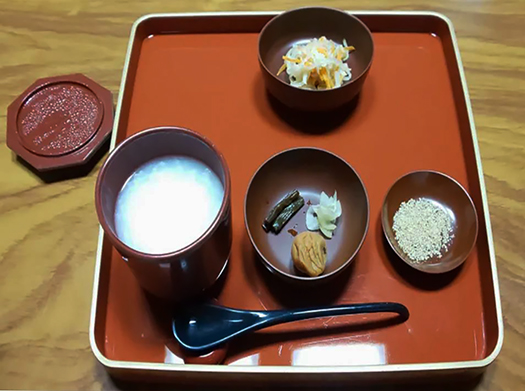
写真は永平寺でふるまわれるという朝食と道元さんの「典座教訓」。

<食べる・篇>
【五観の偈】
食べる前に唱える5つの偈文。順番に唱えて食に対する心構えを確認する
1.功の多少を計り彼の来処を量る
生産者や輸送者など人の手を通って目の前の食事が成立していることを知ろう。
毎食が一期一会。
2.己が徳行の全欠を忖って供に応ず
このありがたい食べ物を受ける資格が自分にあるか。
徳のある行ないができているか。日ごろの行ないの是非を見つめ直そう。
3.心を防ぎ過を離るることは貪等を宗す
修行とは汚れた心を清めること、仏教でいう三毒(貪り・怒り・無知)を
払いのけること。食事ではこれらが生じやすいので注意しよう。
4.正に良薬を事とするはを療ぜんが為なり
「形枯」とはやせ衰えること。人は食べなければ死ぬ。食は肉体保持の良薬。
5. 成道の為の故に今此の食を受く
釈迦と同じあり方でこの食事を頂く。食事を頂くのは仏道を支えるため。
【食中の作法&込められた意味】
●話さない、音を立てない
曹洞宗では坐禅堂で食事をとる。決められた唱えごと以外
不用意に音を立てない。
音を立てて食べると「餓鬼」が腹を空かせるという仏教の考え方もある。
●正しいポーズで
正座は「しょうざ」と読み姿勢を正し端正に座る。
崩れた姿勢では食事と向き合えない。
●器は両手で扱う
食器に限らず何事も丁寧に扱う。丁寧な作法は美しく
滑りやすい形状の器を落とすリスクも軽減される。
●咀嚼中は箸を置く
食べ物を口に入れたら箸を置き咀嚼して飲み込んだら箸と食器を持つ。
複数の料理を同時に食べることはせず目の前の一皿と向き合う。
●お湯やお茶で器をきれいにする
お湯やお茶で器をきれいにしてから飲む。
水も器にこびりついた米も無駄にならず、
そもそも「きれいに食べよう」という意識が生まれる。~以上。

読み進めていて、道元さんって
間違いなく自分で食を作り、そして真正面から向き合ったことがわかる。
仏者としてその営為を内省的に解析したことが見える。
衆生にして見ると日常の営為の中で仏教思想を知ることになる。
むずかしい観念論の押しつけではなくごく人間的な行為規範。
こういう「暮らし方」領域で仏道に導いてくれる。
頓悟する機縁としては実にわかりやすく実際的。
日本人と日本食習慣にとって、こういう精進料理の考え方が
深く浸透したことを思い返すと、先人としての深い思慮に畏敬の念。
日本人のDNAにいろいろなことを刻み込んでくれたのだと思う。

English version⬇

[Zen knowledge of eating Eiheiji-12]
This is a continuation of Mr. Dogen’s “Diet Theory”.
When I talk about the heart of Buddhism on such a theme, I fall in love with it.
The photo shows the breakfast served at Eiheiji Temple and Dogen-san’s “Lessons from the Noriza”.

[The Five Views]
Five words to sing before eating. Chant in order to check your attitude toward food
1. 1. Weigh the amount of gong and measure his visit
Let’s know that the meal in front of us is established through the hands of people such as producers and transporters.
Every meal is once in a lifetime.
2. I don’t respond to all the deficiencies of Tokuyuki
Am I eligible to receive this grateful food?
Is there a virtuous deed? Let’s reconsider the pros and cons of daily activities.
3. 3. Preventing the mind and leaving the excess cultivates greed
Training is to purify a dirty heart, and to purify the three poisons (greed, anger, ignorance) in Buddhism.
To get rid of. Be aware that these are likely to occur in your diet.
Four. It ’s just a good medicine to treat
“Shape” is to lose weight. People die if they don’t eat. Food is a good medicine for maintaining the body.
5. I’m taking this meal now because it’s for Narudo
Have this meal in the same way as Buddha. The reason for having a meal is to support Buddhism.
[How to eat and what it means]
● Don’t talk, don’t make noise
In the Soto sect, we eat at Zazen-do. Other than the fixed chanting
Do not make noise carelessly.
There is also a Buddhist idea that “hungry demons” get hungry when they eat with noise.
● In the correct pose
Seiza reads “Shoza” and sits neatly.
You can’t face food in a crumbled posture.
● Handle the vessel with both hands
Handle everything carefully, not just tableware. Polite manners are beautiful
The risk of dropping slippery shaped vessels is also reduced.
● Place chopsticks while chewing
When you put food in your mouth, put chopsticks on it, chew it, and swallow it, then hold chopsticks and tableware.
Instead of eating multiple dishes at the same time, face the plate in front of you.
● Clean the bowl with hot water or tea
Clean the bowl with hot water or tea before drinking.
Water and rice stuck in the bowl are not wasted,
In the first place, the consciousness of “let’s eat cleanly” is born. ~ Above.

I’m reading, Dogen-san
You can definitely see that he cooked his own food and faced it head-on.
It can be seen that he introspectively analyzed his activities as a Buddhist.
From the perspective of sentient beings, you will come to know Buddhist thought in your daily activities.
A very human code of conduct rather than the imposition of difficult idealism.
It will lead you to Buddhism in this kind of “lifestyle” area.
It’s really easy to understand and practical as an epiphany.
For Japanese people and Japanese eating habits, this way of thinking about vegetarian cuisine
Looking back on the deep penetration, I was in awe of the deep thoughts of my ancestors.
I think he carved various things into the DNA of the Japanese people.