本文へジャンプ

【出雲系統と自然崇拝型「建築」概念 少彦名神社-4】


この少彦名神社とは偶然の出会いであり予備知識はなにもなく遭遇した。
で、後追いでいろいろ情報を探っています。
全国に15社、この社名の神社があるけれどほとんどが「無社格」であり、
神社本庁が認定する枠外の存在のようです。
出雲大社の本殿には現代の皇室は立ち入りできないとされるそうですが、
古代の出雲系統との「国譲り」経緯がこの少彦名神社にも関わりがありそう。
以下がその地域分類を含めた分布実態。
東北地方・青森県弘前市・青森県むつ市・秋田県大仙市・秋田県由利本荘市
中部地方・新潟県長岡市・富山県富山市・射水市・石川県珠洲市・福井県越前市
・愛知県名古屋市中区・岐阜県関市・静岡県静岡市葵区
近畿地方・大阪府大阪市中央区
中国・四国地方・岡山県津山市・愛媛県大洲市
東北日本海側北部と出雲地方は方言的な同一性が言われるし、
その交通ルートに当たる日本海側に多くが存在する。
大阪は「1780年、薬種仲買仲間の団体組織・伊勢講が薬業の繁栄を願うため、
京都の五條天神社より少彦名命の分霊を大阪道修町にあった仲間会所に勧請し、
すでに仲間会所にあった神農炎帝とともに祀ったことを起源とする」との記述。
古来からのものとは違う特定業種商売起源縁起と思われます。
名古屋や静岡については縁起が不明だけれど、
こうした大都市型・太平洋側は4社であり大多数は出雲系統と見なしうる。
伊勢神宮を中心とするヤマト朝廷側の神々とは別系統ということか。

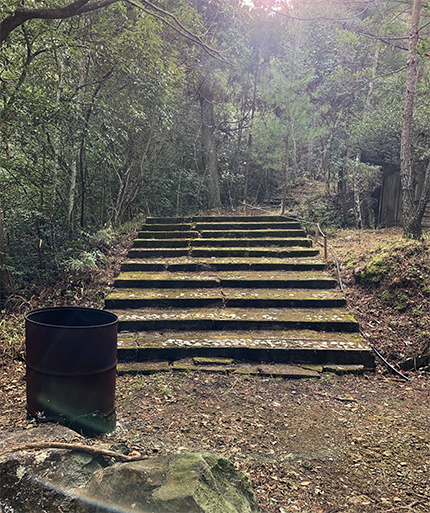
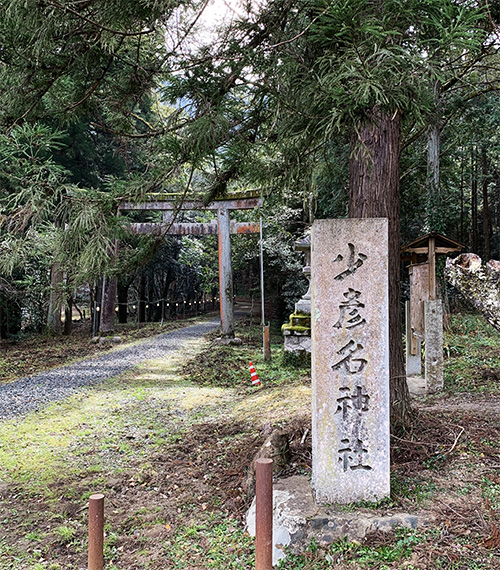
一方、上の写真右側では「山体」そのものが少彦名命の墓神域という説明。
自然地形そのものをまるで「建築」のように見なして
神聖空間として「結界」しているように感じられる。
自然の岩や山、岬などに自然崇拝型の原初的空間信仰があったのだと思う。
出雲の人々にはそういう日本人古層の意識が強かったといえるか。
少彦名命が死んだとき「常世に向かわれた」と表現することも
いかにもこの列島古層の人間意識を感じさせてくれる。
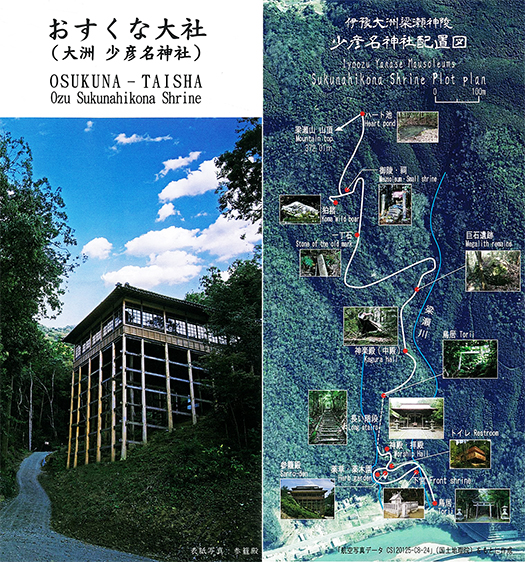
そして梁瀬山頂上に向かって点在するスポットは個性的な空間結界をつくる。
山間らしく、阿吽像にはイノシシが表現されるなどしている。
そういった全体・山体そのものを「建築」と感じさせる。
やはり日本列島の古層の人間意識には自然崇拝基層が存在し、
建築といいう概念は単に構築物だけを指すものではないことがみえる。
建築としても、現代の再築に際し棟梁が転落死するほど、
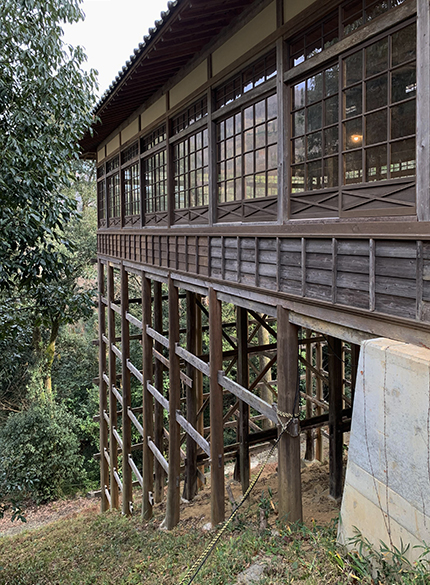
高所へのこだわりを持った参籠殿がシンボルとされて
図示した案内パンフレット表紙にもその写真が表現されている。
この参籠殿は1934年建築とされるが、マザーになる伝承があったに違いない。
こうした高層建築は投入堂とか清水寺などが代表的だけれど
この参籠殿などは出雲大社神殿とも共通する志向性ではないか。
どうも「出雲系」の人々の気質痕跡を留めているようにも思えるのです。

そしてなぜ北海道開拓の神格として大国主命と少彦名命という
伊勢神宮系とは別の出雲系統の神々が明治初年当時、勅選されたのか。
なかなかに興味深い神社発見でした。

English version⬇

[Izumo system and nature worship type “architecture” concept Sukunahikona Shrine-4]
It was a coincidence with this Sukunahikona Shrine, and I encountered it without any prior knowledge.
So, I’m searching for various information afterwards.
There are 15 shrines nationwide with this company name, but most of them are “uncompanyed”.
It seems that there is an existence outside the frame certified by the Association of Shinto Shrines.
It is said that the modern imperial family cannot enter the main shrine of Izumo Taisha.
The history of “Kuniyuzuri” with the ancient Izumo system seems to have something to do with this Sukunahikona Shrine.
The following is the actual distribution including the regional classification.
Tohoku region, Hirosaki city, Aomori prefecture, Mutsu city, Aomori prefecture, Daisen city, Akita prefecture, Yurihonjo city, Akita prefecture
Chubu region, Nagaoka city, Niigata prefecture, Toyama city, Toyama prefecture, Imizu city, Toyama prefecture, Suzu city, Ishikawa prefecture, Echizen city, Fukui prefecture
・ Naka Ward, Nagoya City, Aichi Prefecture ・ Seki City, Gifu Prefecture ・ Aoi Ward, Shizuoka City, Shizuoka Prefecture
Kinki region, Chuo Ward, Osaka City, Osaka Prefecture
Chugoku / Shikoku region / Tsuyama city, Okayama prefecture / Ozu city, Ehime prefecture
The northern part of the Tohoku Sea of ​​Japan and the Izumo region are said to have dialectal identity.
There are many on the Sea of ​​Japan side, which corresponds to the transportation route.
In Osaka, “In 1780, Ise-Kou, a group of drug brokers, wishes for the prosperity of the drug industry.
From Gojoten Shrine in Kyoto, we solicited the spirit of Sukunahikona Shrine to a fellow meeting place in Doshomachi, Osaka.
It originates from the fact that it was enshrined with the Shennong Flame Emperor who was already at the fellow meeting place. ”
It seems to be an auspicious origin of business in a specific industry, which is different from the one from ancient times.
I don’t know about Nagoya and Shizuoka, but
There are four companies on the Pacific side of such a metropolitan area, and the majority can be regarded as the Izumo system.
Is it a different system from the gods on the Yamato court side centering on Ise Jingu?

On the other hand, on the right side of the photo above, the explanation is that the “mountain body” itself is the tomb shrine of Sukunahikona.
Think of the natural terrain itself as “architecture”
It feels like a “barrier” as a sacred space.
I think there was a nature worship-type primitive spatial belief in natural rocks, mountains, and capes.
It can be said that the people of Izumo had a strong awareness of such old Japanese people.
When Sukuna bi kona died, he could describe it as “going to the everlasting world.”
It really makes me feel the human consciousness of this archipelago.
And the spots scattered toward the top of Mt. Ryose create a unique spatial barrier.
Like a mountain, the statue of Aun expresses a wild boar.
The whole and the mountain body itself feels like “architecture”.
After all, there is a natural worship base layer in the human consciousness of the ancient layers of the Japanese archipelago,
It seems that the concept of architecture does not simply refer to structures.
As for the architecture, the ridges fell to death during the modern reconstruction.
The symbol of Sankoden, which has a commitment to high places
The photograph is also expressed on the cover of the illustrated guide pamphlet.
This Sankoden is said to have been built in 1934, but there must have been a tradition of becoming a mother.
Typical high-rise buildings are the input hall and Kiyomizu-dera.
Isn’t this Sankoden, etc. the same orientation as the Izumo Taisha Shrine?
It seems that they are keeping the traces of the temperament of the “Izumo” people.

And why are Okuninushi and Sukuna bi kona as the deities of Hokkaido development?
Did the gods of the Izumo system, which are different from the Ise Jingu system, be elected in the first year of the Meiji era?
It was a very interesting discovery of a shrine.

【国土建設と民族の心の依り代 少彦名神社-3】


きのうはこの神社の神代の時代について想像を巡らせてみましたが
歴史年代での神社の記録とはWikipediaでは以下のようになっています。
・1441年:(嘉吉1年)宇都宮次郎太郎、少彦名神社へ扁額『少比古廟』奉納
・1583年:(天正11年)正岡宮内大輔、少彦名神社を再興
・1934年:参籠殿建築される。
・2013年:ワールド・モニュメント財団によって2014年版
「危機に瀕している世界のモニュメントリスト」に登録された。
・2014年6月:本格修復始まる。
・2014年6月:棟梁の男性が転落死し、修復中断。
・2014年8月:再発防止策を講じ、修復再開。
・2015年3月:参籠殿本体の修復工事を終え竣工式を行う。
・2016年5月:参籠殿一棟(附 棟札及び板図)が市指定有形文化財に指定。
・2016年9月:参籠殿修復でユネスコアジア太平洋文化遺産保全賞最優秀賞受賞。
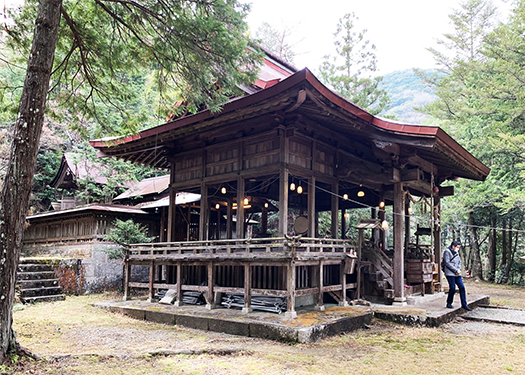
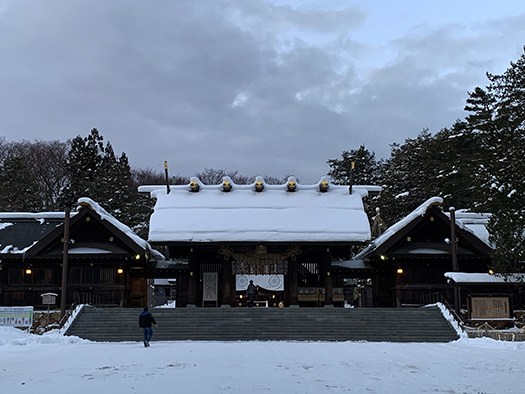
写真は参籠殿の足下をクローズアップしたものと拝殿の様子。
たまたま訪問したときにはたくさんの氏子さんたちが参集されていて
わたしたち夫婦も氏子の遠方代表みたいに見られていました(笑)が、
氏子総代のような方からいろいろご説明をいただいた。
さすがに敬神の篤いみなさんと深く納得させられました。
北海道神宮に少彦名命が祀られていることはご存じない方が多かった。
日本全国の神社に祀られるので北海道を特別に見られてはいないのでしょう。
ユネスコから顕彰されたことで地域プライドが上がったと思える。
神社縁起伝承はファンタジーのモヤに包まれるけれど、
それを大切にして敬神し続ける人間の活動は真実なのだと思います。
また痛ましい犠牲者のためにも高い尊崇心は鎮魂でもあるのかも。
多くの参集されたみなさんの思いに深く敬服するところです。

全国津々浦々に神社は建てられているけれど、
この少彦名神社は命がこの地で常世に旅立たれた、すなわちここで死んだ。
そういった神社縁起はきわめて特異なのだそうです。
梁瀬山という標高372mの山体自体が一種の墓域というように見なせる。
鳥居周辺にクルマを停めてから400-500mで参籠殿や拝殿に至るのですが、
そこからさらに階段がしつらえられていて、山頂に至るまで御陵などがある。
旅の途中であり、この階段に深く向かってうやうやしく二礼二拍手一礼して
お詣りとさせていただき、常世での命のご健勝を祈念いたしました。

しかし大国主命と協力して国づくりされ、いまも北海道神宮で
国土づくりの尊霊として民のためにお働きいただいているというファンタジー。
民族のこころのコア部分を見るようで癒されるものを感じさせられる。
こういう民俗は大切にしていくべきと思いを強くした次第です。

English version⬇

[Land construction and the reliance of the people’s hearts Sukunahikona Shrine-3]
Yesterday I imagined the era of the Shinto shrine.
The record of the shrine in the historical age is as follows in Wikipedia.
・ 1441: Utsunomiya Jirotaro dedicates a flat “Shohiko Mausoleum” to Sukunahikona Shrine
・ 1583: Masaoka Miyauchi Daisuke revives Sukunahikona Shrine
・ 1934: Sangoden is built.
2013: 2014 edition by the World Monuments Fund
Registered in the “Monument List of the Endangered World”.
・ June 4, 2014: Full-scale restoration begins.
・ June 11, 2014: A man on the ridge fell to death and repair was suspended.
・ Around August 1, 2014: Measures to prevent recurrence were taken and repairs resumed.
・ March 7, 2015: The completion ceremony will be held after the restoration work of the main body of Sangoden is completed.
・ May 30, 2016: One building of Sangoden (attached building tag and board drawing) is designated as a tangible cultural property designated by the city.
・ September 1, 2016: Received the UNESCO Asia-Pacific Cultural Heritage Conservation Award for Best Restoration.
The photo shows a close-up of the foot of the hall of worship and the state of the hall of worship.
When I happened to visit, many boys and girls were gathered
Our couple were also seen as distant representatives of their sons (laughs),
We received various explanations from people like the president of the school.
As expected, I was deeply convinced by the serious people of Keijin.
Many people did not know that the name of Sukuna bi kona was enshrined in Hokkaido Jingu Shrine.
Since it is enshrined in shrines all over Japan, you probably haven’t seen Hokkaido in particular.
It seems that the regional pride has been raised by being commended by UNESCO.
The tradition of shrine luck is wrapped in a fantasy haze,
I think that the activities of human beings who cherish it and continue to respect it are true.
Also, high reverence may be a requiem for the painful victims.
I deeply admire the thoughts of many people who have gathered.

Although shrines are built all over the country,
This Sukunahikona Shrine died here, that is, the life of the shrine departed to the eternal world here.
It seems that such shrine luck is extremely peculiar.
Yanazeyama, a mountain body with an altitude of 372 m, can be regarded as a kind of grave area.
After stopping the car around the torii gate, it takes 400-500m to reach the shrine and worship hall.
From there, there are stairs, and there are royal tombs up to the summit.
In the middle of the trip, I respectfully go deep into this staircase and give a second bow and a bow
We pray for the good health of life in the everlasting world.

However, the country was created in cooperation with Okuninushi, and it is still at Hokkaido Jingu Shrine.
A fantasy that you are working for the people as a ghost of land creation.
It makes me feel healed by seeing the core part of the heart of the people.
I strongly felt that such folklore should be cherished.

【神話ファンタジーと事実痕跡 少彦名神社-2】


昨日はチョー暴風雪到来でブログテーマは1日順延しましたが、
北海道神宮の「開拓三神」のひとつ、個性派「少彦名」さんについての続篇。
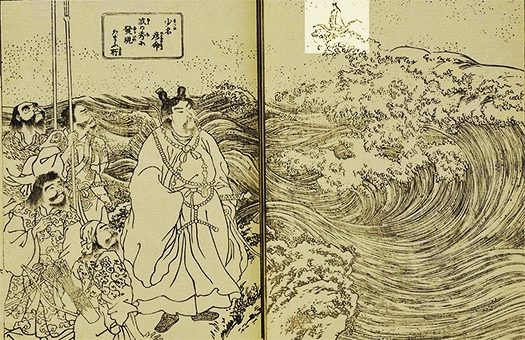
いちばん上はWikipediaのこの項のページにある神話伝承イラスト。
どうも江戸期に描かれたもののようで、少彦名の縁起を表現したもの。
大きく描かれている人物は大国主命で、その国づくりに際して
画面右上に「波に乗って現れた」少彦名さんが手助けにやってきた、という故事。
一方その下の写真は現在の「拝殿」と神社の縁起プレート板。
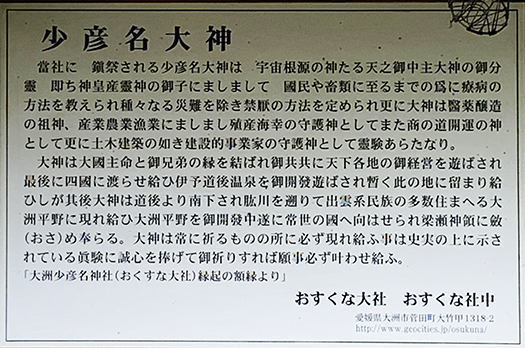
とくに縁起プレートには面白い記述があって興味深い。
それは「道後より南下され出雲系民族の多数住まへる大洲平野に現れ給い」
という記述部分であります。
この社伝では少彦名さんは道後温泉を発見して開いたりしている。
そして「療病の方法を教えられ」という記述もある。
古代史を見ていると、奈良の都で疫病パンデミックが猖獗したとき、
聖武天皇の后、光明子は現代で言うサウナ風呂を救世施設として造営している。
日本の医療、疫病対応として入浴の習慣というのは、
どうも始原期からの伝統的な行為だったように思われるのです。
神代の時代にすでに「道後温泉」を開いて療病の神さまになったという故事は
大変示唆的なのではないでしょうか。
そして医薬と醸造の神さまともされている。
お酒というものが始原期においては薬効あらたかなものとされたこともあって、
そのような神格として祀られてきた故事が浮かんでくる。
温泉を開発するには当然「土木建築」の手法開発も必然でしょう。
こういった伝承から少彦名の「事跡」が事実痕跡として見えてくる。

そしてやはり「出雲系民族」多数居住という解説が興味深い。
大国主の協力者として出雲系民族のNO.2と擬せられていた存在。
そして「海を渡って現れた」という伝承から推測すれば、
もともと南予地域に出雲から分枝した民族系統の一族であって
大国主命が国づくりという「統一事業」を発起したとき、
その一族の人間として南予地域をまとめて協力した、というようにとれる。
当然、瀬戸内海を渡って南予から出雲支配地域に「現れた」だろう。
神話ファンタジーの世界の表現だけれど、どうも歴史に書かれなかった
事実の痕跡を垣間見ることができるのではないか。
出雲系統はその後、国譲りしてヤマト朝廷に政権を譲渡するけれど、
ヤマト朝廷側でも、出雲系統の神々にはリスペクトを見せて
はるかな後世、あらたな国土としての北海道開拓経営に当たって
この大国主命と少彦名命を一宮、北海道神宮の神として祀った。
必ずしも歴史事実そのままではないだろうし検証しようもないけれど、
この少彦名命との偶然の出会いはたいへん民俗心を刺激してくれます。

English version⬇

[Mythical fantasy and traces of facts Sukunahikona Shrine-2]
Yesterday, the blog theme was postponed for one day due to the arrival of the Cho blizzard,
A sequel to one of the “Pioneering Three Gods” of Hokkaido Jingu Shrine, the individuality group “Sukuna bi kona”.
At the top is the mythological folklore illustration on this section of Wikipedia.
It seems that it was drawn in the Edo period, and it expresses the auspices of Sukunahikona.
The person depicted in large size is Okuninushi, and when creating that country
The fact that Mr. Sukuna, who “appeared on the waves” came to help in the upper right corner of the screen.
On the other hand, the photo below is the current “haiden” and the auspicious plate of the shrine.
Especially the auspicious plate has an interesting description and is interesting.
It “appears in the Ozu Plain, where many Izumo ethnic groups live south of Dogo.”
It is the description part.
In this company biography, Mr. Shohikona discovers and opens Dogo Onsen.
And there is also a description that “tell me how to treat the disease”.
Looking at ancient history, when the plague pandemic broke out in the city of Nara,
After Emperor Shomu, Komyoko built a modern-day sauna bath as a salvation facility.
The habit of bathing as a medical treatment and plague response in Japan is
It seems that it was a traditional act from the early days.
The fact that he had already opened “Dogo Onsen” in the age of the Gods and became a god of medical treatment
Isn’t it very suggestive?
It is also known as the god of medicine and brewing.
Alcohol was considered to have a new medicinal effect in the early days, so
The story that has been enshrined as such a deity comes to mind.
Of course, in order to develop a hot spring, it is inevitable to develop a method of “civil engineering”.
From these traditions, the “trace” of Sukunahikona can be seen as a factual trace.

And after all, the commentary that many “Izumo ethnic groups” live is interesting.
Existence that was imitated as No. 2 of the Izumo people as a collaborator of Okuninushi.
And if you guess from the folklore that “appeared across the sea”
Originally a clan of ethnic lineage branched from Izumo in the Nanyo area
When Okuninushi started a “unified project” called nation-building
It can be said that they cooperated with the Nanyo region as a human being of the clan.
Naturally, it would have “appeared” in the Izumo-controlled area from Nanyo across the Seto Inland Sea.
It’s an expression of the world of mythical fantasy, but it wasn’t written in history.
You can get a glimpse of the traces of the facts.
After that, the Izumo system transferred the government to the Yamato court, but
Even on the Yamato court side, show respect to the gods of the Izumo system
In the distant future, in the management of Hokkaido development as a new land
Okuninushi and Sukuna bi kona were enshrined as the gods of Ichinomiya and Hokkaido Jingu.
It’s not necessarily the historical fact, and I can’t verify it,
This accidental encounter with Sukunahikona is very stimulating to the folk spirit.

【「重く湿った」暴風雪直撃で札幌混乱】


本格的な新年活動開始というところで仕事も大忙しですが、
一方で交通通行状況では大混乱が北海道・北国を直撃。
一昨日新千歳空港に着陸後、天候がどんどん悪化していって
新千歳空港から札幌市内まで高速道路は除雪車両編隊による先導。
たぶんそうしなければ高速道路で重く湿った雪でハンドルを取られての事故が
多発するに違いないという路面状況。
除雪してすぐの路面ですら注意しなければ冬タイヤの4WDでも滑りやすい。
高速道路ですが時速30km以下の速度でじっとガマンの運転。
当然ですが「暖気運転」しなければ冬の車内気候は耐えられない。
札幌市内一般道では今度は「グチャグチャ」の融雪と多雪状況。
気をつけていないとすぐに車が立ち往生してしまう。
ようやく夜遅く自宅に戻ってひと安心と一睡した後、
朝になったら、チョー重たい雪が家の周囲を覆っている(泣)。
わが家前の道は中学校に面しているのでほぼ常時除雪が入るのですが、
それでも除雪後の重い雪がどっさりと家の前に溜まるのです。

スタッフ出勤時までにそうした除雪はようやく一段落したのですが、
昨日は終日こうした暴風雪が間断なく引き続いていた。
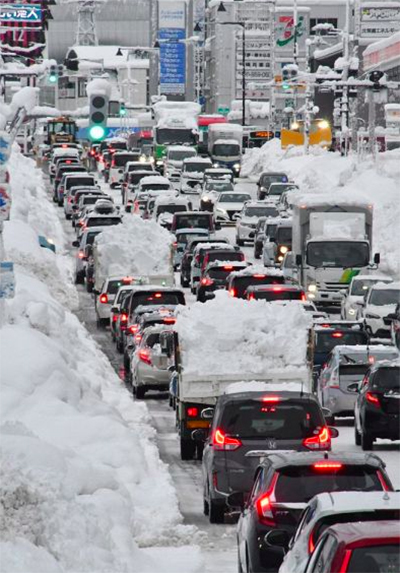
写真は北海道新聞WEB版の札幌市豊平区内での国道36号線の昨日昼間の状況。
札幌市内最高部類の幹線道路ですが、ほぼ全車両ブレーキランプが点灯。
渋滞ノロノロという状況なので
よほど緊急性のある案件以外では外出移動を控えた方が無難なレベル。
幸いわたしは外出の予定がなかったのですが、
そういう日に限ってスタッフのパソコンメンテも頻発(泣)。
それぞれの案件は軽微な対応でよかったのが幸いですが、
継続している最重要案件の打合せ対応しながら
一方でスタッフのクルマの交通移動での心配などもある。
まぁ北国の宿命とは言え、さすがに疲労困憊させられる。
その上、管理している車両1台がバッテリー上がりのトラブル。
時間が取れないこともあってJAFに対応をお願いした。
こちらも対応集中しているようで、けっこうな待ち時間でした。
幸い軽微なトラブル対応で済みましたが、
今後北国でも電気自動車が主流になっていくとこうした暴風雪など、
緊急時にはどんな社会的混乱が生じるか、予測不可能かも。
そもそも冬中、住宅の屋根は積雪でPV発電不可能なので
系統の電源に全面的に頼り切ることになる。
そうすると系統電源は現状では火力発電を多用することになる。
エコを目指して炭素の盛大な排出に頼り切る不条理。
全国の電力会社のなかでも経営体力のキビシイ寒冷地電力会社に
さらに困難な状況が襲ってくるのは容易に想像できる。
ドイツのエネルギー「敗戦」が欧米メディアで書かれてきている。
むしろEUは原発電源を「グリーン」エネルギーとして積極的に
活用すべきだという方向転換を図ってきている。

気候に振り回される北国の人間社会の宿命的な状況を見ると、
こういったエネルギー問題の今日性にも気付かされる。
さて世界はどういう方向に向かうのか?

English version⬇

[Sapporo confused by the direct hit of the “heavy and damp” blizzard]
I’m busy with work at the start of full-scale New Year activities,
On the other hand, in the traffic situation, a great turmoil hit Hokkaido and northern countries directly.
After landing at New Chitose Airport the day before yesterday, the weather was getting worse and worse.
The highway from New Chitose Airport to Sapporo city is led by a snow removal vehicle formation.
Maybe otherwise there would be an accident where the steering wheel was taken by heavy, damp snow on the highway.
Road surface conditions that must occur frequently.
Even the road surface immediately after removing snow is slippery even with 4WD winter tires if you are not careful.
Although it is a highway, driving at a speed of 30 km / h or less.
Naturally, the climate inside the car in winter cannot be tolerated without “warm-up driving”.
On the general road in Sapporo city, the snowmelt and heavy snow conditions of “guchagucha” this time.
If you’re not careful, your car will soon get stuck.
After finally returning home late at night and having a good night’s sleep,
In the morning, heavy snow covers the area around the house (crying).
The road in front of my house faces junior high school, so snow is removed almost all the time.
Even so, heavy snow after snow removal accumulates in front of the house.

By the time the staff went to work, such snow removal had finally settled down, but
Yesterday, these blizzards continued all day long.
The photo shows the situation during the daytime on National Highway No. 36 in Toyohira-ku, Sapporo, which is the WEB version of the Hokkaido Shimbun.
Although it is the highest highway in Sapporo city, almost all vehicle brake lamps are lit.
Because it’s a traffic jam
It is safer to refrain from going out except for very urgent projects.
Fortunately I had no plans to go out,
Only on such days, the staff’s computer maintenance frequently occurs (crying).
Fortunately, it was good that each case was a minor response.
While responding to ongoing meetings on the most important projects
On the other hand, there are also concerns about the traffic movement of the staff’s car.
Well, even though it is the fate of the northern country, it is truly exhausting.
In addition, one of the managed vehicles has a problem with running out of battery.
I asked JAF to respond because I couldn’t get enough time.
It seemed that the response was concentrated here as well, and it was quite a waiting time.
Fortunately, I was able to deal with minor problems,
When electric vehicles become mainstream in northern countries in the future, such blizzards, etc.
It may be unpredictable what kind of social turmoil will occur in an emergency.
In the first place, during the winter, the roof of the house is covered with snow and PV power generation is impossible.
You will rely entirely on the power supply of the system.
Then, the grid power source will use a lot of thermal power generation at present.
The absurdity of relying on the enormous emission of carbon for ecological purposes.
Among electric power companies nationwide, it has become a power company in cold regions with a strong management strength.
It’s easy to imagine a more difficult situation.
Germany’s energy “defeat” has been written in Western media.
Rather, the EU is proactive in using nuclear power as “green” energy.
We are trying to change the direction that we should utilize it.

Looking at the fateful situation of the human society in the north, which is swayed by the climate,
The modernity of these energy problems is also noticed.
What direction is the world going in?

【四国愛媛から北海道神宮に祀られる「少彦名」神】


さてわたしは昨日までブログの取材をメインに四国行脚の旅。
住宅や建築についての探訪取材がメインの人生テーマなので、
それを表現するブログ記事は一種の自己確認の手段でもあり、
そのテーマに則して基本的に日本全国で「建築民俗」を巡っています。
今回ははじめて本格的に「四国」を巡って見た次第。

北海道と四国というのは、なかなか点と線が繋がらない。
一応わが家は真言宗徒なので八十八箇所という縁もあるかも知れませんが
それはもっと人生最終盤にでも行脚することになるでしょう(笑)。
いまのところ古建築・古民家を巡って日本人と住環境の掘り起こしがメイン。
都合5日間だったので足が痛くなるほどにあちこちを行脚。
昨日帰ってきましたが、さっそく冬の大嵐ふうの暖気と大雪が出迎え。
さっそく早朝からの雪かきに追われそうです(泣)。
で、そういう一見の無関係性のなかで突然、引きずり込まれたのがこちらの
「少彦名神社」であります。
たまたま訪れた愛媛県・大洲の町行脚時に高速出口付近の交通案内で
この名前を見つけさせられて、一気に北海道との御縁の深さに驚愕。
そしてその故地を訪れさせていただいたことに深く感謝。
この少彦名命とは北海道神宮が創始されたときに明治帝が遣わされた
開拓三神のなかの「国土経営の神さま」ともいえる存在であります。
開拓三神とは、北海道神宮などに祀られている三柱の神の総称。
・大国魂命 – 国土そのものの神霊
・大己貴命 – 国造りの神
・少彦名命 – 国造りの協力神
ということなのですが意味合いとしては、明治の北海道開拓に際して
大国主の国造りと同じような日本民族の大事業であるという認識から
この少彦名命に白羽の矢が立てられたということのようです。
で、神格としてはさまざまないわれがあるとされますが、
少ない物資でも経営的に工夫して人々が生き永らえていくことができるように
という「中小零細企業」的な国土経営マインドを根付かせたいということ。
その願いの神格として北海道神宮に派遣されたと読み解くことができる。
北海道の開拓時には当然すぐに食べられるものは生産できないので
少ない資源を知恵と工夫で活用して国土を豊かに営め、という民族意思。
それを知ってからこの神さまに深く親近感を持っていました。
この大洲で神社拝殿に参詣させていただき、お会いした氏子の方々に
お話を伺わせていただいて、その民族意思の深遠さに思わず頭が下がった。

この神さまは大国主の国造りの協力者として活躍された後、
この地に帰ってこられてこの社に睡っておられるのだというのです。
神社というのはもちろん民族ファンタジーではあるけれど、
それを超越して民族としてのありよう、倫理観を示していると思います。
いまも北海道で国土経営の最前線で奮闘されておられる神々しさ。
そういう縁を知ることができたよろこびも深い。

English version⬇

[“Sukuna bi kona” god enshrined in Hokkaido Jingu from Shikoku Ehime]
By the way, until yesterday, I mainly traveled to Shikoku, focusing on blog coverage.
My main life theme is exploration and coverage of housing and architecture.
The blog article that expresses it is also a kind of self-confirmation means,
Based on that theme, I basically go around “architectural folklore” all over Japan.
This time, I saw “Shikoku” in earnest for the first time.

In Hokkaido and Shikoku, it is difficult to connect dots and lines.
Since my family is a Shingon sect, there may be 88 places.
It will be more pilgrimage to the final stage of my life (laughs).
So far, the main focus is on digging up the living environment with Japanese people over old architecture and folk houses.
It was 5 days, so I went around so much that my legs hurt.
I came back yesterday, but the warmth and heavy snow of a heavy winter storm greeted me.
I’m about to be chased by snow shoveling from early morning (crying).
So, in such a seemingly irrelevant situation, I was suddenly dragged in here.
It is “Sukunahikona Shrine”.
When I happened to visit the town of Ozu, Ehime prefecture, I used the traffic guide near the highway exit.
I was made to find this name and was amazed at the depth of the connection with Hokkaido at once.
And I am deeply grateful to have visited the hometown.
This Shohiko name was sent by the Meiji Emperor when the Hokkaido Jingu Shrine was founded.
It can be said to be the “god of national land management” among the three pioneering gods.
Pioneer Sanjin is a general term for the three pillar gods enshrined in Hokkaido Jingu Shrine.
・ Kunitama soul life-the spirit of the land itself
・ Okuninushi-The god of nation-building
・ Sukuna bi kona — a nation-building cooperation god
However, the implication is that when the Meiji era was cultivated in Hokkaido.
From the recognition that it is a big business of the Japanese people similar to the country building of Okuninushi
It seems that a white arrow was erected in this name of Sukunahikona.
So, it is said that there are various deities as deities,
So that people can survive by devising management even with a small amount of supplies
I want to take root in the national land management mindset of “small and medium-sized enterprises”.
It can be read that he was dispatched to Hokkaido Jingu Shrine as the deity of that wish.
Of course, when you develop Hokkaido, you can’t produce something that you can eat right away.
The national will to enrich the country by utilizing scarce resources with wisdom and ingenuity.
Since I knew it, I had a deep sense of familiarity with this god.
To the children I met when I visited the shrine worship hall in Ozu
When I heard the story, I was struck by the depth of the national will.

After being active as a cooperator of Okuninushi’s nation-building, this god
He is said to have come back to this place and is sleeping in this company.
Of course, a shrine is a folk fantasy, but
Beyond that, I think it shows ethics as a race.
The godliness that is still struggling at the forefront of national land management in Hokkaido.
I am very happy to know such a connection.

【日本人が家を持ちたい「動機」分析】


今週からは新しい年の仕事が本格的に再起動。
昨年からの懸案をどう動かしていくか、知恵と工夫のリスタート。
起動力の部分では年末年始の休暇での気分のリフレッシュ効果が大きいか。
このブログではあんまり仕事のことは触れずに
むしろ古民家、古建築を通して歴史上のひとびとの生き様を
可能な限りにルポルタージュするということを主眼にしております。
まぁ基本的に住宅取材手法での過去住宅の掘り起こし的情報構成。
なんですが、仕事としては住宅メディアとして写真を中核にして
現代人の住まいの「肌ざわり」の部分に迫って考えるのが基本。

ことしもまだまだ感染症の影響が強く社会にはたらいていくでしょう。
各個人の行動変容圧力は高いレベルで続いていく可能性が高い。
住まいの役割として質的な進化が要望されてくる。
テレワークまで織り込んで社会が求めてくる人間が生きていく場としての
住宅の総合的居住環境性が大きな追求テーマになっていくのではと。
わたしどものような住宅のありようを伝えるメディアには、
紙・WEBメディアを問わずに、こういう役割が求められると思います。
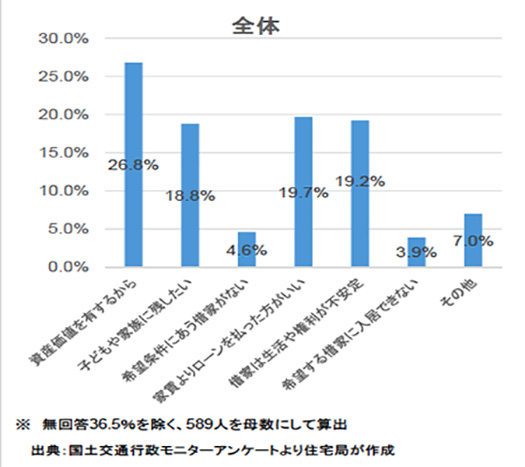
図は国交省の住関連の統計データからのユーザー意識調査。
で、もっとも根源的な「家を持ちたい理由」。
上の表組みでは順不同で表現されていますが、動機の多い順番では
1 資産価値を有するから・・・26.8%
2 家賃よりローンを払った方がいいから・・・19.7%
3 借家は生活や権利が不安定・・・19.2%
4 子どもや家族に残したい・・・18.8%
5 希望条件に合う借家がない・・・4.6%
6 希望する借家に入居できない・・・3.9%
という順になっています。
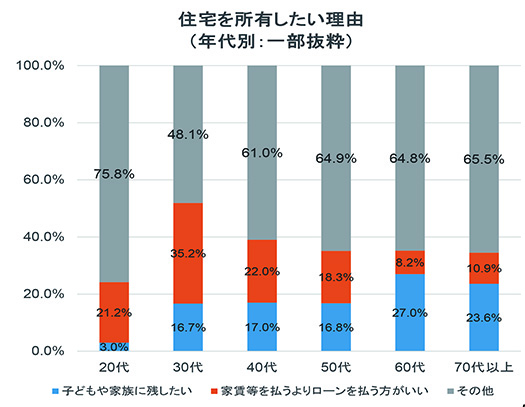
また下の図では年代別の「住宅所有意識」の差異を表現している。
●子どもや家族に残したい
●家賃を払うよりローンを払う方がいい
年齢差によって大きく異なるこの2つの理由の割合変化を表している。

1、2、4という項目は不動産資産としての価値感。
総合計は65.3%ということになる。
一方で3,5,6は「住み方」の価値感と分析可能。
総合計は27.7%ということになる。
ただ3の項目の解釈がいろいろに分かれるところで、
資産価値性と住み方の両方の要素が同居するような内容になっている。
これを按分していくと、より「資産性」の割合が高くなると考えられる。
家を建てることはひとが生きていく上での最大事業なので
まずは資産価値という冷厳な計算をしっかり持った上で
それぞれの「生き方」についての嗜好性を考えると言えるのでしょう。
肌感覚で言えば、8割が資産性重視で2割が住み方重視か。
資産性というのはいろいろな評価項目に分かれるので
有利と考えたことが思わぬ社会変動で不利になることもある。
わたしたち住メディアに期待されているのは
たぶん「住み方」についての評価部分を深掘りすること。
8割方のことについては銀行と話すから
より個性的な部分を探究せよが社会の要請であるのでしょう。
ことしもバランスを考えながら家づくり最前線での感受性部分を発掘します。

English version⬇

[Analysis of “motivation” for Japanese people to have a house]
From this week, the work of the new year will be restarted in earnest.
A restart of wisdom and ingenuity on how to move the concerns from last year.
In terms of motivation, is the refreshing effect of the mood during the year-end and New Year holidays great?
I didn’t mention much about work in this blog
Rather, through old folk houses and old architecture, the way of life of historical people
Our main focus is to reportage as much as possible.
Well, basically, the information composition of the past houses is dug up by the house coverage method.
However, as a job, photography is the core of the housing media.
Basically, we should approach the “feel” of modern people’s homes.

The effects of infectious diseases are still strong and will work in society.
Behavioral change pressure for each individual is likely to continue at a high level.
Qualitative evolution is required as the role of housing.
As a place where human beings who are required by society can live by incorporating even telework
I think that the comprehensive living environment of the house will become a major pursuit theme.
In the media that conveys the state of housing like ours,
I think that such a role is required regardless of whether it is paper or WEB media.
The figure shows a user awareness survey from the housing-related statistical data of the Ministry of Land, Infrastructure, Transport and Tourism.
Since it is the data of the user questionnaire result, I believe that there is no fraud.
And the most fundamental “reason for wanting to have a house”.
In the above table, they are expressed in no particular order, but in the order of most motivation.
1 Because it has asset value … 26.8%
2 It is better to pay the loan than the rent … 19.7%
3 The life and rights of rented houses are unstable … 19.2%
4 I want to leave it for my children and family … 18.8%
5 There is no rented house that meets the desired conditions … 4.6%
6 I can’t move into the desired rented house … 3.9%
It is in the order.
In addition, the figure below shows the difference in “householding consciousness” by age group.
● I want to leave it to my children and family
● It’s better to pay a loan than to pay rent
It shows the change in the ratio of these two reasons, which differ greatly depending on the age difference.

Items 1, 2 and 4 are the sense of value as a real estate asset.
The total is 65.3%.
On the other hand, 3, 5 and 6 can be analyzed as the value of “how to live”.
The total is 27.7%.
However, where the interpretation of the three items is divided in various ways,
The content is such that both the asset value and the way of living coexist.
If this is apportioned, the proportion of “asset property” will be higher.
Building a house is the biggest business for people to live
First of all, after having a cold calculation of asset value
It can be said that we consider the taste of each “way of life”.
In terms of skin feeling, 80% emphasizes asset property and 20% emphasizes living style.
Since asset property is divided into various evaluation items,
What you think is advantageous may be disadvantageous due to unexpected social changes.
What is expected of us living media
Maybe digging deeper into the evaluation part about “how to live”.
I talk to the bank about 80%
It is a social demand to explore more individual parts.
While considering the balance, we will discover the sensitive parts at the forefront of home building.

【創造力を高める空間の「肌ざわり」 武相荘-7】


さて、ことし最初の住宅探訪ブログの素材として武相荘を取り上げました。
都市化が激しく進行して「平面的な集合住宅」化が著しい南関東ですが、
ポストコロナ時代には「ちょっと自然に近い」環境でのテレワークが
多くのユーザーから支持されていくのではないか、
そんなひとつの事例として考えて見た次第であります。
関東の不動産関係の読者の方からの反応で
「テレワークの進展で東京から1〜1.5時間程度の「リゾート」中古住宅が
人気を博してきているというお知らせもいただいています。
たしかに都心のオフィスビルの状況を見ていると、テレワークの進行広がりで
賃料価格の低減化が進展している様子はあきらかなようです。
またわたしどもの関係している業界でも「営業」のスタイルも変わってきている。
これまでのような業界会合での人脈づくり、そこで生成した
人間関係を土台にした訪問接触の強化拡大という基本が
まずは、業界会合の困難性が拡大し、最初のスタートが変容している。
いきおい最初の接触機会がインサイドセールスというあらたな領域に更新されている。
そして人間関係構築がキャンセルされたまま、テレアポに進む。
そのテレアポにしても日程調整にかなり振幅が大きくなっている。

こういった変容は、仕事概念での「煮つめ」的部分、
接触重視というより熟成重視型の働き方を促す方向に推移する可能性が高い。
あらゆる仕事がそのような変容バイアスから逃れられないのではないか。
そうすると企画や練り上げといった領域の重要性が上がって
そうした「仕事環境」選別目線のウェートが高まる。
このブログで見てきたような白洲正子とか、研究者のような「書斎型」の
仕事環境ということに向かっていく可能性はある。
そう考えてくると、今後の「住環境」は大きな変容可能性が高い。
まだ明確な志向性が固まっているというものではなく、
こうした方向性の中でどういう最適解があり得るのか、探っている段階。
そのなかで見てきたような武相荘などの「遠距離ときどき接触」型の環境は
ひとつの典型例を示しているのかも知れない。

またインテリアや環境性という面では、
現代人はこの武相荘のような感覚とは変わってきている部分も大きい。
長時間「家にいる」という状況が普及していくと、
その「居住環境性」について、より深化していくのが趨勢ではないか。
断熱気密性という環境要素とともに、長時間いても心理的耐久力のある空間、
より「いごこちのいい家」というものが求められる。
いわば空間の「肌ざわり」のような部分までが重視されていくのではないか。
それが個人の仕事の創造力を高める、そういう志向に向かう可能性。
武相荘の分析、探究をしていてそういった部分が見えてきたように思います。

English version⬇

[The “feel” of the space that enhances creativity, Buaisou-7]
By the way, I picked up Buaisou as the material for my first housing exploration blog.
In South Kanto, where urbanization is progressing violently and “flat apartment houses” are remarkable,
In the post-corona era, teleworking in a “slightly close to nature” environment
I think it will be supported by many users.
I thought of it as an example of that.
In response from readers related to real estate in the Kanto region
“With the progress of telework,” resort “pre-owned houses about 1 to 1.5 hours from Tokyo
We have also been informed that it is becoming more popular.
Certainly, looking at the situation of office buildings in the city center, the progress of telework is expanding.
It seems clear that rent prices are being reduced.
The style of “sales” is also changing in the industries we are involved in.
Creating personal connections at industry meetings like before, and creating them there
The basics of strengthening and expanding visiting contacts based on human relationships
First, the difficulty of industry meetings has increased and the first start has changed.
The first contact opportunity has been updated to a new area called inside sales.
Then, with the relationship building canceled, proceed to the tele appointment.
Even with that tele appointment, the amplitude is quite large for schedule adjustment.

These transformations are the “boiled” part of the work concept.
There is a high possibility that the trend will be to encourage maturity-oriented work styles rather than contact-oriented work styles.
Isn’t every job inevitable from such a transformation bias?
Then, the importance of areas such as planning and elaboration will increase.
The weight of such “work environment” selection perspective will increase.
Masako Shirasu as you saw in this blog, or “study type” like a researcher
There is a possibility that we will move toward the work environment.
With that in mind, the future “living environment” is likely to undergo major changes.
It’s not that there is a clear intention yet,
At the stage of exploring what kind of optimal solution is possible in this direction.
The “long-distance, sometimes contact” type environment, such as Buaisou, as we have seen in it
It may show one typical example.

In terms of interior and environmental friendliness,
Modern people have a lot of different feelings from this Buaisou-like feeling.
When the situation of “being at home” for a long time becomes widespread,
Isn’t it the trend to deepen the “living environment”?
A space that is psychologically durable even for a long time, along with the environmental element of heat insulation and airtightness.
A more “comfortable house” is required.
So to speak, it seems that even the “texture” of the space will be emphasized.
It is possible to move toward such an orientation that enhances the creativity of individual work.
I think that I was able to see such a part while analyzing and exploring Buaisou.

【白洲正子の散策路ナチュラルメイク 武相荘-6】


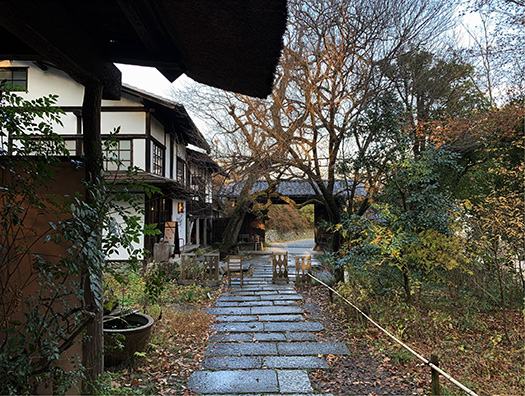
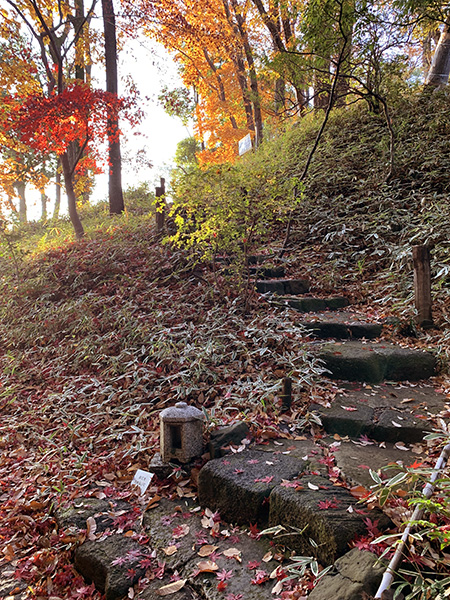
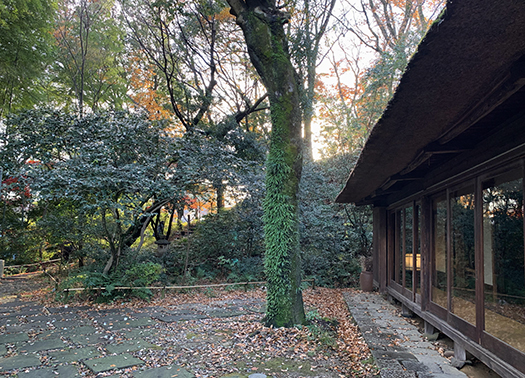
さて武相荘の大きな魅力に、南関東地域の自然に触れられる点がある。
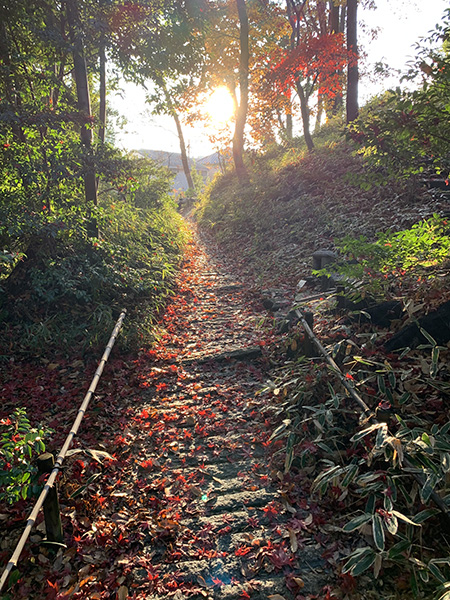
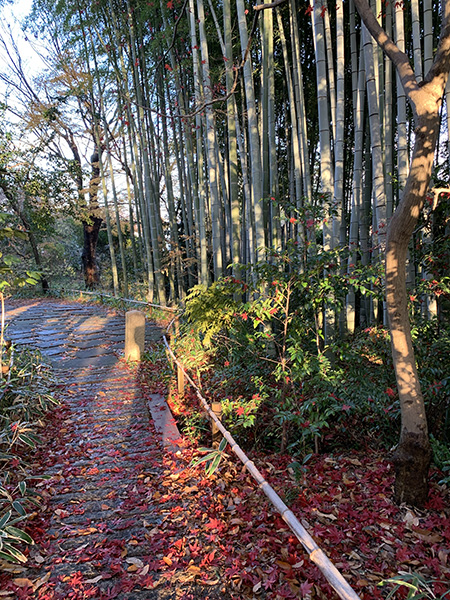
敷地の奥は「散策路」になっていて小高い小山のよう。
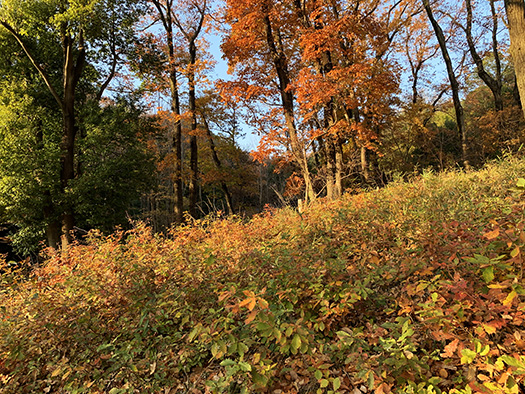
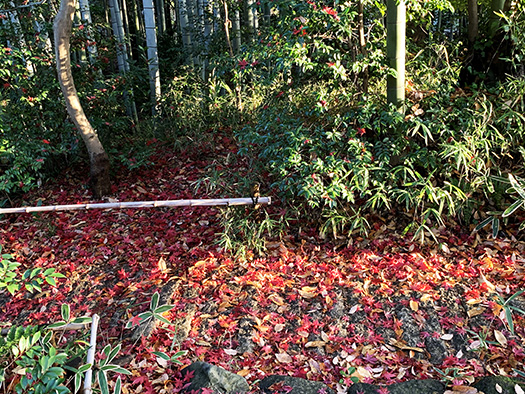
写真は12月の時期の落葉、紅葉の端境期のものですが、
四季折々を通してこの地域の基本旋律のような自然の息づかいが聞こえる。
東京都内でも明治神宮とか、新宿御苑とかこの地域の植生が
ごくふつうに触れられる場所は多いけれど、この武相荘の散策路には
もっと一般的な起伏傾斜や、ごくありふれているけれど、
それだけに気候風土性のゆたかな自然植栽が奏でるハーモニーがある。

わたしは北海道の栗沢町上志文という土地で生まれ3歳から札幌で育った。
そして18から27才くらいまでの一時期を学生・社会人として
神奈川や東京で過ごしていたので、気候風土との「対話」感において
北海道がベースだけれどそこに南関東のテイストも加味されている。
たぶん人間性の骨格形成でこういった風土性・親和感というのは
ベースになる部分があるように思われます。
この項での白洲次郎氏はそういった青春期をイギリスで過ごしているので
無愛想という掛詞を自邸に付けるように自虐する部分があったのでしょう。
人格形成というものに地域性が関わる部分、見えるように思う。
で、この武相荘の散策路は農家の里山っぽい存在だったものを
白洲正子という感受性豊かな人格が手を加えて味わいを深めている。
散策路としては敷石がルートを指し示していて、それに導かれて進む。
高低差、視界の転変ぶりは小さな自然観察路のようであり、
変化に富んでいて四季折々、多様な表情を見せてくれているに違いない。


わたしが訪問した時期はちょうど晩秋に当たっていたので、
散策路には多彩な落葉が、いかにもアースカラーの表情を見せていた。

白洲夫妻がこの武相荘で過ごしていた時期から
すでに70年近い歳月が流れている。
かつて南関東にもこのような自然とごく近しい暮らしようがあった、
というような気付きを現代人に与えてくれる空間として貴重だろうと思う。
わたしは北海道で住宅雑誌を作ってきたけれど、
家のプランに於いてどんなに都市化された札幌のような街であっても、
窓の設計計画で、その先の視界環境としてやはり自然風土が近いと感じる。
いわば「視線の抜け」の先に地域らしい風景が重要なプレーヤーとしてある。
南関東でもそういった住宅文化がかつてはごく自然だったことを
この武相荘の裏山は教えてくれていると思います。

English version⬇

[Masako Shirasu’s Walking Path Natural Makeup Buaisou-6]
One of the great attractions of Buaisou is that you can experience the nature of the southern Kanto region.
The back of the site is a “walking path” that looks like a small mountain.
The photo shows the fallen leaves and autumn leaves in December, but
Throughout the four seasons, you can hear the breath of nature like the basic tunes of this region.
Even in Tokyo, there are vegetation in this area such as Meiji Jingu and Shinjuku Gyoen National Garden.
There are many places that you can usually touch, but this walking path of Buaisou
More common ups and downs and, quite common,
For that reason, there is a harmony of natural planting with abundant climate.

I was born in Kamishibun, Kurisawa-cho, Hokkaido and grew up in Sapporo from the age of three.
And as a student / worker for a period from 18 to 27 years old
Since I was spending time in Kanagawa and Tokyo, I felt a sense of “dialogue” with the climate.
Although it is based in Hokkaido, the taste of South Kanto is also added to it.
Perhaps this kind of climate and affinity in the formation of a human skeleton
There seems to be a base part.
Mr. Jiro Shirasu in this section spends such adolescence in England.
Perhaps there was a part of self-deprecation as if the word “unfriendly” was attached to the house.
I think you can see the part where regionality is related to personality formation.
So, this walking path of Buaisou was like a farmer’s satoyama.
Masako Shirasu, a sensitive personality, has been modified to deepen the taste.
As a walking path, paving stones point to the route, and you will be guided by it.
The height difference and the change in the field of view are like a small natural observation path.
It is rich in variety and must show various expressions in each season.

The time I visited was just late autumn, so
A variety of fallen leaves on the walking path showed the expression of earth tones.

From the time when Mr. and Mrs. Shirasu were spending time at this Buaisou
Almost 70 years have already passed.
There used to be a way of living very close to nature in South Kanto,
I think it is valuable as a space that gives modern people such awareness.
I have made a housing magazine in Hokkaido,
No matter how urbanized the city of Sapporo is in your home plan
In the window design plan, I feel that the natural climate is close to the visibility environment beyond that.
So to speak, the scenery that seems to be a region is an important player beyond the “missing line of sight”.
That such housing culture was once very natural in South Kanto
I think the mountain behind this Buaisou teaches me.

【戦前期からの富裕層クルマ文化 武相荘-5】


武相荘の亭主である白洲次郎氏は先般来触れているように
江戸期の兵庫県での武家階級出自で、神戸の開港とともに
西洋交易が時代の先端を形成すると見通し貿易ビジネスに向かった家系。
そして貿易事業にはかれらの社会に飛び込むのが早道と考えて
ハーバードとか、ケンブリッジに入学して人脈形成に勤しんだ。
それが時代の波をしっかりつかんでファミリーとして経済的成功を得た。
事業は一度、次郎氏の先代の時に倒産しているけれど、
蓄えた資産で悠々たる経済人としての基盤を持っていた。
かれ次郎氏はそういった青春期を過ごしていたとされ、
ケンブリッジ在学中にはヨーロッパ大陸を派手にクルマ行脚していたという。
そういった「金持ちのドラ息子」(笑)出自なので
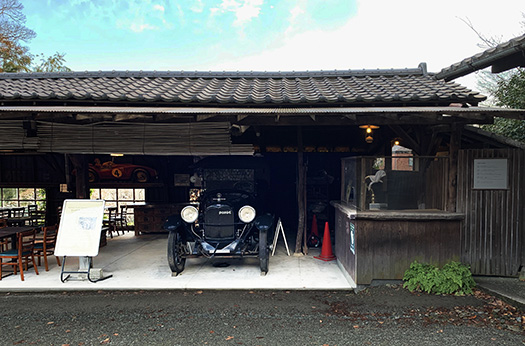
この武相荘では農家住宅の納屋とおぼしき建物がカーポートになっている。
農家を購入し移住してきた人物が高級外車を乗り回していたワケだ。
その上、奥さんは作家という文化人。
1943年当時の地域社会に「溶け込んだ」かどうか、よくわからない。
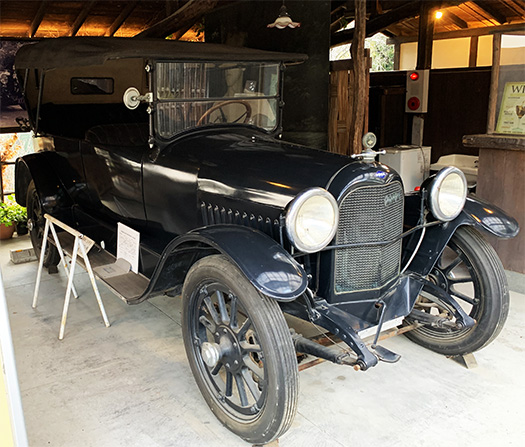
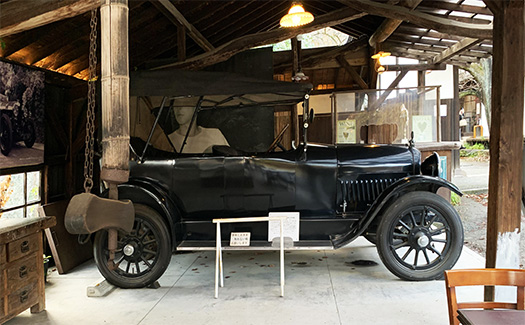
<クルマ解説/1916年型 ペイジSix-38フリートウッド製5座席ツーリングカー
英国ケンブリッジ大学留学の前、神戸一中在学当時 17歳の次郎が、
父・白洲文平から初めて買い与えられたアメリカ車の同型車。
Six-38は主にオーナードライバー向けに制作されたモデル。
水冷直結6気筒の3.7リッターエンジン搭載、ボディは後にキャデラックと
密接な関わりを持つことになる名門ボディ工房フリートウッド製作>

ちなみに12年後1955年頃に北海道の岩見沢近隣から札幌に移転したわが家は
その後、2−3年して「オート三輪」というクルマを購入した。
商売で荷物運搬・配送の用に供したのだけれど、
それ以来わたしなどはクルマとともに生きてきたが基本、国産車のみ。
白洲さんは、そういった大多数の国民のその後の生き方を
ちょっと先導的にライフスタイルとして生きていたのでしょう。
保有する高級外車をトヨタ自動車の研究開発のために贈ったりしている。
白洲次郎は戦後の枠組みづくりに深く関わったと同時に
ライフスタイルとしても現代人の先鞭を付けていたと思えます。
いま現代の交通事情でもこの武相荘は都内からクルマで1時間くらい掛かる。
いまの都会化した周辺環境とはまったく違う
南関東の里山っぽい景観のなかなので、確かにクルマがなければ
都内などに移動することはなかなかに至難だったろうとも思われる。


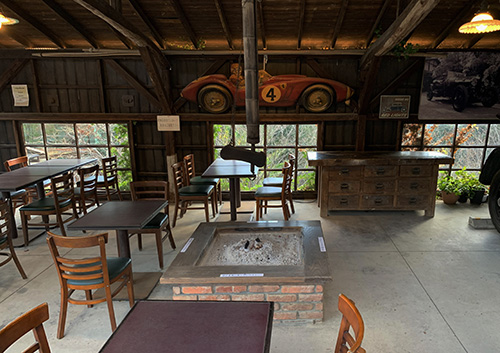
カーポートになった納屋には囲炉裏が造作されていて
来客の多かった白洲家の社交の場として機能していたことも見て取れる。
このようなライフスタイルが戦後社会のひとつの「規範」として機能して、
社会が形成され進歩発展が目指されてきたことは自明。

しかし、江戸期が終わって明治から戦前期までの時間スパンと
戦後という社会の経過時間もほぼ同じくらいになってきている。
日本史で言えば、奈良時代が2つ経過したと同じ程度のスパン。
奈良時代は710年から84年ほどで首都移転して平安時代が794年に始まり、
そこから貞観大地震869年がある。連動したか富士山噴火も記録がある。
「ポスト戦後」がコロナ禍とともにやってきた感が、どうもわたしにはある。
日本はまた、白洲さんたちが作った時代からも離陸しつつあるのか。

English version⬇

[Wealthy car culture from the prewar period Buaisou-5]
As Mr. Jiro Shirasu, the owner of Buaisou, mentioned recently
From the samurai class in Hyogo prefecture during the Edo period, with the opening of Kobe
A family heading for the trade business, which is expected to form the forefront of the era in Western trade.
And thinking that jumping into their society is the fastest way to trade business
I entered Harvard and Cambridge and worked on networking.
It seized the wave of the times and gained financial success as a family.
The business once went bankrupt when Jiro was the predecessor,
He had a laid-back foundation as an economic man with his accumulated assets.
It is said that Mr. Jiro was spending such adolescence,
It is said that he was traveling on the European continent in a flashy manner while he was in Cambridge.
Because I’m from such a “rich Dora son” (laughs)
In this Buaisou, a barn of a farmhouse and a building that seems to be a carport are used.
The reason is that a person who bought a farmer and immigrated was driving around a luxury foreign car.
Besides, his wife is a cultural person who is a writer.
I’m not sure if it “blended” into the community at the time of 1943.
Before studying abroad at Cambridge University in the UK, Jiro, who was 17 years old when he was a student at Kobe Ichichu,
The same type of American car that was first bought by his father, Bunpei Shirasu.
Six-38 is a model mainly made for owner drivers.
Equipped with a water-cooled 6-cylinder 3.7-liter engine, the body later became a Cadillac
Prestigious body studio fleet wood production that will be closely related >

By the way, 12 years later, around 1955, my home moved from the neighborhood of Iwamizawa in Hokkaido to Sapporo.
After a few years, I bought a car called “auto three-wheeled”.
I used it for luggage transportation and delivery in business,
Since then, I have lived with cars, but basically only domestic cars.
Mr. Shirasu, the future way of life of such a majority of people
Perhaps he was a little leading and lived as a lifestyle.
He gives his luxury foreign car for research and development of Toyota Motor Corporation.
Jiro Shirasu was deeply involved in creating a postwar framework at the same time.
It seems that he was a pioneer of modern people as a lifestyle.
Even in modern traffic conditions, this Buaisou takes about an hour by car from Tokyo.
It’s completely different from the current urbanized surrounding environment
It’s a satoyama-like landscape in the southern Kanto region, so if you don’t have a car,
It seems that it would have been quite difficult to move to Tokyo.

The hearth was built in the barn that became a carport
It can also be seen that it functioned as a social gathering place for the Shirasu family, which had many visitors.
Such a lifestyle functions as one of the “norms” of postwar society,
It is self-evident that society has been formed and progress has been aimed at.

However, after the Edo period, the time span from the Meiji era to the prewar period
The elapsed time of the postwar society is about the same.
Speaking of Japanese history, the span is about the same as two Nara periods have passed.
The Nara period moved to the capital from 710 to 1984, and the Heian period began in 794.
From there, there is the 869 Jogan earthquake. There is also a record of the eruption of Mt. Fuji.
I have a feeling that “post-war” came along with Corona.
Is Japan also taking off from the time when Mr. Shirasu and his colleagues made it?

【囲炉裏&庭木という自然派暖冷房装置 武相荘-4】


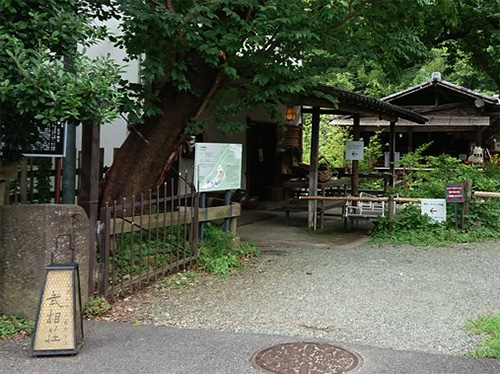
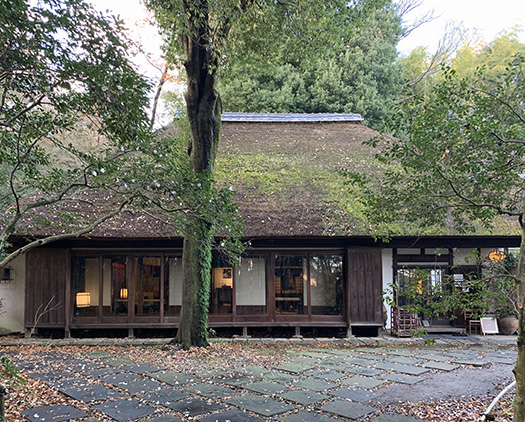
武相荘は公開されている建築ですが内部撮影は不可。
わたしとしては先日書いた國學院大學博物館展示の折口信夫「叢隠居」と通ずる
作家・白洲正子の書斎空間がなんともよかった。
WEBには武相荘が撮影許諾した内観写真がいくつかあるのでご覧ください。
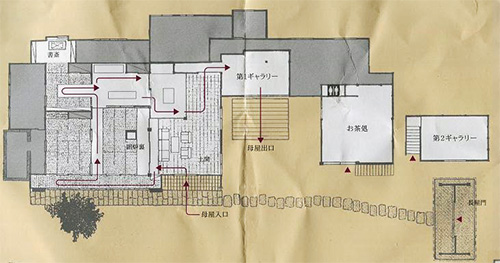
若干シワが寄ってしまっていますが(笑)パンフレット記載の図面と
正面外観写真とを照合させて内観の雰囲気を確認ください。

内部は農家住宅として土間があって、そこに床面に石を敷設。
応接兼リビングルームといった使われ方をしていたようです。
イギリス暮らしを経験した白洲次郎自邸としてはここに暖炉か、
薪ストーブがと思えるのですが、そういう装置は見られない。
代わりに空間として繋がっている「茶の間」っぽい和室に
囲炉裏があるので、和風の暖炉として代位装置としたと思われる。
南関東という場所性、気候風土を考えれば十分としたのだろうか。
来客が多かった白洲邸らしくソファセットが中央に置かれています。
土間改装なので床上げした畳、板の間空間に上がって生活空間が広がる。
南面する縁側が外観写真正面からうかがうことができる。
縁側開口部に向かって枝振りの豊かな落葉庭木が1本植え込まれている。
撮影時期は冬なので、落葉して日射は建物内部に差し込むのですが、
夏期には枝葉が直射を遮っていただろうことがわかる。
蒸暑寒冷への庭木を活かした気候対応の知恵なのでしょう。
温暖地ニッポンでは囲炉裏と落葉庭木が寒暖への対応装置と言える。
しかし囲炉裏はまだしも庭木は現代都市住宅から存在感がまったく消えた。
温暖地住宅としても寒冷地出自の防寒性能技術を受容するしかないけれど、
その場合、いったんライフスタイルの還元が避けられない。
自ずと空間美の文化も大変容せざるを得ない。
その都市住宅としての文化成熟がどう展開するか、興味深い。
温暖地の暮らし文化変容、Replanとしてもいっしょに考えて見たい。

そう考えてくると住文化問題としてはまさに今日的。
逆に北海道や日本寒冷地は「ジャパンディ」という時事通信記事のように
暮らし方文化という意味ではある種、成熟が進んでいる面がある。
ときどきご意見をいただく北海道住宅研究者のTさんからご指摘があったけれど
北海道では木製3重ガラス入りサッシという北欧由来の建材が導入され
それが北海道でも現地生産されるようになって「日本化」した。
これを導入するのには北欧に渡った日本人建築家・笠島洋二さんの関与がある。
氏はこの項の白洲氏と似て戦後期の建築界で主導的な活躍をされ
その後スウェーデンに渡って王室からサーの称号を受けたと言う。
この木製3重ガラス入りサッシを北海道のデザイン専門家・建築家たちが
初めて自分たちの大好きなデザイン性豊かな「高断熱ツール」として
積極的に先導的に活用した。それを利用することによる眺望性の自由度、
内部空間性の開放感の獲得という機縁が、
日本的デザイン感覚をそこに叩き込むきっかけに確かになった。
ジャパンディとは北欧と北海道ニッポンのフュージョンと言えるのだろう。
記事では「禅」みたいな表現がされているけれど、
それは日本人の意識下の世界。欧米人の深読み過ぎのような気がする(笑)。

English version⬇

[Natural heating and cooling device called hearth & garden tree Buaisou-4]
Buaisou is a public building, but internal photography is not possible.
For me, it is similar to Nobuo Orikuchi’s “Plexus Retreat” on display at the Kokugakuin University Museum, which I wrote the other day.
The study space of the writer Masako Shirasu was really nice.
Please see some of the inside photos that Buaisou has licensed to take on the WEB.
There are some wrinkles (laughs), but with the drawings in the pamphlet
Please check the atmosphere of the interior by comparing it with the front view photo.

Inside, there is a dirt floor as a farmhouse, and stones are laid on the floor.
It seems that it was used as a reception and living room.
Jiro Shirasu, who experienced living in England, has a fireplace here.
I think it’s a wood stove, but I can’t see such a device.
Instead, in a Japanese-style room that looks like a “living room” that is connected as a space
Since there is a hearth, it seems that it was used as a subrogation device as a Japanese-style fireplace.
Is it enough considering the location and climate of South Kanto?
The sofa set is placed in the center like the Shirasu residence, which had many visitors.
Since it is a renovation of the dirt floor, the tatami mats with raised floors and the space between the boards will be used to expand the living space.
The south facing porch can be seen from the front of the exterior photo.
A deciduous garden tree with rich branches is planted toward the porch opening.
Since the shooting time is winter, the leaves fall and the sunlight is inserted inside the building.
It can be seen that the branches and leaves would have blocked the direct sunlight in the summer.
It may be the wisdom of climate response that makes use of garden trees for hot and humid weather.
In warm regions of Japan, the hearth and deciduous garden trees can be said to be devices for responding to cold and warm weather.
However, the hearth still has no presence in the garden trees from the modern urban houses.
Even as a house in a warm region, there is no choice but to accept the cold protection technology of the origin of the cold region.
In that case, once the lifestyle is returned, it is inevitable.
Naturally, the culture of spatial beauty has to be greatly tolerated.
It is interesting to see how the cultural maturity of the urban housing develops.
I would like to think about it together as Replan, the transformation of living culture in warm regions.

When you think about it, it’s very modern as a living culture.
On the contrary, in Hokkaido and cold regions of Japan, “Japandy” </ Like the newsletter article a>
In terms of lifestyle culture, there is a certain aspect of progress in maturity.
Mr. T, a Hokkaido housing researcher who sometimes receives opinions, pointed out.
In Hokkaido, a building material derived from Scandinavia called a sash with wooden triple glass was introduced.
It came to be locally produced in Hokkaido and became “Japanese”.
Yoji Kasashima, a Japanese architect from Scandinavia, was involved in introducing this.
Similar to Mr. Shirasu in this section, he played a leading role in the postwar architectural world.
After that, he went to Sweden and received the title of Sir from the royal family.
Hokkaido design experts and architects use this wooden triple glass sash.
For the first time, as our favorite design-rich “high insulation tool”
Actively and leadingly utilized. The degree of freedom of view by using it,
The opportunity to acquire a sense of openness in the interior space is
It became certain that it gave me a sense of Japanese design.
Japandy can be said to be a fusion of Northern Europe and Hokkaido Japan.
In the article, the expression is like “Zen”,
It is a world under Japanese consciousness. I feel like Westerners read too much (laughs).