本文へジャンプ

【新著「作家と住空間」 2/25八戸と2/26十和田で講演】


 至急でのお知らせで失礼します。直前のお知らせになって申し訳ありません。
 すっかり告知を失念していたのですが、実は来週2/25八戸と2/26十和田で両日、東北電力青森支店さまからの依頼で講演を行う予定になっております。

 わたしは文芸系出版社の「幻冬舎」さんから2025.4.1予定で、電子書籍として
「作家と住空間〜北海道の住宅情報人が旅する日本人のこころ」を出版予定で現在追いこみ作業中です。
 これまで自分自身が住宅雑誌を出版してきましたが、そちらを事業譲渡して1年以上が経過。今後の生き方として住宅関連で、より人間性に寄った探究を思念してきました。
 一般的な住宅取材では施主さんの「生き様」はプライバシーそのものであり、基本的には触れることは避ける。しかし住宅は「暮らしのイレモノ」であり、そこで生きる人間性とは切っても切れない関係。
 そういう領域に踏み込むのに「誰もが知っている、しかもその内面に強い興味を抱く」人間とその住空間の強い「つながり」は、大きな未探究の情報領域だと思ってきたのですね。
 そこで「作家と住空間」というテーマを電子書籍でまとめてみた次第です。
 折からの住宅価格高騰の大波の中で、ユーザーの家を建てる意欲がやや削がれてきている情勢。そんな動向に対して「自分自身の本然・人間性への強いこだわりから家を建てる意欲」を探る企画です。
 たまたまお知らせした東北電力さまから、この出版企画に興味が寄せられ、以下のような日程で講演を依頼された次第です。

 東北電力さんの住宅ビルダー・関連事業者さん向けの機会ですが、一応、お知らせさせていただきます。万一のお問合せは、東北電力青森支店・販売本部 リビング営業まで。
<写真は内容の見本図案です。表紙は現在策定中>


【太閤検地記録、減税への希求 十津川と「新十津川」-4】


 さて十津川の歴史を深掘りしていると、さまざまな資料を再発見させられる。探訪時には「とりあえず資料類と思えるものは収集しといてあとでじっくり確認」とさまざまな資料類も基本的に写真に収めておく。で、じっくり「深掘り」する機会はなかなか作れない(笑)。人間の性〜さが。
 今回2024年4月に探訪した大阪豊中の民家園「十津川の家〜旧丸田家」の写真画像類をもとに、北海道・新十津川との縁を中心にと思って記述を始めたのですが、こちらの記録類の再発掘を始めたら過去の歴史にどんどん突入してきています。上の図版はその資料類の中の「太閤検地」記録文書図。
 「天正15年 日かへ(控えと推定)」「十津川 和州(大和国)吉野郡野尻村 金左衛門 佐介」とある。
 主な作物「いも・そば」と記述された畠からの収穫量とその畠の所有者の記載された文書。「いわむろ」という詳細地名が記され、その収穫地と作物・所有者について「一所畠 いも/そば 一石五斗 清四郎」という「租税根拠」書類が掘り起こされた。
 〜太閤検地は秀吉が天正10(1582)年に開始し、租税賦課の基礎条件を明確にするために日本全土で行った、山林を除く田畑の測量及び収穫量調査。日本初の全国規模の検地であり従前の荘園制的特権を打破し各土地の貢租(年貢)の徴収を容易にするため、荘・郷・保・里など区分が多々あった田制を統一して村制度を樹立させた。各耕地1筆ごとに1作人(一地一作人)を原則とし、土地は画一的に領主に直属させた。これによって荘園制時代よりも各耕地の所有関係が整理され、日本の近世封建制度の基礎が確立された。大化改新・地租改正・農地改革と並び、日本の歴史で重大な土地制度上の変革である。〜Wikiの要旨。
現代で言えば、三木奎吾 所得の方法とその年度の所得金額データみたいなモノに等しい。それまでが、おおまかに各地域集落単位程度の経済基礎の総量把握だけだったものが、各戸ごとの経済規模を直接把握したのだということに等しい。日本の政治統治の新段階を明瞭に示している。現代ではこの段階の「家単位」家制度からさらに詳細に個人単位に収奪構造が進化して行くけれど、いずれにせよ、政治権力による経済支配という「国家のコア」の記録といえるのでしょう。現代にいたるディープステートの実像を見る思い。ひとびとの「減税」への悲痛な思いがこの紙背に刻印されていると思える。

English version⬇

[Taikoo inspection records, the desire to reduce taxes Totsukawa and ‘New Totsukawa’ – 4]
Economic grasp of each piece of land owned by individual owners of raw households. Recalling the disasters of the modern deep state. The people’s desire for tax reductions that transcend time. …

 Digging deeper into the history of Totsukawa, we are forced to rediscover a variety of documents. When visiting, I basically take photos of the various materials, saying “I’ll just collect what I think are materials for now and check them carefully later”. But it is difficult to have the opportunity to delve deeper (laughs). Human nature.
 This time, based on the photographs and images of the Toyonaka Minka Garden in Osaka, which I visited in April 2024, I started to write about the relationship with Shin Totsukawa in Hokkaido, but when I started re-excavating the records here, I found myself plunging deeper and deeper into past history. The illustration above is a map of the “Taikō Kenshi” record among these documents.
 The text reads: “Tensho 15 nen hikakae (presumed to be an annex)” and “Totsukawa Wazhu (Yamato Province) Yoshino-gun Nojiri-mura Kinzaemon Sasuke”.
 Document describing the harvest from a field described as the main crops “potato and buckwheat” and the owner of the field. A detailed place name ‘Iwamuro’ is given, and a “tax basis” document was dug up for the harvest area, crops and owner: ‘Ichisho Hatake imo / soba, one stone five too, Seishiro’.
 〜The Taiko-kensetsu was a survey of fields, excluding forests and mountains, and the amount of harvested crops, which was carried out throughout Japan by Hideyoshi in 1582 to clarify the basic conditions for levying taxes. It was Japan’s first nationwide land survey, and unified the rice field system, which had been divided into many different categories such as Zhuang, Go, Ho and Ri, and established the village system in order to break down the manorial privilege and make it easier to collect annual tribute for each area of land. In principle, each piece of arable land was assigned to a single farmer (i.e. one farmer per piece of land), and the land was uniformly assigned directly to the lord. This system organised the ownership of each piece of arable land better than in the manorial system, and established the foundations of the early modern feudal system in Japan. Along with the Taika Reform, the Land Tax Reform and the Agricultural Land Reform, this was one of the most significant land reforms in Japanese history. ~Wiki abstract.
In modern times, it is equivalent to something like the Miki Keigo income method and income amount data for the year. It is equivalent to the fact that the economic scale of each household was directly grasped, whereas until then it was only possible to grasp the total economic basis of each local settlement unit. This is a clear indication of a new stage in Japanese political governance. In modern times, the structure of deprivation has evolved from this stage of the “family-based” family system to more detailed individual units, but in any case, it can be said to be a record of the “core of the state”, which is economic domination by political power. The image of the Deep State as it exists today. It seems that the people’s grief over the “tax cuts” is imprinted on the spine of this paper.


【十津川の歴史〜幕末まで 十津川と「新十津川」-3】


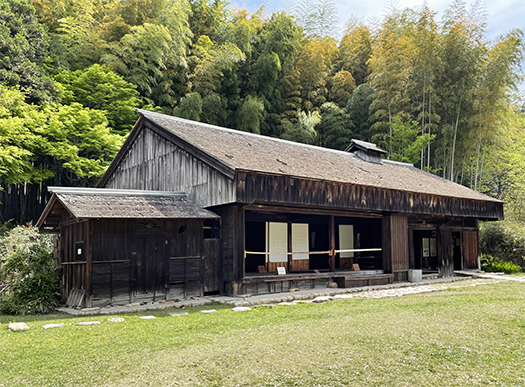
写真の家は大阪豊中の民家園に移築保存された十津川の有力者として知られる「丸田家」。北海道人にとって「十津川」というのは、明治開拓期の象徴的な「入植」の動きとしての記憶が強烈です。「新十津川」という入植した土地の地名が、いかにも母なる土地への「思い」を心に響かせてくる。2年ほど前に北海道人には非常に縁遠い「熊野詣」を果たしたとき、そこから大和平野・明日香方面に抜けてきた道中で「ここが新十津川の母村か……」と心理に残響し続けてきていた。三千六百峰と冠詞表現されるほどの深い山地と渓谷の自然環境。
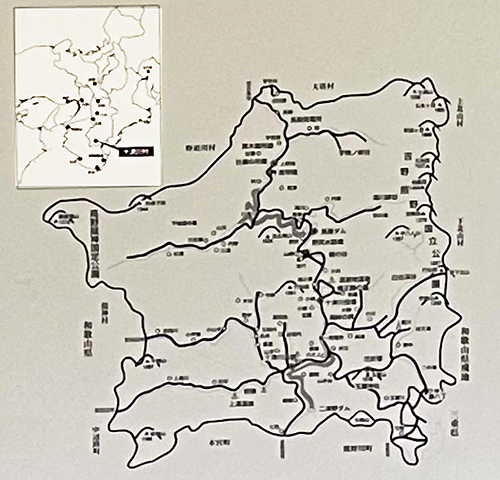
 しかし十津川は、その歴史の一端を知るだけでもその深みに驚かされる。平安末期1142年には古文書に「遠津川郷〜とおつかわごう」という地名が見られるという。遠津川という地名の意味は都からははるかに遠い吉野山地の彼方の地域という意味だと。とはいえ、それは山地と渓谷という自然環境の成せる技であって、距離的には奈良や京の都に近くまた、熊野三山という古来からの列島社会の信仰拠点を控えて、中央の文化が古くから浸透していた。南北朝期という時代の成立を見ても、非常に興味深い。政権中央での戦乱に敗れてのがれ住んだ人物家系も多く、そうした子孫を中心に「十津川郷士」と呼ばれる層がかたちづくられてもいる。
 戦国末期の1588年の太閤検地によって十津川の領域が正式に認められる。しかし租税の基礎である水田がこの地域にはほとんどなく、畑作や林業などが生業であったことから赦免地として租税負担を免除されることになった。(石碑写真)司馬遼太郎「街道をゆく12 十津川街道」でも、この租税免除という伝統的な法制度体系がひとびとの意識に刷り込まれたDNAについて探究されている。
 そのような地域的な特殊性からか、政治的な感受性は鋭敏で、徳川幕府成立期にはその特性が発揮されていちはやく徳川に与力してこの租税免除権は継続された。
 わたし個人的な体感として、紀伊半島南部はながくその交通の不便さもあって訪れることがなかったのだけれど、一度このような訪問体験を持つと、今度は一転して無性に気になってしまう。
 遠くて近い、そして近くて遠い。そのような地域印象の極地のようなのだ。

English version⬇

History of Totsukawa – to the end of the Edo period Totsukawa and ‘New Totsukawa’ – 3
The ‘annual tribute forgiveness’ tax exemption dating back to the Taikoh land survey. The extraterritorial history of the area encompassing the centre of power and the ‘near but far’ mountains and valleys, as well as the Kumano faith. …

The house in the photograph is the ‘Maruta Family’, known as a prominent Totsukawa family, which has been relocated and preserved in the Minka-en in Toyonaka, Osaka. For Hokkaido people, ‘Totsukawa’ has a strong memory as a symbolic ‘settlement’ movement during the Meiji pioneering period. The name of the settled land, ‘Shin Totsukawa’, echoes in our minds how we ‘feel’ for the mother land: when I made a ‘Kumano Pilgrimage’ two years ago, which is very remote from Hokkaido people, on the way from there to the Yamato Plain and Asuka area, I thought ‘This is the mother village of Shin Totsukawa…’. The three thousand six hundred peaks and their crowns are the most important in the world. The natural environment of deep mountains and valleys is so deep that it is described by the article as ‘three thousand six hundred peaks’.
 The depth of Totsukawa, however, is astonishing even if one only knows a part of its history. In 1142, at the end of the Heian period (794-1192), the place name ‘Tootsukawa-go’ is found in ancient documents. The meaning of the place name Tootsugawa is said to be that of an area far from the capital in the Yoshino Mountains. However, this was the result of the natural environment of the mountains and valleys, which were close to the capitals of Nara and Kyoto, and the Kumano Sanzan, an ancient centre of worship in the archipelago, where the culture of the centre had long permeated. The establishment of the period of the Northern and Southern Dynasties is also very interesting. Many families of people who were defeated in warfare at the centre of the regime fled to live in the area, and a group of people known as the ‘Totsukawa Goushi’ was formed around their descendants.
 In 1588, at the end of the Warring States period, the territory of Totsukawa was officially recognised by the Taikō Kenshi. However, as there were few rice paddies, the basis for taxation, in the area and the people’s livelihoods depended on field cultivation and forestry, the area was exempted from taxation as a pardoned area. (Stone monument photo) Ryotaro Shiba’s Kaido yuku 12: Totsukawa Kaido also explores the DNA of this traditional legal system of tax exemption, which was imprinted on people’s consciousness.
 Perhaps because of such regional peculiarities, political sensitivities were keenly felt, and during the Tokugawa Shogunate’s establishment period, this characteristic was demonstrated and this right to tax exemptions was continued as soon as the Tokugawa were given power.
 I personally have not visited the southern part of the Kii Peninsula for a long time, partly because of its inconvenience in terms of transportation, but once I have had this experience of visiting the region, I have turned my attention to it.
 It is both far and near, and near and far. It is like the polar opposite of the impression of the region.


【明治22(1889)年の異常気象・大洪水 十津川と「新十津川」-2】


幕末明治の動乱期を経て、ようやく日本社会が新時代に向かって走り出そうとした時期。この奈良県十津川郷は勤皇の郷村として、明治維新戦争でも独自の存在感を示していた。司馬遼太郎の「街道をゆく」でも、この地の人びとのこの時期の気骨ある行動を丹念に記述している。
 そのプライド高き郷村を明治22(1889)年大水害が襲う。1月16日にはオーストラリアで最高気温が記録(摂氏53度)されるような「異常気象」ぶりだったとされる。日本に於いても、春から気象条件が安定せず、梅雨時期には長雨、夏に入ると日照りが続いていた。それが8/17になって一転して豪雨が始まった。この雨風は丸2日経っても治まらず郷村を流れる「十津川」の水はあふれ、土砂崩れで民家は流れ出し、くずれた土砂が各所で川の流れをふさいで60ヵ所もの「湖水」が作られるほどだった。死者は168人、家屋流失・半壊610戸。耕地や山林にも大きな被害が出た。県をまたいで和歌山県では同じ河川が「熊野川」になるけれど、この被害は流域の熊野本宮大社・大斎原にも襲いかかり多くの社殿が流された。 流失を免れた上四社3棟は現社地に移設され、大斎原には流失した中四社・下四社をまつる石造の小祠が建てられている。それまでの大斎原の大社は、およそ1万1千坪の境内に五棟十二社の社殿、楼門、神楽殿や能舞台など、現在の数倍の規模だったという。
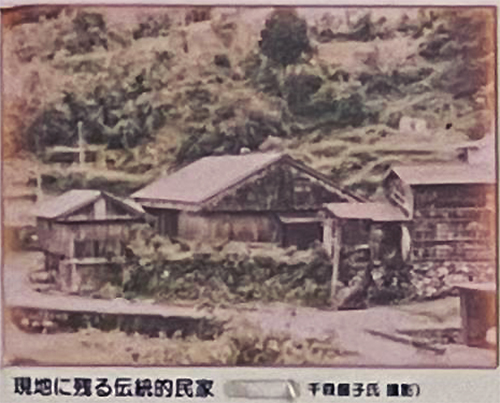
 わたしは、この故事を胸に抱きながら年来の願望であった「熊野詣」を数年前に果たしたけれど、熊野から奈良県吉野に抜ける山岳地系、その谷地を縫うように流れる河川を体験しながら、北海道にも似た自然景観の荒々しさに深い感慨を受けていた。この地形と自然景観とが一体となって、日本社会に「熊野詣」という心象を形成したのだろうかと、北海道人としてなにか心理が通底するような思いを持った。
 この未曾有の大被害からの復元を目指して、十津川郷村は立ち上がる。歴史的な維新期の行動力から、多くの人材が中央で活躍していて、そういったかれらが明治政府に対して国家的な復興策を建言し、政治的な成果を生み出していって、折からの北海道開拓・移住への支援策を勝ち取っていくことになる。
 策定された北海道移住策に対して十津川郷村の移住希望者は総数600戸、2691名に上ったという。そして、同年10月には神戸港から北海道小樽に向けて出港した。北海道人としてなにか、血肉が騒ぐ思いが止まらない。

English version⬇

[Extreme weather and major flooding in 1889: Totsukawa River and the ‘New Totsukawa’ – 2].
The spirit of the entire township and village to rise up from the flood damage and move towards the development of Hokkaido in the Meiji era was violently shaken. …

This was a time when Japanese society was finally about to run towards a new era after the turbulent period at the end of the Edo and Meiji periods. This village of Totsukawa-go in Nara Prefecture was a hometown village of the Emperor and had a unique presence during the Meiji Restoration War. Ryotaro Shiba’s Kaido yuku (On the Road) also painstakingly describes the spirited actions of the people of this region during this period.
 In 1889 (Meiji 22), the pride of the village was hit by a major flood, and on 16 January it was said to have been an ‘abnormal weather event’ with the highest temperature ever recorded in Australia (53 degrees Celsius). In Japan, weather conditions have been unstable since spring, with long rains during the rainy season and continued sunshine in summer. Then, on 17 August, the heavy rains started. The rain and wind did not subside even after two whole days, and the Totsu River flowing through the township overflowed, causing landslides that swept away houses and created as many as 60 ‘lakes’ in various places where the river was blocked by debris and sand. The death toll was 168, with 610 houses swept away or half destroyed. Arable land and mountain forests were also severely damaged. In Wakayama Prefecture, the same river is known as the Kumano River, but the damage also hit the Kumano Hongu Taisha shrine in the basin, Osaibara, and many of its buildings were washed away. The three buildings of the upper four shrines that escaped being swept away were moved to the present site of the shrine, and a small stone shrine dedicated to the middle four and lower four shrines that were swept away was built in Osaibara. The former shrine in Osaibara was several times the size of the present one, with five buildings, 12 shrines, a tower gate, a hall for Shinto music and dance, and a Noh stage, all within a precinct of approximately 11,000 tsubo (about 1.2 square metres).

 I had this legend in mind when I fulfilled my long-held wish to visit Kumano a few years ago, and was deeply moved by the ruggedness of the natural landscape, which resembles that of Hokkaido, as I experienced the mountainous terrain that runs from Kumano to Yoshino in Nara Prefecture and the rivers that weave through the valleys. As a person from Hokkaido, I wondered if this topography and natural landscape had combined to form the mental image of ‘Kumano Pilgrimage’ in Japanese society, and as a person from Hokkaido, I felt as if my mind was somehow connected to this.
 The village of Totsukawa-go is rising up to recover from this unprecedented damage. Due to the historical power of the Meiji Restoration, many people were active in the central government, and they proposed a national restoration policy to the Meiji Government, which produced political results and won support for the development and emigration of Hokkaido.
 In response to the Hokkaido emigration policy formulated, a total of 600 households and 2,691 people wanted to emigrate to Totsukawa-go Village. In October of the same year, they set sail from the port of Kobe for Otaru in Hokkaido. As a person from Hokkaido, I can’t stop thinking that something is stirring in my blood.


【民家探訪再び 奈良県・十津川と北海道「新十津川」】


わたしは独立開業してから北海道地域のオリジナルの地域住宅雑誌を発行してきました。3才で親が北海道岩見沢近郊の農家から札幌(現在の札幌市中央区北3条西11丁目)に移住して食品製造販売業を営むことになり、当時の建売住宅を購入して住み始めた。その後、業態に即してまた業容拡大に即して毎年のように家を改造・改装・建て替えといった建築工事が繰り返されていた。
 15才で現在の札幌市西区二十四軒に工場兼用住宅を移転・新築するまでに、新築2回、増改築は毎年、というような住宅体験を繰り返していた。そういった幼年期〜青少年期の経験がトラウマ(笑)のように潜在意識に刷り込まれたのでしょうか。大学・就職の東京暮らしの一時期8年間を除いて北海道に生きてきた人間として、自分が独立開業するときに自然と「住」をメイン領域に選択した。北海道での暮らしの基盤は住空間と固く思ったのですね。
 以来、住宅探訪・体験が人生時間で積層していった。当然、高断熱高気密という寒冷地住宅革新のただ中で、そのルポルタージュが底辺を形成していった。事業譲渡後も関連企業の新設開業というカタチで関わり続けているワケだけれど、最近はより幅広く日本全国の公開住宅を見続けてきています。
 こういう体験が積み重なってきたので、今度、作家たちの住宅探訪体験をまとめる電子出版企画も進行中です。しかしそれだけではなくたくさんの「住宅探訪」記録・画像などが積層してきている。そんななかから、いくつかの住宅探訪記を綴ってみたい。
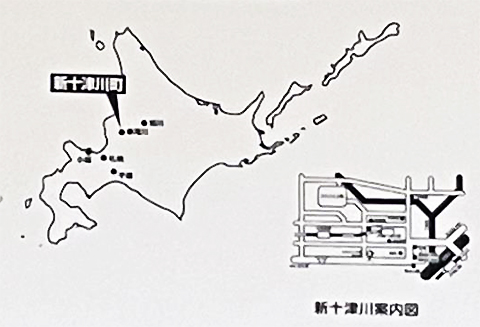
 ・・・という「事始め」記述できょうは終わりそう(笑)ですが、北海道人として非常に印象的な探訪・出会いだったのが、奈良県と和歌山県の境界山間部地域の「十津川」と北海道中央部の「新十津川」の縁を強く印象づけられた大阪豊中の古民家園での「十津川の家」。
 明治22年の記録的大水害で壊滅的損害を被った十津川から、新天地を求めて北海道に移住したその地域の家。あした以降、ちょっと掘り下げて見たいと思います。

English version⬇

Minka exploration again – Totsukawa, Nara Prefecture and Shin-Totsukawa, Hokkaido.
Return to the original theme area ‘house exploration’. We want to delve into the feelings of the Hokkaido people towards Totsukawa, who moved en masse to Hokkaido after the floods. …

I have been publishing an original regional housing magazine for the Hokkaido region since I started my own business.At the age of three, my parents moved from a farmhouse near Iwamizawa in Hokkaido to Sapporo (now Kita 3 Nishi 11, Chuo-ku, Sapporo) to run a food manufacturing and sales business, and I bought a house for sale at the time and began living there. Thereafter, building work such as remodelling, renovating and rebuilding the house was repeated every year in line with the type of business and the expansion of the business.
 By the time he was 15 years old, he had moved to a new house in Nijushiken, Nishi-ku, Sapporo, which is now used as a factory, and built a new house, which was newly built twice and extended and reconstructed every year. Were those childhood – youth experiences imprinted on his subconscious like a trauma (laugh)? As someone who has lived in Hokkaido, with the exception of a period of eight years living in Tokyo during university and employment, I naturally chose ‘housing’ as my main domain when I started my own business. You firmly believed that the foundation of life in Hokkaido was living space.
 Since then, housing exploration and experiences were stacked in life time. Naturally, the reportage formed the bottom line in the midst of the cold-weather housing innovation of high thermal insulation and airtightness. After the transfer of the business, I have continued to be involved in the newly-established business of a related company, and recently I have continued to see a wider range of open houses all over Japan.
 As a result of these experiences, I am now working on an e-publication project to compile the housing visits of the writers. However, there are also many more ‘house-hunting’ records and images that have been accumulated. I would like to write about some of them.
 The ‘Totsukawa House’ at an old private house garden in Toyonaka, Osaka, strongly impressed me with the connection between Totsukawa, a mountainous area on the border between Nara and Wakayama Prefectures, and Shin-Totsukawa, in the centre of Hokkaido.
 The houses in that area were built by people from Totsukawa, which suffered catastrophic damage in the record flood of 1889, who moved to Hokkaido in search of a new place to live. We will delve a little deeper into this from tomorrow onwards.
 

【132カン、たのしく握りまくった寿司三昧】


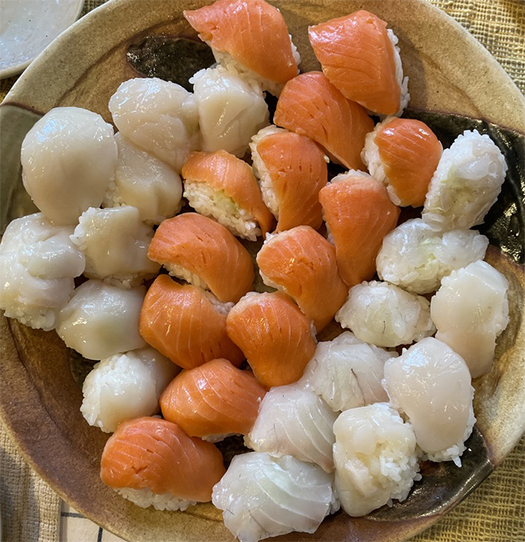
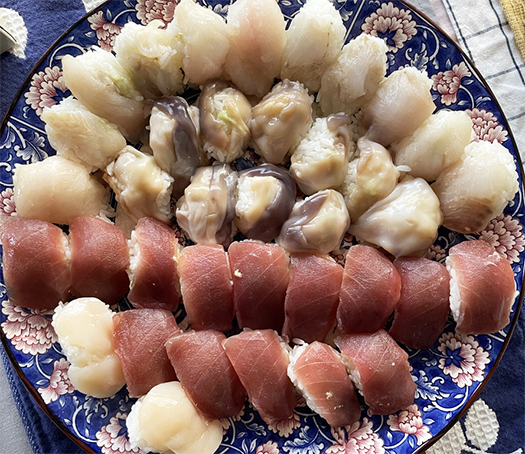
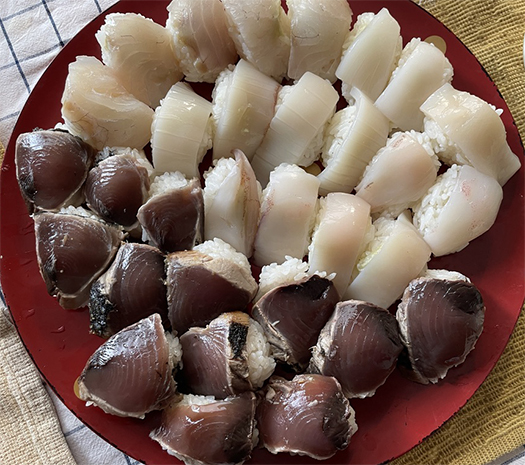
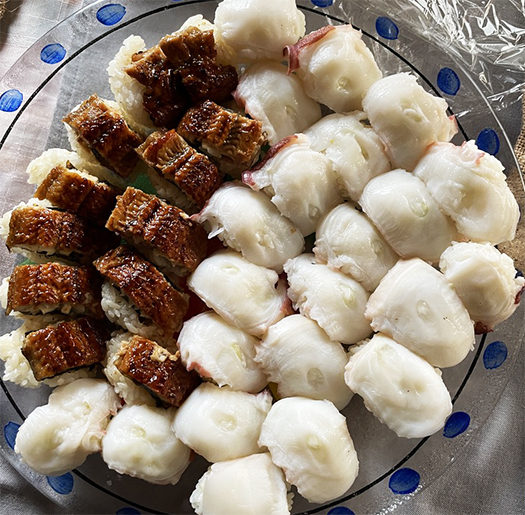
 昨日の続き。午前7時頃までにお寿司パーティの準備段取り完了させ、ひと休みしたあと家族が集まってくる正午に向けて午前9時くらいから、握り初めであります。お米は結局、約1升を炊き上げました。
 シロウトの場合はその日の気分と感覚で、シャリの握りの大きさは微妙に変化する。いや、かなり変化する。自分のカラダの食欲を正確に反映するのでしょうか?よくわからない潜在意識領域の表出のように思います。それとわさびの利かせ加減も、連動していることも間違いない。その日の感覚のままに、寿司飯の握り大きさと、ネタの切り身の大きさとが合体して次々と握り寿司が生まれ出てきてくれる。


 握りの大きさ、堅さの選択〜ネタとの合体のバランス感覚。その繰り返し動作から来る体内リズム感に無心に身を委ねていくのですね。三昧〜ざんまいという境地にはもちろん到底至ることは出来ませんが、その入口の付近くらいの「感じ」は見えてくる気がします。
 それとやはり、ネタのことをいろいろ考えて、それらがおいしく仕上がってくれるようにと念じてこの段階まで至ったことに、心理的な達成感は味わわせてくれる。叶うなら、それぞれの1カンずつが独自の、世界にひとつだけの魅力を持って欲しいと願いながら作業することになる。
 体動作ではあるのだけれど、それに付随してさまざまな想念も表出するような気がする。
 で、そうしたひとつひとつが盛り付けられていくときに、楽しさや見た目、色合いのハーモニーなどもオリジナルで創出することもできる。料理の楽しさのど真ん中なんでしょうね。その日その時に得られている食材を使って、精一杯の食の楽しさに昇華させるこころみ、充足感。
 「また今度もね」みたいな気分が、終わってからも余韻として残っている。またやるぞ!

English version⬇

132 Kan, the sushi feast that was so much fun to make.
After all the preparation, the people who will eat the food gather and the ingredients gather on the table. A fleeting encounter. A once-in-a-lifetime encounter. …

 Continued from yesterday. We completed the preparations for the sushi party by around 7am, and after a short break, we started nigiri at around 9am towards noon, when the family was gathering. In the end, we cooked about 1 square kilo of rice.
 For shirouto, the size of the rice nigiri changes slightly, depending on the day’s mood and sensations. No, it varies considerably. Does it accurately reflect your body’s appetite? It seems to be an expression of an unfamiliar subconscious realm. That and the degree to which the wasabi has been used are also definitely linked to each other. As per the sensations of the day, the size of the sushi rice grip and the size of the fish fillet merge to create a succession of nigirizushi that come out one after the other.

 The selection of the size and firmness of the nigiri – the sense of balance of merging with the neta. You surrender yourself to the sense of rhythm in your body that comes from the repetitive movements of the nigiri. Of course, it is impossible to reach the state of samadai or zammai, but I think I can see a ‘feeling’ in the entrance to that state.
 And also, I can feel a sense of psychological achievement in having reached this stage of thinking about the ingredients and hoping that they will turn out delicious. If it comes to pass, I will be working with the hope that each individual can of fish will have its own unique, one-of-a-kind charm.
 Although it is a physical movement, I feel that various thoughts and feelings are expressed along with it.
 And when each of these dishes is served, it is possible to create original harmony in terms of enjoyment, appearance and colour. I guess that’s the middle of the fun of cooking. The spirit and satisfaction of using the ingredients available at the time and sublimating them to the fullest in the enjoyment of food.
 The feeling of ‘see you next time’ lingers afterwards. I’ll do it again!

【握りネタ10品の「仕込み」完了、さて握るぞ!】


さて本日は昼飯どきに4箇所に分散している親族・家族が集まっての身内の誕生会を名目にした寿司食事会。ま、わたしの握り欲求を満たすのが主たる目的(笑)。昨日までに準備完了させていたお魚さんたちを冷蔵庫・冷凍庫から出してきて、ネタ準備。そして寿司飯の焚き上げ。
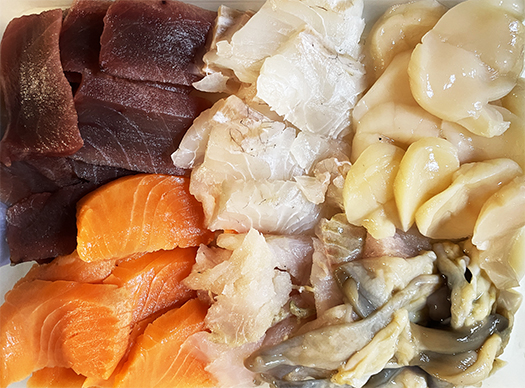
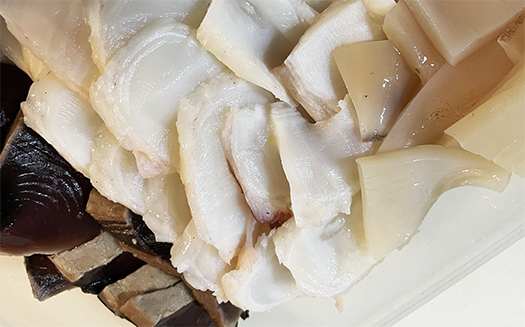
 その最中に、「あ、ブログ書かなきゃ」とMacに急ぎ向かっております。上の写真は捌いてネタに仕上げたお魚さんたち。ホタテ・ホッキ・ソイ・カレイ・サーモン・マグロ・タコ・イカ・カツオで、これとは別に、温かめ系でウナギ蒲焼きも用意しています。全部で10品。これらで150カンくらいは握る予定。
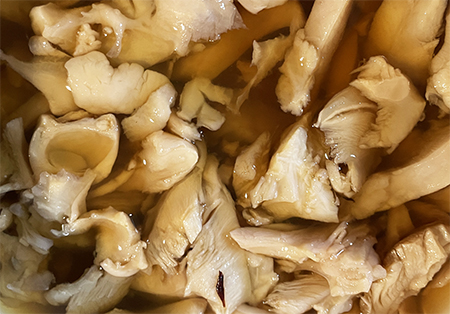
 箸休めには、下のような「タコとんび」を用意して、前日までに料理して冷蔵保存。

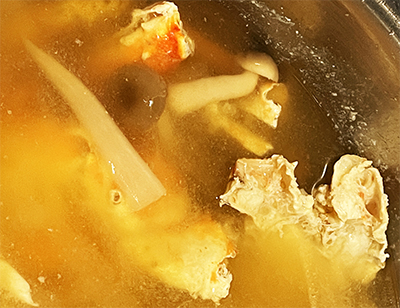
 さらに汁物として、鉄砲汁を用意しております。こちらはカニのぶつ切り(タラバ1kg)を大鍋で加温して、多少の野菜類を炊き込んだ一品。寿司のあわせなので、味噌の薄味に仕上げております。

 ということで、昼飯の方がメインなので朝食はこれから雑炊を作って、簡単に済ませたあと、ようやく本格的に「握り」始めたいと思っております。料理はみんな同じでしょうが、仕込み段階までが主戦場で、最後の仕上げ工程が握り。いわば「力仕事」と「リズミカルな体技」みたいな気分であります。
 魚の捌きからたくさんの戦場をくぐり抜けて、最後は「楽しく」音楽的にカラダいっぱいにリズムを奏でながら、皿に美しく装飾していく、みたいな気分であります。
 ということで本日ブログは料理途中での、アタマのなか・食の追求一択篇でした。オソマツ!!

English version⬇

Ten items of nigiri have been prepared, now let’s get to work!
Sushi is more invigorating than buckwheat noodles, and it makes your brain active and your blood boil. It is as if the raw life of the fish is boiling and stimulating. …

Today, my relatives and family members, who are spread out over four locations, gathered at lunchtime for a sushi dinner under the guise of a birthday party for my relatives. The main purpose is to satisfy my nigiri craving (laughs). The fish that had been prepared by yesterday were brought out of the fridge/freezer and the ingredients were prepared. Then, I fired up the sushi rice.
 In the middle of all this, I thought, ‘Oh, I have to write a blog’ and rushed to my Mac. The photo above shows the fish that have been processed and made into sushi. There are scallops, hokki, soi, flounder, salmon, tuna, octopus, squid, bonito, and we also prepared a warm eel kabayaki. There are 10 items in total. We plan to serve about 150 cans with these.
 For a chopstick rest, we have prepared ‘octopus tonbi’ as shown below, cooked the day before and kept refrigerated.

 In addition, teppo soup is available as a soup. This is a dish made by heating up a large pot of crab (1 kg of king crab) and cooking it with some vegetables. As it is a sushi combination, it is lightly flavoured with miso.

 So, since lunch is the main meal, I will now make zosui for breakfast, and after a quick and easy meal, I finally want to start ‘nigiri’ in earnest. I know it’s the same for everyone in cooking, but the main battle is up to the preparation stage, and the nigiri is the final finishing process. It’s like ‘hard work’ and ‘rhythmical body movements’, so to speak.
 It’s like going through many battlefields from the fish processing stage, and finally decorating the plate beautifully while playing the rhythm with your body in a ‘joyful’ musical way.
 So today’s blog is about my mind’s pursuit of food, in the middle of cooking. Osomatsu!

【魚をさばく、寿司を握る 「三昧」の週末】


わたしは長く続けてきた仕事、その組織から身を引いて、やや自由なスタンス、立ち位置に自分の生きる場所を変えてきているのですが、そうすると自分の本然の「好み」というものと段々と近づいてくるような感覚になってきます。
 料理というのも自分の本来としてはたいへんに数寄なんだと思っています。その料理の中でも「蕎麦打ち」は人気が高いでしょうが、わたしの場合はどうも、魚料理により大きな興味がある。蕎麦って、要するに「こねる」料理なんでしょうが、魚料理の「捌く」醍醐味により惹かれる。
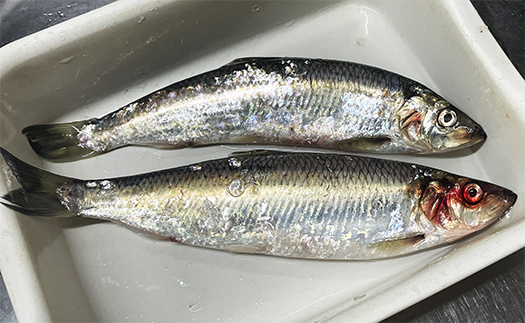
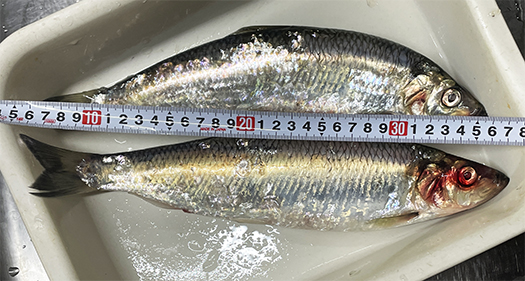
 写真はことし、久方ぶりの「群来」に沸いている北海道沿岸で獲れているニシン。

 だいたい30cmは超えている魚体。ここのところ、毎週のように鮮魚店で購入して捌くのが習慣化しております。身も丸々として、いかにも北海道近海の大自然がこの全身にみなぎっている。刺激的な姿態で、どうだとでも叫んでいるかのように感じられる。
 であれば、こちらも襟を正して、正面からその美しい姿に向き合って行く。
 包丁の刃先から、その身を捌き上げていく。真剣に向き合い、その肉体と対話するような静かな時間が流れていく。一種「命のやり取り」というような気分も沸き立ってくる。

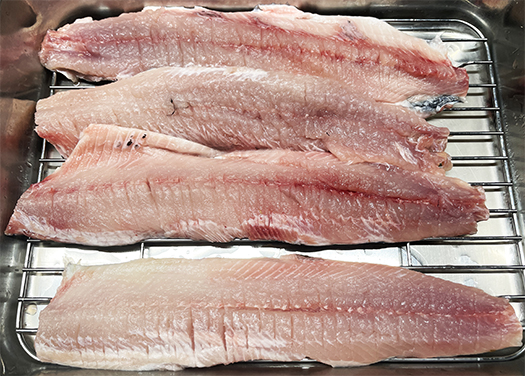
 三枚におろしてそれでも残る小骨に対して、丁寧に包丁を入れていく。あした日曜には家族が集まっての寿司握りを予定しているのですが、そのネタにもできると思うのですが、カミさんの判断でいつものように、焼き魚として食べることにします。
 あ、アラも出ますので、それらはニシンのアラ汁として調理して無駄なくいただきます。
 このニシンの他にも寿司ネタはたくさん入手しているので、それらをあしたは握っていきたいと思います。北海道周辺の海の幸に深く感謝。

English version⬇

[Catching fish, making sushi, ‘samadhi’ weekends
A ‘dialogue’ with fresh seasonal herring with knife work. In a sense, it’s a time to enjoy the very best of samadhi. Respect for nature wells up in the heart. …

 I have stepped away from the work I have been doing for a long time and from its organisation, and I have changed my place of living to a somewhat freer stance and position, and in doing so I feel that I am gradually getting closer to my natural ‘tastes’.
 Cooking is also a very special kind of cuisine for me. Soba making is probably the most popular type of cooking, but in my case, I am more interested in fish dishes. Soba is a dish that requires kneading, but I’m more attracted to the real pleasure of processing fish.
 The photograph shows herring caught off the coast of Hokkaido, which is enjoying its first ‘schooling’ in many years.

 The fish body is usually over 30 cm. It has become a habit of mine to buy them from fresh fish shops and process them every week. The meat is rounded, and the nature of the seas around Hokkaido is all over this fish. It’s an exciting sight, as if it’s screaming out to you, ‘How are you doing?
 If so, we straighten up and face the beautiful figure from the front.
 From the edge of the knife, I handle the body. The time passes quietly, as if you are seriously facing and conversing with the body. A kind of ‘exchange of life’ is felt.

 I carefully cut the fish into three pieces and then carefully cut the knife against the small bones that still remain. Tomorrow, on Sunday, we are planning to have a family gathering for sushi nigiri, and I think it could be used for that, but Kami has decided that we will eat it as grilled fish, as we always do.
 Oh, we will also get some ara, which we will cook as kipper ara soup and eat it without wasting any of it.
 In addition to this herring, we also have a lot of other sushi items available, which we will be making tomorrow. We are deeply grateful for the seafood around Hokkaido.

【仕事が目に見えて進展する「特異日」】


 きのう、事業譲渡後、約2年掛けてずっと取り組んできている案件について、ようやく峠を超えるような進展が見られた。すこしホッとした達成感を味わいつつ、より慎重に取り組むことで、最後の仕上げに向けて立ち向かっていきたいと兜の緒を締めております。
 多くのスタッフと協働して行っていく仕事と違って、個人企業として取り組んでいく仕事は多くの外部関係者との「呼吸合わせ」のようなことが大きい。くれぐれも自分勝手にならないように、相手の立場を考えムリのない方法で、謙虚な姿勢で対応するのが基本。そんな「呼吸法」がだんだんと少しは理解できるようになって来たのかもと、そんなことを実感させられております。
 こういう特異日のように進展が見られる日というのは、たぶん目には見えない水面下でのアヒルの水かきのような段取り仕事が表に顔を出す瞬間なのでしょうね。 
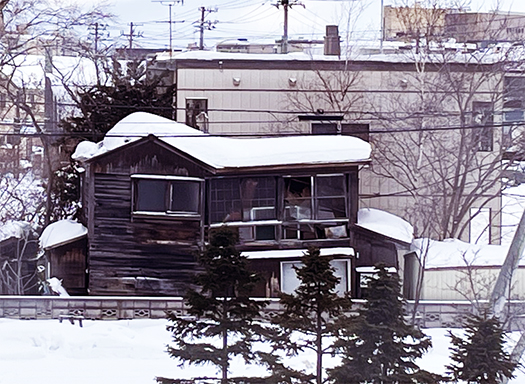
 写真は散歩道の途中でよく見ている「廃屋」の様子。札幌の市街地でこういった廃屋が放置されているというのはあまり遭遇しないけれど、わたしが知っているだけでもこの廃屋は5-6年前くらいから存在している。建物真ん中当たりで「不同沈下」が顕著に見られていて、ここのところの急激な積雪もあって、屋根の積雪荷重にどこまで耐えられるのかと、やや不安に見つめ続けています。
 不思議なモノで、そんなふうに見つめ続けていると、それはそれなりに心理に「馴染み」感が形成されてくる。こころの底で「がんばれ」と応援するような気分がしてくるのですね。いとおかし。
 この木造住宅も、そこで暮らした家族の暮らしを支え続け、廃屋になってもなお、わたしのような通行人に命の叫びのようなものを伝えている。永続的な力、縁の下でがんばる、みたいな忍耐心を教えてくれているかのよう。わたしの仕事の展開とも共鳴するように感じております。

English version⬇

[A ‘singular day’ when work visibly progresses].
A derelict landscape that seems to silently tell us how to work steadily and over time. Mysterious mental synchronisation. …

 Yesterday, we finally made progress on a project that we have been working on for a long time, taking about two years since the transfer of the business, and we have finally reached the end of the pass. While experiencing a slightly relieved sense of achievement, we are tightening our helmets to face the final touches by working more carefully.
 Unlike work that is carried out in collaboration with many staff members, the work we work on as a private company is largely a matter of ‘breathing together’ with many external parties. The basic rule is to respond in a humble manner, in a way that is not unreasonable and with the other party’s position in mind, so as not to be selfish. I am made to realise that I may have gradually come to understand such a ‘breathing’ method a little better.
 I think that these days when progress can be seen, like a singular day, are probably the moments when the unseen, under-the-water arrangements like a duck’s waterer come to the surface. 
 The photo shows an ‘abandoned house’ that is often seen along the walking path. It is not very common to see abandoned houses like this in the city centre of Sapporo, but this one has been around for five or six years, if I know it at all. There is a noticeable ‘unequal settlement’ in the middle of the building, and I keep looking at it somewhat anxiously, wondering how far it can withstand the snow load on the roof, partly due to the rapid snowfall in recent days.
 It’s a strange thing, when you keep staring at something like that, it forms a sense of ‘familiarity’ in your psyche in its own way. Deep down inside, you feel as if you are cheering them on, saying ‘Go for it’. Cute.
 This wooden house also continues to support the lives of the family who lived there, and even though it has been abandoned, it still conveys something like a cry of life to passers-by like me. It is as if it is teaching me about enduring strength, perseverance to work hard behind the scenes and so on. I feel that this resonates with the development of my work.

【日本的「作庭」とHokkaidoの「雪かき」営為】


 きのうの続きです。日本的庭造りマインドと北海道での雪かきとの対比論。
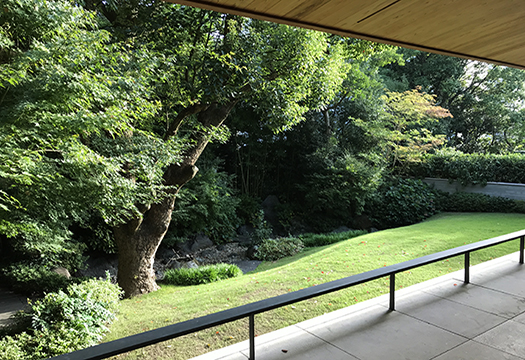
 断熱気密などの住宅性能的な部分などへの「比重の掛け方」の北海道人のマインドからは、いわゆる和風庭園づくりマインドには距離感がある。その実感が強まってくるのですね。上の写真は神戸市の新神戸駅にほど近い「竹中大工道具館」のすばらしい庭。さすがに竹中「工務店」企業ポリシーの表現らしいみごとな建築と作庭で、行く度に打たれております。って、初参観以来、もう10回くらい訪問。公開している企業建築の庭、その「奥行き感」に魅了される。

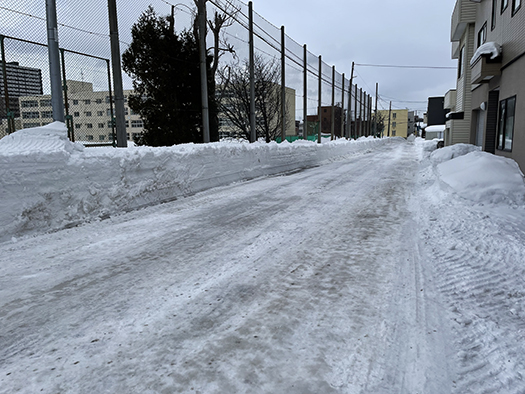
 ところが、そういう夢想的な空間美から帰ってくると、職住一体のわが家では毎冬否応なく「雪との対話」が半年は継続する。公共事業による重機除雪と、住民側の自助・公共への奉仕のないまぜな雪かき作業、その「やるぞ」マインドの維持が不可欠なものになっている。
 これまではこうした両者の「関係論」というのを気付いたことがなかったのですが、北海道人は冬の間、いつもこうしたわが家とその周辺の雪対応・環境メンテナンスにこころの大きな部分が占領されているのだと最近強く気付かされている。これってより切実な「自然環境との対話」そのもの。
 そして上の写真の竹中大工道具館の庭も、この神戸の土地・場所のもつ環境との相関・対話であることはあきらか。こちらはもちろん日本人的感性「数寄」の表現で芸術的に訴えかけてくる。
 で一方、北海道人の雪との対話も、カタチはまったく違うし、数寄どころではない「ヤリキレナイ」心理がベース旋律ではあるけれど「自然環境との対話」そのものではある。
 こういう花鳥風月こころをはるかに超える強制的な対話を続けざるを得ない北海道人は、雪が融けたら、より広大で魅力たっぷりの北海道のナマな自然景観により大きな美感を見出していく。どうも「作庭」というような深遠な数寄心理には向かいにくい。違和感。北海道のアウトドア環境作りでは「ジンギスカンパーティ会場志向」的なマインドに向かいやすいと推測させられるのです。
 毎年の冬の雪かき営為を積み重ねてきた個人的実感なのですが、みなさんはさていかがでしょうか?

English version⬇

Japanese-style ‘gardening’ and Hokkaido’s ‘snow shoveling’ activities
Hokkaido people, who are motivated to shovel snow by their ‘yarikirenai’ mentality that it will snow heavily again, are drawn to the charms of nature in the six months of the year when there is no snow. …

 Continued from yesterday. A contrasting argument between the Japanese garden-making mindset and snow shoveling in Hokkaido.
 There is a sense of distance from the so-called Japanese garden-making mindset from the Hokkaido people’s mindset of ‘putting more weight’ on housing performance aspects such as insulation and airtightness. This feeling is becoming stronger. The photo above shows a wonderful garden at the Takenaka Carpenter’s Tools Museum near Shin-Kobe Station in Kobe City. I am struck every time I visit by the magnificent architecture and gardens, which are indeed an expression of Takenaka Corporation’s corporate policy. Since my first visit, I have visited the Takenaka Taikogukan about 10 times. I am fascinated by the ‘sense of depth’ of the garden of the corporate architecture, which is open to the public.

 However, after returning from such a dreamy and beautiful space, we inevitably have a ‘dialogue with the snow’ every winter for at least half a year in our house, which is a combination of work and residence. The heavy snow removal by public works and the residents’ self-help and service to the public are intertwined, and maintaining this “can-do” mindset has become indispensable.
 I have never been aware of the ‘theory of relationship’ between these two, but I have recently been reminded that a large part of Hokkaido people’s minds are always occupied with such snow-related environmental maintenance in and around their homes during the winter months. This is a more serious ‘dialogue with the natural environment’ itself.
 And the garden at the Takenaka Carpenter’s Tools Museum, pictured above, is clearly in correlation and dialogue with the environment of the land and place here in Kobe. This garden is of course artistically appealing in its expression of the Japanese sensibility of ‘sukiyaki’.
 On the other hand, the Hokkaido people’s dialogue with the snow has a completely different form, and although the base melody is based on a psychology of ‘yarikirenai’, which is more than sukiyomi, it is a ‘dialogue with the natural environment’ itself.
 Hokkaido people, who have no choice but to continue this kind of forced dialogue that goes far beyond the Kacho Fugetsu (flower, bird, wind and moon) mentality, find greater beauty in the vast and attractive natural landscape of Hokkaido once the snow melts. Apparently, it is difficult for them to move towards a profoundly numerical psychology such as ‘Sakutei’. Discomfort. It is easy to assume that the creation of outdoor environments in Hokkaido tends towards a ‘Genghis Khan party venue-oriented’ mindset.
 This is my personal feeling based on the experience of shoveling snow every winter, but how about you?