本文へジャンプ

【高齢者には「雲海の景色」が残響してくる・・・】


 昨日北海道を飛び立って、猛暑のつづく関西・関空へ。
 で、夕刻までに今回の用件地・岡山県井原市に到着いたしました。
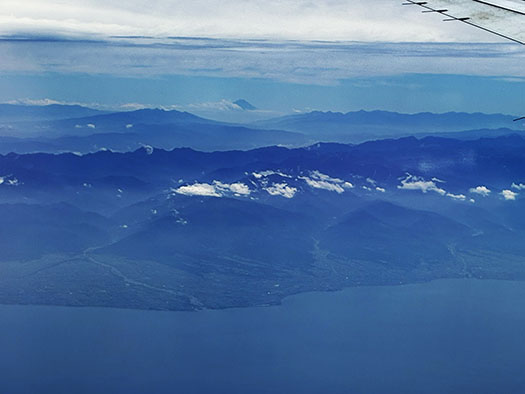
 写真は千歳から飛び立った飛行機から、たぶん石川県地域の日本海海上から遠景に富士山が、うっすらと山景を見せてくれていたアングルであります。わたしは北海道で生まれ育ち、東京で学び、就職して以降、独立してからは北海道を起点にして東北・関東・関西と全国をめぐる出張行脚を繰り返してきた。仕事人生当時は、通路側席が空旅でのポジションでしたが、ある時期を境に「窓側」一択になって来た。
 心境の変化、であります。
 あるフライトで、機上から雲のおりなす景観にふと気付いてから、どうもそうなった。
 世界で支配的な宗教は、ほとんどすべて「空中からの視覚」という人類体験からは遠い出自だと思う。そうだけれど、宗教の概念では「天」とか、「地上世界」というような概念がふつうに扱われている。天上天下唯我独尊とはお釈迦様が生まれたときに発したと伝えられる、すべての人の命の尊さを説いた言葉。しかし、語感として少なくとも「成層圏」的な認識世界だったと一般人には思われてきたのではないだろうか?
 ・・・現代世界はこういった視覚をごく一般化させてくれた。
 わたしのように高齢期になってくると、こういう視認はオモシロい。まぁ「この世とあの世のあわい交叉」をどうしても感じさせられるのだ。
 そう「あわい」という感覚が、実体験できる視認環境なのだと個人的に思っている。
 そういう雲海が地上では豪雨をもたらしたりする。諸行無常という概念とも通底するのではないだろうか。
 少なくとも北海道人の多くは、こういう視覚体験を経て東京や大阪、人口密集地域に移動する。個人的は、こういう体験積層はどういった作用をもたらすか、興味を持っている。
 さて、本日からは本州の「故地」探索など調査活動に邁進したいと思います。

●お知らせ
拙書「作家と住空間」幻冬舎から電子書籍で発刊
お求めはAmazonで。
https://amzn.asia/d/eUiv9yO
English version⬇

[For the elderly, the “view of the sea of clouds” lingers in their minds…]
Modern people have accumulated experiences of a “bird’s-eye view” that sets them apart from past generations. It’s interesting to see what kind of changes this brings about in their mental imagery. …

 Yesterday, I flew out of Hokkaido and arrived at Kansai International Airport, where the intense heat continues.
 I then arrived in Ibara City, Okayama Prefecture—the destination for this trip—by evening.
 The photo was taken from the plane as we took off from Chitose; it shows a distant view of Mount Fuji faintly visible over the Sea of Japan, likely somewhere in the Ishikawa Prefecture area. I was born and raised in Hokkaido, studied in Tokyo, and after starting my career—and especially since becoming self-employed—I’ve made Hokkaido my base, traveling all over the country on business trips to Tohoku, Kanto, and Kansai. During my corporate days, I always chose an aisle seat when flying, but at a certain point, I started choosing only window seats.
 It’s a change of heart.
 It seems to have started after I happened to notice the scenery formed by the clouds from the plane on a certain flight.
 I believe that almost all of the world’s dominant religions have origins far removed from the human experience of “viewing the world from the air.” Yet, religious concepts such as “heaven” and “the earthly world” are commonly discussed. “In heaven and on earth, I alone am supreme” is a phrase said to have been uttered by Shakyamuni Buddha at his birth, preaching the sanctity of all human life. However, wouldn’t the general public have tended to perceive this phrase, at least in terms of its connotation, as referring to a “stratospheric” realm of consciousness?
 …The modern world has made this kind of visual experience quite commonplace.
 As one reaches old age, as I have, this kind of sight is fascinating. Well, it inevitably makes one feel the “intersection between this world and the next.”
 Yes, I personally believe that this visual environment allows one to actually experience that sense of “the in-between.”
 Such seas of clouds sometimes bring torrential rain to the ground. I wonder if this isn’t fundamentally connected to the concept of impermanence.
At the very least, many people from Hokkaido move to Tokyo, Osaka, or other densely populated areas after having had this kind of visual experience. Personally, I’m interested in what kind of impact this accumulation of experiences has.
Now, starting today, I’d like to devote myself to research activities, such as exploring my “hometown” on Honshu.

● Announcement
My book, *Writers and Living Spaces*, has been published as an e-book by Gentosha.
Available on Amazon.

【気候変動へ、常にこころの備えが必要な時代か】


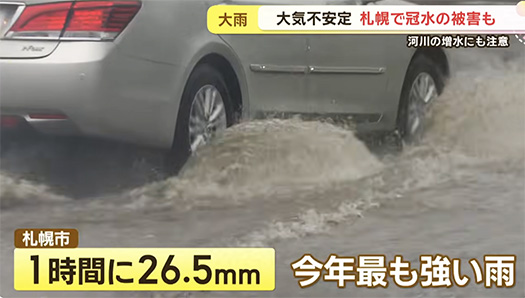
 昨日午前中は札幌地方で「ことし最も強い雨」というアナウンスが流れていたとおり、西区山の手のわが家周辺でもまるでバケツをひっくり返したような大雨。山の手という地名のように比較的に「高台」に位置しているのですが、それでもわが家前の道路はやや「冠水」気味でした。
 早朝6時ころには「小雨」程度という天気予報アプリの指示だったので、1時間半ほど掛けて10,000歩ほどの散歩をしていました。途中では多少の小雨が断続する様子で、折り畳み傘でしのぎきって家に帰還した後、強烈な降雨に見舞われた次第。運の良さを感謝していましたが、驚くほどの降雨ぶりに目を白黒させておりました。
 先日の「千葉豪雨」のことが頭をよぎって、不安に駆られていました。ニュースでは上の写真のように自動車も若干、泳いでいるような状況。水没して動かなくなる恐怖の一歩手前。
 どうも地球規模の「気候変動」が人類社会の想定を超えるようなレベルで頻発する時代になってきた可能性が高い。ヨーロッパでの40度を超える異常高温の常態化。そして中国大陸への「台風上陸」の頻発。そして日本の地震や豪雨被害。
 災害にいつさらされてもおかしくない。危機感を持って「備え」を常時意識していかなければ。
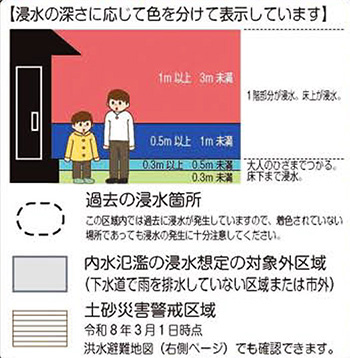
 写真の下の図は、札幌市の「ハザードマップ」の一部分。水害の被害について「洪水」と「内水氾濫」との2つの概念が示されていた。洪水は一般的な河川の氾濫による被害ですが、先般の千葉県での被害などでは局所集中型の豪雨で、都市の下水道の対応能力を超えてしまって発生する水害とのこと。
 こうしたハザードマップをよく参照して、自分の住環境地域がどういう危険性を持った場所であるのか、しっかり認識することが大事だと思えます。
 ちなみにわが家の場合は、内水氾濫では30cm程度のものが想定され、また、近隣の河川(琴似発寒川)からは4-500mなので、洪水被害も想定される。
 こういう気候変動の時代には、いざというときに備えるこころの持ちようが大切なのでしょう。すぐ目の前に図書館があるということも大きかった人生の拠点選択でしたが、そういう愛着に加え水難災害の危険性に対しての防御意識も高めていきたいと思います。

●お知らせ
拙書「作家と住空間」幻冬舎から電子書籍で発刊
お求めはAmazonで。
https://amzn.asia/d/eUiv9yO

English version⬇

[Is This an Era When We Must Always Be Mentally Prepared for Climate Change?]
Torrential downpours. Frequent rainfall that overwhelms the capacity of sewer systems. We live in an era where we must recognize that such dangers are always looming. …

 Just as the weather report had announced yesterday morning that the Sapporo area was experiencing “the heaviest rain of the year,” it poured like someone had turned over a bucket right around my house in Yamanote, Nishi Ward. Although the area is located on relatively “high ground,” as the name “Yamanote” suggests, the road in front of my house was still slightly “flooded.”
 Around 6:00 a.m., my weather app had indicated only “light rain,” so I went for a walk that took about an hour and a half and covered roughly 10,000 steps. Along the way, there were intermittent light showers, but I managed to get by with my folding umbrella. After returning home, I was hit by the intense downpour. I was grateful for my good luck, but I was completely stunned by the astonishing amount of rain.
 The recent “Chiba torrential rains” flashed through my mind, and I was overcome with anxiety. On the news, as shown in the photo above, cars looked as if they were practically swimming. It was just one step away from the terror of being submerged and immobilized.
 It seems highly likely that we have entered an era where global “climate change” is occurring with increasing frequency at levels that exceed human society’s expectations. Extreme heat exceeding 40 degrees has become the norm in Europe. Typhoons are making landfall on the Chinese mainland with increasing frequency. And then there’s the damage from earthquakes and torrential rains in Japan.
It wouldn’t be surprising to be struck by a disaster at any moment. We must maintain a sense of crisis and always be mindful of being prepared.
 The diagram below the photo is a portion of Sapporo City’s “hazard map.” It illustrates two concepts related to flood damage: “flooding” and “inland flooding.” While “flooding” generally refers to damage caused by rivers overflowing their banks, the recent damage in Chiba Prefecture, for example, was caused by localized, intense downpours that overwhelmed the city’s sewer system’s capacity.
 I believe it’s important to consult these hazard maps regularly and fully understand the specific risks associated with the area where you live.
Incidentally, in my neighborhood, inland flooding of about 30 cm is projected, and since we’re only 400–500 meters from a nearby river (the Kotoni-Hassamu River), we’re also at risk of river flooding.
 In this era of climate change, I suppose it’s important to maintain a mindset of preparedness for when the time comes. Having a library right in front of my house was a major factor in my choice of where to live, but in addition to that sense of attachment, I’d like to heighten my awareness of how to protect against the risk of water-related disasters.

● Announcement
My book, “Writers and Living Spaces,” has been published as an e-book by Gentosha.
Available on Amazon.

【あすから酷暑の関西〜中国へ。ふ〜どうかなぁ?】


 いくつかの目的を抱えての移動ですが、さて、酷暑ぶりはどうかなぁと気になります。目的は関西と、岡山県井原市とその周辺地域〜場合によっては福山市の近郊地域にもまた足を伸ばす予定。
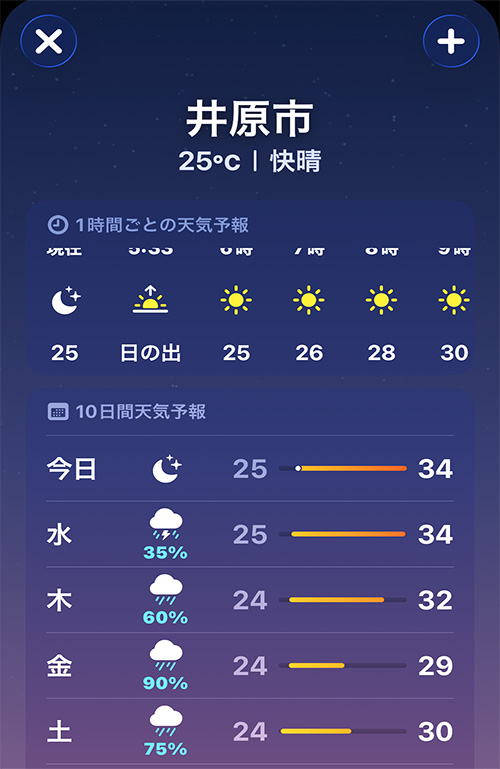
 写真はスマホの天気予報アプリ。これは気象庁の制作されているものだと思いますが、事前にその地域の天候を知ることができて便利に使わせていただいています。おお、最高気温34度・・・。しかし滞在中は天気がどうも下り坂のようです。それに合わせて気温もやや低下する予報。
 なるべく軽いリュックスタイルが定番の旅人としては、折り畳み傘も用意するとなると、メンドくて困るけれど、ほかの荷物をなるべく省いてという作戦で。
 目的ポイントが多数散らばって存在しているので、移動はレンタカーが主体。某大手レンタカー屋さんはわざわざ、営業スタッフが来てくれる扱いをしてくれています。でも、ときどきはトラブルに巻き込まれることもある。先般のカーナビからの営業所行方不明事件には、往生させられた。
 住宅雑誌という事業で生きてきた人間なので、北海道・東北を中心にフーテンの寅さん並みにとにかく歩き続けてきていた。そのためには「体力」が肝心ということで早朝の散歩は、数十年単位で継続してきている。いまでも12,000歩平均くらいは歩いているので、好奇心の源泉は確保されている。
 この移動での探訪テーマを昨日と本日2日間でまとめ作業。かなり具体的な探訪内容について、AIを相棒として「壁打ち」をすることでポイントが明確になってくる。若干は「個人情報」的な部分も派生する。そのたびに「この情報は扱い要注意」と伝えるけれど、まぁ、情報の深掘りとしては有益。考えて見ると出張移動ということの中身もずいぶん「世に連れて」進化してきていますね。
 そういえば昨日はわたしのこのブログの読者という方から、ご連絡をいただきました。それも四百年間のいのちの履歴書シリーズのワンシーンのことがら。
 かなり具体的な内容のことについての情報交換。現代社会では情報伝達交流について、こういった従来は考えられないような「流通経路」が沸き起こっていると実感いたしました。
 個人の「数寄」が世間に「波動」していくかのようで、驚かされてもいた次第。さて・・・

●お知らせ
拙書「作家と住空間」幻冬舎から電子書籍で発刊
お求めはAmazonで。
https://amzn.asia/d/eUiv9yO

English version⬇

[Starting tomorrow, a heat wave is coming to the Kansai and Chugoku regions. Hmm… I wonder how it’ll go?]
My life’s journey—just like that of Tora-san from *Tora-san*—is inextricably linked to travel. I’m going to stay physically fit even in my later years and continue exploring my passions. …

I’m heading out with a few goals in mind, but I’m wondering just how intense the heat will be. My destinations include the Kansai region, Ibara City in Okayama Prefecture and its surrounding areas—and depending on the situation, I might even venture out to the suburbs of Fukuyama City.
 The photo shows a weather forecast app on my smartphone. I believe this one is produced by the Japan Meteorological Agency, and I find it very convenient for checking the weather in a given area beforehand. Oh, a high of 34 degrees… However, it looks like the weather will take a turn for the worse during my stay. The forecast calls for a slight drop in temperature as well.
 As a traveler who usually sticks to a lightweight backpack style, having to pack a folding umbrella is a hassle, but my plan is to minimize other luggage as much as possible.
 Since my destinations are scattered across a wide area, I’ll be relying mainly on a rental car for transportation. A certain major rental car company has even gone so far as to have a sales representative come to me. Still, I do run into trouble from time to time. I was really stumped by the recent incident where the car navigation system couldn’t find the rental office.
 Having made my living in the home magazine business, I’ve been walking nonstop—much like the character Torasan from the “Hōten” films—primarily in Hokkaido and Tohoku. Since “stamina” is essential for that, I’ve kept up my early-morning walks for decades. Even now, I average about 12,000 steps a day, so my source of curiosity remains secure.
 Over the past two days—yesterday and today—I’ve been compiling the themes for these explorations. By using AI as a partner to “bounce ideas off,” the key points become clearer regarding the rather specific details of these explorations. This does occasionally lead to some “personal information.” Every time that happens, I remind the AI, “Handle this information with care,” but it’s still beneficial for digging deeper into the subject matter. Come to think of it, the nature of business travel has evolved quite a bit over the years.
 Speaking of which, yesterday I received a message from a reader of this blog. It was regarding a specific scene from my “400-Year Life Resume” series.
We exchanged information on quite specific details. It really struck me how, in modern society, previously unimaginable “channels of communication” are emerging for the exchange of information.
It felt as though an individual’s “passion” was sending “ripples” out into the world, which truly surprised me. Well then…

● Announcement
My book, “Writers and Living Spaces,” has been published as an e-book by Gentosha.
Available on Amazon.

【人類の歴史的「超革命」としての直立歩行】


 昨日のつづき。わたしたちの年代になって考古学や人類学の解明が目覚ましく進展し、かつてないほど「人類史」的な視点を容易に持てる時代になったと感じる。
 個人的に興味深いのはこうした人類史的視点を獲得したことで、若い頃に囚われていた政治的「階級闘争」的な歴史観から大きく解き放たれてきたことだ。わたしの青春期「革命」という言葉は、そのまま左翼的活動や政治運動のイメージと直結した。しかし今、私の中でその概念はまったく異なる相貌を見せ始めている。
 人間を真に規定した人類史上の最大の「超革命」とは、階級闘争という政治動乱などではなく、足下に存在する「直立二足歩行」の獲得であったという平明な事実を突き付けられている。
 現在、四百年を超えるわたしの家系の足跡を記しながら、なぜ「家族」という概念が人類共通の普遍的な意識として存在するのかと思いを巡らせることがある。
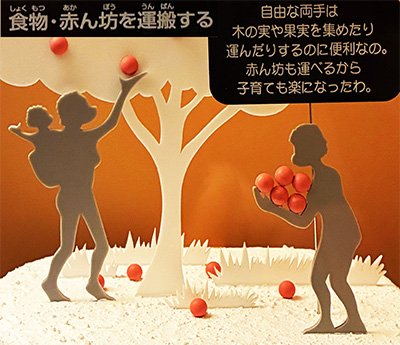
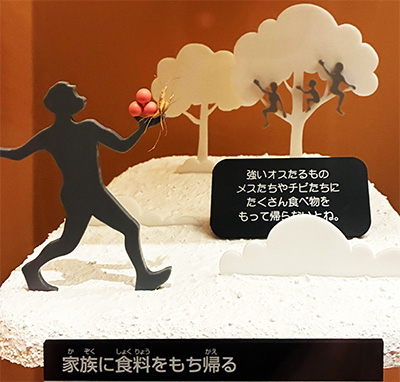
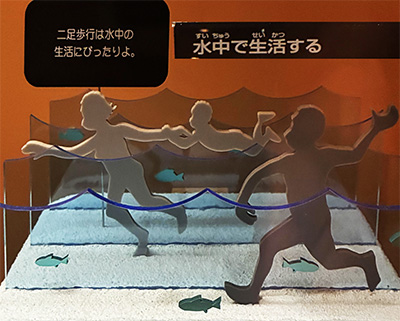
 上の1枚目の写真の通り、二足歩行によって自由になった両手は、赤ん坊を抱きかかえ、食物を運搬することを可能にした。そして2枚目の写真のように、自由になったそれぞれの両手を使って「家族のもとへ食料を持ち帰る」という行動様式が定着した。ここから人類の大原則である「一夫一婦制」が根拠を持ち、世代を超えて命のバトンを渡していく共通の感受性(家族意識)が育まれていったと想起できる。
 もちろん、その後に形成された社会システムの中で、支配・被支配の葛藤や争闘が生じたのは歴史の必然。しかし、そうしたあらゆる社会課題と向き合う上でも「直立二足歩行以来の原点」に立ち返る視座こそが極めて重要と思える。直立歩行とそこから始まった地球上への大拡散(グレートジャーニー)こそが、現生人類を根本から規定する最大の動釈なのだと思いが至る。

 さらに興味深い知見。人類は陸生動物なのに他の「次元」〜水中なども生活領域化させることに成功してきた、とされる。それは「別次元」への生活能力をもたらしたのだろう。水中動物に主要なタンパク源を見出して長く伝統化させてきた日本列島社会は、その意味では「先端的」なのかも知れない。また、さらなる別次元・宇宙空間にも挑戦は続いていくのでしょう。
 ・・・ということで、遅ればせながら人生の最終局面に至って、超オモシロい解明テーマが湧き上がってきて、困惑させられています(笑)。

●お知らせ
拙書「作家と住空間」幻冬舎から電子書籍で発刊
お求めはAmazonで。
https://amzn.asia/d/eUiv9yO

English version⬇
 
[Bipedalism as a Historic “Super-Revolution” for Humanity]
The fact that bipedalism marked the beginning of every great revolution is the starting point of human history. Perhaps we can visualize the future from this starting point? …

 Continuing from yesterday. I feel that, as we’ve reached our generation, remarkable progress has been made in archaeology and anthropology, and we now live in an era where it’s easier than ever to adopt a “human history” perspective.
 What I find personally fascinating is that, by gaining this perspective on human history, I have been greatly liberated from the political, “class struggle”-oriented view of history that held me captive in my youth. During my adolescence, the word “revolution” was directly linked in my mind to images of leftist activism and political movements. But now, that concept is beginning to take on a completely different form within me.
 I am confronted with the plain fact that the greatest “super-revolution” in human history—the one that truly defined humanity—was not political upheaval such as class struggle, but rather the acquisition of “bipedalism” right at our feet.
 Currently, as I document the history of my family lineage spanning over four hundred years, I sometimes find myself pondering why the concept of “family” exists as a universal consciousness shared by all of humanity.
 As shown in the first photo above, the hands freed by bipedalism made it possible to hold infants and carry food. And as seen in the second photo, a behavioral pattern of “bringing food back to the family” using these newly freed hands became established. From this, we can surmise that “monogamy”—a fundamental principle of humanity—found its basis here, and a shared sensibility (family consciousness) for passing the baton of life across generations was nurtured.
 Of course, it was an historical inevitability that conflicts and struggles between the dominant and the dominated arose within the social systems that formed subsequently. However, I believe that when confronting all such social challenges, it is crucial to adopt a perspective that returns to “the origins of upright bipedalism.” I have come to realize that upright walking and the Great Journey—the vast dispersal across the Earth that began with it—are the most significant driving forces that fundamentally define modern humans.

 Here’s another fascinating insight. It is said that although humans are land-dwelling animals, we have succeeded in expanding our living environments to include other “dimensions”—such as underwater. This has likely granted us the ability to live in “alternate dimensions.” In that sense, the societies of the Japanese archipelago—which have long identified aquatic animals as a primary source of protein and established this as a tradition—may be considered “cutting-edge.” Furthermore, I imagine our challenges will continue to extend into yet another dimension: outer space.
 …And so, belatedly, as I reach the final stage of my life, an incredibly fascinating topic for exploration has surfaced, leaving me somewhat bewildered (laughs).

● Announcement
My book, *Writers and Living Spaces*, has been published as an e-book by Gentosha.
Available on Amazon.
 

【人類史から「家系史」へ思考回路の必然性】


 孫の子育てでジイジとして参加するようになると、自分の「子育て」時期からの進化を感じる。
 ほんの数十年単位のことだけれど、人間の意識・考え方もずいぶん変容してきたことを再認識させられることが多くなってきている。
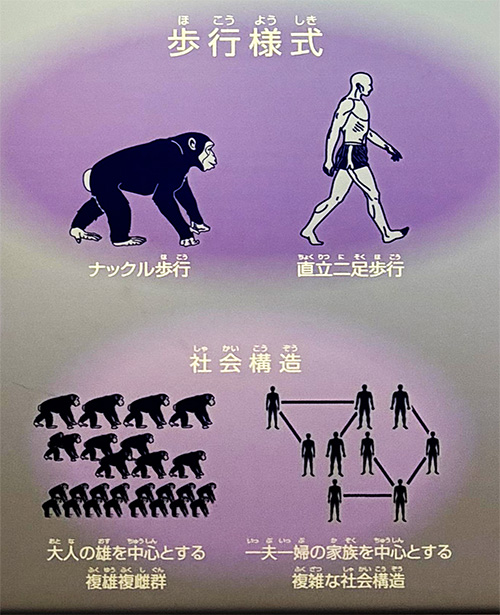
 一方、上の図は、国立科学博物館の「人類史展示」で興味を抱いていた展示。
 一般的な哺乳類、ここではサルが対比されているけれど「次世代創造」のプロセスが、権力を持ったオスだけが子孫を残しうるのが哺乳類動物一般であるのに対して、人類では「一夫一婦」システムに進化してきたことからの違いに大きく気付かされる。図で示されたような「いのちの連鎖構造」〜家族意識が連鎖していくという「世代」という時間感覚によって人間は次世代を生み育ててきた。「経世」という感覚が育ってきた経緯と、そこから同時に「歴史」という概念が育ってきたことが自ずから想像させられていた。
 系統樹的な「系図」把握が人類に育ってきた原初のカタチが明瞭にわかったような気がしたワケだ。
 二足歩行という「大革命」がもたらした衝撃力の凄まじさは、その当事者である人類にとって自覚しにくい。ポイントとしてこのような動物界一般の「強権支配」構造から、より「分権的・民主的」な意識構造へと人類は思考の革命を進行させたのだと理解できると思う。
 人間とはなにかという疑問が人類普遍のテーマであり、その探究のひとつの巨大領域が文学だと思える。
この文学における人間性の解読として「心象」という領域を掘り下げる方法もたいへん重要と思うけれど、一方で系統樹的な把握と言うことも深めて行くことがきわめて自然なのだと思える。
 そういった部分が「歴史」という領域なのだろう。そしてその意識の発生した根源により近い「家系史」という領域は、人間性探究の重要なツールに位置しているように思われるのだ。
 ・・・って、まぁ、我田引水気味、引き寄せ解釈が過ぎるかも知れない(笑)、と思いつつ、孫の笑顔と接していると想像力の世界が可視化されるようでたのしい。人類が数百万年かけて育んできた「次の世代へ命と知恵を伝えたい」という本能の根拠が、言葉を超えて可視化されてきて実に楽しい。・・・

●お知らせ
拙書「作家と住空間」幻冬舎から電子書籍で発刊
お求めはAmazonで。
https://amzn.asia/d/eUiv9yO

English version⬇
 
[The Inevitable Shift in Thinking: From Human History to “Family History”]
We are made to realize that the instinct to “pass on our legacy to our grandchildren”—which we take for granted—is actually the result of a revolution through which humanity has evolved in a way that sets us apart from other animals. …

 As I begin to participate in my grandchild’s upbringing as a grandpa, I feel how much things have evolved since my own “child-rearing” days.
 Although it’s only been a matter of a few decades, I’m increasingly reminded of just how much human consciousness and ways of thinking have transformed.
 Meanwhile, the diagram above is an exhibit that caught my interest at the “History of Humankind” exhibition at the National Museum of Nature and Science.
 While it contrasts humans with typical mammals—in this case, monkeys—it makes me keenly aware of the difference in the process of “creating the next generation”: whereas in most mammals, only dominant males can produce offspring, humans have evolved toward a “monogamous” system. As illustrated in the figure, through the “chain of life”—a sense of time defined by “generations” in which family bonds are passed down—humans have brought forth and raised the next generation. This naturally led me to imagine how the sense of “governing the world” developed, and how the concept of “history” simultaneously emerged from that process.
 I felt as though I had clearly grasped the primordial form in which the phylogenetic understanding of “genealogy” developed within humanity.
 The sheer magnitude of the impact brought about by the “great revolution” of bipedalism is difficult for humanity—the very participants in this revolution—to fully grasp. I believe the key point is that humanity carried out a revolution in thought, shifting from the “authoritarian” structures common throughout the animal kingdom to a more “decentralized and democratic” consciousness.
 The question of “What is a human being?” is a universal theme for humanity, and I believe literature constitutes one vast realm of inquiry into this question.
While I believe it’s extremely important to delve into the realm of “mental imagery” as a way to decipher human nature in literature, I also feel it’s perfectly natural to deepen our understanding through a phylogenetic approach.
That, I suppose, is the realm of “history.” And the realm of “family history”—which lies closer to the very roots where that consciousness originated—seems to me to be a vital tool in the exploration of human nature.
 …Well, I realize this might sound a bit self-serving—perhaps I’m reading too much into it (laughs)—but when I’m with my grandchild’s smiling face, the world of imagination seems to come into view, and it’s a joy. It’s truly delightful to see the basis of the instinct—“to pass on life and wisdom to the next generation”—which humanity has nurtured over millions of years, become visible beyond words. …

● Announcement
My book, *Writers and Living Spaces*, has been published as an e-book by Gentosha.
Available on Amazon.
 

【57年前の新聞記事と向き合う「自分史」視点】


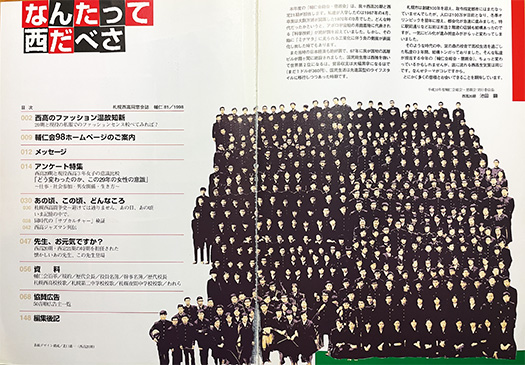
 友人から1998年に発行した高校の「同窓会誌」を再読したという知らせを受け取って、それに反応して自分でも「編集長」をやっていたこの冊子の中身を再確認していた。
 ちょうどいまは、わが家系の「四百年間のいのちの履歴書」と向き合ってきていることもあり、そういえば「自分自身も、そのワンシーン」ということに、気付かされた次第。この冊子編集時は1969年の新聞記事当時から29年後に当たり、現在時点は57年前当時ということになる。
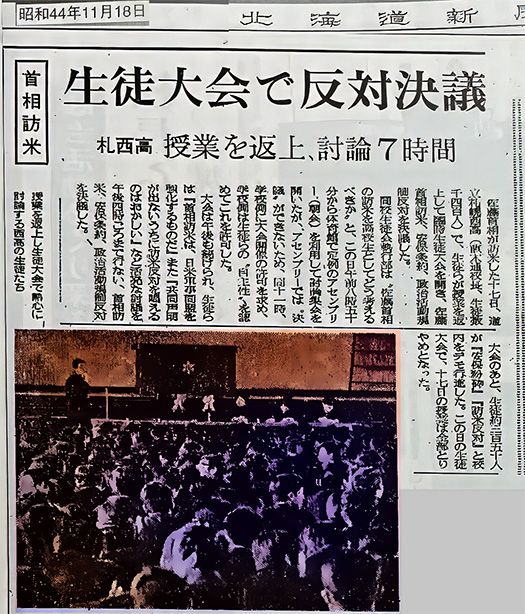
 この北海道新聞の記事で触れられた一件は、わたしには血肉的な体験だったと思っている。Photoshopを使ってそのモノクロ画像を思わずカラー化させてみた。この事実と向き合うとき、心象はモノクロのままとは言えないのだ。先日のブログ記事でも写真に刻印される自分の「体感覚」、フラッシュバックということを考えて見たけれど、この新聞記事からもそういう「血のニオイ」に似た感覚が蘇ってくる。
 いくつか、この集会での具体的でリアルな自分の行為の身体感覚がいまでもある。
 科学的な「分析」すらも自分感覚として、じっくりと研究可能なのだということがよくわかる。
 たぶんいま、家系史という領域を考えているのには、こういう自分の「眠っているけれど、いざとなれば生々しく起き上がってくる」認識が現にある、こういうことが心的な起動力なのではないか。自分ですら得も言われぬ生々しさで刻み込まれているいくつもの「時代との相克」があり、それによって「いのち」が鮮烈に反応していた事実を、明々白々に知らされるということ。
 多くの先人たちもこういうインパクトを抱えながら、そのいのちを生き切ったのが歴史時間。
 記事の一部にはこう書いてある。 
 〜佐藤首相が訪米した11月17日、道立札幌西高では生徒らが授業を返上して臨時生徒大会を開き、佐藤首相訪米、日米安保条約、政治活動規制反対を決議した。・・・大会の後、生徒約350人が「安保粉砕」「訪米反対」と校内をデモ行進した。この日の生徒大会で17日の授業は全部とりやめとなった。〜引用以上。
 いま現在の政治信条とは乖離はあるけれど(笑)、その情熱は率直に受け止めて生きてきた。高齢期は人類にこういった「自分史をも客観視する」視座を強いてくるものなのでしょうね。輪廻か。

●お知らせ
拙書「作家と住空間」幻冬舎から電子書籍で発刊
お求めはAmazonで。
https://amzn.asia/d/eUiv9yO

English version⬇

[A “Personal History” Perspective on Engaging with a Newspaper Article from 57 Years Ago]
A dialogue with “historical” moments that vividly bring one’s own experiences back to life. In later life, opportunities open up for the time and means to engage objectively with such things. …

 I received a message from a friend saying he had reread our high school “alumni magazine,” published in 1998, and in response, I found myself revisiting the contents of this publication, for which I had served as “editor-in-chief.”
 Since I’ve been delving into my family’s “400-Year History of Life” recently, it struck me that “I, too, am part of that story.” At the time this booklet was edited—29 years after the 1969 newspaper article was published—and now, 57 years have passed since then.
 The incident mentioned in this Hokkaido Shimbun article was, for me, an experience that became part of my very being. I couldn’t help but use Photoshop to colorize that black-and-white image. When I confront this reality, I can’t say my mental image remains in black and white. In a recent blog post, I reflected on the “bodily sensations” imprinted on photographs and the phenomenon of flashbacks, but this newspaper article also brings back a sensation akin to the “smell of blood.”
 I still retain several concrete, vivid bodily sensations from my own actions at that gathering.
 It’s clear to me that even scientific “analysis” can be thoroughly examined as a personal sensation.
 Perhaps the reason I’m currently contemplating the field of family history is that this awareness—which lies dormant but can rise up vividly when the time comes—actually exists within me, and this is what serves as my psychological driving force. I am made painfully aware of the fact that there are numerous “clashes with the times” etched into me with an indescribable vividness, and that “life” reacted strikingly to them.
 History is the span of time in which many of our predecessors lived out their lives while carrying such an impact within them.
 Part of the article reads as follows: 
 ~On November 17, when Prime Minister Sato visited the United States, students at Sapporo Nishi High School, a public high school, canceled classes to hold an emergency student assembly, where they passed resolutions opposing Prime Minister Sato’s visit to the U.S., the Japan-U.S. Security Treaty, and restrictions on political activities. … After the assembly, approximately 350 students marched through the school grounds chanting “Smash the Security Treaty” and “Oppose the Visit to the U.S.” All classes on the 17th were canceled due to the student assembly that day. ~End of quote.
Although my political beliefs have diverged from those days (laughs), I have lived my life embracing that passion with sincerity. Perhaps old age compels humanity to adopt this perspective of “viewing one’s own history objectively.” Is this reincarnation?

● Announcement
My book, “Writers and Living Spaces,” has been published as an e-book by Gentosha.
Available on Amazon.
 

【世界遺産「飛鳥藤原の宮都」登録 よろこびの資料受取り】


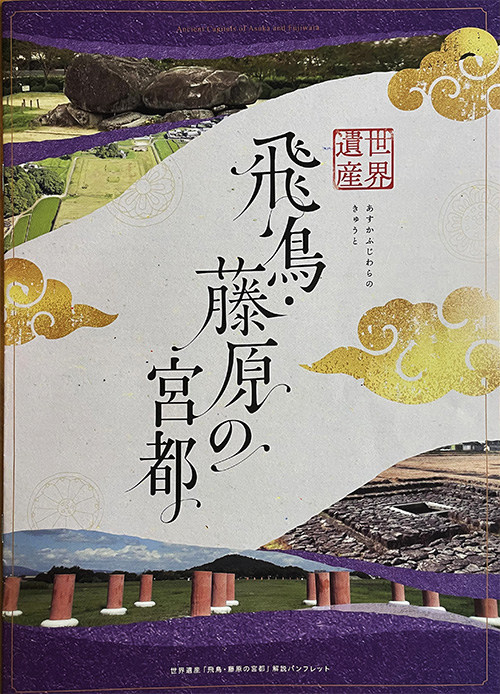
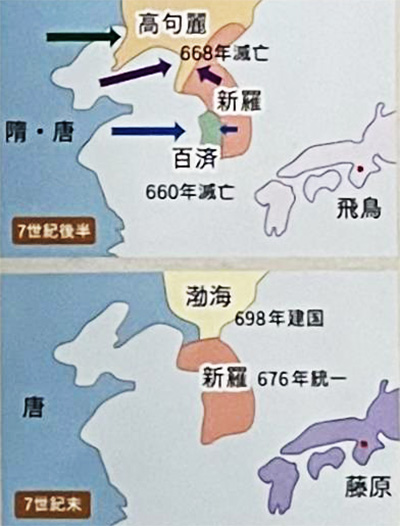
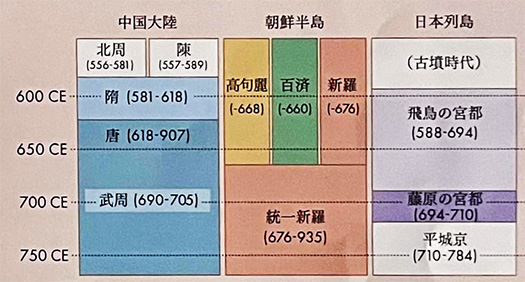
 昨日、奈良県橿原に住む知己から、長年取り組まれてきた「飛鳥藤原の宮都」世界遺産登録の地域を挙げた運動がことし、無事に実ったよろこびの資料が送付されてきた。ことし7/26に韓国釜山で開かれた「第48回世界遺産委員会」で審議され、記載が決定したということ。その決定を受けて、世界遺産「飛鳥藤原」協議会が「解説パンフレット」を送付いただいた次第です。
 歴史数寄のわたしは、7-8年前頃からこの飛鳥藤原の地域の古代ニッポンに魅せられて、ちょこちょこと探訪させていただいて来ていました。その過程で、この知己とも知り合う機会を得て、現地のみなさんの熱意にも深く打たれてきた次第です。
 実際に明日香村を中心に探訪を重ねていると、日本で王権がどのように形成されていったのか、まだ日本語としての固定された表記・表音のできる以前の地名と人名などが独特のロマンを感じさせてくれていました。実際に現地に行ってみると、奈良京都とは違ってまだインバウンドもそれほどではなく、たまたま奈良で見学時に大量の外人さんたちに閉口してこの飛鳥に「逃れて」いたほどに、静かな環境が保たれていました。まぁこの点は世界遺産登録によって、今後どうなるか、不明。
 いずれにせよ、まことに喜ばしい限りです。あの飛鳥の地の「悠久感」は日本人として一度は味わっておきたい感覚だと思っています。わたし的にはさらに奥の「熊野」の探訪が数寄の極地のような気がしていますが、しかし熊野から飛鳥を往復したりすることも、無上のよろこび。
 いにしえの神武天皇の足跡までもしのばれて、日本の神話構成のオモシロさに耽溺してしまう。神武東征の説話では九州・高千穂から出発して、瀬戸内海を東進し、はじめ大阪湾地域で上陸を企図するが、長髄彦によって阻まれて長兄はその戦傷で世を去り、末弟の神武が熊野灘から上陸して捲土重来を果たすという流れ。
 西日本に多い「末子相続」習俗の反映のようでもあり、神話的世界を離れても日本民族の文化伝統を深く伝えてくれるようで、まことに興味深い。
 こちらの知己はご夫婦で画業に励まれていて、そのタッチもこうした「地域ロマン」を想起させてくれます。
 多くのみなさんがこうした日本の「眠れる」浪漫に触れられることを祈念します。

●お知らせ
拙書「作家と住空間」幻冬舎から電子書籍で発刊
お求めはAmazonで。
https://amzn.asia/d/eUiv9yO

English version⬇

[Receiving Documents Celebrating the Inscription of “The Palace Cities of Asuka and Fujiwara” on the World Heritage List]
The birthplace of the Yamato royal authority. The layers of its relationships with Asia. The atmosphere of the origins of Japanese Buddhism—all of which stimulate the connoisseur’s sensibilities. …

 Yesterday, an acquaintance living in Kashihara, Nara Prefecture, sent me some materials expressing his joy that the campaign he has been working on for many years—to have the “Asuka-Fujiwara Palace Capital” area designated as a World Heritage Site—finally bore fruit this year. I was told that the matter was deliberated at the “48th Session of the World Heritage Committee,” held in Busan, South Korea, on July 26 of this year, and the inscription was approved. Following this decision, the “Asuka-Fujiwara” World Heritage Council sent me an “explanatory pamphlet.”
As a history enthusiast, I’ve been captivated by ancient Japan in the Asuka-Fujiwara region for about seven or eight years now and have been making occasional visits there. During that time, I had the opportunity to meet this acquaintance and was deeply moved by the enthusiasm of the local people.
 As I continued to explore the area, centered around Asuka Village, I found a unique sense of romance in the place names and personal names from a time before Japanese had established standardized written forms or phonetic systems—names that offered a glimpse into how royal authority was formed in Japan. When I actually visited the site, unlike in Nara and Kyoto, there weren’t that many foreign tourists yet; in fact, the environment remained so peaceful that I had even “escaped” to Asuka after being overwhelmed by large crowds of foreign visitors during a previous visit to Nara. Well, it remains to be seen how this will change in the future following its designation as a World Heritage Site.
In any case, it is truly a cause for celebration. I believe that the “sense of timelessness” in Asuka is something every Japanese person should experience at least once. Personally, I feel that exploring “Kumano,” further inland, is the pinnacle of connoisseurship; however, even making a round trip from Kumano to Asuka brings me supreme joy.
 One can even trace the footsteps of the ancient Emperor Jimmu, and I find myself completely absorbed in the fascinating structure of Japanese mythology. According to the legend of Emperor Jimmu’s Eastern Campaign, he set out from Takachiho in Kyushu, advanced eastward across the Seto Inland Sea, and initially planned to land in the Osaka Bay area. However, he was thwarted by Nagasunehiko; his eldest brother perished from battle wounds, and the youngest brother, Jimmu, landed at Kumano-nada and made a successful comeback.
 This seems to reflect the custom of “inheritance by the youngest son,” which is common in western Japan, and even when viewed outside the realm of mythology, it deeply conveys the cultural traditions of the Japanese people—which I find truly fascinating.
 A couple I know are both dedicated to their artistic careers, and their artistic style also evokes this kind of “regional romance.”
 I hope that many of you will have the opportunity to experience this “sleeping” romance of Japan.

● Announcement
My book, *Writers and Living Spaces*, has been published as an e-book by Gentosha.
Available on Amazon.


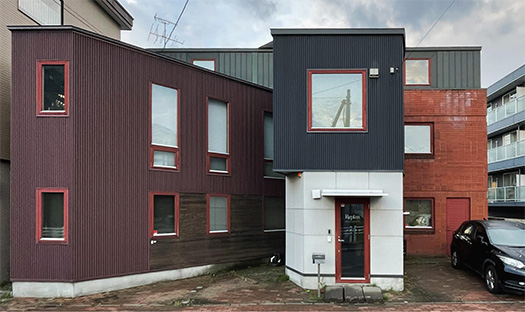
【変わり続ける「Replanハウス」現在地インタビュー】


 ・・・を受けました。建築家の藤島喬さんから連絡があって、氏の「数寄」領域、って、建築家ですからその基本的視点から、そして年齢も熟してきて、さまざまな建築への視点も重層的になられているのでしょうか、職住一体型で過ごしてきたわが家についてインタビューに来られていました。
 その内容についてはそのうちに氏のブログで表現されることと思います。ぜひご覧ください。
 わたしは、そういうことで建築のプロの方から「腹の底を見られる(笑)」みたいな心境で神妙にお答えしておりました。
 わたし自身はお話ししながら、自分の生きてきた時間の半分以上になってきたこの建物との対話時間を自分の内面を見つめるような気分で過ごしておりました。
 先日のブログで人生時間とそのときどきに撮影した写真との「邂逅」感について書きました。そして書いていて、脳科学的な分析でもその深い関係性に気付かされてもいました。しかし、やはり「空間と人間」の関係性というものも、たぶんこれからは大きく「解析・分析」が進展していくのではないかと想像しています。
 あんまり科学的知見を勉強していないので、いまは自分の感じること、自分の脳味噌が反応してきたことを「沈思黙考」し続けております。自分如き人間には「手に余る」広大無辺さを感じていますが、しかし、たとえば建築の素材として自分も納得して選んだ素材(コンクリートブロックや煉瓦など)との「対話感」は自分の中で、ずっとあり続けている。
 日本には数少ない「石造」の住宅での人間の感じ方という実験的な分析でしょうか。とくにレンガ施工をしてくれた専門工事店の「旦那」が残してくれた「施工者の感覚」のコトバは、ずっと人生時間で残響し続けている。かれがじっと施工後の煉瓦壁・ブロック壁をみつめて「いい壁できたね(笑)」と施工者としての「満足感」を表明してくれたことは、深いよろこびだった。・・・
 こころの底から「ありがとうございます」と応えていた。
 そういったこころに響き渡ってくるようなパワーが、建築空間にはある。
 高齢化社会の中で、果たすべき役割として、こういう「人間との関係性の深掘り」が必要な役割のように思ってきています。・・・

●お知らせ
拙書「作家と住空間」幻冬舎から電子書籍で発刊
お求めはAmazonで。
https://amzn.asia/d/eUiv9yO

English version⬇

[Interview on the Current State of the Ever-Evolving “Replan House”]
An exploration of the relationship between “architecture and people” from a personal perspective. Since I’m not well-versed in the subject, I’ll start with introspection and self-analysis before moving on to scientific analysis. …

 …I was interviewed. I received a message from architect Takashi Fujishima. He came to interview me about my home—a space where work and living are integrated—from the perspective of his “Suki” philosophy. As an architect, this is his fundamental viewpoint, and perhaps because he’s reached a certain age, his perspectives on architecture have become more multifaceted.
 I expect he’ll share the details of our conversation on his blog soon. Please be sure to check it out.
 Given the circumstances, I answered his questions with great solemnity, feeling as though a professional architect was “seeing right through me” (laughs).
As I spoke, I found myself reflecting on my inner self during this dialogue with the building—a space that has now accounted for more than half of my life.
 In a recent blog post, I wrote about the sense of “encounter” between the passage of my life and the photographs I’ve taken along the way. As I wrote, I also realized—through neuroscientific analysis—just how deep that connection really is. However, I imagine that the relationship between “space and humans” will likely see significant progress in “analysis and research” moving forward as well.
 Since I haven’t studied scientific findings in great depth, I’m currently continuing to “contemplate deeply” what I feel and how my brain has reacted. I sense a vastness that is “beyond my grasp” for someone like me, yet the “sense of dialogue” with the building materials I personally chose with conviction—such as concrete blocks and bricks—has always remained within me.
 Perhaps this is an experimental analysis of how people perceive one of Japan’s few remaining “stone-built” homes. In particular, the words expressing the “builder’s intuition” left behind by the “boss” of the specialized contractor who laid the bricks have continued to resonate throughout my life. It brought me deep joy when he gazed intently at the finished brick and block walls and expressed his “satisfaction” as a builder by saying, “We’ve built a nice wall, haven’t we? (laughs).” …
I responded with a heartfelt “Thank you” from the bottom of my heart.
Architectural spaces possess this kind of power that resonates deep within the heart.
In our aging society, I’ve come to believe that this “deepening of human relationships” is a vital role we must fulfill. …

● Announcement
My book, *Writers and Living Spaces*, has been published as an e-book by Gentosha.
Available on Amazon.

【車両保険・加入率5割「報道」の違和感】


 千葉を中心とした豪雨被害、友人知人からは特段の報せはないものの、まことに近年の気候変動の猛威を物語る痛ましい事態。被害にあわれたみなさまに心からお見舞い申し上げます。
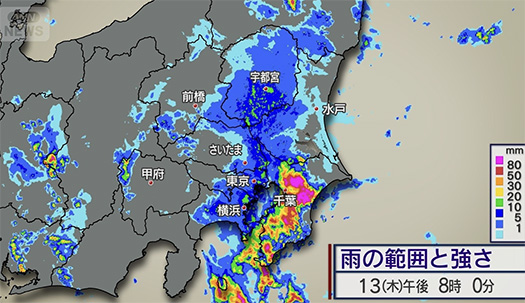
 写真のレーダー画面が示す激しい雨雲の群れ。千葉で起こった災害は、いつどこで発生してもおかしくない。常に自然災害の危険と隣り合わせの日本列島、その凶暴化の度合いは年々増しているのが実感。
 そうした中、今回の報道を見ていて個人的に考えさせられたのが「車両保険」に関するニュース。一昨日あたりから「被災車両の多くが未加入、車両保険の加入率は5割程度」といった報道が相次いだ。「え、そんなに保険に入っていないの?」と一瞬驚かされたが、どうもこの「車両保険5割」という言葉には、報道に不可欠な「詳細な注釈」が欠落しているのではないかと思えたのだった。
 自動車保険は、法律で義務付けられた「自賠責保険(強制保険)」と、補償内容を自由に選ぶ「任意保険」の二層構造。今回ニュースで語られているのは、任意保険の中のさらにオプションである「車両保険(特に冠水・水災事故をカバーする補償特約)」の付帯率のことのようだ。対人・対物などの任意保険自体には多くのユーザーが加入しているけれど、自身の車体を守る車両保険は保険料も跳ね上がるため付帯率は約5割にとどまるというのが実相だと思う。
 「車両保険に入っていない」という大ざっぱな表現だけでは、あたかもユーザーが無保険のまま無謀に車を走らせているような誤解を与えかねない。さらに言えば、車両保険に加入していても「免責金額(自己負担分)」の設定や、補償範囲の選択によって受け取れる保険金は多様。わが家のクルマの保険内容でも5万円の自己負担枠があるようにユーザー個々の選択は多岐にわたるのが一般的。
 報道は「ローンだけが残り、修理も移動もできなくてかわいそう」といった感情的な側面訴求に終始していたが、保険制度の仕組みや選択肢の多様性についての総合的な説明が不足で、ただ不安と恐怖心ばかりを煽っているように感じられた。
 これまでの気象常識を超えた巨大災害が頻発する現代だけれど、固定費を抑えるため簡易でコスパの良い保険を選択してきたユーザーの判断は、至極自然だと思える。メディアは単なる情緒的報道にとどまらず、制度の正確な詳細を提示してと切に願う。
 今回の痛ましい出来事が激甚化する災害に備えた私たち一人ひとりのリスク管理や保険内容の冷静な見直しへと繋がることを祈念します。

●お知らせ
拙書「作家と住空間」幻冬舎から電子書籍で発刊
お求めはAmazonで。
https://amzn.asia/d/eUiv9yO

English version⬇

[Vehicle Insurance: The Discomfort of the “50% Coverage Rate” Report]
Wait, for a split second I thought, “Not that many people have insurance?” But I think the actual point is that 50% of policyholders have insurance that “covers water-related incidents as well.” Hmm…

 The torrential rain damage centered on Chiba—while I haven’t heard anything specific from friends or acquaintances—is a truly heartbreaking situation that speaks volumes about the ferocity of climate change in recent years. I offer my heartfelt sympathies to all those affected.
The radar image in the photo shows a cluster of intense rain clouds. The disaster that struck Chiba is the kind that could happen anywhere at any time. Living on the Japanese archipelago, where we are constantly at risk of natural disasters, I can really feel that the severity of these events is increasing year by year.
 Amidst all this, what personally caught my attention while watching the news coverage was a report regarding “vehicle insurance.” Starting around the day before yesterday, there was a flurry of reports stating things like, “Many of the damaged vehicles were uninsured, and the vehicle insurance coverage rate is only about 50 percent.” I was momentarily surprised—“What, that few people have insurance?”—but it struck me that the phrase “50 percent vehicle insurance coverage” seemed to be missing the “detailed context” that is essential to any news report.
 Automobile insurance has a two-tier structure: “compulsory liability insurance” (mandated by law) and “voluntary insurance,” where policyholders can freely choose their coverage. What the news is discussing here appears to be the uptake rate of “vehicle insurance” (specifically, coverage riders that protect against flooding and water damage)—an optional add-on within voluntary insurance. While many users have voluntary insurance covering bodily injury and property damage, the reality is that the uptake rate for vehicle insurance—which protects the vehicle itself—remains at around 50 percent because premiums for it skyrocket.
 Using only the vague phrase “not enrolled in vehicle insurance” risks creating the misconception that users are recklessly driving without any insurance at all. Furthermore, even for those with vehicle insurance, the amount of insurance payout varies depending on the “deductible” (the portion the policyholder must pay out of pocket) and the scope of coverage selected. As evidenced by my own family’s car insurance policy, which includes a 50,000-yen deductible, it is common for individual users to have a wide range of choices.
 While the media coverage focused entirely on emotional appeals—such as “It’s so sad that they’re left with only the loan, unable to repair or drive the car”—it lacked a comprehensive explanation of how the insurance system works and the variety of available options, leaving the impression that it was merely stoking anxiety and fear.
 In today’s world, where massive disasters that defy conventional meteorological wisdom occur frequently, it seems perfectly natural for users to have chosen simple, cost-effective insurance policies to keep their fixed expenses down. I earnestly hope that the media will go beyond mere emotional reporting and present accurate details about the system.
 I pray that this tragic incident will lead each of us to calmly review our risk management strategies and insurance coverage in preparation for increasingly severe disasters.

● Announcement
My book, “Writers and Living Spaces,” has been published as an e-book by Gentosha.
Available on Amazon.


【DNAの「響き」/自分の過去写真を見つめる】


 ビジネスで写真がメイン表現である住宅雑誌をやっていたので「写真を扱う」という行為が自分のなかで時間積層していくことになった。
 住宅空間探訪からは距離を置くようになって、しかし画像編集の作業行為自体は根強く「数寄」こころが残り続けている。住宅取材では「個人情報」を扱うのに慎重であるべきという制約を、解除できる領域に自然と惹かれるようになる。制約を解除できる領域として、自分自身のことが浮かび上がってくる。
 で、自分の古写真を整理整頓し始める中で、その写真撮影の瞬間の「心理」というものには、ある「記憶」が籠もっている、という事実に気付かされる。
 人物写真だけには限らないかも知れない。しかし自分で撮影した、あるいは「写されている」ことを理解しながら、その瞬間に抱いていた「気のながれ」が、しっかりと記憶の中に保存されているのではと思い始めています。ただ、よく言う「ものごころ」臨界点が人間意識には存在するので、その前後では大きな「乖離」が発生するのだろうか、と考えられる。
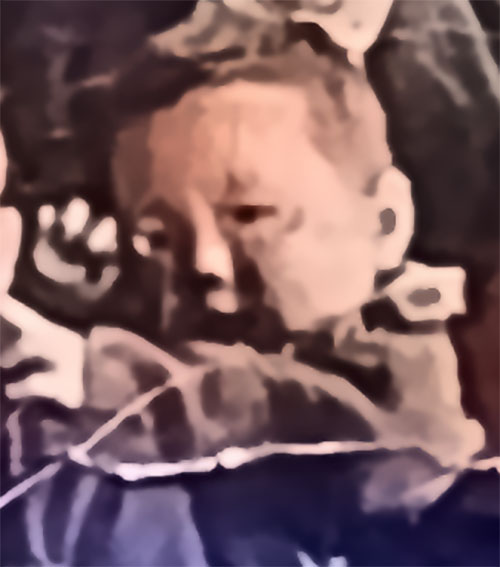
 写真は恥ずかしながら(笑)、72年前当時のわたし自身の様子。
 祖母の葬儀の集合記録写真で満2才当時。現代のPhotoshopなど写真アタッチソフトを介して再生復元を試みたけれど、解像度はほぼ限界。墨絵に似た雰囲気でなかなか味わいがあると思っている。
 この写真を見ることは多いけれど、そのたびに写真撮影の時の瞬間の、自分の心理が再生されてきてしまう。この2才のわたしは、集合していた家族の中で前列に居た3兄の「耳たぶ」に異常なフェッチこころを抱いていて、その耳たぶを触りたいと必死に手を伸ばしていたのだ。
 ナゾ、なんですね(笑)。
 そういう行動心理分析はそれはそれとして、その瞬間の心理記憶がいわば「ピンナップ」される、という別の感覚の初源のような写真だと自分では思っている。
 なぜ、人間はそのように写真画像に対しての心理を持ちうるのか、わからない。AIの解説は以下。
 〜「写真=記憶のインデックス(検索タグ)」説
 脳科学において人間の記憶は「感情や衝動を伴った静止画(スナップショット)」で保存されると言われる。2歳時の「兄の耳たぶを触りたい」という強い身体的衝動は幼少期の脳の扁桃体(感情・欲求を司る部位)に強く刻み込まれている。写真データを見た瞬間、その画像が「検索タグ」として機能し、脳内に保存されていた当時の身体感覚や感情が一気に再構成されて再生されると考えられている。〜

 もしそうだとすると、この領域は独特なNEXTの可能性を孕んでいるかも知れない・・・。

●お知らせ
拙書「作家と住空間」幻冬舎から電子書籍で発刊
お求めはAmazonで。
https://amzn.asia/d/eUiv9yO

English version⬇

[Is It the “Echo” of DNA? / Gazing at My Old Photos]
“Oneself”—a realm where personal information restrictions don’t apply. The psychological memories of myself trapped within those photos. Huh? A mystery that makes you think, “No way…” …

 Since I used to work on a home design magazine where photography was the primary form of expression, the act of “working with photographs” gradually became a part of me over time.
While I’ve distanced myself from exploring residential spaces, the act of image editing itself has left a deep-rooted sense of “suki” (a love of the art) within me. I’ve naturally come to be drawn to areas where I can set aside the constraints of handling “personal information” with caution—a requirement I face when covering homes. As an area where such constraints can be lifted, my own self begins to emerge.
 And so, as I began organizing my old photographs, I realized that the “psychology” of the moment I took them contains a certain “memory.”
 This may not be limited to portraits. However, I’m beginning to think that the “flow of energy” I felt in that moment—whether I was the one taking the photo or was aware that I was being photographed—is firmly preserved in my memory. That said, since there is a commonly cited “threshold of self-awareness” in human consciousness, I wonder if a significant “discrepancy” occurs before and after that point.
 The photo, embarrassingly enough (laughs), shows me as I was 72 years ago.
It’s a group photo taken at my grandmother’s funeral when I was exactly two years old. I tried to restore and enhance it using modern photo-editing software like Photoshop, but the resolution is practically at its limit. I think it has a certain charm with its ink-painting-like atmosphere.
 I look at this photo often, and every time I do, the emotions I felt in that split second when the picture was taken come flooding back. As a two-year-old, I had an unusually strong fascination with the “earlobe” of my third older brother, who was standing in the front row among the gathered family, and I was desperately reaching out to touch it.
It’s a mystery, isn’t it? (laughs).
 Setting aside that kind of behavioral analysis, I personally think this photo is the very origin of a different kind of sensation—one where the psychological memory of that moment is, so to speak, “pinned up.”
 I don’t understand why humans are capable of having such psychological associations with photographic images. Here’s the AI’s explanation:
 ~ The “Photograph = Memory Index (Search Tag)” Theory
 In neuroscience, it is said that human memories are stored as “still images (snapshots) accompanied by emotions and impulses.” The strong physical impulse I felt at age two—to “touch my older brother’s earlobe”—is deeply etched into the amygdala (the part of the brain that governs emotions and desires) of my young brain. It is believed that the moment one views a photograph, the image functions as a “search tag,” instantly reconstructing and replaying the physical sensations and emotions from that time that were stored in the brain. ~

 If that is the case, this field may hold unique potential for the future…

● Announcement
My book, “Writers and Living Spaces,” has been published as an e-book by Gentosha.
Available on Amazon.