本文へジャンプ

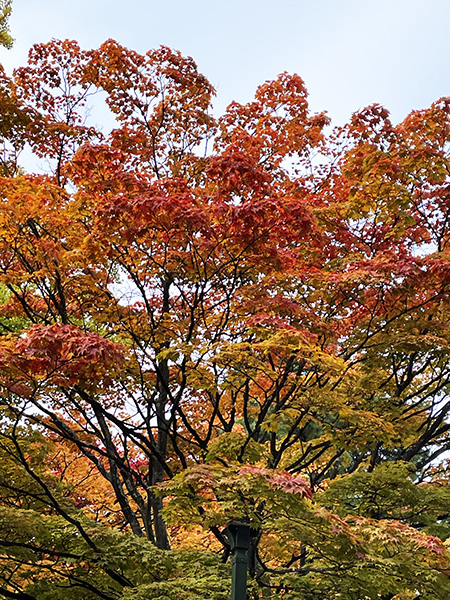
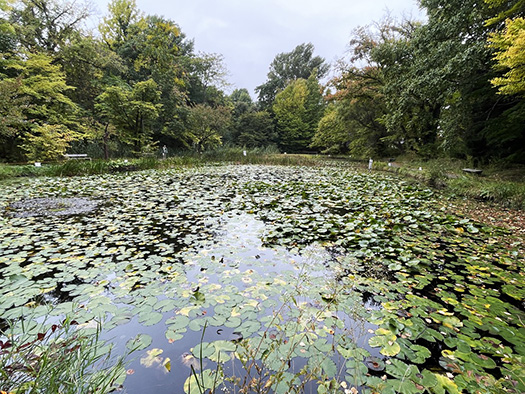
【「AI」探索に疲れヒグマから逃れ、秋の北大構内散歩へ】


 札幌市では市にLINE友だち登録していると、どんどん投稿が寄せられてきてスマホに連絡が届く。
 で、ここのところご存知のように全国的に「クマ」出没情報がありますが、札幌・北海道では「ヒグマ」の出没情報がひっきりなしに飛び込んできます。既報のようにわが家から1kmほどの直近の「三角山」周辺で出没情報が相次ぎ、先日はなんとかその内の2頭が駆除された。しかし、この夏の気候変動ぶりから自然のなかでの果樹類のものなりが非常に少ないようで、押し出されるようにヒグマたちは人里に下りてきているということのようです。
 市街地域での「駆除」ということで、人間界の「法律」が不適合になっていることが可視化してきている。
 駆除するのに、いちいち行政サイドの「許諾」を得なければ実行できない。相手のヒグマはその許諾までの時間差で、どんどん移動する。盛大な通行禁止や自粛要請と行政庁の許諾には当然ながら、時間がかかる。先日の駆除成功はそういう条件下では奇跡のような出来事だったと思えます。
 しかし、ヒグマクライシスはまだまだ警戒を緩められない。
 そういう危機に即した行動様式を確立させることが、札幌市民一般に迫られてきているということですね。
 わたしの場合は高齢期になってきて健康増進法としては「散歩毎日8,000歩超え」を目標としてきて、これまでは円山公園から南西側の緑地山地に近寄っていましたが、危険を回避し、なお、自然に近い緑地帯として北海道大学構内に注目してきているのです。GoogleMapなどで見ても、都市化した札幌の中心に近くしかも開拓期以来の自然保全された稀有なゾーンもあるという平坦地域なのですね。
 ということで夫婦で連れ立って散歩コースとして人気急上昇、なのです。
 昨日既報のように、わたしは「AI」探索を積極化させていますが、パソコン作業にはやはり散歩などの「軽い運動」がストレス発散としても最適。帰ってきてからの探索研究作業にも、集中力が増す。
 ヒグマの跳梁によって玉突き的に人間界も「行動変容」が迫られてきているのでしょう。

●お知らせ
拙書「作家と住空間」幻冬舎から電子書籍で発刊
お求めはAmazonで。
https://amzn.asia/d/eUiv9yO
English version⬇ 

Escaping the fatigue of “AI” exploration and fleeing grizzly bears, I take an autumn stroll through Hokkaido University’s campus.
Food scarcity ➡ Grizzly bears, with blurred boundaries between themselves and humans, run rampant. We too change our behavior defensively. Is political transformation similarly analogous? …

 In Sapporo, if you register as a LINE friend, posts keep pouring in and notifications reach your smartphone.
As you know, there have been bear sightings nationwide lately, but in Sapporo and Hokkaido, reports of brown bear sightings are coming in nonstop. As previously reported, sightings have been frequent around nearby Mount Sankaku, just about 1 km from my home, and the other day, two of them were finally culled. However, due to this summer’s extreme weather patterns, fruit yields in the wild seem to be very low. It appears the brown bears are being pushed down into populated areas.
The fact that these “culls” are happening in urban areas makes it clear that the human world’s “legal” society is becoming unsuitable.
To carry out a cull, you must obtain “permission” from the administrative side each time. The target brown bear keeps moving during the time lag until that permission is granted. Significant road closures, requests for voluntary restraint, and administrative approvals naturally take time. The recent successful culling feels like a miracle under such conditions.
However, the brown bear crisis demands we remain vigilant.
Establishing crisis-responsive behavior patterns is now pressing for Sapporo citizens in general.
 In my case, as I enter my senior years, my health goal has been “over 8,000 steps daily.” Previously, I approached the green hills southwest of Maruyama Park, but to avoid danger while still enjoying nature, I’ve turned my attention to the green spaces within Hokkaido University’s campus. Even on Google Maps, you can see it’s a rare zone preserved since the pioneering era, located close to the urbanized center of Sapporo.
 Consequently, it’s rapidly becoming a popular walking route for couples like us.
As reported yesterday, I’m actively pursuing “AI” exploration, but light exercise like walking remains optimal for stress relief during computer work. It also enhances my concentration for research and exploration tasks after returning home.
The rampant brown bears are likely forcing a domino effect of “behavioral change” upon the human world too.

●Notice
My book “Writers and Living Spaces” published as an e-book by Gentosha
Available on Amazon.

【72年前襟裳・百人浜「砂漠化」写真。カラー化&動画化。】


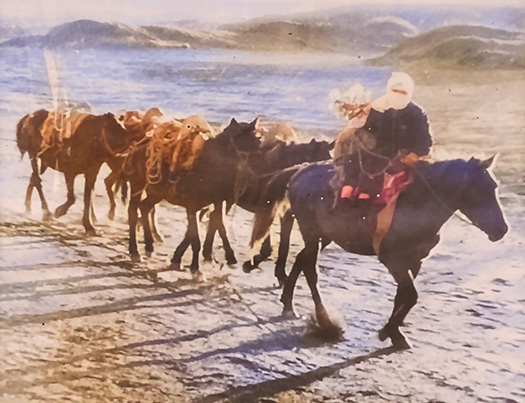
 さて先日探訪していた「襟裳岬」について、わたしはまったく知らずに人生を過ごしていたことに突き当たっていました。それは、この襟裳岬の東側、百人浜と言われる地域がかつて人間たちによって自然林が破壊され伐採が進んだ結果、砂漠化してしまっていたこと。
 そしてその砂漠化から国の「森林再生事業」が行われて、現在海岸部でのコンブ漁が復元していること。「えりも町」のHPには以下の記述。(要旨)
 〜百人浜緑化事業 えりも岬はかつて、カシワやミズナラ・シラカバなど広葉樹の原生林でした。しかし明治以降、燃料としての伐採や、牛・馬・綿羊の放牧などで原生林は切り開かれ、えりも岬特有の強風にさらされ、大地は砂漠化してしまいました。砂漠からは強風によって赤土が舞い上がり、海上10キロメートル沖合いにも達し沿岸の海は黄色く濁りました。海藻類は根腐れをおこして採れなくなり、回遊魚や沿岸の魚も減少。そんな状況を脱するため昭和28年浦河営林署「えりも治山事業所」が開設、本格的なえりも岬緑化事業がスタート。50年近く経った現在、クロマツの林は、豊かに成長してきました。植林の成果が上がるとともに、海には回遊魚が戻り、コンブ海藻類も採れるようになりました。今後は、クロマツ以外の元々この土地に生えていた種類の木々を植え、植林前の豊かな植生へと戻していくことが課題となっています。〜

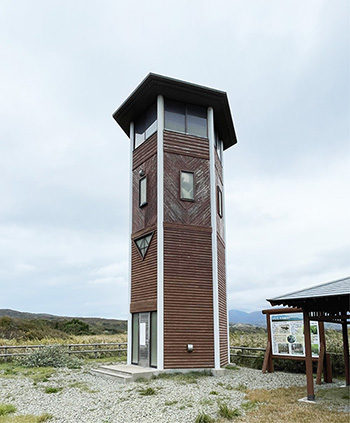
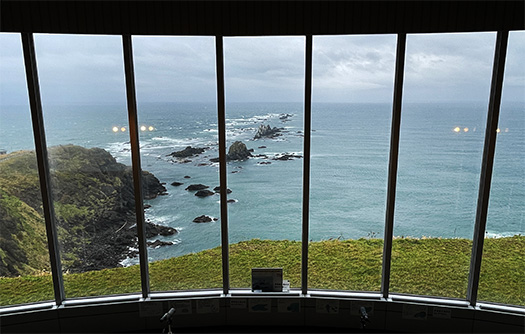
 こうした様子をこちらの百人浜展望台(百人浜緑化事業観察塔)で学習させていただいた。上の写真はそのなかでも「砂漠化」の様子の表現としてわかりやすかったので、展示から撮影してみたもの。原写真は昭和28年撮影ということでモノクロ写真でしたが、AI処理ででカラー化させてみた。
 その写真をさらに「動画化」させてみたのが、以下の動画。


 うまくこのブログで動画再生できるのかどうか、ちょっと実験してみた次第。わたしのMac環境では問題ないのですが、いかがかと思っています。どんどんAI活用がわたしのような高齢世代でも現実化してきているので、いろいろ新しいチャレンジも可能になってきますね。大いに期待したい。

●お知らせ
拙書「作家と住空間」幻冬舎から電子書籍で発刊
お求めはAmazonで。
https://amzn.asia/d/eUiv9yO

English version⬇ 

Erimo Cape and Hyakunin Beach: Desertification and Forest Restoration ~ Reviving Kelp Fishing
Photographs documenting the desertification of Erimo Cape and Hyakunin Beach 72 years ago in 1953. These monochrome images have been colorized and further transformed into video. AI applications are also being explored.

 Recently, while exploring Cape Erimo, I realized I had lived my entire life completely unaware of something. It was that the eastern side of this cape, an area called Hyakunin Beach, had once been devastated by human activity. Natural forests were destroyed and logging progressed, ultimately leading to desertification.
 Then, as part of the national “Forest Restoration Project,” efforts were made to combat this desertification, and now kelp fishing has been restored along the coast. The Erimo Town website states the following (summary):
 ~ Hyakunin Beach Greening Project Erimo Cape was once covered in virgin broadleaf forests of oak, Japanese white oak, and birch. However, after the Meiji era, logging for fuel and grazing by cattle, horses, and sheep cleared the virgin forests. Exposed to Erimo Cape’s characteristic strong winds, the land became desertified. Strong winds carried red soil from the desertified land, reaching as far as 10 kilometers offshore and turning the coastal waters yellow and murky. Seaweed suffered root rot and could no longer be harvested, while migratory fish and coastal fish populations declined. To overcome this situation, the Urakawa Forest Management Office established the “Erimo Forest Conservation Office” in 1953, marking the start of the full-scale Erimo Cape Greening Project. Nearly 50 years later, the black pine forests have grown luxuriantly. As the results of the afforestation became apparent, migratory fish returned to the sea, and kelp and other seaweeds became harvestable again. The challenge now is to plant species of trees native to this land, other than black pine, and restore the rich vegetation that existed before the afforestation.

 I learned about these conditions at the Hyakunin Beach Observation Tower (Hyakunin Beach Greening Project Observation Tower). The photo above was taken from the exhibition because it clearly depicted the “desertification” aspect. The original photo was taken in 1953 and was monochrome, but I colorized it using AI processing.
The video below shows that photo converted into a moving image.

 I decided to experiment a bit to see if videos play smoothly on this blog. It works fine on my Mac, but I’m curious about how it looks elsewhere. As AI becomes increasingly accessible even for older generations like myself, it opens up all sorts of new challenges. I’m really looking forward to it.

●Notice
My book “Writers and Living Spaces” is now available as an e-book from Gentosha.
Available on Amazon.

【堺旧燈台の戦国期自由貿易・巨大壁画】


 わたしは関西圏に移動するときには、大阪府堺市に宿泊することが多いです。
 歴史好きという性格から、この堺市が醸し出してくれる情感に愛着を感じている。少年時に見ていた時代劇ドラマでは信長ものが好きで、信長の青春期を育んだ「堺旅行」のくだりが好きだった。あの時代に堺の街が占めていた日本社会での位置に深く想像力の躍動感を覚えていた。信長も、実際の政治軍事の目的はもちろんだけれど、いわば「風俗」としてこの堺が醸し出していた浪漫が大好きだったに違いないと思えるのですね。
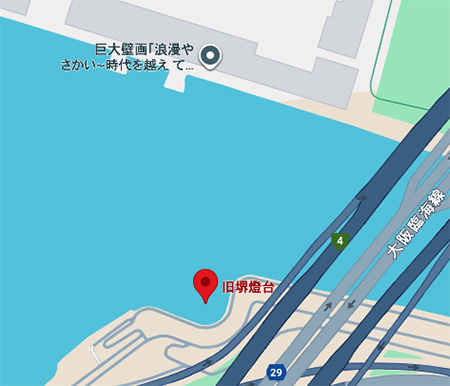
 で、そういう空気感を味わうのに、堺に泊まったら、だいたい一度は「旧堺燈台」に来る。
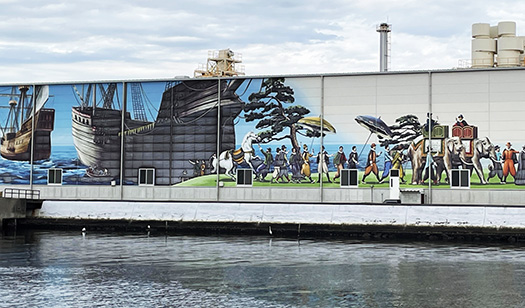
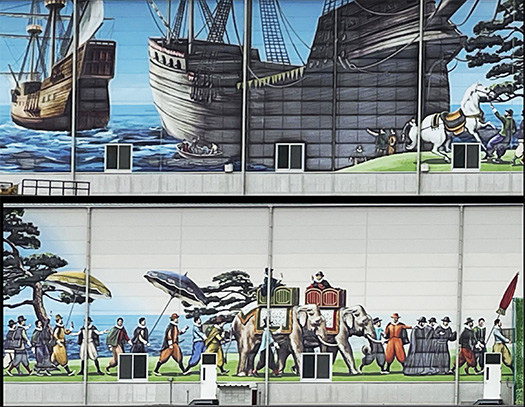
 その波止場に面して、日本ノボパンという建材製造会社の本社工場が海辺に建っていて、その外周の塀に壁画 浪漫やさかい~時代を越えて通じるロマン~が描かれている。
 〜大阪府堺市堺区築港南町4−3 2013年、堺の観光振興や堺旧港周辺の賑わい創出を図ることを目的に、堺の歴史文化と観光魅力を表現した日本最大級の壁画「浪漫やさかい~時代を越えて通じるロマン~」が設置された。 壁画は日本ノボパン工業株式会社の工場壁面にあたり、凸版印刷株式会社西日本事業本部関西情報コミュニケーション事業部の協力を得て、南蛮貿易で栄えた堺旧港へのタイムトリップで、時を越えて通じるロマンを表現。〜
 というもの。この壁画を見ていると信長の堺への心象がどうもオーバーラップしてくる。鉄砲という戦国の帰趨を決した最新兵器の製造販売の中核であり、まことに海外の風が吹き込んでくる社会変容の根源地だったのでしょう。
 この壁画をこの場所に描いて提供している会社さんはなかなかの社会貢献ぶり。
 いかにも堺がもっとも日本の最先端だった時代の空気感を伝えてくれている。(写真は2段に表示させましたが、塀に描かれているので横長画面)
 いつも「朝散歩」のコースにさせてもらっているのですが、脳内に信長好きの躍動感が生成されてきて、よしやるぞ、みたいな単細胞反応を刺激してくる(笑)。大好きなスポット。

●お知らせ
拙書「作家と住空間」幻冬舎から電子書籍で発刊
お求めはAmazonで。
https://amzn.asia/d/eUiv9yO

English version⬇ 

【Sakai Old Lighthouse: Warring States-Era Free Trade & Giant Mural】
“Oh, we’ve finally reached Zipangu! Let’s sell Nobunaga some prizes!” You can just feel the excitement (lol)…

 When I travel to the Kansai region, I often stay in Sakai City, Osaka Prefecture.
As someone who loves history, I feel a deep attachment to the emotional atmosphere Sakai City exudes. Growing up, I loved period dramas about Nobunaga, especially the scenes depicting his “Sakai trip” during his youth. I vividly imagined the dynamic role Sakai played in Japanese society during that era. I can’t help but think Nobunaga, while certainly driven by political and military objectives, must have also deeply loved the romantic atmosphere Sakai cultivated, its unique “vibes,” so to speak.
So, to soak up that atmosphere, whenever I stay in Sakai, I almost always visit the Old Sakai Lighthouse.
 Facing the wharf, the headquarters and factory of Nippon Nobopan, a building materials manufacturer, stands by the sea. On the outer perimeter wall, a mural titled “Romantic Sakai ~ Romance That Transcends Time ~” is painted.
 ~ 4-3 Chikko Minamimachi, Sakai Ward, Sakai City, Osaka Prefecture. In 2013, Japan’s largest mural, “Romantic Sakai: Romance That Transcends Time,” was installed to promote Sakai tourism and revitalize the area around the old port. It expresses Sakai’s history, culture, and tourist appeal. The mural covers the factory wall of Nippon Nobopan Kogyo Co., Ltd. With cooperation from the Kansai Information Communication Division of Toppan Printing Co., Ltd.’s West Japan Business Headquarters, it depicts a time-travel journey to Sakai’s Old Port, which flourished through Nanban trade, expressing a romance that transcends time.
 Looking at this mural, Nobunaga’s perception of Sakai seems to overlap. It was the core hub for manufacturing and selling firearms—the cutting-edge weapon that decided the fate of the Warring States period—and truly the epicenter of social transformation where winds from overseas blew in.
The company that painted and provided this mural here is making quite a social contribution.
It perfectly conveys the atmosphere of the era when Sakai was truly Japan’s most advanced frontier. (The photo is displayed in two rows, but since it’s painted on a wall, it’s a horizontal image.)
I always include it in my “morning walk” route, and it generates this dynamic energy of Nobunaga-loving excitement in my brain, triggering a simple-minded reaction like, “Alright, let’s do this!” (laughs). It’s one of my favorite spots.

●Notice
My book “Writers and Living Spaces” published as an e-book by Gentosha
Available on Amazon.

【わが家伝承「家紋入り朱塗り膳漆器」製造コストをAIで探る】


 最近、自分自身の「来し方行く末」の整理整頓を念じています。
 前から懸案になっていた北海道移住以前の本州でのご先祖様の行跡探訪。人によってはこういうことにまったく無関心というケースも多いそうですが、わたしの場合そもそも歴史に強い興味がある性格なので、ごく自然な志向だと思っています。
 小学校3〜4年生くらいからものすごく授業に身が入っていったのには、その時期から本格的に歴史を社会科の学習で受け始めたことが大きかった。その興味ベースがあってそのための基本ツールとして国語にも真剣さが増していったという記憶が鮮明にある。
 で、ワーキング環境から一歩距離を持ち始めてきたことで、年来の願望が盛り上がっている。
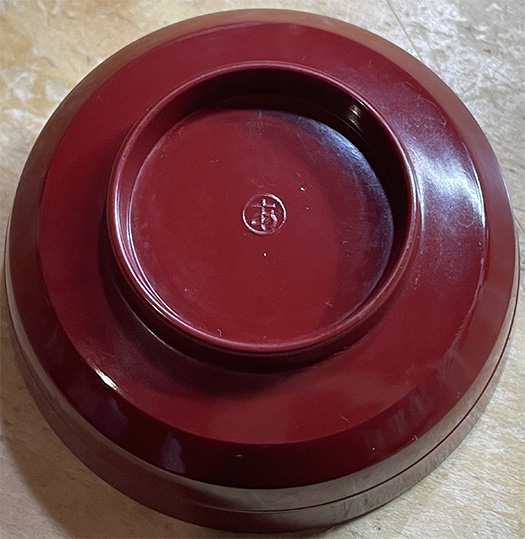
 写真は、わが家に伝承されている「家紋入り朱塗り膳漆器」です。江戸期にわが家系が営んでいた参勤交代大名を饗応の「本陣」ビジネスの必要性から、江戸期に制作発注したもの。
 前からひとつの「手掛かり」と考えていましたが、AIを活用するのが合理的と思い試してみた。
 〜江戸中期(18世紀中頃)の商家で特注された印入りの漆器の製造費用は、具体的な記録がほとんど残っておらず、特定することは困難です。しかし、いくつかの要因から、その価格は非常に高価だったと推測できます。〜というAIからの前置き説明。で、以下が推定結果。
 〜制作費の推定(当時の通貨換算)
家紋入り(蒔絵あり) 江戸期の価格 約1〜2両 約10万〜20万円
家紋入りの特注品 一式(5客膳・椀・皿など) 約5〜10両 約50万〜100万円〜
 う〜む、であります。これまでもなにげにAIは調べ物で活用していましたが、こういう「先祖の消息」にもかなり活用可能だということを教えられた。たしかに「間違いはある」可能性はあるので、そこから再度、要確認ではありますが「道しるべ」としては良い働きぶり。
 そんなことから「先祖の消息」の確実な痕跡事物をもとに対話を始めてみると、まことに興味深い反応を返してきてくれる。まぁ、基礎的なデータ収集、事実の発掘はこれまで地道な現地探訪を親族一同でしてきていることが大きいのですが、現代の利器、たしかに使い出があります。う〜む。

●お知らせ
拙書「作家と住空間」幻冬舎から電子書籍で発刊
お求めはAmazonで。
https://amzn.asia/d/eUiv9yO

English version⬇ 

【Exploring the Manufacturing Costs of Our Family Heirloom “Crimson Lacquered Tray with Family Crest” Using AI】
When researching with ChatGPT, it becomes remarkably efficient to conduct transcendent “explorations” across time and space. It really was a precious item…

 Lately, I’ve been reflecting on organizing my own past and future.
I’ve long been contemplating tracing my ancestors’ footsteps on Honshu before our move to Hokkaido. While many people seem completely indifferent to such matters, I consider it a natural inclination for me, given my strong interest in history.
 My intense focus in class starting around third or fourth grade was largely due to formally beginning history studies in social studies around that time. I clearly remember that this interest base led to increased seriousness in Japanese language studies as well, serving as a fundamental tool for that purpose.
Now, as I begin to distance myself from my work environment, this long-held desire is gaining momentum.
The photo shows a “lacquered tray with family crest” passed down in my family. It was commissioned during the Edo period due to the necessity of running a “honjin” (inn for feudal lords) business that catered to the daimyo (feudal lords) our family served during the sankin-kotai system.
I’d long considered it a “clue,” but decided it made sense to try using AI.
~The manufacturing cost of custom-made lacquerware with stamps, ordered by merchant families in the mid-Edo period (mid-18th century), is difficult to determine as concrete records are scarce. However, based on several factors, we can infer the price was extremely high. ~ This is the AI’s introductory explanation. And here are the estimated results.
~ Estimated Production Costs (Converted to Contemporary Currency)
With Family Crest (Including Makie) Edo Period Price: Approx. 1-2 Ryō Approx. ¥100,000 – ¥200,000
Custom-Made Set with Family Crest (5-Piece Set: Tray, Bowl, Plate, etc.) Approx. 5-10 ryō Approx. ¥500,000-1,000,000
Hmm. While I’ve casually used AI for research before, this taught me it’s quite useful for uncovering “ancestral traces” like this too. Admittedly, there’s a possibility of “errors,” so further verification is needed, but it serves well as a “guidepost.”
 Based on this, when I started conversations using concrete traces of my ancestors’ lives as a foundation, it returned truly fascinating responses. Well, the groundwork—basic data collection and uncovering facts—has largely been done through diligent on-site visits by the entire family. But modern tools? They definitely have their uses. Hmm.

●Notice
My book “Writers and Living Spaces” published as an e-book by Gentosha.

Translated with DeepL.com (free version)

【女性の政治活躍と「アマテラス」神話日本】


 政権交代にともなう各社の世論調査報道が相次いでいる。軒並み6割を超える支持率。今回の自由民主党の女性総裁誕生から、連立政権発足を日本社会はいま、好意的に受け止めていると見て取れる。
 「支持率下げてやる」ホンネ発言から「死んだらいい」田原聡一郎発言など既存メディア勢力と民意の乖離ぶりも鮮明に。連立協議プロセスでの既存「労働組合」系勢力の劣化露呈もわかりやすい。
 どうもこれまでの政治が抱えてきた問題点が噴出し「解脱」した政局だったのだと思える。
 ここから史上初の女性首班による政治がどのような変化の「見える化」をできるのか、国民の期待感はごく自然に高まってきていると思う。評価はその「仕事ぶり」如何に真摯に掛かっている。
 こういう「女性活躍」と日本人、日本社会というものは非常に興味深い。
 海外からも男性優位社会という対日観が大きく崩れ、好意的な見方が出ている報道。ガラスの天井をアメリカに先駆けて突き破った意義は国際政治上も大きい。そしてすぐに来日するトランプとの外交対話で、どのような展開が示されるかも注目点になるだろう。
 総じて日本社会に久々の「期待感」が高まっていると思う。
 わたし的には、この女性活躍日本社会の根源として女性神・アマテラス神話に思いが向いている。
 世界のなかで創成神として女性がシンボルになる神話は特異。
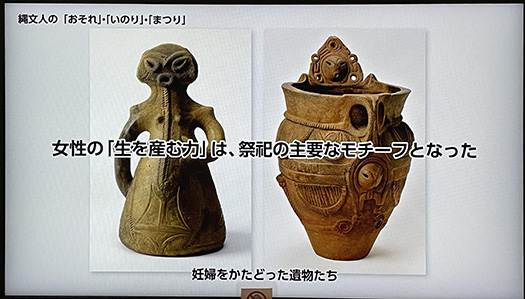
 女性を太陽として尊崇する日本社会は超「LGBT」の平和性を感じる。女性がトップになることを支持する日本社会の根源には、列島社会での精神文化伝統がある。そしてさらにその根っこには、縄文の世の女性の「生む力」への自然な崇拝があるのではないかと。

 AIに聞いてみてもあんまりそういう推論は見かけないけれど、海外の「陸生動物・狩猟」主流の原始ライフスタイルと、この日本列島社会での「漁労採集&定住」ライフスタイルの違いがあると思うのだ。
 海外社会では陸生動物に主要タンパク源を求め、それは獰猛な勇猛さに力点を置く社会だけれど、一方の漁労採集ではより平和的なカタチでタンパク源を得られたことが大きいと思えるのです。
 そういう社会では生産力の中核は「人間」マンパワー。そしてそれを「生産」する女性に対して神性を感じる精神性基盤が形成されてきたのではないだろうか。
 このことがアマテラス神話に反映していると思われてならない。・・・まぁ、歴史研究などでもそういう意見はあんまり見かけないけれど、わたし的には強く感じられている。
 〜下の画像は歴史民俗博「縄文史」展示より〜

●お知らせ
拙書「作家と住空間」幻冬舎から電子書籍で発刊
お求めはAmazonで。
https://amzn.asia/d/eUiv9yO

English version⬇ 

Women’s Political Participation and the “Amaterasu” Mythology in Japan
Japan is a uniquely peaceful society worldwide, founded upon the female creator deity Amaterasu. The eruption of Japan’s “public sentiment” shattering the degraded media…

 Following the change in government, various media outlets have been reporting on public opinion polls. Support rates consistently exceed 60%. From the election of the Liberal Democratic Party’s first female president to the formation of the coalition government, it appears Japanese society is now viewing these developments favorably.
The gap between established media forces and public sentiment is also starkly evident, from candid remarks like “I’ll make sure his approval ratings drop” to comments like “He should just die” by Soichiro Tahara. The deterioration of existing “labor union”-affiliated forces during coalition negotiations is also readily apparent.
It seems this political situation has erupted with the problems long inherent in past politics, achieving a kind of “liberation.”
From here, public expectations are naturally rising regarding what kind of visible changes the first female prime minister in history can bring to politics. Her evaluation hinges entirely on how sincerely she performs her duties.
 This phenomenon of “women’s empowerment” and its relationship with Japanese people and society is profoundly intriguing.
Reports from abroad indicate a significant shift in the perception of Japan as a male-dominated society, with increasingly favorable views emerging. The significance of breaking through the glass ceiling ahead of the United States is substantial in international politics. The diplomatic dialogue with Trump, who will visit Japan soon, will also be a point of focus to see what developments unfold.
 Overall, I feel a long-awaited sense of “expectation” is rising in Japanese society.
Personally, my thoughts turn to the myth of the female deity Amaterasu as the root of this female empowerment in Japanese society.
 It’s unique in the world for a myth to symbolize creation with a woman as the deity.
Japanese society, which reveres women as the sun, feels inherently peaceful, transcending even “LGBT” issues. The roots of Japanese society’s support for women reaching leadership positions lie in the spiritual and cultural traditions of island society. And at the very core of that, I suspect, is the natural reverence for women’s “power to give birth” from the Jomon era.

 Even when I ask AI, I don’t see much of that kind of reasoning, but I think there’s a difference between the mainstream primitive lifestyle of “terrestrial animals and hunting” overseas and the “fishing, gathering, and settled” lifestyle here in the Japanese archipelago society.
 Overseas societies sought their primary protein source from land animals, creating cultures emphasizing fierce bravery and strength. In contrast, fishing and gathering allowed for a more peaceful acquisition of protein, which seems significant.
In such societies, the core of productive power was “human” manpower. Couldn’t it be that this formed a spiritual foundation where women, who “produced” this power, were perceived as divine?
 I can’t help but feel this is reflected in the Amaterasu myth. …Well, you don’t see this opinion much in historical research, but I feel it strongly.
~Image below from the History & Folklore Museum’s “Jomon History” exhibit~

●Notice
My book “Writers and Living Spaces” published as an e-book by Gentosha
Available on Amazon.


【旅行けば、交通事故現場遭遇、コワ!】


 昨日わが家に帰還。道内旅に引き続いて、所用もあって関西圏に行っておりました。
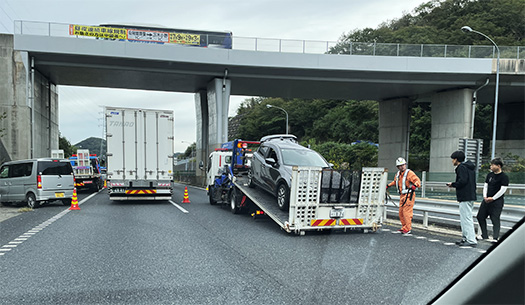
 写真はその道中、山陽道高速の岡山県内。けっこうな渋滞状況ではあったのですが、標識から前方で「事故発生」のアナウンス。後ろから緊急車両もやってきて、わたしは自車両を左に寄せて追い越してもらった。その後、車列は完全にストップしてしまって、数分後ようやく動き出し始めたけれど、超ノロノロでときどき停止状態。やれやれ、であります。
 で、ほぼ1台ずつの通行でときどき完全停車状態。写真はその事故現場で、ちょうど完全停車状態のときに野次馬的心理からスマホで撮影。警察官ではなく道路パトロールのみなさんが事故対応中のところ。たぶん警察はまだ現場到着していなかったよう。車両の排除のためトレーラーに、破壊の激しい車両が乗せられていたところ。一瞬、方向的には「逆走?」とも思えた・・・。コワい。
 ただ、目視の範囲では人身事故はないようで、事故車に乗っていたとおぼしき男性がふたり道路パトロールの担当員に事故状況説明している様子でした。一方、道路左側には、大きくハンドルを切って停止している車両が4-5台、ほぼ斜めの状態で道路壁側に向かって停車しておりました。とにかく安全最優先、ですね。
 高速道路での危険な運転がどうも最近増えているように思います。
 昨日も北海道到着後、千歳から札幌市内の高速インター・新川まで移動中、道央道から市内環状高速に変わる料金所手前で、前走車がノロノロからついに停車してしまっていた。後続のわたしとしてはやむなく完全停車せざるを得ず、さらに後続車から追突される危険性に直面してしまった。やむなく車両ライトでパッシング対応。
 で、そのクルマは料金所を超ノロノロ通過後、やや左に寄せた高速道路上でなんと完全停車して、駐車ランプまで点灯させる始末。おいおい、であります。あれでは後続車にとって危険性MAX。
 推測すれば、この接続箇所を出口だと勘違いしてしまっていたのでしょう。どうも日本語表示に不慣れな人たちが最近、高速道に増加しているように感じる。日本の安全運転マナーをみなさん、よく理解していただきたい。

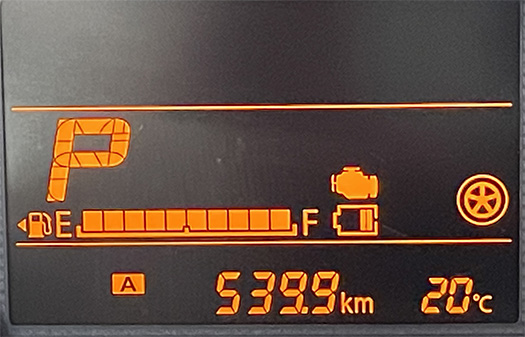
 今回の関西圏でのレンタカー走行距離。なんとか安全運転で「冷や水」にはなりませんでした(ほっ)。

●お知らせ
拙書「作家と住空間」幻冬舎から電子書籍で発刊
お求めはAmazonで。
https://amzn.asia/d/eUiv9yO

English version⬇ 

【Traveling and encountering a traffic accident scene—scary!】
Recently, situations where common sense about “driving manners” no longer applies have been increasing in Japanese society. It’s becoming more crucial to be vigilant about societal safety. …

 I returned home yesterday. Following my trip within Hokkaido, I also had business to attend to in the Kansai region.
 The photo is from that trip, on the Sanyo Expressway in Okayama Prefecture. There was quite a bit of traffic congestion, and signs announced an “accident ahead.” Emergency vehicles approached from behind, so I pulled my car over to the left to let them pass. After that, the line of cars came to a complete stop. It finally started moving again a few minutes later, but it was super slow, stopping and starting constantly. Oh well.
 Traffic was moving almost one car at a time, sometimes coming to a complete standstill. The photo was taken at the accident site during one of those complete stops, snapped with my phone out of sheer curiosity. It shows the road patrol crew handling the accident, not the police. The police probably hadn’t arrived yet. A heavily damaged vehicle was being loaded onto a tow truck for removal. For a moment, the direction made me wonder, “Did it run the wrong way?”… Scary.
 However, as far as I could see, there didn’t appear to be any injuries. Two men, who seemed to have been in the accident vehicles, were explaining the situation to the road patrol officers. Meanwhile, on the left side of the road, 4-5 vehicles had swerved sharply and stopped, parked at an angle facing the road wall. Safety first, above all else.
It really feels like dangerous driving on the expressways has been increasing lately.
 Yesterday, after arriving in Hokkaido, while traveling from Chitose to the Sapporo city expressway interchange at Shinkawa, just before the toll gate where the Dohodou Expressway transitions to the city ring expressway, the car in front of me slowed to a crawl and then finally came to a complete stop. As the vehicle behind, I had no choice but to stop completely too, facing the risk of being rear-ended by the car behind me. I had no choice but to flash my headlights.
 Then, after that car passed the toll gate at an extremely slow pace, it pulled slightly left on the highway and, unbelievably, came to a complete stop, even turning on its parking lights. Seriously? That’s danger level MAX for the cars behind.
I suspect they mistook this junction for an exit. It really feels like there are more people unfamiliar with Japanese signage on the highways lately. I wish everyone would properly understand Japan’s safe driving etiquette.

 This trip’s rental car mileage in the Kansai region. Somehow, I managed to drive safely and avoid getting into trouble (phew).

【女性総理爆誕、一方「沈鬱」なメディアの未来】


 さてまだまだ旅路が続いていて、その取材内容の濃厚さに圧倒され続けておりますが、まだ、情報の整理整頓がまったく時間が取れない。まぁ当然ですね、やはり本日札幌に戻って時間を掛けて整理してからでなければ、情報記述することは難しすぎる。
 ということでブログとして、本日の社会の動きではまずなにより自由民主党総裁である高市早苗氏が本日、総理大臣に指名される流れであることでしょう。日本の歴史でも天皇には女性天皇が記録されているけれど、政治権力機構のトップに女性が就任するというのは画期的。本人は英国のサッチャーを念頭に置いているようですが、先進国としてはドイツのメルケル、最近ではイタリアのメローニに続く存在になる。
 そして、すぐにアメリカからトランプが来日して新任早々から国際政治にデビューすることになる。やはり日本という国際政治上の重要な国で、ガラスの天井が破られることは意義深いこと。
 しかしそれが「保守」政治家であることから、メディアからはあからさまに「支持率下げてやる」発言などディスりたい願望が表出しすぎだと思う。下品すぎ。本来、日本社会での女性活躍の象徴としてふつうに受け止めるべきではないだろうか。その上、札幌の住宅情報関係の信頼する知人からのSNS情報では、彼女のご主人は要介護認定を受けていて、その介護について彼女自身は今後も変わりなく「入浴補助」などを自分で継続したい意思を示されているとのこと。彼女の講演会で自身が発言されたという情報。もし事実であれば、女性活躍と高齢化社会の課題の象徴とも受け取れる。
 いまのところこの情報はメディアではまったく触れられていないけれど、やがて情報の正確性が高まって欲しいと思っています。
 それは別にしても、やはり女性がトップになることがどのような変化を日本の政治社会にもたらすことか、それをしっかりウォッチして行きたい。そもそも日本では最高神アマテラスは女性であるという神話世界を持っている。そういう神話がながく日本の人心に根付いてきたことは、なにごとか、強い民俗・民族的な意味を持っているのではないだろうか。

●お知らせ
拙書「作家と住空間」幻冬舎から電子書籍で発刊
お求めはAmazonで。
https://amzn.asia/d/eUiv9yO

English version⬇ 

【Female Prime Minister Emerges, While Media’s Future Looks “Gloomy”】
Comments like “I’ll make her approval ratings drop” reveal an excessive desire to criticize, bordering on vulgarity. Despite such setbacks, we hope she will continue to promote women’s advancement. …

 Well, the journey continues, and I remain overwhelmed by the sheer depth of the material gathered. Yet, I still haven’t found any time to organize the information. Well, that’s only natural. It’s simply too difficult to write about it all until I return to Sapporo today and take the time to sort it out.
 So, for today’s blog on societal developments, the foremost news is undoubtedly the flow leading to Ms. Sanae Takaichi, the LDP President, being nominated as Prime Minister today. While Japan’s history records female emperors, a woman ascending to the top of the political power structure is groundbreaking. She seems to have Britain’s Thatcher in mind, but among advanced nations, she follows Germany’s Merkel and, more recently, Italy’s Meloni.
 Moreover, Trump will arrive from the US almost immediately, meaning she’ll debut on the international political stage right after taking office. It’s truly significant that the glass ceiling is being shattered in Japan, such an important country in international politics.
However, precisely because she’s a “conservative” politician, the media seems overly eager to disparage her, with blatant statements like “We’ll make sure her approval ratings plummet.” It’s too vulgar. Shouldn’t we simply accept this as a symbol of women’s advancement in Japanese society? Furthermore, according to SNS information from a trusted acquaintance in the Sapporo housing industry, her husband has been certified as requiring nursing care. She herself has expressed her intention to continue personally providing care, such as “bathing assistance,” without change. This information comes from her own remarks at a lecture. If true, it could also be seen as symbolic of both women’s advancement and the challenges of an aging society.
 While this information hasn’t been touched upon by the media at all so far, I hope its accuracy will be confirmed soon.
Regardless, I still want to closely watch what kind of changes having a woman at the top will bring to Japan’s political society. Japan, after all, possesses a mythological world where the supreme deity Amaterasu is female. That such a myth has long been rooted in the Japanese psyche surely carries some strong folk or ethnic significance.

●Notice
My book “Writers and Living Spaces” published as an e-book by Gentosha
Available on Amazon.
 

【高齢者の長距離運転「冷や水」にならないよう要注意】


 先日のブログで3日間1,500kmの、一般人としては超長距離移動についてルートマップも掲載しましたが、実は現在もそうした渦中にあります。
 いまは、ひとり旅なので、カミさんの運転代行はない(泣)。自分の「数寄」なので弱音は吐けない。
 ただ、長距離運転するとさすがになかなか「時間が取れない」のであります。
 移動運転と宿泊先などの身の回り整頓に時間を奪われて、ブログ執筆での「企画・立案」作業がほぼ時間が取れなくなる。そういった時間勘案もふくめて調整すべきなのですが、なかなか・・・。
 ということで、本日はやむなくテーマ的な深掘り作業は休止いたします。
 一応「365日の不断な更新」を勝手に自分で義務づけてきたので、本日はアリバイ的(笑)更新。
 見に来ていただいたみなさん、申し訳ありません。明日以降、きちんと時間調整・体調管理いたします。
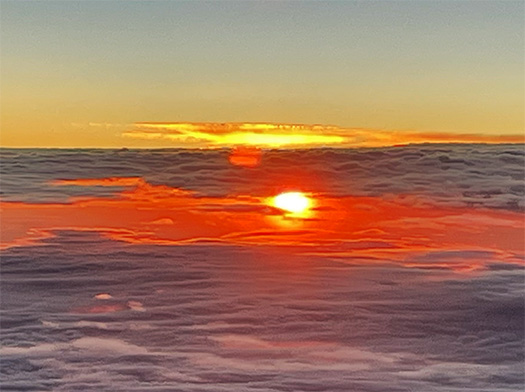
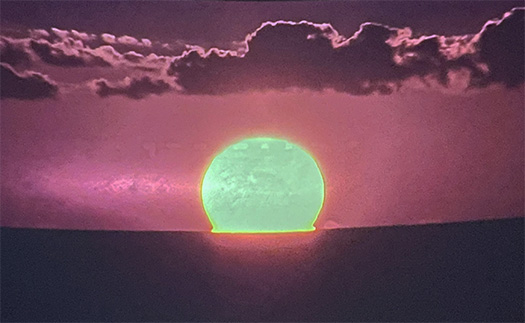
 写真は、昨日のブログでの「襟裳岬」での日の出の様子。
 明日以降への決意を画像に込めました。悪しからず、よろしく。

English version⬇ 

【Caution: Avoid Long-Distance Driving for Seniors Becoming a “Cold Shower”】
Traveling solo and moving by rental car, so today’s blog update is merely an alibi. Apologies for the inconvenience, but please bear with me. …

 In my recent blog post, I shared a route map for a 3-day, 1,500km journey—an ultra-long distance for the average person—and truth be told, I’m still in the thick of it right now.
Since I’m traveling solo this time, there’s no wife to take over the driving (sob). Since this is my own “hobby,” I can’t afford to complain.
However, driving long distances really does make it incredibly difficult to find time.
Time gets swallowed up by driving and organizing my belongings at lodgings, leaving almost no time for the “planning and drafting” work needed for blog writing. I should adjust my schedule considering this time constraint, but it’s proving quite challenging…
Therefore, today I’m reluctantly suspending any in-depth thematic exploration.
 Since I arbitrarily imposed this “365 days of uninterrupted updates” obligation on myself, today’s post is just an alibi update (lol).
To everyone who came to visit, I apologize. Starting tomorrow, I’ll properly manage my time and health.
The photo shows yesterday’s sunrise at Cape Erimo from my blog.
I’ve poured my resolve for tomorrow and beyond into this image. Please bear with me.
 

【襟裳岬は地形がスゴい 人生再学習 in北の大地】


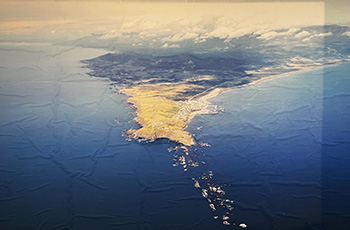
 以前に「北海道はその地形がすばらしい」という趣旨の記事を書いたことがありますが、その地形の中でももっとも特徴的なのが、やはり襟裳岬でしょう。いかにも北海道島という陸地が太平洋の海底からせり上がってきた様子が、視覚的に表されている。 
 全体として南北に1本、線が通っている北海道の地形の中でもっとも極めつけ的に、細い線で太平洋に没入していくとも言えるのでしょうか。ことしはたまたま前から念願だった宗谷岬にも行くことが出来たので、この美しき南北線を両方とも体感することができた。この南北に通る1本線が、地形としての美感の中核。
 海没する岩礁地帯ではアザラシの群生が500頭規模であるそうで、なんとも「神宿る」感が迫ってくる。日本列島の人間感受性のなかに、こういった岬とかへのリスペクトが存在すると言われ、たしかに熊野や四国などを旅するとそのことが実感できるが、郷土ということもあるけれど、この襟裳岬は格別。
 わたしは人生で日本三景と言われる名勝地も何度も見て来たけれど、やはりこの襟裳岬は北海道島が日本社会に登場して以降の日本人の精神史に刻み込まれていくと信じています。
 もし、西行や芭蕉さんがこの地を訪れていたら、いったいどんな心象記録を残したか、あるいはそれがどんな「歌枕」になっていったことかと、北海道人としてはため息が出る(笑)。しかし、日本人の心性をよく表現している「演歌」で、極点として襟裳はよく歌われている。まんま襟裳岬を歌った森進一という存在は将来の日本史世界では、こうした西行や芭蕉とも近似的な存在として行き続けていくのかも知れませんね。そういう未来はたぶんわたしには感受できない。孫子の代でしょうか。
 
●お知らせ
拙書「作家と住空間」幻冬舎から電子書籍で発刊
お求めはAmazonで。
https://amzn.asia/d/eUiv9yO

English version⬇ 

【Cape Erimo’s Terrain is Amazing: Life’s Lessons in the Northern Land】
Japan’s topography is said to resemble a dinosaur perched at Asia’s eastern edge. Its crucial jawline section is Erimo. Shinichi Mori’s song—has it been elevated to a new “song pillow”?…

 I once wrote an article praising Hokkaido’s magnificent topography, and among its most distinctive features is undoubtedly Cape Erimo. It visually embodies the very image of the Hokkaido landmass rising up from the Pacific Ocean floor. 
 Within Hokkaido’s overall north-south linear terrain, Cape Erimo is perhaps the ultimate expression of this, a slender line plunging into the Pacific. This year, I also managed to visit Cape Soya, a long-held desire, allowing me to experience both ends of this beautiful north-south axis. This single north-south line forms the core of its geological beauty.
 In the submerged rocky reefs, seal colonies reportedly number around 500 individuals, creating an overwhelming sense of the divine dwelling there. It’s said that Japanese sensibilities harbor a deep respect for capes like this. Traveling to places like Kumano or Shikoku certainly makes one feel this, though hometown attachment plays a part. Still, Cape Erimo is exceptional.
 I’ve seen the famous Three Scenic Views of Japan many times in my life, but I truly believe Cape Erimo has been etched into the spiritual history of the Japanese people since Hokkaido emerged as part of Japanese society.
As a Hokkaido native, I can’t help but sigh (laugh) wondering what kind of impressions Saigyo or Basho would have left behind if they had visited this place, or what kind of “uta-makura” (poetic place name) it would have become. However, in enka songs—which so well express the Japanese sensibility—Erimo is often sung about as the ultimate destination. The very existence of Shinichi Mori, who sang directly about Cape Erimo, may well continue into future Japanese history as a figure comparable to Saigyo or Basho. That future is probably beyond my own perception. Perhaps it will be for my grandchildren’s generation.
 
●Notice
My book “Writers and Living Spaces” published as an e-book by Gentosha
Available on Amazon.


【北海道の自然に沿う旅路 人生再学習 in北の大地】


[北海道島の自然地形に沿う旅走路]
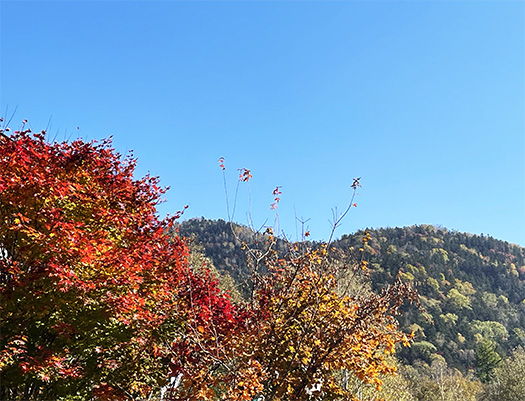
 紅葉をたずねて先日カムイコタン周辺に行きましたが、やや期待外れだったことからいっそ、ということで層雲峡にその様子を確認に行ってきました。かなりの遠出ドライブになるので、帯広拠点での2泊3日の行程となりました。
 地域・北海道島の「歴史」に昨日ブログで若干触れましたが「地理」の再学習もという次第。
 北大での機縁から、人生再学習の意欲がたのしく爆盛り上がり中(笑)。
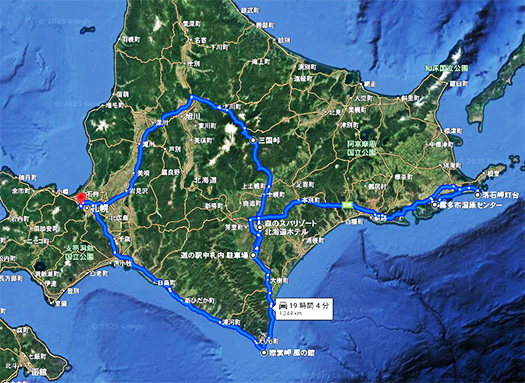
 上のGoogleMapが今回の旅程。北海道の最「高地」を訪ね歩いたあと、北海道の「東端」に近い根室半島・落石〜そして「風極〜ふうきょく」と言われる、地形的に太平洋に突き出る襟裳岬探訪というコース。カミさんの行動計画に従順に従っての高齢者夫婦ドライブの旅でした。
 GoogleMapでは1,248kmと記されていますが、ルートを若干外れてジグザグもしたので、たぶん1,500km超のクルマ行脚。運転はわたしが8割、カミさんが2割程度。まだ車運転「認知」機能は元気(笑)。〜ちなみに11/12には来年早々の免許更新に必須の「高齢者講習」も事前受講予定。〜
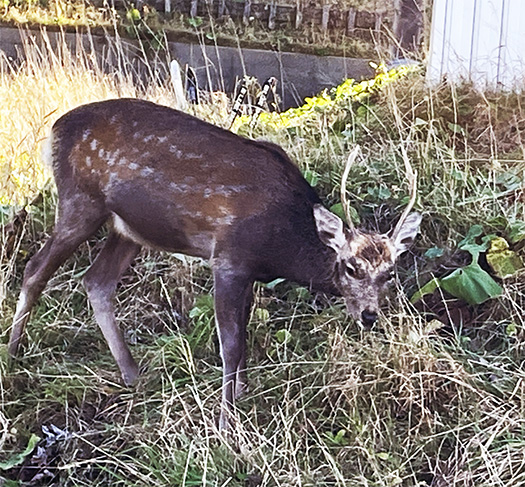
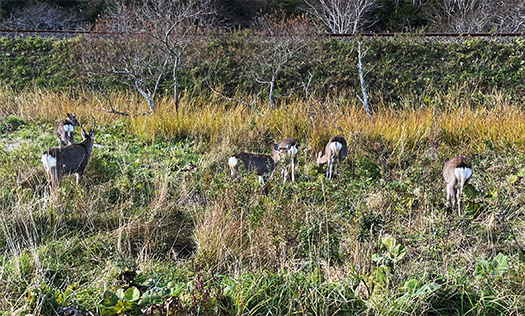
 写真は、根室市落石の岬地域で遭遇していたシカの様子。全国でクマの人間界出没・被害が報じられていますが、今回のドライブツアーでも各地で自然動物や牧場風景などでのウマ、牛と遭遇していました。幸いにしてヒグマとは、大雪山系の博物館施設での剥製標本との遭遇だけで済みました(ホッ)。
 ただ、各地の自然林中などの探訪場所ではカミさんはクマ除けの鈴、わたしはスマホで音楽再生、など予防策は行っておりました。まぁそういう注意は絶対必要と思われますね。走行路に並行の自然林中を車窓から覗いていると、ときおり「黒いイキモノ影」は確認できていました。シカか、ヒグマか?
 昨日には秋田県能代の知人建築家の仕事場の庭に「クマ」が出没の情報。わが家周辺1kmほどでも確認。この夏の気候異変が自然界にいろいろ作用を及ぼしている。高温化による分析把握は今後に期待ですが、そういう変動のただ中にわたしたちの現在は遭遇している。用心が肝要。

●お知らせ
拙書「作家と住空間」幻冬舎から電子書籍で発刊
お求めはAmazonで。
https://amzn.asia/d/eUiv9yO

English version⬇ 

【Journey Alongside Hokkaido’s Nature: Life Re-learning in the Northern Land】
Explosive excitement, life re-learning. Leaving the history-filled Hokkaido University campus behind, we explore the northern wilderness through “geography” studies. My driving “cognition” is sharp (lol). …

 I recently visited the Kamui Kotan area to see the autumn leaves, but since it was a bit disappointing, I decided to head to Sounkyo to check out the conditions there instead. Since it was quite a long drive, I made it a 2-night, 3-day trip based out of Obihiro.
I touched on the “history” of the Hokkaido region in yesterday’s blog, but now it’s time to revisit the “geography.”
Thanks to a connection at Hokkaido University, my motivation for relearning life is happily skyrocketing (lol).
 The Google Map above shows this trip’s route. After visiting Hokkaido’s highest points, we explored the Nemuro Peninsula near its eastern tip—specifically Rakuseki—and then headed to Cape Erimo, known as the “Wind Pole” for its terrain jutting into the Pacific. It was an elderly couple’s road trip, obediently following my wife’s itinerary.
 Google Maps shows 1,248km, but we zigzagged off the main route a bit, so it was probably over 1,500km of driving. I did about 80% of the driving, my wife about 20%. My driving “cognitive” functions are still sharp (lol). ~By the way, on 11/12, I’m scheduled to take the mandatory “Senior Driver Training” required for renewing my license early next year.~
 The photo shows a deer we encountered in the Misaki area of Ochiishi, Nemuro City. While bear sightings and incidents in human areas are reported nationwide, during this drive tour we also encountered horses and cows in various places, amidst natural wildlife and ranch scenery. Fortunately, our only encounter with a brown bear was with a stuffed specimen at a museum facility in the Daisetsuzan mountain range (phew).
 However, at exploration sites like natural forests in various areas, my wife used bear bells and I played music on my smartphone as preventative measures. Well, such precautions are absolutely necessary, I suppose. Peering through the car window into the natural forest parallel to the road, I could occasionally make out “shadows of black creatures.” Deer or brown bear?
 Yesterday, there was a report of a “bear” appearing in the garden of an architect friend’s workplace in Noshiro, Akita Prefecture. Confirmed sightings within about 1 km of our home too. This summer’s climate anomalies are having various effects on the natural world. While we’ll have to wait for future analysis to understand the impact of the heat, we are currently living right in the midst of these changes. Caution is paramount.

●Notice
My book “Writers and Living Spaces” published as an e-book by Gentosha
Available on Amazon.