本文へジャンプ

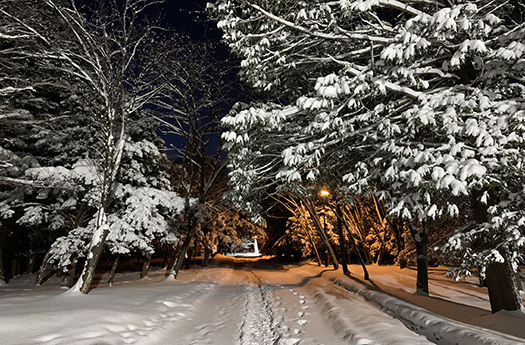
【平年以上の積雪・待望のわが家周辺「除排雪」】


毎年、2月中後半から市内の住宅地全域に対してうずたかい堆雪を
多様な重機部隊が集中投入されての恒例の「除排雪」。
他の地区が比較的早めに2月中旬くらいに入っていたのをよそ目に
わが家周辺では昨日朝からけたたましく作業に入っておりました。
もちろん事前に広報されているのでこちらは準備万端にしているのですが、
それでも力強い重機車群はまことに勇壮な活躍ぶり。
この冬から春への明確な節目の光景は、ことし中止された「雪まつり」をも凌駕する
札幌・北海道の現代的な「風物詩」でしょう。
この光景を見るのが、札幌人として心理的に非常にスッキリさせられます。

ことしの札幌はずっと平年よりも積雪深は少なめで推移していたのですが、
ここ数日間、間断なく降り続いた大雪で、一気に平年値を越える積雪に。
2日間で7−8回の「雪かき」を強いられて、さすがにカラダ各所から悲鳴(笑)。
ついにわが家周辺でも雪処理のスペースがほとんどなくなってきていた。
堆雪スペースの高さもすでに2mを軽く越えていて
どんどん車道の幅が狭まってきていた。
本当はわが家にはロードヒーティングも敷設しているのですが、
やはり化石燃料で融雪させるということに徐々に心理的抵抗感が強まった。
除雪範囲が比較的にコントロール可能なこともあり、
健康状態が続く限りは、体力勝負で除雪するのが北国人らしいのではという
ちょっと説明しにくい「プライド」(笑)から頑張り続けております。
まぁなかなか大変なんですが、そう考えないように心理をコントロールして
淡々と、冬のごく自然な日常行動であると、こころを定めて取り組むのが
だんだんいごこちのいい考えと思うようになってくる。ヘンかなぁ。

こういう取り組み心理ではあるのですが、
そうであるからなお、このような頼もしい重機たちによる除排雪には感動する。
歓声を上げるではないけれど、隣近所のみなさんも柔らかい表情で
作業を見守って過ごしている。
こういう全体の光景が、いかにも札幌らしい冬のおわりと思えるのです。
がんばって冬を明るく過ごすのはもちろんだけれど、春は無上に待ち遠しい。
・・・しかし、まだまだ油断はできない。
ひとつの区切りは付いたけれど、まだ降雪は終わりではない。
ひきつづき淡々と、来るモノに対応し続けていきたいと思います。
ことしはとくにコロナ禍のしつこさと同時進行する冬模様。
心頭を滅却する、みたいな一種の修行感覚で晩冬と付き合っていきたい。

English version⬇

[Snow cover over normal years, long-awaited “snow removal” around my house]

Every year from the latter half of February, a heavy snowfall is applied to the entire residential area in the city.
The annual “snow removal” where various heavy equipment units are intensively put in.
Seeing other districts enter relatively early in mid-February
I have been working hard since yesterday morning around my house.
Of course, it is publicized in advance, so I am ready for this, but
Even so, the powerful heavy-duty vehicles are truly brave.
The clear milestone from winter to spring surpasses even the canceled “Snow Festival”.
It will be a modern “feature” of Sapporo and Hokkaido.
Seeing this scene is psychologically very refreshing as a Sapporo person.

In Sapporo this year, the snow depth has been less than normal, but
The heavy snow that has continued to fall for the past few days has suddenly exceeded the normal value.
I was forced to “snow shovel” 7-8 times in two days, and I screamed from all over my body (laughs).
Finally, there was almost no space for snow treatment around my house.
The height of the snow-covered space has already exceeded 2m.
The width of the road was getting narrower and narrower.
Actually, we also have road heating in our house,
After all, there was a gradual increase in psychological resistance to melting snow with fossil fuels.
Sometimes the snow removal range is relatively controllable,
As long as the health condition continues, it seems that it is a northern person to remove snow by physical fitness.
I continue to do my best from “pride” (laughs), which is a little difficult to explain.
It’s quite difficult, but control your psychology so that you don’t think so.
It is important to set your mind and work on it, as it is a very natural daily activity in winter.
Gradually, I’m starting to think it’s a good idea. I wonder if it’s strange.

Although it is such an approach psychology,
Even so, I am still impressed by the snow removal by such reliable heavy machinery.
It’s not cheering, but everyone in the neighborhood also has a soft expression
I am spending time watching over the work.
This whole scene seems to be the end of winter, which is typical of Sapporo.
Of course, I’ll do my best to spend the winter brightly, but I can’t wait for spring.
… But I can’t let my guard down.
There is one break, but the snowfall is not over yet.
I would like to continue to respond to the things that come.
This is a winter pattern that progresses at the same time as the stubbornness of Corona.
I want to go out with late winter with a kind of training feeling that destroys my mind.

【自然エネ依存の不都合な真実/日本人のいい家㉔-5】


日本の農家民家はバイオマスエネルギーとしての薪が生命線。
その供給は農村の「里山」に大きく依存していた。
比較的平坦地の多い関東でも、意図的にか、雑木林が保全され、
煮炊き暖房用の薪の採取がムラ共同体の生命線だったことがあきらか。
そうすると、基本的にはそのエネルギー源が支えられる人口規模に
総数は限られざるを得ない。自然エネルギーの美辞麗句の裏側には
こういった切羽詰まった事情があることを見ないわけには行かない。
薪などのバイオマスについては人類常識が長くあって、
その限界点認識もしっかりあると思いますが、自然エネルギーも
その対象が太陽光や風力発電というように変遷してくると
そういう対象への常識はまだ、まったく普遍化しているとは言えない。
いま、アメリカでも風力発電先進地である南部テキサス州で
大寒波が襲ってきて、この自然任せの風力発電ではまったく需要を満たせず、
相当規模の停電が発生して非常事態になっているとされる。
制御の難しい自然エネルギー依存の「不都合な真実」が剥き出しになった。
人類社会にとってエネルギーの問題は生存戦略に直結する大問題。
バイデン政権は発足早々に、理念と現実のはざまに叩き込まれたともいえる。
また、この不都合な真実に対して危機感を持って発信する日本メディアはない。
いまテキサスで何が起こっているのか、詳細な報告を待ちたい。
・・・いや、もっと身近な話題では新電力の苦境も顕在化した。
世界的な寒波襲来で国際LNG市況が高騰し「自然エネルギー」を売りにした
新電力各社に魅力を感じて契約したユーザーが電力料金高騰に悲鳴を上げている。
家庭用電気では10倍にもなったとニュース報道。
「電気代8万円、ぎゃー」利用者衝撃 新電力料金急騰、店は5倍・自宅10倍 背景にLNG不足。

江戸期社会は究極的にエコロジカルな社会と言われている。
人口は当初の1380万人規模から元禄期までに3000万人規模に到達したけれど、
<上智大学経済学部・鬼頭宏教授資料より>
その後、自然エネルギー依存社会では人口増加は抑制され
結局200年近く人口停滞し幕末はほぼ同じ3000万人口社会で迎えた。
元禄期までの人口拡大は、平和な環境の実現と各藩ごとの
必死な新田開発や産業振興策という側面が大きかったに違いない。
自然エネルギーだけへの依存社会での日本列島の開発努力が
極限まで進展したということを表しているのかも知れない。
外国との交易を閉ざして自国内エネルギーに依存するとこの程度が
日本列島のポテンシャルであるとも思われる。
そういう停滞に対して欧米列強は石炭火力という新エネルギーで社会武装し
黒船というカタチでエネルギー革命の優位性を圧倒的に示し抑圧した。
自然エネルギーだけに依存する社会では人口停滞はある意味、必然だろう。
一方で、主要なエネルギーとしての薪の収奪が進行していけば、
相対的に建築の用材としての木材の絶対数も減少する。
この甲州は、比較的江戸に近く市場経済化の波も押し寄せていたのか、
後日触れるけれど江戸期には炭の販売が商人の大きなマーケットだった。
全国の森林で木材が都市部に供給され、木材資源はギリギリになった。
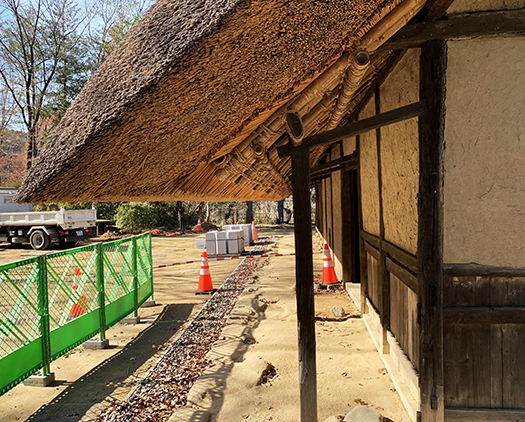
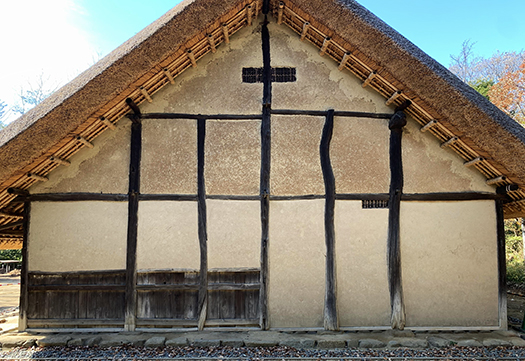
外皮側に使われた用材としての木材は、写真のような不揃いの「ハネ」品っぽい。
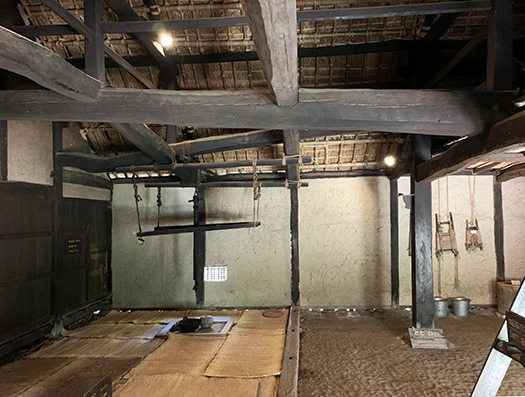
内部の骨格構造材の「四つ建て」の柱は立派なモノを使い、
また、梁材も根曲がりっぽい太い材が使われて頑丈そうだけれど、
外皮側の材料にはこうした材が使われている。
壁も木材不足を反映したのか、塗り壁仕上げとなっている。
そもそも塗り壁仕上げは戦乱で木材資材が枯渇した京都で発達した建築技術。
四つ建てという骨格構造とは、内部側で頑丈な架構を作って
外皮側は軽量な造作でもいい、という建築工法のように受け取れる。
いずれにせよ、木材資源の減衰ぶりをこうした外壁は物語っていると思える。

妄想だけれど、今後風力など不安定な自然エネルギー依存社会に移行すると
江戸期に木材資源の領域で生起したこのような資材状況の歴史が
別の社会領域で繰り返される可能性があるのではと思う。
こと建築の世界で言えば、こういう不揃いな素材を使いこなすには
熟練の大工技量が不可欠になり、事実江戸期にはこういう建築も可能だった。
しかし現代で規格化建材が供給できなくなったら、そんな技量の職人はまずいない。
まぁ、エネルギーとして薪がメインになることは考えにくいので、
木材資源が枯渇する可能性は低いでしょう。
とはいえ、自然エネルギーへの転換で起こる変化は予知するのは難しい。
危機の可能性はあらゆる領域、思わぬ領域に及ぶことになるだろう。
それによって社会はある種の「痛み」をともなうのは確実だけれど、
そういった覚悟も持って自然エネルギーへの転換が叫ばれているのか、
どうなんだろうと危惧を感じる。
この外壁のオモシロい表情にはこんな警句も籠もっている・・・。

English version⬇

[Inconvenient truth of dependence on natural energy / Good Japanese house ㉔-5]

Firewood as biomass energy is the lifeline of Japanese farmhouses.
Its supply relied heavily on rural “satoyama”.
Even in the Kanto region, where there are many relatively flat lands, thickets are intentionally preserved,
It is clear that the collection of firewood for boiling and heating was the lifeline of the Mura community.
Then, basically, the population size that can support the energy source
The total number must be limited. Behind the rhetoric of natural energy
I can’t help but see that there is such a dire situation.
There is a long history of common sense about biomass such as firewood,
I think that the limit point is well recognized, but also natural energy
When the target changes to solar power and wind power generation
Common sense for such objects is not yet universal.
Now in southern Texas, which is an advanced wind power generation area in the United States
A big cold wave struck, and this natural wind power generation could not meet the demand at all.
It is said that a considerable-scale power outage has occurred and an emergency has occurred.
The “inconvenient truth” of reliance on renewable energy, which is difficult to control, has been exposed.
For human society, the problem of energy is a big problem that is directly linked to survival strategy.
It can be said that the Biden administration was struck between the idea and the reality as soon as it was inaugurated.
In addition, there is no Japanese media that sends out with a sense of crisis about this inconvenient truth.
I’d like to wait for a detailed report on what’s happening in Texas right now.
… No, on a more familiar topic, the predicament of new electric power has become apparent.
The international LNG market soared due to the global cold wave, and “renewable energy” was sold.
Users who are attracted to new electric power companies and have contracts are screaming at soaring electricity prices.
News reports that household electricity has increased tenfold.
“Electricity bill 80,000 yen, Gyaa” User shock New power Prices soared, stores 5 times, home 10 times, LNG shortage in the background.

The Edo period society is said to be the ultimate ecological society.
The population has reached 30 million by the Genroku period from the initial 13.8 million.

After that, population growth was suppressed in a renewable energy-dependent society.
After all, the population stagnated for nearly 200 years, and the end of the Tokugawa shogunate was welcomed by the same 30 million population society.
Population expansion until the Genroku period is to realize a peaceful environment and for each clan
It must have been a big aspect of desperate Nitta development and industrial promotion measures.
Efforts to develop the Japanese archipelago in a society that depends only on renewable energy
It may indicate that it has progressed to the limit.
If you close trade with foreign countries and rely on your own domestic energy, this degree will be
It seems to be the potential of the Japanese archipelago.
In response to such stagnation, Western powers are armed with a new energy called coal-fired power.
In the form of Kurofune, he overwhelmingly showed and suppressed the superiority of the energy revolution.
In a society that relies solely on renewable energy, population stagnation will be inevitable in a sense.
On the other hand, if the deprivation of firewood as a major energy progresses,
The absolute number of timber as a building material is also relatively reduced.
Was this Koshu relatively close to Edo and the wave of market economy rushing in?
As I will mention later, charcoal sales were a big market for merchants during the Edo period.
Wood was supplied to urban areas in forests nationwide, and timber resources were barely reached.
The wood used as the lumber on the exodermis side looks like an irregular “splash” product as shown in the photo.
The pillars of the “four-building” of the internal skeletal structural material use fine things,
Also, the beam material is made of thick material with a bent root and seems to be sturdy, but
These materials are used for the material on the exodermis side.
The walls are also plastered, probably reflecting the lack of wood.
In the first place, plaster wall finishing is a building technology developed in Kyoto, where wood materials have been exhausted due to the war.
The skeletal structure of four buildings is to make a sturdy frame inside.
It can be perceived as a construction method that the exodermis side can be a lightweight structure.
In any case, these outer walls seem to indicate the decline of wood resources.

It’s a delusion, but when we move to an unstable society that depends on renewable energy such as wind power in the future
The history of such material conditions that occurred in the area of ​​timber resources during the Edo period
I think it may be repeated in another social area.
In the world of architecture, how to master these irregular materials
Skilled carpentry skills became indispensable, and in fact, such construction was possible during the Edo period.
However, if standardized building materials cannot be supplied in modern times, there are few craftsmen with such skills.
Well, it is unlikely that firewood will be the main energy source, so
It is unlikely that wood resources will be depleted.
However, the changes that occur with the conversion to renewable energy are difficult to predict.
The potential for a crisis will extend to all areas, unexpected areas.
It is certain that society will be accompanied by some kind of “pain”,
Is there a call for a shift to renewable energy with such a preparedness?
I’m worried about what’s going on.
There is such a warning in the funny expression on this outer wall …

【冬を「耐え忍ぶ」DNA的痕跡/日本人のいい家㉔-4】


16世紀末の甲州・広瀬家住宅の内部空間続篇です。
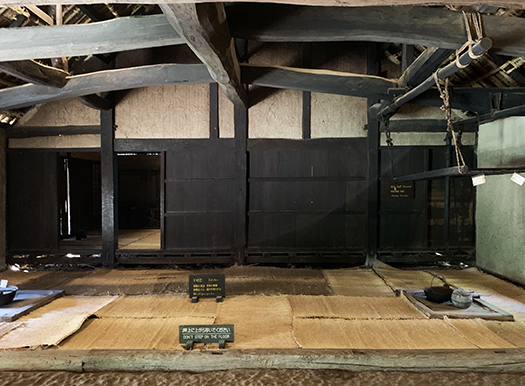
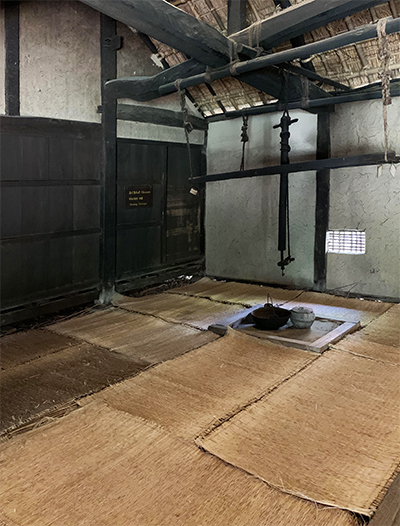
床が木材で組み上げられる以前の土間床だけれど、
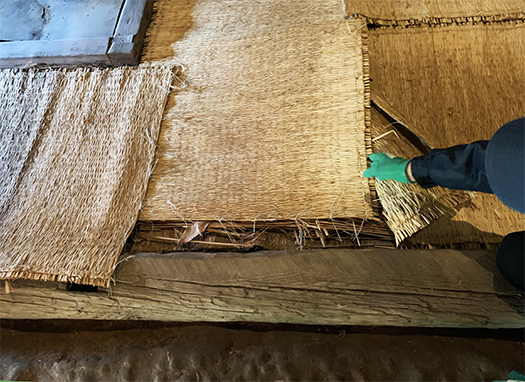
そこにいわば畳の原型とも思われるような重ね敷き込みのムシロ、萱束などが
古民家として残っていることに、新鮮な感動を覚えていました。
土間は「屋根の掛かった作業空間」として農事や生業の空間になったが、
居間空間は徐々に床が木組みされていったのだとすれば、
その中間形態、ミッシングリンクを確認したかったのであります。
この甲州の家では、そういった居間空間からその奥に座敷がしつらえられている。
江戸時代中期に建てられた家ですから、土間から床上げへの中間的なありよう。
戦国期までの民家では土間だけが一般的だったのが、
農業生産が飛躍的に向上していって、庶民の暮らしにもゆとりが生まれた。

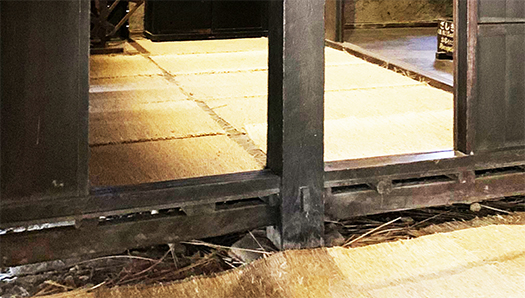
しかし土間側から床上部を見ると、床を支える根太の木口がそのまま見えている。
怖ろしいことに、その根太部からは外部からの採光が入っている(泣)。
意図せず、無自覚に大開口部ができているのです。
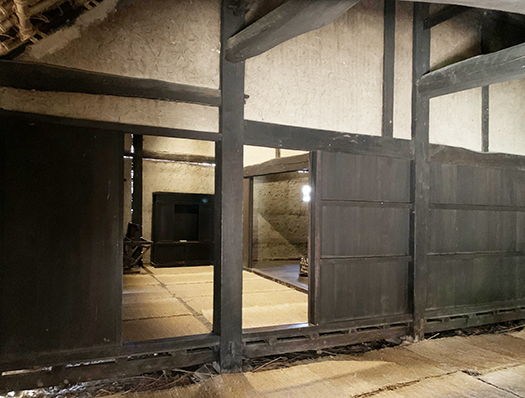
またよく見ると床上げした奥の居室の柱と塗り壁の間でも
明確な採光が見られて、外気との通気が完璧に実現している。
明瞭な断熱欠損(笑)大穴発見、ということになるワケですが、
まぁ古民家として、科学の及ばない時代のなかでは無理はない。
まずは暮らしに屋根の掛かった空間を確保するのが住宅歴史の第1歩。
考えてみれば、このような住宅のレベルにたどりつくにも
縄文が終わってからでも2-3000年間くらいの時間が掛かってきている。
この段階から現代直前まで、日本ではそう大差のない「隙間だらけ」が
一般的な住居のありようだったといえるのでしょう。
つい最近、ここ数十年スパン程度で、ようやく住宅性能ということに
そこそこの人々が意識的に気づき始めたに過ぎないとも言える。
こういう隙間全面開放の住宅でも「住み続けてこられた」ことの方が奇跡的。
土間住宅とは基本的に竪穴の延長とも言えるので、
木組みで床上げに「進歩」することで熱環境的にはむしろ退化したのかも。
北海道移住初期にこういう住宅が建てられ多くの人が住み着いてみて
根源的に「ダメだこりゃ」と意識革命が始められたということなのでしょう。

北海道の人間からすると、よく耐え忍んでこられたと感動する。
四季変化が世界有数に明瞭な国土なので、
暑苦しい夏期もあって、他の春秋には特段の問題がなかった。
であれば、冬だけ「ガマン」すれば住の用は足りていたということなのでしょうか。
たぶん日本人にはそういう「耐え忍ぶDNA」が相当根強いかも知れない。
直近の「省エネ基準適合義務化」についての国交省へのキャンセル圧力に、
DNAレベル的な驚くべき強情さを感じさせられた・・・。
やがて断熱気密というものも、日本民家の進化の過程のなかで
当然のごとく未来形としては実現していくのだろうと思います。
いまがちょうどその端境期であるのかもしれない。
こういった「ミッシングリンク」をまざまざと見せてくれる古民家。
この甲州の家は興味深い正直さを見せてくれますね。

English version⬇

[Floor assembly and soil indirect point “large opening” / Japanese good house ㉔-4]

It is a sequel to the interior space of the Koshu Hirose family residence at the end of the 16th century.
It’s a dirt floor before the floor was made of wood,
There are layers of muscillo and straw mats that seem to be the prototype of tatami mats.
I was impressed by the fact that it remained as an old folk house.
The dirt floor became a space for agriculture and livelihood as a “work space with a roof”,
If the floor of the living room was gradually tied up,
I wanted to confirm the intermediate form, the missing link.
In this Koshu house, a tatami room is set up in the back from such a living room space.
The house was built in the middle of the Edo period, so it seems to be an intermediate process from the dirt floor to raising the floor.
In private houses until the Warring States period, the dirt floor was common,
Agricultural production has improved dramatically, and the lives of ordinary people have become more comfortable.

However, when looking at the upper part of the floor from the dirt floor side, the end of the joist that supports the floor can be seen as it is.
Frighteningly, there is daylight from the outside from the joists (crying).
Also, if you look closely, even between the pillars and plaster walls in the back room where the floor was raised
Clear lighting is seen, and ventilation with the outside air is perfect.
Clear insulation defect (laughs) It means that a big hole was found, but
The first step in housing history is to secure a space with a roof for living.
If you think about it, you can reach a house like this
It was about 2-3000 years after the Jomon period was over.
From this stage to just before the present age, there are “full of gaps” that are not so different in Japan.
It can be said that it was like a general residence.
Just recently, in the last few decades, it’s finally about housing performance.
It can be said that some people have just begun to notice it consciously.
It is more miraculous that “I have been able to continue living” even in such a house with a fully open gap.
Japanese people began to settle in Hokkaido, where such houses were built in the early days of emigration.
It seems that the consciousness revolution that “this is no good” has started fundamentally.

From the perspective of people in Hokkaido, I am impressed that they have endured well.
Because the four seasons change is one of the clearest in the world
There were no particular problems in the other spring and autumn due to the hot summer.
If so, does it mean that “gaman” was enough for living only in winter?
Perhaps Japanese people have such enduring DNA.
Due to the latest cancellation pressure of “mandatory compliance with energy saving standards”
It made me feel an amazing DNA-level stubbornness …
After all, heat insulation and airtightness are also in the process of evolution of Japanese private houses.
As a matter of course, I think it will be realized as a future form.
As an old fossil house that shows various “missing links” like this
This Koshu house shows an interesting honesty.

【土間から土座、床上空間へ/日本人のいい家㉔-3】


戦国期(16世紀まで)ニッポンでは民家に畳の座敷があるのはおかしい、と
麒麟がくる、の建築意匠監修をされた広島大学大学院教授・三浦正幸先生。
そうか、と深く納得すると同時に、それでは竪穴住居やアイヌチセとの
床面の違いの歴史的推移痕跡の現場をぜひ確認したいと思い立った。

今回の古民家シリーズの甲州広瀬家住宅でついにその痕跡を確認できた。
図面上の「イドコ」という空間はその上の土間(ドジ)との境界には
木材で床面に仕切りが置かれているだけで、段差は確認できない。
この農家住宅は創建は1600年代末期ということなので、
戦国が徳川政権で収束して100年未満の時期。
基本的にはこの空間でふだんの時間は過ごしていたとされる。
囲炉裏が2箇所に切られていて、食事と日常の農作業が行われた。
で、床面にはムシロが多重積層されている。
というか、ムシロの下側には萱束が敷き込まれているようです。
後に敷物調度として普遍化する畳と構成部材的には同じような組成。
畳とは、語源的に「たたむ」ということだけれど、
古語的には「重ねる」という意味合いが強いと読者の方から指摘された。
たしかにそのような建具としての歴史推移があるようです。
たくさんの敷物素材の積層が格式表現そのものであったといわれる。
「麒麟がくる」では、畳は局所的に信長などの貴人が
板の間の上級武家たちに対して「上から目線」する調度として表現された。
ヘリにも家紋がデザインされたりして家格意識の刷り込みにも寄与している。
武家たちの空間では床上げした板敷きなどの「上がる」空間が
武家の優越性として居室に装置されるようになっていたということでしょう。
わかりやすい貧富の格差というようにも言えるけれど、
庶民にして見れば、そもそも体験しようもない住文化なので、
うらやましいとも思わなかったのではないかと思う。
こういう居住文化があって「地下人」とか、座敷の貴人に土座から対面する
時代劇でよく見るシーンになっていくのでしょう。
大岡越前守の「お裁き」シーンそのままであります(笑)。
この移築保存古民家では16世紀末期の時代相にあわせて考証している。
いまから300数十年前、日本列島では庶民一般はこうした空間で生きてきた。

縄文遺跡や弥生遺跡などから、タタミ文化へのプロセスで
こういう「土座」空間の具体的事例を見ることができて
想像力の幅が広がっていく思いがしております。
ようやく民族の過ごした空間記憶・時間がつながる、みたいな。

English version⬇

[From Doma to Doza, Raising the floor / Good Japanese house ㉔-3]

During the Warring States period (until the 16th century), it was strange that private houses had tatami mats in Japan.
Professor Masayuki Miura, a professor at Hiroshima University’s graduate school, supervised the architectural design of Kirin ga Kuru.
At the same time as I was deeply convinced, then with the pit dwelling and Ainu Chise
I wanted to check the site of the historical transition traces of the difference in floor surface.

The trace was finally confirmed in the Koshu Hirose family house of this old folk house series.
The space called “Idoko” on the drawing is at the boundary with the dirt floor (Doji) above it.
No steps can be seen, only the partition is placed on the floor with wood.
This farmhouse was built in the late 1600s, so
It is less than 100 years since the Sengoku government converged under the Tokugawa administration.
Basically, it is said that he spent his daytime wake-up time in this space.
The hearth was cut in two places, and meals and daily work were carried out in an integrated manner.
So, the floor surface is multi-layered with straw mats.
Rather, it seems that things like straw mats and como are laid under the Mushiro.
Tatami is etymologically “folding”,
Readers pointed out that the old word has a strong meaning of “overlapping.”
Certainly, there seems to be a historical transition as such a fitting.
It is said that the stacking of many individual rugs was the formal expression itself.
When Kirin comes, tatami mats are locally used by nobles such as Nobunaga.
It was expressed as a furnishing that “looks from above” to the senior samurai between the boards.
The family crest is also designed on the helicopter, and we are striving to imprint the family consciousness.
In the space of the samurai, there is a space where you can raise the floor and “rise” such as boarding.
It seems that it was finally being installed.
It can be said that the gap between rich and poor is easy to understand,
If you look at it as a commoner, it’s a living culture that you can’t experience in the first place.
I think I didn’t envy him.
With this kind of living culture, we meet underground people and nobles in the tatami room from the ground.
It will be a scene that you often see in historical drama.
The “judgment” scene of Ooka Echizen Mamoru is the same (laughs).
This relocated and preserved old folk house is examined according to the period of the end of the 16th century.
Over 300 decades ago, the general public lived in such a space in the Japanese archipelago.

In the process from Jomon ruins and Yayoi ruins to Tatami culture
I was able to see a concrete example of such a “Tsuchiza” space.
I think that the range of imagination will expand.
It seems that the spatial memory and time spent by the people are finally connected.

【養蚕景気で改築の農家建築/日本人のいい家㉔-2】


古民家探究シリーズ・甲州の農家住宅・広瀬家の第2回です。
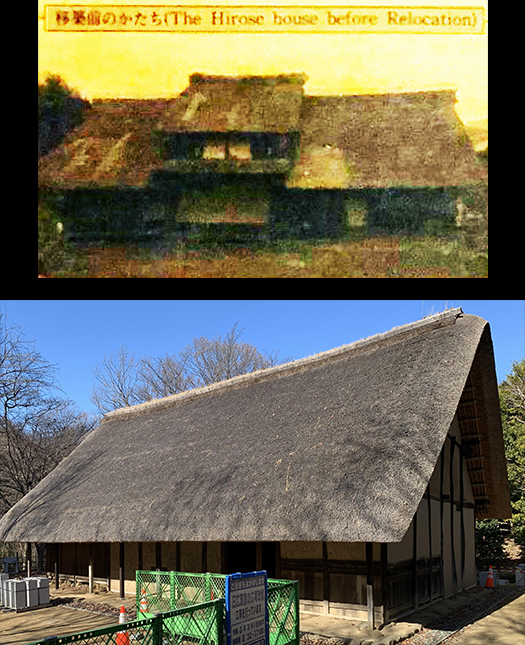
写真上が移築保存先の川崎市に移転直前の甲州での「現状有姿」。
建物の真ん中部分が2階建てになっていて「突き上げ2階」という呼び名。
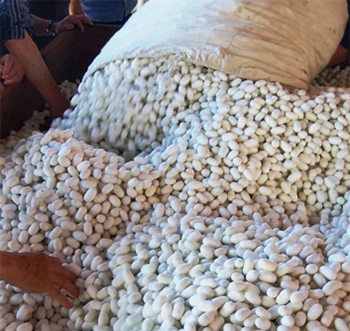
空間利用目的は養蚕に使っていたことがあきらか。
移築保存に当たって建物を調査して創建時には「草葺切妻」であることがわかり、
古民家保存の主旨から約300年前の創建時デザインを採用したとされる。
なので、古いモノクロ写真の方が建築として歴史的に新しいので注意。

日本は大きな変革は対外的な関係と同時並行で進むのが歴史的因果。
養蚕業は、カイコ(蚕)を飼ってその繭から生糸(絹)を作る産業。
日本へは弥生時代に中国大陸から伝わる。紀元前221年秦の中国統一によって
輸出統制が厳しくなった。蚕種はそれ以前の時代に船で日本に運ばれていた。
日本が桑の生育に適していたこともあってかなり早い時期から伝来。
紀元前200年頃の福岡県の有田遺跡からは「平絹」が出土している。
当時の中国の絹織物とは織り方が異なり日本列島特有の絹織物が既にあった。
記紀には仲哀天皇4年に養蚕の記録。195年には百済から蚕種(カイコの卵)が、
283年には渡来氏族の秦氏が養蚕技術を伝えるなど導入が歴年行われた。
奈良時代には全国的(東北地方や北海道除く)に養蚕が行われるようになり、
租庸調の税制の庸や調として、絹製品が税として集められた。
しかし国内生産で全ての需要を満たせず、品質的にも劣っていたため、
中国からの輸入は江戸時代に至るまで続いた。この代金の金銀銅流出を懸念した
江戸幕府は国内養蚕を推奨し、諸藩も殖産事業として興隆を促進した。
幕末期には画期的養蚕技術開発がされ、良質な生糸が生産されるようになった。
日本が開国に転じた時期で生糸は主要な輸出品となった。〜以上Wikipedia要旨。


この家は1600年代末頃建築で、その後養蚕のために改造したという経緯。
先に見た相模国の古民家でも養蚕で家屋改造されていたが、
開港した横浜からさかんに生糸・絹製品が輸出されるのに、
物流的にこの甲州も甲州街道を下れば、動脈的位置にあることもわかる。
明治の開国でまずはこうした生糸・絹織物の輸出が盛り上がったのだろう。
1600年代末建築の住宅が1800年代半ばに増改築したか。
伝統的な「草葺き切妻」から「突き上げ2階」建築群に外観大変化。
農家にしてみれば、貴重な現金収入増というわかりやすい改造動機。

こうした「突き上げ2階」への増改築に当たっては、
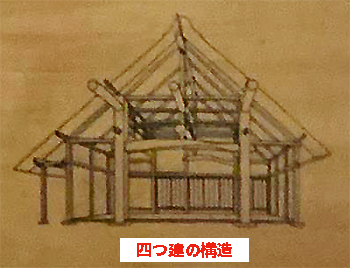
この甲州地方の農家の建て方が、「四つ建」〜よつだて〜であることが
条件としてより優位性があったのではないかと思われる。
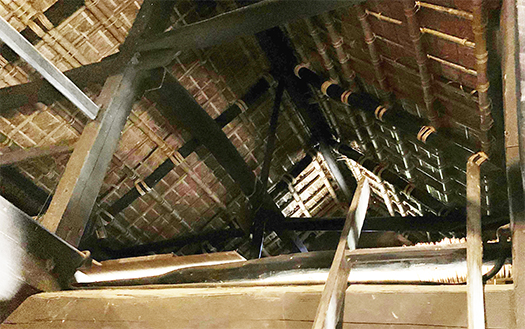
写真を見るとこの農家住宅は中央部の4本の構造柱が骨格と知れる。
中央柱と、居室境の中央柱はいずれも棟まで達する、いわゆる棟持柱。
棟持柱構造も甲州型民家の特徴のひとつ。構造部材が織りなす
幾何学的な格子模様はなかなか美しい、と教育委員会の記載があるけれど、
農家の経済を前進させた住宅構造として、大いに実利に寄与したといえる。

English version⬇

[Farm building rebuilt by the sericulture economy / Japanese good house ㉔-2]

This is the second installment of the Kominka exploration series, Koshu’s farmhouse, and the Hirose family.
The photo above is the state just before the relocation to Kawasaki City, where the relocation is now preserved.
The middle part of the building is a two-story building, and it is called “push-up second floor”.
It is clear that the purpose of space use was for sericulture.
When the building was relocated and preserved, the building was investigated and found to be a thatched gable at the time of construction.
It is said that it adopted the design at the time of its construction about 300 years ago from the purpose of preserving the old folk house.
So be aware that old black-and-white photographs are historically newer in architecture.

The historical cause and effect of Japan is that major changes proceed in parallel with external relations.
The sericulture industry is an industry in which silk moths are raised and raw silk is made from their cocoons.
It was introduced to Japan from mainland China during the Yayoi period. By the unification of Qin in China (221 BC)
Control has become stricter. Silkworm species were shipped by ship before that time.
It was introduced quite early because Japan was suitable for growing mulberries.
Plain silk has been excavated from the Arita site in Fukuoka Prefecture (around 200 BC).
The weaving method was different from that of Chinese silk fabrics at that time, and there were already silk fabrics peculiar to the Japanese archipelago.
In Kiki, a record of sericulture in the 4th year of Emperor Chuai. In 195, the silk moth species (silk moth eggs) from Baekje
In 283, the introduction was carried out for many years, such as the introduction of sericulture techniques by Mr. Hata of the Wata clan.
During the Nara period, sericulture began to be carried out nationwide (excluding the Tohoku region and Hokkaido).
Silk products were collected as a tax as a tax system of the tax system.
However, domestic production did not meet all demand and was inferior in quality.
Imports from China continued until the Edo period. Concerned about the outflow of gold, silver and copper
The Edo Shogunate recommended domestic sericulture, and the feudal lords also promoted the rise as a breeding business.
In the late Tokugawa period, epoch-making sericulture technology was developed, and high-quality raw yarn was produced.
Raw yarn became a major export product when Japan turned to the opening of the country. ~ Above Wikipedia abstract.

It was built around the end of the 17th century, and the house was later remodeled for sericulture.
The old folk house in Sagami Province that I saw earlier was also remodeled with sericulture,
Raw silk and silk products are actively exported from Yokohama, which opened the port,
Logistically, if you go down the Koshu Highway, you can see that this Koshu is also in an arterial position.
With the opening of the country in the Meiji era, exports of such raw silk and silk fabrics may have risen.
Did a house built in the late 1600s renovate in the mid-1800s?
The appearance has changed significantly from the traditional “thatched gable” to the “upstairs 2nd floor” building group.
For farmers, this is an easy-to-understand motive for increasing valuable cash income at once.

In the extension and renovation to such “push up 2nd floor”,
The way to build a farmhouse in the Koshu region is “four-building” ~ Yotsudate ~
It seems that there was a greater advantage as a condition.
Looking at the photo, it is known that the four structural pillars in the center of this farmhouse are the skeletons.
The central pillar and the central pillar on the border of the living room both reach the ridge, so-called ridge pillars.
The pillar structure of the ridge is also one of the characteristics of the Koshu-type private house. Structural members weave
There is a description that the geometric checkered pattern is quite beautiful,
It can be said that it contributed greatly to the actual profit as a housing structure that advanced the farmer’s economy.

【江戸中期・甲州の草葺切妻民家/日本人のいい家㉔-1】


日本の民家では各地方で独特の形状規格化があるとされる。
南部「曲がり家」とか、飛騨の「合掌造り」などが代表的だけれど、
その地域の気候風土に適合した家づくりの工夫について、
論理の規則にしたがって必然的に結論を導き出す、演繹的パターン化がある。
そういったものとして甲州地域では草葺き・切妻という民家群があるという。
切妻というのはもっとも初源的な屋根の掛け方だと思ったのですが、
そうではなく、日本では寄棟や入母屋が屋根の圧倒的多数派で、
切妻屋根は形としては最も単純だが、草葺屋根としては圧倒的少数派とのこと。
〜こうした屋根形式が分布するのは全国的にみても奈良・大阪・岐阜・富山
そして山梨のみである。奈良・大阪における切妻草葺の出現は江戸後期だから、
それほど古い歴史を持っているわけではない。こうしたなかで山梨県の切妻造は
すでに18世紀前半には一般化しているから、飛騨の合掌造と並んで
その成立はかなり早かったのである。〜川崎市教育委員会。とされる。
切妻という言い方よりも現代では「三角屋根」という方がポピュラーか。
北海道の「ブロック造三角屋根」という地域独自の「規格住宅」は
最近ではすっかり忘れられてきたけれど、身近な地域景観を形成していた。
ブロック造は雪対策と架構コストから三角屋根が選択されたのだけれど、
いまのところこの甲州の古民家群の選択根拠はナゾとされる。
北海道の「ブロック造三角屋根」は20世紀後半に出現の公営デザインだけれど、
300年ほど前、18世紀までに成立して現代にまで残っていたこの「草葺切妻」、
どのような地域的選択の結果であったのか、興味深く、確定を待ちたい。
たぶん武田信玄の時代くらいから住文化としてあったのではないか。

また、甲州の地元では「芝まくり」と呼ばれる強風があって、
それへの対応として家の軒が非常に低い位置まで下ろされている。
強風に直接当たる外壁面を小さくして、さらに開口部を極力省略して
閉鎖的な家づくりをしている。外壁も土塗りが採用されて
風への防御性が強調されています。
入口は平入りですが、大屋根に沿わせて風を「いなしていく」対応だと思える。
この玄関前の軒の高さは、たぶん「芝まくり」との対話の結果として
その最適解が計られたのだろうことが偲ばれます。
深い軒先で確かに「開放性」よりも防御性重視であることがわかる。
ただこの軒先空間は一方でどう使われたかにも興味は湧いてくる。
ここまで広大な空間ができると、暮らし方の想像力も刺激される気がする。

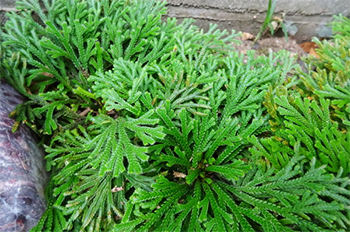
で、屋根頂部にはイワヒバという樹種を植えた「芝棟」がある。


この写真は初冬に撮影したのですが、岩場などに自生するイワヒバは、
盆栽などでも人気のあるシダ植物。ある程度までしか生長しないことや、
新緑や紅葉が楽しめること、また長寿であるなど魅力的な植物。
冬は元気がなくこれは、ほとんどの植物と変わりなく
霜が降るといくら水を与えても葉は開かず冬眠状態だという。
小雨でも雨が降ると、このように生き返ったように青々とするとのこと。
こういう植物を屋根に植えて住宅デザインに取り入れ楽しむって、
なかなか古民家の住まい手、はるかな先人たちの知恵と工夫と気付かされる。
あるいはこのイワヒバの様子で四季の移ろいを教わって
日々の暮らしの「風見鶏」としていたものかも知れない。いかにも古民家の奥行き。

English version⬇

[Mid-Edo period, Koshu thatched gable private house / Japanese good house ㉔-1]

It is said that Japanese private houses have unique shape standardization in each region.
Typical examples are “Kurakuya” in the south and “Gassho-zukuri” in Hida.
About ingenuity of house building that suits the climate of the area
There is a deductive patterning that inevitably draws conclusions according to the rules of logic.
It is said that there is a group of private houses called thatched roofs and gables in the Koshu area.
I thought that the gable was the most original way to hang a roof,
Instead, in Japan, hipped roofs and gables are the overwhelming majority of roofs.
The gable roof is the simplest in shape, but it is an overwhelming minority for thatched roofs.
~ These roof types are distributed nationwide in Nara, Osaka, Gifu, and Toyama.
And only Yamanashi. Since the appearance of gabled thatched roofs in Nara and Osaka was in the late Edo period,
It doesn’t have that old history. Under these circumstances, the gable construction in Yamanashi Prefecture
It was already popular in the first half of the 18th century, so along with Hida’s Gassho-zukuri
It was established quite quickly. ~ Kawasaki City Board of Education. Is said to be.
Is “triangular roof” more popular in modern times than the term gable?
Hokkaido’s “block-built triangular roof” is a region-specific “standard house”
Although it has been completely forgotten these days, it formed a familiar regional landscape.
For block construction, a triangular roof was selected because of snow measures and frame cost.
So far, the basis for selecting the old folk houses in Koshu is said to be mysterious.
Hokkaido’s “block-built triangular roof” is a public design that appeared momentarily in the latter half of the 20th century,
About 300 years ago, this “thatched gable” that was established by the 18th century and remained until the present day,
It is interesting to see what kind of regional choice was the result, and I would like to wait for confirmation.
Perhaps it has been a living culture since the time of Shingen Takeda.

In addition, there is a strong wind called “turf rolling” in Koshu.
In response to that, the eaves of the house have been lowered to a very low position.
The outer wall surface that directly hits strong winds is made smaller, and the openings are omitted as much as possible.
We are building a closed house. The outer wall is also painted with earth
The protection against the wind is emphasized.
The entrance is flat, but it seems to be a response to “smooth” the wind along the large roof.
The height of the eaves in front of this entrance is probably the result of a dialogue with “Shiba Rolling”.
It is remembered that the optimum solution was measured.
It can be seen that the deep eaves certainly emphasize defensiveness rather than “openness”.
However, I am also interested in how this eaves space was used.
I feel that creating such a vast space will stimulate the imagination of how to live.

At the top of the roof, there is a “turf ridge” where a tree species called Selaginella is planted.

This photo was taken in early winter, but Iwahiba, which grows naturally in rocky areas,
A fern plant that is also popular in bonsai. It grows only to a certain extent,
An attractive plant where you can enjoy fresh greenery and autumn leaves and have a long life.
Winter is not healthy and this is no different from most plants
It is said that when it frosts, the leaves do not open and hibernate no matter how much water is given.
Even if it rains lightly, when it rains, it will become lush as if it were revived like this.
Incorporating these plants into a house design that you can enjoy by planting them on the roof
It is quite noticeable to the wisdom and ingenuity of the residents of old folk houses and far ancestors.
Or you can learn about the changes of the four seasons with this Iwahiba
It may have been the “weathercock” of everyday life.
It seems to be an old folk house with a lot of depth.

【住まいHowTo・混合栓泡沫蛇口に延長ホース】


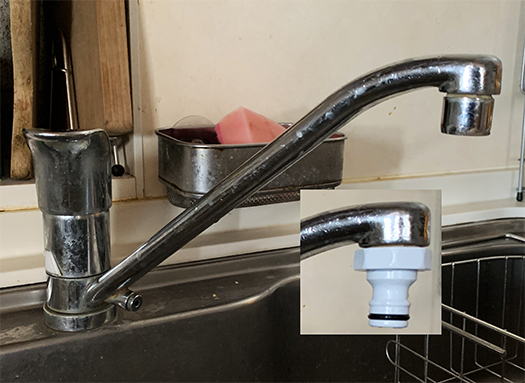
わが家の台所は混合栓で「泡沫蛇口」。
お恥ずかしい話ながら、この蛇口をなにげには見ていたけれど、
さわって確認したり、機能性をチェックしたりということはしたことがなかった。
もうかれこれ30年経過の設備機器。
うかつにもこういうことに鈍感でもなんとか済んできていたのですね。
この間、大きな増改築だけでも3回行ってきているし、
いまでもチョコチョコと手入れし続けてきているわが家なのに・・・。
まぁ一般的な住まい手は、多くはそうだろうと思います。
水道の蛇口というのは、水道管の径そのまま丸い形という常識は、
現代でははるかに遠い時代のものなのだと実感させられる。
進化すると言うことはそのまま、扱いが複雑化するというのが一般現象。
最近のモノは温水と水道水の「混合栓」でしかもより細かい水流になるように
「泡沫」状になるように工夫された口径になっている。
その部分を見てはいたけれど、これまで30年以上アタッチする必要性がなかった。
この蛇口に延長ホースを取り付けるという必要性がごく最近発生した。
ということで大きめのホームセンターに行って蛇口形状に合う
コネクタ類を探してみることにした。
幸い店舗スタッフの方がいたので、名称がわからない器具を
一生懸命に機能だけで説明して、そのありかを教えていただいた。
ホームセンターではこういう「なんでも相談」がスタッフに寄せられる。
店舗も大型化して、お客さんの意味不明の断片言語から翻訳コンニャクするのが
非常に困難だろうと思うのですが、ありがたくも理解して案内してくれた売り場。
・・・満館全席状態であります(泣)。
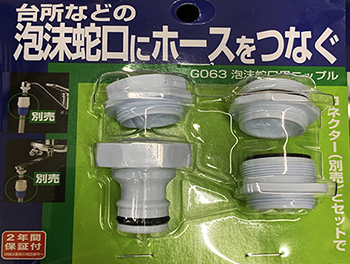
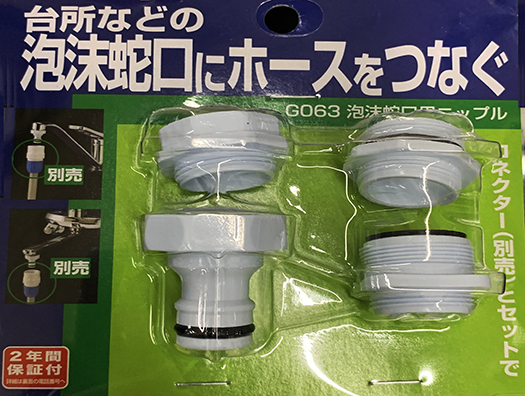
それらしき売り場にはなんと、数十種類のコネクタ類が展示販売されている。
で、家に残っていたカミさんにケータイで連絡して写真を送ってもらうように依頼。
このあたりIT時代を生き残る絶滅危惧・昭和中期人間の時代適合。
そういうコミュニケーションツールが頼れる「最適解」への道であります。

「あのさ、台所の蛇口の先端の写真、送って」
「・・・送ったよ」
「おお、まちがいなくこれは泡沫タイプですね。」
「あ、クリナップなんですが・・・」
「メーカーはあんま関係なくて要は「径」の大きさなんですね」
ということで、いくつかの口径へのアジャスターのついたコネクタを購入。
そこから先のゴムホースとコネクタはプラスチック製品でこれは馴染みがある。
という往復1時間ほどの買い物から帰ってきて、取り付け作業。
蛇口の泡沫端末をクルクルと回して取り外し、
そこにくだんのコネクタを回して嵌め込む。一般的サイズだったようで一発。
それにゴムホース側のコネクタも装置させてドッキング。
無事、ゴムホース先端で混合栓からの湯水が噴出させられました。
通常使用の泡沫口とこのプラ製口を交換しながら使うことになります。
ホッとひと安心。まだまだ若いモンには負けない、というのは大袈裟すぎか(笑)。

English version⬇

[Housing HowTo / Mixing tap Foam faucet with extension hose]
The kitchen of my house is a “foam faucet” with a mixing tap.
I was embarrassed to see this faucet, but
I had never touched it to check it or check its functionality.
Equipment that has been around for 30 years.
You’ve managed to get rid of this kind of insensitivity.
During this time, I’ve been doing three major expansions and renovations,
Even though it’s my home that I’m still taking care of with chocolate.
Well, I think that many ordinary residents will.
The common sense that a water faucet is a round shape with the diameter of the water pipe is
It makes me realize that it is a far distant era in modern times.
It is a general phenomenon that handling becomes complicated as it is said to evolve.
Recent things are “mixing taps” of hot water and tap water so that the water flow becomes finer.
The caliber is devised so that it looks like a “foam”.
I’ve seen that part, but I haven’t had to attach it for more than 30 years.
The need to attach an extension hose to this faucet has only recently arisen.
So I went to a large home improvement store and it fits the faucet shape
I decided to look for connectors.
Fortunately, there was a store staff member, so I bought a device that I didn’t know the name of.
I tried my best to explain only the functions and let me know where they are.
At the home center, such “anything consultation” is sent to the staff.
The store is also getting bigger, and it is better to translate from a fragmentary language that the customer does not understand.
I think it will be very difficult, but thankfully the sales floor understood and guided me.
・ ・ ・ All seats are full (crying).
Dozens of types of connectors are on display and sold at those sales floors.
So, I asked Kami, who was left at home, to contact me with a mobile phone and send me a photo.
Endangered to survive the IT era around here ・ Suitable for the human era in the middle of the Showa period.
It is the way to the “optimal solution” that such communication tools can rely on.


“That’s right, send me a photo of the tip of the kitchen faucet.”
“···Sent”
“Oh, definitely this is a foam type.”
“Oh, it’s Cleanup …”
“It doesn’t matter what the manufacturer is, the point is the size of the” diameter “.”
So, I bought a connector with adjusters for several calibers.
The rubber hose and connector from there are plastic products, which are familiar.
I came back from shopping for about an hour round trip and installed it.
Remove the foam terminal of the faucet by turning it around.
Turn the connector of Kudan there and fit it. It seems that it was a general size and one shot.
Also, the connector on the rubber hose side is installed and docked.
The hot water from the mixing tap was safely ejected from the tip of the rubber hose.
You will use it while exchanging the foam mouth for normal use and this plastic mouth.
Relieved and relieved. Is it too exaggerated to be competitive with young Man (laughs)?

【河野太郎行革相・タスクフォースの実態とは?】


さて一昨日24日夕方の行革大臣・タスクフォースの件について続報。
直前22日に福岡・熊本の大手ビルダー・エコワークス小山氏から情報があり、
こういう会合で住宅省エネの審議の様子がそのまま動画配信されると
アナウンスがあって、気付いた次第。
どうやら前真之東大准教授がメンバーとして発表という未確認情報もあって
先生とはもう7年間、雑誌に省エネ関連の連載をお願いしていることから
取り急ぎスケジュールを調整し動画配信をリアルタイムでチェックした次第。
そういうことなので、この「タスクフォース」という制度建て付け自体も理解不足でした。
1日経過して、ようやく周辺的な事情をチェックしてみることができた。
どうやらこのタスクフォースとは、河野太郎大臣の肝煎り会議で
各省庁、とくに再生エネルギーへの積極化という基本的提言スタンスがあって、
その論議の延長線上で、第5回に至って「省エネ」という論議に拡大し
その基調講演者として前准教授に白羽の矢が立てられた、という経緯のようです。
24日にはこのタスクフォース終了後30分ほどで河野大臣は
現下の主任務である「コロナワクチン接種計画」発表の記者会見に臨んでいた。
忙しい公務の間を縫って政策を進めている様子がわかる。

行革担当大臣というのは省庁組織を支配する大臣ではなく、
必要な改革について各省庁横断的に特定政策テーマの方向性を探るという。
で、このタスクフォースでは再生エネルギー政策への提言、方向性が論議中。
とくに最近の電力市場の混乱によってクローズアップされた電力問題が
大きなテーマとして取り組まれてきているようですね。
河野大臣としても会議での問題点の解剖に踏まえ各省庁に改革を促すスタンス。
最後の大臣発言では「省エネについては環境省に目標を決めさせて国交省は
それを実現する方策を実行するという建て付けも検討する」という発言もあった。
わざわざ会議の模様をyoutubeでリアルタイム情報発信することで、
各省庁にも緊張感を持たせるという意味が強いのかと思われました。
で、前真之准教授の今回の出席は臨時的なゲストの位置付けのようです。
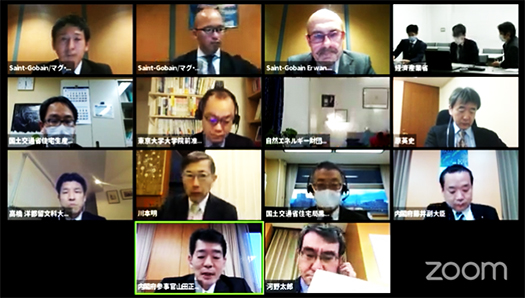
基本のタスクフォースのレギュラーメンバーは以下の通り。
原英史・政策工房代表、
高橋洋・都留文科大学教授、
大林ミカ・自然エネルギー財団事業局長、
川本明・慶應義塾大学特任教授の4人。
それに大臣直属の補佐官山田正人氏(経産省出身)が司会も務めていました。
舞台回し役はどうやらこのメンバー、そして山田氏が主導かも知れません。
原英史氏は毎日新聞の事実無根記事に基づき国会で野党議員から追究され、
名誉毀損訴訟を対毎日新聞で係争中の事実もあるという周辺状況。
このメンバー構成は基本的に「再生エネ」関連の専門家と言えるようです。
かれらについて週刊プレイボーイ誌に過去記事があった。
「古賀政経塾!!」を連載中の経済産業省元幹部官僚・古賀茂明氏の執筆で、
「2021年に注目する「河野太郎を総理に導く5人」について語る」という記事。
どうやら、政治目的として河野太郎の天下取り戦略とからめて論じられていた。
まぁ政治家なので、当然そういった思惑もあっての動きではあるだろうと思う。
菅首相の2050年再生エネ目標の明示が一種の号砲になっているのか。
再生エネ、省エネという政策課題が菅政権とそれ以降の政権にとって
一種の政治戦略のひとつとして重視されているということなのでしょう。
もちろん日本の政策選択を動かそうと思えば、政治を動かさなければならないのは
至極当然なので、そういうまな板に省エネが上がること自体、意味がある。
ただ、こういう動きがあったからただちに政策に反映していくとは予断できない。
充分注意しつつ、冷静に見極めていく必要があるでしょう。
当面は会議であかされた国交省の省エネ基準適合義務化の見送り経緯が
しかるべく情報発信されるでしょうから、その周辺での「回答」が待たれるところ。
流れからして、次回以降も前真之准教授は継続参加の可能性がありそう。

今後とも、こうした政治的な政策の動きについて
状況を継続的にウォッチしていきたいと思っております。

English version⬇

[What is Taro Kono, Minister of State for Government Revitalization / Task Force? ]

By the way, about the matter of the Minister of State for Government Revitalization / Task Force on the evening of the 24th the day before yesterday.
Immediately before, on the 22nd, there was information from Mr. Koyama of Fukuoka / Kumamoto’s major builder Ecoworks.
When there is such a meeting and the state of the deliberation on the energy saving of the house is delivered as it is
There was an announcement and I noticed it.
Apparently there is unconfirmed information that Associate Professor Masayuki Mae will be announced as a member.
I’ve been asking a magazine for a serialization related to energy saving for 7 years with my teacher.
As soon as I adjusted the urgent schedule and checked the video distribution in real time.
For that reason, the construction of this “task force” itself was unknown.
After a day, I was finally able to check the surrounding circumstances.
Apparently, this task force is at the liver roasting meeting of Minister Taro Kono.
Each ministry and agency, especially with a basic proposal stance of promoting renewable energy,
As an extension of that debate, we reached the 5th debate on “energy saving”.
It seems that the former associate professor made a white arrow as the keynote speaker.
On the 24th, about 30 minutes after the end of this task force, Minister Kono
He was attending a press conference to announce his current mission, the Corona Vaccination Plan.

The minister in charge of administrative reform is not the minister who controls the ministry organization,
Searching for directions on specific themes across ministries and agencies regarding necessary reforms.
So, in this task force, proposals and directions for renewable energy policy are discussed.
In particular, the power problem highlighted by the recent turmoil in the electricity market
It seems that you are working on it as a big theme.
Minister Kono also has a stance of encouraging each ministry and agency to reform based on the dissection of the problems at the meeting.
In the last minister’s remark, “For energy saving, let the Ministry of the Environment set a goal, and the Ministry of Land, Infrastructure, Transport and Tourism
We should also consider building a plan to devise and implement measures to achieve this. ”
By sending real-time information on youtube about the meeting,
It seemed that there was a strong meaning to give each ministry and agency a sense of tension.
So, this attendance by Associate Professor Masayuki Mae seems to be a temporary guest.
The core members of the basic task force are as follows.
Eiji Hara, Representative of Policy Studio,
Hiroshi Takahashi, Professor, Tsuru University,
Mika Obayashi, Director of Renewable Energy Institute,
Akira Kawamoto, a specially appointed professor at Keio University. And an aide who reports directly to the minister
Masato Yamada (from the Ministry of Economy, Trade and Industry) was also the moderator.
Apparently, this member and Mr. Yamada may take the lead in the stage turning role.
Mr. Eiji Hara was pursued by opposition lawmakers in the Diet based on a factless Mainichi newspaper article.
There is also the fact that he is in a defamation proceeding against the Mainichi Shimbun.
Existence that is being bashed by the leftist media.
It seems that this member composition is basically an expert related to “renewable energy”.
There was a past article in Weekly Playboy magazine about them.
In the article written by Mr. Shigeaki Koga, a former executive bureaucrat of the Ministry of Economy, Trade and Industry, who is serializing the column “Koga Seikei Juku !!”
An article that talks about “five people who lead Taro Kono to the prime minister” to pay attention to 2021.
Apparently, it was discussed in connection with Taro Kono’s trade-in strategy as a political purpose.
Well, I’m a politician, so of course I think it’s a move with that kind of speculation.
Is the statement of Prime Minister Suga’s 2050 renewable energy target a kind of gun?
The policy issues of renewable energy and energy saving are for the Suga administration and subsequent administrations.
Perhaps it is emphasized as one of the kind of political strategies.
Of course, if you want to move Japan’s policy choices, you have to move politics.
Since it is quite natural, it is meaningful to save energy on such a cutting board.
However, since there was such a movement, it cannot be predicted whether it will be reflected in the policy immediately.
You will need to be careful and calmly identify.
For the time being, the process of postponing the obligatory compliance with energy saving standards by the Ministry of Land, Infrastructure, Transport and Tourism
Information will be disseminated accordingly, so “answers” in the surrounding area are awaited.
From the flow, it seems that the former associate professor may continue to participate from the next time onwards.

We will continue to talk about these political policy movements.
I would like to keep an eye on the situation.

【前真之先生主導役に・2/24内閣府タスクフォース】


昨日2/24夕方⒌時半から7時半まで、
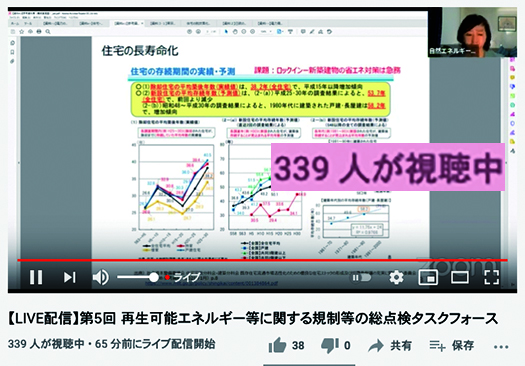
内閣府タスクフォースのリアルタイム動画配信がされていました。
Replan誌面で2014年初めから「いごこちの科学」という連載を執筆いただいている
前真之東大准教授が、学識経験者として全体の基調的な発表をされました。
発表された内容はこれまでの高断熱高気密、住宅性能向上の立場からのもの。
わたしどもとしてはいわば常識的・ベーシックな論旨だったと思います。
しかし、場が内閣府タスクフォースという河野太郎大臣主導の場所というのが
たいへん新鮮な展開であります。
まぁ半分以上ハラハラしながら、身近なひとの発表を見守っていたような次第。
幸いにして参加者の方や、河野大臣からも繰り返し「前先生の・・・」という
内容同意の発言があって、全体の基調トーン意見になったものと感じました。
あとでSNSでの情報を見ていたら、前先生も1ヶ月以上プレゼン準備されて
事前に発表の予行演習までやっていた様子もわかりました。お疲れさまです。

この内容については資料データのダウンロードも可能になっているので、
興味のある方はチェックされればと思いますし、また動画についても
継続公開されるとのことですので、視聴可能だろうと思います。
わたしとしては、この住宅性能向上が現実的な政治テーマとして、
いわば「運動論的」に社会で取り上げられていくことへの期待と不安の
両方が感じられた次第。
期待はもちろん、日本の住宅性能向上が一気に進んでいくこと。
一方で不安は、政治対立的なテーマになっていくことでの副作用要素。
河野大臣のこういった「タスクフォース」手法がどういう政治反応をもたらすか、
そのことへの期待と不安半ばする、といったところでしょうか。
〜通常の組織内で行う仕事とは別に緊急性の高い特定の課題を達成するため、
一時的に設置される組織のこと。〜というのがタスクフォースの定義。
日本の大問題として行政機構の一部を利用する岩盤的既得権益擁護があり、
こと住宅施策の面で言えば、直近の「省エネ基準適合義務化見送り」があります。
国の政治や行政機構については距離感を感じていたので、
義務化見送りについては、残念感とともに「やっぱりね」という諦念もありました。
今回の河野大臣のタスクフォースはこの国交省決定をひっくり返す意図を感じた。
まるで悪代官的な立場に置かれていた担当の方には
ある意味、同情もさせられましたが、政権側としては岩盤をあぶり出し
河野大臣の突破力を発揮させようという意図も感じた次第。
流れとしては前真之先生はそのイデオローグ的な役割を担っていく可能性。
前先生のSNS上での発言を見ると「これからが大変」とまさに認識されている。
まったく同感するところであります。
これまで住宅政策として国交省は「義務化」路線を曲がりなりに行ってきた。
それが「見送り」となった背景には相当の岩盤的反対派勢力の存在がわかる。
国交省はやむなく「悪代官」役になっているのですが、
そうなった背景も同時にあきらかになっていく必要があるのだろうと思います。
そのときに、あらゆる事態が予測され、それこそ「これから」の
展開、それへの対応が非常に重要になってくると思われます。
わたしどもは地方公共団体として例外的な独自の住宅施策を持つ
北海道の住宅への考え方・立場が基本スタンスですが、
日本全体の施策を変えていくためにはある意味で今後「修羅場」もあり得る。
たぶん表立っては反論しにくい「住性能向上」に対して
反対派による「ウラ技的」な抵抗活動が容易に想定できる。
そういう嵐が「これから」あり得ることを予測していかなければと思う次第です。
政治も動かさなければ日本全体は動かしようがないけれど、
政治は政治なので、その道具になることの危うさもある・・・。
当面は河野大臣の手法が霞ヶ関的に通用するのかどうか。
仮想敵を見出していくなにやら以前の小泉政権の手法にも似ているか・・・。
かれ自身の政権戦略にも関わってくるテーマとして住性能のことが
大きく浮かび上がってくるのかも知れませんね。

それにしても、リアルタイムの視聴者は339人。
まぁおおむね住性能のプロのみなさんが多かったのでしょうが、
日本の住の現状として、どうなのかと考えさせられもしました。

English version⬇

[Leading Professor Masayuki Mae ・ 2/24 Cabinet Office Task Force]

Yesterday 2/24 evening ⒌ From 30:30 to 7:30,
Real-time video distribution of the Cabinet Office Task Force was being done.
Since the beginning of 2014, Replan has been writing a series called “Science of Igokochi”.
Associate Professor Masayuki Mae of the University of Tokyo made a keynote presentation as an academic expert.
The contents announced are from the standpoint of high heat insulation, high airtightness, and improvement of housing performance.
I think it was a common sense and basic argument for us.
However, the place is the Cabinet Office Task Force, a place led by Minister Taro Kono.
It is a very fresh development.
Well, it seems that I was watching the announcements of people close to me while being harassed more than half.
Fortunately, the participants and Minister Kono repeatedly said, “Former teacher …”
There was a statement of consent to the content, and I felt that it was the overall keynote tone opinion.
When I was looking at the information on SNS later, the former teacher was also prepared for a presentation for over a month.
I also learned that he was doing the rehearsal exercises announced in advance. Good work.

As for this content, it is also possible to download material data, so
If you are interested, please check it out, and also about the video.
It is said that it will be released continuously, so I think it will be available for viewing.
For me, this improvement in housing performance is a realistic political theme.
Expectations and anxieties about being taken up in society in a so-called “kinetic” manner
As soon as both are felt.
Not to mention expectations, the improvement of housing performance in Japan will progress at once.
On the other hand, anxiety is a side effect of becoming a politically confrontational theme.
What kind of political reaction does Minister Kono’s “task force” method bring?
Is it a place where you are half-expected and anxious about that?
~ To accomplish a specific task with high urgency apart from the work done in a normal organization
An organization that is temporarily established. ~ Is the definition of the task force.
One of Japan’s major problems is the protection of rocky vested interests that utilize part of the administrative structure.
In terms of housing measures, there is the latest “postponement of mandatory compliance with energy saving standards”.
I felt a sense of distance about the politics and administrative structure of the country, so
Regarding the mandatory postponement, there was a disappointment and a resignation that “after all”.
The task force of Minister Kono felt the intention to overturn this decision of the Ministry of Land, Infrastructure, Transport and Tourism.
For those in charge who were in a position of villain
In a sense, I was made to feel sympathy, but the administration side exposed the bedrock.
I also felt the intention to demonstrate the breakthrough power of Minister Kono.
As a flow, Professor Masayuki Mae may play that ideological role.
Looking at the remarks made by the former teacher on SNS, it is truly recognized that “the future will be difficult”.
I totally agree with you.
So far, the Ministry of Land, Infrastructure, Transport and Tourism has been turning the “mandatory” route as a housing policy.
It can be seen that there is a considerable amount of rock-like opposition in the background of the “send off”.
The Ministry of Land, Infrastructure, Transport and Tourism is unavoidably acting as a “bad officer”,
I think it is necessary to clarify the background of this at the same time.
At that time, everything is predicted, and that is the “future”
Deployment and response to it will be very important.
We have an exceptional and unique housing policy as a local public body
The basic stance is the way of thinking and position of housing in Hokkaido,
In a sense, there may be a “shuraba” in order to change the policies of Japan as a whole.
Probably for “improvement of living performance” which is hard to argue openly
It is easy to imagine “game crash” resistance activities by the opposition.
I think we have to predict that such a storm will be possible “in the future.”
If politics doesn’t move, Japan as a whole can’t move,
Since politics is politics, there is a danger that it will become a tool for it …
For the time being, will Minister Kono’s method work in Kasumigaseki?
Finding a hypothetical enemy Is it similar to the previous Koizumi administration’s method?
Living performance is a theme that is related to his own administration strategy.
It may come to the fore.

Even so, there are 339 real-time viewers.
Well, most of the people were professionals in living performance, but
It made me wonder what the current situation of living in Japan is.

【2/26 北海道主催 「北方型住宅技術」《WEB》講習会】


コロナ禍で住宅施策の講習会などの多くがWEB活用型に推移してきています。
WEBセミナー形式は一方通行になりやすく、受ける側の
認識の深まり、注意力のレベル維持にはやや難点がある。
実際にわたし自身も自社環境のなかでは日常業務的中断局面が多く、
また、日常業務が同時進行するなかで申込みしたこと自体、忘れることも多い。
ようするに注意力が散漫になりやすいのだと思う。
リアルとWEB経由の決定的な相違はこのポイントではないかと思っています。
発信者は優越的に情報を発信できることで、得てして唯我独尊化しやすく
受信者は従順に受容するタイプと、
これは真のコミュニケーションとは言えないと感じるタイプとに二分される。
どうもこのあたり、人間の「信用・信頼感」とはなにかという分析も必要。
急進展のWEB化ですが、人間関係論を含めた理性的分析は準備されていない。
こういったWEB講習会もその成果がどうか、検証の進展に期待したいところ。

そういうなかですが、これまで距離空間的に参加が難しかった講習も
WEBでは制約がなくなるので、こうした講習会のような「北海道の最新知見」を
全国の技術者のみなさんが共有することも可能になってきた。
わたしもこの「基準」の会議には参加させていただいていたので広報拡散します。
やはり積極的な側面は大いに伸ばしていくべきだと思います。以下情報要旨。

令和2年度 北方型住宅技術講習会(web講習会)のお知らせ
主催/北海道
主管/北海道立総合研究機構建築研究本部、北海道建築指導センター
〜北方型住宅技術講習会は住宅建設に携わる技術者の専門知識の習得や
技術力の向上により、良質な住宅ストックの形成を図ることを目的として実施。
道では1988年から北海道の気候風土に根ざした質の高い住まいである
「北方型住宅」の普及推進に取り組むとともに、2014年からは北方型住宅を
支える仕組み・道が住宅事業者を登録公開する「きた住まいる制度」運用など、
時代とともに変わる住宅ニーズを踏まえた制度の見直しを行ってきました。
2020年には省エネ・省CO2などの性能向上や自然災害への対応を図るため、
基準を改定し耐震・省エネ基準を強化した「北方型住宅2020」を創設。
本講習会では北方型住宅2020の創設に伴い改訂した「技術解説書」を用い、
北方型住宅基準をはじめ、北海道での住宅建設に関する基本について
解説を行うほかコロナ禍で注目の計画換気と必要な気密性についての紹介、
また大臣認定を取得した「北総研防火木外壁」などについて解説。
YouTubeでの動画配信となりますので技術者の皆様におかれましては、
是非ご視聴いただき、業務に役立てていただきますよう御案内します。
●講習内容 <YouTubeで公開します>
1. 北方型住宅の取組の推進について
−「北方型住宅2020」など北方型住宅の取組-
2. 北方型住宅技術解説書(令和3年1月改訂版)について
−「北方型住宅2020」の基準適合に向けて –
3. 気密と換気について
−C値1.0以下でできること−
4. 高断熱・火災にも強い木の壁
−「北総研防火木外壁」の概要について−
5. 住宅金融支援機構からのお知らせ
●受講対象 工務店・設計事務所等の住宅建設に携わる技術者、
行政職員、住宅建築関係団体等
●公開日時 令和3年2月26日(金)17:00から公開(予定) ※当面の間公開。
●受講方法 以下のホームページから視聴できます。
URL:https://www.hokkaido-ksc.or.jp/index.php?id=186
・申込み不要(どなたでも無料で視聴可能です)
・資料は、上記URLからダウンロード可能です。
●問い合せ 札幌市中央区北3条西3丁目1番地札幌北三条ビル8F
北海道建築指導センター企画総務部企画総務課 TEL 011-241-1893〜

テキストは「無料配布」されています。わが社でもスタッフ用に申し込みました。
ダウンロードしてPDFを確認するというのももちろんアリですが、
やはり理解を深めて技術として血肉化するには、
紙のテキストというものは「座右の銘」として非常に有効だと思います。

English version⬇

[2/26 Hokkaido-sponsored “Northern Housing Technology” << WEB >> Workshop]

Many of the seminars on various housing measures have been shifting to the WEB utilization type due to the corona virus.
The WEB seminar format tends to be one-way, and the recipient
There are some difficulties in deepening awareness and maintaining the level of attention.
In fact, I myself have many interruptions in my daily work in my own environment.
In addition, I often forget that I applied for it while my daily work was going on at the same time.
I think it’s easy to get distracted.
I think this is the decisive difference between real and online.
Since the caller can send information in a superior manner, it is easy to gain and self-respect.
The type that the recipient accepts obediently,
This is divided into types that feel that it is not true communication.
It is also necessary to analyze what is human “trust and trust” around here.
Although it is a rapid progress on the Web, rational analysis including human relations theory has not been prepared.
I would like to expect the progress of verification of the results of these WEB workshops.

Under such circumstances, there are also classes that have been difficult to participate in spatially.
Since there are no restrictions on the WEB, “the latest knowledge of Hokkaido” like this workshop
Sharing by engineers all over the country has also become seamless.
I also participated in this “standard” meeting, so I will spread the word.
After all, I think that the positive side should be greatly expanded. The following information summary.

Reiwa 2nd year Northern Housing Technology Workshop (web workshop)
Organizer / Hokkaido
Supervising / (Germany) Hokkaido Research Organization Architectural Research Headquarters, Hokkaido Architectural Guidance Center
~ Northern type housing technology workshop is to acquire the specialized knowledge of engineers involved in housing construction
Implemented with the aim of forming high-quality housing stock by improving technological capabilities.
Since 1988, the road has been a high-quality residence rooted in the climate of Hokkaido.
While working to promote the spread of “northern housing”, we will start to develop northern housing from 2014.
As a supporting mechanism, Michi operates the “Kita-dwelling system” that registers and publishes housing companies.
We have reviewed the system based on the housing needs that change with the times.
In 2020, in order to improve performance such as energy saving and CO2 saving and to respond to natural disasters
Established “Northern Housing 2020” with revised standards and strengthened earthquake resistance and energy saving standards.
In this workshop, we used the “Technical Manual” revised with the establishment of Northern Housing 2020.
About basic matters about housing construction in Hokkaido, including northern housing standards
In addition to giving explanations, we will introduce the planned ventilation and necessary airtightness of houses that are attracting attention due to the corona virus.
In addition, we will explain about the “Hokusoken Fire Prevention Wood Outer Wall” that has been certified by the Minister.
Since the video will be distributed on YouTube, we would like to ask all engineers.
We would appreciate it if you could watch it and use it for your business.
● Course content 1. Promotion of efforts for northern housing
-Efforts for northern housing such as “Northern Housing 2020”-
2. About the Northern Housing Technology Manual (Reiwa January 3rd revised edition)
-Toward conformity with the standards of “Northern Housing 2020”-
3. About airtightness and ventilation
-What you can do with a C value of 1.0 or less-
4. Highly insulated and fire resistant wooden wall
-Overview of “Hokusoken Fire Prevention Wood Outer Wall”-
5. Notice from Japan Housing Finance Agency
● Target of attendance Engineers involved in housing construction such as construction shops and design offices
Administrative staff, housing construction related organizations, etc.
● Release date and time It will be released from 17:00 on February 26, 3rd year of Reiwa (planned) * It will be released for the time being.
● How to attend You can watch from the following website.
URL: https://www.hokkaido-ksc.or.jp/index.php?id=186
・ No application required (anyone can watch it for free)
・ The materials can be downloaded from the above URL.
● Inquiries 〒060-0003 3-1 Kita 3 West, Chuo-ku, Sapporo Sapporo Kita Sanjo Building 8F
(Foundation) Hokkaido Building Guidance Center Planning and General Affairs Department Planning and General Affairs Division TEL 011-241-1893 ~

The text is “free distribution”. We also applied for staff.
Of course it is ant to download and check the PDF, but
To deepen understanding and flesh out as a technique
I think that paper text is very effective as a “motto”.