本文へジャンプ

【儒教道徳が優勢な社会  韓国河回村追想-13】


この河回村ハフェマウルという集落に来て不思議なのは
日本のように神社とか仏閣が見当たらないこと。
ある集落が成立すればそのコミュニティのコア的な「会所」が成立するはず。
ふつうに考えるとそういう対象は宗教施設が相当することになる。
日本の神社は八百万の神々が開拓神・地の神として祀られることが多い。
わたしの縁のある播州・姫路の英賀神社では開拓神夫婦が祀られている。
その後、いろいろな地縁のある人物が合祀されていく。
そして神さまは鎮守の森に鎮座して地域を守っている。
そこに統一国家の象徴としての「鎮護国家」思想で仏教が導入されていく。
八百万と統一国家が神社と仏閣として地域で併存していった。
一方韓国では仏教寺院もあるけれど少数派。優勢ではない。
むしろキリスト教の方が数としては多いのではないか。
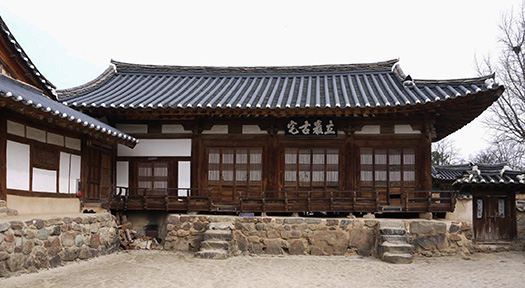
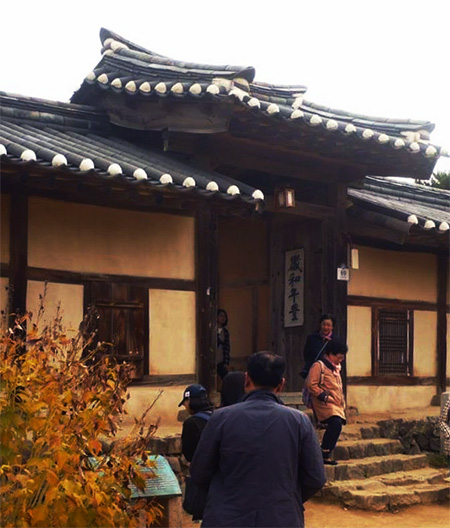
一方で写真は河回村の「屏山書院」という儒教的建築ですが、
このような「学問崇拝的施設」というのは多いと感じられた。
社会上流の両班貴族層住宅では競って儒教道徳への帰依が表現される。
また書院や堂、精舎というネーミングの建築施設がやたらたくさんある。
儒教というのは現代日本人にはあまり馴染みがない「教え」。
宗教という認識は少ないし、韓国の人も宗教とは思っていないようだ。
しかしこうした建築施設がながく維持存続してきているのだから、
その存続を支え納得可能な社会的な構造はあるのでしょう。事実上の宗教。
どういった経済基盤があるか、そこまでは不明。探究していきたい。

日本人が儒教に距離感を持っているのは、江戸幕府が朱子学として
民衆統治の思想基盤として利用した歴史トラウマがあるからだと思う。
中国でも毛沢東は晩年、批林批「孔」という政治スローガンまで掲げていたし、
焚書坑儒という政治運動は中国の歴史過程を彩ってもいると思う。
そういう儒教だけれど朝鮮社会では、かなり深く根付いているように思える。
この河回村では「忠孝堂」という住宅建築も見たけれど、
それこそ「忠」だとか「孝」だとかという支配者に都合のいい教えに対する
日本や中国の歴史的態度と、かなり相違を感じさせられる。
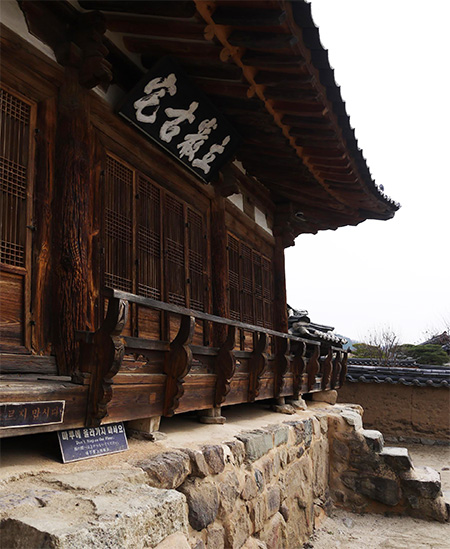
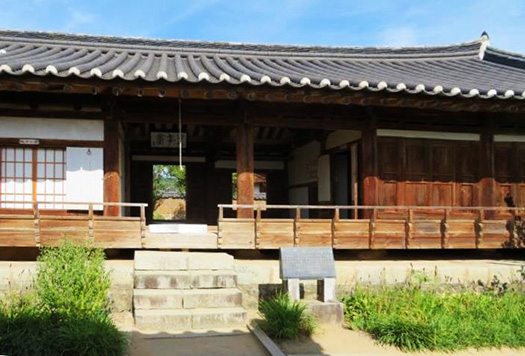
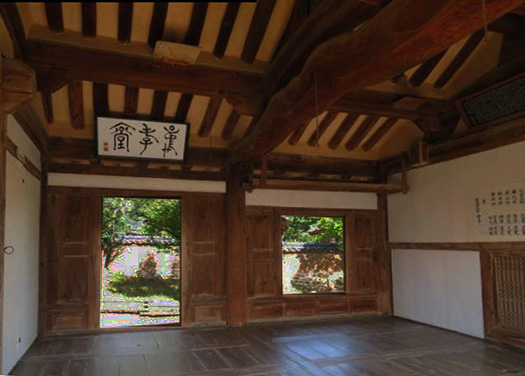
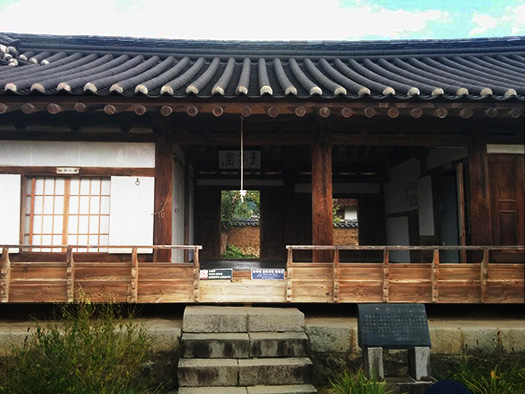
たぶん写真のような高欄の間で論語でも輪唱している様子が想像される。
まことに「これみよがし」に儒教崇拝を肯定する社会だと。
この点では日本人は本能的に拒否反応を持っているように思う。
一応はリスペクトするけれど、内心は勘弁して欲しいと思っている・・・。
一方で、韓国には李氏朝鮮という長い王朝はあったけれど、
日本統治が第2次世界大戦の終了で消滅したのに、復元はされなかった。
であるのにこのような儒教的建築施設はながく存続している。
朝鮮社会的「ホンネと建前」というような態度が儒教には発揮されるのか。
このあたり日本人としては不思議な社会状況だと感じられる。

韓国は比類なき「学歴社会」と言われるけれどこういった儒教施設が
そういう民族情緒にあるいは深く関わっているのだろうか・・・。
興味深い隣国社会の一断面だと見学しておりました。

English version⬇

[A society with deep-rooted Confucian morals: Reminiscences of Andong Hahoe Village, South Korea-13]
What is strange about coming to this village called Hahoe Village
You can’t find a shrine or temple like in Japan.
If a certain village is established, the core “meeting place” of the community should be established.
Generally speaking, such an object corresponds to a religious facility.
Eight million gods are often enshrined as pioneer gods and earth gods in Japanese shrines.
At the Aga Shrine in Himeji, Banshu, where I have a connection, a pioneering god couple is enshrined.
After that, people with various ties are enshrined.
And God is sitting in the guardian forest to protect the area.
Buddhism is introduced there with the idea of ​​a “guardian state” as a symbol of a unified state.
Eight million and unified nations coexisted in the area as shrines and temples.
On the other hand, there are Buddhist temples in Korea, but they are a minority. Not dominant.
Rather, Christianity may be more numerous.
On the other hand, the photo shows a Confucian architecture called “Byeongsanseowon” in Andong Hahoe Village.
I felt that there were many such “academic worship facilities”.
In the aristocratic houses of both groups in the upper reaches of society, devotion to Confucian morality is expressed by competing.
In addition, there are many building facilities named Shoin, Dou, and Seisha.
Confucianism is a “teaching” that Japanese people are not familiar with.
There is little recognition of religion, and Koreans do not seem to think of it as a religion.
However, since these building facilities have been maintained and survived for a long time,
There may be a social structure that supports its survival and is convincing. De facto religion.
It is unknown what kind of economic base it has. I want to explore.

The reason why Japanese people have a sense of distance to Confucianism is that the Edo Shogunate has a sense of distance as Cheng-Zhu School.
I think this is because there is a historical trauma that was used as the basis of the idea of ​​popular governance.
Even in China, Mao Zedong even put up a political slogan called “Hole” in his later years.
I think that the political movement called Burning Scripture also colors the historical process of China.
Although it is such Confucianism, it seems to be deeply rooted in Korean society.
In this village, I saw a residential building called “Tadatakado”,
For the teachings that are convenient for the ruler, such as “loyalty” or “filial piety”
It makes me feel quite different from the historical attitudes of Japan and China.
Perhaps it can be imagined that they are singing in a round-robin between the columns like the one in the picture.
It is truly a society that affirms Confucian worship in “Kore Miyoshi”.
I think the Japanese instinctively have a rejection reaction in this regard.
I respect him for the time being, but I want him to forgive me.
On the other hand, although there was a long dynasty called Joseon in South Korea,
Although Japanese rule disappeared at the end of World War II, it was not restored.
Nevertheless, such Confucian architectural facilities have survived for a long time.
Is the Korean social attitude of “Honne and Tatemae” demonstrated in Confucianism?
I felt that this was a strange social situation for Japanese people.

Korea is said to have an unparalleled “educational background”, but there are Confucian facilities
Is it deeply involved in such ethnic sentiment?
I was touring that it was a cross section of an interesting neighboring society.

【旅行けば建築工事現場あり  韓国河回村追想-12】


家あれば、かならず人間による工事施工がある。
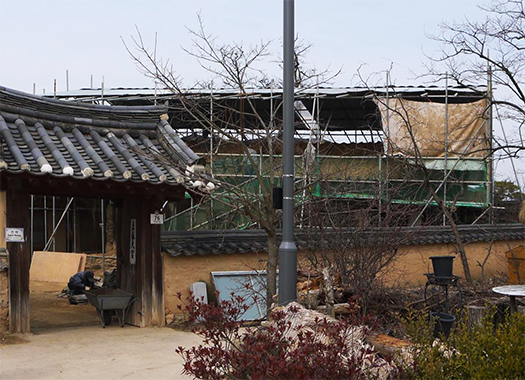
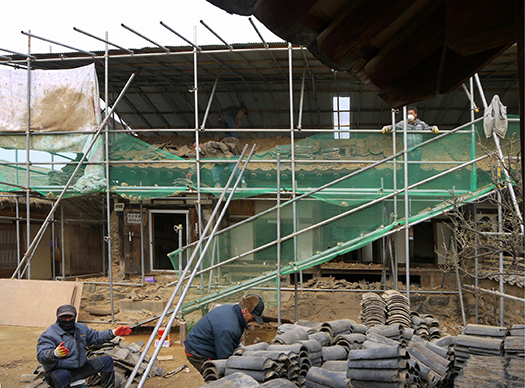
この韓国河回村・ハフェマウル見学ツアーは北海道の工務店さん達と同行。
現地見学中「お、やってるねー(笑)」と声が掛かって
古建築に挑んでいる他国の同胞のみなさんの現場にお邪魔した。

ハプニングでの突撃現場なのでコトバの問題がある。
具体的な話、整理整頓された会話は聞けませんでしたが、
以心伝心で伝わってくる働く男達同士のコミュニケーションが成立する。
このハフェマウルは韓国の貴重な住文化遺産として保存されている住宅群なので、
そういった建築技術に通じたみなさんが施工に当たっているだろうと思います。
なので、お国の高度な建築の経験、技術の習得があるみなさん。
一方北海道からは「高断熱高気密」に最前線で取り組んでいる人たち。
「すいません、ちょっと見せてもらえますか」
「おお、どっから来たのさ、え、日本?北海道?
北海道って、北朝鮮よりもずっと寒いんでしょ?」
「韓国の家ってオンドルとか、寒冷地住宅として興味深いですね。」
「北海道じゃぁ、どんな暖房を使っているの?」
「最近は温水循環輻射暖房が主流ですね、高断熱高気密と相性がいい」
「え、あんたたち高断熱高気密って、なにそれ?」
「え〜〜っと、インシュレーション・・・ってわかるかなぁ?」
「へ〜、断熱材を伝統的建築技術に調和させている?」
「そうです、どっちかというと北欧・北米と技術交流が多かったんです」
「え? 日本にも伝統的な建築技術あるんでしょうに・・・」
「それが寒さ対応では北海道に適した技術がほとんどなかったんですよ」
「ホント?俺たちにはオンドル暖房の歴史があるんだけどね」
「そうそう。それに北海道にはこういう瓦の屋根ってほとんどない」
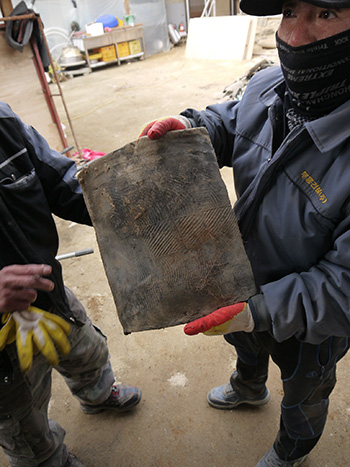
「ほ〜、そうなんだ。この瓦、素晴らしいよ。見てみて」
「う〜む、いいね、土地の土の感じが伝わってくる」
・・・っていうような会話はもちろん空想であります(笑)。

国の建築伝統の粋のような古建築に、
真正面から立ち向かって、先人の施工の知恵に学びながら、
それを次の世代、時代に可能な限りホンモノとして伝えたいという
職業建築人としてのプライドも強く感じられた。
作業としては屋根の解体・下地補修のプロセスのようでした。
日本で言えば古社寺建築の延命・保存工事のようなことでしょう。
短い時間の見学だったけれど、きっと建築の神さまが
こういう出会いの機会を作ってくれた(笑)のではないか。
会話は成立しなくとも、「ああ、こうやっているんだ」みたいな
現場作業レベルでの共通性などからまた相違なども浮かび上がってくる。
いい時間を過ごせたな、という実感が湧き上がってきました。

English version⬇

[If you travel, there is a construction site. Reminiscences of Andong Hahoe Village, South Korea-12]
If you have a house, there will always be construction work done by humans.
This tour of Andong Hahoe Village and Hahoe Maul in South Korea will accompany the construction companies in Hokkaido.
During the site tour, he said, “Oh, I’m doing it (laughs)”
I visited the site of my fellow countrymen who are challenging old architecture.

Since it is an assault site at the happening, there is a problem with Kotoba.
I couldn’t hear a concrete story or a tidy conversation,
Communication between working men is established, which is transmitted through the heart and soul.
Since this Hafe Maul is a group of houses preserved as a valuable cultural heritage of Korea,
I think that everyone who is familiar with such building technology will be involved in the construction.
So, everyone who has such advanced architectural experience and mastery of technology.
On the other hand, people from Hokkaido are working on the front line of “high heat insulation and high airtightness”.
“Excuse me, can you show me a little?”
“Oh, where did you come from, eh, Japan? Hokkaido?
Hokkaido is much colder than North Korea, isn’t it? ”
“Korean houses are interesting as ondols and cold-weather houses.”
“What kind of heating do you use in Hokkaido?”
“Recently, hot water circulation radiant heating is the mainstream, and it goes well with high heat insulation and high airtightness.”
“Well, you guys are highly insulated and airtight, what’s that?”
“Well, do you understand the insulation …?”
“Hey, are you harmonizing insulation with traditional building techniques?”
“Yes, there was a lot of technical exchange with Northern Europe and North America.”
“Eh? I wonder if there is a traditional building technique in Japan …”
“There was almost no technology suitable for cold weather in Hokkaido.”
“Really? We have a history of ondol heating.”
“Oh yeah. And there are few tiled roofs like this in Hokkaido.”
“Hmm, that’s right. But the tiles are wonderful. Take a look.”
“Hmm, I like it, I can feel the soil of the land.”
Of course, conversations like … are fantasy (laughs).

For old architecture that looks like the essence of national architectural tradition
While facing head-on and learning from the wisdom of the construction of our predecessors,
I want to convey it as genuine as possible to the next generation and the times
I also felt a strong sense of pride as a professional architect.
The work was like the process of dismantling the roof and repairing the groundwork.
In Japan, it’s like extending the life and preserving the architecture of old shrines and temples.
It was a short tour, but I’m sure the god of architecture
I think he created such an opportunity for encounters (laughs).
Even if the conversation isn’t established, it’s like “Oh, I’m doing this”
Differences also emerge from the commonality at the field work level.
I realized that I had a good time.

【土モルタル気密工法の保温性能  韓国河回村追想-11】


河回村・ハフェマウルの古民家群を見ると、構造木材・素材の周辺部分を
モルタル的塗装で補強し密閉性を高めていると気付く。
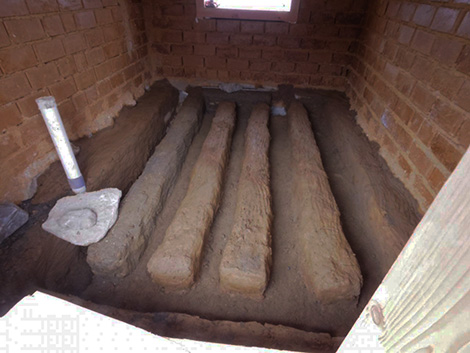
床暖房のオンドル施工の様子も見たけれど、粘土で気密度を高める工法が
これら古建築で伝統的な工法として存在していると思う。
名付けるとすれば「土モルタル気密化工法」。
地域に普通に存在している建築素材を使って、居住に必要な基本性能として
「あたたかさ」の確保を考えれば、ごく自然な選択でしょう。
ただこの土のセメント性能、長期的展着性能については
この地域の土にはそういう性能が高いのか、あるいは展着度向上剤があるのか、
その点は不明です。朝鮮の住宅史とかも検討の必要がありそう。
研究者でもなく韓国の古民家はこのハフェマウルしか実見していないけれど
この「土塗り工法」というのが伝統的朝鮮住宅のポイントではないか。
このような実感を抱いた次第です。
韓国は日本の温暖地域と比較して寒冷な気候なので、
あたたかさへの希求はより強かったと言えるのでしょう。

翻って日本の伝統的竪穴住居ですが、これまでモデル的復元竪穴住宅の屋根が
「茅葺き・草葺き」として常識的に建てられていたけれど、近年研究が進んで
実は「土屋根」だったのだと言われるようになって来た。
よりあたたかい家を作りたいと考えれば屋根は土屋根とする方が自然。
その土地の粘土の含有量がどうであるかによって違いがあるかと思われるけれど、
一般的に屋根として成型されれば、自然の雨量とのバランスで
持続可能なレベルには落ち着いていくのでしょう。
その上で藁葺きなどで雨水による成分溶解を避ける工夫は可能だったでしょう。
土と藁・茅のハイブリッド屋根が普通に考えられると思う。
先人の工夫の道筋はわたしたち現代人とほぼ同様、あるいは以上といわれる。
しかし日本で近世まで存続の古民家は土を使わない茅葺き・草葺きだった。
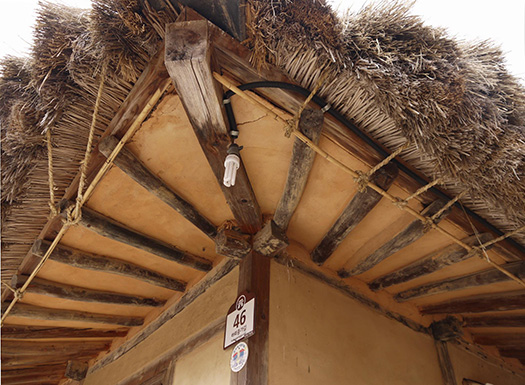
たとえば写真の上のような軒先まで土塗り仕上げという事例は記憶がない。
逆に言えば、日本の古民家でいつから土屋根が放棄されたのか、
そっちの方がより興味深いテーマだと思える。
どうして日本では竪穴段階での土塗りが茅葺き・草葺きに変わったかの推論。
1 温暖化バイアスがここ数千年の歴史年代で進行してきた。
2 竪穴の最大弱点は土面の湿潤問題だったと言われる。温暖化でそれが加速した。
3 その対応として高床化が進んで床下通気させ、屋根はより軽量化に向かった。
4 そうは言っても断熱は必要だったので重厚な萱葺きの量で防寒を追求した。
・・・っていうような流れがあったと考えてみたがどうだろうか。
想像の根拠は北海道や北東アジア地域での古住居のありようで、
「冬の家・夏の家」と竪穴と高床が併存していた事実からの推理です。
どうも床面の床上げは温暖化、湿潤化の気候変動があって、
それへの対応が重視されてきたように思う。で、竪穴の場合には床から屋根頂部まで
土塗りを連続できたけれど高床・床上げ住宅では不可能になったのではないか。

朝鮮の古住宅でオンドルと連動するこのような土塗りモルタル気密化工法には
性能的な合理性が高く感じられる。
不勉強でこうした視点での古建築研究をこれまで知らなかったのですが、
掘り下げてみたいと思わされた次第です。どうなんでしょうか?

English version⬇

[Heat retention performance of soil mortar airtight construction method: Reminiscences of Andong Hahoe Village, South Korea-11]
If you look at the old folk houses in Andong Hahoe Village and Hahoe Maul, you can see the surrounding parts of the structural wood and materials.
I noticed that it was reinforced with mortar-like paint to improve the airtightness.
I also saw the ondol construction of floor heating, but the construction method to increase the air density with clay
I think it exists as a traditional construction method in these old buildings.
The name would be “soil mortar airtight construction method”.
As a basic performance required for living, using building materials that normally exist in the area
Considering ensuring “warmth”, this is a natural choice.
However, regarding the cement performance and long-term spreading performance of this soil,
Does the soil in this area have such high performance, or is there a spreading agent?
That point is unknown. It seems necessary to consider the history of Korean housing.
Not a researcher, but an old Korean house has only seen this Hafemaul.
Isn’t this “earth coating method” the point of traditional Korean housing?
I felt like this.
Korea has a colder climate than Japan’s warm regions, so
It can be said that the desire for warmth was stronger.

On the other hand, it is a traditional Japanese pit-house, but the roof of the model restored pit-house has been used so far.
It was built as “thatched roof”, but research has progressed in recent years.
In fact, it has come to be said that it was a “earth roof”.
If you want to make a warmer house, it is more natural to use a clay roof.
It seems that there is a difference depending on the clay content of the land,
Generally, if it is molded as a roof, it will be balanced with the natural rainfall.
It will settle down to a sustainable level.
On top of that, it would have been possible to devise ways to avoid the dissolution of components by rainwater, such as with thatched roofs.
I think that a hybrid roof of soil and straw / kaya is usually considered.
It is said that the path of ingenuity of our ancestors is almost the same as or more than that of us modern people.
However, the old folk houses that survived until the early modern period in Japan were thatched and grass-roofed without using soil.
For example, I don’t remember the case of earth-painting up to the eaves as shown in the photo.
To put it the other way around, when was the earthen roof abandoned in an old Japanese house?
I think that is a more interesting theme.
Inference of why the soil coating at the pit-house stage changed to thatched and thatched in Japan.
1 Global warming bias has progressed over the last few thousand years.
2 It is said that the biggest weakness of the pit was the problem of wetness of the soil surface. It accelerated due to global warming.
3 As a response, the floor has been raised and the roof has been made lighter by ventilating under the floor.
4 Even so, heat insulation was necessary, so we pursued cold protection with a heavy thatched roof.
I thought that there was a flow like that …
The basis of the imagination seems to be old houses in Hokkaido and Northeast Asia.
It is inferred from the fact that the “winter house / summer house” and the pit and stilt coexisted.
Apparently, raising the floor is due to warming and humid climate change.
I think that the response to that has been emphasized. And in the case of a pit, from the floor to the top of the roof
I was able to paint the soil continuously, but I think it became impossible in a high-floor / raised-floor house.

For such an earth-coated mortar airtight construction method that works with ondol in an old Korean house
Performance rationality is felt high.
I haven’t studied old architecture from this point of view, but I didn’t know about it.
I wanted to dig deeper. How is it?

【土と木・石・瓦の地域デザイン  韓国河回村追想-10】


韓国・河回村の環境と住宅群を見ていますが、
目にやわらかく印象が染み込んでくる感覚にとらわれています。
マウルという語感とともにはじめて行ったのに深く懐かしい。
なぜだろうか、と考えると人々の東アジア的表情に親近感を持つのと、
それと相俟って、素材群がどれもアースカラーであることに気付かされる。
それも日本人にもきわめて親近感があふれるような素地の表情。
そのベースには土塗りがあって、この地域で獲れた粘土が使われているに違いない、
地面との色合いの調和ぶりを見ていると深く納得させられる。
いまちょうど地域型住宅の草分けといえる「北方型住宅」論議しているけれど、
そこでは「地域の材料を使う」というコンセプトがいつも語られる。
たしかに地域の樹種は特有の風雪感をもたらしてくれる素材ではあるけれど、
一般人に素朴に訴求してくるものとして「地域の土」というのは、
ものすごくパワフルな素材であると深く認識させられる。
なんと言っても地面がアスファルトではなくこの地域の自然のままの地面。
クルマの進入が制限されていることで文字通り基底での統一感がある。
そしてその色合いが土壁でも主流として使われ街路の壁や住戸の壁の
基本部分を専有している。その土がモルタル的に構造の補助にも役立っている。
木や石はそれぞれ構造や補強材として活用され、
それぞれがまことに正直な美感を提供してくれている。
結局どんな化粧よりも素顔の美しさに人間は究極的に魅了されるのでしょう。
とくに石材は微妙なカラーバリエーションを持っていて魅力的。
木構造はそういった土や石と呼応して幾何形体を表現して
人間知性による統一感をもたらせてくれているかのようです。
瓦もまた、その土地に縁のある土が形を変えたものといえる。
それらのハーモニーが一戸一戸で美しく完結するとともに、
街区全体としての統一感を形成してくれている。
「地域らしさ」というコンセプトを考えるとき、
クルマ社会との整合性を保ちながら地面のデザインまでも含めてその魅力を
考えて行く必要性があるのではないだろうかと思い至った。
コロンブスの卵の再発見のような気付き。
やはりアスファルトはあまりにも普遍性素材であって「地域らしさ」とは縁遠い。
クルマだけの効率性でほかの人類開発の魅力要素を捨て去っていいのだろうか?

わたし的には経産省の進めるZEH論議で指標化している
なんでも太陽光発電でキャンセルという画一化論には疑問がある。
それによって例えば瓦のような優れた人類デザインが失われるようになったとき、
未来の人々からなんと愚かなと指弾される怖れを抱かされる。
このハフェマウルの普遍的な美感から学ぶべきではないだろうか。

English version⬇

[Regional design of soil, wood, stone, and roof tiles: Reminiscences of Andong Hahoe Village, South Korea-10]
I’m looking at the environment and housing groups in Andong Hahoe Village, South Korea.
I am obsessed with the feeling that the impression is soft to the eyes.
I miss it deeply even though I went there for the first time with the word Maul.
When I think about why, I have a feeling of familiarity with people’s East Asian facial expressions.
Combined with that, it is noticed that all the materials are earth tones.
It also has a base expression that is extremely familiar to Japanese people.
Its base has a clay coating and must be made from clay from this area,
It is deeply convincing to see the harmony of the colors with the ground.
We are currently discussing “northern housing,” which can be said to be the pioneer of regional housing.
The concept of “using local materials” is always talked about there.
It is true that the local tree species are materials that bring a unique feeling of wind and snow,
“Regional soil” is a simple appeal to the general public.
It makes me deeply recognize that it is an extremely powerful material.
After all, the ground is not asphalt but the pristine ground of this area.
There is literally a sense of unity at the base because the entry of cars is restricted.
And that color is also used as the mainstream even on earthen walls, and on the walls of streets and dwelling units
It occupies the basic part. The soil is also useful as a mortar to assist the structure.
Wood and stone are used as structures and reinforcements, respectively.
Each one provides a truly honest aesthetic.
After all, human beings will be ultimately fascinated by the beauty of their real faces more than any makeup.
Stones are especially attractive because they have subtle color variations.
The wooden structure expresses a geometrical shape in response to such soil and stones.
It seems that it brings a sense of unity due to human intelligence.
Roof tiles can also be said to have been transformed by the soil associated with the land.
While those harmonies are beautifully completed one by one,
It forms a sense of unity as a whole block.
When thinking about the concept of “locality”
While maintaining consistency with the automobile society, its appeal including the design of the ground
I realized that it might be necessary to think about it.
Isn’t it a rediscovery like the egg of Columbus?
After all, asphalt is a universal material and is far from “locality”.
Is it okay to throw away other attractive elements of human development with the efficiency of the car alone?

Personally, it is indexed by the ZEH discussion promoted by the Ministry of Economy, Trade and Industry.
There is a doubt about the standardization theory that everything is canceled by solar power generation.
When it causes the loss of good human design, such as roof tiles,
I am afraid that future people will tell me how stupid I am.
Shouldn’t we learn from the universal beauty of this Hafemaul?

【韓屋の優位性「オンドル床暖房」  韓国河回村追想-9】


さて韓国・河回村の住文化を日本と対比させながら掘り下げています。
住宅にはさまざまな要素が込められるのでこれまでは主に民俗の違いを見た。
まずは水田耕作主体で土木技術発展と生産管理技術が進化した日本と、
気候的に乾燥気候であり陸稲主体で水田づくりが進まなかった朝鮮半島の違いを見た。
このことは同時に封建主義が完全に根付いて一所懸命思想が行き渡った日本と
土地効率利用がそれほど進まず王権への忠勤競争の朝鮮という相違を生んだ。
また日本は階級循環が活発な社会で身分制固定的な儒教が根付かないのに対して
中国大陸に近い朝鮮は事大主義的な傾向を持つのではないかと推論した。
どっちかといえば社会規範からの住宅、暮らし方の部分ですね。

で、北海道人としてはより根源的な興味、暖房についてであります。
生活文化の規定性については上記のような発展の相違があったけれど、
一方で「あたたかさ」という住宅性能の面では日本は遅れていた。
日本人である北海道人としてどうしても日本住文化でわからないのが、
なぜ日本は「あたたかい家」という志向性を実現できなかったのかという点。
朝鮮民族にはすばらしい叡智「オンドル」が輝かしい存在としてある。
冷涼乾燥気候の朝鮮半島では住宅へのオンドル設置は常識であった。
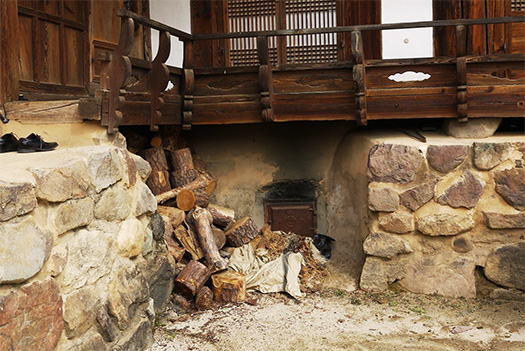
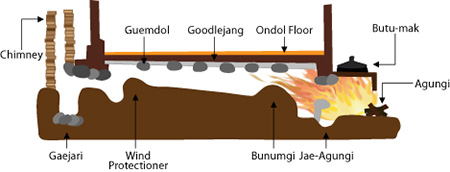
台所などの竈で煮炊きしたときに発生する煙を居住空間の床下に通し、
床を暖めることによって部屋全体をも暖める設備。火災の危険を避けるため
オンドルを備えた家の土台はすべてクドゥルジャンという板石を用いて築き、
部屋の床は石板の上を漆喰で塗り固め、その上に油をしみこませた厚紙を貼る。
朝鮮半島においては紀元後7世紀までの三国時代から使用の痕跡が見られ、
飛鳥時代日本に渡来の高句麗や百済出身者もオンドルを備えた家に住んでいた。
しかしこの暖房方法は燃料の消費量が多くまた高湿度地域には向かないことから
日本では普及しないまま、土着するとともに廃れてしまった。
薪を燃料として大量に使うオンドルは森林破壊の元凶となったのだ。
このあたり省エネの視点で見ればエコな日本といえるのか。
国交省などの行政施策方針を見ると「もともと日本はエネルギー消費少ないし」
という民族的ホンネが随所に影響していると思う。
また木にリスペクトする神社という独自の宗教精神性も与っているのだろうか。
このことは前述の水田耕作主体の社会発展ということと関係があるか。
水田でのイネの生育には温暖気候が不可欠であり、
その気候条件を満たさない北海道島にはながく開発の食指が動かなかった。
民族傾向から活動の低下する冬期は「耐え忍ぶ」生き方だった。

オンドルの設置使用で朝鮮民族の生活様式はさまざまな影響を受け変革された。
竈の火で床下を暖める構造上、2階以上の床下を暖めることはできない。
そのため朝鮮半島では平屋建築が主流となった。床下に煙が流れ込みやすいよう、
竈がある釜屋(プオク・台所)は居室より低い半地下式に作られ台所の天井裏には
高低差を生かして「タラク」という納戸が設けられた。
オンドルで温められる部屋は焚口=台所に近い場所ほど暖かいため上座とされた。
また床のぬくもりが人体に伝わりやすいように蒲団や座布団は薄く作られた。

いま、日本民族は独自工法の在来木造工法の高断熱高気密化を実現した。
ただ温暖地域の生活文化は変化へのかなりの抵抗勢力なので、
どうこの進化が推移していくか、興味深い段階にいると言えるでしょうね。

English version⬇

[Hanok’s performance advantage “Ondol floor heating” Reminiscences of Andong Hahoe Village, South Korea-9]
Now, I’m delving into the living culture of Andong Hahoe Village in South Korea while comparing it with Japan.
Since there are various elements in a house, I have mainly seen folk differences so far.
First of all, Japan, where civil engineering technology development and production control technology have evolved mainly through paddy cultivation,
We saw the difference between the Korean Peninsula, which has a dry climate and has not been developed mainly by upland rice.
At the same time, this is with Japan, where feudalism has taken root completely and ideas have spread hard.
Land efficiency utilization did not progress so much, making a difference between Korea and Korea, which competes for loyalty to the kingship.
Also, while Japan is a society with active class circulation, Confucianism with a fixed social division does not take root.
It was inferred that Korea, which is close to mainland China, may have a sadaejuui tendency.
If anything, it’s the part of housing and living style from social norms.

So, as a Hokkaido person, I have a more fundamental interest in heating.
Regarding the regularity of life culture, although there were differences in development as described above,
On the other hand, Japan was behind in terms of housing performance called “warmth.”
As a Japanese Hokkaido person, what I really don’t understand about Japanese living culture is
The point is why Japan could not realize the intention of being a “warm house”.
The wonderful wisdom “Ondol” is a brilliant existence in the Korean people.
Ondol installation in houses was common sense on the Korean Peninsula, which has a cool and dry climate.
Smoke generated when cooking in a kitchen or the like is passed under the floor of the living space,
Equipment that warms the entire room by warming the floor. To avoid the danger of fire
The foundation of the house with ondol was all laid using a stone slab called Kudurjan.
The floor of the room is plastered on a stone board, and oil-impregnated cardboard is pasted on it.
On the Korean Peninsula, traces of use have been seen since the Three Kingdoms period until the 7th century AD.
People from Goguryeo and Baekje who came to Japan during the Asuka period also lived in houses equipped with ondol.
However, this heating method consumes a lot of fuel and is not suitable for high humidity areas.
It became indigenous and obsolete without becoming widespread in Japan.
Ondol, which uses a large amount of firewood as fuel, was the cause of deforestation.
From the perspective of energy conservation, can we say that Japan is eco-friendly?
Looking at the administrative policy policies of the Ministry of Land, Infrastructure, Transport and Tourism, “Japan originally consumes less energy.”
I think that the ethnic honesty is affecting everywhere.
Also, does it have the unique religious spirit of a shrine that respects trees?
Is this related to the above-mentioned social development of paddy field cultivation?
A warm climate is indispensable for the growth of rice in paddy fields,
The index finger of development did not move for a long time on Hokkaido Island, which does not meet the climatic conditions.
In winter, when activity declined due to ethnic tendencies, it was a way of life that “endured.”

The installation and use of ondol changed the lifestyle of the Korean people under various influences.
Due to the structure that warms the underfloor with the fire of the Kamado, it is not possible to warm the underfloor on the second floor and above.
Therefore, one-story architecture became the mainstream on the Korean Peninsula. To make it easier for smoke to flow under the floor
The Kamaya (Puoku kitchen) with a kamado is built in a semi-underground style, which is lower than the living room, and is located behind the ceiling of the kitchen.
Taking advantage of the height difference, a storage room called “Taraku” was set up.
The room that can be heated with ondol is the upper seat because it is warmer as it is closer to the fire mouth = kitchen.
In addition, the quilts and cushions were made thin so that the warmth of the floor could be easily transmitted to the human body.

Now, the Japanese people have realized high heat insulation and high airtightness of the conventional wooden construction method, which is an original construction method.
However, the living culture of warm regions is a considerable resistance to change, so
It can be said that we are at an interesting stage as to how this evolution will progress.

【韓屋のシンボル「養真堂」 韓国河回村追想-8】


「己の本性を養う」という意味だとされる「養真堂(ヤンジンダン)」
この河回村の柳氏一族の宗家とされる名家なのだそうです。
ホームページがありそこには李明博元大統領とか著名人訪問の様子が見られる。
英国のエリザベス女王も河回村を訪問した。
韓国社会で相当にリスペクトされる存在のように思います。
それは代表的住居遺産、韓屋(かんおく・ハノク)の民族文化認識からでしょう。
伝統的な朝鮮の建築様式を使用した家屋の韓国での呼び名とされます。
韓屋という呼び名自体は1900年代になってからの通称と言われるそうです。
これに対して現代の様式で立てられた家は洋屋(ヤンオク)とも呼ばれる。
日本では「古民家」という存在がカウンターパートと言えるけれど、
日本の場合は種々雑多な「庶民」が主体でむしろ武家は範疇に入らない。
朝鮮での韓屋に厳密性はないけれど、主に瓦屋根の両班住宅が中心で
草葺きの住宅は従属的な扱いという印象が強い。

日本では王権に従属する貴族たちは京都・首都に集中して庶民とは隔絶していたし、
武家もまた、各地の武力権力周辺に「親衛隊」的に集住した。
日本全国に展開する古民家群は生産活動に直結する機能を持ったものだった。
それに対して、この河回村の両班住宅群は貴族住宅でありながら
地域に分住した存在というありようだと了解出来る。
形態としては薩摩の島津家の領域内に多数ある武家と砦群に近いのか。
しかし薩摩はひたすら武官であるのに、両班はむしろ文官と違いがある。
京都に集住する公家が地域毎に分住していて、そのまわりに被支配者住宅を
配置している、というようなありようが感じられる。
その支配力の根源は儒教的な身分格差であるということのようだ。
階級間の上下対流が激烈な「下剋上」社会伝統の日本人としては
「なんとまぁ従順なことか」と被支配者の心情をおもんばかってしまう。

上のCG画像は養真堂HP動画からの鳥瞰図ですが、
一般的な韓屋は大門を入って庭(マダン)広場があり正面に大庁(板の間の広間)
舍廊房(男性居間)といういわば公的な部分がある。
この養真堂では扁額までが正面にこれ見よがしに掛けられている。
どうもこのような印象、集落の中で日本であれば神社仏閣が果たしている役割に近い。
まるでそういう宗教空間の「拝殿」に似ている。
事実キリスト教の教会などにも転用されて利用されたとも言われる。
CG画面の左側には結界として壁が仕切られていて、私的な空間として
内房(女性居間)台所、喂養間(牛舎)便所、醤ドク台(味噌など甕置き)を備える。

上の写真は同上HP内観部分。実際に生活しているので内部公開はされていない。
家具類が生活装置の主体で床の間・仏間のような空間機能性は感じられない。
住宅文化の基盤としての部分でも、やはり大きな違いを感じる。
逆に日本では公共空間としての神社仏閣がムラ社会毎に存在する。
先日観た三神堂はそれに相当しそうだけれど、このような両班階級の
公的空間には神社仏閣の役割の一部が託されているようにも思える。
民族文化の「汽水域」が常に迫ってくるような巡礼旅であります。

English cersion⬇

[Hanok symbol “Yoshindo” Reminiscences of Andong Hahoe Village-8]
“Yangjindan” is said to mean “cultivating one’s true nature”
It is said that it is a famous family that is said to be the sect of the Yanagi clan in Andong Hahoe Village.
There is a homepage where you can see former President Lee Myung-bak and other celebrities visiting.
Queen Elizabeth of England also visited Andong Hahoe Village.
I think it is a very respected person in Korean society.
This is probably due to the recognition of the ethnic culture of Hanok, a representative residential heritage.
It is said to be the Korean name for a house that uses traditional Korean architecture.
The name Hanok itself is said to have been popular since the 1900s.
On the other hand, a house built in a modern style is also called a Western-style house (Yangok).
In Japan, the existence of an “old folk house” can be said to be a counterpart,
In the case of Japan, various miscellaneous “common people” are the main constituents, and rather the samurai are not in the category.
Although the hanok in Korea is not strict, it is mainly a two-group house with a tiled roof.
There is a strong impression that thatched houses are treated as subordinate.

In Japan, the aristocrats subordinate to the kingship concentrated in Kyoto and the capital and were isolated from the common people.
The samurai also settled in “guards” around the armed forces in each region.
The old folk houses that spread all over Japan had a function that was directly linked to production activities.
On the other hand, both groups of houses in Andong Hahoe Village are aristocratic houses.
It can be understood that it seems to be a person who has lived in the area.
Is it close to the many samurai and forts in the area of ​​the Shimazu clan in Satsuma?
However, although Satsuma is a military officer, both groups are rather different from civilians.
Public houses that live in Kyoto are divided by region, and there are controlled housing around them.
It feels like they are arranged.
It seems that the source of its power is the Confucian status gap.
As a Japanese person with a social tradition of “Shimojo” where the up-and-down convection between classes is intense
“What an obedient thing,” he confuses the feelings of the ruled.

The above CG image is a bird’s-eye view from the Yoshindo HP video,
A typical hanok has a garden (Madan) square after entering the main gate, and the main office (the hall between the boards) is in front of it.
There is a so-called public part called Sarangbang (male living room).
In this Yoshindo, even the biane is hung on the front.
This impression is similar to the role played by shrines and temples in Japan.
It resembles the “haiden” of such a religious space.
In fact, it is said that it was also diverted to Christian churches.
A wall is partitioned on the left side of the CG screen as a barrier, and it is a private space.
It is equipped with an Uchibo (female living room) kitchen, a nursing room (cow barn) toilet, and a soy sauce table (pots such as miso).

The photo above is the inside view of the HP. Since I am actually living, it is not open to the public.
Furniture is the main living device, and the spatial functionality of the alcove and Buddhist altar is not felt.
I also feel a big difference in the part as the foundation of housing culture.
Conversely, in Japan, shrines and temples as public spaces exist in each village-bonded society.
The Sanjindo I saw the other day seems to be equivalent to that, but of both groups like this
It seems that part of the role of shrines and temples is entrusted to the public space.
It is a pilgrimage trip where the “brackish water area” of ethnic culture is always approaching.

【 儒教・事大主義と日韓外交 韓国河回村追想-7】


河回村・忠孝堂での日韓外交関係についての夢想篇であります。
この家は秀吉の朝鮮出兵時の李氏朝鮮の宰相を務めていた人物の旧家であり、
このポイントが今日に至る日韓関係に思いを至らせる。

日本側「わが国の太閤殿下が明国に討ち入るに際し貴国を通行したい」
朝鮮側(柳宰相)「それは貴国の国としての意思であるのか、日王の国書は?」
「わが国は太閤殿下の支配される国であり実質的に太閤が国の意思である」
「そも、太閤なる人物はどういった王族か?」
「いや王族ではない。出自は水飲み百姓から大出世された方である・・・」
「これは異なことを承る、国の意思が卑賤の者の意のままとは・・・」
「わが国では武が政を支配している。事実上の国王である。」
「そんな野蛮な輩の申すことに従うなどは礼節への不義の至りである」
「いや、だから、実質的な権力者なのだから・・・」
「そのような筋の通らない話は承知しかねる」(プンプン)
・・・天皇も朝鮮からすれば「日王」であって朝鮮王と同格としている。
そもそも天皇という呼称自体も中国皇帝に対して不遜であるとみなし、
日本という国は蛮国であり儒教的礼節のかけらもないと内心で卑しんでいた。
朝鮮王と同格という認識でさえ朝鮮側からすれば「外交的配慮」なのだ。
そういう事情すら理解しないと日本との交渉の難しさを思い知る。
文禄の役での事前外交交渉とはこんなものだったように思われる。
往古、中国皇帝臨席の国際会合で日朝での「席次争い」もあったという。
儒教が支配的思想である朝鮮の社会では日本のような自由闊達な国には、
秩序を持つ東アジア的国際感覚を「教える」態度が濃厚だったに違いない。
が、日本は対中国外交で比較的には優位な立場を確保してきている。
そもそも「日本」という国号を中国皇帝に認めさせたり、
聖徳太子の「日出ずる国、日沈む国」国書など朝鮮からすれば
ほとんど離れ業のような外交実績に羨望する部分があったに違いない。
海を隔てている列島と、地続きの半島の地政学的相違。
中国国家にして見れば「冊封」という支配体制の効力と
その維持のために強力な思想的武器である儒教の効用と思えたか。
現代でも「孔子学院」は独裁権力の武器として利用されている・・・。
一方で日本側外交団には明への侵攻を呼号する秀吉の怒声が背中から聞こえて、
目の前の朝鮮側の事大主義、儒教的秩序重視というか、
非現実的な硬直した対応を受けながら、次第に開戦やむなしに傾いていった。
・・・河回村に当時の宰相がいたことを知ってこうした国際関係を想起した。

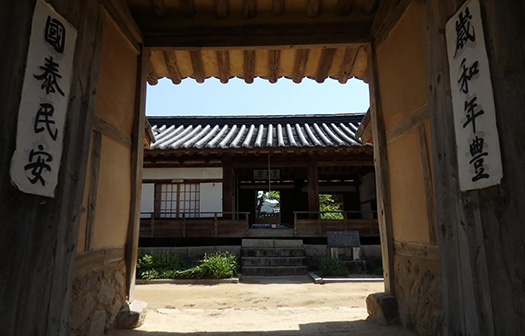
写真は忠孝堂の入口・門の様子。
塀から一段上げられた瓦葺きの屋根造作が身分制度を強くアピールし、
さらに大庁といわれる格式的スペース、そして高欄という装置。
儒教的東アジア世界認識が色濃く建築表現されているのだと伝わる。
この河回村では瓦屋根の両班住宅と、草葺きの一般住宅に分かれ、
後者は両班住宅に付随するような配置計画になっている。
まことに「事大主義」にどっぷりと浸かった様式。
強固な身分格差社会がながく維持されてきたことがわかる。

English version⬇

[Confucianism / Sadaejuui and Japan-Korea Diplomacy Reminiscences of South Korea’s Andong Hahoe Village-7]
This is a dream about diplomatic relations between Japan and South Korea at Andong Hahoe Village and Tadatakado.
This house is the old house of the person who was the Chancellor of Mr. Lee when Hideyoshi sent troops to Korea.
This point violently stirs up delusions and does not stop.

Japanese side “I want to pass through your country when His Highness Taiko of Japan attacks Ming dynasty.”
Korean side (Chancellor Yanagi) “Is that your intention as a country, what is the national book of the Japanese king?”
“Japan is a country controlled by His Highness Taiko, and Taiko is essentially the will of the country.”
“What kind of royal family is Taiko?”
“No, I’m not a royal family. I’m from a water-drinking peasant who made a big success …”
“This accepts something different, the will of the country is the will of the cowardly …”
“In our country, Takeshi controls the politics. He is the de facto king.”
“Following what such a barbaric person says is an injustice to politeness.”
“No, that’s why I’m a real power person …”
“I don’t understand such a story that doesn’t make sense” (Punpun)
… The emperor is also a “Japanese king” from the perspective of Korea, and has the same rank as the Korean king.
In the first place, the name of the emperor itself is considered to be irreverent to the Chinese emperor.
The country of Japan was a barbaric country, and it was inwardly humbled without a piece of Confucian etiquette.
Even the recognition that it is the same as the King of Korea is “diplomatic consideration” from the perspective of Korea.
If you do not understand even such circumstances, you will realize the difficulty of negotiations with Japan.
It seems that the pre-diplomatic negotiations in the role of Bunroku were like this.
In ancient times, it was said that there was a “seating order battle” between Japan and North Korea at an international meeting attended by the Chinese emperor.
In Korean society, where Confucianism is the dominant idea, in a free-spirited country like Japan,
There must have been a strong attitude of “teaching” an orderly East Asian international sense.
However, Japan has secured a relatively superior position in diplomacy with China.
In the first place, letting the Chinese emperor recognize the country name “Japan”
From the perspective of Korea, such as Prince Shotoku’s “Country of the rising sun, country of the setting sun”
There must have been a part of envy in the diplomatic performance, which was almost like a feat.
Geopolitical differences between the archipelago that separates the sea and the peninsula that connects the land.
For the Chinese nation, the effect of the control system called “book seal”
Did you think it was the utility of Confucianism, a powerful ideological weapon to maintain it?
Even today, “Confucius Institute” is used as a weapon of dictatorship.
On the other hand, the Japanese diplomatic corps heard Hideyoshi’s angry voice calling for an invasion of Ming from his back.
Sadaejuui on the Korean side in front of us, emphasizing Confucian order
While receiving an unrealistic and rigid response, he gradually leaned toward the start of the war.
… I remembered this kind of international affairs when I learned that there was a Chancellor at that time in Andong Hahoe Village.

The photo shows the entrance and gate of Chukodo.
The tiled roof structure raised from the wall strongly appealed the identification system.
In addition, there is a formal space called the Great Office, and a device called a balustrade.
It is said that the Confucian East Asian world recognition is strongly expressed in architecture.
In this village, there are two groups of houses with tiled roofs and general houses with thatched roofs.
The latter is a layout plan that accompanies both groups of houses.
A style that is truly immersed in “Sadaejuui”.
It can be seen that a strong social status disparity society has been maintained for a long time.

【 忠孝堂で考える「儒教」と建築 韓国河回村追想-6】


秀吉政権の文禄の役(韓国で壬申倭乱)時期の李氏朝鮮の宰相・柳成龍ゆかりの
河回村での両班住宅・忠孝堂を検証してみたい。
かれの生きた時代は1500〜1600年代時期でいまから400年ほど前のことになる。
日本では天皇と朝廷貴族の政治支配は大いに減衰し、
在地性の高い地域権力、封建領主が実権を握っていた時期。
天皇中心の国家体制はこうした封建権力を追認する機関として存続し
実権は武権機構・幕府とそれをすら下剋上して無化させる
地域権力者たちによる争乱がながく続いた状況だった。
こうした1500年代末〜1600年当時の状況はさらに400年以上前に
鎌倉幕府が成立したことがターニングポイントだろう。
権力の変動・循環構造ができあがり、純粋な封建主義が日本では成立した。
「一所懸命」という強い土地への執着が民族的底流として成立した。
中国では大きな権力移動は「易姓革命」だったが、日本では
武権の間での「政権交代」が実質だったと言えるのでしょう。
「勝てば官軍」であり、王権はその勝者への追認機関として機能した。
こうした体制は一方で社会のダイナミズムを保証していたといえる。
「封建的」というコトバは悪い意味で使われることが多いけれど、
その思想が同時に土地利用を高度化させ治山治水・経済発展に結びついた。
社会発展の基盤形成として不可欠な歴史段階なのだと思う。
それに対し中国皇帝権力への「冊封」体制下にあった李氏朝鮮社会では
なによりも儒教的秩序が社会の基軸構造だった。礼節主義。
両班である柳氏はこの安東地域、河回村地域の封建領主なのかどうか定かでない。
そもそも河回村では封建的地域独裁はなかったのか?
彼我の違いに大いに驚かされる。両班とは軍事と治政両面とされるが、
日本では軍事が実権化したのが歴史過程。
どうもそういう封建意識が李氏朝鮮社会では希薄だったように思える。
国王家・李氏自身が、明の皇帝に対してはるかに「遙拝」するような
冊封という儒教的「秩序」を拝跪する存在。
そのトップの下で権力を握るには科挙に受かって高級官僚になることであり、
「優秀な」人材が国王の引き立てを得て権力機構の階段を上ることが
成功者としての筋道だったということなのでしょう。
日本史上では菅原道真あたりで途絶えたような社会的成功ルートが
朝鮮社会ではずっと継続していたということでしょう。
こういった「成功者」からは秀吉のような奴卑階級出自の権力というのは
悪い冗談のように思えてならなかったことは自然に想像できる。
たぶんこの宰相・柳氏と日本側の外交交渉は相当困難だったことだろうと思う。
相互理解はほぼ不可能だったのではないか。
しかし韓国の人も日本の封建領主たち、信長や家康に面白みも感じるという。
そういう自然な受け止め方も一般にあるようです。
いま困難な両国関係だがこうした相互理解が基盤として必要ではないだろうか。

建築としての両班住宅は基壇の高さ、高欄などが特徴。
儒教思想的な階級意識を強調する建築ディテールだと思われる。
いわゆる「上から目線」で一般人に接することがステータスだと。
このあたり、堅苦しい身分差を空間的な狭さで無化させる茶室文化を開発した
日本建築と大きく隔絶していると思わざるを得ない。
また、社会的な階層意識強調は同時に男女格差の強調も併存した。
オモテの部分には男性の占有空間が広がり
ウラに女性と子どもの空間が配置され隔絶されていた。
建築文化において民族史的な違いが色濃く感じられますね。

English version⬇

[Confucianism and architecture at Chukodo] Reminiscences of Andong Hahoe Village, South Korea-6]
Mr. Lee, the Chancellor of Korea during the role of the Japanese Invasions of Korea in the Hideyoshi administration (Yang Water Monkey in South Korea)
I would like to examine both groups’ housing and Chukodo in Andong Hahoe Village.
He lived in the 1500-1600s, about 400 years ago.
In Japan, the political rule of the emperor and the imperial aristocracy has greatly diminished,
The time when the feudal lord, a highly local power, was in control.
The emperor-centered national system survived as an institution to confirm such feudal power.
The real power is abolished by defeating the military power organization, the shogunate, and even it.
It was a situation in which the conflict between local powers continued for a long time.
The situation from the end of the 1500s to the 1600s was more than 400 years ago.
The turning point is that the Kamakura Shogunate was established.
A fluctuation and circulation structure of power was completed, and pure feudalism was established in Japan.
The strong attachment to the land of “work hard” was established as an ethnic undercurrent.
In China, the major transfer of power was the “easy surname revolution,” but in Japan
It can be said that the “change of power” between the military powers was real.
It was a “government army if it won,” and the kingship acted as a confirmation body for the winner.
On the other hand, it can be said that such a system guaranteed the dynamism of society.
The word “feudal” is often used in a bad way,
At the same time, the idea led to the sophistication of land use and the flood control and economic development of the mountain.
I think it is an indispensable historical stage for forming the foundation of social development.
On the other hand, in the Joseon society, Mr. Lee, who was under the “book-sealing” system for the power of the Chinese emperor.
Above all, the Confucian order was the core structure of society. Politeness.
It is unclear whether Mr. Yanagi, who is a group of both groups, is the feudal lord of the Andong and Andong village areas.
Was there a feudal regional dictatorship in Andong Hahoe Village in the first place?
I am very surprised by the difference between him and myself. Both groups are said to be both military and political,
In Japan, the military has become a real power in the historical process.
It seems that such feudal consciousness was weak in the Joseon society.
The royal family, Mr. Lee himself, is far more “worshiping” to the Ming emperor
An existence that worships the Confucian “order” of book-sealing.
To seize power under that top is to be an imperial examination and become a high-ranking bureaucrat.
“Excellent” human resources can climb the stairs of the power organization with the patronage of the king
Perhaps it was a path as a successful person.
In the history of Japan, there is a social success route that seems to have disappeared around Sugawara no Michizane.
It must have been continued in Korean society.
From such “successful people”, the power of the nobi class origin like Hideyoshi is
It’s natural to imagine that it didn’t seem like a bad joke.
Perhaps the diplomatic negotiations between the Chancellor, Mr. Yanagi, and the Japanese side were quite difficult.
I think mutual understanding was almost impossible.
However, Koreans are also interested in Japanese feudal lords, Nobunaga and Ieyasu.
There seems to be such a natural way of thinking in general.
It is a difficult relationship between the two countries, but I think this kind of mutual understanding is necessary as a foundation.

Both groups of houses as an architecture are characterized by the height of the platform and the balustrade.
It seems to be an architectural detail that emphasizes the Confucian consciousness of the class.
The status is to interact with the general public from the so-called “looking from above”.
Around this time, we have developed a tea room culture that eliminates the formal difference in status with a narrow space.
I have to think that it is far from Japanese architecture.
At the same time, the emphasis on social class consciousness coexisted with the emphasis on gender disparity.
Men’s occupied space spreads in the front part
A space for women and children was placed in the back and isolated.
You can feel the difference in ethnohistory in architectural culture.

【 李氏朝鮮「宰相」の家・忠孝堂 韓国河回村追想-5】


さてハフェマウル・柳氏一族の住建築探訪であります。
この「忠孝堂」は壬申倭乱と韓国で名付けられる1591年の秀吉の朝鮮出兵時に
宰相・柳成龍を輩出していたこの一族の本宅とされます。
ということでいきなり厳しい日韓関係史に向き合わされることになる。
柳成龍。(以下要旨引用 OhSongHo「韓国朝鮮歴史のトリビア」より)
〜彼は慶尚北道義城で生まれ子供の頃ソウルで李舜臣と親密に過ごした。
<李舜臣は今回のオリンピックで話題になった。>
その後河回村で過ごし頭脳明晰で学問師匠から高く評価されたそうです。
1564年司馬試に合格し1566年官職に上がり朝鮮国王・宣祖が即位した後、
重用され順調な官職コースを歩んだとされる。
彼の活動期は党争が始まった時期で巻き込まれたがさほど被害を受けなかった。
秀吉の朝鮮侵略を探る通信使の報告に際し戦争が起こるとは思わなかったとされる。
それでもやはり気まずかったのか李舜臣などを推薦・登用し
各地域の城塞の修築をするなど戦争の準備をしようと努力しては居ます。
領議政(宰相)として内政と軍事の両面を担う事になります。
その後隠遁生活をしながら「懲毖録」執筆活動に勤しみました。
懲毖録は韓国国宝で壬辰倭乱の貴重な記録とされる。1607年5月死去。〜
こういう経歴の人物であり明の冊封を受けている李氏朝鮮での国教といえる
儒教体制での指導者として名をはせた人物と言えるのでしょう。
日本では戦国末期に相当するいまから400年ほど前の時代を生きた人物。

この家の名前も「忠孝」といういかにも儒教的な命名。
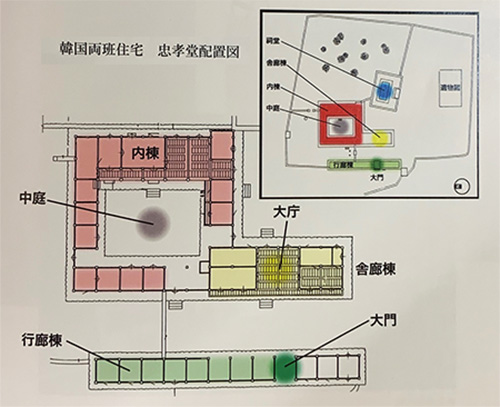
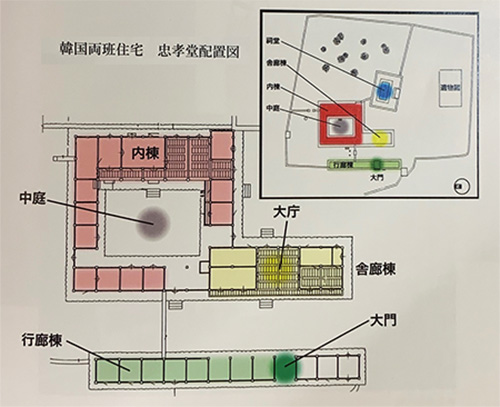
典型的な上流「両班〜ヤンパン」住宅として日本の国立歴史民俗博物館資料でも
上のように間取り図が取り上げられています。
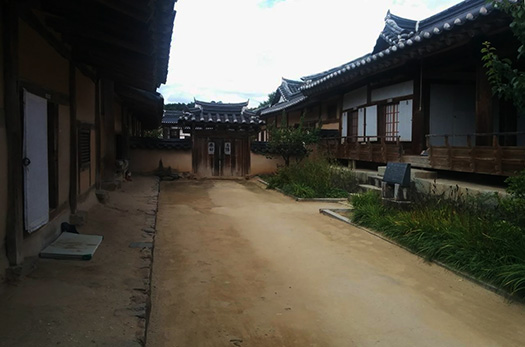
写真は大門から大庁方向を見るアングルと大庁のある舎廊棟をサイドから見た図。
大門というのは門の棟だけを一段高くして身分を表すとされる。
朝鮮では男性と女性で空間が仕分けされていて舎廊棟は男性空間。
板敷きの大庁の左右には床暖房のオンドル房が配置されている。
舎廊棟は基壇が高く、さらに高欄を設けるなど儒学者としての地位を表現している。
2枚目の写真の奥に、女性と子どもが暮らす生活空間。

いろいろな住宅についての歴史情報が飛び込んでくる。
同時期の日本は戦国の最終段階であり、利休の数寄屋茶室までが現れた時代。
一方の韓国では明の冊封体制下、儒教による秩序体制が深まっていった。
大航海時代の荒波は日本では強く感受されたけれど、
韓国朝鮮ではむしろ大陸中国の強い影響力が支配的だったとわかります。
ちなみに当時の人口規模は日本は1,300万人ほどで、朝鮮は1/4ほどとされる。
大陸国家社会との距離感がそのまま政治・文化に反映されているように思える。
茶の湯の機能に合わせた自由な建築がもてはやされた日本の時代感覚と
秩序意識がきわめて濃厚だった朝鮮の住宅建築の設計思想。
世界と繋がった海洋国家と、大陸国家との距離感に配慮する半島国家。
どうもそういったイメージが自然に起こってくる気がします。
あしたもこの忠孝堂、検証してみたい。

English version⬇

[Mr. Lee, the house of the “Chancellor” of Korea, Zhongxiao-do, Hahoe Village, South Korea -5]
By the way, it is a house architecture exploration of the Hafemaul Yanagi clan.
This “Tadatakado” was named the Yang Water Monkey in Korea when Hideyoshi sent troops to Korea in 1591.
It is the home of this clan that produced the Chancellor Ryu Seong-ryong.
As a result, we are suddenly faced with a harsh history of Japan-Korea relations.
Ryu Seong-ryong. (From OhSongHo “Trivia of Korean History” )
~ He was born in Yi Castle, Gyeongsangbuk-do, and spent his childhood intimately with Yi Sun-sin in Seoul.
.
After that, he spent time in Andong Hahoe Village and was highly praised by his academic master for his clarity.
After passing the Shiba test in 1564 and rising to the official position in 1566, the King of Korea and Seonjo of Joseon took the throne.
He is said to have been heavily used and went through a successful official course.
His period of activity was involved at the beginning of the party dispute, but was not significantly damaged.
He allegedly did not expect a war to occur when Hideyoshi reported a messenger exploring the invasion of Korea.
Was it still awkward? He recommended and promoted Yi Sun-sin and others.
He is trying to prepare for the war, such as repairing the citadels in each area.
As a congressional government (Chancellor), he will be responsible for both domestic affairs and military affairs.
After that, he lived in seclusion and worked on writing “The Jingbiro”.
The Jingbirokku is a national treasure of Korea and is regarded as a valuable record of the Yang Water Dragon. Died May 1607. ~
It can be said that Mr. Lee, who is a person with such a background and has received the Ming dynasty, is the state religion in Korea.
It can be said that he is a well-known person as a leader in the Confucian system.
In Japan, a person who lived in the era about 400 years ago, which corresponds to the end of the Warring States period.

The name of this house is also “Tadataka”, which is a very Confucian name.
As a typical upstream “Rangoban-Yangban” house, even in the materials of the National Museum of Japanese History and Folklore in Japan
The floor plan is taken up as above.
The photo is a side view of the Sarangbang building where the Daimon is located and the angle from the Daimon to the Daimon.
Daimon is said to represent the identity by raising only the ridge of the gate.
In Korea, the space is divided into men and women, and the Sarangbang is a men’s space.
Ondol bunches for floor heating are located on the left and right sides of the wooden boarding office.
The Sarangbang has a high base and has a high section to express its position as a Confucian scholar.
In the back of the second photo is a living space where women and children live.

Historical information about various houses pops in.
At the same time, Japan was in the final stage of the Warring States period, when Rikyu’s Sukiya teahouse appeared.
On the other hand, in South Korea, the Confucian order system deepened under the Ming dynasty book-sealing system.
The rough waves of the Age of Discovery were strongly felt in Japan,
It turns out that in South Korea, the strong influence of mainland China was rather dominant.
By the way, the population size at that time was about 13 million in Japan and about 1/4 in Korea.
It seems that the sense of distance from the continental national society is directly reflected in politics and culture.
With the sense of the Japanese era, where free architecture that matches the function of the tea ceremony was touted
The design concept of Korean residential architecture, which was extremely conscious of order.
A peninsula nation that considers the sense of distance between a maritime nation connected to the world and a continental nation.
I feel that such an image naturally occurs.
I want to verify this Tadatakado tomorrow.

【 三神堂神木・欅巨木崇拝 「河回村」追想-4】


韓国・河回村(ハフェマウル)に来て最初に民俗にリスペクトして宗教的空間へ。
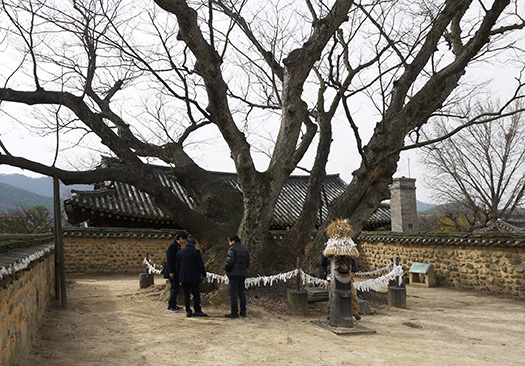
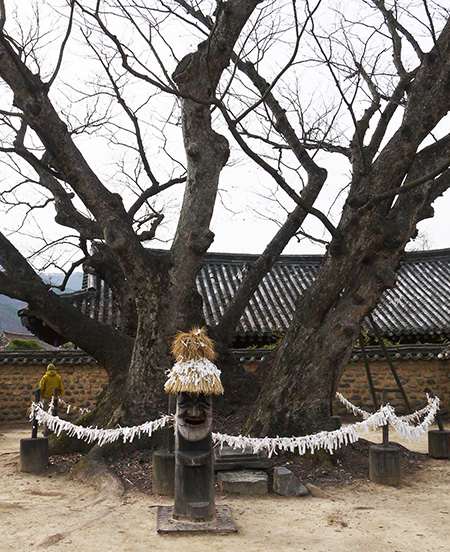
これは『三神堂神木』と呼ばれる樹齢600年の欅(けやき)の大木であり、
村の中央に位置し子供を授け、子供の出産と成長を助けると伝承されている。
村の神木であり毎年、最初の満月の日(デボルム)に村の平安を祈願する
ドンチェ(洞祭:村祭り)が行われてそうです。
日本には神社という独特の尊崇空間がありますが、
そのような存在は韓国・朝鮮にはないとされる。その後の中華文明である
儒教を持って国の根幹を形成しているようにエトランゼとしては思える。
そういう在地信仰として巨木には日本も自然にあるともいえる。
ケヤキの神と言うと大坂・岸和田のダンジリの歌にもあるようです。
古代応神天皇の河内王朝と伽耶国(洛東江流域)との関係・繋がりを妄想する。
また歴史の浅い北海道神宮境内ですら、結界マーキングしている自然巨木がある。
で、写真のように白い短冊状の紙が紐に付けられている。
日本の場合にはこのような場合には「注連縄」が巻かれるけれど、
一方で村の入口で出迎えてくれた仮面彫像が「よく来たな(笑)」と微笑んでいる。
入口での彫像に加えて頭部にはワラの帽子を被っている。
このワラの帽子が日本の注連縄と繋がるのかどうか、興味をそそる。
この三神堂神木はずっと通路を囲んでいる土塀に囲まれた中央広場空間。
案内説明では、ハフェマウルに建てられる住宅群はこの神木に対して
方位を向けて建てられているとされるけれど、そこまで確認する術はなかった。

上空写真と地図を組み合わせてみましたが、三神堂神木が集落の中心であることが
視覚的にもわかりやすい(韓国公的機関公開の空撮・地図のマーク箇所)。
この仮面彫像も一種の宗教的存在であることはあきらかだけれど、
これらは仮面劇でいろいろなキャラクターが存在するとされる。
その仮面劇を体験することはできなかった。日本での伎楽・雅楽的なものが
そのまま在地神化しているものと思われました。
日本の結界感覚と似ているようでかなり相違する、不思議な感覚。
逆に日本の神道や神社は非常に独特で他のアジアでは類例がないと思える。

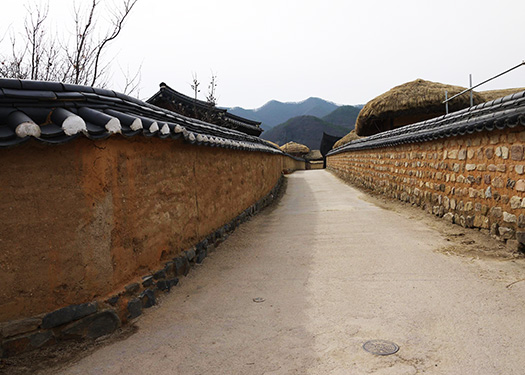
周囲を囲む土塀は一貫してこのスタイルが踏襲されている。
沖縄の離島集落でもほぼ同様な通路と琉球石灰石での塀の連続を見たけれど、
ここでは瓦で屋根も付けられていました。
また基本は土塀ですが、石が表面に貼り付けられている様子がわかる。
土面と共通する色彩感覚なのでこの土地の土が加工されていることが伝わる。
このアースカラーには圧倒的な土地のパワーを感じさせられます。
建築は地域の材料を使って作られるので、ここでは土塗りが基本ということを
この土塀は語ってくれているものでしょう。
この地の民俗の基本がまっすぐに伝わってくる空間だと思います。

English version⬇

[Recollection of “HahoeMauru”, a worship of the three shrines and giant trees-4]
When I came to Andong Hahoe Village, South Korea, I first respected the folk and went to a religious space.
This is a 600-year-old zelkova tree called “Sanjindo Shinboku”.
Located in the center of the village, it is said to give birth to children and help their children give birth and grow.
It is a sacred tree of the village and prays for the peace of the village every year on the first full moon day (Deborm).
It seems that Dongche (dong festival: village festival) is being held.
Japan has a unique revered space called a shrine,
It is said that there is no such existence in Korea. The subsequent Chinese civilization
It seems to Etranze that it forms the basis of the country with Confucianism.
It can be said that Japan is naturally present in giant trees as such a local belief.
The god of zelkova seems to be in the song of Danjiri in Osaka and Kishiwada.
Delusion of the relationship and connection between the Kawachi dynasty of the ancient Emperor Ojin and Gaya (Rakuto River basin).
Even in the precincts of Hokkaido Jingu Shrine, which has a short history, there are giant natural trees that are marked with barriers.
Then, as shown in the photo, a white strip of paper is attached to the string.
In the case of Japan, “Shimenawa” is wrapped in such cases,
On the other hand, the masked statue that greeted me at the entrance of the village smiled, “I often came (laughs).”
In addition to the statue at the entrance, he wears a straw hat on his head.
It is intriguing whether this straw hat is connected to Japanese Shimenawa.
This Sanjindo Kamiki is a central plaza space surrounded by earthen walls that surround the passage all the time.
According to the guide, the houses built in Hafemaul are against this sacred tree.
It is said that it was built facing the direction, but there was no way to confirm it.

I tried to combine the aerial photograph and the map, but it is said that Sanjindo Kamiki is the center of the village
Easy to understand visually (Aerial view / map mark part published by Korean public institution).
It is clear that this masked statue is also a kind of religious entity,
These are masques and it is said that there are various characters.
I couldn’t experience the masque. Gigaku and gagaku in Japan
It seemed that it had become a local deity as it was.
A mysterious sensation that seems to be similar to the Japanese barrier sensation but quite different.
On the contrary, Japanese Shinto and shrines are very unique and seem to be unique in other Asian countries.

This style is consistently followed for the surrounding earthen walls.
I saw a series of fences made of Ryukyu limestone with almost the same passages in the remote island villages of Okinawa.
The roof was also covered with tiles here.
Also, although the basic is an earthen wall, you can see how the stones are stuck on the surface.
Since it has the same color sense as the soil surface, it can be said that the soil of this land is processed.
This earth tone makes you feel the overwhelming power of the land.
Since the architecture is made using local materials, the basic idea here is to paint with soil.
This earthen wall will tell you.
I think it is a space where the basics of the folk customs of this area can be conveyed straight through.