本文へジャンプ

【独裁権力による多民族国家〜中国問題研究 1】


世界史の中で長きにわたって地政学的な焦点であり続けた中国。
現代世界でも14億とも言われる人口規模で非常に重要な存在。
日本はずっと地政学的にこの国との関係が難しい複式方程式であり続けた。
わたしの生きてきた時間の中では、国共内戦とその結果である
大陸と台湾との分離。そこから中華民国として台湾が国連常任理事国。
そしてそこから大陸の中華人民共和国の国際関係へのバトンタッチ。
(いま考えるとどうして国連常任理事国の位置が与えられたのか根拠が不明)
米中国交、日中国交正常化、台湾との国交限定化などの時期を経て
鄧小平の改革開放路線に沿った経済協力といった時期を過ごしてきた。
そして世界の資本主義による投資の活発化によって
経済規模が拡大していって、いまは世界のDGP第2位の国際位置を占めている。
戦後、日本は中国の経済発展のモデルとなってきたのだと思う。
日本の支配的潮流としても親中的な姿勢で推移してきた。
中国の経済発展に協力するというのが基本スタンスだったのだと言える。
若い時期に左翼的傾向だった人間としては、しかしむしろ、
左翼活動の非常にファッショな体質の実態を知っているだけに
もし共産党支配の中国に行ったら危険があるかもという過剰な警戒心(笑)があって
一度も行ったことはないし、行こうとも思ったこともない。
その歴史とかもあまり興味を持つことはためらわれたりしてきた。

しかしこれからの世界情勢の局面を考えると相手を知らなければと思う。
それが「敵を知る」ということにならないように願うけれど、
当面の情勢を考えるとそうなる可能性も高いかも知れませんね。
・・・司馬遼太郎さんの随筆の一節で中国歴史についての記述のなかで
「中国は本来、ヨーロッパと同じように多くの国に分かれるべきだった」
という記述があります。
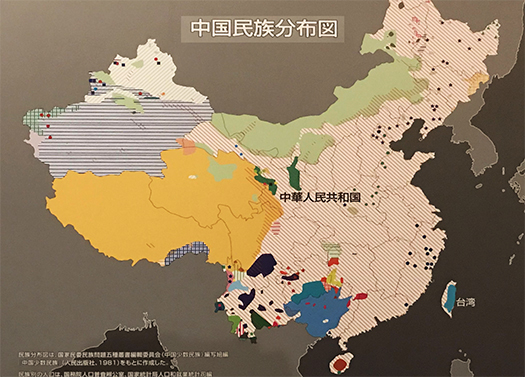
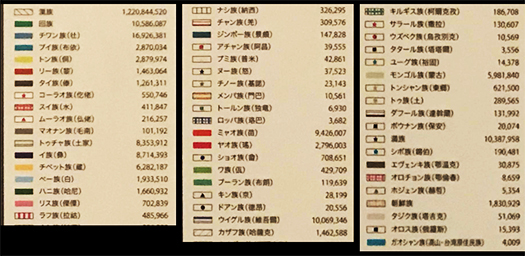
図で示したような多民族が中国大陸の現実的な構成になっている。
ヨーロッパもほぼ同様であるのに、中国では歴世、独裁権力専制が敷かれた。
その民族間での過酷な戦争が中国史の特徴であるともいえる。
ヨーロッパでも同様の歴史が繰り返されてきたけれど、
第2次世界大戦の終結を踏まえて、民族国家群の平和共存体制に変化した。
本来多数の国家に分かれる方が「民族国家」としての統合性が保たれる。
戦後世界は基本的に「民族自決」ということが大原則だったはず。
戦前の日本も、世界に対してこのテーゼを訴えてきたのだと思います。
日本の敗戦以降の世界は多くの民族の自決・独立によって
多国間の平和ルール、その原則が樹立されていった過程ともいえる。

このような世界的な民族自決の潮流に対してひとり中国だけは
広大な国土、多様な民族構成を抱えたままの「独裁権力」体制が生き残った。
問題は左翼共産主義では民族的多様性原則が尊重されないことにある。・・・

English version⬇

[Multi-ethnic nation by dictatorship-Study on Chinese issues 1]
China has long been a geopolitical focus in world history.
It is a very important person with a population of 1.4 billion in the modern world.
Japan has always been a compound equation that is geopolitically difficult to relate to.
In the time I have lived, the Chinese Civil War and its consequences
Separation of continent and Taiwan. From there, Taiwan is a permanent member of the United Nations as the Republic of China.
And from there, a baton touch to the international relations of the People’s Republic of China on the continent.
(If you think about it now, it is unclear why the position of a permanent member of the United Nations was given.)
After a period of US-China diplomatic relations, normalization of diplomatic relations between Japan and China, and limitation of diplomatic relations with Taiwan
We have spent a period of economic cooperation along the reform and open route of Deng Xiaoping.
And with the increased investment by global capitalism
The economy has expanded and now occupies the second largest international position in the DGP in the world.
After the war, I think Japan has become a model for China’s economic development.
It has remained pro-Chinese as the dominant trend in Japan.
It can be said that the basic stance was to cooperate with China’s economic development.
As a person who tended to be leftist when he was young, but rather
Just knowing the very fashionable constitution of leftist activity
There was excessive caution (laughs) that it might be dangerous if I went to China under the control of the Communist Party.
I’ve never been there, and I’ve never thought of going.
I have been hesitant to be interested in its history.

However, considering the future situation of the world, I think I have to know the other party.
I hope it doesn’t mean “knowing the enemy”,
Considering the situation for the time being, it may be likely that it will happen.
・ ・ ・ In a passage written by Ryotaro Shiba in the description of Chinese history
“China should have been divided into as many countries as Europe.”
There is a description.
The multi-ethnic groups shown in the figure are the realistic composition of mainland China.
Although Europe is almost the same, China has been dictated by dictatorship.
It can be said that the severe war between the ethnic groups is a characteristic of Chinese history.
A similar history has been repeated in Europe,
With the end of World War II, it changed to a peaceful coexistence system of nation-states.
Originally, the one that is divided into a large number of nations maintains the integrity as a “nation state”.
The postwar world should have basically been “self-determination”.
I think that prewar Japan also appealed to the world for this thesis.
The world after Japan’s defeat is due to the self-determination and independence of many peoples
It can be said that the multilateral peace rules and the principles were established.

Only China is alone against such a global trend of self-determination.
The “dictatorship” system with its vast land and diverse ethnic composition survived.
The problem is that left communism does not understand the principle of ethnic diversity.・ ・ ・

【「よくわからない」ことが、よくわかった意味】


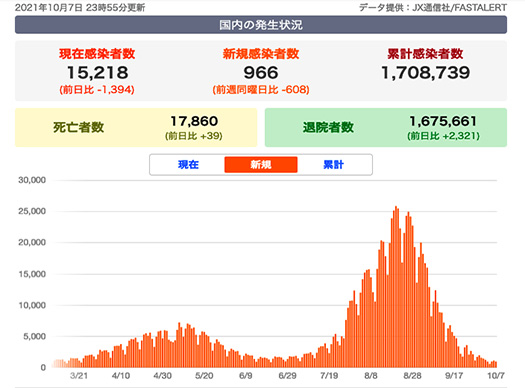
感染症の動向でこの2年間世界は振り回されてきた。
この間、喧しい混乱状況が続いてきて国民生活に多大な困難を引き起こした。
これからもまだしばらくは目が離せない状況が続くだろうけれど、
今回の感染の波動を見ていると、まったく予測不能な動向・推移。
「なぜ、こんなに急減速するのか?」

現代のような情報化社会に立ち至ってくると、
こうした感染症への社会の対応からさまざまな問題点が浮かび上がる。
まず一番行うべきは「検証」ではないだろうか。
こういう社会経験に踏まえ、真実はどうであったのか、
という科学的解明が不可欠だと思います。
これまでの歴史局面でたくさんのパンデミックに人類は遭遇したけれど、
たとえばペストなどの教訓に踏まえて衛生思想の進歩があり
上下水道の完備が多くの感染症の教訓から導き出されたように、
困難な経験が人類知として活かされてきたのだろうと思います。
感染症それぞれの独自のふるまいの解明は科学の手に委ねるべきであり
大いにそれが深化発展して行って欲しいと強く思います。
最悪の困難を覚悟しながら、冷静にミクロの危機との共生を考える必要がある。
社会的な責任のある立場の人が「ゼロコロナ」みたいな言葉を不用意に発する、
という傾向が見られるけれど、ミスリードそのものでしょう。
感染症全体についてはまだ人類はコントロール出来てはいない。
たぶん今後とも完全に対応することはムリなのでしょう。
しかし経験した特定の感染症については具体的な対応策を確立して欲しい。

一方でより大きな問題は社会の制度なり民主主義システムが揺さぶられたこと。
本来であれば、こういった「誰も正解を持っていない」困難に対しては
社会全体として「一致協力して」立ち向かうのが筋ではないだろうか。
解明されていない困難に遭遇すると社会不安が起こる。
そういう状況ではヒステリー心理が働いてしまう。
今回残念ながら、日本に於いてマスメディアは本来果たすべき役割ではなく
むしろ社会的ヒステリーを助長する結果になっていたように思える。
インターネットという速報性の高いメディアが主流になってきて
既存のメディアは生き残りもかけて「主張性」の強化に向かいすぎていた。
その弊害としてこうしたヒステリー助長に陥ったのではないだろうか。
「よくわからないことが明らかになった」という教訓から
学ぶべきことは非常に大きいのではないかと思えます。

English version⬇

[It became clear that inexperienced infectious diseases are “not sure”]
The world has been swayed by the trend of infectious diseases for the past two years.
During this time, a noisy and confusing situation continued, causing great difficulty in people’s lives.
The situation will continue to keep an eye on for a while, but
Looking at the wave of this infection, the trends and transitions are completely unpredictable.
“Why is it slowing down so rapidly?”

When we come to the modern information society,
Various problems emerge from the social response to these infectious diseases.
The first thing to do is “verification”.
How was the truth based on this kind of social experience?
I think that scientific elucidation is indispensable.
Mankind has encountered many pandemics in the historical phase so far,
For example, there is progress in hygiene thought based on lessons such as plague.
I think that difficult experiences have been utilized as human knowledge.
As the completeness of water and sewage was derived from the lessons of many infectious diseases.
Elucidation of the unique behavior of infectious diseases should be in the hands of science
I strongly hope that it will be deepened.
It is necessary to calmly think about coexistence with the micro crisis while understanding the worst difficulties.
A person in a socially responsible position carelessly utters a word like “zero corona”,
There is a tendency, but it is misleading itself.
Mankind has not yet been able to control the infectious disease itself.
Perhaps it will be unreasonable to fully support it in the future.
However, I would like you to establish specific countermeasures for specific infectious diseases that you have already experienced.

On the other hand, the bigger problem was that the social system and democratic system were shaken.
Originally, for such difficulties that “no one has the correct answer”
Isn’t it a good idea for society as a whole to confront “in unison and cooperation”?
Social unrest arises when encountering unexplained difficulties.
Hysterical psychology works in such a situation.
Unfortunately, this time, the mass media is not the role that should be played in Japan.
Rather, it seems to have resulted in promoting social hysteria.
The Internet, a highly breaking media, has become mainstream
The existing media has been trying to survive too much to strengthen its “assertiveness”.
Perhaps it has fallen into such hysteria promotion as a harmful effect.
From the lesson that “it became clear that I do not understand well”
I think there is so much to learn.

【ひたすら閉塞のビジネス環境からようやく変化か?】


知恵と工夫そしてなにより忍耐という感染症対応での長い時間。
やむを得ない行動抑制局面が続いてきましたが、ようやく活気が出てきた。
とは言っても接触機会では十分に注意して、また当面は会食などは難しい。
そういった意味では行動習慣を安全優先に変化させる細心の注意が必要。
しかし、ビジネス的な再起動は趨勢になってきたように思われます。

ビジネスではこの間のZoom一辺倒での限界点も見えている。
たしかに日常業務的な部分ではZoom面談というのは非常に効率的。
気心の知れた関係にあってはより接触頻度が高まって、
コミュニケーションに奥行きが深まったと思います。
そういう部分で活発化するビジネス領域も発見できたように思います。
しかし一方で新たな人間関係構築という意味では難しい。
コロナ禍以前、各種の業界的イベントが活発に行われていた。
あのような情報交換機会って、いわば「全人的」コミュニケーションが可能。
ビジネスってあらかじめ決まり切った流れに即して行くものではない。
臨機応変に対応してサービス内容を噛み砕いて行くもの。
Zoomでの面談ではいかにも窮屈な範囲でしか終始しない側面があって
目の前の具体的なことがようやく機能を果たせる程度なのだと思う。
・・・まぁ、ホンネが聞き取りにくいし、言いにくい(笑)。
さらにZoomでの一方通行的セミナーイベントなどは
こういった「つまらなさ」からか、あるいは各自ホームでの対応から
日常業務的なさまざまな案件が同時に流動しているので、
ついついその日程を「忘れる」ことが異常に多い。
そもそも日程に入れたことすら忘れてしまうし、
そこで展開しているテーマにズレを感じたら黙って離脱したくなる。
あるWEBセミナーでは目を惹き付けようとしたのか、
話者が、スポットライトが縦横にきらびやかに演出されたりしていた。
ちょっと呆然とさせられて「ウソくさいなぁ」と辟易させられた。

やっぱり地道な情報交流、誠意ある人間性の情報交換がいちばん大切。
もちろん、これからもZoomなど非接触で深掘型の情報交換は有益だと思うけれど
やはりリアルとITの組み合わせが一番大切になってくるでしょうね。
とくに情報セキュリティ上、自由なZoom接触の不可能な企業も多い。
より一層、知恵と工夫が求められるようになるものと思いますね。
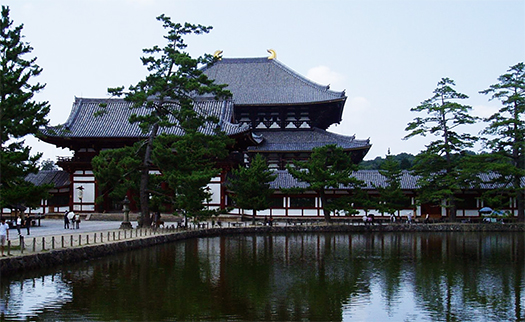
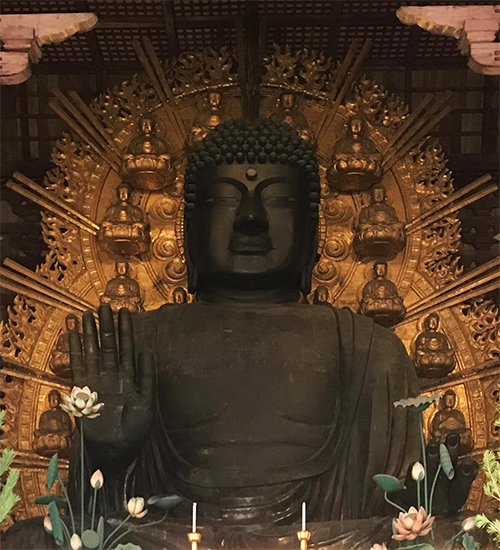
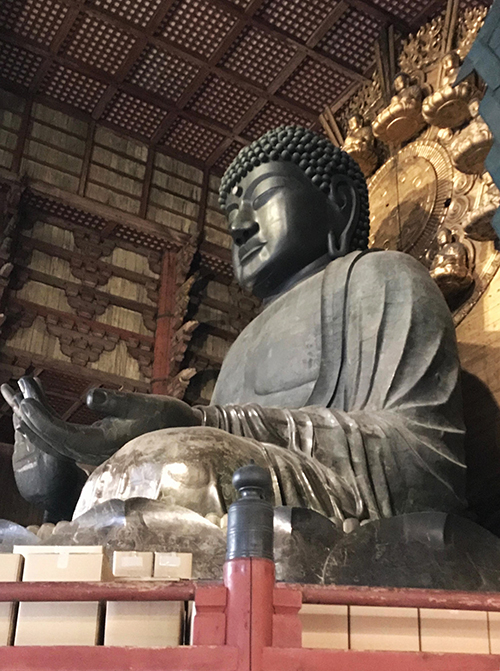
<写真は奈良東大寺大仏殿の脇仏さま>

English version⬇

Is it finally changing from the closed business environment? ]
Wisdom and ingenuity, and above all, patience for infectious diseases.
The unavoidable behavioral restraint phase continued, but it finally became lively.
That said, pay close attention to business contacts, and for the time being, it will be difficult to have dinner.
In that sense, change the behavioral habits so far to prioritize safety.
However, business restarts seem to be on the rise.

In business, we can see the limits of what we have been doing with Zoom.
Certainly, Zoom interviews are very efficient in the daily work part.
In a well-known relationship, the frequency of contact is higher,
I think that communication has deepened.
I think I was able to rediscover the business areas that are becoming more active in such areas.
However, on the other hand, it is difficult in terms of building new relationships.
Prior to the Corona disaster, various industry events were actively held.
Such an opportunity to exchange information enables, so to speak, “whole-person” communication.
Business does not follow a pre-determined flow.
The service content is crushed in response to the circumstances.
In the interview at Zoom, there is an aspect that it is only in a cramped topic range from beginning to end
I think that the concrete things in front of us can finally fulfill their functions.
… Well, it’s hard to hear and say (laughs).
In addition, one-way seminar events at Zoom
From such “boringness”, or from the correspondence at each person’s home ground
Since various projects are flowing in the daily work environment,
There are unusually many things that I just “forget”.
In the first place, I forget that I even put it in the schedule,
If you feel a gap in the theme that is being developed there, you will want to silently leave.
Did you try to attract your eyes at a webinar?
The speaker was brilliantly directing the spotlights vertically and horizontally.
I was a little stunned and was frustrated by saying, “It’s a lie.”

After all, steady information exchange and sincere information exchange of humanity are the most important.
From such a thing, it becomes a “deep digging type” intention.
Of course, I think that non-contact and deep-drilling information exchange such as Zoom will continue to be useful.
After all, the combination of real and IT will be the most important.
Especially for information security, there are many companies that cannot make free Zoom contact.
I think that wisdom and ingenuity will be required even more.

【日本=黄金の国と呼ばれる理由】


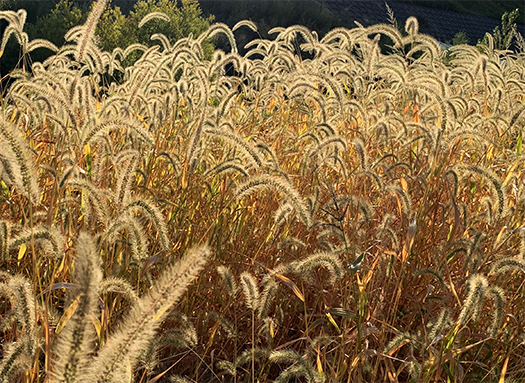
写真は最近の散歩道での名も知らぬ植物群生。
なんか、コメに似てタネをたくさん実らせ姿全体が黄金色に輝いている。
イネ科植物特有の穂波に日本人は独特の感受性を持っている。
カミさんと話していたら学校で先生が日本の国が黄金の国と言われているのは、
秋のコメの実りの風景からなんだと教えられたという話題に。
北海道札幌の景観のなかなのでコメの群生を見ることは普段はないけれど、
視覚イメージとしてコメの実りの様子を「黄金の国」と見る感覚は
日本人ならばごく自然なのかなぁと思います。
でもチョット待てと。

学校の先生としては、歴史事実としてのマルコポーロ「東方見聞録」が
ヨーロッパ世界に黄金の国ジパングと書いたことがポイントではと
個人的にやや、違和感を感じざるを得なかった。
日本で金が産出したことが日本史を大きく変えた歴史事実について
その重要性に無理解なのではないかと危惧を感じさせられた次第。
昔から経済が社会の基本であることは不変であるので、
社会的交換、交易ということは人間社会の根幹に位置する。
貨幣というものの始原的な根拠価値と金や銀という希少金属は
歴史を動かす重要な動因になり続けてきたのが現実だと思います。
マルコポーロさんはたまたま中国に冒険していって捕らえられ
その獄中で黄金の国ジパングという東洋人に普遍的な情報を聞き取った。
西洋人にとって黄金という情報ほど、血湧き肉躍るものはなかったのでしょう。
幸運にも西洋世界に帰還できた後「東方見聞録」を上梓し
それが多くの西洋人に知れ渡るところとなり、
やがて大航海時代を拓く機縁になっていったとされる。
多くの人々のロマンと欲望を刺激したであろうことは論を待たない。
日本の奥州で産金したことは、奈良の大仏開眼会が国際イベントとして
世界にその情報が知れ渡る大きなきっかけも提供した。
黄金に輝く巨大仏像のある国として好奇心と征服の野望を
大いに刺激したであろうことは常識的に理解できるでしょう。
この産金がその産地である東北地域にとって幸福であったかどうかは不明。
繰り返した奥州への暴力的征服活動が引き起こされた。
産金利権、カネに目がくらんだ中央政権の暴虐を受け続けた。
安倍氏・清原氏・藤原氏のような地域政権が成立したことは、
日本列島としては稀有な政治動向をもたらした。
日本史の中できわめて重要な動因であったことは明らかでしょう。

黄金色に輝くイネ科植物の穂波もたしかに日本らしいけれど、
なまなましい動乱要因でもあったことは忘れてはならないのではないでしょうか。

English version⬇

[Reason for being called Japan = Golden Country]
The photo shows an unknown plant vegetation on a recent promenade.
Somehow, a lot of seeds are produced like rice, and the whole figure is shining golden.
The Japanese have a unique sensitivity to Honami, which is peculiar to gramineous plants.
When I was talking to Mr. Kami, the teacher said that Japan was a golden country at school.
The topic was that I was told that it was from the scenery of the fruits of autumn rice.
I don’t usually see rice clusters because it’s in the landscape of Sapporo, Hokkaido.
The feeling of seeing the fruit of rice as a “golden country” as a visual image
I think it’s very natural for Japanese people.
But wait a minute.

As a school teacher, Marco Polo’s “The Travels of Marco Polo” as a historical fact
The point is that I wrote Zipangu, the golden country in the European world.
He had to feel a little uncomfortable personally.
About the historical fact that the production of gold in Japan changed the history of Japan significantly
As soon as I was worried that I might not understand its importance.
Since the economy has always been the basis of society,
Social exchange and trade are at the core of human society.
The primitive value of money and the rare metals such as gold and silver
I think the reality is that it has continued to be an important driving force in history.
Marco Polo happened to be adventuring to China and was caught
In his prison, he heard universal information from an oriental man named Zipangu, the Golden Land.
For Westerners, there was nothing more bloody and exciting than the information of gold.
After he was fortunate enough to return to the Western world, he published the “Eastern Memorandum”
It became known to many Westerners,
It is said that it soon became an opportunity to open up the Age of Discovery.
It goes without saying that it would have stimulated the romance and desires of many.
The fact that the money was produced in Oshu, Japan was held by the Great Buddha Opening Party in Nara as an international event.
It also provided a great opportunity for the information to be known to the world.
Curiosity and ambition to conquer as a country with a giant golden Buddha statue
You can understand in common sense that it would have been very inspiring.
It is unknown whether this gold was happy for the Tohoku region where it was produced.
Repeated violent conquest of Oshu was triggered.
He continued to be violent by the central government, which was blinded by interest rates and money.
The establishment of regional governments such as Mr. Abe, Mr. Kiyohara, and Mr. Fujiwara
It brought about a rare political trend for the Japanese archipelago.
It is clear that it was a very important motive in Japanese history.

Honami, a gramineous plant that shines in golden color, is certainly Japanese, but
It must be remembered that it was also a sloppy factor of turmoil.

【新政権発足・中国危機と世界経済の行方】


感染症の推移も小康の中、久しぶりに経済論戦が自民党総裁選で展開された。
多くの国民が関心を持ったのは、スキャンダルや揚げ足取りに堕した政治の世界で
それこそ目が覚めるリアリティのある経済論が戦わされたこと。
政の基本任務はどう「宰をふるう」かにあると気付かされる。
宰をふるうとは、人々が生きていくには暮らしの安定が最優先であり
宰相はその基本である経済に最大限注力すべきものだということ。
本当に久しぶりに正面から論議されていることに大きな期待感が集中した。
最有力とメディアが願望していた候補が大増税誘発が必至の
保険制度への不用意な発言があって驚かされたが、案の上大失速した。
いちばん地味な候補が興味深く本質的な「変革」要素を打ち出していた。
岸田さんの「新しい資本主義・新自由主義からの脱却」に期待感が高まった。
代議制民主主義制度が機能してこの政策論に収斂したことには意味があった。
もちろんまだこの経済政策の道筋は五里霧中だけれど、
印象的だったのは、トリクルダウン幻想からの脱却が謳われたこと。
富裕層に経済的成功と減税が享受されれば、やがてその恩恵は
ひろく中低所得層にしずくが落ちていくように社会全体が経済発展するという
新自由主義論に添ってこれまでの世界経済運営は行われてきたのだと思う。
しかしその結果、格差が拡大し富の偏在が加速度的に進行した。
このことにアメリカ大統領自身が否定的見解を表明するに至っている。

いま、経済危機の様相を強めてきている中国経済の状況は
それこそ改革開放政策が破綻し超富裕層と大多数の低所得層社会という
トリクルダウンのウソが暴き出されているのだと思えてならない。
手っ取り早くGDP成長させるには国内不動産市場へ投機的資金を向かわせるのが
世界からの投資を呼ぶのだという中国の経済政策。
GDPが急激に伸びている幻想を担保するために不動産投資が利用されたけれど、
まさに投機が主目的なので、その価格はふつうの中国人の年収の
50-60倍まで高騰してしまっているとされる。中国の庶民は寝転ぶしかない。
バブル期の日本でもそういう現実が起こったけれどそれでも10倍程度だった。
いかに富が偏在した社会であるか、如実に浮かび上がったのだと思う。
普通考えればここではバブルの崩壊が起こるのだろうけれど、
倒産・破綻処理について世界経済基準も不分明な共産党独裁国家では
どうなっていくのか、誰もわからないというのが現状のようです。
いま現在は海外からの資金についての返済不能が始まって
10/23までの「モラトリアム」猶予期間に入っているのだという。
タイミングを見計らったように米中の政策対話が始められるというニュース。
中国の「成長」の恩恵はウォール街・資本主義にも大きかったので、
どうやってソフトランディングさせればアメリカの国益に合致するか、
実質的なネゴシエーション内容がこれから明らかになるのではないか。
中国国内の破綻処理はドラスティックに恣意的に行われるだろうけれど、
一方の世界の金融、資本主義・ウォール街の権益確保にはアメリカは
相当程度シビアに対応する可能性が高い。平和的に一段落させられるかどうか。
話し合いに応じたということは中国の側も、危機を世界に押しつけたい
底意があると思うけれど、対話の中身はまだ霧の中。

こういった情勢の中で、日本の政治は岸田さんを首班指名し
経済が非常に大きなファクターであることが可視化されてきたのだと思う。
さて経済社会はどう変化していくのか、強く関心が高まっている。

English version⬇

[New administration inaugurated, China crisis and whereabouts of the world economy]
In the midst of a lull in the transition of infectious diseases, an economic debate was held in the LDP presidential election for the first time in a long time.
Many people were interested in the world of politics, which fell into scandals and leaps and bounds.
That is the fact that the realistic economic theory that awakens was fought.
It is noticed that the basic mission of politics is how to “play the presidency.”
In order to live, the stability of life is the highest priority for people to live.
The Chancellor should focus on the underlying economy as much as possible.
A great sense of expectation was concentrated on the fact that the discussion was head-on for the first time in a long time.
The candidate who was the most promising and the media wanted is inevitable to induce a big tax increase
I was surprised to hear a careless remark about the insurance system, but it stalled as expected.
The most modest candidates set out interesting and essential “transformation” elements.
Expectations increased for Mr. Kishida’s “breaking away from new capitalism and neoliberalism.”
It was significant that the representative democracy system worked and converged on this policy theory.
Of course, the path of this economic policy is still in the Gori fog,
What impressed me was that it was touted to break away from the trickle-down illusion.
If the wealthy enjoy financial success and tax cuts, the benefits will soon come.
It is said that the whole society will develop economically so that the drops will fall to the middle and low income groups.
I think that the world economy has been managed so far in line with the theory of neoliberalism.
However, as a result, the disparity widened and the uneven distribution of wealth progressed at an accelerating rate.
The President of the United States himself has come to express a negative view on this.

What is the current state of the Chinese economy, which is intensifying the appearance of the economic crisis?
That is the collapse of the reform and opening policy, and the ultra-rich and the majority of low-income societies.
You shouldn’t think that the trickle-down lie has been revealed.
The quickest way to grow GDP is to direct speculative funds to the domestic real estate market.
China’s economic policy of calling for investment from the world.
Real estate investment was used to secure the illusion that GDP is growing rapidly,
Since speculation is the main purpose, the price is usually the annual income of Chinese people.
It is said that the price has soared up to 50-60 times. The common people in China have no choice but to lie down.
Such a reality happened in Japan during the bubble era, but it was still about 10 times.
I think it really came to light how wealth is unevenly distributed in society.
Normally, the bubble burst would occur here, but
In a dictatorship of the Communist Party, where the world economic standards are unclear about bankruptcy and resolution
It seems that no one knows what will happen.
Right now, the inability to repay foreign funds has begun.
It is said that it is in the “Moratorium” grace period until October 23.
The news that the US-China policy dialogue will begin at the right time.
The benefits of China’s “growth” were also great on Wall Street and capitalism,
How to make a soft landing in line with the national interests of the United States
I think the actual content of the negotiation will be clarified from now on.
China’s domestic resolution will be drastic and arbitrary,
On the other hand, the United States is in charge of securing interests in world finance, capitalism and Wall Street.
There is a high possibility that it will be fairly severe. Whether it can be settled peacefully.
Responding to the discussion means that the Chinese side also wants to impose a crisis on the world.
I think it has a bottom line, but the content of the dialogue is still in the fog.

Under these circumstances, Japanese politics nominated Mr. Kishida as the prime minister.
I think it has become visible that the economy is a very big factor.
Now, there is a strong interest in how the economy and society will change.

【天平と明治「仏教と国家神道」 東大寺再見-7】


日本の国では本格的に「都」として都市造営されたのは奈良が嚆矢。
その後いくつかの首都都市計画はあったけれど、
京都が造営されて、約1000年とながく首都機能を果たし続けた。
そしていまは東京に首都移転している。約150年超。
なぜか奈良と東京を見比べるというような機会はあまりないかも知れない。
奈良京都とくくった言い方はするけれど奈良東京という言い方はない。
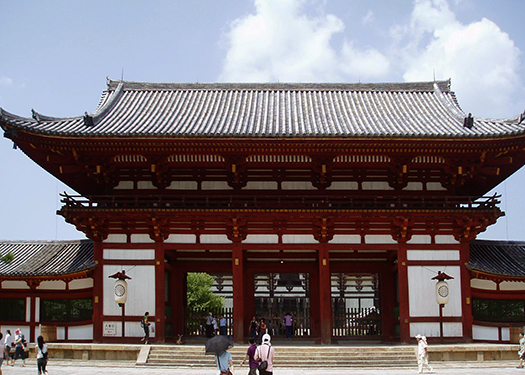
上の写真は鏡池越しの中門・大仏殿の景観。
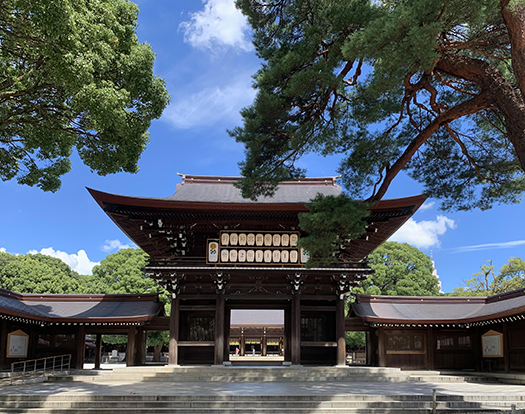
それに対して下の写真は東京の明治神宮の本殿の手前にある南神門(楼門)。
明治神宮は明治天皇崩御後の大正期に建てられたものですが、
米軍空襲で焼失し、戦後建て直されたもの。
現在は外拝殿までは一般も参観できるけれど、内拝殿から本殿には入れず、
また本殿については写真すら公開されていない。
明治神宮は旧弊のかたまりと化していた京都中心の旧体制の呪縛から抜け出して
天皇自身が東京に居を移し、なお、その死後の鎮魂の場として
全国から植樹して広大な杜を造営し、そのなかに社を建てた神道的神聖空間。

京都から江戸・東京に遷都することはいろいろな意味合いがあったのだろう。
ひとつは関東江戸は永く武家政権の本拠地で
鎌倉幕府の滅亡時期の「いざ鎌倉」的な武家政権神聖地として利用される
内乱要因を摘み取っておくような意味合いが大きかったことと、
欧米との関係を重視し太平洋側に面して開国するという政権意志もあっただろう。
また、対外情勢の対応として対ロシアの北海道侵攻危機があって、
より政権本拠地を東進させる意味合いも大きかっただろう。
東京であれば北方防衛体制は機動的。京都ではおろそかになる。
いずれにせよ、明治開国に当たって天皇権力を再構築するために
その神聖性をより強化する必要性があった。
天平の時代にはアジア世界国際宗教・仏教を統一国家形成に活用したけれど
帝国主義まっ盛りの世界情勢に対応して神道権威を対置する方向に舵を切った。
明治帝は死後にもこうした国家意志表現として祀られたのでしょう。

建築の表現意思としては大仏殿が象徴的なように「公開」して
国家宗教として「布教」的な姿勢を見せていた天平国家の状況が伝わる。
一方で明治神宮には国家の意志としての「非公開」性を感じさせる。
それまでの八百万神的だった牧歌的神社信仰から国家神道に変遷したのでしょう。
大仏殿が「鼻の穴くぐり」みたいに庶民に親和的な表情も感じさせたのに対して
より権威主義的なものに変化していったのでしょうか。
この写真の楼門からさらに「外拝殿」「内拝殿」、さらに非公開の神殿と
建築空間としての深遠な奥行き。それが重厚な人工的森林で被覆されている。
まぁ一種の「タブー」化が進行していたのでしょうか。
天平と明治の国家のありようの違いが伝わってきます。
この明治からさらに令和の今日、このあたりはあまり論考されていませんね。

English version⬇

[Tenpyo and Meiji “Buddhism and State Shinto” Todaiji Temple Revisited-7]
In Japan, Nara was the first city to be built as a “capital” in earnest.
After that, there were some capital city plans, but
Kyoto was built and continued to function as a capital for about 1000 years.
And now the capital has moved to Tokyo. Over 150 years.
For some reason, there may not be many opportunities to compare Nara and Tokyo.
I use the term Nara Kyoto, but not Nara Tokyo.
The photo above is the view of the Great Buddha Hall, the central gate over the mirror pond.
On the other hand, the photo below is the South Shrine (Romon) in front of the main shrine of Meiji Jingu in Tokyo.
Meiji Jingu was built in the Taisho era after the demise of the Emperor Meiji.
It was burnt down in a US air raid and rebuilt after the war.
Currently, the general public can visit the outer hall of worship, but it is not possible to enter the main hall from the inner hall of worship.
In addition, even photos of the main shrine have not been released.
Meiji Jingu escaped from the curse of the old system centered on Kyoto, which had become a mass of old evil
The emperor himself moved to Tokyo, and as a place for his posthumous requiescats.
A Shinto sacred space where trees were planted from all over the country to build a vast forest and a company was built in it.

The transfer of capital from Kyoto to Edo / Tokyo may have had various implications.
One is that Kanto Edo has long been the home of the samurai government.
It is used as a sacred place for the samurai government, which is like “Iza Kamakura” during the fall of the Kamakura Shogunate.
It had a big meaning to pick up the factors of civil war, and
There may have been an intention of the administration to open the country facing the Pacific side with an emphasis on relations with Europe and the United States.
In addition, there was a crisis of Russia’s invasion of Hokkaido as a response to the external situation,
It would have had a great meaning to move the administration base to the east.
In Tokyo, the northern defense system is flexible. It is neglected in Kyoto.
In any case, in order to rebuild the power of the emperor in the opening of the Meiji era
There was a need to further strengthen its divinity.
During the Tenpyo era, Asian world international religions and Buddhism were used to form a unified nation.
In response to the world situation in the height of imperialism, he turned to confront Shinto authority.
The Meiji Emperor would have been enshrined as such a national will expression even after his death.

As for the intention to express architecture, the Great Buddha Hall is “open” as symbolic
It conveys the situation of the Tenpei nation, which had a “promotional” attitude as a national religion.
On the other hand, Meiji Jingu makes us feel “private” as the will of the nation.
Perhaps it has changed from the pastoral shrine belief that was eight million myriads to the state Shinto.
Whereas the Great Buddha Hall made the common people feel a friendly expression like “going through the nostrils”
Has it changed to something more authoritarian?
From the tower gate in this photo, there are “outer hall of worship”, “inner hall of worship”, and a private temple.
Profound depth as an architectural space. It is covered with heavy artificial forest.
Well, was a kind of “taboo” going on?
You can see the difference between the nations of Tenpyo and the Meiji era.
From this Meiji era to the day of Reiwa, there is not much discussion about this area.

【東大寺大仏殿「柱の穴くぐり」 東大寺再見-6】


これ、やりますよね(笑)。
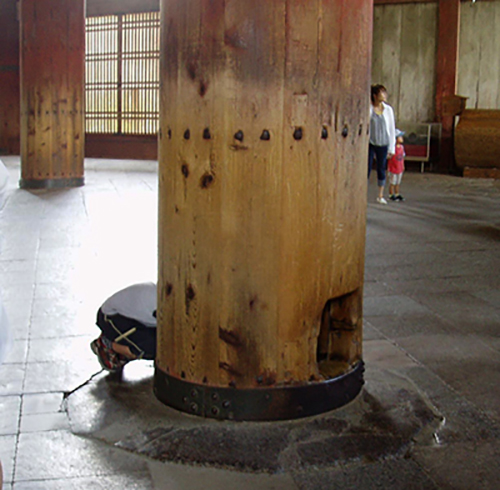
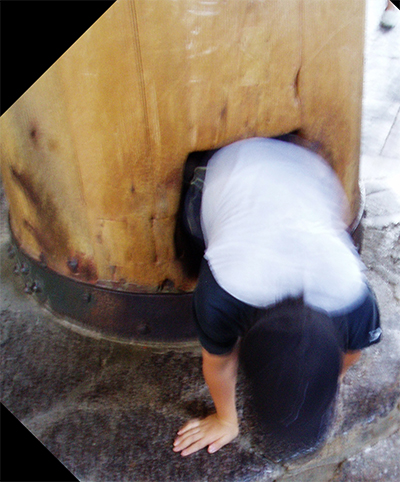
大仏殿の北東側の柱最下部に穴が空いていて、思わず通り抜けたくなる。
わたしはもうムリでしょうが、同行の息子は挑戦し無事クリア(笑)。

元々は「厄除け」のために穴があけられたのが理由のよう。
穴のある柱は大仏様の右後ろで方角で言うと「大仏殿の北東」柱。
この方角は「丑と寅の間、“艮(うしとら)”」で鬼門とされ
不吉で避けるべき方角とされます。
鬼門は邪気がたまり、気が乱れやすくなることから穴を開けることによって
邪気を逃がす役割を果たしているという。
無病息災・頭がよくなる御利益があるといわれるけれど・・・。
構造的には84本の集成柱で各1m超の太さなので1本程度が
その一部が中空になっても問題はないのでしょう。
ただ、こういう「穴開け」は東大寺側で仕掛けとして造作しない限り
参観者が自分で穴を開けたりはしないだろうと思います。
そうすると意図的に開口させているとわかる。
基本は国家的宗教建築の性格を帯びた施設であるので、
やはり鬼門の位置での厄除けというのが「方便」ではあったでしょうね。
しかしそこは俗世の「需要」というものにも配慮が必要。
国家的宗教施設として「動員力」も重要な要素になったに違いない。
そこで参詣する家族連れを顧客と見立てて「呼び物」を考えるのは
ごく自然な流れではないか。
で、前述のような方便を巡らして、事実上ディズニーランドのような
集客装置として擬して行ったのではないだろうか?
こういった大仏さん側の営業努力も甲斐あって
日本国民のシンボルの地位、声望を高めていったのではないでしょうか?
やはり地道な広宣活動が不可欠だと思われるなかで、
子どもたちや大人も、それこそ老若男女に奈良大仏がポピュラリティを
幅広く獲得していったに違いないと思います。

English version⬇

[Todaiji Temple Great Buddha Hall “Pillar Hole Going Through” Todaiji Temple Revisited -6]
I’ll do this (laughs).
There is a hole at the bottom of the pillar on the northeast side of the Great Buddha Hall, which makes you want to go through it.
I’m probably too tired, but my son who accompanied me challenged and cleared it safely (laughs).

Originally, it seems that the reason was that a hole was made for “apotropaic magic”.
The pillar with a hole is the pillar “northeast of the Great Buddha Hall” in the direction of the right back of the Great Buddha.
This direction is said to be a demon gate with “Ushitora” between Ox and Tora.
It is an ominous and avoidable direction.
By making a hole in the demon gate, it becomes easy to get confused because it accumulates evil spirits.
It is said that it plays a role in letting out evil spirits.
It is said that there is a benefit of being sick and smarter.
Structurally, there are 84 laminated pillars, each with a thickness of over 1 m, so about one is
There should be no problem if a part of it becomes hollow.
However, this kind of “drilling” is not done as a mechanism on the Todaiji side.
I don’t think visitors will make holes on their own.
Then you can see that it is intentionally opened.
Since it is basically a facility with the character of national religious architecture,
After all, it must have been a “convenience” to prevent evil at the position of the demon gate.
However, it is necessary to consider the “demand” of the world.
“Mobilization” must have become an important factor as a national religious facility.
Therefore, it is best to think of the family members who visit there as customers and think of “features”.
Isn’t it a very natural flow?
So, with the above-mentioned expedients, it’s virtually like Disneyland.
Isn’t it supposed to be a device for attracting customers?
The sales efforts of the Great Buddha are also worth it.
Isn’t it raising the status and voice of the symbol of the Japanese people?
While it seems that steady public relations activities are indispensable,
For children and adults, the Great Buddha of Nara makes it popular for men and women of all ages.
I think it must have been widely acquired.

【東大寺中門と南大門 東大寺再見-6】


わたしの専門領域は住宅論ですが、木造建築のありようを探索していくと
必然的に他の宗教建築、威信建築の建築表現にも興味が広がる。
木造建築の本質がより特徴的でしかも長期間保存されている。
歴史的建築物にはマインドの部分で「真」を感じさせられます。
この場合の真とは、真行草というスタイルのことですね。
住宅は基本的には「草」の表現でリアルな「住む」に忠実なのだと思いますが、
一方で作る側の人間はその時代でもっとも正しい格式意識として
真の作りようというものを心のどこかで意識しているものだろうと思います。
住む側の人間も、同様にその時代相のなかで真も意識しつつ、
暮らしていくものだろうから、真には精神性の部分の奥行きが見える。
きわめて簡素な作りの八百万神社建築とともに世界宗教・仏教寺院もまた、
日本人の精神性において真である部分が投影されている。

そういった精神性を表現する建築で住宅ともっとも違うのが
「門」の扱いなんだろうと思っています。
現代住宅では門まで造作できるケースは少ないでしょうが、
神社では鳥居、寺院建築ではいろいろな門が「結界」意識を表現する。
住宅では現代ではほとんど門は顧みられないけれど、
「靴を脱ぐ」文化の日本社会では「玄関」がこれらと通底していると思う。
日本人に「清浄」認識を刷り込ませてきた存在と思える。
逆に言えば、神社仏閣での玄関の意味合いが門や鳥居に託されているのかも。
そんなふうに考えて見る習慣がついております。
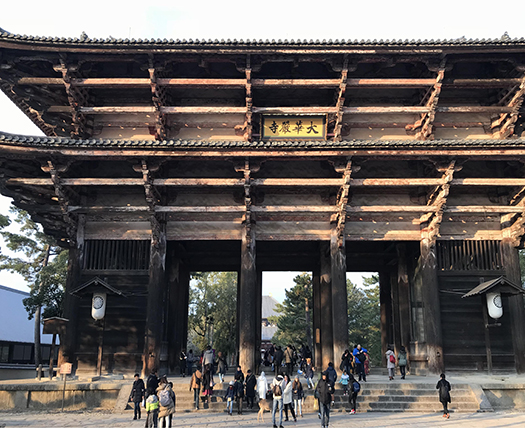
写真上は東大寺中門。
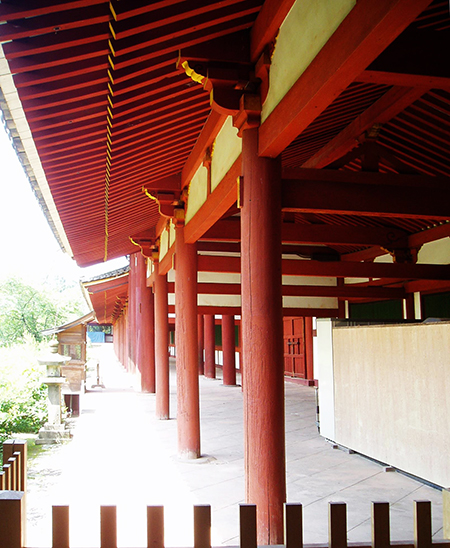
真ん中は南大門。3番目は中門に連なる回廊の様子。
南大門の方では塗装の落剥がより顕著に見られるのか、
古格な質感が訴えてくるように思えますね。
なかに納められた金剛力士像の迫力が、そういうイメージを増幅させるのか。
いかにも俗世の汚濁を結界として入り込ませないという意思を感じる。
一方で中門は白壁がきちんと保持されていて、
より優美な印象を与えてくれる。
ある清浄性が基本的に担保された後、本格的な内部への動線を感じる。
中門から連なる回廊部分も白壁と「丹」色の構造材着色が基本で
その連続性が空間を構成している。
住宅で言えば、外界からの汚濁をせき止める玄関から
主室に入るのにさらにこころを静めるような「引き戸建具」のような役割。
柱のスケールが巨大だけれど、前面でみえる本数は6本で
開口部は4本。3間の空間がひとびとを迎え入れてくれる。
よく見ると様式的には組物の装飾性などまったく同一の作りようです。
プロポーションはほぼ同様のバランス感覚が伝わってきます。
左右の灯明の位置まで瓜二つの構成。
こういう様式表現は、天平期の日本人の空間認識そのままなのか。

こういう空間意識が住宅にも、清浄維持という様式的心理を
日本人の心として刷り込まれていったものなのでしょう。
端正な外観プロポーションに魅了されます。

English version⬇

[Middle Gate of Todaiji Temple and Nandaimon Gate of Todaiji Temple Revisited -6]
[Middle Gate of Todaiji Temple and Nandaimon Gate of Todaiji Temple Revisited -6]
My area of ​​expertise is housing theory, but when I explore the ideal state of wooden architecture
Inevitably, he is also interested in the architectural expressions of other religious architecture and prestige architecture.
The essence of wooden architecture is more distinctive and has been preserved for a long time.
Historical buildings make you feel “true” in the mind.
True in this case is the style of Shinkokusa.
I think that the housing is basically the expression of “grass” and is faithful to the real “living”.
On the other hand, the person who makes it is the most correct formal consciousness of that era.
I think that somewhere in my heart I am conscious of what I really want to make.
The people who live in the same era are also conscious of the truth in the phase of the times.
Since it will be a living thing, you can really see the depth of the spiritual part.
Along with the extremely simple construction of eight million shrines, there are also world religions and Buddhist temples.
The true part of the Japanese spirituality is projected.

The most different architecture that expresses such spirituality is that it is different from a house.
I think it’s treated as a “gate”.
In modern houses, there are few cases where you can even build a gate,
Torii gates in shrines and various gates in temple architecture express the “barrier” consciousness.
In modern times, the gates are rarely looked after in houses,
In Japanese society, which has a culture of “taking off shoes”, I think that the “entrance” is the same as these.
It seems that they have imprinted the recognition of “cleanliness” on the Japanese people.
Conversely, the meaning of the entrance to the shrines and temples may be entrusted to the gates and torii gates.
I have a habit of thinking and seeing like that.
The photo above is the middle gate of Todaiji Temple.
The center is Namdaemun. The third is the corridor leading to the central gate.
Is the paint peeling more noticeable in the Namdaemun area?
It seems that the old-fashioned texture is appealing.
Does the power of the statue of Nio in it amplify that image?
I really feel the intention not to let the pollution of the world enter as a barrier.
On the other hand, the white wall of the central gate is properly held, and
Gives a more graceful impression.
After a certain degree of cleanliness is basically guaranteed, I feel a full-fledged flow to the inside.
The corridor that runs from the central gate is basically colored with white walls and “tan” -colored structural materials.
The continuity constitutes the space.
Speaking of houses, from the entrance that dams up pollution from the outside world
A role like a “sliding door fitting” that calms the mind even more when entering the main room.
The scale of the pillars is huge, but the number of pillars that can be seen in the front is six.
There are 4 openings. The space between the three welcomes people.
If you look closely, it seems that the style is exactly the same as the decorativeness of the braid.
The proportions convey almost the same sense of balance.
Two melons up to the position of the left and right lights.
Is this kind of stylistic expression the same as the Japanese people’s perception of space during the Tenpyo period?

This kind of spatial consciousness gives the house a stylized psychology like maintaining cleanliness.
It must have been imprinted as the heart of the Japanese.
You will be fascinated by the neat appearance proportions.

【日本人と盧舎那大仏さん 東大寺再見-5】


さて大仏さんであります。
この彫像はもちろん人工物であるのに、まるで日本そのもののように
ひとびとに尊崇され続けてきた存在だと言えるでしょう。
制作に携わった技術者・大仏師として国中連公麻呂、
鋳師・高市大国、高市真麻呂らの名が伝わる。余談だが今回自民党総裁選で活躍の
高市早苗さんのルーツなのかも知れない。奈良は彼女の選挙区でもあるし・・・。
大仏建造は天皇聖武が発願し統一国家の象徴としての意味合いも持たせた。
最後の黄金鍍金に際して陸奧国で国産するという僥倖にも恵まれた。
黄金発見の報に接して聖武は年号を改めたりしているし、
開眼会は遠くインドからも国賓を招くなどアジア世界的なイベントにもした。
今日で言えばオリンピックをはるかに越えるレベルで国威発揚させた。
大仏さんが憎くてしょうがないという日本人にわたしは会ったことがない。
王権自身がこの国に仏教を勧請した導入期以降、民も好意的に受容した。
仏教導入期には推進する蘇我氏と反対する勢力の相克があったので
その経緯からすれば在地の八百万神と相克があっても不思議ではないけれど、
日本在地の神々はそのように狭量ではなかったのでしょう(笑)。

しかし1567年11月10-11日にかけての東大寺大仏殿の戦いで焼失したとき、
出火原因は諸説あり当時の宣教師ルイス・フロイスは軍中のキリシタン信徒が
「仏像の破壊」目的で放火したと記録する。有名な記録文書『多聞院日記』では、
「今夜子之初点より大仏の陣へ多聞城から討ち入って数度におよぶ合戦をまじえた。
穀屋の兵火が法花堂へ飛火し大仏殿回廊へ延焼して丑刻には大仏殿が焼失した。
猛火天に満ちさながら落雷があったようで一瞬になくなった。釈迦像も焼けた」
という記述が残されている。狂信的キリシタン信教者にしてみると
許しがたい対象であると思うものなのかも知れない。
仏教思想は発祥地のインドでもやがてヒンズー教などに迫害され
伝播した中国でも繰り返し独裁皇帝権力から弾圧が加えられた。
お隣、朝鮮韓国でも同様に弾圧された歴史が刻み込まれている。
キリスト教による普遍支配が貫徹した欧米社会とは別次元で、
一神教同士の対立、宗教戦争が繰り返された世界史のなかで見れば
平和な信仰心が奇跡的に普遍性をもつ日本人であることが喜ばしい。
内戦があって副次的に派生したこのような例外的事態を除けば、
建立から1,200年間以上尊崇され続けた像というのも奇跡的ではと思う。

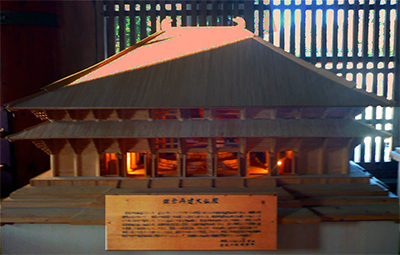
上の模型写真は1190年(南都焼討後の再建)-1567年までの大仏殿の模型。
重源さんや運慶による再建によって377年間あり続けた金堂の外観。
戦火受難に際し復元が国家規模で推進され続けたのは国際的に珍しいと思う。
やはり自然な愛着が日本人に芽生えていったのでしょう。

現代まで続いてきた日本人と大仏さんとの永い付き合い、
共に過ごしてきたことそのものが世界遺産なのではないか。

English version⬇

[Japanese nation and Roshana Daibutsu revisit Todaiji Temple-5]
By the way, it is the Great Buddha.
This statue is, of course, an artificial object, but it looks like Japan itself.
It can be said that it has been revered by people.
Kuninaka no Mura, a technician and Buddhist priest who was involved in the production
As a caster, the names of Takaichi Daikoku and Sanae Takaichi are transmitted. As an aside, this time the LDP presidential election
It may be Takaichi’s roots. Nara is also her constituency …
The construction of the Great Buddha was proposed by Emperor Shomu and was given a meaning as a symbol of a unified nation.
I was also blessed with the pretense that it would be domestically produced in Mutsu Province at the time of the final golden plating.
In response to the news of the discovery of gold, Shomu changed his era,
The opening party was also a global event in Asia, such as inviting state guests from India far away.
Today, it has raised national prestige at a level far beyond the Olympics.
I have never met a Japanese who hates the Great Buddha.
Since the introductory period when the royal authority itself solicited Buddhism from the country, the people have accepted it favorably.
During the introduction of Buddhism, there was a conflict between the forces opposed to the Soga clan who promoted it.
From that background, it’s no wonder that there is a conflict with the eight million gods in the area.
The gods in Japan weren’t that small (laughs).

However, when it was burnt down in the battle of the Great Buddha Hall at Todaiji Temple on November 10-11, 1567,
There are various theories about the cause of the fire, and the missionary Luis Frois at that time was a Christian in the Miyoshi army.
It is recorded that it was set on fire for the purpose of “destroying the Buddha statue”. In the famous document “Tamonin Diary”
“From the first point of Koyuki tonight, I struck down from Tamon Castle to the camp of the Great Buddha and mixed several battles.
The fire of the grain shop flew to the Houkado and spread to the Great Buddha Hall corridor, and the Great Buddha Hall was destroyed by fire.
It seemed that there was a lightning strike while being filled with fierce fire, and it disappeared in an instant. The Buddha statue was also burnt. ”
The description is left. For fanatic Christians
It may be something that I think is an unforgivable subject.
Buddhist thought was eventually persecuted by Hinduism in India, the birthplace of Buddhism.
Even in China, where it spread, crackdowns were repeatedly applied by the power of the dictatorship emperor.
The history of repression is also engraved in Korea and Korea next door.
In a different dimension from the Western society where the universal rule by Christianity was pervasive,
If you look at the world history where monotheistic conflicts and religious wars were repeated
I am happy to be a Japanese who has a universal faith in peace.
Except for these exceptional situations, which were secondary to the civil war.
I think it is miraculous that the statue has been revered for more than 1,200 years since its construction.

The model picture above is a model of the Great Buddha Hall from 1190 (reconstruction after the Siege of Nara) to 1567.
The appearance of Kondo, which has been around for 377 years due to reconstruction by Chogen and Unkei.
I think it is rare internationally that restoration continued to be promoted on a national scale in the wake of the civil war.
After all, natural attachment may have sprung up in Japanese people.

In modern times, such a long relationship between Japanese people and the Great Buddha
Isn’t the respect itself for spending time together a World Heritage Site?

【大仏のイレモノ・巨大木造「金堂」 東大寺再見-4】


一般的に「大仏殿」と呼ばれる建築は本名は「金堂」。
いわゆる「大仏を見たい」というのが普通の見方と言えるのでしょうが、
大仏が永く存続していくためにはその保護が大切になる。
外観はきのう確認したとおりなのですが、
本日はその「構造」についてであります。
そうなのです、これは最大級の「木造軸組」構法建築なのです。
『東大寺要録』の「大仏殿碑文」によると創建時の大仏殿の規模は、
幅29丈(約85.8m)奥行き17丈(約50.3m)高さ12丈6尺(約37m)柱数84。
最初の建設は大仏の鋳造が終わった後、758年完成。1,263年前。
世界最大の木造建築として広く知られていたが、現代、集成材や構造用合板など
建築資材の発達で東大寺大仏殿より大きな木造建築も建造されている。
しかし木造軸組建築としては現在でも世界最大となっている。
逆に言えば、20世紀に至って木造技術革新が起こるまで
ひたすら柱と梁で持たせる建築として世界最大だったという意味で
人類的な偉業を日本建築は達成してきたのだと思う。
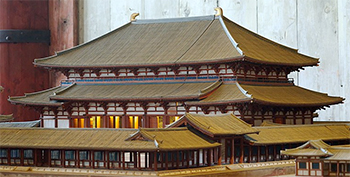
下の写真は創建当時の金堂の外観模型という。

巨大な構造を支えるのに、柱が84本だったとされている。
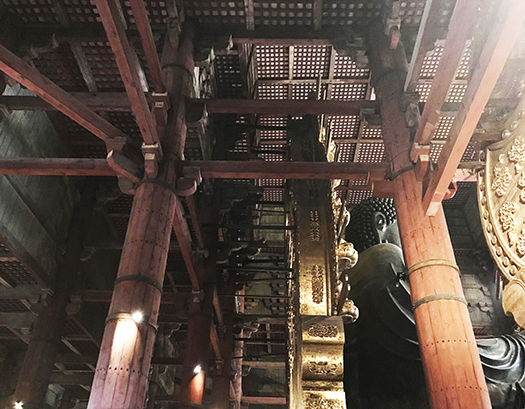
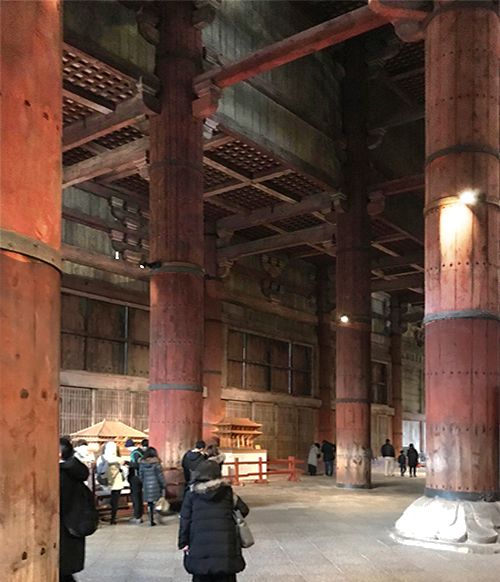
1700年代の再建の構造の様子を現代のわれわれは見ているけれど、
柱が巨大で柱の数カ所で鉄のバンドルで結束されているのがわかる。
出雲神殿でもこのような工夫が見られるけれど、
基本構造の柱材には幾本かの材木を「集成」させて使われていた。
日本の森林がいかに豊かとはいえ、ここまで大量の巨木供出はムリ。
基底部には礎石が据えられている。
柱間を連結させる梁には、柱に比較すればやや細く見える材が使われている。
しかし結合部分には補強材が重厚に装置されている。
直系で1m以上の柱が林立しています。
金堂の復興建築は何回か行われてきているけれど、
創建時の構造が基本的に「復元」されてきただろうことを考えると
ほぼ同様の様式だったことが想定できる。
また、天井部にも格子状の木組みが使われている。
巨大な屋根構造を支えるのに、面剛性を高めているのでしょう。
建築としての高さが創建時で37m、再建を繰り返して49.1mの高さだったので、
現代で言えば階間を3mとして見て15階建て建築程度。
1200年以上前に現出したその巨大構造ぶりに驚かされる。
奈良の都の造営に当たって列島各地域がモノや人を供用したとされ、
生産力の貧しかった「飛騨国」は工事の建築工事人足を供用した。
その工事現場でかれらの木造技術の素晴らしさが目を見張るほどで
「飛騨の匠」という評判が国内に伝播したとされる。
この東大寺金堂、大仏殿建築でもいかんなくその力量が発揮されたに違いない。
今に至るまでも日本語の中で特異な響きを感じさせる固有名詞だと思う。
こういう「職人仕事」へのリスペクトが日本文化のコアなのかも知れない。
先人達の素晴らしい建築営為に深く畏敬の念を感じさせられます。

English version⬇

[Big Buddha’s Container / Giant Wooden “Kondo” Todaiji Temple Revisited-4]
The real name of the building generally called “Great Buddha Hall” is “Kondo”.
The so-called “I want to see the Great Buddha” is the usual view, but
The protection of the Great Buddha is important for its longevity.
The appearance is as confirmed yesterday,
Today is about the “structure”.
That’s right, this is one of the largest “wooden frame” construction methods.
According to the “Great Buddha Hall Inscription” in “Todaiji Temple Record”, the scale of the Great Buddha Hall at the time of its construction is
Width 29 length (about 85.8m) Depth 17 length (about 50.3m) Height 12 length 6 shaku (about 37m) Number of pillars 84.
The first construction was completed in 758 after the casting of the Great Buddha was completed. 1,263 years ago.
Widely known as the world’s largest wooden building, but nowadays, laminated lumber and structural plywood, etc.
Due to the development of building materials, wooden buildings larger than the Great Buddha Hall at Todaiji Temple are also being built.
However, it is still the largest wooden frame building in the world.
Conversely, until the 20th century, wooden technological innovation occurred.
In the sense that it was the largest building in the world with pillars and beams.
I think Japanese architecture has achieved humanity’s great achievements.
The photo below is said to be a model of the exterior of Kondo at the time of its construction.

It is said that there were 84 pillars to support the huge structure.
Today we are looking at the structure of the reconstruction in the 1700s,
You can see that the pillars are huge and are tied together with iron bundles at several points on the pillars.
You can see this kind of ingenuity at the Izumo Temple,
Several timbers were “assembled” and used for the pillars of the basic structure.
A cornerstone is laid at the base.
No matter how rich the forests in Japan are, it is unreasonable to donate such a large amount of giant trees.
The beams that connect the columns are made of materials that look slightly thinner than the columns.
However, a reinforcing material is heavily installed at the joint portion.
There are many pillars of 1m or more in the direct line.
The reconstruction of Kondo has been done several times,
Considering that the structure at the time of construction would have been basically “restored”
It can be assumed that the style was almost the same.
In addition, a lattice-shaped wooden structure is used for the ceiling.
Probably the surface rigidity is increased to support the huge roof structure.
The height of the building was 37m at the time of construction, and it was 49.1m after repeated reconstruction.
In modern times, it is about a 15-story building with a floor space of 3m.
I am amazed at the huge structure that appeared more than 1200 years ago.
It is said that each region of the archipelago used goods and people to build the capital of Nara.
“Hida Kuni”, which had poor productivity, used the construction workman’s foot.
At the construction site, the splendor of their wooden technology was amazing.
It is said that the reputation of “Takumi of Hida” has spread throughout Japan.
The ability must have been demonstrated in this Todaiji Kondo and Daibutsuden architecture.
I think it is a proper noun that makes you feel a peculiar sound in Japanese until now.
This kind of respect for “craftsmanship” may be the core of Japanese culture.
It is deeply awe-inspiring for the wonderful architectural work of our predecessors.