本文へジャンプ

【45m超大仏殿「雲太 和二 京三」 東大寺再見-3】


平安時代中期970年の書『口遊』(くちづさみ)には当代の建物の大きさ比べで
「雲太 和二 京三」とあり出雲の大社が一番、次いで大和東大寺の大仏殿、
3位が京都平安京の大極殿と注釈してある。
東大寺の大仏殿は当時高さ45mというように記載されている。
出雲大社は国譲りして退隠した前王朝が、その権威性を尊重せよと
いわば政治的譲渡約束に即して建築された神殿建築。
3位の大極殿は言うまでもなく国家の権力中心建築。
鎮護国家という統一国家の礎として導入した国際宗教への尊崇を高める目的が
そのまま建築の規模として民心に刷り込まれるような巨大木造。
752年が大仏開眼会だったから200数十年後でもこう評価されていたことになる。
現存する大仏殿は、正面の幅57.5m、奥行き50.5m、棟までの高さ49.1m。
奥行と高さは創建当時とほぼ同じだが、幅は創建当時(約86m)の約3分の2。
出雲にしても同様だけれど、創建の時代相を考えれば、
日本の木造建築技術の粋が集中したであろうことは明らかです。
この巨大木造建築ぶりをみれば、足場すらどうしたのと驚くばかり。

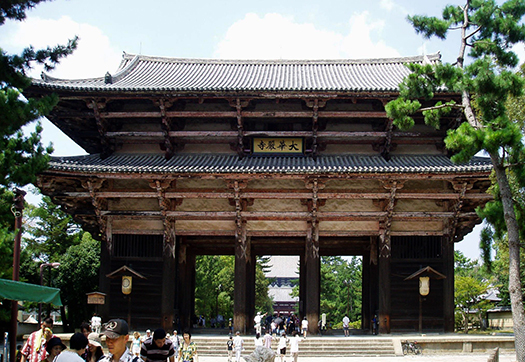
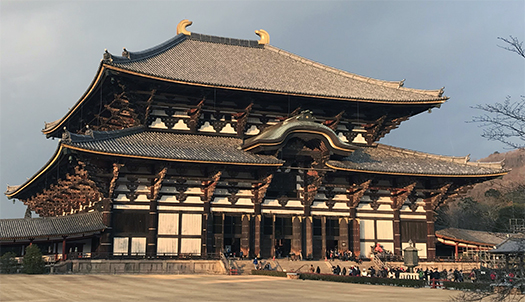
上の写真は正面の開口部を見上げたもの。
唐破風の屋根がせり出しているけれど、創建時はこれはなかった。
戦国期での焼失を経て江戸期1700年代に至って改修されたデザイン感覚。
開口部の扉の高さと人間の様子だけをみても度肝を抜く建築だとわかる。
こういうスケールの木造建築を日本社会は永く造営してきた。
先般触れたけれど出雲大社は、これよりもさらに巨大であったとされる。
「奈良の大仏が見たい」と小学校時代の息子に言われたことがあるけれど、
日本人の建築体験にとってこの大仏殿は永く特別だった。
なじみ深い建築様式である木造工法で
目を剥く巨大建築を作ることが単純に国家の威信を表現した。
やはり「大きいことはいいこと」なんですね。
民族的アイデンティティの形成の部分にまで深く関わっている。
奈良時代に確立した統一国家形成にとっていかに重要なアイコンだったか、
この建築は日本民族とともに存続して行くに違いない。
しかしそうした権力との深い関わりから、幾たびも戦火焼失も生起した。
宗教施設、とくに寺院の場合は一種の「城郭」としての機能性もあるので
内戦時には恰好の攻防施設としても利用されるのでしょう。
繰り返された戦争で京都が何度も焼失を繰り返したと同じ事情で
奈良の大仏殿もそういう運命から逃れられなかった。

English version⬇

[45m Super Great Buddha Hall, “Unta Kazuji Kyozo” Todaiji Temple Review-3]
In the book “Kuchiyu” (Kuchizusami) in the middle of the Heian period in 970, compared to the size of the building of the present generation.
There is “Unta Kazuji Kyozo” and the Izumo Taisha Shrine is the first, followed by the Great Buddha Hall at Yamato Todaiji Temple.
The third place is annotated as Daigokuden in Heiankyo, Kyoto.
The Great Buddha Hall at Todaiji Temple is described as having a height of 45m at that time.
Izumo Taisha said that the former dynasty, which had retired from the country, should respect its authority
So to speak, temple architecture built in line with political promises.
Needless to say, the 3rd place Daigokuden is a power-centered building of the nation.
To increase the reverence for the international religion introduced as the foundation of the unified nation of the guardian nation
A huge wooden structure that imprints on the people’s heart as it is as the scale of the building.
Since 752 was the opening of the Great Buddha, it would have been evaluated as such even 200 decades later.
The existing Great Buddha Hall has a front width of 57.5m, a depth of 50.5m, and a height of 49.1m to the ridge.
The depth and height are almost the same as when it was built, but the width is about two-thirds of when it was built (about 86m).
Considering the era of its founding, Izumo is the same, but
It is clear that the best of Japanese wooden construction technology would have been concentrated.
Looking at this huge wooden building, I was wondering what happened to the scaffolding.

The photo above is a look up at the front opening.
The Karahafu roof is protruding, but it seems that this was not the case when it was first built.
A sense of design that was renovated from the burning in the Warring States period to the 1700s in the Edo period.
Even if you look only at the height of the door at the opening and the appearance of human beings, you can see that the architecture is amazing.
Japanese society has built wooden buildings of this scale.
Izumo Taisha was mentioned earlier, but it is said that it was even bigger than this.
I was once told by a child in elementary school that I wanted to see the Great Buddha of Nara.
This Great Buddha Hall may have been special for the Japanese architectural experience.
With the wooden construction method, which is a simple and familiar architectural style
The prestige of the nation was expressed by creating a huge building that was eye-opening.
After all, “big is good”, isn’t it?
It is deeply involved in the formation of ethnic identity.
How important it was for the formation of a unified nation established in the Nara period
This architecture must survive for a long time.
However, due to his deep connection with such power, he was repeatedly burned down in the war.
In the case of religious facilities, especially temples, it also functions as a kind of “castle”.
It will also be used as a good defensive facility during the civil war.
Under the same circumstances as Kyoto was repeatedly burned down in repeated wars
The Great Buddha Hall in Nara could not escape from such a fate.

【運慶仁王像と仏国寺・四天王像 「あをによし」東大寺再見-2】


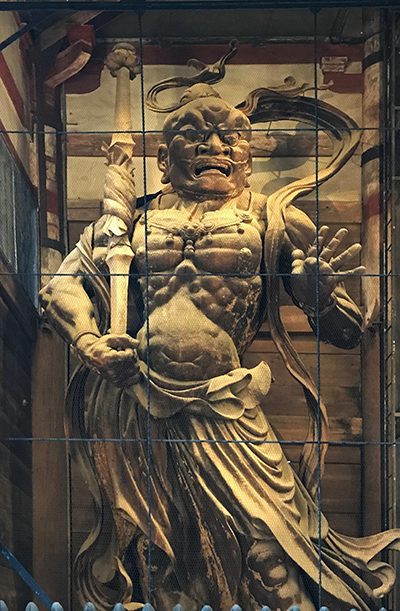
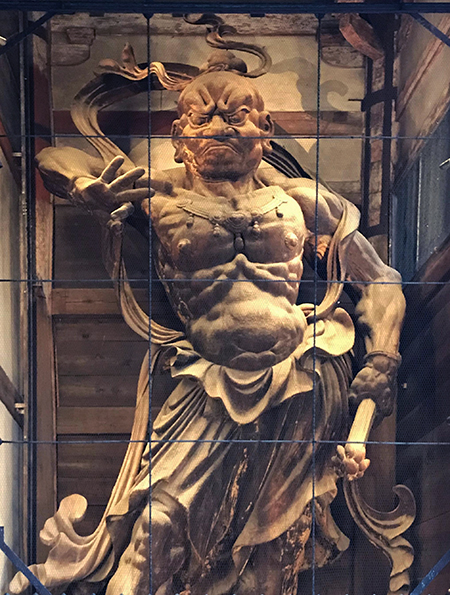
東大寺南大門といえば金剛力士立像であります。
南大門は平安時代の962年に台風で倒壊した後、
源平争乱期1181年に平重衛の南都焼討によって多くの堂塔を失ってしまった。
多くの僧俗の南都復興の声に応えた僧・重源さんの勧進活動によって
頼朝の支援を得るなどして鎌倉時代の1199年に大仏様式を採用して復興された。
そして内部の金剛力士立像は右に吽形、左に阿形を安置。
これは一般的な阿形と吽形の配置の左右逆に安置されていると言われる。

で、重源さんの復興プロジェクトチームから制作を依頼された彫師・運慶が
鎌倉ルネサンスとも思えるリアリズムの最高傑作を制作した。
日本史の教科書で登場する彫刻の最たる表現であり、子どもたちが
建築を装飾する彫像として教科書で見る最高のものではないかと思います。
わたしもはじめて写真を見たときから圧倒されていた。
同じように美術教育で学習する西洋のルネサンスを代表するような
ミケランジェロ彫刻に対して、そのはるか250年以上前の日本鎌倉期に
このような力感に満ちたリアリズム芸術を育んでいた日本社会に驚愕させられた。
わたしたちの国と社会に対して深い尊崇の念を抱かせる運慶の仕事、
そしてそれを支えた僧・重源さんのプロデュース力を思い知らされる。
南大門はこの鎌倉期の修復に先立つ700年代後半期建造であり、
そのときにどのような彫像が置かれていたかどうか、不明だけれど
マザーになるテーマ彫像はあったのではないかと想像しています。
阿吽の形相を見せる彫像が置かれていたに違いないと思うのです。
神社建築での「狛犬」表現と似たテーマ性であったに相違ない。
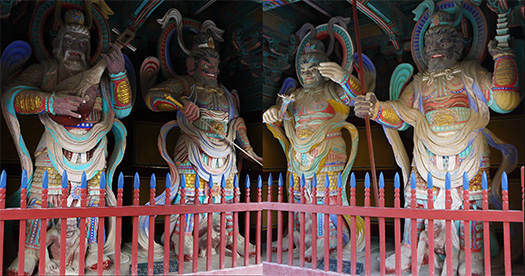
一方、写真3枚目には先般紹介の韓国仏国寺の山門内部の彫像。
これは朝鮮総督府時代の再建当時に奉納された日本人彫刻家による彫像で
テーマも「四天王像」という中国的な画題が選定されている。
仏国寺創建期の彫像とテーマは同じだろうと想定できる。
これらは700年代後半期という同時代創建期の日朝の文化相違なのではないか。
この彫刻についてはそれぞれ過去にもブログで触れましたが
日本の金剛力士テーマと韓国朝鮮のギター弾き彫像という対比は面白い。
どちらも世界遺産として民族性を表現していると考えるとなおさら。
ひとつの考えとしては西洋ルネッサンスと同質性の高い日本と
中国文化への帰依がより強く感じられる韓国朝鮮の明瞭な相違といえるかも。

この鎌倉期の東大寺再建の落慶法要では
日本史上最初の武権成立を背景に、戒厳令状態で頼朝が参詣したとも伝わる。
平家の残党、義経勢力の残存という政治軍事情勢もあっただろうけれど、
この金剛力士像を頼朝の武権はどのように認識したか、
日本史の一断面としてその光景を脳裏に浮かばせることがよくあります。

English version⬇

[Unkei Nio Statue and Bulguksa Temple / Four Tenno Statues “Awoyiyoshi” Todaiji Temple Review-2]
Speaking of Todaiji Nandaimon, it is the statue of King Nio.
After the Namdaemun collapsed in 962 during the Heian period due to a typhoon,
In 1181 during the Genpei War, many temples were lost due to the Siege of Nara by Taira no Shigehira.
By the promotion activities of the monk, Chogen, who responded to the voices of many monks’ reconstruction of the southern capital
It was reconstructed in 1199 during the Kamakura period by adopting the Great Buddha style with the support of Yoritomo.
And the statue of King Nio inside is enshrined in A-un on the right and A-un on the left.
It is said that this is placed upside down in the general A-un and A-un arrangements.

Then, Unkei, a tattooist who was asked to produce by Mr. Shigegen’s reconstruction project team
I created the best masterpiece of realism that seems to be the Kamakura Renaissance.
It is the most important expression of sculpture that appears in Japanese history textbooks, and children
I think it is the best statue you can see in a textbook as a statue to decorate architecture.
I was overwhelmed when I first saw the photos.
Similar to the Western Renaissance studying in art education
For Michelangelo sculpture, more than 250 years ago in the Kamakura period in Japan
I was amazed by the Japanese society that nurtured such powerful realism art.
Unkei’s work, which gives us deep reverence for our country and society
And I am reminded of the producing power of the monk, Chogen, who supported it.
Namdaemun was built in the late 700s prior to the restoration of the Kamakura period.
I don’t know what kind of statue was placed at that time.
I imagine that there might have been a theme statue that would become a mother.
I think there must have been a statue showing the appearance of Aun.
It must have been a theme similar to the expression “Komainu” in shrine architecture.
On the other hand, the third photo is a statue inside the gate of the Bulguksa Temple in Korea, which was introduced recently.
This is a statue by a Japanese sculptor dedicated at the time of reconstruction during the Government-General of Korea.
As for the theme, a Chinese theme called “Four Tenno Statues” has been selected.
Perhaps it is a cultural difference between Japan and Korea, which was founded in the latter half of the 700s.
I mentioned these sculptures in my blog in the past
The contrast between the Japanese Nio theme and the Korean guitar-playing statue is interesting.
Especially when considering that both express ethnicity as a World Heritage Site.
One idea is that Japan has a high homogeneity with the Western Renaissance.
It may be said that it is a clear difference between South Korea and Korea, where the devotion to Chinese culture is felt more strongly.

In this memorial service for the reconstruction of Todaiji Temple during the Kamakura period
It is also reported that Yoritomo worshiped under martial law against the backdrop of the establishment of the first military power in Japanese history.
There may have been a political situation in which the remnants of the Heike clan and the Yoshitsune power remained,
How did Yoritomo’s military power recognize this statue of Nio?
It often comes to mind as a cross section of Japanese history.

【東大寺南大門と伽藍 「あをによし」東大寺再見-1】


さてふたたび古建築再見シリーズ、今回は東大寺であります。
奈良には5−6回は行っているハズですが、必ず巡礼させていただいている。
であるのに伽藍配置がどうなっていたか、記憶が薄い。
最初にシカ達が迎えてくれて惑わされ宗教施設であることを忘れさせる(笑)。
この鹿は鹿島神宮の祭神・建御雷命が常陸国鹿島から白鹿に乗って移座したという
伝説に由来し、藤原氏の氏神である春日大社にも深く関わるとされる。
惑わされず今回の東大寺再見では鹿は無視し建築・計画にフォーカスしたい。


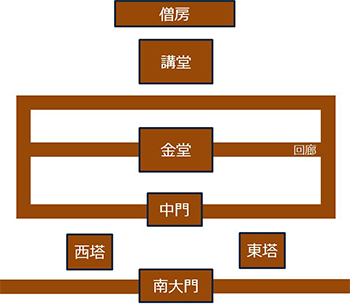
伽藍配置はWEBで発見すると2枚目の図の通り。
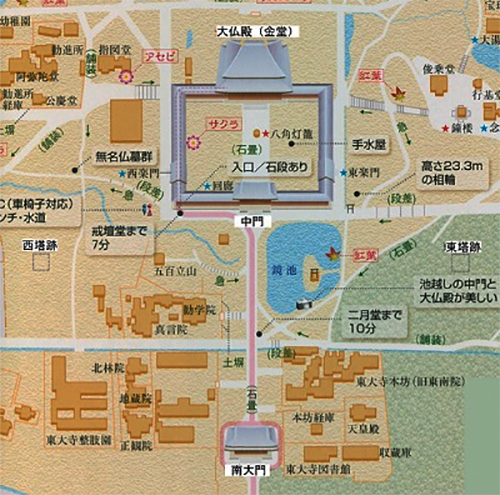
その下の地図は市街化している現状の状況であります。
現代われわれが見学・参詣しているのは南大門・中門・回廊・金堂(大仏殿)。
東西2つの塔は跡を見るだけで現存していない。
うかつにも伽藍配置をみてはじめて塔があったのだと知りました。
東大寺創建時期の様子は以下のよう。
7~8世紀の東洋世界は唐を中心に善隣友好の国際関係が昇華した時代。
唐朝は道教を信奉したが同時に仏教も振興し国家安寧と隆昌を祈願させた。
これらの政策がわが国でも古代国家の礎として導入された。
道教は中国の民間信仰であるのに対して仏教は世界宗教であり、
律令制度のような普遍性を持つことからいわば両輪として列島社会に導入された。
また、天然病などのパンデミックが猖獗したことで
鎮護国家思想が尊崇されて全国に刷り込まれていったと思われます。
741年聖武天皇はその息子が1歳に満たずに夭折したことから金鍾山寺を造営し、
やがて国分寺・国分尼寺建立の詔が発せられたのに伴い、
この寺が昇格して大和金光明寺となり、これが東大寺の前身寺院となった。
先日までみていた新羅・仏国寺創建が751年だったのでほぼ同時期。
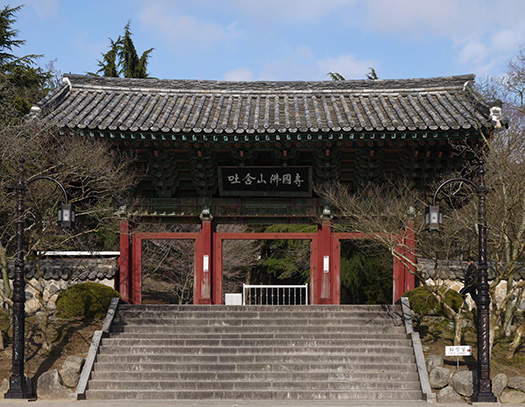
写真としては上の東大寺南大門と対比させて仏国寺山門も下に掲載しました。
建築の規模としてははるかに東大寺南大門の大きさが際だっている。
内部に大好きな運慶による仁王像が安置されていることで知られます。
組物などの装飾性では過剰な仏国寺に比べて南大門はシンプル。
この時期、大仏開眼会に参列した新羅の使節団は同時進行建築として
この様子にどう反応して自国の仏国寺デザインに反映させたのか興味が湧く。
たぶん間違いなく建築の専門技術者も同行していたことが想定できる。
過剰なまでの組物の装飾性は対日関係での特色誇示の面も考えられる。

一方の東大寺、日本側はそういう対抗心は持たず、
むしろその後、唐から鑑真という仏教教義の最高級体現者自身を勧請し
唐招提寺を建立して、仏教本流の思想を列島社会に根付かせた。
なにやら模範的な仏教受容社会であったように思えます。

English version⬇

[Todaiji Nandaimon and the Garan “Awoniyoshi” Todaiji Revisited-1]
By the way, the old architecture review series again, this time is Todaiji Temple.
I have been to Nara 5-6 times, but I always make a pilgrimage.
However, I have little memory of what happened to the cathedral arrangement.
First, the deer welcomed me and made me forget that it was a religious facility (laughs).
This deer is said to have been transferred from Kashima, Hitachi Province, on a white deer by Takemikazuchi, the deity of Kashima Jingu.
Derived from a legend, it is said to be deeply involved in Kasuga Taisha, the deity of Mr. Fujiwara.
Without being confused, I would like to ignore deer and focus on architecture and planning in this review of Todaiji Temple.

The cathedral arrangement is as shown in the second figure when found on the WEB.
The map below it shows the current situation of urbanization.
Today, we are visiting and visiting the Namdaemun, Central Gate, Corridor, and Kondo (Great Buddha Hall).
The two towers, east and west, do not exist just by looking at the traces.
I knew that there was a tower for the first time when I saw the arrangement of the cathedral.
The state of the construction of Todaiji Temple is as follows.
The oriental world of the 7th and 8th centuries was an era when international relations of good neighbor friendship sublimated around Tang.
The Tang Dynasty worshiped Taoism, but at the same time promoted Buddhism and prayed for national well-being and Takamasa.
These policies were introduced in Japan as the foundation of the ancient nation.
Taoism is a Chinese folk religion, while Buddhism is a world religion.
It was introduced into the archipelago society as two wheels because it has universality like the Ritsuryo system.
In addition, due to the smallpox of pandemics such as natural diseases
It seems that the national idea of ​​protection was revered and imprinted all over the country.
In 741, Emperor Shomu built Kinzokuji Temple because his son died before he was one year old.
Eventually, as the apology for the construction of Kokubunji Temple and Kokubunnanji Temple was issued,
This temple was promoted to Yamato Konkai-Komyoji, which became the predecessor of Todaiji.
The Silla Bulguksa Temple, which I had been watching until the other day, was built in 751, so it was about the same time.
As a photo, the Bulguksa Sanmon Gate is also shown below in contrast to the Todaiji Nandaimon Gate above.
The size of the Nandaimon Gate of Todaiji Temple stands out as the scale of the building.
It is known that the statue of Nio by his favorite Unkei is enshrined inside.
Namdaemun is simpler than Bulguksa Temple, which is overly decorative in terms of braids.
During this period, the Silla mission that attended the Great Buddha Opening Party was a simultaneous building.
I am curious about how it responded to this situation and reflected it in the design of Bulguksa Temple in my country.
It can be assumed that there was no doubt that a specialist in architecture was also accompanied.
Excessive decorativeness of the braid can be considered to show off its characteristics in relation to Japan.

On the other hand, Todaiji Temple and the Japanese side do not have such a rivalry,
Rather, after that, he solicited the highest-class manifestation of Buddhist doctrine called Jianzhen from Tang.
The Toshodaiji Temple was built and the mainstream Buddhist ideas took root in the archipelago society.
It seems that it was a model Buddhist receptive society.

【わたし的・札幌人原風景「石狩川上空雲」】


人それぞれに「この世で見る景色」の原風景ってあるのではと思っています。
・・・変な言い方でまことに恐縮ですが。
人間が生きている間、感覚する世界認識で視覚は基底的・根源的。
「あ、この風景・・・」と懐かしい視野感覚ってあると思います。
わたしの場合、窓から見る外の景色「雲のカタチ」が大きい。

一番上の写真はわが家から見える遠景の雲であります。
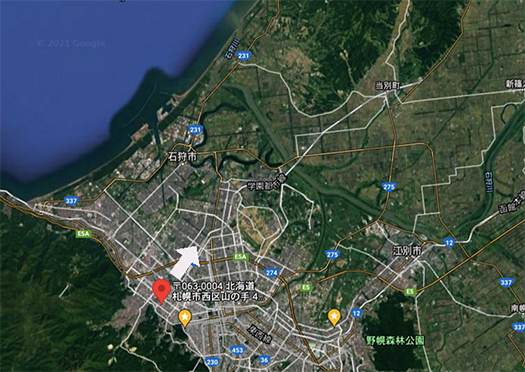
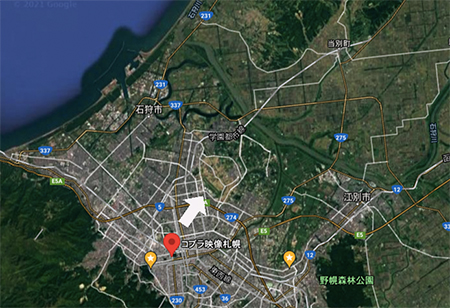
その下のMapはGoogleのわが家位置を示していて、白い矢印が視線方向。
で、その下の同図は3歳から15歳まで少年期を過ごした家からの視線方向。
どちらもGoogleMapで35度真北から東方向に振れています。
視線としては東北東に向いているといえるでしょう。
そうすると視線の向かう先は石狩川の流れに正対するような方向になっています。
現在のわが家は住み始めてからもう30年になります。
この土地を購入したとき、「あ、たぶん昔住んでいた家と同方向だな」と
おぼろげながら認識していて、その方向が視界が開けている、
視界を遮る建物がなく中学校のグランドに面していることを
薄々は気付きながら、内心で大いに喜んでいた記憶があります。
で、職住一体の住宅を新築し眺望をみたときに「帰ってきた」感があった。
もちろんはじめてこの場所からの眺望を見たのですが、
視覚体験の基底にある風景との同質性が強く認識できたのです。
それが、毎日見ることができる窓外の風景、それも「雲のカタチ」でした。

一番上の写真で見る地を這うような雲。
長時間見ていると、この雲はゆっくりとカタチを変えながら動いていくのです。
物心ついた子ども時代からこういう雲のカタチ、動きを見ていた。
雲って大気中で発生する水蒸気が冷やされてできるのが基本でしょう。
そうするとこの見えている雲は石狩川の水蒸気が作っていると気付く。
その雲が一種独特の「動き」を見せるのは川の水流と関係するとも気付ける。
物心ついた幼年・少年期、ぼーっと窓外を見ていた・・・。
その雲がまるでゴジラのようにゆっくりと、あるいは激しく動いていく。
四季折々、その様子が千変万化する。
で、ある時期からこの光景がかけがえのない風景として刷り込まれた。
自分の住む場所から見える景色を、自分で決定することができるのが、
家づくりのある重要な要素なのかもと思っていた。
それが人生の半ばでまるで「邂逅」するかのようにめぐり会うことができた。
別にどういう関わりもない自然現象であるけれど、
一個人としては面白く運命的な部分かもと思っております。
雲に、その生成にこだわりを持つって変なんですが(笑)
どうもわたしには格別なものに思えるのです。ヘンですね〜。

English version⬇

[Private Sapporo people original scenery “clouds over the Ishikari River”]
I think that each person has the original scenery of “the scenery seen in this world”.
… I’m really sorry to say it strangely.
Vision is fundamental and fundamental in the world recognition that human beings sense while they are alive.
I think there is a nostalgic sense of vision, “Oh, this landscape …”.
In my case, the view from the window, “the shape of the clouds,” is large.

The top photo is a distant cloud seen from my house.
The Map below it shows Google’s home location, with the white arrow pointing in the direction of your line of sight.
And the figure below is the direction of the line of sight from the house where I spent my boyhood from 3 to 15 years old.
Both are swinging 35 degrees from true north to east on Google Map.
It can be said that the line of sight is facing east-northeast.
Then, the destination of the line of sight is in the direction facing the flow of the Ishikari River.
It’s been 30 years since I started living in my current home.
When I bought this land, I said, “Oh, maybe it’s in the same direction as the house I used to live in.”
I am vaguely recognizing, and the view is open in that direction,
That there is no building that blocks the view and that it faces the ground of the junior high school
I remember being very pleased with my inner feelings, even though I was faintly aware of it.
So, when I built a new house with integrated work and housing and looked at the view, I felt that I was “returned”.
Of course, I saw the view from this place for the first time,
I was able to strongly recognize the homogeneity with the landscape that is the basis of the visual experience.
That was the scenery outside the window that I could see every day, which was also the shape of the clouds.

Clouds that crawl on the ground as seen in the top photo.
If you look at it for a long time, this cloud will slowly change its shape and move.
I have been watching the shapes and movements of these clouds since I was a child.
Basically, clouds are formed by cooling the water vapor generated in the atmosphere.
Then, I notice that this visible cloud is made by the water vapor of the Ishikari River.
I also notice that the fact that the clouds show a kind of unique “movement” is related to the water flow of the river.
When I was a child and a boy, I was staring out the window.
The clouds move slowly or violently like Godzilla.
Every season, the situation changes.
So, from a certain time, this scene was imprinted as an irreplaceable landscape.
You can decide for yourself what you can see from where you live.
I thought it might be an important factor in building a house.
I was able to meet them in the middle of my life as if they were “encountering”.
It’s a natural phenomenon that has nothing to do with it,
As an individual, I think it is an interesting and fateful part.
It’s strange to be particular about the generation of clouds (laughs).
It seems to me something special. It is strange~.

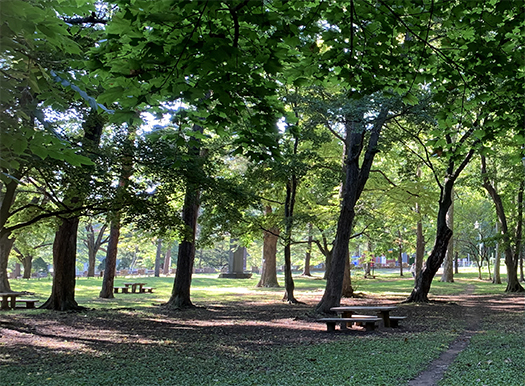
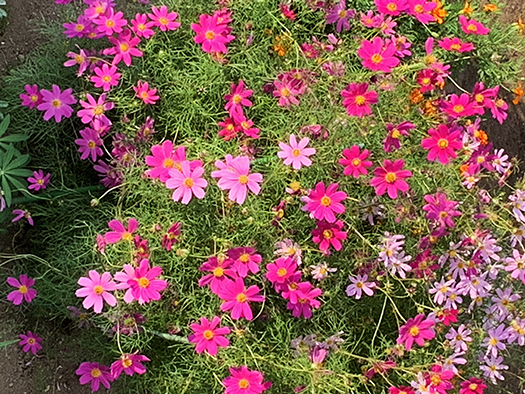
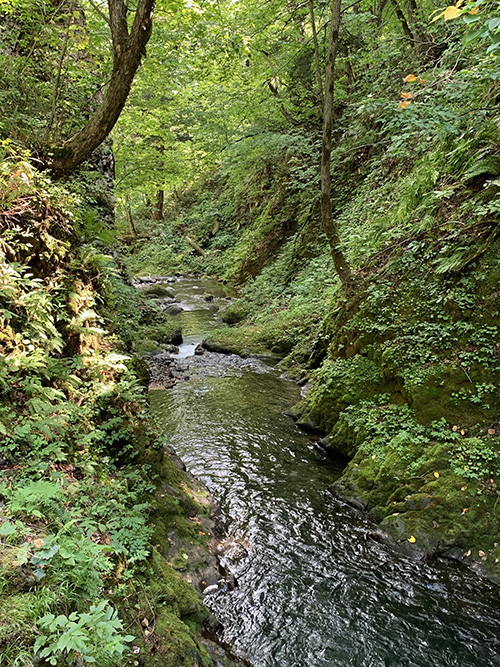
【ゆっくりと秋冷に向かう散歩道・・・】


ことしも早いもので中秋の名月も過ぎて爛漫の秋までもうすぐ。
早い木々では色づきはじめた個体も見えてきています。
日々の散歩道ではようやく秋の気配があちこちに見られるようになって来ました。
ことしは行動抑制もあってじっくりと札幌の四季を体感中(笑)。
少年期以来、久しぶりにどっしりと腰を据えて体感し続けているので、
なつかしく思い起こせる札幌人独特の「地域心理」みたいなものもあります。

みなさんも同様でしょうが、まったく未曾有のStay Homeの日々が続いています。
こういう環境も2年近くなってきて、個人のブログとしては
過去に写真撮影取材済みの各所の建築・住宅写真を整理整頓して
深掘り型の探索をはじめてみて「これもまたいいかなぁ」と楽しんでいます。
しばらく韓国の建築探訪シリーズが続いております。
立ち止まって写真にピンナップされた昔人の思いとか考え方に触れることは
非常に面白いことだと教えられております。
ふつうの住宅取材ではいまを生きている人間同士での対話になりますが、
昔人の思いというのも、やはり建築の姿カタチから取材可能。
当然話すことはできないので、想像力を巡らせる必要がある。
そのときに一番のナビゲート要因は同じ人間である自分の感じ方。
自分が感じたことからスタートして、同じように感じるはずだと信じて
その時点に置かれた人間の普遍的な反応を想起する。
そうするといくつか、ゴツゴツとしたリアリティに出会うことがある。
あるいは特徴的な建築対応を発見できるときがある。
・・・どうも「住」の普遍性に基づいて取材する歴史事例なのでしょうか。
人間と建築の中間のような部分がいちばん興味を持っていること。
そんなふうな気付きから掘り起こし続けております。

住宅建築の方はウッドショックとかさまざまな変動要因もありますが、
逆にStay Homeで住の価値感に深く目覚めるみなさんも多いと思います。
住宅雑誌・WEBメディアとしては取材活動の難易度が増していて
回避策なども考えながら、スタッフも奮闘中であります。
そういう活動のバックアップとして動きやすく、また感染対策など
安全側での配慮、環境の構築に思いを致す日々であります。
こういうのもまたありがたい機会だと思えますね。
また過去取材の写真整理して深掘り型テーマを取り上げますのでぜひよろしく。

English version⬇

[Walking path slowly heading for autumn cold …]
It’s early, and the harvest moon has passed, and it’s almost time for the fall.
In the early trees, some individuals are beginning to color.
The signs of autumn are finally beginning to be seen here and there on the daily walking paths.
This year, I’m slowly experiencing the four seasons of Sapporo, partly because of my behavioral restraint (laughs).
Since I was a boy, I’ve been sitting down and experiencing it for the first time in a while, so
There is also something like “community psychology” peculiar to Sapporo people that reminds me of nostalgia.

As with everyone, the days of Stay Home are completely unprecedented.
This kind of environment has been around for almost two years, and as a personal blog
Organize architectural and residential photographs of various places that have been photographed in the past
I’m enjoying the deep digging type exploration for the first time, “I wonder if this is also good.”
The Korean architecture exploration series has been going on for a while.
Stopping and touching the thoughts and ideas of old people pinned up in photographs
It is taught that it is very interesting.
In ordinary housing coverage, it is a dialogue between people living in the present, but
The thoughts of old people can also be covered from the shape of the architecture.
Of course, I can’t speak, so I need to think about my imagination.
At that time, the most navigating factor is how you feel as the same person.
Believe that you should start with what you feel and feel the same
Recall the universal reaction of human beings at that time.
Then you may come across some rugged reality.
Or sometimes you can discover a characteristic architectural response.
… Is it a historical example based on the universality of “living”?
The part that is somewhere between humans and architecture is the most interesting.
We continue to dig up from such an awareness.

For residential construction, there are various factors such as wood shock, but
On the contrary, I think that there are many users who are deeply awakened to the sense of value by Stay Home.
As a housing magazine / WEB media, the difficulty of coverage activities is increasing.
The staff is also struggling while thinking about workarounds.
It is easy to move as a backup for such activities, and infection control etc.
It is a day when I think about the consideration on the safety side and the construction of the environment.
I think this is also a great opportunity.
In addition, I will organize the photos of past interviews and take up deep-dive themes, so please do not hesitate to contact me.

【東アジア関係史の再認識を 法隆寺と仏国寺-11】


韓国仏国寺の取材写真に導かれ対比としての法隆寺取材写真とともに考えてきた。
年代としては、西暦600年代初頭と750-770年代。
どちらの寺院建築もほぼ「国家的宗教施設」として建設された。
そういう経緯なので自ずと半島国家と列島国家の違いが浮き彫りになる。
そしてその背景には大陸国家・隋唐との関係が当然ある。
この基本的な国際関係の中で日本と日本人は長い歴史時間を過ごしてきた。
朝鮮半島ではいわゆる半島国家の宿命でほぼ「分断」が常態的だった。
この時期もおおむね3カ国の分断国家状態だった。
高句麗・百済・新羅という半島北部・西部・東部と分かれていた。
百済は日本も参戦した白村江での敗戦によってやがて滅亡し、
新羅が統一新羅として主勢力になった、という歴史時期。
一方で日本は律令と仏教という2つの汎アジア世界的な国家社会システムを受容し、
独自の「独立国家」構築に向かって国内統一過程が進展した。
古代以来の半島社会との強い結びつきは、ほぼ消失していった。
このことは鉄の自国生産が本格化してむしろ製鉄大国化してきたことと
無縁ではないのではないかと想像しています。

日本文化でいえば、奈良期の活発な東アジア交流から
平安京遷都以降の「国風化」現象とも無関係ではなかったのでしょう。
やはり日本は不思議な独立のスタイルを持ち続けてきたといえる。
易姓革命を繰り返して前王朝の全面否定を旨とする国家社会とは異なって
古代以来の王権を国家統合の象徴として保守し続けてきた。
この点が大陸・半島とはまったく違う道を歩んできた根幹。
一度社会的に同意して受容した文化についてはしっかりと保守してきた。
東アジア圏で唯一まともに仏教思想を発展させてきたのは日本だけでしょう。
日本に仏教を伝えた中国、朝鮮では繰り返し仏教弾圧が行われたのに、
王権自体が国家社会に勧請した日本では、まじめにそれを維持してきた。
今日では中国に残る仏教寺院の復元にすら日本の建築技術が伝えられている。
文化大革命で木造技術自体が「打倒」されて技術が消滅したのだという。
日本社会というのは島国として簡単には文化を受容しないけれど
いったん受容するとそれを徹底的に自分のものとして独自発展させる。
どうも、こういった国民性が日本らしさの核心なのではないだろうか。
そして明治期の開国を経て圧倒的な欧米の汎世界的価値感を受容してきた。
いかにもアジア唯一の「海洋国家」なのだと強く思わされる。
明治の知識人・福沢諭吉の「脱亜入欧」は日本の本然の姿にしっくりする。

国家的仏教寺院のありようとその歴史経緯を知るにつけ、
このような東アジア世界観と日本社会の核心をみる思いがします。
そして国土は移動しようもないので、今後ともこういう地政的現実の中で
日本と日本人は生き延びていかなければならないのでしょう。

English version⬇

[Recognizing the history of East Asian relations at Horyuji Temple and Bulguksa Temple-11]
Guided by the photographs of Bulguksa Temple in South Korea, I have been thinking about it together with the photographs of Horyuji Temple as a contrast.
The ages are the early 600s and the 750-770s.
Both temple buildings were built almost as “national religious facilities”.
Because of that, the difference between the peninsula nation and the archipelago nation naturally becomes clear.
And in the background, of course, there is a relationship with the continental state, Sui Tang.
Japan and the Japanese have spent a long time in this basic international relationship.
In the Korean Peninsula, the fate of the so-called peninsula nation was almost “division”.
At this time, the three countries were in a divided state.
It was divided into the northern, western, and eastern parts of the peninsula called Goguryeo, Baekje, and Silla.
Baekje was eventually destroyed by the defeat at Baekgang, where Japan also participated.
The historical period when Silla became the main force as unified Silla.
On the other hand, Japan accepted two pan-Asia global national social systems, Ritsuryo and Buddhism.
The domestic unification process has progressed toward the construction of a unique “independent nation.”
Strong ties to peninsular society since ancient times have almost disappeared.
This means that the domestic production of iron has become full-scale and has become a major iron-making country.
I imagine it’s not unrelated.

Speaking of Japanese culture, from the active East Asian exchanges during the Nara period
Perhaps it was not unrelated to the “national weathering” phenomenon after the transfer of capital to Heiankyo.
After all, it can be said that Japan has continued to have a mysterious style of independence.
Unlike the national society, which repeats the easy surname revolution and aims to completely deny the former dynasty.
It has maintained the royal power since ancient times as a symbol of national unity.
This is the basis of a completely different path from the continent and peninsula.
We have firmly maintained the culture that we once socially agreed to and accepted.
Japan is probably the only country in East Asia that has developed Buddhist ideas decently.
Even though Buddhism was repeatedly suppressed in China and Korea, which introduced Buddhism to Japan,
In Japan, where the royal power itself solicited from the national community, it has been maintained seriously.
Today, even the restoration of Buddhist temples that remain in China has been handed down to Japanese architectural techniques.
It is said that the wooden technology itself was “overthrown” by the Cultural Revolution and the technology disappeared.
Japanese society does not easily accept culture as an island country
Once accepted, it is thoroughly developed as one’s own.
Apparently, this kind of national character is the core of Japanese character.
After the opening of the country in the Meiji era, it has accepted the overwhelming sense of global value in Europe and the United States.
It seems strongly that it is the only “maritime nation” in Asia.
The Meiji intellectual, Yukichi Fukuzawa’s “De-Asia” fits in with the true nature of Japan.

To know the history of the national Buddhist temple
I think I see this view of the East Asian world and the core of Japanese society.
And since the land cannot move, we will continue to face this geopolitical reality.
Japan and the Japanese will have to survive.

【軒天デザインの好対照 法隆寺と仏国寺-10】


古代の寺院、宗教建築の彩色感覚を調べるのに参照したのは
国立歴史民俗博物館研究報告・第62集(1994年)
「日本建築における色彩」濵島正士氏の論文資料です。
神社建築や住宅建築では素木で無塗装というのが日本建築の基本だったけれど
輸入された精神性建築であった仏教寺院建築では特異的に
カラーリング塗装が施され、それが「キラキラしたるもの」として
この列島社会に浸透していったとされていました。
「寺院建築では赤と白を基調とした色を塗るのが普通であった。・・・
塗り方は、主要部材は赤、壁などの板類は白としている」(要旨抜粋)
今日の古建築一般は経年での褪色が普通であり一見素木にみえるけれど、
それは数十年ごとの塗り替えがいつしかキャンセルされてきた結果なのだという。

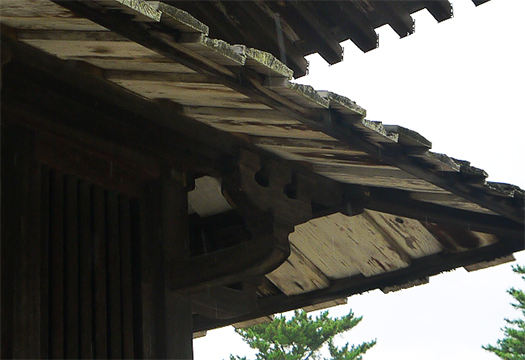
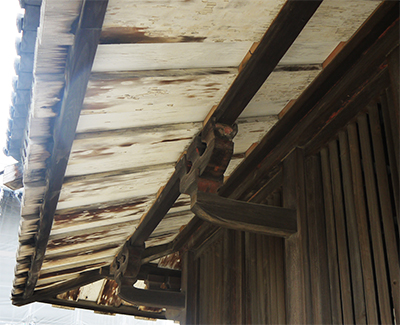
写真の上と中は法隆寺五重塔の1重目の軒天の様子であります。
濵島先生のご指摘通り、シンプルな「板」材である軒天には白く塗装されている。
経年での塗装のムラが散見されたけれど、各重の軒天でも白く塗装。
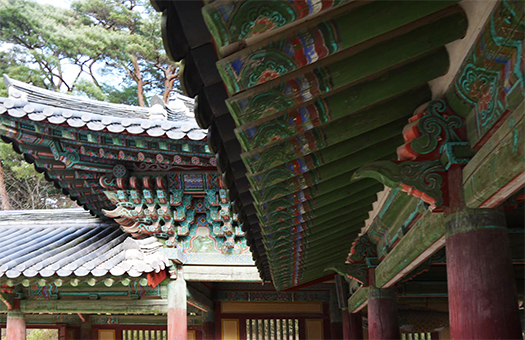
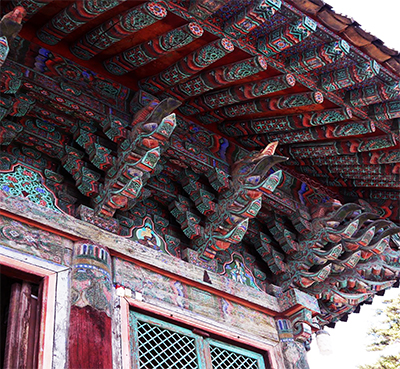
一方3枚目の写真は韓国仏国寺の軒天部分の代表例。
これでもかと豪華絢爛とした色彩の曼荼羅世界が表現されている。
ある種、深遠なる混沌を表現しているように陶然とさせられる。
この建築表現の志向性の違いは何だろうと思わされます。

もちろん時代差は150-160年ほどの違いがある。
しかし建築としては同様の仏教寺院建築であり、さらに言えば、
この法隆寺建築に先立った四天王寺建築では大工集団として
朝鮮から仏教寺院建築技術者が来日しその後帰化して「金剛組」として
日本に根付いた職人集団が存在していた。
その末裔の職人さんたちがなんらかのカタチで関わっていた蓋然性は高い。
建築施工の現場での「流儀」においては同質性が高いだろうと想定できる。
建築目的も作り手も同質性がきわめて高いのに、
ここまで対照的な建築表現になっていることに驚く。
この相違の理由で考えられることのひとつとして、
法隆寺五重塔では屋根の荷重がより軽量なので構造材が少なくて
板材だけの平面化した軒天になっていることから、これを壁の扱いとして
白の単色での塗装が選択されたのではという想像が浮かぶ。
現場施工の考え方を思えば、可能性が高いと思えます。
一方の仏国寺では屋根は重厚な瓦が乗るので垂木の構造材が重厚でしかも
朝鮮では垂木も丸材が一般的なのでより装飾性方向で塗装が選択されたかと。
・・・で、こういった違いの原因の他に
どうもわたし的には建物周辺の玉砂利からの「反射光」効果をこの白い軒天は
より「視覚効果」として高めるために、意図的に白く面一杯に塗装したのではと
想像力を刺激されております。
五重塔として高さを強調する建築目的なのでそういう視覚効果を考えるのは
自然のようにどうも思えるのですね。
各重の軒天が面として強く反射光を照り返すことで屋根の形状をよりくっきりと
明瞭に「浮かび上がらせて」天に向かって飛翔する感覚を刺激したのではないか。
宗教建築の「仕掛け」としては意図的なのではないかと思う次第です。

English version⬇

[Good contrast of eaves painting design Horyuji Temple and Bulguksa Temple-10]
I referred to the color sense of ancient temples and religious architecture.
National Museum of Japanese History, Vol. 62 (1994)
“Colors in Japanese Architecture” This is a paper material by Masaji Hamashima.
In shrine architecture and residential architecture, it was the basis of Japanese architecture to be unpainted with bare wood.
Uniquely in Buddhist temple architecture, which was imported spiritual architecture
Coloring paint is applied, and it is as “glittering thing”
It was said that it permeated this archipelago society.
“In temple architecture, it was common to paint colors based on red and white …
The main parts are red, and the boards such as walls are white. “(Excerpt from the abstract)
Today’s old buildings generally fade over time and look like bare wood at first glance,
It is said that it is the result of the repainting every few decades being canceled.

The top and inside of the photo are the first eaves of the Horyuji Five-storied Pagoda.
As Professor Hamashima pointed out, the eaves, which are simple “board” materials, are painted white.
Although there were some uneven paintings over the years, the eaves of each layer were painted white.
On the other hand, the third photo is a representative example of the eaves of Bulguksa Temple in Korea.
Even with this, the mandala world of gorgeous and gorgeous colors is expressed.
It’s kind of stunning as it expresses a profound chaos.
I wonder what is the difference in the orientation of this architectural expression.

Of course, the time difference is about 150-160 years.
However, the architecture is similar to that of Buddhist temples, and for that matter,
As a group of carpenters in the Shitennoji architecture that preceded this Horyuji architecture
A Buddhist temple construction engineer came to Japan from Korea and then naturalized as “Kongou Gumi”
There was a group of craftsmen rooted in Japan.
It is highly probable that the descendant craftsmen were involved in some form.
It can be assumed that the “style” at the construction site will be highly homogeneous.
Even though the building purpose and the creator are extremely homogeneous,
I am surprised that the architectural expression is so contrasting.
One of the possible reasons for this difference is
At Horyuji Five-storied Pagoda, the load on the roof is lighter, so there are fewer structural materials.
Since it is a flattened eaves with only board materials, this is treated as a wall.
I can imagine that painting with a single color of white was selected.
Considering the idea of ​​on-site construction, it seems likely.
On the other hand, at Bulguksa Temple, the roof is covered with heavy roof tiles, so the structural materials of the rafters are heavy.
In Korea, rafters are also generally round, so I wondered if painting was selected in a more decorative way.
… and besides the causes of these differences
Apparently, this white eaves has a “reflected light” effect from the ball gravel around the building.
I think it was intentionally painted white to enhance the “visual effect”.
I am stimulated by my imagination.
Since it is an architectural purpose that emphasizes the height as a five-storied pagoda, it is not possible to think of such a visual effect.
It sounds like nature, doesn’t it?
The shape of the roof becomes clearer because the eaves of each layer strongly reflect the reflected light as a surface.
It may have stimulated the sensation of flying toward the heavens, clearly “emerging”.
I think it is intentional as a “device” of religious architecture.

【古代人の色彩感覚 法隆寺と仏国寺-9】


きのうつい「あをによし」という奈良の都の枕詞に触れましたが、
知人の読者の方から面白い反応もありました。
古代の建築、600年代初頭の法隆寺と750-770年代の韓国仏国寺の比較。
古代といっても150-160年の時代差があり法隆寺は創建時が維持されているのと
韓国仏国寺では数度にわたって再建されている違いはある。
あるけれど、再建時の再生努力を信じて創建時が再現されていると考えると
ある程度、この時代の「色彩感覚」がみえるのではと思えます。
わたしは建築を通して人間の歴史からホントを探ってみたい人間。
古代の人々が世界をどのように認識していたのか、
そういう部分の実相を考えるとき、色への感受性とは基本に近いと思います。

写真は上2点が韓国仏国寺でのもの。上は回廊部分で下はせり上げ部の組物。
まことにカラフルな色彩感覚に圧倒される思いがしてきます。
いろいろな色彩があるように見えるけれど基調色は
緑と赤だと認識できるでしょう。
で、仕上げられた年代を思えば日本では「奈良時代」に相当し、
それこそ「あをによし」と枕詞が万葉集に見られる色彩感覚を想起させられた。
奈良の大仏開眼会に朝鮮・新羅の王子たちの代表団が来日したとされるので、
かれらは当然奈良の都に滞在していたことだろう。
そういうときに「あをによし」という色彩の世界を体感したことも疑いがない。
帰国後、新羅の国の威信建築としての仏国寺建設が仕上がってきて
そこへの彩色の段階になって、採用された色彩感覚に
どうも日本を含めた国際的共通性があったように思えるのですね。
仏教は東アジア全域で「国際宗教」として尊崇を集めていたことだろうし、
建築の国家仏教寺院でのカラーマネジメントも存在したものと考えられます。
「あをによし」の色彩感覚はやはり東アジア共有の感覚だったのではないか。
あをは後代に明確化する三原色の青ではなく、やはり緑だったのでしょう。

いわゆる青は藍という植物性の顔料から発生してきたものであり、
「青は藍より出でて藍よりもなお青し」というコトバが伝えられている。
藍から藍染めに仕上げていく工程をテレビ記録番組でみたけれど、
大変な工程を経てようやく出来上がる色彩なので
たとえば奈良の都などのような建築工事に大量に使う塗料材料としては
当然、鉱物資源顔料が主体を占めていたのでしょう。
その色彩としては赤や緑が基本的な構成になったことは自然だと思える。
一方で法隆寺の色合いでは丹色・赤は認識可能だけれど
緑はそう多数派だとは思えない、というかほとんど見かけない。
「あを」は鉱物顔料として奈良の都周辺では採取されたが、法隆寺段階では
まだ鉱脈が発見できず、丹色顔料だけが使われたものかも知れない。
建築の意匠に於いてかなり決定的な要素である色合いについて
人間社会には技術の発展経緯が積み重なっているのだと証言してくれている。

English version⬇

[Ancient color sense Horyuji and Bulguksa-9]
Yesterday, I touched on the Makurakotoba of the capital of Nara called “Ayoyoshi”.
There was also an interesting reaction from an acquaintance reader.
Comparison of ancient architecture, Horyuji Temple in the early 600s and Korean Bulguksa Temple in the 750-770s.
Even though it is ancient, there is a time difference of 150-160 years, and Horyuji Temple is almost maintained at the time of its construction.
There is a difference that the Korean Bulguksa Temple has been rebuilt several times.
However, if you believe in the rehabilitation efforts at the time of reconstruction and think that the time of construction is almost reproduced.
To some extent, I think you can see the “color sense” of this era.
I am a person who really wants to explore human history through architecture.
How ancient people perceived the world
When considering the reality of such a part, I think that sensitivity to color is close to the basics.

The top two photos are from Bulguksa Temple in Korea. The upper part is the corridor part, and the lower part is the braided part.
I feel overwhelmed by the colorful sense of color.
It looks like there are various colors, but the basic color is
You can recognize it as green and red.
So, considering the finished age, it corresponds to the “Nara period” in Japan,
That is what reminded me of the sense of color that can be seen in the Manyoshu.
It is said that a delegation of the princes of Korea and Silla came to Japan at the Great Buddha Opening Party in Nara.
Of course, they would have stayed in the capital of Nara.
There is no doubt that I experienced the world of colors called “Ayoyoshi” at that time.
After returning to Japan, the construction of Bulguksa Temple as a prestigious building in Silla was completed.
At the stage of coloring there, the color sense adopted
It seems that there was international commonality including Japan.
Buddhism would have been revered as an “international religion” throughout East Asia,
It is probable that color management at the national Buddhist temple, which is the symbolic architecture, also existed.
I think the color sense of “Ayoyoshi” was a shared sense of East Asia.
It must have been green, not the three primary colors of blue, which will be clarified in later generations.

So-called blue originated from a vegetable pigment called indigo.
It is said that “blue is out of indigo and is still bluer than indigo”.
I saw the process of finishing from indigo to indigo dyeing on a TV recording program,
Because it is a color that is finally completed after a difficult process
For example, as a paint material used in large quantities for construction work such as the capital of Nara
Naturally, mineral resource pigments would have dominated.
It seems natural that red and green are the basic colors.
On the other hand, in the shade of Horyuji, you can recognize tan and red.
I don’t think green is so majority, or I rarely see it.
“Ao” was collected as a mineral pigment around the capital of Nara, but at the Horyuji stage
The veins have not been found yet, and it may be that only the vermilion pigment was used.
About color, which is a very decisive factor in architectural design
He testifies that the history of technological development is piled up in human society.

【半島国家と日本の宗教文化の違い 法隆寺と仏国寺-8】


写真は韓国仏国寺の奥の院のような紫霞門に掛かる石橋・青雲橋と白雲橋。
聖なる橋の色として青雲として「青」がここで特定されているけれど、
この青とは建築の組物の着色ぶりから「緑」が想定されているように思える。
日本人も緑と青は区別がついていないように思われる。
「あおによし」と言われた奈良の都の「青」とは地域産の岩緑青で現代感覚では
緑の方がそれに相当するのだとされる。
枕詞として使われた「あお」は同時に奈良の都の植生・森の色ともいわれる。
「に」とは丹であり鮮烈な赤のことを示している。そのコントラストがあおによし。
このあたり朝鮮半島での古代の人々の色感覚はどうであったか、
先述のように組物の彩色をみると圧倒的に緑色が主流なので、やはり緑と青は
東アジア的に同様の色彩感覚であったのかと思える。興味深い。

階段の上の平面空間は宗教上の「仏国土」を表現するとされる。
娑婆世界との結界に橋が架けられているという建築表現。
本殿と言える「大雄殿」に至るこの橋を正面からみたアングル。
階段数は三十三段。33は悟りの数字とされ、努力すれば誰もが仏国土に至れる表現。
京都の名所・三十三間堂というのにはそういった意味も込められていると。
下の写真2点はサイドからのアングルで3枚目の写真は荒廃期1914年当時の様子。
1904年から1905年にかけて紫霞門左右の行廊も倒壊、1910年の日韓併合を経て
1924年4月から1925年8月迄、朝鮮総督府によって再建補修されている。
仏国寺は新羅が統一新羅になる時期751年着手〜774年に完成。
古代国家新羅は半島東南部・釜山、慶州などを本拠とする国家。
〜745年頃から750年代後半にかけて新羅で飢饉や疫病が発生し社会が疲弊した。
当時九州北部をはじめ、日本へ亡命し帰化した新羅の民が多数いた。
しかしその移民の数が多いため759年9月、天皇は大宰府に新羅からの帰化人に対し
帰国したい者があれば食料等を与えたうえで帰国させよとする勅を出した。
〜Wikipedia「新羅」の項での記述より要旨。〜
日本史ではこういった古代史上の「国際関係論」というのはほぼ教えられない。
しかし白村江という古代東アジアの「世界大戦」を沸騰点とする
国家の興隆とその外交史には日本も相当に相互関係的に関わっているし、
人的交流、関係史もまた複雑にダイナミックに展開していると思う。
ともあれ新羅国にとって仏国寺創建は国家事業(建設者は宰相)と思える。
着手から完成まで23年掛かっているのは内政危機が影響したのは間違いない。

列島国家日本では天皇家という王朝が男系継承で続いてきたけれど、
隣国では半島国家として周辺国際情勢に翻弄されざるを得ないことから、
各地に蟠踞する王朝はいくたびも易姓革命され、半島統一自体なかなか実現しない。
宗教に対する態度も、王朝自体が自ら勧請し尊崇し続けてきた日本と違って
歴世、なんども王朝が仏教を弾圧したりする。
このあたりの宗教への態度も非常に違いがあると思える。
同じように現代国家を形成しているけれど宗教・歴史文化でかなりの相異がある。

English version⬇

[Differences between peninsular nations and Japanese religious culture Horyuji and Bulguksa-8]
The photo shows Ishibashi, Seiunbashi and Hakuunbashi over the Purple Kasumi Gate, which looks like the inner temple of Bulguksa Temple in Korea.
“Blue” is specified here as the blue cloud as the color of the sacred bridge,
It seems that this blue is supposed to be “green” because of the coloring of the architectural structure.
It seems that Japanese people cannot distinguish between green and blue.
The “blue” of the capital of Nara, which was said to be “Aoyoshi,” is a local rock patina, and in a modern sense.
It is said that green is equivalent to that.
“Ao” used as a makurakotoba is also called the color of the vegetation and forest in the capital of Nara.
“Ni” means tan and bright red. The contrast is good.
How was the color sense of ancient people on the Korean Peninsula around here?
As mentioned above, when looking at the coloring of the braid, green is overwhelmingly the mainstream, so after all green and blue are
It seems that it was a similar sense of color in East Asia. Interesting.

The flat space above the stairs is said to represent the religious “French land”.
An architectural expression that a bridge is built on the barrier with the world of Sahā.
An angle from the front of this bridge leading to the main shrine, Daioden.
The number of stairs is 33. 33 is a number of enlightenment, and if you make an effort, anyone can reach the land of France.
It is said that Sanjusangendo, a famous place in Kyoto, has such a meaning.
The two photos below are from the side, and the third photo is from the devastation period of 1914.
From 1904 to 1905, the corridors on the left and right of the Shikamon Gate also collapsed, and after the annexation of Japan and Korea in 1910.
It was rebuilt and repaired by the Government-General of Korea from April 1924 to August 1925.
Bulguksa Temple started in 751 to 774 when Silla became a unified Silla.
The ancient nation Silla is a nation based in the southeastern part of the peninsula, Busan, Gyeongju, etc.
From around 745 to the latter half of the 750s, famine and epidemics occurred in Silla, and society was exhausted.
At that time, there were many Silla people who had exiled to Japan and were naturalized, including northern Kyushu.
However, due to the large number of immigrants, in September 759, the emperor sent to Dazaifu against naturalized people from Silla.
If there was a person who wanted to return to Japan, he issued a royal command to return to Japan after giving food.
~ Summary from the description in the section of Wikipedia “Silla”. ~
In Japanese history, such “international relations theory” in ancient history can hardly be taught.
However, the boiling point is the “World War” of ancient East Asia called Baekgang.
Japan is also quite interrelated in the rise of the nation and its diplomatic history,
I think that human interaction and relationship history are also complicated and dynamic.
Anyway, for Silla, the construction of Bulguksa Temple seems to be a national project (the builder is the Chancellor).
There is no doubt that the domestic crisis had an effect on the fact that it took 23 years from the start to the completion.

In the archipelago nation Japan, the dynasty called the Emperor has continued with male inheritance,
In neighboring countries, as a peninsula nation, we have no choice but to be at the mercy of the surrounding international situation.
The dynasties that crawl around the country have been revolutionized many times, and the reunification of the peninsula itself is difficult to realize.
The attitude toward religion is also different from Japan, which the dynasty itself has solicited and revered.
In the past, dynasties have cracked down on Buddhism.
It seems that the attitude toward religion around here is also very different.
Although they form a modern nation in the same way, there are considerable differences in religion and historical culture.

【創建時の国際関係 法隆寺と仏国寺-7】


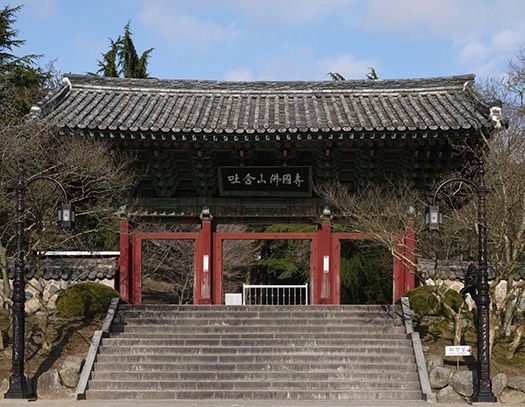
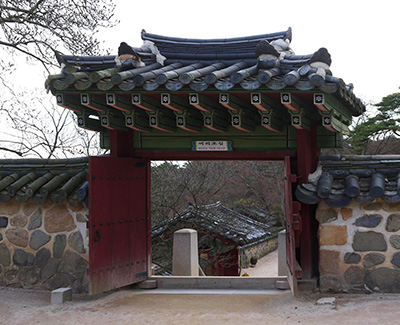
写真上と2番目は韓国仏国寺の門の建築の様子。
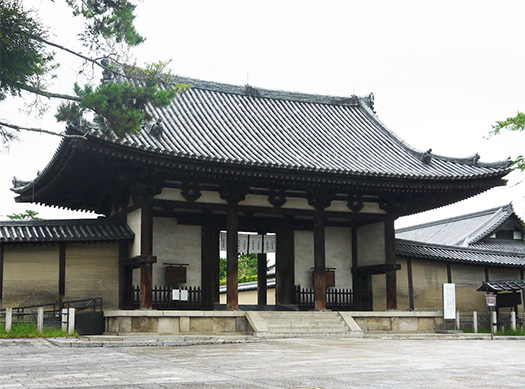
対して3番目は法隆寺の南大門です。
法隆寺の玄関にあたる総門です。三間一戸の八脚門で現法隆寺建立時には中門前の
石段上に立っていたが、寺域の拡大により現在の場所に移転。(国宝)
日本の法隆寺では全体的に装飾性は抑えられて
屋根を支えている「頬杖」と見なせる組物の類は門では省略されている。
質実な作りで屋根の瓦の大きさもごく抑制的で機能性に徹している印象。
それに対して仏国寺の門は、瓦は目を剥くような大きさで
しかも組物もこれでもかと装飾的に作られています。
とくに2枚目の写真は毘盧殿に至る位置の門なのですが、
いかにもプロポーションは「頭でっかち」という印象が強い。
バランスはもちろん整合性が取られているけれど、
一見でのつかみの印象ではそのような捉え方ができる。
どっちがどうという問題ではなくやはり民族的な相違のようにも思われる。
もちろん時代的に150年の年代差があって法隆寺の方がより古いので
瓦の技術や木組みのデザイン感覚にそれが表れた可能性もあるでしょうか。
以下は両方の寺院が建設された当時の東アジア政治社会情勢。

この両寺の創建年、600年代初頭と750年頃には
東アジア外交的に平和と緊張が繰り返されていた時期。
法隆寺創建の頃は小野妹子がはじめて遣隋使として派遣されたような時期。
聖徳太子による摂政期で律令体制を構築した中国との関係が強まった。
古代国家における法治主義と背景としての仏教思想普及といえる。
仏教思想の社会的拡散はそれによって統一国家・日本を確立しようとしたもの。
朝鮮半島との関係では百済との関係が強まり、
他の半島国家との関係は緊張化していた。隋唐との関係は先進文化の導入であり、
律令と仏教の受容が進み、一方で国内統一を巡っての対立も進行した。
昔の教育では「大化の改新」645年・乙巳の変で蘇我氏殲滅。
政権を掌握した天智は軍事強化によって国内支配確立を図ったのか、
663年には東アジア世界での大きな古代戦争であった白村江が勃発する。
唐と新羅連合によって百済は滅亡し日本は敗戦し外交は危機に瀕した。
その後日本は唐や新羅からの攻撃に備え東アジア世界との距離を置いていた。
・・・というような古代での東アジア世界の国家関係相克が活発な時代。
法隆寺創建時は古代律令制度に準拠した統一国家に向かっていった時代であり、
法隆寺はそのシンボル的な建築営為だったように思われる。
一方で朝鮮半島では百済を滅亡させ高句麗も滅亡に向かったことで、
統一新羅が成立して仏国寺はその宗教的権威性を発揚する建築だったか。
一方で同時期の日本は大仏開眼会が開催されて
統一新羅の王子も首席の代表外交団として来日する友好的関係期。
こうした東アジア国際関係がこれらの寺院建築には刻印されているのだろうか。

より権威的・威信材建築的な仏国寺の意匠性と
初期の仏教導入期の素朴さも感じられる法隆寺の意匠性。
古代の国際関係もまた「民族性」形成に関与する部分もあったのではないか。
隣国関係史というのは奥行きがきわめて深い・・・。

English version⬇

[International affairs at the time of construction Horyuji Temple and Bulguksa Temple-7]
The top and second photos show the architecture of the gate of Bulguksa Temple in Korea.
On the other hand, the third is the Namdaemun of Horyuji Temple.
This is the main gate, which is the entrance to Horyuji Temple. At the eight-legged gate of Sanma Ichinohe, in front of the Nakamonzen when the current Horyuji Temple was built
Although he stood on the stone steps, he moved to the current location due to the expansion of the temple area. (National treasure)
At Horyuji Temple in Japan, the overall decoration is suppressed.
The kind of braid that can be regarded as the “cheek cane” that supports the roof is omitted at the gate.
Impression that the size of the roof tiles is very restrained and the functionality is devoted to the simple construction.
On the other hand, at the gate of Bulguksa Temple, the tiles are so big that you can see them.
Moreover, the braid is still decorative.
In particular, the second photo is the gate at the location leading to Vairocana.
I have a strong impression that the proportions are “big head”.
The balance is of course consistent, but
At first glance, the impression of grasping can be seen in such a way.
It doesn’t seem to be a matter of which one, but it seems to be an ethnic difference.
Of course, there is a 150-year age difference, and Horyuji is older.
Is it possible that this was reflected in the tile technology and the design sense of the wooden frame?
The following is the political and social situation in East Asia at the time when both temples were built.

These two temples were founded in the early 600s and around 750s.
A period of diplomatic peace and tension in East Asia.
When Horyuji was founded, it was like Ono no Imoko was dispatched as a mission to Sui for the first time.
Relations with China, which built the decree system during the regent period by Prince Shotoku, strengthened.
It can be said that the rule of law in the ancient nation and the spread of Buddhist thought as a background.
The social diffusion of Buddhist thought was an attempt to establish a unified nation, Japan.
In relation to the Korean Peninsula, the relationship with Baekje became stronger,
Relations with other peninsular nations were tense. The relationship with Sui Tang is the introduction of advanced culture,
The acceptance of Ritsuryo and Buddhism has progressed, while the conflict over domestic unification has also progressed.
In the old education, “Taika Reform” 645, the Soga clan was annihilated by the change of Otomi.
Did Tenji, who took control of the government, try to establish domestic control by strengthening the military?
In 663, Baekgang, a major ancient war in the East Asian world, broke out.
Baekje was destroyed by the Tang and Silla coalition, Japan was defeated, and diplomacy was at stake.
After that, Japan kept a distance from the East Asian world in preparation for attacks from Tang and Silla.
An era in which the conflict of national relations in the East Asian world was active in ancient times.
When Horyuji was founded, it was an era toward a unified nation that was compliant with the ancient decree system.
Horyuji Temple seems to have been its symbolic architectural activity.
On the other hand, on the Korean Peninsula, Baekje was destroyed and Goguryeo was also destroyed.
Was Bulguksa Temple an architecture that raised its religious authority after the establishment of Unified Silla?
On the other hand, in Japan at the same time, the Great Buddha Eye Opening Party was held.
The prince of unified Silla also came to Japan as the chief representative diplomatic corps during the friendly relationship period.
Is this East Asian international affairs imprinted on these temple buildings?

More authoritative and prestigious architectural design of Bulguksa Temple
The design of Horyuji Temple, where you can feel the simplicity of the early Buddhist introduction period.
Perhaps ancient international affairs were also involved in the formation of “ethnicity.”
The history of neighboring country relations is extremely deep …