本文へジャンプ

【本日から所用で関西・山陽圏へ移動、故地探索も】


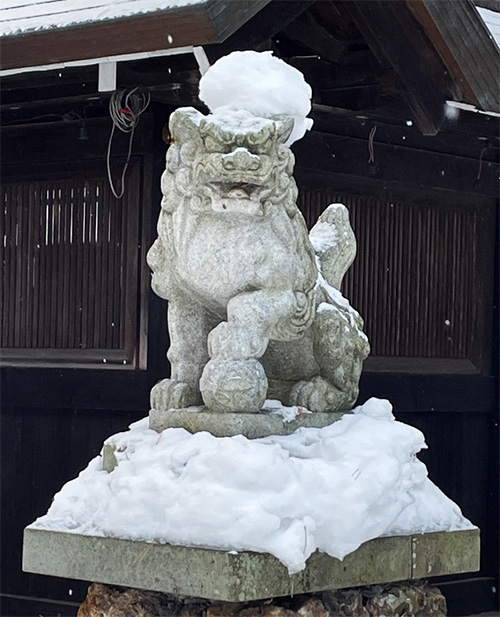
 写真はわが家のすぐ近くの「琴似神社」境内の狛犬さん。先日のチョー湿った雪がその後の気温低下でずっとアタマに残り続けています。アタマを冷やせ、と伝えてくれている(笑)。
 毎日更新を自分的に固くこころに決めているブログ記述。自分が強く興味を持っていることがらについての「思考進捗」そのままに書き進めています。従来はあんまりにも「個人的かなぁ」と思って自制していた家系の探索テーマですが、抑制的を心がけながら書いてみるといろいろアドバイスや意見をいただいたりして、大変ありがたいことと思っています。多少は自分だけの思い込み・ドロ沼への没入に対しての「抑制」効果をわたしのアタマに投げ込んでいただけると感謝。
 なんですが、一方でさらなる「没入」を促すようなアドバイスもいただきます。
 わたしが書いたことについての深掘りご意見で、わたしも目を剥くような驚きの方向性提示。こちらには「もっとやれ!」みたいな叱咤激励を感じさせてもらえる。自分でも不分明なポイントについて、非常にツボを押さえた示唆に満ちている。こちらも感謝感激で、まことに甲乙付けがたい。
 ・・・なんですが、ちょっとアタマを写真のようにクールダウンさせたい。
 ただ、故地探索については「ここもあそこも」と時間がいくらあっても足りない。ありがたくもビジネスの第1線からはやや離れているので、もうちょっと時間をじっくり気味に掛けていきたいと思い直しています。
 しかしじっくり回ると回るで、いろいろな拡散的な情報取得になって、それも覚醒的に反応してくる。
 まぁ年齢を考えながら落ち着いて行脚したい。考えて見ると、次々と疑問が広がり、それの解明への欲求が高まる循環的な精神状況というのは、高齢期には最適なのではないかと愚考しています。そう「ボケてはいられない」という心理が働くので、認知力が覚醒の方向にはたらく気がします。
 さて、今回はどんな知見の広がりがあるか、楽しみであります。

●お知らせ
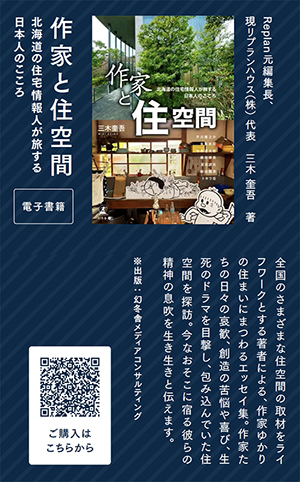
拙書「作家と住空間」幻冬舎から電子書籍で発刊
お求めはAmazonで。
https://amzn.asia/d/eUiv9yO
English version⬇ 

【Traveling to Kansai and Sanyo regions today for business, also exploring old haunts】
Cute komainu guardian dogs. They seem to be saying, “Cool your head a bit.” Even in warmer areas, I plan to stay cool while traveling. …

 This photo shows the guardian dogs at Kotoni Shrine, right near my home. The super wet snow from the other day has stuck to their heads ever since the temperature dropped. It’s like they’re telling me to keep my head cool (lol).
I’ve made a firm personal resolution to update my blog daily. I write about the “progress of my thoughts” on topics I’m deeply interested in, just as they come to me. I used to hold back on exploring my family history, thinking it was “too personal.” But when I tried writing about it while consciously restraining myself, I received various advice and opinions, which I’m truly grateful for. I appreciate it throwing a bit of “restraint” into my head against my own assumptions and sinking into the quagmire.
However, on the other hand, I also get advice that encourages even deeper “immersion.”
 These are deep dives into what I’ve written, pointing me in surprising directions that make my eyes widen. I feel a kind of “Go for it!” encouragement in them. They offer incredibly insightful suggestions on points I myself hadn’t fully grasped. I’m deeply grateful for these too; it’s truly hard to choose between them.
 …But I need to cool my head down a bit, like in the photo.
Regarding exploring my roots, though, there’s never enough time—there’s “this place and that place” to see. Thankfully, I’m somewhat removed from the front lines of business now, so I’m reconsidering taking a bit more time to do it thoroughly.
But the more thoroughly I explore, the more I end up gathering all sorts of scattered information, and that too triggers an awakening-like reaction.
Well, I want to travel steadily, considering my age. Come to think of it, this cyclical mental state—where questions keep expanding and the desire to resolve them intensifies—might be ideal for later life. Yes, the mindset of “I can’t afford to lose my edge” kicks in, and I feel my cognitive abilities start working toward greater alertness.
Well then, I look forward to seeing what new insights this journey brings.

●Notice
My book “Writers and Living Spaces” published as an e-book by Gentosha
Available on Amazon.


【江戸期・尾道の商家による「自治組織」】


 さて昨日の続きですが、商標登録のWEB申請、なかなか時間が掛かる・・・。
 実はあしたから所用で関西圏に行くのでさまざまな取材行脚も並行したいと思います。当然、広島県福山や尾道などにも足を伸ばしたい。レンタカーであちこち探索、予定満杯気味。
 一方、このブログを見てくれている知人からときどき有益な情報が寄せられます。
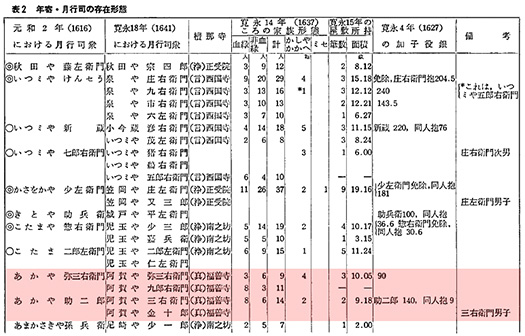
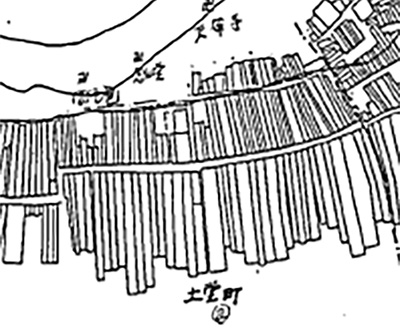
 上図は広島大学の中山富廣先生の論文で「近世初期の尾道における商品流通」をご案内いただいた。そこに「尾道阿賀屋」の人物名が出ていた。江戸期瀬戸内海交易の心臓部・尾道では、商家による「自治組織」が運営され、その名簿のなかに出ていた次第。下は間口が間口が狭く奥行きが長い江戸期「商都・尾道」の街割り図。
 「あかや」と記されているのがわが家系がその一員になっていた「阿賀屋」で、1616-1641年当時の自治組織の「月行司衆」になっている。有力商人であるかれらは「加子役銀」という公費負担を出資している。これは港町の港湾労働に従事する人びとへの労務費などが主な用途のおカネ。阿賀屋は2名が役に就いていて10.5%の加子役銀負担割合。
 この探索を本格化させるまで江戸時代にはそれほど深い興味を持っていなかったのですが、コメ経済幕藩体制のなかで次第に「市場経済」が浸透拡大していったのだと気付くようになった。わたしの家系は1718年の亨保の百姓一揆で打ち毀しにあって米作経済の現地代官的な庄屋層から脱落して以降、松永で塩業経営にシフトして、さらにこのような阿賀屋の商家株を入手したことで市場経済型の自治独立的な生き方に向かって行ったと言える。
 興味深いのは「檀那寺」記載で浄土真宗の「福善寺」と。この宗派と阿賀屋という名前から播州の「英賀」との関連性が強く印象づけられる。秀吉によって英賀城が落城した後、播州からこの地に人びとが大量移住したとされ、そのまとめ的な寺院が福善寺。英賀は本願寺門徒の宗教勢力として知られ、阿賀屋も三木氏なのでその関係性はあきらか。一時期はわたしの家系についてこちらなのだとすっかり信じていた。
 で、表には「家族形態」記述もあり血縁と非血縁の仕分け人数が明記。血縁を基盤とする中小企業的。
 さらに、1638年の「屋敷所持」項目もあり、9-10畝(1畝は約30坪)なので各300坪ほどの屋敷地を所有していた記載も。そういう屋敷に9-14人程度が暮らしていた。
 う〜む、生活ぶりにまでズームイン感(笑)・・・

●お知らせ
拙書「作家と住空間」幻冬舎から電子書籍で発刊
お求めはAmazonで。
https://amzn.asia/d/eUiv9yO

English version⬇ 

【Edo Period: Merchant Houses in Onomichi Forming “Self-Governance Organizations”】
Merchant houses bearing the name “Aka-ya” from the Edo period were involved in managing the autonomous region and the Seto Inland Sea trading city. Was this the forefront of Japan’s transition to a market economy? …

 Now, continuing from yesterday, this online trademark registration application is taking quite a while…
Actually, I’ll be heading to the Kansai region tomorrow for some business, so I plan to conduct various interviews while I’m there. Naturally, I also want to visit places like Fukuyama and Onomichi in Hiroshima Prefecture. I’ll be exploring all over by rental car, and my schedule is getting pretty packed.
 On the other hand, I occasionally receive useful information from acquaintances who read this blog.
The image above is from a paper by Professor Tomihiro Nakayama of Hiroshima University, introducing “Commodity Distribution in Onomichi during the Early Modern Period.” It mentioned the name “Onomichi Aga-ya.” In Onomichi, the heart of Seto Inland Sea trade during the Edo period, merchant families operated an “autonomous organization,” and this name appeared in its membership roster. Below is a street layout map of Edo-period “Onomichi, the Commercial Capital,” characterized by narrow frontages and deep lots.
The location marked “Akaya” is the “Aga-ya” where my family lineage was a member. It was part of the autonomous organization’s “Tsukigyoji-shu” during the period 1616-1641. As influential merchants, they contributed to the public fund known as “Kashiyaku-gin.” This money primarily funded labor costs for port workers in the harbor town. Two members of the Aga-ya held positions, bearing a 10.5% share of the Kashi-yaku-gin burden.
Before delving deeply into this research, I hadn’t held such a profound interest in the Edo period. However, I came to realize that within the rice-based feudal system, a “market economy” gradually permeated and expanded. My family lineage, having been crushed in the 1718 Kyōhō Peasant Uprising and thus falling from the local daikan-like village headman class in the rice-farming economy, shifted to salt production management in Matsunaga. Subsequently, acquiring shares in a merchant house like Aga-ya allowed them to move towards a market economy-based, autonomous, independent way of life.
What’s interesting is the “temple patronage” record listing the Jōdo Shinshū temple “Fukusen-ji”. This sect and the name “Aga-ya” strongly suggest a connection to “Ega” in Harima Province. After Hideyoshi captured Ega Castle, large numbers of people are said to have migrated here from Harima, with Fukusenji serving as their central temple. Both Ega and Aga-ya were associated with the Miki clan, making the connection clear. For a time, I fully believed this was the origin of my family lineage.
 Furthermore, the front page includes a “Family Structure” description, clearly listing the number of blood relatives and non-blood relatives. It’s like a small family business based on blood ties.
Additionally, there’s a “Residence Ownership” entry from 1638, stating they owned 9-10 acres (1 acre is about 30 tsubo), meaning they had about 300 tsubo of land per residence. Around 9-14 people lived in such residences.
 Hmm, it feels like we’re zooming in on their lifestyle (lol)…

●Notice
My book “Writers and Living Spaces” published as an e-book by Gentosha
Available on Amazon.

【「登録商標」マークに驚愕/「家紋入り膳漆器」】


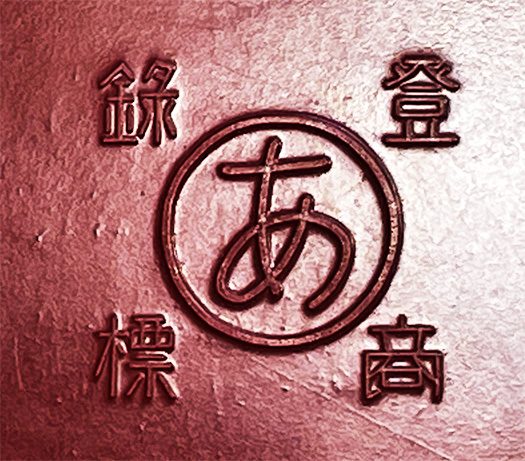
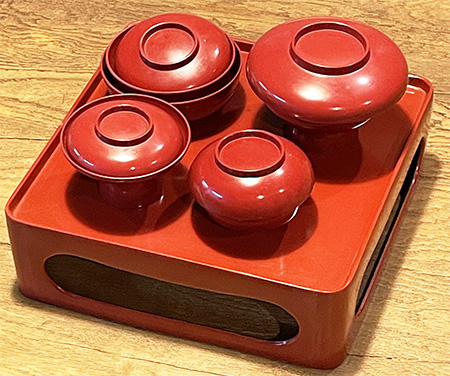
 写真は10/24の拙ブログでも紹介の家系(わたしの長兄家)に伝承されていた朱塗り膳漆器とその底面に刻印されていたマーク。○に「あ」という文字が刻印され、その周囲に「登録商標」と刻印されている。阿賀屋という商家として、さまざまなマークを申請したなかでこれが認証された蓋然性・・・。
 前回記事のときはわたしも見落としていた。というか、膳の底面までしっかり確認できていなかった。
 家紋まで入れた漆器セットということの方に驚き「江戸期」制作なのかと推測していたのですが「登録商標」マークの確認で一気に家系探訪の物証として浮上してきた。
 日本における「商標登録」制度とはどういう歴史的経緯だったか?
 ●商標登録制度の始まり(明治期)〜日本で法的に商標を登録する制度の初めての成立は明治17年(1884年)6月7日制定の「商標条例」による。
 これは諸外国法制の影響を受け、商標保護の必要性が高まったことを背景に法制化された(特許庁)。商標制度の導入は外国製品との競合や国産品の模倣対策が背景。商標条例導入後、日本では登録制度に基づく「出願→審査→登録」制度が運用されるようになった(特許庁)。基本的な制度趣旨として、
 1.早い者勝ちの登録原則(first-to-file)
 2.申請には商標の図案+使用商品分類を添付
 3.他の登録と類似する商標、一般的な名称・地名・人名などは登録不可
 4.登録商標は後の権利侵害防止に利用可能(独占的使用の根拠)
 これらはその後の商標制度にも引き継がれている(特許庁)。
 このマークは以下の意味から「初期商標実物の物証」として評価できる可能性がある。
 ・商家が商標登録の実行(出願・認可)に対応していた可能性を示す。
 ・明治期の「商標条例(1884)」〜初期商標登録の実際の利用を示す物証。
 ・商品印・什器(漆器)に刻印して出所証明として使われた可能性。
 当時、商家にとっては渇望の「権利」認証として沸き立っていたとのこと。
 江戸期からの地域商家として国の動向に強い関心を持ち、即応して権利取得に動いた状況がありありと思い浮かんでくる。う〜む、であります。
 きのうは六世の祖について書きましたが、どうも曾祖父・祖父が関与した物証。もちろん当事者の家系すら忘れていたくらいなので、権利としては消滅しているでしょうが、国家制度という枠組みからさまざまな「確定」情報が保存されている可能性が高い。どのようにこれを探究するか、検討開始です。
 ・・・家系先祖さまからの「木霊〜こだま」かなぁ?

●お知らせ
拙書「作家と住空間」幻冬舎から電子書籍で発刊
お求めはAmazonで。
https://amzn.asia/d/eUiv9yO

English version⬇ 

【Stunned by the “Registered Trademark” Mark / “Lacquerware Tray with Family Crest”】
Following yesterday’s discovery of my sixth-generation ancestor’s handwritten document, now comes “material evidence” from my great-grandfather and grandfather. Traces of compliance with the 1884 “Trademark Law.” Embarking on a quest for information preserved by the state. …

 The photo shows the vermilion-lacquered tray passed down in my family lineage (my eldest brother’s household), featured in my blog post on October 24th, along with the mark engraved on its underside. It bears the character “あ” within a circle, surrounded by the words “registered trademark.” Given that the merchant house Aga-ya applied for various marks, it’s likely this one was certified…
 I had overlooked it myself in the previous article. Or rather, I hadn’t thoroughly examined the underside of the tray.
I was more surprised by the fact that it was a lacquerware set featuring a family crest, and I had speculated it might have been made during the Edo period. However, confirming the “Registered Trademark” mark suddenly elevated it as tangible evidence for tracing my family lineage.
What was the historical background of the “trademark registration” system in Japan?
 ● Beginnings of the Trademark Registration System (Meiji Period) ~ The first legal system for registering trademarks in Japan was established by the “Trademark Ordinance” enacted on June 7, 1884 (Meiji 17).
This legislation was influenced by foreign legal systems and enacted against a backdrop of growing necessity for trademark protection (Japan Patent Office). The introduction of the trademark system was driven by competition with foreign products and countermeasures against imitations of domestic goods. Following the introduction of the Trademark Ordinance, Japan began operating a registration-based system involving “application → examination → registration” (Japan Patent Office). The fundamental principles of the system were:
1. A first-to-file registration principle
2. Applications required submission of the trademark design + classification of goods/services
3. Trademarks similar to existing registrations, generic terms, place names, or personal names were ineligible for registration
4. Registered trademarks can be used to prevent subsequent infringement (basis for exclusive use).
These principles have been carried forward into subsequent trademark systems (Japan Patent Office).
This mark may be evaluated as “physical evidence of an early trademark” for the following reasons:
・It indicates the merchant may have pursued trademark registration (filing and approval).
・It serves as physical evidence demonstrating the actual use of early trademark registrations under the Meiji-era “Trademark Ordinance (1884)”.
 ・Possibly used as proof of origin by stamping on product seals or utensils (lacquerware).
At the time, it seems merchants were fervently pursuing this coveted “rights” certification.
One can vividly imagine the situation: as a regional merchant since the Edo period, they closely followed national developments and promptly moved to secure rights. Hmm, indeed.
Yesterday I wrote about my sixth-generation ancestor, but this seems to be evidence involving my great-grandfather and grandfather. Of course, since even the family line of the parties involved has been forgotten, the rights have likely expired. However, it’s highly probable that various “confirmed” details remain preserved within the framework of the national system. How to explore this—time to start considering.
…Could this be an echo from my ancestral family line?

●Notice
My book “Writers and Living Spaces” published as an e-book by Gentosha
Available on Amazon.

【1815年に「六世の祖」が書いた巻物文書と署名】


 写真はわが家に遺された6代前先祖(六世の祖)の「ほぼバイブル」の文書末尾の肉筆署名と巻物。
 文化12年は西暦で1815年・江戸後期。いまから210年ほど前の記述になる。この当主・寛蔵さん45歳のときの文書。わが家系はこの当時、広島県福山市の西部・今津という地域にいたことが確実にわかっている。地域を支配していた福山藩阿部家はこの今津の南方・松永地域で「塩田」を藩の重要事業として位置づけて塩生産を行わせていた。各種の調査ではこの当時のわが家系は、そうした藩の経済政策に沿って尾道の商家株を入手して、生産者でありつつ同時に流通販売にも関わっていた。
 江戸期の地方「商家」のありようとして考えれば支配層・藩との深い関係が垣間見える。一種の「政商」的な役割を担っていたと思える。六世の祖はこの今津で大名たち用の「本陣宿」の縁戚として、その用にも与っていたことがわかっている。江戸期九州の大名家・松浦静山の記録文にこの先祖のことが記述もされている。
 そのような家業として比較的に「安定」していた時期、家系の故地を探訪した記録を書き記した。故地は広島県東広島市河内町入野と比定している。この「入野」に慶長年中(1596〜1615年間)に「紀州」から移動して来たという家系故事を確認してきているのだ。この文書記述時点から200年以上前の時代のことを確認に行っていることになる。
 いまから顧みれば家系の文書上で確認できる400年以上のほぼ中間点で、書き記してくれた文書。
 もちろんこの当時の家屋や屋敷地などは確認できないけれど、おおむね「西国街道」の尾道の次・今津宿の中心とされる「蓮華寺」の対面側にあったと推測している。いまのところ現物「証拠」としてはこの巻物と筆跡情報がわたしの世代に遺されてきているワケだ。
 江戸期の紙の生産・消費の記録を「長野県史」に見れば、長野県内の古文書は総数7万点に対して1624年以前は1%にも満たないとされ、そこから1661年までの期間で急増し、その後30年ごとに対前期比、倍増を続けているとのこと。たぶん全国で同様だったと推認出来るが、この1815年段階でこうした巻物を記し、しかもやや「文学的」な祖先探索記録を記すというのは用紙の利用と目的両面で、興味深い書き手の心象。
 筆跡心理学という解析領域があるそうだが、科学的手法とは言えないらしい。ただ肉親的な視点ではなにか血肉感は感じる。「蔵」の字の最後の「跳ね上げ」具合には、なにか心理が残影する(笑)。
 六世の祖はどんな心理を、伝えたかったのかなぁ・・・

お知らせ
拙書「作家と住空間」幻冬舎から電子書籍で発刊
お求めはAmazonで。
https://amzn.asia/d/eUiv9yO

English version⬇ 

【Scroll Document and Signature Written by the Sixth Ancestor in 1815】
Tracing family roots. A scroll document recorded 210 years ago. And tracing ancestors from over 200 years before that. Is this itself proof of blood? …

 The photograph shows the handwritten signature at the end of the document and the scroll of the “almost Bible” left in our family home by our sixth-generation ancestor (the sixth-generation progenitor).
The year Bunka 12 corresponds to 1815 in the Western calendar, the late Edo period. This document is approximately 210 years old. It was written when the head of the household, Kanzo, was 45 years old. It is certain that our family lineage resided in the Imazu area, west of Fukuyama City, Hiroshima Prefecture, at this time. The Abe clan of the Fukuyama domain, which ruled the region, designated salt fields in the Matsunaga area south of Imazu as a key domain enterprise and oversaw salt production there. Various investigations indicate that our family line at that time, aligning with the domain’s economic policies, acquired merchant shares in Onomichi. This allowed them to be producers while simultaneously engaging in distribution and sales.
Considering the nature of local “merchant houses” during the Edo period, this reveals a deep relationship with the ruling class and the domain. It seems they played a kind of “political merchant” role. It is known that the sixth-generation ancestor, as a relative of the “honjin inn” for daimyo in Imazu, was also involved in its operations. Records from the Kyushu daimyo family Matsuura Seizan during the Edo period also mention this ancestor.
During this relatively “stable” period for such a family business, I wrote down records of visiting the ancestral homeland. The ancestral home is identified as Irino, Kawachi-cho, Higashi-Hiroshima City, Hiroshima Prefecture. I have confirmed the family tradition that they moved to this “Irino” from “Kishu” during the Keicho era (1596-1615). This means he was confirming events from over 200 years prior to the time of writing this document.
 Looking back now, this document was written at roughly the midpoint of the over 400 years verifiable in our family records.
Of course, the actual houses and land from that time cannot be confirmed, but it is generally presumed to have been located opposite “Rengeji Temple,” considered the center of Imazu-juku, the next post station after Onomichi on the “Saigoku Highway.” For now, the only tangible “evidence” passed down to my generation is this scroll and the information about the handwriting.
 Looking at records of Edo-period paper production and consumption in the “History of Nagano Prefecture,” it states that out of a total of 70,000 ancient documents within Nagano Prefecture, those from before 1624 account for less than 1%. From then until 1661, the number increased sharply, and thereafter, every 30 years, it continued to double compared to the previous period. It’s likely similar patterns occurred nationwide. Yet, at this 1815 stage, the act of writing such a scroll—and one that records a somewhat “literary” search for ancestors—reveals an intriguing mindset of the writer, both in terms of paper usage and purpose.
 I hear there’s a field called graphology, but it doesn’t seem to be a scientific method. Still, from a familial perspective, I sense something visceral. The way the final stroke of the character for “storehouse” is flicked upward seems to leave some psychological residue (laugh).
I wonder what kind of feelings the sixth-generation ancestor wanted to convey…

Notice
My book “Writers and Living Spaces” published as an e-book by Gentosha
Available on Amazon.

【タマネギ調理、夫婦での下処理の好き嫌い(笑)】


 閑話休題。
 夫婦の暮らし方は「世に連れ」なのでしょう。わたしのような年代は年上の世代と比べて「協働」型タイプが多いように思います。ある友人夫婦は、夫がたいへん困難な病気で余命いくばくという状況に陥ったなか、奥さんが献身的に看護してくれて無事に健康を回復し、その後、今度は奥さんが寝たきり要介護の状態に陥ると、今度は夫が他者に頼まず自分で献身的に看護している。
 高齢期のひとつの「よき生き方」と尊敬しています。
 わが家の場合、健康面はいまのところありがたくも、毎日1万歩程をふたりとも動けるほど。夫婦とも健康でいる最大のシアワセ。なんですが、家事全般のことはやはり役割分担が重要。
 健康のためには日々の食生活は最大の「戦場」。新鮮な野菜たっぷり調理こそすべての源。そのなかでカミさんがいちばんキライなのが、このタマネギの「下処理」。
 買い物に出掛けるとカミさんは、高価な「大玉」タマネギを買おうとする。わたしは、廉価な「小玉」たくさんでいいじゃないかと思う。栄養価には違いはないだろう、という考え。
 で、どうしてそうなんだろうと思っていたら、どうも下処理で皮を剥く作業がキライなのだと伝わってくる。大玉であればその作業量が少しでも軽減できるというのが動機だったのです。
 「なに言ってるのよ、そしたらオレがやるから」ということで廉価な「小玉」購入の方向にチェンジ。
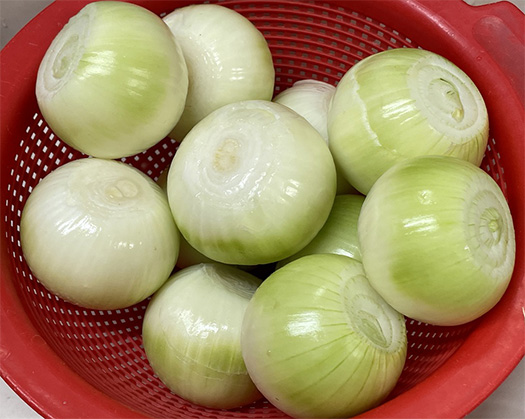
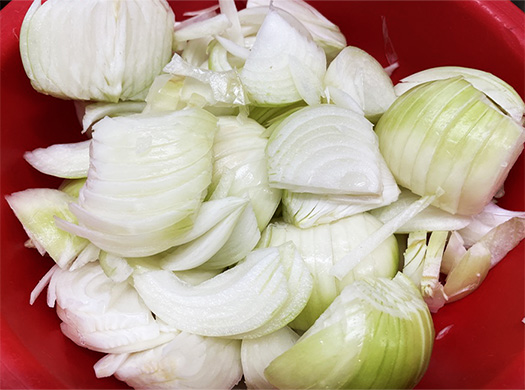
 写真は10個ほどの小玉を集中作業で皮むきして、それを切った様子。

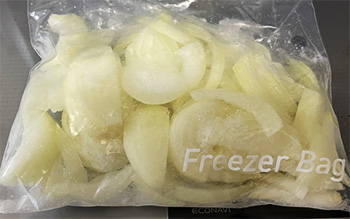
 で、それを小分け袋詰めして、そのまま冷凍保存させておいて、適時料理に使う作戦。
 タマネギのこういう小分け状態であれば、そもそも「解凍」手順もほとんど不要。すぐに加熱調理する素材なので、合理的なのですね。
 この下処理では当然目が辛くなるのですが、どうせタマネギはそうなるので、まとめてやっちゃった方が気分的にも「片付けた」感が大きい。わたしの場合はそういう気の持ち方。夫婦でも人間それぞれ感じ方には違いがある。相互扶助。
 カミさんからは「いよっ!夫の鑑〜かがみ」とまでの賞賛。思わず「ドヤ」と思わせられてしまう。このあたり、操縦術ははるかに上手(笑)。まったく敵いません。

お知らせ
拙書「作家と住空間」幻冬舎から電子書籍で発刊
お求めはAmazonで。
https://amzn.asia/d/eUiv9yO

English version⬇

【Onion Prep: Husband and Wife’s Preferences for Prep Work (lol)】
The motivation for buying big, expensive onions? Purely to avoid the hassle of peeling them. I’ll handle it all myself. Mutual support between husband and wife. Healthy eating habits. …

 But enough digressions.
 The way couples live together is shaped by the times. Compared to older generations, I think people of my generation tend to be more collaborative. One couple I know: the husband fell seriously ill with a difficult disease and faced a limited life expectancy. His wife devoted herself to nursing him back to health. Later, when she became bedridden and needed care, he devoted himself to nursing her without relying on others.
 I deeply respect this as one “good way to live” in old age.
In our household, thankfully, we’re both healthy enough to walk about 10,000 steps each day. The greatest happiness is both spouses being healthy. However, dividing household chores remains absolutely essential.
 For health, daily meals are the biggest “battlefield.” Cooking with plenty of fresh vegetables is the foundation of everything. Within that, what my wife dislikes most is the “prep work” for onions.
When we go shopping, she insists on buying expensive “large” onions. I think cheaper “small” ones in bulk would be fine. I figure there probably isn’t that much difference in nutritional value.
 Then I realized why she feels that way—it seems she dislikes the peeling work involved in prep. Buying large ones seemed to be her way of reducing that workload, even just a little.
“What are you talking about? Then I’ll do it!” So we switched to buying the cheaper small ones.
The photo shows about ten small onions peeled in a focused effort, then sliced.

 So the plan is to bag them up, freeze them as-is, and use them for cooking when needed.
With onions portioned like this, you barely need to thaw them at all. Since they’re mostly ingredients you cook right away, it’s really efficient.
Of course, prepping them this way makes your eyes sting, but since onions do that anyway, doing it all at once gives you a much bigger sense of accomplishment. That’s how I see it. Even in a married couple, people feel things differently. Mutual support.
My wife even praised me, saying, “Wow! You’re a model husband!” It made me feel a bit smug. She’s way better at handling these situations (laugh). I’m no match for her.

Notice
My book “Writers and Living Spaces” published as an e-book by Gentosha
Available on Amazon.


【「ミュージアム体験・研究」先導者の講演会に参加】


 わたしは住宅の空間についてその取材と報道をメインとした住宅雑誌を創刊して、その住宅空間についてのユーザーの「住みごこち」などをヒアリングし、記事にまとめるという活動をしてきました。当然、その過程で人間と空間との「関係性」が主要テーマになる。
 ただしそれらは「個人情報」の塊であって、それらをそのままのカタチで転用利用することは絶対にできない。そういった流れから一方で著名人、とくに各地でさかんに建築されている「作家の記念館」などを興味深く参観してきていた。なかでも作家たちの公開された「住宅」はそれらの記念館に付設されているケースもたいへん多い。やはり興味を持った参観者にとって「あの作品を生み出した作家の住宅って、どういう場所?」という興味は自然な志向性だと思うのです。
 そこで可能な限りそういった作家たちの住空間を探訪し、その空間の中で感受した「空気感」を表現したいという志向を深めていた。電子書籍としてまとめたりもしました。
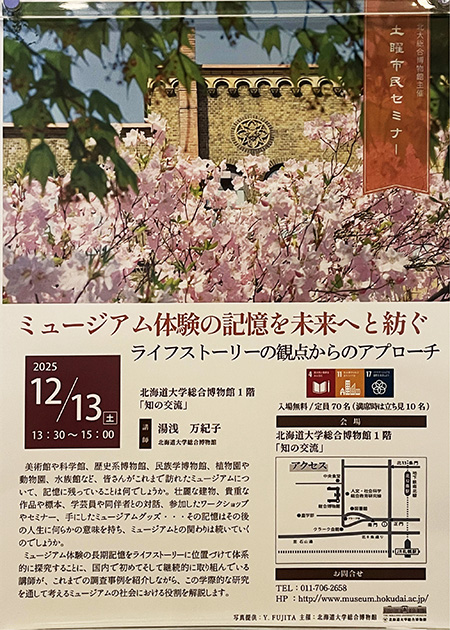
 そういう体験のうえで、ふとした機会にこの講演会のことを知った次第。
 「ミュージアム体験」という聞き慣れないコトバに惹かれて昨日聴講させていただきました。講演者は北大博物館の教授である湯浅万紀子先生。たいへん興味深く、また学問的にも「フロンティア」としての探究的姿勢を感じさせていただきました。講演後の聴講者の意見機会では「あなたのミュージアム体験は?」みたいな内容で先生から直接マイクまで向けられたので、東大阪の司馬遼太郎記念館で、かれの書斎に置かれた「安楽椅子とそれの捻り鉢巻き」視認体験などを話したりしました。
 講演終了後もさらに重ねて、内輪の「直会」にまで呼ばれお邪魔していました。
 オモシロ体験の1日。
 どうもこの領域「ミュージアム体験」研究というのは、湯浅先生が先導的存在と思われました。わたしが知り得た範囲ではこのように作家たちの記念館文化が存在しているのは日本が非常に先進的・特異的な発達ぶりと側聞しています。海外作家たちは日本社会が作家たちに対していかに畏敬的かと驚き、深く羨望しているとのこと。
 興味深いテーマ領域近縁についての「第一線研究者」を発見できたような気分であります。

お知らせ
拙書「作家と住空間」幻冬舎から電子書籍で発刊
お求めはAmazonで。
https://amzn.asia/d/eUiv9yO

English version⬇

【Attended a Lecture by a Pioneer in “Museum Experience and Research”】
A lecture by a pioneering researcher in a new field that I’m also deeply interested in. They mentioned, “I absolutely love architecture too (laughs),” which made it all the more relatable. …

 I launched a housing magazine focused primarily on reporting and covering residential spaces. My work involved interviewing users about their “living experience” within those spaces and compiling these insights into articles. Naturally, the “relationship” between people and space became a central theme throughout this process.
However, these interviews are essentially collections of personal information, and repurposing them in their raw form is absolutely prohibited. Consequently, I became fascinated with visiting the homes of notable figures, particularly the numerous “author memorial halls” being built across the country. Notably, the authors’ publicly accessible ‘residences’ are very often attached to these memorial halls. For interested visitors, the natural inclination is to wonder, “What kind of place is the home of the author who created that work?”
 Thus, I deepened my desire to explore these writers’ living spaces whenever possible and express the “atmosphere” I sensed within them. I even compiled some of these experiences into an e-book.
It was against this backdrop of experiences that I happened to learn about this lecture.
Drawn by the unfamiliar term “museum experience,” I attended yesterday. The speaker was Professor Makiko Yuasa from the Hokkaido University Museum. It was extremely interesting, and I sensed an exploratory attitude toward it as an academic “frontier.” During the audience Q&A after the lecture, when the topic turned to “What is your museum experience?”, the professor pointed the microphone directly at me. So I shared my experience of seeing the “armchair and its twisted headband” placed in his study at the Shiba Ryotaro Memorial Museum in Higashi-Osaka.
 Even after the lecture ended, I was invited to join the private “after-party” gathering.
An interesting day of experiences.
It seems Professor Yuasa is a leading figure in this field of “museum experience” research. From what I’ve heard, Japan is remarkably advanced and unique in the development of this culture of memorial halls for writers. Overseas artists are reportedly surprised and deeply envious of how reverently Japanese society treats its writers.
It feels like I’ve discovered a “leading researcher” in this fascinating, closely related field.

Announcement
My book “Writers and Living Spaces” published as an e-book by Gentosha
Available on Amazon.


【暴風雪到来。DNAが遭遇の状況発掘・資料に耽溺】


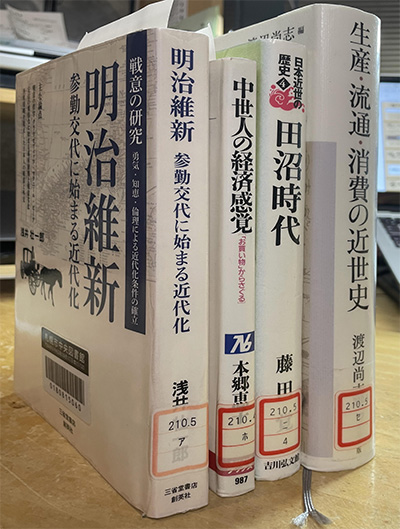
 昨日は図書館でたっぷりと資料探しでした。
 生来の歴史好きと家系DNAの探訪とが重なってきて、高齢期の「主戦場」化してきているように思っています。年末には再度、家系の故地探訪にも再び行く予定なのですが、その目的地がどんどん多くなってきている。そういうことでさらに大量蓄積されている先人の知恵に導きを希求することになる。
 やはり先日の「国立国会図書館」を頂点とする先人の蓄積業績にはひたすら頭が下がります。そうして古文書類も確認しつつ、写真のような図書館での探究の醍醐味も堪えられない。
 先人の「知の着眼点」が本の背表紙から「こだま」のように響いて来ます。
 ただただ没頭し、自分という存在で今を生きている家系のDNAがたどってきた史的環境、出会った世相の実質を可能な限りに再体験したい、という思い。
 大つかみとしての歴史は、いわば一般解として学び続けているけれど、そこにDNA的な要素が加わってくると、肌感覚としてのリアリティが見えてくる。連綿と繋がってきた家系・DNAがそれぞれの局面でどのように意思し、人間行動軌跡を歩んできたのか、血肉に木霊〜こだま〜してくる気がする。
 知人からは「仏壇を背負って北海道まできた家系って、そもそも希少だから・・・」と言われます。まぁそれも事実でしょう。先住のみなさんの積層を除けば開拓期以来のこの地にはたかだか150年ほどの歴史時間しかない。その出自の故地を思いそこに「帰る」生き方もあると思います。
 しかし、この北海道に生きることを選択して生きてきた父祖の思いは承継したい。
 ・・・そんな思索の旅路に没頭していて、ふと気付いたら札幌地方を襲っていた暴風雪がどんどん勢いを増してきていました。訪問していた図書館は自宅から6.5kmほどの市街地経由距離。行きはそれほどの風雪渋滞ではなかったのですが、帰り時間、夕方5時前後には一寸先も見えにくい暴風雪状況。
 通常の2車線道路がほぼ1車線になってしまい交差点「右折車」があれば、信号通過もできない。自然の猛威による渋滞に拍車がかかる。通常15分程度の移動時間が、ほぼ3倍くらいの時間。
 さて、昨日は2回やっていた雪かき、本日はどうかなぁ・・・。北国の冬本格化です。

お知らせ
拙書「作家と住空間」幻冬舎から電子書籍で発刊
お求めはAmazonで。
https://amzn.asia/d/eUiv9yO

English version⬇

Blizzard Approaches. DNA Obsessed with Excavating Encountered Situations and Materials
I’ve always loved history, but now that unraveling my own bloodline’s journey has been added, I’m nearly “sunk” in obsession. And then, without mercy, a blizzard from the cold regions arrives. …

 Yesterday was spent thoroughly searching for materials at the library.
My innate love of history and the exploration of my family lineage DNA have converged, and it seems to be becoming my primary focus in my later years. By year’s end, I plan to revisit ancestral homelands once more, though the list of destinations keeps growing. This naturally leads me to seek guidance from the vast, accumulated wisdom of our forebears.
Indeed, I can only bow my head in reverence before the monumental achievements of those who came before us, culminating in the National Diet Library. While verifying ancient documents, I also find the pure joy of library exploration, like that captured in photos, utterly irresistible.
 The “perspectives of knowledge” from our ancestors echo like “kodama” spirits from the spines of books.
I simply want to immerse myself, to re-experience as fully as possible the historical environments traversed by the DNA of my lineage—the very essence of the times they encountered—and to live in the present as my own being.
While I continue to learn the broad strokes of history as a general solution, when DNA-level elements are added, a visceral reality becomes visible. I feel the echoes—kodama—resonating in my very flesh and blood, revealing how this lineage and DNA, continuously connected, made decisions and walked human paths at each juncture.
An acquaintance remarked, “A family that carried their Buddhist altar all the way to Hokkaido is rare to begin with…” Well, that’s true enough. Excluding the layers of history built by the original inhabitants, this land has only about 150 years of recorded history since the pioneering era. I think there’s a way of life that involves remembering the ancestral homeland and “returning” to it.
However, I want to inherit the spirit of my ancestors who chose to live here in Hokkaido.
…I was deep in such contemplative thoughts when I suddenly realized the blizzard hitting the Sapporo area was rapidly intensifying. The library I visited was about 6.5 km from home via the city streets. The way there wasn’t too bad in terms of wind and snow congestion, but by the time I headed back, around 5 PM, it was a blizzard where you couldn’t see a foot in front of you.
The normally two-lane road had effectively become one lane. If there were cars turning right at an intersection, you couldn’t even get through the signal. The natural disaster only worsened the traffic jam. What normally takes about 15 minutes took nearly three times as long.
Well, yesterday I shoveled snow twice… I wonder how it’ll be today… Winter in the northern regions is in full swing.

Notice
My book “Writers and Living Spaces” published as an e-book by Gentosha
Available on Amazon.

【生成AI活用の現段階 社会的・客観的把握】


 一応、社会的な企業活動についてその第一線から距離を置き始めているわたしですが、そうは言っても社会人・(個人)企業人であることは変わりなく、その推移については注視していることは当然。
 生成AIによる社会の大変化には日々の個人活動で積極的に利用しながら参加という立場。
 AI利用について5−6年前から協働してきていた北大工学部系のスタートアップ企業から、生成AI・新事業についてのWEB講演案内があったので聴講しておりました。こういう信頼できる機会はなるべく情報ゲットすることにしております。急速に普及してきているとは言え、まだ普遍的で客観的な「公知」レベルではないので、さまざまな情報が玉石混淆で交叉する状況だと思います。同世代の友人からも「あれ、どうなのよ?有料の解説情報みたいのまであるけど、意味あると思うか?」という問いを受けたりします。
 わたし自身は、特定テーマ領域での深掘りの有力ツールとして利用していて、その有用性は理解できているけれど、どうも「即ビジネスに簡単に直結する」みたいな煽り系には、やや距離を感じます。
 そういう意味で、この協働先は人脈的・実績的にも信頼できる。
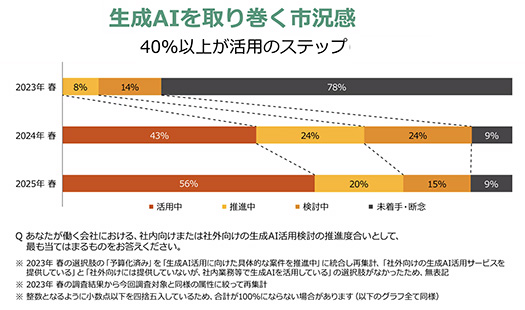
 上のスライドはその講演でのワンショット。
 わかりやすい「市況」を伝えてくれていました。各企業の現状把握・認識の一般解なのでしょう。ただ現状では生成AIは「公開されているツール」を利用しているのが一般的で、今後は各企業毎に「情報漏洩リスク」に配慮した方向に進むことが強調されていた。企業内での生産性向上に有用であることはあきらかだけれど、そこに必ず、情報管理の考えが生じてくることはわかりやすい展開。当然でしょうね。
 各社毎の専用ツールとしての生成AIが事業領域として有望なのでしょう。
 ・・・という社会の概観把握に踏まえて、個人企業レベルとしてはさてどうするか。
 わたしの基本的な理解としてはやはり「使い用」次第なんだろうと思っております。このツールを社内文書の「便利化」ツールとして活用するみたいなことは、早晩無価値化するでしょう。そうではなくそれぞれの企業・個人で、それぞれの事業領域での「専門化」発展が普通の流れでしょう。「一般化」利用について今後の市場性があるとは思えない。むしろ専門的領域での「深化」利用型発展が望まれるのでしょう。

お知らせ
拙書「作家と住空間」幻冬舎から電子書籍で発刊
お求めはAmazonで。
https://amzn.asia/d/eUiv9yO

English version⬇

Current State of Generative AI Adoption: A Social and Objective Assessment
Amidst a jumble of mixed-quality information, the trend seems to be solidifying foundations and deepening in directions that are “specifically beneficial to one’s own company or self.” …

 While I’ve begun distancing myself from the front lines of corporate activities, I remain a working professional and (individual) entrepreneur. Naturally, I continue to closely monitor these shifts.
Regarding the profound societal changes driven by generative AI, I actively participate by incorporating it into my daily personal activities.
 I recently attended a web lecture on generative AI and new ventures hosted by a startup affiliated with Hokkaido University’s Faculty of Engineering, a group I’ve collaborated with on AI usage for five to six years. I make a point of gathering information from such reliable sources whenever possible. While its adoption is accelerating, it hasn’t yet reached a universally objective “public knowledge” level. I believe we’re in a phase where diverse information—both valuable and worthless—intersects and mixes. Friends of my generation have asked me, “Hey, what’s the deal with this? There’s even paid explanatory content out there—do you think it’s worthwhile?”
Personally, I use it as a powerful tool for deep diving into specific thematic areas and understand its usefulness. However, I feel somewhat distanced from the hype suggesting it “easily translates directly into business.”
In that sense, this collaborative partner is trustworthy both in terms of connections and track record.
 The slide above is a snapshot from that presentation.
It clearly conveyed the “market conditions.” It likely represents the general consensus on understanding each company’s current situation. However, the presentation emphasized that while generative AI currently relies on “publicly available tools,” the future will see companies moving toward solutions that address “information leakage risks.” It’s obvious that generative AI is useful for improving productivity within companies, but it’s also clear that this inevitably raises information management concerns. That’s only natural.
 Generative AI as a dedicated tool for each company seems to be a promising business domain.
…Based on this overview of society, what should individual companies do?
My fundamental understanding is that it ultimately depends on how it’s used. Utilizing this tool merely as a “convenience” for internal documents will likely become worthless sooner or later. Instead, the normal trajectory is for each company and individual to pursue “specialized” development within their respective business domains. I don’t foresee market potential for “generalized” use going forward. Rather, what’s likely desired is development centered on “deepening” its application within specialized domains.

Notice
My book “Writers and Living Spaces” published as an e-book by Gentosha
Available on Amazon.

【江戸幕府「経済政策」と諸藩と連携する商家の実像】


 わが家系の歴史的探索。どんどん深みにハマっていく(泣)。
 いかに若いとき歴史の授業に身を入れないでノホホンとしてきたかと悔やまれます。もう60年以上前からの怠慢が「ほら見たことか(笑)」と突き刺さってくるような思い。しかし、高齢期を迎えようやく自分のルーツの探索という強い目的に目覚めて「強い動機」が生まれた。人間は目覚めたときが大事。どこまでできるかでしょう。
 家系が「商家」としての時間を江戸期に経過してきた事実が確定し、次の段階として江戸期の「経済」環境とは果たしてどんなものだったかという、環境・背景要因についての構想力が不可欠になる。家系と日本史の独自年表はExcelで作ってあるのですが、それをにらめっこしつつ、背景事象と対照させることに没入しています。
 江戸時代ニッポンは幕末期に欧米列強の軍事攻撃を受けたが薩摩や長州は果敢に戦い、旺盛な「戦意」を見せつけたことによってかれらに「植民地化」を諦めさせた。イギリス議会では「文明国」として対応すべきという決議まであったという。たった4,000人ほどの軍事力攻撃で降伏させられた「大国」とは、まったく違う経緯をたどった。
 そういう幕末〜明治の社会を準備した江戸期の社会構造、その経済的側面をしっかり学ぶという学習動機。
 で、没入的に各種資料検証やAI活用などで探究してきています。もちろんあくまでも「個人的」な家系探索との並行なので、日本史レベルの事実との対照を基本としてきている。
 全国的な構造について幕府の経済政策の推移を見て、同時に地方各藩のそれぞれの歴史を平行的に見ている。当然、全国と地域では変化にタイムラグはあるけれど、江戸幕府体制が米作収量規模を単位とした体制を基礎として、その強権軍事組織をそのまま支配構造としたことから、慢性的に財政問題を抱え続けてきたことが理解できる。その点ではたぶんそれ以前の「織豊政権」の方が経済合理性に即していたのでしょう。
 そういう体制の中で徐々に「商業」が発展し、そこからどのように税をむさぼり、搾取していくかが最大の財政政策ポイントになった。その巨視的な見方から各個の事象を検証していく必要がある。わが家の家系の事跡、個人のふるまい、ありようも類推可能になってくる。そのように研究領域を見定めてきている次第。

お知らせ
拙書「作家と住空間」幻冬舎から電子書籍で発刊
お求めはAmazonで。
https://amzn.asia/d/eUiv9yO

English version⬇

The Edo Shogunate’s “Economic Policies” and the True Nature of Merchants Collaborating with the Domains
Highlighting the profound human endeavors and their underlying circumstances. The economy within the context of the shogunate—a powerful military force—becoming entrenched in high-cost despotism. …

 My family’s historical exploration. I’m sinking deeper and deeper into it (sob).
I deeply regret how carelessly I went through history classes in my youth. My negligence over 60 years ago stabs me like a “See, I told you so (laugh)”. Yet, entering old age, I’ve finally awakened to the strong purpose of exploring my roots, giving birth to a “powerful motivation”. The moment of awakening is crucial for humans. How far can I go?
The fact that my family line spent its time as a merchant house during the Edo period has been confirmed. As the next step, conceptualizing the environmental and contextual factors—specifically, what the “economic” environment of the Edo period was actually like—becomes indispensable. I’ve created a unique chronology of my family line and Japanese history in Excel. Staring at it, I’m immersed in comparing it with background events.
 Edo-period Japan faced military attacks from Western powers during the Bakumatsu period, but domains like Satsuma and Choshu fought valiantly, displaying such vigorous “will to fight” that it made the Western powers abandon their plans for “colonization.” There was even a resolution in the British Parliament stating they should respond as a “civilized nation.” This was a stark contrast to the fate of a “great power” forced to surrender after being attacked by a force of only about 4,000 soldiers.
 My motivation for study is to thoroughly learn the economic aspects of the Edo-period social structure that prepared the ground for this Bakumatsu-to-Meiji society.
So, I’ve been immersively exploring through verifying various materials and utilizing AI. Of course, since this is strictly parallel to my “personal” family history research, I’ve fundamentally based it on comparing facts at the level of Japanese history.
 I examine the evolution of the shogunate’s economic policies regarding the national structure while simultaneously studying the histories of individual local domains in parallel. Naturally, there is a time lag between national and regional changes. However, it becomes clear that the Edo shogunate system, founded on a framework centered around rice production volume and maintaining its powerful military organization as the governing structure, chronically grappled with fiscal problems. In this regard, the preceding “Oda-Toyotomi regime” was probably more economically rational.
 Within this system, “commerce” gradually developed, and the primary fiscal policy focus became how to extract and exploit taxes from it. It is necessary to examine individual events from this macro perspective. The deeds of my family lineage, individual behaviors, and ways of being also become inferable. This is how I have defined my research domain.

Notice
My book “Writers and Living Spaces” published as an e-book by Gentosha
Available on Amazon.
 

【街路樹の冬じたく/札幌と皇居前の風景】


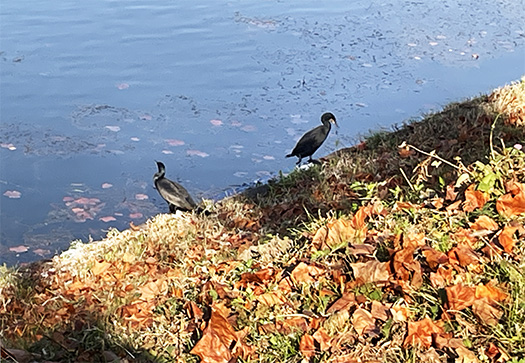
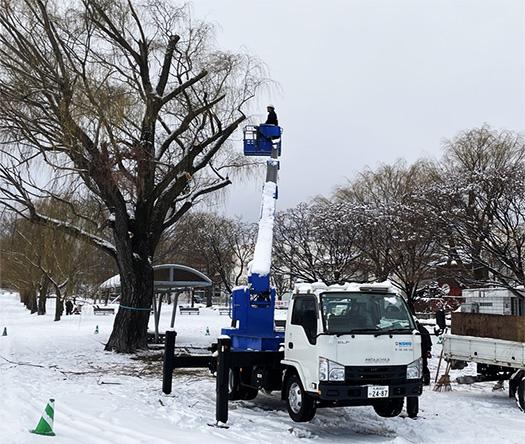
 昨日の地震、札幌市内ではそう大きな被害の報告は無かったようです。写真は、そういう確認の意図もあってわが家周辺を散歩していて出会った光景。
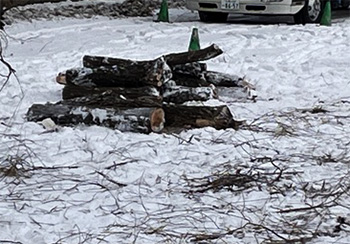
 発寒川河畔公園のなかにクルマが入り込んでいたので、どうしたのかと思ったのですが、本格的な冬の到来を直前に控えての街路樹の手入れ風景でした。兼六園などの「冬囲い」風景などが有名ですが、それぞれの地域なりの「冬準備」。札幌ではやはり雪対策で荷重がかかって枝が折れたりして、それが人に害を及ぼさないように枝を切り落としていた(と、思われました)。
 このような作業は、その目的に応じて「枝払い・枝打ち・剪定」と分かれているようです。
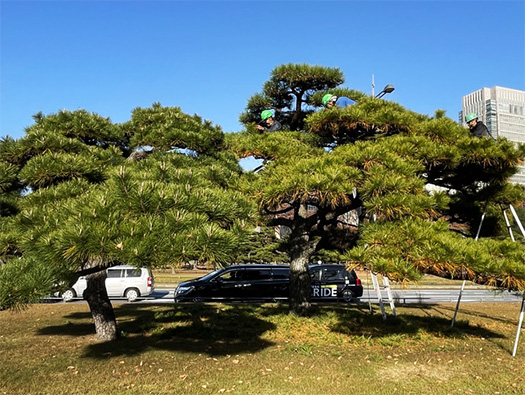
 こういう風景に出会ったのはほぼ初めてと思っていたら、ふと12月1日に訪れていた皇居前広場での「剪定」作業の様子のことがオーバーラップしてきていた(写真3枚目)。こちらの方は、太平洋側の温暖地域・東京都心であり積雪過重による「枝振り」の危険性に対しての対応なのか、それとも単純に1年間伸びきった枝葉を処理するクリーニングであるのか、それらの複合的目的なのか、と思って見ていました。
 どちらも「造園」関係のみなさんの作業であることはわかる。
 札幌市での場合は、兼六園のようにまでは「美感配慮」は目的化されていないでしょう。なによりも危険性除去が主目的のようでした。街路樹の枝は歩道に覆い被さるように広がっているので、作業中に歩いている人間(わたし)は遠回りするように指示があったりしました。
 一方の東京都心の方では歩道とこの街路樹帯には一定距離が確保されていたので、作業員のみなさんも主として「美観保持」の方に意識が向かっているように目視できました。
 ・・・どうも最近はやや狂乱気味の某国のふるまいに耳目が集まって来ていますが、こういう安全環境保持、美観環境保持という目立たない平和な営為のありがたさも、かえって深く感じられる。
 わたしたち日本人は落ち着いて、平和な環境を保持する姿勢を維持し発展させていきたいですね。

お知らせ
拙書「作家と住空間」幻冬舎から電子書籍で発刊
お求めはAmazonで。
https://amzn.asia/d/eUiv9yO

English version⬇

Winter Preparations for Street Trees / Scenes from Sapporo and the Imperial Palace
Japan is startled by its frenzied response, even triggering radar lock-on moments before a missile attack. Yet maintaining composure, preserving safety and aesthetics, and upholding a stance for peace remain paramount.

 Yesterday’s earthquake didn’t seem to cause significant damage within Sapporo city limits. This photo captures a scene I encountered while walking around my neighborhood, partly to confirm that.
I saw a car parked inside the Hassamu River Riverside Park and wondered what was going on. It turned out to be street tree maintenance just before the arrival of full winter. While places like Kenrokuen Garden are famous for their “winter wrapping” scenes, each area has its own “winter preparations.” In Sapporo, it’s clearly for snow countermeasures—to prevent branches from breaking under the weight and causing harm to people, they were cutting them back (or so it seemed).
This kind of work seems to be categorized as “branch removal,” “pruning,” or “trimming” depending on the purpose.
I thought this was almost the first time I’d encountered such a scene, but then I suddenly recalled the “trimming” work I saw at the Imperial Palace Plaza on December 1st (third photo). Here, in the warmer Pacific coastal region of central Tokyo, I wondered if this was a response to the danger of branches breaking under heavy snow, or simply a cleaning operation to remove branches and leaves that had grown fully over the year, or perhaps a combination of both purposes.
It was clear both were tasks performed by people involved in “landscaping.”
In Sapporo, the goal probably isn’t aesthetic consideration to the same extent as in Kenrokuen Garden. Above all, hazard removal seemed the primary goal. The street trees’ branches spread over the sidewalk, so pedestrians (like me) walking during the work were instructed to take a detour.
In contrast, in central Tokyo, a fixed distance was maintained between the sidewalk and the street tree strip. Visually, it was clear the workers were primarily focused on “maintaining aesthetics.”
 …While attention lately seems fixated on the somewhat frenzied behavior of a certain country, the value of these unassuming, peaceful endeavors—maintaining safety and preserving aesthetics—feels all the more profound.
We Japanese should maintain and develop our calm, steadfast commitment to preserving peaceful environments.

Notice
My book “Writers and Living Spaces” published as an e-book by Gentosha
Available on Amazon.