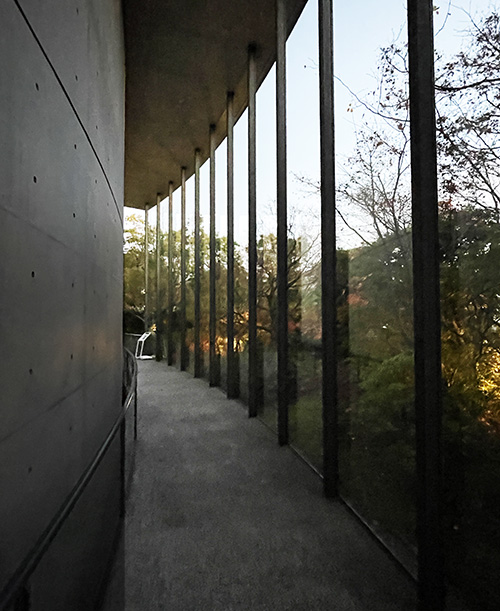
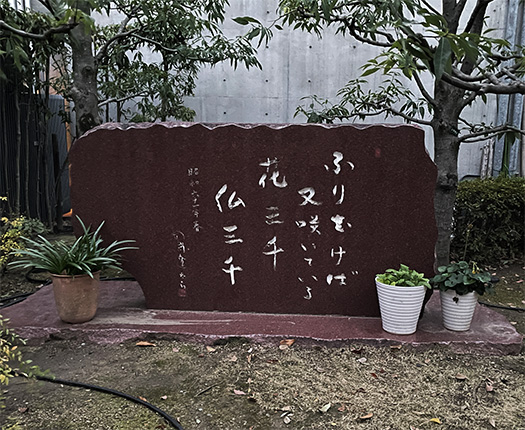
昨日は札幌からの移動日。広島県福山市周辺・尾道などを今日探訪したいのでクルマ移動で早めに、とも思ったのですが、やはり旅の起点感覚の刻印として東大阪の「司馬遼太郎記念館」へ。
わたしは人生時間でいくつかの文学作品を読んで強く影響を受けました。最初にして最大のインパクトは埴谷雄高の「死霊」で高校生の頃。暮夜、深く沈殿して最後はイタズラして呑んでいたウイスキーの酔いにふらつきながら、絶望的なまでの、生きる実質へのはじめての遭遇感を味わっていた。
その後、就職してやや経過した時期にそれまで「3章」までの発表で未完だったこの死霊の続篇「第4章」が発表されて、翌日も会社で仕事なのに、ほぼ徹夜みたいにして一気に読みふけっていた。
わたしの場合、この「純文学」体験が強烈でむしろほかの作家や作品は眼中に入らなくなっていた。
まぁもちろん、世界の名作などはそれまでドストエフスキー「悪霊」「カラマーゾフの兄弟」など読みふけっていたけれど、この埴谷・死霊体験が非常に強烈だった。
その叩き付けられるような体験から徐々に復元して人生を前を向いて歩きたい、と思うように導いてくれたのが司馬遼太郎作品との出会いだった。司馬さんはジャーナリスト出身者らしくわかりやすい文体でさまざまな先人・日本人の生き様を掘り起こしてくれていたと思う。「菜の花の沖」で描かれた高田屋嘉兵衛の生き様には「みごとに生き切った日本人像」が描き出されていて、深く癒された。多少ネタバレだが、最後のくだりあたりで地域の領主である殿様に呼ばれて、ロシア・カムチャツカでの抑留生活時に現地女性との「異性交友」ぶりを語って、殿様を抱腹絶倒させていたというエピソードなど、人間そのものの描写ぶりに魅了されていた。
司馬さん的な人間への目線が、埴谷読書体験からの「人間復元」に相当していたと思っている。
その司馬遼太郎さんのこの記念館は、司馬さんの「書斎」と庭の雰囲気がその人間性を伝えてくれているようで、もっとも好きな「空間」なのですね。安藤忠雄設計の記念館とも響き合うよう。
さてこの起点から、中国地方の瀬戸内海世界の歴史的最重要ポイント、尾道・福山周辺へ、であります。
●お知らせ
拙書「作家と住空間」幻冬舎から電子書籍で発刊
お求めはAmazonで。
https://amzn.asia/d/eUiv9yO
English version⬇
【At the Shiba Ryotaro Memorial Museum, I lingered for a while…】
Another encounter with a space that felt like “I’m back.” A place imbued with the “scent” of an author whose long life was spent alongside his works. …
Yesterday was a travel day from Sapporo. I considered driving early today to explore areas around Fukuyama City in Hiroshima Prefecture and Onomichi, but ultimately decided to visit the “Shimabara Memorial Museum” in Higashi-Osaka as a symbolic starting point for this journey.
Throughout my life, several literary works have deeply influenced me. The first and most impactful was Yutaka Haniya’s “The Dead,” which I read as a high school student. Late at night, deeply submerged, finally playing tricks and drunk on the whiskey I’d been sipping, I staggered, tasting that first encounter with the stark reality of living, a feeling bordering on despair.
Later, some time after starting my job, the long-awaited sequel to this unfinished work—Chapter 4—was published. Even though I had work the next day, I practically stayed up all night, engrossed in reading it in one go.
For me, this “pure literature” experience was so intense that other authors and works barely registered.
Well, of course, I’d already devoured world classics like Dostoevsky’s “The Possessed” and “The Brothers Karamazov,” but this encounter with Haniya and the Dead Souls was exceptionally powerful.
It was my encounter with the works of Ryotaro Shiba that gradually guided me out of that crushing experience, helping me restore myself and want to face life moving forward. Shiba, likely influenced by his background as a journalist, used an accessible style to unearth the lives of various predecessors and Japanese people. The life of Kabe Takada depicted in “Beyond the Fields of Rapeseed Flowers” portrayed a “Japanese figure who lived life to the fullest,” deeply healing me. Spoiler alert: I was captivated by his portrayal of pure humanity, like the episode near the end where he’s summoned by the local feudal lord and recounts his “romantic encounters” with local women during his detention in Russia’s Kamchatka, leaving the lord in stitches.
I believe Shiba’s perspective on humanity corresponded to the “restoration of humanity” I experienced through reading Haniya.
This memorial hall dedicated to Shiba Ryotaro conveys his humanity through the atmosphere of his “study” and garden, making it my favorite “space.” It seems to resonate with the memorial hall designed by Tadao Ando.
Now, from this starting point, we head to the historically crucial area of the Seto Inland Sea in the Chugoku region: the Onomichi and Fukuyama area.
●Notice
My book “Writers and Living Spaces” published as an e-book by Gentosha
Available on Amazon.
共有:

Posted on 12月 20th, 2025 by 三木 奎吾
Filed under: 未分類 | No Comments »