本文へジャンプ

【滅びへの日本的美感 会津「白虎隊」集団自決】


ことしもまたゴールデンウィークは非常事態宣言下。
わたしのような年寄りは行動にそう大差はないのかも知れませんが、
若いみなさんには本当に貴重な時間が失われていますね。
たぶん年寄りの2倍から3倍くらいの感受性の鋭さで
世界を受け止めているみなさんには、こうした制約はかわいそう。
自分がその年代の時にはそれこそカラダまるごと素肌感覚で
この世というものを味わい尽くしていたように思う。
考えてみればああした時間の過ごし方は本当に貴重だったなぁと思える。
しかしこういう過ごし方も、ある意味貴重であるのかも知れない。
そういう環境の中でどう生きていくか、問われるのはそこかも。

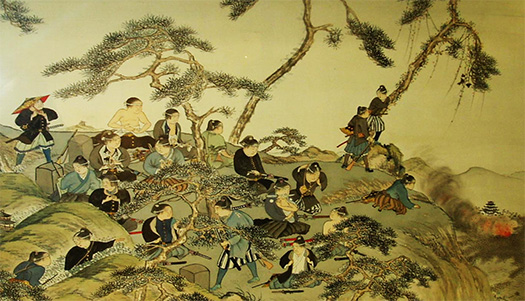
幕末・明治初年、そういった青春の一群像があったとされる。
白虎隊というのは会津藩が組織した武家青少年たちの部隊。
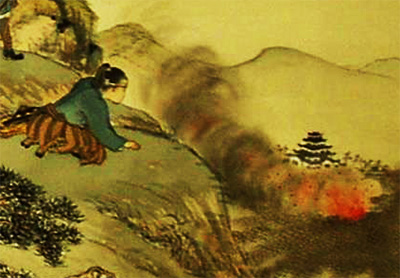
その様子を伝えるメディアというか、一種の報道写真集にも似た
幕末明治初年の絵画を参観していた。
明治初年というのはもうすでに西洋人が日本に住んでいて
写真などもたくさん撮影されていた。開拓に着手した北海道では
そういう「歴史写真」を収めようと大型のカメラを担いで多くの
外国人、日本人が集結していたのだという。
一方で函館五稜郭戦争直前、大きな戦争が起こった会津では
さすがに危険を顧みず写真に収めるようなひとはいなかったようだ。
しかし、日本人は滅び行くものへの愛惜の感情は強い国民性。
わたしは日本人なので他国の国民性との比較はわからないけれど
義経にせよ豊臣にせよ、滅んだものへの怨霊的鎮魂心理が強い。
このあたりが中国歴史ともっとも違うところか。
かの国では易姓革命の結果、徹底的に前王朝は否定される。
そのことが現王朝最大のレゾンデートルなので滅んだものへの追慕は
現王朝としては暴力的に封殺するのだろう。
日本の朝廷の存続に底深い部分で中国人が反応する由縁であるのかも知れない。

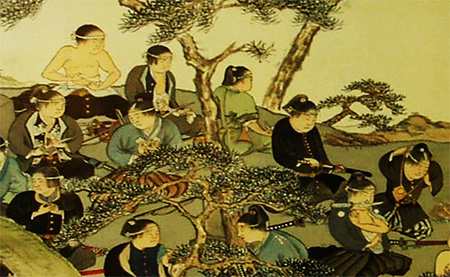
7人とも19人ともいわれる、まだ年端もいかない10代の隊士たちが
集団自決したことは、大きな禍根として民族のこころに残っていった。
会津の人に聞くと、年始の席で藩主主従役の会話で藩のオトナ役のひとが
「殿、そろそろ薩長に対し蜂起して恨みを晴らすべきでは?」
と問いかけ、それに対して殿様役のひとが、
「あいや、まだ時節を待つべきだ」と狂言をうつという故事を聞く。
薩長側にとっても、忘れがたい戦争だったと思われる。
いまだに明治戊辰の戦役での敗者側は靖国には祀られていない。
そういう滅んだ側への心情が、こうした絵画に映し出されている。
会津からは多くの人たちが北海道に渡ってきている。
この戦役で死んだとされていた人物が北海道で生き延びていたという
数奇な人生についての物語もあったといわれる。
しかしそのことについて冗舌に口を開くことはなく、
問われて、自分のいのちはあのときにみんなと散ったと語ったと伝わる。
少年たちの自決前の表情を描いた絵師の心情からか、
描かれる表情にはまことに清冽な印象が伝わってくる。
日本の歴史はこのあとも、自決という悲しいシーンを重ねていく。・・・

English version⬇

[Japanese beauty for destruction Aizu “Byakkotai” group suicide]
This time, Golden Week is under a state of emergency.
Older people like me may not be so different in behavior,
You’re really losing valuable time to young people.
Probably two to three times as sensitive as the elderly
I feel sorry for these restrictions for everyone who accepts the world.
When I was in that age, it felt like my whole body was bare skin
I think I was enjoying the world.
When I think about it, I think that the way I spent that time was really valuable.
However, this way of spending may be valuable in a sense.
That may be the question of how to live in such an environment.

It is said that there was such a group of youth at the end of the Edo period and the first year of the Meiji era.
Byakkotai is a unit of samurai youth organized by the Aizu clan.
It’s like a media that conveys the situation, or a kind of news photo book.
I was visiting the paintings of the first year of the Meiji era at the end of the Edo period.
In the first year of the Meiji era, Westerners already lived in Japan
Many pictures were taken. In Hokkaido, where we started pioneering
Many carry a large camera to capture such “historical photographs”
It is said that foreigners and Japanese were gathered together.
On the other hand, in Aizu, where a big war broke out just before the Battle of Hakodate Goryokaku
It seems that no one was able to take a picture without considering the danger.
However, Japanese people have a strong national character of love for things that perish.
I’m Japanese so I don’t know how to compare it with the national character of other countries
Whether it is Yoshitsune or Toyotomi, he has a strong spiritual requiescats for the dead.
Is this the most different point from Chinese history?
In some countries, the former dynasty is completely denied as a result of the Naqada Revolution.
That is the largest raison d’etre of the Yuan dynasty, so the mourning for the dead
The current dynasty will violently kill it.
It may be the reason why the Chinese react deeply to the survival of the Japanese imperial court.

Teenage soldiers who are said to be 7 or 19 and are still young
The fact that the group decided to commit suicide remained in the heart of the people as a big sword.
When I asked the people in Aizu, at the beginning of the year, a person who played the role of an adult of the clan talked about the lord and servant of the clan.
“Don, should we uprising against Satsumacho and relieve his resentment?”
In response to that, the person who played the role of the lord
I hear the story of depressing Kyogen, saying, “No, I should still wait for the season.”
It seems that it was an unforgettable war for Satsuma.
The loser side of the Meiji Boshin campaign is still not enshrined in Yasukuni.
Such feelings toward the perished side are reflected in these paintings.
Many people from Aizu have come to Hokkaido.
It is said that the person who was supposed to have died in this campaign survived in Hokkaido
It is said that there was also a story about a strange life.
But he never talked about it.
When asked, it is said that his life was scattered with everyone at that time.
Perhaps because of the feelings of the painter who drew the facial expressions of the boys before suicide
The expression drawn conveys a truly neat impression.
The history of Japan will continue to be a sad scene of self-determination.・ ・ ・

【床の間芸術鑑賞からの跳躍〜茶室】


押板から床、そして床の間へと掛け軸絵画鑑賞の空間が
日本人の中で進化していった過程の先に茶室もあるように思える。
押板段階から掛け軸画は中国由来のものが多数派だったとされる。
そういう掛け軸を掛けて鑑賞するのに、背景としての最適化を
美意識の向かう必然的方向性として進めていって
やがて床の間に至ったという流れなのでしょう。
押板と床の間の違いの最たるものは床面が広がったことで、
そこに華道を生む「花を生ける」用途空間も生み出されていった。
中国の掛け軸は詩と絵が一体となっているとされ、
そういう文字の読みくだしと絵画鑑賞がワンセットで
床の間・押板空間に於いて日本人社会に染みわたっていった。
それはなによりも「異国情緒」でもあったように思う。
掛け軸画のテーマは主に中国の土地風景であり、
それを鑑賞するには集団知が必要だったに違いない。
「この絵は中国の名所◎◎の秋の景色で・・・」
「で、都での政争に敗れた◎◎が遙かな都の春の思いを・・・」
というような解説を開陳する先導者の話を聞きながら、
「おお、そういう気持ちを表現するのが芸術というものか」
というように「読みくだし」を共有し合った、という風景が思い浮かぶ。

で、そういう「寄り合い」の場に茶が出されていた。
日本のムラ社会であれば麦焦がしなどがふつうであっただろうけれど、
そういう場で、やがて緑茶というものがふるまわれていった・・・。
お茶の栽培は平安末から鎌倉初期の僧・栄西(1141年ー1215年)が、
中国より持ち帰った種子を佐賀県脊振山に植えたのが始まり。
かれは日本における臨済宗の開祖、建仁寺の開山。
当時のお茶は蒸した茶葉を揉まずに乾燥させた碾茶=てんちゃで、
社交の道具として普及したものとされる。
この国の「文化の伝播」のルートとして宗教が果たした役割がわかり、
そして茶というものがその媒介であったこともわかる。
やがてその喫茶において茶器などの「数寄」が始まっていく。
「この茶碗は、ルソンという日本のはるか南の島で焼かれたもので」
というように各地のムラ共同体での交流が活発化していった・・・。

人口の増加、生産活動の活発化という社会発展があって、
人々の暮らしの中に「余暇」という時間観念が広がっていったときに
まずは宗教的な先達者がいて、その周辺に喫茶習慣が広がり
それが建築の特異な表現として茶室へと昇華していった。
はじめは世界の文化への興味、知識欲なりが初源だったものが、
やがて日本独自の文化現象、建築の特異な発展という結果に繋がる。
どうもそのような想像力が自然な文化理解ではないかと。
そのように考えて行くとき、押板〜床の間と茶室には
ある生活文化的な強い関連性があるのではないかと思われる。
なぜ日本家屋の間取りで「茶の間」という名前が
もっとも娯楽的で家族関係の醸成の場として中核位置を占めたのか、
言語発展の道程としてみても、興味深いと思うところです。

English version⬇

[Leap from Tokonoma Art Appreciation-Tea Room]
From the Oshiita to the floor and between the floors, there is a space for viewing hanging scroll paintings.
It seems that there is a tea room ahead of the process of evolution among the Japanese.
It is said that the majority of hanging scroll paintings were from China from the pressing stage.
Optimizing as a background for viewing with such a hanging scroll
Proceeding as an inevitable direction for aesthetics
Perhaps it was a flow that eventually reached the alcove.
The biggest difference between the Oshiita and the floor is that the floor surface has expanded.
There was also a space for “flower arrangement” to create flower arrangement.
Chinese hanging scrolls are said to be a combination of poetry and painting.
One set of reading such characters and appreciating paintings
It permeated the Japanese society in the alcove and the push board space.
I think it was also “exoticism” above all.
The theme of the hanging scroll painting is mainly the land landscape of China,
It must have required collective wisdom to appreciate it.
“This picture is a famous place in China ◎◎ in the autumn scenery …”
“So, ◎◎ lost the political conflict in the city, but the feelings of spring in the far city …”
While listening to the story of the leader who opens the commentary like
“Oh, is it art to express that feeling?”
I can think of a landscape where we shared such “reading”.

So, tea was served in such a place of “closeness”.
In Japan’s uneven society, it would have been normal to burn wheat, but
Under such circumstances, green tea was eventually served …
Tea was cultivated by Eisai (1141-1215), a monk from the end of the Heian period to the early Kamakura period.
He started planting seeds brought back from China on Mt. Sefuri, Saga Prefecture.
He was the founder of the Rinzai sect in Japan, the founder of Kenninji Temple.
The tea at that time was Tencha, which was made by drying steamed tea leaves without rubbing them.
It is said to have become popular as a social tool.
I understand the role that religion played as the route of “cultural diffusion” in this country.
And we can see that tea was the medium.
Eventually, “Sakuyori” such as tea ware will begin at the coffee shop.
“This bowl was baked on Luzon, an island far south of Japan.”
In this way, exchanges in the Mura community in each region became more active.

With social development such as population growth and active production activities,
When the idea of ​​”leisure” spreads in people’s lives
First of all, there are religious pioneers, and coffee habits spread around them.
It sublimated into a tea room as a peculiar expression of architecture.
At first, the first source was interest in world culture and desire for knowledge.
Eventually, it will lead to the result of Japan’s unique cultural phenomenon and the unique development of architecture.
I wonder if such imagination is a natural understanding of culture.
When thinking that way, between the push plate and the alcove and in the tea room
It seems that there is a strong cultural relevance.
Why is the name “Cha no Ma” in the floor plan of a Japanese house?
Did it occupy the core position as the most entertaining and fostering place for family relationships?
It’s also interesting as a path to language development.

【床の間空間と日本人の芸術鑑賞】


きのう床の間の初源と言われる「押板」について書いた。
この押板のことを考えて行くと、それもまた歴史的に生成された
「建築文化」であることが明らかになってくる。
現代に残っている築後・数百年程度の古民家で押板も
その痕跡が明瞭に発見できるのだから、
こういう空間性はかなり「最近」になって日本人は獲得してきたとわかる。
押板にせよ、その発展形とされる床の間にしても、
その用途が非日常性を持った「芸術鑑賞」の側面があると知れる。
端的には掛け軸を愛でるための空間装置。
日本は東アジア世界で地政学的に永く存在し続けてきた。
中国との文化交流が基本の流れであることは間違いがない。
であるけれど、上の写真のように床面は畳という
日本オリジナルの座文化で構成された空間であり、
また床の間も書院造りという日本的建築文化として生成した。
一方で、そこで「鑑賞」した芸術作品は初源的には中国的な絵画。

写真のような掛け軸絵画を床の間座敷で鑑賞していたことになる。
日本人が芸術にはじめて広く触れたのは、各地に建立された寺院でだろう。
仏教が国の「鎮護国家」思想で広められ、全国に国分寺を建てて
そこに安置された仏像を拝む、というのが民族の芸術初源体験。
飛鳥とか奈良の段階では、芸術とはそういうものだったと思える。
そういう段階から、徐々に古民家空間で芸術鑑賞空間が生まれていく。
土間主体の「土座」建築様式から「床上げ」されるようになり、
その床面として、板がわたされそしてやがて畳になっていく。
そしてそれに似合う「座敷空間」として押板なり床の間が成立する。
さらに掛け軸という運送に便利な芸術媒体が中国からもたらされ
その空間に、民家のなかで芸術作品が掛けられて
座りながら、それを鑑賞して「愛でる」文化が日本で育っていった。
それ以前の日本人にはたとえば土偶などの土俗的シャーマニズム段階があり、
そういう神聖空間もあっただろうと推定できる。
ただそういった作品を芸術として認識していたかどうかはわからない。

中国絵画のモチーフは「山水」が圧倒的に多い。
書と絵画はどちらも筆で表現されたものだから、
ツールの機能性に沿って画題テーマが制約を受けたようにも思える。
筆は濃淡を描くことが秀逸なので、水分の多い山水が画題として
ポピュラーになったのではないかと。
このような画題テーマが初源期の日本民衆レベルの芸術鑑賞だったか。
まぁこのような押板・床の間空間を造作できたのは
ムラ社会の上層だっただろうことはわかるけれど、
そのムラ社会運営の共同性、民主的なその内容を考えると
こういう空間はある種「公共」空間だったことも理解できる。
現代の地域美術館などとも類推できるような空間。・・・
この空間で山水画を愛でながら、どのように芸術が日本で展開していったか、
まったく新しい興味分野に目覚めさせられる思いであります。

English version⬇

[Tokonoma space and Japanese art appreciation]
I wrote about the “push plate”, which is said to be the first source of the alcove yesterday.
Thinking about this push plate, it was also historically generated.
It becomes clear that it is an “architectural culture”.
It is an old folk house that has been built for hundreds of years and remains in the present age.
Because the trace can be clearly found
It can be seen that this kind of spatiality has been acquired by the Japanese quite “recently”.
Whether it’s a push plate or a tokonoma, which is an advanced form of it
It is known that its use has an aspect of “art appreciation” with extraordinary nature.
In short, a space device to love hanging scrolls.
Japan has long existed geopolitically in the East Asian world.
There is no doubt that cultural exchange with China is the basic flow.
However, as shown in the photo above, the floor is called tatami.
It is a space composed of Japanese original sitting culture,
The alcove was also created as a Japanese architectural culture called Shoin-zukuri.
On the other hand, the works of art “appreciated” there are originally Chinese paintings.

It means that he was watching a hanging scroll painting like the one in the photo in the alcove.
The first time Japanese people came into contact with art was probably the temples built in various places.
Buddhism was spread by the idea of ​​”guardian state” of the country, and Kokubunji was built all over the country.
Worshiping the Buddhist statues enshrined there is the first experience of folk art.
At the stage of Asuka and Nara, it seems that art was such a thing.
From such a stage, an art appreciation space is gradually created in the old folk house space.
From the “Tsuchiza” architectural style, which is mainly based on the dirt floor, “floor raising” has come to be done.
As the floor surface, the board was laid and eventually became a tatami mat.
Then, a tokonoma is established as a “zashiki space” that suits it.
In addition, a hanging scroll, an art medium that is convenient for transportation, was brought from China.
A work of art is hung in the private house in that space
A culture of “loving” grew up in Japan while sitting and watching it.
Prior to that, the Japanese had a folk shamanistic stage, such as clay figurines.
It can be inferred that there would have been such a sacred space.
However, I don’t know if such works were recognized as art.

The overwhelming majority of Chinese painting motifs are “sansui.”
Because both calligraphy and painting are expressed with a brush
It seems that the subject theme was constrained along with the functionality of the tool.
Since the brush is excellent at drawing shades, the theme is Sansui, which has a lot of water.
I think it has become popular.
Was such a theme theme an art appreciation at the level of the Japanese people in the early days?
Well, it was possible to create such a space between the push plate and the floor.
I know that it was the upper layer of the uneven society, but
Considering the communality of the uneven social management and its democratic content
It is understandable that such a space was a kind of “public” space.
A space that can be inferred from modern regional art museums.・ ・ ・
How art developed in Japan while admiring landscape paintings in this space
I want to awaken to a completely new field of interest.

【床の間と押板】


床・床の間の起源については諸説あるとされますが、
以下のような理解が一般的とされます。
〜「床の間」の起源は室町時代にさかのぼる。歌会や茶会を催す時、
壁に掛け軸をかけ「押板」と呼ばれる板の上に、美術品をおいて鑑賞した。
今日のような形になったのは桃山時代から江戸時代初期にかけてのこと。
「床の間」は、落掛(おとしがけ)床柱(とこばしら)床框(とこがまち)という
木材で四角く囲まれている。〜ということだけれど、
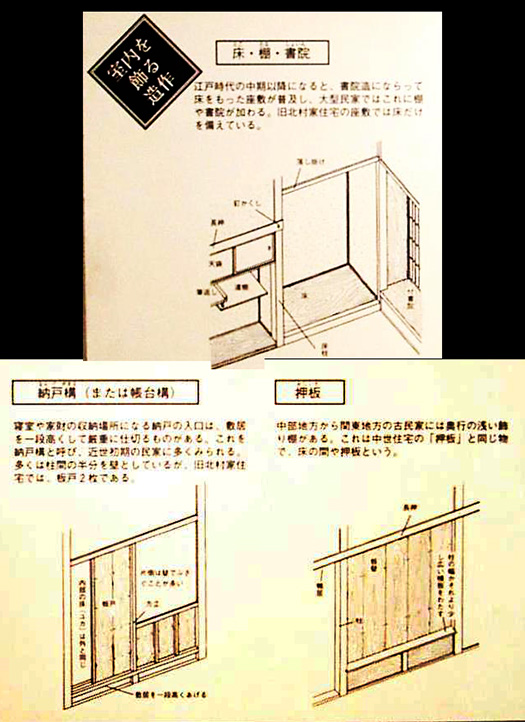
古民家を取材すると、そのルーツとしての「押板」を見ることが多い。
〜厚い板の意で転じて床 (とこ) と同様の場所をさす。近世の床の起源と考えられ
床より奥行が浅くかまちが高い位置に設けられる。13~14世紀に流行した
軸装の宋元画を鑑賞するためにつくられたとされる。〜というもの。


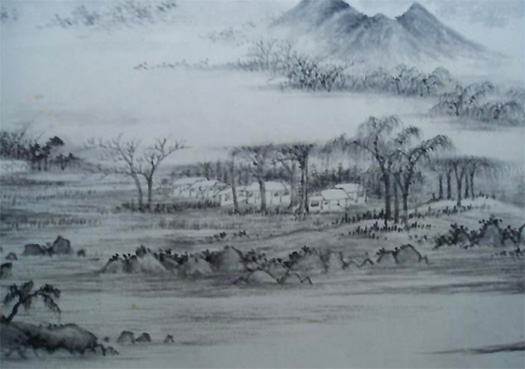
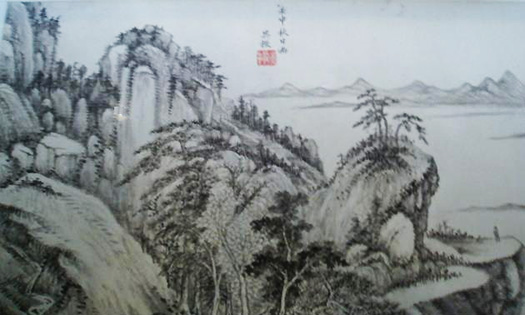
上写真は中国の墨絵ですが、こういう絵柄を日本的空間で楽しむ、
というようなアジア的感受性を涵養してきたのでしょうか?
畳という敷物は日本独特であり、そういう意味では
軸装されたこうした絵画は、最初期「異国情緒」を楽しむものだったかも。
畳敷きの「落ち着く」空間で中国的芸術に親しんだ。
日本人が民衆レベルで芸術を楽しんだ初源であるのかも知れない。
初源においてはこの押板というものが日本人の趣味的空間を
育ててきたと言えるのでしょう。
実物の「押板」空間装置はわたしも最近初めて目にできた次第ですが、
どうしてこういう空間が日本人に好まれ、
またそこから「床の間」というように進化していったのはなぜか、
という問いかけが提起されてきて、非常に興味深いと思っています。

アジア的には絵画と書というものが芸術鑑賞であったとされる。
とくに日本と中国で「軸装」という掛け軸文化が隆盛していった。
中国の場合は、詩と絵画は一体として表現され、
一方日本では、書は書、絵画は絵画だけというスタイルが主流になった。
どちらもここ千年くらいの間に盛んになったのだとされています。
このような紙に描かれた絵画の掛け軸を受け止める空間として
押板は歴史的に誕生していったのでしょう。
そう考えると木製の「数寄心」醸成装置とでも言えるのかも知れない。
逆に言うと、こういう装置が建築的に用意されるほどに
芸術作品が一般に流通していたとも言えるでしょう。
印刷という大量生産が普及する前の一品生産の芸術品で
押板のある家毎に多数の芸術品が蓄積されていたことになる。
掛け軸の数十本くらいはそこそこの家なら持っていて当たり前だったか。
識字率の高さといい、こういう芸術の普及率もまた、
世界有数であったともいえるのだろうか。

わが家はブロック造ということもあり
また、ほとんどが板の間の居室ばかりで、
畳の間は1部屋の寝室だけだったので、床の間はない。
なにか、重大な日本人的なるものの喪失だったのかもと
やや後ろめたい気分にも駆られております。・・・

English version⬇

[Tokonoma and Oshiita]
There are various theories about the origin between floors,
The following understanding is common.
~ The origin of “Tokonoma” dates back to the Muromachi period. When holding a song or tea ceremony
I hung a hanging scroll on the wall and placed the artwork on a board called “Oshiita” for viewing.
It was from the Momoyama period to the early Edo period that it became like today.
“Tokonoma” is called “Otoshigake” floor pillar (Tokobashira) floor stile (Tokogamachi).
It is surrounded by a square of wood. But
When we interview an old folk house, we often see the “Oshiita” as its roots.
~ Turns to mean a thick board and refers to the same place as the floor. Considered to be the origin of modern floors
It is installed at a position where the depth is shallower than the floor and the stile is high. Popular in the 13th-14th centuries
It is said that it was made to appreciate the Song dynasty painting of the shaft. ~something like.

The above picture is a Chinese sumi-e, but you can enjoy this kind of pattern in a Japanese space.
Have you cultivated such Asian sensitivities?
The rug called tatami is unique to Japan, and in that sense
These paintings on the axis may have enjoyed the “exotic atmosphere” at the beginning.
I became familiar with Chinese art in the “calm” space of tatami mats.
It may be the first source of Japanese enjoying art at the people’s level.
At the beginning, this push plate is a Japanese hobby space.
It can be said that it has been raised.
The real “push plate” space device was the first time I saw it recently,
Why are Japanese people like this kind of space?
Why did it evolve from there to “Tokonoma”?
I think it is very interesting because the question has been raised.

In Asia, painting and calligraphy are said to have been art appreciation.
Especially in Japan and China, the hanging scroll culture called “axle” became popular.
In the case of China, poetry and painting are expressed as one,
On the other hand, in Japan, the style of calligraphy is calligraphy and painting is only painting.
Both are said to have flourished in the last millennium.
As a space to receive the hanging scroll of paintings drawn on such paper
The push plate may have been born historically.
With that in mind, it may be said that it is a wooden “several spirit” cultivating device.
To put it the other way around, such equipment is architecturally prepared.
It can be said that works of art were in circulation.
It is a one-piece work of art before mass production of printing became widespread.
A large number of works of art were accumulated in each house with a push plate.
Was it natural to have dozens of hanging scrolls in a decent house?
It is said that the literacy rate is high, and the penetration rate of such art is also
Is it one of the best in the world?

Because my house is made of blocks
Also, most of them are living rooms between boards,
There was only one bedroom between the tatami mats, so there was no alcove.
Maybe it was a serious loss of Japanese things.
I feel like I want to be a little behind.・ ・ ・

【捨てられた「廃屋」を見ると供養したくなる・・・】


いつの頃からか、定かではないのですが、
立派に建てられた住宅を取材するのが主な仕事なのに、
住宅が崩壊した雰囲気にも強く惹かれるようになっています。
住宅を取材していると、その建てられようとか選択の要因とかを聞き取る。
注文住宅の場合、間取りにせよデザインにせよ必然性がある。
そのリアリティを感受し、誌面に表現することでこれから建てるひとに
考えるべきテーマとか、ポイントをクローズアップさせるのですね。
しかしそういう聞き取りの反語として「どう崩壊するか」ということに
建物それ自身から、いわば叫び声として響いてくるものがあるのです。
住宅の主役はあくまでも住む人でありその生活。
それは限りなく「前向き」であることが前提だけれど、
それが最終的に破綻するときに、ある種の悲鳴を上げるのだと思うのです。

考えてみれば、古民家取材に強く惹かれるのも、
そういう「崩壊圧力」をしのぎきってきた住宅建築へのリスペクトが
大きな要因なのだろうと思われる。
時間をはるかに超えて住む人と共生してきたパワーが感じられて
その空気感が自然にこちら側に伝わってくる。
数百年という時間積層は、こちら側に襟を正させるものがある。
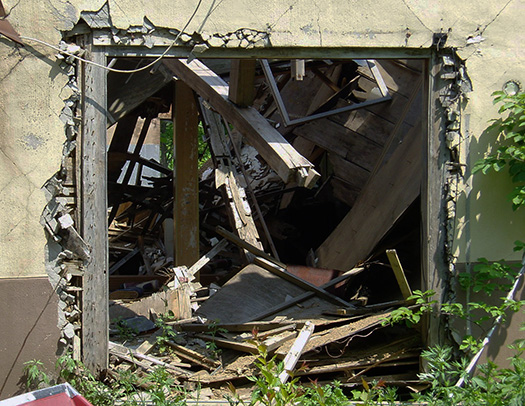
一方で、写真のような廃屋にはうち捨てられた迫力のようなものがある。
さまざまな経緯で廃屋はその境遇を甘受するのだけれど、
まことに正直になにごとかを語ってくれていると感じる。
ふつうの住宅取材と同様の「対し方」でいるとさまざまに声が聞こえてくる。
たまたまこの廃屋では居間と思われる部分の開口部建材が消滅している。
大型の開口部なので、その大窓は他での利用を考えて
ここから引き剥がして運んでいったものか。
窓を嵌め込んだ周囲のモルタル壁面が破壊されている様子が生々しい。
そして室内の横架材が断面も荒々しく破断した状況を見せている。
積雪寒冷の北海道内での住宅なので、冬期には積雪荷重が屋根にかかり、
結果として人間の住まない住宅では耐荷重に耐えきれずに
梁が破断したものだろうか。
屋根の構造面体が斜めに崩落したようにも見える。

現代はこうした空き家でも解体費用を建て主が負担する必要がある。
多くは経済的困難も抱えて維持することができなくなって
こういう事態に立ち至ったとも推測できる。
廃屋を見かける度にこころのなかで合掌しながら、
一種の供養のような気分で向き合っている自分がおります。・・・

English version⬇

[When you see the abandoned “abandoned house”, you want to make a memorial service …]
I’m not sure when
My main job is to cover well-built houses,
I am also strongly attracted to the atmosphere of the collapsed houses.
When I’m interviewing a house, I hear about whether it’s built or the factors that make it a choice.
In the case of a custom-built house, it is inevitable whether it is a floor plan or a design.
For those who are going to build by feeling the reality and expressing it in the magazine
It’s a theme that you should think about, and the points are highlighted.
However, as an irony to such an interview, “how it collapses”
From the building itself, there is something that echoes as a scream.
The protagonist of a house is the person who lives and its life.
It’s supposed to be infinitely “positive”,
I think it will scream somehow when it finally collapses.

If you think about it, you may be strongly attracted to the coverage of old folk houses.
Respect for residential construction that has overcome such “collapse pressure”
It seems to be a big factor.
Feeling the power of coexisting with people who live far beyond time
The feeling of air is naturally transmitted to this side.
The time stacking of hundreds of years has something to correct the collar on this side.
On the other hand, in an abandoned house like the one in the photo, there is something like abandoned power.
Abandoned houses accept the situation for various reasons, but
I feel that he is telling me something honestly.
You can hear various voices when you use the same “how to deal with” as in ordinary housing coverage.
It happened that in this abandoned house, the building materials for the opening of the part that seems to be the living room have disappeared.
Since it is a large opening, the large window can be used elsewhere.
Was it something that was torn off from here and carried?
It is vivid that the surrounding mortar wall surface where the window is fitted is destroyed.
And the cross section of the horizontal member in the room is also roughly broken.
Since it is a house in Hokkaido where it is cold and snowy, the snow load is applied to the roof in winter.
As a result, in a house where humans do not live, it cannot withstand the load capacity.
Is the beam broken?
It looks like the structural face of the roof has collapsed diagonally.

Nowadays, even such vacant houses have to be dismantled by the owner.
Many have financial difficulties and can no longer maintain
It can be inferred that such a situation was reached.
Every time I see an abandoned house
I am facing myself as if it were a kind of memorial service.・ ・ ・

【GW間近・北海道内旅情。十勝らしいランドマーク建築】


さて今週が終わればゴールデンウィークがもう間近。
旅情にも誘われる時期ですが、GW迫るもコロナ禍・視界不良といったところ。
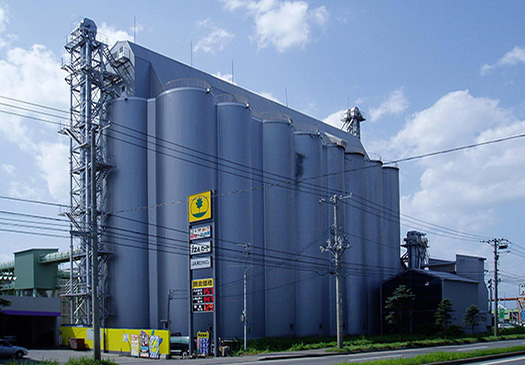
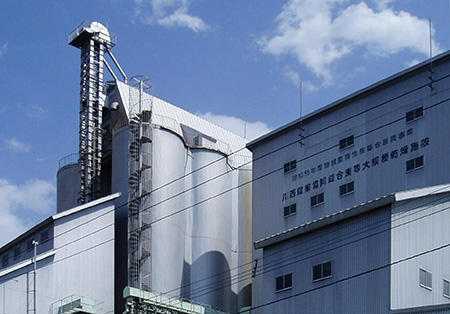
写真は北海道十勝地方の「地域景観」ともいえるモダンアート。
・・・ではありません、帯広市の西・川西町農協の「麦等大規模乾燥施設」。
名前の付け方もそろそろアイデアを捻ってみたらどうかと思うのですが、
滝川方面から帯広・釧路方面に向かう国道38号線沿いで
帯広に近づいてくるとこの建物が国道脇に鎮座していて、
まことに「十勝らしい」ランドマークを見せてくれているのであります。
わたしの大好きな建物で、鉄板の外壁が林立する円筒形を被覆している。
農産物を乾燥する大規模施設という使用目的に
合理的な姿カタチそのままなのでありますが、
その目的自体がまさに地域の必然性そのものを正直に表出していて、
そのカタチも、目的への適合だけに絞り込んだ形状です。
国道沿いに建っていることも、それも周辺農家からの搬入利便性に
非常に的確に適っていることがあきらかであります。

北海道の地域景観として「サイロ」というものが親しまれていた。
家畜のための飼料を貯蔵させる建物として
北海道中で建てられ続けたけれど、イマドキはほとんど目に付かなくなった。
たまに存続していても、目的には利用されないでランドマーク化している。
そういった「地域景観」としてこの建物は群を抜いている。
いかにもデザインしました、という建築ではないのに
その形状の奇抜さにおいて群を抜いていると思います。
北海道内ではこうした農協施設のコメ貯蔵施設とか、
明瞭な食糧貯蔵施設というのが多数目に付く。

外壁素材はガルバリウム鋼板とおぼしい。
わが家は1991年建築で30年経過ですが、外壁一部にこの素材を使っている。
建築家からこの素材と本レンガとの対比的外観を提案されたとき、
その出会いの意外さに目を見張る思いをさせられた。
わが家は外張り断熱ですが、本体構造がコンクリートブロックでもあり、
外皮は比較的自由に選択可能だったこともありこの選択は楽しかった。
人によっては鉄板は屋根を覆う素材であって、壁面などは外道だ、
みたいな言われ方もあったように記憶していますが、
「北海道らしい」ということを意図的に考えると、
このような素材選択も強い必然性を感じさせられた。いいじゃん。
そういった経験もあって、この十勝の景観美に愛情を感じる。
ほぼメンテフリーとは言われてきたけれど、
さて、今後どうなっていくか、わが家のことも考えて密かに
見る度に仔細に様子を観察させていただいてもいます。・・・

English version⬇

[Golden Week, Hokkaido travel information. Tokachi-like landmark architecture]
By the way, Golden Week is just around the corner when this week is over.
It’s time to be invited to travel, but even though GW is approaching, there are corona sickness and poor visibility.
The photo is a modern art that can be said to be the “regional landscape” of the Tokachi region of Hokkaido.
It is not a “large-scale drying facility for wheat, etc.” at the Kawanishicho Agricultural Cooperative in the west of Obihiro City.
I think it’s time to come up with an idea for how to name it.
Along National Route 38 from Takikawa to Obihiro / Kushiro
As I approached Obihiro, this building was settled on the side of the national highway.
It really shows us a “Tokachi-like” landmark.
In my favorite building, the outer wall of the iron plate covers a forest of cylindrical shapes.
For the purpose of use as a large-scale facility for drying agricultural products
Although it is a rational figure as it is,
The purpose itself honestly expresses the inevitability of the region itself.
The shape is also narrowed down to suit the purpose.
It is built along the national highway, which makes it convenient to bring in from neighboring farmers.
It is clear that it is very suitable.

“Silo” was popular as a regional landscape of Hokkaido.
As a building to store feed for livestock
It continued to be built all over Hokkaido, but Imadoki was almost invisible.
Even if it survives occasionally, it is not used for the purpose and has become a landmark.
This building stands out as such a “regional landscape”.
Even though it’s not an architecture that I really designed
I think it is by far the best in its shape.
In Hokkaido, rice storage facilities of such agricultural cooperative facilities,
Many clear food storage facilities are noticeable.

The outer wall material seems to be galvalume steel plate.
Our house was built in 1991 and is 30 years old, but we use this material for a part of the outer wall.
When the architect suggested a contrasting appearance of this material and this brick,
The surprise of the encounter made me amazed.
Our house is externally insulated, but the main body structure is also a concrete block,
This choice was fun because the outer skin was relatively free to choose.
For some people, the iron plate is the material that covers the roof, and the walls are the outer roads.
I remember that there was a way of saying that,
If you intentionally think that it is “Hokkaido-like”,
This kind of material selection also made me feel a strong necessity. It’s okay.
With that kind of experience, I feel love for the beauty of Tokachi’s scenery.
It’s been said that it’s almost maintenance-free,
Well, secretly thinking about my home, what will happen in the future
Every time I see it, I observe the situation in detail.・ ・ ・

【経済基盤技術は民主国家でと日米共同記者会見】


朝日新聞WEB 4/17(土) 18:38発信で以下のような記事。
日米首脳会談の経済面での協議結果について触れられています。

「技術は専制国家ではなく米国と日本が共有しているような
民主国家による規範によって管理されなければならない」
■ファーウェイの存在感増す5GやAIで
バイデン米大統領は会談後の共同記者会見で今回の枠組みの意義を強調した。
高速通信規格5Gや人工知能AIなど民生・軍事両面で重要な先端分野では、
中国の存在感が急速に増しており、日米で対抗する狙いだ。
具体策の一つとして5Gや次世代の通信規格6Gの展開もにらみ、
通信分野研究開発に米国が25億ドル(2700億円)日本が20億ドル(2160億円)を
投資するとした。共同声明には通信網について「信頼に足る事業者に
依拠することの重要性について一致」と明記。米国が強く警戒する
中国の通信機器大手・華為ファーウェイの排除が念頭にある。米国には華為に
匹敵するような基地局メーカーがなく日本政府関係者によると、
NECと富士通が華為に代わる存在として期待されている。〜以上要旨抜粋。

今回の日米首脳会談は「ポストコロナ時代の国際関係の再起動」。
これ以降、世界の大枠の関係構図が明確になり世界政治の流れが決まってくる。
アメリカは「パートナー」として同盟国・日本やEUを名指してきた。
政治軍事的な内容についてはブログの本旨ではないので、やはり経済面。
「日本政府関係者」の情報リークに日本企業の名が出ること自体、
バイデン政権の今回会談でのホンネ部分を表現していると思われる。
こういうアメリカ側の対応に対して、日本政府側はどのように対応したか、は
今後の社会の展開で明らかになっていくでしょうが、
具体的な「開発投資」金額が日米でほぼ等分配分されている。
この45億ドル約5000億円という金額で政府支出が行われ、
アメリカ政府も出資するとなれば、最高機密的な扱いで開発が進むことになる。
わたし的には日米構造協議の故事が思い起こされる情勢だと思える。
1989年7月の日米首脳会談でブッシュ大統領と宇野首相によって合意された。
あの当時は日本からの輸出攻勢でアメリカの財政赤字が拡大し
経済問題からのアメリカの対日戦争提起に等しいと思われた。
その後日本は経済的に長期的停滞を余儀なくされることになったけれど、
今回は、中国という巨大化した経済力をどうやって抑え込むかに
アメリカが同盟重視という戦略の元、日本に着目してきたという流れ。
前回の構造協議過程の一側面として次世代の基盤的技術とされた
パソコンOSについて日本は「トロン」というソフトを開発していたけれど、
それをパソコンに搭載することを断念させられた経緯があった。
その後アメリカPC産業発展はすさまじくWindows95によって優位が決定的に。
そういう技術核心が現在では半導体の開発競争になってきている。
産業インフラ基盤として半導体の重要性は格段に高まってきて
いまは半導体工場の火災事故などで世界的な産業逼迫を招来してもいる。
そういう基盤技術を保持する日本企業にとってはビジネスチャンス。
日米構造協議で封印させられた発展方向に30年ぶりにGOサインが出たともいえる。
基本はIT技術関連ですが、かなり広範な好影響が予測できる。

今回の日米首脳会談の結果は、今後の経済動向にとって
かなり重要な結節点になると思われます。
すでにコロナ禍での巨大財政支出でアメリカの住宅需要が巨大化し、
ウッドショックという経済変動も生み出されてきている。
経済の大きなうねりが世界規模で生じつつあると思えますね。

English version⬇

[Economic basic technology in a democratic nation and Japan-US joint press conference]
Asahi Shimbun WEB 4/17 (Sat) 18:38 The following article was sent.
It touches on the results of the economic discussions at the Japan-US Summit Meeting.
“Technology is shared by the United States and Japan, not a tyranny.
Must be controlled by norms by democracies. ”

■ With 5G and AI that increase Huawei’s presence
US President Joe Biden emphasized the significance of this framework at a joint press conference after the meeting.
In advanced fields that are important in both civilian and military fields, such as high-speed communication standard 5G and artificial intelligence AI,
China’s presence is growing rapidly, and the aim is to compete in Japan and the United States.
As one of the concrete measures, considering the development of 5G and the next-generation communication standard 6G,
US $ 2.5 billion (¥ 270 billion) Japan $ 2 billion (¥ 216 billion) for R & D in the telecommunications field
I decided to invest. The joint statement stated that the communication network was “to be a reliable operator.
We agree on the importance of relying on it. ” The United States is vigilant
Huawei, a major Chinese telecommunications equipment company, is being eliminated. Huawei in the United States
There is no comparable base station maker, according to Japanese government officials
NEC and Fujitsu are expected to replace Huawei. ~ Excerpt from the above abstract.

The Japan-US summit meeting was “Restarting International Relations in the Post-Corona Era.”
After that, the general composition of the relationship in the world will be clarified and the flow of world politics will be decided.
The United States has named allies Japan and the EU as “partners.”
Political and military content is not the main point of the blog, so it is still economical.
The fact that the name of a Japanese company appears in the information leak of “Japanese government officials” itself
It seems to represent the real part of the Biden administration’s talks.
How did the Japanese government respond to this kind of response from the American side?
It will become clear in the future development of society,
The specific amount of “development investment” is almost evenly distributed between Japan and the United States.
Government expenditure was made with this amount of 4.5 billion dollars about 500 billion yen,
If the US government also invests, development will proceed with top secret treatment.
Personally, it seems that the situation reminds me of the story of the Japan-US structural talks.
It was agreed by President Bush and Prime Minister Uno at the Japan-US Summit Meeting in July 1989.
At that time, the US budget deficit expanded due to the export offensive from Japan.
It seemed to be equivalent to raising the US war against Japan from economic problems.
After that, Japan was forced to stagnate economically for a long time,
This time, how to suppress the huge economic power of China
The trend is that the United States has focused on Japan under the strategy of emphasizing alliances.
As one aspect of the previous structural discussion process, it was regarded as the next-generation basic technology.
About PC OS Japan was developing software called “Tron”,
There was a history of being abandoned to install it in a personal computer.
After that, the development of the American PC industry was tremendously dominated by Windows 95.
Such technological core is now becoming a competition for semiconductor development.
The importance of semiconductors as an industrial infrastructure base has increased dramatically.
Nowadays, a fire accident at a semiconductor factory is causing a global industrial crisis.
This is a business opportunity for Japanese companies that possess such basic technology.
It can be said that the GO sign was issued for the first time in 30 years in the direction of development that was sealed in the Japan-US structural talks.
The basics are related to IT technology, but a fairly wide range of positive impacts can be predicted.

The results of this Japan-US summit meeting will be relevant to future economic trends.
It seems to be a fairly important nodal point.
U.S. housing demand has already become huge due to huge fiscal spending in the Corona
Economic fluctuations called wood shocks have also been created.

【早朝、めかし込んだオシドリ君と対話】


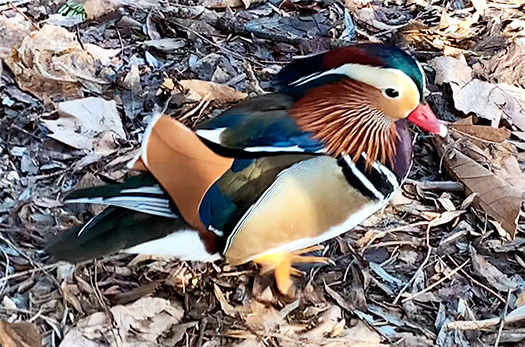
Youtubeに動画アップしました。かわいいオシドリ。

動物たちの世界では繁殖期を迎えると、オスの方が特徴的になる。
とくにこのオシドリの場合、メスは普段着の色合いが深まる程度だけれど、
オスの方は極彩色に衣替えしてまことにキッチュに美しい。
北国北海道ではまだラブシーズンには間があるのかも知れませんが、
そろそろつがいになろうかという時期。
オシドリなので、その夫婦仲の良さには毎年微笑まされる(笑)。
いのちの繁栄ぶりはまことに目出度いばかり。

で、札幌円山公園の池では雪融け以降、
かなりの個体が確認できるようになって、
どうも「餌付け」する人もいるようで、近寄っていっても
逆にもっと近づいてくれるような個体も散見される。
こういう人間慣れした個体はふつうはメスの方が目に付くのですが、
一昨日、近づいてきたのはごらんのオスくんでした。
群を単独で離れてわたしの足下方面に2本足歩行してくる。
あ、鳥ですから足は2本しかないので人類と同様。
わたしと目線を交わしたりはしなかったけれど、
その目つきは十分以上にわたしの存在を意識していることが伝わってくる。
たぶん「おい、エサくれるんだろ、早くくれや」
というようなコミュニケーションを感じさせられる。
わたしは、自然動物への餌付け習慣は持っていないし、
その生態系破壊行為はやはりやめるべきだと考えてはいます。
しかし、こういう「対話」機会はまことにうれしいのも事実。
たぶん狼やネコ科小動物などと人類の最初の出会いも餌付けだろうから
イヌやネコとの人類の関係まで考えれば、
こうしたオシドリと人類の間で餌付けを介して親密になることも
けっして否定はできないかも知れませんね。
そうでなくてもカラスたちは人類の食べ残した残飯を貴重な
「自然からの贈り物」として類としてながく受益してもきたのでしょうし、
あれはダメ、これはいいというようにも言い切れない。
う〜む、哲学的迷宮入りみたいですね。

現実はそんなことを考えるいとまもなく、
1分少々の時間、オシドリのかれが近づいてきて、
「ふん、なんもくれないのかよ」という残念感を漂わせ、
尾ハネを細かく振りながら、
「あ、こいつダメだから」と仲間の元に引き上げていった次第。
期待に添えなかった人類の代表として、
感謝の念は十分に感じつつ、自然派エコ理念から
「これでいいのだ」と天才バカボンのパパ状態をキープしていました。
・・・でも、たぶんかれはもうわたしには近づいてこないでしょうね(笑)。
一期一会、楽しかったです。

English version⬇

[Dialogue with the mandarin duck who was confused early in the morning]
In the animal world, males become more distinctive during the breeding season.
Especially in the case of this mandarin duck, the color of the female wears deeper, but
The males are really beautiful in kitsch by changing their clothes to vivid colors.
There may still be a gap in the love season in northern Hokkaido, but
It’s time to get together.
Being a mandarin duck, the good friendship between the couple makes me smile every year (laughs).
The prosperity of life is truly remarkable.

So, at the pond in Sapporo Maruyama Park, after the snow melted,
It became possible to confirm a considerable number of individuals,
It seems that some people “feed”, even if they are approaching
On the contrary, there are some individuals who come closer.
Females are usually more noticeable in these human-accustomed individuals.
The day before yesterday, the one who approached me was the male.
Leaving the group alone, I walk on two legs on the lower surface of my foot.
Oh, because it’s a bird, it has only two legs, so it’s the same as humankind.
I didn’t look at me, but
The look conveys that I am more aware of my existence.
Maybe “Hey, give me food, give me fast”
You can feel the communication like that.
I don’t have a habit of feeding natural animals
I think that the act of destroying the ecosystem should be stopped.
However, it is also true that such “dialogue” opportunities are really nice.
Perhaps the first encounters of humans with wolves and small cats will also feed.
Considering the relationship between humans and dogs and cats,
It can be a little intimate between these mandarin ducks and humankind.
You may never be able to deny it.
Even if that is not the case, the crows will precious the leftover food left over by humankind.
It may have been a long-term benefit as a “gift from nature”.
That’s no good, I can’t say this is good.
Hmmm, it looks like you’re in a philosophical labyrinth.

The reality is shortly after thinking about that
For a little over a minute, the mandarin duck approached me,
With a regret that “Hmm, can’t you give me anything?”
While shaking the tail splash finely,
As soon as I pulled it up to my friends, “Oh, this is no good.”
As a representative of humankind who did not meet expectations
While feeling full of gratitude, from the natural eco-idea
“This is fine,” he kept the daddy state of the genius Bakabon.
… But maybe he won’t come close to me anymore (laughs).
It was fun once in a while.

【都市・町家の家づくり(後)/日本人のいい家㉘-4】


ムラ共同体での家づくりと、都市部町家の家づくりの相違ポイントを
残っている普請帳記録から探ってみております。町家の後編。

歴史とは端的に経済支配によって権力が成立し続けてきた。
最初期権力は田畑の支配がその基本的性格だったのだろうと思います。
定住と農耕・牧畜などの産業支配が権力発生の動因。
そういう段階から徐々に商業・流通といった領域が勃興した。
日本史では平氏政権は宋銭の導入で重商主義的政権だったと言われる。
ただ、重商主義的政権は安定せず長続きしないことから
徳川政権でも初期はかなり手厚い商業重視政策というか、
江戸の都市発展という公共事業を盛んに行ってきた。しかしその後
幕府財政の逼迫と共に、ひたすら重農的な管理強化に向かっていった。
信長政権は「楽市楽座」というカタチでそれまでの寺社から
利権を奪取する重商主義政策を取り、秀吉政権もそれを継承発展させた。
信長が中世的桎梏、比叡山寺社権力を焼き討ちしたのには
商業政策の大革新を果たすため中世商業利権勢力である寺社影響力一掃が
その大きな目的だったのだと思います。
現代にまで「寺銭」という言葉が残るようにこれは根深いものだった。
信長は将軍を擁立して京都を制圧した実績への報償として
「副将軍」職として処遇されようとしたとき、それを辞退して
国際商業都市・堺に代官を置いて支配する許可に代えさせていますね。
かれの意思が既成権力機構ポストではなくビジネス的実利にあった証明。
おっと、前振り長すぎ(笑)。

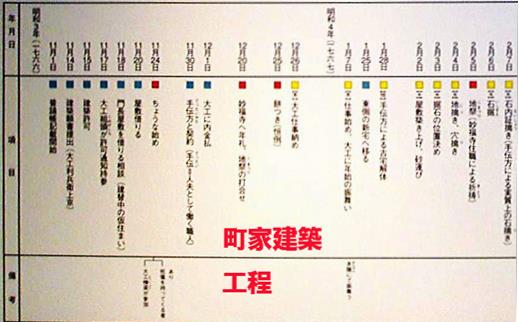
さて、きのうからの続きで大阪府柏原市の三田家住宅の普請帳から。
いまから255年ほど前の町家建築ですが、ムラの共同体的家づくりと違って
貨幣経済の浸透が当然の前提になって建築は現代とそう変わらない形態。
建て替え工事だったようで仮住まいへの家移りから普請帳に記載。
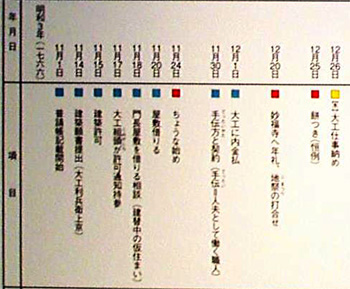
1766年11月20日には仮住まいの屋敷を借上。
11月24日に「ちょうな始め」記載。これは家の建築に際し大工が
仕事を始める日に行う儀礼とされている。着工ですね。
11月30日に手伝方(人夫)と契約。翌12月1日に大工へ内金払い。
そこから年末年始の休暇を挟んで工事が続いている。
基礎工事が終わっていないので仕口手刻みなど
あとは組み上げるだけ段階までの構造各部材仕上げが進行と推定。
1月25日に「新宅へ移る」とあるので、主屋以外の建物が先行し
そちらに仮住まい先を変えたかと推測される。
1月28日に「古宅解体」されて2月2日に「屋敷焚き上げ」とある。
ムラの建築では「古材」をかなり使って節約に努めます、みたいな
建築確認申請書類の記述があったけれど、こちらでは
材料はまったく更新されて新材ばかりで建てられたようです。
翌3日に礎石の場所決めを行い地突き・穴突きという基礎工事。
2月5日「地祭」という地鎮祭とおぼしき儀礼が行われる。
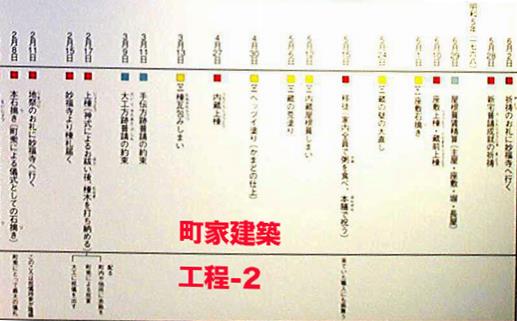
で12日後2月17日上棟式が行われているので推測通り各部材づくりが先行し、
この日に木造軸組架構が組み上げられたと思われる。お寺からは棟札到着。
その後20日ほどで「大工方跡普請」「手伝い方跡普請」の約束を交わしている。
これは先の「内金」との対応で中間金もしくは精算金規定、支払方法確定、
と言うような意味合いの記述かと思われる。
その後も屋根葺きや別棟の蔵の建築造作などが進行し4月30日には
「へっつい(かまど)塗り」とあって食事支度も可能になって
5月15日に移住となっている。「家族全員で粥を食べ本膳で祝う」。
そして5月28日に新宅普請成就の祈祷、6月2日無事完了の報告に社寺訪問。
おおむね7ヶ月の建て替え新築工事が終了となっている。

都市部の住宅では250年以上前から現代の家づくりとほぼ同様工程で
建築確認申請プロセスもあって、契約関係も
現代と似通った家づくりが進行していた実態が理解出来ますね。
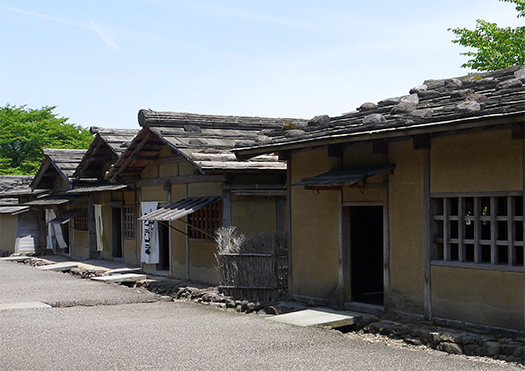
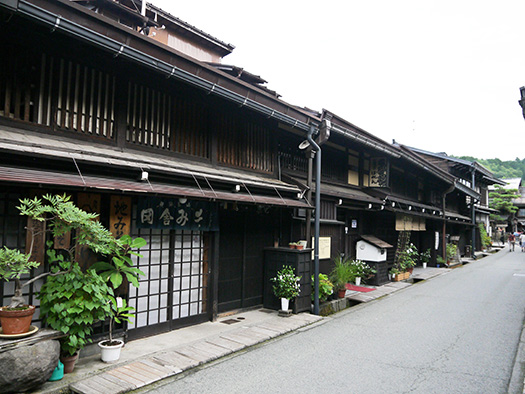
<写真は越前一乗谷復元町家。本文とは無関係>

English version⬇

[Urban housing Machiya house building (after) / Japanese good house ㉘-4]
Differences between building a house in the Mura community and building a house in an urban townhouse
I am searching from the remaining records of the general contract book. The second part of Machiya.
In history, power has continued to be established by economic control.
I think that the rule of Tabata was the basic character of the earliest power.
Settlement and industrial control such as farming and livestock farming are the motives for the generation of power.
From that stage, areas such as commerce and distribution gradually emerged.
In Japanese history, the Taira administration is said to have been a mercantilist administration with the introduction of the Southern Song dynasty.
However, because the mercantilist government is not stable and does not last long.
Even in the Tokugawa administration, it is a fairly generous commercial-oriented policy at the beginning,
We have been actively engaged in public works projects called urban development in Edo. But then
Along with the tight financial situation of the Shogunate government, we headed toward strengthening Physiocratic management.
The Nobunaga administration took the form of “Rakuichi Rakuza” from the temples and shrines up to that point.
It took a mercantilist policy to seize interests, and the Hideyoshi administration inherited and developed it.
Nobunaga burned down the power of the medieval siege of Mount Hiei
Elimination of the influence of temples and shrines, which are medieval commercial concessions, to achieve a major innovation in commercial policy
I think that was the big purpose.
This was so deep-rooted that the word “temple money” remained until today.
Nobunaga was in return for his achievements in conquering Kyoto by supporting the shogun.
When he tried to be treated as a “deputy general”, he declined it
He has a substitute for permission to control Sakai, an international commercial city.
Proof that his intention was in business interest, not in the established power organization post.
Oops, it’s too long to swing forward (laughs).

By the way, continuing from yesterday, from the general contract book of the Mita family residence in Kashiwara City, Osaka Prefecture.
It is a townhouse building about 255 years ago, but unlike Mura’s community house building.
Architecture is a form that is not so different from modern times, with the permeation of the monetary economy as a natural premise.
It seems that it was a rebuilding work, so it was recorded in the general contract book after moving to a temporary residence.
On November 20, 1766, he rented a temporary residence.
Described as “Chona Hajime” on November 24th. This is a carpenter when building a house
It is said to be a ritual performed on the day of starting work. It’s the start of construction.
Contracted with a helper (labor) on November 30th. The next day, December 1st, the carpenter was paid a deposit.
From there, construction continues with the year-end and New Year holidays in between.
Since the foundation work has not been completed, hand-carved joints, etc.
After that, it is estimated that the finishing of each structural member up to the stage of assembling is in progress.
Since it says “to move to a new house” on January 25, buildings other than the main building will precede.
It is presumed that the temporary residence was changed there.
It is said that the old house was dismantled on January 28th and that the mansion was fired on February 2nd.
In Mura’s architecture, we try to save money by using a lot of “old materials”.
There was a description of the building confirmation application documents, but here
It seems that the materials have been completely renewed and built with only new materials.
The next day, the 3rd, the location of the cornerstone was decided, and the foundation work called ground thrusting and hole thrusting.
On February 5th, a ritual called “jichinsai” will be held.
Twelve days later, on February 17, the topping-out ceremony was held, so as expected, each member was made first.
It seems that the wooden frame frame was assembled on this day. The building tag arrived from the temple.
About 20 days after that, he made a promise of “carpenter traces” and “helping traces”.
This is in correspondence with the previous “inside payment”, intermediate payment or settlement payment regulation, payment method confirmed,
It seems that it is a description of the meaning.
After that, roofing and architectural construction of the annex warehouse continued to progress, and on April 30th.
It is possible to prepare meals because it says “Kamado coating”.
It has been relocated on May 15th. “The whole family eats porridge and celebrates with Honzen.”
Then, on May 28, he prayed for the fulfillment of the new house, and on June 2, he visited the shrines and temples to report the successful completion.
Approximately 7 months of rebuilding and new construction work has been completed.

For urban housing, the process is almost the same as modern home building for more than 250 years.
There is also a building confirmation application process, and there is also a contractual relationship
You can understand the fact that house building similar to the present age was in progress.

【都市・町家の家づくり(前)/日本人のいい家㉘-3】


さて家づくりの実相を古民家に探るテーマ。
本日は農家住宅と並んでポピュラーであった「町家」建築です。
農家の場合は人を包み込む大きな繭のような「地域共同体・ムラ社会」という
法人としての性格の強いなかでの相互扶助が基盤建築力になっていた。
一方で江戸期は江戸や上方という都市環境も大きく伸展した。
都市には武家という、自分で生産行為に関わらないムダ層もいたけれど、
かれら以外の経済主体としての商家・町家というものが隆盛だった。
こうした町家居住の商家に対しての経済政策よりも
江戸幕府というのは「重農」政策を中核とした政権だった。
田沼意次などの経済に明るい政治家は「賄賂」政治家と断罪された。
幕府初期では新開地・江戸の都市開発という重商主義傾斜もあったけれど、
その後は社会安定重視の重農主義に傾斜していったといえる。

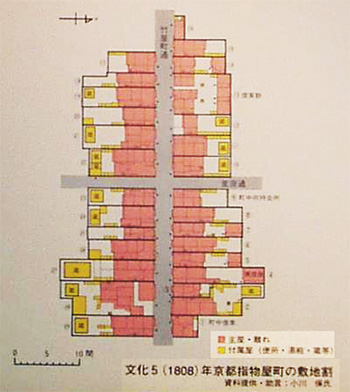
都市の街割り・都市計画では、間口が狭くて奥行きが長い敷地割が
日本の都市の基本的な区画単位であった。伝統的に都市を管理した
政策当局が、間口の広さに応じて固定資産税を掛けたとされ、
それが日本に独特の「町家景観」を生み出していったとされる。
現代に残る京町家は、秀吉の時代の街割りを基本にしているとされます。
町家の連なりが通りを挟んで向き合うことでアーケードになり、
それが「町」を生成していったというのですね。
幕末に欧米人が江戸の街並みをパノラマ写真として残しているけれど、
その整然とした都市美感にため息をついていたとうかがえます。
住宅政策としては図のような「街割り」と都市防火の観点からの瓦屋根。
大きくは2つの政策が遂行されていった。
この瓦屋根が生み出す景観美に欧米人は感嘆したようなのですね。
また、町家の配置は非常に規格的で集合美も生み出していた。

さて、参照する普請帳は大阪府柏原市・三田家住宅のもの。
「明和三年戌十月より同亥十二月迄子年迄 普請方諸事帳面書付共」。
1766年11月に計画がスタートして、翌年1767年に引っ越ししている。
その後も残工事が続き、1768年6月に工事完了のお礼詣りをしている。
いまから255年ほど前の建築工事記録であります。
実質の工事期間は6ヶ月程度だが工事に伴うその他記録まで残されている。
貨幣経済が進歩していた都市部では労働力・材料獲得は金銭的に処理。
きのうまで見たムラ共同体では成員からの労働奉仕・材料提供などがあったが、
町家ではいわゆる「町衆」はほとんどそういうことはしない。
祝儀を贈り、建築儀礼には顔を出してお祝いするけれど、クールな対応。
町衆には共同して年貢を貢納するような切羽詰まった経済共同体感覚がない。
各家ごとの「個人主義」がはるかに優勢な生活文化。
ただし、石搗(石突き)〜たぶん基礎工事だと思われる〜に関しては
儀式の中に労働提供の名残りが見られているという。
普請の基本文化はムラ社会由来だと見られる文化痕跡だろうか?
面白いのは、11月14日に大工・利兵衛が「上京」して建築確認申請し
翌11月15日に建築許可が下ろされているが、同17日に大工組頭が
「許可通知」を持参しているということ。
上京という書き方はこの時代だから京都を指すだろうが遠すぎるし、
どうも提出先は、幕府の大阪城の役所だったと推定される。
建築確認申請は地方決済ではなく、公儀決済だったとも受け取れますね。
<以下、明日の後編に。写真はイメージで高山市の旧市街区>

English version⬇

[City housing Machiya house building (front) / Japanese good house ㉘-3]
By the way, the theme of exploring the reality of house building in old folk houses.
Today, it is a “machiya” building that was as popular as farmhouses.
In the case of a farmer, it is called a “community / uneven society” like a large cocoon that envelops people.
Mutual aid in a strong corporate character was the foundation building power.
On the other hand, during the Edo period, the urban environment of Edo and above also expanded significantly.
In the city, there was a samurai family, a waste group who was not involved in production.
Merchants and townhouses as economic agents other than them were prosperous.
Rather than economic policy for merchants living in machiya
The Edo Shogunate was a government centered on the “heavy farming” policy.
Economically-friendly politicians such as Tanuma Okitsugu were condemned as “bribery” politicians.
In the early days of the Shogunate, there was a mercantilist inclination of urban development in Shinkaichi and Edo, but
After that, it can be said that it leaned toward Physiocrats that emphasized social stability.

In city planning and city planning, site allocation with a narrow frontage and a long depth is used.
It was the basic unit of a Japanese city. Traditionally managed the city
Policy makers allegedly imposed property taxes depending on the size of the frontage,
It is said that it created a unique “machiya landscape” in Japan.
The Kyomachiya that remain today are said to be based on the town division of Hideyoshi’s time.
A series of townhouses face each other across the street, forming an arcade.
It is said that it created a “town”.
At the end of the Edo period, Westerners left the cityscape of Edo as a panoramic photograph,
It can be said that he was sighing at the orderly beauty of the city.
As for housing policy, tiled roofs from the viewpoint of “city division” and urban fire prevention as shown in the figure.
There were two major policies being implemented.
It seems that Westerners were impressed by the beauty of the scenery created by this tiled roof.
In addition, the layout of the townhouses was very standard and created a collective beauty.

By the way, the general contract book to be referred to is that of the Mita family residence in Kashiwara City, Osaka Prefecture.
“From October of the 3rd year of Meiwa to December of the same year until the child’s year.
The plan started in November 1766 and moved to 1767 the following year.
After that, the remaining work continued, and in June 1768, we thanked him for the completion of the work.
It is a record of building work about 255 years ago.
The actual construction period is about 6 months, but other records associated with the construction are also recorded.
In urban areas where the monetary economy was advancing, labor and material acquisition are processed financially.
In the Mura community that I saw until yesterday, there was labor service and material provision from the members, but
In Machiya, so-called “town people” rarely do that.
We give congratulations and show up at architectural ceremonies to celebrate, but it’s a cool response.
The townspeople do not have a sense of a desperate economic community to jointly pay tribute.
A lifestyle culture in which “individualism” in each house is far more predominant.
However, regarding Ishibashi (Ishibuchi) -probably foundation work-
It is said that the remnants of labor provision are seen in the ritual.
Is the basic culture of Fukon a cultural trace that seems to be derived from the uneven society?
What is interesting is that the carpenter Ribei “goes to Tokyo” on November 14 and applies for building confirmation.
The next day, November 15th, the building permit was given, but on the 17th, the carpenter Kumigashira
Bring a “permit notice”.
The writing style of Kamigyo is probably Kyoto because it was in this era, but it’s too far
It is presumed that the submission destination was the Osaka Castle government office of the Shogunate.
You can also accept that the building confirmation application was not a local settlement but a public settlement.
<Hereafter, in the second part of tomorrow. The photo is an image of the old city block of Takayama City>