本文へジャンプ

【堺の町衆茶の湯と茶室建築論/日本のいい家特別篇㊱-7】


堺の町シリーズでやはり茶の湯に触れないわけにはいかないでしょうね。
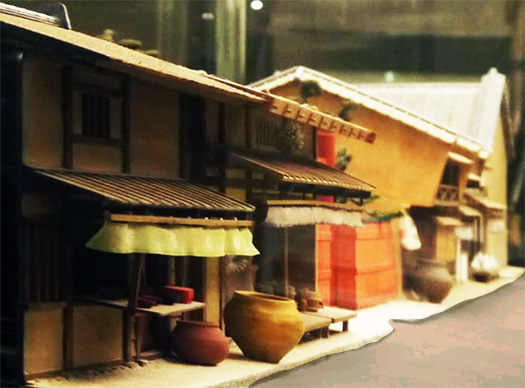
市の博物館でも茶の湯のコーナーがかなりのスペースで設置されていた。
実際の茶室展示もありました。町のアイデンティティだとわかる。
わたしのブログでは最近、富山の廻船問屋住宅を取り上げたときに
番頭さんの居室が茶室になっていて、情報交流の機会になっていたことを
深掘りしてみていました。日本の商家と茶の湯というのは、やはり同根している。
茶という人間接触機会を捉えて文化にしようというのは、
やはり日本に特徴的なビジネス文化なのでしょうか。
そして茶の湯はそのための空間が建築として作られることで、
その文化性が住宅建築の世界に深く根を下ろしていって
いわば空間の「吟味」のためのひとつの基準になってすらいる。
作法だとか、伝統だとかの「約束事」を構成している。

堺と茶の湯ということで武野紹鴎さんという名前が出てくる。
堺の商人たちの人的ネットワークのなかでそのイデオローグ的な位置を占め
利休さんの師匠というような位置付けだとされる。
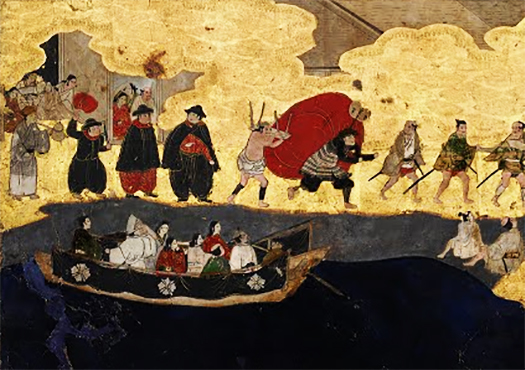
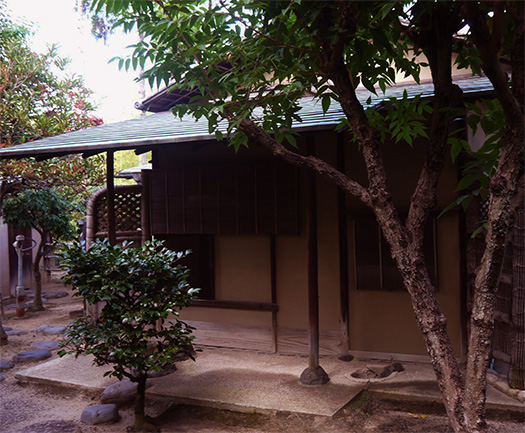
2枚目の写真はその武野さんの「真」の茶室思想表現だと。
真というのは、日本の中世以来の諸芸道での様式や空間の価値概念を表す理念語。
「真行草」の真がこのように規定されている。
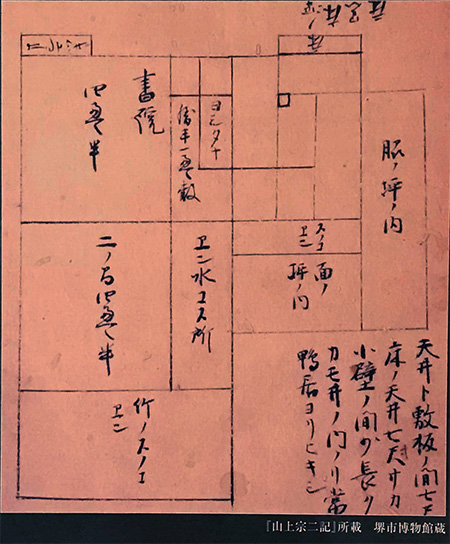
四畳半という四角い空間とその畳の敷き方がまずあり、
そして各部位の仕様について但し書きが記されている。
「紹鴎四畳半図」として以下のような記述。
〜狭義には宋、元、明、清時代の美術作品を指す「唐物」を所有する
京や堺の有力商人たちが写し建てた茶室の設計平面図。
唐物を持たない侘数寄が平三畳の茶室を建てたことに対する「真」の茶室。
紹鴎の四畳半はヒノキの角柱に鳥の子紙の貼り付け壁で北向きの座敷。〜
「鳥の子紙」とは主に雁皮(がんぴ)を原料とし、光沢があり滑らかで
緻密な肌合を持った手漉きの和紙とされます。転じて手紙の紙が壁に貼られた。
真の四畳半は真四角の平面になる。
たぶん、そのように主客の対等性をあらわした上で、
床が上座、下座の結界表現になりやや上座側に炉が切られる。
対等な上でその場の役割の違いを明確化させたりしたのでしょう。
座談のときの座の規範を考えて行った空間規定だとわかる。
床の間に唐物(宝物品)や掛け軸などを展示して
結構なモノを鑑賞するというのが茶の湯の基本的な意味合いか。
禅の導入とほぼ同時期に茶が日本で栽培されるようになって
その鑑賞文化が接遇文化の深まりと同時に追究されていったものでしょう。
堺という商業都市で、商人たちの「腹を割った」話合いを
空間的に規範化して、ビジネスをより活性化したもののように思える。
とくに海外交易の畿内地域での主要港湾としては、
情報というモノの占める割合が非常に高くなっていったのでしょう。
とくに海外交易では情報の真贋性が強く問われ、建築にも「真」が求められたか。
その情報の希少性をより演出する文化装置として茶の湯、
茶室文化というものは発展する基盤を形成されたのか。
そういった消息が堺の町に来て実感できた思いがしておりました。

English version⬇

[Sakai Town Shu Chanoyu and Tea Ceremony Architecture Theory / Japanese Good House Special Edition ㊱-7]
You can’t help but touch the tea ceremony in the Sakai Town series.
Even in the city museum, a tea ceremony corner was set up in a considerable space.
There was also an actual tea room exhibition. It turns out to be the identity of the town.
When I recently covered Toyama’s shipping wholesaler housing on my blog
The fact that Mr. Banto’s room was a tea room was an opportunity for information exchange.
I was digging deep. Japanese merchants and tea ceremony have the same roots.
To seize the opportunity of human contact called tea and make it a culture
Is it a business culture that is characteristic of Japan?
And the tea ceremony is created by creating a space for that purpose as an architecture.
Its cultural nature is deeply rooted in the world of residential architecture
So to speak, it has even become a standard for “examination” of space.
It constitutes a “promise” such as manners and traditions.

The name Takeno Jōo comes out because of Sakai and the tea ceremony.
Occupies its idealistic position in the human network of Sakai merchants
It is said to be positioned like Rikyu’s master.
The second photo is Mr. Takeno’s “true” tea room ideological expression.
True is a philosophical word that expresses the value concept of style and space in various arts since the Middle Ages in Japan.
The truth of “Shinkokusa” is defined in this way.
First of all, there is a square space of four and a half tatami mats and how to lay the tatami mats.
And a proviso is written about the specifications of each part.
The following description is given as “Takeno Jōhan Yojohan”.
~ In a narrow sense, owns “Karamono”, which refers to works of art from the Song, Yuan, Ming, and Qing dynasties.
A design plan of a tea room copied by leading merchants in Kyo and Sakai.
A “true” tea room for Wabi-sabi, who does not have karamono, built a tea room with 3 tatami mats.
Takeno’s four and a half mats are a tatami room facing north with a wall of cypress prisms and torinokogami. ~
“Torinokogami” is mainly made from ganpi and is glossy and smooth.
It is said to be handmade Japanese paper with a fine texture. In turn, a piece of letter paper was stuck on the wall.

Both the true four and a half tatami mats and the three tatami mats of grass are square planes.
Perhaps, after expressing the equality of the main customer in that way
The floor is the boundary between the upper and lower seats, and the furnace is cut slightly to the upper seat side.
Perhaps they also clarified the difference in the roles of the place on an equal footing.
It can be seen that it is a spatial regulation that was made in consideration of the norms of the seat at the time of the roundtable discussion.
Displaying karamono (treasure goods) and hanging scrolls between the alcove
Is it the basic meaning of the tea ceremony to appreciate a good number of things?
Tea began to be cultivated in Japan at about the same time as the introduction of Zen.
The appreciation culture would have been pursued at the same time as the hospitality culture deepened.
In a commercial city called Sakai, talk about “hungry” merchants
It seems to have been spatially standardized to make the business more active.
Especially as a major port in the Kinai region for overseas trade
Perhaps the proportion of information as a thing has become extremely high.
Especially in overseas trade, the authenticity of information was strongly questioned, and was “true” required for architecture?
Tea ceremony as a cultural device that further enhances the rarity of that information
Did the tea room culture form the foundation for development?
I felt that I was able to feel that kind of news when I came to the town of Sakai.

【中世商業都市の街割り/日本のいい家特別篇㊱-6】


堺という街は仁徳天皇陵を大きなランドマークとして成立したと思います。
実在が確実な大王としての仁徳の陵墓をこの大阪湾の海岸線のやや高台に
建設した目的は、司馬遼太郎さんのコラムなどにあるように、
大陸からの来訪者に対してこの列島国家の巨大さをメッセージすることだったとされる。
逆に言えばそれだけ東アジア世界では中国国家との対応は難しかったのでしょう。
政治経済的・地政学的に伝統的に日本は中国との関係性を悩んできた。
聖徳太子の「日出ずる国の・・・」という外交ぶりなど瀬戸際で常に苦闘し続けてきた。
その最初期のものとしてこの仁徳天皇陵はあったと思います。
はじめは石で陵を被覆してあったということなので、
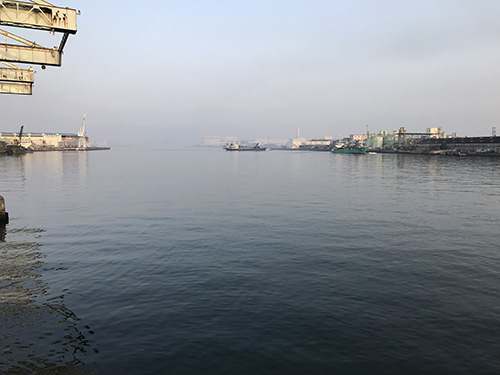
大阪湾を望んで住吉・住之江か、堺の湊を目指す船中から陵墓がどう見えるか、
それによって中国の外交使者がどう印象するかは非常に大きなポイントだっただろう。
こうしたさまざまな努力の甲斐があって、中国国家は日本に対して
ちょうどインドに対するかのようなある程度慎重な扱いが常だったとされる。
そうでなければそもそも「日本」などという国号を認証しなかっただろう。
日の本の国、という国名には華夷思想へのアンチテーゼが含意されている。
そういう文脈の中に今日の対中関係もあると思える。
いまは華夷思想でしか国を統御できない権力中枢が支配しているので
こういう時期は慎重に対応していく必要がある。
中国自身も権力には波動があるので、強権からのトーンダウンも見る必要がある。
東アジア国際関係の知恵の蓄積が日本にはあると思う。

・・・という時代から、西欧諸国ポルトガルやスペインなどの大航海時代。
巨大すぎる中国とどう向き合い、どう侵略すべきかとかれらも探っていたに違いない
これら諸国にとって戦国から江戸の時代、畿内地域の玄関口としての堺の湊は
アジア進出の橋頭堡的な位置付けで考えていたに違いない。
日本に対してこれら諸国はどう利活用を考えていたか、よく知りたい。
かれらにとっては日本の地政学的位置は魅力的だったのでしょうね。
やがて日本はこの屏風絵の時期を経て鎖国に向かうのだけれど、
鉄砲技術の導入以降、日本は脱東アジアという国際的視点を持つことができた。

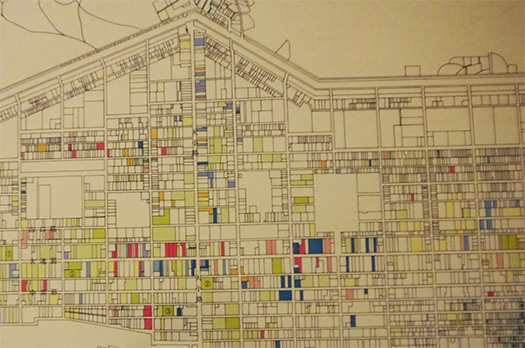
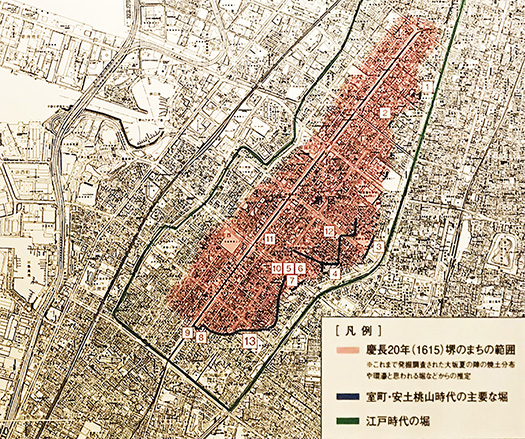
上の図は堺市博物館展示の江戸初期の「町割り図」。
整然とした町割り・都市計画が明瞭で中世以来の自治伝統の実態を目にする思い。
住吉大社祭礼時にはこうした主要街路を多くの人がパレードした。
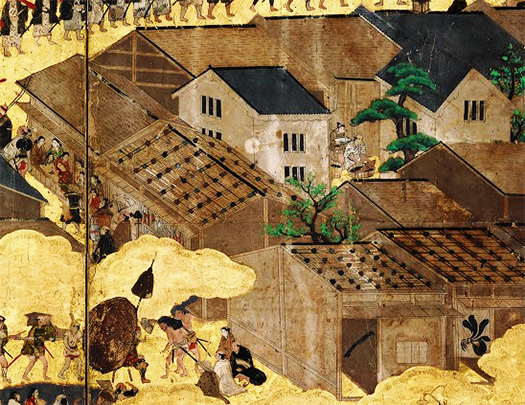
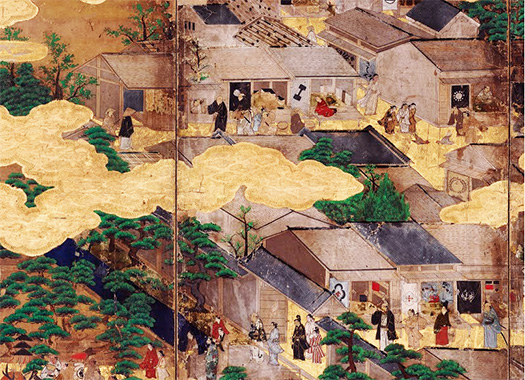
屏風絵の詳細図は町割りのひとつの区割りをクローズアップした。
通りに面して木造の店舗建築が並び、区割りの内側には漆喰で塗り固めたとおぼしき
倉庫群が見えている。大航海時代と日本社会が出会って
交易活動が活発化して日本的商家のありようのスタンダードもできたのでしょうか。
信長が持っていたような感受性の目でこの時代の町並みを歩いてみたい。
いまなにが流行っているのか、人々はなにを求めているのか、
最先端の国際交易都市の街を構成するビジネスから変化する時代意識を
たっぷりと吸収していたに違いないと思いますね。

English version↓

[City division of medieval commercial city / Japanese good house special edition ㊱-6]
I think the city of Sakai was established with the Emperor Nintoku Mausoleum as a major landmark.
The tomb of Nintoku as a real king is on a slightly higher ground along the coastline of Osaka Bay.
The purpose of the construction is as shown in Ryotaro Shiba’s column.
It is said that it was to message visitors from the continent about the hugeness of this archipelago nation.
To put it the other way around, it would have been difficult to deal with the Chinese state in the East Asian world.
Traditionally, politically, economically and geopolitically, Japan has been worried about its relationship with China.
Prince Shotoku has always struggled on the brink, such as the diplomacy of “The Land of the Rising Sun …”.
I think there was this Nintoku Emperor’s Mausoleum as the earliest one.
At first, the tomb was covered with stone, so
What does the tomb look like from the ship aiming for Sumiyoshi / Suminoe overlooking Osaka Bay or Minato in Sakai?
How the Chinese diplomatic messenger would be impressed by this would have been a very big point.
Thanks to these various efforts, the Chinese state is against Japan.
It is said that he was always treated with some caution as if he were dealing with India.
Otherwise, it would not have certified a country name such as “Japan” in the first place.
The name of the country of the book of Japan implies an antithesis to the Sinocentrism.
It seems that today’s relationship with China is also in that context.
Nowadays, the power center, which can control the country only by the Sinocentrism, is in control.
It is necessary to deal with such times carefully.
Since China itself has a wave of power, it is necessary to see the tone down from the power.
I think Japan has an accumulation of wisdom on East Asian international affairs.

From the era of … to the Age of Discovery in Western European countries such as Portugal and Spain.
They must have been searching for how to face China, which is too big, and how to invade it.
For these countries, Sakai Minato as the gateway to the Kinai region during the Warring States to Edo period
It must have been considered as a bridgehead for expanding into Asia.
I would like to know well how these countries were thinking about utilizing Japan.
Perhaps Japan’s geopolitical position was attractive to them.
Eventually, Japan heads for seclusion after this folding screen painting period,
Since the introduction of gun technology, Japan has been able to have an international perspective of de-East Asia.

The figure above is the “town division map” of the early Edo period exhibited at the Sakai City Museum.
The orderly division of towns and city planning are clear, and I want to see the reality of the autonomy tradition since the Middle Ages.
Many people paraded on these main streets during the Sumiyoshi Taisha Festival.
The detailed drawing of the folding screen is a close-up of one of the town divisions.
Wooden store buildings are lined up facing the street, and it seems that the inside of the division was plastered.
You can see the warehouses. The Age of Discovery meets Japanese society
Did trading activities become more active and set the standard for Japanese merchants?
I want to walk the streets of this era with the sensitivity that Nobunaga had.
What is popular now, what are people looking for?
A changing consciousness of the times from the businesses that make up the state-of-the-art international trading city
I think it must have been absorbed a lot.

【400年前、堺の町家・街並み/日本のいい家特別篇㊱-5】


上の写真は堺市博物館の中世都市復元模型街並み。
日本の都市は街道筋に面した商家が両側から客引きするようなのが基本。
この中世都市・堺では住吉大社祭礼ということもあり人出が多い。
集落と集落の間、境界に成立したケースが多いと言われる。
また、いわゆる「街道筋」という交通往来の多い道路両側に商家が陣取った。
建物的には基本は切妻で必然的にその平側が「平入り」の店舗になった。
誘い込む、という深層心理からか、あるいは雨の日の軒下の有用性を意図してか
さしかけの軒の出が特徴になっていく。
また、その軒も徐々に深さが増していって、
雨の当たらない半内部的な空間ができるようになっていく。
雁木空間が商取引の空間に似つかわしく作られていったのでしょう。
そこには平台が置かれて、その店の扱い商品見本などが展示され
いわゆる「見世」として通行者に視覚的に訴求されるようになっていく。
ショーウィンドウディスプレイという知恵と工夫が発展していく。

400年前の住吉大社祭事を描く絵画では
大阪住吉から、堺の中心街まで要所にこういう町家商家が軒を並べている。
街の性格によってそれぞれ特色ができていって、
それこそ「鉄砲町」みたいなそのものズバリの名前まで出現した。
日本列島で最後に大都市化した札幌の街並みを経験してきた年代として
こういった日本的商家、街並み形成へのリアリティを持っている。
いまの時代、このような人間歩行での街並みが全国的に廃れて
クルマでの通行に適合させた郊外型タウンとか、
店舗そのものはあくまでもこの時代以来の歩行者中心だけれど、
立地は郊外の地価の安い大規模ショッピングゾーンなどに
日本人の生活習慣が大きく変化してきている。
子どもの頃の「駄菓子屋」的なものへのノスタルジーが突然表出したりもする。
今後とも、日本の商ビジネスがどうなっていくか、だけれど
こういったマザーのような街並みが基本であることは間違いがない。
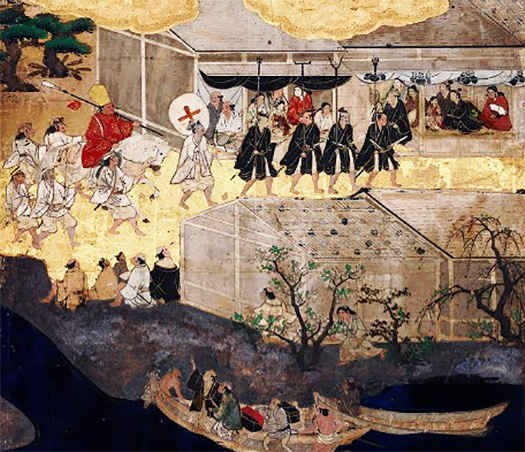
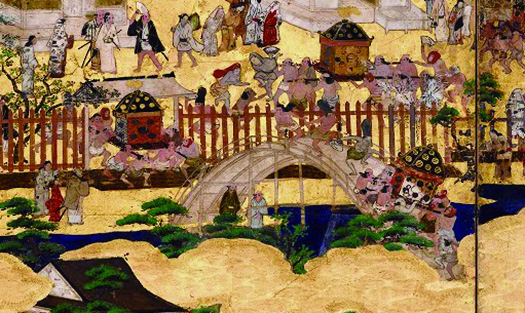
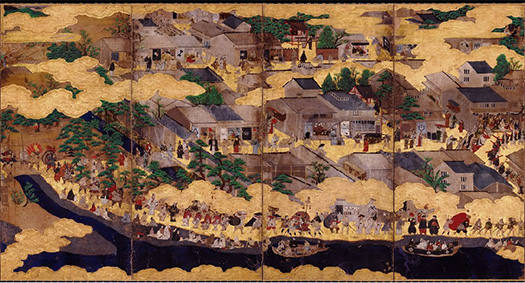
下の絵を見ると、堺の街の入口とおぼしき運河沿いに木戸があって、
そこから町家空間が連続しています。環濠都市。
やはり軒が各店から出ていて、それが連続している様子もわかる。
海岸近くということからか、松並木が植え込まれてもいますね。

祭礼行列のなかには、いかにも西洋人の扮装の人物も描かれている。
鎖国は1639年とされるので、それ以前にこの祭礼図は描かれたか。
ルイスフロイスの日本史のなかに住吉まつりの記述があると既報しましたが、
この図画は江戸時代初期のものとされているので、
国際貿易港らしく、鎖国前の時期には異人さんたちが
このように闊歩していたのでしょうね。まるで開国後の神戸のように。

English version⬇

[400 years ago, Sakai Machiya / Cityscape / Japanese Good House Special Edition ㊱-5]
The photo above is the Sakai City Museum’s medieval city restoration model cityscape.
Basically, Japanese cities are attracted by merchants facing the highway from both sides.
In this medieval city, Sakai, there are many people because it is a festival of Sumiyoshi Taisha.
It is said that there are many cases where a boundary is established between villages.
In addition, merchants camp on both sides of the so-called “highway”, which has a lot of traffic.
In terms of the building, it was basically a gable, and inevitably the flat side became a “flat entrance” store.
Is it from the deep psychology of inviting, or is it intended to be useful under the eaves on a rainy day?
The appearance of the eaves is becoming a feature.
Also, the eaves are gradually increasing in depth,
A semi-internal space that is not exposed to rain will be created.
It seems that the ganki space was created to resemble the space for commercial transactions.
A flatbed is placed there, and samples of products handled by the store are displayed.
It is becoming more and more visually appealing to passers-by as a so-called “view”.
The wisdom and ingenuity of show window displays will develop.

In the painting depicting the Sumiyoshi Taisha festival 400 years ago
From Sumiyoshi, Osaka to the center of Sakai, these machiya merchants are lined up at key points.
Each has its own characteristics depending on the character of the city.
That’s what even the name of itself, such as “Teppocho”, has appeared.
As the age when I experienced the cityscape of Sapporo, which became the last big city in the Japanese archipelago
It has the reality of such a Japanese merchant house and cityscape.
In this era, the cityscape of such human walking is obsolete nationwide.
Suburban towns that comply with car traffic,
The store itself has been pedestrian-centered since this era,
The location itself is in a large-scale shopping zone with low land prices in the suburbs
The lifestyle of Japanese people is changing drastically.
The nostalgia for something like a “candy store” when I was a kid suddenly appears.
What will happen to Japanese commerce business in the future?
However, there is no doubt that such a mother-like cityscape is the basis.
Looking at the picture below, there is a Kido along the canal that seems to be the entrance to the city of Sakai.
The townhouse space continues from there. Moat city.
After all, you can see that the eaves are coming out from each store and that they are continuous.
Because it is near the coast, pine trees are planted.

In the festival procession, a person dressed as a Westerner is also depicted.
Since the seclusion is said to be 1639, was this ritual map drawn before that?
I have already reported that there is a description of the Sumiyoshi Festival in the history of Japan by Luis Frois.
This painting is said to be from the early Edo period, so
Still, strangers seemed to be a trading port in the pre-isolation period
I think he was struggling like this. It’s like Kobe after the opening of the country.

【神輿見物の桟敷・遊覧船/日本のいい家特別篇㊱-4】


住吉大社の祭礼のなかでもこの神輿行列は格別だったのか、
江戸期を通じて経済活動のメッカであり続けた大阪商売の神さまらしく
賑々しい行列・見物ぶりに圧倒される思いがします。
16世紀日本に滞在していたポルトガルの宣教師・ルイスフロイスは
その著書「日本史」において、
「群衆は住吉大神の神輿に歓喜し〝千歳楽、萬才楽、平楽じゃ、平楽じゃ〟と
歌いながら進んでいた」と記載している。
ちなみにこの掛け声が訛って現在の「べぇら、べぇらじゃ」になったという。
まことに戦国の終結から平和の実現が歓呼されていたか。
この祭礼図屏風でも、行列の立派さと同時にそれを見物する人々の
この祭礼に託す歓喜ぶりが熱く伝わってくるかのようです。
上の写真では普段は軒を並べた店舗とおぼしき「桟敷席」から人々が
行列の様子に熱視線を送っている。まるでオリンピック声援並み(笑)。
桟敷席の架構は柱と横架材が田の字に組まれ、それがアーケード的に連続。
道路側には庇や幕が張られて、日射遮蔽まで工夫されている。豪華。
店舗は通常は通行者に見せるのが機能でしょうが、お祭りでは
「見せる」から機能が逆転して「見る」ことの有用性になっているかのよう。
そういう桟敷席は臨時的に金持ちの特権席だったことでしょう。
多くの女性をはべらせたお大尽ぶりが伝わってくるのは妬みか(笑)。
気がつくのは屋根が住吉の町家では草葺き屋根が多かったのに対して
平屋根が多く一部では石置き屋根が見られること。
その他の建物でも、草葺きではなく平板な屋根として描かれている。
柾葺きなどの板材が考えられるけれど、
近接する住吉と堺で屋根の葺き方が大きく変わっているのが不思議。
普通に考えると堺の方がアーケード的な商業施設っぽいので、
簡単に引火しやすい草葺き屋根は地域協定的に禁止していたのかも。
まさかほんの数キロで堺は風が強くて草屋根が持たなかった、とは考えにくい。

一方で現在の大阪住吉と堺の間には「大和川」が流れているけれど、
その支流か当時の海岸線か、あるいは運河ででもあるのか、
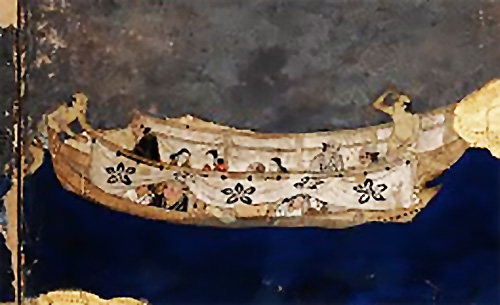
遊覧船を仕立てて見物している人々も多く見られる。
こちらも水夫を使役して、お大尽たちが屋形船を楽しんでいる。
暑い盛りの神輿見物、涼しい船の上から楽しむ特等席見物。
それ以外の沿道にはたくさんの見物客が座り込んでいる。
神輿行列の人々は「べぇら、べぇらじゃ」と掛け声に拍子を合わせて
歌い踊りながら進んでいるように見られます。
住吉大社の「住吉祭」神輿渡御の令和元年のルート案内は以下の図。
おおむね7kmという行程は江戸初期と変わらないのでしょう。

住吉祭は7月31日に大阪市の住吉大社で行われる大阪三大夏祭りひとつ。
おはらいとも呼ばれ住吉大社の夏祭りの一部あるいは夏祭りそのものを指している。
『住吉大社神代記』によれば淵源は奈良時代にも遡ることができ、
六月の御解除(みはらえ)として恒例的に行なわれていたとされる。
簡単に千年を超える伝統がそこかしこに存在するのですね。関西恐るべし。

English version⬇

[Mikoshi Kenbutsu Pier / Pleasure Boat / Japanese Good House Special Edition ㊱-4]
Was this portable shrine procession exceptional in the festival of Sumiyoshi Taisha?
Like the god of Osaka business, which has been a mecca for economic activities throughout the Edo period
I feel overwhelmed by the lively procession and sights.
Luis Frois, a Portuguese missionary who was staying in Japan in the 16th century
In his book “History of Japan”
“The crowd rejoiced at the portable shrine of Sumiyoshi Ogami,” Chitose-raku, Mansai-raku, Heiraku, Heiraku-.
I was singing and proceeding. ”
By the way, it is said that this shout became the current “Bella, Bellaja”.
Was the realization of peace really cheered from the end of the Warring States period?
Even in this festival folding screen, the people who see it at the same time as the procession is splendid
It seems that the joy of entrusting this festival is enthusiastically transmitted.
In the photo above, many people are usually from the “box seats” where the eaves are lined up.
I am enthusiastic about the procession. It’s almost like the Olympics (laughs).
Pillars and horizontal members are assembled in the shape of a rice field in the frame of the pier seat, which is continuous in an arcade.
Eaves and curtains are put up on the road side, and even the sun is shielded. Luxury.
Stores usually function to show passers-by, but at festivals
It seems that the function is reversed from “show” and “see” makes it useful.
Such a pier seat would have been a temporary rich privileged seat.
Is it envy that you can feel the great effort that made many women sick (laughs)?
I noticed that there were many thatched roofs in Sumiyoshi’s townhouses.
Some stone roofs can be seen.
Other buildings are also depicted as flat roofs rather than thatched roofs.
Board materials such as shavings are conceivable, but
It is strange that the roofing method has changed significantly between Sumiyoshi and Sakai, which are close to each other.
Sakai is more like an arcade-like commercial facility when you think about it normally.
Thatched roofs, which are easily ignited, may have been banned by regional agreements.
It’s hard to imagine that Sakai was windy and didn’t have a grass roof just a few kilometers away.

On the other hand, the “Yamato River” runs between Sumiyoshi, Osaka and Sakai.
Is it a tributary, the coastline of the time, or a canal?
Many people are watching by tailoring a pleasure boat.
The sailors are also used here, and the great crew are enjoying the houseboat.
A hot shrine tour and a special seat tour that you can enjoy from the cool boat.
Many spectators are sitting along the other roads.
The people in the portable shrine procession beat the shout, “Bella, Bellaja.”
It seems to be singing and dancing.
The figure below shows the route guidance for the first year of Reiwa at the “Sumiyoshi Festival” of Sumiyoshi Taisha.
The journey of about 7km is probably the same as in the early Edo period.

The Sumiyoshi Festival will be held on July 31st at Sumiyoshi Taisha Shrine in Osaka City. One of the three major summer festivals in Osaka.
Also called Oharai, it refers to a part of the summer festival of Sumiyoshi Taisha or the summer festival itself.
According to “Sumiyoshi Taisha Shintoki”, Fuchigen can be traced back to the Nara period.
It is said that it was held regularly as the cancellation of June (Miharae, also known as the South Festival).
There are easily over a thousand years of tradition here and there. Kansai is scary.

【オオウバユリ、花の命・叫び声】


「中世都市・堺、一部住吉大社」篇をお送りしていますが、
いっとき中断させていただきます。
7月に入ってチラシ折り込みで札幌市から「オリンピック開催のお知らせ」も
やってきました、マラソンやサッカーなどが開催とのこと。
・・・ですが、それではなくわたしの花のいのちの観察日記、
オオウバユリin札幌円山自然林、昨日ついに花芽が分かれて
劇的な瞬間を見せてくれ始めたのです。
つぼみが膨らんでどんどん大きくなり、また身長も大きくなる。
そして気温上昇とともに膨らんだ花芽が大きく、どさっと
倒れるかのように横に開いて行くのですね。
この倒れていく花芽たちの角度がなんとも素晴らしい。
まるでよろこびの爆発のように四肢を思い切り伸ばしていくかのよう。
この写真の個体が自然林のなかではいちばん早く花芽が開いた。
いろいろ調べるのですが、この瞬間のことをなんと呼ぶのかよく知りません。
しかし個人的にいちばん劇的な瞬間だと感じていて、
昨日も札幌地方、朝方はシトシト雨天だったのですが、
無性にこころが急かされて、傘を差して森の中を歩きまわっていた。
だいたい、一番先に開きそうな個体は目星を付けていたのですが
案の上、やはりその個体がいちばん初めに花開いた。

いそいそと森の中に分け入って、個体を確認したとき、
ながく恋い焦がれた異性とめぐり会ったような
ロマンチックな気分が一気に襲ってきて
息を飲み込むようなドラスティックな胸の鼓動感・・・。
わすれることなく時を刻む自然の輪廻を深く感じさせていただけます。
きのうの段階ではまだ芽吹いたのは1輪だけでありますが、
きょうも観察に行ってきます。きっとたくさんの花芽が開いているでしょう。
ことしも健康でこういういのちのいとなみを目にさせてもらえた。
自然のゆたかな表情に感謝したいと思います。
さてさて、きょうも観察にいくぞ、っと。

English version⬇

[Cardiocrinum cordifolia, cry of life]
I am sending you the “Medieval City, Sakai, Partly Sumiyoshi Taisha” edition.
I will suspend it at one time.
In July, the leaflet will be inserted and the city of Sapporo will also announce the “Olympic Games”.
Marathon and soccer will be held.
… but not that, my life observation diary,
Cardiocrinum in Sapporo Maruyama Natural Forest, flower buds finally split yesterday
It began to show dramatic moments.
The buds swell and grow bigger and bigger, and they also grow taller.
And the flower buds that swelled as the temperature rose were big, and
It opens sideways as if it collapses.
The angle of these falling flower buds is wonderful.
It’s like stretching out your limbs like an explosion of joy.
The individual in this photo opened the flower buds earliest in the natural forest.
I do a lot of research, but I don’t know what to call this moment.
But I personally feel that it’s the most dramatic moment
It was raining in the morning in the Sapporo area yesterday, but
My heart was rushed asexually, and I was walking around in the forest with an umbrella.
Generally, the individual that seems to open first had an eye star.
After all, the individual blossomed at the very beginning.

When I rushed into the forest and confirmed the individual,
It ’s like meeting the opposite sex
A romantic mood struck at once
A breathtakingly drastic heartbeat …
You can feel the natural reincarnation that ticks away without forgetting.
At the stage of yesterday, only one wheel has sprouted yet,
I’m going to observe today as well. I’m sure many flower buds are open.
I was healthy and I was able to see this kind of life.
I would like to thank you for the rich expression of nature.
Well, I’m going to observe today too.

【住吉大社御神輿出発/日本のいい家特別篇㊱-3】


屏風絵という表現形式は中国からもたらされたものだけれど、
中世になると日本産の金屏風絵が遣明船などでの贈答品として3品、
必ずリストに挙げられていたということで、日本の特産品化していたようです。
画題の中では「洛中洛外図」のように都市風景がポピュラー。
都市風景には当然、庶民を含めたにぎわい、日常生活が主題化する。
そういった画面から極彩色の空気感やリアリティが浮かび上がってくる。

堺の都市風景をテーマにしてみたのですが、
この堺市博物館所蔵の「住吉大社祭礼図」を見ていると
文化風俗のすべてが湧き上がってくるような気分が立ち上ってくる。
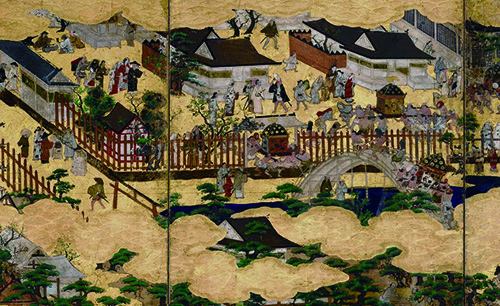
堺の頓宮に向けていま、住吉大社を神さまの神輿が出発する様子。
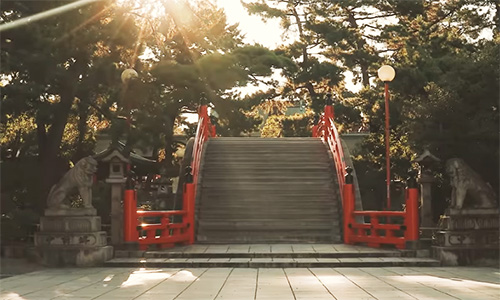
住吉さんと言えば「反橋」ですが、神輿はこの橋を渡るのですね。
合計4柱の神輿が渡るのですがいま最初の神輿が渡り、
2番目、3番目の神輿がいまや遅しと渡御を待ち構えている。
神輿周辺には身振りで景気づけする人々が描かれている。
担ぐ人たちもほぼパンツ一丁の半裸姿で描かれている。
現代でもこの住吉祭は7月末〜8月アタマなのでさぞ暑かったのでしょう。
橋を渡るのがひとつのクライマックスのようで、神輿の後ろで
踊り狂っているような人々もいる。
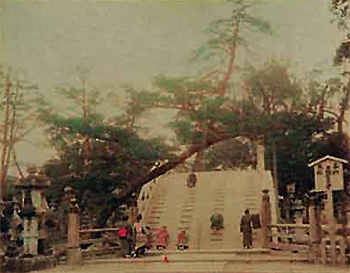
2枚目の写真は明治初年の反橋を西洋人が撮影したもの。
日本社会ではこういった神さま、神輿といったバーチャルな尊貴性が
文化の底流に根深く存在していると思う。
たしかに個人や開拓神への崇拝に出自はあるのだろうけれど、
ナマな属性は消去されてシンボル性だけが表出して
民衆性が表面を覆いつくしてしまっているかのように思える。
そういう文化の民衆性から表現もマンガ的な形式が採用されることが多い。
この屏風絵などにもその傾向が顕著だけれど、
鳥獣戯画のように日本の神性はキッチュさをまとうことが多い。
日本人の民俗性の根底にこうした普遍性、わかりやすさがあるのだと思う。
いまやマンガは世界に冠たる日本文化の粋。
マンガという表現形式については国境を越える普遍性があると思える。
その機縁・象徴として神社文化というのは面白い民俗性を持っている。

欧米文化がキリスト教をベースに「民主主義と科学」で現代を規定しているのに対し
民俗性としての神社習俗、その大衆性という側面を
日本独特の文化交流戦略として構築するのもありかも。
神事からスタートした相撲が文化として世界に受容されてもいる。
まぁ不思議の国ニッポン路線だけれど、ユーモアは国境を越えられる。
民俗に根ざした文化は民主主義と科学とも予定調和できる部分がある。
おっと、江戸期の大衆文化から飛びすぎかなぁ・・・。

English version⬇

[Sumiyoshi Taisha Shrine Departure / Japanese Good House Special Edition ㊱-3]
The expression form of folding screen painting came from China,
In the Middle Ages, three Japanese gold folding screen paintings were given as gifts on the ship.
It seems that it was a Japanese specialty because it was always on the list.
In the subject, the cityscape is popular like “Rakuchu Rakugaizu”.
Naturally, the urban landscape is lively, including the common people, and everyday life is the subject.
From such a screen, a vividly colored atmosphere and reality emerge.

I tried the theme of Sakai’s urban landscape,
Looking at the “Sumiyoshi Taisha Festival Map” in the Sakai City Museum
I feel like all the culture and customs are springing up.
A mikoshi of the gods departs from Sumiyoshi Taisha toward Sakai’s Tongu.
Sumiyoshi-san is called “Arched Bridge”, but the portable shrine crosses this bridge.
A total of 4 pillars of portable shrines are crossed, but now the first portable shrine is crossed,
The second and third portable shrines are now waiting for the transfer.
Around the portable shrine, people are depicted who are gesturing.
The people who carry them are also depicted in half-naked figures with almost one pair of pants.
Even today, this Sumiyoshi Festival is from the end of July to August, so it must have been hot.
Crossing the bridge is like a climax, behind the portable shrine
Some people seem to be crazy.
The second photo was taken by a Westerner of the arched bridge in the first year of the Meiji era.
In Japanese society, virtual nobility such as these gods and portable shrines
I think it is deeply rooted in the undercurrent of culture.
It is true that they have their origins in worshiping individuals and pioneer gods,
Raw attributes are erased and only symbolism is revealed
It seems as if the popularness has covered the surface.
Due to the popularity of such culture, manga-like forms are often adopted for expressions.
The tendency is remarkable in this folding screen picture, but
Like Choju-Giga, Japanese divinity often wears kitsch.
I think that such universality and comprehensibility are the basis of Japanese folklore.
Manga is now the essence of Japanese culture that is crowned in the world.
It seems that the expression form of manga has universality that transcends national borders.
The shrine culture has an interesting folklore as its connection and symbol.

Whereas Western culture defines the present age with “democracy and science” based on Christianity
The aspect of shrine customs as folklore and its popularity
It may be built as a cultural exchange strategy unique to Japan.
Sumo, which started from Shinto ritual, is also accepted by the world as a culture.
Well, it’s a wonderland Nippon route, but humor can cross national borders.
A culture rooted in folklore has a part that can be planned and harmonized with democracy and science.
Oops, I wonder if it’s too far from popular culture in the Edo period.

【大阪住吉の町家 in 江戸初期/日本のいい家特別篇㊱-2】


戦国期から江戸初期に掛けての「街並み」を考えるin堺。
その資料として、住吉大社祭礼屏風を見てみます。
本日は、祭神が住吉大社を出発する画像に描かれた江戸初期・住吉の街。
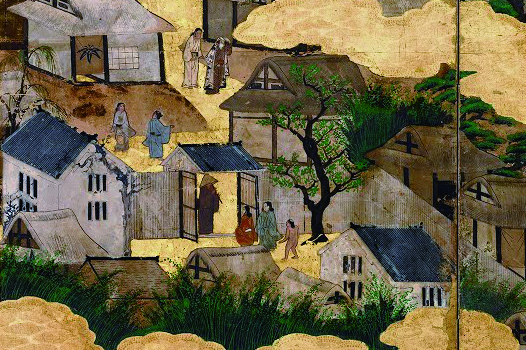
上の2枚の写真は住吉大社正面で海岸線に沿った地域の町家。
市井の人物が描かれる。木組みの塀が回された門前で笛を吹いて布施を乞う虚無僧。
土蔵の屋根から壁に一部亀裂も入っているけれど
それなりに中庭もある商家とおぼしき家から丸裸の子どもを伴って
母と娘が応対に向かっているように見える。
この土蔵壁面の欠損まで描くリアリズムに強く刺激を受ける。
屏風絵は細部で群衆劇としての活写がみごとで日本絵画の気風を感じる。
門前を通行する顔見知りの男女が
「あら、◎◎さん、これからどちらへ?」
「ちょっと住吉さんにお詣りに・・・」
「あら、わたしも連れてって」みたいな会話か(笑)。
画面上部には暖簾の掛かった茶屋のような風情の店も。
その横の道を従者を従え身分の高そうな女性が長い着流しを羽織って歩いている。
住居群は一様に入母屋・草葺き妻側上部で田の字型の構造木組みが表れている。
これは実際にそうだったか、絵師の簡略化かは不明だけれど、
屏風絵創作過程を考えれば誤認とは思いにくい。
土蔵は漆喰で被覆されているけれど、
タテの格子で3連の窓を見せている。
建物は小型の成りで3間〜4間四方と見えている。
これも簡略化絵画手法ではなくリアリズムだと思われる。
都市住宅の場合、農家住宅などとは違ってサイズも小さかっただろう。
町家商家の場合には一定の作業空間もあって広さも確保されたが、
居住のみの一般の町家の場合には、この程度が普通だったと思われる。
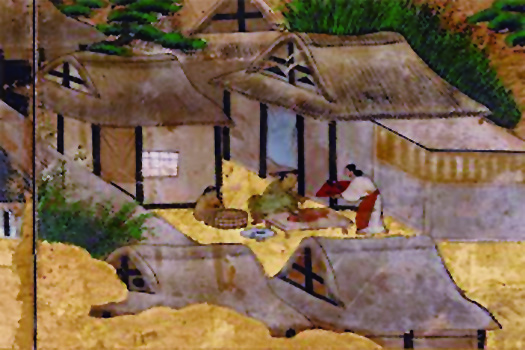
もう一方の画像では、海岸線の住吉らしく魚を捌いている様子。
大きなまな板と、その横には、カラのたらいをのぞき込む子ども。
男性が魚に向かい、女性がそれを介助しているような情景。
盛り付けようと大皿を差し出しているのでしょうか?
住居建物の基礎は通りに面した側は掘っ立て柱のように見えている。
画面左右方向では土台も見られている、構造的端境期なのか?
それとも手前側は下屋で主屋構造とは分離して屋根を差し掛けての造作か。
こういう都市住宅だが草屋根なので火災がコワそう。
一方で、都市の多数の草屋根住宅の屋根材はどう調達したか、
大阪は河川が多いので周辺の河川敷から調達してくるので足りていたかどうか。
いろいろな民の日常生活、住宅の様子が見えてくる。


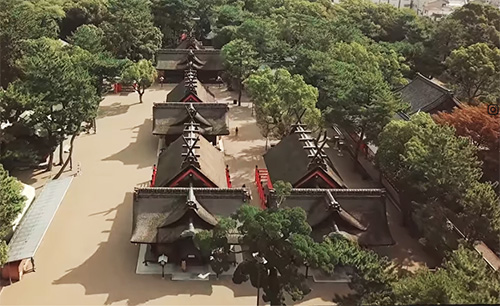
一方こちらは屏風絵上部に描かれた「住吉大社」境内の様子。
下の写真は現代の住吉大社HPからの空中画像。
左右に殿舎が並んでいる住吉さんの建物配置は変わらない。
ここ住吉大社から堺の町までは7kmだそうで、
そこを神輿は渡御されて堺の町に逗留するのだそうです。
神さまもなかなかの遠出であります。
先日ブログ記事でアップした安藤忠雄さんの出世作品、住吉の長屋はこの
住吉大社本殿の画面右側の住宅街に建っている。
はるかな400年超の時代スリップ住宅探訪であります。

English version⬇

[Osaka Sumiyoshi Machiya in Early Edo Period / Japanese Good House Special Edition ㊱-2]
Thinking about the “cityscape” from the Warring States period to the early Edo period in Sakai.
As a reference, let’s take a look at the Sumiyoshi Taisha festival folding screen.
Today is the town of Sumiyoshi in the early Edo period depicted in the image of the deity leaving Sumiyoshi Taisha.
The two pictures above are the townhouses in the area along the coastline in front of Sumiyoshi Taisha Shrine.
A person from Ichii is drawn. A komuso who blows a whistle and asks for a donation in front of the gate where the wooden fence is turned.
There are some cracks in the wall from the roof of the dozo
From a merchant house with a courtyard and a house that seems to be with a naked child
It looks like the mother and daughter are heading for the reception.
I am strongly inspired by the realism that draws even the defects of this dozo wall.
The details of the folding screen paintings are lively as a crowd drama, and you can feel the spirit of Japanese paintings.
Familiar men and women passing in front of the gate
“Oh, ◎◎ -san, where are you going?”
“A little prayer to Mr. Sumiyoshi …”
Is it a conversation like “Oh, take me too” (laughs).
At the top of the screen, there is also a shop with a noren-like atmosphere like a teahouse.
A high-ranking woman, accompanied by her servant, is walking along the road next to her in a long dress.
In the dwelling group, a rice field-shaped structural timber structure appears uniformly at the upper part of the Irimaya / thatched wife side.
I don’t know if this was actually the case or if it was a simplification of the artist,
Considering the folding screen painting process, it is hard to think that it is a misunderstanding.
The dozo is covered with plaster,
A vertical grid shows three windows.
The building is small and looks like 3 to 4 squares.
This also seems to be realism, not a simplified painting technique.
In the case of urban housing, the size would have been smaller than that of farm housing.
In the case of a machiya merchant house, there was a certain work space and the space was secured, but
In the case of ordinary townhouses that only live, this level seems to have been normal.
In the other image, it looks like Sumiyoshi on the coastline is handling fish.
A large cutting board and a child looking into the empty basin next to it.
A scene in which a man heads for a fish and a woman assists it.
Are you offering a platter to serve?
The foundation of the residential building looks like a digging pillar on the side facing the street.
Is it a structural off-season, where the foundation is also seen in the left-right direction of the screen?
Or is the front side a lower house that is separated from the main building structure and has a roof?
Although it is such an urban house, it has a grass roof, so a fire seems to be scary.
On the other hand, how did you procure the roofing materials for many grass-roofed houses in the city?
Since there are many rivers in Osaka, it is procured from the surrounding riverbeds, so is it enough?
You can see the daily life of various people and the state of housing.

On the other hand, this folding screen picture is the state of “Sumiyoshi Taisha” at the top.
The photo below is an aerial image from the modern Sumiyoshi Taisha website.
The building layout of Mr. Sumiyoshi, whose buildings are lined up on the left and right, does not change.
It seems that the distance from Sumiyoshi Taisha to Sakai Town is 7km.
It is said that the portable shrine is handed over there and stays in the town of Sakai.
God is also quite an outing.
This is Row House in Sumiyoshi, a successful work by Tadao Ando, ​​which I posted in a blog post the other day.
It is located in a residential area on the right side of the screen of the main shrine of Sumiyoshi Taisha.
It is a slip housing exploration for a long time of more than 400 years.

【日本のいい街「中世・堺」/日本のいい家特別篇㊱-1】


「いい家シリーズ」今回は特別篇で中世都市・堺です。
関西に1週間ほど出張機会がありそのときどこに宿泊しようか考えて
真っ先にアタマに浮かんだのが堺の町です。
織田信長が青春期に堺に旅行していたのではないかと
多くの歴史好きが想像を巡らせることが多いと言われます。
中世的な経済、コメ生産高に基盤を置いた群雄割拠の時代から
ポルトガル、スペイン、イスパニアといったキリスト教国主導による
大航海時代という交易商業時代が日本に押し寄せてきて
その畿内地域の受け入れ港として堺の町は歴史の表舞台に登場する。
若いときの奇行で「かぶきもの」と呼ばれた感受性の持ち主信長にすれば、
京都の権威主義ではなく、堺の自由闊達な空気の吸引力が強かったに違いない。
祖父信定・父信秀は、尾張の自由貿易港を支配することで経済覇権を握り、
結果として同族内での争闘を勝ち上がって尾張を統一したと言われる。
1543年には社前町の商業地支配利権からと思われる朝廷接近策として
「内裏築地修理料」四千貫文を献上というのは有名な話。
<貨幣価値はだいたい600人を1年間雇えるくらいの金額という説>
それまでの「都市」は政治的動機での成立が多数派。
最初の首都建設・奈良から京都、鎌倉といった政治都市が主流だったのに、
政治とは縁遠い成り立ちの都市が歴史の脚光を浴びて登場。
足利将軍家15代の義昭を奉じて信長は京都に覇権を樹立したが、
その義昭から報償として「副将軍にする」と言われたのを辞退し
代わりに堺に代官を派遣する、地域支配権を求めたというのは、
織田家の重商主義的志向性があきらか。
土地支配に軸足を置かない政経思想を持った革新派が織田家だったのでしょう。
そういう織田家だからこそ堺は歴史の主舞台に登場したとも言える。
日本の経済大動脈は瀬戸内海交易ルートの海運地域ですが、
そういう経済根拠地の中でも、堺は群を抜いていた。
日本の心臓部・畿内と海外交易のメイン動脈の一大港湾都市。
海上交易は日本史の大きな要素を占めているのになかなか表舞台には出ないけれど、
堺衆という資本家たちがはじめて歴史の主舞台に個人として登場する画期。

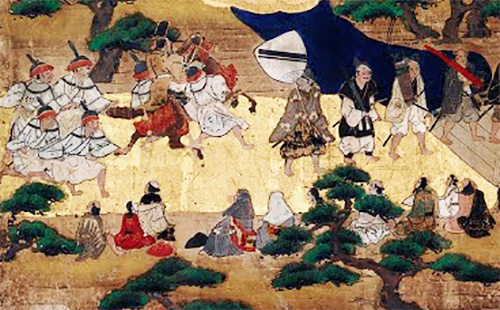
上の写真は「住吉祭礼図屏風」(堺市博物館収蔵)。
〜住吉祭は大阪の住吉大社の神輿が堺にある御旅所まで約7キロメートルの
道のりを渡御し夏の疫病などを祓う祭礼。江戸初期の表現様式を持つこの屏風は、
商家が並ぶ堺の町で賑やかに繰り広げられる住吉祭のようすを描いている。 〜
戦国期を越えて江戸体制が固まった時期の堺の様子が活写されていて
わたしの大好きな屏風絵の一枚です。
・・・ということで、いい家シリーズ特別篇として人間居住の大要素「都市」環境を
いい町として考えてみたいと思う次第です。
この屏風絵にはたくさんの家も描かれているので、面白いのですね。

English version⬇

[Japanese good town “Medieval Sakai” / Japanese good house special edition ㊱-1]
“Good house series” This time is a special edition of Sakai, a medieval city.
I have a business trip opportunity in Kansai for about a week and think about where to stay at that time
The first thing that came to my mind was the town of Sakai.
I think Oda Nobunaga was traveling to Sakai during his youth.
It is said that many history lovers often imagine.
From the medieval economy, the era of group male division based on rice production
Led by Christian countries such as Portugal, Spain and Ispania
The trade and commercial era of the Age of Discovery is rushing to Japan
The town of Sakai appears on the front stage of history as a receiving port in the Kinai area.
For Nobunaga, who has a sensitivity called “Kabukimono” because of his eccentricity when he was young,
It must have been Sakai’s free and open air suction power, not Kyoto’s authoritarianism.
His grandfather Nobusada and father Nobusada seized economic hegemony by controlling Owari’s free trade port.
As a result, it is said that he won the struggle within the same family and unified Owari.
In 1543, as a measure to approach the imperial court, which seems to be from the commercial land control interest in Maemachi.
It is a famous story to give 4,000 pieces of “Dairi Tsukiji repair fee”.
Until then, the majority of “cities” were politically motivated.
Political cities such as Kyoto and Kamakura were the mainstream from the first capital construction, Nara
A city far from politics has emerged in the limelight of history.
Nobunaga established hegemony in Kyoto in honor of Yoshiaki, the 15th generation of the Ashikaga Shogunate.
He declined to be told by Yoshiaki to “become a deputy general” in return.
Instead of sending a deputy to Sakai, he asked for regional control.
The Oda clan’s mercantilist orientation is clear.
The Oda clan was probably an innovator with a political and economic ideology that did not focus on land control.
It can be said that Sakai appeared on the main stage of history because of the Oda clan.
Japan’s economic aorta is a shipping area on the Seto Inland Sea trade route,
Sakai was by far the best among such economic bases.
A major port city of the main artery of foreign trade with Kinai, the heart of Japan.
Maritime trade is a big part of Japanese history, so it’s hard to come to the front stage,
An epoch-making period in which capitalists named Sakaishu first appear as individuals on the main stage of history.

The photo above is “Sumiyoshi Festival Folding Screen” (Sakai City Museum collection).
~ The Sumiyoshi Festival is about 7 kilometers from the Otabisho where the portable shrine of Sumiyoshi Taisha in Osaka is located in Sakai.
A festival that goes a long way and worships summer plagues. This folding screen with the expression style of the early Edo period
It depicts the lively Sumiyoshi Festival in the town of Sakai, where merchant houses are lined up. ~
The state of Sakai during the period when the Edo system was solidified beyond the Warring States period is captured live.
This is one of my favorite folding screen paintings.
… So, as a special edition of the good house series, a major element of human residence, the “urban” environment
I want to think of it as a good town.
Many houses are drawn in this folding screen picture, so it’s interesting.

【オオウバユリ食害犯人特定か?】


わたしのブログの本籍は住宅取材周辺地。なんですが、
やはりいろいろストレスも溜まるので、それ以外のテーマも書く。
というなかで、オオウバユリの観察は散歩の大きな動機でもあります。

で、オオウバユリは札幌円山自然林のなかで多数自生している。
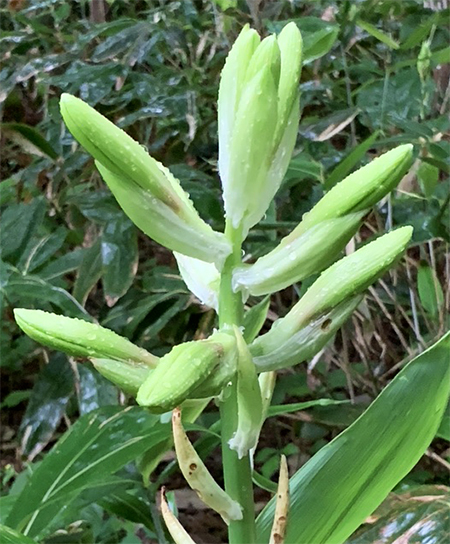
上の写真のように花芽が膨らんでくると、点々と食害痕跡。
まぁ、多少見栄えはこの時期は悪くなるけれど、
この時期を過ぎて花芽が開花する時期になると気にならなくなる。
自然の輪廻には、いろいろなイキモノの活動も関与することになる。
で、こういう食害の状況とはどういうことなのか、と思っていたら、
このブログの心強い応援者である、札幌在住のNさんから
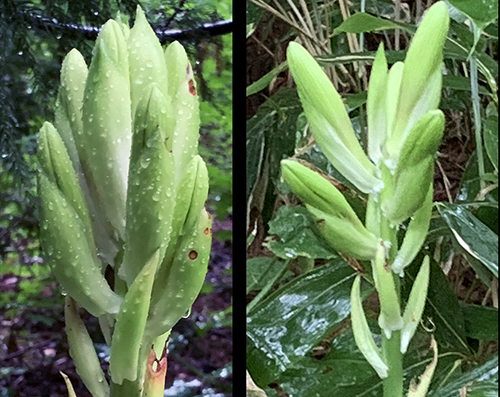
「オオウバユリの食痕は、たぶんカタクリハムシが犯人ですね。
体長1cmくらいの小豆色の甲虫です。「カタクリ」ハムシという名前ですけど、
カタクリよりユリ科に多くいるような気がします。
それでユリハムシという別称もあります。」という情報。
添付されていた写真が3枚目であります。
そんなことかと情報に感謝していましたが、
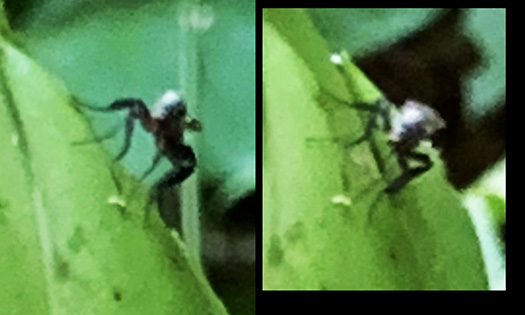
偶然にiPhoneでオオウバユリ撮影中にどうもそれらしき羽虫を見かけた。
上の写真の右上に忽然と出現している。
思いがけない事態に動転しつつ、もっと鮮明にと思ってシャッターを。
さらに角度を変えて個体特定をと考えたのですが、あえなくそこで飛翔。
残ったのは2枚の証拠写真。
やや不鮮明で角度も違うので完全にこのカタクリハムシなのかどうか、
確定はできませんでした。
しかしこういう機会が巡ってきたことだけでも奇跡的。
NHKの自然観察ドキュメンタリー撮影でもない、素人の撮影では
まことにあり得ないくらいの偶然の成せる技。
北の地で自然の夏の輪廻はことしも元気に繰り返されていることを実感。

見方によっては「気持ち悪い」と思われる方もいるかも、ですが、
しかしイキモノの必死に生きる様はまさに自然のいとなみ。
オオウバユリにとっては天敵なのかもですが、
この羽虫もまた、自然の貴重な一部であり輪廻連鎖のワンパート。
ヒグマの出没のような人間界への直接的脅威には対応すべきですが
そうでない場合には人間は自制的に観察に徹するべきでしょうね。

English version⬇

[Are you identifying the criminal who eats cardiocrinum? ]
The registered domicile of my blog is the area around the housing coverage. What is it?
After all, various stresses accumulate, so I will write other themes as well.
Observing the cardiocrinum cordifolia is also a major motivation for taking a walk.

So, many cardiocrinum cordifolia grow naturally in the Maruyama natural forest in Sapporo.
When the flower buds swell as shown in the photo above, there are traces of feeding damage.
Well, it looks a little worse at this time of year,
After this time, when the flower buds bloom, it doesn’t bother me.
Various activities of living things will be involved in the reincarnation of nature.
So, when I was wondering what this kind of feeding damage was like,
From Mr. N, who lives in Sapporo, who is a reassuring supporter of this blog
“Maybe the leaf beetle is the culprit in the food marks of Cardiocrinum cordifolia.
It is a russet-colored beetle with a body length of about 1 cm. The name is “Katakuri” leaf beetle,
I feel that there are more in the lily family than in the erythronium.
Therefore, there is another name called Yurihamushi. Information.
The attached photo is the third one.
I was grateful for the information, but
I happened to see those feather bugs while shooting Cardiocrinum cordatum on my iPhone.
It suddenly appears in the upper right of the above photo.
While being upset by an unexpected situation, I thought it would be clearer and released the shutter.
I thought about identifying the individual by changing the angle further, but I flew there for the time being.
There are two evidence photos left.
It’s a little unclear and the angle is different, so I wonder if it’s completely this leaf beetle.
It could not be confirmed.
However, it is miraculous just to have such an opportunity.
Not in NHK’s nature observation documentary shooting, but in amateur shooting
A technique that can be done by chance, which is impossible.
I realized that the natural summer reincarnation is being repeated vigorously in the northern part of the country.

Some people may think that it is “unpleasant” depending on the viewpoint, but
However, the desperate life of a living thing is just like a natural cousin.
It may be a natural enemy for Oobayuri,
This feather bug is also a precious part of nature and a part of the reincarnation chain.
We should respond to direct threats to the human world, such as the infestation of brown bears.
If this is not the case, humans should be self-restraint in their observations.

【散歩道での句読点・トンネル】


きのうまでちょっと根を詰めた作業が続いていて
ようやくにしてそれが終了したところ、やや脱力感傾向。
年齢相応にそういった部分での自己管理というのが大切だなぁと実感。
わたしの場合にはそういう精神性の疲労に対しては運動が最適。
夏を迎えて早朝散歩の時間距離が伸び続けています。
だいたい、1時間半で1万歩程度が日課になって来ている。
コースはおおむね2から3コースをランダムに選んでいる。
歩き出してからの気分に合わせて選択するのですが、
やはりある一定の「句読点」選びの基準があります。
ひとつは神社仏閣の境内やその空間で、精神的清浄感からのもの。
で、もうひとつは「なんとなく惹かれる」場所感覚。
わたしの場合、写真のスポットが妙にいいのです。

トンネルはフロイト的に言えばそれこそピタリなんですが、
どうも選択要因はもっと複合的なような気がする。
自分的にいちばん大きい要素は、道路を横断するのに
横断歩道を渡らずにショートカットできるという
利便快適性が大きいのではと思っています。
歩くという人間体動作には当然ながら「リズム感」が伴っている。
その人なりに自律的な時間と体感との反応リズムがあって
横断歩道というような不自然な社会理性的な障害に対して
無意識にそれを忌避したい、という選択があるように思える。
で、そういう体感からすると、トンネルという暗がりとそれを抜ける
開放感というのはワンセットで「句読点」を形成している。

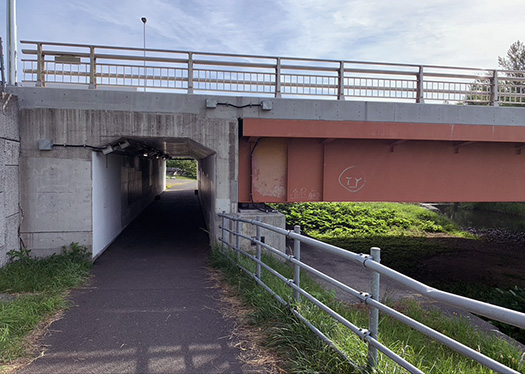
写真の橋の上の道路は札幌市内でも有数の幹線道路旧5号線。
人間の体動作リズム感としては、無意識にそういう対自動車の体験を回避する。
川に沿った散歩道はおおむねイキモノとしての自然な環境。
そういうふたつの要因からトンネルは人間を救っているように思える。
そんな理由からいつしか、この句読点を最重視する散歩コースをたどるようになる。
動物としての本性と都市空間の妥協点のような建築的装置なのかなぁ。
人間と都市空間、建築空間との関係性としても
始原的な部分のイマジネーションを刺激してくれる。
そんな気分がしております。ヘンかなぁ・・・。

English version⬇

[Punctuation marks and tunnels on the promenade]
Work that was a little rooted continued until yesterday
When it was finally over, I tended to feel a little weak.
I realized that it is important to manage yourself in such areas according to your age.
In my case, exercise is the best way to deal with such mental fatigue.
With the arrival of summer, the time distance for early morning walks continues to grow.
About 10,000 steps are becoming a daily routine in about an hour and a half.
The courses are roughly selected from 2 to 3 courses at random.
I choose it according to my mood after I start walking.
After all, there are certain criteria for selecting “punctuation marks”.
One is the precincts of shrines and temples and their spaces, which are from a sense of spiritual cleanliness.
And the other is a sense of place that is “somehow attracted”.
In my case, the spots in the photos are strangely nice.

The tunnel is perfect in Freud’s terms,
I feel that the selection factors are more complex.
The biggest factor for me is to cross the road
You can make a shortcut without crossing the pedestrian crossing
I think that convenience and comfort are great.
Naturally, the human body movement of walking is accompanied by a “sense of rhythm”.
Each person has an autonomous reaction rhythm of time and experience
For unnatural social and rational obstacles such as pedestrian crossings
There seems to be a choice to unknowingly avoid it.
So, from that kind of experience, the darkness of a tunnel and going through it
The feeling of openness forms a “punctuation mark” in one set.

The road on the bridge in the photo is the old No. 5 highway, which is one of the leading highways in Sapporo.
As for the sense of human body movement rhythm, we unconsciously avoid such experiences with automobiles.
The walking path along the river is generally a natural environment as a living thing.
Tunnels seem to save humans from these two factors.
For that reason, one day, I will follow a walking course that places the highest priority on this punctuation mark.
I wonder if it is an architectural device that is a compromise between the nature as an animal and the urban space.
As a relationship between humans and urban space and architectural space
It stimulates the imagination of the primitive part.
I feel like that. I wonder if it’s strange …