本文へジャンプ

【国家創成=経済発展と神武東征 日本列島37,000年史-40】


きのう皇學館大学・岡田登名誉教授の説をご紹介しました。
日本政治の初源期においての最大のポイントが「外交」であったという考え。
経済としての日本社会の発展は弥生の水田農耕が列島に拡散していったことで
その農耕最適地がどんどん東進していった。
九州南部は独特の土壌地質であって、水田農耕としては瀬戸内海地域から
さらに畿内地域、東海・北陸と経済社会拡大が進展していった。
アジアからの旺盛な移民流入もあったに違いない。
ことは食糧にかかわることなので当然人口爆発ということと同義だった。
そういう社会環境の進展の中で祭政として方向性を領導する支配層は
中国社会が国家を生成させることで発展の加速力を得ていることを
交渉・交易の過程で強烈に体験させられただろうと思う。
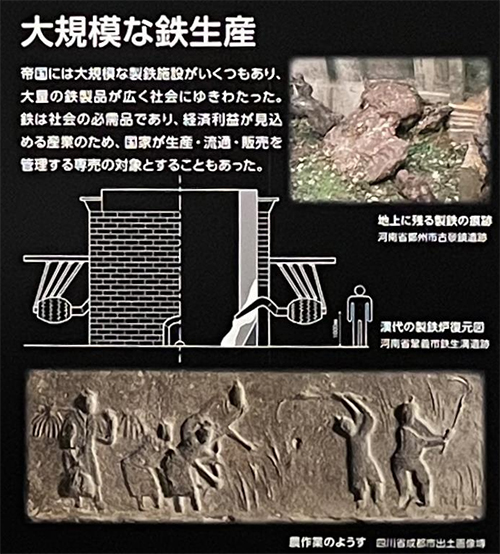
漢は鉄という産業の最重要ポイントを「国家管理」することで
社会発展をこれみよがしに周辺の社会に強く認識させていった。
漢字という共通コミュニケーション手段をも創造し、
社会コントロール方法としての「政治支配」構造をつくり出していた。
こういった「外圧」があったときに歴史年代の日本社会がどう対応したか。
直近では明治の開国、そして戦後の社会変動を見れば、
日本の選択というのは一択だった可能性がもっとも高い。
そういう「外圧」をむしろ積極的にテコにして社会進化を進める。
統一国家というものの強烈な「有用性」を目の当たりにすれば
それを積極的に導入し「学んで」咀嚼していくのが列島人社会の特質。
明治国家、戦後国家がたどったと同じ内容のことが最初期体験として
この段階で生起したと考える方がはるかに妥当だと思える。

日本社会でもその地理的な要素から農業発展には濃度の違いが生まれ
各地域で「八百万」の支配構造が自然に生成されていただろうけれど、
その各指導層としては経済で根幹的に重要な鉄の確保が
中国国家によって左右される現実の中で、それへの対応を常に迫られていた。
各地域間の覇権同士では競合関係もあっただろうし、
それらの「合従連衡」関係も進展していったに違いない。
出雲王権とはこういうゆるやかな連合関係の存在だったか。
そういうなかで「神武東征」という「日本」国家の起動要因が生成した。
こういった「大状況把握」がふさわしいとわたしには思えます。
そして「統一政権国家」というものの実効性を考えれば
対外的な文化導入地域としては北部九州が適地だとはいえ、
政権の列島支配のバランスを考えれば「東征」に蓋然性がある。
この時代の、そしてそれ以降の社会の構図として
畿内地域が中央政府所在地としてはもっとも妥当だったのだろう。
最終的に奈良平野地域が選択されたのには、独自の条件もあっただろう。
この要因分析とその後の社会発展に於いてこの選択が日本人と国家にとって
最適解であったかどうかは検証の余地があるだろう。
一方で奈良平野が選択されたことで生じた社会経済文化的な特異要因も
大いに検証されていく必要があると思う。こっちの方が興味深いか(笑)。

English version⬇

The Creation of a Nation = Economic Development and the Jimmu Expedition to the East 37,000 Years of the Japanese Archipelago – 40]
Eastward expansion of rice paddy farming throughout Japan. The economic and social development by the establishment of the Chinese state was seen on the side. The probability of the Jinmu expedition and the creation of a nation increased.

Yesterday I introduced a theory by Professor Emeritus Noboru Okada of Kōgakukan University.
He believes that diplomacy was the most important factor in the early period of Japanese politics.
The development of Japanese society as an economy was the result of the spread of Yayoi rice paddy farming across the archipelago.
The optimum land for agriculture moved eastward.
Southern Kyushu has a unique soil geology, and paddy field agriculture was developed in the Seto Inland Sea region, the Kinai region, the Tokai region, the Tokai region, and the Tokai and Tokai regions.
The economic and social expansion of the region continued to progress from the Seto Inland Sea region to the Kinai region, and then to the Tokai and Hokuriku regions.
There must have been a strong influx of immigrants from Asia.
The population explosion was naturally synonymous with the food shortage.
In such an evolving social environment, the ruling class, which guided the direction of the government as a ceremonial regime, had the responsibility to ensure that Chinese society would be able to generate a nation.
Chinese society was gaining an acceleration of development through the creation of the state.
The Han Dynasty was the most important industrial power in the iron industry, and it was the most important industry in China.
By “state controlling” the most important point of industry, iron, the Han
The Han Dynasty, by “state control” of the most important point of its iron industry, made the surrounding societies aware of its social development.
The Han also created a common means of communication in the form of Chinese characters
This was a way to control society and create a structure of “political domination”.
How did Japanese society in the historical period respond to such “external pressure”?
Looking at the most recent period, the opening of Japan to the outside world in the Meiji era, and the social changes that occurred after the war, it is clear that Japan had only one choice.
It is most likely that Japan had only one choice.
Japan’s social evolution was driven by such “external pressure” rather than by its own positive leverage.
If we see the strong “usefulness” of a unified nation, we will actively introduce and “learn” it.
The characteristic of the archipelagic societies is that they actively introduce, “learn,” and chew it up.
It is much more likely that the same thing that happened to the Meiji and postwar nations
It is far more plausible to think that the same thing that happened to the Meiji and postwar states occurred at this stage of their initial experience.

Even in Japanese society, the geographical factors created differences in the concentration of agricultural development.
The “eight million” ruling structure would have been naturally generated in each region, but the leaders would have been more concerned with the economy.
However, the reality is that the Chinese state is in charge of securing iron, which is fundamentally important for the economy.
The leaders of each of these regions had to deal with the reality that the Chinese nation was in control of the availability of iron, which was fundamentally important to their economies.
There may have been competition among regional hegemons.
The Izumo kingdom was not a loose, united entity, but a “combination” of the two.
The Izumo royalty may have existed in such a loose federative relationship.
It was in such a situation that the “Jimmu expedition” was the starting factor of the “Japanese” state.
I believe that this kind of “grasp of the larger situation” is appropriate.
And if we consider the effectiveness of the “unified government state
Although northern Kyushu was the best place to introduce Japanese culture to the outside world, it was not the best place to introduce Japanese culture to the Japanese people.
However, the balance of the regime’s control over the archipelago makes the “Eastern Expedition” more probable.
The composition of society in this period and beyond
The Kinai region was probably the most appropriate location for the central government.
The final choice of the Nara Plain region may have had its own unique conditions.
In analyzing these factors and the subsequent social development, it is important to examine whether this choice was the optimal solution for the Japanese people and the nation.
There is room to verify whether this choice was the best solution for the Japanese people and the nation in the analysis of these factors and the subsequent development of society.
On the other hand, the socioeconomic and cultural peculiarities that resulted from the selection of the Nara Plain also need to be examined.
I think it is necessary to examine the socioeconomic and cultural peculiarities that resulted from the selection of the Nara Plain. This is more interesting (laugh).

【辛酉思想と対中外交「日本」創生 日本列島37,000年史-39】


邪馬台国論争、日本王権の古代史ではさまざまな研究がされているけれど、
いまだに「通説」と言われる決定打は出てこない。
とくに古事記・日本書紀の記述で歴代天皇の在位年が人間の体力常識を越えて
異常な高齢生存と記述されているので「神話」とされてきたことが
大きな要素になっているのだと思います。実はこの点について最近、
皇學館大学名誉教授の岡田登氏の解説に感銘を受けました。
歴史作家で直木賞作家の安部龍太郎氏は好きな作家なのですが、
かれが2年前に小学館から出版した「日本はこうしてつくられた:
大和を都に選んだ古代王権の謎」という本の中でこの岡田氏の説が紹介されていた。
〜9代までの天皇の在位年の異常な長さの原因は国家創成期の対外関係、
日本国家を認定させるための唐王朝との外交折衝の結果だという。
唐側には皇帝は「辛酉」の年に天命を受けて国家を創設する思想があって
それに合わせるには、本来1世紀はじめ頃と推認される初代神武天皇が
その思想に合致させるために紀元前660年に即位したことになった。〜
※辛酉というのは西暦年を60で割って1が余る年。革命要素があるとされる。

第10代の崇神天皇について考古的に「纏向遷都」が事実とされてきている。
以降の天皇の在位記録については合理性があるとされているので、
この説に強く惹かれた次第です。
結果、神武東征は1世紀初頭という説が常識的な判断となる。
そしてもうひとつ、日本の国家創生には東アジア、とくに中国王権との
強い緊張関係が非常に重要な要素だったというポイント。
われわれ現代人は、国家は当然の存在という常識バイアスが強いけれど、
言うまでもなく創成期にはそういうバイアスはない。
もっと直接的な「脅威」が存在していたという方が必然性が高い。
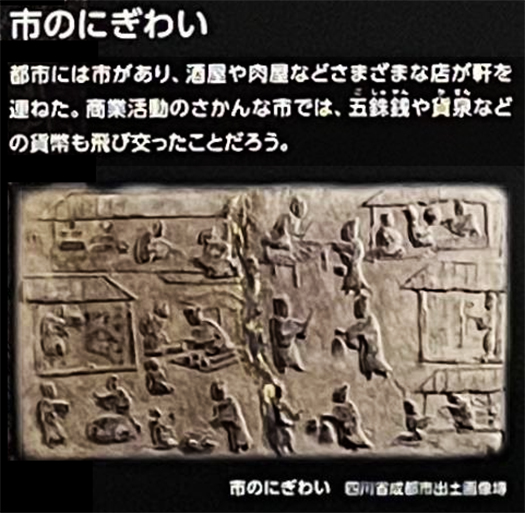
国立歴史民俗博物館での展示では、こういう事情を背景説明するように
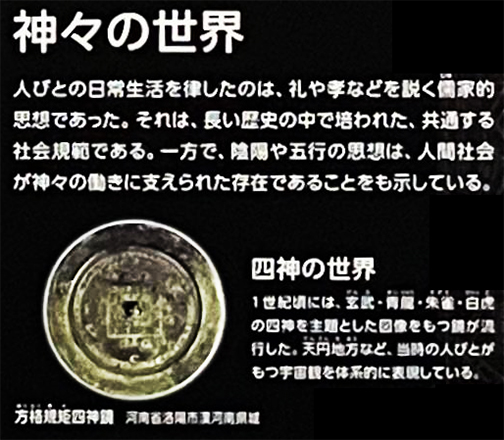
この時期の中国王権・漢の社会について確証に基づいた解説。
わが国の寺院建築などでよくみられる「四神」イデオロギーが一般化している。
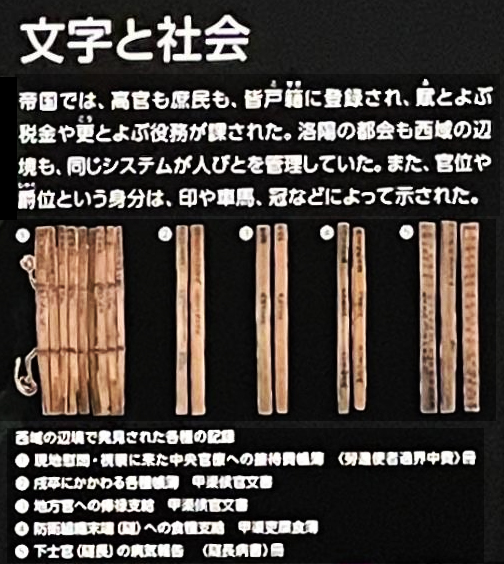
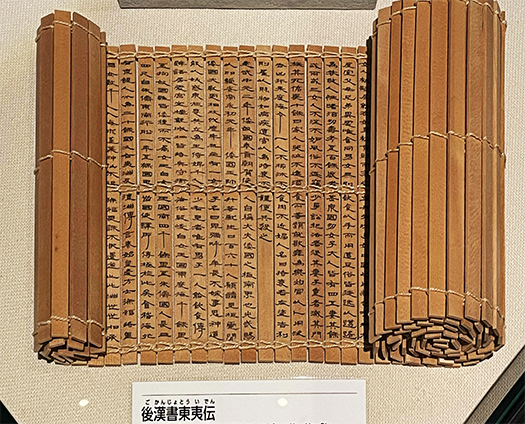
そして「漢字」という文字の体系によって政府の記録が保存され
その文書として「木簡」形式とそれを緊結させる製本方法までが誕生している。
秦の時代からの社会の全把握システムが成熟をみせてきている。
鉄という経済推進力、政治システムの発展進化。
軍事的な脅威という以上に根底的な「危機意識」が日本の支配層に
急速に拡大していったことは体感的に理解できる。
その危機意識が神武という存在に凝集し「東征」を成功させたのではないか。
各地に生成されていた古代地域権力にとってもこの危機認識が共有されていた。
奈良盆地での日本国家生成のリアリティを強く感じる。

English version⬇

The State Society of the Han Dynasty in China in the 1st and 2nd Centuries. 37,000 Years of Japanese Archipelago History-39
The year of Jinmu’s accession to the throne was set in accordance with the idea that heavenly destiny would be revolutionized in the year of the rooster. Responded to the description with diplomatic pressure. Shared recognition of the necessity of a unified archipelago nation. ・・・・・・.

Although various studies have been conducted on the controversy of the “evil kingdom” and the ancient history of Japanese kingship, no definitive “common theory” has yet emerged.
However, there is still no definitive “common theory” that has emerged.
In particular, the reigning years of emperors in the Kojiki and Nihonshoki are described as abnormally old, beyond the common sense of human physical strength, so it has been described as a “myth.
The fact that the reigns of emperors in the Kojiki and Nihonshoki are considered “myths” is a major factor in this.
I think this is a major factor. In fact, I have recently read a book on this point by
I was impressed by the commentary of Noboru Okada, professor emeritus at Kōgakukan University, who is a history writer and Naoki Prize-winning author.
Ryutaro Abe, a Naoki Prize-winning historical writer, is one of my favorite authors.
He published a book titled “This is How Japan Was Created” two years ago from Shogakukan:
In his book “How Japan Was Created: The Mystery of the Ancient Kingship that Chose Yamato as Its Capital,” published by Shogakukan two years ago, Okada’s theory was introduced.
〜The reason for the unusual length of the reign of emperors from the first to the ninth emperor was foreign relations during the founding period of the nation, and
The reason for the unusual length of the reign of the first nine emperors was the result of diplomatic negotiations with the Tang Dynasty to have the Japanese nation recognized as a state.
The Tang Dynasty had the idea that an emperor was to receive a heavenly command and establish a state in the year of the “Xin-Yu” (the year of the rooster).
In order to conform to this, the first Emperor Jinmu, who is estimated to have been around the beginning of the 1st century, was appointed as the first emperor of the Tang Dynasty.
To match this idea, the first Emperor Jinmu, who is estimated to have ascended the throne in the early 1st century B.C., was supposed to have ascended the throne in 660 B.C. ~.
*Hin-Yu is the year in which the Western year is divided by 60 and one is left over. It is said to have revolutionary elements.

It has been archaeologically accepted as a fact that the 10th Emperor Sojin was the first to reign.
Since it is considered reasonable for the reign records of subsequent emperors
I was strongly attracted to this theory.
As a result, the theory that the Jinmu expedition took place in the early 1st century is a common-sense decision.
And one more thing, the strong tension with East Asia, especially with the Chinese royalty, was a very important element in the creation of the Japanese nation.
The other point is that strong tension with East Asia, especially with the Chinese royalty, was a very important factor in the creation of the Japanese state.
We modern people have a strong common sense bias that a nation is a natural entity, but it goes without saying that such a bias existed in the early days of the nation.
However, it goes without saying that we do not have such a bias in the early days of Japan.
It is more inevitable that a more direct “threat” existed.
In the exhibition at the National Museum of Japanese History, as if to explain the background of this situation
The exhibition at the National Museum of Japanese History provides an explanation of Chinese royalty and Han Chinese society during this period, based on evidence.
The “Four Gods” ideology, which is often seen in temple architecture in Japan, has become common.
The Chinese writing system of “Chinese characters” was used to keep government records.
The “wooden letter” format and the bookbinding method to bind them together were born as documents.
The entire system of grasping society that had existed since the Qin Dynasty had reached maturity.
The economic driving force of iron, and the development and evolution of the political system.
The rapid expansion of the Japanese ruling class’s sense of crisis, which was more fundamental than a military threat, was a result of the rapid expansion of their sense of understanding.
This sense of crisis was manifested in the existence of the Jinmu.
This sense of crisis may have coalesced in the presence of Jinmu, who successfully led the “Eastern Expedition” to Japan.
This sense of crisis was also shared by the ancient regional powers that had been established in various regions.
I strongly feel the reality of the formation of the Japanese nation in the Nara Basin.

【日本国家創成期の国際関係 日本列島37,000年史-38】


さていよいよ日本列島に国家というものが生成される歴史過程になる。
邪馬台国論争とか、古代史最大のナゾという領域なので
国立歴史民俗博物館展示でも総じて抑制的でしたが、しかし、
その後の社会変化にとって決定的でもある。避けて通るわけにも行きません。
観察者としての個人的見解ということでご理解いただければ幸い。
できるだけ客観的な事象に絞って稿を進めてみたい。

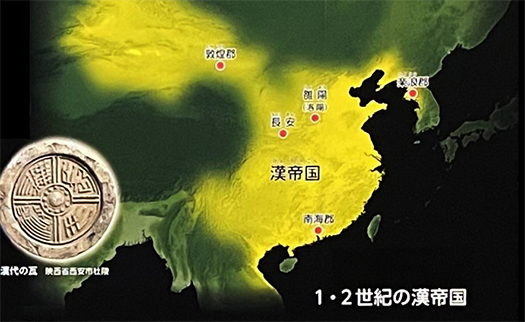
中国では秦の成立以降、中央集権的な「中華皇帝」国家が出現する。
それ以前の書物でもいくつかの「倭国」に触れた記述があるとされるけれど、
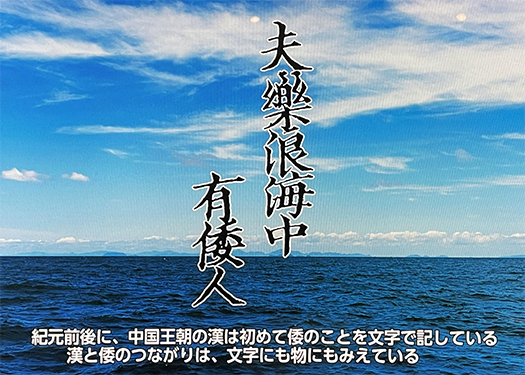
いわゆる「正史」で記述されるのは、漢の時代になる。
中国では王朝の交代ごとに前代の正史が書かれる。
前漢(紀元前206年-8年)と後漢(25年-220年)が「漢王朝」の時代。
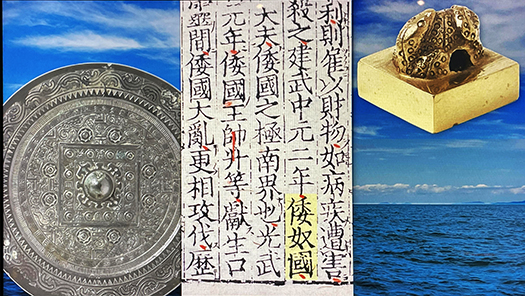
初出は「漢書地理志」で成立は紀元後84年とされる。
班固という人物が書き前漢時代から後漢の初期のことを述べている。
1.東の海に倭人の住む島がある。倭人の国は百ケ国以上に分かれている。
2.定期的に漢に倭の国々の王の使いがやって来て、貢ぎ物を持ってくる。
もうひとつが「後漢書東夷伝」で成立は紀元後432年。
范曄という人物記述のこの後漢の歴史書では以下の通りの記載。
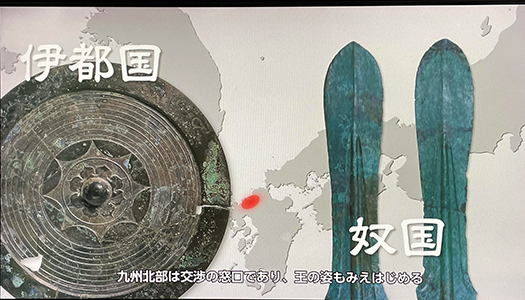
1.西暦57年に倭の奴国王が貢物。日本は小国分立中。奴国は日本の最南端と。
後漢の皇帝である光武帝は金印を与えた。奴国王であることを認証。
2.永初元年(107年)倭国王帥升等、生口160人を献じ、請見を願う。
成立年代に即して整理するとこういう記録があることになる。

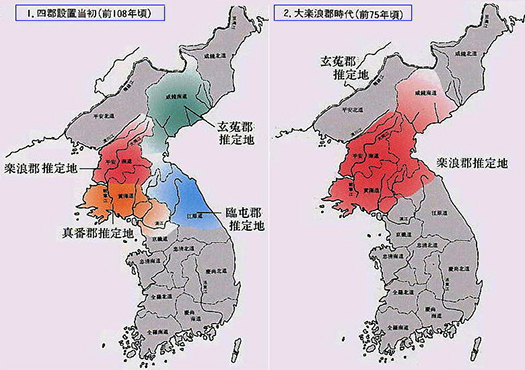
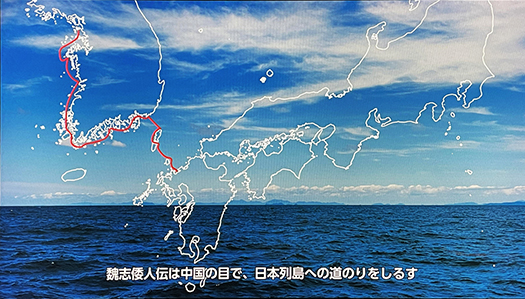
この時代、漢は朝鮮半島いまの平壌周辺に「楽浪郡」を置いた。
巨大集権国家が日本列島の近くに権力拠点を作ったことが、
半島地域を介して日本列島社会にも激震をもたらせたと想像できる。
すでに弥生の水田農耕社会が広がっていた列島社会、
日常的な戦争行為が繰り返されていた「倭国乱れる」状況の中で
それぞれの族長層にとって、この巨大武権国家の成立、
その地方政庁・郡がすぐ近隣に出現したことが、
どれほどの外交的緊張事態であったか、火を見るよりもあきらか。
その状況の中で自分の利益追求を図るのが自然。
結果、周囲のクニに対してこの状況を利用して優越性を持とうとも考える。
たぶん、楽浪郡の以東地域、朝鮮半島社会では激震となり日本列島社会でも
このような動揺は普遍的に起こった。
なんといっても最先端文明利器としての鉄を独占的に管理している強国。

経済的にも軍事的にもその関係が地域での力関係に影響を持ったことは自明。
朝貢関係というアジア世界で一般的な国家生成過程が始まった。
このことが、日本列島の祭政にとってかなり決定的な要因になっていく。
朝貢体制に翼賛する方向もあり、一方で地域社会の求心性が高まりもする。
ただし、朝鮮半島社会も基本的にはそうであったように、
日本社会は後者の方向に向かっていったと言えるのでしょう。
中国国家に対しては独立性の高い民族自決の方向を基本的に選択した。
この楽浪郡との関係が動機として強かったように思える。

English version⬇

International Relations at the Founding of the Japanese Nation: The 37,000-Year History of the Japanese Archipelago – 38
The emergence of the Han Dynasty’s ruling body called Yeoknam-gun in the northern part of the Korean Peninsula caused an upheaval in the society of the peninsula. The Kuni society of the Japanese archipelago is also hit by the upheaval.

Now comes the historical process of the creation of a nation in the Japanese archipelago.
Since this is an area of the greatest riddle in ancient history, such as the “Yabataikoku” controversy, the National Museum of Japanese History exhibition was generally restrained.
The National Museum of Japanese History exhibition was generally restrained, but it is, however, also decisive for the social changes that have taken place since then.
However, it is also decisive for the social changes that have occurred since then. We cannot avoid it.
I hope you will understand that this is my personal view as an observer.
I would like to focus on objective events as much as possible.

After the establishment of the Qin Dynasty, a centralized “Chinese emperor” state emerged in China.
Although there are some descriptions of “Yamato” in books written before the establishment of the Qin Dynasty, there are no descriptions in the so-called “authentic history” of Japan.
However, it was not until the Han dynasty that the so-called “authentic history” of Japan was written.
In China, an official history of the previous dynasty is written for each dynastic change.
The Former Han Dynasty (206-8 B.C.) and the Later Han Dynasty (25-220 B.C.) were the periods of the “Han Dynasty.
The first edition of the “Han Book of Geography” is said to have been written in 84 A.D.
It was written by a man named Hanguo, and describes the period from the Former Han Dynasty to the early years of the Later Han Dynasty.
There is an island in the eastern sea where the Japanese live. The Japanese nation is divided into more than a hundred countries.
2. Periodically, envoys of the kings of the Japanese nations would come to Han to bring tribute.
The other is the “Later Han Book of Oriental and Barbarian Biography,” which was established in 432 AD.
In this history book of the Later Han Dynasty, written by a man named Fan Ye, the following is described.
In 57 A.D., King Nukoku of Japan paid tribute. Japan was in the process of dividing into smaller countries. Nukoku is the southernmost part of Japan.
Emperor Kwangmu, the emperor of the Later Han Dynasty, gave a gold seal Authenticating that he was the King of Nukuni.
In the first year of Eishu (107th year), the king of Nukoku, Marshal Masu, presented 160 people and asked for their cooperation.
The records of this period are as follows.

In this period, the Han Dynasty established “Yeoknam-gun” in the vicinity of what is now Pyongyang on the Korean peninsula.
The fact that a large centralized state established a base of power near the Japanese archipelago is a clear indication that the Han Dynasty had a strong influence on Japanese society through the peninsula region.
The establishment of a power base near the Japanese archipelago by a large centralized state can be imagined to have sent tremors through the peninsula to the society of the Japanese archipelago.
The Yayoi paddy-field farming society had already spread across the archipelago.
In the midst of the “Japanese Warring States” situation, in which daily acts of war were being repeated, it is not difficult to imagine the impact of this huge earthquake on the local society.
The establishment of this huge military power state, and its local government offices and counties
The fact that the local government offices and counties of the state appeared in the immediate vicinity was a source of great diplomatic tension.
It is obvious how much diplomatic tension there was for each of the chiefs.
Under such circumstances, it was natural for them to pursue their own interests.
As a result, they also wanted to take advantage of the situation to gain superiority over the surrounding kunis.
Perhaps, such an upheaval, which has become a major shock in the Korean Peninsula and society east of Yerelam-gun, will also be felt in the Japanese archipelago.
Such upheavals occurred universally in the Japanese archipelago.
After all, this is a powerful country that exclusively controls iron as the most advanced civilized weapon.

It is obvious that the relationship had an impact on power relations in the region, both economically and militarily.
The tribute relationship, a state-generating process common in the Asian world, began.
This would become a fairly decisive factor for the ritual government of the Japanese archipelago.
There was a winging of the tribute system, and on the other hand, the centripetal force of the local community increased.
However, as was basically the case with Korean society
Japanese society could be said to have moved in the latter direction.
It basically chose the direction of national self-determination with a high degree of independence vis-à-vis the Chinese nation.
This relationship with Rakunami-gun seems to have been a strong motive.

【沖縄の貝塚文化と農耕・戦争社会 日本列島37,000年史-37】


さて国立歴史民俗博物館の先史時代から国家創成期までの展示の
大更新に突き動かされ、それを学び日本史を再学習する意味のブログシリーズ、
「日本列島37,000年史」ですが、明日からは次の国家創成期に移りたい。
考古発見事実に基づいた歴史の再構築と思えて、突き動かされてきました。
そういう意味では以降は文献資料も多くなってくる時代なので
最大の興味分野になってくるでしょう。
・・・というところですが、先日北海道島の異質な状況についても触れた。
独自の文化スタイルを維持した様子は北海道人なので学習もしています。
いろいろな遺跡などにも足を運んでまざまざと実感がある。
一方で、沖縄についてはあんまり考古を知らない。
一応、那覇の博物館などは見学しているけれどあんまりピンとこなかった。
グスク時代(12-16世紀頃)以前の社会の実相はどうも不明。
沖縄では稲作の弥生時代はなくその時代は主に漁撈中心の生業が考えられている。
そのために貝塚時代後期、あるいは弥生・古墳並行時代と呼ばれる。
代表的な貝塚遺跡といわれる沖縄県うるま市「宇堅貝塚」ではゴホウラ製貝輪2点、
イモガイ製貝輪6点、方格規矩鏡破片3点などが出土。
ほかにガラス玉、板状鉄斧、砥石、弥生後期土器などが出土している。
しかし社会の実相研究が進んでいるとは言い切れない。国立歴史民俗博物館や、
沖縄県立博物館の研究成果などに今後期待していきたいところ。

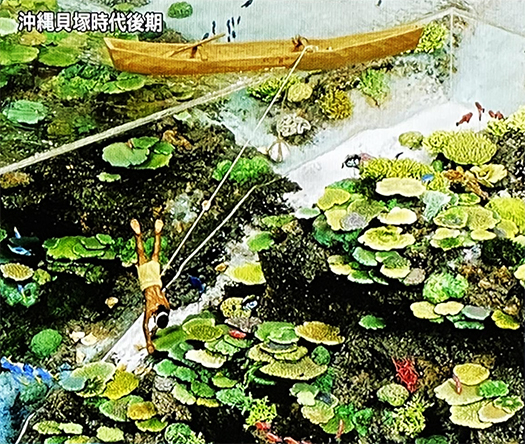
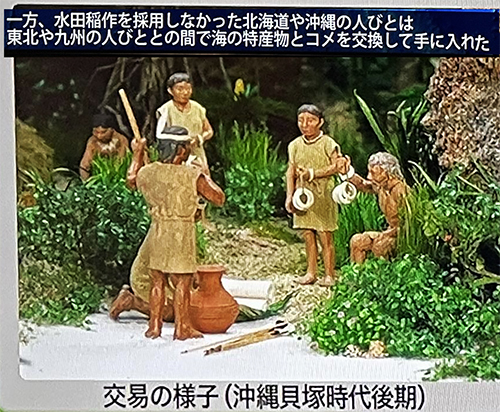
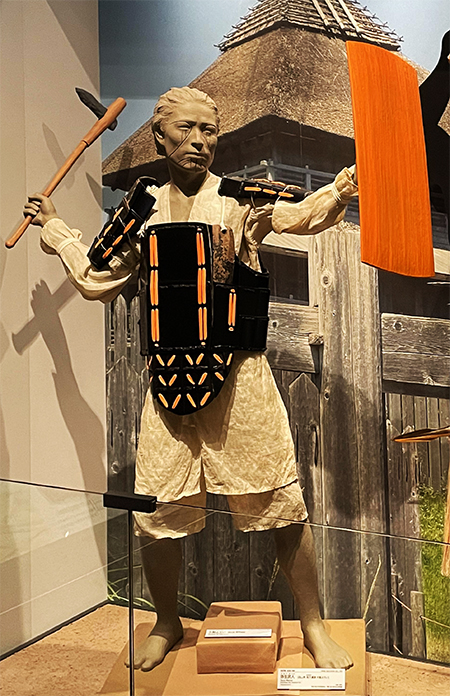
で、国立歴史民俗博物館展示では上のようなイメージが創作されていた。
沖縄や奄美地域では珊瑚礁地形環境に適応した「貝塚文化」とまとめられている。
いかにも海人族的なライフスタイルと言えるでしょうか。
なので結果としては貝類などを採集して肉身を食したあと、
その貝殻を一定加工して本土に「交易品」として提供し、
対価としてコメや鉄器などの有用物資を獲得するライフスタイル。
環境要件は違いがあるけれど北海道の「続縄文」と似た生業なのでしょうか。
北海道では「農耕」は明治期まで本格的には開始しなかった。
その結果、政治権力のようなものも「部族」的な首長制がみられる程度。
それに対して沖縄ではグスク期が12-15世紀にははじまり、そこで
農耕が普遍化開始した途端にグスク(城郭)と政治・戦争、軍事が世を覆う。
やはり農耕が政治とか権力とかの基盤であることを端的に表している。

さて農耕は現代までの人口増加をもたらしたけれど、ネクスト社会は
この増加した人口を維持し続けていけるのかどうか。
農耕とは人類の巨視的な地球気候対応だとすれば、逆に農耕が成立しにくい環境が
今後生起する可能性もあるのだとも思う。
また世界はむしろ社会的原因で人口減少局面を迎えてきているとも思う。
「地球の意思」は人類をどうしようとしているのでしょうか?
・・・これで弥生の世は終了し、いよいよ日本国家創成期へ。

English version⬇

Okinawa’s Shell Mound Culture, Agriculture, and War Society 37,000 Years of Japanese History-37
Okinawa began agriculture around the 12th century. Okinawa began agriculture around the 12th century and entered the age of warring gusuku. Proof that agriculture was the foundation of politics, war, and power. …

Now, the National Museum of Japanese History and Folklore’s exhibition from the prehistoric age to the founding of the nation
I was motivated by the great renewal of the National Museum of Japanese History’s exhibition from the prehistoric age to the period of the nation’s founding.
Tomorrow, I would like to move on to the next topic, the period of the founding of the nation.
I have been motivated by the idea of reconstructing history based on archaeological findings.
In that sense, it’s a period that will have a lot of literary materials from then on.
This will be my greatest field of interest.
I mentioned the other day the heterogeneous situation of the island of Hokkaido.
I am also learning about how they maintained their own unique cultural style because I am a Hokkaido native.
I have visited various archaeological sites and have a vivid sense of it.
On the other hand, I do not know much about the archaeology of Okinawa.
I have visited a museum in Naha, but it didn’t really hit me.
The reality of the society before the Gusuku period (12th to 16th century) is still unclear.
In Okinawa, there was no Yayoi period when rice was cultivated, and the main occupation during that period is thought to have been fishing.
For this reason, it is called the late shell mound period or the parallel Yayoi and Kofun periods.
Uken Shell Mound in Uruma City, Okinawa Prefecture, which is said to be a representative shell mound site, has two gohora shell rings and six mussel shell rings.
At Uken Shell Mound in Uruma City, Okinawa Prefecture, two gohora shell rings, six mussel shell rings, and three pieces of square rectangular mirrors have been excavated.
In addition, glass beads, plate iron axes, whetstones, and pottery from the late Yayoi period have also been excavated.
However, it cannot be said that research on the actual state of society has progressed. The National Museum of Japanese History and Folklore, the Okinawa Prefectural Museum, and other museums have conducted research on the actual state of society.
The National Museum of Japanese History and Okinawa Prefectural Museum’s research results will be expected in the future.

In the National Museum of Japanese History exhibition, the above image was created.
In the Okinawa and Amami areas, it is summarized as “shell mound culture” adapted to the coral reef topography environment.
How can we say that this is a very sea people lifestyle?
So, as a result, after gathering shellfish and other animals and eating their flesh.
After gathering shellfish and eating the meat, the shells were processed and offered to the mainland as “trade goods” in exchange for rice and ironware.
In exchange, they acquired useful commodities such as rice and ironware.
Although there are differences in environmental requirements, is this lifestyle similar to that of the “Sequel to Jomon” in Hokkaido?
In Hokkaido, “agriculture” did not begin in earnest until the Meiji period.
As a result, political power was limited to a “tribal” chief system.
In Okinawa, on the other hand, the Gusuku period began in the 12th-15th century, and it was there that agriculture began to become universal.
As soon as agriculture became universalized, gusuku (castles), politics, war, and military affairs dominated the world.
This is a clear indication that agriculture is the foundation of politics and power.

Agriculture has brought about population growth up to the present day, but the next society must be able to sustain this increase in population.
Can the next society sustain this increase in population?
If agriculture is mankind’s macroscopic response to the global climate, there is a possibility that an environment will arise in the future that will make it difficult for agriculture to be established.
If agriculture is a macroscopic response to the global climate, there is a possibility that an environment will arise in the future that will make it difficult for agriculture to take root.
I also believe that the world is entering a phase of population decline due to social causes.
What does the “will of the earth” have in store for mankind?
…With this, the Yayoi period has come to an end, and we are finally entering the period of the creation of the Japanese nation.

【弥生期の死と墳墓 日本列島37,000年史-36】


きのう見たように鉄という産業革命が弥生の世を決定づけたものだろう。
中国大陸で開発された製鉄技術が最初はその製品・利器が直接導入され
その後、製鉄原料が輸入されて現場で「鍛冶」加工された。
集団労働が基本である水田農耕においてはこの鉄器管理が最重要で
そこに支配という権力構造の高度化の根源的意味があった。
吉野ヶ里遺跡にその痕跡があるとされ、はるか後年の飛鳥宮でも
鍛冶工房跡が王権中枢の数百メートル範囲で発掘されている。
このことがその後の「日本史」の基軸的な動因と思える。

さてそういう社会の中で、先人たちの多くの死が積層していった。
弥生社会は紀元前10世紀ころから成立し近畿で「前方後円墳」が成立するまで
およそ1200年間、各地でさまざまな墓が作られた。
ひとの死はその時代相を表しひとびとの祈りの本質もうかがえる。
古い時代順に、全国の発掘例を上げてみたい。
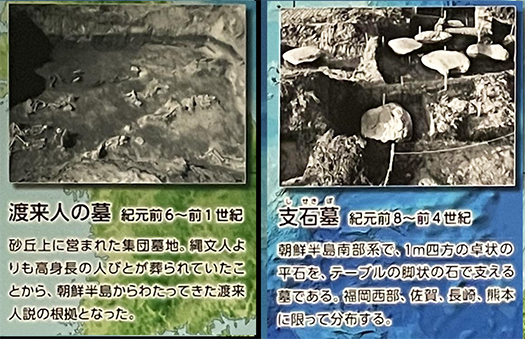
●支石墓<紀元前8-紀元前4世紀〜福岡県志登支石墓群>
朝鮮半島南部系で1m四方の卓状の平石をテーブル脚状の石で支える墓。
福岡西部、佐賀、長崎、熊本に限って分布する。
●渡来人の墓<紀元前6−紀元前1世紀〜山口県土井ヶ浜遺跡>
砂丘上に営まれた集団墓地。縄文人より高身長の人びとが葬られていたことから
朝鮮半島から渡ってきた「渡来人」説の根拠となった。
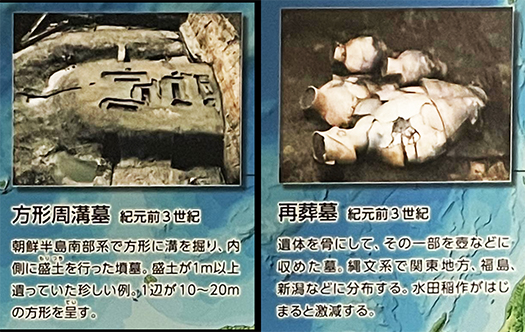
●方形周溝墓<紀元前3世紀〜大阪府瓜生堂遺跡>
朝鮮半島南部系で方形に溝を掘り内側に盛り土を1m以上遣っている珍しいカタチ。
1辺が10-20mの方形を呈している。
●大型墳丘墓<紀元前3世紀〜大阪府加美遺跡>
26×15m、高さ3mと大型で墳丘内から23基の木棺が確認された。成人14基と
小児9基が見つかり、豊かな副葬品を持っていた。
●再葬墓<紀元前3世紀〜茨城県泉坂下遺跡>
遺体を骨にしてその一部を壷などに収めた墓。縄文系で関東、福島・新潟などに
分布する。水田農耕が始まると激減する。
●方形周溝墓<紀元前2世紀〜紀元前1世紀〜神奈川県歳勝土遺跡>
隣接の大塚遺跡と80mほど離れて墓道で繋がっていた。25基ほどが
見つかっているがもともと30基ほどあったと考えられている。
●甕棺墓<紀元前1世紀〜福岡県立岩遺跡>
棺専用に作られた高さ70cm以上の壷や甕で福岡、佐賀、長崎、熊本、大分、
鹿児島の一部に分布する。紀元前6世紀から紀元後3世紀まで作られる。

列島社会というものが在来の縄文系の人びとと
水田稲作とともに「東アジアのフロンティア」として移住してきた人びとの
混淆というカタチで社会形成されてきた様子がしずかに伝わってくる。
やがて墓制は古墳時代から仏教の導入という局面に進んでいく。
古墳とは権力者の象徴でありその後の寺院建築と対比されるもの。
そうするとこれらの墳墓のカタチとは建築的志向の基層ともいえる。
先人の思いを知ることは自分を知ることと同義なのだろう。合掌。

English version⬇

Death and Tombs in the Yayoi Period: The 37,000-Year History of the Japanese Archipelago – 36
The tombs are silent time capsules of the state of society. The tombs are a quiet time capsule of the state of society, from which the way of life of our ancestors and their way of living naturally emerge. The Tomb of the Dead

As we saw yesterday, the industrial revolution in the form of iron was probably the defining factor in the Yayoi period.
Iron manufacturing technology developed in mainland China was first introduced directly into Japan.
Later, ironmaking materials were imported and “forged” on site.
In rice paddy farming, which is based on collective labor, the management of iron tools was of paramount importance.
This was the fundamental meaning of the advancement of the power structure of domination.
It is said that there are traces of the ironworking at the Yoshinogari site, and even at the Asuka Palace, which was built much later, traces of ironworking have been found.
The remains of a blacksmith workshop have been excavated within a few hundred meters of the center of royal authority.
This seems to have been the key factor in the subsequent “history of Japan.

In such a society, the deaths of many of its predecessors were layered on top of each other.
The Yayoi society was established around the 10th century B.C., and for about 1,200 years, various graves were excavated in various locations until the “front-recessed circular mounds” were established in the Kinki region.
Various tombs were built in various places for approximately 1,200 years until the “front-recessed circle burial mounds” were established in the Kinki region.
The death of a person represents the phase of the time, and the nature of people’s prayers can also be seen.
The following are examples of tombs excavated throughout Japan in chronological order.
Stone Tomb <8th century B.C.-4th century B.C.E.> Shido Stone Tomb Group, Fukuoka Prefecture
A 1m square table-shaped flat stone supported by table-leg stones.
They are found only in western Fukuoka, Saga, Nagasaki, and Kumamoto.
Tomb of a visitor to Japan <6th century B.C.-1st century B.C.E.> Doigahama site, Yamaguchi Prefecture
A mass grave constructed on a sand dune. The fact that people taller than the Jomon were buried here suggests that they were “migrant” people from the Korean Peninsula.
The fact that people taller than the Jomon people were buried in these graves has become the basis for the theory that these people came to Japan from the Korean Peninsula.
Square ditch tombs (3rd century B.C.E. – Uryudo site, Osaka Prefecture)
This is an unusual shape of a tomb from the southern part of the Korean Peninsula, in which a square trench was dug and a fill of more than 1 m was placed inside the trench.
It is a square with one side measuring 10 to 20 meters.
Large mound tomb <3rd century B.C.E. – Kami Site, Osaka Prefecture
The mound is large, measuring 26 x 15 m and 3 m high. 23 wooden coffins were found in the mound. Fourteen adult coffins and nine child coffins were found.
The coffins were found to be rich in burial accessories.
Reburial Tomb <3rd century BC – Izumisakashita site, Ibaraki Prefecture>.
A grave in which the remains of a deceased person were reduced to bones and a portion of the bones were placed in an urn or other container. Jomon type, distributed in the Kanto region, Fukushima, Niigata, and other areas.
The graves were distributed in the Kanto region, Fukushima, Niigata, and other areas. The number of these tombs decreased drastically when rice paddy farming began.
Square ditch tombs (2nd century B.C.-1st century B.C.-Toshikatsuchi site, Kanagawa Prefecture)
About 25 graves were found, but it is thought that there were originally about 30.
It is thought that there were originally about 30 of these tombs.
Jar coffin tomb (1st century B.C. – Tateiwa site, Fukuoka Prefecture)
These are jars or pots more than 70 cm high made exclusively for coffins and are found in Fukuoka, Saga, Nagasaki, Kumamoto, Oita, and Kagoshima.
They are distributed in Fukuoka, Saga, Nagasaki, Kumamoto, Oita, and Kagoshima. They were made from the 6th century BC to the 3rd century AD.

The archipelago’s society is a combination of the native Jomon people
and those who migrated to the archipelago as the “frontier of East Asia” with rice cultivation in the paddy fields.
The mixture of native Jomon people and those who migrated to the archipelago as “the frontier of East Asia” along with paddy rice cultivation is quietly conveyed.
Eventually, the tomb system progressed from the Kofun period to the introduction of Buddhism.
Kofun tombs are symbols of power and are contrasted with the architecture of temples that followed.
In this sense, the shape of these tombs can be seen as an expression of architectural orientation.
Knowing the thoughts of our ancestors is probably synonymous with knowing ourselves. I bow my head in prayer.

【農の中核素材=鉄は国家なりか? 日本列島37,000年史-35】


以下は、島根県雲南市の「海を渡ってきた「鉄」の話」より要旨。
〜世界で初めて鉄が作られたのは3800~4000年前の西アジアが有力。
一方中国で鉄が作られたのは3400年前ごろ。日本はまだ縄文時代の後期後半。
中国でも鉄の始まりは宇宙からの落下隕鉄(鉄隕石)を利用したという。
このころ中国ではすでに鋳銅技術が開発され金属器といえば青銅器が主流。
鉄はとても貴重なものだった。やがて中国では世界に先がけて銑鉄が作られ
この銑鉄を鋳型に流し込んだ鋳造鉄器とよばれる鋳物鉄製品が作られた。
この銑鉄は鉄中に炭素を多く含むので非常に硬い半面、衝撃には脆い性質があり、
刃物などの利器には適さなかった。しかし鉄中の炭素を減じる技術が開発され、
粘りのある鉄が鋳造鉄器刃部に利用されるようになった。
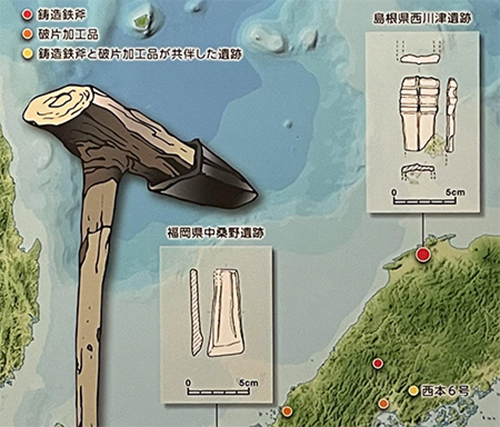
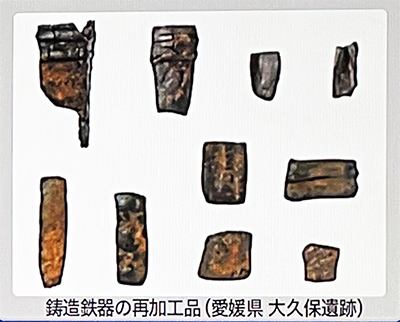
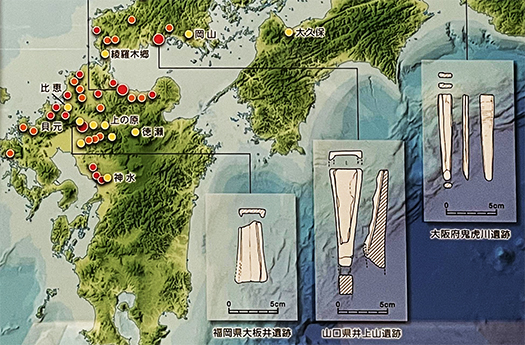
日本の弥生時代中期ごろには鉄製の鉄斧破片などが北部九州日本に運ばれ、
再利用された。石道具で山野開拓した弥生人は鉄器の切れ味の威力に驚いた。
持ち込まれた鉄製品は超貴重品だった。
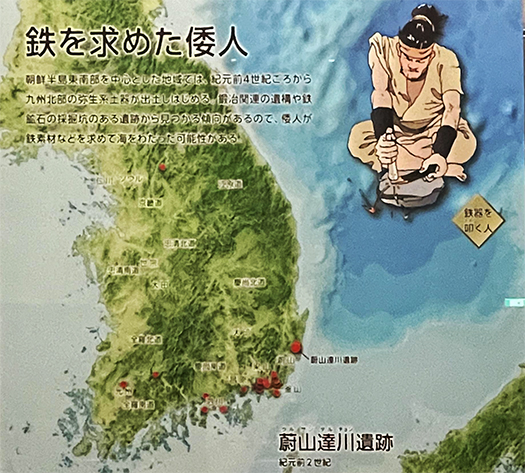
やがて中国製鉄技術は朝鮮半島の北部に伝播。そして3世紀ごろ、
朝鮮半島南部で生産の鉄が日本に輸入。弥生時代後期後半から古墳時代初め。〜

まさに現代世界にも共通する産業技術革命そのものですね。
青銅の技術はすでに伝わって、銅鐸などが威信材として導入されていたけれど、
鉄の驚くべき性能ぶりが一気に世を変えていったことが想像できる。
弥生の社会にこの鉄器が導入され土地開発農具として最高の存在になった。
開墾器具にも木を切る斧の先端素材としても、それまでの効率・仕上がりを
はるかに凌駕し労働の時間短縮・精度向上を実現したことは想像に難くない。
たぶんそれは同時に戦争の「武器」としても活用されていったに相違ない。
戦いをすれば、鉄を持つ集団は圧倒的な強さを発揮できたのだろう。
争うように鉄の獲得戦が行われることも自然な成り行き。
ほぼ信仰にも似た鉄器への希求が社会の基底で盛り上がっていった。
日本国家生成の時期、朝鮮半島国家群との強い国際関係が基本で
揺籃期の日本権力機構で決定的要素だったのには、
この鉄器の生産と導入が死活的だった事情を表しているのだろう。
やがて白村江海戦という東アジア世界大戦に突っ込んでいく動機は
このことが社会経済の存亡に直結したからなのだろう。

白村江敗戦のあとでようやく鉄は国内生産が可能になっていくことで
日本列島社会は東アジア世界との強い関係性からやや脱することができる。
経済的自立が国の安定の決定的要因なのは、いつの時代も不変。
弥生から国家形成の時期にかけて、日本社会ではこういう切羽詰まった事情が
鉄を巡って存在していただろうことが可視化されてきている。

English version⬇

Iron, the Core Material of Agriculture: A Nation? The 37,000-Year History of the Japanese Archipelago – 35
Why did Japan in the Tenchi period fight the reckless Battle of Hakuchon River? The situation of acquiring “iron” resources in a desperate situation. …

The following is an abstract from “The Story of ‘Iron’ Across the Sea” in Unnan, Shimane Prefecture.
〜The first time iron was made in the world is believed to have been in Western Asia between 3,800 and 4,000 years ago.
In China, on the other hand, iron was first produced around 3,400 years ago. Japan is still in the latter half of the Jomon Period.
In China, too, iron was first made from meteoric iron (iron meteorites) that fell from outer space.
At this time, bronze casting technology had already been developed in China, and bronze vessels were the main type of metalware.
Iron was very precious. Eventually, China became the first country in the world to produce pig iron, and this pig iron was then used in casting molds.
This pig iron was poured into molds to produce cast ironware.
Pig iron is extremely hard due to the high carbon content in the iron, but it is also brittle upon impact.
It was not suitable for use as a cutting tool or other useful tool. However, in China, a technology was developed to reduce the amount of carbon in the iron.
The technique to reduce the amount of carbon in iron was developed in China, and iron with a high tenacity came to be used for cast-iron blades.
In the mid-Yayoi period in Japan, iron axe shards made of iron were transported to northern Kyushu Japan and reused.
They were reused. The Yayoi, who cultivated the mountains and fields with stone tools, were amazed at the power of the sharpness of iron tools.
The iron products they brought with them were highly prized.
Eventually, Chinese iron manufacturing technology spread to the northern part of the Korean Peninsula. Around the 3rd century, iron products produced in the southern part of the Korean peninsula were introduced to the Yayoi people.
Iron produced in the southern part of the Korean Peninsula was imported to Japan. Late Yayoi Period to early Kofun Period. 〜From the late Yayoi Period to the early Kofun Period

It is the very industrial and technological revolution that is also common in the modern world.
Bronze technology had already been introduced, and bronze bells and other objects had been introduced as prestige materials, but the amazing performance of iron was changing the world at a stroke.
We can imagine that the amazing performance of iron changed the world at once.
The introduction of iron tools into Yayoi society made them the best tools for land development and agriculture.
Whether used as cultivation tools or as the cutting edge of an axe, iron tools far surpassed the efficiency and workmanship of previous tools.
It is not difficult to imagine that the iron tools were far more efficient and effective than the conventional tools, shortening labor time and improving accuracy.
It was probably also used as a “weapon” in warfare.
In a battle, a group with iron would have been overwhelmingly strong.
It was natural that they would fight to acquire iron.
The desire for iron tools, which was almost like a religious belief, rose at the base of society.
During the period of the birth of the Japanese state, strong international relations with the Korean Peninsula states were fundamental.
The production and introduction of ironware was a decisive factor in Japan’s power structure in its infancy.
The production and introduction of ironware was a critical factor in the development of Japan’s power structure.
The motivation for the Japanese to eventually plunge into the Battle of Hakuchonjiang, a world war in East Asia, was directly related to this.
The reason why the Japanese were eventually driven into the East Asian World War, the Battle of the White River, may be because of the direct link between this war and the survival of the social economy.

After the defeat at the Hakuchon River, domestic production of iron finally became possible, and the Japanese archipelago’s society was able to survive in the East Asian world.
Japanese society could somewhat break away from its strong relationship with the East Asian world.
Economic independence has always been a decisive factor for national stability.
From the Yayoi period to the period of state formation, this kind of impasse would have existed in Japanese society
It is becoming visible that this kind of desperate situation would have existed around iron in Japanese society from the Yayoi period to the period of state formation.

【権力と戦争が国家の起源 日本列島37,000年史-34】


弥生の水田稲作はそれまでの縄文の世の人口密度を一変させた。
食糧生産の究極的な「効率化」が計られたのがアジアでは水田稲作であり、
その最適な環境のひとつとして日本列島があった。
土地利用の観点からすると、人間一人あたりの必要カロリー取得可能面積において
弥生:縄文では一説では1:400というほどの違いがあるとされるほど
農耕は人類生存の形態を大きく変えたと言えるのでしょう。
それまではたぶん「土地」という観念が人類にはなかったのが、
その後の「一所懸命」的思想がひろく人間のこころを支配していく。

もちろん狩猟採集という経済でも効率化バイアスは働き、
武器の高度化という意味では相互関係が働いたと思えるけれど、
こと農耕という経済社会ではこの「土地」の有用性・支配権を巡って
戦争という概念がごく自然発生的に巻き起こっていった。
ことは経済の事柄であるのでこの変化は否応なく、としか言いようがない。
マルクスエンゲルスの唱えた「原始共産制社会」というのは疑問だと思うし、
むしろ農耕の人類社会での一般化からの必然として権力の発生は理解できる。
軍事力というものが発生するのは自然。
人類社会はこの争闘の根本原因に対し制御方法を考えて行くことになるけれど、
当面する対手が存在すれば、それとの関係性に於いて軍事力を持たなければ
対等の交渉もできないことは子どもでも理解できる原理。
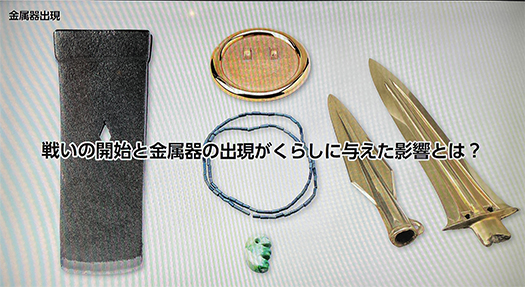
基本構造の経済における利用資源として鉄器の技術発展があって
それはそのまま軍事転用可能な武器生産とも連動していった。
こういうこと対応の社会的機能として「ムラとクニ」概念が生まれ、
それら同士での緊張関係、相互関係が、より巨大な地域統合を促すことも自然。
近隣関係でもめ事が起こったときにそれを平和的に解決するのに
より大きな「幻想」的共同体の調停力は必要でもあっただろう。
人類社会発展の「加速度」機能を果たしたものがこういう経済基盤と
社会統治としての国家権力であったことは否定しようのない事実。
中国大陸では初の中央集権統一国家・秦が紀元前221年に成立した。
それとどのように対応して行くべきか、日本の弥生社会は
相当の緊張関係を孕みながら、徐々に統一的王権に向かっていった。

一方、戦争と権力が、技術と経済を大いに発展させていった。
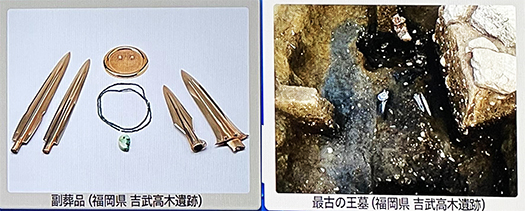
吉野ヶ里遺跡でもごく近距離に「鍛冶」の工房が営まれていたし、
飛鳥の都でも同様の鍛冶場が王権に近接して営まれていた。
始原期の権力にとって農耕発展のために金属機器を生産し下賜する能力は不可欠。
またそういう権力の誇示として権力者的装身具として
「キラキラ」したるものは、誰の目にもわかりやすかったのだろう。

English version⬇

[Power and war are the origins of the state. 37,000-year history of the Japanese archipelago – 34]
Overwhelming power for rice paddy farming with the ability to maintain and develop the population. Further accelerated by the development of metal equipment. The economic structure created and nurtured power. …

Paddy rice cultivation in the Yayoi period transformed the population density of the Jomon period up to that time.
The ultimate “efficiency” of food production was achieved through paddy rice cultivation in Asia, and one of the best environments for this was the Japanese archipelago.
One of the best environments for this was the Japanese archipelago.
From the perspective of land use, the Yayoi: Jomon period was the most efficient in terms of the area available to obtain the necessary calories per person.
The Yayoi:Jomon ratio is said to be as large as 1:400.
Agriculture has changed the way human beings survive.
Until then, humans probably did not have the concept of “land.
The “working hard” philosophy that followed dominated the human mind.

Of course, the efficiency bias also worked in the hunter-gatherer economy.
In a hunter-gatherer economy, of course, there is an efficiency bias, and it seems to have been interrelated in the sense of the sophistication of weaponry.
In an agrarian economy, however, the concept of war over the usefulness and control of the land is a very natural outgrowth of the concept of war.
The concept of war emerged quite spontaneously in an agrarian economic society.
Since this is an economic matter, this change can only be described as inevitable.
I think that the “primitive communist society” advocated by Marx Engels is questionable and
Rather, the emergence of power as an inevitable consequence of the generalization of agriculture in human society is understandable.
The emergence of military power is natural.
Human societies will find ways to control the root causes of this struggle, but if there is an immediate countermeasure, it will be a military force.
If there is an immediate opponent, it is impossible to negotiate with it on an equal footing without military power in relation to it.
Even a child can understand this principle.
The technological development of ironware as a resource to be utilized in the economy of the basic structure
This was directly linked to the production of weapons that could be used for military purposes.
The concept of “mura and kuni” was born as a social function to cope with such a situation.
Tensions and interrelationships among them naturally promote greater regional integration.
When a dispute arises in a neighborhood, it can be resolved peacefully by a larger “illusory” community.
The mediating power of a larger “illusory” community would have been necessary to peacefully resolve disputes in neighboring relations.
The “acceleration” function of human social development was fulfilled by this kind of economic infrastructure and state power as social governance.
It is an undeniable fact that the “accelerating” function of human social development was this kind of economic infrastructure and state power as social governance.
In mainland China, the first centralized unified state, Qin Dynasty, was established in 221 BC.
How should we deal with this, and how should Japan’s Yayoi society deal with it?
The Yayoi society in Japan gradually moved toward a unified kingship, with considerable tensions.

On the other hand, war and power led to great technological and economic development.
At the Yoshinogari site, a “forge” workshop was operated within a very short distance, and a similar forge was operated in the Asuka capital.
Similar forges were operated in the Asuka capital in close proximity to the royal authority.
The ability to produce and gift metal equipment for the development of agriculture was essential for the primitive powers.
The ability to produce and bestow metal equipment was essential for primitive power to develop agriculture, and as a demonstration of such power, “shiny” objects were used as power ornaments.
The “glittering” objects were easily recognizable to all.

【弥生ニッポン:続縄文・北海道 日本列島37,000年史-33】


さて南北も東西も3000kmの距離スパンの日本列島。
紀元前10世紀から紀元前3世紀くらいまでには弥生の稲作水田農業が
大陸に近い北部九州から関東以西地域、そして東北北部津軽平野にまで
大きく広がっていったけれど、北海道にはその波動はやってこなかった。
縄文の世では三内丸山地域など東北北部と共有する縄文遺跡群が
世界遺産登録されるほど交流が活発だったけれど、
水田稲作については津軽海峡を渡ることはなかった。
それまでは共通の社会を形成していたのがいったん分断されることになる。
北海道地域単独の気候変動の歴史的解析を期待したいけれど、
知る限りではそういう研究成果は発表されていない(ように思う)。
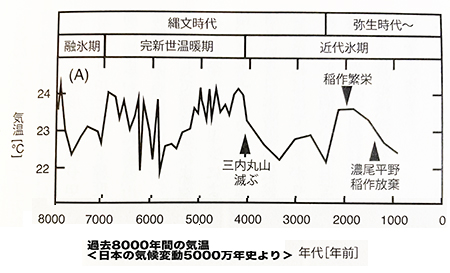
ただ、最近東京科学博物館での展示で知った
「日本の気候変動5000万年史」という書籍で過去8000年間の気温表を発見。
それによると縄文時代の「首都」ともいわれる三内丸山が気候の寒冷化で
滅んだ様子がわかったりする。
縄文の世は非常に温暖な気候条件下で繁栄していたものが
弥生が本格化する頃には寒冷化があって、逆風が吹いた様子もわかる。
温暖化と寒冷化は日本で波動を繰り返している。
津軽地域の水田耕作は河川の氾濫などでいったん終息するけれど、
自然環境の変化に敏感な水田農業も盛衰を繰り返してきたのだろう。

そういうなかで北海道は基本的に、我関せずで、
写真のゴマフアザラシの幼獣とおぼしき個体から
「ハンカクサイんでないの?
そんな水田農業なんてムリムリ」と言われているようです(笑)。
北海道に暮らす人びとは自然環境に従順に縄文のライフスタイルを守った。
水田稲作を行わない、海川特化の漁撈採集文化。管玉や貝製装身具などの
必要なものは特産品と引き換えの交易で本州地域の水田稲作民から
入手する関係が築かれていったとされている。
遺跡分布では道南の海岸線地域と、道央の石狩川流域地域などに集中。
漁撈が基本的食糧戦略だったのだと思います。
本州社会とは「交易」の関係で繋がっている。
弥生の時期以降、しばらく日本列島の中で別の時空間を構成していた。


国立歴史民俗博物館のジオラマ展示ではこういう続縄文の人びとが
明るく元気な造形として描かれていてありがたいなと感じていた(笑)。
しばらくの間、日本社会文化の主流とは縁遠い存在となったけれど、
縄文という本来の母性的環境のまま、北海道が暮らしてきたことに
明るいスポットを当ててくれているようで、心なごんだ(笑)。

そしてはるかな明治以降、北海道がまた日本社会に復帰したとき、
大量に移民の波動が押し寄せて、一気に弥生以降のライフスタイル革命が
もたらされ、さらに保全された自然環境が人びとを魅了している。
やはりロシアに併合されるよりはるかにシアワセだったと思う。

English version⬇

Yayoi Nippon: “Sequel to the Jomon” Hokkaido: The 37,000-Year History of the Japanese Archipelago – 33
Hokkaido, which had no connection with the Yayoi, preserved its cold climate and went its separate way until its reunion in the Meiji period. But it must have been sheer luck. …

Now, the Japanese archipelago spans a distance of 3000 km from north to south and from east to west.
From the 10th century B.C. to about the 3rd century B.C., Yayoi rice paddy agriculture
spread from northern Kyushu, near the continent, to the Kanto region and westward to the Tsugaru Plain in the northern Tohoku region.
However, this wave never reached Hokkaido.
In the Jomon period, the Jomon sites shared with the northern Tohoku region, such as the Sannai-Maruyama area, were so intertwined that they were inscribed on the World Heritage List.
The Jomon period was so active that the Sannai-Maruyama area and other Jomon sites shared with the northern Tohoku region were registered as a World Heritage site.
However, paddy rice cultivation did not cross the Tsugaru Straits.
The previously common society was divided.
I would like to see a historical analysis of climate change in the Hokkaido region alone, but as far as I know, no such research has been published.
However, as far as I know, no such research results have been published.
However, I recently came across an exhibit at the Tokyo Science Museum.
In the book “50 Million Years of Climate Change in Japan,” I found a table of temperatures over the past 8,000 years.
According to the chart, Sannai-Maruyama, which is said to have been the “capital” of the Jomon period, was destroyed due to the cold climate.
The Jomon period was a time of extremely warm weather.
The Jomon period thrived under very warm climatic conditions, but by the time the Yayoi period began in earnest, the climate had become too cold.
By the time the Yayoi period began in earnest, the climate had turned cold and there were headwinds.
Warming and cooling have been repeated in waves in Japan.
Paddy farming in the Tsugaru region came to an end due to river flooding.
Paddy farming, which is sensitive to changes in the natural environment, has also experienced repeated rises and falls.

Hokkaido, on the other hand, has basically taken a hands-off approach.
A young sargassum seal in the photo, which appeared to be a juvenile, said to me
I was told, “Isn’t it too hard to farm rice paddies?
It is impossible to farm rice paddies like that” (laughs).
The people living in Hokkaido followed the Jomon lifestyle in obedience to the natural environment.
They did not cultivate rice in paddy fields, but specialized in sea-river fishing and gathering culture. Tube balls, shell ornaments, and other
Necessities such as tube beads and shell ornaments were obtained from paddy rice farmers in the Honshu region through trade in exchange for local products.
The distribution of sites shows that the people in the southern part of the province had a relationship with rice farmers in the rice paddies.
The distribution of sites is concentrated in the coastal areas of southern Hokkaido and the Ishikari River basin in central Hokkaido.
Fishing was the basic food strategy.
They are connected to Honshu society through “trading” relations.
After the Yayoi period, they constituted a separate time-space within the Japanese archipelago for a while.

In the diorama exhibit at the National Museum of Japanese History, I felt grateful that these Sequential Jomon people
I felt grateful that the diorama exhibit at the National Museum of Japanese History depicted these Sequelae Jomon people as bright and energetic figures (laugh).
Although they have been out of the mainstream of Japanese society and culture for a while, they have remained in the original maternal environment of the Jomon, and have lived in Hokkaido.
Hokkaido has been living in the original maternal environment of the Jomon
It was heartwarming to see that he was shining a bright spotlight on the fact that Hokkaido has been living in its original maternal environment of the Jomon (laugh).

And when Hokkaido rejoined Japanese society long after the Meiji period
When Hokkaido rejoined Japanese society after the long Meiji period, waves of immigrants arrived in large numbers, bringing with them a revolution in lifestyles that began in the Yayoi period and lasted for many years.
The natural environment that has been preserved has attracted people.
I think it was much better than the annexation by Russia.

【美の探究・縄文と弥生女性 日本列島37,000年史-32】


さて本日は人類普遍のテーマ、女性の美への探究心であります。
アダムとイブという例えはキリスト教世界的だけれど、
アマテラスが女性神である日本列島でも、普遍的に男女の恋愛史はあり、
さまざまな神話説話の基本になっていることは自明。
で、具体的に衣装として記録が残っていくのは日本でも
歴史年代以降になる。しかし、女性の美への欲求はそれ以前も当たり前。
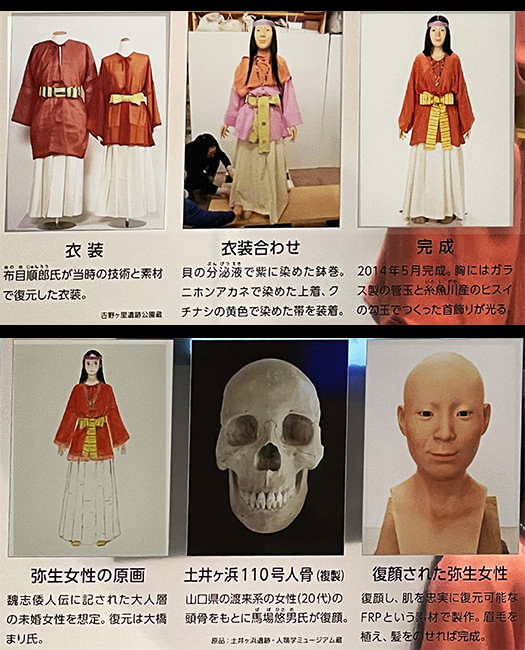
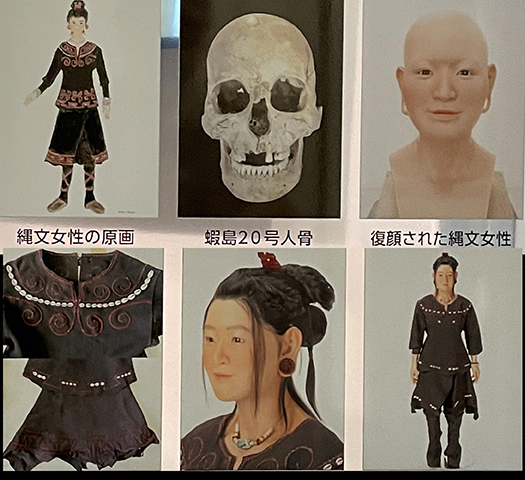
歴博での展示でこのテーマコーナーがあった。
堅苦しい歴史館展示の枠を超えて、非常にわかりやすくて好感。

縄文女性は岩手県蝦島貝塚出土の成人女性の頭骨を復顔。シカの革を
黒く燻した生地に、ウルシとタカラガイによる装飾をつけた上着を羽織り、
ヒスイ製の玉で作ったネックレスを付け皮の靴を履く。シャーマンの表現。
<縄文・弥生とも衣装復元はスタイリストで古代衣服研究者の大橋まり氏>
頭骨から肌を復元してFRP素材で製作し、まゆ毛と髪をのせて完成。
髪には縦櫛、耳には飾り物。ネックレスは糸魚川産のヒスイ製。
一方、弥生女性は、山口県土井ヶ浜遺跡出土の成人女性の頭骨を復顔。
アカネ染めの絹の上着を羽織り、ヒスイ製の勾玉とガラス製の管玉製のネックレス。
貝の分泌液で紫に染めた鉢巻。帯はクチナシの黄色で染めた。
靴は木製。魏志倭人伝中の大人層の未婚女性を想定再現。

・・・たいへんわかりやすい(笑)。
っていうか、現代でもこういう衣装であれば着てもらいたい(笑)。
こころなしか縄文女性の方がやや小柄でまるっとした印象であるのに対して
弥生女性はスラッとした印象を与えられる。
このあたりは考古発見での統計が基礎になっているのでしょう。
どの素材にも「着色」という志向性が重要な要素なのでしょう。
やはり視覚的に目を驚かすというのが基本動機。
自然と触れ合いこうした衣装への利用ということを考えながら
染色材料を注意深く探究したのでしょう。
アカネとは、アカネ科アカネ属のつる性多年生植物。根は茜色をしており、
草木染めの原料になるとされるけれど、
そういう植物への知恵というのは、やはり美への欲求が誘った。
貝類を利用するとか、ヒスイを探し出すとか、
あらゆる資源開発・発展においてこうした欲求が背景動因であったのでしょう。
食糧として口に入れながら、同時に「キラキラ」したるものに
目を輝かせていたという光景が彷彿としてくる。
食糧の確保手段が文化の基本だけれど、同時にこういう欲求も
人間社会を大きく動かしてきたこともあきらかでしょうね。
美への探究心というものが相当大きな人類進化の要因だったことは間違いない。
歴史の見方で、こういう角度も探究してくれて興味がさらに深まります。

English version⬇

The Jomon and Yayoi Women: The 37,000-Year History of the Japanese Archipelago – 32
Although food security is the basic motivation, the pursuit of beauty has also been a major factor in human development. The Jomon period

Today’s topic is the universal theme of humanity: the quest for female beauty.
The analogy of Adam and Eve is very Christian.
But even in the Japanese archipelago, where Amaterasu is a female deity, there is a universal history of love between men and women, and it is the basis of various mythological tales.
It is obvious that it is the basis of various myths and legends.
But it was not until the historical period in Japan that specific costumes were recorded.
historical period or later in Japan. However, women’s desire for beauty was common even before that time.
There was a section on this theme in the exhibition at Rekihaku.
I liked it because it was very easy to understand and beyond the confines of a rigid history museum exhibit.

The Jomon woman is a facial reconstruction of an adult female skull excavated from the Ezushima shell mound in Iwate Prefecture. Deerskin.
She wears a jacket made of black smoked deerskin and decorated with poison ivy and takaragai, and a necklace made of jade beads.
She wears a necklace made of jade jade and leather shoes. This is an expression of a shaman.
<Costumes for both the Jomon and Yayoi periods were restored by stylist and ancient clothing researcher Mari Ohashi.
The skin is reconstructed from the skull and made of FRP material, and completed with eyebrows and hair.
A vertical comb was used for the hair and ornaments for the ears. The necklace is made of jade from Itoigawa.
The Yayoi female figure is a reconstruction of an adult female skull excavated at the Doigahama site in Yamaguchi Prefecture.
She wears an akane-dyed silk jacket and a necklace made of jade and glass tubular beads.
A potted headdress dyed purple with the secretion of the twice. The obi was dyed gardenia yellow.
Shoes are wooden. The figure is a reproduction of an unmarried woman in the adult age group in Wei Wei’s biography.

It is very easy to understand (laugh).
I would like them to wear this kind of costume even in the modern age (laugh).
The Jomon women are slightly smaller and more rounded, while the Yayoi women look slender and slender.
Yayoi women give the impression of being slender.
This is probably based on statistics from archaeological discoveries.
The orientation of “coloring” is probably an important element in any material.
After all, the basic motive is to visually astonish the eye.
We have carefully explored dyeing materials while considering their use in costumes that are in contact with nature.
The artist must have carefully explored dyeing materials with the idea of being in contact with nature and using them in these costumes.
Akane is a perennial vine belonging to the family Acanthaceae. Its roots are akane red in color and are used as a raw material for herb dyeing.
It is said to be used as a raw material for herb-dyeing.
The wisdom of using such plants is, of course, driven by the desire for beauty.
The use of shellfish, the search for jade, and so on.
This desire must have been the driving force behind the development and exploitation of all kinds of resources.
The sight of the sparkling things that we put in our mouths as food, while at the same time
The scene is reminiscent of the way people put food in their mouths while at the same time gazing at something “sparkling”.
The means to secure food is the basis of culture, but this kind of desire has also been a major driving force in human society.
It is also clear that this kind of desire has been a major driving force in human society.
There is no doubt that the quest for beauty has been a major factor in human evolution.
This angle is explored in the historical perspective, which deepens my interest even more.

【縄文〜弥生の表現力への親近感 日本列島37,000年史-31】


弥生と縄文って必ずしも非連続的というものではない印象を持つ。
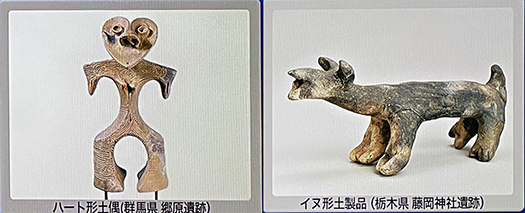
それは弥生期の「自画像」痕跡が多数、土器に描かれたり
木版に彫り込んだり、粘土で造形されたりものを見て感じる。
また中国での日本列島記録初見とされる魏志倭人伝に「黥面」文化が書かれるが
その題材となった風習の証拠痕跡もこうして残っている。
習俗としてのこのような「文化」はやはり根強く存在したのだろう。
〜帯方郡より女王国に至る万二千余里。男子は大小と無く、皆黥面文身す。
古より以来、其の使、中国に詣(いた)るや、皆、自ら大夫と称す。
夏后少康の子、会稽に封ぜられるや、断髪文身し、以て蛟龍の害を避く。
今、倭の水人、好みて沈没して魚蛤を捕へ、文身し、亦、以て大魚水禽を厭(はら)ふ。
後、稍(やや)以て飾りと為す。諸国の文身、各(おのおの)異なり、
或は左に、或は右に、或は大に、或は小に、尊卑の差有り。
其の道里を計るに当に会稽の東冶の東に在るべし。〜(魏志倭人伝)

海人族的な風俗であるのか、犯罪者への刑罰的な意味なのか。
記紀の記述などを見ると、その後の支配者層にはその風俗はなかったようだ。
逆に言うと、列島人の基本的な感覚の中に上の写真やイラストのような
表現を許容する精神性が存在していたように思う。
弥生と縄文は文化性として併存していたので、こういう
キッチュな表現にその影響が色濃く残っていたのだろう。
こういう表現力というのはやはり「海洋民族」という素性を見せている。
環太平洋圏の北米南米、そして東南アジアの諸民族との親和性。
けっして大陸文化的な画一性には染まりにくい精神性が
日本列島人の基底的な「文化動機」に近しいように思える。
縄文土器、土偶とも通底する精神性が明らかなのではないか。
その後の時代の仏教寺院の縁起絵巻に表現される「鳥獣戯画」や
さらに現代に隆盛しているマンガ文化まで延々と日本人に受け継がれている。
もし日本文化が世界共通性を獲得していくとすれば、
その最大の文化資産はマンガ文明ではないかと個人的に思っている。
直感的視覚的表現力において日本は際だっている部分がある。
縄文・弥生の人びとのこういう表現力からは強いパワーを感じる。


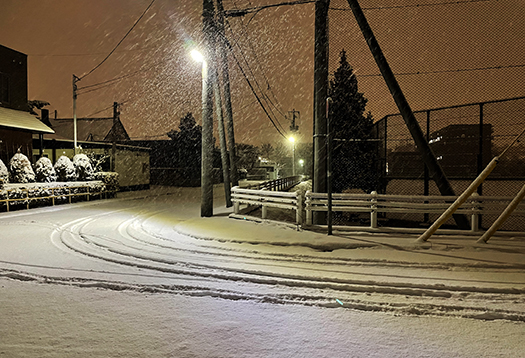
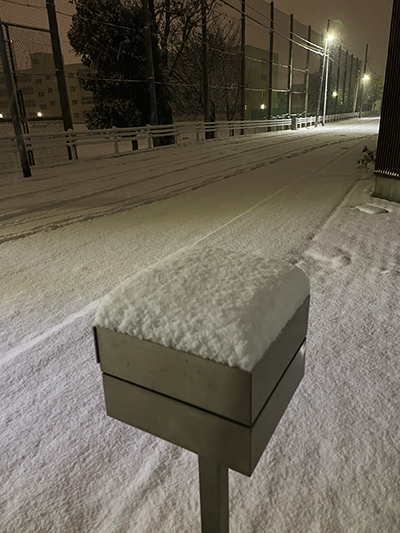
さて本日朝のわが家前の積雪状況。
本格的な積雪感はまだ感じませんが、そこそこの積雪。
北国人は久しぶりに見る光景にしずかな感情を抱かされます。
いろいろな感情がそこで一旦ストップするみたいな雪のパワー。
この「淡々と受け入れる」季節感がまるで「洗礼」儀式のようでもある。
多忙な日々が訪れていますが、静かに受け止めていくしかありません。

English version⬇

Jomon – Yayoi Familiarity with Expressionism: The 37,000-Year History of the Japanese Archipelago – 31
The unique cultural customs and original expressions of the archipelago people described in the Wei-Shi-Wa-jin-Den. The Maritime Ethnicity Leading to the Manga Culture? …

I have the impression that the Yayoi and Jomon periods are not necessarily discontinuous.
It is that many traces of Yayoi “self-portraits” were painted on earthenware, carved on woodblocks
carved into woodblocks, or sculpted in clay.
In addition, the culture of “Paintings with a facial tattoo” is mentioned in the Wei Zhi Wajinden, which is said to be the first record of the Japanese archipelago in China.
There are also traces of evidence of the custom that became the subject of this culture.
This “culture” as a custom must have existed strongly.
〜From Obihang-gun to Queen-no-kuni, a distance of more than 12,000 ri. Every male, large or small, has a tattooed face and body.
Since ancient times, when their envoys came to China, they all called themselves “Da Fu.
When the son of Shaokang, the Empress of the Xia Dynasty, was appointed to Huiyue, he had his hair cut off and his body styled to avoid the danger of rain dragons.
The Japanese sailors of today prefer to sink to catch clams and clams, and they are also averse to large fishes and fowls.
Later, they were used as decorations. The body of each country is different.
Some are to the left, some to the right, some are large, some are small, and there are differences in respect.
The distance to the east of Dongji in Haeguei should be the best place to start. 〜(Wei Zhi Wan Dian)

Is this a custom of the Kaijin tribe, or is it a punishment for criminals?
According to the descriptions in Kiki and other sources, it seems that the ruling class did not have such customs after that time.
On the contrary, it seems that there existed in the basic sense of the archipelago people a mentality that tolerated expressions such as those in the photos and illustrations above.
I think there existed a mentality that tolerated such expressions as the above photos and illustrations in the basic sense of the archipelago people.
The Yayoi and Jomon cultures coexisted, and this kind of
The Yayoi and Jomon cultures coexisted, and the influence of their culture on the kitschy expressions of the Yayoi and Jomon was strong.
This kind of expressive power shows the nature of “maritime peoples.
This kind of expressive power shows the nature of a “maritime people,” and the affinity with the peoples of North America, South America, and Southeast Asia in the Pacific Rim.
A spirituality that is never easily tainted by continental cultural uniformity.
The Jomon people seem to have a spirituality that is not easily imbued with continental uniformity, which is close to the basic “cultural motivation” of the Japanese people.
The same spirituality is evident in Jomon earthenware and clay figurines.
The “Birds, beasts, and caricatures” expressed in Buddhist temple auspicious scrolls of later periods, as well as the “Manga culture” flourishing in modern times, are also clear examples of this spirituality.
The Japanese culture has been handed down from generation to generation, even to the manga culture that is flourishing in the modern age.
If Japanese culture is to gain global commonality, the greatest cultural asset of Japanese culture must be the manga civilization.
I personally believe that the greatest cultural asset of Japanese culture will be the manga civilization.
Japan stands out in its ability to express itself intuitively and visually.
The Jomon and Yayoi people’s ability to express themselves in this way gives me a strong sense of power.

This is the snow in front of our house this morning.
I don’t feel the full-blown snowfall yet, but there is a good amount of snow.
People from the north feel a sense of calmness at the sight of snow that they have not seen in a long time.
The power of the snow is such that all emotions seem to stop there for a moment.
This sense of “accepting the season without hesitation” is like a “baptismal” ceremony.
Busy days are coming, but we have no choice but to accept it quietly.