本文へジャンプ

【今生と他生〜こんじょうとたしょう〜】


「袖ふれあうも他生の縁」というコトバがある。
この「他生」というフレーズはよく誤解される。
多少というように、ほんの少しというような意味合いで捉えられることがある。
多くの人に問いかけると、みごとにこの誤解が広がっている(笑)。
日本語の危機でもあり、また「進化」でもあるのかも知れない。が、やはり違う。
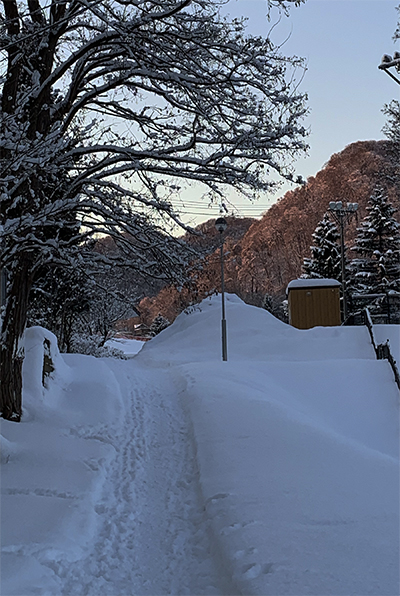
コロナ禍のストレス発散で冬の雪道を散歩する毎日。
人が通れば道になる、というような格言通り、いろいろな広さの道ができる。
こういう雪道は北国らしい冬の楽しみでもあるかも知れない。
人間一人がようやく通れるくらいの広さは、
たぶん30cmくらいの広さになっている。このくらいの広さを1尺という。
ただ、これくらいの道幅だとすれ違うことが困難。
で、どちらともなく「譲り譲られ」というコミュニケーションが成立する。
譲っても譲られても、お互いに会釈することになる。
「ありがとうございます」
「いえ、どういたしまして」
・・・というときに、先述のコトバがアタマのなかに生起する。
一期一会だけれど、同じような道を通って同じ時間を共有する。
他生というのは、〜今生(こんじょう)に対し、現在の自分がその生れ変りである
過去の生、および生まれ変わって行く未来の生。前世および来世〜。
そういうことをこういう出会いに掛け合わせる精神性。

不思議なもので、この30cmくらいの道幅を超えると
すれ違うことができるからか、そういった心情を持つことはない。
1尺という単位はよくできた単位で、次に多くなるのは2尺程度の道幅。
これだとなんとかすれ違うことができるので、なにも感慨を生み出さなくなる。
それ以上の道幅となると機械除雪が入って、ほぼ135cm程度の道幅になる。
で、1間となるとほぼ1.8m。あるく道としてはおおむね用を足せる。
奈良の都の造営とほぼ同時期に日本の街道が整備されたという。
どんなカタチだったかといえば、以下のようなWEB上の記述がある。
〜その本来の姿は平地では両側溝を備え、その幅は側溝間の芯々距離で
六・九・一二メートルなどが多く、いずれも丈(約三メートル)の倍数が多い。〜
<みやこ町歴史民俗博物館/WEB博物館「みやこ町遺産」 >
律令国家を志向した日本社会はまずまっすぐな大道を作り始めた。
律令という社会の規範を通すということと道をつくることが重なった。
道とひとのいのちとは、どうも昔から縁の近い捉え方をされてきたといえる。
先人の考えたことというのは、人間の真実が宿っている。

冬の雪国では、こういう「還元的原点回帰」を容易に経験できる。
ただ、最近加齢とともに「他生」というコトバに強く反応するようになった。
だれかが最初に歩いた道を、ゆっくりと踏みしめながら歩く。
それもまた他生の感じ取り方なのかも知れない。

<英語版は諦めました(笑)。こういう定型日本語フレーズはAI理解不能のよう>

【床の間前身「押板」と生活文化/日本人のいい家⑲-4】


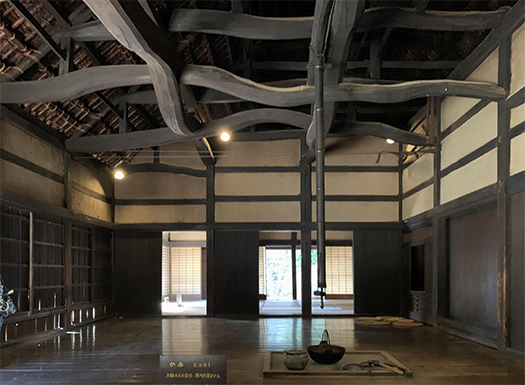
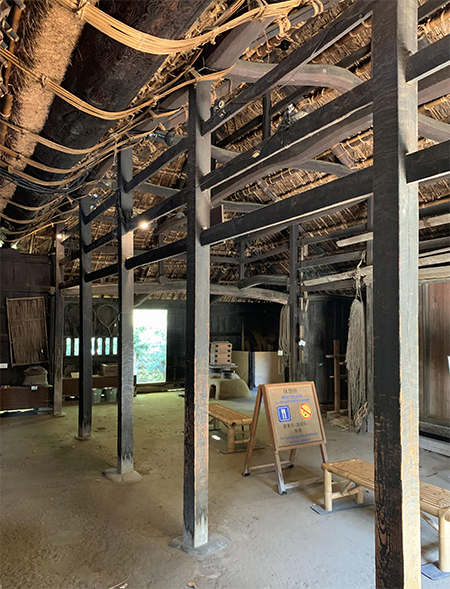
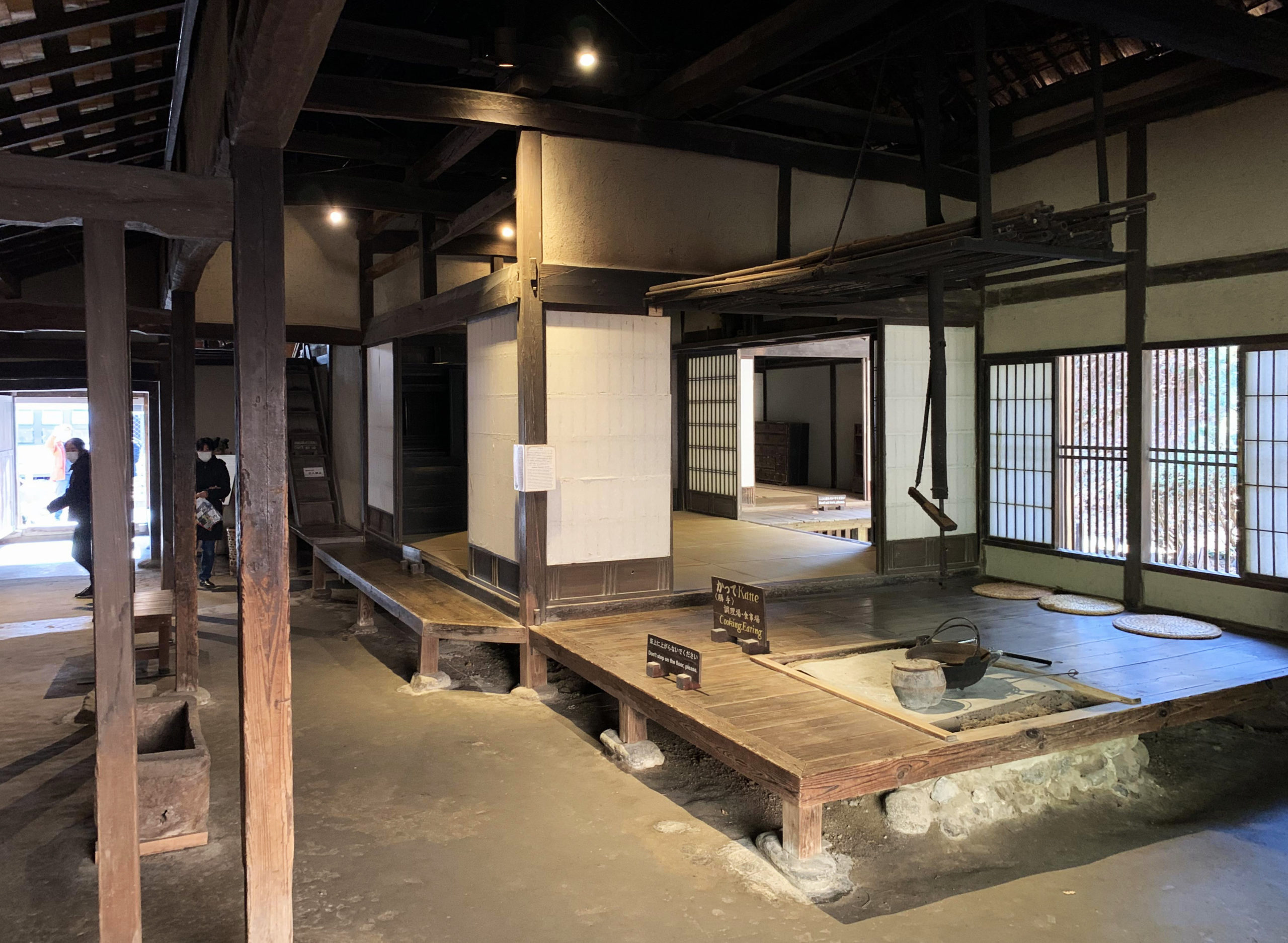
わたしは箱木千年家というようなホントに1000年以上実在の古民家も
見学取材してきていますが、
この「九十九里の網元」作田家も17世紀1600年代後期ということで、
350年前後以前の建物。さすがにこういう時期の建物はめったに見られない。
本日は4回目、最終回です。
日本住宅の様式的装置として、床の間がありますが、
民家で床の間というのはこの時期としてはあまり見られず、
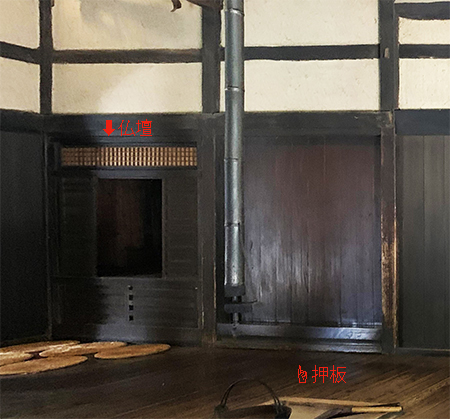
その「前身」といわれる「押し板」という建築意匠がこの「カミ」空間に
造作の仏壇と併置されていました。
押板は仏壇とともに宗教的祭祠の場だったのかも知れないのかと。
〜中世の座敷飾りで壁下に作り付けた奥行きの浅い厚板。
現在の床の間の前身。〜というような百科事典での説明文。
床はだんだんと奥行きが増していって「床の間」になったようですね。
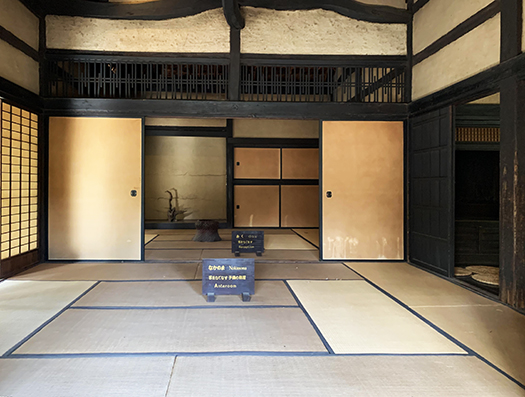
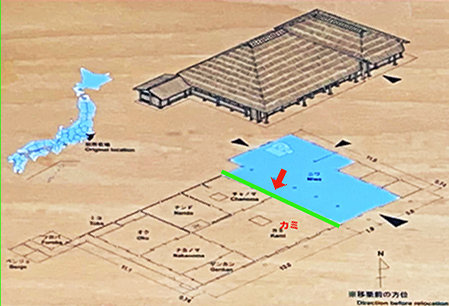
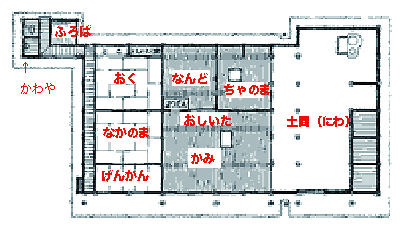
こちらでは裏に隠居部屋「ナンド」があって、カミの空間でその方向に
仏壇と押し板がある。仏壇も一定の奥行きがあるようなので、
それと同じくらいの「床」+間があったものかと思われる。
ただし、その後の後世に「オク」という座敷に本格的な床の間が造作されている。
床の間と押板が併存していた様子がわかります。
押板、という表現からするとただの壁の一種というように受け取られますが、
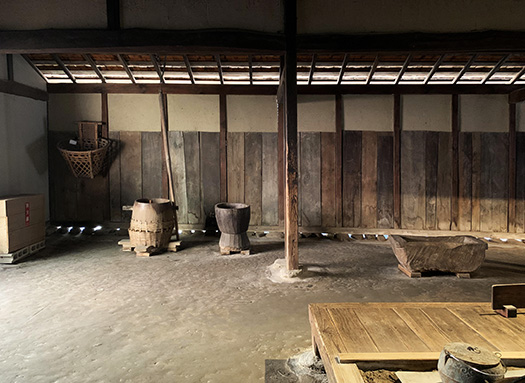
左側の仏壇(薄手に感じる)とのセットで発展した様子がしのばれる。
同じように柱の間隔にそろえた幅を持っていて、
造作で作られていた様子がよくわかる。
やがて仏壇が徐々に奥行きを持ち始めてそれにつられ床も「間」を持つようになった?
先祖崇拝が基本の「家」文化のなかで仏壇が主導するかたちで、
日本建築のコア部分となっていったものではないか。
いずれにせよ、そういう事情が痕跡として保存されているのは貴重。
現代では仏壇というものは高級専門家具としてかなりの「奥行き」を持っている。
まるで奥行きがその家の歴史の古さを象徴するかのようだ。
ものには発展の「方向性」のようなものが表現されていると考えれば、
写真のような薄い柱間利用からスタートした文化空間が、
そういった方向に進化していったと想像が湧いてくる。興味深い。
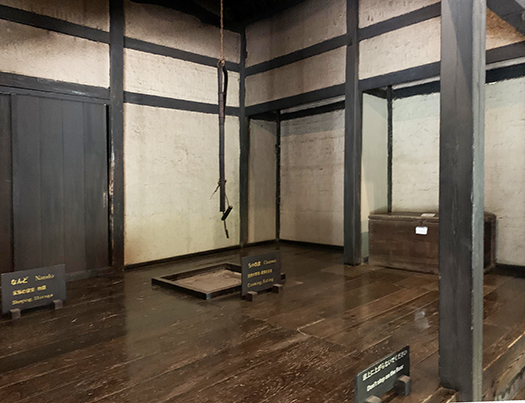
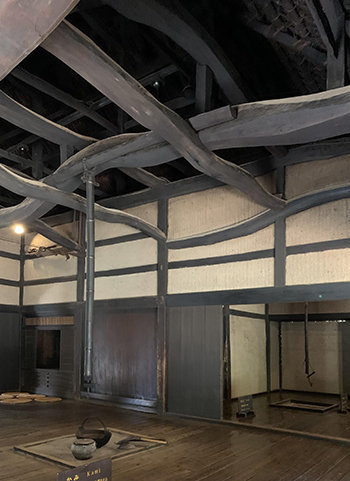
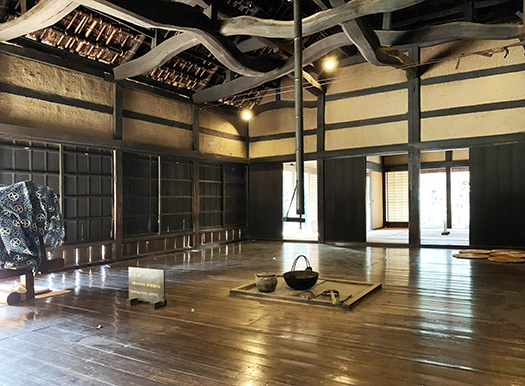
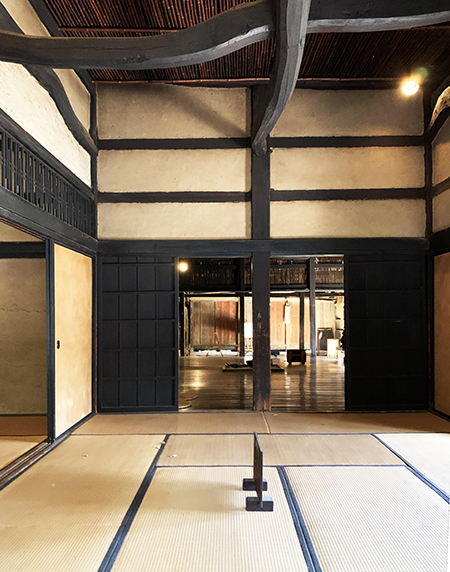
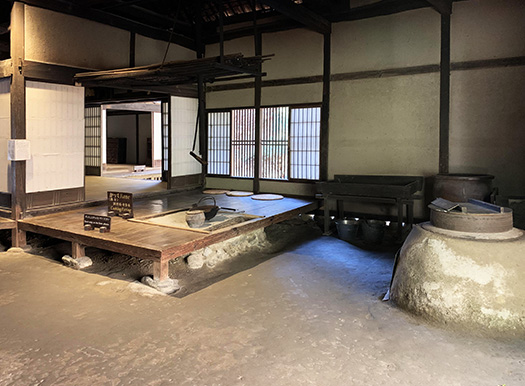
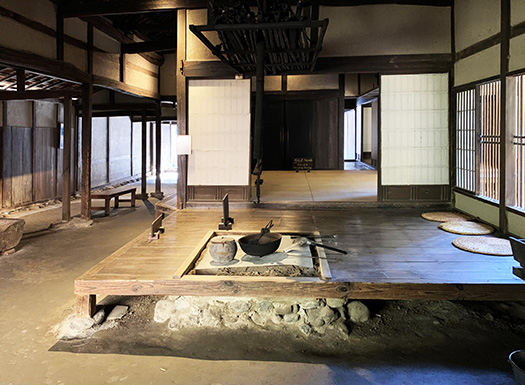
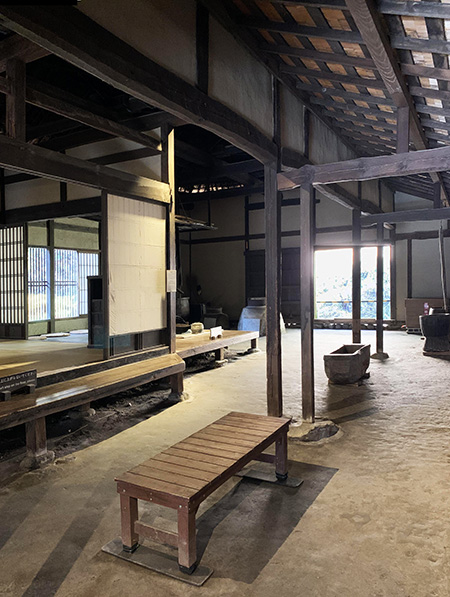
一方こちらは「チャノマ」とされる土間隣接の空間。
チャノマは囲炉裏を中心に日常生活が営まれる所で、もっと古い時期にはおそらく
カミとの仕切りはなかっただろうと推測されている。
左手の引き戸建具の奥は「ナンド」と呼ばれる隠居老人室。
右側にはやや出っ張った空間として収納空間がある。
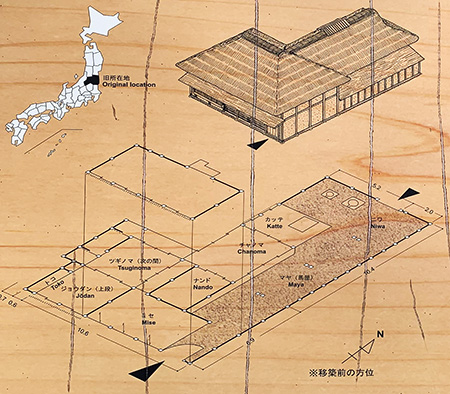
間取りを確認すると、ナンドのさらに奥にオク座敷があって床の間が並行。
押板とは別に造作された「床の間」に相応している。
とくに増築のことは調査報告からは記述がないので、
創建時350年程前には床の間は成立していて、押板はもう少し違う用途が
考えられていた空間だった可能性もある。
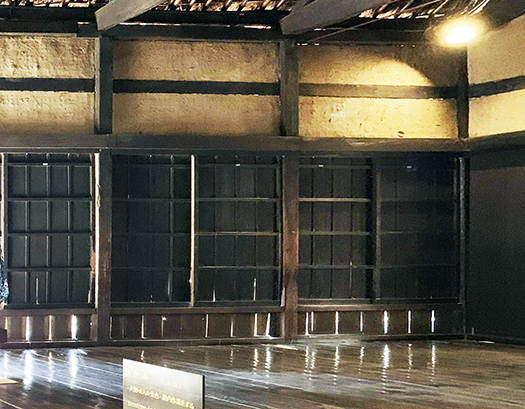
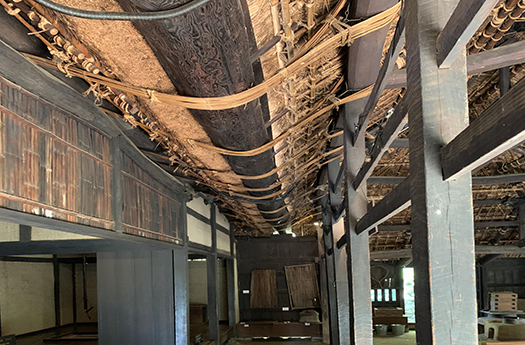
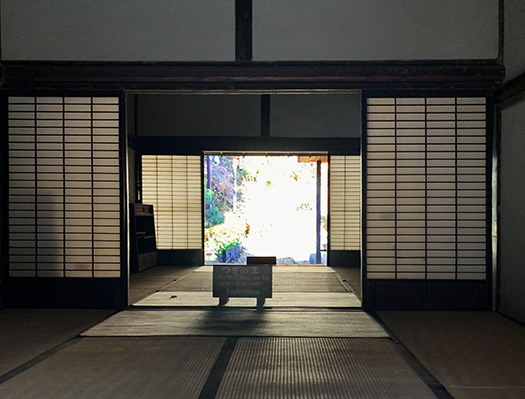
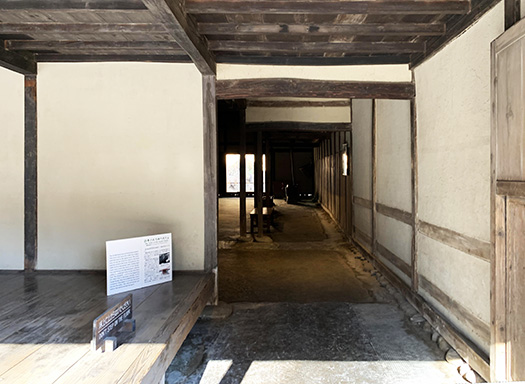
さらにこちらは、ちょうど仏壇・押板と対面する位置のカミの開口部に
まるで木製建具のように造作された前面の3間の格子窓。
この時期の関東の古民家に共通する構えであるとされている。
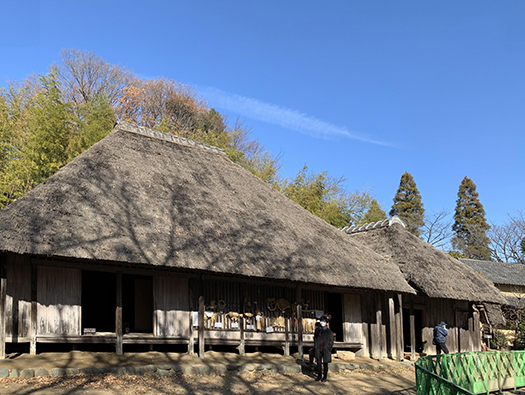
下の写真は、この「格子窓」をオモテ側から見た様子。
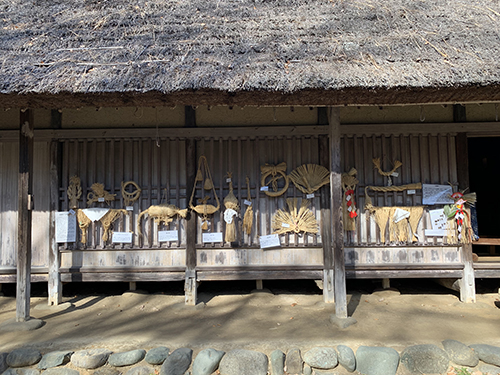
用途としては「間の戸」ということが想像できる。
日本の窓はこの「間の戸」の発展形であり西洋の窓は風穴Wind+owと言われる。
たぶん寒季にはこのように閉じ、暖季には外して開放していたのではないか。
もっと格式の高い建築であれば縁が回されて、室内との仕切りには
障子建具などが作られたところ、折衷的な建築表現で採用されたか。

やはり古民家・古建築には
日本人が親しんできた生活文化が明瞭に刻印されていることがわかる。
もっと全国各地への探究への思いは強まるばかり。
コロナ禍がほとほと恨まれるばかりであります・・・。

English version⬇

[Tokonoma predecessor “Oshiban” and lifestyle / Japanese good house ⑲-4]
The core part of Japanese architecture along with the Buddhist altar in the “house” culture, which is based on ancestor worship. Life culture that Japanese people have been familiar with.・ ・ ・

I’m a Hakogi Millennium House, and there are also old folk houses that have existed for more than 1000 years.
I have been interviewing for a tour,
This “Kujukuri Amimoto” Sakuda family is also in the late 17th century 1600s.
Building before around 350 years. As expected, buildings of this period are rarely seen.
Today is the 4th and final round.
As a stylized device for Japanese houses, there is an alcove,
Tokonoma in a private house is rarely seen at this time,
The architectural design called “push plate”, which is said to be the “predecessor”, is in this “kami” space.
It was juxtaposed with the built-in Buddhist altar.
I wonder if the push board was a place for religious rituals along with the Buddhist altar.
~ A shallow plank built under the wall with a medieval tatami room decoration.
The predecessor of the current alcove. An explanation in an encyclopedia such as.
It seems that the floor gradually increased in depth and became a “tokonoma”.
Here, there is a retired room “Nando” in the back, and in that direction in the space of the kami
There is a Buddhist altar and a push plate. The Buddhist altar also seems to have a certain depth, so
It seems that there was about the same “floor” + space.
However, in later generations, a full-fledged alcove was built in a tatami room called “Oku”.
You can see that the alcove and the push plate coexisted.
From the expression “push plate”, it is perceived as just a kind of wall,
You can see how it developed as a set with the Buddhist altar on the left side (it feels thin).
In the same way, it has a width that matches the distance between the pillars,
You can see how it was made by the structure.
Eventually, the Buddhist altar gradually began to have depth, and along with it, the floor also had a “pause”?
In the form of a Buddhist altar in the “house” culture, which is based on ancestor worship,
Isn’t it the core part of Japanese architecture?
In any case, it is valuable that such circumstances are preserved as traces.
In modern times, Buddhist altars have a considerable “depth” as luxury furniture.
It’s as if the depth symbolizes the history of the house.
If you think that things express something like the “direction” of development,
The cultural space that started from the use of thin pillars as shown in the photo
Imagine that it has evolved in that direction. Interesting.

On the other hand, this is the space adjacent to the dirt floor, which is called “Chanoma”.
Chanoma is a place where daily life is carried out around the hearth, probably in older times.
It is speculated that there would have been no partition with the kami.
Behind the sliding door fittings on the left is a retired old man’s room called “Nando”.
There is a storage space on the right side as a slightly protruding space.
When I checked the floor plan, there was an ok tatami room further back in Nando, and the alcove was parallel.
It corresponds to the “tokonoma” that was created separately from the push plate.
In particular, there is no description of the extension from the survey report, so
The alcove was established about 350 years ago when it was built, and the push plate has a slightly different purpose.
It may have been the space that was being considered.

Furthermore, this is the opening of the kami just facing the Buddhist altar and push plate.
A three-storied lattice window on the front that looks like a wooden fitting.
It is said to be a common stance for old folk houses in the Kanto region during this period.
The photo below shows this “lattice window” seen from the front side.

It can be imagined that it is used as a “door between”.
Japanese windows are a development of this “Mado”, and Western windows are called wind holes Wind + ow.
Maybe it was closed like this in the cold season and opened in the warm season.
If it is a more prestigious building, the edge will be turned, and it will be a partition from the room
When shoji fittings were made, was it adopted in an eclectic architectural expression?

After all for old folk houses and old architecture
It can be seen that the lifestyle culture that Japanese people have been familiar with is clearly engraved.
My desire to explore all over the country is only getting stronger.
The corona wreck is just a grudge …

【江戸期大企業主・網元の家/日本人のいい家⑲-3】


千葉九十九里の網元の家、その3です。
全国各地の古建築を収集し続けたのは当時の川崎市長のプランとのこと。
こういう「民俗」保全に公的な取り組みが果たした役割は大きい。
住宅にはその地域の経済社会の総体がさまざまに刻印されていく。
現代社会での規格大量生産型住宅ではあり得ないような民俗性表現に
その時代を読み解くさまざまな情報がピンナップされると思います。
それを手掘りすることで、いまの家づくり、生き方にも示唆が得られる。
よくこうした民家園ではこどもたちの「社会学習」が催事される。
非常に素晴らしいことだと思います。
フランスでは教育の一環で住教育があるとされますが、
日本でもこうした古民家群にはそういう機縁・可能性が濃厚。
純粋なこどもたちの感受性に先人たちの生き様が伝わって欲しい・・・。


きのうこの家の最大の「見せ場」、飛龍のような軸組の豪放さを紹介した。
やはりというか、多くのみなさんから注目されたようで、
とくに現代住宅との対比において、大工棟梁と大工たちのものづくりの姿勢に
大いに感銘を受けられたように思いました。
あんな曲がり材、暴れ放題の材を知恵と技を集中して仕上げる。
そういう表現の迫力を、とくに子どもたちに感じてもらいたい。
ひとが仕事を通してなにをできるのか、
そんな先人たちのいのちの叫び声が感じられると思われるのです。
ともすれば「お金を儲ける」ことが人生の主目的になってしまう現代。
しかし、先人たちは仕事を通してはるかに大切なものを教えてくれている。

本日紹介の網元家の写真は座敷空間と「風呂・厠」。
この家は「作田家」住居。作田家というのは現在の地名としても残る。
この地域の名主も務める上層家系にして地域経済の主宰者。
大地引き網漁を営んでいて、網船2艘を使う大がかりなもので、
船方70人と岡者と呼ばれる網を引くときだけ手伝う農民も含めて
200人以上の労働力を動員する地域を挙げた「大企業」。
船大工、鍛冶屋、網職人、鰯加工業者まで傘下に抱えていたという。
船大工は素性の異なる木材への深い技術洞察と読者の方から指摘も。
「カミ」空間の飛龍軸組との技術的な連関があったかどうか。
作田家の主な漁獲物はイワシで、干鰯(ほしか)や〆粕(しめかす)といった
農業肥料にされたといわれます。これは江戸期を通じて発展した
京都のファッション産業の主原料・綿栽培の基礎になった生産物。
ちょうどこの時期、北海道でもニシン漁がさかんになるけれど、
同様の需要に充てられた。江戸期の消費経済循環の重要な側面ですね。
作田家の主人は「ダンナサマ」妻は「ジョウサマ」と尊称された。
ジョウサマほか、作田家の女性は外出に駕籠を使用したとのこと。
地引き網で大漁になると、ハダカの漁夫がジョウサマへ
走って駆けつけて報告するという「しきたり」が伝承されていたとのこと。
なにやら、民俗として生々しさが感じられる。


江戸期は武士階級は支配者ではあっても、経済活動にはほぼ関与しない。
したがって、このような上層庶民が経済をすべて動かしていた。
地域にとって経済のほぼ全てを掌握する存在。
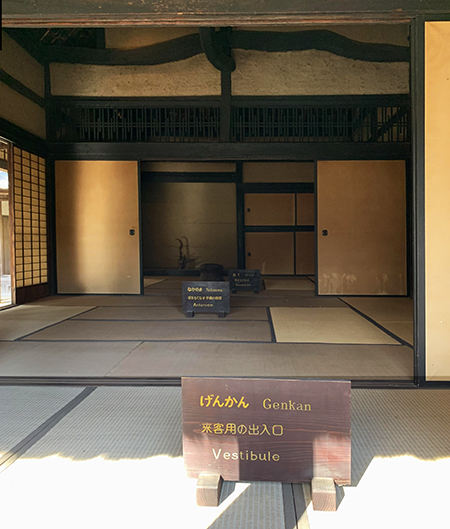
武家住宅のように格式的ではないけれど、この写真のような
ゲンカン・中の間・奥という3間取りという座敷空間が上層生活ゾーン。
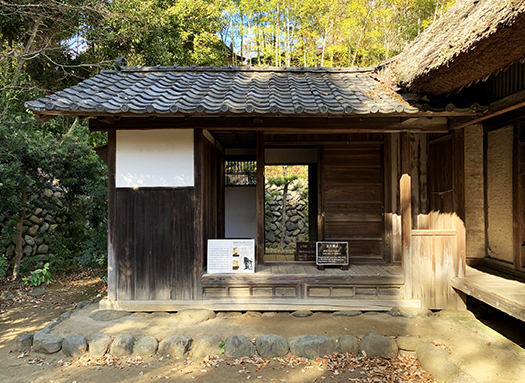
ふろばとかわやは別棟で縁伝いに本家建物と接続されていた。

English version⬇

[Edo period large business owner, Amimoto’s house / Japanese good house ⑲-3]
In France, education is education. Even in Japan, there is plenty of potential for old folk houses. The way of life of the ancestors to the sensitivity of children.・ ・ ・

Amimoto’s house in Kujukuri, Chiba, part 3.
It was the plan of the mayor of Kawasaki at that time to continue collecting old buildings from all over the country.
Public efforts have played a major role in such “folk” conservation.
The housing is imprinted with various imprints of the economy and society of the region.
Standards in modern society For folklore expressions that cannot be achieved in mass-produced houses
I think that various information to understand the era will be pinned up.
By digging it by hand, you can get suggestions for the current way of building and living.
Children’s “social learning” is often held in these private houses.
I think it’s very nice.
In France, it is said that there is housing education as part of education,
Even in Japan, there are many such opportunities and possibilities for these old folk houses.
I want the lives of our predecessors to be conveyed to the sensitivities of pure children.

I introduced the biggest “showing place” of yesterday’s house, the extravagance of the framework like Hiryu.
After all, it seems that many people have paid attention to it.
Especially in comparison with modern houses, the attitude of carpenters and carpenters in manufacturing
I was very impressed.
We concentrate our wisdom and skill to finish such bending materials and all-you-can-eat materials.
I especially want children to feel the power of such expressions.
What can a person do through work?
It seems that you can feel the cry of life of such predecessors.
Nowadays, “making money” is the main purpose of life.
However, the ancestors teach us something much more important through their work.

The photo of the Amimoto family introduced today is a tatami room and a “bath / kitchen”.
This house is the “Sakuta family” residence. The Sakuta family remains as the current place name.
A high-ranking family who also serves as the head of the region and the head of the local economy.
It is a large-scale fisherman who runs seine fishing and uses two net boats.
Including 70 people on the boat and farmers who help only when pulling a net called Oka
A “large company” that lists areas that mobilize a labor force of more than 200 people.
It is said that ship carpenters, blacksmiths, net craftsmen, and sardine processors were all under the umbrella.
Ship carpenters have deep technical insights into wood with different backgrounds and readers point out.
Whether there was a technical connection with the Hiryu framework in the “Kami” space.
The main catch of the Sakuta family is sardines, such as dried sardines and sardines.
It is said to have been used as agricultural fertilizer. This developed throughout the Edo period
The product that became the basis of cotton cultivation, the main raw material for the fashion industry in Kyoto.
At this time of year, herring fishing is becoming more popular in Hokkaido,
It was devoted to similar demand. This is an important aspect of the consumer economic cycle during the Edo period.
The owner of the Sakuta family was hailed as “Danna Sama” and his wife was honored as “Josama”.
It is said that Josama and other women from the Sakuta family used Kago to go out.
When a big catch is made with a seine net, a Hadaka fisherman goes to Josama
It is said that the “custom” of running, rushing and reporting was handed down.
Somehow, it feels fresh as a folklore.

Although the samurai class was the ruler during the Edo period, it was hardly involved in economic activities.
Therefore, these high-ranking people were driving the economy altogether.
Existence that controls almost all of the economy for the region.
It’s not as formal as a samurai house, but like this picture
The upper living zone is a tatami room with 3 floor plans: Genkan, Nakama, and Oku.
Furoba and Kawaya were connected to the main building in a separate building.

【九十九里網元家「飛龍」軸組/日本人のいい家⑲-2】


日本の木造住宅建築は、在来工法と言われるけれど、
「軸組」というような言い方もする。
柱と梁が構造を支える、それらが金物に依らず構成されている様を表現する。
「あくまでも組む、のだ」という伝統建築の肉声が木霊〜こだま〜してくる。
最近は構造部材としてクレテック金物などが発達してきて
プレカットとともに木造住宅の建設には欠かせないご時世ですが、
法隆寺の宮大工・西岡常一氏が五重塔に金物補強すべしという
西洋建築由来の学会権威者である「構造設計者」に対して、
「打ち首にされてもいい」覚悟で徹底的に抵抗してついに金物補強なしで
五重塔の再建を果たした故事を想起させられる。
日本古来の木造技術には、それこそ三内丸山、出雲大社社殿などを
営々とこの列島でつくりつづけてきたプライドが強く残る。
千年を超える木造建築がゴロゴロ実在しているという奇跡的事実。
やはり「木を組み合わせて強度を高める」技術の奥行きを感じる。
軸組というコトバには、そういった木造文化が香り立っている。

そういった木造軸組というコトバがこのような写真をみると、
迫力を持って訴えかけてくると思う。
応力度計算とかいうような物理・数学的根拠を超越するような
力強い根曲がり、自由気ままな木の生命力のママの造形。
こういう軸組ぶりで350年を超える時間を耐えてこの建物は生き延びてきた。
そういう圧倒的なネイチャーパワーに打ちのめされる。
ほかの柱材や横架材はほぼまっすぐの材が使われている。
「カミ」と呼ばれたこの家の中心ゾーンにこのような木組みを見せるのは
大工棟梁の魂魄を掛けた大仕事だったのではと想像できる。
創建の17世紀、この時代大工棟梁は請け負った建物の構造材を
山に分け入って物色して歩いていたものと思われる。
たぶんある印象的な曲がりっぷりの木を見つけて、
そのあまりの曲がりぶりから着想を得て、それを中心テーマにして
この建物を作り上げていったのではないだろうか。
数本の曲がりくねった材を「どう組み上げるか」、
それこそ軸組の技術の粋を極める意気込みで挑戦したのだろう。

建築年代 江戸時代中期
主屋 桁行13.0m、梁行10.3m
とされるけれど、面積的にはこの「カミ」だけで12坪くらいはゆうにある。
17世紀後半では天井を張るというのは民家ではほぼなかったとされる。
広さといい高さといい、まことに豪放な空間に伝説の生物、龍が舞っているよう。
想像だけれど、モチーフとしては大工棟梁はそんな考えだったに違いない。
寺院建築などではよく天井画として龍が描かれることが多い。
あるいはこの家は網元の家であり、波濤を立てている水面に見立てたか。
江戸前期のものづくり魂をまざまざと見せつけられる思い。

建て主の生き方の豪快さ、大工棟梁のチャレンジ精神。
イマドキの住宅と比べて、その創造力の豊かさにおいて隔絶している。
と、思うのはわたしだけだろうか?

English version⬇

[Kujukuri Amimoto family “Hiryu” framework / Japanese good house ⑲-2]
Traditional wooden culture is scented in the word “framework”. You can show off the manufacturing spirit of the early Edo period.・ ・ ・

Japanese wooden house construction is said to be a conventional construction method,
It is also called “framework”.
It expresses how columns and beams support the structure, and they are constructed regardless of hardware.
The real voice of traditional architecture, “I’m just going to assemble,” comes from Kodama.
Recently, kretek hardware has been developed as a structural member.
It is an indispensable time for the construction of wooden houses along with precuts,
Tsunekazu Nishioka, a palace carpenter at Horyuji Temple, says that the five-storied pagoda should be reinforced with hardware.
To the “structural designer” who is an authority on the academic society derived from Western architecture
Being prepared to be beheaded, I resisted thoroughly and finally without hardware reinforcement
It is reminiscent of the fact that the five-storied pagoda was rebuilt.
Sannai Maruyama, Izumo Taisha Shrine, etc. are the traditional Japanese wooden techniques.
The pride that we have been making in this archipelago remains strong.
The miraculous fact that wooden buildings over a thousand years actually exist.
After all, I feel the depth of the technology of “combining wood to increase strength”.
Such a wooden culture is scented in the word “framework”.

When Kotoba called such a wooden frame looks at such a picture,
I think it will appeal with power.
It transcends physical and mathematical grounds such as stress calculation
A powerful mama with a strong root bend and a free-spirited tree vitality.
This building has survived over 350 years with such a framework.
I am overwhelmed by such overwhelming nature power.
Almost straight materials are used for other pillars and horizontal members.
It ’s not like showing such a timber structure in the central zone of this house called “Kami”
I can imagine that it was a big job with the soul of a carpenter.
In the 17th century, the carpenter’s builder used the structural materials of the building he undertook.
It seems that he was walking in the mountains and looking for something.
Maybe I found an impressive bent tree,
Inspired by that bend, and with that as the central theme
I think he built this building.
“How to assemble” several winding materials,
That is probably the challenge with the enthusiasm to master the essence of the framework technology.

Building age: Mid-Edo period
Main building, girder row 13.0m, beam row 10.3m
However, in terms of area, this “Kami” alone is about 12 tsubo.
It is said that in the latter half of the 17th century, it was rare for private houses to have a ceiling.
It’s spacious and has a nice height, and it seems that a legendary creature, a dragon, is dancing in a truly extravagant space.
As you can imagine, the carpenter’s builder must have been such an idea as a motif.
Dragons are often drawn as ceiling paintings in temple architecture.
Or was this house Amimoto’s house, likened to the rippling water surface?
The feeling of being able to show off the manufacturing spirit of the early Edo period.

The dynamic life of the owner and the challenging spirit of the carpenter.
Compared to Imadoki’s homes, it is isolated in its creativity.
Am I the only one who thinks?

【千葉九十九里網元本家の「分棟」造/日本人のいい家⑲-1】


民家の間取り形式として特徴的なのが、分棟形式。
現代住宅では基本的には棟がひとつでその内部で空間の用途が変化する。
しかしとくに沖縄や南方地域では、棟ごとに用途が違うという建てられ方がある。
東南アジアなどの生活スタイルがその起源のように思われる。
居間なら居間用途の棟だけ、食事をするのには別棟の台所空間に移動する。
こうした「分棟」にはいくつかの用途があるけれど、
この千葉県の網元本家では土間の「ニワ」機能空間が
座敷や板の間で構成された網元家族の空間に接続されている。
居住空間の棟は寄棟で、一方のニワ土間の方も方向が直交して寄棟が
接続されているので、当然屋根の「谷」が激しく出来上がる。
なんと、室内に「雨樋」がど〜んと渡されている。


建物屋根に「谷」をなるべく作らないという寒冷地住宅の鉄則常識からすると
ありえない光景に息をのまされる。
もし北海道にこの建物があったら、たぶん家の中に巨大氷柱がそそり立つ・・・。
こういう家の建て方は時代が下がるとともに廃れていって、
現にこの千葉の家でも移築保存された現代では大屋根でひとつの建物だった。
川崎の日本民家園に移築保存するときの調査で分棟の祖形が判明し、
創建当時の分棟形式で再建築されたのだという。
ということは生活文化伝統としては、分棟の方がネイティブに近いことを意味する。
たぶん南方由来の海民文化としてこういう建て方にルーツがあったのだろう。
この「雨樋」は栗の木の半割丸太をくり抜いてふたつの屋根を繋いでいる。
緊結には丈夫な繊維質の木皮がロープのように利用されている。
このように積極的な雨樋造作とは、やはり雨水の飲料貯水が考えられていたのか。
たしかに海浜地域であるほど、真水貯水の必要性は高かったとも思える。
むしろ屋根が交差する雨水の集中するポイントに配置するのは、
このような「ダム」的な利用を目的としたのだろうか?
川崎市教育委員会の詳細説明でも、このあたりの記述は見られない。
それともこういう雨樋はその後、存続しなかったことを考えると、
簡便な床面積拡大方法として母屋に隣接して建物を接続させて
その接続ポイントは「こうなっちゃいました」という結果受け入れだったものか、
読者の方で、奇特な方、ご教授願えればと思います。
安藤忠雄さんの「住吉の長屋」では中庭の土間には天井がなく、
トイレに行くのに傘を差していくと聞いたことがありますが、
案外民家というのは、計画的というよりも状況対応型というのが実態かも知れない。
この住宅は17世紀末のころの建築とされる。いまから350年前。
増築された寄棟土間の方はそれより数十年後増築。
分棟形式と間取りの関係、住宅建築の歴史として興味深いポイントかと。
実はこのような分棟スタイルでしかも棟を「繋げた」雨樋という事例は
ほかでも見たことがある。なので必然性があったに違いないと思うのです。

建築探偵団の民家探究の迷路は続くよ、どこまでも・・・。
明日以降も、この分棟住宅続篇であります。

English version⬇

[Chiba Kujukuri Amimoto Honke Branch building / Good Japanese House ⑲-1]
Historical transition of residential space sorting and floor plans and “branch building format”. A symbolic and dynamic chestnut tree half-cut rain gutter. Architectural detective team.・ ・ ・

The characteristic layout of a private house is the branch building.
In modern houses, there is basically one building, and the use of space changes inside it.
However, especially in Okinawa and the southern region, there is a way of building that each building has a different purpose.
Lifestyles such as Southeast Asia seem to be the origin.
If it’s a living room, it’s just the living room, and to eat, move to the kitchen space in the annex.
These annexes have several uses,
In this Amimoto head family in Chiba prefecture, there is a “niwa” functional space in the soil.
It is connected to the space of the Amimoto family, which is composed of tatami rooms and boards.
The building of the living space is a hipped roof, and one of the Niwa soil floors is also a hipped roof with orthogonal directions.
Since they are connected, naturally the “valley” of the roof is created violently.
How, “rain gutter” is handed over in the room.

This kind of house construction is becoming obsolete as the times go by.
In fact, even this Chiba house was relocated and preserved in modern times, and it was a single building with a large roof.
A survey on relocating and preserving it in a Japanese folk house in Kawasaki revealed that,
It was rebuilt in the “branch building” format at the time of its construction.
This means that the branch building is closer to the native as a lifestyle culture tradition.
Perhaps it had its roots in this way of building as a marine culture originating from the south.
This “rain gutter” is made by hollowing out a half-split log of a chestnut tree and connecting the two roofs.
Durable fibrous bark is used like a rope for binding.
Was it considered that rainwater was stored as a drink for such aggressive rain gutter construction?
It seems that the more the beach area was, the higher the need for fresh water storage was.
Rather, it is better to place it at the point where rainwater concentrates where the roofs intersect.
Was it intended for such “dam” use?
Even in the detailed explanation of the Kawasaki City Board of Education, there is no description around here.
Or, considering that these gutters did not survive after that,
As a simple method of expanding the floor area, connect the building adjacent to the main building.
Was the connection point accepted as a result of “this happened”?
I would like to ask readers, strangers, and professors.
In Tadao Ando’s Row House in Sumiyoshi, there is no ceiling in the dirt floor of the courtyard.
I’ve heard he’s holding an umbrella to go to the bathroom,
Unexpectedly, private houses may be more situation-responsive than planned.
This house is said to have been built around the end of the 17th century. 350 years ago.
The hipped roof soil floor was expanded several decades later.
The relationship between the branch type and the floor plan, and the interesting points in the history of residential construction.
Actually, there is an example of a rain gutter that “connects” the buildings in such a branch style.
I’ve seen it elsewhere. So I think it must have been inevitable.

The maze of architectural detectives exploring private houses continues, forever …
It will be the sequel to this annex housing from tomorrow onwards.

【北総研 2/9「木の防火外壁」WEBセミナー】


本日は住宅企業各社への北海道・北総研からのお知らせNEWS。
<北総研正式名称:道総研建築研究本部・北方建築総合研究所
ちょっと長い(笑)。・・・地域総体で北海道が取り組んできた住宅性能向上の
地域の叡智を結集したシンクタンクです。長く北総研の名で知られる。>
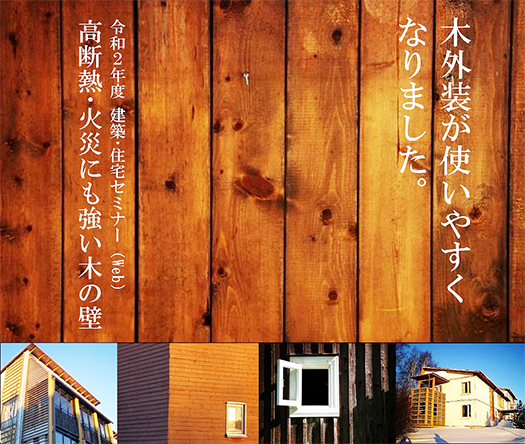
わたしのブログでは数回「木の外壁で防火認定」という情報を発信してきました。
「え? 木の外壁なのに防火認定されるわけ?」
という素朴な疑問も湧いてくるけれど、日本の住宅性能革新をリードしてきた
北海道の住宅建築研究機構・北総研がこの防火認定申請を進めてきた。
そういうことなので、きわめて信頼できる情報であるワケです。
日本の「防火基準」というのはきわめて厳格性の高いものですが、
それは木造住宅が圧倒的多数を占めた江戸時代から、
繰り返しの大火や大地震由来の火災などで都市がなんども全消滅の危機に瀕し、
その都度、都市の再生を余儀なくされてきた歴史的経緯が背景にあります。
もっとも直近の全消失は東京大空襲、太平洋戦争の惨禍での東京消滅。
そこから「戦後復興」していくときに、防火という見果てぬ夢は建築制度に刻印された。
言い換えると日本の「お上」はひたすら燃えない都市を夢想してきた。
せっかくの公共事業・政府支出が灰になるのですからムリもない。
この制度的制約から、化学的「不燃建材」外壁材として
サイディングという世界的に珍しい日本的木造建築外皮が開発されたりもしてきた。
結果、そのサイディングがいわば常識的外壁材として流通してきた。
しかし、断熱の進化は外壁側での「付加断熱」の発達も促進してきた。
その付加断熱では「不燃」の基準をクリアさせることも可能になってきていた。
木造住宅でわれわれは民族DNA的に「木の外壁」に対してノスタルジックに
強いイメージを持っている。独特の表情、雰囲気があって日本的心象に似合う。
それが木の外壁下地で付加断熱されていれば不燃基準がクリアされるようになった。
その制度的担保組織として日本の住宅性能に独自な信頼感を持つ
北海道の北総研が声を上げたことで、
このごく自然な家づくりの志向性が現代で復興することになった。

高断熱高気密であって環境性能的に進化した木造住宅が
その外皮デザインでも、きわめて民族伝統的な意匠性で再登場したといえる。
ひとびとの深層のノスタルジーを刺激する「木の外壁の木造住宅」が
最先端の住宅性能をともなって再生したと言えるのだと思います。
このニュースを数回わたしのブログで取り上げたところ、
本州地域の広範な高性能住宅ビルダーから北総研に問い合わせも来たとのこと。
木の外壁の不燃化は、技術革新とデザイン性の両面で訴求力が高い。
とくに本州地域で高断熱ビルダーとしての信頼を得た地域工務店としては、
きわめて有用性の高いオリジナリティを訴求できる要素になる。
そういったことから、北総研では今回、WEBセミナーを開催し、
広範な住宅の作り手のみなさんへの情報拡散と、情報共有を目指しています。
北海道の家づくりのシンクタンクからの直接の情報発信が
多くのみなさんに広く受け止められることを期待しております。

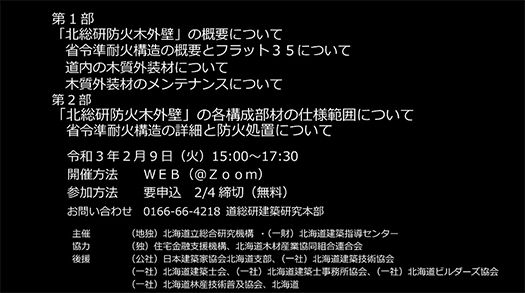
「北総研2/9「木の防火外壁」WEBセミナー」要旨
●開催日時:令和3年2月9日(火)15:00~17:30
●開催方法:Web(ZOOM)
●参加料は無料
●内容
(1)北総研防火木外壁の概要について
(2)省令準耐火構造の概要とフラット35について
(3)道内の木質外装材について
(4)木質外装材のメンテナンスについて
(5)北総研防火木外壁の各構成部材の仕様範囲について
(6)省令準耐火構造の詳細と防火処置について
●申込締切:令和3年2月4日(木)
●申込先: nrb@hro.or.jp
●参加申込はこちらから
http://www.hro.or.jp/list/building/koho/event/event_r02.html
bouka_seminar02
<情報提供:北総研>

【福島馬宿の開口部・採暖・換気/日本人のいい家⑱-4】


福島の馬宿・赤浦屋探訪第4回・最終回。
写真撮影時には気付けなかったことも再度チェックでいろいろな発見。
掘り下げていけばたくさんのポイントにあふれている。
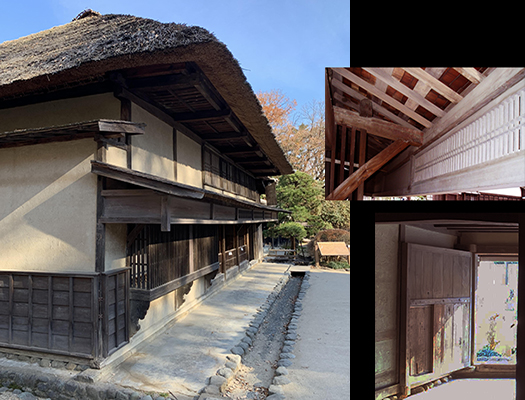
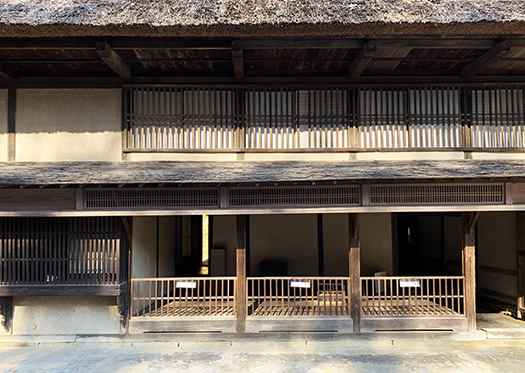
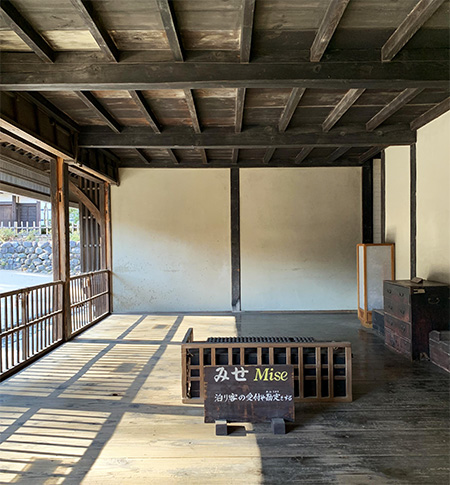
上の3点の写真は店舗として街道に面した正面の造作。
寄棟平入りで萱屋根端部が店舗前を大きく、たぶん1.8mほどで軒先保護。
そこにさらに店舗前面に差し掛けるような軒が出されている。
街道と店舗の中間領域での建築的「レイヤー」の細やかさ。
旅宿客への思いやりが建築的に配慮されていると感じられます。
その詳細も嵌め込み写真でアップしてみました。
軒の最前部ではさらにタテ格子が工夫されていて、日除けとされていた。
店舗のフロント部分には全体としてタテ格子がデザインされている。
これは街道筋に面した商家建築として、日本で普遍的な建築言語。
ガラス建材のない時代、一定の遮蔽効果を持ちながら内部を見せる、
建築デザイン手法として発展してきたものでしょう。
それにしても日除け機能を果たしながらなお、細やかなデザイン処理。
大工棟梁の工夫の様子が細部ディテールに表現されていますね。
写真では確認できなかったのですが、間口の開口部には「揚げ戸」採用。
日中営業時間には常時開放して、夜間だけ閉めるシャッター機能。
嵌め込み写真には土間入り口の夜間開閉戸つきの大木戸も。
基本は街道筋に面しているとは言え、農家が基本の家ですが、
商家としての建築的奥行きが配慮されていて洗練を感じさせられる。


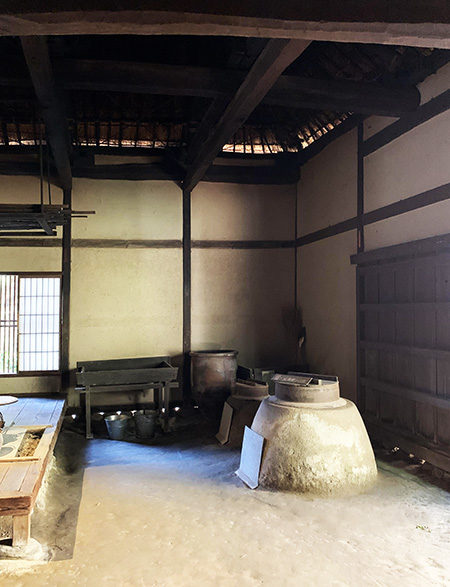
一方こちらは内部の「カッテ」周辺の様子。
カッテには石材で固められた蓄熱的な囲炉裏基礎があるのですが、
対面する位置に大きなかまどや流しなどが配置されている。
かまどはゆったりとした余熱で、カッテでの寛ぎをサポートしていたと思う。
暖房と言うより輻射的採暖だけれど、これは合わせ技的温熱の工夫。
それには土間自体の地熱利用的なものも含まれているでしょうね。
床上げせずに固く突き固められた土間には温熱効果も期待できる。
伝統的な竪穴はその土地の凍結深度以下床面の年平均気温の地熱利用。
福島市で「凍結深度」概念があるかどうか不明ですが、
体感的な温熱感覚で、土間には地熱利用要素があったのではないか。
食遊空間としてキッチンで調理された食材が、カッテ囲炉裏端に提供される。
旅籠側の心づくしがそのまま舞台装置のように全開放されて視覚化。
そして上部に目をやると、屋根と壁のすき間に空洞が見えている。
床面近くの土台下の石との間にも細かな空洞部分。
囲炉裏やかまどで大きな火力が起こされるので、
その排気、換気のためにスリット状に開口させるという工夫のようです。
この手前対面側でもこのようなスリットが確認できたので、
どうやら間違いなく「換気」を意図した造作であることはあきらか。
宿泊させる若駒たちの活発な発汗作用もあるので、
こういった熱環境的工夫も仕込まれたものかと想像する。
地域の気候風土をみつめた大工棟梁の細やかな設計か。

この赤浦屋馬宿建築は、いま川崎市の日本民家園に移築保存されているけれど、
そのように買い受けられることになって福島市側でも、
その価値感にはじめて気付いて、そこから地域の民家園が造られたとのこと。
建築文化には、昔人の生きてきた暮らしの知恵、
生活上の、温熱も含めた「いごこち」への探求姿勢が明瞭に伝わってくる。
よき建築を探究する上で欠かせない、まさに血の通った空間実例ですね。

English version ⬇

[Opening of Fukushima Horse Inn / Warming / Ventilation / Good Japanese House ⑱-4]
From the architectural culture, the wisdom of old people’s lives and the quest for “Igokochi” including heat are clearly conveyed. It’s a bloody space.・ ・ ・

Fukushima’s horse lodging / Akauraya exploration 4th and final.
I checked again what I didn’t notice when I took the photo and found various things.
If you dig deeper, you will find many points.
The above three photos are the front view of the store facing the highway.
With a hipped roof, the edge of the thatched roof is large in front of the store, and the eaves are protected at about 1.8m.
There is an eave that seems to reach the front of the store.
The delicacy of the architectural “layer” in the middle area between the highway and the store.
I feel that the consideration for the guest is architecturally considered.
I also uploaded the details with a photo.
At the front of the eaves, a vertical grid was further devised, and it was supposed to be a shade.
The front part of the store is designed with a vertical grid as a whole.
This is a universal architectural language in Japan as a commercial building facing the road.
In an era without glass building materials, show the inside while having a certain shielding effect,
It must have developed as an architectural design method.
Even so, while fulfilling the awning function, detailed design processing.
The details of the carpenter’s ingenuity are expressed in detail.
Although it could not be confirmed in the photo, a “fried door” was adopted for the opening of the frontage.
A shutter function that is always open during daytime business hours and closed only at night.
In the inset photo, there is also a large wooden door with a night opening and closing door at the entrance to the dirt floor.
Although the house is basically a farmhouse, although it faces the road,
The architectural depth of a merchant house is taken into consideration, giving a sense of sophistication.


On the other hand, here is the state around the internal “Katte”.
Katte has a heat storage hearth foundation that is hardened with stone.
A large kamado and sink are placed facing each other.
I think that the Kamado had a relaxed residual heat and supported the relaxation in Katte.
Although it is radiant heating rather than heating, this is a device of combined technical heating.
It may include geothermal energy utilization of the soil itself.
A thermal effect can also be expected in the soil that has been compacted without raising the floor.
The traditional pit uses geothermal heat at the annual average temperature of the floor below the freezing depth of the land.
I’m not sure if there is a “freezing depth” concept in Fukushima,
Perhaps there was a geothermal energy utilization element in the soil with a sensation of heat.
Ingredients cooked in the kitchen as a dining space are provided at the back of the Katte hearth.
The feelings of the Hatago side are fully opened and visualized like a stage set.
And when I look at the top, I see a cavity in the gap between the roof and the wall.
Since a large amount of firepower is generated in the hearth and the kamado,
It seems to be a device to open in a slit shape for the exhaust and ventilation.
Since such a slit could be confirmed on the front facing side as well,
Apparently, it is definitely a feature intended for “ventilation”.
There is also an active sweating effect of the young pieces who stay overnight, so
I imagine that such a thermal environment device was also prepared.
Is it a delicate design of the carpenter’s ridge that looks at the local climate?

This Akauraya Bajuku architecture is now being relocated and preserved in a Japanese folk house in Kawasaki City.
Even on the Fukushima side, it will be bought like that
It was said that the local private house garden was built from the first realization of that sense of value.
Architectural culture includes the wisdom of people’s lives in the past.
It clearly conveys the quest for “Igokochi” in daily life, including heat.
It’s an example of a bloody space that is indispensable for exploring good architecture.

【座敷と土間のいごこち競演/日本人のいい家⑱-3】


福島市近郊の馬宿・赤浦屋その3です。
きのうも書きましたが、やはり古民家の空間を彩るのは土間。
そしてそれとは対称的な床上空間としての座敷のコントラストが伝わってくる。
土間はアクティブなひとびとの生活の営みそのものであり、
生きることに必死な空気感で満たされた民俗が伝わってくる。
一方で座敷は、その土間から草鞋を脱いで「あがる」いごこち優先空間。
この赤浦屋旅籠は、ごらんのような「間取り構成」。

上段の間、次の間、そして茶の間といった畳敷きの空間が土間と対比的。
土間には馬たちが繋がれて寝わらにくるまれる一方で、
武士や博労たちは端正な格式重視の座敷で寛いでいた。
西洋の住宅はベッド以外は靴を履いたままで過ごす。
日本の住宅は草鞋を板敷の縁空間で脱ぎ去って、
素足にやさしいタタミの質感を味わいながら、そのままベッドにも
ソファにもなりうる座敷空間に抱かれる安楽が提供される。
寝具としてさらにふとんが用意されるけれど、このタタミ座敷とは、
西洋住宅で言えば、ベッドやソファの意味合いである空間といえるだろうか。
座敷では格式が上がれば上がるほどに、開口部からの眺望が注力され、
庭がそれに合わせて景観調整されていく。
イマドキの「建築家」たちが、その住宅敷地でもっとも眺望性の有望な位置を
見定める意味合いと符合するような景観デザイン選択がされていく。
飾られる調度は床の間・違い棚・掛け軸・表具建具などで家の格式が表現される。
いわば日本的文化価値感に「耽溺」できる空間が目指される。
施主と棟梁の日本文化への理解・深みが空間として表現されるのでしょう。
全体としての「ベッド的安息空間」の粋として座敷はある。

一方で、いわば「ケ」のいごこちというものも存在する。
2枚目の写真は間取り的には「カッテ」と名付けられた囲炉裏付きの空間。
こちらの赤浦屋さんでは、ごらんのように土間空間に大開放されている。
板敷きの床面であり、土間とタタミ床の中間的空間。
以前一度取り上げたのですが、囲炉裏の「基礎」部分が石で造作されている。
ちょうど石垣を造作する技術が援用されていると思える。
なぜこのような造作になっているのかと考えれば、
その「蓄熱性能」に着目したのではないかと考えられる。
土間空間に対して間仕切り壁のない空間であることで、
視覚的にはこの赤浦屋の「呼び物」的空間であっただろうことがあきらか。
なんと言っても「馬宿」らしく、土間にはこれから馬市に出品される
丹精込めた若駒たちが屋根付き空間で優しく接遇されている。
その様子を見ながら、旅の苦労を癒やす空間装置。
「あそこで一杯やったら、最高だったなぁ・・・」みたいなものだったのではないか。
わたし自身、この造作空間にいた時間の記憶が強く残っている。
「たぶん」囲炉裏火の余熱がじんわりと蓄熱されてカラダの下の方から
独特の雰囲気と同時に温熱的快感も伝播させていたように思われる。
施主と大工棟梁の「仕掛け」空間なのではと想像力が沸き立っております。

English version ⬇

[Zashiki and Doma’s Igokochi Competition / Good Japanese House ⑱-3]
Halle’s Japanese cultural space and Ke’s open and warm atmosphere. A contrasting expression of the comfort of tatami mats and earthen boards.・ ・ ・

This is Akauraya, a horse inn near Fukushima City.
As I wrote yesterday, it is the dirt floor that colors the space of an old folk house.
And the contrast of the tatami room as a symmetrical floor space is transmitted.
Doma is the very life of active people,
The folklore filled with the atmosphere desperate to live is transmitted.
On the other hand, the tatami room is a space where you can take off the waraji from the dirt floor and “go up”.
This Akauraya Hatago has a “floor plan” as you can see.

The tatami-matted space, such as the upper room, the next room, and the living room, contrasts with the dirt floor.
While the horses are connected to the dirt floor and wrapped in straw,
The samurai and the dealers were relaxed in a neat and formal tatami room.
Western homes are spent with shoes on except for beds.
Japanese houses take off the waraji in the edge space of the itajiki,
While tasting the texture of tatami that is gentle on bare feet, it can be used as it is on the bed
Comfort is provided in a tatami room that can also be used as a sofa.
There will be more futons as bedding, but what is this Tatami tatami mat?
Speaking of Western houses, is it a space that means a bed or sofa?
In the tatami room, the higher the form, the more the view from the opening is focused on.
The landscape of the garden will be adjusted accordingly.
Imadoki’s “architects” find the most promising location on the residential site
Landscape design selections are made that match the meaning of the decision.
The alcove, different shelves, hanging scrolls, and fittings are used to express the style of the house.
So to speak, the aim is to create a space where you can “indulge” in Japanese cultural values.
The understanding and depth of the owner and the master of Japanese culture will be expressed as a space.
The tatami room is the essence of the “bed-like resting space” as a whole.

On the other hand, there is also a kind of “ke” feeling.
The second photo is a space with a hearth named “Katte” in terms of floor plan.
As you can see, this Akauraya is open to the dirt floor.
It is a wooden floor, and is an intermediate space between the dirt floor and the tatami floor.
As I mentioned once before, the “foundation” part of the hearth is made of stone.
It seems that the technique of creating stone walls is being used.
If you think about why it is such a structure,
It is thought that he paid attention to the “heat storage performance”.
By having no partition wall with respect to the soil space,
It is clear that it would have been a “feature” space of this Akauraya visually.
After all, it seems to be a “horse inn”, and the dirt floor will be exhibited in the horse market from now on.
The devoted young pieces are treated gently in the covered space.
A space device that heals the hardships of traveling while watching the situation.
I think it was something like “It would have been great if I had a drink over there …”.
I myself have a strong memory of the time I spent in this space.
“Maybe” The residual heat of the hearth fire is slowly stored and from the bottom of the body
It seems that the thermal pleasure was transmitted at the same time as the unique atmosphere.
I have a lot of imagination that it is a “device” space between the owner and the carpenter.

【土間が覚醒させる「体動作」/日本人のいい家⑱-2】


この奥州街道福島近郊の馬宿・鈴木家「赤浦屋」では、
馬も宿泊させることで広大な土間空間が提供されている。
宿泊中は馬の世話は旅籠側で面倒を見ていたとされる。
まぁ一種の旅客呼び込みのサービス作戦だったように思います。
馬にも「おもてなし」することで、赤浦屋に着けば手間から解放される、
という期待値が高まったものと思われるのですね。
馬市の会場まで30kmほどというほぼ1日の行程距離の旅宿で
旅の疲れを癒し、最後の仕上げのために準備するという顧客心理を考えた。
この赤浦屋の入口は正面右側に土間通路が設けられている。
まるでウエルカムお馬さん、というような声掛けが聞こえてくるかのよう。
馬産が活発な南部地域では「曲がり家」間取り形式が生み出されるけれど、
この鈴木家赤浦屋でも、寄棟平入り建物に直交して長い切妻が接続され、
形状としては曲がり家になっているのも興味深い。
家畜動物との共生を考えたら、曲がり家という形式が合目的的なのでしょうか。

この馬宿建築も基本はやはり土間ですね、日本民家の基本空間。
日本民族の「靴脱ぎ」習慣は伝統的ではあるけれど、
さりとて家と名が付けば、とにかく玄関から靴を脱いで家中ハダシというのは、
けっして日本民族古来の習慣というわけではない。
家が生きるための空間である以上、必ずなんらかの生業があり、
その生業の具体的な「作業場」「工場」として土間がずっとあった。
むしろ、現代住宅が極少の玄関土間空間しか持たず、
ひたすら床上げしていることの方が、民族的には特異といえる。
このことと民族意識の基底変化とはどうも相応していると感じる。
たぶん戦前期までの社会は基本が職分性社会であって、その後の戦後社会は
職住の分離、「住むだけの家」という新しいありようが開始したのではないか。
暮らしの多様性では江戸期・戦前期までのありようの方が豊かで普遍的で
いまわれわれはきわめて特殊なワンパターン住環境を生きているのではないか。
土間というのは西洋の住宅思想では板敷きの床仕上げが相応するのだろうか。
家の中で靴を脱がないで、ベッドでだけ靴を脱ぐ文化の基盤。
それに対しては日本家屋は、ベッドやリラックス空間の方が多数派で、
靴を脱いでくつろぐ方向に進化してきたということなのだろうか。
このことは靴と草鞋という違いにも波及するのだろう。
つっかけとか、下駄のようなものが「室内用上履き」として機能もしてきた。
床上げした段階では、今度はそれがスリッパという文化にも繋がったのだろうか。
土間にこそ日本人のDNA的な行動心理基層もあるように思う。

そう考えれば、このような土間空間を現代住宅デザインとして
再生させるというのは、面白いこころみと思えます。
「土間なんてメンドイだろ。いちいちつっかけの脱ぎ履きするか?」
とかいう声も聞こえてきそうですが、安藤忠雄さんの「住吉の長屋」は
そういった意味でデザイナーとしての「直感」が生み出したものかもしれません。
「家の中でトイレに行くのにいちいち中庭土間を通っていく」なんて・・・
という評価は、実はそれこそが日本人の伝統的体動作であったことを想起させる。
これらの写真群から独特のインテリア感覚が誘発されるのはわたしだけでしょうか?

English version ⬇

[“Body movement” that Doma awakens / Good Japanese house ⑱-2]
I think “Doma is a mess. Do you take off your shoes one by one?”, But Tadao Ando’s “Row House in Sumiyoshi” may be the designer’s DNA intuition.・ ・ ・

At the Suzuki family “Akauraya” near Fukushima on the Oshu Kaido,
A vast soil space is provided by accommodating horses.
It is said that the horse was taken care of by the Hatago side during the stay.
Well, I think it was a kind of service strategy to attract passengers.
By “hospitating” horses, you will be freed from the hassle when you arrive at Akauraya.
It seems that the expected value has increased.
At a ryokan that is about 30km to the sea in Ma City, which is about a day’s journey
I thought about the customer’s psychology to heal the tiredness of the trip and prepare for the final finish.
The entrance to this Akauraya has a dirt passage on the right side of the front.
It’s as if you can hear a voice like a welcome horse.
In the southern region where horse production is active, a “bent house” floor plan is created,
Even at this Suzuki family Akaraya, a long gable is connected orthogonally to the building with a hipped roof.
It is also interesting that the shape is a bent house.
Considering the coexistence with livestock animals, is the form of a bent house purposeful?

The basics of this horse-shuku architecture are also Doma, the basic space of a Japanese private house.
Although the Japanese people’s “shoe-off” custom is traditional,
If you call it a house, you can take off your shoes from the front door and say “Hadashi” all over the house.
It is by no means an ancient Japanese custom.
As long as the house is a space for living, there is always some kind of livelihood,
There has always been a dirt floor as a concrete “workplace” and “factory” for that business.
Rather, modern houses have very little entrance space,
It can be said that it is ethnically peculiar to raise the floor earnestly.
I feel that this is in line with the basic change in nationalism.
Perhaps the society before the prewar period was basically a segregated society, and the postwar society after that
Separation of work and residence, a new way of “house just to live” may have started.
In terms of diversity of life, it is richer and more universal than it was in the Edo period and the prewar period.
I think we are living in a very special one-pattern living environment now.
Is the floor finish of the wooden floor suitable for the earthen floor in Western housing thought?
The foundation of the culture of taking off shoes only in bed without taking off shoes in the house.
On the other hand, in Japanese houses, beds and relaxing spaces are the majority.
Does it mean that it has evolved in the direction of taking off shoes and relaxing?
This may have a ripple effect on the difference between shoes and waraji.
Things like clogs and clogs have also functioned as “indoor slippers.”
At the stage of raising the floor, did it lead to the culture of slippers this time?
I think that there is also a Japanese DNA-like behavioral psychological base layer in the soil.

With that in mind, this kind of earthen space can be used as a modern housing design.
Playing it seems to be an interesting intention.
“Doma is a mess. Do you take off and put on each one?”
You may hear a voice saying, but Tadao Ando’s “Row House in Sumiyoshi”
In that sense, it may have been created by “intuition” as a designer.
“Every time I go to the bathroom in my house, I go through the courtyard soil” …
The evaluation reminds us that it was actually the traditional body movement of the Japanese.
Am I the only one who provokes a unique sense of interior from these photographs?

【奥州街道・福島の馬宿/日本人のいい家⑱-1】


本日からふたたび「日本人のいい家」シリーズ古民家研究です。
コロナ禍で現代住宅の取材機会はデリケートになっていることもあり、
そういった取材機会はわたしのような立場では減少気味。
しかしわたしはあくまでも住宅の空気感をいちばん大切にしたい。
ということで過去撮影の古民家写真が大量にあるのを再整理したかった。
コロナ禍が民族の住宅文化探求に繋がっている次第。いい機会です。

東北地域は古くから「馬産」が盛んだった。
「戸」という律令政府の地方行政単位は、地域産業として米作に依らないで
馬産が主要な日本社会の中での経済位置を占めていたことを表すとされる。
律令制での「戸」の扱いについては、
〜日本においては律令制以前の6世紀以降に、ヤマト王権(大和朝廷)が
伝統的な部に属しない氏族を組織・掌握するため部分的に採用されたと考えられ、
大化の改新後に新羅の制度などを取り入れる形で施行されたと考えられている。
〜(Wikiの記述)。東北北部はながく稲作に適さなかった地域で「戸」という
戸籍上の単位が採用されたように思われる。
一方の馬産について青森県軽種馬生産農業協同組合のHPには以下の記述。
〜東北地方の馬に関する記録は「続日本記」養老2年(718年)の記事が初見。
当時、陸奥と呼ばれた青森地域には、すでに多くの馬が飼養されていたことが
他の文献にも記述されるが、この地域が馬産地として歩みだすのは平安初期、
朝廷が馬産の重要性を認めこの地域の産馬の持ち出しを禁じた頃からである。
武士勢力が国内に現れ始めたのもこの時期からで源平盛衰記に記される
寿永3年(1184年)の宇治川大合戦で活躍した2頭の南部馬によって、
この地域の馬の優秀さは以後の武士たちに広まっていった。
鎌倉幕府を築いた源頼朝も南部馬に大きな関心を持っていたひとりで、
奥州藤原氏討伐後甲斐の南部光行に糠部(八戸地域)を治めさせたのも、
馬に精通していたからだったという。(頼朝と馬はいくつか名馬にまつわる物語が
舞台作品のテーマにもなっている。)南部一族は光行から30年後の実光の時代、
一戸・七戸・四戸・九戸の4地区にそれぞれ行朝・朝清・宗朝・行連の4兄弟を配し
特に馬産に力を注いだ。 これが現在の馬産の基盤になったといわれている。〜
古代から中世にかけヤマトによる東北制圧が主要な歴史の動因になったけれど、
産金と、軍事物資の最たるものとしての馬が奥州の位置を決めたと思える。
戦国期での鉄砲にも匹敵する物として馬産はあったのかも知れない。
その馬産の流通経路について、結構重要な経済要因だったはずだけれど、
各地に残る「馬市」の様子が知られる程度で具体的な姿が見えにくい。
そんななかで、この福島市近在に残っていた「馬宿」は興味深い。

この古民家は「赤浦屋」と呼ばれていた馬宿。
馬宿とは、博労など馬を運搬して商いをするひとびとのための旅宿。
当然、馬たちも土間で休ませ、人間は座敷で寝たと言うこと。
博労とは売買の責任者であり、通常の人足仕事にあたる人は2階に泊まりますが、
ここではたまに宿泊の武士と同等で1階の座敷で泊まっていたとされています。
街道に面した側は店舗としての仕様で、土間が続く開口部から奥に
長く旅宿機能の空間が展開しています。
かれらの目的地はここから約30kmほどの「本宮」での馬市だったとされる。
はるばる南部地域から旅してきた一行にとって、あともう少しの立地の旅宿。
写真の右側土間に馬が寝て、左手側で人足たちが食事したりした。
さまざまな人間がここを通り過ぎた空間記憶が呼び覚まされる古民家。
数日にわたって、その馬宿空間を解析してみたいと思います。

The English version is here. ⬇

[Oshu Kaido / Fukushima Horse Inn / Good Japanese House ⑱-1]
Horse production occupies a large position in Japanese history as a military combat force or as an agricultural machine. An old folk house that conveys that spatial memory.・ ・ ・

From today, I will study the “Good Japanese Houses” series of old folk houses again.
Due to the corona sickness, the opportunity to cover modern houses has become delicate.
Such interview opportunities are on the decline from a standpoint like me.
However, I want to value the atmosphere of the house most.
So I wanted to reorganize the large number of old folk house photographs taken in the past.
As soon as the corona wreck has led to the quest for ethnic housing culture. This is a good opportunity.

“Horse products” have been popular in the Tohoku region for a long time.
The local administrative unit of the Ritsuryo government called “door” does not depend on rice cultivation as a regional industry.
It is said to indicate that horse production occupies an economic position in major Japanese society.
Regarding the treatment of “doors” in the Ritsuryo system
~ In Japan, after the 6th century before the decree system, the Yamato kingship (Yamato court)
It is believed that it was partially adopted to organize and control clans that do not belong to the traditional department.
It is believed that it was implemented in the form of incorporating the Silla system after the Taika Reform.
~ (Wiki description). Northern Tohoku is an area that was not suitable for long-term rice cultivation and is called a “door”.
It seems that the unit on the family register was adopted.
On the other hand, the website of Aomori Prefecture Light Horse Production Agricultural Cooperative has the following description.
-For the first record of horses in the Tohoku region, see the article in “Nihonki”, 2nd year of Yoro (718).
At that time, many horses were already bred in the Aomori area called Mutsu.
As described in other literature, it was in the early Heian period that this area began to be a horse-producing region.
It was around the time when the imperial court recognized the importance of horse production and banned the removal of horses from this area.
It was from this time that the samurai forces began to appear in Japan, and it is recorded in Genpei Jōsuiki.
By two southern horses who played an active part in the Ujigawa Great Battle in Juei 3 (1184)
The excellence of horses in this area spread to the samurai who followed.
Minamoto no Yoritomo, who built the Kamakura Shogunate, was also one of the people who had a great interest in southern horses.
After the subjugation of Mr. Fujiwara Oshu, it was also the reason why Mitsuyuki Nanbu of Kai ruled Nukanobu (Hachinohe area).
He was familiar with horses. (Yoritomo and horses have some stories about famous horses
It is also the theme of the stage production. ) The Southern Clan was in the real light era, 30 years after the light line.
Four brothers, Gyocho, Chosei, Socho, and Gyoren, are assigned to each of the four districts of Ichinohe, Shichinohe, Yoto, and Kunohe.
Especially focused on horse production. It is said that this became the basis of the current horse production. ~
From ancient times to the Middle Ages, Yamato’s control of Tohoku was a major historical motive.
It seems that gold production and horses as the best military supplies have determined the position of Oshu.
Horse production may have been comparable to the guns of the Warring States period.
It must have been a fairly important economic factor for the distribution channel of horses,
It is difficult to see the concrete appearance of the “horse market” that remains in various places.
Under such circumstances, the “horse inn” that remained near Fukushima City is interesting.

This old folk house is a horse inn called “Akauraya”.
A horse inn is a travel inn for people who carry horses and do business, such as Hakuro.
Naturally, the horses also rested in the dirt floor, and humans slept in the tatami room.
Hakuro is the person in charge of buying and selling, and people who work on a regular foot basis stay on the second floor.
It is said that he sometimes stayed in the tatami room on the first floor, which is equivalent to the samurai who stayed here.
The side facing the highway is a store specification, from the opening where the dirt floor continues to the back
The space of the inn function has been developing for a long time.
Their destination is said to have been the horse market at the “Hongu”, about 30km from here.
A ryokan in a little more location for the group who have traveled all the way from the southern region.
A horse slept in the dirt floor on the right side of the photo, and human feet ate on the left hand side.
An old folk house that awakens the spatial memory of various human beings passing by.
I would like to analyze the horse lodging space for several days.