本文へジャンプ

【残存する雪壁と暖気による融雪進行】


昨日3/16深夜になって11年前を彷彿とさせる地震発生。
わたしは就寝後、1時過ぎに一度目覚めたときに情報を知った。
まだ夜間なのでスタッフの様子の情報だけを確認しています。
津波なども危惧されるので避難しているという情報。
ただ、深夜帯での地震なのでこれから夜が明けてからでなければ
現地の状況はわかりにくい。
スタッフの状況、事務所の状況、顧客先の状況など、
本日はそういった情報収集が優先されると思います。
東京からの来訪者の予定などもありますが、なんとも流動的。
被害にあわれたみなさんのご無事を祈念しております。

ということで、本日からブログを通常の住宅取材ネタに復帰と考えていましたが
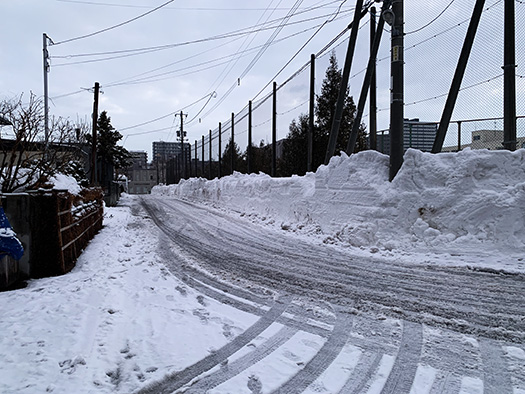
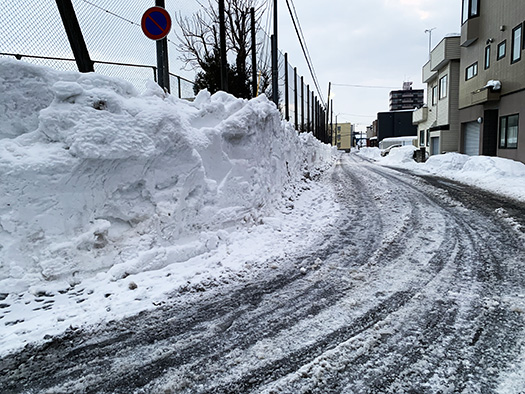
1日順延し、本日も周辺の除雪状況、融雪状況の話題で。
一昨日の集中除排雪のおかげで前面道路は本来の幅員に復帰。
確保している周辺駐車スペースもほぼフルに使用可。
ということで来客のみなさんの来訪状況も通常に復帰しています。
ビジネス環境もこういう都市機能インフラが支えてくれていることを実感。
さらに昨日の最高気温は札幌でプラス6-7度ほど。
プラス気温になると日射での融雪も進んで参ります。
事務所駐車場出入り口の路盤上の堆雪も表面から緩んできて
ところどころレンガ路面が露出してきています。
こうなってくると北国人は「雪割り」が楽しみになってくる。
作業について楽しみというのは、あんまり聞かないだろうと思いますが、
冬を白く閉ざされる北国人には独特の「体内号砲」が鳴るのです。
白い世界を粉砕して、色づく世界を取り戻したいという本然のうずき。
ついついツルハシの類を持ち出してきて岩盤状の堆雪を割り始める。
これが、パカッときれいに割れていく快感(笑)。
ツルハシも通常の両手使用型もあるけれど、片手型の局所振り下ろし型も動員。
さらに刃先の鋭角的なスコップと、幅広刃先スコップの両方で
徐々に自由な領土を拡張していく(笑)。
ロシア独裁者とは正反対に、自由解放型の領土拡張欲求に根ざしている。
ツンドラに閉ざされた大地を自由の息吹で解放していく・・・。
しかし、面前にはまだ高い雪の壁も存在している。
ヨーロッパもエネルギーをこの独裁国家に依存してしまってきましたが、
ようやくドイツも180度転換しそうですね。

おっと、雪融けとウクライナ戦争の掛詞に無意識に落ちてしまった。
地道でねばり強い努力で崩していきたいけれど、
まぁ基本的には陽光の輝き・自然の摂理で破砕されるものと信じます。

English version⬇

[Remaining snow wall and progress of snowmelt due to warm air]
The season is from winter to spring. Free transportation is the lifeline of the economy. Overlooking the stubborn rock-like snow and the barbarism of Russia, the power of the snow splitting is entrenched. ・ ・ ・

An earthquake occurred at midnight on March 16th yesterday, reminiscent of 11 years ago.
I knew the information when I woke up once after 1 o’clock after going to bed.
It’s still night, so I’m only checking the information about the staff.
Information that they are evacuating because they are concerned about tsunamis.
However, since it is an earthquake in the middle of the night, it must be after dawn.
The local situation is difficult to understand.
Staff status, office status, customer status, etc.
I think that such information gathering will be prioritized today.
There are plans for visitors from Tokyo, but it’s really fluid.
We pray for the safety of all the victims.

So, from today I thought that the blog would return to normal housing coverage.
It was postponed for one day, and today we are talking about the snow removal situation and snow melting situation in the surrounding area.
Thanks to the intensive snow removal the day before yesterday, the front road has returned to its original width.
The surrounding parking space that has been secured can be used almost fully.
As a result, the visit situation of all the visitors has returned to normal.
I realized that the business environment is also supported by this kind of urban functional infrastructure.
Furthermore, yesterday’s highest temperature was about 1 degree in Sapporo.
When the temperature reaches a positive temperature, the snow melts due to sunlight.
The snow on the roadbed at the entrance to the office parking lot has also loosened from the surface.
The brick road surface is being exposed here and there.
When this happens, northern people are looking forward to “snow splitting”.
I don’t think you’ll hear much about the fun of working,
A unique “internal gun” sounds for northerners who are closed in white in winter.
A true tingling that wants to crush the white world and regain the colored world.
I just brought out pickaxes and started to break the bedrock-like snow.
This is the pleasure of cracking cleanly (laughs).
There are pickaxes and normal two-handed types, but one-handed local swing-down types are also mobilized.
In addition, with both a sharp-edged scoop and a wide-edged scoop
Gradually expand the free territory (laughs).
Contrary to the Russian dictator, it is rooted in a liberating desire for territorial expansion.
The earth closed by the tundra will be released with the breath of freedom.
However, there is still a high snow wall in front of us.
Europe has also relied on this dictatorship for energy,
It seems that Germany will finally turn 180 degrees.

Oops, I unknowingly fell into the slogan of the melting snow and the Ukrainian war.
I want to break it down with a steady and tenacious effort,
Well, basically, I believe that it will be crushed by the brilliance of sunlight and the providence of nature.

【多様な重機車集中投入。世界最先端の都市除排雪】


さてことしの北海道、とくに札幌市は例年の2倍近い積雪深。
ようやく3月に入って雪融けが進んで来てはいましたが、
幹線道路以外の住宅地・中通りは大量積雪と融雪進行で
道路がグチャグチャで毎日雪中陥没のクルマ続出という状況でした。
とくにここ1週間ほどは車両交通について要注意アラートを出して
出入りに注意喚起せざるを得ない状況で推移。
そういうなかでグッドタイミングで3/12-15期間での集中除排雪の告知。
この期間については基本、スタッフにも駐車場出入りを禁止して
市の除排雪作業がスムーズにできるように協力体制。
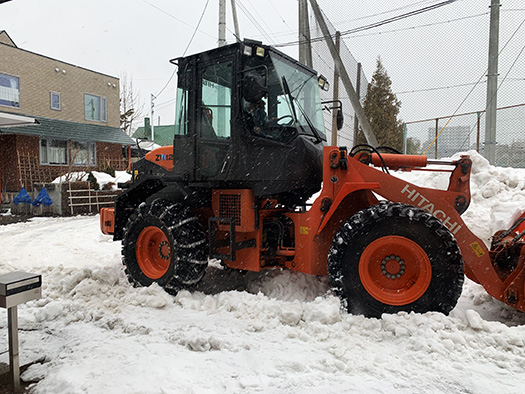
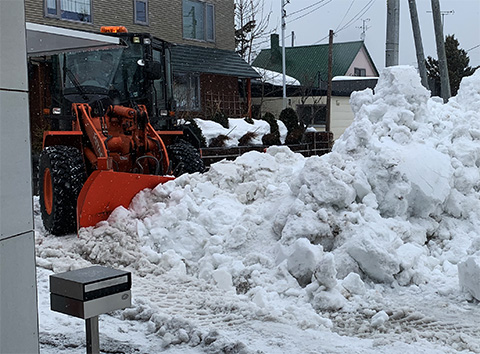
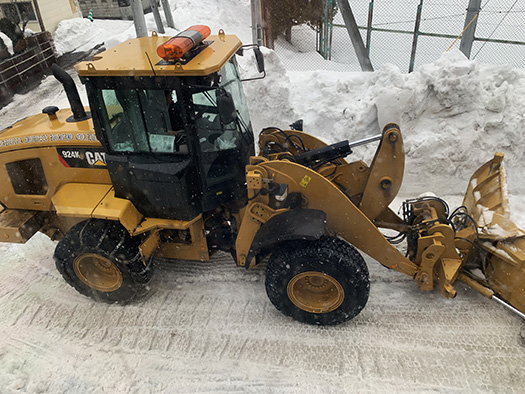
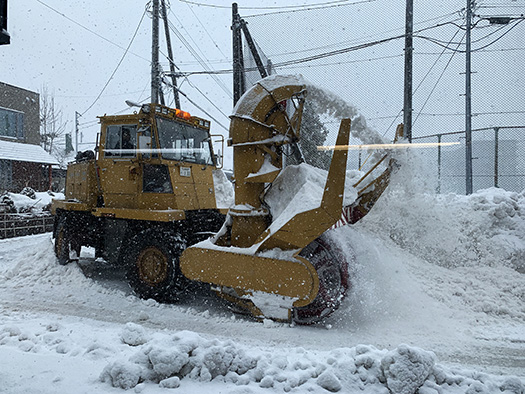
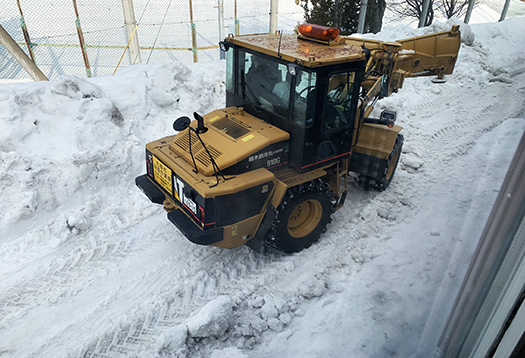
そういった準備を整えたきのう15日、朝から写真のような専門除排雪車軍団が
弊社前道路に一気投入されました。
前面道路は8m幅で積雪がなければ2車線道路+歩道各1mの合計10m。
ところが降雪の結果、1車線のみ通行可で幅もギリギリ3m程度、
しかも左右の雪山は場所によっては3m超。
すでに人力での作業限界になっていたのです。

札幌市内では春先にはこのような「集中除排雪」が行われますが、
ことしはこの「ありがた」感がハンパない。
やはり公共による交通確保というのは都市機能の基本インフラ。
年間積雪が6m近い世界の大都市というのは札幌が唯一。
日本はこんな積雪寒冷地域でも巨大人口都市を維持してきている。
ふだんはそういう奇跡についてリアリティを持つことは少ないのですが、
この集中除排雪作業には圧倒的な迫力がある。
作業は朝8時頃から午後3時頃まで行われましたが、
まずは巨大雪山の破壊、崩し作業。
そして大量に路面に積層された雪を移動処理する
その後、雪山をさらに掘削してトラックに雪を積み上げ処理する。
路面の残雪除去の作業車はなんども路面を掘削して
アスファルト路面が表出するほどに徹底して除雪してくれる。
その上、各戸敷地との間にできてしまう「段差」についても
可能な限り「平滑化」に努めてくれる。
市民の側としてはできるだけ出入りを少なくして作業環境確保に協力する。

こういう雪深い地域であるのに大都市として
経済活動、人間居住が可能になるためにはこういった除排雪技術が肝要。
見ているとこれら除排雪重機車の運転技能も素晴らしい。
人馬一体というコトバがあるけれど、
マンマシンシステムの妙技にまことに驚かされ、手を打ちたくなる。
こういった仕事文化にも大きく刮目させられます。
日本は北海道が領土になったことで、貴重な技術進化がもたらされたと思うけれど
そして普段は仕事柄、住宅の進化について探究しているけれど、
それもまたこのような基本インフラの運営技術が支えてくれている。
そういうことに思いを深められた1日でした。ありがとうございました。

English version⬇

[Concentrated introduction of various heavy machinery vehicles. World’s most advanced city snow removal]
The control of the snow removal vehicle, which is equivalent to that of Jinba Ittai, is excellent. Securing 2 million urban infrastructure in a heavy snowfall area of ​​6 m per year. Japanese life culture power.・ ・ ・

By the way, this year’s Hokkaido, especially Sapporo, has almost twice the snow depth as usual.
The snow was finally melting in March, but
Residential areas and Nakadori other than the arterial roads are subject to heavy snowfall and snowmelt.
The road was messy and the cars were sunk in the snow every day.
Especially for the past week or so, I have issued a caution alert about vehicle traffic.
The situation has changed to call attention to entry and exit.
Under such circumstances, the announcement of intensive snow removal during the period of 3 / 12-15 at good timing.
Basically, staff are prohibited from entering and exiting the parking lot during this period.
Cooperation system so that snow removal work of city can be done smoothly.
On the 15th, when such preparations were made, a specialized snow removal vehicle corps as shown in the photo started in the morning.
It was thrown into the road in front of our company at once.
The front road is 8m wide and if there is no snow, it is a two-lane road + 1m each on the sidewalk, for a total of 10m.
However, as a result of snowfall, only one lane can pass and the width is about 3m.
Moreover, the snowy mountains on the left and right are over 3m depending on the location.
It was already at the limit of manual work.

In Sapporo city, such “intensive snow removal” is performed in early spring,
This “thank you” feeling is not hampered.
After all, securing public transportation is the basic infrastructure of urban functions.
Sapporo is the only major city in the world with an annual snowfall of nearly 6m.
Japan has maintained a huge population city even in such a snowy and cold region.
Usually, I rarely have reality about such a miracle,
This centralized snow removal work is overwhelmingly powerful.
The work was done from about 8 am to 3 pm,
First of all, the destruction and destruction work of a huge snowy mountain.
And a large amount of snow piled up on the road surface is moved and processed.
After that, the snowy mountains are further excavated and the snow is piled up on the truck for processing.
Work vehicles for removing residual snow on the road surface are often excavated on the road surface.
It removes snow so thoroughly that the asphalt road surface is exposed.
In addition, there is also a “step” between each house and the site.
It strives for “smoothing” as much as possible.
Citizens will cooperate in securing a working environment by reducing the number of entrances and exits as much as possible.

Even though it is such a snowy area, as a big city
Such snow removal technology is essential for economic activities and human settlement.
Looking at it, the driving skills of these snow-removing heavy-duty vehicles are also wonderful.
There is something called Jinba Ittai, but
I was really surprised by the feat of the man-machine system and wanted to do something about it.
This kind of work culture also makes a big difference.
I think that the fact that Hokkaido became a territory in Japan brought about valuable technological evolution.
And although I usually explore the evolution of work and housing,
This is also supported by the operating technology of such basic infrastructure.
It was a day that deepened my thoughts on such things. Thank you very much.

【早朝散歩 in パクリ文化「辯天堂」上野不忍池】


朝早くの散歩習慣、たぶん20年くらいは続けている。
札幌にいるときには多様なコースを日々の気分で選択する楽しみがある。
視界を流れていく周辺の景色のなかでふと気付く変化から
四季の移ろいを知ったり、世間のちょっとした変化を知る。
一種の「対話」がたのしめるのが大きいのだと思います。
出張などで札幌以外を訪ねる機会にはその土地の空気感を測ることになる。
歩きながら感覚がいろいろな情報を得ていくのが面白い。
それと歩きながら考えると自然と「前向きになる」という先人の教えも知った。
人間の動作とか営為には共有できる経験知が存在すると思えるので、
この考え方にはいたく惹かれています。
人間、動かずに考えてばかりいても「いい考え」は浮かばない。
手足を活発に働かせることで、能動的な知恵が出るというのは確か。
いろいろ悩み事について歩きながら考えると整理整頓が進むとも思う。

そんな早朝散歩ですが、この時期はその服装がなかなか難しい。
先週の東京では気温の予測を確認したところ、
日中は15度以上、20度にもなる予測。
だけれども最低気温が観測される早朝では札幌の日中気温よりも低かったりする。
外出移動でもっとも継続時間(約1時間チョット)の長い移動である早朝時間の
服装についてが基本と考えると「札幌と同じでいいや」となる。
しかし、日中の活発な移動、とくに徒歩移動機会の多い東京では
その時間帯での服装とは大きな乖離がある。
今回は軽めのダウンジャケットで早朝にはチャックを閉めていて
昼間には前を開いて羽織るようにしておりました。
それでも多少汗ばむようなこともありました、なかなか難しい(笑)。
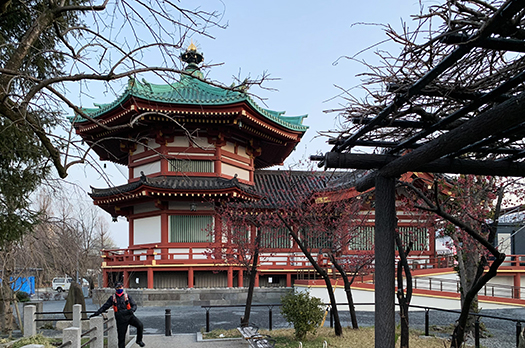
写真はなんどか通りすがった経験も多い上野不忍池周辺の様子。
遠景では見たこともあった「不忍池辯天堂」であります。
東京は江戸初期は「新開地」そのものであって、
文化的には歴史を重ねた上方・京都へのコンプレックスが強烈だった。
この辯天堂を開基した天海僧正は、「◎◎に見立て」という設計手法で
この堂社を造営したと記されている。
そもそも上野の寛永寺自体が「東叡山」というコンプレックスそのものの命名。
比叡山の東版ですよ、というオリジナリティに乏しい命名。
この不忍池も多少カタチが琵琶湖に似ているとされて
そのなかの竹生島に見立て、池の中島に琵琶湖中の「宝厳寺」と見立てて
この辯天堂を建立したと縁起の記述があります。
どうもこういう「見立て」心理には同意しかねる部分がある(笑)。
いまちょうど鎌倉政権についての大河ドラマ放送中ですが、
オリジナリティについてははるかな鎌倉期の方が独立不羈を感じる。
やはりオリジナリティって大切なのではないかなぁ。
気候風土条件的に本土とは隔絶して都市建設に取り組んだ札幌市民として
雪に悩まされて大変だけれど、独自文化性に誇りが持てる気がする。

English version⬇

[Early morning walk in plagiarism culture “Bentendo” Ueno Shinobazu Pond]
I’ve been taking a walk early in the morning, maybe for about 20 years.
When I’m in Sapporo, I enjoy choosing various courses according to my daily mood.
From the changes that you suddenly notice in the surrounding scenery that flows through your field of view
Know the changes of the four seasons and know the slight changes in the world.
I think it’s great to enjoy a kind of “dialogue”.
When you visit a place other than Sapporo on a business trip, you will measure the atmosphere of the area.
It is interesting that the senses get various information while walking.
When I thought about it while walking, I also learned the teaching of my predecessor that “become positive” naturally.
It seems that there is experience knowledge that can be shared in human movements and activities, so
I am very attracted to this idea.
Human beings, even if they keep thinking without moving, “good ideas” do not come to mind.
It is certain that active wisdom can be obtained by actively working the limbs.
I think that if you think about various worries while walking, you will be more organized.

It’s such an early morning walk, but it’s quite difficult to dress at this time of year.
When I checked the temperature forecast in Tokyo last week,
It is expected to reach 15 degrees or more and 20 degrees during the day.
However, in the early morning when the lowest temperature is observed, it may be lower than the daytime temperature in Sapporo.
In the early morning hours, which is the longest-duration (about 1 hour) of going out
If you think about clothes as the basics, you can say, “Nothing is the same as Sapporo.”
However, in Tokyo, where there are many opportunities for active movement during the day, especially on foot.
There is a big difference from the clothes in that time zone.
This time I was wearing a light down jacket and closed the zipper early in the morning
In the daytime, I opened the front and tried to put it on.
Even so, I sometimes got a little sweaty, which is quite difficult (laughs).
The photo shows the area around Ueno Shinobazu Pond, which has many experiences of passing by.
It is “Shinobazu Pond Bentendo” that I have seen in the distant view.
In the early days of Edo, Tokyo was “Shinkaichi” itself,
Culturally, it seems that the complex to Kamigata and Kyoto, which has a long history, was strong.
The Tenkai priest who opened this Bentendo is a design method called “◎◎”.
He is said to have built this shrine.
In the first place, Kaneiji Temple in Ueno itself is the name of the complex itself called “Toeizan”.
The name is lacking in originality, saying that it is the eastern version of Mt. Hiei.
The shape of this Shinobazu Pond is said to be somewhat similar to Lake Biwa.
It is likened to Chikubu Island, and to Nakajima in the pond as “Hogonji Temple” in Lake Biwa.
There is a description of auspiciousness that this Bentendo was built.
I don’t agree with this kind of “imitation” psychology (laughs).
We are currently broadcasting a taiga drama about the Kamakura administration.
As for originality, I feel that the Kamakura period is far more independent.
I think originality is important after all.
As a Sapporo citizen who worked on urban construction in isolation from the mainland due to climate and climate conditions
It’s hard to suffer from snow, but I feel proud of my unique culture.

【2022.3月 東京・札幌 それぞれの春】


先週は出張で久しぶりに東京で半分過ごしていまして
土曜日に帰還して、東京と札幌のこの時期を体感しておりました。
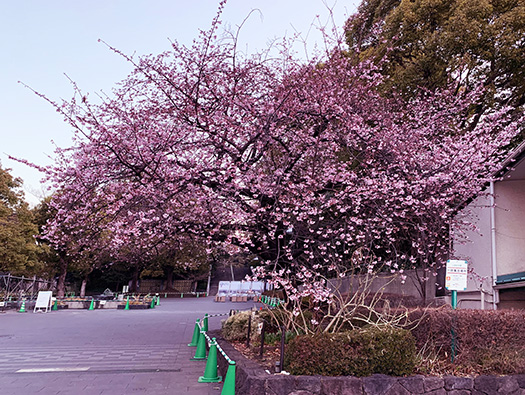
東京では上野の公園周辺を散歩していましたが、下の写真のように
公園入口の派出所、西郷隆盛像の横のサクラが豪華な色づきを見せていた。
冬から春への端境期というのは北海道人にとって東京との相違に
いちばん悩む時期と言えるでしょうか。
端的には着るものの違いの調整。
北海道では真冬が空気だけようやく和らいできた程度で
最低気温は普通にマイナスで外装はダウンジャケット一択。
このダウンジャケットはたたむとなるとずいぶんと嵩張る。
4日間程度の出張であれば備品は最低限にして身軽にしたい、
となると東京の気温が気になるところ。
今回は写真のようにすでにサクラもちらほらと開花しつつある。
土曜日12日などは20度越えの最高気温。
シャツの上に羽織る程度でもやはりダウンはキビシイ。
ことしは例年の春先寸前の降雪が、オオカミ少年のように来なかった。
暖気上昇が一気で、今週末くらいには花見の話題でしょうね。

一方の札幌のかなしい春が上の写真。
2月の超大雪以降、大きな降雪はなかったけれど、
ことしはなんといっても雪の「資産」がたっぷりとあって、
それが徐々に温度上昇とともに融雪が進んで
結果、除排雪の行き届かない市内各所では「グシャグシャ」道で
わが社周辺道路でも、クルマが車輪空回りでどんどん「生き埋め」。
幹線道路はなんとか除排雪が進んでアスファルト路面が露出していますが、
このような一般道では、侵入危険地域だらけという現実。
札幌市の除雪方針がここ数年の予算縮減と小雪傾向を反映して
「踏み固め」型に転換してきていたことの欠点を露呈させてしまった。
結果として除雪車が入っても「上っ面」だけをちょこっと除去するだけで
かえってグシャグシャを促進するようになってしまっている。
たしかに除雪予算が縮減している中での例年の2倍近い積雪深なので
いきおい除雪回数が数倍増になっているでしょうから、
実際の除雪作業では「上っ面」だけに拍車が掛かっているのでしょう。
世界最高水準の「除排雪」システムを構築できたことで
積雪6m近い寒冷地域なのに人口200万規模の都市が運営されているのは
日本の社会システム運営の知の底力を示していると思うのだけれど
ことしはやはりこのシステムが機能不全になっている側面はある。
ことしの教訓を活かして、さらに強靱な都市運営基盤をどう作れるか、
依然として「課題の最先進地」、「試される大地」であることは逃れられません。

さて本日から明日に掛けて本格的な除排雪がわが社周辺で予定とのこと。
クルマの出入りを抑制して協力したいと思います。
もうひと息で春がやってくるのでいまが最後のガマンの時期。

English version⬇

[2022.3 March Tokyo and Sapporo springs]
Last week I was on a business trip and spent half of my time in Tokyo for the first time in a while.
I returned on Saturday and experienced this time of year in Tokyo and Sapporo.
In Tokyo, I was taking a walk around the park in Ueno, as shown in the photo below.
The cherry blossoms next to the statue of Takamori Saigo, the police box at the entrance of the park, showed gorgeous colors.
The off-season from winter to spring is different from Tokyo for Hokkaido people.
Is it the most troublesome time?
In short, adjust the difference in what you wear.
In Hokkaido, the midwinter has finally softened only in the air.
The lowest temperature is usually negative and the exterior is a down jacket.
This down jacket is quite bulky when folded.
If you are on a business trip for about 4 days, you want to keep the equipment to a minimum and make it lighter.
When it comes to that, the temperature in Tokyo is a concern.
This time, as you can see in the picture, the cherry blossoms are already blooming.
The highest temperature exceeds 20 degrees Celsius on Saturday 12th.
Even if you put it on your shirt, the down is still tough.
This year, the snowfall just before the beginning of spring did not come like a wolf boy.
The rise in warmth is all at once, and it will be a topic of cherry blossom viewing around this weekend.

On the other hand, the photo above shows the wonderful spring in Sapporo.
There has been no heavy snowfall since the heavy snowfall in February,
After all, there are plenty of snow “assets”,
As the temperature gradually rises, the snow melts.
As a result, in various parts of the city where snow removal is not complete, the roads are “squishy”.
Even on the roads around our company, cars are steadily “buried alive” with idle wheels.
The asphalt road surface is exposed due to the progress of snow removal on the main road.
On such a general road, the reality is that there are many areas where there is a danger of invasion.
Sapporo City’s snow removal policy reflects budget cuts and light snow trends over the last few years
It has exposed the shortcomings of having been converted to a “treading” type.
As a result, even if a snowplow enters, just a little removal of the “upper surface”
On the contrary, it has come to promote mess.
It’s true that the snow depth is almost double that of the average year while the snow removal budget is shrinking.
The number of snow removals will have increased several times, so
In the actual snow removal work, it seems that only the “upper surface” is spurred.
By building the world’s highest level “snow removal” system
Even though it is a cold region with a snowfall of nearly 6m, a city with a population of 2 million is operating.
I think it shows the power of knowledge of Japanese social system management.
This year, there is an aspect that this system is still malfunctioning.
How can we build a stronger urban management base by taking advantage of the lessons learned from this year?
It cannot be escaped that it is still the “most advanced land of challenges” and the “land to be tested”.

By the way, from today to tomorrow, full-scale snow removal is planned around our company.
I would like to cooperate by restraining the entry and exit of cars.
Spring is coming in another breath, so now is the last time to put up with it.

【女性による女性美探究 上村松園の美人画】


いや、不意打ちを食らったような骨抜き感(笑)・・・。
わたしは男性なので、生まれてこの方、ずっと女性には囲まれてきている。
もちろん普通の男性として女性をずっと強い興味を持って見続けている。
ごくふつうに美術作品でも女性美を感受し続けている。
しかし、こんなふうに「日本女性」の美を意識させられ、まさに参った。
たまたま週の半分ほどは東京出張していて時間の合間に
広尾の山種美術館を訪問鑑賞する時間を持てた。
日本画の専門的な美術館として大好きな美術館で
上京の機会があればほぼかならず参観させていただいている。
仕事の約束の空いた時間に飛び込みで入ったので
この「上村松園」さんという女性日本画家のことは予備知識なく拝見した。
まったくの正面からのみごとな一本でぞっこん打ち砕かれた(笑)。

この絵画は展示作品中1点だけ、写真撮影してもいいです、という作品。
こういうのは無上にありがたいと思う。
やはり自分で撮影してその写真を画像加工調整しながら
さまざまに作品への思いが整理整頓されていく、というのは、
現代のわたしたちにとっての貴重な先人の作品感受の機会だと思う。
もちろん直接原画を見ての体験がすべてのマザーになるのだけれど、
デジタルでのプロセスもまた、作品鑑賞の重要な道程だと思うのです。
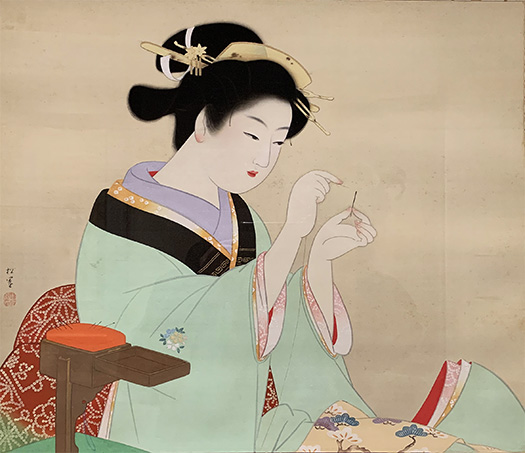
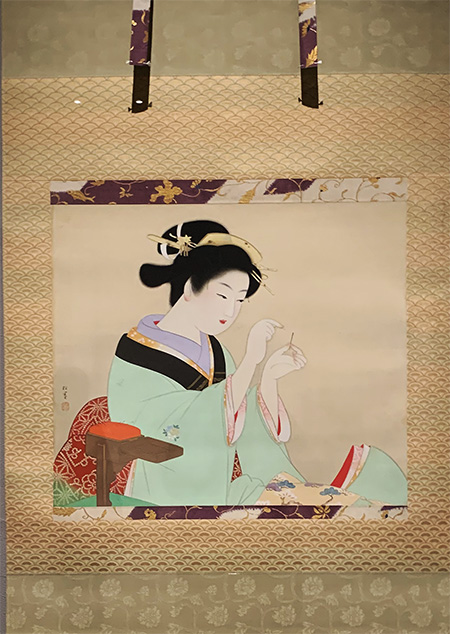
絵には「娘」というシンプルなタイトルが付けられている。
針仕事に一心不乱に取り組んでいる女性の一瞬の仕草を捉えている。
作家の上村さんは京都の茶商家出自の女性。
父親は彼女が産まれる前に世を去り、茶商を営んだ母の女手ひとつで育った。
明治8年生まれ昭和24年没。
一貫して女性を表現し続けてきた作家だという。
京都の育んだ感受性からの女性による女性美の探究、とでもいえる。
「わたしはたいてい女性の絵ばかり描いている。
しかし、女性は美しければ良い、という気持ちで描いたことは一度もない。
一点の卑俗なところもなく、清澄な感じのする香り高い珠玉のような
絵こそわたしの念願とするところのものである。」
というように自らのモチーフを語っている。
日本の男子としてこういう日本女性の心意気に敵うはずはない(笑)。
ただひたすらに、その日本女性の美感を感受させていただいた。
眉、目元、唇、髪型、衣装・・・すべてが日本の女性の感受性表現。

展覧会ではこの上村さんの作品に続いて
多くの作家による「日本女性美」の作品群が展示されて、
それらの多様性に大きく驚かされもしました。
そしてこの「女性美」ということであれば、
誰にでもそれぞれの深い思いというものがあるだろうと、
自分自身で顧みて、このテーマをもっと深めてみるべきだと思い至った次第。
いい時間を過ごさせていただけた・・・。

English version⬇

[Women’s quest for beauty of women Uemura Shoen’s beauty paintings]
No, it feels like I’ve been hit by a surprise (laughs).
I’m a man, so I’ve been surrounded by women since I was born.
Of course, as an ordinary man, I continue to look at women with a strong interest.
Even in art works, she continues to feel the beauty of women.
However, I was made aware of the beauty of “Japanese women” in this way, and I just came.
I happened to be on a business trip to Tokyo for about half a week
I had time to visit and appreciate the Yamatane Museum of Art in Hiroo.
At my favorite museum as a museum specializing in Japanese painting
If I have the opportunity to go to Tokyo, I will almost always visit.
I jumped in when I had a free time to work
I saw this female Japanese painter named “Uemura Shoen” without any prior knowledge.
She was shattered from the front with a magnificent one (laughs).

This painting is a work that you can take a picture of only one of the exhibited works.
I am extremely grateful for this kind of thing.
After all, while taking a picture by myself and adjusting the image processing
The fact that my thoughts on the work are organized in various ways means that
I think this is an opportunity for us to feel the work of our precious ancestors today.
Of course, the experience of seeing the original picture directly is the mother of all, but
I think the digital process is also an important way to appreciate the work.
The picture has a simple title of “daughter”.
It captures the momentary gesture of a woman who is working hard on needlework.
The writer, Mr. Uemura, is a woman from a tea shop in Kyoto.
Her father died before she was born and grew up on the hands of her mother, who ran her tea shop.
She was born in the 8th year of the Meiji era and she died in 1945.
She is said to be a writer who has consistently expressed women.
She can be said to be a quest for feminine beauty by women from the sensitivities nurtured in Kyoto.
“I usually only draw pictures of women.
However, I have never drawn with the feeling that women should be beautiful.
There is no one point of vulgarity, like a fragrant gem with a clear feeling
The picture is what I have longed for. ”
She talks about her own motif.
As a Japanese boy, I can’t beat the spirit of Japanese women like this (laughs).
However, I was impressed with the beauty of the Japanese woman.
Eyebrows, eyes, lips, hairstyles, costumes … all are Japanese women’s sensitivity expressions.

In the exhibition, following Mr. Uemura’s work
Works of “Japanese women’s beauty” by many writers are exhibited,
I was also very surprised by their variety.
And when it comes to this “female beauty”
Everyone has their own deep feelings,
As soon as I thought about it myself, I should try to deepen this theme.
I had a good time …

【ミシュラン評価の「幽玄」装置・臥龍山荘⑦ 四国住空間探訪-25】


構想10年、施工4年という時間を掛けて京都の建築設計者を招き、
地域一番の大工棟梁を動員しての最高の数寄屋建築。
利休の時代の侘の文化を底流にしたいわば「幽玄」の探究とでもいえる。
完成は明治40年と言われ、戦後すぐに茶室「知止庵」も完成したとされる。
マザーとしての建築痕跡は戦国期にさかのぼり、
江戸期には地域の大名家・加藤家が大名庭園として利用し
明治期に至って現在の山荘建築群がおおむね出来上がった。
この臥龍山荘はフランスの著名な文化評論誌ミシュランガイドで評価された。
そのことで脚光が当たって愛媛県の中心・松山からもクルマで1時間以上かかる
遠隔地であるのにもかかわらず人気が高まった。
建築文化としては江戸期までの熟成した数寄屋建築のエッセンスが
凝縮したような建築・庭園が現代にまで伝えられてきたと言えるのでしょう。
フランス的な文化評価軸としての「日本建築」らしさの端的な表現か。

幽玄という表現のためには奥行きのある建築手法が動員される。
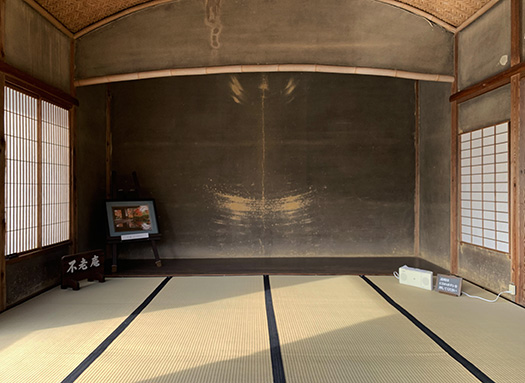
懸造りという木造高層建築という力技もあり、
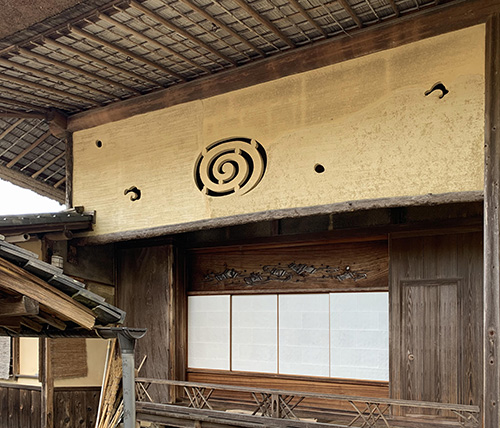
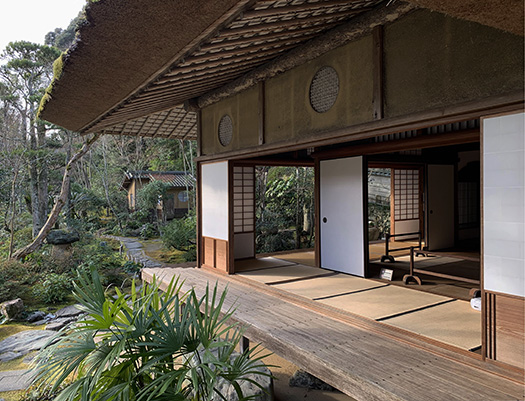
また、3枚目写真のような「ウラ技」も動員されている。
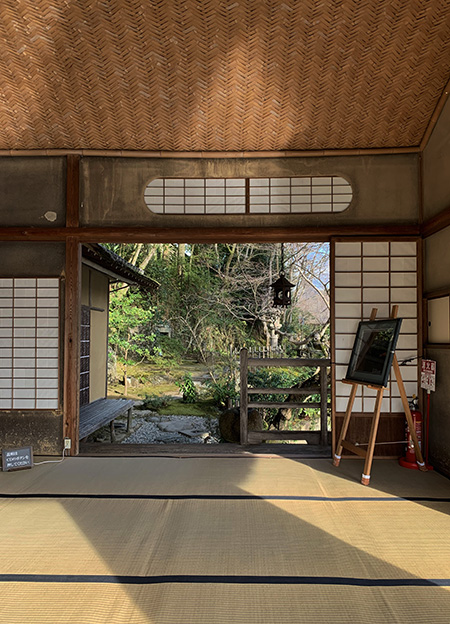
中核建築・臥龍院内部写真は撮影不可なので説明の至らなさがありますが
この彫刻された壁板装置は
内部への採光にコントラストを与えて水流を感じさせる装置だという。
四季折々のその変化を室内で楽しむための演出装置。
採光が時間とともに変化して行くことで
その「ゆらぎ」までも建築で表現するように考えられているのだと。
ちょっと形而上過ぎて次元の違う「いごこち」を追究している。
こういったあたり、いかにもエスプリ的味わい方であって
フランス的な捉え方と親近感があるのだろうと思います。
北海道人はどちらかといえば北欧的北米的価値感に親和しているので、
「おお、やっていますね」とは思うけれど
ちょうどアメリカ人がフランス人に対して抱くような印象も持つ(笑)。
たぶん南北に長い極東アジアの国での色合いの違いも感じる。
四国に残る建築痕跡のひとつの典型としてこういったミシュラン的
幽玄表現建築文化というのもあるのだという印象。
やはり歴史蓄積の長い四国らしい京文化痕跡だと思います。

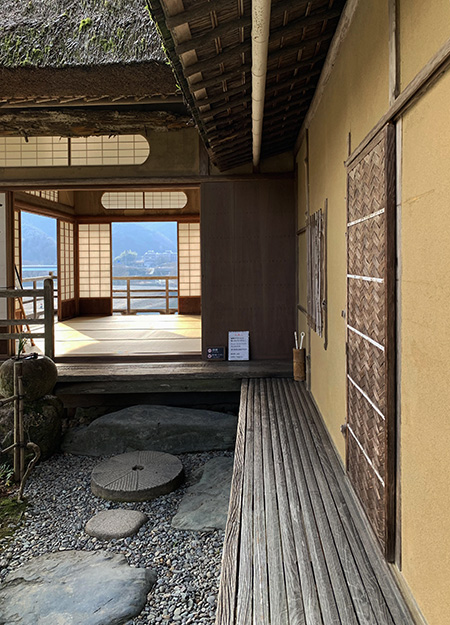
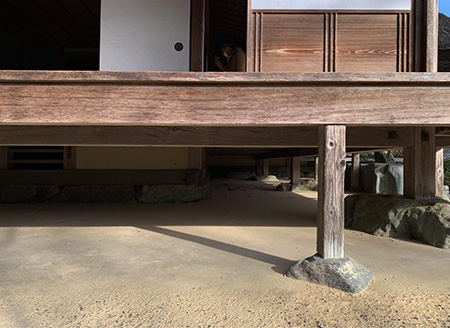
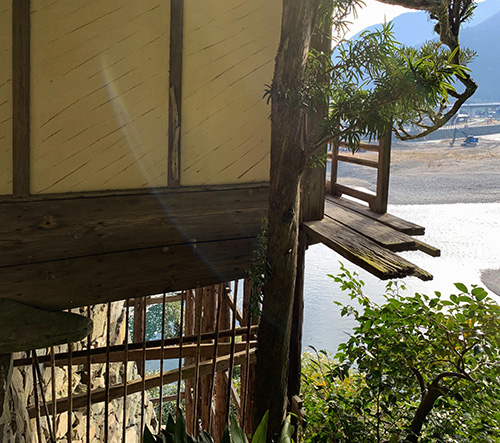
この写真は主屋の臥龍院の高床ぶりを撮影した。
この臥龍院の主室は畳を外せば能舞台にもなっているそうで、
この床下には音響装置として大壺が仕込まれてもいるということ。
なんですが、この高床ぶりはやはり夏を旨とした住宅建築として
採光面で水の流れにもにたゆらぎを表現すると同時に
活発な空気流動を仕掛けていく建築の工夫なのでしょう。
北海道住宅が床下の空気流動を制御すべき対象として考えているのに対して
蒸暑地ニッポン建築として考えた「いごこち」の仕掛けではある。
建築本体も「見え」を重視して「いかに開放させるか」を旨として
庭園や借景との四季変化対話と空気流動重視で
壁にはほとんど強い性能的意味合いを持たせていない。
彼我の考え方の違い「対話」が強く迫ってくると感じました。

English version⬇

[Michelin-rated “Yugen” device, Garyu Sanso ⑦ Shikoku living space exploration-25]
This Garyu Sanso was evaluated by the Michelin Guide, a well-known French cultural review magazine.
It takes more than an hour by car from Matsuyama, the center of Ehime prefecture, in the limelight.
Despite being a remote area, it has become more popular.
We invited an architectural designer from Kyoto to spend 10 years on the concept and 4 years on the construction.
The best Sukiya architecture by mobilizing the best carpenter builder in the area.
It can be said that it is a quest for “Yugen”, which is the undercurrent of Wabi-sabi’s culture during the Rikyu era.
It is said that it was completed in the 40th year of the Meiji era, and it is said that the tea room “Chito-an” was completed soon after the war.
Architectural traces as a mother date back to the Warring States period,
In the Edo period, it was used as a daimyo garden by the local daimyo family, the Kato family.
By the Meiji era, the current mountain lodge buildings were almost completed.
As for the architectural culture, the essence of Sukiya architecture that has matured until the Edo period
It can be said that the condensed architecture and gardens have been handed down to the present day.
Is it a simple expression of “Japanese architecture” as a French cultural evaluation axis?

A deep architectural method is mobilized for the expression “Yugen”.
There is also the power technique of wooden high-rise building called hanging construction,
In addition, “back technique” like the third photo is also mobilized.
It is difficult to explain because it is not possible to take a picture of the inside of the core building, Wolongin.
This engraved paneling device
It is said that it is a device that gives a contrast to the lighting inside and makes you feel the water flow.
A production device for enjoying the changes of the four seasons indoors.
As the lighting changes over time
It is thought that even the “fluctuation” is expressed in architecture.
It’s a little too metaphysical, and I’m pursuing a different dimension of “Igokochi”.
Around this, it ’s a very esprit taste.
I think there is a French way of thinking and a sense of familiarity.
Hokkaido people are more like Scandinavian North American values, so
I think “Oh, you’re doing it”
I have the impression that Americans have an impression of French people (laughs).
Perhaps I also feel the difference in color in the countries of Far East Asia, which is long from north to south.
This Michelin-like style is typical of one of the architectural traces that remain in Shikoku.
The impression that there is also a mysterious expression architectural culture.
I think it is a trace of Kyoto culture that is typical of Shikoku and has a long history.

This photo was taken of the main building, Wolongin, on a stilt.
It seems that the main room of this Wolongin is also a Noh stage if you remove the tatami mats.
A large jar is also installed under this floor as an audio device.
However, this stilt is still a residential building with summer in mind.
At the same time as expressing fluctuations in the flow of water on the daylighting surface
Perhaps it is an architectural device that creates an active air flow.
Whereas Hokkaido houses consider the air flow under the floor to be controlled.
It is a mechanism of “Igokochi” that was considered as a hot and humid Japanese architecture.
The building itself also emphasizes “look” and “how to open it”
With four seasons dialogue with gardens and borrowed scenery and emphasis on air flow
The walls have almost no strong performance implications.
I felt that the difference in his way of thinking, “dialogue,” was strongly approaching.

【数寄屋を求めた明治の成金・臥龍山荘⑥ 四国住空間探訪-24】


写真の「臥龍院」はこの山荘のメイン建築。なんですが内部撮影禁止(泣)。
しかしいまやSNSでの情報が「世論」を構成し影響を強めている時代。
ある方針だけで運営される情報操作的な既存メディアにだけ情報公開させるのは
どういう結果になっていくのか、難しい判断ポイントだと思います。
現代では個人の情報発信・非統制的なものが「世論」の底流に流れている。
好むと好まざるとに関わらず、こういう時代になっていることが痛感される。
ただ、基本的には「普遍性」による「淘汰」力が健全に働いていると思える。
未来はこういう現実を受容する先にしかあり得ないのではないか。
そんな風に思い至っているところなので、公開施設での撮影禁止というのは
理解はできるけれど納得が十分にできるかと言われれば不条理は感じる。
欧米の公共文化施設はそういう処置をとっていないとのことですが、
今後とも判断の分かれるポイントだろうと思います。

ということで外観写真、縁辺写真のみであります。
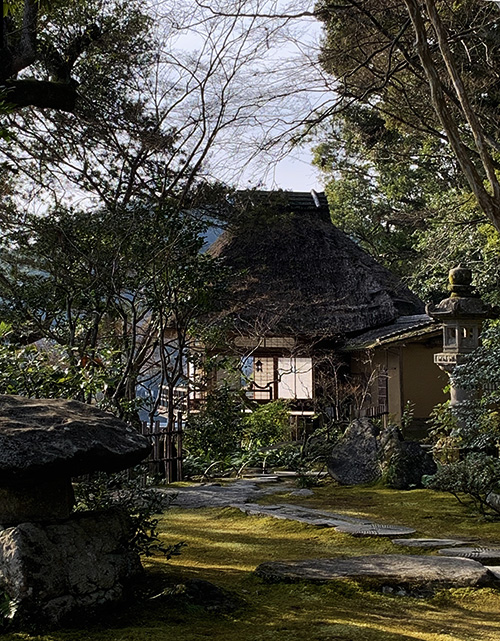
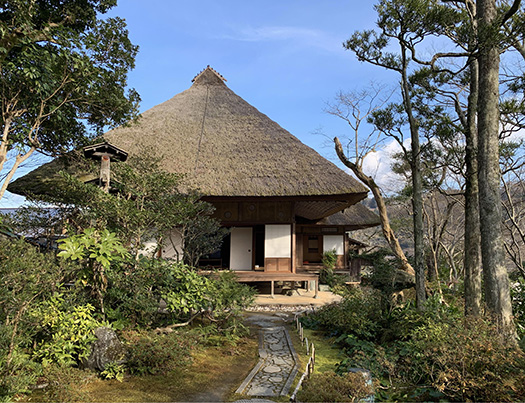
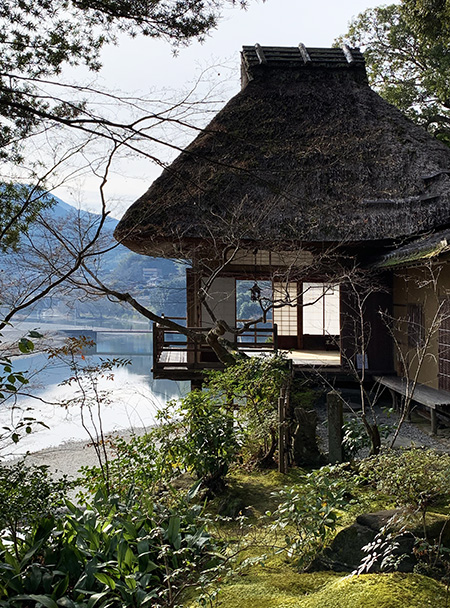
外観写真は図面では右側の庭園側から見たところ。
大きな茅葺き屋根が被覆されていて雁行に沿って山が連なった印象。
たぶん川越しの臥龍の命名になったとおぼしき山の風景とのリズムが意図されている。
この建物を建てた河内寅次郎さんは木蝋という石鹸や香料といった商品の
基盤素材を四国の山岳地帯で生産したものを欧米に輸出して財を成した。
四国ではこの木蝋生産での明治期の事業成功例の建築痕跡がみられる。
その後、化学物質に素材が置換されていくことでそういう産業分野は
徐々に衰退していったのですが、横浜の生糸といい神戸のこの木蝋といい、
明治維新での社会変革期の盛り上がりを追体験することができる。
かれが常住したのは神戸ということで、退隠後、故郷の景勝地に暮らした住居。
しかし世の常でそういう人物は働くことが無上の楽しみなので
ほんのわずかな時間しかこの地で暮らすことはできなかったとのこと。諸行無常。
京都の建築芸術家設計者、工芸的数寄屋住宅技術者をカネで使って
「いっちばん、いい家を建てててくれ」と願望したことなのでしょう。
頼まれた側としてはそれこそ「日本建築の粋」を懲らした数寄屋を建てた。
「数寄」という文化が最上級であると信じて疑わなかったのでしょう。
同時代、北の開拓地北海道ではそういう数寄住宅はまったく無能をさらしていた。
明治国家として坂の上の雲の欧米列強に追いつこうとするとき、
寒冷に無力な建築でロシアの侵略危機に対応させられていた国にとって
戦国〜江戸期以来の最高品位建築技術・数寄屋建築の価値はどうであったか。
ロシアと戦って死ぬより、寒冷に無力な建築で前線の住宅で越冬できず
無惨にも凍死で死んだ戦士のほうがはるかに多かった。
わたしには数寄屋住宅をこの時代に良しとした心情がよくわからない。
この時代、せめてもの住宅性能要件としてガラス建材による「気密」建築が
北海道ではどんな奥地の開拓民住宅でも希求されていた。
その同時代に成金的成功者として最高級数寄屋を求めるマインドに対しては
「そうですか」という印象しか持てない。

English version⬇

[Meiji nouveau riche, Garyu Sanso ⑥ Shikoku living space exploration-24]
The “Wolongin” in the photo is the main building of this mountain lodge. I’m not allowed to shoot inside (crying).
However, nowadays, information on SNS constitutes “public opinion” and has a stronger influence.
It is not possible to disclose information only to existing media that are information-manipulating and are operated only by a certain policy.
I think it is a difficult decision point to determine what the result will be.
In modern times, personal information dissemination and non-controllable things are flowing to the bottom of “public opinion”.
Whether you like it or not, you will be keenly aware of this era.
However, basically, it seems that the “selection” power of “universality” is working soundly.
Isn’t the future only possible to accept this kind of reality?
I’m thinking about that, so it’s prohibited to shoot at public facilities.
I can understand it, but I feel absurd when asked if I can fully understand it.
It is said that Western public cultural facilities do not take such measures,
I think it will be a point where judgments will continue to be divided.

Therefore, it is only an exterior photo and a marginal photo.
The exterior photo is the view from the garden side on the right side of the drawing.
The impression is that a large thatched roof is covered and mountains are lined up along the geisha line.
It is intended to have a rhythm with the scenery of the mountain, which seems to have been named after Wolong over the river.
Mr. Torajiro Kawachi, who built this building, is a product called Japan wax, which is a soap and fragrance.
He made a fortune by exporting the base material produced in the mountainous areas of Shikoku to Europe and the United States.
In Shikoku, there are architectural traces of successful business in the Meiji era in the production of Japan wax.
After that, as the material was replaced with chemical substances, such industrial fields became
It gradually declined, but it is called raw silk in Yokohama and this wax in Kobe.
You can relive the excitement of the social change period in the Meiji Restoration.
He lived in Kobe, so he lived in a scenic spot in his hometown after his retreat.
However, as usual in the world, such a person is the most enjoyable to work.
He said he could only live here for a short time. Various acts are unrelenting.
Using Kyoto’s architectural artist designer and craft Sukiya housing engineer with money
Perhaps he wanted to build a good house.
On the side of the request, I built a sukiya that disciplined the “chic of Japanese architecture”.
You probably didn’t doubt that the culture of “sukisha” was the highest grade.
At the same time, such sukisha houses were completely incompetent in the northern settlement of Hokkaido.
When trying to catch up with the Western powers of the clouds above the slope as a Meiji nation,
For a country that was prepared to respond to Russia’s aggression crisis with cold-powerless architecture
What was the value of the highest quality building technology and Sukiya architecture since the Sengoku and Edo periods?
Rather than fighting Russia and dying, I couldn’t overwinter in a front-line house because of the cold and helpless architecture.
There were far more warriors who died miserably from freezing.
I don’t really understand the feeling that Sukiya housing was good for this era.
In this era, “airtight” construction using glass building materials was at least a requirement for housing performance.
In Hokkaido, any remote pioneer house was sought after.
For the mindset that seeks the finest sukiya as a successful riche at the same time
I can only have the impression that “Is that so?”

【微妙な茶室名「知止庵」臥龍山荘⑤ 四国住空間探訪-23】


こちらは茶室建築「知止庵」であります。
命名由来は江戸期の大名家・加藤氏の殿様の扁額文字。
「知止」の扁額は大洲藩第10代藩主加藤泰済筆。陽明学者中江藤樹の教えから
庵名が生まれた。壁の腰張は皇室の名代を徳川家で迎えるとき、
接待役を勤めた第3代藩主藩泰恒の「茶方日記」の反古だという。
反古だけれどそういう「由緒正しい」ものを使うということで、
茶室としての「格式」を高めたということか。
中江藤樹という人物について特段の興味はなかったのですが、
日本陽明学の祖として、また藩主加藤家仕官の経緯もあったようです。
知行合一を説き,実践を重んじる考えが一般的理解。
この茶室自体は明治時代の再建築で臥龍山荘を作った河内寅次郎の子孫が
昭和24年というから戦後になって浴室だったモノを改造したという。
とすれば、そういう由緒ある扁額や文書を地元宝物として河内家が入手し
この茶室建築に使ったということになる。
止、という漢字は茶室では比較的に使われているように思う。
ただ、ふつうは「欲望を止める」みたいな禅的意味合い。
茶室への命名として、由来をこのように求めたこと自体はわかったけれど
どうも陽明学者中江藤樹の言葉と茶室命名には関連性が薄いと思われてならない。
行動を重視して一種の警句として「知を止めよ」ということなのだろうか。
学者が「知ることを止める」のは一種の自己抑制的な響きも感じるけれど
それを第3者が引用命名することにはやや違和感がある。
結果、わたし的には意味微妙の茶室と思えた次第。
「知ることを止める」ことに普遍性があるとはどう考えても思えない。
そもそも知ることとは人間に本然としてある前向きな考えそのもの。
反人間宣言というのに等しいのではないかと、内心の強い反発。
それが茶室のメインメッセージであるのなら、どうも同意しにくい。

茶室がひとを惹き付けるのは、
その会所としての精神性ということも大きい部分ではないだろうか。
ひょっとして利休という茶の巨人の「利」を「休む」というような
イメージを掛詞のように使ったのか。
商人であった利休さんが、「利」を「休む」のと同じに
知識人・学者である中江藤樹が「知」を「止める」と掛けたのだろうか。
そうだとしても中江藤樹自身とこの茶室の繋がりが不可欠ではないか。
建築命名については普遍性をよく吟味するべきだと思う。
まぁ、個人の命名印象であるので建築鑑賞とは別次元ではありますが・・・。

English version⬇

[Delicate tea room name “Chishi-an” Garyu Sanso ⑤ Shikoku living space exploration-23]
This is the tea room architecture “Chishi-an”.
The name comes from the flat letters of the lord of the Edo period daimyo, Mr. Kato.
The flat frame of “Chishi” is written by Yasushi Kato, the 10th feudal lord of the Ozu domain. From the teachings of Yangming scholar Nakae Toju
The hermitage name was born. When the Tokugawa family welcomes the imperial family’s name, the waist of the wall
It is said to be an antique of the “Chakata Diary” of the third feudal lord, Yasutsune, who served as an entertainer.
It ’s anti-old, but by using that kind of “historical” thing,
Does it mean that the “formality” of the tea room has been enhanced?
I wasn’t particularly interested in the person named Toju Nakae,
It seems that he was the ancestor of Japanese Yangmingism and also had a background as a feudal lord of the Kato family.
A general understanding is the idea of ​​preaching the union of wisdom and emphasizing practice.
This tea room itself is a descendant of Torajiro Kawachi, who built Garyu Sanso in the reconstruction of the Meiji era.
Since it was 1945, it is said that the thing that was a bathroom was remodeled after the war.
If so, the Kawachi family obtained such venerable biane and documents as local treasures.
It means that it was used for this tea room construction.
I think the Chinese character “stop” is relatively used in the tea room.
However, it usually has a Zen meaning like “stopping desire”.
As a name for the tea room, I understand that I asked for the origin in this way.
Apparently, the words of Yangming scholar Nakae Toju and the naming of the tea room should not seem to be closely related.
Is it a kind of epigram that emphasizes behavior and says “stop knowledge”?
Although scholars “stop knowing” feels a kind of self-restraining sound.
It seems a little strange for a third party to quote and name it.
As a result, I thought it was a tea room with a delicate meaning.
I don’t think there is universality in “stopping knowing”.
In the first place, knowing is the very positive idea that human beings have.
There is a strong inward repulsion that it may be equivalent to an anti-human declaration.
If that is the main message of the tea room, it’s hard to agree.

What attracts people to the tea room is
Isn’t the spirituality of the meeting place a big part?
Perhaps it’s like “resting” the “Ri” of the tea giant Rikyu.
Did you use the image like a kakekotoba?
Just like Rikyu, who was a merchant, “rests” on “Ri”
Did Toju Nakae, an intellectual and scholar, call “stop” “knowledge”?
Even so, the connection between Nakae Toju himself and this tea room is indispensable.
I think we should carefully examine the universality of architectural naming.
Well, it’s an individual naming impression, so it’s a different dimension from architectural appreciation.

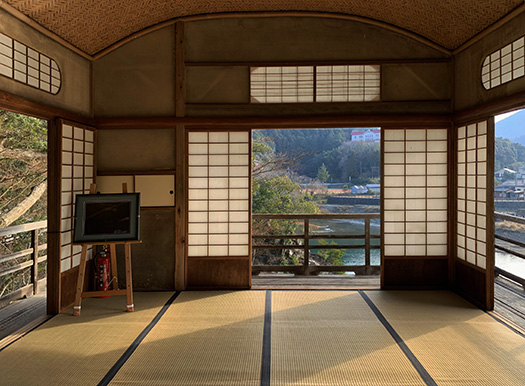
【高楼懸造り「不老庵」臥龍山荘④ 四国住空間探訪-22】


この臥龍山荘訪問予定は、すべてカミさんの段取りだったので、
わたしはただ現実にあらわれてくる建築をボーッと観察していた(笑)。
なので写真の「不老庵」建築についてもまったく知識なく見物していた次第。
でも、徐々にこれが「懸造り」と呼ばれる建築工法の建築であることが
明瞭になってきて、清水寺以外には自分でその身体で体験したことがなかった、
そういう体験ができたことに面白みを感じるようになった。
懸造りというのは山岳地形の日本で主に眺望優先の景勝地で使われた工法。
崖地のような場所の高い位置に軽い建築を成立させる建て方。
この臥龍山荘・不老庵では眼下に臥龍淵の水流を見下ろしている。
この湾曲した肱川の水流のとぐろを巻いたような渦が臥龍を感じさせ、
その絶景を風流として楽しむ建築として建てられた。
武人としての大成功者、大名家、そして明治の成金成功者などのメンタルを
端的に表現するような建築ということがいえるでしょう。
ただ、清水寺の高欄を支える木組みには重量感も感じるけれど、
この臥龍山荘・不老庵ではちょっと怖ろしげ(笑)ではある。
あ、現状で公開許諾された建築なので危険建築ということではないでしょう。

わたしは建築探訪を通して日本人の精神史のようなものを
身体的に体験しながら生きてきているように思っています。
写真のような空間で、それを成立させた日本人の空間美のありように
想像力を働かせるのがライフワークだと思うのです。
そういう意味ではこの不老庵はたいへんわかりやすい。
自然景観を最大限に活かして、空間体験させることに集中した建築。


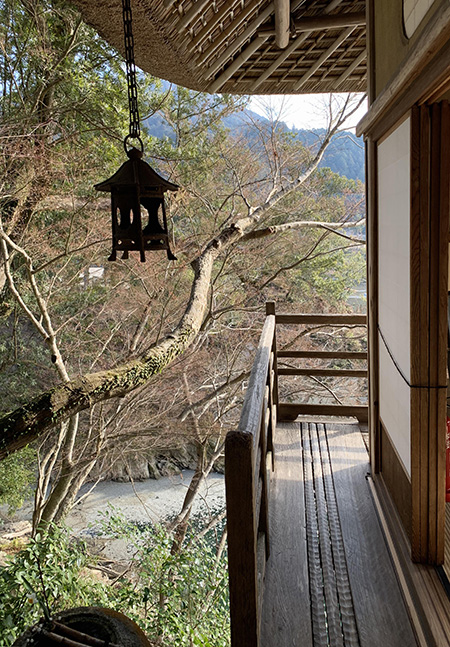
手すりの付いた縁の部分を立って歩くと
高所恐怖症の人なら卒倒しそうな景観が迫ってくる(笑)。
欧米文化では「Tree House」という概念がある。
あれは「鳥の心理と同化する」というような心性を感じさせられるけれど、
この懸造り建築では「櫓の上から見晴らす」という感覚に近いように思える。
三内丸山や吉野ヶ里の木造高層建築上からの眺望体験。
建築的な構造も含めた体験性としてはそういう感覚が似つかわしいのでしょう。
この臥龍山荘では茶亭として利用されていたようで、
最大の馳走がこの臥龍淵の水流見物だった。
東京スカイツリーは大衆向けにそういう体験が提供されているけれど、
戦国から明治までの社会では、一部の特権階級がこうした体験を独占していた。
この臥龍山荘建築には京都のプロ設計者・地元最大の建築事業者が関わったが、
富の独占者に対して奉仕する建築だったのですね。

English version⬇

[Kourou Suspension Building “Furouan” Garyu Sanso ④ Shikoku Living Space Exploration-22]
This visit to Garyu Sanso was all set up by Mr. Kami, so
I was just observing the architecture that appeared in reality (laughs).
So I was just looking at the “Furuan” architecture in the photo without any knowledge.
But gradually, this is a building method called “hanging”.
It became clearer and I had never experienced it with my own body other than Kiyomizu-dera.
I’m starting to find it interesting to have such an experience.
Suspension is a construction method used mainly in scenic spots where views are prioritized in Japan, which has mountainous terrain.
How to build a light building in a high position such as a cliff.
At this Garyu Sanso / Furouan, you can see the water stream of Garyu Sanso below.
The whirlpool of this curved Hijikawa water stream makes you feel Wolong.
It was built as an architecture where you can enjoy the magnificent view as a wind.
Mental health of a great success as a warrior, a daimyo, and a successful nouveau riche in the Meiji era
It can be said that it is an architecture that can be expressed simply.
However, the wooden structure that supports the balustrade of Kiyomizu-dera feels heavy,
This Garyu Sanso / Furouan is a little scary (laughs).
Oh, it’s not a dangerous building because it’s a building that has been licensed to the public at present.

I have a kind of Japanese spiritual history through an architectural exploration
I feel like I’m living while experiencing it physically.
In a space like a photograph, the beauty of the Japanese space that made it possible
I think it is life work to use your imagination.
In that sense, this Furouan is very easy to understand.
Architecture that focuses on creating a space experience by making the most of the natural landscape.
That’s probably what it means.

If you stand and walk on the edge with the handrail
If you are afraid of heights, the scenery that seems to be fainting is approaching (laughs).
In Western culture, there is the concept of “Tree House”.
It makes me feel like “assimilate with the psychology of birds”, but
In this hanging building, it seems to be close to the feeling of “looking out from the top of the turret.”
Experience the view from the wooden high-rise buildings of Sannai Maruyama and Yoshinogari.
I think that kind of feeling is suitable for the experience including the architectural structure.
It seems that it was used as a teahouse at this Garyu Sanso.
The biggest treat was to see the water flow of this Wolongbuchi.
Tokyo Skytree offers such an experience for the masses,
In society from the Warring States to the Meiji era, some privileged classes monopolized these experiences.
This Wolong Sanso architecture involved a professional designer from Kyoto and the largest local builder,
It was an architecture that served the monopoly of wealth.

【構造、大丈夫?(汗)伊予・臥龍山荘③ 四国住空間探訪-21】


さてこの敷地建物は少なくとも戦国期、1600年代前期にまではさかのぼれる。
伊予の肱川流域で最高の景勝地とされる立地環境。
肱川が大きく蛇行する場所にやや高台があって、
その高台にランドスケープを愛でるように建築が建てられていた。
今現在に残る臥龍山荘は、明治時代に木蝋輸出で儲かった河内寅次郎の建築。
戦国期にこの地域の代官として赴任の渡辺勘兵衛がどんな建築を建てたか不明。
武士たちは実用として城郭建築という文化を残した一方で
この時代に隆盛した「茶の湯」文化からの茶室、そして数寄屋文化を残した。
臥龍山荘始原期の主人、渡辺勘兵衛がその居館をこの地に立地させ、
その後江戸期を通じて大洲を版図とした武家、加藤家が継続的に
いわば「大名庭園」的な位置付けとしてこの立地環境を活かしてきた。
その後、明治の新興成金者が現存の山荘を建てたものだけれど、
どうもわたし的には一貫した建築のありようが感じられる。
おのれ誇りの強烈な渡辺勘兵衛の怨念のようなものが
この臥龍山荘という大仰な命名に刻印されているように思うのです。

この山荘には3棟の建物が建てられていて、
主屋の「臥龍院」と茶室の「知止庵」、そして「不老庵」という展望建築。
これらは国の重要文化財に指定されている。
明治期の建築は相談役に京都の茶室建築家八木甚兵衛が相談役、建築担当は
大洲藩作事方の家計を継ぐ大工棟梁中野虎雄らプロジェクトを行い、
構想10年施工4年延べ9000人の人手を要し明治40年(1907年)に完成。
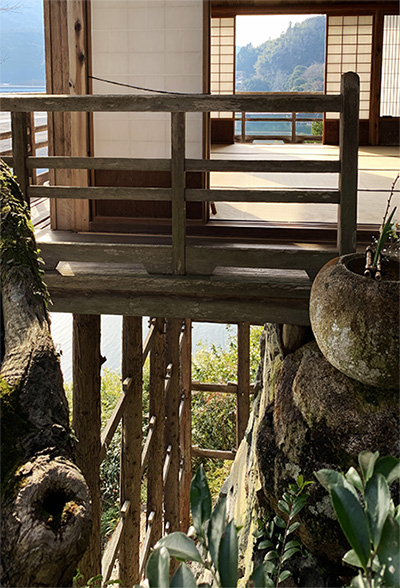
本日の写真はそのうちのタワー的展望建築「不老庵」。
敷地は切り立った崖地ですぐ下には肱川の蛇行する光景が広がる。
臥龍というのは周辺の岩石地形の小山を指すのか、
あるいは水流に潜む龍をイメージしたものか、さて。
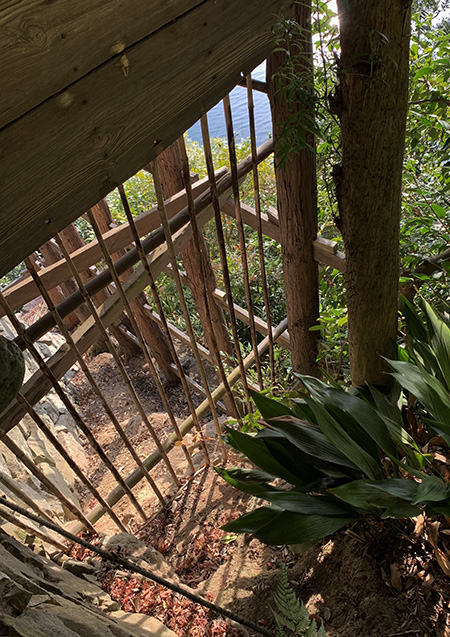
茶室建築家たちがこの立地環境を検分し崖から張り出す展望建築を考えた。
その構造架構について写真のような木組みで対応させた。
一部は自然に立っている自然木を柱材として利活用させている・・・。
投入堂のような、あるいは清水寺の舞台のような眺望建築ぶり。

「見ること」に徹底的にこだわった建築ぶり。
見えはミエに通ずるのだろうかと、なんとも名状しがたい印象を持った。
江戸期の大名の心象風景としてこういうのは似つかわしいのでしょう。
日本各地に残る大名庭園の茶亭建築などに同類項を見出す思い。
山地水明という言葉が日本人の美意識に沈殿しているけれど、
そういったわかりやすさが凝縮して存在しているのかと。
さていごこちはどうであるのか、意見は分かれるところか(笑)。

English version⬇

[Structure, are you okay? (Sweat) Iyo / Garyu Sanso ③ Shikoku Living Space Exploration-21]
By the way, this site building dates back to at least the Warring States period, the early 1600s.
The location environment is considered to be the best scenic spot in the Hijikawa basin of Iyo.
There is a little hill in the place where Hijikawa meanders greatly,
The architecture was built on the hill to love the landscape.
Garyu Sanso, which remains today, is the architecture of Torajiro Kawachi, who made a profit by exporting Japan wax during the Meiji era.
It is unknown what kind of architecture was built by Kanbei Watanabe, who was appointed as a representative of this area during the Warring States period.
While the samurai left the culture of castle architecture for practical use
The tea ceremony room from the “Cha-no-yu” culture that flourished during this period, and the Sukiya culture were preserved.
Garyu Sanso’s primordial master, Kanbei Watanabe, set up his residence here.
After that, the Kato family, a samurai family who used Ozu as a print throughout the Edo period, continued to work.
We have utilized this location environment as a so-called “daimyo garden”.
After that, the emerging riches of the Meiji era built an existing mountain lodge,
I feel that the architecture is consistent for me.
Something like the grudge of Kanbei Watanabe, who is proud of himself.
I think it is engraved on this grand name, Garyu Sanso.

There are 3 buildings built in this mountain lodge.
The main building “Garyuin”, the tea room “Chito-an”, and “Furuan” are the prospective buildings.
These are designated as national important cultural properties.
Kyoto tea room architect Jinbei Yagi is a consultant for architecture in the Meiji era, and the person in charge of architecture is
Conducted a project by Torao Nakano, a carpenter who succeeds the household budget of the Ozu domain.
Concept 10 years Construction 4 years A total of 9,000 people took time to complete in 1907.
Today’s photo is the tower-like view building “Furuan”.
The site is a steep cliff and the meandering view of Hijikawa spreads just below.
Does Wolong refer to a small mountain in the surrounding rocky terrain?
Or maybe it’s an image of a dragon lurking in a stream of water.
The tea room architects inspected this location environment and thought about the prospective architecture so that it would overhang from the cliff.
The structural frame was made to correspond with the wooden frame as shown in the photograph.
Some of them utilize natural wood that stands in nature as pillars.
It’s the first time in a view architecture like the entrance hall or the stage of Kiyomizu Temple.

It’s the first time in architecture that is thoroughly focused on “seeing”.
I had the impression that it was hard to name, wondering if the appearance would lead to Mie.
This is a good image of a daimyo in the Edo period.
I would like to find a similar item in the teahouse architecture of the daimyo gardens that remain in various parts of Japan.
The word Suimei Yamaji has settled in the Japanese aesthetic sense,
I wonder if such easy-to-understand things are condensed and exist.
I wonder how this is, and the opinions are divided (laughs).