本文へジャンプ

【坂出塩田の父・久米通賢の家② 四国住空間探訪-33】


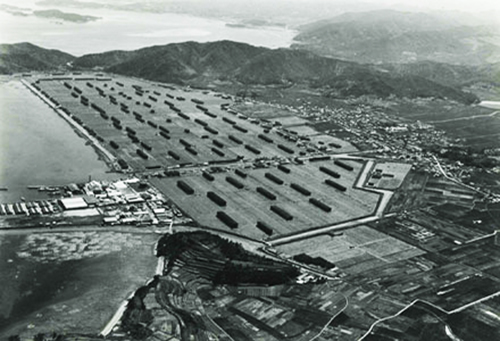
塩田というのは環瀬戸内海地域の十州が江戸期の最大産地。
そのなかでも讃岐は、一時期日本の塩生産の半分を占めるほどの
地域基幹産業になっていたとされ、その基板となる「入浜式塩田」土木工事で
この住宅の主人、久米通賢の主導性が大きかったということ。
表題のように「坂出塩田の父」として地域の誇りの人物であったという。
現代では塩というものは人間生活の基本として
専売公社が主管して安定供給を最優先した製塩体制が取られているので
産業構造としての側面が小さくなっているけれど、
まさに人間生活の基本・経済活動の基盤であっただろうことはあきらか。
環瀬戸内海地域はその製塩産業に於いて中枢的な地域だったという。
同地域の赤穂浪士事件でも背景に塩の利権争いがあったともいわれる。
実はわたしの家系でもご先祖さまが広島県福山市近隣の海浜地帯で
江戸中期には塩田を営んでいたという伝承があります。
そういうことで塩田というものに興味は持っていたけれど、
どういったメカニズムで江戸期の生産があったのか、は不勉強だった。
ちょうどこの人物の住宅を取り上げたので、ちょっとWEBで検索した結果。

直接取材とかしているわけではないので概念探索ですが、
アウトライン的な把握はやや頭に入ってきた。
科学者として江戸期に著名人になった久米通賢さんは同時に
経世済民の才も併せ持っていたようで、困窮する藩財政立て直し策として
入浜式塩田整備・土木工事計画とそれによる製塩業事業計画も立案したという。
とくに測量術について伊能忠敬以前に詳細な実測図を作った実績で知られるので、
それを活用して坂出周辺の海浜地帯を人工的に塩田化した。
藩自体の事業計画として採用されたものだけれど、
途中で藩財政がその費用出費に耐えられなくなった段階では
自費で計画を完遂させたのだという。結果、日本の塩生産の半分まで
讃岐地域の生産量が向上して地域の財政状況を救ったのだという。

住宅写真ではこういった事跡についての痕跡は見えにくいけれど(笑)
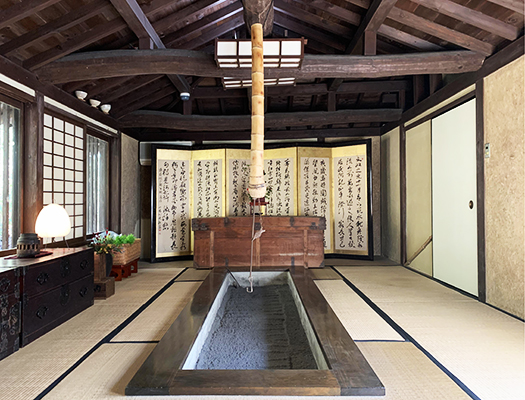
ひとつ気付いたのが巨大な「囲炉裏」であります。
温暖地の讃岐地方でここまで巨大な囲炉裏は採暖用だけとは考えにくい。
久米通賢住宅についての間取り的な説明資料は未発見なのですが、
普通に考えると大人数の来客が頻繁に出入りして
塩田工事の進捗に合わせてここで打合せをしたのだろうか。
あるいはさまざまな科学実験の必要性からの「火力加圧」装置として
異常に大きな囲炉裏が活躍したのだろうか、
実験工房的な施設装置というような理解が自然なようにも思える。
そんな想像に駆られております。

English version⬇

[Sakaide Shioda’s father, Kume Michikata’s house ② Shikoku living space exploration-33]
Execution ability to create salt farms for the core economy through actual surveying and civil engineering work. Completed by investing own expenses due to lack of funds of the clan. very.・ ・ ・

Shioda is the largest production area in the Edo period in the ten provinces of the Kan Seto Inland Sea region.
Among them, Sanuki once accounted for half of Japan’s salt production.
It is said that it had become a regional core industry, and in the civil engineering work of the “Irihama-style salt farm” that will be the substrate.
The owner of this house, Kume Michikata, has a big initiative,
As the title suggests, he was a proud person in the area as “the father of Sakaide Shioda”.
In fact, even in my family, my ancestors are in the beach area near Fukuyama City, Hiroshima Prefecture.
There is a tradition that salt farms were run in the middle of the Edo period.
In modern times, salt is the basis of human life.
Since the Japan Tobacco and Salt Corporation is in charge of the salt production system that gives top priority to stable supply.
Although the aspect of the industrial structure is getting smaller,
It is clear that it would have been the basis of human life and economic activities.
It is said that the Kan Seto Inland Sea area was a central area in the salt industry.
It is said that there was a salt dispute in the background of the Ako Ronin case in the same area.
That’s why I was interested in Shioda,
I didn’t study what kind of mechanism was used for production in the Edo period.
I just picked up this person’s house, so I searched a little on the WEB.

It’s a concept because I’m not directly interviewing it,
An outline grasp came to my mind.
Kume Michikata, who became a celebrity in the Edo period as a scientist, also
It seems that he also had the talent of the retired people, as a measure to rebuild the finances of the poor clan.
He also made a civil engineering plan for the maintenance of the Irihama salt farm and a business plan based on it.
Especially for surveying, he is known for his achievements in making detailed actual measurements before Tadataka Ino.
He used it to artificially salt the beaches around Sakaide.
Although it was adopted as a business plan for the clan itself,
At the stage when the clan’s finances could not bear the expenses on the way
He said he completed the plan at his own expense. As a result, up to half of Japanese salt production
It is said that the production volume in the Sanuki area has improved and the financial situation in the area has been saved.

It’s hard to see traces of these things in a house photo (laughs).
One thing I noticed is the huge “hearth”.
It is hard to think that such a huge hearth in the Sanuki region, which is a warm region, is only for warming.
I haven’t found any floor plan explanatory material about Kume Michikata housing.
If you think about it normally, a large number of visitors come and go frequently.
Did we have a meeting here in line with the progress of the salt farm construction?
Or as a “heat pressurization” device from the need for various scientific experiments
I wonder if an unusually large hearth was active.
It seems natural to understand that it is a facility device like an experimental studio.
I am driven by such an imagination.

【讃岐の江戸末期「科学者」の家① 四国住空間探訪-32】


四国の住宅探訪シリーズというかたちで継続していると
その地域の歴史風土が重層的にどんどん見えてきます。
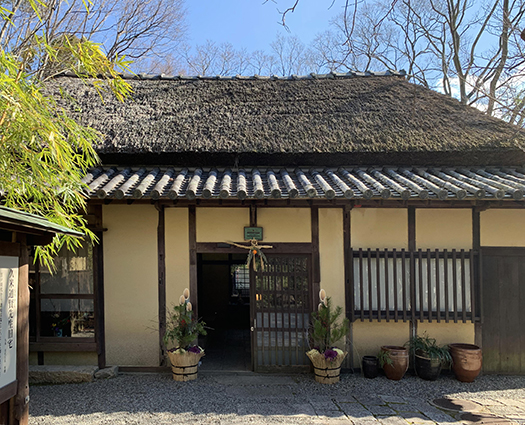
この「久米通賢先生旧宅」というのは四国村に移築保存された住宅。
1780〜1841年の61年の生涯の江戸期の発明家、暦学者、測量家、洋学者。
伊能忠敬よりも早く日本初の実測地図を作った人物。地元香川県では偉人として
顕彰されており「讃岐のエジソン」「塩田の父」などと称されている。
生まれは農家で幼少期から利発で学問好きな子だったため、
讃岐の引田港から大坂に向かう船の舵取りも務めていた父の嘉兵衛は、
大坂に行くたび通賢のために書物を買ってきていたとのこと。
江戸期は「身分制」の固定化されたイメージがあるけれど、
それは武士階級だけのことであって百姓、庶民はフラットに
その生業を幅広く営んでいる実相がわかるエピソードですね。
農家だから農業だけに縛られて生きたのではなくさまざまな生業、生き様を
生き抜く自由さがあったといえる。
7歳の頃、通賢は父に連れられ大坂の町の時計店に行く機会があり、
当時最先端の機器であった時計の修繕を熱心に眺めていた。
そこへ別の客がやってきて店の者に時計の修繕を依頼したが、店の者は
誰も手がすいていない。そこで通賢が店の道具を借りて見よう見まねで
修繕をしてみたら時計は元通り動くようになった。皆大いに驚き喜んだという。
そういう才能豊かな人物だったので、大阪に出て学問を学んだ。
外国船が日本近海に来る幕末。通賢も兵法、オランダ流砲術等を学んでいる。
1802年になって父親が亡くなったので郷里に帰るが
学問研究はずっと継続していた。そういう有為な人材だったので
藩に測量方として採用され領内の実地測量地図の作成に従事した。
これは伊能図より早い讃岐国最古の実測地図。翌年、軍艦の設計も行っている。

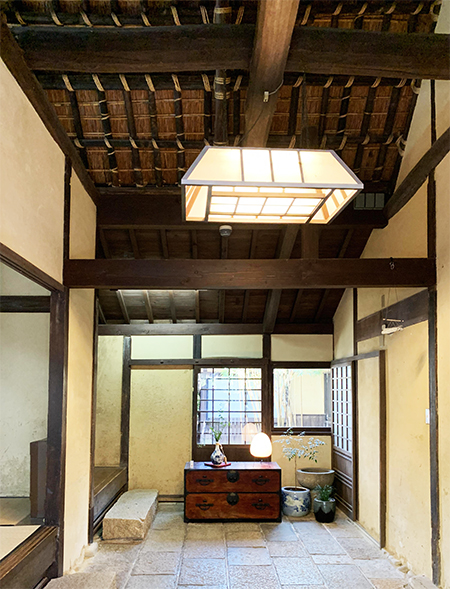
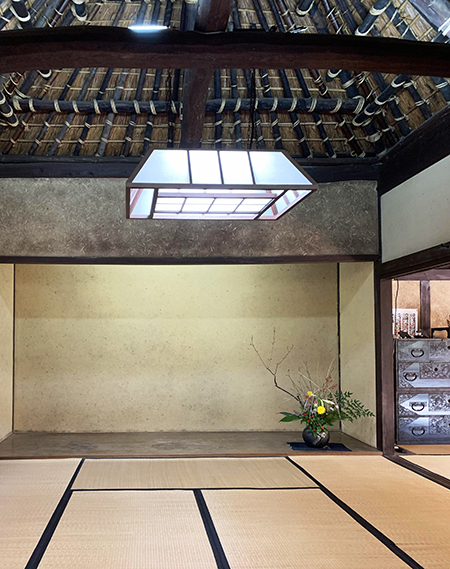
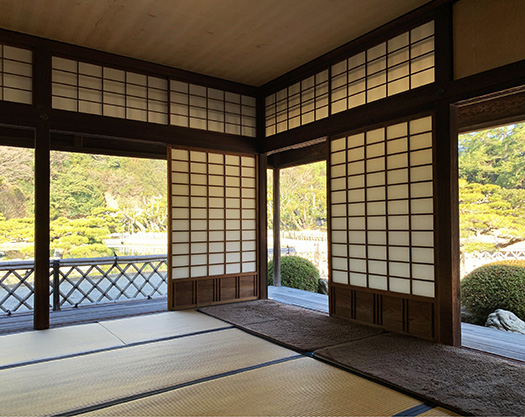
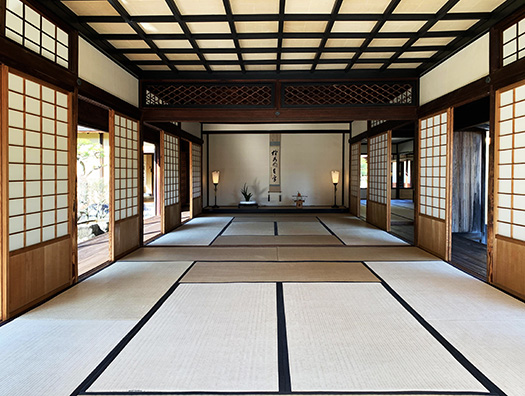
この旧宅は写真に見られる通り玄関を入ると高い小屋裏が露出し、
座敷でも小屋裏が露出している。
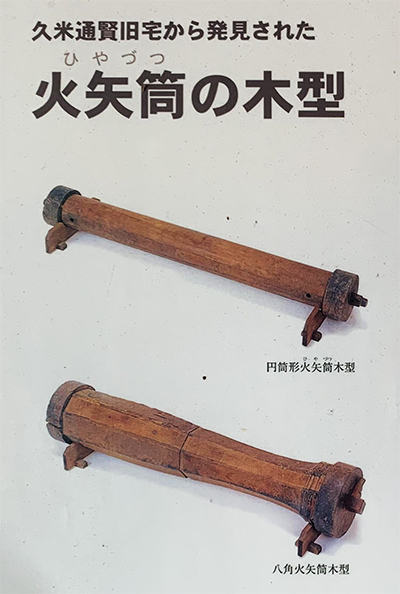
移築保存に当たって解体したときにこの高い小屋裏には
測量器具・大砲の鋳型などが発見されたと言うこと。
写真は「火矢筒の木型」というもので、一種の大砲の鋳型だということ。
幕末期の沸騰する攘夷思想のなかで讃岐の地で
こういった科学者が在野に存在して藩の軍事力向上に貢献していた。
江戸期の社会というものの活力をまざまざと実証しているように思えます。
西洋近代の技術発展に対して、その脅威をしっかり受け止めて
世を挙げて国防意識が高まり、政治をも変革していく社会のうねりが
確実に存在していたということでしょうね。

English version⬇

[Sanuki’s late Edo “scientist” house ① Shikoku living space exploration-32]
Society entrusted a major role to a science-talented boy born in a family that was both a farmer and a sailor. A real image of free and open Japanese society.・ ・ ・

If you continue in the form of a housing exploration series in Shikoku
The historical climate of the area can be seen more and more in layers.
This “Kume Tsuken-sensei’s old house” is a house that was relocated and preserved in Shikoku Village.
An inventor, calendar scholar, surveyor, and Western scholar in the Edo period, who lived in 1780-1841.
The person who made Japan’s first actual measurement map earlier than Ino Tadataka. As a great man in my hometown of Kagawa
He has been honored and is known as “Sanuki’s Edison” and “Shioda’s father”.
He was born a farmer and was a clever and academic child from an early age.
His father, Kabei, who also steered the ship from Hiketa Port in Sanuki to Osaka,
He said that he bought books for Tsuyoshi every time he went to Osaka.
In the Edo period, there was a fixed image of “social division”,
It’s only the samurai class, the peasant, the common people are flat
It’s an episode that shows the reality of having a wide range of livelihoods.
Being a farmer, I didn’t just live by being tied to agriculture, but lived in various ways and ways of life.
It can be said that he had the freedom to survive.
At the age of seven, Tsuken had the opportunity to go to a watch shop in the town of Osaka with his father.
He was enthusiastic about repairing the watch, which was the most advanced equipment at the time.
Another customer came there and asked the store clerk to repair the watch, but the store clerk
No one is out of hand. So, let’s see if Tsuken borrows the tools from the store.
After repairing it, the clock returned to normal. Everyone was very surprised and pleased.
Being such a talented person, he went to Osaka to study.
The end of the Edo period when foreign ships come to the sea near Japan. Tsuken is also learning military art and Dutch art.
He returns to his hometown in 1802 because his father died.
His academic studies continued forever. Because he was such a talented person
He was adopted by the clan as a surveying method and engaged in the creation of field survey maps from Hiketa in the territory to the west.
This map is the oldest actual measurement map in Sanuki Province, which is earlier than the Ino map. The following year he also designed warships.

As you can see in the photo, this old house has a high back of the hut exposed when you enter the entrance.
Even in the tatami room, the back of the hut is exposed.
In the back of this tall hut when it was dismantled for relocation and preservation
It is said that surveying instruments, cannon molds, etc. were discovered.
The photo is a “wooden quiver”, which is a kind of cannon mold.
In the land of Sanuki in the boiling thought of Joi at the end of the Edo period
These scientists existed in the field and contributed to the improvement of the clan’s military power.
It seems that the vitality of the society of the Edo period is clearly demonstrated.
Take the threat firmly to the technological development of modern Western times
The swell of society that raises national defense awareness and transforms politics
It surely existed.

【岩盤的残雪も「雪割り」でスッキリ】


昨日は東京からの来客の方も見えられて
さまざまに情報交換。まん延防止期間も3/21満了ということで、
リアルに情報をやり取りできるのはやはり格別だと思います。
しかしパソコンを持ち込めば、その場に来られない人にも気軽に声掛けも可能。
そういったフュージョン的なビジネス会話も可能になってきたことは、
今回の世界的な感染症から社会復元させていくのに
非常に面白い効果をもたらす可能性があるようにも思います。

このまん延防止期間終了に合わせるかのように
わが社周辺の大雪堆雪状況も、先日の集中除排雪のおかげで一気に進み
その後の残雪についても、周辺の駐車場と同時に除雪業者さんに入ってもらい
おおまかに除雪してもらっていました。
その後一部に残った岩盤的な固い残雪も、都合1週間程度ジミジミと雪割り。
ごらんのような外観に復帰いたしました。
写真左端には頑強に残る高さ1.5mほどの雪の壁が映ってもいます。
雪国人にとっては春を迎える最後の通過儀礼としての雪割りは
体内時計に仕組まれているもの。
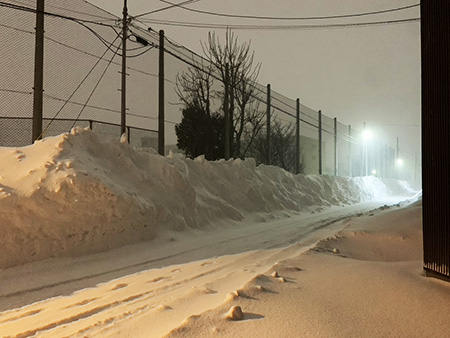
下の写真はこれでもかと繰り返し襲ってきていた大雪時期のもの。
ほんの1月前の頃の状況ですが、ようやく乗り越えた感。
毎年こういう体感を繰り返してくることで、
いったいどういった「御利益」というものがあるのか不明ではありますが
ここのところシリーズで住宅探訪している四国などとは
やはり生活基盤が大きく異なることは明らかなので、
そういうものが徐々にDNAに沈殿してきているだろうことは想像できる。
環瀬戸内海地域から北海道に移住してきた家系として
それぞれの風土環境の違いがどんな人間情緒の違いを生むのかも
自分のものさしレベルで考えることができるけれど、
なかなか未分明なものだと思っています。
ただ、身体全体の筋肉痛というような実感の残滓だけは強烈(笑)。
同じ日本文化圏地域としてとくに現代では活発に交流することも可能。
事実としてこうした環瀬戸内海地域でも「高断熱高気密」住宅を志向する
建築事業者のみなさんとも日々交流が可能な時代になっている。
メディアやSNSなどの情報交流で「共同体験性」というものも高まっている。
先日の東北での地震などでの即時情報伝達性も歴史的に比類がない。
さらに言えば一昨日のように遠くウクライナの状況とも世界同時性がある。
肉体言語的部分ではコミュニケーションできない部分があるけれど、
理解し合える共通のツールはどんどん進化してきているので、
どんな未来形があり得るのか、行く末が期待できると思います。

除雪・雪割り作業での毎年恒例の節々の筋肉疲労についても
歩きやすくなった散歩の距離延長で徐々に癒されていくのかなぁ(笑)。

English version⬇

[Remaining rocky snow is refreshing with “snow splitting”]
Social restoration from the end of the spread prevention period and snow splitting and muscle fatigue (laughs) in northern countries are progressing at the same time. What kind of future is there with the diversification of information exchange means?・ ・ ・

Yesterday I could see some visitors from Tokyo
Information exchange in various ways. Since the spread prevention period has expired on 3/21,
I think it is exceptional to be able to exchange information in a real way.
However, if you bring your own computer, you can feel free to talk to people who cannot come to the place.
The fact that such fusion-like business conversations have become possible is
To restore society from this global infectious disease
I also think it can have a very interesting effect.

As if to coincide with the end of this spread prevention period
The heavy snowfall situation around our company has progressed at once thanks to the recent intensive snow removal.
For the remaining snow after that, ask the snow removal company to enter at the same time as the parking lot in the vicinity.
I had the snow removed roughly.
After that, the rocky hard snow that remained in a part of it was split with snow for about a week.
It has returned to the appearance as you can see.
At the left end of the photo, you can see a strong snow wall with a height of about 1.5m.
For snow country people, snow splitting as the last rite of passage in spring
What is built into the body clock.
The photo below is from the heavy snow season, which was still hit repeatedly.
It was just a month ago, but I feel like I’ve finally overcome it.
By repeating this kind of experience every year,
It’s unclear what kind of “merit” there is.
What is Shikoku and other places that are exploring housing in the series these days?
After all it is clear that the living base is very different, so
I can imagine that such things will gradually precipitate in DNA.
As a family that emigrated to Hokkaido from the Kan Seto Inland Sea area
What kind of human emotional differences are made by the differences in each climate environment?
I can think at my own ruler level,
I think it’s quite unclear.
However, only the residue of the feeling of muscle pain in the whole body is intense (laughs).
As a region of the same Japanese cultural area, it is possible to actively interact with each other, especially in modern times.
As a matter of fact, we are aiming for “highly insulated and airtight” housing even in the Kan Seto Inland Sea area.
We are in an era where we can interact with construction companies on a daily basis.
“Joint experience” is also increasing through information exchange through media and SNS.
The immediate information transmission in the recent earthquake in Tohoku is also historically unmatched.
Furthermore, there is world simultaneity with the situation in Ukraine as far away as the day before yesterday.
There are some parts that cannot be communicated in the physical language part,
Common tools that can be understood are evolving steadily, so
I think we can expect the future to see what kind of future tense is possible.

Also about the annual muscle fatigue of the knots in snow removal and snow splitting work
I wonder if it will be healed gradually by extending the distance of the walk that has become easier to walk (laughs).

【ウクライナ大統領メッセージと日本】


ロシアの侵略からすでに4週間が経過している。
現代世界のさまざまな実相が露わになってきているけれど、
昨日、日本の国会でオンラインでのウクライナ大統領のメッセージがあった。
あらゆる苦難のなかでウクライナの人々が示している祖国防衛の思いは
ひしひしと世界の人々の心底に迫ってきていると思います。
この侵略戦争でのロシアとウクライナの国際世論上の勝敗は明らか。
ロシアはメディアコントロールで自国民は洗脳し続けているけれど、
自由主義世界の結束はかつてないほどに高まりを見せている。
主権国家に対する理不尽な攻撃には一片の正義もない。

きのうのメッセージについて各種の報道があるなかで、
重要なポイントがあまり触れられていないように思います。
それは現状の国連の機能不全、欠陥について指摘した部分で
「あらたなツール」という表現をかれは使っていたけれど、
要するに国連組織は歴史的に目的意義を喪失しているので
それに代わる世界平和安全保障機構の必要性を訴えていた。
そしてそれについて日本の積極的な国際貢献を訴えていたのだと思われた。
このポイントが各種の報道からはあまり強調されていない。
国連の中核である安全保障理事会という存在が「P5」と言われる
「5大常任理事国」によって支配され、今次のように
そのP5の1カ国でも反対すれば即座に機能不全を起こすことについての
まっとうな指摘。そしてそれを改革するのは
「旧敵国条項」によって不当に抑圧を受けている日本こそが
リーダーシップを果たして欲しいというメッセージ。
戦後体制という現在の世界の基層的な仕組みについて
その最大被害を現に受けている国の指導者からの生々しい訴えだと思います。
このポイントは確かにアメリカにとっても諸刃の剣であることは自明だが
しかしそもそも創成時の5大常任理事国とは違う「後継国家」である
中国とロシアがむしろ世界の安全保障の最大危険要因になっている現代で
この国連という機構が機能していくとはとても思われない。
中国は台湾に逃れた「国民党政府・中華民国」の国際的地位を背乗りする形で
当然のようにこの地位につき、またロシアもソ連の崩壊後、
それほどの論議もなく、5大常任理事国に納まり続けている。
その5大常任理事国が自ら侵略戦争を起こしても拒否権発動できてしまう。
これでは国際の正義と平和は実現されることはない。

しかし国連に代わる世界安全保障の「ツール」実現には長い時間がかかる。
当面は国連の「改革」ということが課題になるだろうけれど、
国際平和実現のため、日本の努力は欠かせない最大のポイント。
現にこういう現代世界の不条理を身を以て体現するウクライナの視点からは
日本の外交的役割の大きさが認識されているということだろう。
繰り返し「アジア」というキーワードが発せられていた意味合いと取れる。
日本社会は戦場になったウクライナからの真摯な訴えを
正面からしっかりと受け止めて行動して行くべきだろうと思います。
世界平和への努力はまずは国連改革の外交努力であるべきだ。

English version⬇

[Message from the President of Ukraine and Japan]
Requested diplomatic efforts to create “new tools” for international security. A complaint from the invaded country where children are being killed with a view to Japan’s international status.・ ・ ・

Four weeks have already passed since the invasion of Russia.
Various realities of the modern world are being revealed,
Yesterday, there was an online message from the President of Ukraine in the Japanese parliament.
In all the hardships, the Ukrainian people’s thoughts on homeland defense are
I think we are approaching the heart of the people of the world.
The victory or defeat of Russia and Ukraine in the international public opinion in this war of aggression is clear.
Russia continues to brainwash its own people with media control,
The cohesion of the liberal world is higher than ever.
There is no piece of justice in an unreasonable attack on a sovereign state.

Among the various reports about yesterday’s message,
I don’t think the important points are mentioned very much.
That is the part that pointed out the current dysfunction and defects of the United Nations.
He used the expression “new tool”,
In short, UN organizations have historically lost their purpose.
He called for the need for a World Peace and Security Organization to replace it.
And it seemed that he was appealing for Japan’s active international contribution.
This point is not emphasized much in various media reports.
The existence of the Security Council, which is the core of the United Nations, is called “P5”.
It is dominated by the “five permanent members” and is now as follows:
If even one of the P5 countries opposes it, it will cause immediate dysfunction.
A decent point. And to reform it
Japan is unfairly oppressed by the “Old Enemy State Clause”
A message that I want you to fulfill your leadership.
About the basic mechanism of the current world called the postwar system
I think it is a vivid complaint from the leader of the country that is actually suffering the greatest damage.
It is obvious that this point is certainly a double-edged sword for the United States.
However, in the first place, it is a “successor nation” that is different from the five permanent members at the time of its creation.
In today’s world, where China and Russia are rather the greatest risk factors for global security.
I don’t think this UN mechanism will work.
China takes on the international status of the “Kuomintang Government / Republic of China” that fled to Taiwan
As a matter of course, Russia took this position, and after the collapse of the Soviet Union,
Without much debate, it continues to fit into the five permanent members of the Security Council.
Even if the five permanent members of the Security Council start an aggression war on their own, they can activate the veto right.
This will not realize international justice and peace.

However, it will take a long time to realize a world security “tool” to replace the United Nations.
For the time being, the issue of “reform” of the United Nations will be an issue,
Japan’s efforts are indispensable for the realization of international peace.
In fact, from the perspective of Ukraine, which embodies the absurdity of the modern world.
It seems that the size of Japan’s diplomatic role is recognized.
It can be taken as the meaning that the keyword “Asia” was repeatedly issued.
Japanese society makes a sincere appeal from Ukraine, which has become a battlefield
I think we should take it from the front and act accordingly.
Efforts for world peace should first be diplomatic efforts for UN reform.

【開放建築の建具技術「掬月亭」⑥ 四国住空間探訪-31】


きのうは皇室とこの栗林公園・掬月亭の関わりを見た。
日本社会のありよう、特質として古代からの「国のかたち」が
皇室の存続という形式で受け継がれてきていることが大きいと思う。
絶えざる「易姓革命」によって独裁権力が維持されてきた中国とは違って
古代以来の権力ではあるけれど、日本では独裁としてあったわけではない。
実体権力は貴族や武家が担って天皇家は濃厚に文化主宰者として残ってきた。
生々しい権力とは離れ文化サロンの中心として存続してきたことは
オリジナリティに満ちた日本文化を育んできた・・・。
建築の世界でも温暖地域・蒸暑地域の木造建築として
きわめて開放的な「通風」に配慮した技術が「よきもの」として尊重され、
それを実現する「匠」の技術文化が発展したのでしょう。
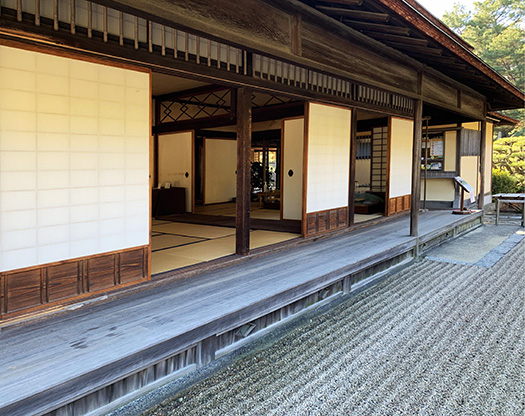
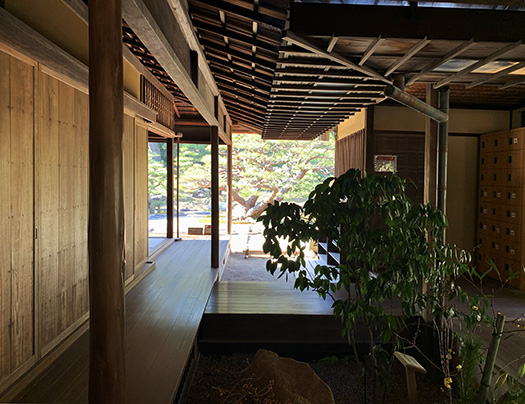
この掬月亭では屋根の徹底した軽量化によって
構造の柱がほっそりとした材でつくられ、しかも1間ごとではなく
1.5間と間隔も飛ばして構造が保持されている。
庭園との視覚的一体化が極限まで追求されたということでしょう。

そうはいっても台風などの風雨被害も夜間の寒冷もある。
雨戸などの外皮の工夫は当然保持されているのですが、
それらが仕舞い込まれる「戸袋」は表面的にほとんど目立たない。
掬月亭では眺望建築として屋根の軽量化とワンセットで
雨戸の集中格納、チョー軽い動作が実現されていることがわかる。
とくに3方向が開放する掬月の間では戸袋は1箇所に集約されている。
そのために隅角部に細い木材が立てられていて
雨戸はこの仕掛けによって方向転換させて仕舞い込まれていく。
開放型建築としての「仕掛け」合理主義を見ることができる。
現代住宅では開口部は窓というガラス仕込みの建材が担っているけれど、
ガラス建材のない時代、基本は柱と横架材だけで区切られた空間が基本。
夜間や風雨時用の雨戸の開閉による作業で対応していた。
現代・寒冷地ではそもそも屋根を軽量化するという発想を持ちにくい。
積雪荷重というものへの対応がまず大前提であって、
その時期でも軽快に機能させ動作可能な雨戸建具技術はきわめて難しい。
北海道の明治期の天皇接遇和風建築でもやはり外部建具は破綻している。
強度を確保可能なガラス入り外部建具、窓という方向に向かうのは必然。

寒冷地からこの掬月亭を見学しに来て、
その建築で実現したいこころの部分では理解できる部分は大きいのだけれど
はるかな距離感、そういう幸福感との乖離は感じざるを得ない。
気持ちはわかるけど技術を傾ける方向がちょっと違うのでしょうね。

English version⬇

[Open building joinery technology “Kikugetsutei” ⑥ Shikoku living space exploration-31]
Light-moving shutter storage that does not consider the snow load on the roof. “View first priority” craftsmanship. It’s great, but I can’t introduce it.・ ・ ・

Yesterday I saw the relationship between the imperial family and this Kikugetsutei Park.
As a characteristic of Japanese society, the ancient “form of the country”
I think that it has been inherited in the form of the survival of the imperial family.
Unlike China, where dictatorship has been maintained by the constant “easy surname revolution”
Although it has been a power since ancient times, it was not a dictatorship in Japan.
The aristocrats and samurai were responsible for the substantive power, and the emperor family remained a rich cultural leader.
What has survived as the center of the cultural salon apart from the vivid power
We have cultivated Japanese culture full of originality.
As a wooden building in warm and humid areas in the world of architecture
Technology that considers extremely open “ventilation” is respected as “good things”,
The technological culture of “Takumi” that realizes this may have developed.
At this Kikugetsutei, the roof is thoroughly reduced in weight.
The pillars of the structure are made of slender material, and not every ken
The structure is maintained with an interval of 1.5.
It seems that the visual integration with the garden was pursued to the utmost limit.

Even so, there are typhoons and other wind and rain damage, as well as cold nights.
Of course, the ingenuity of the outer skin such as the shutter is retained, but
The “door bag” in which they are stored is almost inconspicuous on the surface.
At Kikugetsutei, the roof is made lighter and one set as a view architecture.
It can be seen that the centralized storage of the shutters and the light movement of the shutters are realized.
Especially during the month when the three directions are open, the door pockets are concentrated in one place.
For that reason, thin wood is erected at the corners.
Ameto is turned around by this mechanism and is put away.
You can see the “device” rationalism as an open-type architecture.
In modern houses, the openings are made of glass-based building materials called windows.
In the era when there was no glass building material, the basic space was separated only by pillars and horizontal materials.
The work was done by opening and closing the shutters at night and during wind and rain.
In modern and cold regions, it is difficult to have the idea of ​​reducing the weight of the roof in the first place.
First of all, dealing with snow load is a major premise,
It is extremely difficult to develop a shutter fitting technology that can function and operate lightly even at that time.
Even in the Japanese-style architecture of the Emperor’s hospitality during the Meiji era in Hokkaido, the external fittings have collapsed.
It is inevitable to go in the direction of windows and external fittings with glass that can ensure strength.

Come to see this Kikugetsutei from a cold region,
There is a big part that can be understood in the part of the heart that I want to realize in that architecture.
I cannot help feeling the distant sense of distance and the divergence from such a sense of happiness.
I understand your feelings, but the direction of tilting the technology is a little different.

【大正帝好みの空間「掬月亭」⑤ 四国住空間探訪-30】


掬月亭は歴代の天皇家ともつながりが深いとされている。
とくに大正帝は掬月に隣接するこの部屋がお好みだったとされる。
この障子越しの松の右側にはお手植えの松もある。
明治36(1903)年10月に当時皇太子だった大正帝がお手植えされたもの。
その時、掬月亭に4日間滞在された。
そのときに宿泊された部屋がここだといわれている。
その後1914年(大正3年)には皇太子(後の昭和天皇)淳宮(秩父宮雍仁親王)、
光宮(高松宮宣仁親王)来園という記録が残っている。
昭和帝は1901年生まれなので当時は13-4才。
末弟の高松宮宣仁親王は1905年生まれ9才の兄弟3人の春休み旅行目的地。
大正天皇は息子さんたちにこの景観を見せるように計らったのだろうか。
子どもたちにこの庭園と建築を帝王的空間教育として見せたと受け取れる。
3人の兄弟たちはこの掬月亭を旅宿として栗林公園の自然の中で
転げ回っていたようにも想像できる。
明治以前の讃岐の領主は徳川家連枝であり、
その残された名園に対する興味の深さを物語っている史実でしょう。
江戸から明治大正に掛けての空間文化観が見えてくるような気がする。
たぶん戦後の価値感以前の日本社会で、直前の時代的文化観として
江戸期に最高品質とされたものが価値感の中心にあったといえる。
そういう意味では庭園美感とともに建築的ディテールも
このような空間性が「上質」のある極地と捉えられていたのでしょう。

このような皇室ゆかりの空間というものでも
北海道でもいくつかの痕跡を確認することができる。
とくに明治帝は北海道開拓使という時限付き中央省庁の仕事が一段落した段階で
小樽に船で来られ新設の鉄道に乗車して札幌まで来られた。
豊平館という西洋建築ホテルに宿泊された記録が残っている。
これは徹底的に「洋造建築」であり、長官・黒田清隆の建築方針で貫かれている。
厳しい気候風土に対応し、南下侵略してくるロシアへの対応として
西洋近代の価値感を具現化させた地域空間を北海道に創造した。
そういったものとの対比としても興味をそそられる。

極東アジアから欧米列強の支配する世界と伍していく君主として
この両方の空間価値感を持つように考えていたのだろうか。
日本という国は歴史年代を通して他国からの文化刺激を柔軟に摂取し、
同時に常に「国風化」という揺り戻し調和を計る社会。
空間感受性についての「帝王教育」でもたぶん2正面作戦だったか。
その「和風」代表のひとつとしてこういった空間性が推されていたことは
社会のありようをわかりやすく示していると思われます。

English version⬇

[Taisho Emperor’s favorite space “Kikugetsutei” ⑤ Shikoku living space exploration-30]
It seems that the Japanese-style garden beauty + architectural space established under the Edo period isolation system was utilized as spatial education for the next generation emperor.・ ・ ・

Kikugetsutei is said to have a close connection with successive emperors.
In particular, it is said that the Taisho Emperor preferred the room adjacent to Hogetsu.
There is also a hand-planted pine tree on the right side of the pine tree over the shoji screen.
It was hand-planted by Emperor Taisho, who was the crown prince at the time, in 1903.
At that time, he stayed at Kikugetsutei for four days.
It is said that the room where I stayed at that time is here.
After that, in 1914 (Taisho 3), the Crown Prince (later Emperor Showa), Jungu (Chichibumiya Yasuhito),
There is a record of visiting Mitsumiya (Nobuhito Takamatsumiya).
Showa Emperor was born in 1901, so he was 13-4 years old at that time.
His youngest brother, Prince Nobuhito Takamatsu, was born in 1905 and is 9 years old, so he is a destination for spring break trips for his three brothers.
Did Emperor Taisho try to show his sons this landscape?
It can be perceived that the children were shown this garden and architecture as a royal spatial education.
The three brothers used this Kikugetsutei as a lodging in the nature of Ritsurin Garden.
I can imagine it rolling around.
The lord of Sanuki before the Meiji era was the Tokugawa family.
It is a historical fact that shows the depth of interest in the remaining famous gardens.
I feel that I can see the cultural view from Edo to the Meiji and Taisho eras.
Probably as a cultural view of the last era in Japanese society before the sense of value after the war
It can be said that what was considered to be the highest quality in the Edo period was at the center of the sense of value.
In that sense, the architectural details as well as the beauty of the garden
This kind of spatiality would have been regarded as a polar region with “high quality”.

Even such a space related to the imperial family
Some traces can be confirmed in Hokkaido as well.
In particular, the Meiji Emperor was at the stage when the work of the central ministry with a time limit of Hokkaido Development Commission was completed.
He came to Otaru by boat and boarded a new railroad to Sapporo.
There is a record of staying at a Western-style hotel in Hohei Kan.
This is thoroughly “Western architecture” and is adhered to by Kiyotaka Kuroda’s architectural policy.
As a response to Russia invading southward in response to the harsh climate
We created a regional space in Hokkaido that embodies the values ​​of modern Western times.
It is also intriguing as a contrast to such things.

A monarch who is competing with the world dominated by Western powers from Far East Asia
Did you think that you would have both of these spatial values?
Japan is a country that flexibly ingests cultural stimuli from other countries throughout its historical age.
At the same time, a society that constantly seeks back-and-forth harmony called “national weathering.”
Perhaps it was a two-front operation in “Education of the Emperor” about spatial sensitivity.
The fact that this kind of spatiality was promoted as one of the representatives of “Japanese style”
It seems to show the state of society in an easy-to-understand manner.

【雁行する中間領域「掬月亭」④ 四国住空間探訪-29】


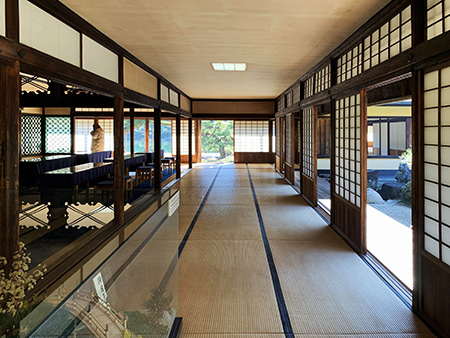
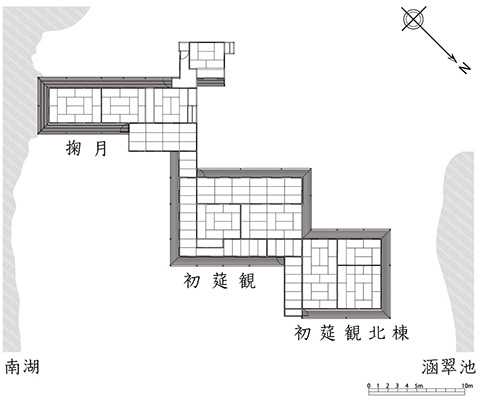
雁行型間取りとは建物の形の一つで、各空間を前後に少しずつずらして建てる形式。
雁が群れで空を飛んでいくときの形に似ていることから、この名称で呼ばれる。
単純な長方形の間取りに比べ、どの居室にも3面採光が可能で日当たりや風通し、
眺望などがよくなる。外観的に変化や個性があり陰影もグレード感をもたらす。

北海道の住宅サイズの建築では単純な箱形の方が支配的で
いかにも合理主義に即していて断熱気密性能的に合目的的なのだけれど
温暖地・蒸暑地域ではこういう雁行間取りが高級住宅では見られる。
京都の伝統的建築では雁行スタイルが基本のように思う。
居住空間とは庭とワンセットだという認識が底流にあって
それとの関係性の重視が日本建築文化の一側面だといえるのでしょう。
視線の抜けとして周辺環境との関係性が重視され、また中庭などの
句読点空間も重視されて行くことになる。
欧米の住文化ではあまり重視されない様式のように思う。
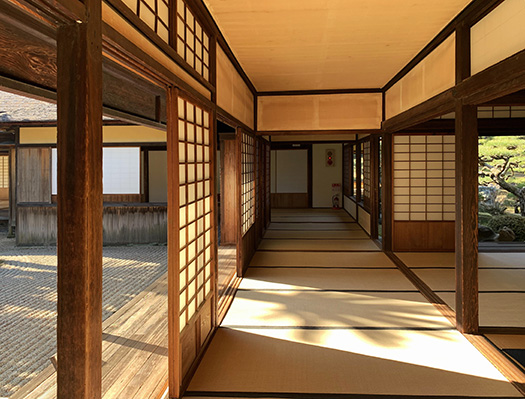
こういう雁行型間取りでは居室空間よりも移動空間の面積が拡大する。
縁の空間が長く伸びる庇に区画され庭を視覚的に切り取る中間領域が展開する。
それの視界角度が90度転換していくことでメリーゴーランドのように
視覚的面白さを提供していくのだと思う。
そういうことなので外気にそのまま接する空間になる。
温暖地気候、蒸暑地域の外部温熱環境に順応した間取り形式。
ウチとソトが融通無碍に「住空間」を構成しているともいえるのでしょう。
北海道では自然の天地の外部環境は豊かだけれど
いわゆる箱庭的なものへの空間意欲はきわめて乏しい。
ウチとソトの感覚が関東以南地域と大きく乖離している。

この掬月亭ではこれでもかと周辺・中間領域の美感が追究されている。
そもそもの建築目的が大名庭園「栗林公園」の景観を愛でることにあるので、
建築を取り巻く庭園美を「切り取る」住文化が展開している。
日本住文化のネイティブなありよう。わたしたちの住文化の基底に
こういう価値感が根強く残っているだろうことを知らせてくれますね。
ただこういう視覚重視の建築文化は温暖地でも金持ちのためのもの。
戦後社会以降は民主主義的にハコ重視のコンパクトな機能性重視になったと思う。
「内観」重視の住空間追究に向かっていったのでしょう。
そういえば掬月亭には特徴的なインテリア・家具とかへの執着が感じられない。
中間領域や庭園への興味とインテリアへの興味というのは相反関係なのか。
いま北海道の建築家の探究の方向性を見ていると、
高断熱高気密を前提にしてなお、中間領域との関係性を復元したいという
そういう目的性がみられるように思っています。
こういう雁行型間取りが生む視覚的面白さを北国住宅が再構築できるのか、
ちょっと興味深いテーマだと思っています。

English version⬇

[Intermediate region “Kikugetsutei” ④ Shikoku living space exploration-29]
In Japanese high-class architecture, the gantry arrangement pursues the beauty of the intermediate region. How can this culture imprinted on DNA be restored with high insulation?・ ・ ・

The gantry type floor plan is one of the shapes of buildings, and each space is built by slightly shifting it back and forth.
It is called by this name because it resembles the shape of a flock of geese flying in the sky.
Compared to the basic floor plan of a simple rectangle, any room can be illuminated on three sides, allowing for sunlight and ventilation.
The view etc. will improve. There is a change in appearance and individuality, and the shadows also bring a sense of grade.

In Hokkaido’s residential-sized architecture, the simple box shape is dominant.
It’s really rationalistic and purposeful in terms of heat insulation and airtightness.
In warm and humid areas, this kind of floor plan can be seen in luxury homes.
I think that the gantry style is the basis of traditional architecture in Kyoto.
There is an undercurrent recognition that the living space is one set with the garden.
It can be said that the emphasis on the relationship with it is one aspect of Japanese architectural culture.
The relationship with the surrounding environment is emphasized as a line of sight, and in the courtyard, etc.
Punctuation space will also be emphasized.
I think it is a style that is not so important in Western living culture.
With such a gantry-type floor plan, the area of ​​the moving space is larger than that of the living room.
The space at the edge is divided into long eaves, and an intermediate area that visually cuts out the garden unfolds.
Like a merry-go-round by changing the viewing angle of it by 90 degrees
I think it will provide visual fun.
Because of that, it becomes a space that is in direct contact with the outside air.
A floor plan that adapts to the warm climate and the external thermal environment of hot and humid areas.
It can be said that Uchi and Soto flexibly compose a “living space”.
In Hokkaido, the external environment of nature is rich,
There is very little motivation for space in what is called a miniature garden.
The feelings of Uchi and Soto are greatly different from those in the south of Kanto.

At Kikugetsutei, the beauty of the surrounding and intermediate areas is still being pursued.
In the first place, the purpose of the building is to love the scenery of the daimyo garden “Ritsurin Garden”.
A living culture that “cuts out” the beauty of the garden surrounding architecture is developing.
Being a native of Japanese living culture. At the base of our living culture
It will let you know that this kind of value will remain strong.
However, this kind of visual-oriented architectural culture is for the rich even in warm climates.
After the postwar society, I think that democratic emphasis was placed on compact functionality with an emphasis on hako.
Perhaps he was pursuing a living space that emphasized “introspection.”
By the way, I can’t feel the attachment to the characteristic interior and furniture at Kikugetsutei.
Is there a conflict between interest in intermediate areas and gardens and interest in interiors?
Looking at the direction of the architect’s quest in Hokkaido now,
Even on the premise of high heat insulation and high airtightness, he wants to restore the relationship with the intermediate region.
I think that such a purpose can be seen.
Is it possible for northern houses to reconstruct the visual fun created by such a gantry-type floor plan?
I think it’s a little interesting theme.

【主室からの観望「掬月亭」③ 四国住空間探訪-28】


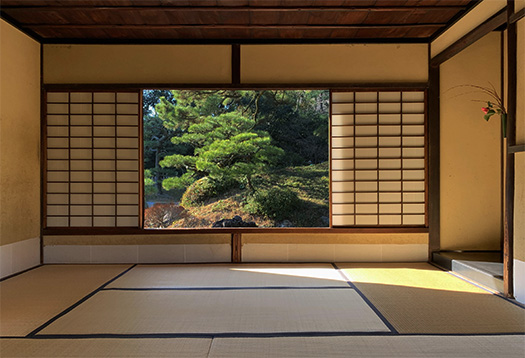
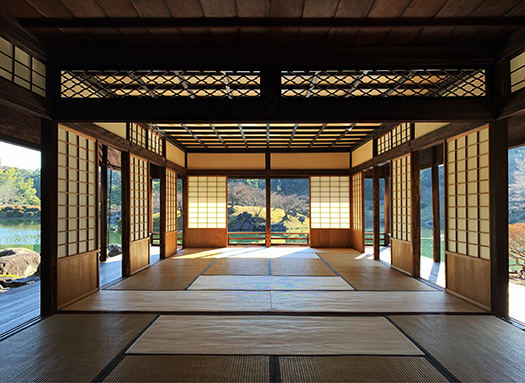
掬月亭のメインルーム「掬月」からの観望であります。
わたしは一観光客としての訪問なので、障子を開け放っていただくことは
できませんでした(笑)ので、想像で開け放していただければ幸い。
画面には見えませんが右手側に屏風のような山塊があり、
以前の河川流路をそこで築堤して川筋を大きく変えた。
それには画面前面に広がっている「南湖」造成土木工事の時の土を
掻き揚げていったとされているのですね。
たぶんそういう土木工事計画が先行してあって
その結果、できた人造湖を南湖と呼称しその景観を徐々に造作し、
そういう人造湖の景観をたのしむという動機から
この掬月亭という建築計画は進行していったのだろうと思われます。
画面左側には「高松城」があるのでその主宰者にとっては
「奥座敷」的な大名庭園という位置付けになったことがわかる。

こういう景観全体をプロデュースしたことを自慢したいのか。
どうもわたしは、自然改造して己れを誇ろうとするこういった心理に
素直にしたがうのが苦手であります(笑)。
いや、そのようなことに出くわしたときには仕方なく称揚するでしょうが、
内心としてはそのように対応しなければならない人物と
警戒心を持って接することになるだろうと思います。
いま現代で言えばプーチンのようなのが極限例でしょうか。
おれは核兵器も自由に使えるんだぞ、ひれ伏せ!みたいなマウント心理。
そういう恐怖心を人に植え付けさせたい心理って、
内面的な空虚をそういうもので埋め合わせたい欲求のような気がする。
現代世界は基本的にはこういう独裁支配から脱した民主主義が基本の世界。
この掬月亭のような遺構は人間の歴史資産として民主的に楽しむ世界。
建築の目的としての「花鳥風月」道楽が実現されたものとして
いっときの体験を共有する装置として存続させているものだと思う。
支配者と被支配者の関係に置いて了解可能な範囲での権力者の建築道楽。

現代のわれわれとしては、そういった花鳥風月世界観という
ごく日本的な一期一会感を表現する建築営為として鑑賞する。
建築の命名としてもまことに一瞬の体験、
湖面と盃に映り込む月を楽しむという蒸暑の夜の情景が脳裏にうかぶ。
見立て、設計意図としてはこの「掬月の間」は屋形船と考えているそうで
そういう建築の趣向をたのしむのが作法なのでしょう。

English version⬇

[View from the main room “Kikugetsutei” ③ Shikoku living space exploration-28]
The intention is to enjoy the scenery of the artificial lake and artificial hills that were built by remodeling nature. Is it a monument that such a sukisha was realized in Japanese history?・ ・ ・

It is a view from the main room “Kikugetsutei” of Kikugetsutei.
Since I am a tourist, it is not possible to leave the shoji open.
I couldn’t do it (laughs), so I hope you can open it up with your imagination.
Although it is not visible on the screen, there is a folding screen-like massif on the right hand side,
The old river channel was built there and the river line was changed drastically.
To do this, use the soil from the civil engineering work to create the “South Lake” that spreads out in front of the screen.
It is said that it was kakiage.
Maybe such a civil engineering work plan was ahead
As a result, the artificial lake that was created was called the South Lake, and the landscape was gradually created.
From the motive to enjoy the scenery of such an artificial lake
It seems that this architectural plan called Kikugetsutei has progressed.
There is “Takamatsu Castle” on the left side of the screen, so for its presiding officer
You can see that it has been positioned as a “Okuzashiki” daimyo garden.

Do you want to brag about producing this kind of landscape as a whole?
Apparently, I’m trying to remodel myself and be proud of myself.
I’m not good at following obediently (laughs).
No, I would praise you when you come across such a thing,
Inwardly, with a person who has to deal with that
I think you will be treated with caution.
Is it an extreme example like Putin in modern times?
I’m free to use nuclear weapons, prostrate! Mount psychology like.
The psychology of wanting people to instill that kind of fear
I feel like a desire to make up for the inner emptiness with such things.
The modern world is basically a world of democracy that has escaped from such dictatorship.
This remains like Kikugetsutei is a world that is democratically enjoyed as a human historical asset.
As a realization of “Kacho Fugetsu” hogaku as the purpose of architecture
I think it is a device that keeps the experience of the moment.
Architectural music of a powerful person within the range that can be understood in the relationship between the ruler and the ruled.

For us today, such a view of the Kacho Fugetsu world is called.
Appreciate as an architectural activity that expresses a very Japanese once-in-a-lifetime feeling.
A truly momentary experience as the name of architecture,
The scene of a hot and humid night, where you can enjoy the moon reflected on the surface of the lake and the sake cup, comes to your mind.
It seems that this “Kogetsu no Ma” is considered to be a houseboat as a design intention.
Perhaps it is a manner to enjoy such an architectural taste.

【花鳥風月建築「掬月亭」② 四国住空間探訪-27】


建物って、その建築についての思想とか目的とかが現れるもの。
通常わたしたちは住宅をいろいろ考えることが多いワケですが、
類縁的存在として、すこし建築の目的が違っているものを見て参考にする
ということがあるのは自明のことですね。
この掬月亭は都市計画の一環としての高松城建築計画の河川流路変更が
その結果として城郭外堀のような湖沼を生み出したので
それを大名庭園として手を掛けていったという創建経緯。
江戸初期はこういった大名庭園競争が各地域で起こっていて、
金沢兼六園とか、江戸市中の後楽園などの庭園が生産されていくブーム期。
そういう大名庭園という権力者の自然改造道楽に翼賛する文化として
この掬月亭建築は建築されたモノですね。
そういう経緯の建築なので、日本人の成功者とか権力者の内面構造を
端的に示す建築事例ということになる。
自然そのものではなく、それを改造した結果、箱庭化された景観を
いわば権力とかお金とかで征服したという満足感を充足させる目的。
ただ日本ではその場合でもやや抑制的な「花鳥風月」的自然の切り取り方になる。
ロシアのような権力では征服していく土地が不毛なシベリアの凍土地帯なので、
剥き出しの暴力性が高まるのに対して、日本では自然の温和さがあって、
花鳥風月を愛でる、というような志向性が大きくなるのでしょう。
建築としての掬月亭はそういった精神性に貫かれているように思う。

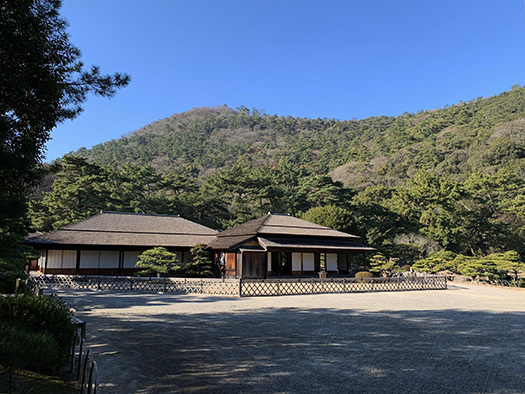
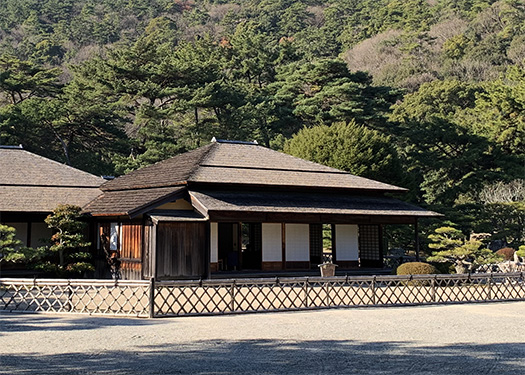
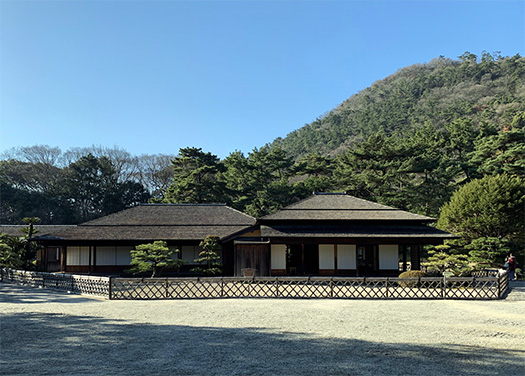
そうすると建築としては上の写真のように屋根は軽量な杮葺きになり、
柱梁などの構造材は、眺望重視の設計意図からなるべく細く、
開放的な方向で、柱も細くして間隔も飛ばしてより開放性を高めることになる。

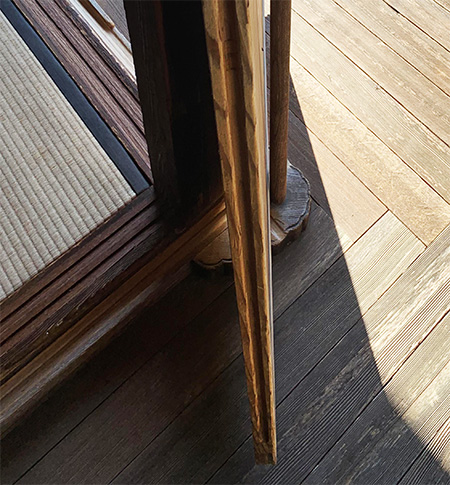
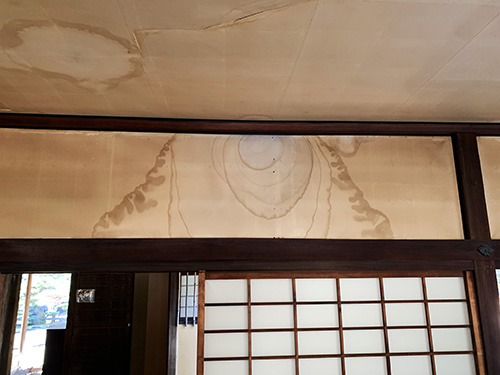
邸内に入って壁天井をみていたら、写真のような光景に気付いた。
案内の方に聞いたら「なるべく屋根とか軽くなるように、壁天井の構成も
薄く、軽くを旨とした結果、下地なしの紙で造作してある」とのこと。
壁紙という建材もあるので理解はできるけれど、
天井まで紙を張って仕上げているというのは象徴的。
ちょっとした雨漏りでこのような破綻もあるけれど風流と受け流すのか。
その使用する紙はなになにとかの説明されたような記憶もあったけれど、
そういうスケスケに重きを置く考え方に呆然とする思い。
断熱性や気密性能を重視する北海道住宅とは常識がかなり違う。
夏場の高温蒸暑気候のなかでの「通風性」重視の建築思想に立ち至るけれど、
そういう建築手法を高級建築に適用していく必然として
権力と金力で完全に制御した「自然」花鳥風月志向になっていくのでしょう。

どうもこういう様子を見せられると
北海道での「拡張する花鳥風月」体験、冬の猛烈ブリザードを楽しむみたいな
風土的現実感との乖離を強く印象させられることになる。
そういうなかでの「高級文化性」への拝跪には同意しにくいと、
体感的違和感がすこしづつ頭をもたげてくる。

English version⬇

[Kacho Fugetsu Architecture “Kikugetsutei” ② Shikoku Living Space Exploration-27]
Kacho Fugetsu, a type of nature that is loved by hot and humid regions, and an emphasis on “view” inside the miniature garden. The nature of Hokkaido is urging the Japanese to expand Kacho Fugetsu.・ ・ ・

A building is one in which the thought or purpose of the architecture appears.
Usually, we often think about housing, but
As a related existence, see and refer to things that have slightly different purposes of architecture
It is self-evident that there is something like that.
This Kikugetsutei has changed the river flow path of the Takamatsu Castle architectural plan as part of the city planning.
As a result, a lake like the outer moat of the castle was created.
The history of its founding that it was used as a daimyo garden.
In the early Edo period, this kind of daimyo garden competition was taking place in each region.
During the boom period, gardens such as Kanazawa Kenrokuen and Korakuen in Edo City were produced.
As a culture that praises the nature remodeling hogaku of such a daimyo garden
This Kikugetsutei architecture is a built thing, isn’t it?
Since it is an architecture with such a background, the internal structure of successful Japanese people and powerful people
This is a simple example of architecture.
Not the nature itself, but the landscape that has been transformed into a miniature garden as a result of remodeling it.
So to speak, the purpose is to satisfy the satisfaction of conquering with power or money.
However, in Japan, even in that case, it is a slightly restrained way of cutting out the nature like “Kacho Fugetsu”.
Because the land to be conquered by power like Russia is a barren Siberian frozen land zone
While bare violence increases, in Japan there is a natural mildness,
The intention to love Kacho Fugetsu will increase.
I think that Kikugetsutei as an architecture is pierced by such spirituality.

Then, as for the architecture, the roof becomes a lightweight wood shingle as shown in the above picture.
Structural materials such as columns and beams should be as thin as possible due to the design intention that emphasizes the view.
In the open direction, the pillars will be made thinner and the intervals will be skipped to improve the openness.

When I entered the house and looked at the wall and ceiling, I noticed a scene like the one in the picture.
When I asked the guide, “The structure of the walls and ceiling is also designed to make the roof as light as possible.
As a result of making it thin and light, it is made of paper without a base. ”
There is also a building material called wallpaper, so I can understand it, but
It is symbolic that the ceiling is covered with paper.
There is such a collapse due to a slight leak, but is it a wind current?
I remember that the paper used was something that was explained, but
I am stunned by the idea of ​​emphasizing such invisibility.
Common sense is quite different from Hokkaido housing, which emphasizes heat insulation and airtightness.
It leads to an architectural idea that emphasizes “ventilation” in the hot and humid climate of summer.
Inevitably applying such building methods to high-end architecture
It will become “natural” Kacho Fugetsu-oriented, which is completely controlled by power and money.

If you can show me this kind of situation
Experience the “expanding Kacho Fugetsu” in Hokkaido, like enjoying the fierce winter blizzard
You will be strongly impressed with the divergence from the cultural reality.
Under such circumstances, it is difficult to agree with the worship of “luxury culture”.
The feeling of strangeness gradually raises my head.

【高松大名庭園「掬月亭」① 四国住空間探訪-26】


本日からふたたび住宅の歴史探訪に復帰いたします。
日本の精神史のなかで特異的だと思われるのが「大名庭園」という存在。
京都における宗教建築群から出自した庭園文化があり、
江戸期に至って大名の地域割拠体制が平和的に実現するなかで、
戦国期に発展した各地域での戦争土木技術が
各大名によって城下町建設技術基盤になりそれが庭園造成に活用された。
参勤交代制という特殊な体制から江戸と各地域双方で
そのような「庭園文化」が活況を呈した。結果「大名庭園」群が成立した。
戦国末に戦争が土木技術競争として盛り上がったことが基層にある。
武田信玄の穴山衆のような、あるいは秀吉の大土木集団などが
国土計画の中軸技術軍団として成立したことがあったのでしょう。
江戸の「新開地」建設において幕府は意図的に
宏壮な大名庭園群を新都市計画の中枢として取り込んでいった。
そういうことに経済力を浪費させて平和を実現させる効果もあった。
このあたりの知恵はロシア・プーチンに学ばせるべきだ・・・。
現代にも江戸城、皇居であるとか浜離宮など多数の庭園群が
東京で基盤的に景観形成していると思われる。

四国行脚していて高松に注目していくつかの都市計画視点、
いわば「ブラタモリ」的な見方というものに強く導かれて
この掬月亭を擁する「栗林公園」を見学していました。
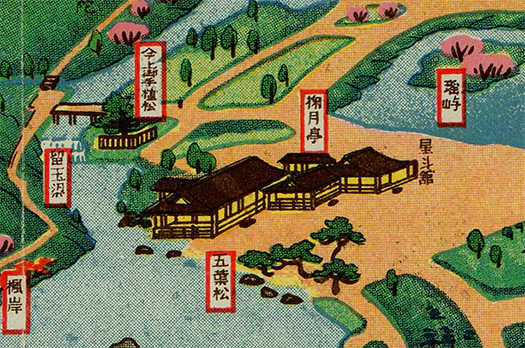
高松城は瀬戸内海に直接アクセスする「水城」として築かれたとされる。
現在の高松駅と瀬戸内海の島嶼への連絡船埠頭は高松城に近接して立地する。
軍事的中核でありながら同時に商業発展を計画した都市構造。
ただ、そういった都市計画において高松の街は
計画以前には河川扇状地形平野であり、歴年、河川の氾濫に見舞われてきた。
本来この栗林公園や高松城域はそういった河川が流れていた地域だという。
そういった地域を獲得した大名家はその戦争力にもなっていた
土木技術を都市計画として活用させて河川流路の変更を行った。
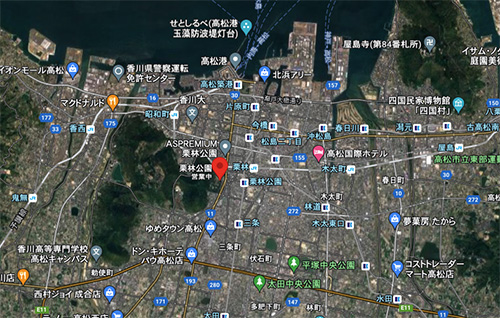
航空写真地図では中央の山岳地形を迂回して栗林公園ー高松中心部に沿って
流れていた河川を南側(地図の下側)でせき止めて
左右に流路を変更していったのだと言われます。
今日まで残る栗林公園・大名庭園はその土木都市建設の結果、
残存した河川痕跡を主要な景観要素として利用したものだと。
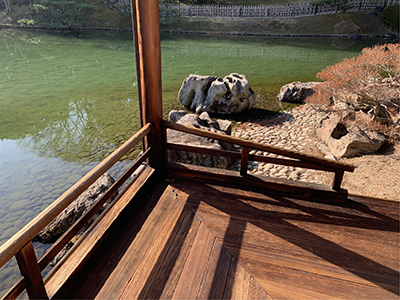
掬月亭という名前は臨池庭園として水面に映える月を杯に映して
それを飲む、という風情を楽しむのだという命名とされる。
戦国以来の武士たちの戦争技術に於いて
土木建築計画というものが占めていた価値感を現代に伝えている。
そういった自然征服を可能にした自らの営為に対しての自己満足装置。
へそ曲がりな庶民階層としては大名庭園というのはそう感じられる(笑)。
まぁそうはいっても物事には肯定的な面と否定的な面と両面がある。

たしかに実現された景観美は面白いけれど、
時代的背景としてはそのような軍事要素も中核的事実としてあったと、
認識しながら、感受していきたいと思う次第です。

English version⬇

[Takamatsu Daimyo Garden “Kikugetsutei” ① Shikoku Living Space Exploration-26]
Ritsurin Garden was created by changing the flow path of the flooded river alluvial fan by civil engineering work. Drink the moon reflected on the surface of the pond in the remnants of the river.・ ・ ・

From today, we will return to the history of housing.
The existence of “Daimyo Garden” seems to be unique in the spiritual history of Japan.
There is a garden culture that originated from religious buildings in Kyoto,
As the daimyo’s regional allocation system was peacefully realized in the Edo period,
War civil engineering technology in each region developed during the Warring States period
Each daimyo became the construction technology base for the castle town, which was used to create the garden.
From the special system of attendance shift system in both Edo and each region
Such “garden culture” was booming. As a result, the “Daimyo Garden” group was established.
At the end of the Warring States, the war broke out as a civil engineering competition.
Like Shingen Takeda’s Anayama people, or Hideyoshi’s large civil engineering group
It must have been established as a core technology corps of national land planning.
The shogunate intentionally in the construction of “Shinkaichi” in Edo
The magnificent daimyo gardens were incorporated as the center of the new city planning.
It also had the effect of wasting economic power and achieving peace.
The wisdom around here should be learned by Putin, Russia …
Even today, there are many gardens such as Edo Castle, the Imperial Palace, and Hamarikyu Gardens.
It seems that the landscape is basically formed in Tokyo.

Shikoku pilgrimage and paying attention to Takamatsu, some city planning perspectives,
Strongly guided by a so-called “Bura Tamori” perspective
I was touring the “Ritsurin Garden” that houses this Kikugetsutei.
Takamatsu Castle is said to have been built as a “Mizujo” with direct access to the Seto Inland Sea.
The current ferry pier connecting Takamatsu Station and the islands of the Seto Inland Sea is located close to Takamatsu Castle.
An urban structure that is a military core but at the same time plans for commercial development.
However, in such city planning, the city of Takamatsu
Before the plan, it was a river alluvial fan plain and has been hit by river floods for many years.
Originally, this Ritsurin Garden and Takamatsu Castle area are said to be areas where such rivers flowed.
The daimyo who acquired such an area was also a war force.
The river channel was changed by utilizing civil engineering technology as a city plan.
The aerial map bypasses the central mountainous terrain and runs along Ritsurin Garden-Takamatsu center.
Dam the flowing river on the south side (lower side of the map)
It is said that the flow path was changed from side to side.
The Ritsurin Garden and daimyo garden that remain to this day are the result of the construction of the civil engineering city.
The remaining river traces were used as the main landscape element.
The name Kikugetsutei is a garden that reflects the moon that shines on the surface of the water.
It is named to enjoy the taste of drinking it.
In the war technology of the samurai since the Warring States
It conveys the sense of value occupied by civil engineering and construction plans to the present day.
A self-satisfaction device for one’s own activities that made it possible to conquer nature.
The daimyo garden feels like that for the common people who are bent over (laughs).
Well, even so, things have both positive and negative sides.

The landscape beauty that was realized is interesting, but
As a historical background, such a military element was also a core fact.
While recognizing it, I want to feel it.