本文へジャンプ

【経済を勃興させる激動期 奈良・飛鳥探索-11】


きのう、タイムカプセルという表現を使ったけれど、
現地を探訪し考古資料、展示などに触れ、
それを整理整頓しつつ分析的に時間を過ごしてきて、
時間をはるかに超えて民族のDNAをなまなましく追体験している印象。
このような飛鳥宮のありようを支え現実にしていた民の生き様が
ありありと浮かんでくるように思えるのです。
この時代はまことに波瀾万丈の世紀。
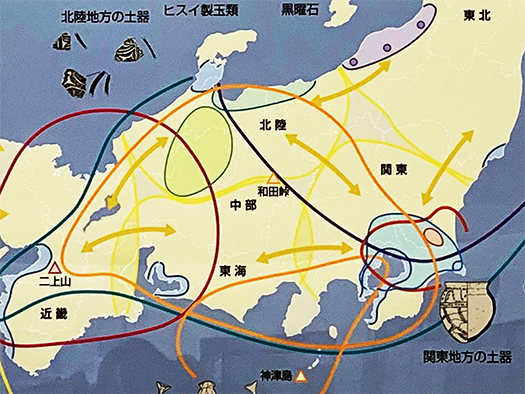
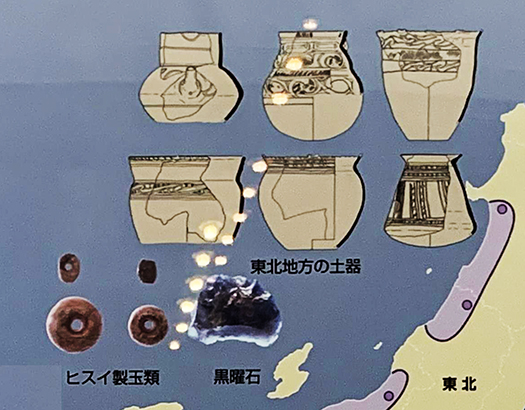
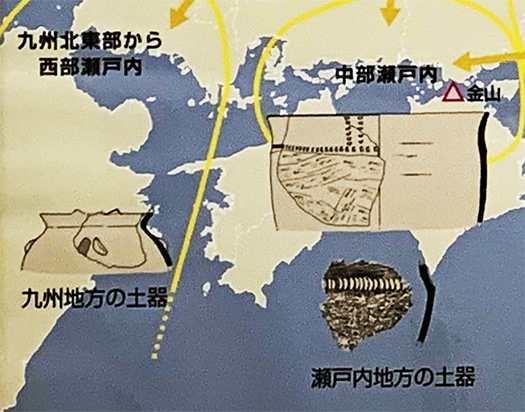
活発に国土の開発が進展し、列島各地域との交易物流も拡大した。
そして白村江海戦へ軍が大動員された。概要は以下。
661年5月第一派遣軍出発。指揮官は安曇比羅夫、狭井檳榔、朴市秦造田来津。
豊璋王を護送する先遣隊で、船舶170余隻、兵力1万余人だった。
第二派:2万7千主力軍。指揮官は上毛野君稚子、巨勢神前臣譯語、阿倍比羅夫。
第三派:1万余人。指揮官は廬原君臣(いおはらのきみおみ)。
北海道に関係する阿倍比羅夫がこちらにも出兵している。
ちなみにかれの北方・粛慎攻撃は658年4月から660年5月にかけて。
越国守であった比羅夫が蝦夷・粛慎征討を行ったと『日本書紀』に記される。
比羅夫は物証として生きているヒグマ2匹とヒグマの皮70枚を献上している。
生態系に津軽海峡のラインは厳にあるので北海道遠征は事実だったと思う。
この時代、北に西に飛鳥の王権は活発な軍事行動を見せている。
中大兄皇子、後の天智天皇の武断的側面が表出したと言えるのだろうか。
そして、白村江への派遣軍の規模は総勢で4万にせまる規模。
人口規模で考えてまことに冒険的で、まさに国家草創の極限的沸騰期。
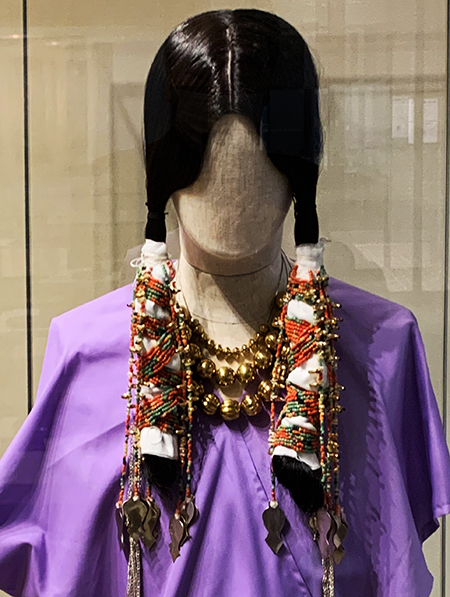
派遣軍鼓舞に宮廷官女の額田王が有名な檄文とも思える歌を詠んでいる。
「熟田津(にきたつ)に船乗りせむと月待てば潮もかなひぬ今は漕ぎ出でな!」
きっとジャラジャラのハデハデ装飾をまとっていたに違いない(笑)。
まことに激動の時代のクライマックスか。
そして敗戦、その後の国土防衛のため屋嶋城など全国で旺盛な城郭建築。
そしてさらに天智死後672年には壬申の乱という内戦の勃発。

こうした激動の時代を通じて飛鳥はその主要舞台だった。
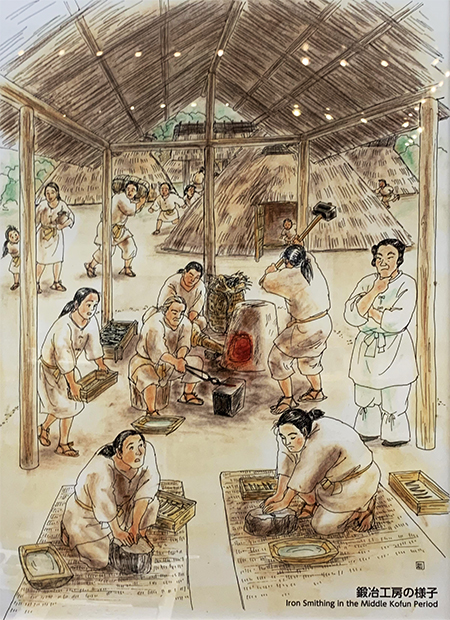
当然、国のダイナミックな変の続発は旺盛な経済活動をもたらしただろう。
鉄器の生産活動はフル回転だっただろうし、それを支える
各種の経済活動、物流の状況もかつてないほどに盛り上がったに違いない。
戦後復興期の朝鮮戦争特需のように、戦争は活発な産業勃興をもたらす。
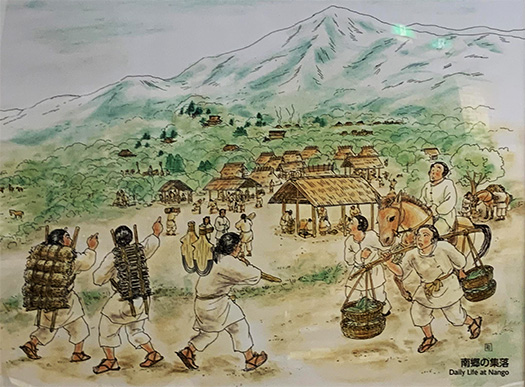
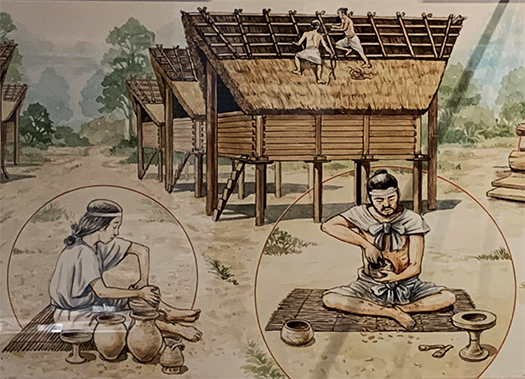
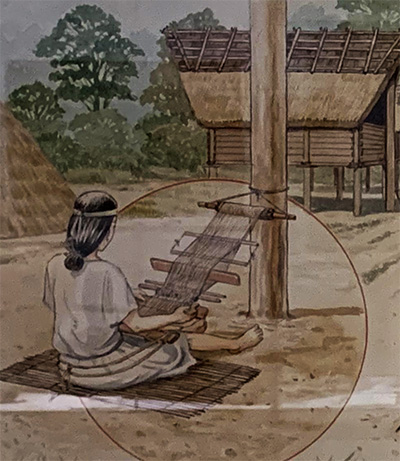
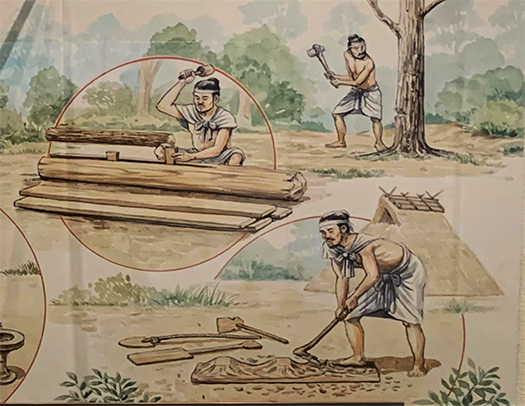
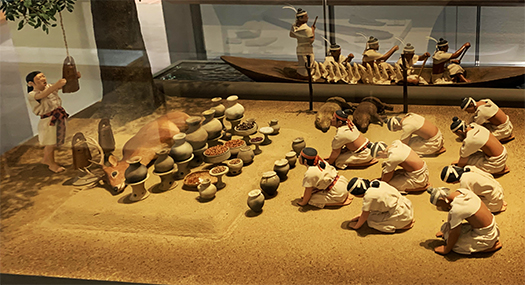
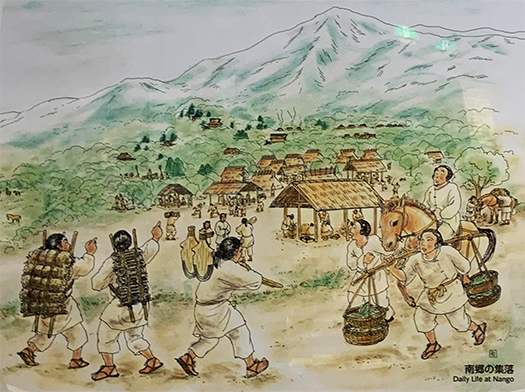
橿原考古博物館でのパネル展示のなかのイラストは
考古的物証に踏まえた想像図なのでしょうが、いかにも生き生きとした表現。
こうした経済社会の旺盛な発展が、天武持統の夫婦の時代に至って
飛鳥の地では面積的にも王権活動に手狭になっていったのでしょう。
結果、藤原京、平城京とより広い王権の宮城が必要となった。
白村江の敗戦以降、旧百済の権力機構の中核人材が日本に帰化して
より強大な王権機構が整ってもいったことも関係しているのか。
国のまほろば、日本統一王権の揺籃地、スタート地点が飛鳥。
時代の探訪ブログとしてはいったんここで休止しますが、
これからもライフワーク的に飛鳥のことは思い続けたい、
まるでぞっこん、恋い焦がれるような心境(笑)であります。

English version⬇

Nara and Asuka: A Period of Economic Upheaval
The dispatch of troops to Hokkaido, the Battle of Hakumurage, and the civil war during the Jinshin Rebellion. It was truly a boiling crucible of the times. The economy must have been booming as well. The economy must have been booming.

Yesterday, I used the expression “time capsule.
I have spent time analytically, organizing and organizing the archaeological materials and exhibits
I have spent time analytically, organizing and organizing them, and I have the impression that I am reliving the DNA of the people far beyond time.
I have the impression that I am vividly reliving the DNA of a people far beyond time.
I feel as if the way of life of the people who supported the Asuka Palace and made it a reality
The people’s way of life that supported and actualized the Asuka Palace seems to float vividly in my mind.
This was a truly tumultuous century.
The development of the country was vigorous, and trade and logistics with the various regions of the archipelago expanded.
Then, the army was mobilized to fight in the Battle of Hakuchon River. A summary is as follows.
In May 661, the first group of Japanese troops departed. The commanders were Azumi Hirao, Sayi Betelang, and Pak Shi Qinzou Tada Raizu.
It was an advance party to escort King Toyohzhang, with over 170 vessels and a force of over 10,000 men.
The second group: 27,000 men. The main force of the army. The commanders were Jomo-no-kun-chiko, Geo-sesagami-mae-sin Tsugyo, and Abenohirao.
Abenohirau, who is related to Hokkaido, also went to war here.
Incidentally, his attack on Sukushin in the northern part of Japan took place from April 658 to May 660.
The Nihon Shoki (Chronicles of Japan) records that Hirao, the governor of Koshi Province, carried out the conquest of the Emishi and Sukushin.
As evidence, Hirao offered two live brown bears and 70 brown bear skins.
Since the line of the Tsugaru Straits is strictly in the ecosystem, I think the expedition to Hokkaido was a fact.
In this period, the royal power of Asuka showed active military activities to the north and west.
Could it be said that the military aspect of Emperor Nakataiohito, later Emperor Tenchi, came to the surface?The size of the army dispatched to the Hakumura River was close to 40,000 in total.
Considering the size of the population, this was a truly adventurous and extreme period of national pioneering.
To inspire the dispatched army, the courtesan Nukata-no-ou recited what might be considered a famous proclamation.
Wait for the moon, wait for the tide, row out now!
He must have been wearing a lot of fancy jewelry (laughs).
The climax of a truly turbulent era.
After the defeat in the war, castle construction was vigorous throughout the country, including Yashima Castle, for the defense of the land.
Then, in 672, after the death of Tenchi, a civil war called the Jinshin Rebellion broke out.
Throughout these turbulent times, Asuka was a major stage.
Naturally, the country’s dynamic succession of changes would have resulted in vigorous economic activity.
The production of ironware would have been in full swing, and the various economic activities and logistics that supported it would have been unprecedentedly active.
The various economic activities and logistics conditions that supported them must have been booming like never before.
Like the Korean War special procurement during the postwar reconstruction period, war brought about a vigorous industrial upsurge.
Illustrations in the panel exhibition at the Archaeological Museum of Kashihara, Nara, Nara Prefecture
The illustrations in the panel exhibit at the Kashihara Museum of Archaeology are probably imaginary drawings based on archaeological evidence, but they are very vivid expressions.
This vigorous development of the economy and society led to the period of the couple, Ammu and Mochito, who were the first kings of Asuka in terms of area.
The Asuka area must have become too small in terms of area for royal activities.
As a result, the Fujiwara-kyo and Heijo-kyo Capital and a more spacious royal palace became necessary.
After the defeat at the Hakumura River, the core personnel of the former Baekje power structure were naturalized in Japan, and
This may have had something to do with the establishment of a more powerful royal authority.
Asuka was the cradle of the unification of Japanese royalty and the starting point for the Mahoroba of the country.
I will pause here for a moment as a blog about the exploration of the period, but I will keep Asuka as my lifework.
I would like to continue to think about Asuka as my lifework.
It is as if I am in love with Asuka and longing for her.

【飛鳥宮「跡地整理」タイムカプセル化 奈良・飛鳥探索-10】


探れば探るほどに日本の国の「まほろば」の思いを強める飛鳥宮。
遠隔地からの訪問機会でもあり橿原考古博物館では疑問の湧き出るに任せ
学芸員の方に申し訳なかったけれど質問攻めさせていただいた。
ご丁寧に対応していただき感謝そのものでした。
主に関心を持った「苑池」のことについて質問したのですが、
まだまだ定かになっていない点も多いようでした。
これからも折に触れて疑問解決と深掘りに努めていきたいと思います。
で、資料の類をいくつか購入させていただいた中に
同博物館・主任学芸員の鶴見泰寿氏の「古代国家形成の舞台」書籍があり、
そちらを読み進めていて驚きの記述一節があって目が点になった。
「飛鳥宮は694年12月の藤原宮遷都にともなって廃絶するが、
施設の解体作業時にきれいに土をかぶせて跡地整理され、その後は
耕作地として現代まで使われ続けた」とのさりげない記述。
おお、であります。
王宮建築が廃棄されるときどういう運命をたどるのかというのは
それほど情報を聞いたことがなかったけれど、
さすがに考古学の博物館として当然そういう研究もされているのですね。
今日わたしたちは明日香町にはのどかな農村風景を見ている。
しかしその被覆のほんの少し下にまるでタイムカプセルを意図したように
日本史の重要な王宮跡が秘められている。
王権としてその廃絶に当たってそういう配慮を見せていた。
易姓革命の中国では、王権の交代に当たっては血生臭い戦争が通常で
多くの宮廷建築は革命戦争で焼失するのが一般的。
また多くは権威的な「基壇建築」であり、基壇は石積み構造であることから
移転が意図されにくかったという事情も大きいのだろう。
またそもそも建築自体も石造のヨーロッパでも移転という発想に乏しい。
結果、「廃墟」という形でうち捨てられたようになってしまう。
どうもこのことは日本の王宮建築が基本的に木造の掘っ立て柱建築であり
移設建築することが容易に可能である事情が与っていると思われた。
同書中では王宮建築解体時の材の扱いで腐朽度合いに応じて
残す材と廃棄する材とが仕分けされている事実まで確認されている。
移転させて使う材はていねいに掘り起こされているけれど、
腐朽の進んだ材は切断されて根元部分の一部が残置されている事実。
その柱穴などに対して「黄褐色の土」を入れて整地し、その上で
「地面を覆って」土を被覆させている状況が確認されているというのです。

結果として、この飛鳥宮は1400年の時を超えてタイムカプセル保存された。
こうした跡地について、農耕に供されて永年保存されてきた。

なにやらわたしには、日本の王権の特性をそこに見る思い。
この飛鳥で聖徳太子は「和を以て貴しとなす」と政治方針を示したが
権威主義・強権主義ではなく、より「民主」的な姿勢を認めうる。
もちろんこれが王権の「意図的」施策だったとまでは思わないけれど、
世界でも特異な民と王権の関係性に建築スタイルが関与していると思えるのです。

English version⬇

Asuka Palace “Site Arrangement” Time Capsule Exploration of Asuka, Nara – 10
The wooden construction method, which allows for the recyclability of construction materials, may have strongly influenced the relationship and culture between the Japanese royalty and the people. …

The more we explore the Asuka Palace, the more we are reminded of the “Mahoroba” of the Japanese nation.
As I was visiting from a remote place, I let my questions flow freely at the Archaeological Museum of Kashihara.
I am sorry to say that I asked a lot of questions to the curator of the museum.
I was very grateful to the curators for their courteous response.
I mainly asked questions about the “garden pond” that I was interested in.
It seemed that there were still many points that had not yet been clarified.
I would like to continue my efforts to solve questions and dig deeper from time to time.
I was able to purchase some of the materials from the museum, and I found the following
I was surprised to read a book titled “The Stage of Ancient State Formation” written by Yasutoshi Tsurumi, chief curator of the museum.
As I was reading the book, there was a surprising passage in the book that made my eyes water.
As I was reading the book, I was struck by a surprising passage: “Asuka Palace was closed down in December 694, when the capital was moved to Fujiwara no Miya.
The Asuka Palace was abandoned in December 694 when the capital was moved to Fujiwara no Miya, but the site was cleared and covered with soil when the facilities were dismantled.
The site was then cleared and the land continued to be used as cultivated land until the present day.
Oh, yes.
I had never heard much information about the fate of royal palace buildings when they are discarded.
I had never heard that much information about the fate of palace buildings when they were discarded.
But as a museum of archaeology, it is natural that they are doing such research.
Today, we see a peaceful rural landscape in Asuka Town.
However, just a little below the surface, as if it were intended to be a time capsule, there are the ruins of an important royal palace in Japanese history.
The ruins of an important royal palace in Japanese history is hidden just a little below that covering, as if it were intended to be a time capsule.
The royal court showed such consideration in its abolition.
In China, where the revolutionary revolution took place, bloody wars were the norm in changing kingdoms.
Many court buildings were generally destroyed by fire in revolutionary wars.
Many of them were authoritative “keystone buildings,” and since the keystones were masonry structures, they were not intended to be moved.
It is likely that the relocation of these buildings was not intended.
Also, many of them are authoritative “platform buildings,” and since the platforms are masonry structures, it was probably difficult for them to be intended for relocation.
The fact that the platforms are masonry structures may also be a major reason why relocation was not intended.
In Europe, where architecture is also built of stone, the idea of relocation is not very common.
As a result, the buildings are abandoned in the form of “ruins.
This is apparently due to the fact that Japanese royal palaces are basically wooden buildings with dugout pillars, which makes it easy to relocate them.
This is apparently due to the fact that Japanese royal palace buildings are basically wooden, dugout-pillar structures that can be easily relocated.
In the same book, it is stated that the handling of materials at the time of demolition of the royal palace building depends on the degree of decay.
The book even confirms the fact that the materials used in the demolition of the palace were sorted into two categories according to the degree of decay.
The timber that was to be moved was carefully excavated, while the timber that was to be discarded was cut down.
The fact is that the timbers that are to be used for relocation are carefully dug up, while those with advanced decay are cut down and a part of the root part is left behind.
The post holes are then covered with “yellowish-brown soil” and the ground is cleared.
The soil was then “covered” with a layer of soil.
As a result, this Asuka Palace was preserved as a time capsule over a period of 1,500 years.
This site has been used for agriculture and preserved for many years.

I feel as if I am seeing the characteristics of Japanese kingship there.
In Asuka, Prince Shotoku set forth his political policy of “Harmony is the key to nobility.
This is not authoritarianism or authoritarianism, but a more “democratic” attitude.
Of course, I do not think this was an “intentional” measure of the royal authority.
but it seems to me that the architectural style involved a relationship between the people and the royal power that is unique in the world.

【飛鳥京「噴水」のホントの意味 奈良・飛鳥探索-9】


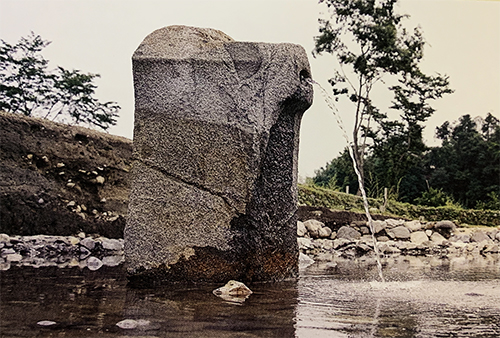
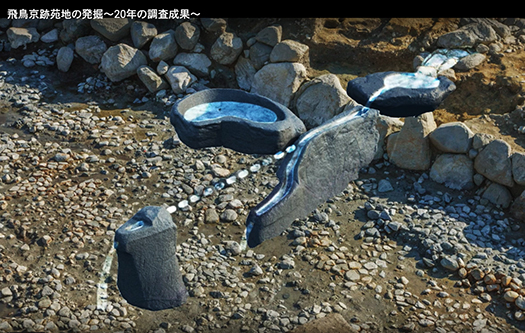
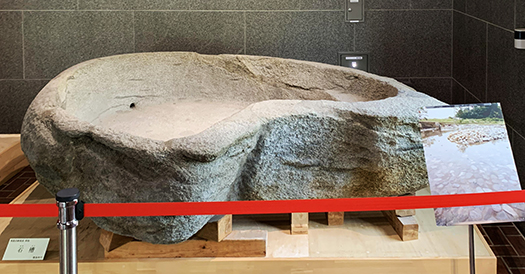
「噴水」という言葉の定義はわからない。この石器構造物のことを
「流水装置」というようにも言えるのかも知れない。
日本の「噴水」始原については金沢兼六園まで時代が下るという説もある。
しかし最近2019年段階で橿原考古研究所が結論づけた飛鳥京苑池での
写真の導水装置システムは日本の噴水事始めと言ってもいいのではないか。
橿原考古研究所(正式名は奈良県立橿原考古学研究所)の以下のような紹介が
この古代施設についての意義を語っていると思う。
〜飛鳥の宮殿に隣接する「苑池」は規模も大きく、びっしりと石が
敷き詰められていてその迫力に驚かされます。
中国や朝鮮半島にもまったく同じタイプの苑池は見つかっておらず、
飛鳥時代の日本のあり方を物語る「苑池」の全容を見ることができます。〜
逆に言うとなぜその後、日本国内でこうした苑池・噴水装置が
建築技術として旺盛にならなかったのか、それも要探究だと思われる。
現状ではきわめて特異な遺構として古代史上に出現したというところ。

この苑池の南側の池は水深は30cm程度ということで、
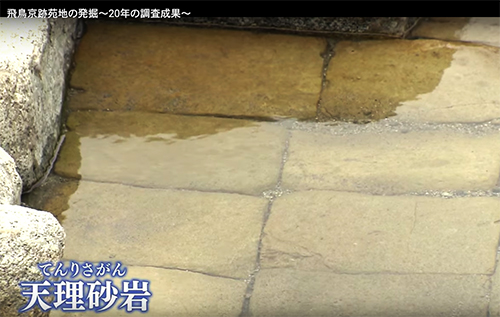
底面にはびっしりと石が敷き詰められてプール状外観を形成している。
そこにこのような導水装置があって、単純に涼を楽しむとしたのか、
わたしの推測のように「水を扱う」技術力を象徴的に見せたのか、
その目的について現状では証言・記録は存在しない。
国際関係に否応なく目覚めさせられた段階の日本国、
白村江敗戦以降の国際情勢下での「外交」の場面を考えれば
日本の技術国力を示すことは一種の「侵略抑止力」だったのだろう。
やはり中国・朝鮮に類例がないというのがミソではないかと。
かの国などからの外交使節が帰国後の本国での報告時に
「日本にはこういう技術がありましたが・・・」と伝わったことだろう。

石をさまざまに加工利用して水を自由自在に扱う建築土木技術に対して
それが全国で城塞建築に応用されると考えれば、
この国を大軍船団で攻略したとしても侵略の勝利を見通せなかっただろう。
やや無謀だったと思える百済救援のための白村江への出兵後の
安全保障戦略としてこの苑池は外交の「武器」になった可能性。
きのうは石材の切石加工技術を見たけれど、この苑池でも
北池底面には写真のように切石でより精緻な石材加工も施されている。
わたしとしては日本の平和共存外交戦略の一環だと強く思えるのです。
そしてそうした観点からすれば唐が日本侵略を諦め、友好関係に転じて
「日本国号・天皇号」を結果的に承認していった東アジア世界の情勢と
重ね合わせられるように思えるのです。
その平和努力が実を結んでその後、苑池造作技術は重要性が低下し、
戦国期以降の兼六園まで顧みられなかった歴史と符合する。

火山列島国土で水田耕作を基本にする国土条件では
必然的に狭い利用可能耕地面積を高める土木建築技術の発展が自明。
やはりこの苑池遺構からはこのような推論が導き出されると思う。
さて現代世界でプーチンのような狂乱独裁者に対してどう国防すべきか、
日本社会の「強さ」が試される事態が再来してもいるのでしょう。

English version⬇

The True Meaning of the Asukakyo “Fountain” Exploring Asuka, Nara – 9
The Asuka-kyo Palace was a place for the Japanese to show off their national defense capabilities by demonstrating to China and Korea that they possessed “dangerous civil engineering and architectural technology. Japanese power that can be converted to military force. The Japanese power that can be converted to military force.

I don’t know the definition of the word “fountain.” I am not sure if this stoneware structure can be called a “fountain.
The origin of fountains in Japan can be traced back to Kanazawa Kenrokuen Garden.
There is a theory that the origin of “fountains” in Japan dates back to the Kenrokuen Garden in Kanazawa.
However, as of 2019, the Archaeological Institute of Kashihara recently concluded that the Asuka Kyoen Pond
The water conducting system in the photo may be said to be the beginning of fountains in Japan.The following introduction by the Archaeological Institute of Kashihara, Nara Prefecture (formally known as the Archaeological Institute of Kashihara, Nara Prefecture)
I think it speaks volumes about the significance of this ancient facility.
〜The “Garden Pond” adjacent to the Asuka Palace is large in scale and is paved with stones.
The “Garden Pond” adjacent to the Asuka Palace is large in scale and filled with stones, and its power is astonishing.
No other garden ponds of exactly the same type have been found in China or the Korean peninsula.
The entirety of the garden pond, which tells the story of Japan in the Asuka period, can be seen here. ~.Conversely, why were garden ponds and fountains not actively used as a building technology in Japan after that?
It is also important to investigate why these garden ponds and fountains did not flourish as a building technology in Japan after that.
At present, they appear in ancient history as extremely unique remains.
The pond on the south side of this garden pond is about 30 cm deep.
The bottom of the pond is covered with stones to form a pool-like appearance.
Is it simply to enjoy the coolness of the water with a water conducting device like this?
Or, as I guessed, was it to symbolically show the technical skill of “handling water”?
There is currently no testimony or record of its purpose.Japan was at the stage where it was forced to wake up to international relations.
Considering the “diplomatic” scene under the international situation after the defeat at the Hakuchon River
Japan’s demonstration of its technological national strength was probably a kind of “deterrent force against invasion.
The fact that there is no precedent in China or Korea is the key.
When diplomatic envoys from other countries reported back to their home countries after returning to Japan, they would say, “Japan had this kind of technology….
When diplomatic envoys from those countries reported back to their home countries, they would have been told that “Japan had this kind of technology.
For architectural and civil engineering techniques that process and utilize stone in a variety of ways and handle water at will.
If one thinks of it being applied to fortress construction throughout the country.
Even if they had invaded this country with a large fleet of warships, they would not have been able to foresee victory in the invasion.
After the somewhat reckless expedition to the Baekchon River to rescue Baekje
This Enchonji could have been a diplomatic “weapon” as a security strategy.
Yesterday, we saw the stone quarrying technique.
The bottom of the north pond is also made of hewn stone, as shown in the photo.
I strongly believe that this is part of Japan’s diplomatic strategy of peaceful coexistence.And from such a point of view, it is very likely that the Tang Dynasty gave up its aggression against Japan and turned to friendly relations with Japan.
and the situation in East Asia, where the Tang Dynasty gave up invading Japan, turned to friendly relations, and eventually approved the “Japanese name and Emperor”.
The Tang Dynasty gave up its aggression against Japan and turned to friendly relations with Japan, and eventually approved the “Japanese name” and “Emperor of Japan.
After the peace efforts bore fruit, the importance of the garden pond construction technique declined, and the garden was not restored until the Kenrokuen Garden after the Sengoku Period.
This is consistent with the history of Kenrokuen Garden, which was neglected from the Warring States period onward.

In a volcanic archipelago where rice paddy cultivation is the basic land condition
It is obvious that the development of civil engineering and architectural technology to increase the usable arable land area is inevitable.
I believe that this is the inference that can be drawn from the remains of the garden pond.
How should we defend ourselves against a mad dictator like Vladimir Putin in the modern world?
The “strength” of Japanese society may be put to the test once again.

【古墳時代の「ブロック造」石槨墳墓 奈良・飛鳥探索-8】


さて今回の飛鳥宮探訪では橿原考古博物館の展示に非常に教えられた。
やはり考古の視点というか、物証に裏付けられた探究は
明示的でロジカルな世界での理解を教えてくれて非常に楽しい。
これからも時間を見つけて再訪できたらと念願しています。
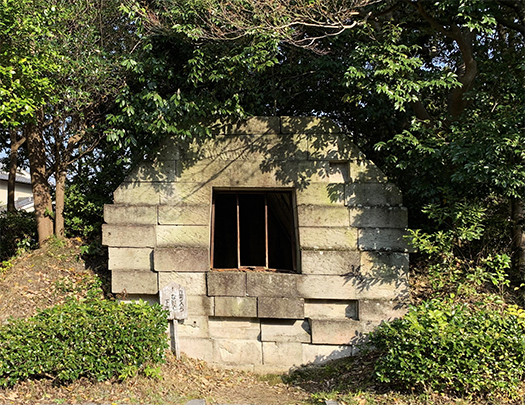
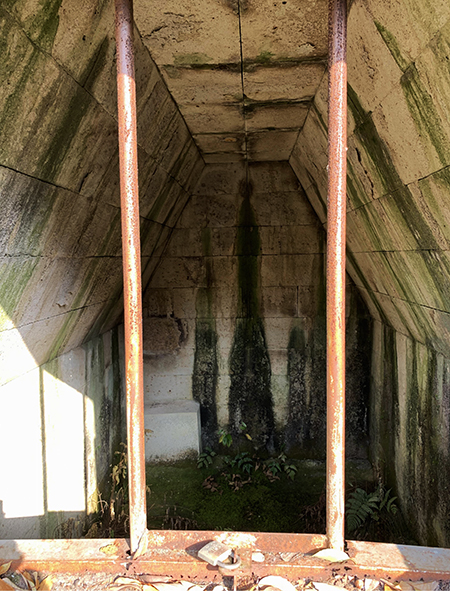
その帰り際、玄関と向かい合うように植栽で囲まれた一角があり
よく説明を読んだら、なんと古墳時代のブロック建築だと知れた(!)。
わが家は北海道の正調・外断熱ブロックなので、はるかなご先祖様とのご対面(笑)。
ちなみに「石槨〜せっかく」という固有名称は
〜石で築いて作った棺を納める室。自然石を積みあげたり切石を組み合わせた。
屍体をおさめる古墳内部の施設。石室(せきしつ)。〜ということ。
この石槨は明日香村近郊の奈良県高取町佐田にある
束明神古墳(つかみょうじんこふん)にあるものを実大復元させた。
切石積みの石槨は飛鳥時代の建築構造のなかでも特異な存在ということ。
その構築技術をあきらかにするために同質の素材の凝灰岩で制作した。
ただし天井と入口部分は推定復元による、とされていた。
復元に当たっては昭和59年当時の石工技術者の尽力で実現したと記述されている。

以下は、Wikiの説明要旨部分。
〜丘陵の尾根の斜面を大きく削って整地し、その中央に直径20m・高さ4mの
円墳状の墳丘を版築技法で築く。凝灰岩を段状に積み上げて南側に開口する
横口式石槨で内部は長さ3.12m・幅2.06m・高さ2.5m前後。
(盗掘で破損しており正確な計測は困難)となっている。床面には二重、
壁面には5段に石材が積み重ねられており床には漆喰が塗られている。
棺・副葬品がほとんどないが若干の被葬者の歯牙と木棺の破片とみられる
漆膜片などがみられ他に釘が50本以上みられる。
また幕末に同古墳が草壁皇子の陵墓に比定されるという話が伝わり、
陵墓指定のために土地を奪われることを恐れた地元の人々が
意図的に破壊したとする伝承がある。実際に被葬者の歯牙から推定される
死亡年齢や古墳の様式より、草壁皇子の陵墓をここから260mほど北にある比定地の
眞弓丘陵(岡宮天皇陵)ではなくこことする説もある。〜

いろいろな事情が垣間見えて興味深い。
盗掘被害はある程度やむを得ないけれど、史跡指定されると
その土地所有者はさまざまに制約を受けて土地利用が不可能になるので
実利を優先させて破壊に至るというのも理解できる部分がある。
その時代に合わせて生きている人間の実利と史的価値の乖離。
しかしそれにしても、いわゆる「組石造」という建築であり
現代ではブロックの場合、中空部を造作してそこに鉄筋補強するけれど、
そういう技術の無い時代に、しかも地震多発の日本の国土特性の中で
どのように生き延びてきたのか、この「建築」に頭を垂れておりました。

English version⬇

Kofun period “block tomb” stone burial mound, Asuka, Nara.
Asuka still retains masonry building techniques such as stone stages that seem to have originated in the Stone Age. As a modern block housing people, we respect it much more. Nara, Asuka

During my visit to Asuka Palace, I was very much impressed by the exhibits at the Archaeological Museum of Kashihara.
I enjoyed the archaeological point of view, or rather, the exploration backed by physical evidence.
I am very much enjoying the clear and logical understanding of the world of archaeology.
I hope to find time to revisit the museum in the future.
On my way back to the house, I found a corner surrounded by plants facing the entrance.
After reading the description carefully, I learned that it was a block building from the Kofun period (!). I was so happy to find out that it was a block building from the Kofun period (!).
Our house is built in Hokkaido with regular block construction and external insulation, so we met our ancestors from far away (laugh).
By the way, the proper name of “stone burial chamber” is
〜A chamber for a coffin made of stone. It was made by piling up natural stones or combining hewn stones.
A facility inside a burial mound to hold a corpse. A stone chamber. 〜A stone burial chamber.
This stone burial chamber is located in Sada, Takatori Town, Nara Prefecture, near Asuka Village.
This stone burial chamber is a full-scale reconstruction of the one in the Sokuakijin burial mound in Sada, Takatori-machi, Nara Prefecture, near Asuka Village.
The hewn stone burial chamber is unique among the architectural structures of the Asuka period.
In order to clarify the construction technique, the burial chamber was made of tuff, which is a homogeneous material.
However, the ceiling and the entrance part are based on a presumptive restoration.
The restoration was realized in 1984, thanks to the efforts of the masonry engineers of the time, according to the report.
〜The slope of the ridge of the hill was cut and leveled, and a 20-meter-diameter, 4-meter-high circular burial mound was built in the center of the slope using a printing technique.
A circular mound was built in the center of the hillside using the printing technique. The mound is made of tuff piled up in steps and opened on the south side.
The interior is 3.12m long, 2.06m wide and 2.5m high.
(The interior is 3.12m long, 2.06m wide, and about 2.5m high (exact measurement is difficult due to the damage caused by theft). The floor is covered with double
The walls are made of five layers of stone, and the floor is covered with plaster.
There are almost no coffins or burial accessories, but there are some teeth of the deceased and a piece of lacqueous film, which appears to be a fragment of a wooden coffin.
There are few coffins and burial accessories, but there are some teeth of the deceased and a piece of lacquer film, which is thought to be a fragment of a wooden coffin.
At the end of the Edo period, there was a story that the burial mound was compared to the mausoleum of Prince Kusakabe, and the land was taken away to designate it as a mausoleum.
It is believed that the tomb was intentionally destroyed by local people who feared that their land would be taken away to designate the tomb as a mausoleum.
The tomb is believed to have been intentionally destroyed by local people who feared that their land would be taken away to designate the tomb as a mausoleum. The actual age of death and the style of the burial mound are more important than the age of death and the style of the burial mound.
Based on the age of death and the style of the burial mound, the mausoleum of Emperor Kusakabe was designated as a specific site about 260 m north of here.
The age of death and the style of the burial mound suggest that Emperor Kusakabe’s mausoleum was not located at Mayumi-oka-ryo (Okamiya Emperor’s Mausoleum), which is 260m north of here. ~~

It is interesting to get a glimpse of the various circumstances.
Although damage from theft is unavoidable to some extent, if the site is designated as a historic site, the landowner will be subject to various restrictions that make it impossible to use the land.
However, if the land is designated as a historic site, the landowner is subject to various restrictions that make it impossible to use the land.
It is also understandable that the destruction of a site is done in favor of pragmatism.
The divergence between the practical interests of the people living in that era and the historical value of the site.
But even so, the so-called “kumi-masonry” architecture, which is
In the case of modern block construction, a hollow space is created and reinforced with reinforcing steel bars.
In an age without such technology, and in a country like Japan, which is prone to frequent earthquakes, how did these structures survive?
I was wondering how they had survived in such a time and in the earthquake-prone land of Japan.

【飛鳥宮時代の国際関係と暮らし 奈良・飛鳥探索-7】


飛鳥板蓋宮、浄御原宮の時代というのは文字記録が少ない。
聖徳太子の摂政としての治政時代ころになって仏教導入も積極化。
大阪四天王寺・法隆寺の建立など東アジア世界での政治・文化交流が活性化。
国際関係というものが徐々に喫緊の課題になっていった。
それは中国大陸の「易姓革命」政治動乱によって歴代有数の強権国家・唐が成立。
周辺に大きな脅威となっていったことが刺激になったものと思える。
それまでの「大王権力」によるゆるやかな「日本的」統治権力構造が
強い外圧に直面して、よりハードな国家権力形態を志向させたと思う。
唐が導入した国家権力機構の「律令体制」を導入するとともに
その権力機能を「天皇号」としてより中央集権制を高めたのだと思える。
壬申の乱によって権力を掌握した天武天皇はそれまでの「倭国」を
日本という国号に改め、中国皇帝権力ひいては東アジア世界に承認させている。
この外交は、先人たちの大きな知恵の産物だったように思います。
よく中華皇帝が「日のいずる国」という国家名を認めたと思う。
聖徳太子段階でこの自己表現で対手「日沈む国」の帝に外交国書を出している。
中国皇帝が怒ったという記述はあるけれど結局は承認している。
「むむむ、日沈むとは無礼千万ではないか、われは中華皇帝なるぞ」
「いやそれは単に事実としての地理位置関係を示したものに過ぎませんよ」
尊大極まる中国皇帝体制相手に複雑精緻な外交努力があったに違いない。
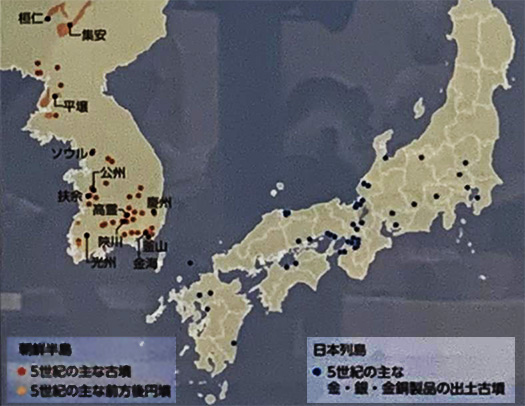
そして図表は橿原考古博物館展示パネルからですが、
よく言われるように朝鮮半島地域には多数の「古墳」遺跡が存在する。
日本国内では農業と武器生産の最重要資源である鉄鉱石の産出が
ある時期までなかったことで、朝鮮半島地域での「権益」が広範に存在した。
中国との外交で繰り返し日本がその権益を主張し承認させようと努力したのは
そういった事情がもっとも重大だったのでしょう。
したがって朝鮮半島の諸国家・新羅と百済との対立では
百済が日本側の権益を象徴する存在だったということなのでしょう。
古墳の分布にはそのような関係性が表現されていると思える。
このあたりは現代での国際的歴史学論議でも日韓対立のネタになるという。
近いと言うことは外交として難しい問題にもなる事例といえる。
聞くところでは韓国内では古墳が古い時代の日本との関係を象徴するとして
破却するような動きもあるのだと側聞する。悩ましい問題。


一方で民人の暮らしようも、向上する生産力を反映して
地域間交易の拡大が旺盛に盛り上がっていって
その事情から集住する商業的実質の発展、「都市建設」があったのでしょう。
飛鳥宮という「首都機能」での交易の側面の進化発展があったことは疑いない。
たぶんこうした事情からやがて飛鳥の「狭さ」が問題になっていって
その根本的解決として計画的都市建設、平城京段階に移行した。
政治軍事的事情よりも交易の拡大、経済規模の拡大が
こうした首都移転を必然化させたのだろうと思います。

English version⬇

International Relations and Life in the Asuka Palace Period: Exploring Asuka, Nara – 7
International relations” diplomacy began in parallel with social development and economic expansion. The beginning of troublesome international relations among neighboring East Asian countries. The beginning of troublesome international relations among East Asian neighbors.
There are few written records of the Asuka Itabatamiya and Jomihara Palace periods.
Around the time of Prince Shotoku’s regency, Buddhism was actively introduced.
Political and cultural exchanges in East Asia were revitalized with the construction of Shitennoji Temple and Horyuji Temple in Osaka.
International relations gradually became an urgent issue.
The political upheaval of the “Yi Surname Revolution” on the Chinese mainland led to the establishment of the Tang Dynasty, one of the most powerful states of all time, which posed a major threat to the surrounding region.
This was probably stimulated by the fact that the Tang Dynasty, one of the most powerful states of all time, had become a major threat to its neighbors.
The loose “Japanese-style” governing power structure based on the “great king’s power” that had been in place up to that time
In the face of strong external pressure, I believe that the Tang Dynasty was forced to adopt a more rigid form of state power.
The “Ritsuryo system” of state power structure introduced by the Tang Dynasty was introduced.
The “Ritsuryo system” of state power structure introduced by the Tang Dynasty was introduced, and its power function was made more centralized as the “Emperor-Governor”.
Emperor Temmu, who seized power through the Jinshin Rebellion, changed the name of his country, “Japan,” from “Wa-koku” to “Japa-no-kuni.
Japan” and had it recognized by the power of the Chinese emperor and by extension, the East Asian world.
This diplomacy seems to have been a product of the great wisdom of his predecessors.
I often think that the Chinese emperor recognized the name of the nation as “Land of the Rising Sun.
At the Prince Shotoku stage, this self-expression was used to issue a diplomatic state letter to the emperor of his counterpart “Land of the Setting Sun”.
Although there is a description of the Chinese emperor’s anger, in the end he approved of it.
The Emperor of China is the one who is the Emperor of China.
No, that is merely a factual geographical location.
There must have been a complex and elaborate diplomatic effort to deal with the extremely pompous Chinese imperial regime.
And here is a chart from an exhibit panel at the Archaeological Museum of Kashihara
As is often said, there are numerous “kofun” sites in the Korean peninsula area.
In Japan, the production of iron ore, the most important resource for agriculture and weapons production
Japan’s “interests” in the Korean Peninsula were extensive due to the fact that it did not produce iron ore, the most important resource for agriculture and weapons production, until a certain period of time.
Japan’s repeated efforts to assert and gain recognition of its interests in the region in its diplomatic relations with China
Such circumstances were probably the most critical.
Thus, in the conflict between the Korean states of Silla and Baekje
Baekje probably represented the interests of Japan.
The distribution of kofun tumuli seems to express such a relationship.
This area is said to be a source of conflict between Japan and Korea even in international historiographical discussions in modern times.
This is an example of how proximity can be a difficult diplomatic issue.
Some people in South Korea have begun to dismiss kofun tombs as symbolic of Japan’s relationship with Korea in the olden days.
I have heard that there is a movement in Korea to destroy the tombs because they symbolize the relationship with Japan in the old days. This is a troubling issue.
Meanwhile, the way of life of the people also reflected their increasing productivity
The expansion of inter-regional trade was vigorously growing.
This situation may have led to the development of commercial substance and “city building” in which people gathered and settled.
There is no doubt that there was an evolution and development of the aspect of trade in the “capital function” of Asuka Palace.
Probably because of these circumstances, Asuka’s “smallness” eventually became a problem.
As a fundamental solution to this problem, the planned construction of the city shifted to the Heijo-kyo stage.
The expansion of trade and economic scale, rather than political and military circumstances, made the relocation of the capital
I think that the expansion of trade and economic scale, rather than political and military circumstances, made the relocation of the capital inevitable.

【天武帝・飛鳥浄御原宮「エビノコ郭」 奈良・飛鳥探索-6】


天武天皇という存在は日本史の中で際だっている。
生年ははっきりせず没年は686年10月1日。
かれの生きた時代は乙巳の変(大化の改新)白村江海戦とその敗北、
兄の中大兄皇子・後の天智天皇による挙国防衛体制の構築。
そして天智帝の息子・大友皇子との皇位継承を巡っての戦いが壬申の乱であり、
天武は勝利して即位した、という流れになっている。
日本という国号、天皇という尊号はかれの時代に定まったとされる。
様々な説があるけれど、伊勢神宮が皇室にとっての特別な地位に就いたのは
かれ天武帝の壬申の乱の時点の行動に由来するのではと思われる。
今日に至る実質的な国家輪廓の創造に大きく関与したのだとされる。

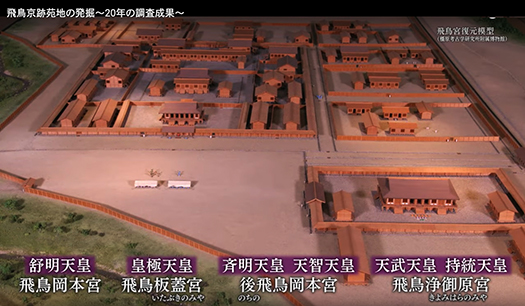
そしてその天武帝は「飛鳥浄御原宮」に即位したという。
この宮を巡ってその場所はどこか、それ以前の飛鳥板蓋宮との関係など
古代史の大きな論争点になっている。
今回橿原考古博物館展示を見学する機会に「考古学的」な知見として
飛鳥板蓋宮を更新して「飛鳥浄御原宮」は建設されたと見なす展示。
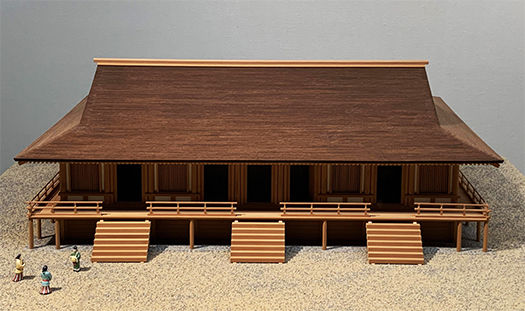
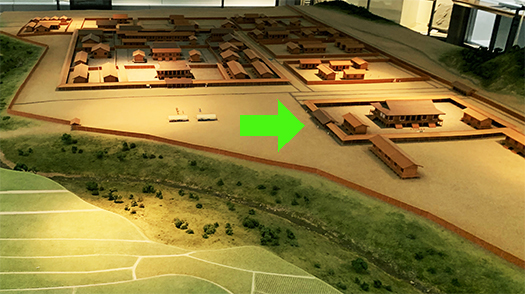
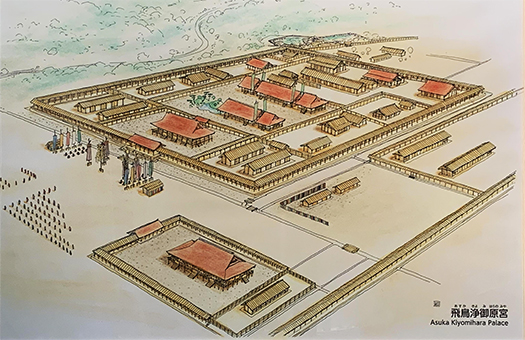
そしてその「大極殿」擬定建築として「エビノコ郭正殿模型」が示されていた。
エビノコ郭の名前の由来にもなっている地名(エビノ子)は
現在の明日香村役場付近の小字(あざ)名とされる。
古代史上のテーマに対して考古学による実証検討を重ねた結果。
29.2×15.3メートルで四面庇付きの大型の掘立柱建物跡がこの地域で発掘された。
「西側に5間×2間の門がある長方形の区画。内部に9間×5間のエビノコ大殿。
区画南側には朝堂が存在と推定。最近の研究で天武天皇の飛鳥浄御原宮の段階に
新たにつくられた説が有力。おそらくのちの大極殿的性格を持っていた。」
という解説が付されている。
これをそのまま信じれば日本の確認できる最初の「大極殿」と考えられる。
主人たる天武天皇が「天皇号」「日本国号」を定めた経緯からするとそうなる。
建築として「大極殿」というのはある象徴性を持っている。
言うまでもなく社会制度権力の中心を意味し「威信建築」の最たるもの。
少なくとも東アジア世界では究極的建築概念になるだろう。


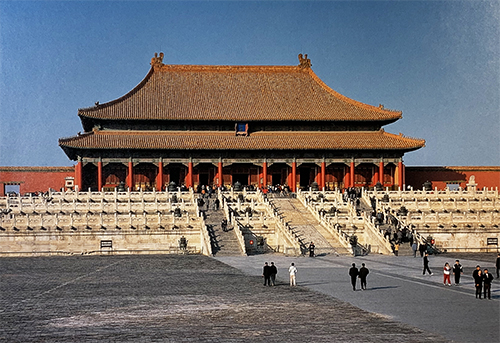
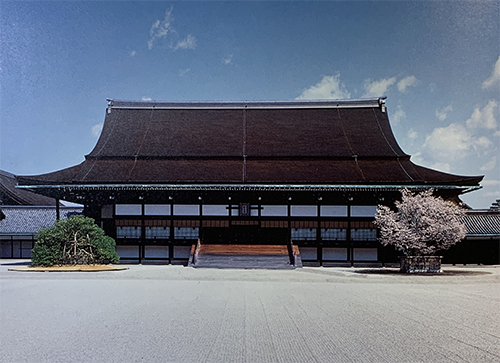
この写真は国立歴史民俗博物館2009年「日本建築は特異なのか」展図録に示された
上・北京の紫禁城太和殿。清朝の中核権力建築。
下・京都御所紫宸殿。言うまでもなく朝廷権威の中核建築。
時代、時間的には大きな隔たりがあるけれど日本国家の初源期を想起させる。

中国の紫禁城が高々とした基壇の上にあるのに対して
日本の王宮建築では威圧感はより少ない。
紫宸殿建築では右近の橘・左近の桜という印象を和らげる外観装置もある。
現代でも中国共産党指導部はこの周辺地域に蟠踞している。
ロシア・プーチンにも通じる秦の始皇帝由来の大陸的侵略暴力剥き出し、
専制独裁の色彩が強烈な中国皇帝型権力と、和を重んじる日本皇室の違いが
建築でもみごとに表現されているように思える次第。
そういう建築にしてなお、現在「エビノコ」という一見ユーモラスな地名が
冠詞になっている始原建築というのもまた重ねて楽しい。

English version⬇

Emperor Temmu, Asuka Jomihara Palace “Ebinoko Kaku” Nara, Asuka Exploration-6]
This is the central building of national power where Emperor Temmu, the founder of the Japanese name “Japan” and “Emperor”, was enthroned. The humor of the name is also very Japanese. …

Emperor Temmu stands out in Japanese history.
His birth year is uncertain, and his death date is October 1, 686.
His life was marked by the Taika Reformation, the Battle of Hakumurage and its defeat, and the establishment of a national defense system by his elder brother, Emperor Nakataiohito, and the future Emperor Tenchi.
His elder brother, Prince Nakataio, later Emperor Tenchi, established a system of national defense.
The battle over the succession to the throne between Emperor Tenchi’s son, Prince Otomo, and the emperor was the Jinshin Rebellion, which Tenmu won and ascended to the throne.
Emperor Tenmu was victorious and ascended to the throne.
The country name “Japan” and the title “Emperor” are said to have been established during his reign.
There are various theories, but it is said that Ise Jingu took on a special status for the imperial family during the reign of Emperor Temmu.
The reason for the special status of Ise Jingu for the imperial family may be attributed to the actions of the Emperor Temmu at the time of the Jinshin Rebellion.
He is said to have played a major role in the creation of the substantial national structure that has existed to this day.
The Emperor Tenmu then ascended to the throne at the Asuka Jomihara Palace.
The location of this palace and its relationship with the earlier Asuka Itabatamiya Palace is a major point of controversy in ancient history.
The location of this palace and its relationship to the Asuka Itabatamiya Palace, which preceded it, have become major points of controversy in ancient history.
On the occasion of visiting the Kashihara Museum of Archaeology exhibition, I was able to learn about the “archaeological” findings of the Asuka Itabatamiya Palace.
The Asuka Jomihara Palace was constructed by renewing the Asuka Itabatamiya Palace.
The model of “Ebinoko-kaku Shoden” was also shown as a quasi-structural model of the “Daigoku-den”.
The name of the place (Ebinoko) from which the name of Ebinoko-kaku is derived is
The name “Ebinoko,” which is also the origin of the name of Ebinoko-kaku, is said to be the name of a small village near the present Asuka Village Office.
The result of a series of archaeological empirical studies on the theme of ancient history.
A large hottate-bashira (dugout pillar) building measuring 29.2 x 15.3 meters with eaves on four sides was excavated in this area.
A rectangular plot with a 5 ken x 2 ken gate on the west side. Inside is a 9 ken x 5 ken Ebinoko Da-den (large hall).
On the south side of the plot, a chodo is presumed to have existed. Recent research has led to the theory that it was newly built at the stage of Emperor Temmu’s Asuka Jomihara Palace.
The most likely theory is that it was newly built during the Asuka Jomihara Palace of Emperor Temmu. It probably had the character of the later Daigoku-den.
If we believe this theory, we can confirm the existence of the first
If this is believed as it is, it is considered to be the first “Daigoku-den” that can be confirmed in Japan.
This is so, given the circumstances in which Emperor Temmu, the master of the building, established the Emperor’s name and the name of Japan.
As an architectural structure, Daigoku-den has a certain symbolism.
Needless to say, it signifies the center of the social system and power, and is the ultimate example of “prestige architecture.
At least in East Asia, it is the ultimate architectural concept.

This photo was shown in the National Museum of Japanese History 2009 “Is Japanese Architecture Peculiar?
Above: Taihe Dian, Forbidden City, Beijing. This was the core power structure of the Qing Dynasty.
Below: Shikikiden Hall of the Imperial Palace in Kyoto. Needless to say, this is the core architecture of imperial court authority.
Although there is a big gap in time, it reminds us of the early days of the Japanese nation.
Whereas the Forbidden City in China is on a lofty platform
The Forbidden City in China is built on a lofty platform, whereas the Japanese royal palace architecture is less intimidating.
The capital building also has an exterior device that softens the impression of tachibana on the right side and cherry blossoms on the left side.
Even today, the leadership of the Chinese Communist Party is coiled around this area.
The Chinese Communist Party (CCP) leadership is still coiled in the surrounding areas.
The difference between the Chinese imperial power, with its strong tinge of tyranny and dictatorship, and the Japanese imperial family, with its emphasis on harmony, is expressed beautifully in the architecture.
The difference between the Chinese imperial power, which is strongly tinged with tyranny and dictatorship, and the Japanese imperial family, which values harmony, is expressed beautifully in the architecture.
Even with such architecture, the seemingly humorous name of the place, “Ebinoko
The fact that the name “Ebinoko,” a seemingly humorous place name, is now used as a synonym for the original architecture is also enjoyable.

【飛鳥京の水道「樋菅・井戸」 奈良・飛鳥探索-5】


人間生存の基本は水。
この飛鳥の都でも多くの人が参集・住居するのにまずは水道施設がキモ。
山岳地形の日本での人類生存、文化発展を考えたら
目に見える河川と同時に豊富な地下伏流水利用も活発だっただろう。
山岳には豊かな保水機能があり、それが多様な伏流水を形成する。
この列島に石器時代に暮らし始めた人類にとって
湧き水の発見とか、水の脈絡を探究し利用する知識は
想像をはるかに超える知的蓄積だったに違いないと思っています。
飛鳥の都地域でも地下伏流水と河川水の両方を利用して
「苑池」を土木工事する技術はすばらしい痕跡を見せている。
近現代では確立された水道知識が常識化し人類本来の水の知恵への気付きが
減衰している現代人は、きっと想像力も鈍磨しているのでしょう。
とくにこの飛鳥京の段階まで来ると「都市建設」という
権力が必要とする人工的な集住環境構築が求められるようになる。
水田耕作という弥生以来の生産様式は必然的に水資源管理が不可欠。
この生産様式の出自は東アジア、揚子江流域地域に淵源を求める説が
優勢とされていますが、それがこの日本列島に伝播してきたとき、
独特の大発展を見せたに違いないと想像しております。
というのは、この火山列島では山岳の保水力がハンパなく
土木工事で水脈をコントロールする技術が急発展したと思えるのです。
日本の土木技術はその後の国内戦争での発展ぶりを見ればあきらか。
武田信玄の「穴掘り衆」秀吉段階の土木工事による戦争などが象徴的。

この飛鳥京の考古発掘を展示している橿原考古博物館でも
まさに正鵠を穿つようにこうした「水」管理の状況展示が示されている。
山岳地形の国土でかつ降雨の多い気候条件下では優良な木質資源が得られる。
更新生命力も非常に高いことから「木を扱う」技術も発展した。
日本の住宅が木造が伝統的に優勢で住文化の基本になっていることも
こういった背景条件からと言えるのでしょう。
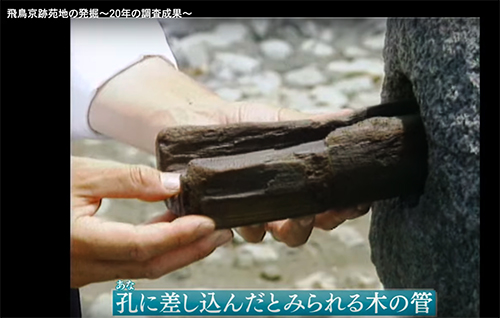
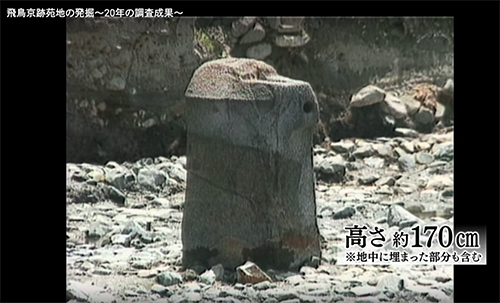
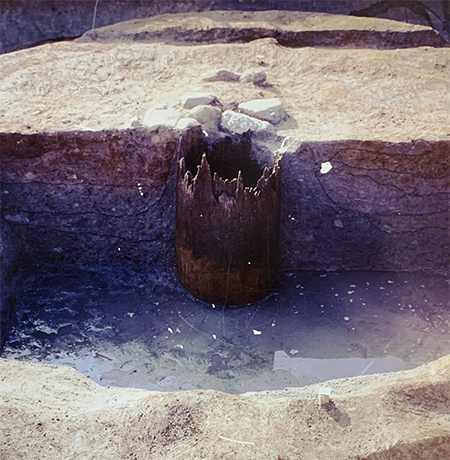
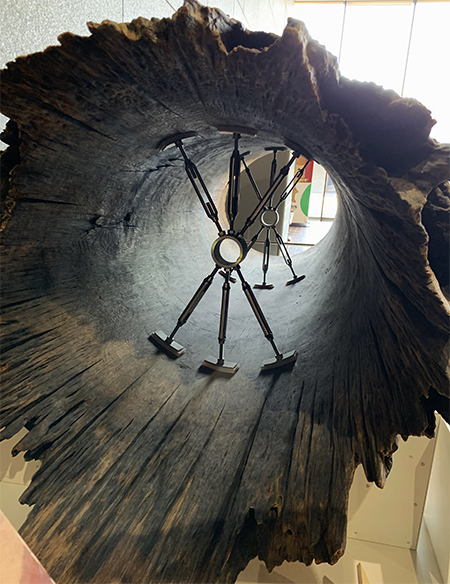
上の写真では地下伏流水を組み上げる井戸に使われた大口径木材と
それがみごとに「くり抜かれて」利用されていた様子がわかる。
列島各地で分散的に水田・ムラ開発されていた段階から、この飛鳥京では
都城建設という新段階にまで社会が進化発展してきた。

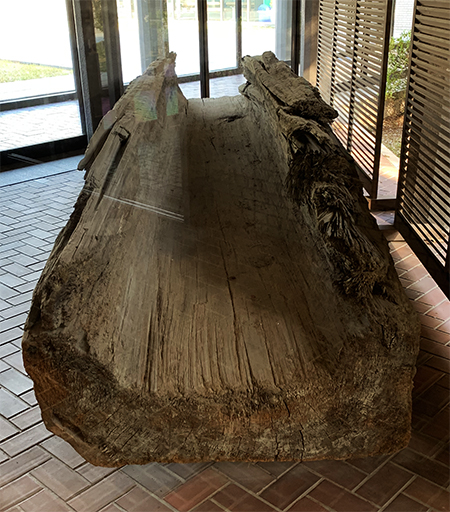
上の写真は樋菅という導水装置で大木が利用されている。
水源管理のための計画的土木建設作業がより大規模に展開した。
水道としては石材加工と平行的に大径木も大いに利用された、というか、
どちらかといえば木工事部分の方が多用されていたに違いない。
この飛鳥京の段階から次の法隆寺、平城京段階になるとさらに都城の規模は
旺盛に拡大発展していくことになる。
奈良の都建設段階では仏教寺院の建設ラッシュなどで
周辺の山岳自然林の利用許容限界にまで至ったと想像されている。
水の管理って、歴史を動かす「底流」のようなものと感じられます。

English version⬇

Asuka-kyo Waterworks “Gutters and Wells” Exploration of Asuka, Nara – 5
The Japanese archipelago, with its humid temperate climate and mountainous terrain, also has highly renewable wood resources. Paddy field development developed water vein exploration and civil engineering techniques. ・・・・.

Water is fundamental to human survival.
Even in the Asuka capital, water supply facilities are the key for many people to gather and live in.
In Japan, with its mountainous terrain, the survival of mankind and the development of culture are of paramount importance.
The use of visible rivers as well as abundant underground subterranean water would have been active.
Mountains have a rich water retention function, which forms a variety of subterranean waters.
For humans who began living in this archipelago in the Stone Age
The discovery of spring water and the knowledge to explore and use water veins
I believe it must have been an intellectual accumulation far beyond imagination.
Even in the Asuka capital area, both underground subsoil water and river water were used
The technique of civil engineering the “garden pond” shows wonderful traces.
In modern times, the established knowledge of water supply has become common knowledge, and people’s awareness of the original wisdom of water
Modern people, whose imaginations have been waning, must have dulled as well.
Especially when it comes to the Asuka-kyo stage, the “city construction
The construction of an artificial living environment required by the power of the people is required.
Water resource management is essential for paddy field cultivation, a production method that has been practiced since the Yayoi period.
The origin of this mode of production is believed to have originated in East Asia, in the Yangtze River basin region.
When it spread to the Japanese archipelago, it is said to be the predominant
I imagine that this must have been a unique and significant development.
This is because the water retention capacity of the mountains in this volcanic archipelago is so great that it is difficult for the mountains to retain water.
It seems to me that the technology to control water veins through civil engineering work developed rapidly.
The development of Japanese civil engineering technology is evident in the subsequent domestic wars.
The “hole diggers” of Shingen Takeda and the wars caused by civil engineering works during the Hideyoshi stage are symbolic.

The Archaeological Museum of Kashihara, which exhibits the archaeological excavation of the Asuka-kyo Palace, is also a good example of the development of civil engineering technology.
This is exactly the kind of “water” management situation that hits the nail on the head.
The mountainous terrain and rainy climatic conditions provide excellent woody resources.
The renewal vitality is also very high, which has led to the development of “tree-handling” techniques.
The fact that wood construction has traditionally been the predominant type of housing in Japan and has become the basis of Japanese housing culture
This is the reason for the background conditions.
In the photo above, you can see the large-diameter timbers used for the wells that bring up underground subterranean water, and
The way it was “hollowed out” and utilized can be seen.
The Asuka-kyo capital was developed from the stage of dispersed development of rice paddies and mura (rice fields) in various parts of the archipelago.
Society has evolved and developed to a new stage of capital city construction.

The photo above shows a water conduit called a flume, which utilizes large trees.
Planned civil construction work for water source management developed on a larger scale.
Large-diameter trees were also used in the water supply system in parallel with stone work, or rather
If anything, the woodwork portion must have been used more extensively.
From the Asuka-kyo stage to the Horyu-ji and Heijo-kyo stages, the scale of the capital city increased even more.
The development of the city was vigorously expanded and developed.
During the construction phase of the Nara capital, the rush to build Buddhist temples and other structures
It is imagined that the use of the surrounding natural mountain forests reached its limits of tolerance.
Water management is felt to be a kind of “undercurrent” that drives history.

【飛鳥宮「苑池」の国防的役割 奈良・飛鳥探索-4】


飛鳥宮が位置として特定された一帯は田園に変貌している。
今後、発掘調査が進展することで全貌がさらにあきらかにされ、
時間は掛かるけれど遺跡として保存される可能性が高い。
国の史跡保存にはさまざまな要件クリアが必要だろうが十分理解できる。
今の段階では鄙びた風景のなかから見学者が想像するしかない。
それはそれで土木工学的な演習として面白いのかも知れないけれど、
凡百としては遺跡としてわかりやすくなって欲しい。
一方でこういう都市が自然に還っていったような遺跡というのも
特異なありようとして現状を楽しむべきだとも思える。
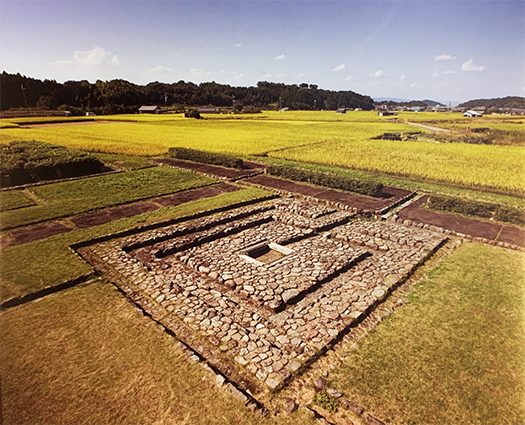
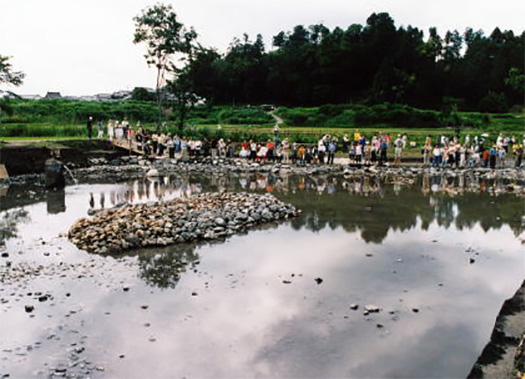
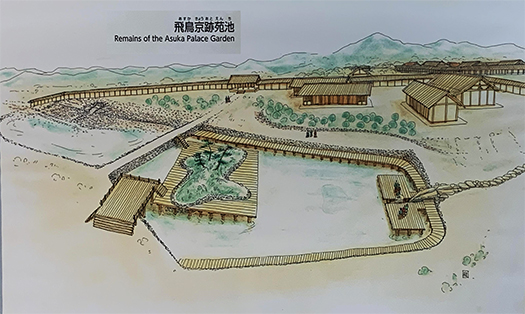
写真は都城と飛鳥川の中間に造営「建設」された苑池の復元説明時の様子。
(写真と図は橿原考古博物館パネルより)
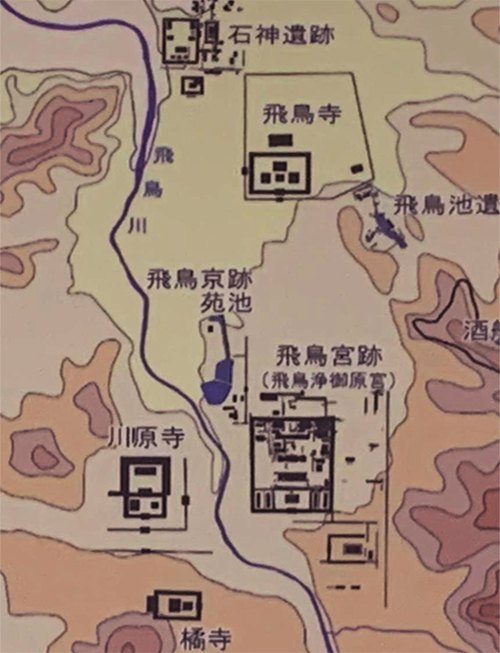
飛鳥浄御原宮想定地との関係はイラスト図のようであり、
発掘された石造物は苑池での水勢コントロール装置だという。
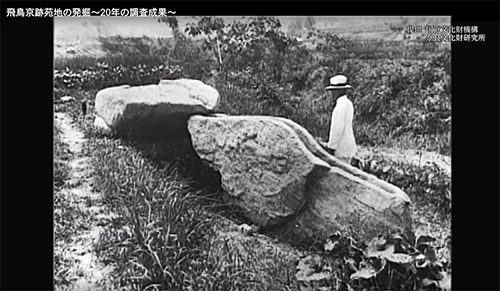
具体的にどのように機能したかは酒船石同様、よくわかっていない。
ただ、この「南池」は図のように桟敷板状平面があったようで、
そこには「噴水装置」も造作されていたとされているので、
その関連の石器造作だったと想像されている。
写真とイラストはほぼ同方向を意識して配置してみた。

宮廷建築・飛鳥浄御原宮との関連性で言えば、
たとえば東アジアからの国家賓客をこの苑池に案内して
「わが国ではこのように治水管理しています。
ごらんください、こちらからは人工的に噴水させています・・・」
みたいな技術力誇示として利用していたと思える。
国賓として接遇しつつも、さりげなく水源管理技術を見せて
「これは容易には征服戦争はできないな・・・」と思わせたのかも。
土木工事技術と石材加工技術の組み合わせで技術立国を目指していた。
この当時の瀬戸内海からの上陸地点と思える堺の地に
仁徳天皇陵を造営して初期には表面を石で被覆させていたと言われる。
白くまぶしいばかりの巨大石工技術構造物を見せることで
客人たちの脳裏に具体的な防衛産業力を見せつけていたことになる。
外交と国防の実質がこのように展開していたと想像できる。
日本は本格的な大陸国家による侵略戦争経験は少なく
第2次世界大戦での東京大空襲とか広島長崎への原爆攻撃に遭うまで
歴史年代を通して独立を維持し続けてきた。
たしかに海によって国境が区画され侵略者には兵站の困難があったにせよ、
このような不断の外交の積み重ねでの安全保障努力も大きかったに違いない。
そしてまた実際に水田への導水技術としての土木建築力は
もっとも大きな日本の伝統技術資産だとも思える。
こうした「苑池」を人工的に造作する技術体系が戦争技術となったら、
大きな防衛技術と見なされたことも疑いない。
「この治水・土木技術があれば容易ならざる防衛城郭技術も可能だ・・・」と。
和を以て貴しとなす平和理念を外交の基本としつつも
昔人は国防をリアリズムで考え観念論など一顧だにしなかった・・・。

English version⬇

The Role of Asuka Palace’s “Garden Pond” as a National Defense Measure: Exploring Asuka, Nara – 4
Civil engineering and flood control technology to manage water, and by extension, peaceful national defense efforts to show military national defense capabilities and crush the aggressive intentions of potential enemies. …

It seems to me that they were using it as a show of their technological prowess.
While treating them as guests of honor, he casually showed them his water source management technology.
Perhaps it was to make them think, “This is not an easy war of conquest.
The combination of civil engineering technology and stone processing technology was aimed at making the country a technological power.
In Sakai, which seems to be the landing place from the Seto Inland Sea at that time.
It is said that they built Emperor Nintoku’s mausoleum and had the surface covered with stone in the early days.
By showing huge masonry engineering structures in dazzling white
It would have shown concrete defense industrial power in the minds of the guests.
One can imagine the substance of diplomacy and national defense unfolding in this way.
Japan had little experience with full-scale continental state wars of aggression.
Until the air raid on Tokyo in World War II and the atomic bombing of Hiroshima and Nagasaki
Throughout historical eras, the country has maintained its independence.
While it is true that borders were demarcated by sea, making logistics difficult for the invaders, the country has nevertheless maintained its independence throughout its history.
The security efforts made through such tireless diplomacy must have been significant.
And the civil engineering and architectural capabilities that actually led the water to the rice paddies must have been a major factor in the development of the country.
It seems to me that this is one of Japan’s most significant traditional technological assets.
If the technical system to artificially create such “garden ponds” were to become a war technology, it would be a great asset.
There is no doubt that it would have been considered a major defense technology.
With this flood control and civil engineering technology, it would be possible to create defensive fortifications, which is not an easy task…”
While the peace philosophy of “harmony is precious” is the basis of diplomacy
People in the past thought of national defense with realism and never gave a second thought to idealism.

【モナリザを越える高松塚古墳「飛鳥美人」 奈良・飛鳥探索-3】


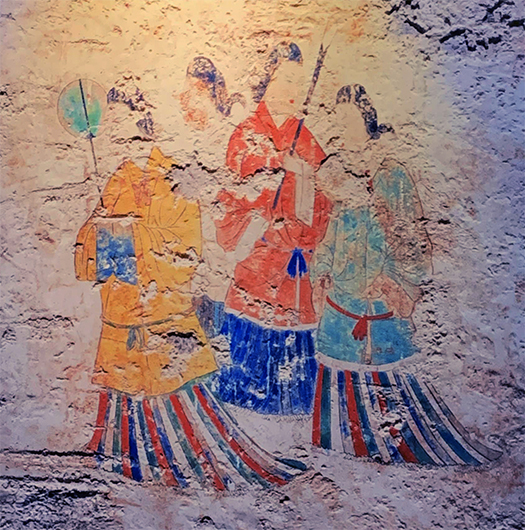
高松塚古墳壁画の発見は1972年のこと。
写真は橿原考古博物館展示パネルの写真をPhotoshopで自分で加工した。
わたしは当時20才という若い男性であり描かれた宮廷女子に独特の感情を持った。
なんというか、自分がこの時代に生きていれば単純にステキだと
強い感情移入を持っただろう、はるかな時代の女優のポートレートかと。
発見当時の社会の驚き感はいまでも鮮明に体感記憶がある。
古墳壁画というものがどのような社会的存在だったか、
それはひとつの「メディア」であってそこに社会的専業者、芸術者の存在も
はるかに強い実感とともにわかる。
と同時に、それらの人々もまた描かれた対象の女性たちに対し
強い感情を持っていただろうことも容易に伝わってきた(笑)。
レオナルド・ダ・ヴィンチが描いたモナリザよりも日本男子としては
はるかに強いこだわり感と愛惜とを自然に持つ対象だと。
きっとDNAに刷り込まれた純粋なエロスの世界がそこにあって、
時代をはるかに超越して魅了されたのでしょう。
こうした女子たちがひとつの時代を彩っていたに違いないと思わされた。
最新の研究としてはこの壁画制作年代は藤原京期694年ー710年の間だと確定。
まさに飛鳥板蓋宮の時代の空気感を伝えるものなのだと思う。

こういった女子が描かれたということは、
背景としての社会のダイナミズムを強く感じさせてくれる。
いまとなってはのどかな田園風景が表面を被覆しているけれど、
社会の躍動、人々の生きるための戦いがこの地で旺盛に展開していた。
万葉の歌人たちの恋の歌というのは具体的にこのような女性たちが
その対象にされていたというリアリズムが身体感覚でわかる。
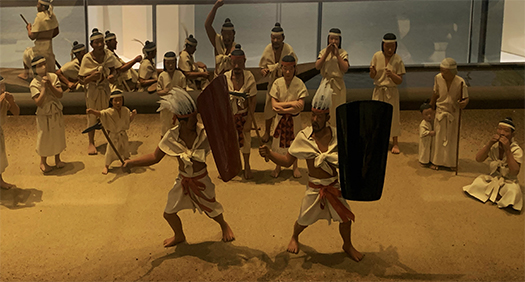
一方でそうした社会では日常的に戦いもあり、
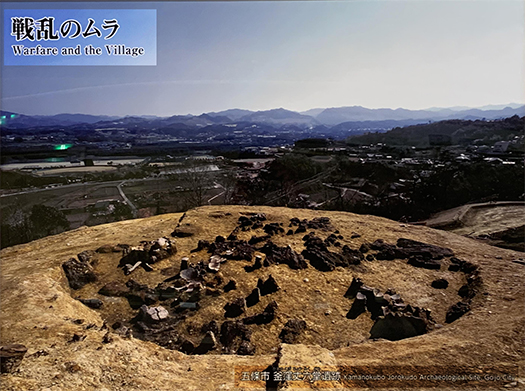
戦乱による廃墟痕跡なども発掘されてきているという。
そういったリアリティを伝えるジオラマ群をみるとまざまざとした実感。
こういう1400-1500年前の社会実相が現代に復元されている。
なんとなく土俗的な祭礼風景のジオラマ展示からは
日本人社会とまつり、ということの意味合いが伝わってもくる。
こういったシンクロ可能な世界が奈良・飛鳥には現代でも実在している。
なかなか頻繁に行けない地理条件ではあるけれど、
異邦人とも思える北方の居住人間としては研ぎ澄まされた出会い感が強い。
日常的に接することができる地域の人とはまた違った感覚でしょうか。
日本人であることが喜ばしく思われる。
気候風土的に多様性を持ちつつ、同じ体内感覚を共有できる。
そのことで相互に学び合う強い絆が生まれるのだとも思う次第です。

English version⬇

Asuka Beauty” Takamatsuzuka Kofun Tumulus Beyond the Mona Lisa Exploring Asuka, Nara – 3
The depiction of a beauty that makes one’s DNA rejoice, and a sense of vitality that transcends the passage of more than 1,400 years. …

The discovery of the Takamatsuzuka burial mound wall paintings was made in 1972.
The photograph was taken from an exhibition panel at the Archaeological Museum of Kashihara, Nara, and processed by myself in Photoshop.
I was a young man of 20 years old at the time, and I had unique feelings toward the courtesans depicted in the mural.
If I had been alive at that time, I would have thought they were simply lovely.
I thought they were portraits of actresses from a much earlier era, to which I would have had a strong emotional attachment.
I still have vivid memories of the sense of amazement that society felt at the time of the discovery.
I still remember vividly how surprised society was at the time of the discovery of the tomb murals.
It is a “medium”, in which the existence of social professionals and artists
The “real” feeling is much stronger than the “real” feeling of the “real.
At the same time, these people also have a much stronger sense of the women depicted.
It is easy to see that they must have had strong feelings for each other (laughs).
As a Japanese boy, I feel more strongly about the Mona Lisa than I did about the Mona Lisa painted by Leonardo da Vinci.
The object of my obsession and love for it is a natural object for me.
I am sure that there is a world of pure Eros imprinted in our DNA
They must have been fascinated, far transcending their time.
It seemed to me that these girls must have colored a single era.
According to the latest research, the date of creation of this mural painting is between 694 and 710, the period of the Fujiwara-kyo capital.
It is a very good indication of the atmosphere of the Asuka Itabatagu Palace period.

The fact that these girls were painted means that
It gives a strong sense of social dynamism as a background.
Although today, the surface is covered by an idyllic rural landscape
Social dynamism and people’s struggle to survive were vigorously developing in this region.
The love poems of the Manyo poets are specifically about such women.
The realism of the subject can be understood through the physical senses.
On the other hand, in such a society, there were battles on a daily basis.
The ruins of war-torn areas have also been unearthed.
The dioramas that show such reality are a vivid reminder of the reality.
The social reality of 1,400 to 1,500 years ago has been restored to the present day.
The diorama exhibition of a somewhat earthly festival scene
It also conveys the significance of Japanese society and matsuri.
This kind of synchronized world exists in Nara and Asuka even today.
Although it is not easy to visit Nara and Asuka, the geographical conditions are such that it is not easy to go there frequently.
As a person living in the north, who can be considered a gentile, I have a strong sense of sharpened encounter.
It is a different feeling from that of people in other regions with whom I have daily contact.
It seems a delight to be Japanese.
We can share the same internal senses while being diverse in terms of climate and climate.
I also believe that this creates a strong bond where we can learn from each other.

【国と社会の実相「弥生〜飛鳥」 奈良・飛鳥探索-2】


飛鳥板蓋宮の時代とはどのような社会の実相の時代なのか?
現代のこの明日香村地域は過去に都城が作られた首都地域であったのに
その後、そういう王権機能が他所へ移転していって
都城建設に不可欠な土木改編が農村的風景でみごとに被覆されている。
文献史学が有力な根拠を持たない時代相に対して
橿原考古博物館での研究・展示では発掘調査という手法で迫っている。
はるかな北海道からの異邦人としてはそのような解析努力に
深く感謝させられるところです。
展示をまとめた博物館文献資料が存在していないので、
展示からの写真(撮影はフリー)を見ながら想像力を刺激されています。

弥生の社会から王権による「国家」形成への過渡期というのが、
この飛鳥の時代だと思われるのですが、
ひとびとの生産努力は基本的に稲作農業が基盤だった。
稲作社会については特徴的に吉野ヶ里遺跡などで実相が見られる。
吉野ヶ里では、社会が支配と被支配関係が明瞭に伺える。
支配層によって製鉄という稲作農業の基本物資が管理保持され
また、生産物の集積が高倉倉庫群で明瞭に「富の蓄積」として
外形的にも建築表現されている様子がわかると思う。
しかも集落の周囲には「逆茂木」という防衛施設も整備されて
縄文とはまったく異質なシステムで営まれていた様子が表現されていた。
イネという保存性の高い食料がそのまま富の実質表現になり、
そのことが集落間での戦争行為を容易に引き起こさせた状況がわかる。
そういった段階から無数の戦闘が繰り返されていって
この飛鳥の段階になってきたように想像できるのですね。
まさに日本の「ミッシングリンク」がここにあるように思えた。
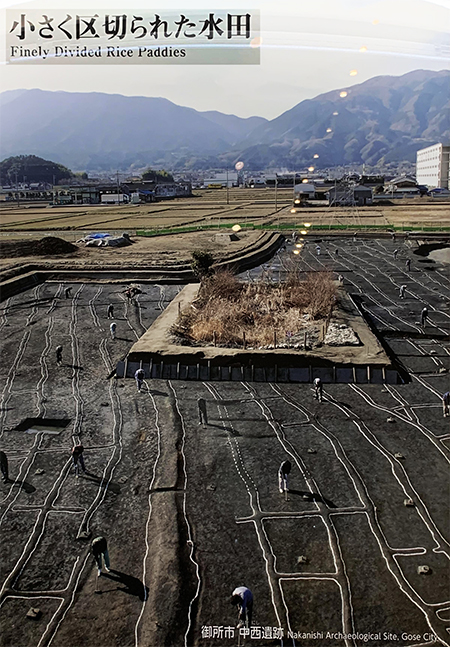
この段階では、絶えず「治水コントロール」の必要な田んぼ生産施設は
小規模な土木的スパンで運営管理されていたことがわかる。
その分、集団的な支配構造についても強い権力構造が見て取れる。
被支配層は、権力側に土下座させられるような関係性として描かれている。


一方でそのような権力構造がある程度、全国的な権力構造へと
進化拡大していた状況も指し示されている。
たぶん、火山列島社会の日本の特徴として地域的偏差が大きく、
それらがネットワーク的に、モノを介在して交流が拡大していった。
各地からの土器に入れられた生産物が徐々に飛鳥に流入し始めた。
そんな経緯が展示表現に託されているように思われる。
八百万的多様性を基盤にしながらも、ネットワーク的に交流し始めた国家社会。
飛鳥の地で摂政として活躍した聖徳太子さんが
「和を以て貴しとなす」という日本的「民主主義」を宣命していたことの
根拠の社会実相がそこに見えるように思われる。
どうも日本社会はロシア的・大陸的侵略戦争志向型ではない方向で
社会と国家が発展していったといえるのではないか。

English version⬇

[Facts about the country and society “Yayoi-Asuka” Nara / Asuka Search-2]
An exhibition at the Kashihara Archaeological Museum, where evidence of Asuka’s archaeological excavations is collected. The formation of this country that connects Yayoi and Asuka who rise from there.・ ・ ・

What kind of social era is the era of Asuka Itabuki Palace?
This modern Asuka village area was the capital area where Miyakonojo was built in the past.
After that, such a kingship function was transferred to another place.
The civil engineering reorganization that is indispensable for the construction of Miyakonojo is beautifully covered with a rural landscape.
For the times when literature history has no strong basis
In the research and exhibition at the Kashihara Archaeological Museum, we are approaching by the method of excavation.
As a Gentile from far away Hokkaido, such an analysis effort
I am deeply grateful.
Since there is no museum document that summarizes the exhibition,
Imagination is stimulated while looking at the photographs from the exhibition (shooting is free).

The transition period from Yayoi’s society to the formation of a “nation” by the kingship is
I think it was the time of Asuka,
People’s production efforts were basically based on rice farming.
As for the rice-growing society, the actual situation can be seen characteristically at the Yoshinogari ruins.
In Yoshinogari, the relationship between dominance and control of society can be clearly seen.
The ruling class manages and maintains the basic rice farming material called ironmaking.
In addition, the accumulation of products is clearly “accumulation of wealth” in the Takakura warehouse group.
You can see how the architecture is expressed externally.
Moreover, a defense facility called “Abatis” has been developed around the village.
It was expressed that it was operated by a system completely different from the Jomon period.
Rice, a highly conserved food, becomes a real expression of wealth as it is.
It can be seen that this easily caused the act of war between the settlements.
Countless battles have been repeated from that stage
You can imagine that it’s the stage of Asuka.
It seemed like the Japanese “missing link” was right here.
At this stage, the rice field production facilities that constantly require “hydraulic control”
It can be seen that it was operated and managed in a small civil engineering span.
Therefore, a strong power structure can be seen in the collective control structure.
The controlled layer is depicted as a relationship that makes the power side sit down on the ground.

class = “alignnone size-full wp-image-36550” />
On the other hand, such a power structure has become a national power structure to some extent.
The situation that was evolving and expanding is also pointed out.
Probably, the regional deviation is large as a characteristic of Japan in the volcanic archipelago society,
As a network, exchanges expanded through things.
Products in earthenware from all over the world gradually began to flow into Asuka.
It seems that such circumstances are entrusted to the exhibition expression.
A national society that has begun to interact in a network while being based on eight million diversity.
Prince Shotoku, who was active as a regent in the land of Asuka
Having declared the Japanese “democracy” of “to be precious with harmony”
It seems that the social reality of the grounds can be seen there.
Apparently Japanese society is not Russian or continental aggression war oriented
It can be said that society and the nation have developed.