本文へジャンプ

【疲労&風邪から、元気復活・再起動へ】


 一昨日2/27に仙台空港から空路北海道へ帰還しましたが、どうも仙台空港でクシャミを発症して以来、体調がすぐれず2/28にはかかり付け医に伺って、風邪の投薬をいただきました。かかり付け医にかかった時には、仙台空港で外国の方とも接触があったので、一応念のため、院内に入る前にコロナの簡易検査もして大丈夫との診断も受けていました。用心は長引きますね。そのあとには出張で延期してもらっていた歯科の施術もあって、帰ってからはひたすら薬を飲んで睡眠確保でベッドで9時間以上。
 なんとかカラダの平穏感が戻って来ましたが、薬の作用もあって、ボーッとした感じで全然アタマは回転してくれない。「回転しない」という表現は日本語としてすごく優秀だなぁと思い至るほど、まことに脳味噌がしずかに佇んでいる感じでありました。
 このブログの記述はだいたい朝7時前くらいにはアップさせているのが通常ですが、本日はこの時間になってしまいました。で、そんななかいつも宮城県の農家の方からお米を直接購入していたのですが、高齢にもなってきたことから直接販売については終了したい、という悲しいお知らせも。コメ生産と流通の現場では、相当おかしな投機というか思惑とかが渦巻いているような動向を感じさせられますね。
 というようなことですが、いっときの不調から確実に体調は上向き改善に向かってきています。病は気からと言われますが、適切な投薬で症状を改善させて、適度な休養を確保すれば気分もやがて立ち直ってくる。このようにブログを書きたいという程度には気分がアップしてきています。
 写真は東北行脚途中で立ち寄っていた青森市内のホテルからの外の写真。ことしは札幌以上の多雪。ようやく少し雪融けが進んできたようです。またもう1枚は、宮城県北東平野部の水田地帯の様子。宮城県から岩手県の東北道周辺地域では、平筒沼・手代木沼· 伊豆沼や下女沼、錦秋湖·八幡沼··ガマ沼などの湖沼があって、渡り鳥たちが羽根を休めている風景が目に飛び込んできます。季節感を話しかけてくれるかれらはかわいらしいですね。

English version⬇

From fatigue and cold to revitalisation and rebooting
Fatigue and poor health due to greedy itinerary planning. However, after a day or so of plenty of sleep and rest, they were back on their feet again. …

 I returned to Hokkaido by air from Sendai Airport the day before yesterday, 27 February, but I have not been feeling well since I sneezed at Sendai Airport, so I visited my family doctor on 28 February and received medication for a cold. When I visited my family doctor, I had been in contact with foreigners at Sendai Airport, so just to be on the safe side, I was given a simple test for corona before entering the hospital. Precautions are long overdue. After that, I had a dental procedure that had been postponed due to a business trip, and after returning home, I spent more than nine hours in bed, just taking my medication and ensuring sleep.
 I managed to get a sense of calmness back in my body, but partly due to the effects of the medication, I felt dazed and my mind didn’t revolve at all. I felt like my brain was standing still and quiet, so much so that I realised that the expression ‘no rotation’ is a very good Japanese word.
 I usually upload my blog entries before 7am, but today it’s late. I have always bought rice directly from a farmer in Miyagi Prefecture, but I was sad to hear that he is getting old and wants to end direct sales of rice. I can sense that there is quite a lot of strange speculation or speculation going on in the field of rice production and distribution.
 However, my health is definitely improving after a short period of illness. It is said that illness is a disease of the mind, but if you take the right medication to improve your symptoms and ensure adequate rest, your mood will eventually recover. My mood is improving to the extent that I want to write a blog like this.
 The photo is from outside a hotel in Aomori City, where I had stopped on the way. We have had more snow this year than Sapporo. It seems that the snow is finally melting a little. Another photo shows rice paddy fields in the north-eastern plains of Miyagi Prefecture. In the area around the Tohoku Expressway from Miyagi to Iwate Prefecture, there are lakes and marshes such as Hirazutsunuma, Teshirogi-numa – Izunuma and Shimome-numa, Kinshu-ko – Hachiman-numa – Gaman-numa, where migratory birds are resting their wings. They are endearing as they speak to us of the seasons.


【宮城県登米、マンガ家生家取材。空からふたたび岩手山】


 クルマによる「移動革命」時代にリアルタイムな人間なもので、ついつい行動範囲がクルマ本位に広大になってしまう。今回もたまたま仙台での要件もあったので、札幌−仙台の往復+東北滞在中はレンタカーでの自由な移動を選択しておりました。ということで、きのう十和田のホテルで目覚めた後、早朝から前から見たかった宮城県登米市の「石ノ森章太郎ふるさと記念館」へ長躯移動。
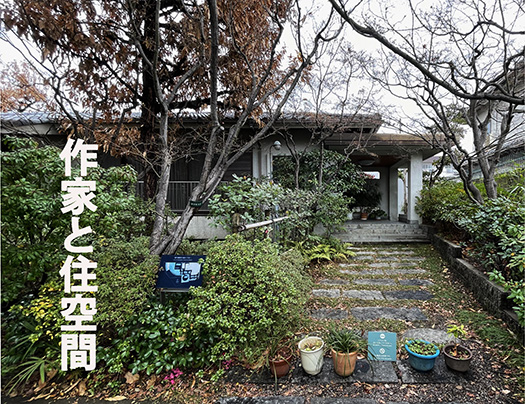
 この訪問は「できれば」ということだったのでそうしっかりは調べていなかったのですが、行ってみたらすぐ近くに「石ノ森章太郎生家」もほぼそのまま保存されて公開されていました。石ノ森章太郎は手塚治虫に生き方の起点を「起爆」された世代の典型例。わたしとは年齢にして14才年上ですが「兄貴」的な同世代感が強い存在。なので、その高校卒業までを呼吸していた家・空間には、強い「同時代感」を受けていました。
 ひとつのわたし自身の高齢期のキーワードとも思える「作家と住空間」体験でも、ここまで同世代感覚が刺激される空間も初めてだったように思われます。建築素材の簡易なベニヤ合板素地にまで、独特の呼吸感が伝わってくる。ここで得られた画像とか、情報はしっかりと整備して熟成させてみたいなと思った次第でした。

 というところでしたが、どうも1日の移動距離としては、やはり十和田から仙台空港までというのは途中のこの寄り道を加えると400km程度になって、体力的にはオーバーワーク気味。
 さらにこういう情報受容をしたあとは、しっかりと整理整頓しておく必要がある。できればすぐにデスクワークでパソコンなどに情報処理しておきたい。ということで、あとは仙台空港にまっすぐに直行し、ひたすら公共的パソコンデスク環境で整理整頓に努めておりました。
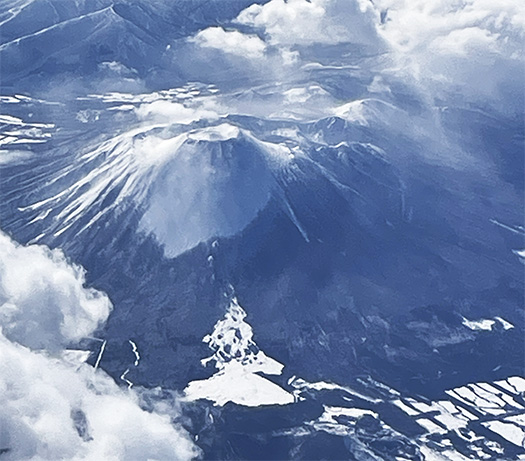
 で、夕刻飛行機に搭乗したらすぐに睡魔が襲ってきてしばし爆睡の後、ふと目覚めて窓外を見た。そうしたら間違いなく時間的にも符合するタイミングで、行きのときに迎えてくれ、また仙台からの北上途中でも地上から眺められた岩手山が、ふたたび三度、その容姿を見せてくれていた。上の写真です、おお。
 「なんだ、もう帰るのかよ」とでも呼びかけてくれているかのように心理にこだましてくる。「あはは、また来るからサ」と心中で応答しておりました。縁が強いのかなぁ。

English version⬇

Interview with a manga artist’s birthplace, Tome, Miyagi Prefecture, Japan. Mt Iwate again from the sky].
The expression on Mt Iwate’s face was as if it was calling out, ‘Are you going home already? The expression on Mount Iwate’s face is as if it is calling out, ‘Are you leaving already? I wonder if mountains and humans are having an unexpected mental dialogue. I’ll be back again. I’ll be back.

 As a real-time person in the era of the ‘mobility revolution’ by car, I tend to have a vast range of activities that are car-oriented. This time, too, I happened to have some requirements in Sendai, so I chose to travel freely by rental car between Sapporo and Sendai plus the rest of my stay in Tohoku. So, after waking up in a hotel in Towada yesterday, I made the long-run trip to the Shotaro Ishinomori Furusato Memorial Museum in Tome, Miyagi Prefecture, which I had wanted to see from early in the morning.
 I hadn’t researched this visit so thoroughly because it was a ‘hopefully’ visit, but when I went there, I found that ‘Shotaro Ishinomori’s birthplace’ was also preserved and open to the public almost as it was, just around the corner. Shotaro Ishinomori is a typical example of a generation whose way of life was ‘kibakusha’ by Osamu Tezuka. Although he is 14 years older than me, I have a strong sense of him as my ‘older brother’. Therefore, I felt a strong sense of ‘contemporariness’ in the house and space where he breathed until he graduated from high school.
 In my own experience of ‘artists and living spaces’, which seems to be one of the keywords of my old age, this is the first time I have been in a space that stimulated such a sense of contemporariness. Even the simple plywood of the building material conveys a unique sense of breathing. I would like to try to maintain and mature the images and information obtained from this exhibition.

 The distance travelled in one day from Towada to Sendai Airport, including this side trip, is about 400 km, which is a bit overworked physically.
 Furthermore, after receiving this kind of information, it is necessary to organise it properly. If possible, I would like to process the information immediately on my desk work, e.g. on a computer. So I went straight to Sendai Airport and worked hard to get organised at my public computer desk.
 So, as soon as I boarded the plane in the evening, I had a sleepy feeling and after a long nap, I woke up and looked out of the window. Then, at the right time, Mount Iwate, which had welcomed me on the way to Sendai and which I had been able to see from the ground on the way north from Sendai, was showing its appearance three times again. The photo above, oh.
 The mountain echoed in my mind as if it was calling out to me, ‘What, you’re leaving already? I will come back again,’ I responded in my mind. I wonder if I have a strong connection.

【青森県十和田市でも講演開催、任務を完了】


 今回の2連続講演日程の十和田市を昨日、無事に完了させていただきました。
 昨日の「会場」はいま話題の隈研吾氏設計の十和田市の「市民交流プラザ・トワーレ」。もう建築から結構な年月が経っている建物。外観的には見る範囲では、今回の話題のような兆候はみられていないと思われました。あ、もちろん一時通行人に過ぎないので、細部の確認などは当然出来ていませんが多くの木造建築関係者のみなさんからも、特段の話題提供などはありませんでした。
 講演会には両日とも、たくさんの旧知のみなさんが参加いただき、旧交を温めさせていただきました。懇親会では、最近の業容などについてさまざまな現場感覚を取材させていただけた。さすがに地域密着の作り手のみなさん、それぞれの状況の中でさまざまに活路を見出し、それを開発したり、またもともとの「強みを発展」させたりという状況が伝わってきます。素晴らしい。いつも思うのですが、各地域の家づくりに携わっている工務店企業は日本の中小企業の「ものづくり」パワーの基盤と言えるでしょう。そういったみなさんが元気である、そして活発に情報交流を行っていることが社会の重要な要素。
 またわたし自身が不勉強だったのですが、これまでさまざまに工務店業界と協働してきている東北電力さんも今回のイベント開催で、コロナ禍以降の空白を解消するような機会になっていたとのこと。住宅建築を巡るさまざまなコストアップ要因のなかで、この厳しい状況をどのように転換させ、家づくりの未来状況を作り出せていけるのか、創意工夫に満ちた再起動の動きが端緒についたようです。わたしどもとしても、関連会社であるReplan発行元(株)札促社とともに、いろいろお役に立てられるような「創意工夫」を提案していく必要性が高まっていると痛感させられた次第。
 そういうなかでほんのわずかなこころみではありますが、今回のわたし自身の出版計画も活性化のひとつのきっかけとして刺激を与えられれば幸いだと意を強くした次第。そしてまずは、このようにさまざまな情報交換機会、刺激を相互に交流させていくこと自体が、有益なのでしょう。

English version⬇

[Lecture also held in Towada City, Aomori Prefecture; mission completed].
It is important that the root of the ‘monozukuri’ power of Japanese society – local engineering firms – face up to difficulties with their vitality and ingenuity. Reaffirming their vitality. …

 I successfully completed this two-session lecture schedule in Towada City yesterday.
 Yesterday’s venue was the Civic Exchange Plaza Twarre in Towada, designed by Kengo Kuma, who is currently the talk of the town. The building has been under construction for quite a few years. Externally, as far as I could see, it did not seem to show any signs of the current topic. Of course, as I was only a temporary passer-by, I was not able to check the details of the building, but many people involved in the wooden building industry did not offer any particular topics of discussion.
 Many old acquaintances attended the lectures on both days, and we were able to warm up old friendships. At the reception, we were able to cover various on-the-ground sensitivities about recent business developments. As might be expected of community-based producers, we were able to get a sense of how they are finding various ways of making a living in their respective circumstances, developing them and also ‘developing’ their original ‘strengths’. It’s wonderful. I always think that the construction companies involved in house building in each region can be said to be the foundation of the ‘manufacturing’ power of small and medium-sized enterprises in Japan. It is an important element of society that these people are energetic and actively exchange information.
 Also, although I myself was uninformed, I heard that Tohoku Electric Power Company, which has been working with the construction industry in a variety of ways, also used the event as an opportunity to fill the void left after the Corona disaster. Amidst the various factors that are driving up costs in the housing construction industry, it seems that a movement to restart the industry, full of creativity and ingenuity, has begun to take shape, to see how we can turn this difficult situation around and create a future situation for house-building. We, together with our affiliated company Replan Publishers, have become acutely aware of the growing need to propose ‘originality and ingenuity’ that can be of use in a variety of ways.
 In this context, I have strengthened my hope that my own publication project will provide a stimulus as a trigger for revitalisation, even though it is only a small part of my intention. First of all, it would be beneficial for us to exchange various opportunities for information exchange and stimulation in this way.


【八戸にて「作家と住空間」講演】


 さて、昨日は今回の出張のメインである八戸での講演。東北電力さんの主催される建築専門家向けのイベントでの「業界情報」的な仕立てのシチュエーション。
 わたしは住宅雑誌発行人としての経験から、北海道東北では各地で住宅についての講演経験がありましたが、コロナ禍以降、そういったイベント開催が難しくなったことから、講演機会もほとんどなくなっていました。それが久しぶりの講演機会。それと、わたしの立場が変わったので、こうしたお申し出をいただくとは思いも寄りませんでした。それが、電子書籍出版という情報から、こういう機会がふたたび巡ってきたので、謹んで講演させていただきました。
 講演の時間は50分程度と聞いていましたが、久しぶりの講演なので時間感覚はまったく消滅していた(泣)。講演のスライドはパワポで作成しますが、その用意した枚数のうち、1/4は未消化に終わってしまった。時間配分的に「カン」がまったく働かなかった。
 そういうお詫びをしつつ、講演後の懇親会ではほぼ全員のみなさんと話をさせていただけたので、その内容への反応などを「取材」させていただけました。出版物の書き手として考えれば、その出版前に「読者の反応」を知るということに等しい稀有な機会。
 さまざまな「気付き」のポイントがあって、わたしとしてはまことにありがたいと感じられた次第です。
 住宅についてのそれも専門家対象の講演としては珍しく、聞いていただいたどなたからもいろいろな反応や意見を語っていただけました。ある女性の方からは「男性のラブレターについて、それを書いた場所、空間を追究するツッコミぶりが面白かった(笑)」という反応も伺った。
 そういったご意見も含めて、わたしとしては貴重なご意見で本当に感謝そのもの。ただ時間が順守できなかったことについて、しっかり反省して本日の十和田の会場での講演にすこしでも経験として活かせればと考えております。
 きょうも講演の時間(午後4時過ぎ)まで、スライド枚数と話す内容について、調整をしていきたいと考えております。

English version⬇

Lecture on “Writers and Living Space” in Hachinohe:
an opportunity to lecture on the Corona Disaster and my own changing environment. The sense of time had disappeared (tears). But what I lacked in time, I made up for a little by exchanging impressions at the reception. I’ll do my best again today. …

 Well, yesterday I gave a lecture in Hachinohe, the main part of this business trip. It was an “industry information” type situation at an event for construction professionals organised by Tohoku Electric Power Company.
 I had given lectures on housing in various parts of Hokkaido and Tohoku as a publisher of a housing magazine, but since the Corona disaster, it has become difficult to hold such events and I have had very few opportunities to give lectures. This is the first time in a long time that I have had the opportunity to give a lecture. Also, my position has changed, so I had no idea that I would receive such an offer. However, the information about the publication of the e-book has given me this opportunity once again, so I have respectfully decided to give a lecture.
 I was told that the lecture would last about 50 minutes, but as it had been a long time since I had given a lecture, my sense of time had completely disappeared (tears). Slides for the lecture are prepared using PowerPoint, but of the number of slides I had prepared, 1/4 of them ended up undigested. In terms of time allocation, my “hunch” did not work at all.
 With those apologies, I was able to talk to almost everyone at the reception after the lecture, so I was able to “cover” their reactions to the content. As a writer of a publication, this is a rare opportunity to learn about the “reader’s reaction” before publication.
 There were various points of “awareness” that I was very grateful for.
 It was unusual for a lecture on housing for professionals to receive such a wide variety of reactions and opinions from everyone who listened to it. One woman said, ‘It was interesting to see the way he was so quick to pursue the place and space where the man wrote his love letter (laughs)’.
 I am very grateful for the valuable feedback I received, including such comments. However, I will reflect on the fact that I was not able to make good use of the time, and hope to make use of some of the experience in today’s lecture in Towada.
 I will continue to make adjustments to the number of slides and the content of my speech until the time of my speech today (after 4pm).

【飛行機から地上へ迎えの「岩手山」観望】


 さて本日は八戸で講演を行います。仙台空港に到着後、東日本大震災という大きな節目をも経験した住宅取材行脚の記憶が染み込んでいる東北の地を「クルマで地上を北上」することで記憶再生。
 人間は習慣の動物でありその行動する山野の視覚記憶が深く心理の底に残留し続けるものでしょう。そういう意味合いからは、北海道に次いで、東北の各地域にはそれぞれの生々しい記憶がそうした切り口からいろいろな思いが吹き上げてくるもの。
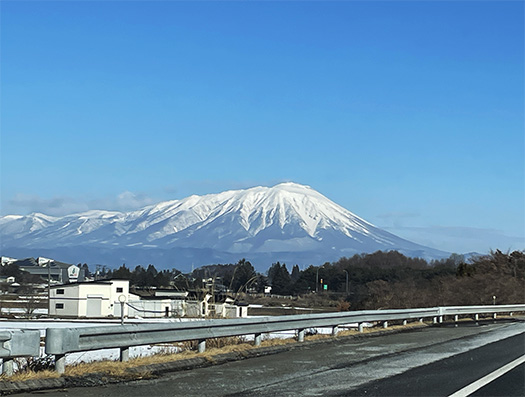
 そういう大量の記憶の中、その背景としてはやはり特徴的な山の風景記憶が巨大。北から言えば岩木山、そしてこの岩手山、そして宮城と山形にまたがる蔵王、そして安達太良山から磐梯山といった名山がそれぞれの独特の形象で心理に深く突き刺さってくる。
 わたしは、北海道札幌がホームですが、藻岩山とか、三角山、手稲というような山容には圧倒的なネイティブ感を持っている。そういう底流心理を持っている。明治初年の開拓の記録など、たとえば明治天皇が札幌をあちこち歩かれている様子の記録写真などを見るときに、背景にこうした山容が映り込んでいると、時代をはるかに超越して、すっかり心理が同期させられるものだと思っています。
 写真という明瞭な記憶が残り続ける時代相以降の人間社会には、こういったリアリズムが連綿と続いていくのだろうなと思える。とくに山のカタチには人間、弱いだろうと。
 ・・・さてそういった次第で、いまは最終的に講演のデータをチェックしている作業中。まだ、あれこれと気付くポイントに手を入れ続けております。とくに自分で作品化したテーマ領域なので、まとめ上げていくというのは、結構な深みがあって、ほとんど溺死寸前(笑)。講演の時間までなんとか、気付くポイントを整理整頓して行きたいと思います。
 たぶんあしたになれば、一回吐き出したあとなので、落ち着きが出てくると思いますが、なんせ初体験の自分自身のアタマのなか、みたいなテーマ領域なので、さて整合的にまとまるものかどうか、ドキドキしながら肝を据えていきたいと思います。よろしくお願いします。

English version⬇

The view of Mount Iwate from the plane to the ground:
Mount Iwate, which happened to be visible from the plane yesterday, reveals its majesty from the ground along the north-north Tohoku Expressway. I’m currently working on compiling the presentation material for my lecture. …

 Today, I will be giving a lecture in Hachinohe. After arriving at Sendai Airport, I will replay my memories of the Tohoku region, which is steeped in the memories of my trip to cover housing that also experienced the major milestone of the Great East Japan Earthquake, by ‘driving northwards on the ground’.
 Humans are animals of habit, and the visual memories of the mountains and fields where they go are likely to remain deep in the recesses of their psyche. In this sense, after Hokkaido, each region of the Tohoku region has its own vivid memories, and from such a cut, a variety of thoughts and feelings come to the surface.
 Amongst this mass of memories, there is a huge background of distinctive mountain landscapes. From the north, Mt Iwaki, Mt Iwate, Mt Zao, which straddles Miyagi and Yamagata, and famous mountains such as Mt Adatara and Mt Bandai, each with its own unique shape, stick deeply into the psyche.
 I am from Sapporo, Hokkaido, and have an overwhelming sense of nativity for such mountainous peaks as Mt Moiwa, Mt Sankaku and Mt Teine. I have such an underlying psychology. When I look at the records of pioneering activities in the early Meiji period, such as the photographs of Emperor Meiji walking around Sapporo, if I see these mountain peaks in the background, they transcend the times and my mind is completely synchronised with them.
 This kind of realism is likely to continue in human society after the age in which the clear memory of photography continues to be preserved. I think that human beings are particularly vulnerable to the shape of mountains.
 Now, I am in the process of checking the final data of the lecture. I am still working on the points that I notice. Especially as it is a theme area that I have made into a work of art, it is quite deep to put it all together and I am almost drowning (laughs). I’m trying to organise the points I notice until it’s time for my lecture.
 I’m not sure if I’ll be able to put it all together in a coherent manner, but I’m nervous about it because it’s my first experience in this thematic area. Thank you very much for your cooperation.

【ひさしぶり仙台着陸〜東北を北上旅】


 最近の新千歳空港の混雑ぶりは、すごい。とくに「国内線」側の混雑ぶりはハンパない。まずは駐車場がまったくのパンパンで、送迎のための1時間以内駐車は日中時間ではまずムリ。各入口に長蛇の車列が出来ている状況。距離のやや離れたC駐車場もあるけれど、飛行機へのアクセスを考えればやはりAB駐車場ということになる。
 AB駐車場の収容台数はそれぞれ1,800台と2,416台となっている。東京羽田の5つの駐車場の収容台数13,112台と比較するとC駐車場1.011台も含めて5,227台と、おおむね40%程度の台数なので、人口規模などを考えれば相応以上と思えるけれど、それがまったく機能不全寸前に陥っている。昨日もカミさんがクルマで送ってくれたのですが、それも時間に余裕を持って飛行機の出発定刻13時に対して10時頃到着したのですが、すでに駐車場入口は長蛇の車列。
 駐車場に入れて空港に早く入ってゆっくりしてから出発したかったのですが、やむなくそこからクルマで15分ほどの道の駅 マオイの丘公園まで往復して1時間ほど前くらいにクルマ送迎乗降場所に向かった。ところが、今度はその送迎乗降場所自体まで長蛇の車列!
 なんとか、数秒の停車が確保できた瞬間に降ろさせてもらいました。いやはや、というところ。で、国内戦の乗降エリアはそれこそ世界各国からのインバウンドと日本人客でまさにごった返している。まるで東京山手線の乗降口か! これはゆっくりするのはムリと、早々にチェックインしてすぐに航空機の乗降エリアに入っていました。仙台路線はだいたいが日本人乗客。で、仙台に到着すると、飛行場は混雑とは縁遠く、非常に「ゆったり」している。ひと息。
 先日も北海道内のインバウンド状況について書きましたが、中国の「春節」時期の特別な混雑だけではなくなってきている。まぁ、通常に「住んで働いている」分にはそこまで影響もありませんが、札幌中心部などにアクセスするだけでもインバウンド混雑は常態化してきている。京都の混乱ぶりはよそ事とは思えない。
 おっと、いまは東北であります(笑)。あちこち知人へのあいさつも兼ねて、事前に仙台からレンタカーで北上していく作戦ですが、なかなか味わい深い光景、景観が迎えてくれる。早めに東北に入ってゆっくりホテルで各種原稿書き、講演データ仕上げと考えていたのですが、どうも集中が困難(笑)。なんとか本日、頑張りたい。
 写真は北東北の象徴のような「岩手山」の上空からのビュー。

English version⬇

New Chitose Airport, the gateway to Hokkaido, is on the verge of exploding due to overcrowding caused by the large number of inbound passengers . It is almost impossible to secure parking. The time and scenery in the normal Tohoku area is peaceful and relaxing. …

 The recent congestion at New Chitose Airport is incredible. In particular, the congestion on the “domestic” side of the airport has been overwhelming. First of all, the parking lots are completely full, and it is impossible to park within an hour during daytime hours for pick-ups and drop-offs. There are long queues at all entrances. There is also parking lot C, which is a little further away, but considering the access to the plane, parking lot AB is still the best choice.
 The AB car park has a capacity of 1,800 and 2,416 vehicles respectively. Compared to the 13,112 spaces in the five parking lots at Tokyo Haneda, 5,227 spaces, including 1.011 in Parking C, is roughly 40% of the total, which seems more than adequate considering the size of the population, but it is now on the verge of total dysfunction. Yesterday, my wife drove me to the airport, but we arrived around 10:00, well in advance of the scheduled departure time of 13:00, but there was already a long queue at the entrance to the parking lot.
 I wanted to enter the airport early and relax before leaving, but I had no choice but to drive 15 minutes by car to the roadside station Maoi Hill Park and back, and then to the car pick-up and drop-off point about an hour before. However, this time there was a long queue of cars to the pick-up and drop-off point itself!
 I managed to get dropped off the moment I was able to secure a stop for a few seconds. Oh no. The domestic boarding and disembarking area was packed with inbound and Japanese passengers from all over the world. It was like getting off the Yamanote Line in Tokyo! I checked in early and immediately entered the boarding area for the aircraft. Most of the passengers on the Sendai route were Japanese. And when I arrived at Sendai, the airfield was far from crowded and very “relaxed”. A breath of fresh air.
 I wrote about the inbound situation in Hokkaido the other day, but it is no longer just the special crowds during the Chinese “Spring Festival”. Well, it doesn’t affect the normal “living and working” population, but inbound congestion is becoming the norm, even just to access central Sapporo and other areas. The chaos in Kyoto is not something to be taken for granted.
 Oops, I’m in Tohoku now (laughs). My strategy was to rent a car and drive north from Sendai in advance to greet acquaintances here and there, but I was greeted by quite tasteful sights and scenery. I had planned to enter Tohoku early and spend some time at a hotel writing various manuscripts and finishing the data for my speech, but it is very difficult to concentrate (laughs). I hope to do my best today.
 The photo is an aerial view of Mount Iwate, which is a symbol of the north-eastern region.


【雪かきから一時解放、本日から東北太平洋側へ】


 さて、本日は東北・仙台空港に移動。2/25-26お両日の青森県での講演に備えて、久しぶりに東北の風に吹かれてみたいと思っています。ここのところ「十津川」の記事を続けていますが、26日までは札幌を離れることになるので、講演の準備もあり本日は小休止。記事の続きは出張先のホテルなどで気分も変えて続けることにしたいと思います。
 わたしは住宅雑誌事業の譲渡後、全国を歩いてあらたな「取材対象」を巡っていますが、カミさんのブーイングもあるので(笑)、冬の最盛期・降雪多量時期は、天候を見ながらできるだけ出張を避けています。わが家と周辺の駐車スペースなどの「雪かき」を女性一人に押しつけるのは避けるという意味合い。健康維持にすばらしい体動機会とはいえ、さすがにカラダにはコタえる。
 1月にも出張はしていたのですが、天候を睨みながら「この日程なら」という狙い撃ち。だいたい札幌では年間で15回くらいの「雪かき」が平均的でことしは本日朝もやらなきゃなりませんが、それも入れるとおおむね14回に到達。今日を過ぎればあと1回程度だというのですね。この予想当たるかどうか、ですが、しかし長年の経験則には強い蓋然性があると思います。それを信じての出張外出であります。
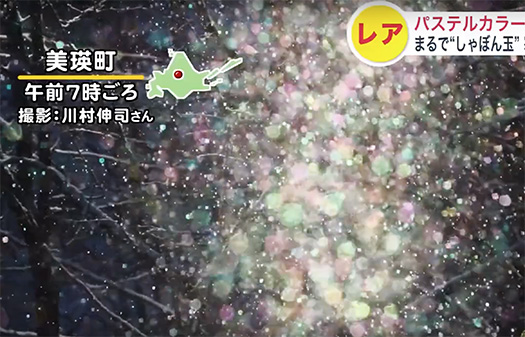
 写真は2/22放送のテレビ天気予報で、北海道の冬まっ盛りの「ダイヤモンドダスト」。気温が零下15度を下回ってそのほかの気象条件が重なると出現する真冬のファンタジー風物詩。この景色は北海道の青い池で知られる上川支庁・美瑛町の山間部でみられた映像だそうです。札幌でも何度かは経験した記憶がありますが、この冬はまだ札幌、零下10度ほどが下限なので、たぶん見られないでしょう。
 1月は記録的に少雪でしたが、2月に入っての「帳尻合わせ」ぶりは驚異的。いまや平年値を超えてきています。まぁそれでも足を伸ばして内陸部までドライブしたりすると「光の春」を実感。やわらかくて温かみのある陽光が、白い雪原に反射し空の青さとのコントラストで独特の季節感を呼び覚ましてくれる。演歌の「北国の春」(⇐古いっ)が耳奥に沸き立ってくるかのようです。
 ということで久しぶりの「転地」で気分も転換させてまた記述を続けますのでよろしく。

English version⬇

[Temporary relief from snow shoveling, today on the Pacific side of the Northeast]
“Diamond dust” image in weather report. Winter in the north, the polar regions. On the other hand, I also feel the “spring of light”. I want to change my mood and increase my will to express myself in a new place after a long time. The weather report shows images of diamond dust in the northern winter and the polar regions.

 Well, today I’m moving to Sendai Airport, Tohoku, to prepare for my speech in Aomori Prefecture on 25-26 Feb. I’m hoping to get some Tohoku wind for the first time in a while. I have been writing about Totsukawa for a while now, but as I will be away from Sapporo until 26 Feb, I have to take a short break today to prepare for my lecture. I would like to continue the article in a different mood at the hotel where I will be travelling.
 Since the transfer of my housing magazine business, I have been walking around the country to find new “interview subjects”, but my wife has been booing me (laughs), so I try to avoid business trips during the peak winter season and heavy snowfall as much as possible, depending on the weather conditions. The implication is that I avoid putting the responsibility of “shoveling snow” from our house and surrounding parking spaces on the shoulders of one woman. Even though the physical exercise sessions are wonderful for maintaining health, they are indeed hard on the body.
 I had already made a business trip in January, but I decided to take advantage of the weather conditions and aim for this date. In Sapporo, the average number of snow shoveling is about 15 times a year, and this year we have to do it again this morning, but if we include that, we have reached about 14 shoveling sessions. After today, there will be only one more shoveling. I’m not sure if this prediction will come true, but I think there is a strong probability based on many years of experience. I am going out on a business trip with this belief.
 The photo shows ‘diamond dust’ at the height of winter in Hokkaido, as shown in the TV weather forecast on 22 February. It is a midwinter fantasy-like phenomenon that appears when the temperature drops below 15 degrees below zero and other weather conditions combine. This image was taken in the mountainous area of Biei-cho, Kamikawa Branch Office, which is known for its blue ponds. I remember experiencing this in Sapporo a few times, but this winter is still Sapporo and the temperature is still 10 degrees below zero, so you probably won’t be able to see it.
 There was record low snowfall in January, but the “balance of the books” in February is astounding. It is now above normal. Even so, you can still feel the “spring of light” when you go for a drive inland. The soft, warm sunlight reflecting off the white snowfields and contrasting with the blue of the sky evokes a unique sense of the season. The enka song “Hokkoku no Haru” (⇐ old) seems to boil in the back of my ears.
 I will continue to write about this place after a long absence.


【大坂夏の陣の武功・槍役45家 十津川と「新十津川」-5】


 きのうは太閤検地でのこの十津川の詳細記録のことに触れたけれど、さらにそのあとの「大坂夏の陣」に際してこの地の人びとは徳川方に味方して武功を上げたとされる。その武功に対して江戸幕府は十津川の人びとに対して「扶持米」を与えて「槍役」という士分相当の身分を45家に対して与えている。
 領土としては広大な地域だけれど、米作という日本社会の基本的経済尺度には合致していないこの地の人びとに徳川幕府は、特別な身分制度を持って遇したということになる。全国を米作の収量を持って地域分割し、それぞれの地域支配権を「大名」家に与え、徳川家臣団に対しては旗本という身分を制度化したけれど、それらとも違った特殊な身分制をもって十津川の人びとは遇されたのだ。
 こういった歴史的な経緯が、連綿とこの地のひとびとの精神性を涵養していったのだろう。
 わたし的には、こうしたことのさらに背景には熊野三山に残る「八咫烏」の地域伝承が関わっているように想像が飛躍させられてしまう。


 神武東征譚では、熊野・楯ヶ崎に上陸した神武帝はそこからこの十津川の地を抜けて大和国に至るとされるけれど、その険しい山路を抜けるとき、八咫烏が先導したという故事がある。この東征譚はもちろん神話の世界とされるけれど、この十津川の人びとのDNAのなかにその残影を感じさせられてしまう。活動的に山の民らしく神武一統を先導する人びとに対し「八咫烏」というリスペクト表現を重ねたのか、と。
 日本の歴史の中で、きわめて特殊な伝承を形成してきた地域とは言えるだろう。
 そしてこの家、丸田家は上記の45家には入っていないけれど、幕末期・天保年間(1830-1843)以降には村方役人として苗字帯刀を許されていたという。
 同家に残されていた「丸田家文書」では江戸中期から明治維新期までの記録が詳細に書かれている。山林の売買記録、商売や村内での交流記録が主だけれど、その当時の江戸大阪での事件の情報や、幕末の情勢分析などまで、地域独自の知と情報の蓄積が残されている。山間の地でありながらきわめて情報に鋭敏なひとびとの意識水準を感じさせてくれる。
 こうした人びとの濃厚なDNAが北海道に直接伝承されてきたのだと考えると、血肉的なレベルでの「再発見」に深く驚かされる。遠くて近い、北海道と十津川。

English version⬇

The 45 families of spearmen and warriors of the Osaka summer campaign Totsukawa and the “New Totsukawa” – 5]
At the nexus of Japanese history, the people of Totsukawa show impressive feats. The “45 families of spearmen” are similar to the Hatamoto. Is there a connection with the image of Yatagarasu in mythology? …

 Yesterday, I mentioned the detailed records of Totsukawa from the Taikoo inspection, and later, during the Osaka Summer Battle, the people of Totsukawa are said to have sided with the Tokugawa and achieved military success. In response to their military exploits, the Edo Shogunate granted the people of Totsukawa “fukimochi” (rice with allowances) and “yariyaku” status, which is equivalent to the rank of shibu (warrior), to 45 families.
 The Tokugawa Shogunate treated the people of this vast territory, which did not conform to the basic economic scale of Japanese society of rice farming, with a special status system. The Tokugawa Shogunate divided the country into regions based on the yield of rice crops and gave the right to control each region to the “daimyo” family, and institutionalised the status of Hatamoto for Tokugawa vassals, but the people of Totsukawa were treated with a special status system different from these.
 This historical background must have cultivated the mentality of the people of this region for a long time.
 In my opinion, the local folklore of Yatagarasu in the Kumano Sanzan Mountains may have played a role in the background of these events.

 In the tale of the Jimmu expedition, it is said that Emperor Jimmu landed at Tategasaki in Kumano and passed through the region of Totsukawa to Yamato Province, and that Yatagarasu led him through the rugged mountain path. This tale of the eastern expedition is, of course, a myth, but we can feel the traces of it in the DNA of the people of Totsukawa. I wonder whether the people of Totsukawa have a respectful expression of ‘Yatagarasu’ for the people who actively led the Jinmu lineage as mountain people.
 In the history of Japan, this is a region that has formed a very special kind of local tradition.
 The Maruta family is not one of the 45 families mentioned above, but it is said to have been a village official and was allowed to wear the family name from the end of the Edo period (1830-1843) onwards.
 The Maruta family archives, which were left in the family, contain detailed records from the mid-Edo period to the Meiji Restoration. They mainly contain records of forest sales and purchases, business transactions and interactions within the village, but they also contain information on events in Edo Osaka at the time and analysis of the situation at the end of the Edo period, as well as a storehouse of knowledge and information unique to the region. The records give us a sense of the level of awareness of the people, who were extremely perceptive to information despite being in a mountainous area.
 When we consider that the rich DNA of these people has been passed down directly to Hokkaido, we are deeply surprised at the “rediscovery” of the region on a flesh-and-blood level. Hokkaido and Totsukawa: far and near.


【新著「作家と住空間」 2/25八戸と2/26十和田で講演】


 至急でのお知らせで失礼します。直前のお知らせになって申し訳ありません。
 すっかり告知を失念していたのですが、実は来週2/25八戸と2/26十和田で両日、東北電力青森支店さまからの依頼で講演を行う予定になっております。

 わたしは文芸系出版社の「幻冬舎」さんから2025.4.1予定で、電子書籍として
「作家と住空間〜北海道の住宅情報人が旅する日本人のこころ」を出版予定で現在追いこみ作業中です。
 これまで自分自身が住宅雑誌を出版してきましたが、そちらを事業譲渡して1年以上が経過。今後の生き方として住宅関連で、より人間性に寄った探究を思念してきました。
 一般的な住宅取材では施主さんの「生き様」はプライバシーそのものであり、基本的には触れることは避ける。しかし住宅は「暮らしのイレモノ」であり、そこで生きる人間性とは切っても切れない関係。
 そういう領域に踏み込むのに「誰もが知っている、しかもその内面に強い興味を抱く」人間とその住空間の強い「つながり」は、大きな未探究の情報領域だと思ってきたのですね。
 そこで「作家と住空間」というテーマを電子書籍でまとめてみた次第です。
 折からの住宅価格高騰の大波の中で、ユーザーの家を建てる意欲がやや削がれてきている情勢。そんな動向に対して「自分自身の本然・人間性への強いこだわりから家を建てる意欲」を探る企画です。
 たまたまお知らせした東北電力さまから、この出版企画に興味が寄せられ、以下のような日程で講演を依頼された次第です。

 東北電力さんの住宅ビルダー・関連事業者さん向けの機会ですが、一応、お知らせさせていただきます。万一のお問合せは、東北電力青森支店・販売本部 リビング営業まで。
<写真は内容の見本図案です。表紙は現在策定中>


【太閤検地記録、減税への希求 十津川と「新十津川」-4】


 さて十津川の歴史を深掘りしていると、さまざまな資料を再発見させられる。探訪時には「とりあえず資料類と思えるものは収集しといてあとでじっくり確認」とさまざまな資料類も基本的に写真に収めておく。で、じっくり「深掘り」する機会はなかなか作れない(笑)。人間の性〜さが。
 今回2024年4月に探訪した大阪豊中の民家園「十津川の家〜旧丸田家」の写真画像類をもとに、北海道・新十津川との縁を中心にと思って記述を始めたのですが、こちらの記録類の再発掘を始めたら過去の歴史にどんどん突入してきています。上の図版はその資料類の中の「太閤検地」記録文書図。
 「天正15年 日かへ(控えと推定)」「十津川 和州(大和国)吉野郡野尻村 金左衛門 佐介」とある。
 主な作物「いも・そば」と記述された畠からの収穫量とその畠の所有者の記載された文書。「いわむろ」という詳細地名が記され、その収穫地と作物・所有者について「一所畠 いも/そば 一石五斗 清四郎」という「租税根拠」書類が掘り起こされた。
 〜太閤検地は秀吉が天正10(1582)年に開始し、租税賦課の基礎条件を明確にするために日本全土で行った、山林を除く田畑の測量及び収穫量調査。日本初の全国規模の検地であり従前の荘園制的特権を打破し各土地の貢租(年貢)の徴収を容易にするため、荘・郷・保・里など区分が多々あった田制を統一して村制度を樹立させた。各耕地1筆ごとに1作人(一地一作人)を原則とし、土地は画一的に領主に直属させた。これによって荘園制時代よりも各耕地の所有関係が整理され、日本の近世封建制度の基礎が確立された。大化改新・地租改正・農地改革と並び、日本の歴史で重大な土地制度上の変革である。〜Wikiの要旨。
現代で言えば、三木奎吾 所得の方法とその年度の所得金額データみたいなモノに等しい。それまでが、おおまかに各地域集落単位程度の経済基礎の総量把握だけだったものが、各戸ごとの経済規模を直接把握したのだということに等しい。日本の政治統治の新段階を明瞭に示している。現代ではこの段階の「家単位」家制度からさらに詳細に個人単位に収奪構造が進化して行くけれど、いずれにせよ、政治権力による経済支配という「国家のコア」の記録といえるのでしょう。現代にいたるディープステートの実像を見る思い。ひとびとの「減税」への悲痛な思いがこの紙背に刻印されていると思える。

English version⬇

[Taikoo inspection records, the desire to reduce taxes Totsukawa and ‘New Totsukawa’ – 4]
Economic grasp of each piece of land owned by individual owners of raw households. Recalling the disasters of the modern deep state. The people’s desire for tax reductions that transcend time. …

 Digging deeper into the history of Totsukawa, we are forced to rediscover a variety of documents. When visiting, I basically take photos of the various materials, saying “I’ll just collect what I think are materials for now and check them carefully later”. But it is difficult to have the opportunity to delve deeper (laughs). Human nature.
 This time, based on the photographs and images of the Toyonaka Minka Garden in Osaka, which I visited in April 2024, I started to write about the relationship with Shin Totsukawa in Hokkaido, but when I started re-excavating the records here, I found myself plunging deeper and deeper into past history. The illustration above is a map of the “Taikō Kenshi” record among these documents.
 The text reads: “Tensho 15 nen hikakae (presumed to be an annex)” and “Totsukawa Wazhu (Yamato Province) Yoshino-gun Nojiri-mura Kinzaemon Sasuke”.
 Document describing the harvest from a field described as the main crops “potato and buckwheat” and the owner of the field. A detailed place name ‘Iwamuro’ is given, and a “tax basis” document was dug up for the harvest area, crops and owner: ‘Ichisho Hatake imo / soba, one stone five too, Seishiro’.
 〜The Taiko-kensetsu was a survey of fields, excluding forests and mountains, and the amount of harvested crops, which was carried out throughout Japan by Hideyoshi in 1582 to clarify the basic conditions for levying taxes. It was Japan’s first nationwide land survey, and unified the rice field system, which had been divided into many different categories such as Zhuang, Go, Ho and Ri, and established the village system in order to break down the manorial privilege and make it easier to collect annual tribute for each area of land. In principle, each piece of arable land was assigned to a single farmer (i.e. one farmer per piece of land), and the land was uniformly assigned directly to the lord. This system organised the ownership of each piece of arable land better than in the manorial system, and established the foundations of the early modern feudal system in Japan. Along with the Taika Reform, the Land Tax Reform and the Agricultural Land Reform, this was one of the most significant land reforms in Japanese history. ~Wiki abstract.
In modern times, it is equivalent to something like the Miki Keigo income method and income amount data for the year. It is equivalent to the fact that the economic scale of each household was directly grasped, whereas until then it was only possible to grasp the total economic basis of each local settlement unit. This is a clear indication of a new stage in Japanese political governance. In modern times, the structure of deprivation has evolved from this stage of the “family-based” family system to more detailed individual units, but in any case, it can be said to be a record of the “core of the state”, which is economic domination by political power. The image of the Deep State as it exists today. It seems that the people’s grief over the “tax cuts” is imprinted on the spine of this paper.