本文へジャンプ

【2/26 北海道主催 「北方型住宅技術」《WEB》講習会】


コロナ禍で住宅施策の講習会などの多くがWEB活用型に推移してきています。
WEBセミナー形式は一方通行になりやすく、受ける側の
認識の深まり、注意力のレベル維持にはやや難点がある。
実際にわたし自身も自社環境のなかでは日常業務的中断局面が多く、
また、日常業務が同時進行するなかで申込みしたこと自体、忘れることも多い。
ようするに注意力が散漫になりやすいのだと思う。
リアルとWEB経由の決定的な相違はこのポイントではないかと思っています。
発信者は優越的に情報を発信できることで、得てして唯我独尊化しやすく
受信者は従順に受容するタイプと、
これは真のコミュニケーションとは言えないと感じるタイプとに二分される。
どうもこのあたり、人間の「信用・信頼感」とはなにかという分析も必要。
急進展のWEB化ですが、人間関係論を含めた理性的分析は準備されていない。
こういったWEB講習会もその成果がどうか、検証の進展に期待したいところ。

そういうなかですが、これまで距離空間的に参加が難しかった講習も
WEBでは制約がなくなるので、こうした講習会のような「北海道の最新知見」を
全国の技術者のみなさんが共有することも可能になってきた。
わたしもこの「基準」の会議には参加させていただいていたので広報拡散します。
やはり積極的な側面は大いに伸ばしていくべきだと思います。以下情報要旨。

令和2年度 北方型住宅技術講習会(web講習会)のお知らせ
主催/北海道
主管/北海道立総合研究機構建築研究本部、北海道建築指導センター
〜北方型住宅技術講習会は住宅建設に携わる技術者の専門知識の習得や
技術力の向上により、良質な住宅ストックの形成を図ることを目的として実施。
道では1988年から北海道の気候風土に根ざした質の高い住まいである
「北方型住宅」の普及推進に取り組むとともに、2014年からは北方型住宅を
支える仕組み・道が住宅事業者を登録公開する「きた住まいる制度」運用など、
時代とともに変わる住宅ニーズを踏まえた制度の見直しを行ってきました。
2020年には省エネ・省CO2などの性能向上や自然災害への対応を図るため、
基準を改定し耐震・省エネ基準を強化した「北方型住宅2020」を創設。
本講習会では北方型住宅2020の創設に伴い改訂した「技術解説書」を用い、
北方型住宅基準をはじめ、北海道での住宅建設に関する基本について
解説を行うほかコロナ禍で注目の計画換気と必要な気密性についての紹介、
また大臣認定を取得した「北総研防火木外壁」などについて解説。
YouTubeでの動画配信となりますので技術者の皆様におかれましては、
是非ご視聴いただき、業務に役立てていただきますよう御案内します。
●講習内容 <YouTubeで公開します>
1. 北方型住宅の取組の推進について
−「北方型住宅2020」など北方型住宅の取組-
2. 北方型住宅技術解説書(令和3年1月改訂版)について
−「北方型住宅2020」の基準適合に向けて –
3. 気密と換気について
−C値1.0以下でできること−
4. 高断熱・火災にも強い木の壁
−「北総研防火木外壁」の概要について−
5. 住宅金融支援機構からのお知らせ
●受講対象 工務店・設計事務所等の住宅建設に携わる技術者、
行政職員、住宅建築関係団体等
●公開日時 令和3年2月26日(金)17:00から公開(予定) ※当面の間公開。
●受講方法 以下のホームページから視聴できます。
URL:https://www.hokkaido-ksc.or.jp/index.php?id=186
・申込み不要(どなたでも無料で視聴可能です)
・資料は、上記URLからダウンロード可能です。
●問い合せ 札幌市中央区北3条西3丁目1番地札幌北三条ビル8F
北海道建築指導センター企画総務部企画総務課 TEL 011-241-1893〜

テキストは「無料配布」されています。わが社でもスタッフ用に申し込みました。
ダウンロードしてPDFを確認するというのももちろんアリですが、
やはり理解を深めて技術として血肉化するには、
紙のテキストというものは「座右の銘」として非常に有効だと思います。

English version⬇

[2/26 Hokkaido-sponsored “Northern Housing Technology” << WEB >> Workshop]

Many of the seminars on various housing measures have been shifting to the WEB utilization type due to the corona virus.
The WEB seminar format tends to be one-way, and the recipient
There are some difficulties in deepening awareness and maintaining the level of attention.
In fact, I myself have many interruptions in my daily work in my own environment.
In addition, I often forget that I applied for it while my daily work was going on at the same time.
I think it’s easy to get distracted.
I think this is the decisive difference between real and online.
Since the caller can send information in a superior manner, it is easy to gain and self-respect.
The type that the recipient accepts obediently,
This is divided into types that feel that it is not true communication.
It is also necessary to analyze what is human “trust and trust” around here.
Although it is a rapid progress on the Web, rational analysis including human relations theory has not been prepared.
I would like to expect the progress of verification of the results of these WEB workshops.

Under such circumstances, there are also classes that have been difficult to participate in spatially.
Since there are no restrictions on the WEB, “the latest knowledge of Hokkaido” like this workshop
Sharing by engineers all over the country has also become seamless.
I also participated in this “standard” meeting, so I will spread the word.
After all, I think that the positive side should be greatly expanded. The following information summary.

Reiwa 2nd year Northern Housing Technology Workshop (web workshop)
Organizer / Hokkaido
Supervising / (Germany) Hokkaido Research Organization Architectural Research Headquarters, Hokkaido Architectural Guidance Center
~ Northern type housing technology workshop is to acquire the specialized knowledge of engineers involved in housing construction
Implemented with the aim of forming high-quality housing stock by improving technological capabilities.
Since 1988, the road has been a high-quality residence rooted in the climate of Hokkaido.
While working to promote the spread of “northern housing”, we will start to develop northern housing from 2014.
As a supporting mechanism, Michi operates the “Kita-dwelling system” that registers and publishes housing companies.
We have reviewed the system based on the housing needs that change with the times.
In 2020, in order to improve performance such as energy saving and CO2 saving and to respond to natural disasters
Established “Northern Housing 2020” with revised standards and strengthened earthquake resistance and energy saving standards.
In this workshop, we used the “Technical Manual” revised with the establishment of Northern Housing 2020.
About basic matters about housing construction in Hokkaido, including northern housing standards
In addition to giving explanations, we will introduce the planned ventilation and necessary airtightness of houses that are attracting attention due to the corona virus.
In addition, we will explain about the “Hokusoken Fire Prevention Wood Outer Wall” that has been certified by the Minister.
Since the video will be distributed on YouTube, we would like to ask all engineers.
We would appreciate it if you could watch it and use it for your business.
● Course content 1. Promotion of efforts for northern housing
-Efforts for northern housing such as “Northern Housing 2020”-
2. About the Northern Housing Technology Manual (Reiwa January 3rd revised edition)
-Toward conformity with the standards of “Northern Housing 2020”-
3. About airtightness and ventilation
-What you can do with a C value of 1.0 or less-
4. Highly insulated and fire resistant wooden wall
-Overview of “Hokusoken Fire Prevention Wood Outer Wall”-
5. Notice from Japan Housing Finance Agency
● Target of attendance Engineers involved in housing construction such as construction shops and design offices
Administrative staff, housing construction related organizations, etc.
● Release date and time It will be released from 17:00 on February 26, 3rd year of Reiwa (planned) * It will be released for the time being.
● How to attend You can watch from the following website.
URL: https://www.hokkaido-ksc.or.jp/index.php?id=186
・ No application required (anyone can watch it for free)
・ The materials can be downloaded from the above URL.
● Inquiries 〒060-0003 3-1 Kita 3 West, Chuo-ku, Sapporo Sapporo Kita Sanjo Building 8F
(Foundation) Hokkaido Building Guidance Center Planning and General Affairs Department Planning and General Affairs Division TEL 011-241-1893 ~

The text is “free distribution”. We also applied for staff.
Of course it is ant to download and check the PDF, but
To deepen understanding and flesh out as a technique
I think that paper text is very effective as a “motto”.

【江戸の「商家」存続年数 平均15.7年】


コロナ禍での行動抑制に沿って出張などが難しい環境になって、
ブログの過去取材撮影の「古民家」分析テーマを続けています。
だいたい江戸期由来の建築が多いので、勢い江戸期の社会構造も知ることになる。
わたしの場合、兄が家系調査を続けてくれていることもあり、
そういう部分でだんだんと情報がシンクロしてくる。
わたしの家系は1600年ころからのおおよその事跡が判明しているのですが、
1729年、いまから292年前に「商家」になっている事実があります。
それ以前は、広島藩の「所務役」という庄屋の取りまとめみたいな立場。
そういう社会的立場から、数奇な変転を経てこの年に商家に身分変化した。
商人になるに際して複雑な「認証プロセス」のようなことがあって、
「こういうことにする」みたいな婚姻・入家の記録痕跡がある。
江戸期社会のタテマエとしての整合性、整理整頓のように思われる。
ある武家、福山藩郡奉行という経済系官僚のあっせんが見えるプロセス。
この複雑な制度プロセスをマジマジと調べていて、
江戸期の「商人・商家」という存在のありように強く興味を持つようになった。
そんな経緯で「大江戸商い白書 〜数量分析が解き明かす商人の真実」
という著作と遭遇することになった次第。著者・山室恭子さん専攻は日本史。
東京大学文学部卒、文学博士。東京工大社会理工学研究科教授。

江戸時代には商家になるためには「株」を持たねばならなかった。
同業者が、市場を安定的に独占するために新規参入業者を排除し、
一種のカルテルをつくり幕府に運上金や冥加金と呼ばれる税金を納めるかわり
独占販売権を獲得し株仲間加入する業者だけが商家として存続可能というもの。
幕藩体制下での社会管理として商人にはそういうシステムがあった。
株仲間という組合が組織され、それを管理することで
商人という存在を全体としてコントロールしたのが幕藩体制の実態。
この株仲間組織に対してそれが諸物価高騰の元凶であると
「解散令」を出した愚かな「改革」もあったけれど10年も経たず再興している。

この商家の実態について江戸社会を分析した研究なのですね。
で、タイトルのような「経営実態」が明らかになってきた。
これまでは商家の理想のような「三井家」文書によってバイアスが掛かっていたのが
一気に本当の社会実態が解明されてきた思いがします。
現代でも「会社」が存続していくのはなかなか至難の業で、30年継続するのは
実態的に10%程度といわれ、会社の寿命は30年とかとも言われるけれど、
江戸期の商人のビジネス存続期間は15.7年。
資本主義社会の現代よりもなお厳しい社会現実の様相が見えて興味深い。
この著作と対照させながら、わが家系の事跡を跡づけてみております。
いろいろな知恵と苦闘がそこから汲み取ることができると思います。
こうした「補助線」があると先祖の行動分析にリアリティが増してくる。
既存ビジネスがデジタル化という大変革に直面するコロナ禍時代。
折に触れて、故きを温ねて新しきを解明して行きたいと思っております。

English version⬇

[Average life of “merchant” in Edo is 15.7 years]

It became difficult to go on a business trip along with the restraint of behavior in the corona sickness,
I continue to analyze the “old folk house” of the past coverage of the blog.
Most of the buildings are from the Edo period, so you will know the social structure of the Edo period.
In my case, my brother has been conducting a family tree survey,
Information gradually synchronizes in such a part.
I know the approximate history of my family tree from around 1600.
There is a fact that it became a “merchant” in 1729, 292 years ago.
Before that, he was in a position like the coordinator of Shoya, who was the “office worker” of the Hiroshima domain.
From such a social standpoint, he changed his status to a merchant in this year after undergoing a strange change.
There is a complicated “authentication process” when you become a merchant,
There are traces of marriage / entry records such as “I will do this”.
It seems to be the consistency and tidyness of the Edo period society as a vertical.
The process of seeing the mediation of an economic bureaucrat named Fukuyama Domain, a samurai family.
I’m seriously investigating this complicated institutional process,
I became very interested in the existence of a “merchant / merchant” in the Edo period.
With such a background, “Oedo Business White Paper-The Truth of Merchants Revealed by Quantitative Analysis”
As soon as I came across the work. The author, Kyoko Yamamuro, majors in Japanese history.
She is a graduate of the University of Tokyo Faculty of Literature and a Ph.D. in Literature. Professor, Graduate School of Decision Science and Technology, Tokyo Institute of Technology.

In the Edo period, you had to own a “stock” to become a merchant.
The same trader eliminates new entrants in order to monopolize the market stably,
Instead of creating a kind of cartel and paying taxes called luck money and mortgage money to the shogunate
Only those who have acquired exclusive sales rights and joined Kabunakama can survive as merchants.
Merchants had such a system as social management under the Bakuhan system.
By organizing a union called Kabunakama and managing it
The reality of the Bakuhan system was that it controlled the existence of a merchant as a whole.
To this Kabunakama organization that it is the cause of soaring prices
There was a stupid “reform” that issued a “dissolution order”, but it has been revived in less than 10 years.

It’s a study that analyzed Edo society about the actual situation of this merchant house.
So, the “management situation” like the title has become clear.
Until now, it was biased by the “Mitsui family” document, which is like the ideal of a merchant.
I feel that the true social reality has been elucidated at once.
Even today, it is extremely difficult for a “company” to survive, and it is difficult to continue for 30 years.
Actually, it is said to be about 10%, and the life of the company is said to be 30 years.
The business life of merchants in the Edo period is 15.7 years.
It is interesting to see the aspect of social reality that is still harsher than the present age of capitalist society.
In contrast to this work, I try to trace the traces of my family.
I think that various wisdoms and struggles can be drawn from it.
With such “auxiliary lines”, the reality of behavioral analysis of ancestors increases.
The corona era when existing businesses face a major transformation of digitalization.
From time to time, I would like to warm up the old and unravel the new.

【祈り、織ることの家からの喪失/日本人のいい家㉓-5】


日本人はいつ頃からいまのように「無宗教」が多数派になってきたのか。
古民家を見ていると、すべからく最上級のしつらいの空間とは、
先祖崇拝と神仏への帰依が基本的な構成要素になっていることがあきらか。
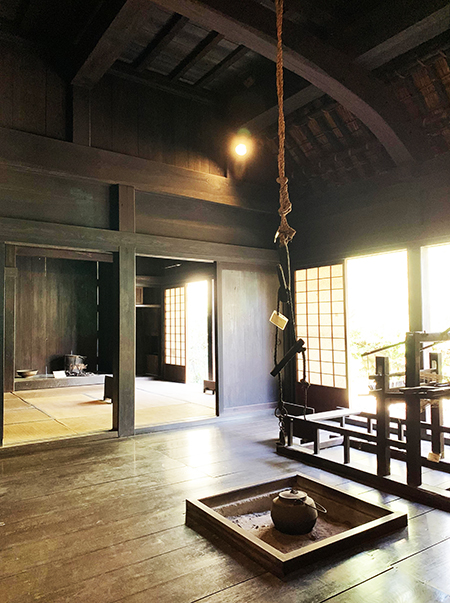
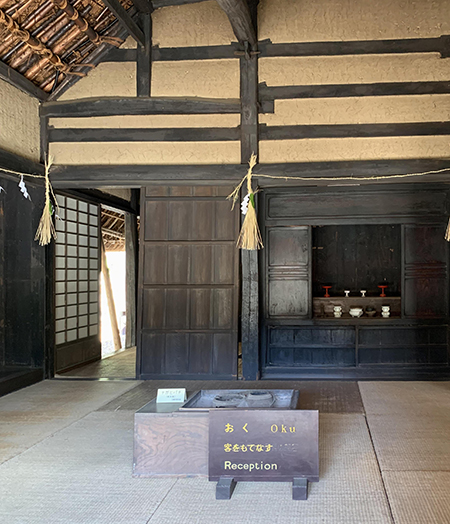
この出羽三山麓の菅原家住宅でも、カミデイは唯一の畳敷の部屋で、
現代で言えば村長にも相当する肝煎〜きもいり〜の家柄ということで、
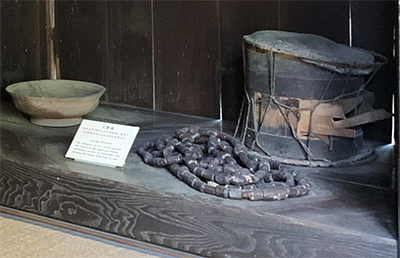
村の人々がここに集まって、大きな数珠をみんなで繰回しながら念仏を唱える、
いわゆる百万遍念仏を行ったという。
これは複数の人間が同時同音で念仏を唱えることによって互いの念仏の功徳を
融通しあうことが出来るとする考えに基づいている。
念仏を唱えることが功徳でありその回数を集団的に実現させるという習俗。

床の間に飾られている数珠を何人も手渡ししながら行っていたとされる。
こういう風習が根付いた当初には特定の仏教的な考え方がある。
百万遍念仏と極楽往生を結びつけた最初の人物は唐の迦才(『浄土論』)。
日本には平安時代に伝来し「浄土教」流行とともに盛んになった。
鎮護国家思想以来、宗教に深く関わる朝廷がこの様式を認証したことで、
室町から戦国にかけて地方の村々の間にまで百万遍念仏が広まったとされる。
そういういわば公的性格を帯びた行事がこの地域でも伝統として保守されてきた。
床の間の隣りに「アミダサマ」が設けられるのもこの家の特色だという。

これはあきらかに阿弥陀如来。「浄土教」においては阿弥陀如来一仏を本尊とする。
浄土教諸宗において主に用いられる『仏説無量寿経』では、
「無量寿仏の威神光明、最尊第一にして、諸仏の光明及ぶこと能わざるところなり」。
北陸地方は本願寺勢力の根拠地とされるが、環日本海地域北辺として、
出羽三山地域も同様の文化圏にあったと理解するべきなのだろう。
・・・新聞、テレビなどの情報化社会の進展でこうした宗教文化風習は淘汰されていく。
静かな、内省的な時間が家庭から奪われて騒々しい情報の雑音に取り囲まれ
その時間が宛てられていたと思われる「祈りの時間」が消え去った・・・。


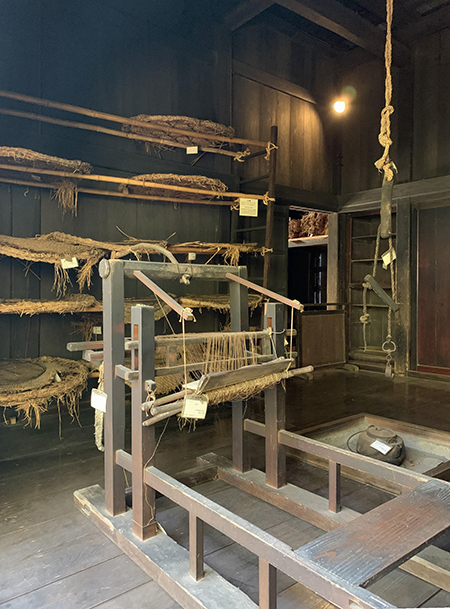
そして家の女性たちが奏でていた機織りのリズム感も遠く消え去っていった。
ラジオやテレビが家庭に入り込む以前の暮らしには、
規則的なリズム感、音楽性とは機織りのそれしかなかったのではないか。
いまにして思うと、情報が家庭になだれ込んできた一方、
大切ななにかが失われたとも感じる。

English version⬇

[Loss of prayer and weaving from the house / Good Japanese house ㉓-5]

When did the Japanese become the majority of “non-religious” as they are now?
Looking at an old folk house, what is the most difficult space in all?
It is clear that ancestor worship and devotion to the gods and Buddha are the basic components.
Even in the Sugawara family’s house at the foot of Mt. Dewa, Kamiday is the only room with tatami mats.
In modern times, it is a family of liver roast that is equivalent to the village mayor.
Villagers gather here to sing Nembutsu while repeating large beads together.
It is said that the so-called Million Honorable Buddha was performed.
This is the merit of each other’s Nembutsu by chanting Nembutsu with the same sound at the same time by multiple people.
It is based on the idea that we can be flexible.
It is a merit to recite the Nembutsu, and it is a custom to collectively realize the number of times.

It is said that many people handed over the beads displayed between the floors.
When these customs took root, there was a particular Buddhist way of thinking.
The first person to connect the million Buddha and paradise was the Tang dynasty (“Jodo theory”).
It was introduced to Japan during the Heian period and became popular with the “Pure Land Buddhism” epidemic.
Since the imperial court, which has been deeply involved in religion since the idea of ​​the chingo kokka, has certified this style,
It is said that a million Buddhas spread from Muromachi to the Warring States period among the local villages.
Events with such a public character have been maintained as a tradition in this area as well.
It is said that the characteristic of this house is that “Amidasama” is installed next to the alcove.

This is obviously Amida Nyorai. In “Pure Land Buddhism”, Amida Nyorai Ichibutsu is the principal image.
In the “Buddhist Theory Mugenjukei”, which is mainly used in the Pure Land Buddhist denominations,
“The prestige of the Buddha of Infinite Life, the most precious first, is the place where the light of the Buddhas cannot reach.”
The Hokuriku region is considered to be the base of the Honganji forces, but as the northern part of the Pan-Japan Sea region,
It should be understood that the Dewasanzan area was also in a similar cultural area.
… Such religious and cultural customs are being eliminated with the development of information-oriented societies such as newspapers and television.
Quiet, introspective time is taken away from home and surrounded by noisy information noise
The “prayer time” that seems to have been addressed to that time has disappeared …

And the rhythmic feeling of weaving played by the women in the house has disappeared.
For life before radio and television entered the home,
Perhaps the only regular sense of rhythm and musicality was that of weaving.
When I think about it now, while information has flowed into my home,
I also feel that something important has been lost.

【雪国チョーナ梁古民家 in出羽/日本人のいい家㉓-4】


以前、五箇山の古民家紹介の回で、雪国多雪地域での構造材として
チョーナ梁という材料について触れた。
これは根曲がり材で、成長期の初期に厳しい気候風土条件から
根曲がりを余儀なくされ、しかしそこからくじけることなく成長した木材。
そういった素性なので、構造強度的に木材としては頑丈で、
木組みでうまくその特徴を活用させれば全体構造を強化できるとされてきた。
そういった木組みの知恵がここ山形出羽三山麓の家でも活かされていた。
写真は上が「シモデ」という居室で、中が「オメエ」という主要居室。
ほぼ家の中央部分にあたる箇所で、それぞれ外側に向かってチョーナ梁の
根曲がり部分が降りて行っている様子がわかる。
多雪地域の屋根荷重に対し辛抱強く耐え続け300年近い風雪を支えてきた。

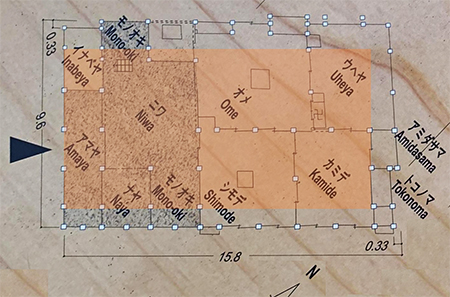
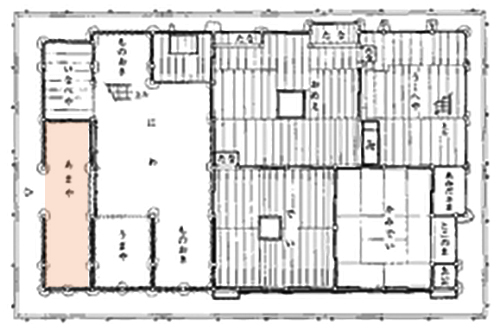
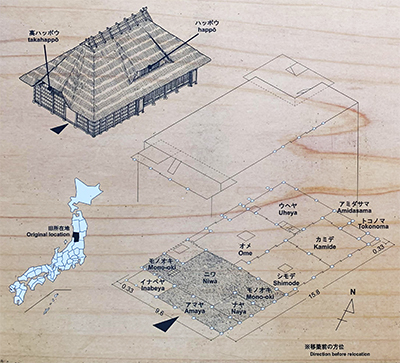
図面の建物の真ん中部分を薄く色づけたけれど、
この部分が構造の基本部分で、一部は太く梁掛けして柱が省略されながらも
コアを形成していて、短軸方向でチョーナ梁が掛けられている。
そのさらに外周は下屋部分になっている。木組みの伝統技術の工夫がわかる。
縁という「動線空間」は下屋部分がそれに相当するのが基本なのだろうが、
積雪寒冷の気候風土条件では、その空間は室内に取り込まれていった歴史を
そこに表現しているように思う。
そう考えるとほぼこの半間空間に台所機能が集中していることも理解可能か。
空間意識的には「半外部」的な捉え方・認識があったように思われる。
いずれにせよ、建築としての「主体構造」は中心の柱とチョーナ梁の架構だった。
この構造が日本の伝統的な積雪荷重対応のひとつだったのだと思う。
明治以降の北海道の木造建築でこうした「伝統」がどうであったのか、
今後、注意深く痕跡を探索してみたいと思います。

コロナ禍での移動制限・抑制局面で、古民家の研究を
半分以上は、やむを得ざるブログテーマ探究として続けてきていますが、
そうすると主に江戸期の社会状況がさまざまに想起されてくる。
個人的にわが家の家系史と重ね合わせていくことで、
いろいろな目線からの再発見があって、尽きることがありません。
わが家には、関ヶ原の慶長年間からの若干の文字記録もあるので、
いわば血肉の部分でも、状況が活写されてくるものが感じられる。
コロナ禍の数少ない前向きの側面だろうかと、気づき始めております。

English version⬇

[Wooden frame of an old folk house in the snow country, Chona beam / Good Japanese house ㉓-4]

Previously, in the introduction of old folk houses in Gokayama, as a structural material in the snowy country heavy snow area
I touched on a material called Chona Beam.
This is a root bend, due to harsh climatic conditions early in the growing season
Wood that has been forced to bend, but has grown from there without breaking.
Because of such features, it is sturdy as wood in terms of structural strength,
It has been said that the overall structure can be strengthened by making good use of its characteristics in a wooden frame.
The wisdom of such a wooden structure was also utilized here at the house at the foot of Mt. Dewa, Yamagata.
The photo above is the room called “Shimode”, and the inside is the main room called “Omee”.
Almost in the center of the house, each of the chona beams facing outward
You can see how the bent part is going down.
It has endured the roof load in heavy snow areas patiently and has supported the wind and snow for nearly 300 years.

I colored the middle part of the building in the drawing lightly,
This part is the basic part of the structure, and although some of the pillars are thickly beamed and omitted
It is installed as a basic structure, and a chona beam is hung in the minor axis direction.
Furthermore, the outer circumference is the lower part. You can see the ingenuity of traditional wooden construction techniques.
The “traffic line space” called the edge is basically the lower part, but
Under the climatic conditions of snow and cold, the space has a history of being taken into the room.
I think it’s expressed there.
If you think so, can you understand that the kitchen functions are concentrated in this half space?
From a spatial consciousness, it seems that there was a “semi-external” way of thinking and recognition.
In any case, the “main structure” as an architecture was the frame of the central pillar and the chona beam.
I think this structure was one of the traditional Japanese snow loads.
How was this “tradition” in the wooden architecture of Hokkaido after the Meiji era?
In the future, I would like to carefully explore the traces.

Research on old folk houses in the phase of movement restriction / suppression in the corona wreck
More than half continue as an unavoidable blog theme quest,
Then, the social situation of the Edo period is mainly recalled.
By personally superimposing it on the family history of my family,
There is a never-ending rediscovery from various perspectives.
My family also has some text records from the Keicho era in Sekigahara, so
So to speak, even in the blood and flesh part, you can feel that the situation is captured live.
I’m starting to realize that it’s one of the few positive aspects of Corona.

【多雪地「風除室」の働く道具/日本人のいい家㉓-3】


すぐ上の図面で彩色した部分が「風除室」で入口すぐの場所。
「あまや」というコトバが宛てられているけれど、
漢字を表記すれば「雨屋」とでもなるのだろうか。
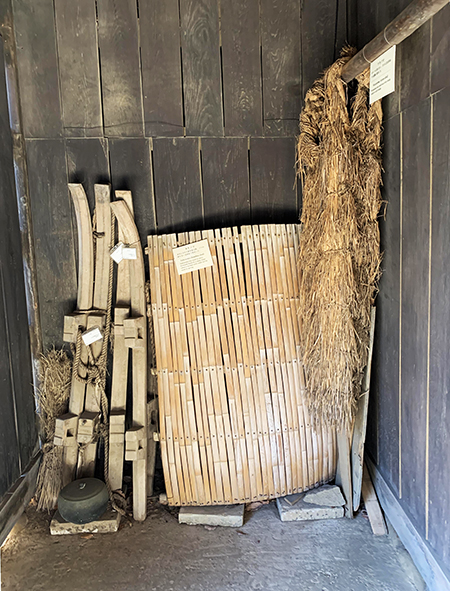
たしかに「蓑」が下げられていたりするので、表現が似合いそう。
風除室というのは、積雪寒冷地域では生活上需要の大きい場所なので、
現代住宅でも多く採用されている。その古民家での収納の様子。
暮らし、労働に直結する道具類が収められていて人間の息づかいを感じる。

冬になると3mを越す積雪が集落を襲う。春まで融けることのない「根雪」は
11月初旬に降り、翌年5月を待たなければ雪から解放されなかった。
最低気温も零下3度くらいまで下がり小さい子どもは泣きながら学校に通ったと。
大切なわが家を雪から守る対策が講じられました。
建物の軒から下を守る「雪囲い」や、家の周囲に巡らされた「ホリ」・ため池は、
浄水であると同時に消雪の役割も果たしたとされます。
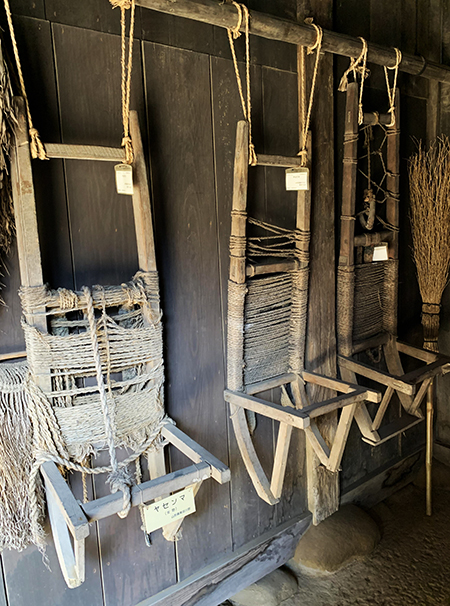
冬中、暮らしに必要な物資の運搬にはソリやタケノマなどを使用して、
人間もカンジキを履いて足場の悪い雪道往来を工夫していました。
タケノマというのは写真の竹を編んだような面状のもの。
冬期間雪の山中から薪を運搬する際などに重宝して利用されたという。
背中にはヤセンマという呼び名の背負子でも、物資を運んだ。
長い冬を乗り切るために食料の保存方法も工夫された。
床下には「モロ」貯蔵室が作られ、冬中雪を積んだ天然の「冷蔵庫」も作って
野菜などを保存させた。長期保存の漬物が作られ続けたのは自然でしょう。

雪を融かすためにため池を家の周りに作ったのは
北海道ではちょっと考えにくい工夫と思われる。
現代でも日本海側の東北・北陸地域では消雪のため道路に水が流される。
その知恵はこれら地域では一般的のようです。
たぶん北海道でも移住初期にはそういう試行もあったかも知れないけれど、
マイナス10度、20度さらには30度という低温の風土で
この雪国ニッポンの知恵はまったく通用しなかっただっただろう。
巨大なスケートリンクや氷柱が住宅周辺にできることになる。
雪囲いが装置されるからか、案外外壁の板張りはラフな仕上げ。
この住居ではかなり「すき間」が目立っているけれど、
積雪という天然の「断熱層」のなかで、気温低下がそれほどでない場合、
湿気が籠もるということもあったのではないかと想像できる。
半年の「耐え忍ぶ冬」という概念が身に迫ってくるように感じる。
こういう長きにわたった民族体験は、DNAに辛抱強い性格を涵養するだろう。
一方、翻って北海道のドライな雪質のひたすら寒冷な冬は
日本人にどういう心象を形成し、やがてDNA化していくことになるのか、
北海道人としてわがことながら、興味を強く持っている。
なにか、すでにして東北地域・北陸地域の「地域性格」とはすこし乖離が
生まれつつあるようにも思っております。・・・

English version⬇

[Working tools for the heavy snowfall “windbreak room” / Japanese good house ㉓-3]

The part colored in the drawing just above is the “windbreak room”, which is right next to the entrance.
Although the word “Amaya” is addressed,
If you write the kanji, will it be “Ameya”?
Certainly, “Mino” is lowered, so the expression seems to suit.
The windbreak room is a place where there is a great demand for daily life in snowy and cold regions, so
It is also widely used in modern homes. The state of storage in the old folk house.
It contains tools that are directly related to living and labor, and you can feel the breath of human beings.

In winter, more than 3m of snow hits the village. “Neyuki” that does not melt until spring
It got off in early November, and I had to wait for May of the following year before I was released from the snow.
It is said that the minimum temperature dropped to about 3 degrees below zero and small children went to school crying.
Measures have been taken to protect our precious home from snow.
The “snow fence” that protects the bottom from the eaves of the building and the pond called “Hori” that surrounds the house
It is said that it played a role of removing snow as well as purifying water.
During the winter, sleds and bamboo sledges are used to transport supplies necessary for daily life.
Humans also wore snowshoes to devise traffic on snowy roads with poor footing.
Even a backpack carrier named Yasenma carried supplies on his back.
Food preservation methods have also been devised to survive the long winter.
A storage room called “Moro” was created under the floor, and a natural “refrigerator” loaded with snow during the winter was also created.
I used to store vegetables. It is natural that pickles have been continuously made for long-term storage.

The reason why the pond was built around the house to melt the snow
It seems to be a little difficult to think about in Hokkaido.
Even today, in the Tohoku and Hokuriku regions on the Sea of ​​Japan side, water is flowing on the roads to eliminate snow.
That wisdom seems to be common in these areas.
Perhaps even in Hokkaido, there may have been such an idea in the early days of emigration,
In a low temperature climate of -10 degrees, 20 degrees and even 30 degrees
I think it was the wisdom of “Snow Country Japan” that didn’t work at all.
Huge skating rinks and icicles will be created around the houses.
The boarding of the outer wall is unexpectedly rough, probably because the snow fence is installed.
There was a lot of “gap” in the restored house, but
If the temperature does not drop so much in the natural “insulation layer” of snow cover,
I can imagine that there was a case where the humidity was trapped.
It feels like the concept of “winter to endure” for half a year is approaching.
Such a long-standing ethnic experience will cultivate a patient personality in DNA.
On the other hand, in the cold winter of Hokkaido with dry snow.
What kind of image will be formed and will eventually become DNA?
As a Hokkaido citizen, I have a strong interest in it.
Something is already a little different from the “regional character” of the Tohoku and Hokuriku regions.
I also think that it is being born.・ ・ ・

【雪国的開口部「ハッポウ造」/日本人のいい家㉓-2】


札幌も年間積雪量は6m近い豪雪地域。さらに人口の8割以上が集中する
日本の「温暖地域」が年平均気温がおおむね16度前後のなか、8度程度と寒冷気候。
そうであるのに、人口195万人(2015年調査)という世界寒冷地有数の大都市。
日本ではこういう積雪寒冷地に大都市を造営発展させるについて、
その居住環境の研究開発ということは明治以前まではまったくされなかった。
いや、戦前までほとんど実際的研究開発は進んでいなかったといえるだろうか。
明治の開拓が始まって、後に総理大臣にもなる薩摩閥の黒田清隆が
「洋造住宅」の旗振りを積極的に推進したことで、その端緒はできたけれど、
北米・北欧地域自体での研究開発もそこまで進んではいなかったので
手探りで遅々とした歩みが続けられていたと言えるのでしょう。
それが戦後になって、ブロック造三角屋根という地域自治体が積極推進する
工法開発努力の開始があって、一気に研究開発が加速した。
北米北欧でも同様に戦後大きく住宅性能進化が始まって、
呼応するカタチで、北海道では官民挙げた努力が本格化した。
そのような成果が札幌の人口急増という結果であったのかも知れません。
また、北海道が観光地としても人気が高いのは、
冬期家の外は寒いし多雪だけれど、家の中は温暖地以上に快適であることが、
体感的魅力としてアピールできていることも大きいと思える。
いま環境負荷軽減をさらに進めるために、また進化の社会的要請は高まっている。

一方で日本の古来からの民家住宅で積雪寒冷地の古民家も残っている。
この山形県の日本海側、出羽三山・湯殿山、月山の山麓地域の菅原家住宅は、
寒冷・多雪という気候条件では北海道と近似する地域性。
はるかな民族的近縁性を感じる。そこでどのような「対応」があったのか、
再検証するような思いでチェックしたいと思っています。
きのうは日本の江戸期古民家での調理・台所の様子を集中的に見ましたが、
本日は外観的な特徴、多雪地域対応としての「ハッポウ造」。
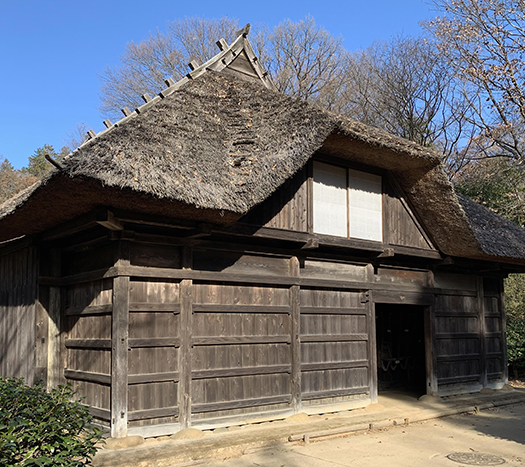
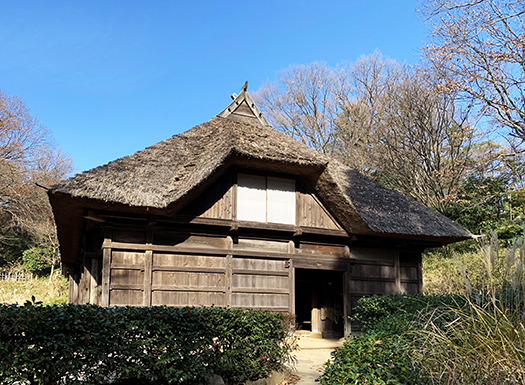
写真は妻側入口の2階部分に設けられたハッポウ造の様子。
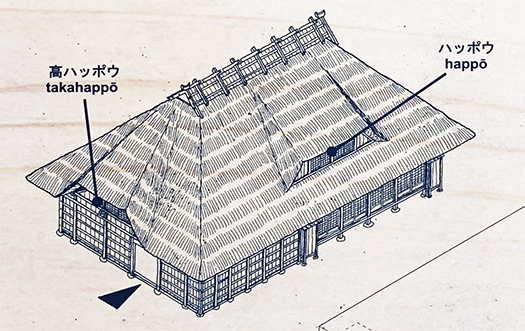
〜妻側入口上部2階はセガイで持ち出し高ハッポウと呼ばれる開口部を設ける形が、
この家の外観の最も大きな特徴。この地方は有数の豪雪地帯で、高ハッポウは
積雪時の出入口としても利用したようである。また、屋根の平側にも
開口部(ハッポウと呼ぶ)を設け、小屋裏の採光と換気に役立てている。〜
という説明が川崎市教育委員会の解説にある。
セガイとは船枻造(せがいづくり)という手法で気仙大工がよく使う出桁の造り。
母屋に用いれば貫禄を高め、小屋に用いれば機能的空間が生まれる。
写真でもそのせり出しぶりはわかる。
積雪深が1階を越えて、2階からしか出入りできなくなることへの対応。
さらにこの地域では明治期に養蚕が盛んになったとされ、
そのための通気・換気・採光という意味合いから採用されたと推測されている。
ハッポウというコトバの意味合いはよくわからないけれど、
正面から見れば左右に八の字のように開いていることが感覚表現されたのか。
札幌も積雪深はそこそこだけれど、こういった工夫は存在しない。
もっと積雪深の深い岩見沢地域などでも、このような冬期専用開口は見られない。
想像では北海道の雪質は軽く、除雪がしやすい特徴があるので、
家の周りの積雪についてもそれを処理しやすいということがある。
一方で山形出羽三山周辺では雪質が重く、除排雪は困難ということのように思える。
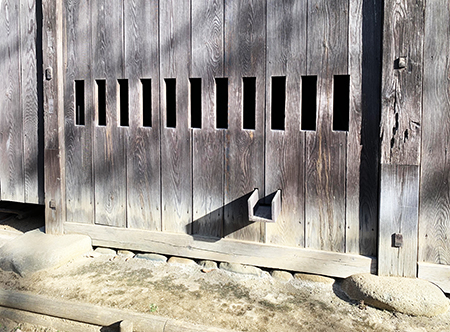
2階からの出入りが建築的に造作され、1階でも外壁に頑丈そうな板が
張り回されて積雪対策としていることからも、雪質の重さが伝わってくる気がします。

English version⬇

[Snow country opening “Happo-zukuri” / Japanese good house ㉓-2]
Sapporo is also a heavy snowfall area with an annual snowfall of nearly 6m. Furthermore, more than 80% of the population is concentrated
Japan’s “warm regions” have a cold climate of about 8 degrees Celsius, with an average annual temperature of about 16 degrees Celsius.
Even so, it is one of the largest cities in the world’s cold regions with a population of 1.95 million (2015 survey).
In Japan, about building and developing a big city in such a snowy cold region
Research and development of the living environment was not done at all until before the Meiji era.
No, can we say that practical research and development had hardly progressed before the war?
Kuroda Kiyotaka, a Satsuma sect who later became Prime Minister after the development of the Meiji era began
By actively promoting the flag waving of “Western-style houses,” the beginning was made, but
R & D in North America and Northern Europe itself has not progressed to that extent.
It can be said that the slow steps were continued by groping.
After the war, the local government called block-built triangular roof actively promoted it.
With the start of construction method development efforts, research and development accelerated at a stretch.
Similarly, in North America and Scandinavia, the evolution of housing performance began significantly after the war,
In response, the efforts of the public and private sectors have begun in earnest in Hokkaido.
Such a result may have been the result of the rapid increase in the population of Sapporo.
In addition, Hokkaido is also a popular tourist destination.
It’s cold and snowy outside the house in winter, but the inside of the house is more comfortable than in warm climates.
I think that it is also great that it can be appealed as a sensational attraction.
Nowadays, social demands for evolution are increasing in order to further reduce the environmental load.

On the other hand, there are still some old Japanese houses in the snowy and cold regions.
The Sugawara family residence in the foothills of Mt. Dewa, Mt. Yudono, and Mt. Gassan on the Sea of ​​Japan side of Yamagata Prefecture is
Regional characteristics similar to Hokkaido under the climatic conditions of cold and heavy snow.
I feel a far greater ethnic connection. What kind of “correspondence” was there?
I would like to check it with the feeling of re-verifying.
Yesterday, I focused on cooking and kitchen in an old folk house in the Edo period in Japan.
Today’s exterior feature is “Happou-zukuri” for heavy snowfall areas.
The photo shows the Happou structure on the second floor of the entrance on the wife’s side.
~ The upper 2nd floor of the entrance on the wife’s side is taken out with a segai, and an opening called a high happou is provided.
This is the most distinctive feature of the exterior of this house. This region is one of the most heavy snowfall areas, and the high happo is
It seems that it was also used as a doorway during snowfall. Also on the flat side of the roof
An opening (called Happou) is provided to help with daylighting and ventilation of the back of the cabin. ~
The explanation is in the explanation of the Kawasaki City Board of Education.
Segai is a girder structure that is often used by Kesen carpenters in a construction method called ship making.
When used in a main building, it enhances dignity, and when used in a hut, a functional space is created.
You can see how it is protruding from the photo.
Correspondence that the snow depth exceeds the first floor and can only enter and exit from the second floor.
Furthermore, it is said that sericulture became popular in this area during the Meiji era.
It is presumed that it was adopted from the meaning of ventilation, ventilation, and daylighting for that purpose.
I don’t really understand the meaning of Happou, but
Did it feel like it was open to the left and right like a figure eight when viewed from the front?
The snow depth is moderate in Sapporo, but there is no such device.
Even in the Iwamizawa area, where the snow depth is deeper, such winter openings cannot be seen.
Imagine that the snow quality in Hokkaido is light and it is easy to remove snow, so
Sometimes it’s easier to handle the snow around the house.
On the other hand, the snow quality around Yamagata Dewasanzan is heavy, and it seems that it is difficult to remove snow.
The entrance and exit from the 2nd floor is architecturally designed, and even on the 1st floor there is a sturdy board on the outer wall
I feel that the weight of the snow quality is transmitted from the fact that it is stretched around to prevent snow accumulation.

【調理の場・積雪の山形農家/日本人のいい家㉓-1】


日本人のいい家シリーズ、北方日本の冬、山形の暮らしです。
過去取材してストックしていた民家写真を題材に、手掘りで暮らしよう探索。
わたしは北海道生まれで根付いてから3代目ですが、
日本人の積雪寒冷の暮らしの知恵は、やはりベースは東北・北陸にあるのでしょう。
日本海交易も盛んで、北海道と東北日本海側、山形秋田は親しい。
この「菅原家住宅」は出羽三山、湯殿山麓の農家住宅で
17世紀末期建設ということですので、300数十年経過の住宅。
江戸時代中期ということになる。


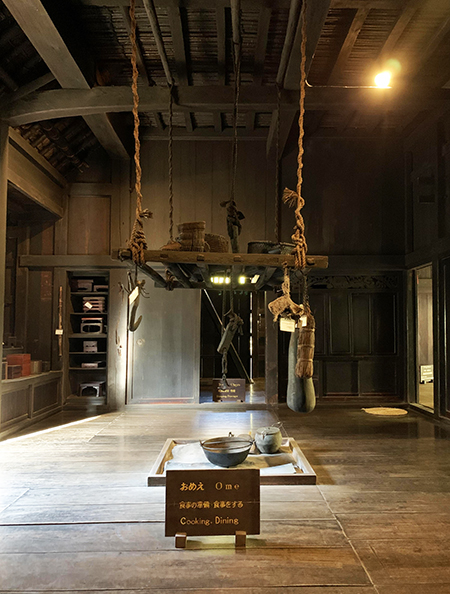
なんですが、本日はここのところ気になっている「調理の場」篇。
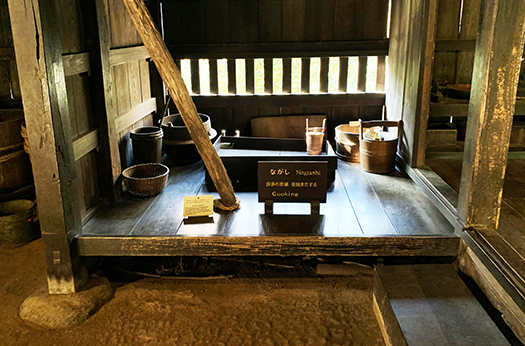
やはり「流し」は板敷きの間にあって、調理作業は「座って」行っている。
手許に採光をもたらすために窓が正面に開けられている。
流しなので、食品を洗い、切る作業後、その排水を外部に排出している様もみえる。

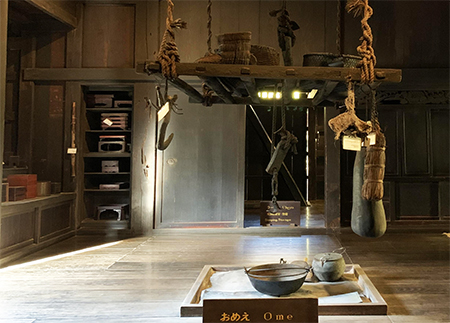
メインの居住空間である「オメ」の自在鉤のある囲炉裏端が
普段の調理火力だろうと思えます。
炊飯などの用のおくどさんは土間にあったハズですが、写真が残っていません。
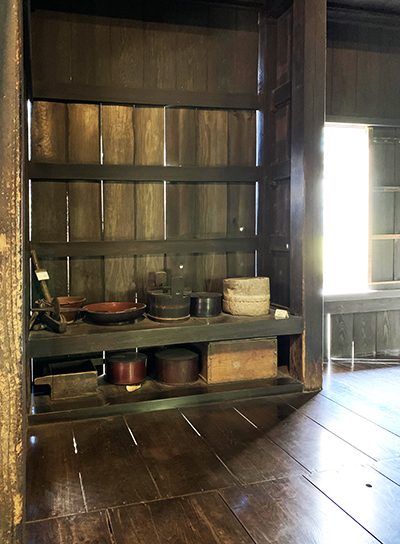
調味料などの貯蔵食品棚が流しに隣接して配置されている。
オメの写真左手奥には膳部などの収納箇所も見えている。
たぶん、土間から流し、貯蔵棚、膳部収納庫という調理作業動線がみえてくる。
それらが、オメの囲炉裏空間での食事を用意した場ということ。

現代のキッチンと比べて、いかにも「立ち働く」スペースが大きい。
その上、流しでは食材の洗浄・準備、さらに食後の食器洗浄など
座っての作業が基本体動ということになる。
立ち働くのだけれど、そこに座ったり立ったり動き回ったりという体動が加わる。
3度3度の食事準備作業というのが、いかに大変だったかが偲ばれる。
とくに「流し」の作業が座って、というのはやはりツラかっただろうと思います。
この作業体位が立って行うように変化して、さらに水道・火力が
コンパクトに平面的に連なって構成されるようになった「台所革命」は
日本人のいのちにとって、すべてを革新したのであろうことが明らかですね。
料理のバラエティも広がり、栄養摂取の点でもはるかに進化したに違いない。
日本の母性はこうした作業を日夜続けていのちを繋いできてくれた。
まことに深い愛情をそこに感じさせられます。

English version⬇

[Cooking place / Snowy Yamagata farmhouse / Japanese good house ㉓-1]

A series of good Japanese houses, winter in northern Japan, living in Yamagata.
Exploring how to live by hand digging based on the photographs of private houses that were collected and stocked in the past.
I was born in Hokkaido and have taken root, but I am the third generation
The wisdom of Japanese people living in the snow and cold is probably based in Tohoku and Hokuriku.
Trade in the Sea of ​​Japan is also active, and Hokkaido and the Tohoku Sea of ​​Japan side, Yamagata Akita are close.
This “Sugawara family house” is a farmhouse at the foot of Mt. Dewa and Yuden.
Since it was built at the end of the 17th century, it is a house that is more than 300 years old.
This is the middle of the Edo period.

I’m curious about the “cooking place” edition today.
After all, the “sink” is between the boards, and the cooking work is done “sitting”.
Windows are opened in front to bring daylight to your hands.
Since it is a sink, it seems that the wastewater is discharged to the outside after washing and cutting the food.
The hearth end with a free hook of “Omee” which is the main living space
I think it’s the usual cooking firepower.
Okudo-san for cooking rice etc. was in the dirt floor, but there are no photos left.
Stored food shelves such as seasonings are placed adjacent to the sink.
In the back on the left side of the photo of Omee, you can see the storage area such as the table.
Perhaps you can see the flow of cooking work, such as the storage shelves and the dining room, which are washed away from the dirt floor.
That is the place where they prepared meals in the hearth space of Omee.

Compared to modern kitchens, there is a lot of space to “stand and work”.
In addition, in the sink, the ingredients are washed and prepared, and the dishes are washed after meals.
The work of sitting is the basic body movement.
I work standing up, but the physical movements of sitting, standing, and moving around are added.
It reminds me of how difficult it was to prepare meals three times and three times.
In particular, I think it would have been a pain to sit down for the “sink” work.
This working position changes to stand up, and the water supply and thermal power increase.
The “kitchen revolution” that has come to be constructed in a compact and two-dimensional manner
It’s clear that for Japanese life, it must have revolutionized everything.
The variety of dishes has expanded, and it must have evolved far in terms of nutrition.
Motherhood in Japan has continued such work day and night and connected the lives.
It makes me feel a deep affection there.

【新しい「報道情報」のあり方? データ解析的ミカタ】


先日、菅首相の内閣参与を務めている高橋洋一氏のことを書きました。
で、かれはWEB、YouTube番組の数多くに出演している。
この手の時事評論番組では、「こうであるべきだ」論が多数派だけれど、
かれはそういった傾向はあまり感じられず、「◎◎がだめ」という論調よりも、
データ分析的で未来予測論が特徴的。「こうなるのが自然」という理系判断。
よくわたしも視聴している番組に、もと東京新聞論説委員の長谷川幸洋氏との
対論番組がある。「長谷川幸洋と高橋洋一のNEWSチャンネル」
その最近のマスコミ論の回で面白いデータを見た。

コロナ禍が世界を席巻しているのだけれど、
これまでのマスコミ論調を見ていると、うつむきたくなるような気持ちになる。
21世紀になって初めてで、対策も未分明なパンデミックに対して
政権批判を煽る題材にし大衆扇動するかのようなのがマスコミの大勢。
そういう傾向に疑問を感じている人間には、非常に新鮮に感じられた視点。
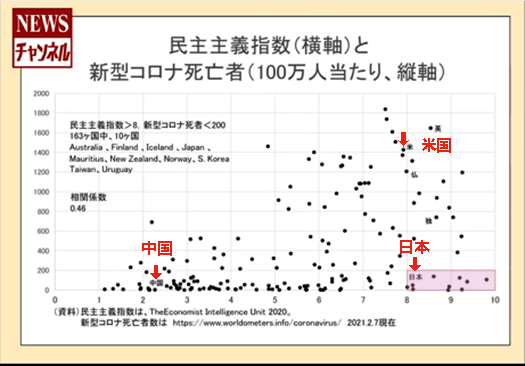
この散布図データは、横軸に英国・エコノミスト誌の分析する
「民主主義指数」をとって、右側に行くほど「民主的国家」という分析結果。
独裁国家中国はご覧のような位置に存在する。
そして縦軸には全世界の人口100万人当たりの「死者数」をとったモノ。
その交差するポイントにその国の現状を当てはめている。
当然、上に行くほどに惨禍が凄まじいことを表している。
このようなマッピングをすると、現代世界とコロナ禍は右肩上がり三角形を示す。
コロナ対策に失敗した英国・アメリカは最上位に位置している。
自由社会と強権社会でコロナ禍の様相がまったく違うことがわかる。
独裁国家は、感染症対策でも超絶的な専制圧政を発揮するので
感染パンデミックは抑え込むことが可能になる。
中国の武漢の封鎖状況をわれわれは歴史の証人として実見した。
こういう表を見ると、今回のパンデミックの本質的意味合いが見えてくる。
そして日本を初め10国ほどが奇跡的な対応成果が表れている。
豪州・ニュージーランド・台湾・アイスランド・フィンランド・ノルウェイ・ウルグアイなど。
民主的自由社会の圧倒的優越性を支持する多くの人々は
この図の右下にあることを目指すだろうし、感染症に罹りたくない一心で
自由のない世界に住みたいとは間違っても思わないだろう。

わたしが目を見張る思いがしたのは、
こういった「現実の数学的な解析」を企図する意思に対してです。
事実がどのようであるか、数字と図表は客観的に訴求してくれる。
現実のメディアではほとんど「こうあるべきだ」論が声高に言われるだけで、
「どうしたらいいのか」という選択についての論理的解明視点がない。
それ以上に、現実をしっかりとみつめ分析するという基本的な視点が
すでに既存のマスコミには期待できないのではないかということ。
今回のコロナ禍のような現実に対して、
この表のような冷静な解析が効果を発揮すると思われる。
高橋洋一氏いわく、現状では数学的データ分析などはかれらマスコミに
望むべくもないのが実態だと指摘していた。
ただ、有益な情報を提供していた海外紙・英国のエコノミスト誌などは
たぶんスタッフにデータ分析の専門家がいるだろうと推論していました。
既成マスメディア側からの「反論」の動きを期待したいけれど、さて。
残念ながら、WEBでの発言など無視を決め込むのだろうけれど・・・。

English version⬇

[What is the new “news information”? Data analysis perspective]

The other day, I wrote about Mr. Yoichi Takahashi, who is the Special Advisor to the Cabinet of Prime Minister Suga.
So, he has appeared on many WEB and YouTube programs.
In this kind of current affairs critic program, the majority of the theory is “this should be”,
He doesn’t feel that kind of tendency so much, rather than the tone of “◎◎ is no good”.
Data analysis and future prediction theory are characteristic. A science judgment that “this is natural”.
A program I often watch with Yukihiro Hasegawa, an editorial writer for the Tokyo Shimbun.
There is a dialogue program. “NEWS channel of Yukihiro Hasegawa and Yoichi Takahashi”
I saw some interesting data in that recent press episode.

The corona wreck is sweeping the world,
Looking at the media tone so far, I feel like I want to look down.
For the first time in the 21st century, against a pandemic whose countermeasures are unclear
Many media outlets seem to incite the mass media with the subject of inciting criticism of the administration.
A very fresh perspective for people who are skeptical about such trends.
This scatter plot data is analyzed by The Economist in the UK on the horizontal axis.
Taking the “democracy index”, the analysis result is “democratic nation” toward the right.
The dictatorship China is in the position you see.
And on the vertical axis is the “number of deaths” per million people in the world.
The current situation of the country is applied to the intersection.
Naturally, the higher you go, the more terrible the disaster is.
With this mapping, the modern world and the corona wreck show a rising triangle.
The United Kingdom and the United States, which failed to take measures against corona, are at the top.
It can be seen that the appearance of corona sickness is completely different between a free society and a powerful society.
Because the dictatorship exerts a transcendent tyranny even in infectious disease control
Infectious pandemics can be suppressed.
We saw the blockade of Wuhan in China as a witness of history.
Looking at such a table, we can see the essential meaning of this pandemic.
And about 10 countries including Japan are showing miraculous response results.
Australia, New Zealand, Taiwan, Iceland, Finland, Norway, Uruguay, etc.
Many people who support the overwhelming superiority of a democratic free society
You’ll aim to be in the lower right corner of this figure, and you don’t want to get an infectious disease.
You wouldn’t want to live in a world without freedom.

What I was amazed at was
This is for the intention of planning such a “mathematical analysis of reality”.
Numbers and charts objectively appeal to what the facts are.
In the real media, most of the “should be” theory is loudly said.
There is no logical elucidation perspective on the choice of “what to do”.
More than that, the basic perspective of firmly gazing at and analyzing reality
You can’t expect from the existing media.
For the reality like this corona wreck
A calm analysis like this table seems to be effective.
According to Mr. Yoichi Takahashi, at present, mathematical data analysis etc. are in the media.
He pointed out that the reality is that there is no hope.
However, overseas newspapers and the Economist magazine in the UK that provided useful information
I was inferring that the staff would probably have a data analysis expert.
I would like to expect the movement of “counter-argument” from the established mass media side, but by the way.
Unfortunately, I’m sure I’ll ignore what I say on the web …

【冬の散歩道街角アート「雪だるま」に癒やされる】


13日土曜深夜には福島県沖地震発生。
わたしはぐっすりと気絶しておりましたが、夜中に目覚めて知った次第。
盛岡在住の時代小説作家・高橋克彦さんのFacebookを見たら、
「歳のせいか、長引いているコロナ禍へのうんざり感もあったのか、
もはやどうにでもなれ、という諦め半分の気持ちに襲われ・・・」とあったけど、
コロナ禍でほとほとしているからか、まったく同感できました。
わたしも寝起きでスマホからの情報を見て咄嗟にそう感じた・・・。
寝ぼけの心理というのは、いろいろな現実への対応とはまた違うものなので、
やがて、心理の整理整頓がついてくると、いやいや、それどころではない。
ちょうど福島から仙台経由で研修にくる新人スタッフもいるし、
地震被害の規模もまったく不明の状況のなか、仙台事務所のスタッフの
安否情報も確認しなければならない。
深夜なのですぐに確認はできないので、そういったアタマの整理と
ToDo対応を検討することになっていった。
幸いにして全員無事が確認され、昨日月曜日になって無事新人スタッフも
飛行機で来道、事務所も大きな混乱は見られない状況でした。
ほっとひと安心ですが、災害列島、常在危機管理が不可欠ですね。
その安堵後に、情報を見ると猛烈台風並み低気圧が列島を襲ってくる予想。
いま、16日朝5時の札幌は真冬の雨であります。
天気予報ではこれから大雪が襲ってくるということ。
昨日は日中気温はクルマの温度計では6度以上になって真冬の雪融け。
このグシャグシャの道路状況の上に冬の嵐が来そうというワケ。
う〜む、なんとも困った自然の猛威であります。

ということで、冬の雨ということが2日間、きょうも含めて3日間。
やむなく日課の早朝散歩は久しぶりの休みであります。
コロナに負けるなということで冬も1日10,000歩越えがずっと続いていましたが、
これでは休止もやむなし。やや残念だけれど筋肉の休暇も大切。
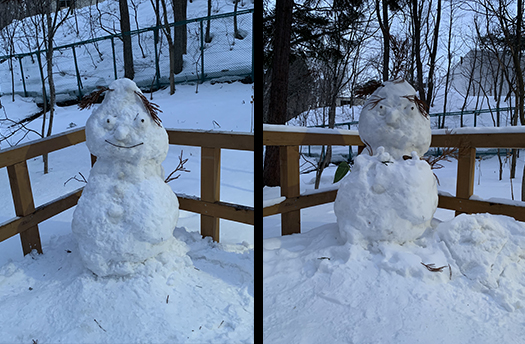
写真は毎日の散歩道途中で見かけて気に入っている雪だるまクン。
2/8に初確認したのですが、その後すこしづつ表情が変化している。
写真左が最初で右側が2/13撮影の様子であります。
きっと元気な子どもたちが雪を丸め周辺に散らばっている杉の落葉を集めて
堂々たる雪だるまにさらに表情をつけているものと思われます。
子どもの時には面白くて夢中になって作っていただけで、
だれがどう見るかということを考えたことはなかった。
しかし、こうして毎日見る立場になって見ると、これもまた無上に楽しい。
この雪だるまクンの特徴は目玉にあって、杉の葉が
黒目を見せてくれていて、特徴的。
いかにもドングリ眼が可愛いし、なにかを語りかけてくれているよう。
この5日間で気象条件とともに状況変化しているけれど、
作者の子どもさんたちは大事にメンテナンスしている様子も伝わってくる。
自分のアート作品に誇りを持ち、愛着を持って接している。
こういう子どもさんに静かに感動させられます。

さて、この雨とその後予想される暴風雪の中で
この雪だるまクン無事でいてくれるだろうか。
まぁしかし、たとえ壊れてしまっても、それはそれで子どもさんたちに
この世の無常を教えることにもなるワケで、深く意味がある。
冬の大嵐、みなさんくれぐれもお大事に。

English version⬇

[Winter promenade street corner art “snowman” heals]
The Fukushima-ken-oki earthquake occurred at midnight on Saturday, 13th.
I was fainted, but as soon as I woke up in the middle of the night and found out.
If you look at the Facebook page of Katsuhiko Takahashi, an era novelist living in Morioka,
“Maybe because of my age, I was tired of the prolonged corona sickness.
I was half assured that I couldn’t do anything anymore … ”
I could totally agree with it, probably because I was relieved by the corona.
When I woke up and saw the information from my smartphone, I felt that way.
The psychology of sleepiness is different from dealing with various realities, so
Eventually, when psychological tidying up comes, no, it’s not the case.
There are also new staff who come to the training from Fukushima via Sendai,
While the scale of the earthquake damage is completely unknown, the staff of the Sendai office
You must also check your safety information.
Since it’s midnight, I can’t check it right away, so I’d like to sort out those headaches.
It was decided to consider ToDo support.
Fortunately, all of them were confirmed to be safe, and yesterday Monday, the new staff members were also safe.
I arrived by plane and the office was not in a big mess.
It’s a relief, but disaster archipelago and permanent crisis management are indispensable.
After that relief, looking at the information, it is expected that a fierce typhoon-like low pressure system will hit the archipelago.
It is raining in the middle of winter in Sapporo at 5 am on the 16th.
According to the weather forecast, heavy snow will hit from now on.
Yesterday, the daytime temperature was over 6 degrees Celsius on the car’s thermometer, and the snow melted in the middle of winter.
The reason why a winter storm is about to come on this rugged road condition.
Hmmm, it’s a terrible force of nature.

So, it’s been raining in winter for 2 days, including today for 3 days.
It is unavoidable that the early morning walk in my daily routine is a holiday after a long absence.
I had been over 10,000 steps a day in winter because I didn’t lose to Corona.
This is unavoidable. It’s a little disappointing, but muscle vacation is also important.
The photo is a snowman Kun that I see and like on the way every day.
I confirmed it for the first time on 2/8, but the facial expression has changed little by little since then.
The left side of the photo is the first and the right side is the 2/13 shooting.
I’m sure energetic children will roll up the snow and collect the fallen leaves of the cedar scattered around
It seems that the majestic snowman is even more expressive.
When I was a kid, it was fun and crazy about making it.
I never thought about who would see it.
However, when I look at it every day, it’s also extremely fun.
The characteristic of this snowman Kun is that it has cedar leaves.
It is characteristic because it shows black eyes.
The acorn eyes are so cute and they seem to talk to me about something.
The situation has changed with the weather conditions in the last 5 days,
You can also see that the author’s children are taking good care of the maintenance.
I am proud of my art work and treat it with attachment.
I am quietly impressed by these children.

Well, in this rain and the expected blizzard after that
Will this snowman be safe?
Well, but even if it breaks, it’s for the kids
It is also a reason to teach the impermanence of this world, and it has deep meaning.
Please take good care of everyone during the winter storm.

【古民家の床材「ハレとケ」/日本人のいい家㉒-4】


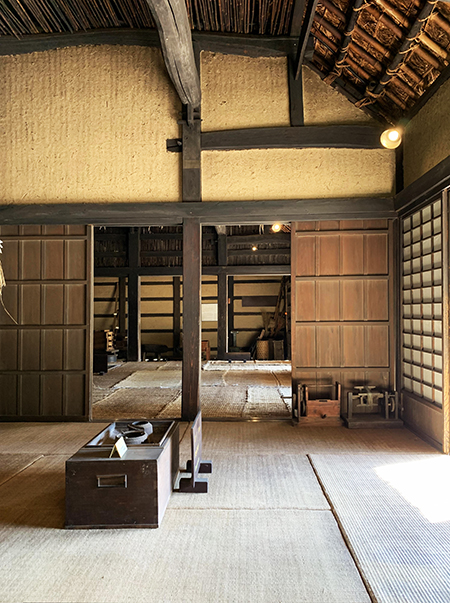
さて現神奈川県秦野に334年前からあった古民家最終回。
日本の古民家探訪というのは、古層の民俗を掘り起こす感覚にいちばん近い。
現代を我々は生きているけれど、そのわたしたちの生き方の基盤は
こういった古民家の民俗性に根源があるのだと思わされる。
そう考えてくると、やはり「ハレ」の空間には「大事にしてきたこと」が
鮮明にピンナップされているものなのでしょう。
祖先への帰依を強く感じさせられる仏壇や精神性を伝える床の間。
やはりこの列島社会では、こうした価値感でわれわれは生き延びてきた。

そういうなかでもやはり「畳の間」という文化は格別。
江戸時代中期、まさにこの家の建てられた頃くらいまで
一般庶民は「畳の間」が普及していなかったとされています。
全国畳産業振興会HPをみると、
「中国伝来のものが多いなかで、畳は日本固有の敷物。その歴史は
「菅畳八重」「皮畳八重」などの記述がある古事記にまでさかのぼります。
まだ畳床などはなく、コモなどの敷物を重ねたものと推測されます。
現在の畳に似た構造になったのは平安時代。板敷に座具や寝具として
置くという使い方で、使う人の身分によって畳の厚さやへりの柄・色が異なりました。
鎌倉時代から室町時代にかけ、書院造が生まれて、部屋全体に
畳を敷きつめる使い方に発展しました。それまでは高貴な人や客人の
もてなしのためのものでしたが、建物の床材として利用されるようになったのです。
しかしそうした使い方も貴族や武士の富の象徴。
桃山時代さらに江戸時代に至るなかで、数奇屋造や茶道が発展して普及し、
徐々に町人の家にも畳が敷かれるようになりました。
それでも身分による畳の制限の風習は残り、庶民が使用できるようになったのは
江戸時代中期以降。畳師・畳屋と呼ばれる人々が活躍し、
畳干しする家々の光景があちこちで見られるようにいなりました」
と記述されています。
なぜ日本独自で畳という進化した床素材があるのか、
本当にオモシロい民俗だと思われてならない。
畳の間で仏壇・床の間が装置されるという、ジャパンオリジナル空間。
これは誰が作ったという文化ではなく、日本という社会が作ってきた規範。
座るということに深くこだわった結果がこの畳文化なのか、
いやそうではなく、畳とは最上級の「寝室床」ということで
言ってみればベッドとカーペットの中間的存在で日本独自に発展したものか。
体感的に言えば畳の間では、つい寝そべりたくなって「大の字」になる。
板敷きの床ではあんまりそんな衝動には駆られないけれど、
畳の間ではついそうしたくなるのにはきっと理由があるのでしょう。
そういう空間に先祖が祀られているのには、日本人的感受性が表現されている。


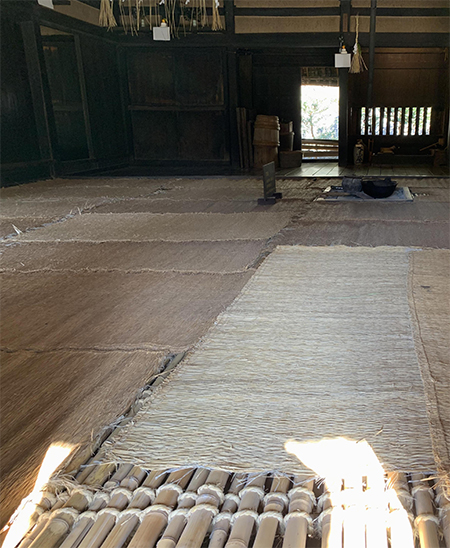
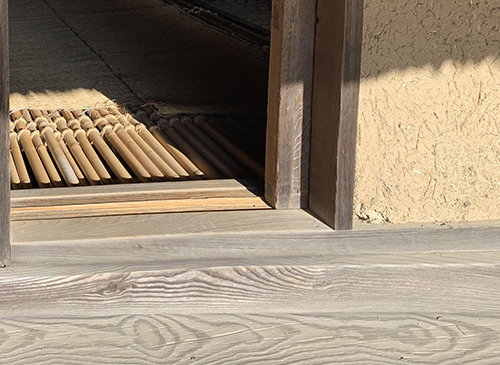
一方で、この家の竹簀の子敷き+ムシロカーペットという構成も
いかにも地域の気候風土に柔軟に対応しようとする民俗が感じられる。
第一、床が竹だと毎日が「竹踏み健康法」になるではないか(笑)。
ツボが刺激されていいとされている。
身分制での規制があったことで逆に庶民はどんどん健康になった?
前向きに考えるという意味では、有効な社会環境だったとも思える。

現代住宅では自由に素材選択可能であるけれど、
こういった民族体験はかならず投影されていくものでしょうね。

English version⬇

[Floor material for old folk houses “Hare and Ke” / Good Japanese house ㉒-4]

By the way, the last inning of an old folk house that has existed in Hadano, Kanagawa Prefecture for 334 years.
Exploring old Japanese houses is the closest to digging up old folk.
We live in the present age, but the foundation of our way of life is
It seems that the folk nature of these old folk houses has their roots.
When I think about it, there is something that I have cherished in the space of “Hare”.
It must be clearly pinned up.
A Buddhist altar that makes you feel strongly devoted to your ancestors and an alcove that conveys spirituality.
After all, in this archipelago society, we have survived with such a sense of value.

Even so, the culture of “tatami mats” is exceptional.
Until the middle of the Edo period, when this house was built
It is said that the “tatami room” was not popular among the general public.
Looking at the National Tatami Industry Promotion Association HP ,
“Among many of them from China, tatami is a rug unique to Japan. Its history is
It goes back to the Kojiki with descriptions such as “Suga tatami mat Yae” and “Skin tatami mat Yae”.
There are no tatami floors yet, and it is presumed that rugs such as como are piled up.
It was during the Heian period that the structure resembled the current tatami mats. As a seat or bedding on a board
The thickness of the tatami mat and the pattern and color of the edge differed depending on the status of the user.
From the Kamakura period to the Muromachi period, Shoin-zukuri was born, and the entire room
It has evolved into a way of using tatami mats. Until then, of noble people and guests
It was for hospitality, but it has come to be used as a flooring material for buildings.
However, such usage is also a symbol of the wealth of aristocrats and samurai.
During the Momoyama period and the Edo period, Sukiya-zukuri and tea ceremony developed and became widespread.
Gradually, tatami mats were laid in the houses of the townspeople.
Even so, the custom of restricting tatami mats by status remained, and it was only possible for ordinary people to use it.
Since the middle of the Edo period. People called tatami mat masters and tatami mats are active,
You can now see the sights of tatami-dried houses here and there. ”
It is described as.
Why is there an evolved floor material called tatami that is unique to Japan?
Don’t think it’s a really funny folklore.
A Japan-original space where the altar and alcove are installed between tatami mats.
This is not a culture of who created it, but a norm created by the Japanese society.
Is this tatami culture the result of a deep commitment to sitting?
No, not so, tatami is the highest grade “bedroom floor”
So to speak, it is an intermediate between the bed and the carpet, and it was developed uniquely in Japan.
Speaking sensibly, between tatami mats, you just want to lie down and become a “large letter”.
I can’t really drive such an urge on a wooden floor,
There must be a reason why you want to do that between tatami mats.
The fact that ancestors are enshrined in such a space expresses Japanese sensitivity.

On the other hand, the composition of this house’s bamboo duckboard + Mushiro carpet is also available.
You can feel the folklore trying to flexibly respond to the local climate.
First, if the floor is made of bamboo, every day will become a “bamboo stepping health method” (laughs).
It is said that the acupoints are stimulated.
Did the common people get healthier and healthier because of the restrictions on social division?
In terms of thinking positively, it seems that it was an effective social environment.

In modern houses, you can freely select the material,
This kind of ethnic experience will always be projected.