本文へジャンプ

【開祖・道元と後援者「波多野氏」 永平寺-2】


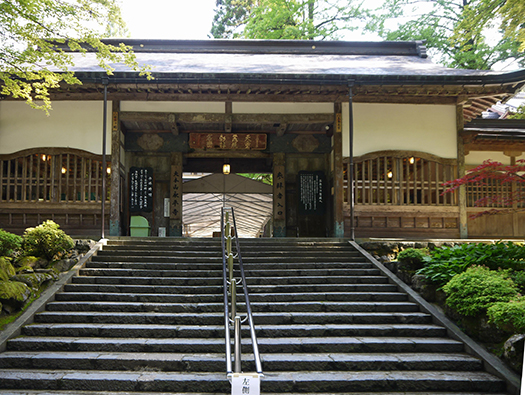
吉祥山永平寺、伽藍建築群空間の探訪ですがまずは背景の把握。
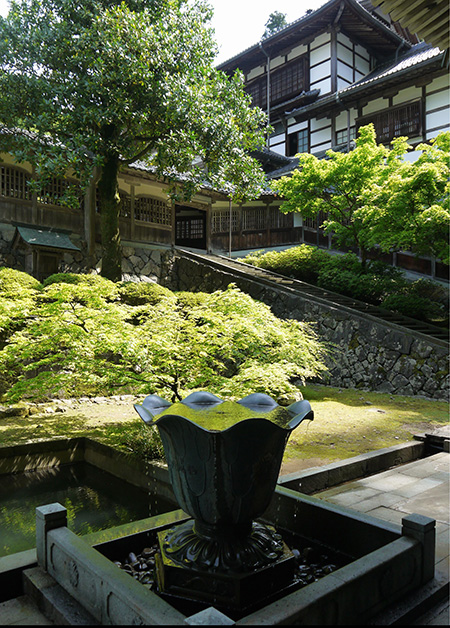
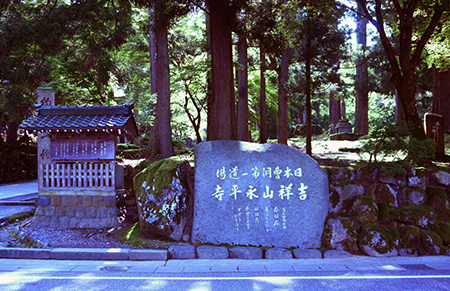
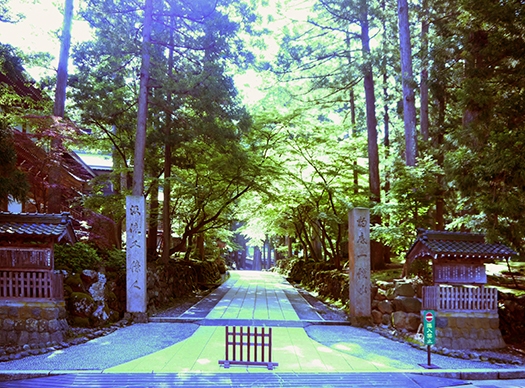
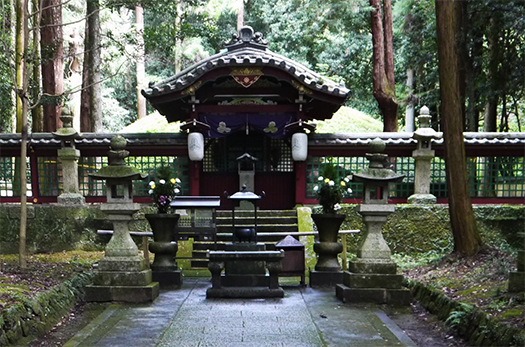
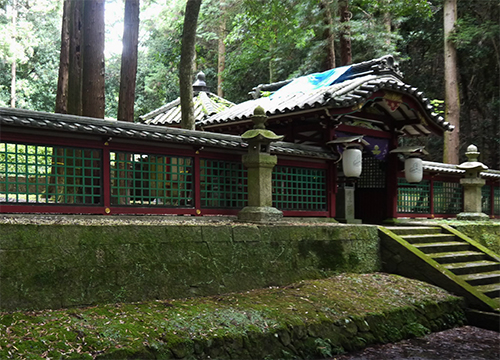
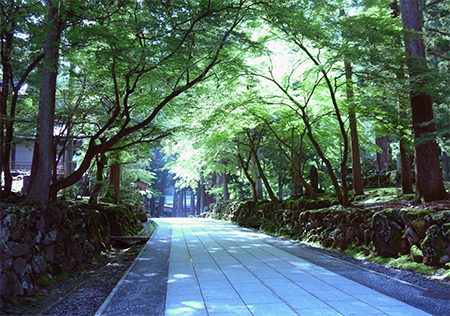
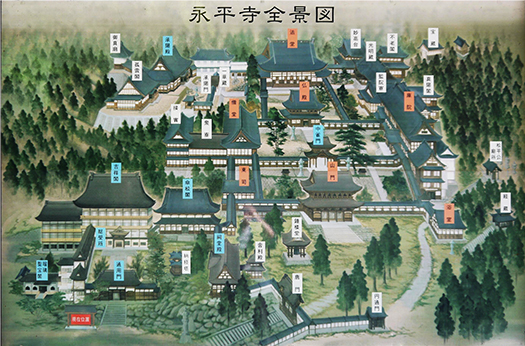
写真は参拝入口、参道、全体配置図。
開山の時代は1192年の鎌倉での武家政権成立からほどない歴史時点。
開祖の道元は1200年生まれ。父親は村上源氏名門・久我家一門という説もある。
久我家は「源氏の長者」を足利家やのちの徳川家と同格で争奪する
公家方の源氏の最有力家系として永く存続し続けてきたようです。が、
この時代こうした家格が成立していたとは言い難く、その縁者ではあっても
「幼時に父母を亡くした」少年道元には仏門で身を立てるしかなかったと思える。
父母の早世が無常感をかれに植え付け仏門を強く願ったのかも知れない。
ただしその後、久我家は大いに家運が上昇しているので、
道元自身の宗教上での「成功」が大いに力になった蓋然性も高い。
公家の家格権威を競う争闘、武家の戦争による争闘と同様に宗教界での論争も
日本的な「家・一門」同士の争闘の大きな要素だったかとも思える。
日本的社会システムとしてこうした上昇志向の「道」があったということか。
道元は14才で最高学府・比叡山延暦寺に上って仏門に入った。
父母を亡くした人物がこういう「サブコース」でも歩めたことを考えると
かれをバックアップする一門の人脈が容易に想像できる。
しかし天台の教えでは人は皆生まれながらにして本来悟っている、
仏性を持っているはずなのに、なぜ厳しい修行をしなければ悟りが得られないのか
という強い疑問をかれは持っていた。いわば最高権威の天台の教えに疑問を持ち、
臨済宗開祖の栄西の開いた建仁寺に17才で入り栄西直弟子の明全に師事したが
それでも疑問は解決せず、師である明全とともに1223年に宋に渡った。
そこから4年、師匠の天童山景徳寺の如浄に入門しやがて法を嗣ぐことを許される。
ひたすら坐禅に打ち込む「只管打坐」に強く影響を受けた。帰国は27才。
京都で興聖寺を建立し説法と著述に励むが、旧仏教勢力からの激しい迫害に遭う。

こうした状況の中で越前を基盤とする武家・波多野氏から後援を申し出られる。
波多野氏は現・神奈川県秦野(はだの・はたの)〜足柄平野地域を基盤とした。
鎌倉幕府草創期には一時平家方に与したが、やがて幕府中枢に勢力を確保する。
1221年承久の乱に際して波多野一族は全国に領地を得て勢力が膨張。
なかでも越前波多野家は中世を通して一族でも傑出した活動を示している。
当時当主は波多野義重であり京都での政治中心・六波羅探題評定衆を勤めている。
評定衆とは主に「西国成敗」任務で訴訟裁判や六波羅の政務を担当する幕府重職。
とくに承久の乱の鎮圧後の六波羅探題は幕府武権最高の地位とも言える。
この人物が道元に対して、越前の地での禅宗道場の開山を申し出たのだ。
時系列では道元の足取りは承久の乱前後の武家と朝廷の緊張関係が背景にある。
政治危機・承久の乱の直後に宋に渡り、帰国後も布教活動に大いに活躍する。
当時の京都で鎌倉幕府中枢にいる波多野氏とどういう接点があったか、
道元帰国後の活動、旧仏教側からの迫害とそれへの鎌倉側からの支援。
武家政権側の仏教各派への政治的態度が象徴的に表れているように思われる。
旧体制・比叡山などに対して批判的で、新仏教「禅宗」支援的な底意を感じる。
そうすることで仏教界を支配する政治目的が存在したと考える方が自然。
そしてその「意思」は鎌倉幕府総体のものであった可能性が高い。
頼朝家系の源氏は嫡流が途絶えた(実朝暗殺1219年2月13日)が、
その後足利氏がもっとも嫡流に近いとされ期待と怖れを幕府内で
集め続けたことも併せ考えると、公家とはいえ源氏の氏族への保護は
波多野家・幕府として政治的に意味が大きかっただろう。
こうした背景から道元は永平寺開山の機縁を得たように思われる。

English version⬇

[Founder / Dogen and supporter ” Hatano”Clan Eiheiji-2]
It is a tour of the auspicious mountain Eiheiji Temple and the space of the cathedral architecture, but first of all, grasp the background.
The photo shows the entrance to the worship, the approach to the shrine, and the overall layout.
The era of Kaisan is a historical point shortly after the establishment of the samurai government in Kamakura in 1192.
The founder Dogen was born in 1200. There is also a theory that his father is Murakami Genji’s prestigious Koga family.
The Koga family contends for the “Genji no Chōja” with the same rank as the Ashikaga family and later Tokugawa family.
It seems that it has continued to exist for a long time as the most influential family of the Genji of the Kuge. but,
It is hard to say that such a family was established at this time, even if it was a relative.
It seems that Dogen, a boy who “lost his parents when he was young,” had no choice but to stand up at the Buddhist gate.
It is possible that his parents’ early life planted a sense of impermanence in him and strongly wished for a Buddhist gate.
However, since then, the Kuga family’s luck has risen significantly, so
It is highly probable that Dogen’s own religious “success” was a great help.
The struggle for the authority of the official family, the struggle in the religious world as well as the struggle due to the war of the samurai
It seems that it was a big element of the struggle between Japanese “houses and families”.
Does that mean that there was such an ascending “road” as a Japanese social system?
At the age of 14, Dogen went up to the highest school, Enryakuji Temple on Mt. Hiei, and entered the Buddhist gate.
Considering that the person who lost his parents could walk in such a “sub-course”
It’s easy to imagine a family of contacts backing him up.
However, according to the teachings of Tendai, everyone is naturally aware of it.
Why can’t I get enlightenment without strict training even though I should have Buddha-nature?
He had a strong question. He questioned the teachings of the highest authority, Tendai, so to speak.
He entered Kenninji Temple, which was opened by Eisai, the founder of the Rinzai sect, at the age of 17, and studied under Eisai’s disciple Myozen.
Still, the question was not resolved, and he went to Song in 1223 with his teacher, Myozen.
Four years after that, he was allowed to enter the Rujing of his master, Tendoyama Keitokuji, and eventually to practice the law.
He was strongly influenced by the “Shikantaza”, which he devotes himself to zazen. He is 27 years old when he returns to Japan.
He built Kosho-ji Temple in Kyoto and worked hard on his preaching and writing, but he was severely persecuted by the former Buddhist forces.

Under these circumstances, he is offered support by Mr. Hatano, a samurai based in Echizen.
Mr. Hatano is based in the current Hadano-Ashigara Plain area, Kanagawa Prefecture.
In the early days of the Kamakura Shogunate, it was temporarily given to the Heike clan, but eventually it secured its power in the center of the Shogunate.
In 1221, the Hatano clan gained territory all over the country and expanded its power during the Jokyu War.
Among them, the Echizen Hatano family has shown outstanding activities even in the clan throughout the Middle Ages.
At that time, the owner was Yoshishige Hatano, who was the political center of Kyoto, Rokuhara Tandai.
Hyōjōshu is a shogunate executive who is mainly in charge of litigation trials and Rokuhara’s affairs in the mission of “Saigoku success or failure”.
In particular, the Rokuhara Tandai after the suppression of the Jokyu War can be said to be the highest position of the shogunate martial arts.
This person offered to Dogen to open a Zen Buddhist dojo in Echizen.
In chronological order, Dogen’s footsteps are due to the tension between the samurai family and the imperial court before and after the Jokyu War.
Immediately after the political crisis and the Jokyu War, he went to Song and continued to play an active role in missionary work even after returning to Japan.
What kind of contact did you have with Mr. Hatano, who was at the center of the Kamakura Shogunate in Kyoto at that time?
Activities after returning to Dogen, persecution from the former Buddhist side and support from the Kamakura side.
The political attitude of the samurai government toward Buddhist factions seems to be symbolic.
He is critical of the old system, Mt. Hiei, and feels supportive of the new Buddhist “Zen Buddhism.”
By doing so, it is more natural to think that there was a political purpose that governed the Buddhist world.
And it is highly possible that the “will” belonged to the Kamakura Shogunate as a whole.
Genji of the Yoritomo family lost his pedigree (Assassination in the morning on February 13, 1219), but
After that, Mr. Ashikaga is said to be the closest to the current, and expectations and fears are raised in the shogunate.
Considering that we continued to collect, even though it is a public house, the protection of Genji’s clan is
It seems that the Hatano family and the shogunate had great political significance.
Against this background, Dogen seems to have gained the opportunity to open Mt. Eiheiji.

【武家の世に広がる内的世界観 永平寺-1】


さてふたたび仏教寺院建築探訪シリーズ復帰です。
どうも現世では独裁強権国家の無道が世界に波及し続けていて辟易する。
感染症についての世界の悲惨な状況を見るに付け無常感が募る。
そういう気分を少しでも回避するのにも、日本の仏教文化に興味が向かう・・・。

ということで韓国仏国寺参観体験を一種の対比コンパスに使って
日本への仏教導入の流れに沿って見てきています。
日本人の住宅、広く建築技術発展は歴史的に宗教建築のありように
ある程度反映されてきている部分があるのも事実。
そういった痕跡も確認できて興味が増しています。
飛鳥寺、四天王寺、法隆寺の最初期から高野山金剛峯寺。そして
そこから中世にかけての根来寺と見てきました。
畿内地域で展開した王朝国家体制での仏教のありようと、
その展開を見てきたけれど、日本史はその後の武家支配期を迎える。
武家の都として京都とは離れて東国に開かれた鎌倉には「建長寺」という
元号を寺号にした国家寺院として禅の宗派が初源した。
そういう流れに即して曹洞宗の「日本第一道場」としての永平寺探訪です。
禅宗には3つの流派があり、それらの共同の意見として「禅宗」と
ひとくくりにはしないでというアピールがあるそうです。
とはいえ、衆生としては他との相違も知りたいので区分けはしておきたい。
鎌倉で武権が成立し「大仏」が建立され建長寺が建てられたことは
この国の政治にとっても重要だったでしょう。
それまでの日本が導入してきた宗教政策とはあきらかに変化させている。
源平争乱のひとつの大きな災禍として奈良東大寺の焼失があり
勧進元重源さんの旺盛な活動があって、復興が達成されたとき、
重要な役割を頼朝政権は果たしていたとされ、戦乱の時代空気感のなかで、
復興の記念イベントには頼朝自身が参列したと言われる。
さながら戒厳令のような緊張感が世を覆っていたという記録もある。
最高権力者となった頼朝は、世の統治にあたって、
宗教文化に対してその価値を知りながら相応の対応を見せていることがわかる。
そしてその流れの表現として建長寺での禅の採用があったように思う。
1253年と幕府は成立からすでに50-60年時間を経過しているけれど
大きく「武家政権」のありようを示すものとして禅は採用され公示された。
・・・そんな意味も込めながら探ってみたいと思います。


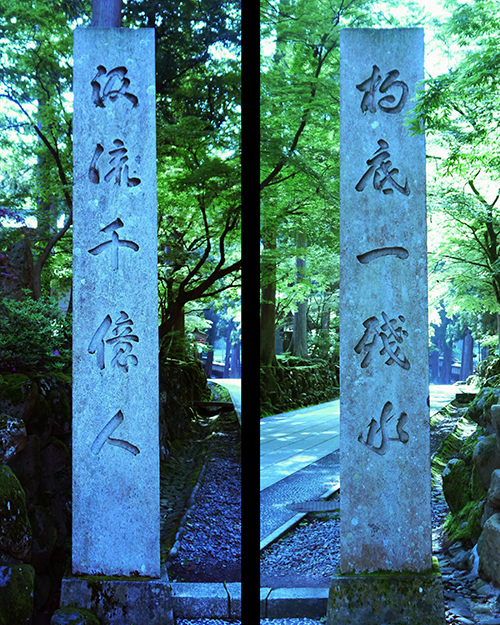
永平寺の入口には石柱が左右に一対立っている。
杓底一残水
汲流千億人
「杓底の一残水(しゃくていいちざんすい)、流れを汲む千億の人」
というように読み下されるとのことで、大意としては、
道元禅師が教えられそして古人が歩んだ道(教え)は人の心の垢を除き去る。
柄杓で汲んだ水で手を洗い底に残った水を川へ還された。
そうした道元禅師の風を慕い多くの人が永平寺の門をくぐってその教えを汲む。
永平寺の境内には川が豊富に流れ絶えることがない。
かつて食べ物が十分になかった頃でも、水が不足することはなかった。
そのいくらでもある水さえ粗末にしてはいけない、大切にするようにと、
道元禅師は教えられた〜という意味だと、訪問後知りました。
いきなりの「禅問答」から探訪は始まります(笑)・・・。

English version⬇

[Inner world view spreading in the world of samurai Eiheiji-1]
Now, it is the return of the Buddhist temple architecture exploration series again.
Apparently, in this world, the ruthlessness of a dictatorship nation continues to spread to the world, and it makes me sick.
Seeing the dire situation in the world about infectious diseases creates a sense of impermanence.
To avoid such a mood, I am interested in Japanese Buddhist culture.

So, using the experience of visiting the Korean Bulguksa Temple as a kind of contrasting compass
I have been watching along the flow of introducing Buddhism to Japan.
Japanese housing, the development of building technology is historically like religious architecture
It is also true that some parts have been reflected to some extent.
I can see such traces and I am getting more interested.
Koyasan Kongobuji Temple from the earliest days of Asuka Temple, Shitennoji Temple, and Horyu-ji Temple. and
I saw it as Negoroji from there to the Middle Ages.
Whatever Buddhism should be in the dynasty state system developed in the Kinai region,
I have seen the development, but Japanese history will enter the samurai rule period after that.
Kenchoji is located in Kamakura, which was opened in the eastern part of Kyoto as the capital of the samurai family.
The Zen sect was the first to originate as a national temple with the era name as the temple name.
In line with this trend, we visited Eiheiji Temple as the “Japan’s First Dojo” of the Soto sect.
There are three schools of Zen Buddhism, and the common opinion of them is “Zen Buddhism”.
It seems that there is an appeal that you should not put it all together.
However, as sentient beings, I would like to know the differences from others, so I would like to classify them.
The fact that the military power was established in Kamakura, the “Big Buddha” was erected, and the Kenchoji Temple was built
It would have been important for the politics of this country.
It is clearly changing the religious policy that Japan has introduced up to that point.
One of the major disasters of the Genpei War was the burning of Todaiji Temple in Nara.
When the reconstruction was achieved due to the vigorous activities of Kanjin Chogen
It is said that the Yoritomo administration played an important role, and in the atmosphere of the wartime era,
It is said that Yoritomo himself attended the reconstruction commemorative event.
There is also a record that tension like martial law was overwhelming the world.
Yoritomo, who became the most powerful person, was in charge of governing the world.
It turns out that he is responding appropriately to religious culture, knowing its value.
And I think that Zen was adopted at Kenchoji as an expression of that flow.
Although it has already been 50-60 years since the establishment of the Shogunate in 1253.
Zen was adopted and announced as a major indicator of what the “samurai government” should be.
… I would like to explore it with such a meaning.

At the entrance of Eiheiji Temple, a pair of stone pillars stands on the left and right.
One cassotte residual water
100 billion people
“One cassotte residual water, 100 billion people who draw the flow”
It is said that it will be read down like this, so the main point is
The path (teaching) that Dogen Zenshi was taught and the old man walked removes the dirt of the human heart.
I washed my hands with the water drawn with a cassotte and returned the water left on the bottom to the river.
Many people long for the wind of Dogen Zenshi and go through the gate of Eiheiji Temple to learn the teachings.
Abundant rivers flow in the precincts of Eiheiji Temple and never cease.
Even when there wasn’t enough food in the past, there was no shortage of water.
Don’t let that amount of water be poor, take good care of it,
After visiting, I learned that Dogen Zenshi meant that he was taught.
The exploration begins with a sudden “Zen question and answer” (laughs).

【北海道・寒冷地とEV自動車、エネルギー問題・・・】


北海道各地に雪の便りが頻出するようになってきました。
感染症によるいびつな経済体制も丸2年近くの経過になって来た。
日本だけは感染状況が改善しているように見られるけれど、
世界的には先進国で感染症が猖獗を極め,同時に石油の高騰、資源価格上昇は
非常に厳しい状況を起してしまっている。経済復元への困難要因。
同時並行的にSDGsなどの言葉を見かけない日はないほどで、
いわゆる自然エネルギー翼賛、地球温暖化防止的なアナウンスは加速している。
全経済活動の脱炭素化という掛け声も大きくなって来ています。
・・・そういった理念・方向性自体は間違っていないだろうとは思います。
住宅で言えば、エネルギー削減できる断熱化は日本全国で大いに進めるべきでしょう。

しかし暮らしのエネルギー全体を考えると、石油価格の高騰は東京・大阪といった
公共交通機関主体の移動手段地域では大きな問題ではないのかも知れないけれど、
それ以外の「地方の日本」では「生活の足」を直撃してきている。
行動抑制が強い状況とは言え、とくに面積の広い北海道などでは
クルマは暮らしの基本なので、移動コスト上昇は暮らしへの重大なマイナス条件。
160円を超えるようなガソリン価格は早晩、流通コストを直撃し
あらゆる価格の上昇要因としてのしかかってくることは疑いない。
住宅・暮らしを考えるのが基本事業領域のわが社ですが、
とくに寒冷地域では住宅を考え暮らしを考えるとクルマも同時にワンセット。
今後の住宅エネルギー問題で、住宅内部の暖冷房と移動交通のエネルギーにも
強い関心が払われざるを得ない。
住宅業界で言えば屋根にPVを乗せ、蓄電池を装備し普段は同時にEVに充電させる、
っていうような住宅エネの近未来図が想定されている。
太陽光発電のパネル生産は日本国内産業にはほとんどメリットがなく
世界的には独占的に中国が支配するマーケット構造。
そのことを考えると「自然エネルギー」として太陽光だけを翼賛するのがいいのか、
複雑な気分になってしまいます。しかしこれはやむを得ないのか・・・。
しかしPVでの発電は北海道の冬場には事実上、ほとんど期待できない。
それが「地球環境に適した具体的なSDGs」といった情報刷り込みがされている。
当然のようにクルマはEV化の方向性が主流になっていくのでしょうが、
寒冷地での移動手段選択として考えると冬場には「暖気」運転が不可欠。
マイナス10数度の気温の朝にEV自動車をスタートさせると
どうしても車内室温上昇・身体を動かせる必要温度にさせるには
バッテリー充電の相当部分を消費してしまう現実がある。
EVに限らず電気を熱エネルギーに変換するとあっという間に充電レベル低下する。
200km走行できる充電が、あっという間に100kmを下回ることになる。
昨年の北陸豪雪時、EVが寒さに耐えられず路上放棄された事実もある。
これでは経済活動の効率性が著しく阻害される。
こうした世界の自動車産業の趨勢は温暖地・蒸暑地域主体の効率「最適化」で
寒冷地を見捨てるというか、ほぼ無視されていると感じられる。
掛け声で促されてもEVを選択する動機が北国では見えにくい。
北海道では冬場に経済活動で大きなハンディキャップが生じてしまう。

知人の国会議員さんにこういった問題で論議することがあるけれど、
EVが北国で現実的でないことは小泉前環境大臣はじめ国会論議でも共通認識だと。
で、中央の発想からは、寒冷地の現実無視発想しか見えないのが現実。
また知人にガソリンスタンド経営者がいるけれど、
当然のように人口減少もあって各地域のスタンドは閉鎖してきている。
代替するとされるEVステーションはコストメリット計算で難しいという。
そもそも北国ユーザーはEVの暖気運転ハンデを受け入れるかどうか不明。
人口減少地域ではこういう面でも経済活動が極端に窒息していく。
北に人が住む、という基本インフラが困難に直面しているのではないか。
これはわたしだけの悲観論なのでしょうか?

English version⬇

[Hokkaido, cold regions and EV cars, energy problems …]
Snow news has come to appear frequently in various parts of Hokkaido.
The distorted economic system due to infectious diseases has been around for almost two years.
Only in Japan, the infection situation seems to be improving,
Infectious diseases are extremely severe in developed countries worldwide, and at the same time, soaring oil prices and rising resource prices
It has caused a very difficult situation. Difficult factors for economic recovery.
There are no days when I don’t see words such as SDGs at the same time.
So-called renewable energy praise and global warming prevention announcements are accelerating.
There is a growing call for decarbonization of all economic activities.
For each company, there is also an appeal battle such as “Our company is an excellent company of SDGs”.
… I don’t think that the idea and direction itself is wrong.
Speaking of housing, heat insulation that can reduce energy should be greatly promoted all over Japan.

However, considering the energy of living as a whole, soaring oil prices are such as Tokyo and Osaka.
It may not be a big problem in the transportation area mainly by public transportation,
In other “local Japan”, it has hit the “foot of life” directly.
Although behavioral restraint is strong, especially in Hokkaido, which has a large area,
Since cars are the basis of living, rising travel costs are a serious negative condition for living.
Gasoline prices exceeding 160 yen will hit distribution costs sooner or later.
There is no doubt that it will be a factor in raising prices.
Our company’s basic business area is to think about housing and living, but
Especially in cold regions, if you think about housing and living, you can also have a car at the same time.
Due to future housing energy issues, it will also be used for heating and cooling inside houses and energy for mobile transportation.
There is no choice but to pay strong attention.
Speaking of the housing industry, PV is placed on the roof, equipped with a storage battery, and usually the EV is charged at the same time.
A near-future map of residential energy is envisioned.
Panel production of photovoltaic power generation has little merit for Japanese domestic industry
A market structure that is dominated by China exclusively in the world.
Considering that, is it better to praise only sunlight as “natural energy”?
It makes me feel complicated. But is this unavoidable?
However, power generation by PV can hardly be expected in winter in Hokkaido.
Information such as “concrete SDGs suitable for the global environment” is imprinted on it.
As a matter of course, the direction of EV conversion will become the mainstream for cars, but
Considering it as a means of transportation in cold regions, “warm-up” operation is indispensable in winter.
If you start an EV car on the morning with a temperature of -10 degrees Celsius
To raise the room temperature inside the car and bring it to the required temperature to move the body
The reality is that it consumes a significant portion of the battery charge.
Not limited to EV, when electricity is converted into heat energy, the charging level drops in a blink of an eye.
The charge that can run 200km will be less than 100km in no time.
There is also the fact that EV was abandoned on the road in a blink of an eye during the heavy snowfall in Hokuriku last year.
This significantly impairs the efficiency of economic activity.
The trend of the global automobile industry is to “optimize” the efficiency mainly in warm and hot regions.
It seems that the cold regions are abandoned or almost ignored.
Therefore, it is difficult to see the motivation to select EV in northern countries even if prompted by a shout.
In Hokkaido, economic activities cause a big handicap in winter.

I sometimes discuss these issues with my acquaintance, a member of parliament.
It is said that the fact that EV is not realistic in northern countries is a common recognition in the Diet discussions including former Minister of the Environment Koizumi.
So, from the central idea, the reality is that you can only see the idea of ​​ignoring the reality of cold regions.
Also, my acquaintance has a gas station owner,
As a matter of course, the stands in each area are closing due to the declining population.
It is said that the EV station, which is said to be an alternative, is difficult to calculate the cost merit.
In the first place, it is unclear whether northern users will accept the EV warm-up driving handicap.
In areas with a declining population, economic activity will be extremely suffocated in this respect as well.
The basic infrastructure of people living in the north may be facing difficulties.
Is this my only pessimism?

【仏像、大日如来(毘蘆遮那仏)のハンドポーズ日韓相違】


さてすっかり仏教寺院建築探訪がシリーズ化しているブログです。
神社や寺院は「古寺巡礼」好きなことから写真が多数あり再探索しながら、
住宅建築との関連で深掘りを始めたら、これはこれで興味が強くなった。
こういう建築群は参観が自由であるという要素が大きい。
基本パブリックな性格の建築というのは取材者としては稀有なのですね。
いまのシリーズ化は5年前ほどの774年頃創建の韓国・仏国寺取材記がきっかけ。
そうすると日本仏教導入時期と対比させながら国際比較もハッキリする。
自然に歴史経緯を含めてわかりやすく構成できる。
で、飛鳥寺、法隆寺、高野山金剛峯寺、そして根来寺と探索してきました。
そういう経緯なので、写真整理も同時に行って、比較対照もできたりします。

仏教というのは世界宗教なので彼我の類似性と相違両方が浮かび上がってくる。
本日は気になっていた「仏像の手のポージング」について、であります。
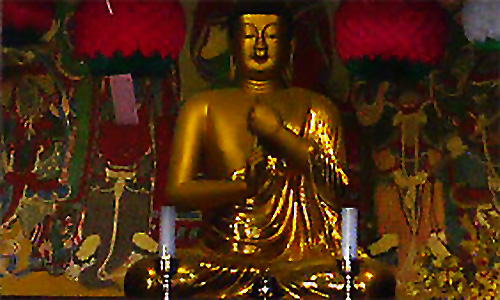
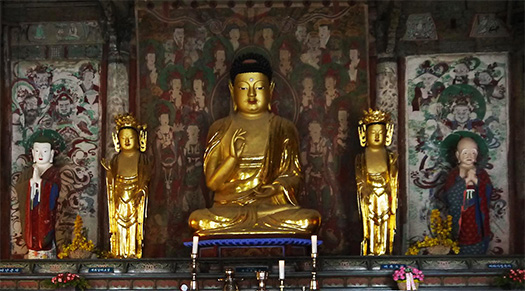
上の写真は韓国仏国寺の創建時の「本尊」と言われる毘蘆遮那仏。
<現在は創建時から宗派が変わって釈迦如来像になっている>
毘盧遮那仏(びるしゃなぶつ)は大乗仏教における仏。華厳経において
中心的な存在として扱われる尊格で密教においては大日如来と同一視される。
日本では奈良東大寺の大仏さんもこれなんですが、
真言密教ではまさに中核的な仏様ということで本尊として祀られることが多い。
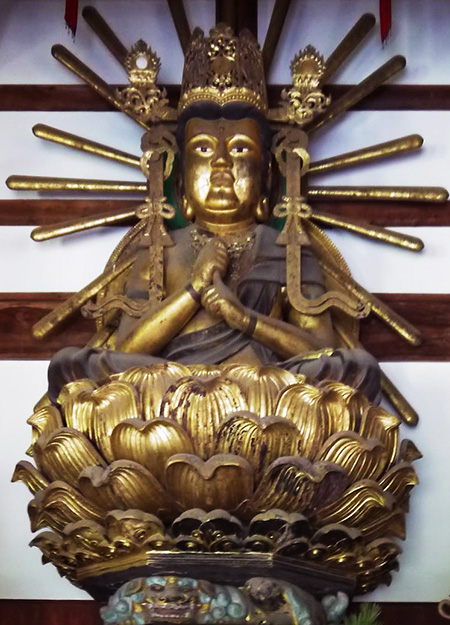
で、下の写真は根来寺の「大日如来」像であります。
この両者の手のポージングが同じようなのに、実は左右反対なんですね。
調べてみると、日本国内での大日如来像の手のポーズは根来寺とみな同じ。
韓国仏国寺の大日如来さんだけが、どうも左右を反対に手を組まれているのです。

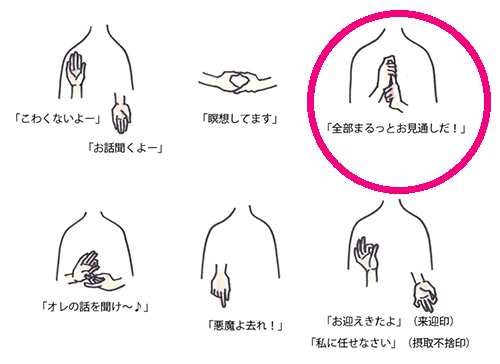
手のポーズ、仏さんで違うよな〜とは知りつつ、意味はまったく知らなかった。
チョット調べたら、上のような意味合いだそうでさすが大日如来像らしく
「全部まるっとお見通しだよ」という印だそうです。
しかし、どうして韓国仏国寺では左右反対なのか、
韓国仏国寺でも「ふつうとは違う手のポージング」と説明されているので
この仏国寺だけの特別のポージングということなのだそうです。
う〜〜む、なんでさ(笑)。
きっと宗教的に深〜い意味があるのでしょうが、衆生にはわかるはずもない。
でも深く謎かけされているようでドツボにハマりそうなのです(笑)。
今のところ、ナゾということでスルーしているのですが、さて?
しかし仏国寺の仏さんはどうも日本の寺の本尊たちとは違ってイメージがかわいい。

これは仏国寺のいまの本殿・大雄殿の本尊、釈迦如来像ですが、
どうも表情がマンガチックで右端の僧侶らしき人物などマンガ登場人物風。
ちなみに手のポーズは右下の「お迎えに来たよ,安心して」の印。
日本の仏像群のように威厳というような志向性を感じません。
国柄で仏教というものに対しての人々の受容態度が大きく違いがあるのか。
まぁたまたま、ということなのかどうか、興味津々であります。

English version⬇

[Buddha statue, Vairocana (Vairocana Buddha) hand pose difference between Japan and Korea]
By the way, it is a blog that is a series of Buddhist temple architecture explorations.
There are many shrines and temples because I like “old temple pilgrimage”, so while re-searching
This made me more interested when I started digging deeper in the context of residential construction.
There is a big element that such a group of buildings is free to visit.
Architecture with a basic public character is rare for an interviewer, isn’t it?
The current series was triggered by an interview with Bulguksa Temple in South Korea, which was founded around 774 about five years ago.
Then, the international comparison will be clear while comparing it with the time when Japanese Buddhism was introduced.
It can be constructed in an easy-to-understand manner, including the history of history.
So, I searched for Asuka-dera, Horyuji, Koyasan Kongobuji, and Negoroji.
That’s why I can organize photos at the same time and compare and contrast them.

Since Buddhism is a world religion, both his similarities and differences emerge.
Today, I would like to talk about “the pose of the hand of the Buddha statue” that I was interested in.
The photo above is the Bulguksa Bulguksa, which is said to be the “honzon” when the Bulguksa Temple was built.
<Currently, the sect has changed since its foundation and it has become the statue of Shaka Nyorai>
Birushanabutsu is a Buddhist buddha in Mahayana Buddhism. In Avatamsaka Sutra
It is a dignified existence that is treated as a central entity and is equated with Dainichi Nyorai in esoteric Buddhism.
In Japan, this is also the Great Buddha of Todaiji Temple in Nara.
In Shingon Esoteric Buddhism, it is often enshrined as the principal image of Buddha because it is the very core Buddha.
The photo below is the statue of “Dainichi Nyorai” at Negoroji Temple.
Although the poses of these two hands are similar, the left and right are actually opposite.
When I looked it up, the pose of the hand of the statue of Dainichi Nyorai in Japan was the same as that of Negoroji.
Only Mr. Dainichi Nyorai of Bulguksa, Korea, seems to have joined hands in the opposite direction.

I knew that the pose of the hand was different for Buddha, but I didn’t know the meaning at all.
When I looked it up, it seems that it has the above meaning, as expected, it seems to be a statue of Dainichi Nyorai.
It seems to be a sign that “everything is out of sight”.
But why is it the opposite at Bulguksa Temple in Korea?
Even at Bulguksa Temple in Korea, it is explained as “a different hand pose”.
It seems that it is a special pose only for this Bulguksa temple.
Hmmm, why (laughs).
It must have a deep religious meaning, but it cannot be understood by sentient beings.
But it seems to be a deep mystery, and I’m addicted to it (laughs).
So far, I’m through because it’s a mystery, but what?
However, the image of Bulguksa at Bulguksa is cute, unlike the principal idols of Japanese temples.

This is the statue of Shaka Nyorai, the principal image of the current main shrine of Bulguksa Temple, Daioden.
The expression is manga-like, and it looks like a manga character such as a monk-like person on the far right.
By the way, the pose of the hand is a sign of “I’m here to pick you up, feel at ease” at the bottom right.
I don’t feel the dignity of the Buddhist statues in Japan.
Is there a big difference in people’s acceptance of Buddhism in their nationality?
I’m curious whether it happens or not.

【他者批判体質への日本人のDNA的嫌悪 紀州根来寺-12】


戦国末期の紀州で独立的な地域権力を誇り、僧兵1万、近代兵器鉄砲で重武装した
なんとも異形の「宗教集団」根来寺を見てきました。
わたしの家が真言宗であることは記述しましたが、その類縁として
こういった宗派が存在したことがかなり遠い印象しかもてない。
宗祖・覚鑁さんは高野山で宗教上のトップに立ったけれど、
そこで他の多くの僧侶達が腐敗堕落している状況に怒りを覚え、
どんどんと宗教的純粋化の「改革」を推し進めたとされる。
たぶん相当の「痛み」を他者に遠慮会釈なく強制したのでしょう。
それに対して守旧派僧侶たちが反発しついには覚鑁の本拠を焼き討ちしたという。
焼き討ちされた覚鑁は「無言の行」をもって批判した。
そして高野山改革を諦め根来寺の初源になる寺院に入っていわば別居を始めた。
こういった開祖の経緯がこの宗派の個性としてきわどく刷り込まれたのか。
やがて寺領を守るために僧兵で武装し、雑賀との相互浸透で鉄砲武装も進めた。
そういうなかでごく世俗的な政治的合従連衡を推し進めたという。
信長の天下布武軍事制圧には協力しつつ、次代の秀吉政権に対しては
反秀吉として小牧長久手で徳川氏に与力した。見返りも期待し合力したのだろう。
秀吉の専制的武家独裁政権が成立したときに、
最後の抵抗を見せた存在がこの根来寺勢力だったのでしょう。
というか、紀州一国があげて反政権の巣窟になっていた。
こうした動きには宗教勢力というよりも世俗そのものを見る思いがする。
なまじ仏法を語るだけ魔物に取り憑かれるような奇怪な印象。
宗教というよりも、武力権力の一形態というような印象がやはり強い。
排他性の強いこういう勢力は今日の共産主義ともアナロジーを抱く。
唯我独尊という存在ほど他者にとって危険極まりない存在はないだろう。
歴史としては本願寺が信長政権によって粉砕されその後残った武装宗教が
すべて解体されたというのが日本史の方向であり日本人の選択だった。
そういった勢力にして建築的には1100年代〜1400年代の形式を一部残し、
その後、徳川の世に至って武装解除された宗派として存続復興を図ってきた。

写真の「興教大師」覚鑁の眠る墓域の奥の院などは
江戸期の再興された根来寺としての建築痕跡だと言えるのでしょう。
なんとなく江戸期的なしつらいが各所に垣間見える。
武家専制政権は信長や秀吉の権力から徳川に移行したけれど、
より政治的に進化した支配体制を構築したのが徳川政権だったのでしょう。
本願寺勢力を東西2つに分割するなど観念至上主義勢力に対してその基本性向の
「内ゲバ体質」を巧妙に利用して統治した知恵の深さを思い知らされる。
若い時期の家康は一向一揆の怖さを十分に体験していた。
今日に至る日本人のDNAには、こうした戦国期の宗教勢力の自己崩壊・破綻が
色濃く学習効果を持っているように思えます。

English version⬇

[Japanese DNA-like dislike of criticism of others Kishu Negoroji-12]
Boasting independent regional power in Kishu at the end of the Warring States period, he was heavily armed with 10,000 monks and modern weapon guns.
I have seen a strange “religious group”, Negoroji.
I mentioned that my house is a Shingon sect, but as a relative
I have the impression that the existence of such a sect is quite distant.
Kakuban, the founder of the sect, was at the top of the religion on Mt. Koya,
There, many other monks became angry at the corrupt and corrupt situation.
He is said to have steadily promoted the “reform” of religious purification.
Perhaps he forced others to “pain” without hesitation.
On the other hand, the old priests rebelled and finally burned down the base of Kakuban.
Kakuban, on the other hand, criticized it with “silent deeds.”
And he gave up the reform of Mt. Koya and started to separate if he entered the temple that became the first source of Negoroji.
Was this background of the founder imprinted as the individuality of this sect?
Eventually, he was armed with monk soldiers to protect the temple territory, and he also advanced gun armament through mutual penetration with Saika.
Under such circumstances, he promoted a very secular political coalition.
While cooperating with Nobunaga’s military suppression of Tenka Fubu, against the next Hideyoshi administration
As an anti-Hideyoshi, he helped Mr. Tokugawa with Nagakute Komaki. Probably they expected a reward and worked together.
When Hideyoshi’s tyrannical samurai dictatorship was established
The existence that showed the last stand was probably the Negoroji power.
Rather, Kishu Ichikuni was the den of the anti-government.
I feel that these movements look at the world itself rather than the religious forces.
A bizarre impression that you are obsessed with monsters just by talking about the Buddhist method.
The impression that it is a form of armed power rather than religion is still strong.
These highly exclusive forces have an analogy with today’s communism.
Nothing is more dangerous to others than the existence of Yuigadokuson.
In history, the Honganji Temple was shattered by the Nobunaga administration, and the armed religion that remained after that
It was the direction of Japanese history and the choice of the Japanese that everything was dismantled.
Architecturally, with such a force, some of the styles of the 1100s-1400s were left behind.
After that, it has been trying to survive and reconstruct as a disarmament sect in the world of Tokugawa.

In the photo, “Kokyo Daishi” Kakuban’s sleeping grave area, Oku-no-in, etc.
It can be said that it is an architectural trace as a revived Negoroji temple in the Edo period.
Somehow, the Edo period’s hardships can be glimpsed in various places.
The samurai tyranny shifted from the power of Nobunaga and Hideyoshi to Tokugawa,
Perhaps it was the Tokugawa administration that built a more politically evolved rule system.
The basic tendency of the power of the idea supreme principle, such as dividing the power of Honganji into two, east and west.
You will be reminded of the depth of wisdom that you ruled by skillfully using the “Uchi-geba constitution”.
When Ieyasu was young, he fully experienced the fear of Ikko-ikki.
In the DNA of the Japanese people to this day, the self-destruction and collapse of religious forces during the Warring States period
It seems to have a strong learning effect.

【秀吉根来攻め兵火も延命「大師堂」 紀州根来寺-11】


天正13年(1585年)紀伊は寺社勢力や惣国一揆といった、
天下人を頂点とする中央集権に真っ向から対立する勢力の蟠踞する地だった。
根来・雑賀の鉄砲による軍事的脅威もさることながら、
一揆や寺社の体現する思想支配そのものがあらたな天下人への脅威だった。
その意味で信長の伊勢・伊賀攻めと並んで戦国争覇を勝ち抜いた軍事政権の
最終的な武装民衆「根絶やし」の軍事作戦と言えるのでしょう。
先日亡くなった白土三平さんの「忍者武芸帳・影丸伝」が描いた
日本戦国期にさまざまに展開していた地域権力の多様性が否定され
近世的武家専制政権が最終的に勝利した記念碑的な争乱だった。
「われは遠くより来て、遠くまで行くのだ」
中学高校と少年期のわたしはこうした白土三平の描いたアナーキーな
中世民衆の抵抗運動の視点に立ちたい願望をずっと抱いていた(笑)。
結局日本の歴史は武家専制政権を樹立させたけれど、可能性としては
各地域毎の支配構造が多彩な「多様性」に満ちているという
そういった権力形態の共和国というのも確かにあり得たのだと思う。
加賀一向一揆、わたしの縁のある兵庫県・英賀御堂宗教勢力支配をも内包した
分権的日本のありようというのも見てみたかった気もする。
たぶん中央政治体制としては破綻したままの室町政権が存続した国家。
内実は各地域で武家専制もあり紀州や加賀のように
宗教権力による分散支配もあるという共和国国家体制でしょうか。
こうした宗教勢力支配の根源は地域守護権力からの「不入権」だったのでしょう。
寺社勢力支配地域では守護の支配権力が及ぶことがなかった。
守護支配にとっての罪人であっても寺社勢力地域では自由が保障されていたし、
寺領というカタチで巨大な経済力(根来寺で72万石といわれる)を基礎に
寺社領内は経済的自由都市として発展を遂げていた。
室町時代末期最盛期には坊舎450を数え一大宗教都市を形成し
寺領72万石・1万余の根来衆とよばれる僧兵軍団を擁していた。
いい、悪いではなくこういう多様な権力による国家社会というのもあり得た。
信長、秀吉という専制体制を飛ばして多様性のまま継続するニッポン。
もしそうであったら、わたしたち日本人のDNAはまた違ったものになったかも知れない。

とにかくもこの根来寺は秀吉の中央政権による根絶やし攻撃を受けて
大量の鉄砲戦力も大津波に洗われるように無力化されてしまった。
天下をこぞっての大軍勢にとっては鉄砲部隊による先鋒部隊の戦力消耗などは
意に介さずに津波のように押し寄せて根来衆を包囲殲滅したのでしょう。
根来寺はほぼすべての建築群が兵火で灰燼に帰しこの大師堂と大塔だけが残った。
大塔には銃弾痕が生々しく残っているけれど、この大師堂にはないといわれる。
たぶん最後の抵抗を大塔に立て籠もって展開しそして宗派の象徴建築を
灰燼に帰すにしのびなく無念の思いを抱きながら武装放棄し皆殺しされた。
写真の大師堂建築は根来寺草創期以来の残存建築と思われる。
根来寺創設者の覚鑁ではなく真言の遠祖・空海を建築名に残しているのには
初源の根来寺の姿を想起させる気がします。
内部の写真では空海の「弘法大師」号が飾られている。
また、建築としては根来寺建築の基本パターンとして亀腹の基壇・基礎と
それを保護するかのような手すりもない濡れ縁張り出しが特徴的。
建立1391年南北朝時代当時の寺院建築の日本的マザーだったのでしょう。

English version⬇

[“Daishido” Kishu Negoroji Temple, where Hideyoshi Negoro attack soldiers also prolong their lives]
In the 13th year of the Tensho era (1585), Kii was called the power of temples and shrines and the rebellion of Sokoku.
It was a place where the forces that were in direct opposition to the centralization with the world’s people at the top were snarling.
In addition to the military threat of the guns of Negoro and Saika,
The ideological rule itself that embodies Ikki and temples and shrines was a threat to new heavenly people.
In that sense, the military government that won the war-torn country battle alongside Nobunaga’s attack on Ise and Iga
It can be said that it is the final military operation of the armed people “eradication”.
Drawn by Sanpei Shirato’s “Ninja Martial Arts Book, Kagemaruden” who died the other day
The diversity of regional powers that had been developed during the Warring States period of Japan was denied.
It was a monumental struggle that the modern samurai tyranny finally won.
“We come from far away and go far away.”
In junior high school and high school and as a boy, I was anarchy drawn by Sanpei Shirato.
I have always had a desire to stand in the perspective of the resistance movement of the medieval people (laughs).
In the end, Japanese history established a samurai tyranny, but it is possible.
It is said that the control structure of each region is full of various “diversity”
I think that such a form of power could certainly have been possible.
Kaga Ikko-ikki also included the rule of religious powers in Hyogo prefecture and Eigamido, which I have a connection with.
I also wanted to see what decentralized Japan might be like.
Perhaps the nation where the Muromachi administration, which remained bankrupt as a central political system, survived.
In fact, there is a samurai tyranny in each area, like Kishu and Kaga.
Is it a republican national system that there is also decentralized rule by religious power?
Perhaps the root of such religious rule was “non-entry” from the local guardian power.
In the area controlled by temples and shrines, the power of guardianship did not reach.
Even if it was a sinner for guardian rule, freedom was guaranteed in the area of ​​temples and shrines.
Based on the huge economic power of the temple territory (it is said to be 720,000 stones at Negoroji)
The territory of temples and shrines was developing as an economically free city.
At the height of the end of the Muromachi period, 450 shrines were counted to form a major religious city.
It had a temple territory of 720,000 stones and more than 10,000 Negoro-shu, a monk soldier corps.
It was possible that there was a national society with such diverse powers, not good or bad.
Japan skips the tyranny of Nobunaga and Hideyoshi and continues to be diverse.
If so, our Japanese DNA may have been different.

Anyway, this Negoroji Temple was attacked by Hideyoshi’s central government to eradicate it.
A large amount of gun force has also been incapacitated so that it can be washed away by the tsunami.
For a large army all over the world, the exhaustion of the force of the vanguard unit by the gun unit is
It would have siege and annihilate the Negoro-shu by rushing like a tsunami without any intention.
In Negoroji, almost all the buildings were returned to ash by fire, and only this daishido and the great tower remained.
Ammunition holes remain vividly in the tower, but it is said that this Daishido does not.
Perhaps the last stand was erected in the tower and unfolded, and the symbolic architecture of the sect
He abandoned his armed forces and was killed, with a feeling of regret, even though he was abandoned in the ashes.
The Daishido architecture in the photo seems to be the remaining architecture since the early days of Negoroji Temple (around 1140).
The reason why Kukai, the ancestor of the mantra, is left in the architectural name instead of the Kakuban of the founder of Negoroji Temple
I feel that it reminds me of the appearance of Negoro-ji Temple, the first source.
In the photo inside, Kukai’s “Kobo Daishi” issue is displayed.
In addition, as for architecture, the basic pattern of Negoro-ji architecture is the foundation and foundation of the turtle belly.
It features a wet edge overhang without a handrail as if to protect it.
It must have been the Japanese mother of temple architecture in 1140.

【複雑な設計注文と大工たちの「聞く力」 紀州根来寺-10】


この根来寺の「大塔」と称される多宝塔は均整の取れたプロポーションで
さすがに「国宝」建築の端正な威容を見せています。
仏教建築を探究してきていますが教義の建築的実現の様子を見ていると
住宅建築での「設計と施工」という関係性を強く感じさせられます。
歴史段階で建てられ続けてきた住宅はほとんどが「用の建築」。
用の建築では設計という概念はあまりなくいわば暮らしの基本要素に準拠する。
普遍的な用途を満たし建材総量と手間の合理性に重点が置かれた家づくり。
畳という人間寸法に沿った建材など合理性追求は素晴らしい水準。
農家住宅や漁家住宅、都市居住での長屋とか町家という
その人の属する社会属性・風土に素直に適合した建築が建てられる。
それに対してこれら仏教建築では、注文者としての宗教指導者の概念の中にある
「設計趣旨」によって建築の仕様が従っている様子がわかる。
大塔建築に当たって「高野山に以前あったストゥーパ・球体建築を作って欲しい」
というような設計指示が大工棟梁に与えられたに違いなく、
仏教経典などに記載されているイメージが伝えられる。「う〜ん、なにそれ?」
当然、大工棟梁と宗教指導者の間には翻訳家のような立場の人間が関わり、
「3次元円形に壁と天井を造作するのだけれど、柱・横架材に細かく切り込みを入れ
徐々にカーブするように造作して、現場で納めていくのさ」などと
大工にもわかりやすいように施工手順をいっしょに考えたのだろう。
指示される内容は通常の大工仕事ではまったくお目にかからない複雑な注文。
3次元曲線に加工した材同士を整合的に「木組み」するなど、
四角が常識の木造建築の根底を覆すような設計指示だったことが容易にわかる。
一方、現代住宅ではいわゆる「注文住宅」という形式が日本では多数を占めている。
作り手の製造業技術文化を育んできたのは、こういう宗教建築の無茶振りに
丹念な施工技術向上で応えてきた歴史過程があったことがわかる。
だから、日本住宅建築は繊細な進化を遂げてきたと言えるのではないか。
木造で寺院を作るために技術進化も、受注側の受容力も鍛えられたに相違ない。
そういう部分が日本の「注文住宅」建築技術の基盤にあると思える。
イマドキの言葉で言えば「聞く力」の優秀さ。
現代では、目に見えない「温熱環境」にまで匠の技術は進化してきている。
まぁ、作り手によるレベルの違いはあるだろうけれど・・・。
この大塔建築ではなんと70年もの時間が掛けられている。
いくつかの中断局面もあっただろうけれど、たぶん数人の大工棟梁が
バトンリレーしながら完成させたに違いない。
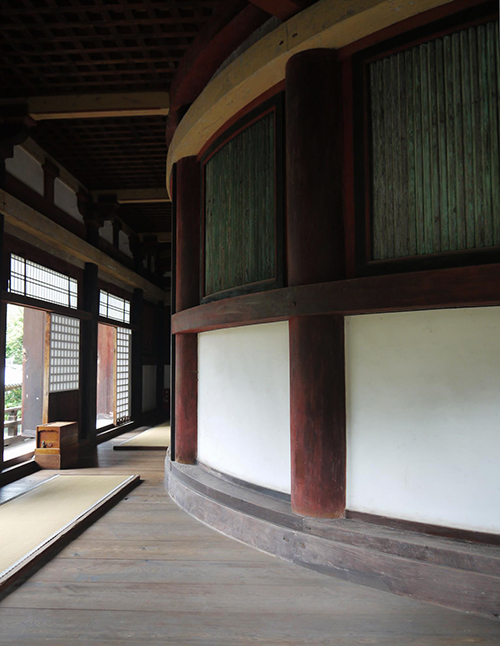
写真1枚目の曲面を見せる内陣外皮の壁面や球体構造に傘のように差し掛かった
屋根、裳階の複雑極まりない組物などに施工者の執念のようなものを感じる。

高さ40m幅15mの日本最大の多宝塔。二重塔で初層の平面が方形、
上層の塔身が円形に造られている。初層内部には円形の内陣が造られ、
円筒形の塔身の周囲に平面方形の庇を付している。
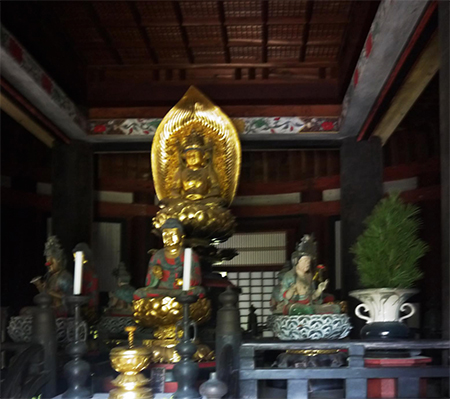
内部には12本の柱が円形に立ちそのなかに四天王が座し、中央に一段高く
本尊の胎蔵大日如来がゆかしく端座している。

English version⬇

[Complex design orders and the “hearing power” of carpenters Kishu Negoroji-10]
The Tahoto, which is called the “Great Tower” of Negoroji Temple, has well-proportioned proportions.
As expected, it shows the neat majesty of “national treasure” architecture.
I have been exploring Buddhist architecture, but when I look at the architectural realization of the doctrine
It makes me strongly feel the relationship between “design and construction” in residential construction.
Most of the houses that have been built in the historical stage are “buildings for use”.
In the architecture of the building, the concept of design is not so much, so to speak, it conforms to the basic elements of living.
Building a house that meets universal uses and emphasizes the total amount of building materials and the rationality of labor.
The pursuit of rationality, such as building materials that fit human dimensions such as tatami mats, is a wonderful level.
Farmer’s house, fisher’s house, Nagaya or Machiya in urban residence
An architecture that is obediently adapted to the social attributes to which the person belongs is built.
On the other hand, in such Buddhist architecture, it is in the concept of a religious leader as an orderer.
You can see how the architectural specifications are faithfully followed by the “design purpose”.
In building the Great Tower, “I want you to make a spherical building like the stupa that used to exist on Mt. Koya.”
The design instructions must have been given to the carpenter builder,
The image described in Buddhist scriptures is conveyed. “Hmm, what’s that?”
Naturally, a person like a translator is involved between the carpenter and the religious leader,
“I don’t like it, so I’m going to make the walls and ceiling in a circle, but I’ll make small cuts in the pillars.
I will make it so that it curves gradually and put it in the field. ”
I think they thought about the construction procedure together so that the carpenter could easily understand it.
The instructions are complicated orders that you wouldn’t see in a normal carpentry job.
Consistently “wooden” the materials processed into a three-dimensional curve, etc.
It is easy to see that the square was a design instruction that overturned the basis of common sense wooden architecture.
On the other hand, in modern housing, the so-called “custom housing” format occupies the majority in Japan.
It is this kind of unreasonable pretense of religious architecture that has nurtured the culture of the manufacturer as a manufacturing industry.
It can be seen that there was a historical process that responded by careful improvement of construction technology.
Therefore, it can be said that Japanese residential architecture has undergone a delicate evolution.
The technological evolution and the receptiveness of the ordering side must have been trained to make the temple out of wood.
It seems that such a part is the basis of Japan’s “custom-built housing” construction technology.
In Imadoki’s words, the excellence of “listening ability”.
Takumi’s technology has evolved into an invisible “thermal environment” in modern times.
Well, there may be differences in levels, but …
It took 70 years to build this tower.
There may have been some interruptions, but maybe a few carpenter builder
It must have been completed while relaying the baton.
I approached the wall surface of the inner skin showing the curved surface of the first photo and the spherical structure like an umbrella.
I feel something like the builder’s obsession with the complex and extremely complex structure of the roof and Mokoshi.

Japan’s largest treasure tower with a height of 40m and a width of 15m. The plane of the first layer is square in the double tower,
The upper tower body is made in a circle. A circular chancel is built inside the first layer,
A flat square eave is attached around the cylindrical tower body.
Twelve pillars stand in a circle inside, and the four heavenly kings sit in it, one step higher in the center.
The principal idol, Vairocana, is gracefully sitting.

【多宝塔=釈迦のストゥーパ 紀州根来寺-9】


ここのところ仏教寺院建築研究に没入気味(笑)。
個人としてもそろそろ加齢からの仏心が芽生えてきたものか、
とは思うのですが、住宅の現代の姿を長年取材し続けてきて
結局、その住文化のマザーとして宗教建築表現に強く導かれるのでしょうか。

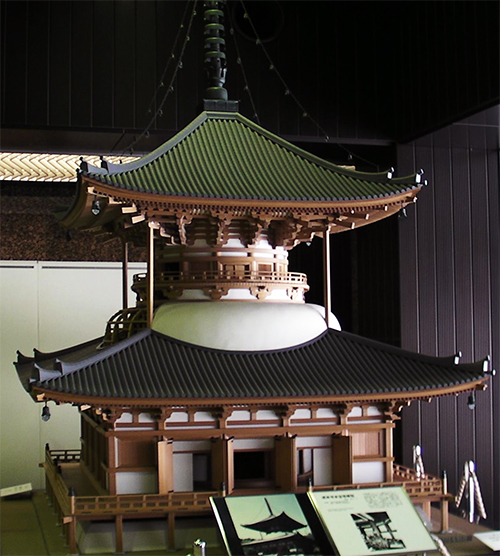
上の写真は千葉県佐倉市の歴史民俗博物館・根来寺大塔の模型展示。
日本は木造の国であり三内丸山、出雲大社などの「伝統」が根付いていた。
東アジア有数の海洋国家にして豊かな温暖島嶼国家。
ヒマラヤからの偏西風が東シナ海・日本海の水蒸気を受けて多雨気候になる。
結果として有数の森林資源に恵まれることになって、
建築素材形式としては石造ではなく木造がきわめて優勢の文化を育んだ。
そういう社会に統一国家形成のための精神的主柱として仏教思想が導入され
その宗教概念を表現する建築が多数建築された。
そのことが木造技術の発展にも相互反応しただろうことは容易にわかる。
木を使って多様なカタチを造作していくために研究・工夫が旺盛に盛り上がった。
多宝塔という日本独自の建築表現形式にはさまざまな条件が与っていたでしょう。
基本的なモチーフはストゥーパをどう制作するか、だったことは明らか。
ストゥーパは釈迦の遺体をお骨にして安置した建築が出自だった。
2枚目写真はインド中部に位置するサーンチー村、インド最古といわれる仏教遺跡。
インドを統一したアショーカ王(在位紀元前273~前232年頃)が
建てたストゥーパ(仏塔)がほぼ形を変えずに残されているという。
ストゥーパとはサンスクリット語で「高く顕れる」という意味であり、
仏教の世界観である涅槃の境地を象徴しているとされる。
建築目的はそうであってそれを表現するのにそれぞれの国・地域で多様化した。
原初的には円形ドーム形状、球体構造がイメージされたのでしょう。
インドでは乾燥気候を前提として石造りのドームとしたものが、
日本の多雨気候下では傘・屋根を頭に乗せ耐候性を高めたのが発想起点かと思える。

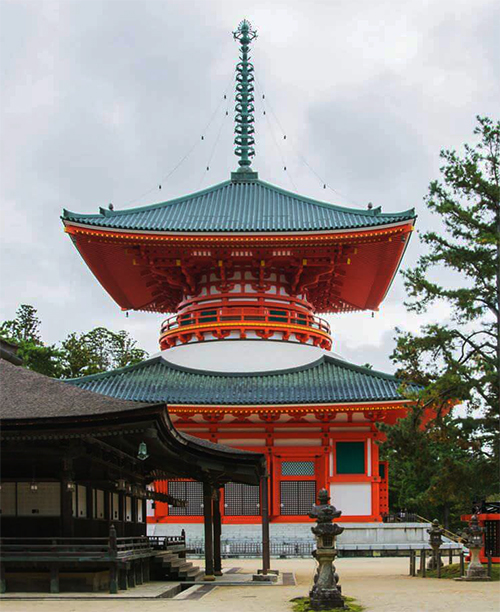
3枚目の写真は現在の高野山根本大塔。しかし現在の建物は1937年に
鉄筋コンクリートで再建されたもので建築史的正統性に疑問があり参考にならない。
空海が唐で見聞した寺院建築の基本思想に踏まえて「根本大塔」を企図したが
かれの時代にこの形式で建築されたかどうか不明で、むしろ後代の建築と思える。
写真を見ると基壇の上に建てられていて、根来寺の大塔とは足下にも違いがある。
空海の入定(835年)後、弟子であり実の甥でもあった真然が887年頃に
根本大塔などの伽藍を整備したというのが史実に近いと思われる。
しかし994年には落雷による火災のため、高野山はほとんどの伽藍を失っている。

高野山大塔はこういう経緯なので歴史民俗博物館では広く日本の建築史の視点から
根来寺の大塔を日本独自の多宝塔建築の代表と見なして展示しているのでしょう。

English version⬇

[Tahoto = Shakyamuni Stupa Kishu Negoroji-9]
Recently, I’ve been immersing myself in research on Buddhist temple architecture (laughs).
As an individual, it’s about time that the Buddha’s heart has sprung up from aging.
I think, but I’ve been covering the modern appearance of housing for many years.
After all, is it strongly guided by religious architectural expression as the mother of that living culture?

The photo above is a model exhibition of the Negoro-ji Temple, a museum of history and folk in Sakura City, Chiba Prefecture.
Japan is a wooden country, and “traditions” such as Sannai Maruyama and Izumo Taisha have taken root.
An affluent warm island nation that is one of the leading maritime nations in East Asia.
The westerlies from the Himalayas receive water vapor from the East China Sea and the Sea of ​​Japan, resulting in a heavy rainfall climate.
As a result, we are blessed with one of the leading forest resources.
As a building material format, wooden construction rather than stone construction has fostered an extremely predominant culture.
Buddhist thought was introduced into such a society as a spiritual pillar for the formation of a unified nation.
Many buildings were built to express the religious concept.
It is easy to see that this would have reacted to the development of wooden technology.
There was a lot of research and ingenuity in order to create various shapes using wood.
Various conditions would have been given to Japan’s unique architectural expression form called the Tahoto.
It is clear that the basic motif was how to make a stupa.
The stupa originated from an architecture in which Buddha’s body was used as a bone.
The second photo is Sanchi village located in central India, the oldest Buddhist archaeological site in India.
King Ashoka (reigned 273 BC-232 BC) who unified India
It is said that the stupa (stupa) that was built remains almost unchanged.
Stupa is a Sanskrit word meaning “highly visible.”
It is said to symbolize the state of Nirvana, which is the world view of Buddhism.
The purpose of architecture is so, and to express it, it has diversified in each country / region.
Originally, the image was a circular dome shape and a spherical structure.
In India, a stone dome is used on the premise of a dry climate.
Under the heavy rain climate in Japan, it seems that the idea was to put an umbrella / roof on the head to improve the weather resistance.
The third photo is the current Koyasan Konpon Daito. But the current building was in 1937
It was reconstructed with reinforced concrete and has doubts about the legitimacy of architectural history, so it is not helpful.
Based on the basic idea of ​​temple architecture that Kukai saw in Tang, he planned “Konpon Daito”.
It is unclear whether he was built in this form in his time, rather it seems to be a later generation.
Looking at the photo, it is built on the platform, and there is a difference in the feet from the main tower of Negoroji Temple.
After Kukai’s appointment (835), Shinzen, who was his disciple and nephew, was around 887.
It seems to be close to historical fact that he maintained the temples such as Konpon Daito.
However, in 994, Koyasan lost most of its cathedral due to a fire caused by a lightning strike.

Because of this background, Koyasan Oto is widely used in the History and Folklore Museum from the perspective of Japanese architectural history.
The large tower of Negoroji Temple is probably exhibited as a representative of Japan’s unique Tahoto architecture.

【日本建築の白眉・3次元球体内包「多宝塔」 紀州根来寺-8】


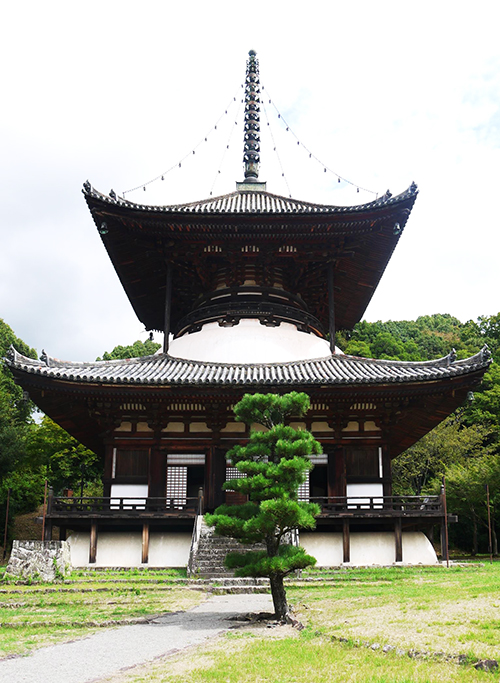
この根来寺建築の白眉は国宝建築の「大多宝塔」。
この多宝塔、千葉県佐倉市の国立歴史民俗博物館の入口近くの最初の展示で
同博物館研究スタッフによる模型展示で見ていた記憶が甦ったので、
そちらの写真記録から、以下のような「紹介」文を確認できました。
〜本来は高野山開基の空海時代に建てられた根本大塔に倣って建てられた。
普通の多宝塔とは違って、下重が方5間で内部には円形の柱列があり、
円形平面の一重塔(宝塔)に裳階を付けて多宝塔としたことがよくわかる。
完成までに長い年月を要しており、1481年に心柱を得て造作が完了するまでに
70年近く掛かっている。〜
「法華経」自体には、多宝塔(宝塔)の形式は記載されておらず、
現在日本で見られるような多宝塔形式については、日本独自のものといわれる。
中国や古代日本では五重や三重の塔があったとされている。
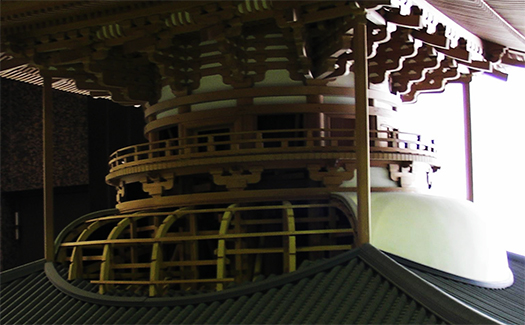
写真の3枚目は模型展示で3次元球体外観を見せる構造材実測結果のようです。

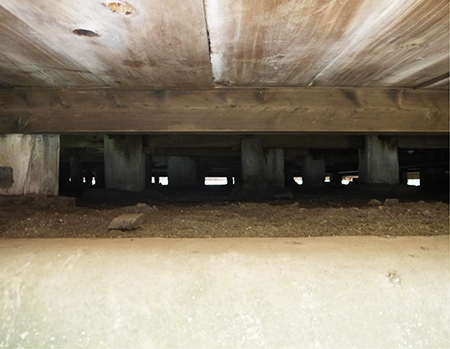
基礎部分には例の「亀腹」が塔を支えるように造形されているが、
この塔上部の3次元球体部分も同様に「亀腹」と表現されている。
基礎部分は基壇からの進化形、日本の気候対応での「通風重視」進化。
このなだらかな美感を見せる上の亀腹は宗教的な意味合いもあるだろうけれど、
日本に根付いた仏教が独自にデザイン進化したものということになる。
アジア大陸、半島地域を経て仏教建築は日本に根付いたけれど、
その過程で性能面でもデザイン面でも独自進化させていると見なせる。
多宝塔というのはわたしは本州地域を取材紀行する過程で見知ったけれど、
今回の「探究」ではじめて発生経緯まで知ることができました。
まことに驚かされるばかりであります。
宗教上のデザインとしてはストゥーパなのではないかと推測され
法隆寺でいえば五重塔に相当する役割の建築でしょうが、
ひとつの表現手法として多宝塔にたどりついた日本建築に新鮮な驚き。
わたしのブログタイトルは「性能とデザイン」ですが、
はからずや、現代における高断熱高気密の住宅革命に遙かに先行して
日本建築での「進化」の実態を教えられるような気がしています。

国立歴史民俗博物館で詳細に構造も分析して象徴的に展示している意味が
ようやくにして伝わってきたように思います。
多宝塔という表現形式はこの根来寺が最初というワケではないと思われますが、
日本最大という意味で分析されたものなのでしょう。
木造建築で3次元的に円、球体を描くというデザイン表現は相当の技術ではないか。
そういう技術を自己開発してまでこだわって創作した意図も含め興味深い。
仏教伝来(538年説が有力)約1,000年にして建築的変容をみごとに遂げている。
それにしても70年かけて建築ということは、棟梁技術者も数世代がかりだろう。
3次元球体という独自表現を成し遂げた営為に拍手を送りたいと強く思う。
その後江戸期での多宝塔建築の多産を思えば先覚者たちの営為はすばらしい。
さてどういう経緯がそこにあったか、新たな探究テーマも浮かんでくる・・・。

English version⬇

[Masterpiece of Japanese architecture, 3D sphere encapsulation “Tahoto” Kishu Negoroji-8]
The Masterpiece of this Negoroji architecture is the national treasure architecture “Tahoto”.
This Tahoto is the first exhibition near the entrance of the National Museum of Japanese History and Folklore in Sakura City, Chiba Prefecture.
The memory I had seen in the model exhibition by the museum research staff was revived, so
From that photo record, I was able to confirm the following “introduction” sentence.
~ Originally, it was built following the Konpon Daito, which was built during the Kukai era of Kaisan, Koyasan.
Unlike the ordinary Tahoto, there is a circular colonnade inside with a lower weight of 5 ken.
It can be clearly seen that the single-storied pagoda (treasure pagoda) on a circular plane was made into a multi-treasure pagoda by adding a Mokoshi floor.
It took a long time to complete, and by the time the pillar was obtained in 1481 and the construction was completed.
It’s been nearly 70 years. ~
The “Lotus Sutra” itself does not describe the format of the Tahoto (Treasure Tower).
The Tahoto style that is currently seen in Japan is said to be unique to Japan.
It is said that there were five-storied and three-storied towers in China and ancient Japan.
The third piece of the photograph seems to be the result of actual measurement of the structural material showing the appearance of a three-dimensional sphere in the model exhibition.

In the foundation part, the example “turtle belly” is shaped to support the tower,
The three-dimensional spherical part at the top of the tower is also expressed as “turtle belly”.
The basic part is an evolution from the platform, “ventilation-oriented” evolution in Japan’s climate response.
The upper turtle belly that shows this gentle beauty may have religious implications,
It means that Buddhism rooted in Japan has evolved its own design.
Buddhist architecture has taken root in Japan through the Asian continent and the peninsula region,
In the process, it can be considered that it has evolved independently in terms of both performance and design.
I knew the Tahoto in the process of traveling around the Honshu area,
For the first time in this “inquiry”, I was able to know the history of the outbreak.
I’m just surprised.
I think it’s a stupa as a religious design.
Speaking of Horyu-ji, it would be a building with a role equivalent to a five-storied pagoda,
A fresh surprise to the Japanese architecture that arrived at the Tahoto as an expression method.
My blog title is “Performance and Design”,
Not surprisingly, far ahead of the modern, highly insulated and airtight housing revolution.
I feel like I can teach you the reality of “evolution” in Japanese architecture.

The meaning of displaying it symbolically by analyzing the structure in detail at the National Museum of Japanese History and Folklore
I think it has finally been transmitted.
It seems that the expression form of Tahoto is not the reason why Negoroji is the first.
It must have been analyzed in the sense that it is the largest in Japan.
Isn’t the design expression of drawing a circle or a sphere three-dimensionally in a wooden building a considerable technique?
It is interesting, including the intention of creating such a technology by self-development.
Buddhism was introduced (the theory of 538 is influential), and it has undergone an architectural transformation in about 1,000 years.
Even so, building over 70 years will take several generations of builder engineers.
I would like to applaud the activity that achieved the unique expression of the 3-sphere.
After that, considering the prolific production of Tahoto architecture in the Edo period, the activities of the pioneers are wonderful.
By the way, a new inquiry theme comes to mind as to what happened there.

【基壇⇒亀腹変化と雨除け「濡れ縁」 紀州根来寺-7】


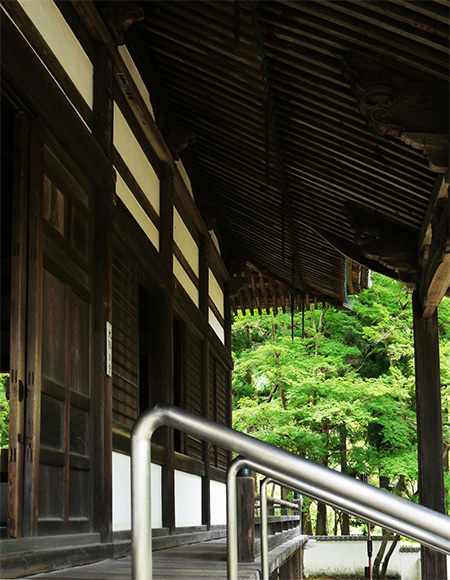
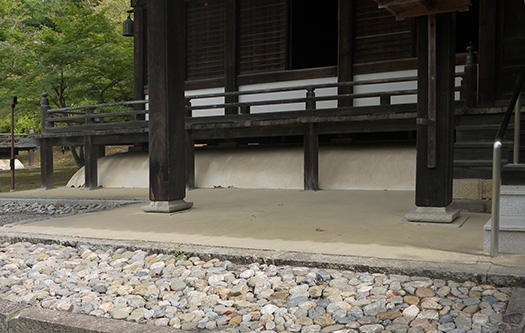
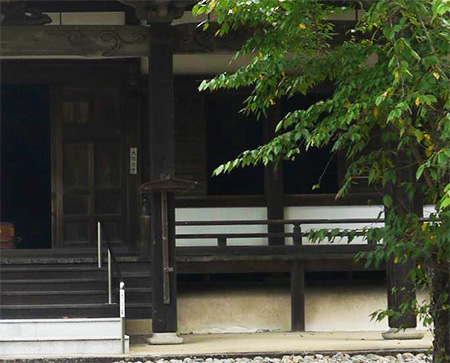
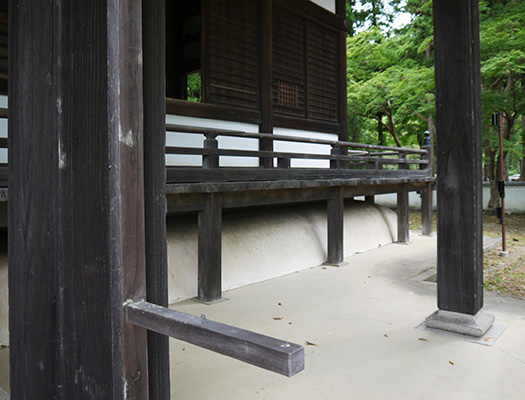
根来寺シリーズ・伝法堂。こちらは「濡れ縁」の様子であります。
大陸からの仏教寺院建築文化が日本にやってきて徐々に日本独自の発展を見せ
基壇=平面地盤という建築形式から鏡餅のように仕上げた「版築」、
いわゆる「亀腹」にカタチが変容していったことはすでに触れた。
この根来寺では漆喰で表面も仕上げ、いかにも亀がひっくり返っている(笑)。
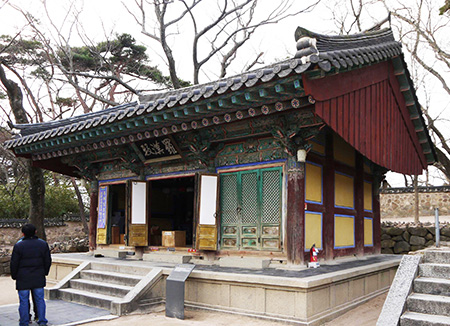
下の写真は韓国仏国寺の「羅漢殿」ですが、建物は地上から1mほど基壇で
上に挙げられしかもしっかりと固められそこから木造構造が立ち上がっている。
そう言えば韓国での仏教寺院では基壇形式しか確認できなかった。

床下空間というものが存在していない。代わりに基壇で基礎上げされている。
こちらでは明確に基壇から直接木構造が立ち上がっている。
一方日本の根来寺伝法堂では亀腹で基壇が代替されその上面に礎石を置いて
そこから木の束を立てて床下空間を開放させているのです。
その機能性を考えれば、日本の多雨気候適合での腐朽対策なのが自明。
大陸や半島では日本のような海洋気候による多雨が想定されず、
木材構造の腐朽対策があまり考慮されていなかったのでしょう。
この建築の下部からはそういう物言わぬ証言を感じ取れる。

愛読いただいている建築研究者のT氏からご指摘いただいたのですが、
その上さらに多雨対応として、本体建築から下屋として木の床面が張りした。
いわゆる「濡れ縁」空間の誕生ですね。
写真を見ると亀腹には漆喰塗装がしているけれど、防水を考えて
後退距離を稼ぐために、このような濡れ縁が装置されるようになった。
大きな差し掛け屋根もある上で重ねてのこういう建築仕様。

濡れ縁という名称は非常に的確だと感じさせられる。
雨水浸入による本体の構造腐朽を避けるために基壇基礎による土間地盤面から
「床上げ」して床下通気を図っていったのでしょう。
そのために基壇から亀腹に変化させて通気機能を果たせるようにした。
たぶん最初期の仏教寺院建築でいくつかの失敗事例があって、
建築の「国風化」が不可欠だというような論議が盛り上がったのだろう。
「日本は日本なりの仏教寺院建築のカタチを工夫していくべきだ」という論理。
基礎の保護も兼ねて本体構造から独立した下屋・濡れ縁を回し
簡易な被覆として機能させていったという考え方ですね。
本体構造をしっかりガードして濡れ縁部分は簡易に交換するという考え方。
T氏の指摘では、日本家屋では濡れ縁的な場所に浴室トイレなどの「水回り」が
本体室内とは離れて造作されてきたとされるけれど、その初源的なカタチではとの論。
建築の「足下」から日本の独自発展がスタートした様子がわかりますね。

English version⬇

[Base ⇒ Turtle belly change and rain protection “Rendai” Kishu Negoroji-7]
Negoro-ji series, Denpo-do. This is the state of “wet edge”.
Buddhist temple architectural culture from the continent came to Japan and gradually showed its unique development
“Rammed earth” finished like a kagami mochi from the architectural style of base = flat ground
I have already mentioned that the shape has transformed into the so-called “turtle belly”.
At this Negoroji temple, the surface is finished with plaster, and the turtle is turned over (laughs).
The photo below is the “Rakanden” of Bulguksa Temple in Korea, but the building is about 1m from the ground.
It is listed above and is firmly solidified, from which the wooden structure stands up.
By the way, at Buddhist temples in Korea, only the platform format could be confirmed.

There is no such thing as an underfloor space. Instead, the foundation is raised on the platform.
Here, the wooden structure clearly stands up directly from the platform.
On the other hand, at the Negoroji Denhodo in Japan, the base is replaced by a turtle belly, and a cornerstone is placed on that plane.
From there, a bunch of trees is erected to open up the underfloor space.
Considering its functionality, it is obvious that it was adapted to Japan’s heavy rain climate and was used as a countermeasure against decay.
On continents and peninsulas, heavy rainfall due to the oceanic climate like Japan is not expected,
Probably, the measures against the decay of the wood structure were not considered so much.
From the bottom of this building, you can feel such unspeakable testimony.

Mr. T, an architectural researcher who loves reading, pointed out that
In addition, as a measure against heavy rain, the wooden floor was stretched from the main building to the lower house.
It’s the birth of a so-called “wet edge” space.
Looking at the photo, the turtle belly is plastered, but considering waterproofing
Such wet edges have come to be installed in order to gain retreat distance.
There is also a large hanging roof, and these architectural specifications are piled up.

The name Wet Edge makes me feel very accurate.
From the ground surface of the soil floor by the foundation to avoid structural decay of the main body due to infiltration of rainwater
Perhaps they were trying to “raise the floor” to ventilate under the floor.
Therefore, it was changed from the base to the turtle belly so that it could perform the ventilation function.
Maybe there were some failures in the earliest Buddhist temple construction,
The debate that the “nationalization” of architecture is indispensable may have been raised.
The logic that “Japan should devise the shape of Buddhist temple architecture in Japan.”
Turn the wet edge, which is independent of the main body structure, to protect the foundation.
The idea is that it functions as a simple coating.
The idea is to firmly guard the main body structure and easily replace the wet edge part.
Mr. T pointed out that in Japanese houses, there are “water around” such as bathrooms and toilets in wet places.
It is said that it was created separately from the main body room, but it is said that it is the original form.
You can see how Japan’s unique development started from the “foot” of architecture.