本文へジャンプ

【2016年度日本建築学会賞作品 堀部安嗣「竹林寺納骨堂」-1】


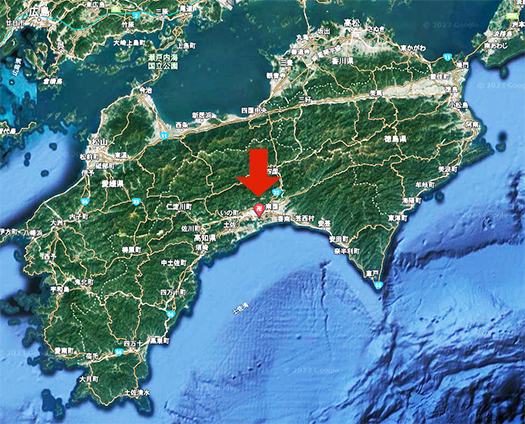
先日まで安藤忠雄「淡路夢舞台」探訪記を書きましたが、夫婦旅で淡路の後、徳島県・三木家住宅を参観。その後、「うだつの街」を見学。その後は徳島から一路南国土佐高知へ。忘れていたのですが、訪問先についてカミさんにはもう1件、高知市の名刹・竹林寺にある「納骨堂」もリクエストしていた。こちらは表題の通り、知人の設計者・堀部安嗣さんの2016年度日本建築学会賞。
建築関係のメディア人間ながら北海道を基盤とする雑誌メディアとしては、本州以南地域の建築動向について耳にはするけれど現地で参観する機会というのはなかなかない。たまたま四国行脚が夫婦旅だったことで今回実現できた。
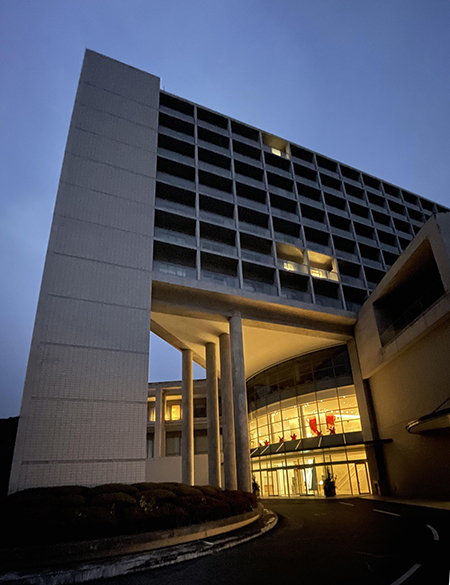
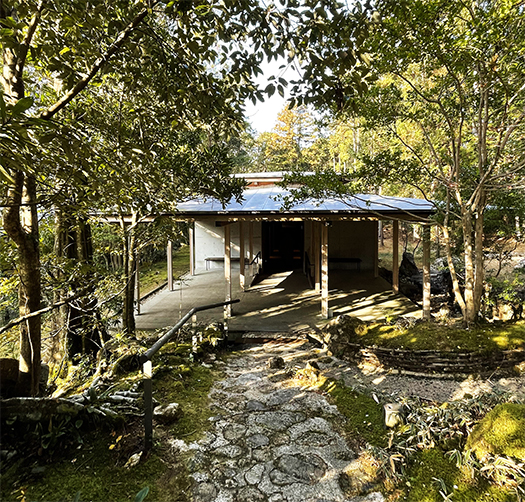
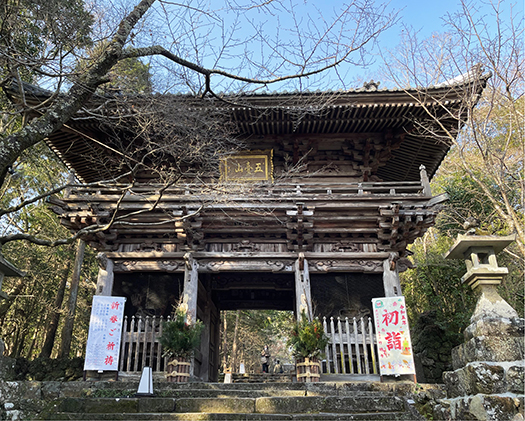
最初の写真はお目当ての納骨堂の正面外観。この施設は当然ながら竹林寺の境内の奥まったところにある。そこに至るには山門を抜け、本堂や仏塔なども巡って行くことになる。堀部さんの設計趣旨の文章などを見ても、建築はその置かれる環境の中でいのちを得ているもの。多くの歴史的空間環境と「繋がって」存在している。そういうことで建築探訪ながら周辺の様子もルポしながら、数回に分けて探訪記としたいと思います。
自由旅行なので仕事的に調査活動をしっかりするわけではない。事前に情報を細かく入手するような段取り仕事はしておりません。実際に建築に触れてその臨場体験をベースにして、このようにブログで書くことで追体験整理することになります。こういう記述スタイルのほうが面白みも感じ始めています。
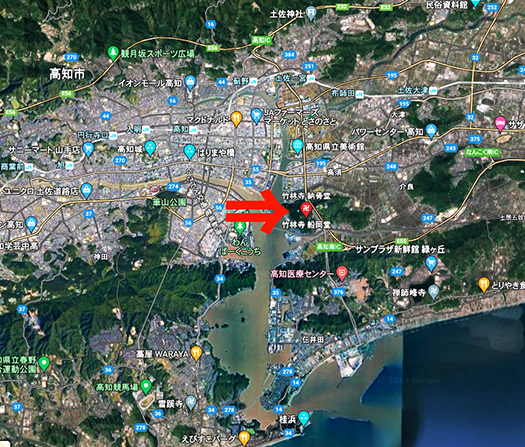
行って見て始めて竹林寺という古刹の高知県での存在感を知ることになる。四国八十八箇所第三十一番目の札所で、1300年の歴史を刻んでいる真言宗の寺院。高知市内南東、古くは桂浜とならび月の名所であった五台山にあります。わたしは真言宗の宗徒で、高野山参拝の経験もあるので、やはり親近感がある。南無大師遍昭金剛・・・。
参観の当日朝は、さきに桂浜の風景にたっぷりと癒されてからの参観となりました。四国には新入社員予定者だった大学4年の9月頃に入社先の社長の運転手としてアルバイトした経験がある。四国を一周するイベントの会場巡り。
ふしぎと食べもののこと、なんにでも柑橘ポンカンを搾って食べることが鮮烈な記憶だった。その当時から数えれば半世紀近く経っている。また元気にレンタカーを運転して巡り回っていることが、ありがたく味わい深い。
おっと、まったく目的の建築行脚に進めない(笑)。現場体験は明日以降に。

English version⬇

2016 Architectural Institute of Japan Award for Best Work: Yasushi Horibe “Chikurinji Ossuary”-1
A representative work of architecture by Yasushi Horibe, the first residential work to be covered in the Kansai region. How does it contrast with the Tadao Ando architecture of Awaji Yumebutai? …

I wrote about my exploration of Tadao Ando’s “Awaji Yumebutai” until the other day. After Awaji on a couple’s trip, we visited the Miki Family Residence in Tokushima Prefecture. After that, we visited “Udatsu no Machi” (Udatsu Town). After that, we went from Tokushima all the way to Tosa-Kochi in southern Japan. I forgot to mention that I had also requested one more place for Kami to visit, an ossuary at Chikurinji Temple, a famous temple in Kochi City. This one, as the title suggests, is the 2016 Architectural Institute of Japan (AIJ) Award for its designer, Yasushi Horibe, who is an acquaintance of mine.
As a member of the architecture-related media, but as a Hokkaido-based magazine media, I have heard about architectural trends in the south of Honshu, but I have not had the opportunity to visit the site. We were able to do so this time because our trip to Shikoku happened to be a couple’s trip.
The first photo shows the front exterior of the ossuary we were looking for. Naturally, this facility is located in a secluded part of the Chikurin-ji temple grounds. To get there, we had to pass through the temple gate, and then around the main hall and pagoda. The architecture, as seen in Mr. Horibe’s description of the purpose of the design, is a building that derives its life from the environment in which it is placed. It exists “connected” to many historical spaces and environments. Therefore, I would like to write about my architectural explorations in several parts, reporting on the surroundings as I visit the buildings.
Since this is a free trip, I will not be doing a lot of research. We do not work to obtain detailed information in advance. I will actually touch the architecture and based on that realistic experience, I will relive and organize it by writing in this way on my blog. I am beginning to find this style of writing more interesting.
I will learn about the presence of an ancient temple called Chikurinji in Kochi Prefecture only after I go and see it. It is the 31st temple of the 88 temples in Shikoku, and is a Shingon Buddhist temple with a history of 1,300 years. It is located southeast of Kochi City on Mount Godaisan, which, along with Katsurahama Beach, was once a famous moon viewing spot. I am a member of the Shingon sect and have visited Koyasan, so I feel a strong affinity with the temple. Namu Daishi Hensho Kongo…

On the morning of the day of the visit, I was first treated to the scenery of Katsurahama Beach. I had a part-time experience in Shikoku as a driver for the president of the company I was working for around September of my fourth year of college, when I was a prospective new employee. Touring the venue for an event that circled Shikoku.
It was a vivid memory of fushigi, food, and squeezing citrus ponkan into everything. If I count from that time, almost half a century has passed. I am grateful that I am driving around in a rental car again.
Oops, I can’t go on to the construction trip, which is my goal at all (laughs). I’ll get back to the site experience tomorrow or later.

【北海道の「貝類」8020万年の化学層序】


昨年末に東京上野の「科学博物館」で参観した「化学層序」の展覧会。歴史好きなので地層とか地質年代的にも興味を持っております。NHK「ブラタモリ」でも番組構成で下敷きにしていますね。地質学の基本となる情報は地層の積み重なりである「層序」という概念。層序は上位ほど新しく、各地層の厚さ、堆積構造、岩石や化石の種類の違いを示す。そういう概念を「化学層序」と呼ぶのだそうです。
そういえばと思い出すのが、不勉強極まりなかった高校時代。予習が通用しない学力テストがあって「地学」を選択したら、なんと学年トップランクの成績。個人的勉強史での唯一に近い「成功体験」(笑)。逆に考えるとそれ以来、地質は面白いと思ってこういう最新研究の成果発表に興味を持つのでしょうか。
そういうマニアックな展示会で学ぶことで来し方行く末のコンパス感覚が得られる。人間の歴史もそういう巨視スパンの基盤上に展開しているので強く影響されている。ふむふむと勉強させていただいていたら、突然目の前に「北海道」という文字が現れて思わず目が覚めてしまった。


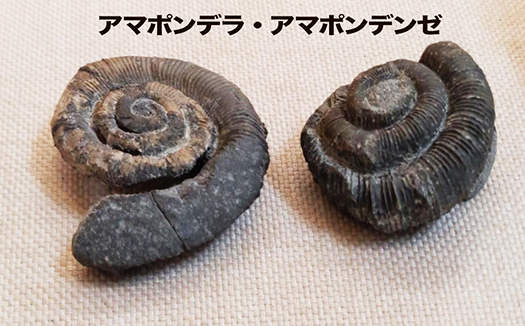
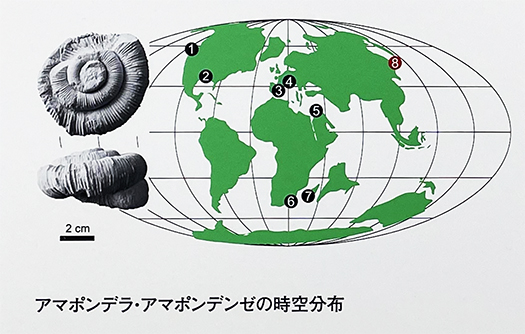
「貝類」と言う生物種ととらえられる「アンモナイト」の一種「アマポンデラ・アマポンデンゼ」というイキモノは化石で確認される最新年代、約8020万年前には地球上で北海道でだけ発見されるのだそうです。
なんでもこの化石は北海道むかわ町穂別博物館から出張してこの東京の科学博物館に来ていたとのこと。WEBで検索しても、この生物種の情報はなかなか得られない。
一方アンモナイトは古生代シルル紀末期から中生代白亜紀末までのおよそ3億5000万年前後の間を、海洋に広く分布し繁栄した頭足類の分類群の一つ。多くの種が平らな巻き貝のような形をした殻を持っているのが特徴。・・・ということなので、やはり貝類との類縁性が強く感じられる。
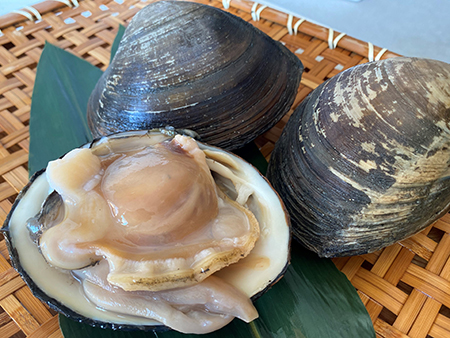
普段から北海道の魚介類には深くお世話になっている。2枚目写真のホッキ貝などはそのうま味に魅せられて、ほぼ日常的に捌いて刺身として食している。そのはるかなご先祖さまが、思わぬ場面でいきなり降臨された気分。人間は罪深く、他の生物種を食べながら生き延びてきた。食べることはイキモノを殺すことだけれど、しかし同時にいのちの共生とも感じる。輪廻転生。・・・

English version⬇

Chemostratigraphy of Hokkaido’s “Shellfish” 80.2 Million Years Ago
While studying the latest research in geology, I encountered fossils of ancestors of Hokkaido shellfish. The history of the earth’s shellfish, which is made clear by the texture of sashimi. …

At the end of last year, I visited the “Chemistry Stratigraphy” exhibition at the Science Museum in Ueno, Tokyo. As a history buff, I am interested in geological stratigraphy and geochronology, and I know that NHK’s “Bratamori” also uses it as a basis for its program structure. The basic information of geology is the concept of “stratigraphy,” which is the layering of strata. The higher the stratigraphy, the newer it is, indicating differences in thickness, sedimentary structure, and types of rocks and fossils in each layer. Such a concept is called “chemostratigraphy.
This reminds me of my high school days when I was extremely ill-prepared. There was an achievement test that I could not prepare for, and I chose “geology,” and to my surprise, I was ranked in the top of my class. It was the only “success experience” in my personal study history (laughs). Thinking about it in reverse, I wonder if since then I have been interested in the presentation of the results of the latest research like this because I think geology is interesting.
Learning at such maniacal exhibitions gives me a sense of a compass for where we are going and where we are going to go. Human history is also strongly influenced by such a macroscopic span of time. As I was studying the exhibition, the word “Hokkaido” suddenly appeared in front of my eyes, and I was awakened unexpectedly.

Amapondera amapondense, a type of “ammonite” that is considered a “shellfish” species, is found only in Hokkaido on earth at the latest age confirmed by fossils, about 80.2 million years ago.
It is said that this fossil came to the Science Museum here in Tokyo on a business trip from the Hobetsu Museum in Mukawa-cho, Hokkaido, and that information on this species is not easy to find even when searching on the Web.
Ammonites, on the other hand, are a taxon of cephalopods that flourished and were widely distributed in the oceans from the late Silurian of the Paleozoic Era to the end of the Cretaceous of the Mesozoic Era, a period of about 350 million years. Many species are characterized by their flattened shells, which are shaped like a spiral shell. The species is strongly related to shellfish.
I have been deeply indebted to Hokkaido’s seafood, and am fascinated by the taste of hokki-gai clams, such as the one in the second photo, and eat them as sashimi almost on a daily basis. I feel as if these distant ancestors suddenly descended upon me at an unexpected moment. Humans have sinfully survived by eating other species. To eat is to kill a living thing, but at the same time, I feel that it is a symbiosis of life. Reincarnation. The reincarnation of life.

【札幌の春一番(!) 市の集中除排雪わが家周辺に出動】


札幌の市街住宅地域では、毎年冬の終わり時期に集中除排雪が行われます。大量の除雪機車両部隊が一気投入される。2月末頃に入ります、という市からの広報があったけれどその後「順延します」という案内があって「時期については町内会広報にてお知らせします」ということだったけれど、さすがにことしはわが家周辺の「西区」地域は有数の多雪地域だったので、日程も難航していたようです。
それが昨日、お知らせはなくいきなり朝から慌ただしい動きがあって、10時前ころから作業が開始され、昼3時頃まで徹底的・集中的な除排雪作業。
わが家周辺は隣近所の助け合い除雪活動が機能していてそれほど交通への支障は発生しないのですが、なんといっても今年は昨年に引き続きの多雪ぶり。見上げるばかりに積み上がった雪山は2mを越えるレベルに達し、また壁厚も太っていた。それが徐々に道幅を狭め角地のわが家周辺では助け合い除雪でなんとか交互通行できていたけれど直線道路部分ではすべて1車線。事務所兼用なので、わが家3台分以外に周辺に駐車場を6台分契約していますがその1台分は出し入れで轍(わだち)による段差ができて難渋しておりました。
それらの困難な状況が一気にすべて解決。


その上、わが家の目前の場所では歩道に掛かる部分も丁寧に「掻きだし除雪」まで行っていただいた。市民として除雪に協力したいと、わが家前にどうしてもできてしまう除雪の残滓部分、固く踏み固められた雪氷を処理しやすいよう道路側に押し出そうと試みていたら、除雪車両の運転操作員の方から直接「それもこちらで全部やりますから」と申し出いただいた。まぁたぶん除雪作業のお邪魔にもなるのでしょうね(笑)。
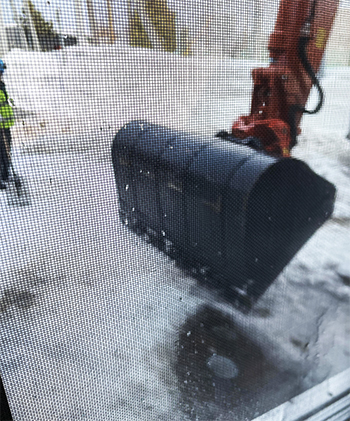
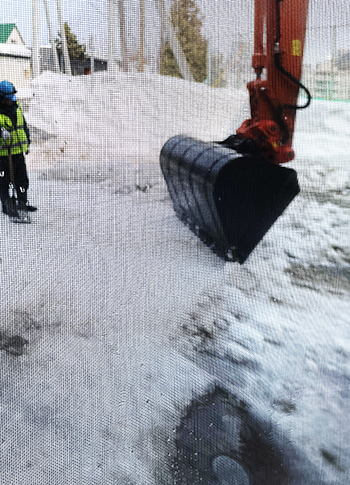
すぐ上の写真は網戸越しだったので、一部不鮮明かも知れませんが、重機で丁寧に歩道部分まで除雪してくれている様子。仕事とは言え、こうした作業員のみなさんの熟練ぶりには驚いております。

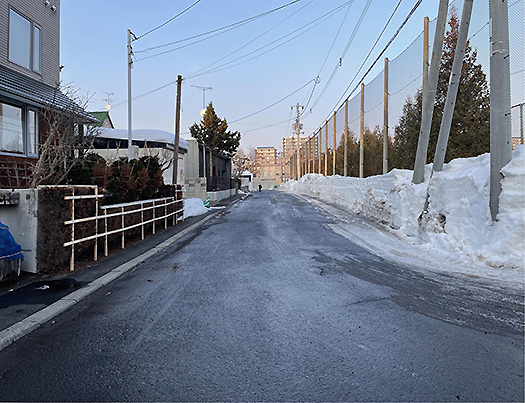
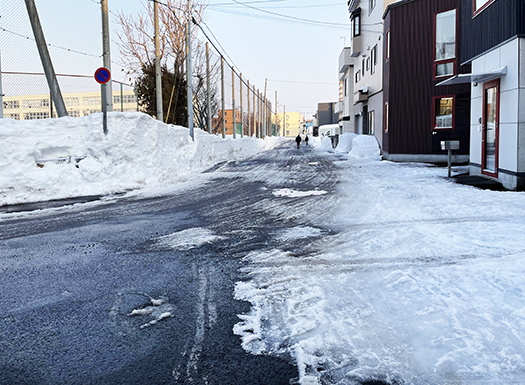
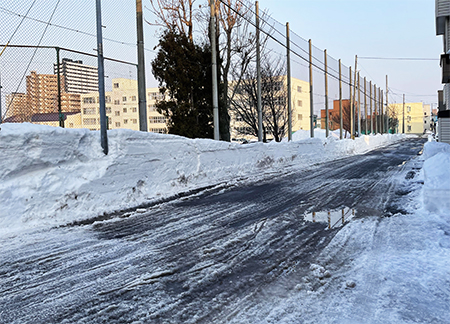
ということで、上の方の写真のように周辺はすっかり2車線道路が復元しております。わが家は中学校の校庭に面しているのですが、そちら側の雪壁は本当に薄くに変貌。方角的に日の当たる道路側ではすでにアスファルト路面が顔を出している。まことにありがたい春一番でありました。

English version⬇

The First Day of Spring in Sapporo! The city’s intensive snow removal was dispatched to the area around my house.
Sapporo is a rare cosmopolitan city with an annual snowfall of 6 meters. Every year this battle is won in the end. Every year this battle is finally won. Is this the origin of northern “optimism”? The snow

In the residential areas of Sapporo, intensive snow removal takes place at the end of winter every year, and a large number of snowplows are deployed at once. The city announced that the snow removal would start around the end of February, but then there was a notice saying that it would be postponed and the timing would be announced in the neighborhood association’s newsletter. However, as expected, the Nishi Ward area around our house was one of the areas with the heaviest snowfall, so it seems that the schedule had been difficult to schedule the event.
Yesterday, without any notice, there was suddenly a flurry of activity from the morning, and work began around 10:00 a.m., with thorough and intensive snow removal work going on until around 3:00 p.m. The snow was removed from around our house with the help of our neighbors.
The snow around our house does not interfere with traffic so much because of the mutual snow removal activities of neighbors, but this year’s snowfall was as heavy as last year’s. The snow piled up so high that we could hardly look up at it. The snow piled up to the level of more than 2 meters and the thickness of the wall was also fat. The snow gradually narrowed the road, and although we managed to get alternating traffic around our house on the corner by mutual snow removal, there was only one lane on the straight road. We have a contract for a parking lot for six cars in the vicinity of our office, in addition to the three cars at our house, and we were having difficulty getting one of the cars in and out because of the ruts in the parking lot.
All these difficulties were resolved at once.

In addition, they even carefully “scraped out” the snow from the area right in front of our house, where it hung over the sidewalk. As a citizen, I wanted to cooperate in the snow removal, so I tried to push the leftover snow and ice in front of our house to the side of the road for easier disposal, but the driver of the snowplow offered to take care of it all for us. Well, I guess that probably interferes with the snow removal work, too (laughs).
The photo above was taken through a screen door, so some of it may not be clear, but the heavy equipment was carefully removing snow from the sidewalk. I was surprised at how skilled these workers were, even though it was their job.

As you can see in the photo above, the two-lane road has been completely restored. Our house faces the schoolyard of the junior high school, and the snow wall on that side has been transformed into a really thin wall. On the side of the road where the sun shines in that direction, the asphalt surface has already appeared. It was the first day of spring, for which we are very grateful.

【ホテル空間を彩る内外デザイン 淡路夢舞台-8】


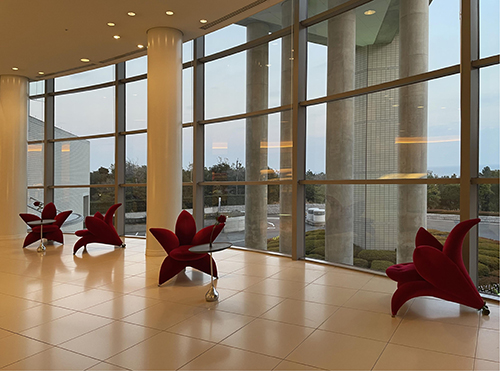
淡路夢舞台シリーズを続けたが、写真を最初に掲載したホテルにまだ帰っていなかった(笑)。グランドニッコーホテル。ロビーの雰囲気は上の写真のようなもので、ふしぎなカタチのソファが迎えてくれる。2階がロビーになっていてこのソファは外からも見ることができる位置に置かれているので、たぶん特別にデザインされたものなのだろう。
淡路という場所柄を考えると貝類をモチーフにしているのか、あるいは南国的な花びらをイメージしたのだろうか。思わず「座ってごらん、写真撮ってあげる」と言いたくなる(笑)。「気分を盛り上げる」のが狙いでもあるだろうから、目的には合致している。
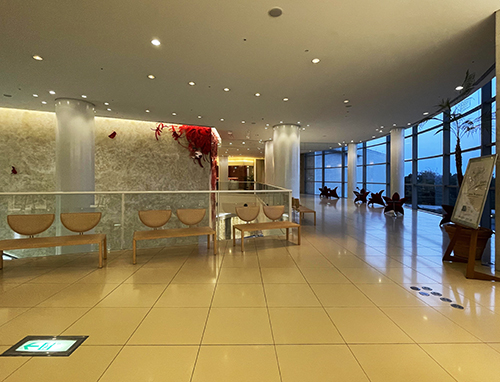
実際に座ってみるとそれなりの座り心地が感じられ作りもしっかりしていた。それに比べると階段ホールに配置された2人掛けの椅子はあんまり座りたくなる感じはしなかった。デザインモチーフもどういったイメージが制作動機なのか伝わりづらかった。
こういった造作家具の場合、空間イメージとの整合性とか調和が大事。リゾートホテルの雰囲気作りには外観デザインとの整合性と「特別な空間」感を訴求する目的もあるでしょう。安藤忠雄氏の意図もある程度反映されているのでしょうね。ひょっとするとデザインはかれであるかも知れない。確認できませんでした。


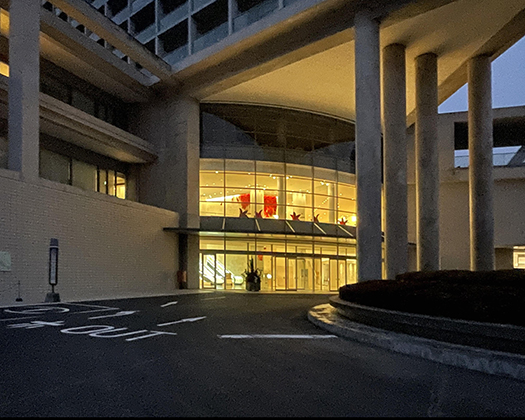
外観的にはスケッチイメージ通り。平面図ではV字的な建物配置で、その急角度部分がちょうどエントランスに当たる。このV字は淡路の海に向かっていて、一方開放された方向は陸地側になっている。客室はたぶん全室をオーシャンビューとする目的で、こういった配置計画になったのかと思われた。

列柱コンクリートは構造的に不可欠かどうか不明だが、パルテノン神殿のそれのように見る者への心理的なメッセージ性はある。強度的になくても建築は成立はするだろうけれど、あった方が安心感がある。この建物、淡路夢舞台は阪神淡路震災を計画段階で経験しているので、デザイン面でのそうした潜在意識的な訴求でもあるのだろうか。
以上で今回の淡路夢舞台探訪シリーズは終了。

English version⬇

Awaji Yumebutai – 8 – Interior and exterior design that adorns the hotel space
The hotel’s interior and exterior design is decorated with a certain emotion, whether it is a shell or a tropical petal. On the other hand, the concrete columns are very Tadao Ando. Did the earthquake have a profound effect on his mind? The earthquake also had an effect on his deep mind.

I continued the Awaji Yumebutai series, but I had not yet returned to the hotel where I first posted my photos (lol). Grand Nikko Hotel. The atmosphere of the lobby is like the photo above, with a mysteriously shaped sofa welcoming you; it seemed to me that it was probably specially designed, since the lobby is on the second floor and this sofa is placed in a position where it can be seen from the outside. Considering its location on Awaji Island, it may have been inspired by shellfish, or perhaps tropical petals. I couldn’t help but want to say, “Sit down, and I’ll take your picture” (laughs). The aim would be to “set the mood” in such a way, so it fits the purpose.
When I actually sat down, I felt a certain amount of comfort, and it was well made. In comparison, the two-seat chairs placed along the stairwell did not make me want to sit in them much. In terms of design motifs, it was difficult to convey what the motive was for the production.
In the case of this kind of furniture, consistency and harmony with the image of the space are important. The purpose of creating the atmosphere of a resort hotel would be to appeal to the sense of “special space” and consistency with the exterior design. To some extent, Tadao Ando’s intentions must have been reflected in the design. Perhaps the design is his. I could not confirm this.

Externally, the building is as shown in the sketch image. In the plan, the building is arranged in a V-shape, with the entrance at the steep angle. This V-shape faces the Awaji Sea, while the open side is the land side. It is thought that this layout was chosen in order to have all guest rooms with ocean views.

It is unclear whether the colonnaded concrete is structurally indispensable, but it seems to me that, like that of the Parthenon, it must have a psychological message to the viewer. Although the architecture would be viable without it, it is more reassuring to have it. This building, Awaji Yumebutai, experienced the Great Hanshin-Awaji Earthquake in the planning stage, so perhaps it is a subconscious appeal of this kind.
This concludes the Awaji Yumebutai exploration series for this issue.

【寿司ネタ作り・魚貝を無心に「さばく」殺生と供養】


きのうは家族で手巻き寿司パーティ。前日の土曜日に仕入れていた札幌中央市場で購入の新鮮魚貝を朝からさばきはじめておりました。
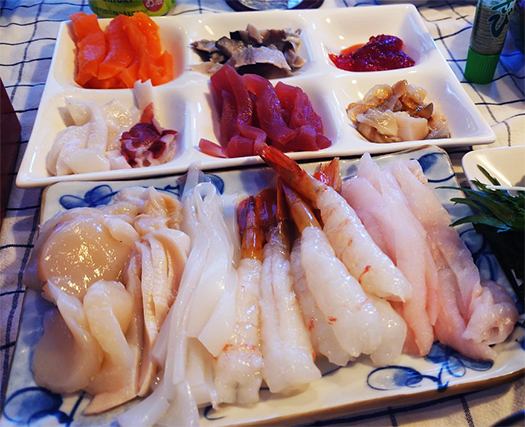
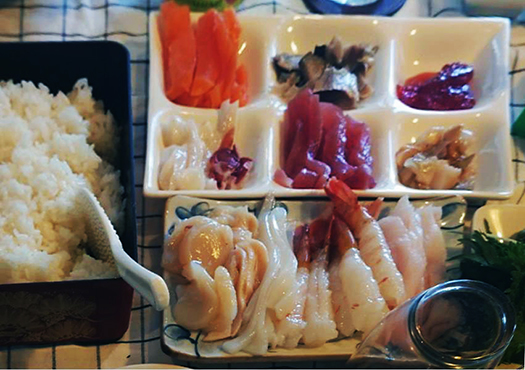
写真手前側から、エビ、イカ、ツブ、ホタテ、黒カレイ。そして奥にはマグロ、タコ、ホッキ、サーモン、筋子、サバなどであります。ほかに梅干し・納豆など助演者多数。
黒カレイは前日に三枚におろして冷凍保存。そして自然解凍させる。うま味はどうもそうした方がいいように感じています。エビさんは市場で殻から剥がしているヤツを購入していた。ついそのまんま出したけれど、やはりひと手間「開いた」方が良かったようで家人が食前に気付いてくれていました、感謝。
イカは最近北海道では不漁で、そのなかで市場になんとかあったヤツ。大ぶりで1パイ700円ほどという驚きの高価。謹んで二重に皮むきして、裏包丁を入れましたが、こうやって細長く切ると、頬張ったときに「つるん」と口の中に飛び込んでしまっていた(笑)。まぁそれはそれで興趣があって楽しかった。それでも噛みやすい、と言ってくれていたので、丹念な裏包丁は効果があったよう。
ツブは東積丹漁協から仕入れてきたもので、自然解凍後、あれこれと包丁を使ってコリコリの食感を残しながらさばいたもの。ホタテも同漁協で仕入れてきた。タコは市場で購入してきたヤツ。足の部分1kgほどのもので吸盤部分の表情がなかなかかわいらしくて「捨てがたい」。
マグロも津軽海峡で獲れたヤツ。大間は青森県だけれど津軽海峡の北、北海道でも水揚げはされる。大間で上がったときの値段と比べたらコスパはよいと思われます。サーモンと紅鮭の筋子は米国産のもの。地元産にこだわりたい人も多いでしょうが、北海道人としてはあんまりこだわらない部分。本州の人はどうも「原理主義」化しやすいと思います。そこそこのところで現実的に対応するのが合理的。シメサバは庶民的スーパーでの売れ筋のヤツ。
そして最後のホッキは地元産のヤツ。1個の値段は225円で購入した。包丁を2枚の貝ガラの合わせ目に入れると「キュッ」と強烈に締め上げてくる。そこは一気に力を入れてさばいていく。貝ガラからすべての肉身をこそぎだしていくのですが、この作業はなかなかの醍醐味。
殺生の作業になるのですが、そうした魚介類の特性を感じながら作業することで一種「対話」していると感じられる。かれらのうまさを引き出すことが、供養でもあるのだと思えますね。

English version⬇

Making sushi ingredients, mindlessly “sabaki” fish and shellfish, killing and offering.
When the knife is inserted into the shell, the hokki “screams”. The knife is used to mercilessly remove the shellfish. Dialogue with creatures in the midst of killing.

Yesterday, we had a hand-rolled sushi party with the family. In the morning, we started to cut up the fresh fish and shellfish we had purchased at the Sapporo Central Market on the previous Saturday.
From the front, shrimp, squid, whelk, scallops, and black flounder. In the back are tuna, octopus, hokki, salmon, muscles, and mackerel. In addition, there are many other supporting actors such as pickled plums and natto (fermented soybeans).
The black flounder is cut into three pieces the day before and frozen. Then let it thaw naturally. I feel that the umami taste is better that way. Shrimps were bought at the market already peeled from their shells. I served them as they were, but my wife noticed that it was better to “open” them before eating them, and I was grateful.
Squid has been scarce in Hokkaido recently, but we managed to find some at the market. It was surprisingly expensive, about 700 yen per pie for a large one. I respectfully double peeled the squid and cut it with a back knife, but when I cut it into long, thin strips like this, it just “popped” into my mouth when I bit into it (laugh). Well, that was entertaining and fun. Still, he said it was easy to chew, so it seems that the careful back-cutting had an effect.
The whelks were from the Higashi Shakotan Fisheries Cooperative Association, and after thawing naturally, I used the knife this way and that to cut the whelks while keeping their crunchy texture. Scallops were also purchased from the same fishery cooperative. The octopus was purchased at the market. The leg part weighs about 1 kg, and the sucker part has a cute expression on it, making it “hard to throw away.
The tuna was caught in the Tsugaru Straits. Although Oma is in Aomori Prefecture, tuna is also caught in Hokkaido, north of the Tsugaru Straits. Compared to the price of tuna caught in Oma, the price is reasonable. Salmon and sockeye salmon muscles are from the United States. Many people may want to stick to local products, but as a Hokkaido native, I am not so picky. I think people in Honshu tend to be “fundamentalist”. It is reasonable to be realistic about what is available there. Shime saba (mackerel) is a popular item at the common supermarket.
The last one, hokki, was a local product, priced at 225 yen per piece. When I put the knife into the joint between the two pieces of shellfish, it tightened up strongly. Then, I cut them with all my strength at once. This process is quite a thrill for me.
Although it is a work of killing, I feel that I am having a kind of “dialogue” with the fish and shellfish as I work with them, feeling their characteristics. I feel that bringing out the best of the fish is also a way of making offerings.

【週末は魚たちと、見る・食べるデート(笑)】


わたしの料理好きは小学校時代以来。男兄弟5人、姉1人という家庭環境で育った末っ子なのですが、親はバランス的にか、末っ子には女の子を希望していたそうです。生まれてきてガッカリということだったそうですが、姉がそれを不憫に思ってか、シスターボーイという1957年公開の米国映画「お茶と同情」から流行した語で「女性のような態度・容姿」みたいな弟に育って欲しい期待があったようなのです。
そんな期待を感じてか、なぜか料理に強く興味を持って、小学校3年くらいのときにはじめて「家庭科」の授業を受けて大いに刺激されて、そこで作り方を教えられた「サラダ」を家に帰って作って見た。とくに姉と母がいたく感激して喜んでくれた。それが好奇心の出発点だったように記憶しています。
それから幾星霜、三つ子の魂百まで、ではないのですが、日々料理の工夫大好きオヤジ(笑)に。
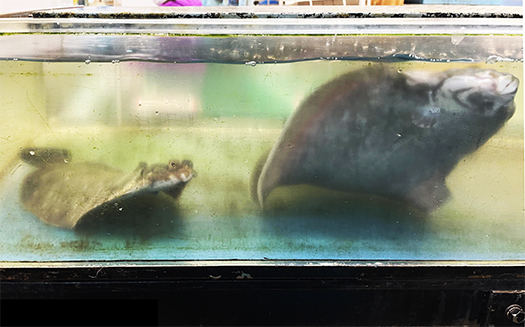
最近は余市のお魚屋さん・新岡商店にチョコチョコと通ってお魚の捌きに興味津々の毎日であります。ちょうど本日は家族が集っての「手巻き寿司」パーティ企画。これも最近よく通っている札幌中央市場に行って購入しております。上の写真はその市場にあった水槽。てっきり「活き作り」用の商品かと思ったら、「あ、それはペットなんです(笑)」という店員女性のニッコリ顔。
魚種は「ババカレイ」という魚ですが、近づいていくと、なんとシッポを振って近寄ってくる。「それはね、エサをくれると思ってよってくるんですよ」とのこと。犬のかわいい仕草で「尻尾を振る」はよく見かけるしそうされるとウレシイですが、ババカレイが、という驚きの光景。
陸上動物、哺乳類には人間との近縁感があるので、感情というものも感じますが、さすがに魚までは想像力が及ばなかった。しかし、市場などに通ううちにたしかに愛情の深まりは感じさせられる。人間は罪深くかれらを食べるのだけれど、それは異相だけれど愛情のひとつのカタチであるとも強く思わされる。


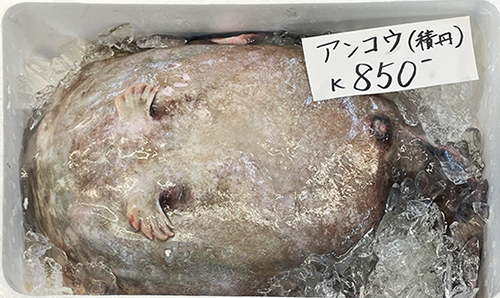
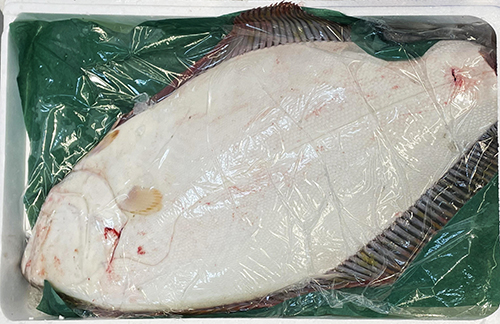
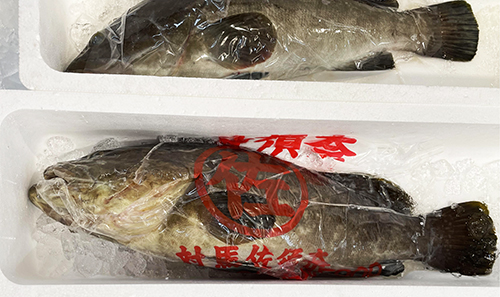
ということで、きのう市場で出会った上から順に、アンコウ・ヒラメ・クエであります。クエなどは「対馬」の産地文字が見えている。日本人はこういう海生動物と長い年月の交流が基盤にあったのでしょうね。まことに姿カタチ、かわいらしい。さて、きょうは手巻き寿司食べるぞ。

English version⬇

[On weekends, fish and their date to watch and eat (laughs).
Flounder, which have been made into pets, welcome me as they dance. I process the fish and make sashimi, but at the same time I feel affection for them. Is this a contradiction in terms of killing and eating?

My love of cooking has been with me since elementary school. I grew up in a family environment with five male siblings and an older sister, and my parents, perhaps for balance, wanted their youngest child to be a girl. His older sister took pity on him, and she had an expectation that he would grow up to be a sisterboy, a term popularized from the 1957 American movie “Tea and Sympathy,” which means “having an attitude and appearance like a woman.
Perhaps sensing such expectations, for some reason he took a strong interest in cooking, and was greatly inspired by his first “home economics” class when he was in the third grade of elementary school. My sister and mother were especially impressed and pleased. I remember that as the starting point of my curiosity.
Many years have passed since then, and I have become an old man who loves to devise new ways of cooking.
Recently, I have been going to a fish shop in Yoichi, Nioka Shoten, every day, and I am very interested in fish processing. Just today, my family is planning a “Temakizushi” party. I went to Sapporo Central Market, which I have been frequenting recently, to buy fish. The photo above is a water tank at the market. I thought it was a product for “Ikemakuri,” but the shopkeeper’s smiling face said, “Oh, that’s for pets.
The species of fish is called “baba flounder,” and as I approached it, to my surprise, it approached me, wagging its tail. When you get close to the fish, it wags its tail and comes close to you, thinking that it will feed on you. The wagging tail is a cute gesture by dogs, and it is often seen and appreciated by dogs, but this is a surprising sight to see a Baba Flounder.
I have a sense of kinship with humans when it comes to land animals and mammals, and I also feel emotions, but as expected, my imagination did not extend to fish. However, as I went to the market, I could certainly feel the depth of their affection. Although humans eat them sinfully, I strongly feel that this is a form of love, even though it is a different phase of love.

So, in order from top to bottom, they are anglerfish, flatfish, and kue (kue) that I encountered at the market yesterday. Kue, for example, has “Tsushima” in the name of its place of origin visible. Japanese people must have had a long history of interaction with these marine animals. They are really cute in shape and form. Well, today, I am going to eat Temakizushi.

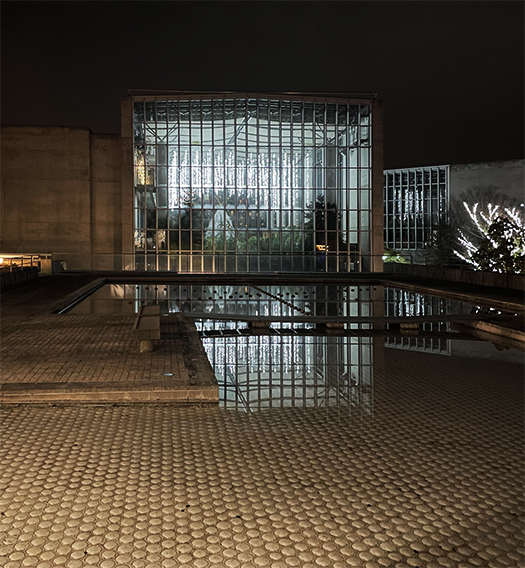
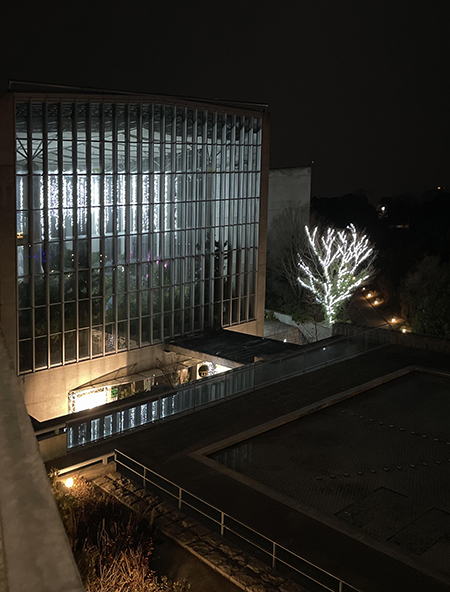
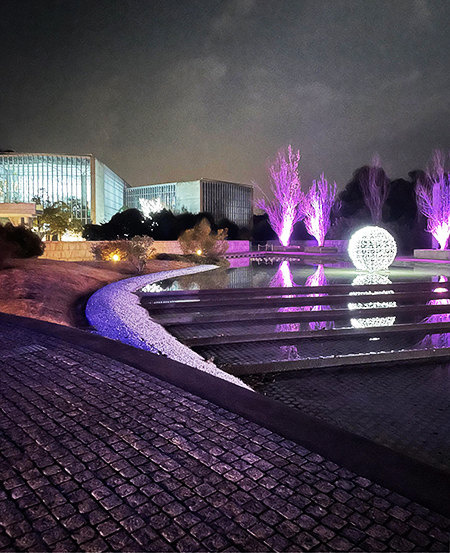
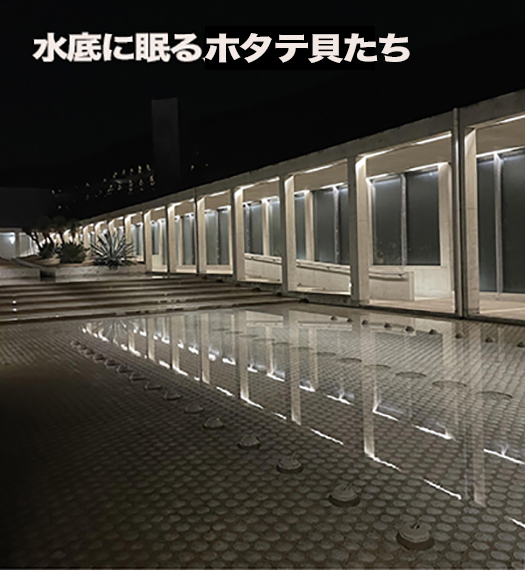
【密教的な夜景・水庭ホタテ貝と対話する温室 淡路夢舞台-7】


淡路夢舞台の夜景の白眉のような存在がガラスの表皮を持つ温室。その前庭的な水庭はその外観を反射させて宝石のようなきらめきを感じさせている。また昨日ご紹介の水底を覆うホタテ貝のささやくようなシルエットに対して、繊細な外観を浮かび上がらせている。内部の植物群が睡眠中のイキモノのような生命感の陰影をほの暗く見せてくれている。寝ているけれどなんとなくいのちの「ゆらぎ」を感じさせてくれる。
周囲は人工的な自然復元を目指した緑地公園だけれど、まるで街中のイルミネーションのような世界が対比的に出現している。そういう環境のなかのコントラストとして有機的存在感。
照明というものは基本的に内部の「用」に準拠した計画になるものだろうけれど、この夜景外観を見ると、むしろこのような視覚臨場体験をメインの建築機能性として計画したのではないだろうかと思わせる。
北海道が官学民を挙げて取り組んできた断熱や気密性という建築の領域はいわば「顕教」の部分であって、安藤建築はそれに対して「密教」的な志向性を持っているのかもしれない。やはり高野山を持つ関西の地域文化性ということなのか、みたいな夜想に思わず没入する瞬間。ホタテ貝殻の諸行無常感・・・。
これは体験からの印象という段階なんだけれど、安藤忠雄さんの建築志向性、そしてそれを深く支持する関西圏の風土性文化の基底にはそういう「雰囲気」の歴史伝統があるように思えるのですね。わたしは密教の真言宗徒なのである意味、カラダで受容する部分をもっている。
ひょっとすると空海の目指した「高野山」世界というのは、日本人に密教的な世界観を形象化した建築群だったのかもしれない。急峻な山道をようやく通り抜けて山上の平坦地形と寺院建築群が出現する高野山は、密教的「建築」体験として日本人に深く刷り込まれているのかも。


今回は温室の眠っている時間しか対面しなかったので内部の様子、とくに45度軸線がずれて交叉している温室内部の様子は体験できなかった。この温室のさらに奥の野外劇場とともに次回に参観してみたい。

English version⬇

Esoteric nightscape, greenhouse interacting with water garden scallops Awaji Yumebutai-7
Tadao Ando’s architecture and Kukai’s Koyasan Buddhist buildings. I feel that their orientations are similar. This is just an impression stage from my experience. …

The greenhouse with a glass surface skin is the white-hot jewel of the nightscape of Awaji Yumebutai. Its front garden-like water garden reflects the appearance of the greenhouse, giving it a sparkling appearance like a jewel. It also reveals a delicate appearance in contrast to the whispering silhouette of the scallop shells that cover the bottom of the water, introduced yesterday. The plants inside the sculpture give us a darker shadow of a sense of life, like a sleeping creature. Although they are sleeping, we can somehow feel the “flickering” of life.
The surrounding area is a green park that aims to artificially restore nature, but it is contrasted by a world that looks like a city illumination. The organic presence of the lighting contrasts with this environment.
Although lighting is basically planned in accordance with the “use” of the interior, this nightscape exterior makes us believe that the main architectural functionality of the building was to provide such a visually realistic experience.
The architectural fields of thermal insulation and airtightness that Hokkaido’s government, academia, and civilian sectors have been working on are, so to speak, the “manifestation” side of architecture, while Ando’s architecture may have an “esoteric” orientation. I was immersed in a moment of contemplation, wondering if this is a regional cultural characteristic of the Kansai region, which is home to Koyasan. The sense of impermanence of scallop shells….
This is just an impression from my experience, but it seems to me that there is a historical tradition of such “atmosphere” at the base of Tadao Ando’s architectural orientation and the Kansai region’s endemic culture that deeply supports it. I am a Shingon Buddhist of esoteric Buddhism, so in a sense, I have a part of my body that accepts this kind of atmosphere.
Perhaps Kukai’s goal of “Koyasan” was a group of buildings that embodied the esoteric worldview of the Japanese people. Koyasan, where the flat terrain on the mountain and the temple buildings emerge after finally passing through the steep mountain path, may have been deeply imprinted on the Japanese people as an esoteric “architectural” experience.

house. I would like to visit the greenhouse and the open-air theater at the far end of the greenhouse next time.

【音楽的景観・北海道の貝100万枚も無言参加 淡路夢舞台-6】


北海道の人間からすると安藤忠雄さんは評価が分かれる存在。北海道が地域を挙げ高断熱高気密住宅という地域社会運動に取り組んで必死の時に、断熱などにはほぼ無頓着にコンクリート打ち放しで型枠から「放したあとの面の表情の美感」を追求する制作プロセス情報が伝わってくる。美感のために「ガンガン叩く」のだ、というような情報。断熱性を差し置いてこだわる箇所がそこなのか、という距離感。
また安藤作品の住宅では施主さんは寒さに震えているという断片的なウワサを聞く。実際に熱画像撮影され暖気が「まっすぐ垂直に」上昇している写真も見たことがある。ほぼ屋外の熱環境。ちょっと別次元の熱環境空間への考え方と思わされた。
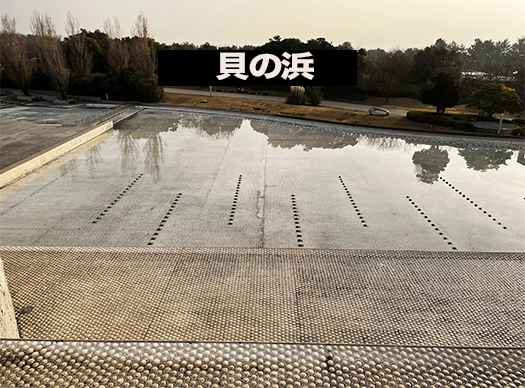
しかし一方そういう情報とは違う印象の事実とも出くわす。たとえばこの淡路夢舞台では北海道オホーツクの缶詰工場で廃棄されるばかりだったホタテ貝殻たち100万枚が第2の命の残照をこだまさせているという。1万㎡にも及ぶ水面の底で基盤的な風景を構成している。
北海道の自然からの重要な使者として淡路に降臨したとも受け取れる。安藤さんの設計思想がどうしてこのホタテ貝殻に注目し淡路島の地形復元の隠れた最大のホープとして採用したのか。単に自然再生の象徴としてなのか、あるいはもっと大きな意味合いがかれを動かしたのかは不明。だけど北海道人としてはある種、胸熱になる、こうした「心の仕掛け」を見せてくれる。
違和感を持つと同時に内面に訴えてくる建築人としてのある熱いものも感じざるを得ない。まことに二律背反的・アンビバレンツ。上の写真は水底でさざめいている北海道のホタテ貝たち。「おお、オホーツクを遠く離れて新たな命を生きているのか」みたいな。


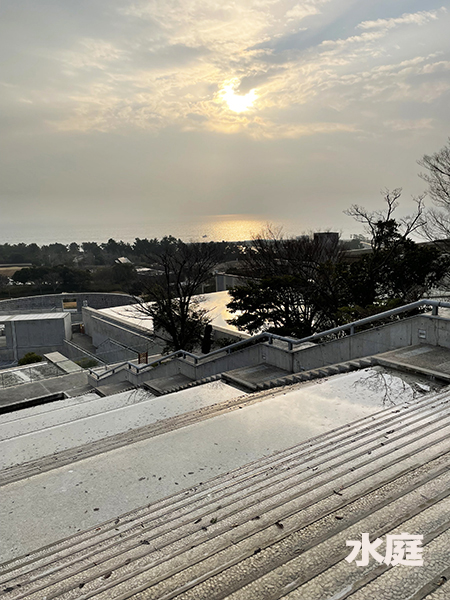
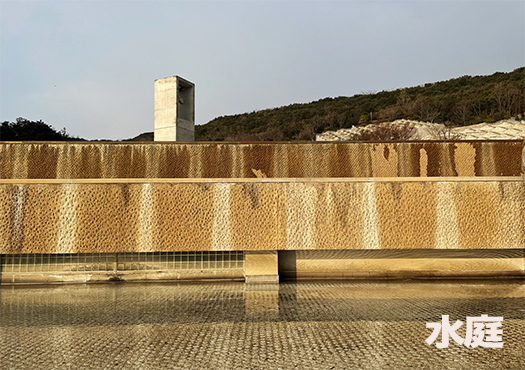
こちらは「水庭」と名付けられた空間。水底ではオホーツクのホタテたちがはるか故郷を思って水音を和らげていると思うと、つい情感が加わってくる。そうかそういう作戦か、いいね、みたいな。破壊された自然環境を再生するのには百万枚のホタテ貝のささやきがふさわしいと思えたりする。

水底ばかりではなく、気がつくと至る所にホタテたちが地を覆っていることに気付かされる。北海道が少しでも役立っている、このように関西の人たちのメンタルに訴求し活用されていることは本当にうれしくありがたいことだと思えてくる。


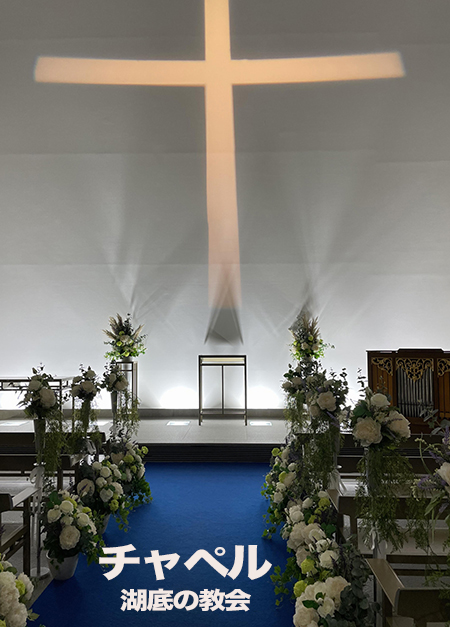
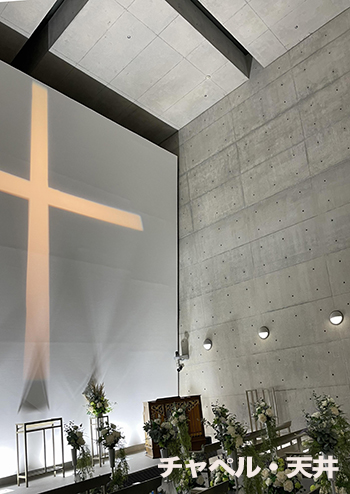
さらにそういう水底に十字の切り込みが行われ、その「湖底」にチャペル空間がある。湖底からの光は壁面のスクリーンに十字の宗教造形として反映されている。ゆらぎを感じさせるそういう造形感覚は、コンクリートという人工そのものの素材を使いながら、なお、自然を強く意識させてくれる。
関西圏と安藤建築作品、違和感と同時にやっぱり強い親近感(笑)。

English version⬇

[Musical landscape, 1,000,000 shells from Hokkaido also silently participate in Awaji Yumebutai – 6
A million scallop shells from Okhotsk, far from their hometown, demonstrate their fundamental power in the restoration of nature in Awaji. A heart-warming exchange between the Kansai region and Hokkaido. …

From the perspective of people in Hokkaido, Tadao Ando’s reputation is divided. At a time when Hokkaido was desperately trying to create highly insulated and airtight housing as a regional social movement, he was almost indifferent to thermal insulation and the like, and was pursuing the “aesthetic expression of the surface after it is released” from the formwork by leaving the concrete untouched. The information is like “pounding with a gun” for the sake of beauty. The sense of distance between the two, as if the insulating properties were not a priority.
We also hear fragmentary rumors that the owners of Ando’s houses are shivering from the cold. I have actually seen a photo taken by thermal imaging showing warm air rising “straight and perpendicular” to the house. Almost an outdoor thermal environment. It seemed to me that this was a way of thinking about the thermal environment space in a different dimension.
On the other hand, however, I also came across some facts that gave me a different impression from such information. For example, at Awaji Yumebutai, one million scallop shells that were discarded at a canning factory in Okhotsk, Hokkaido, are now reverberating with the afterglow of a second life, forming a fundamental landscape at the bottom of a 10,000 m2 water surface. It could be taken as an emissary from the nature of Hokkaido descending to Awaji. It is unclear why Mr. Ando’s design philosophy led him to focus on scallop shells as the greatest hidden hope for the restoration of Awaji Island’s topography, simply as a symbol of nature’s rebirth, or whether a larger meaning moved him. But as a Hokkaido native, he shows us this kind of “trick of the mind” that makes us feel a certain kind of excitement.
At the same time that I feel a sense of discomfort, I can’t help but feel a certain passion as an architect that appeals to my inner self. It is truly a dichotomous and ambivalent work. The photo above shows scallops in Hokkaido, which seem to be rustling at the bottom of the water. It is as if to say, “Oh, they are living a new life far away from Okhotsk.

This is a space named “Water Garden. The thought that the scallops of Okhotsk are softening the sound of the water as they think of their faraway homeland at the bottom of the water just adds to the emotion. I like that kind of strategy. The whispering of a million scallops seems like a fitting way to restore the destroyed natural environment.

Not only at the bottom of the water, but everywhere you notice scallops covering the ground. It makes me feel very happy and grateful that Hokkaido is helping, even if only a little, to appeal to the mentality of people in the Kansai region and to be utilized in this way.

In addition, a cross is cut into the bottom of such water, and the chapel space is located at the “bottom of the lake”. The light from the bottom of the lake is reflected on the wall screen as a religious form of a cross. This sense of form that evokes a sense of fluctuation makes us strongly aware of nature, even though concrete, a man-made material, is used.
The Kansai region and Ando’s architectural works are both uncomfortable, but at the same time, there is a strong sense of affinity (laugh).

【安藤忠雄氏構想スケッチと建築群 淡路夢舞台-5】


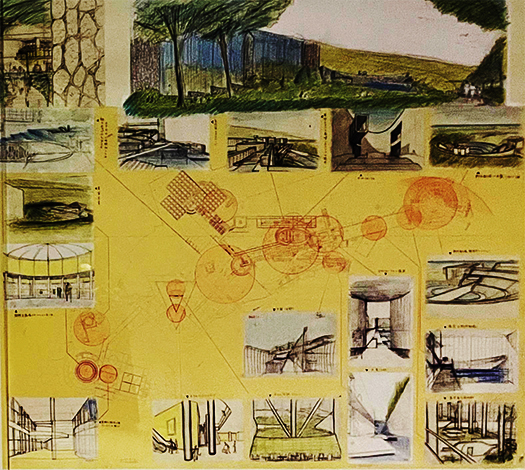
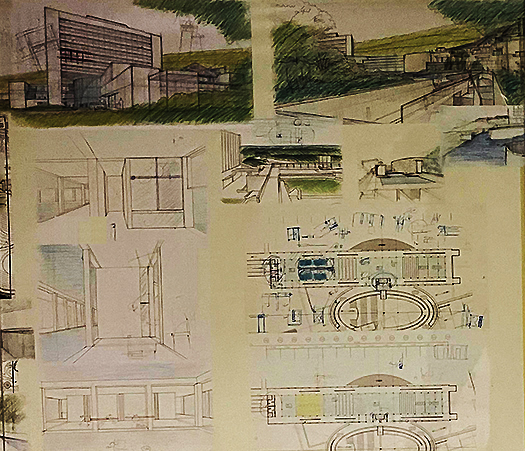
ホテルを出て夢舞台の公園地域に向かう手前には、「淡路夢舞台の歩み」と題した経緯の説明コーナー展示がある。そこにはたくさんの「構想スケッチ」が展示されています。建築設計者として安藤忠雄氏が明記されているので、こうしたスケッチ群はかれの描画であることはあきらか。設計者のスケッチは完成形の建築の構想過程を明示してくれるので「思い」が伝わってきやすい。
この夢舞台建築群とのわたしの対話時間はおおむね3時間ほどとわずかな時間だったので、現地では十分に対比的に参観することはできませんでした。しかし、このように事後に資料としての写真などで跡づけることで、思考の工程を思い描きやすい。スケッチは基本着想をわかりやすく伝えてくれますね。逆に現場でリアルに感じる建築の印象と作り手側のイメージ・想像力が明示されることで強く印象に残る。
以下いくつかの建築群の紹介文。

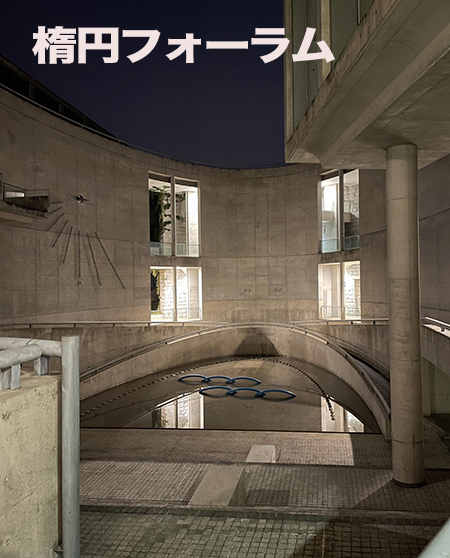
1 楕円フォーラム〜楕円形の2重の壁の間を交叉する階段やスロープ、外部から貫入するコロネード。内部の大階段と水盤などで構成される。動線の結節点としてそれらの間を通るうちに見え隠れする内外部のさまざまな風景が、そこで行われるであろうイベントと共に来訪者に予期せぬ刺激をもたらす。


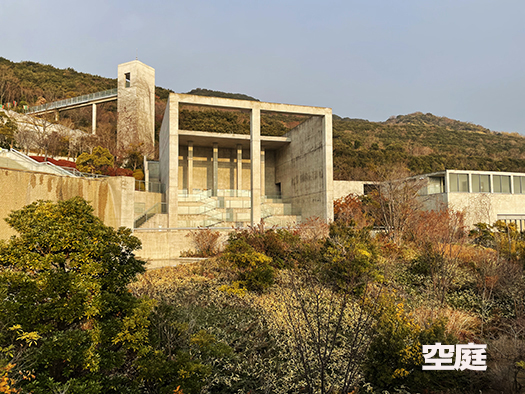
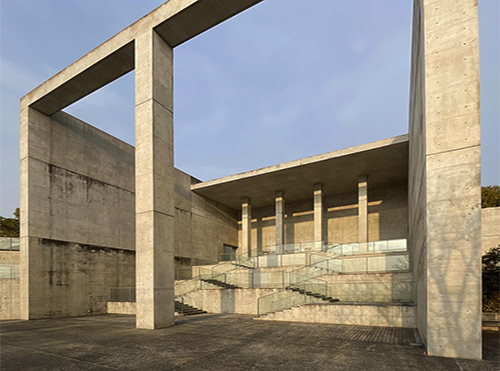
2 空庭〜斜面に埋め込まれた立方体のなかに連続する階段状の広場を内包する。壁に落ちる光と影、立方体のフレームで切り取られた風景などが抽象的な非日常空間を作り出す。野外イベントや彫刻展などにも対応可能な広場として計画されている。


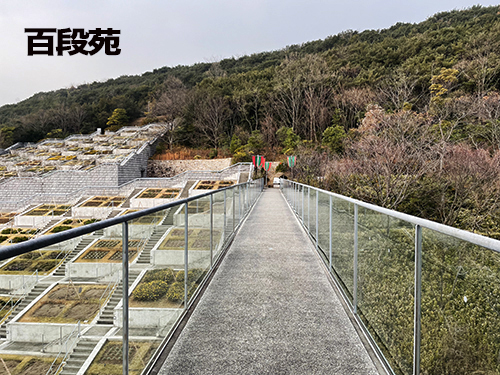
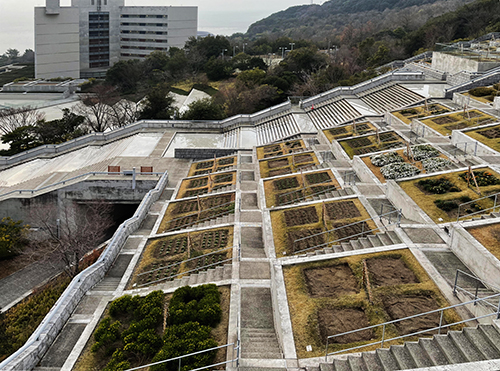
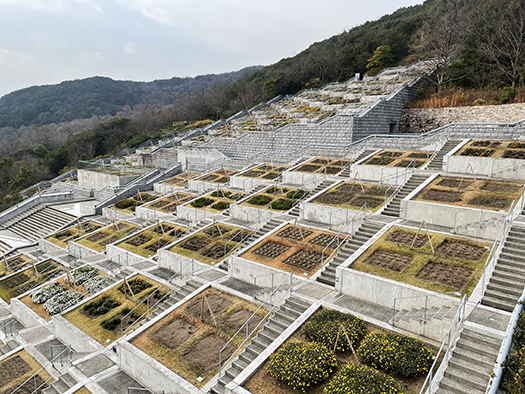
3 百段苑〜約4.5m角の花壇が百段、敷地内外のどこからもよく見える急勾配の敷地に添うように埋め込まれる。巨大な階段と水の流れは山から海へと感覚的な連続性を生み出し、単純な幾何学形態が連続する非日常的な光景に彩りを添える。

ということで建築群写真集的な展開になってきたのですが、チェックポイントは多数だったので、コンクリート打ち放し公園的な様子を明日まとめてみたいと思います。

English version⬇

Tadao Ando’s Conceptual Sketch and Architectural Group Awaji Yumebutai-5
A park-like open-air architectural complex with fair-faced concrete. Reclaimed green space and intentional concrete. A space of musical contrast. The space of musical contrasts.

Before leaving the hotel and heading toward the Yumebutai park area, there is a corner exhibit titled “History of Awaji Yumebutai” that explains the history of the project. Many “conceptual sketches” are displayed there. Since Tadao Ando is listed as the architect, it is clear that these sketches are his drawings. The designer’s sketches clearly show the conceptual process of the completed architecture, so it is easy to get a sense of his “thoughts”.
Since my time to interact with the Yume Butai buildings was limited to only about three hours, I was not able to visit the site to fully contrast the buildings. However, by tracing the process of my thinking with photographs and other materials after the event, it was easy to envision the process of my thinking. The sketches convey the basic conception in an easy-to-understand manner. On the other hand, the impression of the architecture felt realistically at the site and the image/imagination of the creator’s side are clearly indicated, which leaves a strong impression on the viewer.
Below are introductions to some of the architectural groups.

1 Oval forum to elliptical double-walled intersecting stairs and ramps, colonnades penetrating from the outside. It consists of an interior grand staircase and a water basin. The various landscapes of the interior and exterior that appear and disappear as visitors pass between them as nodes of the flow line, together with the events that will take place there, will provide unexpected stimulation to visitors.

2 Empty Garden – A series of staircase-like plazas are contained within a cube embedded in the slope. The light and shadows falling on the walls and the landscape cut out by the frame of the cube create an abstract, extraordinary space. The plaza is designed to accommodate outdoor events and sculpture exhibitions.

3 Hyakudanen – One hundred lower steps of approximately 4.5m square are embedded to accompany the steep slope of the site, which is clearly visible from everywhere inside and outside the site. The huge steps and the flow of water create a sensory continuity from the mountains to the sea, and add color to the extraordinary scene of a series of simple geometric forms.
So it has developed like a collection of architectural group photos, but there were numerous checkpoints, so I will summarize the concrete park-like appearance tomorrow.

【安藤忠雄・建築と風景のフュージョン 淡路夢舞台-4】


実はこの淡路夢舞台への宿泊旅程はすべてカミさんの選定・手配。旅に出る前わたしは徳島の三木家住宅くらいしか希望は伝えていなかった。図らずも関空に到着しレンタカーで明石海峡を渡り現地に着くまで、初日の目的地が淡路夢舞台で安藤忠雄設計デザインの建築環境と正確には知らされてなかった(笑)。直前まで慌ただしかったので相談をする時間もなかったし、なんと言ってもカミさんが喜んでくれることが一番。わたしはその付き添い認識。現地に近づくにつれ情報を知るに至り「へぇ〜そう」と興味を持ち始めたお恥ずかしい展開。
そういえば数年前に訪れた直島・地中美術館もカミさんに引き立てられて参観したので、案外な〜んも考えずにシンプルに建築環境体験を楽しんでいた。
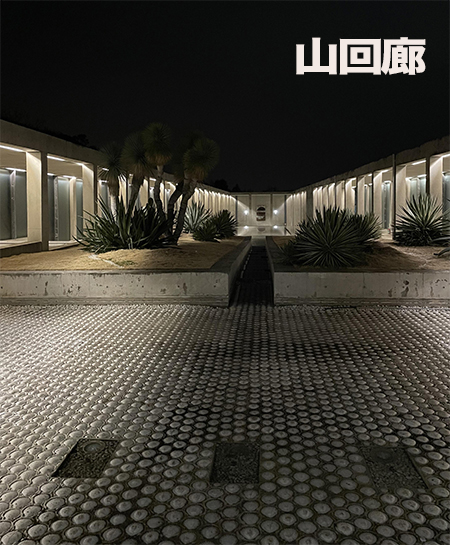
朝早くから札幌を発って長距離運転していたのでホテルに入り夜はすっかり早寝爆睡。カミさんは「もったいない」とばかりに夜の「夢舞台」を歩きまわってきていた。「いやぁ、いいわ〜」とキラキラ状態。わたしは朝はとにかく早いのでざっと周辺を探索後、朝食後の散歩としてあちこち歩きまわった。写真1枚目の「百段苑」〜世界中の花々をコンクリート区画で分散植栽〜についても、現地で予備知識なく見学しておりました。自分の目や体で感じることでストレートに建築空間と対話できる。この夢舞台の空間が建築であるのか、概念規定が難しい。一種、ギリシャやイタリアの古代都市空間とも通底するような空間性が感じられる。20世紀的な建築手段としてのコンクリート打ち放しで風景を縦横に切り取っている感は強く感じられる。


予備知識や情報などほとんどない状態。安藤さんと言えば断熱に至って無頓着で「生きることは耐えることだ」的な都市ゲリラまんまみたいな刷り込みなしに(笑)、単純に身体感覚的に安藤建築と向き合っておりました。
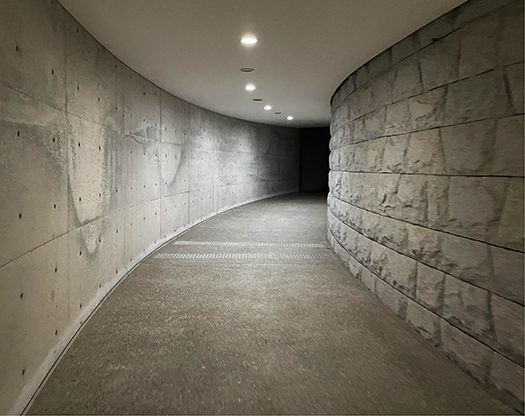
あ、ホテルとの通路空間には「冬の夜」の童謡旋律が低く流れみごとに調和。音楽も動員する空間体験。いまでもその旋律と風景感が一体で記憶に刷り込まれている。先方の完全作戦勝ちですね。やられた(笑)。

English version⬇

Tadao Ando, Fusion of Architecture and Scenery, Awaji Yumebutai – 3
I was surprised to learn that it was Ando’s architecture when I arrived and saw it (laugh). The rapid-fire barrage of vertical and horizontal concrete spaces that thoroughly exploit the gaps between them. The first time I saw it, I knew it was Ando’s architecture (laughs).

In fact, the entire lodging itinerary for this trip to Awaji Yumebutai was selected and arranged by my wife. Before embarking on this trip, I had only expressed my wish to stay at the Miki Family Residence in Tokushima. Until we arrived at Kansai International Airport and crossed the Akashi Strait in a rented car, I was unaware that our destination for the first day was Awaji Yumebutai, an architectural environment designed by Tadao Ando (laugh). (Laughs.) Since I was in a hurry until the last minute, I did not have time to consult with my wife, and the most important thing was to make her happy. I was just the chaperone. As we got closer to the site, I learned more information and became interested in the island, which was an embarrassing development.
Come to think of it, my wife had led me to visit the Chichu Art Museum on Naoshima Island a few years ago, so I was enjoying the simple experience of the built environment without thinking much about it.
I left Sapporo early in the morning and drove a long distance, so I went to a hotel and slept early at night. My wife was so excited that she walked around the Yumebutai at night, saying, “What a waste of time! She was so excited that she said, “Oh my God, it’s so nice! I had an early start in the morning, so after a quick search of the area, I walked around after breakfast. I had no prior knowledge of the “Hyakudanen” (the first photo), which is a concrete plot with flowers from all over the world planted in a distributed manner. You can interact with the architectural space straight away by feeling it with your own eyes and body. It is difficult to define the concept of whether the space of this dream stage is architecture or not. The sense that the landscape is cut horizontally and vertically using concrete as a means of architecture in the 20th century is strongly felt.

I had almost no prior knowledge or information. I was facing Ando’s architecture with a simple physical sensation, without the imprint of the urban guerrilla-like “to live is to endure” style (laugh).
Oh, and the children’s song melody of “A Winter’s Night” played low in the passage between the hotel and the building, harmonizing perfectly with the space. It was a spatial experience that also mobilized music. Even now, the melody and the sense of scenery are imprinted in my memory as one. It was a complete tactical victory for the hotel. They got me (laughs).