本文へジャンプ

【地域中心病院&かかり付け医 スキマで患者が苦労?】


 わたしはいつもかかり付けのお医者さんにお世話になっている慢性病を抱えています。一方、よく名前の変わる地域の集中医療センター病院もすぐ近くにあって、ときどき入院・手術などでお世話になっています。国立病院なんだけれど「機構改革」の結果名前だけ変わるので、病院名はいまでもよくわからない(笑)。しかし札幌都市居住ということで医療については非常に利便性の高い幸福な環境に住んでいると思っています。
 で、最近の「かかり付け医」制度というものにも妥当性は高いモノがあると思っています。地域の中核的な医療を担う大型病院への患者集中による弊害を避けて、効率的な医療体制を構築していくことはまことに素晴らしいと思っています。
 先般、わたし自身ある急患的なことにも遭遇したのですが、あわてて救急対応とすることなく、幸いにも小康を得ていたので、まずはかかり付け医に連絡して受診させてもらってから、そこからの「紹介」ということで国立病院のお世話になって、合理的な診察・処置をしていただくことができた。制度の趣旨に沿うように対応したのですね。そういうことで医療機関同士の「連携」を取ることで投薬情報の連携などで患者としての利便性も高まる。
 ただ、こういう関係性の中で、ややもすると患者がいろいろと気遣いせざるを得ないような局面に遭遇することもあり得ることがわかってしまった。
 国立病院の方でお世話になった病変について、その後の経過状況をチェックしていただくために受診したいと思っていたのですが、当然かかり付け医さんと国立病院の間に立たざるを得ず、いわば事務連絡的な詳細部分にまで、患者が状況整理しなければならないことになってしまった。もちろん勝手などはまったくわからないし、そもそも、国立病院から個人病院に送られたわたしの病気の「連絡書簡」には封がされていたので、わたし自身はその中身の詳細などは見ていない。どんな内容が書かれていたか、またどのような「連携」内容だったかについて詳細はわからない。
 一方そのあたりのことが、事務連絡としては必要不可欠なのだそうで大病院側からは「かかり付け医に直接聞いてもいいか?」というちょっとカドが立つかも知れない口調で同意を求められた。
 診ていただく患者としてはどちらにもお世話になっているので、それぞれの心証を害したくはない。「う〜む」と考え込まされた次第。個人病院さんに過大な事務連絡責任を負わせるのも、申し訳ないという「繊細な」患者心理。
 まぁ事実としては滞りなく進展して、本日、無事に国立病院での予約が取れたのですが、かかり付け医制度の運用面で、まだ詳細部分では練り込まれていないなぁと感じた次第。

English version⬇

Community Centered Hospitals & Family Physicians: Patients Struggle with Schema?
As a patient, I aim to build a good-circulation relationship with the doctors and medical systems that are involved in my body. I don’t want to be thrown into an “in-between-the-board” situation that goes against my will. …

 I have a chronic illness that is always taken care of by my family doctor. On the other hand, there is also a local intensive care center hospital nearby, whose name often changes, and I sometimes go there for hospitalization and surgery. It is a national hospital, but only its name changed as a result of “organizational reform,” so even now I am not sure of the name of the hospital (laughs). However, as a resident of the city of Sapporo, I feel that I live in a very convenient and happy environment with regard to medical care.
 I believe that the recent “family doctor” system has a high degree of validity. I think it is a wonderful idea to build an efficient medical system that avoids the harmful effects of concentrating patients in large hospitals that provide core medical services in the community.
 Recently, I myself had a medical emergency, but fortunately, I had a lull in the situation and was able to contact my family doctor first, who referred me to a national hospital, where I was able to receive a reasonable medical examination and treatment. I was able to get a reasonable medical examination and treatment. You responded in a way that was in line with the purpose of the system. That kind of “collaboration” between medical institutions will increase convenience for you as a patient through the coordination of medication information, etc.
 However, it turned out that in this kind of relationship, it is possible to encounter situations in which the patient is forced to be somewhat concerned about various things.
 I wanted to see a doctor to check the progress of a lesion that had been taken care of at the national hospital, but of course I had to stand between my family doctor and the national hospital, and the patient had to sort out the details, so to speak, of the administrative communication. Of course, I had no idea how to do this, and since the “communication letter” from the national hospital to the private hospital was sealed, I did not see the details of its contents. I do not know the details of what was written or what kind of “cooperation” was involved.
 On the other hand, I heard that it is essential for them to have this kind of information as an administrative contact, so the big hospital asked me, “Is it OK if I ask your family doctor directly? The hospital asked me for my consent in a tone that might have raised a few eyebrows.
 As a patient, I am a patient of both hospitals, and I don’t want to offend either of them. I was left thinking, “Hmmm. I am sorry to make a private hospital bear the responsibility of excessive paperwork, which is a “sensitive” patient mindset.
 Well, as a matter of fact, things progressed without a hitch, and today I was able to get an appointment at a national hospital, but I felt that the details of the operation of the family doctor system had not yet been worked out.
 

【わが家2.0の土地「間口の整形」現場確認】


 ことしはわが家2.0の土地に関していろいろ交渉を重ねておりました。その最終的な結果として、間口の幅が大きく広がって、隣接するお隣さんの土地所有者の大手企業によって新たな境界区分けの作業が行われておりました。住宅関係の情報人として久しぶりの自分自身が関与する不動産の交渉ごとで、実体験がまた積み重なったというような印象を持っています。やはり自分自身で体験すると、土地と建築についての感覚に於いてさらにリアリティが深まると実感させられた。
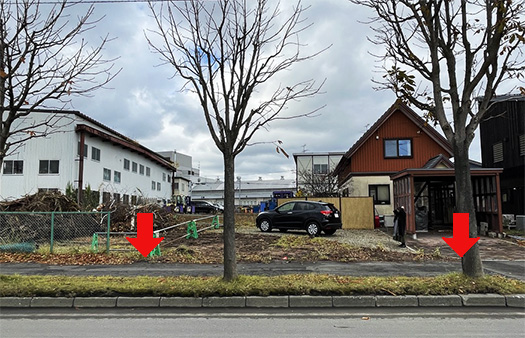
 写真の矢印の2箇所がだいたいの間口「拡張」幅に相当しています。クルマを奥に停めたので、スケール感はご了解いただけるでしょう。この幅に既存の間口幅が加わるので、まぁそこそこの幅を確保することができたと思っています。この交渉ごとは義父の存念、切なる希望でもあったので、残された人間として、ようやくお墓に報告できるように思えています。工事によってお隣さんの所有地だった場所に立っていた既存の樹木は伐採された。やむを得ない人間の都合で伐採された木にこころの中で手を合わせ、お詫びしておりました。人間というのは農業の勃興以来、自然環境に対してさまざまに「手を加えて」来ているけれど、これは人間の本然であるのでしょう。現代ではさまざまな「事業用地」として活用することが必然のながれ。

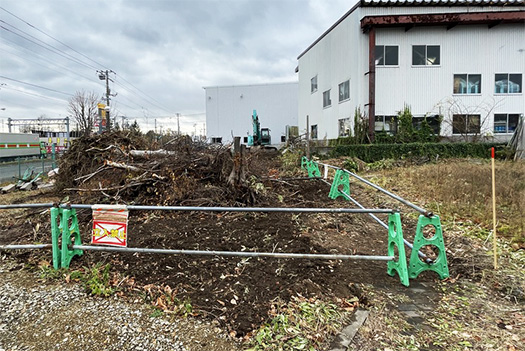
一方こちらの視界方向は、交換でわが家から先方に渡った土地の状況。こちらでもさまざまな既存の造作があったのですが、きれいに撤去されていた。
 これから先方の大手企業さんでは事業計画に沿ってプロジェクトが進行していくようです。わたしどもの方でもその計画を横目で睨みながら、徐々に考えをまとめていきたいと思っています。まぁわたし自身は年齢のこともあるので、主体として考えるのは自分という存在ではなくなっていくことでしょう。
 しかし日本人というのは「一所懸命」というコトバ通り、土地というものを巡って知恵と工夫を織り上げてきている民族。農業用地としては、その置かれた「気候風土環境」のなかでの最適解としての作物を考えたでしょう。結果、コメという本来熱帯性の植物への愛着が、基底的な民族文化を創造してきたのでしょうか。
 そして資本主義への社会変換以来、さまざまな試行錯誤が「都市環境」という環境要因のなかで考えられてきた。そういうなかから未来への着眼もあった。
 そんな妄想を抱きながら、すこしづつ手探りしていって見たいなぁと考えております。

English version⬇

On-site confirmation of the “frontage shaping” of the land for our house 2.0
The Japanese way of life, “isshobo,” comes from a deep commitment to the land. Is wisdom and ingenuity born from such a foundation? …

 This year we have been engaged in a number of negotiations regarding our 2.0 lot. As a final result, the frontage was widened significantly, and a new boundary demarcation was being conducted by a major company owned by the neighboring landowner. As a housing-related informant, it was the first time in a long time that I was involved in a real estate negotiation, and I have the impression that I was able to accumulate more real-life experiences. I realized that experiencing it for myself would deepen my sense of reality about land and architecture.
 The two arrows in the photo correspond to the approximate width of the “extended” frontage. Since the car is parked in the back, you can get an idea of the approximate scale. The existing frontage width is added to this width, so I think we were able to secure a fair amount of width. This negotiation was my father-in-law’s wish and earnest desire, so as a survivor, I feel that I can finally report to his grave. Due to the construction work, the existing trees standing on what used to be the neighbor’s property were cut down. I had put my hands together in my heart and apologized to the trees that were cut down for unavoidable human reasons. Since the rise of agriculture, human beings have been “tampering” with the natural environment in various ways, and this is probably the nature of human beings. Nowadays, it is inevitable to utilize the land for various “business purposes.

On the other hand, this view direction is the condition of the land that was passed from our house to the other party in the exchange. There were various existing structures here as well, but they were neatly removed.
 It seems that the major company on the other side of the street is going to proceed with the project according to their business plan. We are also keeping a close eye on their plans, and gradually putting together our own ideas. Well, I myself am probably not going to be the main person to think about this project because of my age.
 However, as the Japanese say, “I’m working very hard,” we are a people who have woven our wisdom and ingenuity around the land. They would have thought of the best crops for agricultural land in the climate and environment in which they were placed. As a result, their attachment to rice, which is essentially a tropical plant, may have created their fundamental ethnic culture.
 And since the social transformation to capitalism, various trials and errors have been considered within the environmental factor of “urban environment. It is through this process that we have been able to look to the future.
 With such delusions in my mind, I would like to explore this issue little by little.


【健康増進のための散歩「行きたくなる」環境探索】


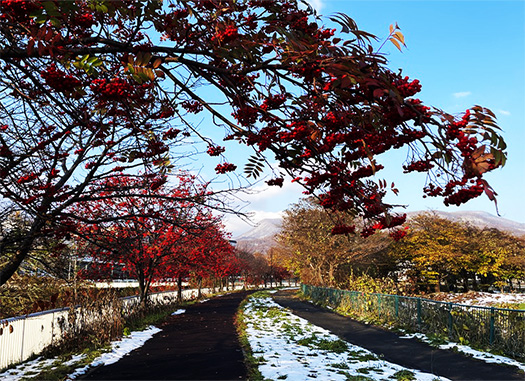
 写真は先週日曜日の早朝にカミさんと歩いていた散歩道の様子。わが家は札幌市西区を流れている発寒川流路周辺ですので、その流路に沿って造作されている河畔公園は好きな散策路になっている。最近、カミさんもダイエット作戦が昂じてきて、カーブスなどの有料サービス主体だったものが、すこしづつわたしの早朝散歩に随伴してくれるようになってきた。
 まぁ散歩はもう数十年継続してきているので、それが自分自身の健康面でどのように効果があるのか、あんまり気付かない。いくつかの病はかかっているし薬はずっと飲み続けている。ときどき病院に入院というようにお世話になってもいるけれど、日常生活では行動制限されるようなことはない。散歩はなにより「お金が掛からない」(笑)。体に良い、というような情報に踊らされるような行為ではない。
 で、カミさんといっしょに歩くようになると彼女のためにも、散歩コース選択というのはより意図的になってくるものですね。こちらの散策路中には「西野緑道」という植樹など多様に工夫された緑地などもあって、眼にも楽しい風景が展開してくれる。本来は自然そのままが良いのでしょうが、札幌のような市街地では必然的に、こういった意図的な「環境整備」が求められるのでしょう。
 写真をご覧になっておわかりのように先週降った雪が土の路面には残っていて、また遠い山並みには樹間に軽い積雪が遠望される。木々は紅葉のうつろいを見せてくれていて、いまどきはナナカマドが実も葉も真っ赤に染まっている。これから葉が落ちていって実だけが赤く残っていく。そういう季節感情報が歩いていく環境から、人間にさまざまに伝わってくる。
 まぁいろいろなこうした背景環境をその日の気分で数コース、自分の「お気に入り」として登録(笑)しているのですね。それがカミさんといっしょというファクターが加わってくると、「きょうはこっちに連れて行ってあげようかな」などと考えている。おおむねの「歩数」計算と同時に、ビジュアル要素がより強化されて選択しているように思う。「あんな景色を見せられたら良いな」みたいな。そしてそのような視界が広がってくる瞬間に共感が持てたら、ある種の「シアワセ」感がある。
 「住む」という愛着要素のなかには、こういう日常的なバックグラウンド環境というものが非常に大きいように思われてくる。住宅本体への嗜好性選択というものがもちろん第1義的ではあるけれど、その先にはこのような「周辺環境」性というものが大きくなっていくのでしょうね。

English version⬇

A search for an environment that makes you want to go for a walk to improve your health.
The basic principle of residential construction is to create a good environment, but when you think about the “way of living” beyond that, you realize that the attachment factor as a zone is a major factor. The “zone” is a place where people feel attached to.

 The photo shows the walking path that I was taking with my wife early last Sunday morning. Our house is located near the Hassamu River, which flows through Nishi Ward, Sapporo City, so the riverside park along the river is one of our favorite places to walk. Recently, my wife has been on a diet, and she has started to accompany me on my early morning walks, although she used to mainly go to Curves and other fee-based services.
 Well, I have been taking walks for several decades now, so I don’t really notice the effect it has on my own health. I have had several illnesses and have been taking medication for a long time. I have been hospitalized from time to time, but I am not restricted in any way in my daily life. Walking is the most “cost-effective” thing I can do (laughs). It is not an activity that is driven by information that says it is good for the body.
 When I started walking with my wife, I became more intentional in choosing a walking course for her. The walking paths here include “Nishino Ryokudo” (Nishino Greenway), which is a green space with a variety of planting and other creative features, and offers a pleasing sight to the eye. Although it would be better to leave nature as it is, in an urban area such as Sapporo, this kind of intentional “environmental improvement” is inevitably required.
 As you can see in the photo, snow that fell last week is still on the dirt road surface, and in the distant mountains, you can see a light accumulation of snow between trees in the distance. The trees are showing us the changing colors of autumn. The leaves will fall and only the fruits will remain in red. This kind of seasonal information is conveyed to us by the environment in which we walk.
 Well, depending on my mood on any given day, I have registered several courses in these background environments as my “favorites” (laughs). When I add the factor of walking with my wife, I think to myself, “I should take her this way today. I think that the visual element has been strengthened and the choice has been made at the same time as the general “number of steps” is calculated. Like, “I wish I could show him a view like that.” And if we can empathize with the moment when such a view expands, there is a certain sense of “sheer happiness”.
 This kind of daily background environment seems to be a very important factor in the attachment to “living” in a house. Of course, preference for the house itself is the primary factor, but beyond that, this kind of “surrounding environment” is likely to play an important role.

【三木城干殺し戦後、秀吉の経済復興➡「金物」産業勃興】


戦国期の武将たちは戦争指導だけを行っていたのではない。軍事とは政治の極限形態ではあるけれど、政治にはその基礎構造としての経済への透徹した着眼がなければならない。この畿内から西国、中国九州へと向かう東播州の交通の要衝地である三木市は、戦国の当時も最重要な流通地域だったことだろう。そういう地域で、反織田という旗印のもとで人口の大部分が籠城戦に参加したことから、それまでの都市機能は完全に灰燼に帰した。籠城した城を攻める攻め方で「経済封鎖」を選択すれば、必然的に市街地を形成していた建築群はすべて焼却されたことだろう。
 住人のほぼすべてが籠城したことでそれらの建築群は無人の状況でいとやすく平地に還元されていった。そして籠城戦は終了し、ひとびとは焼け跡に復帰することになった。戦国期の人びとの生きた環境というのはまことに過酷なものだと実感させられる。この地にいくばくかの「関わり・縁」のある者として、その実感が胸に迫ってくる部分がある。このあと、どうやって生活を復元させていけるのかどうか、深く絶望感に満たされていたに違いない。
 織田家の西部方面司令官としての秀吉は、そこで畿内から西国への要衝地・三木を経済復興させていくことになる。やはり「楽市楽座」という経済政策を取っていた重商主義政権である織田家は、すぐに地域復興策を施したと、三木市HPには記録されている。
 経済流通というこの三木の街の地勢的な条件について織田家・秀吉としては十分に把握して、自由に地域経済計画できる権力を完全掌握して、すぐに活発な復興策を打ち出し、各地から復興建築のための大工・作事人たちがこの地に集まってきたとされる。流通機能を中心にした建築需要が旺盛にもたらされた。
 今日、この三木市の「地場産業」として「金物」が中核的な存在。この産業は、実にこの秀吉による地域復興事業が大きなきっかけになって勃興してきたのだという。各地から木造建築の旺盛な需要をめざして多くの大工・木工技術者が建築に携わったけれど、そうしたかれらの必需品であるノコギリ・カンナなどの金物工具需要をこの地の人びとが手掛けた。やがて木造需要が一段落してかれらがそれぞれの地元に帰って、その工具類の精妙さ、技術レベルの高さに驚嘆されて、畿内地域を中心に「三木の金物」の評判が高まっていったのだと言われる。
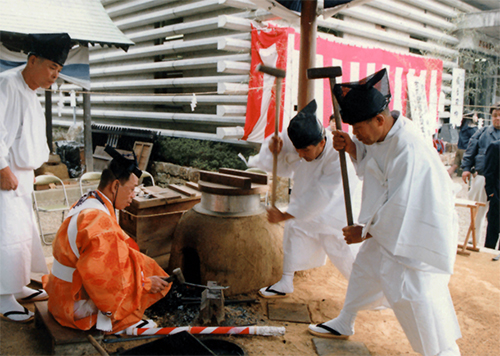
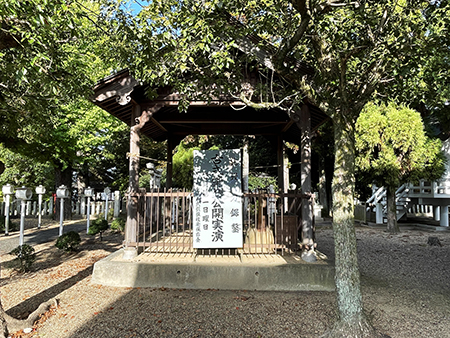
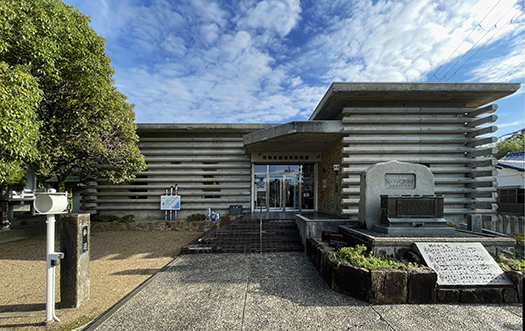
 写真は三木市HPからの鍛冶の神事の様子と、三木市立金物資料館など。まことに「禍福はあざなえる縄のごとし」。2年にわたる過酷極まりない籠城戦の辛酸から、地域復興への転換。その後の秀吉の中国制覇事業〜全国統一に至る覇業の起点としての要素をたっぷり持っているのではないだろうか?

English version⬇

After the Miki Castle dried up and killed, Hideyoshi’s economic recovery and the rise of the “hardware” industry.
Vigorous development of reconstruction and public works projects by the Hideyoshi and Oda administrations. The tool and hardware industry emerged, a necessity for carpenters and woodworkers from all over Japan. Local industry continues to the present day. ・・・・.

Warlords during the Warring States period did not only provide war guidance. Military affairs are an extreme form of politics, but politics must have a penetrating view of the economy as its basic structure. Miki City, a strategic location for transportation from the Kinai region to the western part of Japan and to Kyushu in China, must have been the most important distribution area even during the Warring States period. In such an area, the city’s previous urban functions were completely reduced to ashes as a large portion of the population participated in a siege under the banner of anti-Oda. If an “economic blockade” had been chosen as the offensive strategy to attack the besieged castle, all the architectural complexes that had inevitably formed the urban area would have been incinerated.
 Almost all of the inhabitants would have been caged in, and those architectural clusters would have been reduced to the plains, uninhabited and uninhabitable. The siege was over, and the people returned to the burned ruins. The environment in which people lived during the Warring States period was truly harsh. As someone who has some “connection” to this area, this realization is very close to my heart. They must have been filled with a deep sense of despair as they wondered how they would be able to restore their lives.
 Hideyoshi, as commander of the western area of the Oda family, was there to restore the economy of Miki, a strategic point from the Kinai region to the western part of Japan. The Oda family, a mercantilist regime that also had an economic policy of “rakuichi rakuza,” immediately implemented measures to restore the region, according to the Miki City website.
 The Oda family and Hideyoshi were fully aware of the geographical conditions of Miki in terms of economic distribution, and they took full control of the power to freely plan the local economy, immediately launching a vigorous restoration plan. This brought a strong demand for construction, especially for distribution functions.
 Today, “hardware” is a core “local industry” in this Miki City. This industry was actually spurred on by Hideyoshi’s regional reconstruction projects. Many carpenters and woodworkers were engaged in the construction of wooden buildings in response to the strong demand for wooden structures, and the people of this area provided the saws, knives, and other hardware tools that were necessary for these workers. When the demand for woodworking eventually slowed down, they returned to their hometowns and were amazed at the exquisiteness of their tools and the high level of their skills, and the reputation of “Miki hardware” grew, especially in the Kinai region.
 The photos are from the Miki City website, including a scene from the forging ritual and the Miki Municipal Hardware Museum. The transformation from the hardships of two years of siege warfare to the revitalization of the region was truly a “blessing in disguise. The area has many elements of the starting point of Hideyoshi’s subsequent conquest of China and unification of the whole country.


【織田と毛利、東西対決最前線「三木城」攻防戦】


 東播磨の要衝・三木城をめぐっての三木合戦は、天正6(1578年)5月5日から天正8(1580年)2月2日にかけて行われた。ここまでの播磨地域をめぐる政治軍事情勢では、畿内地域を押さえて安土城の築城にも手を付け始めた信長の織田勢力が、いよいよ西国制覇に取りかかり始めたのに対して、一方の中国地方の覇者・毛利氏もまた播磨に勢力を拡大させようとしていた時期に当たる。
 まるで東西冷戦のなかのポーランドなどの様子と似た状況。さらに言えば今日世界で米中の覇権構図の中での東南アジア諸国、日本も含めた東アジア諸国のように、そもそもが不透明な状況の中で地域勢力として緩衝地帯として、織田・毛利への両属姿勢を決め込んで情勢観測に尽力していたのだろうと思える。現代の石破政権には確たる外交戦略眼はないように見えるが、さらにトランプが儀礼的電話会談を5分間で終了させたことから明らかなように、そもそも政権の正統性自体に疑問符が付けられているのが現実。おっと、横道すぎる(笑)。
 そういうなかで黒田官兵衛のように織田・秀吉側一択で完全肩入れして、最終的に福岡・博多の領有に成功するような人物も現れたけれど、多くの地域勢力は右往左往してその多くが没落していった。この三木城の当主、別所長治という人物もまさにそういった典型と思える。
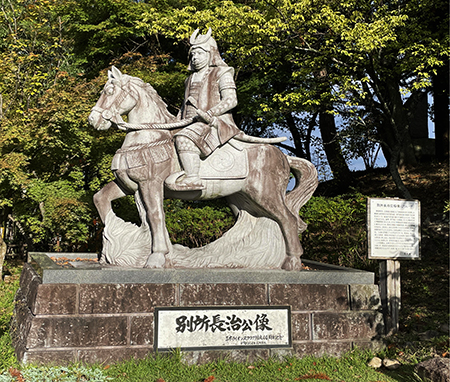
 現地の「城跡」には凛々しい青年武将(自害当時23歳とも26歳とも伝わる)ぶりの騎乗の武者像が擬せられているけれど、2年にわたる籠城戦の間、何度かは包囲網に対して攻撃は仕掛けているが、戦略的な眼力があったかといえば疑わしい。籠城の城内に東播磨の兵士やその家族、浄土真宗の門徒など7,500人もの領民が蝟集した。いわゆる領民ごと立てこもる「諸籠り(もろごもり)」だった。ながく籠城するためには多くの兵糧が必要だがこれでは人数が多すぎる。こういった籠城戦での情勢戦略眼において秀吉の敵ではなかった。
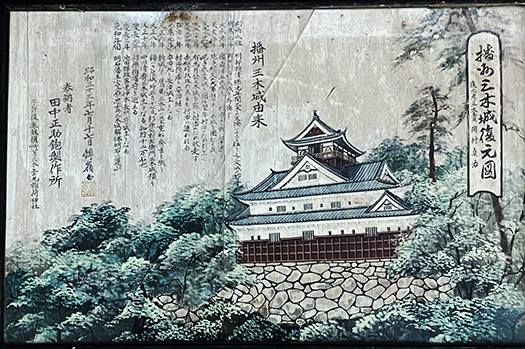
 戦略眼の乏しい主将に付き従って敗残した多くの領民は、しかしその後の歴史において追慕の念を持ち続け、写真のような脚色され美化された武将像を建立し、ありえないだろう「天守閣」図まで奉納している。司馬遼太郎の記述ではこうした追慕のあらわれから、明治になって三木城の故事が多くのひとびとに蘇って三木を姓とする庶民が多かったということにつながっているのだろうか。
 主将別所長治はともに立て籠もった多くの領民の助命を条件として自害し果てたという広報、そのような人情話としての拡散が大きかったのだろうか。その後秀吉は三木の街の復興に尽力したとも伝わっている。実際に「三木の金物」という全国的にも有名な地域産業はこの復興事業の過程で生成していったとされている。あるいはそういった礎として美談話に昇華させる心理がひとびとに働いたのだろうか? 興味深い。

English version⬇

Oda and Mori, the front line in their East-West confrontation, attacked and defended Miki Castle.
The general of a country between two major powers is required to have a “strategic eye for the future,” but he tends to be biased toward emotion. The general’s eyesight was not clear enough to let even the common people enter the castle. What about modern Japan in retrospect? The future of Japan

 The Miki Battle over Miki Castle, a strategic point in East Harima, took place from May 5, Tensho 6 (1578) to February 2, Tensho 8 (1580). The political and military situation in the Harima region up to this point was that Nobunaga’s Oda forces, which had seized the Kinai region and begun construction of Azuchi Castle, were finally starting to conquer the western part of the country, while the Mori clan, the Chugoku region’s dominant power, was also trying to expand its influence in Harima.
 The situation was similar to that of Poland during the Cold War. In other words, the Mori clan was probably making efforts to observe the situation as a buffer zone as a regional power in an uncertain situation, just like Southeast Asian countries and East Asian countries including Japan under the hegemony between the U.S. and China. The reality is that the legitimacy of the administration itself is in question, as evidenced by the fact that Trump ended the ceremonial phone conversation after only five minutes. Oops, too sideways (laughs).
 In such a situation, there were some people like Kanbei Kuroda who chose the side of Oda and Hideyoshi and succeeded in taking possession of Fukuoka and Hakata, but most of the regional powers went back and forth and many of them fell. Nagaharu Bessho, the head of Miki Castle, seems to be a typical example.
 The “ruins of the castle” at the site show a gallant young warrior (reportedly 23 or 26 years old at the time of his suicide) riding a horse, but during the two-year siege, he launched several attacks against the encircling forces, but it is doubtful that he had any strategic acumen. As many as 7,500 local residents, including soldiers from Higashi-Harima, their families, and members of the Jodo Shinshu sect of Buddhism, gathered in the castle. This was what is called “morogomori,” in which the entire fiefdom was holed up in the castle. To stay in a castle for a long time, a large amount of food was needed, but the number of people in the castle was too large. Hideyoshi was no match for the foe in terms of strategic thinking in such siege warfare.
 Many of the defeated fiefdoms who followed the strategically weak general have continued to hold on to their memories of him in later history, erecting statues of the warlord that have been dramatized and beautified, such as the one in the photo, and even dedicating a “castle tower” that would have been impossible to build. In Ryotaro Shiba’s account, the legend of Miki Castle was revived by many people in the Meiji era, and it is likely that this is what led to many common people taking Miki as their family name.
 The public relations story of Nagaharu Bessho, who committed suicide on the condition that many of the local residents who had holed up in the castle with him would be spared, may have been widely spread as a human-interest tale. It is said that Hideyoshi made efforts to restore the town of Miki. In fact, the nationally renowned local industry of “Miki’s hardware” is said to have been created in the process of this reconstruction project. Or did people have a psychological tendency to sublimate such a story into a beautiful tale as a cornerstone of the project? It would be interesting to know.
 

【2年間を掛けた三木城「干殺し」兵糧攻め】


 戦国時代ものが好きだというのは、いまや日本人に刷り込まれている歴史観だと思います。国民作家と言われた司馬遼太郎が、この時代を国盗り物語とか新史太閤記などで大衆的人気を絶対的なものとしたことが、たぶん大きかったのでしょうが、それに先行して多くの歴史作家が直感的にこの時代相に現代人に強く訴えてくるものがあると考えて多作していたことがあったのでしょう。
 日本は文字記録による歴史時間としても2000年近い時間がある中で、直接的に権力闘争と大衆の民族史とがクロスし始めたのが、この時代だったとも言えるのでしょう。
 そういうなかでこの播州における「三木城合戦」は畿内中央部を勢力下に掌握した信長が、いよいよ「全国制覇」という制服事業に向かった結節点としてあったのだと思います。そしてその司令官として秀吉が選抜されて、西国制覇の「責任者」の位置を占めたことが大きかった。同様の「合戦」はそれこそ全国各地でさかんに行われていたなかで、この「三木合戦」が有名になっていったのには、その後の統一日本の主役、信長・秀吉が活躍したことで大きな「蓋然性」があったのでしょう。いわばパブリシティ拡散の下地が大きく広がったということかと。歴史はいつも勝者の都合の良いように脚色されるものでしょうが、秀吉の戦争戦略がはじめて明確化したと言えるのではないか。
 それは人的な被害を最小限化して勝利を収めるという経済優先の軍事戦略。信長の戦略が極端に言えば「皆殺し」作戦であったのに対して、戦後処理を見据えて局地戦では「時間を掛けて」戦って、敗者を「生かして従わせる」というものだったように思える。
 この三木合戦に2年間を掛けたというのは、交通の要衝地であって物資輸送至便な三木城に対して、その「交通網を遮断する」という作戦だったのでしょう。三木城は先般見たように美嚢川に面していて遠く瀬戸内海交易ルートとも直結し、陸上交通では京大阪から見て「西国の入口・喉仏」に位置している。経済の大動脈地域だったといえる。
 のちに秀吉が関東経営根拠地について家康にほかのどこでもなく迷わず「江戸」にすべきだと教唆したことが伝わっているけれど、秀吉という人間は、それこそ経済こそが政治を左右し、軍事を決定づけるのだと信念を持っていたのだと思う。そういう戦略眼は秀吉によって大戦略として採用された。そうした戦略が織田の「皆殺し」作戦恐怖と相俟って、かれの進撃を支えていたと思う。信長はそうした秀吉の功績を他の将に模範とせよと訓令している。
 こういう兵糧攻め作戦なので城跡でも華々しさは感じられません。

English version⬇

The two-year “dry siege” of Miki Castle
The full-scale strategy for the conquest of the western part of Japan by Hideyoshi, the Oda family’s regional commander, was suddenly an “economic containment” strategy. The strategy adopted by Hideyoshi was an intelligent one. …

 I think that the love of Sengoku-era stories is a view of history that is now imprinted on the Japanese people. It is probably significant that Ryotaro Shiba, who is considered a national writer, made this period absolutely popular among the masses with his works such as Kunitobori Monogatari and Shinshi Taikoki, but it was probably preceded by the fact that many historical writers had also written many works because they intuitively felt that this period had a strong appeal to people today. Japan is a country where the historical time is recorded in the form of written records.
 Japan has nearly 2,000 years of written history, and it was during this period that the struggle for power and the national history of the masses began to directly intersect.
 In this context, the “Battle of Miki Castle” in Banshu was the nexus point where Nobunaga, who had seized control of the central Kinai region, finally headed for the uniformed project of “nationwide conquest”. It was significant that Hideyoshi was selected as the commander and occupied the position of “responsible person” for the conquest of the western part of the country. Similar “battles” were fought in various parts of the country, but the Miki Battle became famous because Nobunaga and Hideyoshi, who played a leading role in the subsequent unification of Japan, were active in the battle. In other words, the groundwork for the spread of publicity was greatly expanded. History is always made to suit the victor, but I think we can say that Hideyoshi’s war strategy became clear for the first time.
 It was a military strategy that prioritized economics to minimize human casualties and win the war. While Nobunaga’s strategy was, in extreme terms, a “kill-em-all” strategy, Hideyoshi’s strategy seemed to be to fight “over time” in local battles with a view to postwar disposal, and to “keep the defeated alive and make them obey”.
 The reason why it took two years for the Miki Battle was probably a strategy to “cut off the transportation network” to Miki Castle, which was located at a strategic point for transportation of goods. As we saw earlier, Miki Castle faced the Mibugawa River and was directly connected to the Seto Inland Sea trade route, and in terms of land transportation, it was located at “the entrance and throat of the western part of the country” from Kyoto-Osaka. It can be said to have been a major economic artery area.
 It is said that Hideyoshi later suggested to Ieyasu that Edo should be the base of operations in the Kanto region without hesitation, rather than anywhere else. Such a strategic view was adopted by Hideyoshi as a grand strategy. I believe that such a strategy, combined with Oda’s “kill-em-all” strategy, supported his advance. Nobunaga ordered his generals to follow the example of Hideyoshi’s achievements.
 Because of this strategy of attacking with troops, even the ruins of the castle do not look spectacular.


【一律に語れない「高齢化」 トランプ2.0政権】


 さて今週は当面する世界の最大の構成要因であるアメリカ大統領選挙が終わって、方向軸が固まった。この大枠のなかでどのように政治経済が動いていくか、どう対処して行くべきか、が問われていくことになる。
 しかし1942年11月20日生まれで現在81歳のバイデンさんもそうだけれど、次期大統領トランプも現在78歳と、日本的な言い方では「後期高齢者」ということになる。いまのところ、トランプさんはバイデンのように「老化」を感じさせることはなく、元気にゴルフをして健康そうな様子。体を動かして適度な運動をすることが脳の老化を抑えるという説が強いけれど、高齢化社会での社会システム維持という側面からも、一律の年齢による定年制とかは制度疲労を起こしてきているかも知れない。
 いつのころからこのように政治家の高齢化が進展してきたのか?どうもアメリカのような先進国でも政治には有為な人材が枯渇してきたということなのだろうか。社会が複雑化してあまりにも既成の枠組みが強固に固まりすぎて、若いチャレンジャーが頭角を表すのには、非常な困難を伴っているのかも知れない。日本の政界でもいかにも革新的と思える人材がなかなか現れてこない。そういうことから「世襲」での権力移譲のようなことがふつうに目に付くようになってきている。競争条件がこういった社会システムでは薄らいで来ているのかも知れない。左右を問わずこれこそが日本の保守化なのかも。
 先般の自民党総裁選挙は大々的に行われたけれど、結局そこで選ばれた人物は、有権者に対して明確な「選択軸」をも示すことなく弛緩した判断から衆議院解散を行って大敗し、自分で「勝敗分岐点」とした数をも下回った民意を示されたのに、それでも首相の座にしがみついている。
 こういう状況でトランプのような「激しい戦いを勝ち抜いてきた」指導者と、どういう理念を持って対話できるのだろうか、ヘタをすれば日本にとって重大な国益の毀損をもたらしかねない。
 精力的な後期高齢者トランプ78歳に対して、石破さんは1957年2月4日生まれの67歳・前期高齢者ということだけれど、はるかにトランプが輝かしいのに対して、眼にも精彩が感じられない。選挙ポスターでは眼の周辺をPhotoshopで修正したともウワサされている。
 民主主義国家の政治の正統性とは選挙における民意こそがそれであって、それに対してのまったくの「敗者」が果たして正面から対せるのかという思いはつきまとう。モラルハザード。
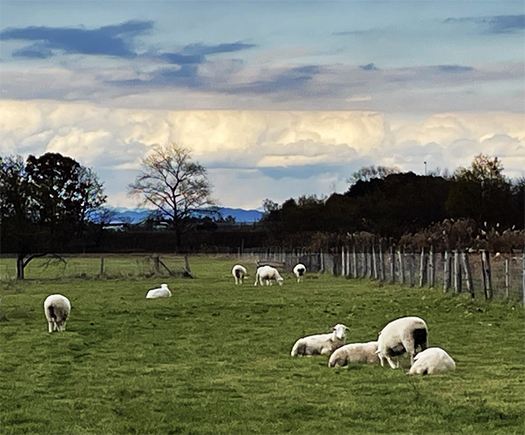
 選択した写真ではないけれど、羊がトランプという猛獣に狙われると思えてしまう。悲しい。

English version⬇

[Uniformly Unspeakable “Aging” Trump 2.0 Administration
LDP presidential and lower house elections. It is very sad to see the Japanese leader who is trying to stay in office after being rejected by the people and Trump 2.0 who has been fighting with impunity. …

 This week, the U.S. presidential election, the biggest factor in the world for the time being, is over and the direction of the world has been set. The question is how the political economy will move within this general framework and how we should deal with it.
 However, as is the case with Biden, who was born on November 20, 1942 and is now 81 years old, President-elect Trump is also 78 years old, which, in Japanese parlance, means that he is a “late senior citizen. So far, Trump, like Biden, does not seem to be “aging” and seems to be in good health, playing golf and looking healthy. There is a strong theory that physical activity and moderate exercise can suppress brain aging, but from the aspect of maintaining social systems in an aging society, a uniform age-based retirement system or the like may be causing institutional fatigue.
 When did the aging of politicians begin? Is it possible that even in advanced countries like the U.S., there is a depletion of talented people in politics? Society has become so complicated and the established frameworks so firmly entrenched that it may be extremely difficult for young challengers to emerge. Even in the Japanese political world, it is difficult to find innovative people. As a result, we are seeing more and more power transfers through “hereditary succession. The conditions for competition may be diminishing in such a social system. This may be the conservative trend in Japan, regardless of whether it is on the left or right.
 The recent LDP presidential election was widely publicized, but the person who was elected lost the election by dissolving the House of Representatives based on a slack decision without presenting a clear “axis of choice” to the voters, and he is still clinging to his position as prime minister even though the public opinion was lower than the number he had set as the “breaking point” between victory and defeat.
 Under such circumstances, what kind of philosophy would allow him to engage in dialogue with a leader like Trump, who has “won a fierce battle,” and if he makes a mistake, it could cause serious damage to Japan’s national interests.
 While Trump is an energetic late-elderly 78-year-old, Ishiba, who was born on February 4, 1957, is a 67-year-old early-elderly, and while Trump is far more brilliant, his eyes are also lackluster. It is also rumored that the area around his eyes on his campaign posters was corrected with Photoshop.
 The legitimacy of politics in a democracy lies in the will of the people in an election, and one wonders whether a total “loser” can really face that will head-on. Moral hazard.
 It’s not a choice picture, but it makes me think of a sheep being targeted by the beast of prey that is Trump. Sad.

【トランプ2.0政権で経済政策・住宅市場は?】


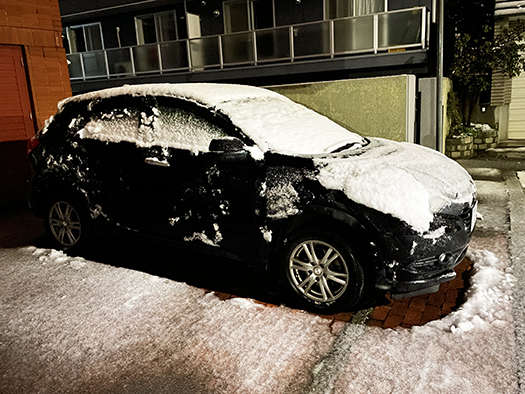
 昨日は結局、札幌市西区のわが家周辺、山の手地区では断続的に降雪が続き、本日朝には家の前はグチャグチャな多水性の雪が重なっている状態。本格的に「除雪」する必要があるかどうか、というところであります。たぶんこのグチャグチャ道では早朝散歩はちょっと、なのでその分、ブログ記述後せっせと初雪かきとなることでしょう。雪、重そうであります(泣)。しょがない。北国の宿命。
 さて昨日までで、アメリカの政権選択にトランプ勝利という決定が下された。その力学が今後の日本経済にどのように影響してくるのか、予測を立てて行く必要がある。わたしも創業企業からは退隠したとはいえ、個人企業としては引き続き住宅情報関連の仕事なので、約3ヶ月ほどのアメリカの政権移行期を経て以降の経済動向を考えていく必要があると思っています。経済面で言えば、一般的にアメリカの経済政策が日本経済や金融市場に影響を与えることが多いとされるし、現実に強固な日米関係の基軸は第2次大戦以降の「経済同盟」関係であることはあきらか。
 コロナ明け以降のアメリカのインフレが反映して住宅建材価格が暴騰し、それが住宅価格の世界的高騰を招いたことが日本の住宅取得層に大きな影響を与えて、とくに今期には住宅着工減少があきらかになってきている。政治というのは基本的に経済の状況を反映するものであって、為政者には経済の相場観というものが最重要なのだと思います。仁徳天皇の民のカマド伝承の通り。
 アメリカの人びとはトランプの2017-20年の4年間の経済運営実績を踏まえてその政権を再度選択した。その後のバイデン政権とその後継を狙ったハリスにNOを突き付けたということでしょう。生活コストの急上昇に対して民は経済最優先という選択を行ったと言える。
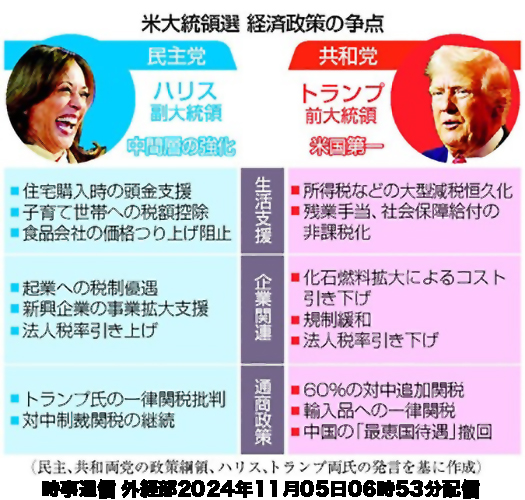
 まだ選挙の結果が出たばかりで、そうした経済分析情報はそう多くは出てきていないけれど、今後の住宅市場を見通していくときに、大きな方向性指標がトランプ政権によって打ち出されてくることでしょう。上の図は時事通信外報部11/5配信のもの。経済面では一般的にアメリカの経済政策が日本経済や金融市場に影響を与えることが多く、簡略にまとめられていてわかりやすい。
 要注目と思われるトランプの政策としては、化石燃料拡大によるコスト引き下げという経済活性化の「方法論」を明確に示していること。トランプはさらに所得税などの「大型減税」恒久化、さらに残業手当、社会保障給付の非課税化を打ち出している。
 よく知られているけれどバイデン政権は環境・エネルギー政策のグリーン化を掲げ、それまでの「シェールガス革命」を痛撃してきていた。
 こうした方向性は第1次政権時と基本的には志向性が同じだと思える。こういう志向性と日本の為政者であった安倍政権の打ち出した「アベノミクス」が呼応していた。大きな世界経済の方向性はこういった方向に向かっていくのではないか。ただ、いま現在の日本の政権には明確な「経済施策」の考え方が希薄。あるとすれば財務省による「増税路線」。この日本の増税路線とアメリカ・トランプ政権の減税・経済活性化路線とがはたして整合するだろうか? 大きく疑問。さてどうなるか?

English version⬇

[What about economic policy and the housing market under a Trump 2.0 administration?
Politics is paramount to the economic market outlook. From Biden’s “environmental focus” that nearly stifled the shale gas revolution to the Trump administration of fossil fuel expansion => cost reductions. …

 Yesterday, it ended up snowing intermittently in the Yamanote area around our house in Sapporo’s Nishi Ward, and by this morning, the front of our house was covered with a layer of soggy, multi-level snow. We are wondering if we need to “plow” the snow in earnest. I’m not sure if I’ll be able to go for an early morning walk on this muddy road, so I’ll have to shovel the first snow after writing this blog. The snow looks heavy (I cry). It can’t be helped. The fate of a northern country.
 As of yesterday, the decision to choose the U.S. administration has been made in favor of Trump. We need to make predictions on how the dynamics will affect the Japanese economy in the future. Although I too have retired from the founding company, I continue to work in the housing information business as a private firm, so I believe it is necessary to consider the economic trends after the approximately three-month transition period of the U.S. administration. In terms of the economy, it is generally believed that the U.S. economic policy often affects the Japanese economy and financial markets, and it is clear that the cornerstone of a strong Japan-U.S. relationship in reality is the “economic alliance” relationship that has existed since World War II.
 The price of building materials has skyrocketed, reflecting inflation in the U.S. since the dawn of the Corona, and this has led to a global surge in housing prices, which has had a major impact on Japanese homebuyers, especially in the current quarter, when a decline in housing starts has become apparent. Politics is basically a reflection of the state of the economy, and I believe that the view of the economic market is of utmost importance to politicians. As per the Kamado lore of Emperor Nintoku’s people.
 The American people chose that administration again based on Trump’s four-year track record of managing the economy in 2017-20. After that, they would have said NO to the Biden administration and Harris who tried to succeed him. It can be said that the people have made the choice to put the economy first against a sharp rise in the cost of living.
 Although the election results have only just come in and not much information on such economic analysis is available, the Trump administration will provide a major directional indicator for the future of the housing market. The figure above is from the Jiji Press Foreign Affairs Department, November 5, 2011. In terms of the economy, U.S. economic policies generally affect the Japanese economy and financial markets, and it is easy to understand in a simplified form.
 One of Trump’s policies that we believe is important to note is his clear “methodology” for stimulating the economy by lowering costs through the expansion of fossil fuels. Trump has also proposed making permanent “major tax cuts” such as income taxes, as well as exempting overtime pay and social security benefits from taxes.
 As is well known, the Biden administration has been pushing for a green environment and energy policy, and has been taking a hard hit against the “shale gas revolution” that had been underway up to that point.
 This direction seems to be basically the same as that of the first administration. This orientation corresponded with the “Abenomics” of the Abe administration, which was in power in Japan. The direction of the global economy is likely to move in this direction. However, the current Japanese administration does not have a clear-cut “economic policy” in mind. If there is one, it is the Ministry of Finance’s “tax hike policy. Will Japan’s tax hike policy be consistent with the U.S. Trump administration’s policy of cutting taxes and revitalizing the economy? It is highly doubtful. What will happen now?

【トランプ再登場&札幌降雪 「交換」対応待ったなし】


 事前の予想通りトランプの当選という結果が出たようだ。日本を取り巻く最重要な国際関係について、ここから4年間の趨勢は決した。否応なく日本の権力構造はそれへの対応を早急に整えていく必要があるだろう。なぜ直前の日本の政治体制はアメリカ大統領選挙という要素を考え、その帰趨への対応を可能なように準備してこなかったのか。少なくとも今回の選挙日程の設定感覚は非常に疑問であり、国際感覚センスが与党側でここまで失われていることは予想外だった。
 前のトランプ政権で非常によい日米関係を構築していた安倍政権の政敵であった現状の首班が、トランプとどのように「外交」できるか、誰が考えてもほぼ難しいだろう。トランプは安倍暗殺に際して弔電まで送ってきていた。今回は選挙過程で自らも銃弾を受けている。現政権については日本の国益を考えれば不安に思える。しばらくは日本国民としてこの状況に耐えていく必要があるのか。経済的に損失が出てこない範囲で早急に変化対応して欲しいと思う。
 さて、わたしどもでは事前スケジュールとして本日タイヤ交換予定でした(泣)。そうした予定に対して本日深夜〜早朝にかけて氷雨、降雪という天気模様。上の文章で日本の現政治体制についてその見通しの悪さ、センスの無さをなじり気味だったのですが、みごとにわが身にブーメラン(笑)。
 本日の札幌地方の予想は、最高気温 5°で最低気温 1°。ということで1日中雪マークが表示されております。降雪の合間を縫って道路状況をみながらタイヤ交換予約しているところまで慎重運転で移動させていくしかなさそう。
 以前、10年前くらいまではタイヤは自宅に保管して、自分で交換までやっていたのですが、会社車両の台数が増えて、保管場所がキャパオーバーして、それなら保管料を込みにして交換も全部そうしたところにお願いすることにしているのですね。
 いまの天気状況(午前6時時点)では時折大粒の雨、ヒョウが降ってきたりしている。祈るような気持ちで天候の好転を願いながら、道路状況に一喜一憂することが予想されます。こういう不安・心配には自己責任でもって対応して行きたいと思いますので、日本の政治状況も一刻も早く正常な「対応力」を見せていって欲しいと思います。さて、天気、どうなるかなぁ・・・。

English version⬇

[Trump’s reappearance & Sapporo snowfall, no wait for “exchange” response
The public opinion is quite clear and Trump’s reappearance is confirmed. It is hard to believe that a person whose language is unclear can handle the situation. Tire replacement is urgently needed. The people of Japan are not ready for a “change” of tires.

 As expected, Trump’s election seems to have been the result. The most important international relations surrounding Japan will be determined over the next four years. Japan’s power structure will need to quickly adjust its response. Why didn’t Japan’s political establishment consider the U.S. presidential election and prepare itself to deal with its outcome? At the very least, the sense with which the election schedule was set was highly questionable, and it was unexpected to see such a loss of international sensibility on the part of the ruling party.
 It is almost impossible for anyone to imagine how the current head of the Abe administration, who was a political opponent of the previous Trump administration that had built a very good Japan-U.S. relationship, would be able to “diplomatically” deal with Trump. Trump even sent a telegram of condolence at the time of Abe’s assassination. This time, he himself took a bullet during the election process. The current administration seems unsettling from the standpoint of Japan’s national interests. Will we as Japanese citizens have to endure this situation for a while? I hope that the government will quickly make changes to the extent that there are no economic losses.
 We had planned to change tires today as a preliminary schedule. However, the weather was threatening ice, rain, and snow from late morning to early morning today. In the above article, I was almost lambasting Japan’s current political system for its poor prospects and lack of sense, but it has boomeranged back on me (laugh).
 Today’s forecast for the Sapporo area is a high of 5° and a low of 1°, which means that it will snow all day long. So, the snow mark will be displayed all day long. We will have to drive carefully between snowfalls, watching the road conditions, to the place where we have made an appointment to change tires.
 I used to store tires at home and change them myself until about 10 years ago, but the number of company vehicles has increased and the storage space is now over capacity, so I’ve decided to include the storage fee and ask such a place to do all the changing.
 The current weather conditions (as of 6:00 a.m.) have been heavy rains and occasional hailstorms. You expect to be both happy and sad about the road conditions, praying for a turnaround in the weather. I would like to deal with these concerns and worries at my own risk, and I hope that the political situation in Japan will show normal “responsiveness” as soon as possible. Now, I wonder what will happen to the weather…


【戦国末期、織田家・秀吉軍部隊と三木城】

Screenshot[/三木城跡]
 さてアメリカ大統領選は時差の関係もあり、帰趨の情報はまだ発信されてこない。そういうことなので、ブログ記事としては代わりに、いまなにかと話題になっている「兵庫県」で縁の深い「三木城跡」についての探訪記であります。時空をはるかに超えて、合戦・政治闘争についてのつながりか?ムリヤリ感満載であります(笑)。
 現代でも斉藤前知事の失職以降の出直し知事選さなかで、NHK党(いまはどういう名前か知らない)の立花氏が立候補して前知事の「無実」を訴えているとのこと。なにやら「新事実」が浮かび上がってきているとされている。もしそれが真実であるなら、形勢一変であり注目される。
 ・・・ということですが、本日はその兵庫県のほぼ中央部の三木市に残る「三木城跡」のこと。わたしの姓が冠されていて、家系伝承でもなにかとクロスする地名・氏名(うじめい)であります。司馬遼太郎さんの記述では、兵庫県では1870年(明治3年)9月19日、すべての国民が苗字を持つことを許された時には、「おれ、三木」「オレも三木」と多数の方々がこの三木城関連の素性であると名乗り出られたという説。全国有数の「三木家」多数派地域であります。郷土への愛のひとつの共有体験として織田・秀吉軍による攻撃と城主・別所氏の決断によって城明け渡し・城主の自害・城兵の助命が大きく残像が残っていたということでしょうか。
 この三木城というのは、経済の伝統的要衝地に立地。京都からの西国への主要な街道筋を押さえる位置にあって、戦国当時もその利権を狙って山陰の戦国大名「尼子氏」に攻撃されたり、京都を押さえた三好氏にも攻撃されている。その都度、堅固に城を守り抜いていた。三木市ではいまも「金物」が名産とされているように、京大阪の需要地から交通至便ということもあって、いわば播州における経済のひとつの中心地域だったのだと思われます。神戸は明治以降、国際貿易港として経済活動がさかんになっていくけれど、それ以前には三木城が播州のひとつの中心地だったと思える。


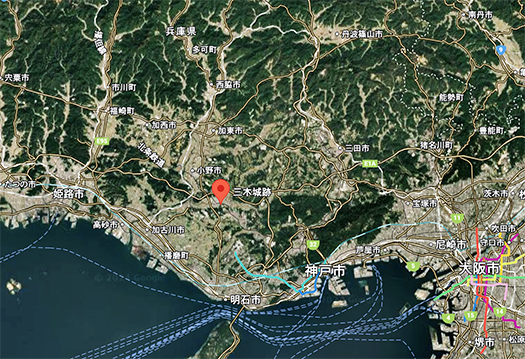
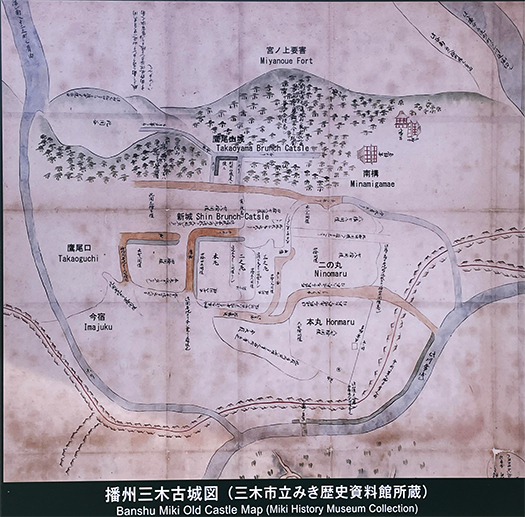
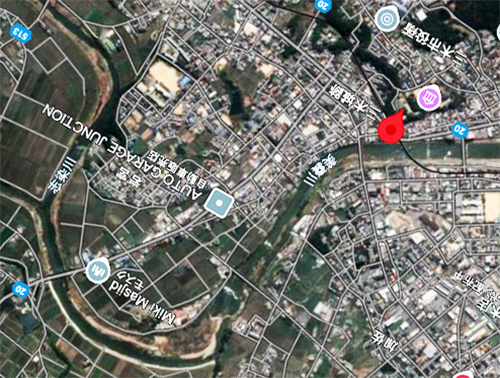
 地図は「みき歴史資料館」所蔵の播州三木古城図と、その方向感をそろえてみた現代のGoogleマップ。城の南側の後背地には山地が迫り、北側の前面には美嚢川の流れがあって、補給の機能も備えている条件。高齢期になってきて、播州には時折訪れることが増えてきています。そのたびにふとした機縁にめぐり会わされて、血脈のなつかしさ、歴史を感じることが多いのであります。故地を遠く離れた北海道人にとって日本民族としての素性確認機会とでも言えるのでしょうか?

English version⬇
 
The Oda and Hideyoshi military units and Miki Castle at the end of the Warring States period
The development of Kobe, an international trading port, has been attracting attention, but the history of Kobe up to the Edo period shows a completely different economic trace in Miki Castle in the central part of Hyogo Prefecture. …

 Due to the time difference in the U.S. presidential election, information on the outcome of the election has not yet been released. Therefore, instead, this blog entry is about a visit to the ruins of Miki Castle, which is closely related to the much talked about “Hyogo Prefecture”. Is there a connection between the two places, or is it about battles and political struggles that transcend time and space? It is full of a sense of unreasonableness (laugh).
 Even today, in the midst of the gubernatorial rerun election after former Governor Saito lost his post, Mr. Tachibana of the NHK Party (I don’t know what it is called now) is running for governor, appealing for the former governor’s “innocence. It is said that some “new facts” have emerged. If it is true, it would be a game changer and attract a lot of attention.
 Today, I would like to talk about the ruins of Miki Castle in Miki City, located in the center of Hyogo Prefecture. It bears my family name, and is a place name and name that crosses over into family lore in some way. According to Ryotaro Shiba’s account, on September 19, 1870 (Meiji 3), when all people in Hyogo Prefecture were allowed to have surnames, many people came forward saying, “I, Miki,” or “I, Miki,” as if they were related to this Miki Castle. This is one of the areas in Japan where the “Miki family” is in the majority. The attack by Oda and Hideyoshi forces and the decision by the castle’s owner, Bessho, to surrender the castle, the owner’s suicide, and the lives of the castle’s soldiers were all left behind as a shared experience of love for one’s hometown.
 Miki Castle was located in a traditional economic center. It was located on a major highway from Kyoto to the western part of the country, and was attacked by the Amago clan, a feudal lord in the San’in region, who wanted to take advantage of its location, and by the Miyoshi clan, which held Kyoto. Each time, the castle was firmly defended. As “hardware” is still a specialty of Miki City, it was one of the economic centers in Banshu, so to speak, because of its convenient transportation from the demand areas of Kyoto and Osaka. Kobe became an international trading port after the Meiji period (1868-1912), but before that, Miki Castle seemed to be the center of Banshu.

 The map is a modern Google map that attempts to align the sense of direction with the old castle map of Banshu Miki in the collection of the Miki Historical Museum. The southern hinterland of the castle is looming in the mountains, and the northern front has the flow of the Mishu River, a condition that also serves the function of supply. In my advanced age, I have been visiting Banshu more and more from time to time. Each time I visit Banshu, I am often struck by a chance encounter and feel the nostalgia and history of my bloodline. For the people of Hokkaido, far away from their homeland, it is an opportunity to confirm their identity as Japanese people.