本文へジャンプ

【はたらく家空間・土間/日本人のいい家㉙-4】


今回のコロナ禍で現代住宅でも「働く空間」についての検討が始まった。
はたらく、ということの意味合いが大きく変化して
基本的にはパソコン上で完結可能な労働ということだけれど、
住宅の機能に於いてかなり大きな決定因子になっていくことが考えられる。
わたしもいま兼用住宅となっているのですが、
そうすると仕事環境に対しても、「社長食堂」などとして
食事作りというまったくそれまでとは異質な機能性が付与される。
必要とされる空間機能性が大きく変化するという意味で
たとえパソコン仕事主体ではあれ、家を変化させる機縁にはなっていく。
仕事する空間についての適格性について考えることが増えてくる。

こういう「職住一体」住宅として考えたら、
先人たちの古民家はほぼこれに相当すると言えるでしょう。
その労働対象が農家や商家など、実業がほとんどであるということですが、
より本質的な部分で、家事労働と生産労働の様子、
その機能性という意味合いでは考えるきっかけにはなるように思います。
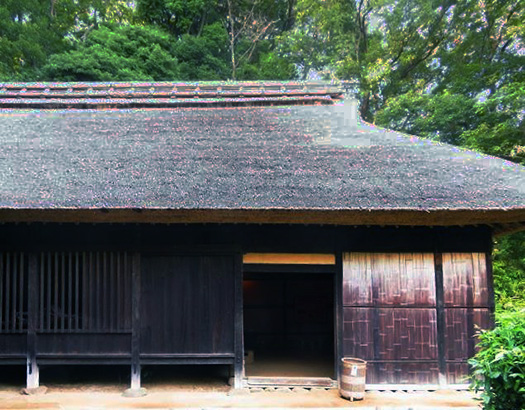
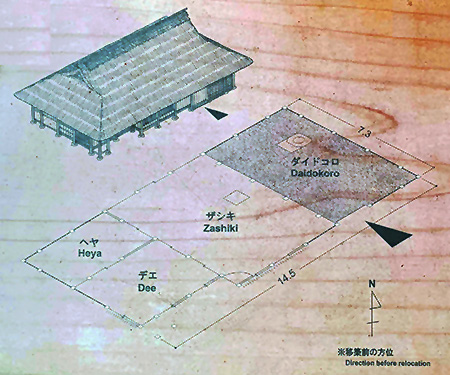
相模国の山間、陽当たりのいい丘陵地帯にあったこの家では
商品作物として「茶」の生産も行っていたとされます。
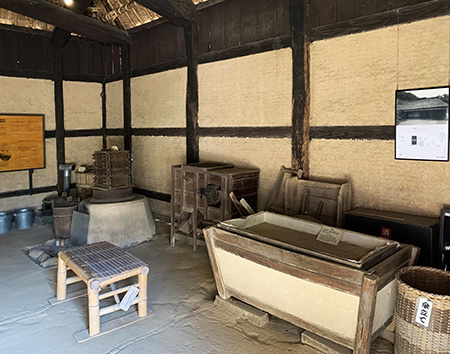
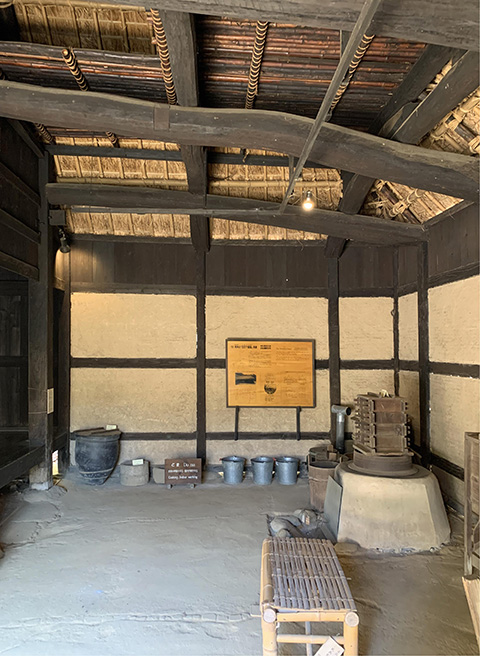
上の写真の四角い装置が茶葉の処理装置だというのですが、
蒸し作業とか送風作業、加熱作業など生産農家段階での荒処理が
この土間で行われていたとされます。
かまどもあるけれど、これは茶葉加工が主たる役割だったことでしょう。
蒸し器が上に載せられている。これが主たる機能性。
その農作業のかたわら空いたときに、食事「にも」使われたのか。
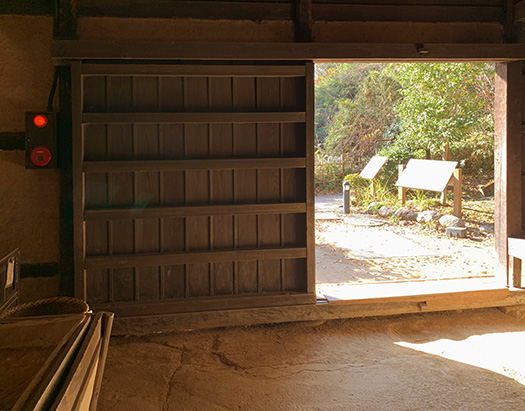
玄関口の開口幅が収納部を含め2間幅の大型木製引き戸になっている。
農作業に必要な荷物の出し入れに、このような大型開口が必要だった。
そういう開口扉がスムーズに動作するための建具仕様だっただろう。
この家の中でももっとも堅牢性と機動性の要求された部位。
300年近い使用に耐え続けたがっしりとした構造であることが
目視的にもよくわかると思われます。
他の部位よりも太い材が使われているとわかります。
土間の突き固められよう、平滑面造作もかなりのレベル。
この建物自体は復元されたものですが、農作業の場としての
機能性表現として、かなり重視されていただろうと思います。
土間空間のディテールには相当の生産機能性が表現されていた。
住まいの空間はそういう農作業と相応するようなものとして
配置や機能性が考えられていったに違いない。

現代住宅がテレワークというものを、いわば後付けのように受け入れるのとは
相当に違いがあると思われますが、
しかしコロナ禍の長期化、ウィルスとの長く続く環境対応を考えたら、
テレワーク主体型の家づくりという志向性も考えられる。
住宅デザインの側では、そのようなユーザー変化にも対応が必要かも。

English version⬇

[Working house space / Doma / Good Japanese house ㉙-4]
With this corona disaster, the study of “working space” has begun even in modern houses.
The meaning of working has changed significantly
Basically, it’s a labor that can be completed on a personal computer,
It is possible that it will become a fairly large determinant in the function of housing.
I am also a dual-purpose house now,
Then, even for the work environment, as a “president’s cafeteria” etc.
It is given a completely different functionality of making meals.
In the sense that the required spatial functionality will change significantly
Even if it is mainly a personal computer work, it will become an opportunity to change the house.
More and more people think about their eligibility for work space.

If you think of it as such a “working and housing integrated” house,
It can be said that the old folk houses of the ancestors are almost equivalent to this.
Most of the work targets are farmers, merchants, and other businesses.
In the more essential part, the state of domestic work and production work,
In terms of its functionality, I think it will be an opportunity to think about it.
In this house in the mountains of Sagami Province, in the sunny hills
It is said that it also produced “tea” as a commercial crop.

It is said that the square device in the photo above is a tea leaf processing device.
Rough treatment at the production farmer stage such as steaming work, ventilation work, heating work, etc.
It is said that it was done in this dirt floor.
There are kamado, but this is probably because tea leaf processing was the main role.
A steamer is placed on top. This is the main functionality.
Was it used for meals when it was free while doing the farm work?
The opening width of the entrance is a large wooden sliding door with a width of 2 ken including the storage part.
Such a large opening was needed to put in and take out the luggage necessary for farm work.
It would have been a fitting specification for such an opening door to operate smoothly.
The most robust and maneuverable part of the house.
It has a solid structure that has withstood nearly 300 years of use.
You can see it visually.
You can see that the material is thicker than the other parts.
The smooth surface structure is also at a considerable level so that the dirt floor can be tamped.
The building itself has been restored, but as a place for agricultural work
I think it was very important as a functional expression.
The details of the dirt floor space expressed considerable production functionality.
As a living space, it corresponds to such farm work
Arrangement and functionality must have been considered.

What does modern homes accept telework as a retrofit?
There seems to be a considerable difference,
However, considering the protracted corona sickness and the long-lasting environmental response to viruses,
It is also possible to consider the intention of building a telework-based house.
On the housing design side, it may be necessary to respond to such changes in users.

【関東温暖地・正面格子窓の家/日本人のいい家㉙-3】


申し訳ありません、うっかり写真を間違えてしまいました。
2日間記載した相州の「四方下屋造の家」写真ですが、
同じ相模国の別の家と混同がありました。
5/1-2日掲載の外観は同じ相模国の川崎市麻生区金程の「伊藤家住宅」外観でした。
いま取り上げている「四方下屋造の家」は同じ相模国の
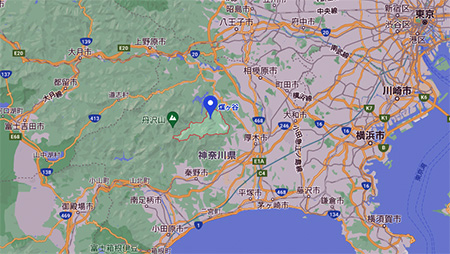
神奈川県愛甲郡清川村煤ヶ谷の「旧・岩澤家住宅」。
この両家は現在の道路地図でも44.6km。建築時期、流儀も近似していて
わたしの撮影日時も近接していたため、写真整理中に混同が起こった次第。

掲載各所で可能な限り、写真を差し替えて変更しました。
お詫びして訂正させていただきます。
記載の文意自体は、この「四方下屋造」に即した内容ですので修正はありません。

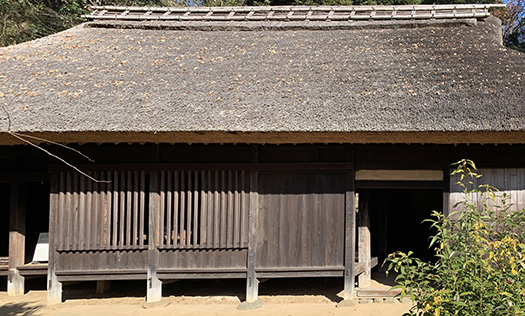
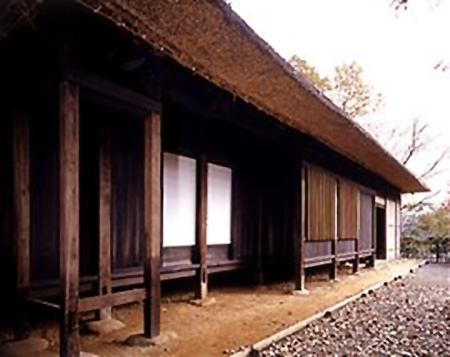
この旧・岩澤家住宅は丹沢山塊東麓の山あいの地に建っていた。
混同の秦野・北村家住宅が平野部に位置するのに対して山間農家。
ザシキの前面2間を格子窓とするのはこの時代の関東の古民家に共通する。
上の写真の正面外観に明らかですね。

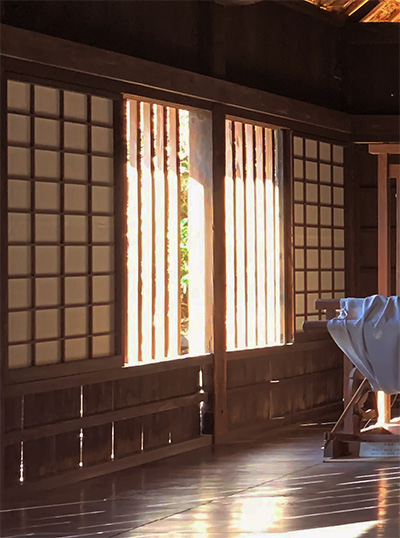
こちらは内側からの様子。
格子ですが、町家などで見られる「縦格子」で、このような開口部。
障子も付けられているので本格的な「窓」が意図されたもの。
正面にこうした窓が装置されるのがこの時期の関東に
共通すると言うことには、どのような意味合いがあるのか。
江戸期の関東とは幕府直轄であったり、譜代藩の支配地域。
こちらの家も「庄屋」ということなので、支配機構との関係があるのか。
町家の格子窓は通りに対してショーウィンドウと防犯性を
両にらみしたものでしょうが、こういう農家住宅ではさてどういうことか。
開放性・通風性という意味合いは蒸暑気候対応とも考えられるけれど、
それが関東に特徴付けられるというのは、要探究ですね。
民族の暮らしよう、残された古民家から読み解くきっかけを与えてくれる。
四周の半間幅を下屋とする構造だが、県下に一般的な四方下屋造とは異なっている。
通常の四方下屋造ではやはり四周の半間幅を下屋とするものの、
上屋柱の立つ位置は下屋柱筋より1間内側である。これに対し岩澤家では
下屋柱筋より半間内側に上屋柱を立てるから、上屋・下屋の違いがきわめて明瞭。
古式の構造で、四方下屋造の祖形と考えられている。

連休ですが、コロナ禍が昂進していますね。
せっかくのGWですが「ガマン・ウィーク」になってきつつある(泣)。
しかしちょうど札幌は雨続きの肌寒い天候。
念を入れての写真整理など、時間を有効に使いたいと思います。

English version⬇

[Kanto Warm Area / Front Lattice Window House / Good Japanese House ㉙-3]
Normally, the opening emphasizes ventilation, but it is characteristic of the Kanto region at the foot of the shogunate. An opportunity to think about living from the architectural regional characteristics.・ ・ ・

I’m sorry, I accidentally made a mistake in the photo.
This is a photo of “Shikata Shimoyazo no Ie” in Soshu, which I wrote for two days.
There was confusion with another house in the same Sagami province.
The appearance posted on 5 / 1-2 was the appearance of “Ito Family Residence” in Kanahodo, Asao-ku, Kawasaki City, Sagami Province.
The “House of Shimoshita-zukuri” that we are talking about is from the same Sagami province
“Former Iwasawa Family Residence” in Susugaya, Kiyokawa-mura, Aiko-gun, Kanagawa Prefecture.
Both houses are 44.6km on the current road map. The construction time and style are similar
As my shooting dates were close, I was confused while organizing my photos.

As much as possible, I replaced the photos and changed them.
We apologize for the correction.
The meaning of the description itself is in line with this “Shikata Shimoyazo”, so there is no correction.

This former Iwasawa family house was built in the mountains at the eastern foot of the Tanzawa Mountains.
The confused Hadano / Kitamura family house is located in the plain, while it is a mountain farmhouse.
It is common to old folk houses in the Kanto region of this era that the two front windows of Zashiki are used as lattice windows.
You can see it in the front view of the photo above.

This is the view from the inside.
Although it is a lattice, it is a “vertical lattice” that can be seen in townhouses, and such an opening.
Since it also has shoji screens, it was intended as a full-fledged “window”.
It was in the Kanto region at this time that such windows were installed on the front.
What does it mean to say something in common?
The Kanto region during the Edo period was under the direct control of the Shogunate government, and was controlled by the Fudai feudal clan.
Since this house is also called “Shoya”, is it related to the control mechanism?
Machiya lattice windows provide show windows and security against the streets
It may be a glimpse of both, but what does it mean in such a farmhouse?
The meaning of openness and ventilation can be thought of as being compatible with hot and humid climates,
It is a quest to be characterized in the Kanto region.
It gives an opportunity to read from the remaining old folk houses so that people can live their lives.
The structure has a half-width of four laps as a lower house, but it is different from the four-sided lower house structure that is common in the prefecture.
In a normal four-sided building, the width of the four laps is still half the width of the building,
The position where the shed pillar stands is one ken inside the shed pillar line. On the other hand, in the Iwasawa family
Since the shed pillars are erected halfway inside the shed pillars, the difference between the shed and the shed is extremely clear.
It has an old-fashioned structure and is considered to be the progenitor of the four-sided building.

It’s a consecutive holiday, but the corona wreck is on the rise.
Although it is a long-awaited Golden Week, it is becoming “Gaman Week” (crying).
However, the weather in Sapporo is chilly with continuous rain.
I would like to make effective use of my time, such as organizing photos carefully.

【夏のいごこち「土庇の家」/日本人のいい家㉙-2】


温暖地住宅の「快適性能」を考えるとき、夏場の快適性を思う。
神奈川地域型住宅「四方下屋造」の第2回なのですが、
昨日掲載後、読者の方から「土庇の家」ですね、という書き込み。
とっさに寒冷地住宅の快適常識と異質の空気感が一気に伝わってきた。
「土庇」とは建物の外周にめぐらす庇のうち土間に建てられた柱で
直接支えられたもの。和風建築にあって土庇といい洋風建築ではポーチ。
土庇は建築物の足元を風雨から保護する、というもの。
土庇をめぐらせ光を切り取り影を引き込む、その下に濡れ縁を配し
座してのんびりするも良し飾り台として利用するのも良い。
軒の高さ・出寸法や濡れ縁の大きさは、庭との間合いが大事。
光と影、風と香り、雨音、雪の静寂、日本の四季を体感出来る空間。
まぁ日本的な外部と内部の中間領域の基本造作といえるでしょう。

北海道住宅では高断熱高気密化が進んで、ウチとソトが
明確に区分けされていくことが方向として明確化されていったので、
内部の密閉性を高める方にコスト感覚が集中していって
それがある程度できた段階でようやく、中間領域の喪失に気づき、
どうしようかと、先端的デザインとして問題にされてきた部分。
そもそも土庇というようなコトバが実感を持てなくなっている。
なので、こういう空間装置にははるかな感受性が呼び覚まされる思い。
温暖地・蒸暑地ではエアコンなどの機械的温熱調整の普及前に
建築的涼感装置として、そういった空間が重視され、
そこを利用する生活慣習が根付いているのでしょう。
夏の蒸暑が夕方、いっとき「夕涼み」として涼房が得られる生活シーン。
ウチワを持って蚊取り線香などを焚いて過ごす空間。
縁側までは装置できないまでも、縁台を出して涼んでいた。
ときには花火などで楽しんでいた空間装置なのでしょう。

寒冷気候に対しては「断熱気密化」というハード的な対抗手段を
現代建築は武器として持ったけれど、蒸暑気候に対しては
伝統的な「いなす」生活文化が日本では醸成されてきていた。
現代住宅は断熱気密という科学的な戦い方を基礎にして
このような生活文化、いわば「いなす知恵」をどう伝承していくべきか、
という地点に至っているように思います。
ある意味では「温故知新」というような日本住宅の進化プロセスかも。
室温コントロールが可能なほどに居室空間の密閉性が高まり、
エアコンでクールな空気環境も創造できるようになって
さてはたして、こういった土庇空間での「いなす」文化が
今後どのように再生してくるのか、興味深い。
案外そのリード役は北方型住宅技術かも知れない。

English version⬇

[Summer Igokochi “Eaves House” / Good Japanese House ㉙-2]
When thinking about the “comfort performance” of a warm-season house, I think of the comfort in the summer.
This is the second installment of the Kanagawa area-type house “Shikata Shimoyazo”.
After posting yesterday, a reader wrote that it was a “house of eaves”.
Immediately, the common sense of comfort in cold-weather houses and the feeling of a different atmosphere were immediately transmitted.
“Eaves” are the pillars built in the dirt floor of the eaves that surround the perimeter of the building.
Directly supported. A pouch for Western-style architecture, which is called eaves in Japanese-style architecture.
The eaves protect the feet of the building from the elements.
Cut out the light around the eaves and draw in the shadow, and place a wet edge under it
It is good to sit and relax and use it as a display stand.
The height and protrusion of the eaves and the size of the wet edge are important for the distance from the garden.
A space where you can experience the light and shadow, the wind and scent, the sound of rain, the silence of snow, and the four seasons of Japan.
Well, it can be said that it is a basic structure of the intermediate area between the outside and the inside, which is Japanese.

In Hokkaido housing, high heat insulation and high airtightness are progressing, and Uchi and Soto are
Since it was clarified as a direction to be clearly divided,
The sense of cost is concentrated on improving the internal airtightness.
Only when it was done to some extent, I noticed the loss of the intermediate region,
What to do, the part that has been a problem as a cutting-edge design.
In the first place, I can’t really feel the words like eaves.
Therefore, I think that such a spatial device will awaken far more sensitivity.
Before the spread of mechanical heat control such as air conditioners in warm and humid areas
As an architectural coolness device, such a space is emphasized,
The lifestyle habits of using it may have taken root.
A life scene where you can get a cool bunch as “evening cool” when the summer heat is in the evening.
A space where you can spend time with a mosquito coil and burning mosquito coils.
Even though I couldn’t install the device up to the porch, it was cool with the porch out.
Sometimes it’s a space device that I enjoyed with fireworks.

For cold climates, a hard countermeasure called “insulation and airtightness”
I have modern architecture as a weapon, but for hot and humid climates
The traditional “Inasu” lifestyle has been cultivated in Japan.
Modern housing is based on the scientific method of heat insulation and airtightness
How should we pass on this kind of life culture, so to speak, “Inasu wisdom”?
I think we have reached that point.
In a sense, it may be the evolutionary process of Japanese housing, such as “Won’s old wisdom.”
The airtightness of the living room has increased so that the room temperature can be controlled.
Now that you can create a cool air environment with an air conditioner
By the way, the “Inasu” culture in such an eaves space
It will be interesting to see how it will be regenerated in the future.
Unexpectedly, the lead role may be northern housing technology.

【神奈川地域型住宅「四方下屋造」/日本人のいい家㉙-1】


四方下屋造〜しほうげやづくり〜という古民家形式は
神奈川県に特異的にその建て方が古民家として残っているという。
南部曲り家も合掌造りも「地域型住宅」古民家版といえるけれど、
温暖地域とされる、それも江戸期には中央にごく近い神奈川でも
こうした地域独自のデザイン形式があったというのが面白い。
外観写真を見ていただければ、入母屋の屋根が葺き下りてくる
建物外周部に柱が軒を受けるように配置されている。
軒先の屋根荷重に対してそれを支えているかのように見える。
そういう結果、外周部「半間」幅で外部の中間領域ができる。
写真ではその中間領域に縁が張り出させてあるように見えている。
見た感じでは「縁台」が置かれているか、装置されているとしても
仮置き的なものとして扱われていると思われる。
こういった建て方が、どうして神奈川では好まれたのか、興味深い。

WEBでの検索ではその構造について書かれているに留まる。
〜関東地方西南部にみられる民家形式の一つ。内寄りの上屋柱と下屋柱の間につなぎ梁を架け、梁上の束で小屋梁の両端を受ける。 〜
http://www.kentikulink.net/architectjiten/ag15/ag15_955.html
一般的に軒先空間ができるのは、寄棟が圧倒的な古民家では一般的。
中間領域を重視したということで言えば、日本住宅すべてが当てはまる。
特徴は、外周部の柱と言うことになる。
この柱があることで有利になるようなこととしては
屋根の耐荷重が高まるくらいしか想像が及ばない。
考えられる理由は2つくらいではないか。
1つは神奈川地域特有の自然の特徴に対しての備えのようなことがあるのか。
2つ目は、この地域の大工、その頭目の作り手の「伝統芸」か。
わたし自身は4−5年神奈川で居住経験があるけれど、
どうも1つ目の理由には心当たりが見いだせない。
とすれば、2つ目の人為的な理由が浮かんでくる。
このように柱を立てて置けば、四周部に「縁台」のような床面を
増設していくときに、その目印とっかかりとして有用であったか。
この地域の大工棟梁の伝承などに取材するしかないと思う。

ふたたび古民家シリーズに復帰です。
古民家には民族の生き様がそのまま表出する。
温故知新の宝の山でもあると思います。お付き合いのほどよろしく。

English version⬇

[Kanagawa area type house “Shihogeya-zukuri” / Japanese good house ㉙-1]

The old folk house style of Shihogeya-zukuri
It is said that the construction method remains as an old folk house specifically in Kanagawa prefecture.
It can be said that both the southern bent house and the gassho-zukuri are “regional houses” old folk house versions.
It is said to be a warm region, even in Kanagawa, which is very close to the center during the Edo period.
It is interesting that there was such a design format unique to the region.
If you look at the exterior photo, the roof of the Irimaya will come down.
Pillars are arranged on the outer periphery of the building so as to receive the eaves.
It seems to support it against the roof load of the eaves.
As a result, an external intermediate region is created with a “half-width” width on the outer circumference.
In the photograph, the edge appears to be overhanging in the intermediate area.
As you can see, even if there is a “edge stand” or it is installed
It seems that it is treated as a temporary place.
It is interesting to see why this kind of construction was preferred in Kanagawa.

Searching on the WEB only describes the structure.
~ One of the private house styles found in the southwestern part of the Kanto region. A connecting beam is hung between the inward-sided shed pillar and the shed pillar, and both ends of the shed beam are received by the bundle on the beam. ~
http://www.kentikulink.net/architectjiten/ag15/ag15_955.html
Generally, eaves space is created in old folk houses with overwhelming hipped roofs.
Speaking of emphasizing the intermediate region, all Japanese housing applies.
The feature is that it is a pillar on the outer circumference.
The advantage of having this pillar is
I can only imagine that the load capacity of the roof will increase.
There are two possible reasons.
One is to prepare for the natural characteristics peculiar to the Kanagawa area.
The second is the “traditional art” of the carpenter in this area and the creator of the head.
I myself have lived in Kanagawa for 4-5 years,
I can’t find any idea for the first reason.
If so, the second artificial reason comes to mind.
If the pillars are erected in this way, a floor surface like a “margin” will be created on all four sides.
Was it useful as a starting point when expanding the number?
I think there is no choice but to cover the tradition of carpenter builder in this area.

It is back to the old folk house series again.
The way of life of the people is expressed as it is in the old folk house.
I think it is also a treasure trove of the old and new. Nice to meet you.

【本日より本格的GW カレー作りで疲れを癒やす】


きのうまでちょっと気の抜けない仕事が進行していたので
すこし睡眠不足。ということで夕方7時過ぎには寝込んで深夜2時起床。
都合7時間就寝。おかげさまで元気復活でありました。
ということで、片付けなどをしたあと、料理から着手。
肉体的疲労は寝れば復帰できるけれどストレス性の疲労には
人それぞれの対処の仕方があると思います。
わたしの場合にはそれが料理でして、それもカレーが一番いいのです。
だいたい週に1回は作る習慣であります。
その週でいろいろな料理を作った後、スープ類など煮込み系のものを
ビンなどで残りをストックしておいて、そのうま味を活かす。
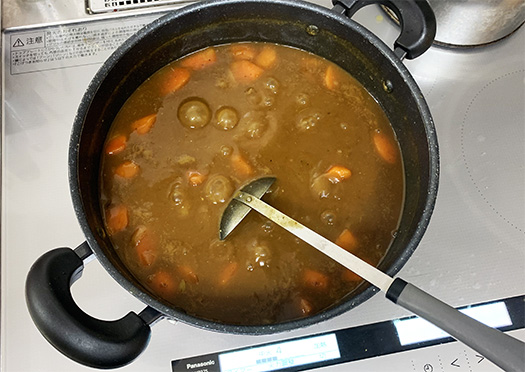
きょうは先週末に行ったニセコの道の駅の農家直売店で購入した
じゃがいも、タマネギ、ニンジン(これが巨大な太さ!)を使った次第。
とくにじゃがいものうまさは天下一品であります。
わたしの場合、じゃがは別に茹でてその煮汁はスープに使う。
で、料理を作りながら茹でただけのじゃがいもを味見する。
これがわずかな茹で塩の味だけで超美味なのであります。
う〜〜ん、北海道で生まれ育って感謝、なのであります(笑)。
やっぱり素材のうま味がカレーの交響楽の基本骨格。
今回はうま味役には牛肉を担当させることにしましてビーフカレー。

どうしてカレー作りが精神性ストレス解消に向いているのか。
まぁいろいろな推論が可能だろうとは思います。
作り慣れていて、手順への馴染みがハンパないので
そういった習慣的作業感が、手作業を通して人間回復感をもたらす?
どんな料理プロセスも手が基本でしょうが、
脳と手にはすごい相関関係があると科学番組でやっていたのを思い出す。

で、わたしは「主夫」的な性格のようで
自分で作った料理を自分で食べるのが楽しみ、ではないのですね不思議に。
だれかがおいしいと言って食べてくれる、
そのことの方が満足感が高い。
そういう意味では逆に「承認欲求」が強いタイプなのかも。
おとこの料理好きというのにはタイプがいろいろでしょうが・・・。
まぁしかし、実際に料理作るとストレスはスッキリとしてきて
また前向きになってくる自分を発見できます。
ことしもコロナ感染から控えめの過ごし方になりますが、
自然に親しんだり、食材を求めたり、楽しませていただきます。

English version⬇

[From today, heal your tiredness by making full-scale consecutive holidays curry]
Until yesterday, I was working on something that I couldn’t get rid of.
A little lack of sleep. So I fell asleep after 7 pm and got up at 2 pm.
I went to bed for 7 hours. Thanks to you, it was a resurrection.
So, after cleaning up, I started cooking.
Physical fatigue can be recovered by sleeping, but for stressful fatigue
I think each person has their own way of dealing with it.
In my case, it’s cooking, and curry is the best.
It is a habit to make it about once a week.
After making various dishes that week, stewed foods such as soups
Stock it in a bottle and take advantage of its umami.
I bought it today at a farmer’s shop at Niseko Road Station last weekend.
I used potatoes, onions and carrots (this is a huge thickness!).
Especially the deliciousness of potatoes is one of the best in the world.
In my case, I boil it separately from the potatoes and use the broth for the soup.
Then, while cooking, taste the potatoes that have just been boiled.
This is super delicious with only a slight boiled salt taste.
Hmmm, thank you for being born and raised in Hokkaido (laughs).
After all, the umami of the material is the basic skeleton of curry symphony.
This time, I decided to let the umami role take charge of beef, beef curry.

Why is curry making suitable for relieving mental stress?
Well, I think that various inferences are possible.
I’m used to making it, and I’m not familiar with the procedure
Does such a habitual work feeling bring a feeling of human recovery through manual work?
Any cooking process will be hand-based,
I remember doing a science show that there was a great correlation between the brain and the hands.

And I seem to have a “house husband” personality
I’m looking forward to eating my own food, isn’t it?
Someone says it’s delicious and eats it
That is more satisfying.
In that sense, on the contrary, it may be the type with a strong “need for approval”.
There are many types of men who like cooking, but …
Well, however, when I actually cook, the stress is refreshing.
You can also discover yourself becoming positive.
This is a modest way of spending from a corona infection,
We will entertain you by getting close to nature and seeking ingredients.

【海の京町家「伊根」の今昔写真】


さて連休の谷間ですが、ほぼ一晩中作業を行っていて、
ようやく午後2時になって、一段落付いた。
ということで、ブログ記事もまったく構想する時間がありませんでした。
なので、本日はやや骨休め、連休谷間篇であります。

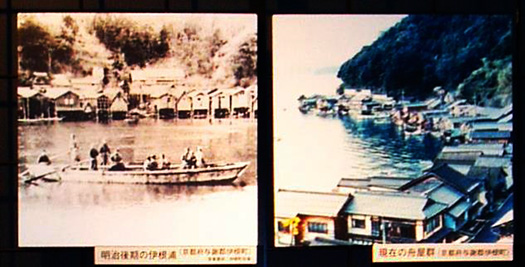
写真は以前に感動して取材記事をアップした「伊根」の古写真。
明治後期ということだそうであります。
天橋立にもほど近く、丹後国の国府も近くにあったとされる。
歴史年代を通して、京都との関係が深かったのか、
歴世、地侍層が割拠するような国柄だったとされて
織田家の版図拡大のために丹波と丹後の攻略に当たった
明智光秀・細川藤孝連合は相当に手を焼いていたとされる。
ただ、信長もこのあたりの支配しにくさは理解していたようで
なんとか支配を確立した光秀を激賞していたという説がある。
この伊根の様子は、各戸が水運と直結する家構えなので、
元来、自由に移動を本然とする人々が想像できる。
そういった人たちであってなお、京都の文化も波及している地域とすれば、
強権的支配には服したくない自由民というような印象も持つ。
さて、どういう歴史をこの地の人々は刻んできたのか、
海の京町家というものがどういうものだったか、探究心をくすぐられる。
瀬戸内海とも通じる、あるいは村上水軍的な姿も思い浮かぶ。

ということですが、やはり本日は疲れが溜まっているので、
またの機会に探究は繰り延べ。
明日以降、しっかり書き続けるので、きょうはここまで。

【コロナ禍 2度目のGWと北海道の自然】


本日から世間はゴールデンウィーク。
自粛にも、自粛強要に対しても疲労感が漂ってきて「うっせーわ」気分。
しかし他罰傾向を強めるメディアなどが醸し出す風向きに配慮も必要。
結果として行き場のないモヤモヤが個人個人に沈殿している・・・。
これこそが「ポストコロナの新常態」なのでしょうね。
最近、新聞はもちろんワイドショーなどのテレビも見ない人が増えている実感。
社会がこれまで経験したことのないこんな災禍であるのに
鬼の首を取りたい取りたいと騒ぎ立てる姿勢に反感が募っていると思う。

そういう環境の中ですが、それなりの工夫でみんな努力している。
テレワークの利点と困ったことも出そろってきて
再度見直しながら、仕事環境のベースを見直し続けております。
パソコンMacの常時整備、バックアップマシンの整備整頓。
通信環境の不断の管理メンテナンスなどは、インフラとしてきわめて重要。
Macの新チップ搭載マシンが特定の通信プロトコルと不整合しているなど
まったく経験したことのない環境ならではの問題点も露呈。
たぶん全国の中小企業でPC環境管理の仕事って、
今回のテレワーク拡大のなかでたくさんの問題が見えてきているでしょう。
身近なところでは、金融機関などとのメールやり取りで
個人情報セキュリティと、情報交換の利便性とでアナログの合理性を
かえって再認識させられるなど、面白い発見もありますね。
きのうはわざわざ「書類」をお届けくださったりした。
デジタル社会で瞬時に情報が飛び交うからこそ、
そのように扱わないことの重要性にも気付かされるところ。

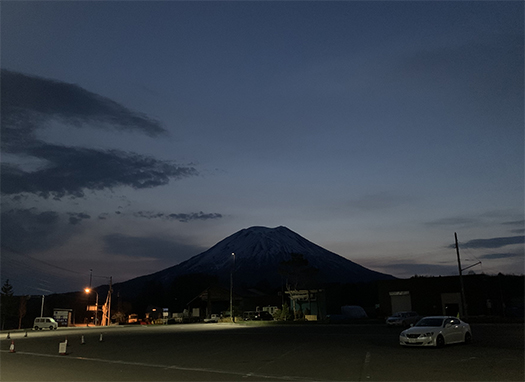
写真は夜明け前の北海道・羊蹄山。
大量輸送の鉄道ではJR北海道が2022年3月期は692億円の連結営業赤字。
まことに厳しい環境の中に追い込まれている。
しかしクルマの方は「密を避ける」のに合理的ということで
このGW連休でも主要な行楽の足になることは明らかでしょうね。
大量輸送と個別輸送のエネルギー効率と考えれば、まさに不都合な真実ですが、
まぁこれも現代社会が選択したことなのでしょう。
密を避けて、新緑が美しくなってきた北海道の自然に親しみたいと思います。

English version⬇

[Corona disaster second Golden Week and nature of Hokkaido]
From today, the world is Golden Week.
I feel tired from both self-restraint and self-restraint coercion, and I feel “usseewa”.
However, it is also necessary to consider the direction of the wind created by the media, which is becoming more punishable.
As a result, moyamoya with nowhere to go is settled in individuals.
This is probably the “new normal of post-corona”.
Recently, I feel that the number of people who do not watch TV such as wide shows as well as newspapers is increasing.
Even though it is such a disaster that society has never experienced
I think there is a lot of opposition to the attitude of making a fuss about wanting to take the demon’s neck.

In such an environment, everyone is making efforts with some ingenuity.
The advantages and problems of telework are also coming out
While reviewing again, we continue to review the base of the work environment.
Regular maintenance of PC Mac, maintenance of backup machine.
Continuous management and maintenance of the communication environment is extremely important as an infrastructure.
Machines with new Mac chips are inconsistent with certain communication protocols, etc.
It also reveals problems unique to an environment that has never been experienced.
Perhaps the work of PC environment management at small and medium-sized enterprises nationwide
Many problems will be revealed in this expansion of telework.
In familiar places, by exchanging emails with financial institutions, etc.
The rationality of analog with personal information security and convenience of information exchange
On the contrary, there are some interesting discoveries, such as being re-recognized.
Yesterday, I took the trouble to deliver “documents”.
Because information flies instantly in the digital society
I also realize the importance of not treating it that way.

The photo is Mt. Yotei, Hokkaido before dawn.
For mass-transportation railways, JR Hokkaido posted a consolidated operating deficit of 69.2 billion yen in the fiscal year ended March 2022.
We are in a really harsh environment.
However, the car is rational to “avoid denseness”
It will be clear that this Golden Week holiday will be the foot of major holidays.
Given the energy efficiency of mass and individual shipments, it’s just an inconvenient truth,
Well, this is probably the choice of modern society.
I would like to avoid the denseness and get close to the nature of Hokkaido, where the fresh greenery has become beautiful.

【囲炉裏端の「いごこち」デザイン】


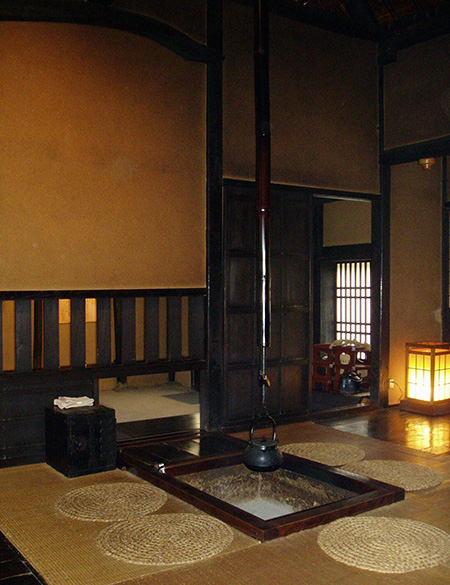
写真は宮城南部、白石の武家屋敷の囲炉裏風景であります。
外様の伊達藩でなお、白石という半独立的な地域にあっては、
武家住宅といっても土間が広大にあって、半農的な暮らしようだったと感じる。
この囲炉裏は土間に面してはいるけれど、
半分は囲われているようで、また太い木材で土間面境が仕切られていて
なんともいごこちに配慮されている。

板敷の居室だけれど、炉の周りには薄縁が敷き込まれ、
さらに座布団が4−5人分、置かれているので、
すぐにでも来客と囲炉裏火を囲んでの応接が可能なようにしつらえられている。
炉の木枠も使い込まれて照りがあって、なかなか引き込まれる。
囲炉裏を囲んで食事をするときには、この木枠が重宝する。
食卓の一部として活用出来るし、盃を置いて酒を飲むには好適。
囲炉裏火からの輻射熱がじんわりと酒を燗してくれるでしょう。
薪の温かみはなによりのご馳走として、人間関係の潤滑剤。
こんななかで気の置けない友と酌み交わすのは至福のいっとき。
要するにしぶとく「茶の間」シリーズを続けている(笑)。
囲炉裏火に掛けている自在鉤にはちょうど茶を入れて沸かしているよう。
急須の用途のようでもあり焼き物の薬缶と見えている。
座って寛ぐという日本人的コミュニケーションのひとつの究極形。
座位の場合、背中をもたせかける姿勢保持機能がない。
ふつうに考えれば長時間、その姿勢でいるのは疲れる。
しかし、囲炉裏端の場合、カラダの前面には好適な輻射熱源がある。
その快適性が背中側の不快感を忘れさせるほどに気持ちよかった。
家族の団らん時間は、基本的にこの囲炉裏端だったというのは納得できる。
確かに薪の囲炉裏火が最大の「求心性」であったことは自明。
外から帰ってくれば、自然にこの囲炉裏に家族は吸い寄せられ
この写真のように薬缶が下げられているので、
通常は「麦焦がし」のような茶が句読点として機能したか。

こういった光景を言語表現するのに「茶の間」としたのか。
そうすると、囲炉裏端という実際的機能名称とが一体だったはずだけれど、
現代に至る生活エネルギー革命によって、囲炉裏も姿を消して
行き場を失った「茶の間」というコトバは
テレビの司会者が民族的郷愁訴求のアイコンとして着目し、
「全国のお茶の間のみなさん」という定型句を編み出したのか。
不思議なニッポン生活文化の実相への想像だけれど、
ようやくひとつの「解」が見えてくる気がしています・・・。

English version⬇

[“Igokochi” design at the back of the hearth]
The photo shows the hearth of a samurai residence in Shiroishi, in the southern part of Miyagi.
In the semi-independent area of ​​Shiraishi, the Date feudal clan of Tozama
Even though it is a samurai house, there is a vast dirt floor, and I feel that it was like a semi-agricultural life.
Although this hearth faces the dirt floor,
It seems that half is surrounded, and the dirt floor is partitioned by thick wood.
It is very comfortable.

Although it is a living room with a plank, a thin edge is laid around the furnace,
In addition, there are cushions for 4-5 people, so
It is designed so that it is possible to receive guests and the hearth fire immediately.
The wooden frame of the furnace is also used and shining, and it is quite drawn in.
This wooden frame comes in handy when you eat around the hearth.
It can be used as a part of the dining table and is suitable for drinking sake with a sake cup.
The radiant heat from the hearth fire will slowly burn the sake.
The warmth of firewood is a treat for human relations.
It’s a blissful time to have a good time with a friend who doesn’t care about it.
In short, I’m continuing the “Living Room” series (laughs).
It seems that tea is just put in and boiled in the free hook that is hung on the hearth.
It seems to be used as a kettle and looks like a pottery kettle.
One of the ultimate forms of Japanese communication, sitting and relaxing.
In the sitting position, there is no posture holding function to lean back.
Generally speaking, it is tiring to stay in that position for a long time.
However, in the case of the hearth end, there is a suitable radiant heat source on the front of the body.
The comfort was so pleasant that I forgot the discomfort on the back side.
It is understandable that the family gathering time was basically at the hearth end.
It is self-evident that the firewood hearth was the greatest “centripetal”.
When you come back from the outside, your family will naturally be drawn to this hearth.
Since the kettle is lowered as shown in this photo,
Did tea like “barley charcoal” usually function as a punctuation mark?

Did you use “living room” to express such a scene in language?
Then, although it should have been integrated with the practical function name of the hearth end,
The hearth disappeared due to the modern life energy revolution
The word “living room” that lost its place
The TV presenter focused on it as an icon of ethnic nostalgia.
Did he come up with the phrase “everyone in the living room all over the country”?
It’s an imagination of the mysterious reality of Japanese life culture,
I feel like I can finally see one “solution” …

【茶の湯はるか以前、吉野ヶ里の「お茶の間」】


お茶の間探究その2であります(笑)。
住宅の機能仕分けによる「室名」に現代ではお茶の間が見当たらない。
そのわけを考えることは、日本人の住宅史で重要なのではと思う。

お茶の間というのは、ズバリ「囲炉裏空間」だという考え方がある。
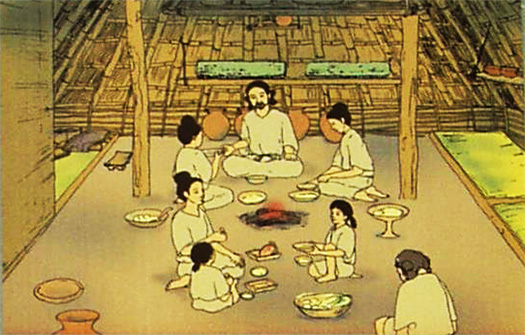
上のイラストは吉野ヶ里遺跡で見た上流「大人」〜たいじん〜の家の様子。
支配者側の家族の「竪穴住居」の復元図。
以下説明文。
「部屋の中央に炉があってその周りで食事をします。
奥には神棚やものを置く棚があり、部屋の両脇は床の一段高い寝間で
葦簀(ヨシズ)が下がっています。食器は上質の木器を使います。
炉の上には火棚があって、燻製などを作ります。」
吉野ヶ里は年代的にはAD2世紀〜3世紀だったので、
「クニ」の原型とされている。縄文期が終わって弥生の暮らしが
本格化してきた生活文化・歴史痕跡とされている。
床面は土間で、土座暮らしである様子がわかる。
ヨシズが下がっているとされるけれど敷物として敷かれているのではないか?
ちょっと面白いのは「奥には神棚やものを置く棚」というもの。
神棚というのは、あるいはこの時代から神道が意識されていたか?
弥生の時代にあった宗教性というものには興味を惹かれる。
縄文の世であれば、土偶などの土俗性が薫るけれど、
さて全国で一般的な地域開拓神「八百万」が祀られていたか?
さらにやがて「床の間」という空間に至る「格別の場所」という
室内での最高空間意識があったと思われる。
そういえば、アイヌチセにもこのような棚と神聖空間が同様に見られる。
あちらではクマの頭蓋骨などが飾られていたりするけれど、
熊送りという宗教性が室内空間の重要要素になっていた。
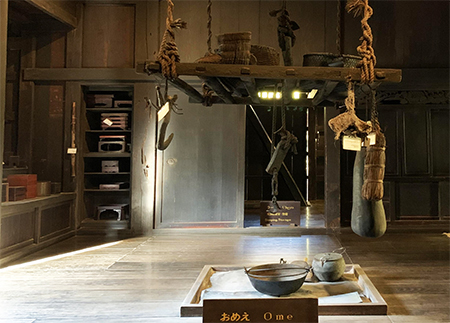
一方、下の写真は江戸中期の山形県古民家の囲炉裏端の様子。
18-19世紀ということで1,700-1,800年の時代の遷移があるけれど、
吉野ヶ里のイラストとほぼ似通ったライフスタイルが展開している。
奥の収納部分には立派な木製の膳部が収められているし、
左手には食器に関係する収納が見られている。
そして囲炉裏空間はまことに一家団欒装置であることがわかる。
この時代にはすでに茶の湯は文化として成立しているし、
食事に随伴して喫茶という習慣もあっただろう。
吉野ヶ里にせよ、江戸期山形にせよ、
どちらも「お茶の間」と呼んでふさわしいような空間があると思える。
というか、囲炉裏は人類普遍的にお茶の間であったのだろう。

しかし古民家では「お茶の間」という室名は見当たらない。
きのうこのテーマで書いたら、読者のNさんから、
「集合住宅においてDKやLDKが茶の間にとって代わり、戸建住宅でもその傾向が
続いているものと思う。賃貸も含めて商品としての住宅で「茶の間」という語の持つ
日常感よりも居間・リビングルームという「60年代の米ホームドラマに見る
良きアメリカ的なもの」という語感が勝ったということでは?」とのご意見。
ある意味では正しいだろうなと思えるのですが、
やはり茶の湯と茶室、茶の間、その連関性は奥が深そう・・・。

English version⬇

[Before the tea ceremony, Yoshinogari’s “living room”]
This is part 2 of the Ochanoma quest (laughs).
In modern times, there is no living room in the “room name” based on the functional sorting of houses.
I think it is important to think about that in the history of Japanese housing.

There is an idea that the living room is a “hearth space”.
The illustration above shows the house of the upstream “adult” -Taijin- seen at the Yoshinogari ruins.
A restored map of the “pit-house” of the ruler’s family.
The explanation below.
“There is a furnace in the center of the room and we eat around it.
There is a Kamidana and a shelf to put things in the back, and both sides of the room are sleeping on the floor higher.
The reeds (Yoshizu) are down. Tableware uses high-quality wooden utensils.
There is a fire shelf above the furnace to make smoked foods. ”
Yoshinogari was in the 2nd to 3rd centuries AD, so
It is said to be the prototype of “Kuni”. Yayoi’s life is over after the Jomon period
It is said to be a lifestyle culture that has become full-scale.
The floor is a dirt floor, and you can see how it is living in a clay seat.
It is said that Yoshizu is down, but isn’t it laid as a rug?
A little interesting thing is “a shelf to put things and things in the back”.
Was Shinto conscious of Shinto from this era?
I am fascinated by the religious nature of Yayoi’s time.
In the Jomon period, clay figurines and other earthly qualities are fragrant.
By the way, was “8 million” called Jinushigami enshrined?
And eventually it is a special place that leads to the space called “Tokonoma”
It seems that there was such a spatial consciousness.
By the way, such shelves and sacred spaces can be seen in Ainu Chise as well.
There are bear skulls and so on, but
The religious nature of bear feeding was an important element of the indoor space.
On the other hand, the photo below shows the hearth of an old folk house in Yamagata prefecture in the middle of the Edo period.
There is a transition of 1,700-1,800 years in the 18th and 19th centuries,
A lifestyle that is almost similar to the illustration by Yoshinogari is developing.
The storage part in the back contains a fine wooden set, and
Storage related to tableware can be seen on the left.
And it turns out that the hearth space is really a family-friendly device.
Tea ceremony was already established as a culture in this era,
There would have been a habit of having a coffee shop with meals.
Whether it’s Yoshinogari or Yamagata during the Edo period,
Both of them seem to have a space suitable for calling them “living room”.
Rather, the hearth was probably the living room for all humankind.

However, in an old folk house, the room name “Ochanoma” is not found.
When I wrote on this theme yesterday, from reader N
“DK and LDK have replaced the living room in apartment houses, and this tendency is also the case in detached houses.
I think it continues. The word “living room” has in housing as a product, including rental
Living room / living room rather than everyday feeling “see in the US home drama of the 1960s
Does that mean that the word “good American” has won? Opinion.
I think it’s correct in a sense,
After all, the connection between the tea ceremony, the tea room, and the tea ceremony seems to be deep.

【間取り図に出てこない茶の間という建築空間】


先日まで日本の古民家空間に残る床の間の原型「押板」から
日本的芸術コミュニケーションの場としての意味合いを考えた。
中世社会がこのような「寄り合い」の場のなかで
人間交流の結果として、その媒介に「茶」を選択し、
またその波及として「華道」空間としての床の間を生成したのではと
推論を発展させてきた。
禅宗と深く関わるカタチで茶道が広く普及していって
たぶんビジネス的ホンネ密談という実質価値もあって
茶室という稀有な空間性を日本社会は生み出してきた。
そしてさらに日本の民家空間におかしな空間名称として
「お茶の間」というコトバが生起してきている。
わたしも住宅雑誌人として数多くの「間取り図」を見ているけれど
明確に「茶の間」と書かれた空間名称はあまり記憶にない。
ふつうは居間とかリビング、古民家では「デイ」とか「ジョイ」と呼ばれる空間で
囲炉裏がそこに切られている居室はたくさん見るけれど。
現代住宅ではエネルギー革命が進行して調理火力には
ガスが普及し電気も使われるようになった。
従って人類創成期からの調理火力・薪は役割が減衰してきている。
いずれにせよ、食事と家族団欒の場には「茶」が主役ではなかったはずだ。
それなのにテレビの司会の常套句で「お茶の間のみなさん」とか、
あたかも普遍的ニッポン人すべてがそこにいるように連呼する。

茶の間が茶室を意味するのであれば、わが家には茶の間はない。
たぶん多数派の日本人の家にもないだろう。
というよりも形式とか、家元制度で重厚に自己武装している
「茶道」の決め事強制には辟易する方が多い。
茶筅をどうする、どう扱うとか、どう茶を飲むかとか、
「うっせーわ」と思う日本人は多いに違いない。
そんな「作法」に従わなくてもふつうに茶を飲むことはできる。
ああした作法の強制は、家元制度に重々しさを加えることが目的だと
多くの人間がただしく気付いているのではと思う。
たぶん草創期からの茶、その喫茶においては寄り合う楽しさ、
そこでさまざまに話題が盛り上がる様子に多くの人が吸い寄せられたに違いない。
その句読点として喫茶は非常に重要な役割ではあったのではないか。
いつしか茶を喫することがコミュニケーションの活性を表現するようになった。
そしてその最たるものとして家族関係が表徴されることになって
「茶の間」=家族コミュニケーションの最適空間と置換されたか。

だから、囲炉裏のある空間がイメージのなかで
茶の間とされて、事実家族も食事後、茶を飲むことが普遍的だったのではないか。
「お茶の間のみなさん」とは、「家でくつろいでいるみなさん」という
言い換えのコトバが習慣化したものであるように思う。
住宅雑誌編集人としての実感なのですが、さていかがでしょうか?

English version⬇

[Architectural space called the living room that does not appear on the floor plan]
From the prototype “Oshiban” between the alcove that remains in the old Japanese folk house space until the other day
I thought about the meaning as a place for Japanese art communication.
In such a place where medieval society is “close”
As a result of human interaction, select “tea” as the medium,
Also, as a ripple effect, it may have created a tokonoma as a “flower arrangement” space.
Has developed reasoning.
Tea ceremony has become widespread because of its deep connection with Zen Buddhism.
Maybe there is also the real value of a business-oriented secret talk
Japanese society has created a rare space called a tea room.
And as a strange space name in Japanese private house space
A word called “living room” is emerging.
As a housing magazine person, I also see many “floor plans”
I don’t remember much of the space name clearly written as “living room”.
Usually in the living room or living room, or in a space called “day” or “joy” in an old folk house.
I see many rooms with a hearth cut there.
In modern houses, the energy revolution is progressing and cooking firepower
Gas has become widespread and electricity has come to be used.
Therefore, the role of cooking firepower and firewood from the early days of humankind is declining.
In any case, “tea” should not have been the main character in the place of meals and family gatherings.
Even so, the TV moderator’s idiom is “everyone in the living room.”
Call as if all the universal Japanese were there.

If the living room means a tea room, there is no living room in our house.
Probably not even in the majority Japanese homes.
Rather, it is heavily self-armed by the form or the Iemoto system.
There are many people who are tired of forcing the decision of “tea ceremony”.
What to do with chasen, how to handle it, how to drink tea,
There must be many Japanese who think “Usseewa”.
You can usually drink tea without following such a “method”.
The purpose of the enforcement of such a manner is to add weight to the Iemoto system.
I think many people are aware of it.
Maybe tea from the early days, the fun of getting close to each other at the coffee shop,
Many people must have been attracted to the various topics that have been raised there.
I think the coffee shop played a very important role as a punctuation mark.
Someday, having tea has come to express the activity of communication.
And the most important thing is that family relationships will be expressed.
Was it replaced with the “living room” = the optimal space for family communication?

Therefore, the space with the hearth is in the image.
It was said that it was a living room, and in fact it was universal for families to drink tea after meals.
“Everyone in the living room” means “everyone relaxing at home”
In other words, I think that Kotoba has become a habit.
I have a feeling as an editor of a housing magazine, but how about it?