本文へジャンプ

【涅槃と地獄の往還 日本初の寺・飛鳥寺-6】


かつては広大な伽藍を誇っていたとされる飛鳥寺。
創建時の施主である蘇我氏の滅亡と共に歴史の中心から離れていった。
しかし断片的な情報からはいろいろな示唆が得られ面白い。
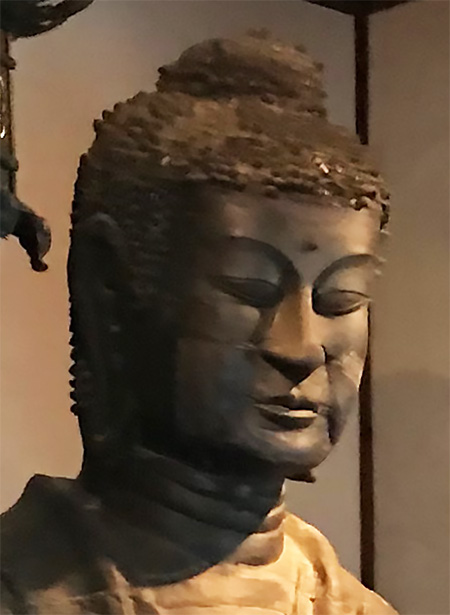
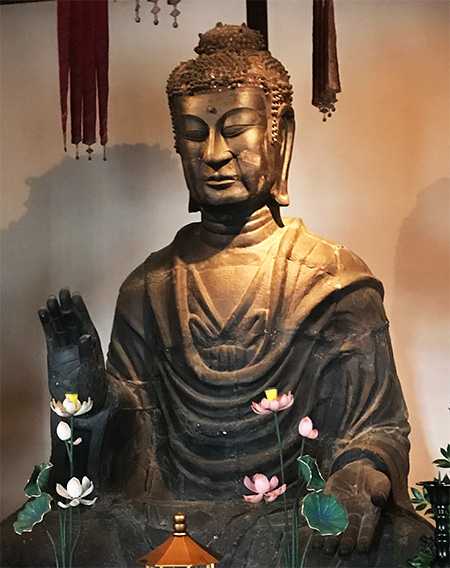
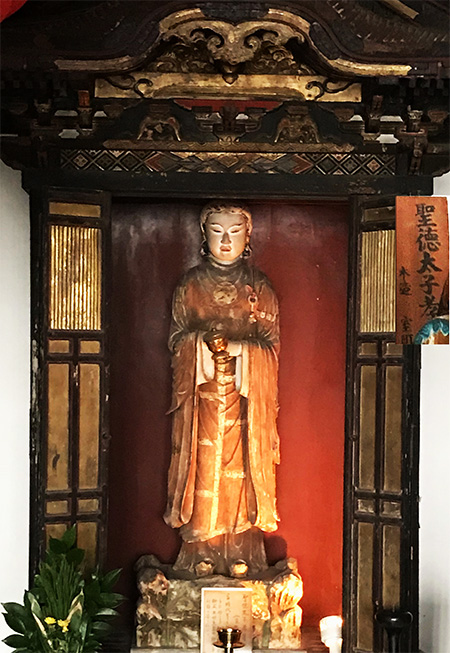
写真の上は「聖徳太子孝養像」と名のある厨子に収められた立像。
16歳のときの太子が親の用明天皇の病気平癒を祈った立像とされる。
紅顔の美少年ふうで女子には胸キュンなのかもしれない(笑)。
聖徳太子という人物は日本史の中で格別の地位を占めている。
皇位というのはさまざまな政治的思惑がからんで決定されたものなので、
摂政として政治を裁断した人物でありながら自らは天皇にはならなかった。
為政者・政治家としてその後の日本史に
かなり決定的な要因となった仏教導入期を先導した象徴として
ながく尊崇を集めてきたということなのでしょうか。
かれ自身がある種の神格化の対象になったのでしょう。
こういう立像が飛鳥寺に残されているということは
蘇我氏との深いつながりを物語っているのでしょう。

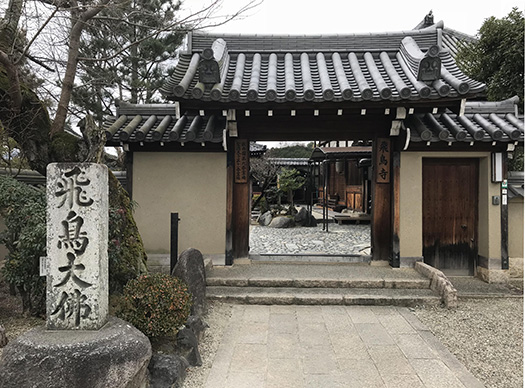
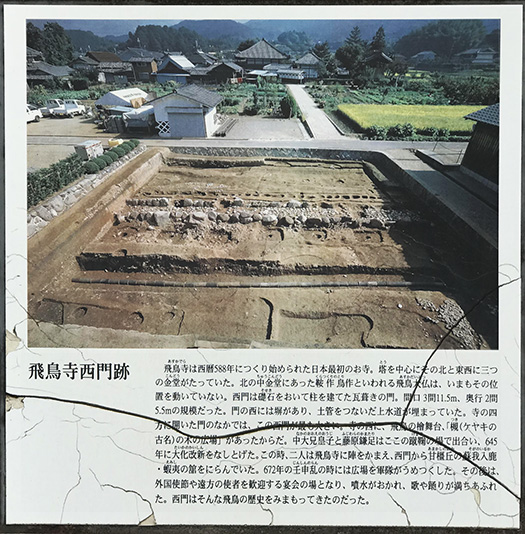
一方で下の写真は、現在の金堂中心の寺域から離れた
「西門跡」に置かれた銘板です。興味深い事実もあったので以下記載。
〜飛鳥寺は西暦588年につくり始められた日本最初の寺。塔を中心に
東西に3つの金堂が建っていた。(中略)寺の西側には飛鳥の檜舞台
「欅(ケヤキ)の木の広場」があった。中大兄皇子と藤原鎌足はここでの
蹴鞠の会で出会って645年の乙巳の変・大化の改新を成し遂げた。
このとき2人は飛鳥寺に陣を構え、西門から甘樫丘の蘇我氏をにらんでいた。
672年の壬申の乱の時には広場を軍隊が埋め尽くしていた。
その後も外国や遠方からの使者を歓迎する宴会の場となり、
噴水が置かれ、歌や踊りが満ちあふれた。飛鳥の歴史舞台。〜
宗教施設というのは回りを塀で囲み、場合によっては壕なども巡らす。
吉野ヶ里の時代でも逆茂木が巡らされた結界内部に広大な領域があるように
寺域という広大空間はしばしば「城郭化」しやすかった。
平和な時期には宗教空間であり、戦時には城郭に使われる。
そういう意味で「日本最初の寺」もそのように利用されたことは示唆的。
片方で涅槃を語り、一方では地獄の修羅も受容する、
宗教と権力の関係を深く教えてくれる気がします。

English version⬇

[Nirvana and hell going back and forth: Japan’s first temple, Asuka-dera-6]
Asuka-dera must have once boasted a vast cathedral.
With the destruction of the founding owner, the Soga clan, he moved away from the center of history.
However, it is interesting to get various suggestions from the fragmentary information.
Above the photo is a statue housed in a kitchen named “Prince Shotoku Takayo Statue”.
It is said that the prince at the age of 16 prayed for the healing of his parents, Emperor Yōmei’s illness.
It may be like a beautiful boy with a red face, and it may be heart-pounding for girls (laughs).
Prince Shotoku occupies a special position in Japanese history.
Since the throne was decided by various political speculations,
Although he was a regent who cut politics, he did not become an emperor himself.
In the subsequent history of Japan as a politician and politician
As a symbol that led the introduction of Buddhism, which became a very decisive factor
Does it mean that he has been revered for a long time?
He would have been the subject of some sort of deification himself.
The fact that such a statue is left at Asuka-dera
It probably shows a deep connection with Mr. Soga.

On the other hand, the photo below is far from the current temple area in the center of the main hall.
It is a name plate placed on the “West Gate Ruins”. There were some interesting facts, so I will describe them below.
~ Asuka-dera is the first temple in Japan that was built in 588 AD. Centering on the tower
There were three Kondo in the east and west. (Omitted) Asuka’s cypress stage is on the west side of the temple
There was a “zelkova tree open space”. The middle and big brother Prince and Fujiwara no Kamatari are here
I met at the Kemari no Kai and achieved the transformation and Taika Reform of Otomi in 645.
At this time, the two of them set up a camp at Asuka-dera and were looking at Mr. Soga of Amakashi-no-oka from the west gate.
At the time of the Jinshin War in 672, the square was filled with troops.
After that, it became a banquet place to welcome messengers from foreign countries and distant places.
A fountain was set up and filled with songs and dances. Asuka’s historical stage. ~
Religious facilities are surrounded by walls, and in some cases, moats are also laid out.
Even in the Yoshinogari era, there seems to be a vast area inside the barrier where the abatis trees were laid.
The vast space of the temple area was often easy to “castle”.
It is a religious space during peaceful times and is used as a castle during wartime.
In that sense, it is suggestive that “Japan’s first temple” was also used in that way.
One talks about Nirvana, and the other accepts Hell’s Shura.
I feel that it teaches me the relationship between religion and power.

【仏教と建築デザインの導入路 日本初の寺・飛鳥寺-5】


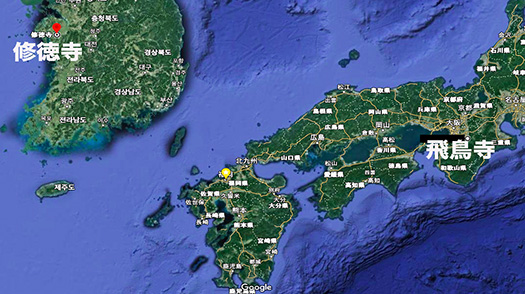
韓国・修徳寺創建は384年。
そこを起点として日本に仏教が導入され、飛鳥寺創建587年。
四天王寺創建593年、そして法隆寺創建は605年と考えられている。
この時期の日本は仏教導入期として矢継ぎ早にこれら寺院が建設されている。
きのうも書きましたが、日本最古の「工務店」金剛組が現代にも存続している。
この金剛組は四天王寺建築に際して朝鮮・韓国から渡来した。
「組」という総合技術企業の表現にふさわしい名前も導入されたのかも知れない。
十分に漢字も導入されていない時代にあって、金剛という名も
なにがしかの消息を現代にまで伝えているのかも知れません。
剛い金属のように強靱な建築を建てますよ、というメッセージは示唆的。
日本には縄文時代の三内丸山から弥生の吉野ヶ里、
そして歴史年代の出雲大社神殿などを造営する「木造技術」が存在した。
列島内で活発にそれらが交流を重ねていたことは間違いがない。
時代をやや下って奈良期には首都建設のために国内諸国が応分の
負担をしたけれど飛騨国は経済基盤に乏しく、首都造営の人足・技術者を供出した。
かれらが現場工事を始めたらたちまちに「飛騨の匠」の評価が定まったとされる。
木の国である飛騨国において木造建築技術が発展していたことが歴史で確認できる。

そういった基盤があった日本社会に仏教という、政治統治上も有用で
「鎮護国家」思想として統一権力を列島に根付かせる役割を担った宗教が
大陸・半島から日本社会に一気に導入された。
構造という部分ではすでに高層な出雲神殿を作る技術力は存在した。
しかし仏教建築としてのデザイン面では「見たこともない」ものだったろう。
なんといっても重量物である瓦をびっしりと屋根に敷き並べて
いかにも「これが権威だ」みたいな主張を建築として表現している。
日本ではあまり採用されなかったけれど、基壇として床上げが重厚に施されている。
屋根端部は反りを見せて跳ね上がるほどに仕上げられていて
男性がひげを反り返らせて威張るのに似た雰囲気のようでもある。
(この反りの加減はより強い中国建築と比べて日本は緩やか目)
そして内部ではなるべく大空間ができるように架構に工夫がされている。
なにより建築の用途として特定の思想を表現するという
人間生活の営為とは違う建築目的の驚きが技術者達にはあっただろう。
「本尊」という建築と随伴した彫刻工芸技術が目的の核心にある、
という建築営為のまったく新奇性もまたかれらを刺激した。
そしてその建築群がまるでラッシュのように公共工事として発注され
その工事に朝鮮韓国からまで職人たちが結集してきた。
未曾有の工事ラッシュの中で、建築技術的にも相当の進化が相互に促進された。
先述の「飛騨の匠」という尊称はこうした競争の勝利者へのリスペクトかも。
こういった建築技術者たちの切磋琢磨が次の時代の東大寺、
そして全国の「国分寺・国分尼寺」建設へと引き継がれて
列島全域に高度な建築技術が普及していったのだろうことも論を待たない。

English version⬇

[Introduction route for Buddhism and architectural design: Japan’s first temple, Asuka-dera-5]
Sudeoksa Temple was founded in 384 years in South Korea.
Buddhism was introduced to Japan from that point, and Asuka-dera was founded in 587.
It is believed that Shitennoji was founded in 593, and Horyuji was founded in 605.
In Japan during this period, these temples were built in rapid succession as the introduction of Buddhism.
As I wrote yesterday, Japan’s oldest “construction shop” Kongo Gumi still exists today.
This Kongo Gumi came from Korea and South Korea for the construction of Shitennoji Temple.
It may be that a name suitable for the expression of a comprehensive technology company called “gumi” was also introduced.
In an era when Chinese characters were not fully introduced, the name Kongo was also known.
It may be telling some news to the present day.
The message that we will build a building that is as strong as hard metal is suggestive.
In Japan, from Sannai Maruyama in the Jomon period to Yoshinogari in Yayoi,
And there was “wooden technology” to build the Izumo Taisha shrine in the historical period.
There is no doubt that they were actively interacting within the archipelago.
A little later in the era, domestic countries are appropriate for the construction of the capital in the Nara period.
Although it was a burden, Hida Province lacked an economic base and provided human resources and engineers for the construction of the capital.
It is said that the evaluation of “Hida Takumi” was decided as soon as they started the on-site construction.
It can be confirmed in history that wooden construction technology was developed in Hida, a country of wood.

Buddhism in Japanese society, which had such a foundation, is also useful for political governance.
A religion that played a role in rooting unified power in the archipelago as a “guardian state” idea
It was introduced into Japanese society from the continent and peninsula at once.
In terms of structure, there was already the technical ability to build a high-rise Izumo temple.
However, in terms of design as Buddhist architecture, it must have been “never seen”.
After all, heavy roof tiles are lined up on the roof.
It expresses the claim that “this is authority” as architecture.
Although it was not widely adopted in Japan, the floor is heavily raised as a base.
The roof edge is finished so that it shows warpage and jumps up
It’s also like a man’s beard curling up and intimidating.
(This warp is moderate in Japan compared to stronger Chinese architecture)
And the frame is devised so that as large a space as possible can be created inside.
Above all, expressing a specific idea as an architectural use
Engineers would have been surprised that the purpose of construction was different from the basic activities of human life.
At the core of the purpose is the sculpture craft technique that accompanies the architecture of “honzon”.
The total novelty of the building business would have stimulated them.
And the buildings were ordered as public works like a rush
Craftsmen from Korea and South Korea have gathered for the construction.
In the unprecedented construction rush, considerable evolution in building technology was mutually promoted.
The honorific title of “Takumi Hida” mentioned above may be a respect for the winner of such competition.
The competition between these building engineers will be the next era of Todaiji Temple.
And it was taken over to the construction of “Kokubunji / Kokubunnanji” nationwide.
It is no wonder that advanced building technology has spread throughout the archipelago.

【韓国修徳寺と建築技術伝承 日本初の寺・飛鳥寺-4】


初期の仏教建築を見ると大陸・半島社会との積極的な交流が浮かんでくる。
以前のブログでも韓国・仏国寺や法隆寺を研究してみたけれど、
この飛鳥寺建立に際しても東アジア世界の交流が見えてくる。
すでに飛鳥寺が韓国・修徳寺と姉妹寺院・盟約宣言していると
既報しましたが、日本に仏教が伝わった最初期には韓国百済との交流が
当然ながらかなり決定的な要因としてあったことが偲ばれる。

建築のことを考えると、この飛鳥寺の創建は587年であり、
一方の修徳寺創建は384年9月の百済国への仏教伝来と同時とされる。
この間で200年ほどの推移がある。この歴史時間で百済国と蘇我氏の
「外交関係」がかなり重篤な意味合いを持っていたと推定させる。
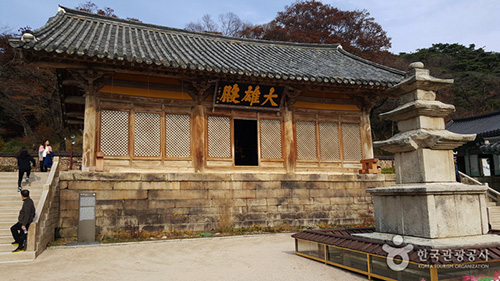
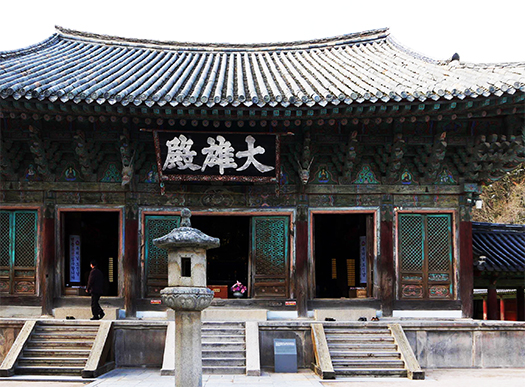
上の写真が韓国・修徳寺の国宝建築「大雄殿」。
この建築自体は1308年に建築とされているけれど、
その時点でもマザーの主体建築が存在し、その歴史にリスペクトして
建築計画されるに違いないと考えれば、それはデザイン的には
創建時以来の「建築思想」を反映したものだったと想像できる。
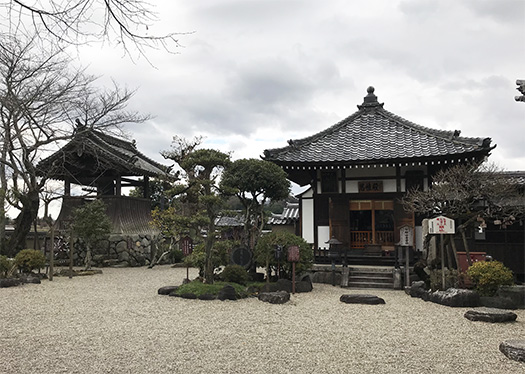
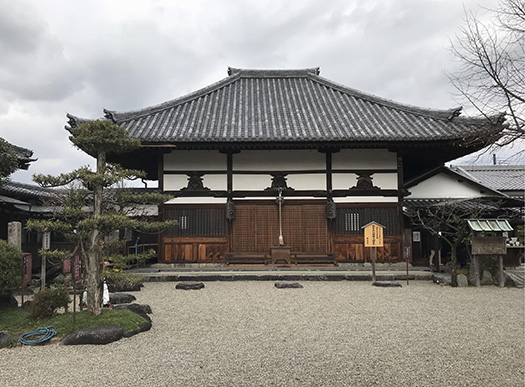
日本の飛鳥寺の「金堂」が下の写真だけれど、
飛鳥寺も何度も再建築を繰り返してきたことも合わせて考えれば
そのような対比類推を考えても一定の意味合いはあると思われる。
韓国修徳寺の建立に際しては、当時インドから高僧が迎えられた。
そして飛鳥寺の創建に際しては、百済から高僧・仏像・経文、そして
「技術者」が派遣されたと伝承されている。
四天王寺(創建593年)の建設に際しては現代に残る日本最古の工務店、
金剛組が韓国から日本に来朝し根付いたという歴史がある。
飛鳥寺と四天王寺はたった6年しか創建年代に違いがないので
このような「技術者」交流がごく自然な理解として成立する。
日本古来の神殿建築、神社の初期形式を見れば、たぶん瓦という文化が
もっとも重要な変容ファクターとしてあったのではないかと想像できる。
重量物の長期荷重に耐えうる建築であって内部空間に
広大な空間を保持できる建築工法が導入されていったに違いない。

一方で今日われわれは「高断熱高気密」住宅革新と同時代を生きているが、
様相はまったく違っても、この仏教伝来期の建築革命もまた、
同じような熱気を孕んでいたに違いないと考えています。
仏教伝来期には東アジアが技術移転発祥地であり、
現代は北欧・北米、在地化した先進地域としての北海道という対比。
個人的にこういう技術交流の痕跡を探究したいと思う着眼ポイント。

余談ながら、この写真は仏国寺の「大雄殿」建築。
修徳寺でも同様の名称が付けられていることに気付かされた。
いろいろなディテールの痕跡から想像力が刺激されてきて
深みにハマっていく危険な予感がヒシヒシと感じられます(笑)。

English version⬇

[Korean Sudeoksa Temple and Architectural Technology Tradition: Japan’s First Temple, Asukadera-3]
Looking at the early Buddhist architecture, we can see positive exchanges with continental and peninsular societies.
I also studied Bulguksa Temple and Horyuji Temple in Korea in my previous blog,
The exchanges of the East Asian world can be seen when the Asuka-dera Temple is built.
Asuka-dera has already declared a sister temple / agreement with Sudeoksa in South Korea
As previously reported, at the earliest time when Buddhism was introduced to Japan, there was an exchange with Baekje, South Korea.
Of course, it is remembered that it was a very decisive factor.

Considering the architecture, this Asuka-dera temple was founded in 587.
On the other hand, the construction of Sudeoksa Temple is said to be the same as the introduction of Buddhism to Baekje in September 384.
During this period, there has been a transition of about 200 years. In this historical time, Baekje country and Mr. Soga
It is presumed that “diplomatic relations” had a very serious meaning.
The photo above is the national treasure building “Daioden” in Sudeoksa Temple, South Korea.
This building itself is said to have been built in 1308,
Even at that time, the mother’s main architecture still existed, and I respected its history.
Given that it must be an architectural plan, it is design-wise
It can be imagined that it reflected the “architectural thought” since its foundation.
The photo below shows the “Kondo” at Asuka Temple in Japan.
Considering that Asuka-dera has been rebuilt many times.
Considering such a comparative analogy, it seems that there is a certain meaning.
A high priest was welcomed from India at the time of the construction of Sudeoksa Temple in South Korea.
And when the Asuka-dera was built, from Baekje to high priests, Buddhist statues, sutras, and so on.
It is said that “engineers” were dispatched.
The oldest construction shop in Japan that remains today when the Shitennoji Temple (founded 593) was built.
There is a history that Kongo Gumi came to Japan from Korea and took root.
Asuka-dera and Shitenno-ji are only 6 years old, so there is a difference in the age of their construction.
This kind of “engineer” exchange is established as a very natural understanding.
If you look at the ancient Japanese temple architecture and the early form of the shrine, you can probably see the culture of roof tiles.
I can imagine that it was the most important transformation factor.
The building can withstand the long-term load of heavy objects and is used in the interior space.
A construction method that can maintain a vast space must have been introduced.

On the other hand, today we are living in the same era as “highly insulated and airtight” housing innovation,
Although the appearance is completely different, this architectural revolution in the Buddhist period is also
I think he must have had the same kind of heat.
East Asia was the birthplace of technology transfer during the Buddhist tradition
In contrast to Northern Europe / North America and Hokkaido as a localized advanced region.
The point of view that I personally want to explore the traces of such technical exchanges.

As an aside, this photo is the “Daioden” architecture of Bulguksa Temple.
It was noticed that Sudeoksa had a similar name.
Imagination has been stimulated by the traces of various details
I feel a dangerous premonition that I’m addicted to the depths (laughs).

【蘇我氏による大伽藍 日本最初期寺院・飛鳥寺-3】


古代史での飛鳥寺の存在というのは非常にセンシティブ。
大化の改新・乙巳の変以前の実質権力中心は蘇我氏であったことは
疑いがなく、その積極的な仏教導入策が国家方針となっていた。
当然、天皇権力もそれを支持したり追認したりだっただろうから、
蘇我氏を滅亡させた後も、飛鳥寺自体は存立し続けていた。
ただ、飛鳥寺はより蘇我氏色が強かったので摩擦は大きかった、
そんなふうに理解出来るのではないかと思います。
法隆寺のように完全に「国家施設」としての存立基盤ではなかった。
写真上は飛鳥大仏が鎮座する「金堂」から「西金堂」方向をみたもの。
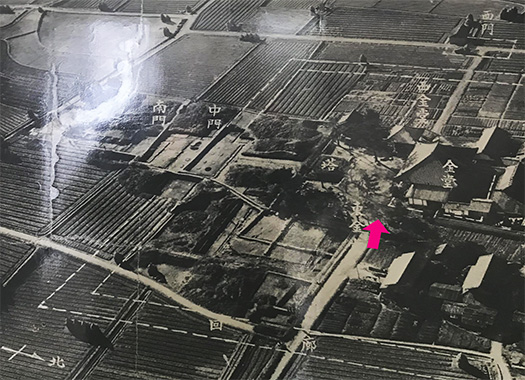
下の航空写真は飛鳥寺の説明掲額の一部で伽藍配置をあらわすもの。
現在は伽藍内部も農地になっていたりする。
いわゆる国家としての保護がなされてこなかったことがわかる。
王権にとっては鎮護国家という大方針に沿って
国策として仏教導入を進めていくのに、この時代までの
仏教導入の先覚者である蘇我氏からヘゲモニーを奪取するのが、
乙巳の変だったというようにも理解出来るのでしょう。
きのう書いたわたしの敬愛する鞍作止利さんの飛鳥大仏が
何度かの火災などに見舞われたのは、そういう経緯が与っていたのでしょう。

しかしこういう経緯の寺院がそれでも存続し続けていることが
ある意味では非常に面白く、日本的なものを感じさせてもくれる。
権力中心であったものがやがて鄙びていく様子が、
ある種のやすらかさを訴えてくるとも思えるのですね。
たしかに法隆寺のような歴世、尊崇を集め続け権力の保護も
強くイメージさせる存在も貴重だけれど、
こういった存在もまた現代にまで生き延びてきているのは、
平和な国の象徴のようでもあって心が安らぐ。
いま飛鳥寺にはむしろ鄙の空気感が漂っていて
きのう書いたような個人としての鞍作止利さんの生きた証まで
すぐに身近なモノとして存在感があるのだと思うのです。
すぐ近くの石舞台には物言わぬ墳墓施設という感じを受けるけれど
こちらでは鄙の安堵感に包まれた人跡という雰囲気が薫っている。
古寺巡礼的な建築探訪、年齢と共に深まってくる興趣がありますね。

English version⬇

[Great Sangharama by Mr. Soga, Japan’s earliest temple, Asuka-dera-3]
The existence of Asuka-dera in ancient history is very sensitive.
Before the Taika Reform and Isshi Incident, the real power center was Mr. Soga.
There was no doubt that the aggressive policy of introducing Buddhism was the national policy.
Of course, the emperor’s power would have supported or confirmed it, too.
Even after the destruction of Mr. Soga, Asuka-dera itself continued to exist.
However, the friction was great because Asuka-dera had a stronger Soga color.
I think you can understand it like that.
It was not a complete foundation of existence as a “national facility” like Horyuji Temple.
The photo above shows the direction from “Kondo” where Asuka Daibutsu is enshrined to “Nishi Kondo”.
The aerial photograph below is a part of the explanation posted at Asuka-dera Temple and shows the arrangement of the cathedral.
Currently, the inside of the cathedral is also a farmland.
It can be seen that the protection as a so-called nation has not been made.
In line with the big policy of a guardian state for the kingship
Until this era, to promote the introduction of Buddhism as a national policy
Taking the hegemony from Mr. Soga, a pioneer of the introduction of Buddhism,
You can understand that it was a strange thing about Otomi.
The Asuka Daibutsu of my beloved Tori Busshi, who I wrote yesterday
That’s probably the reason why I was hit by several fires.

However, the fact that the temple with such a background still exists
In a sense, it’s very interesting and makes me feel Japanese.
It seems that what was centered on power will eventually crawl.
It seems that it appeals for some kind of ease.
Certainly, it continues to gather reverence and protection of power like Horyuji Temple.
The existence that makes you have a strong image is also valuable,
It is that these beings have survived to the present day.
It seems to be a symbol of a peaceful country, so it makes me feel at ease.
At Asuka-dera, there is a feeling of redneck.
Tori Busshi’s living proof as an individual as I wrote yesterday
I think that it immediately has a presence as a familiar item.
The stone stage nearby feels like a silent tomb facility,
Here, the atmosphere of a human being surrounded by the relief of the countryside is fragrant.
There is a pilgrimage to old temples, and there is an interest that deepens with age.

【大仏と仏師・鞍作止利 日本最初期寺院・飛鳥寺-2】


「鞍作止利」という名前は古代日本史のなかで深くこだましている。
小学校の時に専門は美術の先生だった担任の先生から教えられ
現存する飛鳥寺や法隆寺でかれが造形した仏像を知り、その名を
記憶に留めたとき、一種の崇高な残響が伝わっていた記憶が強く残っている。
くらつくりのとり、という一種諧謔性もありそうな名前だけれど、
古代の人名の特徴が良く現れていて、深く親近感を持った。
なにか、個性がそのまま名前に刻印されていると感じるのですね。
そのひとの実際の造形仏をこの飛鳥寺で「飛鳥大仏」として見たとき、
その人となりがイメージの中でいかにもピッタリと符合した。
教科書でこの飛鳥大仏の表情を既視体験として持っていたのかどうか
いまとなっては確認できず、霧の中に閉ざされているけれど、
たしかにこれには鞍作止利さんの息づかいまで伝わってくる気がした。

この飛鳥大仏は605-606年の制作と伝わっている。
一丈六尺(4.85m)の金銅仏の制作をときの推古天皇は命じたとされる。
鞍作止利はその造仏の工(担当者)に任ぜられた。
かれの仏像としては法隆寺金堂本尊銅造釈迦三尊像(623年)が代表作。
この間、18年間ということになる。その後、大化の改新・乙巳の変で蘇我氏が
滅亡するとともにかれの事跡も途絶えるとされ、
人脈的に蘇我氏系列であったのだろうとされている。
仏師としてアブラの載りきった気鋭の時期の作品がこの大仏だったに違いない。
この金銅像はいくたびか受難の経験があって、後世の補修が甚だしく、
当初の部分は頭部の上半分、左耳、左手の指の一部のみとされていた。
しかし2012年7月早稲田大学の大橋一章研究チームが詳しく調査を行った結果、
現存像の大部分は造立当初の可能性が高いとの結論を得ている、とのこと。
この仏像はまずはその表情に作家の人間性がストレートに現れている。
非常に人間くさい、あるいは手探りでほとけの姿を探し求めているような
そういったういういしさを感じる気がする。
この大仏さんはこの建物に鎮座するに際し出入り口の大きさに手違いがあったか、
鞍作止利の機転でなんとか運び入れることができたと伝わっている。
そういう逸話もまた初期の導入期仏教の雰囲気が投影されているようでもある。

わたしは2度ほど、この大仏さんと対面できたわけですが、
死ぬまでに何回でもお目にかかりたいと発心し続けております。合掌。

English version⬇

[Big Buddha and Buddhist priest, Tori Busshi, Japan’s earliest temple, Asuka-dera-2]
The name “Tori Busshi” is deeply echoed in ancient Japanese history.
When I was in elementary school, my specialty was taught by my homeroom teacher who was an art teacher.
I learned about the Buddhist statues he made at the existing Asuka-dera and Horyuji-ji temples, and named them
When I remember it, I strongly remember that a kind of sublime reverberation was transmitted.
It’s a name that seems to have a kind of humor, called Kurazukuri no Tori.
The characteristics of ancient personal names were well represented, and I had a deep sense of intimacy.
Somehow, you feel that your personality is imprinted on the name as it is.
When I saw that person’s actual modeling Buddha as “Asuka Daibutsu” at this Asuka temple,
That person fits perfectly in the image.
Did you have this expression of Asuka Daibutsu as a déjà vu in the textbook?
I can’t confirm it now, and it’s closed in the fog,
Certainly, I felt that this would convey the breath of Tori Busshi.

This Asuka Daibutsu is said to have been produced in 605-606.
It is said that the Emperor Suiko ordered the production of a gold and bronze Buddha of Joroku 6 shaku (4.85 m).
Tori Busshi was entrusted to the Buddhist builder (person in charge).
His representative work is the Horyuji Kondo Honzon Bronze Shaka Sanson statue (623) as his Buddhist statue.
During this time, it will be 18 years. After that, Mr. Soga changed due to the Taika Reform and Isshi Incident.
It is said that he will be destroyed and his traces will be cut off.
It is believed that it was a Soga family in terms of personal connections.
As a Buddhist priest, this great Buddha must have been the work of Abra’s up-and-coming period.
This gold statue has suffered several times, and the repairs of posterity are enormous.
The initial part was only the upper half of the head, the left ear, and part of the fingers of the left hand.
However, as a result of a detailed investigation by a research team such as Katsuaki Ohashi of Waseda University in July 2012,
It has been concluded that most of the existing statues are likely to be from the beginning of construction.
First of all, the human nature of the writer appears straight in the expression of this Buddha statue.
Very human, or groping for a smoldering figure
I feel that kind of deliciousness.
Did this big Buddha make a mistake in the size of the doorway when sitting in this building?
It is said that he managed to bring it in with the wit of Tori Busshi.
Such anecdotes also seem to project the atmosphere of early introductory Buddhism.

I was able to meet this Daibutsu twice,
I keep trying to see him many times before he dies. Gassho.

【飛鳥寺で古代雲母「きらら」出土〜産経歴史記事】


北海道に住んでいる歴史好きにはいても立ってもいられぬ好事の情報に接する。
作家・司馬遼太郎さんを育んだ産経新聞の歴史記事で
2021/10/11「蘇我馬子 創建の飛鳥寺から謎の雲母 埋納の装飾品か」
あ、有料会員用の記事なので一般のWEBからは参照できません。
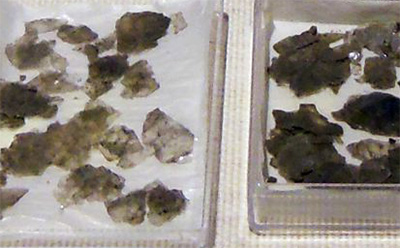
「飛鳥時代に創建されたわが国初の本格寺院「飛鳥寺」=奈良県明日香村=の
創建時の塔心礎(塔の中心柱を受ける礎石)から雲母片が百点近く見つかった。
一緒に出土した刀子や鉄器、水晶玉などの遺物とは明らかに異なる鉱物の薄片。
それはどんな意味を持つのか。」という記事であります。
わたしはこの飛鳥寺参観の体験を2度ほど持っております。
この「飛鳥」周辺には石舞台とか、飛鳥坐神社とかの古代史スポットが満載。
現代時間よりもどっぷりと古の時空間を感じさせられ、
現代はその古代時間の脇役として時を刻んでいるような錯覚を覚える(笑)。

写真は上と下が飛鳥寺訪問時のわたしの撮影で中が産経記事の説明写真一部。
「雲母は出土当時は「細片数個」と報告されているが、報告後に
さらに確認されたり剝離があったのか現状は破片が96点で粉々になった細片も。
大きさは最大のもので2.6cm×2cm。〜」
「出土状況から心礎の上に立てられた心柱周囲に納められたものとみられる。
朝鮮半島などでは雲母を古墳や古代寺院に埋納した例がある」とのこと。
雲母というのは別名で「きらら」という日本名が知られるもの。
古代の宗教的建築ではこのような「祈り」をそれに込める物質が散布される。
イマドキの「地鎮祭」などでもコメを散布したり塩を撒いたりするけれど、
そういったおまじないに近い行為だったのでしょうね。
この飛鳥寺には飛鳥大仏という鞍作止利制作になる日本最古の仏像もある。
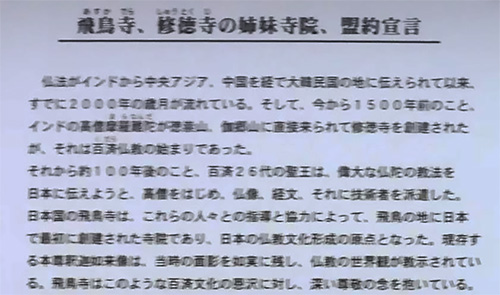
寺の説明文章が張られていたのを撮影したのが下の写真ですが、
韓国・百済の修徳寺(しゅうとくじ)と飛鳥寺の縁起が書かれています。
蘇我氏全盛の時代、仏教の日本社会への導入が国家意志として行われた。
そのシンボルとして百済の全面的バックアップを得て飛鳥寺は創建された。
いまになってもこういった新発見があり続けていることが新鮮。

またこのような歴史記事がときどき産経WEBには掲載される。
司馬遼太郎さんは作家デビューする前にはこのような歴史記事担当記者として
関西周辺を巡り歩いていたと書かれている。
そのよき伝統がいまも記事紙面に息づいているのだなぁと感じさせられる。
既成メディアに対してつい否定的な思いを持つことが多いのですが、
こういう地道な情報発掘姿勢というのはメディアの大切な役割だと実感。
しばし、悠久の時間感覚に浸らせていただいて感謝であります。

English version⬇

[Excavation of ancient mica “Kirara” at Asuka-dera Temple-Sankei history article]
Get information on good things that history lovers living in Hokkaido can’t stand.
In a historical article of the Sankei Shimbun that brought up the writer Ryotaro Shiba
2021/10/11 “Is it a mysterious mica buried ornament from Asuka-dera Temple founded by Soga no Umako?”
Oh, it’s an article for paid members, so you can’t refer to it from the general WEB.
“Asuka-dera, the first full-scale temple in Japan built during the Asuka period (Asuka-in) = Asuka Village, Nara Prefecture”
Nearly 100 pieces of mica were found in the cornerstone of the tower at the time of its construction (the cornerstone that receives the central pillar of the tower).
Mineral flakes that are clearly different from the relics such as swords, ironware, and crystal balls that were excavated together.
What does that mean? It is an article called.
I have had this experience of visiting Asuka-dera twice.
The area around this “Asuka” is full of ancient history spots such as the stone stage and Asukaniimasu Shrine.
It makes me feel a lot more old space-time than modern time,
Today, I get the illusion that time is ticking as a supporting role in that ancient time (laughs).

The top and bottom of the photo are taken by me when I visited Asuka-dera Temple, and the inside is a part of the explanation photo of the Sankei article.
“At the time of excavation, mica was reported to be” a few pieces “, but after the report
At present, there were some fragments that were shattered at 96 points, whether they were confirmed or separated.
The largest size is 2.6 cm x 2 cm. ~ ”
“From the excavation situation, it seems to be one of the things that were put around the pillar that was erected on the foundation.
It is said that there are examples of mica buried in ancient burial mounds and ancient temples on the Korean Peninsula. “.
Mica is another name for the Japanese name “Kirara”.
In ancient religious architecture, substances that put such “prayer” into it are sprayed.
Rice is sprinkled and salt is sprinkled at Imadoki’s “jichinsai” etc.
It must have been such a magical act.
At this Asuka-dera temple, there is also the oldest Buddha statue in Japan called Asuka Daibutsu, which was produced by Tori Busshi.
The photo below shows the explanation of the temple.
The luck of Sudeoksa Temple and Asuka Temple in Baekje, South Korea is written.
During the heyday of the Soga clan, the introduction of Buddhism into Japanese society was a national will.
Asuka-dera was built with the full backup of Baekje as its symbol.
It is fresh that such new discoveries continue to exist even now.

In addition, such historical articles are occasionally published in the Sankei Shimbun.
Ryotaro Shiba was a reporter in charge of such historical articles before his debut as a writer.
It is written that he was walking around the Kansai area.
It makes me feel that the good tradition is still alive in the article.
I often have negative feelings about ready-made media,
I realized that this kind of steady information excavation attitude is an important role of the media.
Thank you for letting me immerse myself in the eternal sense of time for a while.

【移動の自由抑制で情報の「偏差」顕在化】


感染症の状況はだいぶ落ち着いてきていますね。
出され続けてほとんどマヒ感覚だった非常事態宣言の解除でようやく
移動の自由の環境が戻って来つつある。

こういう「不自由」な環境って現代日本では初めて経験した。
県境をまたいでの移動が制限、事実上困難になってみると
コミュニケーションの世界では「中央集権化」が激しく進む実感。
北海道のような北辺地域では他地域との「交流」が極限化されてしまう。
こうした環境の中でそれなりに交流環境を保持できる
1都6県でおおむね3,000万人人口を抱える首都圏だけが
相対的に活性化した「情報交流」環境が一定保たれる結果になる。
社会変化、業界変化の情報はこの首都圏の情報だけが生きた現実として
一方的に各地方に影響して行く事態が進行したと思う。
こうなってみてはじめて、各地域相互が交流しての
情報環境という重要なものが失われていることに気付く。
情報の媒介者としてはもっぱら首都圏地域が相対的優位になる。
今回の事態ではこのことを強く実感させられた。

そのことへの「異議申し立て」がこれから各領域で自由に起こっていくだろう。
いろいろな領域で首都圏地域が独占してきた情報寡占化に対して
「なんかヘンだ」「それはおかしい」と思われたことに
多数の異論が噴出していく気分が出てきていると思う。
喫緊では農家を直撃している米価の引き下げのインパクトについて
宮城県の生産農家の方から、直接声を聞くことができた。
多数派である消費者目線優先の首都圏情報生産者たちには
農業地域の経済困難について差し迫った危機意識は乏しいのではないか。
米価が下げられることで玉突き的に起こる経済変化について
その出現地から他地域が直接見聞きすることはきわめて重要。
具体的な環境変動を耳にすることで驚かされた。
そしてそれへの対応も各地域現場同士が相互に知恵を出し合う中で
いろいろな脱出口も見出していけるかも知れない。
首都圏メディアからの情報発信だけでは想像力において足らざる部分が
これから全国的な「生きた人間情報」が活発化するなかで
大きく変動していくのではないかと強く思われる。
3,000万人口レベルでの情報交流をはるかに超える1億2,000万レベルの
知恵と工夫の相互交流がやはり絶対に必要だと思う。

そういった意味ではこの感染症での情報遮断から
最初に全国各地域で政権選択選挙が行われる意義は大きいかも知れない。
選挙では候補者が直接「民意」を聞くことになる。
東京の永田町に限定された地域で聞く「民の声」と実際に各地方で
困難と直面している人間社会のナマの声には当然リアリティに違いがある。
首都圏神奈川選出の菅さんから同じ神奈川の河野さんや小泉さんではなく
広島の岸田さん奈良の高市さんに替わったのは、なにかの符号なのかも。
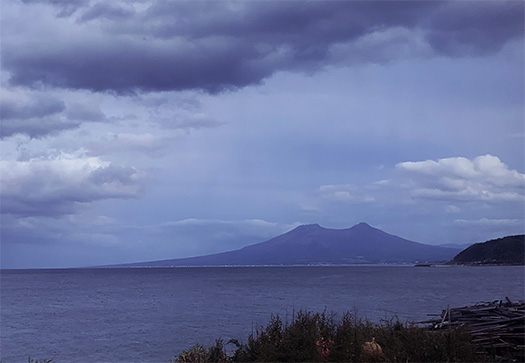
<写真は北海道南部の駒ヶ岳近影>

English version⬇

[Restriction of freedom of movement makes information “deviation” manifest]
The situation of infectious diseases has become quite calm.
Finally with the cancellation of the state of emergency, which was almost paralyzed after being issued
The freedom of movement environment is returning.

This kind of “inconvenient” environment was the first experience in modern Japan.
When it becomes difficult to move across prefectural borders, it becomes practically difficult.
In the world of communication, I feel that “centralization” is progressing violently.
In northern areas such as Hokkaido, “exchange” with other areas is limited.
In such an environment, it is possible to maintain a reasonable exchange environment.
Only the metropolitan area, which has a population of about 30 million in 1 metropolitan area and 6 prefectures
The result is that the relatively activated “information exchange” environment is maintained at a constant level.
Information on social changes and industry changes is the reality that only information on this metropolitan area lived
I think that the situation that unilaterally affects each region has progressed.
It is not until this happens that each region interacts with each other.
Notice that the important thing of the information environment is lost.
As an information mediator, the metropolitan area has a relative advantage.
This situation made me realize this strongly.

“Oppositions” to that will be free to occur in each area.
Against information oligopoly that the metropolitan area has monopolized in various areas
“Something strange” “It’s strange”
I think I’m starting to feel like a lot of objections are coming out.
Urgently, about the impact of the reduction in rice prices that is hitting farmers directly
I was able to hear the voice directly from the producers in Miyagi prefecture.
For the majority of information producers in the Tokyo metropolitan area who prioritize the consumer’s perspective
Isn’t there a lack of imminent sense of crisis about economic difficulties in agricultural areas?
About economic changes that occur suddenly due to the reduction of rice prices
It is extremely important for other regions to see and hear directly from the place of origin.
I was surprised to hear the concrete environmental changes.
And in response to that, each local site is sharing wisdom with each other.
It may be possible to find various escape exits.
Information dissemination from the metropolitan area media is not enough for imagination
As “living human information” nationwide becomes more active in the future
It seems strongly that it will fluctuate greatly.
120 million levels, far exceeding the information exchange at the 30 million population level
I think that mutual exchange of wisdom and ingenuity is absolutely necessary.

In that sense, from blocking information on this infectious disease
It may be significant that the elections for elected governments are held in each region of the country first.
In the election, candidates will hear “people’s will” directly.
“People’s voice” heard in the area limited to Nagatacho in Tokyo and actually in each region
Naturally, there is a difference in reality in the raw voices of human society facing difficulties.
From Mr. Suga, who was selected from Kanagawa in the Tokyo metropolitan area, not Mr. Kono or Mr. Koizumi from the same Kanagawa
It may be some kind of sign that replaced Mr. Kishida in Hiroshima and Mr. Takaichi in Nara.

【解体工事費増も「増税」か? マンション2棟解体 6,000万円】


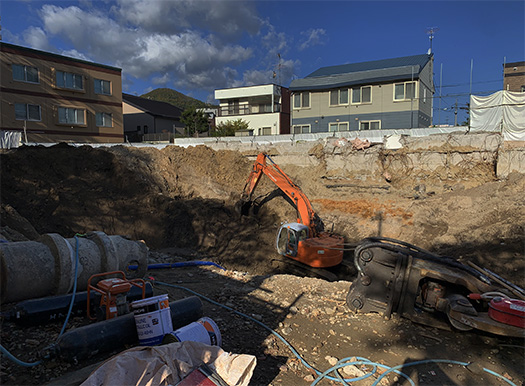
雪虫に悩まされた日、早朝から勇壮な解体工事現場を通りすがった。
こういう工事現場に遭遇するとつい野次馬精神が強く喚起され
吸い寄せられてしまう(笑)。
「ほえ〜、こんな地下まで掘り返すんだ」
「そう、10mもコンクリもぐっていたんだよね」
「すごいね、敷地どれくらいあるの?」
「よくわかんないけど、ここにマンション2棟あったっしょ」
「ふむ、そうだったかなぁ。あ、あった。」
「それを2棟ぶっ壊して1棟大きいのに再開発するんだとさ」
「すごい解体工事だね、費用ってどれくらいするの?」
「どれくらいだと思う?」
「う〜んと普通の住宅でも200万かかるって聞くから2,000万くらい」
「全然、それじゃ1棟もムリ(笑)。6000万」
「ほえ〜、その費用も再開発後のマンション住人は払わされるんだ」
「おれは解体屋だから、あとは知らない(笑)」

解体工事費って、なかなか高額であります。
住宅の解体にあたっては「分別解体」が義務づけられているので
骨材と鉄筋などの分別に現場経費がどんどん嵩んでしまう。
費用がうなぎ上りに上がっていった現実がある。
よく言われるように家庭用のゴミ分別収集の問題でも、いまの方法は過剰だと
論議が喧しい。トピズレだけれど日本学術会議提起の「レジ袋有料化」に対し
開始後1年でゴウゴウたる非難の声が挙がってきている。
ユーザー実感としてはレジ袋はゴミ捨て袋として再利用もできたもので、
実際にはわざわざゴミ捨て用のポリ袋をみんな新たに購入している。
実感としてはポリ袋総量は減っていないだろうし、
それが有料化されたことで要するに「増税」されたというのが実態。
まぁそれでも効果検証がしっかり行われユーザー納得が進めば意味もあるが
そういった検証についてはどの省庁も行ってきていない。
一方で店舗側では買い物袋持参による「万引き」被害が急増していると聞く。
1年経ってみて施策の効果検証をしっかり行うべきだというのが
偽りのないユーザー心理だと思われます。
日本学術会議は社会的にエビデンスを公表する義務があると思います。
そうすれば世論の「あんな会議いらない」逆風を少しは緩和できるのでは?
施策を決断し先導してきた前環境大臣・小泉進次郎氏はいまになって
こうした非難の声に対し「あれは自分が決めたことではない」と発言して炎上中。
・・・おっと、横道ですが、
建築の世界でもこういう分別解体の「検証」というのもあまり聞かない。
結局は最終ユーザーに価格転嫁されているのワケですが、
6,000万円というと最終のマンション2世帯分に近い費用ですね。
100戸分譲だとすると1/50の各戸負担ということになる。
実際問題としてどのように環境によい影響をもたらしているか、
わたし自身も深く検証したことがなかったことに気付かされた次第であります。

English version⬇

【Is the increase in demolition work costs a “tax increase”? Demolition of 2 condominiums 60 million yen】
Demolition of 2 condominiums 60 million yen]
On the day when I was troubled by snow bugs, I passed through a brave demolition work site early in the morning.
When I encountered such a construction site, the spirit of rubbernecking was strongly aroused.
He gets sucked in (laughs).
“Hey, dig up to the basement like this.”
“Yes, it was 10m long, wasn’t it?”
“Wow, how much is the site?”
“I don’t know, but there were two condominiums here.”
“Hmm, I wonder if that was the case. Oh, there was.”
“Two buildings are destroyed and one is big, but it is redeveloped.”
“It’s a great demolition work, how much does it cost?”
“How much do you think?”
“Hmm, I heard that it costs 200 million even in a normal house, so about 20 million.”
“At all, then one building is too much (laughs). 60 million.”
“Hey, the cost will be paid to the residents of the condominium after the redevelopment.”
“I’m a dismantling yard, so I don’t know the rest (laughs).”

The demolition work cost is quite high.
Since “separate dismantling” is obligatory when dismantling a house
On-site costs will increase steadily for the separation of aggregates and reinforcing bars.
There is a reality that the cost has risen.
As is often said, even with the problem of separate collection of garbage for household use, the current method is excessive.
The debate is noisy. Although it is a top-down, in response to the “Plastic shopping bag charge” proposed by the Science Council of Japan
One year after the start, there have been a lot of criticisms.
As a user, the plastic shopping bag could be reused as a garbage bag.
In fact, everyone is buying new plastic bags for dumping garbage.
As a matter of fact, the total amount of plastic bags has not decreased,
The fact is that the tax was increased because it was charged.
Well, it still makes sense if the effect verification is done firmly and the user is satisfied.
No ministry has done such verification.
On the other hand, I hear that the damage caused by “shoplifting” caused by bringing shopping bags is increasing rapidly on the store side.
It is said that the effectiveness of the measures should be thoroughly verified after a year.
It seems to be a true user psychology.
I think the Science Council of Japan is obliged to publish the evidence socially.
That way, the headwinds of public opinion “I don’t need such a meeting” can be alleviated a little.
Former Minister of the Environment Shinjiro Koizumi, who has decided and led the measures, is now
In response to these criticisms, he said, “That was not my decision,” and was on fire.
… Oops, it’s a side street,
Even in the world of architecture, I don’t often hear about such “verification” of segregated dismantling.
After all, the price is passed on to the final user, but
60 million yen is close to the cost of the final two households in an apartment.
If 100 units are sold, it will be 1/50 of the cost for each unit.
How it actually has a positive impact on the environment
I realized that I had never examined it in depth.

【ちょっと早すぎ「雪虫」大量発生 inさっぽろ】


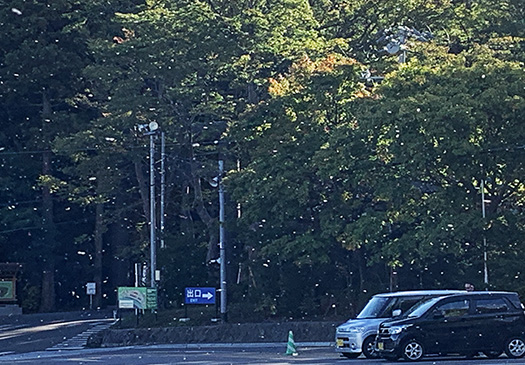
写真ではなかなか写ってくれない雪虫たちですが、
いかがでしょうか、早朝6時前くらいの時間。
ここはかなり少ない場所での撮影でしたが、多い場所では数十倍(泣)。
いつものように北海道神宮に参拝のために散歩に出掛けたのですが、
晴天であまり風が吹いていない状況。公園の木々に面して陽だまりのような
空間を歩いていたら雪虫の大群に遭遇しはじめた。
これは一時のことと大して気に掛けないようにして通過しようとしたのですが
これがどこまで歩いても一向に減っていかない。
車道の大通りに面した歩道でも至る所で雪虫が乱舞している。
気がついたら着衣にたくさんの雪虫が付着しているし
マスクの隙間から入ってきたりもする。
果ては目にまで入ってくるのではないかと怖ろしくなる一方。
なんとか北海道神宮にたどりつけば鬱蒼とした杜で消えるのではと
期待していましたが、そこでも陽だまり空間にはしっかりと乱舞している。
いやはや、ほうほうの体で散歩も行程半分で切り上げて帰宅しておりました。

なんだろうか、というところであります。
確かに10月も半ば近くなっては来ているけれど、ちょっと早いし
なにより、こんなに歩くのに難儀するような大量発生は記憶にない。
以下、ウエザーニュース寄りの情報要旨。
〜2021/10/06 17:09 ウェザーニュース
10月6日(水)に大雪山系・旭岳初冠雪が観測され北海道は冬に向かいつつあります。
ここ数日北海道から冬の到来を告げる風物詩雪虫の目撃報告が多く届いています。
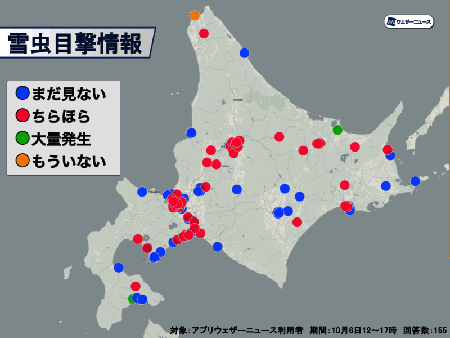
ウェザーニュースでは北海道を対象に雪虫を見かけたかどうかを緊急調査を実施。
「4割以上の方が雪虫を目撃」

10月6日(水)12~17時までの結果
アンケート調査の結果、4割以上の方が雪虫を見かけたと回答。
「雪虫」は「ワタムシ(綿虫)」とも呼ばれるアブラムシ科の小さな昆虫で、
白い綿状の分泌物をつけ群れ飛ぶさまが雪のように見えることから雪虫と呼ばれる。
雪虫は初雪の降る少し前に出現するので冬の訪れを告げる風物詩とも言われます。
エゾマツなどの根元に営巣して夏場の気温条件によって多寡が決まる。
ことしは北海道、感染症による観光客の減少とは反比例して
ほぼ高温の真夏だったので、その影響で大量発生の条件が整っていたようです。

1匹1匹はまことにはかなげなのですが、
大発生しての群舞はちょっと怖ろしいほどで突っ切ると皮膚表面に痛みまで覚える。
衣類にはたくさん付着してくる(できるだけ潰さずに除去する)やっかいさ。
・・・ということですが、昨日などは日中気温で車内温度計では最高25度ほど。
まだまだ夏の名残がある一方で寒気も順調に迫ってくる。
どうやら、雪虫には天国のような北海道の10月のようです、フ〜困ったものです。

English version⬇

[A little too early “snow bug” outbreak in Sapporo]
The snow bugs are hard to see in the picture,
How about the time around 6 o’clock in the early morning.
This was taken in a fairly small number of places, but in many places it was dozens of times (crying).
As usual, I went for a walk to worship at Hokkaido Jingu Shrine.
The situation is fine and the wind is not blowing very much. Facing the trees in the park, like a sunny day
As I was walking in space, I began to encounter hordes of snow bugs.
I tried to pass this without worrying too much about it at one time.
No matter how far I walk, this does not decrease at all.
Snow bugs are dancing everywhere on the sidewalk facing the main street of the road.
If you notice, there are a lot of snow bugs on your clothes
It also comes in through the gaps in the mask.
I’m scared that it may even come into my eyes.
If I manage to reach Hokkaido Jingu, it will disappear in a dense forest.
I was expecting it, but even there, I was dancing firmly in the sunny space.
No, I went home after taking a walk with my body in half.

I wonder what it is.
It’s true that it’s almost mid-October, but it’s a little early.
Above all, I don’t remember the outbreaks that made it difficult to walk.
Below is a summary of information closer to Weathernews.
~ 2021/10/06 17:09 Weathernews
The first snowfall of Mt. Asahidake in the Daisetsu mountain range was observed on Wednesday, October 6, and Hokkaido is heading for winter.
In recent days, we have received many sightings of snow bugs, a tradition that announces the arrival of winter, from Hokkaido.
Weathernews conducted an urgent survey to see if snow bugs were found in Hokkaido.
“More than 40% witness snow insects”

Results from 12:00 to 17:00 on Wednesday, October 6
As a result of the questionnaire survey, more than 40% answered that they saw snow insects.
“Snowworm” is a small insect of the Aphididae family, also known as “Watamushi”.
It is called a snow bug because it looks like snow when it flies with white cotton-like secretions.
Snow insects appear shortly before the first snowfall, so it is said to be a tradition that signals the arrival of winter.
Nesting at the roots of spruce, etc., the amount is determined by the temperature conditions in summer.
This year is in inverse proportion to the decrease in tourists due to infectious diseases in Hokkaido
It was almost hot midsummer, so it seems that the conditions for mass outbreaks were in place due to that effect.

Each one is really ridiculous,
The outbreak of group dance is a little scary, and if you cut through it, you will feel pain on the surface of your skin.
It is troublesome to attach a lot to clothes (remove it without crushing it as much as possible).
However, yesterday was the daytime temperature, and the maximum temperature on the in-car thermometer was about 25 degrees.
While there are still some remnants of summer, the chills are steadily approaching.
Apparently, it’s like October in Hokkaido, which is like heaven for snow insects.

【14億人口に33億人分の不動産投機〜中国問題研究 2】


中国が世界最大の危機要因となってきた。
感染症のことももちろんだけれど、世界経済を揺り動かしつつある
中国恒大集団をはじめとする不動産企業の経営危機の顕在化。
既報したが今月23日に債務不履行期限が到来するドル建て債券の
償還を行わないことが確実視されてきている。
ドル建て債券について中国当局も破綻を無視するとされている。
猶予期間が過ぎれば債権は紙くずになってしまいそうだと。
デフォルトが起こっても国内的には被害の拡大を最小限化させ、
海外に損害を転移させる作戦のようです。
「破産法制」が国際ルール適合しているのかどうかも不明。
そしてNY市場に上場される中国企業株式の「投資適格性」に重大な疑問提起。
多くの中国系企業の株式はただの紙切れなのではという危惧。
投資に値する資産交換性が担保されているのかどうか不明なのだと。
世界はいま、固唾を飲んで推移を注視している状況。

中国恒大集団は不動産・建設関連企業であり
その中心がマンション・住宅ということで、わたしどものビジネス環境に
近い領域であることから、知ることができる数字に驚かされ続けています。
タイトルの通りの状況が中国では現実のようなのです。
人口規模14億人の不動産マーケットに対して、すでに33億人が居住可能な
住宅が作られ続けてきていたのが事実だと言われる。
「誰も住んでいないマンションが林立しているんだよね」
リーマンショック以降、世界的な経済縮小の危機に当たって
当時の胡錦濤政権は中国の内需拡大を推し進めた。
金融を大胆に緩和した結果、長期的な資産として不動産市場に
注目が集まり地方政府や不動産企業が大規模開発を加速化させた。
・中国GDP(2019年)1577兆円(日本550兆円)
・中国国内での不動産投資総額・・・242兆円
(日本の不動産投資総額…4.15兆円)
・不動産投資の対国内GDP比率
中国 15.3%
日本  0.9%
〜というような数字にすぐに換算することができる。
日本は市場経済の需給バランスが機能しているマーケットと考えれば、
中国不動産市場の「特異性」インパクトが怖ろしく伝わってくる。
アメリカが百年近く掛けて消費したコンクリートの総量を
たった数年で使い切ったのが中国の現実ですね。
要するに実需に基づいた市場ではなく、投機対象金融商品として
富裕層が借金しまくって維持してきたマーケットだということが明確。
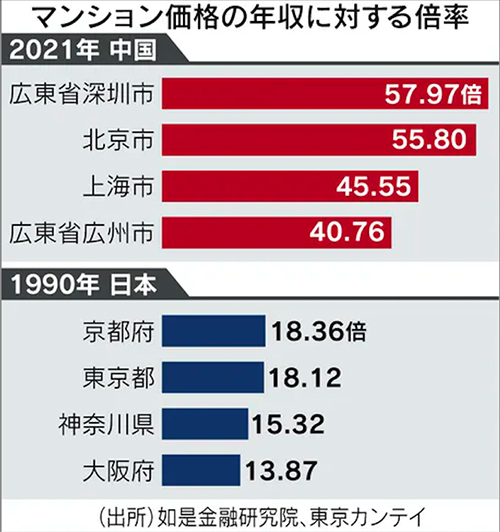
こういった市場性の結果、不動産価格の平均的個人年間収入対比は
上の表のようにあらわされる結果となる。
超の字がつく貧富の格差社会であり一般人には不動産は雲の上の世界。
あきらかに日本のバブル期を数倍上回る金融と不動産のバブル市場。

さてこういう状況がどんな推移を見せていくのか、
日本経済にどんな影響を及ぼすか、注意深く見ていく必要がありますね。

English version⬇

[Real estate speculation for 3.3 billion people in 1.4 billion population-China problem research 2]
China has become the world’s biggest crisis factor.
Not to mention infectious diseases, but it is shaking the world economy.
The realization of the management crisis of real estate companies such as the Evergrande Group of China.
As previously reported, for dollar-denominated bonds that will default on the 23rd of this month
It is certain that no redemption will be made.
Chinese authorities are also said to ignore dollar-denominated bonds.
After the grace period, the debt is likely to be scrapped.
Even if a default occurs, the spread of damage is minimized domestically,
It seems to be a strategy to transfer damage overseas.
It is also unknown whether the “bankruptcy legislation” complies with international rules.
He also raised a serious question about the “investment grade” of Chinese corporate stocks listed on the NY market.
I’m afraid that the stocks of many Chinese companies are just out of paper.
It is unclear whether the asset exchangeability that is worth the investment is guaranteed.
The world is now watching the transition with a strong spit.

China Evergrande is a real estate and construction related company
Since the center is condominiums and housing, it is suitable for our business environment.
Being in a close area, I continue to be amazed by the numbers I can know.
The situation as the title says is real in China.
3.3 billion people can already live in the real estate market with a population of 1.4 billion
It is said that the fact is that houses have been built continuously.
“There are many condominiums where no one lives.”
In the crisis of global economic contraction after the Lehman shock
The Hu Jintao administration at that time pushed for the expansion of domestic demand in China.
Bold monetary easing results in the real estate market as a long-term asset
Attention has been focused on local governments and real estate companies accelerating large-scale development.
・ China GDP (2019) 1577 trillion yen (Japan 550 trillion yen)
・ Total real estate investment in China: 242 trillion yen
(Total real estate investment in Japan: 4.15 trillion yen)
・ GDP ratio of real estate investment to domestic GDP
China 15.3%
Japan 0.9%
It can be immediately converted to a number such as.
If you think of Japan as a market where the supply-demand balance of the market economy is functioning,
The “uniqueness” impact of the Chinese real estate market is scary.
The total amount of concrete consumed by the United States over nearly 100 years
The reality of China is that it has been used up in just a few years.
In short, not as a market based on actual demand, but as a speculative financial product
It is clear that it is a market that the wealthy people have maintained by borrowing money.
As a result of this marketability, the average personal annual income of real estate prices is
The result is shown in the table above.
Real estate is a world above the clouds for the general public because it is a society of rich and poor with a super character.
The financial and real estate bubble market clearly exceeds Japan’s bubble period.

Now, what kind of transition will this situation show?
We need to look carefully at how it will affect the Japanese economy.