本文へジャンプ

【トランプ2.0政権で経済政策・住宅市場は?】


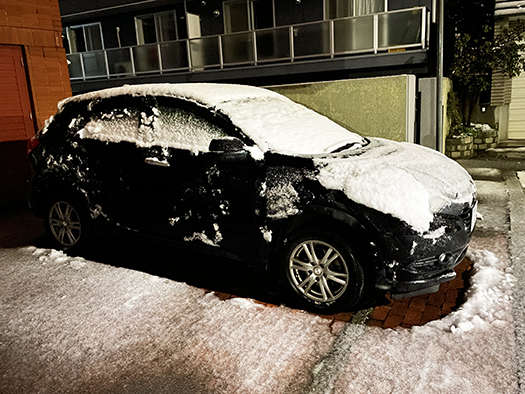
 昨日は結局、札幌市西区のわが家周辺、山の手地区では断続的に降雪が続き、本日朝には家の前はグチャグチャな多水性の雪が重なっている状態。本格的に「除雪」する必要があるかどうか、というところであります。たぶんこのグチャグチャ道では早朝散歩はちょっと、なのでその分、ブログ記述後せっせと初雪かきとなることでしょう。雪、重そうであります(泣)。しょがない。北国の宿命。
 さて昨日までで、アメリカの政権選択にトランプ勝利という決定が下された。その力学が今後の日本経済にどのように影響してくるのか、予測を立てて行く必要がある。わたしも創業企業からは退隠したとはいえ、個人企業としては引き続き住宅情報関連の仕事なので、約3ヶ月ほどのアメリカの政権移行期を経て以降の経済動向を考えていく必要があると思っています。経済面で言えば、一般的にアメリカの経済政策が日本経済や金融市場に影響を与えることが多いとされるし、現実に強固な日米関係の基軸は第2次大戦以降の「経済同盟」関係であることはあきらか。
 コロナ明け以降のアメリカのインフレが反映して住宅建材価格が暴騰し、それが住宅価格の世界的高騰を招いたことが日本の住宅取得層に大きな影響を与えて、とくに今期には住宅着工減少があきらかになってきている。政治というのは基本的に経済の状況を反映するものであって、為政者には経済の相場観というものが最重要なのだと思います。仁徳天皇の民のカマド伝承の通り。
 アメリカの人びとはトランプの2017-20年の4年間の経済運営実績を踏まえてその政権を再度選択した。その後のバイデン政権とその後継を狙ったハリスにNOを突き付けたということでしょう。生活コストの急上昇に対して民は経済最優先という選択を行ったと言える。
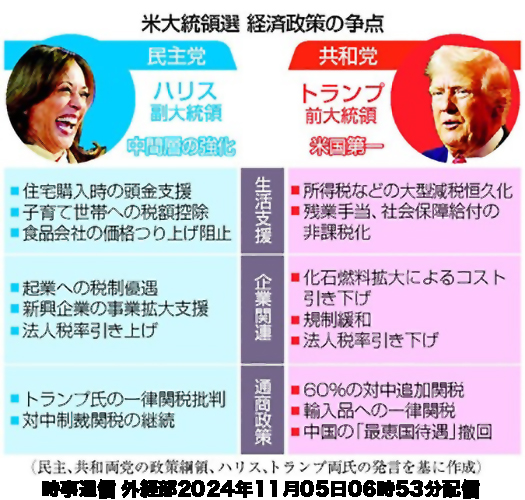
 まだ選挙の結果が出たばかりで、そうした経済分析情報はそう多くは出てきていないけれど、今後の住宅市場を見通していくときに、大きな方向性指標がトランプ政権によって打ち出されてくることでしょう。上の図は時事通信外報部11/5配信のもの。経済面では一般的にアメリカの経済政策が日本経済や金融市場に影響を与えることが多く、簡略にまとめられていてわかりやすい。
 要注目と思われるトランプの政策としては、化石燃料拡大によるコスト引き下げという経済活性化の「方法論」を明確に示していること。トランプはさらに所得税などの「大型減税」恒久化、さらに残業手当、社会保障給付の非課税化を打ち出している。
 よく知られているけれどバイデン政権は環境・エネルギー政策のグリーン化を掲げ、それまでの「シェールガス革命」を痛撃してきていた。
 こうした方向性は第1次政権時と基本的には志向性が同じだと思える。こういう志向性と日本の為政者であった安倍政権の打ち出した「アベノミクス」が呼応していた。大きな世界経済の方向性はこういった方向に向かっていくのではないか。ただ、いま現在の日本の政権には明確な「経済施策」の考え方が希薄。あるとすれば財務省による「増税路線」。この日本の増税路線とアメリカ・トランプ政権の減税・経済活性化路線とがはたして整合するだろうか? 大きく疑問。さてどうなるか?

English version⬇

[What about economic policy and the housing market under a Trump 2.0 administration?
Politics is paramount to the economic market outlook. From Biden’s “environmental focus” that nearly stifled the shale gas revolution to the Trump administration of fossil fuel expansion => cost reductions. …

 Yesterday, it ended up snowing intermittently in the Yamanote area around our house in Sapporo’s Nishi Ward, and by this morning, the front of our house was covered with a layer of soggy, multi-level snow. We are wondering if we need to “plow” the snow in earnest. I’m not sure if I’ll be able to go for an early morning walk on this muddy road, so I’ll have to shovel the first snow after writing this blog. The snow looks heavy (I cry). It can’t be helped. The fate of a northern country.
 As of yesterday, the decision to choose the U.S. administration has been made in favor of Trump. We need to make predictions on how the dynamics will affect the Japanese economy in the future. Although I too have retired from the founding company, I continue to work in the housing information business as a private firm, so I believe it is necessary to consider the economic trends after the approximately three-month transition period of the U.S. administration. In terms of the economy, it is generally believed that the U.S. economic policy often affects the Japanese economy and financial markets, and it is clear that the cornerstone of a strong Japan-U.S. relationship in reality is the “economic alliance” relationship that has existed since World War II.
 The price of building materials has skyrocketed, reflecting inflation in the U.S. since the dawn of the Corona, and this has led to a global surge in housing prices, which has had a major impact on Japanese homebuyers, especially in the current quarter, when a decline in housing starts has become apparent. Politics is basically a reflection of the state of the economy, and I believe that the view of the economic market is of utmost importance to politicians. As per the Kamado lore of Emperor Nintoku’s people.
 The American people chose that administration again based on Trump’s four-year track record of managing the economy in 2017-20. After that, they would have said NO to the Biden administration and Harris who tried to succeed him. It can be said that the people have made the choice to put the economy first against a sharp rise in the cost of living.
 Although the election results have only just come in and not much information on such economic analysis is available, the Trump administration will provide a major directional indicator for the future of the housing market. The figure above is from the Jiji Press Foreign Affairs Department, November 5, 2011. In terms of the economy, U.S. economic policies generally affect the Japanese economy and financial markets, and it is easy to understand in a simplified form.
 One of Trump’s policies that we believe is important to note is his clear “methodology” for stimulating the economy by lowering costs through the expansion of fossil fuels. Trump has also proposed making permanent “major tax cuts” such as income taxes, as well as exempting overtime pay and social security benefits from taxes.
 As is well known, the Biden administration has been pushing for a green environment and energy policy, and has been taking a hard hit against the “shale gas revolution” that had been underway up to that point.
 This direction seems to be basically the same as that of the first administration. This orientation corresponded with the “Abenomics” of the Abe administration, which was in power in Japan. The direction of the global economy is likely to move in this direction. However, the current Japanese administration does not have a clear-cut “economic policy” in mind. If there is one, it is the Ministry of Finance’s “tax hike policy. Will Japan’s tax hike policy be consistent with the U.S. Trump administration’s policy of cutting taxes and revitalizing the economy? It is highly doubtful. What will happen now?

【トランプ再登場&札幌降雪 「交換」対応待ったなし】


 事前の予想通りトランプの当選という結果が出たようだ。日本を取り巻く最重要な国際関係について、ここから4年間の趨勢は決した。否応なく日本の権力構造はそれへの対応を早急に整えていく必要があるだろう。なぜ直前の日本の政治体制はアメリカ大統領選挙という要素を考え、その帰趨への対応を可能なように準備してこなかったのか。少なくとも今回の選挙日程の設定感覚は非常に疑問であり、国際感覚センスが与党側でここまで失われていることは予想外だった。
 前のトランプ政権で非常によい日米関係を構築していた安倍政権の政敵であった現状の首班が、トランプとどのように「外交」できるか、誰が考えてもほぼ難しいだろう。トランプは安倍暗殺に際して弔電まで送ってきていた。今回は選挙過程で自らも銃弾を受けている。現政権については日本の国益を考えれば不安に思える。しばらくは日本国民としてこの状況に耐えていく必要があるのか。経済的に損失が出てこない範囲で早急に変化対応して欲しいと思う。
 さて、わたしどもでは事前スケジュールとして本日タイヤ交換予定でした(泣)。そうした予定に対して本日深夜〜早朝にかけて氷雨、降雪という天気模様。上の文章で日本の現政治体制についてその見通しの悪さ、センスの無さをなじり気味だったのですが、みごとにわが身にブーメラン(笑)。
 本日の札幌地方の予想は、最高気温 5°で最低気温 1°。ということで1日中雪マークが表示されております。降雪の合間を縫って道路状況をみながらタイヤ交換予約しているところまで慎重運転で移動させていくしかなさそう。
 以前、10年前くらいまではタイヤは自宅に保管して、自分で交換までやっていたのですが、会社車両の台数が増えて、保管場所がキャパオーバーして、それなら保管料を込みにして交換も全部そうしたところにお願いすることにしているのですね。
 いまの天気状況(午前6時時点)では時折大粒の雨、ヒョウが降ってきたりしている。祈るような気持ちで天候の好転を願いながら、道路状況に一喜一憂することが予想されます。こういう不安・心配には自己責任でもって対応して行きたいと思いますので、日本の政治状況も一刻も早く正常な「対応力」を見せていって欲しいと思います。さて、天気、どうなるかなぁ・・・。

English version⬇

[Trump’s reappearance & Sapporo snowfall, no wait for “exchange” response
The public opinion is quite clear and Trump’s reappearance is confirmed. It is hard to believe that a person whose language is unclear can handle the situation. Tire replacement is urgently needed. The people of Japan are not ready for a “change” of tires.

 As expected, Trump’s election seems to have been the result. The most important international relations surrounding Japan will be determined over the next four years. Japan’s power structure will need to quickly adjust its response. Why didn’t Japan’s political establishment consider the U.S. presidential election and prepare itself to deal with its outcome? At the very least, the sense with which the election schedule was set was highly questionable, and it was unexpected to see such a loss of international sensibility on the part of the ruling party.
 It is almost impossible for anyone to imagine how the current head of the Abe administration, who was a political opponent of the previous Trump administration that had built a very good Japan-U.S. relationship, would be able to “diplomatically” deal with Trump. Trump even sent a telegram of condolence at the time of Abe’s assassination. This time, he himself took a bullet during the election process. The current administration seems unsettling from the standpoint of Japan’s national interests. Will we as Japanese citizens have to endure this situation for a while? I hope that the government will quickly make changes to the extent that there are no economic losses.
 We had planned to change tires today as a preliminary schedule. However, the weather was threatening ice, rain, and snow from late morning to early morning today. In the above article, I was almost lambasting Japan’s current political system for its poor prospects and lack of sense, but it has boomeranged back on me (laugh).
 Today’s forecast for the Sapporo area is a high of 5° and a low of 1°, which means that it will snow all day long. So, the snow mark will be displayed all day long. We will have to drive carefully between snowfalls, watching the road conditions, to the place where we have made an appointment to change tires.
 I used to store tires at home and change them myself until about 10 years ago, but the number of company vehicles has increased and the storage space is now over capacity, so I’ve decided to include the storage fee and ask such a place to do all the changing.
 The current weather conditions (as of 6:00 a.m.) have been heavy rains and occasional hailstorms. You expect to be both happy and sad about the road conditions, praying for a turnaround in the weather. I would like to deal with these concerns and worries at my own risk, and I hope that the political situation in Japan will show normal “responsiveness” as soon as possible. Now, I wonder what will happen to the weather…


【戦国末期、織田家・秀吉軍部隊と三木城】

Screenshot[/三木城跡]
 さてアメリカ大統領選は時差の関係もあり、帰趨の情報はまだ発信されてこない。そういうことなので、ブログ記事としては代わりに、いまなにかと話題になっている「兵庫県」で縁の深い「三木城跡」についての探訪記であります。時空をはるかに超えて、合戦・政治闘争についてのつながりか?ムリヤリ感満載であります(笑)。
 現代でも斉藤前知事の失職以降の出直し知事選さなかで、NHK党(いまはどういう名前か知らない)の立花氏が立候補して前知事の「無実」を訴えているとのこと。なにやら「新事実」が浮かび上がってきているとされている。もしそれが真実であるなら、形勢一変であり注目される。
 ・・・ということですが、本日はその兵庫県のほぼ中央部の三木市に残る「三木城跡」のこと。わたしの姓が冠されていて、家系伝承でもなにかとクロスする地名・氏名(うじめい)であります。司馬遼太郎さんの記述では、兵庫県では1870年(明治3年)9月19日、すべての国民が苗字を持つことを許された時には、「おれ、三木」「オレも三木」と多数の方々がこの三木城関連の素性であると名乗り出られたという説。全国有数の「三木家」多数派地域であります。郷土への愛のひとつの共有体験として織田・秀吉軍による攻撃と城主・別所氏の決断によって城明け渡し・城主の自害・城兵の助命が大きく残像が残っていたということでしょうか。
 この三木城というのは、経済の伝統的要衝地に立地。京都からの西国への主要な街道筋を押さえる位置にあって、戦国当時もその利権を狙って山陰の戦国大名「尼子氏」に攻撃されたり、京都を押さえた三好氏にも攻撃されている。その都度、堅固に城を守り抜いていた。三木市ではいまも「金物」が名産とされているように、京大阪の需要地から交通至便ということもあって、いわば播州における経済のひとつの中心地域だったのだと思われます。神戸は明治以降、国際貿易港として経済活動がさかんになっていくけれど、それ以前には三木城が播州のひとつの中心地だったと思える。


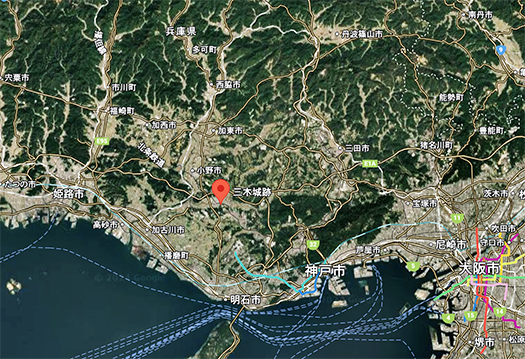
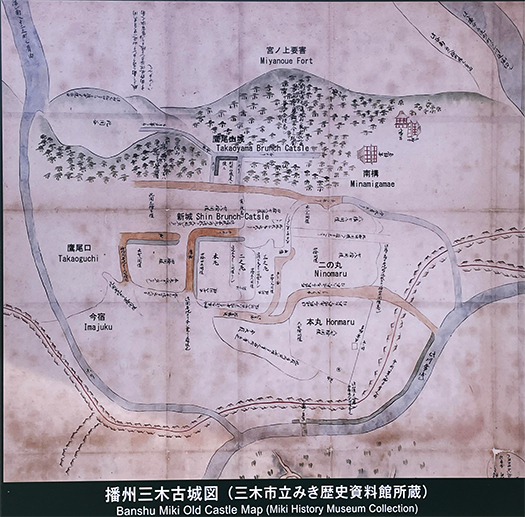
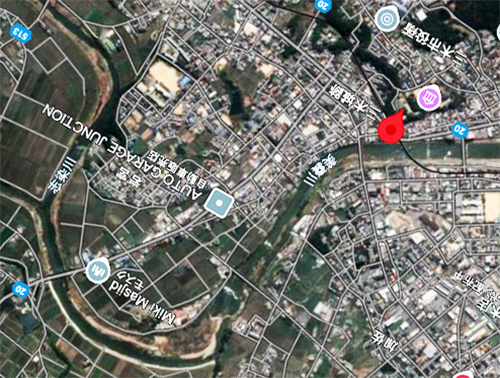
 地図は「みき歴史資料館」所蔵の播州三木古城図と、その方向感をそろえてみた現代のGoogleマップ。城の南側の後背地には山地が迫り、北側の前面には美嚢川の流れがあって、補給の機能も備えている条件。高齢期になってきて、播州には時折訪れることが増えてきています。そのたびにふとした機縁にめぐり会わされて、血脈のなつかしさ、歴史を感じることが多いのであります。故地を遠く離れた北海道人にとって日本民族としての素性確認機会とでも言えるのでしょうか?

English version⬇
 
The Oda and Hideyoshi military units and Miki Castle at the end of the Warring States period
The development of Kobe, an international trading port, has been attracting attention, but the history of Kobe up to the Edo period shows a completely different economic trace in Miki Castle in the central part of Hyogo Prefecture. …

 Due to the time difference in the U.S. presidential election, information on the outcome of the election has not yet been released. Therefore, instead, this blog entry is about a visit to the ruins of Miki Castle, which is closely related to the much talked about “Hyogo Prefecture”. Is there a connection between the two places, or is it about battles and political struggles that transcend time and space? It is full of a sense of unreasonableness (laugh).
 Even today, in the midst of the gubernatorial rerun election after former Governor Saito lost his post, Mr. Tachibana of the NHK Party (I don’t know what it is called now) is running for governor, appealing for the former governor’s “innocence. It is said that some “new facts” have emerged. If it is true, it would be a game changer and attract a lot of attention.
 Today, I would like to talk about the ruins of Miki Castle in Miki City, located in the center of Hyogo Prefecture. It bears my family name, and is a place name and name that crosses over into family lore in some way. According to Ryotaro Shiba’s account, on September 19, 1870 (Meiji 3), when all people in Hyogo Prefecture were allowed to have surnames, many people came forward saying, “I, Miki,” or “I, Miki,” as if they were related to this Miki Castle. This is one of the areas in Japan where the “Miki family” is in the majority. The attack by Oda and Hideyoshi forces and the decision by the castle’s owner, Bessho, to surrender the castle, the owner’s suicide, and the lives of the castle’s soldiers were all left behind as a shared experience of love for one’s hometown.
 Miki Castle was located in a traditional economic center. It was located on a major highway from Kyoto to the western part of the country, and was attacked by the Amago clan, a feudal lord in the San’in region, who wanted to take advantage of its location, and by the Miyoshi clan, which held Kyoto. Each time, the castle was firmly defended. As “hardware” is still a specialty of Miki City, it was one of the economic centers in Banshu, so to speak, because of its convenient transportation from the demand areas of Kyoto and Osaka. Kobe became an international trading port after the Meiji period (1868-1912), but before that, Miki Castle seemed to be the center of Banshu.

 The map is a modern Google map that attempts to align the sense of direction with the old castle map of Banshu Miki in the collection of the Miki Historical Museum. The southern hinterland of the castle is looming in the mountains, and the northern front has the flow of the Mishu River, a condition that also serves the function of supply. In my advanced age, I have been visiting Banshu more and more from time to time. Each time I visit Banshu, I am often struck by a chance encounter and feel the nostalgia and history of my bloodline. For the people of Hokkaido, far away from their homeland, it is an opportunity to confirm their identity as Japanese people.

【現代の岐路・アメリカ大統領選と日本の政局】


 本日はアメリカ大統領選挙。すでに期日前の投票も順調に行われていることが伝わってきている。やはり現代世界でもっとも重要な国の帰趨が固まる選挙ということで固唾を飲んで状況の推移を見守っている、というところでしょうか。どっちに転んでも「内戦必至」というような論調まで表れているけれど、アメリカ民主主義の正統性をしっかり刻印するような選挙であって欲しいと思います。現代世界の「安定要素」の大きなひとつは日米安保同盟であることは冷厳な事実であり、その意味でアメリカの安定こそは日本の安定にもつながるのだと考えられます。
 翻って日本の政治状況は、あるいはそのことも関わってか、不安定な状況になってきている。本来民意を問うのであれば、最大の同盟国の政権選択の結果をつぶさに確認してからとするべきだったように思いますが、そういった政治センスの欠落を含めて、いまの政権の正統性は大きく揺らいでいるように思われます。たぶんアメリカの結果を受けて、それとの整合性を調整するような局面が到来するように思える。庶民としては、なによりも安定が確保されながら経済が進展していくような方向を希求したい。さて。
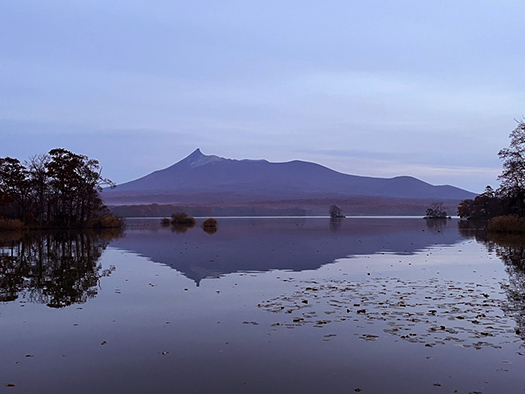
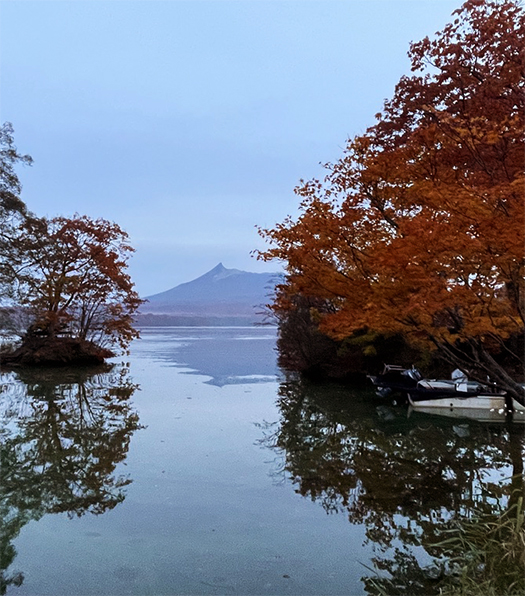
 そういうなか、連休では北海道道南の秋の紅葉を巡ってきておりました。写真は大沼と駒ヶ岳の様子。いろいろ見て回ったのですが、結局ホテルから出て早朝散歩で巡り歩いたこの地の風情が、深く心に焼き付いておりました。

 北海道で大きな山というと、大雪山旭岳、蝦夷富士・羊蹄山とありますが、こちら道南の駒ヶ岳は、手前側の大沼とのコンビネーションが抜群ですね。わたしたち夫婦はこちらの風景が大好きで春のサクラの時期とこの秋の紅葉時期、ほぼ慣例のように行っております。
 その行き帰りはクルマ一択。往復で600km超になるのですが、そのほかにも帰り道で日本海側、噴火湾側などと「遠回り」して帰還することが多いので、800km超くらいのロングドライブ。運転もときどき交代し合うのですが、帰ってきてから1-2日程度、じっくり静養することで運転疲労を癒している。ちょうど春はGW、秋は連休近辺日程なので、ちょうど良いのですね。
 ことしも無事に達成できて、夫婦でハイタッチといったところ。また行楽地でも早朝散歩などでゆったりながら運動量も確保できる。紅葉を踏みしめながらの散策は、心理的にもまことに癒されるのであります。なんとか平和な環境が護持されますように。

English version⬇

The U.S. Presidential Election and Japanese Politics at the Crossroads of Our Times
Today, the U.S. presidential election, the biggest concern for Japan and the world, is being held. We pray for the stability of the world for the time being. The scenery of Onuma-komagatake is tranquil. Onuma Komagatake is tranquil.

 Today is the U.S. presidential election. It has been reported that the advance voting is already well underway. As the election will determine the fate of the most important country in the world today, people are watching the situation with bated breath. There are even some who argue that a civil war is inevitable no matter which way the election goes, but I hope that the election will firmly establish the legitimacy of the U.S. democracy. It is a cold fact that one of the major “stabilizing factors” in the modern world is the Japan-U.S. security alliance, and in this sense, the stability of the U.S. is also considered to be linked to the stability of Japan.
 On the other hand, the political situation in Japan is, or perhaps because of this, becoming unstable. If the will of the people was to be questioned, it should have been done after a thorough review of the results of the government choices of its greatest ally. It seems to me that a phase is coming, perhaps in the wake of the U.S. results, in which we will have to adjust our alignment with them. As for the common people, above all, they would like to see a direction in which economic progress is made while stability is secured. Now, let’s look at the future.
 In the midst of all this, I spent my consecutive holidays touring the autumn foliage in southern Hokkaido. The photo shows Onuma and Komagatake. I looked around in various places, but in the end, the atmosphere of this area, which I walked around early in the morning after leaving the hotel, was deeply etched in my mind.

 Asahidake (Mt. Daisetsuzan), Ezo Fuji (Mt. Yotei), and Komagatake (Mt. Komagatake), which is located in southern Hokkaido. My wife and I love the scenery here so much that we have been going there as a matter of routine during the cherry blossom season in spring and the fall foliage season.
 We drive to and from the area by car. The round trip is over 600 km, and we often take “detours” to the Sea of Japan side and the Eruption Bay side on the way back, so it is a long drive of over 800 km. We sometimes take turns driving each other, and after returning home, we take 1-2 days to rest and recover from driving fatigue. The schedule is just right for the GW holidays in the spring and for the consecutive holidays in the fall.
 The couple high-fived each other for their success this year as well. We can also take an early morning stroll at an amusement park to get some exercise while relaxing. Strolling through the autumn foliage is truly relaxing psychologically. I hope that a peaceful environment can be maintained somehow.


【昭和天皇の神島上陸・戦艦長門でご進講 南方熊楠-7】


 さて南方熊楠の自邸を6回ほどのブログ記事で見て来たのですが、そういう南方が日本史のスポットライトを浴びたのは、生物学に造詣を深められていた昭和天皇が、南方熊楠の学問追求を知って、紀州を訪れてかれから直接「進講」を受けられたいと希望されたこと。
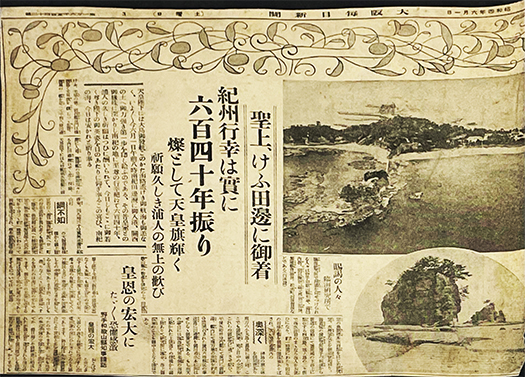
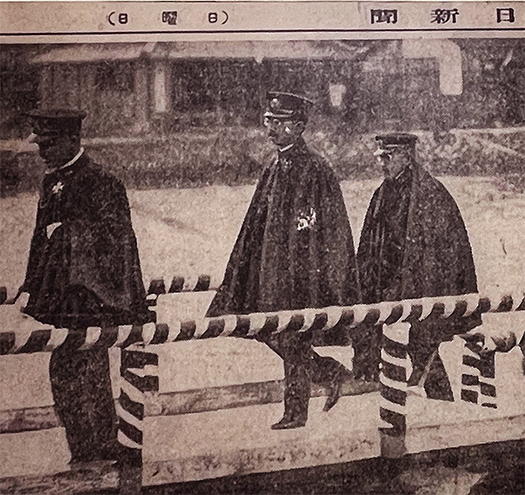
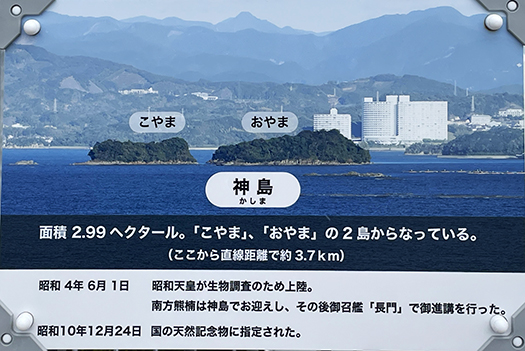
 昭和4年6月1日と日付のある「大阪毎日新聞」紙面では、天皇の紀州行幸は640年ぶりという見出しを振って1面記事として報道している。生物学者としての調査活動として田辺湾の神島に上陸され実地調査をされたのに対して、南方は神島でお迎えして参観ポイントを整理してご説明した後、天皇の「御座船」であった戦艦長門上で、ご進講を行った。
 前記したけれど、南方熊楠はこれ以前に政府が進めていた全国の神社の統廃合に対して明確に反対をとなえて活動を行っていた。昭和天皇のこの行動は、皇国史観による行きすぎた行政対応を緩和させる方向に働いていったとされている。行政府の対応に対して明確にそれに異を唱えた人物に対して、その意見をリスペクトし進講を受けられた天皇の行動には興味を惹かれる。
 
 平安期、多くの天皇退位後の上皇たちは「熊野詣」を繰り返していた。皇位としての行動制限から自由になった上皇たちは、はるか遠隔の地である熊野三山などを踏破してきていた。実際に「熊野古道」などを歩いてみれば、上皇たち自身も、みずから歩き巡っただろうことが想像される。なにかに突き動かされるかのようなそうした心理が民衆にも伝わって、蟻のようにという枕詞まで冠せられて、熊野詣は日本民族全般に及んでいった。空海や一遍上人など、多くの宗教者たちもこの紀州にリスペクトし、学ぶようになる。空海などは紀州の一帯・高野に根本道場の地を定め、みずからも「入定」している。
 それぞれの行動にはある一貫性があって、南紀の自然風土の特異性に対しての特別な思いがそこに投影されているのだろうと思われる。たしかにわたし自身も、そういった心理は自らも体験することで、いわば体感的に納得させられている。火山列島地形が黒潮によって永い時間、強く影響されてきた自然観に、同じ日本人として共感を強く持つのだ。ネイティブ北海道人としての自分としても、この多くの人びとの行動について、深い納得と共感を持つ。
 昭和天皇の行動には、そういった「民族性」が強く感じられる。そしてこの行動は、南方熊楠の人生とその事跡にとって、決定的なことがらになっていった。

English version⬇

The Emperor Showa’s Landing on Kamijima and his Lecture on the Battleship Nagato Minakata Kumagusu-7
Nanki-Kumano welcomed the Emperor for the first time in 640 years since the Heian period. In the age when a battleship was considered as a throne ship, the Emperor showed his respect to Minakata Kumagusu as a biologist. …

 We have seen Minakata Kumagusu’s residence in about 6 blog posts, but what brought Minakata into the spotlight of Japanese history was that Emperor Showa, who was deepening his knowledge of biology, was aware of Minakata Kumagusu’s academic pursuits and wished to visit Kishu to receive a “lecture” directly from him.
 The Osaka Mainichi Shimbun, dated June 1, 1929, carried a front-page article with the headline, “The Emperor’s first visit to Kishu in 640 years. While the emperor landed on Kamijima Island in Tanabe Bay to conduct a field survey as a biologist, Minakata welcomed him on Kamijima Island, explained the points of interest, and then gave a lecture on board the battleship Nagato, the emperor’s “throne ship”.
 As mentioned above, Minakata Kumagusu had been clearly opposed to the consolidation of shrines in Japan, which had been promoted by the government. It is said that this action of the Showa Emperor worked in the direction of mitigating the excessive administrative response based on the imperialist view of history. It is interesting to note that the Emperor respected the opinions of those who clearly disagreed with the executive branch’s response and accepted their lectures.
 During the Heian period, many emperors after their abdication repeatedly made pilgrimages to Kumano. Freed from the restrictions of the imperial throne, these emperors had traversed the Kumano Sanzan (three mountains of Kumano) and other far-flung places. In fact, if one actually walks along the “Kumano Kodo,” one can imagine that the emperors themselves must have walked the route themselves. The people of Kumano were also moved by such a spirit, and the pilgrimage to Kumano, which was even referred to as “like ants,” spread throughout the Japanese people. Many religious figures, such as Kukai and Ippen Shonin, came to respect and learn from Kishu. Kukai, for example, established his fundamental dojo in Koya, an area in Kishu, and himself “entered the Buddhist monastery” there.
 There is a certain consistency in the actions of each of them, and it seems to me that their special feelings toward the uniqueness of the natural climate of Nanki are reflected in their actions. Indeed, I myself have experienced this kind of mentality myself, and I am convinced of it from first-hand experience. As a Japanese, I strongly sympathize with the view of nature that has been strongly influenced by the Kuroshio Current for a long time on the volcanic island chain. As a native Hokkaidoian, I also have a deep understanding and sympathy for the actions of many of these people.
 In the actions of Emperor Showa, I strongly feel such “ethnicity. And this action became a decisive factor in the life and legacy of Minakata Kumagusu.


【瓦土塀と木壁のデザイン風合い 南方熊楠邸-6】


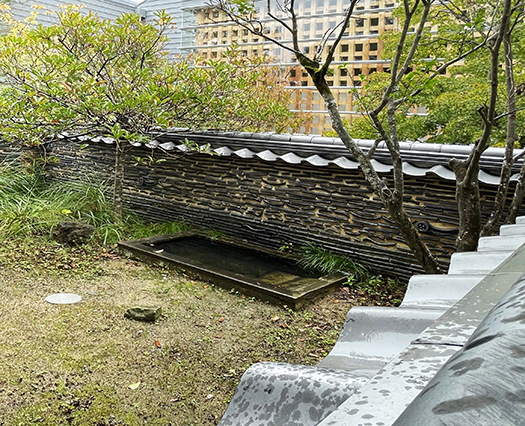
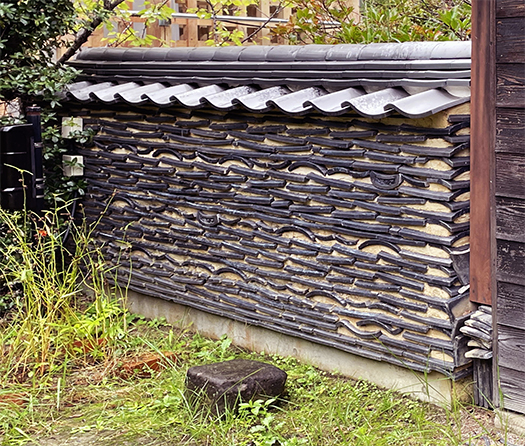
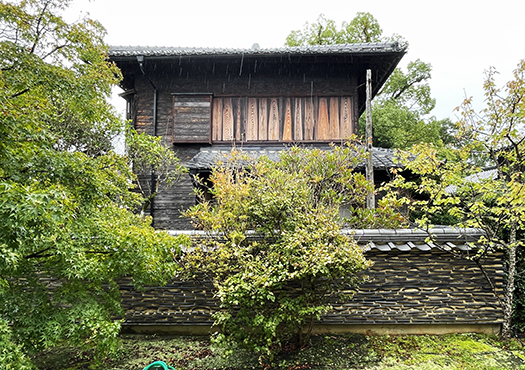
 本州地区の古建築、古民家などを見ているとときどきお目に掛かるのが、写真のような瓦入りの土塀。初めて見たのは熱田神宮に織田信長が桶狭間合戦の勝利祈願をして、それがみごとに成就したのでお礼として奉納したとされる「信長塀」。なんでも「日本三大塀」として有名なんだそうで、あとのふたつは三十三間堂(正式には蓮華王院)の境内南端にある。桃山時代に豊臣秀吉が南大門と築地塀(太閤塀)を造営・寄進した「太閤塀」と、兵庫県の西宮神社にあり、室町時代に造られたとされている。境内の東から南側までめぐる 247m の土塀、東に表大門と潜門、南大門が付いている「大練塀」とのこと。
 その3つのなかで信長塀だけはこの瓦土塀。土と石灰を油で練り固め、瓦を積み重ねて建造された優雅さを感じさせると同時に力感にあふれている。瓦は屋根材としてその重厚感と防火性によって高級な素材として日本文化で独特な位置を占めているけれど、それもやがては廃材となる。その廃材を再利用して作られるのが瓦土塀。土と瓦の配置バランスなどが主要なデザイン要素となるのでしょうが、この南方熊楠邸では、非常にたくさんの瓦が密度高く重層されている。
 この田辺の安東家城下でも枢要な位置に置かれた武家の南方家として、江戸期以来の屋根材として使われたモノの再利用であろうと推測されます。江戸期の「家格表現」のひとつとしてこういったデザインが採用されたようにも思える。その積み方デザインにまで施主として希望を出したかどうか、ですが、経年変化している木の壁とのバランスが非常に呼応していて、好ましい。
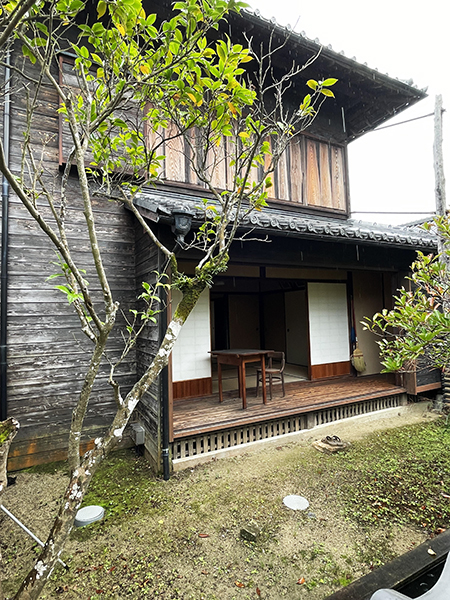
 1番上の写真は主屋母屋の座敷から正面に見える土塀で、主役としての植生たちとの対比があざやか。背景としての重厚感が強く印象される。2枚目の写真は側壁で木壁との調和ぶりが伝わってくる。
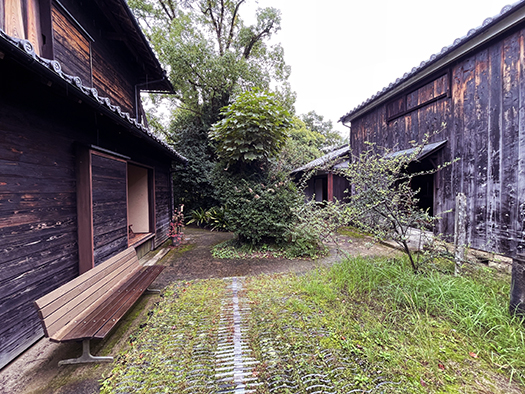
 3枚目の写真は無塗装での木壁がこの南紀の地でどのように経年変化していくか、を実証する画像。屋根の庇の出の深さとこの木壁の張り方に相関的関係があるのかどうか、そこらへんは取材できていません。
 たぶん108年間の紀伊半島西側での時間経過、気候状況との対話が表出している。木壁は左の母屋と右の蔵・書庫とで横張りと縦張りと仕分けされている。このことは蔵が出入り口以外には「開口部」を持たないのに対して居住用途建築で、開口部を大きく持っている建物とで、張り方を変えているのかも知れないと感じていた。北海道住宅では、横張りの変形であるドイツ式の下見板張りが優勢になっていったのですが、多雨気候の仕様が求められただろうに、日本建築では規則的な横張り一択だったのはなぜか、など妄想が膨らんでおりました。

English version⬇

[Design texture of tile clay wall and wooden wall, Kumagusu Minakata’s residence-6
A dialogue with the creator and owner of the 108-year-old building about the exterior design. The tile-laminated clay wall expresses the family character, and the wooden wall is a silent testimony of the climate and climate. ・・・・・・・.

 When you see old buildings and houses in the Honshu area, you sometimes come across clay walls with tiles like the one in the photo. The first time I saw such a wall was at Atsuta Shrine, where Nobunaga Oda prayed for victory in the Battle of Okehazama, and it is said that he dedicated the “Nobunaga Fence” as a thank-you for the successful completion of his prayer. The other two are located at the southern end of the precincts of Sanjusangendo (officially called Rengeoin Temple). The “Taiko-Fence” was built and donated by Toyotomi Hideyoshi in the Momoyama period (1573-1600), and the “Taiko-Fence” is located at Nishinomiya Shrine in Hyogo Prefecture and is said to have been built in the Muromachi period (1333-1573). It is a 247-meter earthen wall that runs from the east to the south of the shrine grounds, and the “Dairi Fence” with Omodaimon, Sukimon, and Minamidaimon attached to the east.
 Of the three, only the Nobunaga Wall is this tiled earthen wall. It was built by kneading clay and lime with oil and piling up tiles, giving it a sense of elegance and power at the same time. Tiles occupy a unique position in Japanese culture as a high-end roofing material due to their massiveness and fire resistance, but they will eventually become waste material. Tile clay walls are made by reusing this waste material. The balance between the soil and the tiles may be a major design element, but in this Minakata Kumagusu residence, an extremely large number of tiles are densely layered.
 It is assumed that these tiles are reused from the roofing materials used since the Edo period, as the Minakata family was a warrior family placed in a pivotal position in the Ando family castle in Tanabe. It seems that this kind of design was adopted as one of the “expression of family status” during the Edo period. I am not sure if the owner expressed his wishes in the design of the piling, but the balance with the aged wooden walls is very pleasing.
 The top photo shows the earthen wall in front of the main house, which can be seen from the main room of the main building, and it contrasts vividly with the vegetation that plays the main role. The second photo shows the side wall, which shows the harmony of the wooden wall.
 The third photo demonstrates how the unpainted wooden walls will change over time in this Nanki region. I have not been able to cover whether there is a correlation between the depth of the roof’s eaves and the way the wooden walls were put up.
 It is perhaps an expression of a dialogue with the passage of time and climatic conditions on the west side of the Kii Peninsula over a period of 108 years. The wooden walls are divided into horizontal and vertical sections between the main building on the left and the storehouse/stacks on the right. I felt that this may be due to the fact that the storehouse has no “openings” other than the doorway, while the residential-use building has a large opening, and thus the method of lining may have been changed. I was delusional as to why the German-style clapboard cladding, a variant of horizontal cladding, became predominant in Hokkaido houses, while the regular horizontal cladding was the only choice in Japanese architecture as a specification for the high-rainfall climate.

【アマテラス「自然崇拝」と南紀の風土 南方熊楠邸-5】


 写真は、南方熊楠邸のなかの「書斎」周辺の様子。わたしが南紀に強く惹かれるようになったのは、記紀伝承での神武東征譚にどのような空間的な「蓋然性根拠」があるのだろうか、という探究心からでした。そこから難波から迂回して神武帝の一統がふたたび上陸したとされる楯ヶ崎を実際に足で踏破してみた。
 まさか、そういう神話的なポイントが「観光地化」されていないとは夢にも思わず、ほんの5−6台程度の駐車場から、実際に楯が海にそそり立っているような楯ヶ崎の柱状節理地形を見て驚かされた。
 太古の巨大火山噴火によるカルデラ地形が太平洋の黒潮による浸食を受け続けた南紀の風土地形を見て、北海道の層雲峡と同等以上の「自然崇拝」を呼ぶに違いない荒々しさに心を奪われてしまったのです。そういった荒々しい地形と皇統神話が歴年にわたる天皇家による平安期の「熊野参詣」を生起させていった事情も、ひとつの日本史の「地学的」断面として納得感が湧き上がっていった。北海道ネイティブ人間からすると、北海道の大自然とも通底するような「自然」パワーを感じさせられていた。
 そこにはアマテラス、イザナミなどの神話に蓋然性を与えるようなパワーがあった。独特の熊野信仰の基底にそういった部分を色濃く感じさせられたのですね。そういった「自然崇拝」こそが日本の「国生み」譚とも結びついた側面を見せられた次第。
 今回参観している南方熊楠さんの自邸、その経歴のなかで特筆すべきは、昭和天皇が深くかれの自然探求に共鳴されて、戦艦・長門に乗船されてこの地におもむき、南方熊楠はこの南紀の植生について「ご進講」したということ。昭和帝はながく植物研究されていたことで知られていますが、その基礎には南方熊楠の研究へのリスペクトがあったのだと思います。さらに南方熊楠は、明治期の政府が全国の神社を統廃合しようとしたのに対して、怖れることなく反対の声を上げた人物としても知られる。かれは全国の神社空間が日本の国土の自然保全にとっていかに重要な空間であるかを怖れることなく言挙げした。昭和帝はそういった流れを踏まえてなお、南方熊楠にリスペクトされていた事実。
 このような近現代史のひとつの大きな側面のなかで南紀の風土が、なにがしか大きな背景を構成していることに気付かされたのです。

 日本の中央政権はこのような南紀・熊野の自然からその山並みを越えた大和平野から始原する。そしてアマテラスのような自然崇拝、さらに興味深いスサノオという人物譚を始原神話として持っている。そういった背景からやはり南紀の風土性についてより深く知りたくなった。旅は永く続きそうです(笑)。 

English version⬇

Amaterasu “Nature Worship” and the Climate of Nanki, Kumagusu Minakata Residence-5
The huge caldera topography of Nanki-Kumano has an important geological aspect in the creation tale of this country. The Kuroshio Current has been crashing wildly into this landform. …

 The photo shows the area around the “study” in the residence of Minakata Kumagusu. I became strongly attracted to the Nanki region because of my curiosity about what kind of spatial “probability basis” there was for the tale of the Jimmu expedition in the Chronicles of the Chronicles. From there, I detoured from Namba and actually stepped on foot to Tategasaki, where the line of the Emperor Jinmu is said to have landed once again.
 I had never dreamed that such a mythical point had not been “turned into a tourist spot,” and was surprised to see the columnar-jointed topography of Tategasaki from a parking lot with only five or six cars, where a shield actually seems to tower over the sea.
 Seeing the endemic topography of Nanki, where the caldera topography caused by a huge volcanic eruption in ancient times has been continuously eroded by the Kuroshio Current of the Pacific Ocean, I was fascinated by the ruggedness that must call for “nature worship” equal to or greater than that of Sounkyo in Hokkaido. The fact that such rugged terrain and the myth of the imperial lineage gave rise to the “Kumano Pilgrimage” by the emperors over the years during the Heian period (794-1185) also made sense to me as a “geological” cross section of Japanese history. As a native of Hokkaido, I was made to feel the power of “nature” that is commonly associated with the great nature of Hokkaido.
 There was a power that gave probability to the myths of Amaterasu and Izanami. You were made to feel such aspects strongly at the base of the unique Kumano faith. Such “nature worship” is also connected to the Japanese tale of the “birth of the nation”.
 It should be noted that Emperor Showa deeply sympathized with Minakata Kumagusu’s nature study, and he boarded the battleship Nagato to visit this place, where Minakata Kumagusu gave him a lecture on the vegetation of this Nanki area. The Showa Emperor is known to have been a botanical researcher for a long time, and I believe that his respect for the research of Minakata Kumagusu was the foundation of his research. Furthermore, Minakata Kumagusu is also known as a person who voiced his opposition to the Meiji government’s attempt to consolidate shrines throughout Japan, without fear. He was unafraid to speak out about the importance of shrine spaces throughout Japan for the preservation of the country’s natural environment. The Showa Emperor still respected Minakata Kumagusu in light of this trend.
 I realized that the climate of Nanki constitutes a significant background in one of the major aspects of modern and contemporary history.

 The central government of Japan originated in the Yamato Plain beyond the mountain range of Nanki-Kumano. It also has a nature worshiper like Amaterasu and an interesting tale of Susanoo as its origin myth. Against this background, I wanted to know more about the Nanki region. It seems that my journey will continue for a long time (laugh). 

【植物学者の縁側と「庭木」たち 南方熊楠邸-4】


北海道の住宅関係人であるわたしからすると、本州以南地域の住宅文化における「庭園」の占めている要素・重量感について、やや疎外感を持って見ている部分がある。やはり北国ではどんなに端正な庭園を作っても、通年それをガラス建具による結界もなく、いわば肌身で感受するたのしみはあり得ない。冬にはそれらの庭木群がどれほどの積雪荷重にさらされ、それによる矮化も覚悟せざるを得ないことから、家の中と庭とは異世界という感覚が強まって行かざるを得ない。日本人のこころの原風景に刷り込まれているようなサザエさんの家的な空間、縁側があってそこから庭木を愛でるような家は成立しがたいのだ。
 そういったことに鋭敏であらざるを得ないネイティブ北方体験をし続ける人間。そういう人間からすると、この南方熊楠邸は、まったく想像を絶するような温暖・蒸暑地域のさまざまな植生こそが「主体」となった、いわば植物が主人でそこに学者としてその観察人が最大の興味を持って日々を共生している、と受け取れた。
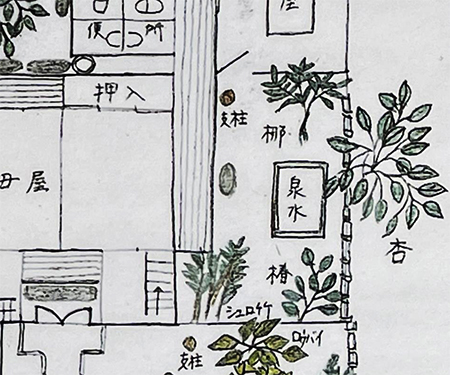
 ただ、いわば風流数寄という趣味生活的なものごころから、この南方熊楠邸は成り立ってはいないこともあきらかだと感じられた。まことに理知的な、ひとつひとつの植栽に対しての丁寧な観察眼、それぞれへのまなざしが住空間全体から感じ取れた。この邸宅の「間取り図」が、家屋の配置状況以上に、各植栽の種類とその「位置関係」を克明に記述していることがきわめて特異的。
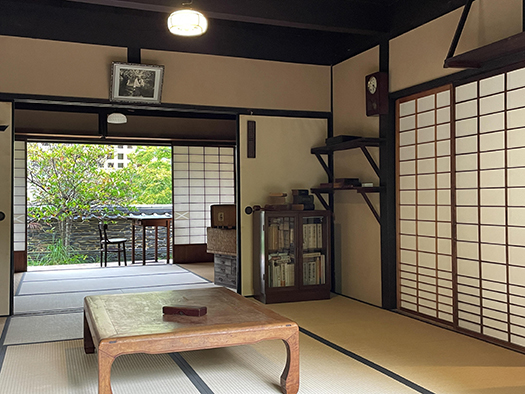
 座敷から切り取られる庭木としては、人工的な「泉水」池の先に塀があって正面には「杏」がその植生を見せている。その左側には梛(なぎ)、右手からはシュロ竹と言った植栽が施されている。杏はまだしも、それ以外の2つは、まったく一般人には馴染みはない。下の写真はシュロ竹詳細。

 この南方熊楠邸はその死後、娘さんが生前の様子に基づいて忠実に復元管理され、現在は公的に保全されていることから、その状況は南方熊楠さんの見ていた景観に近しいのだろうと推定できる。
 こういう家屋と周辺植栽の関係性、それをもって邸宅が基本構成されているという住宅参観の体験はわたしには、まったく初めての経験だった。わたしの乏しい体験からすると、東大阪の「司馬遼太郎の家」の庭木と作家の書斎との関係が辛うじて共鳴関係にあるように思われた。司馬さんの家ではかれがこよなく愛した「ごく自然でその風土に根ざした庶民的雑木」がひしめいていた。
 たぶん、南方熊楠さんの心根はこのあたりと通底している、と感じられた。

English version⬇

The botanist’s porch and “garden trees” at Kumagusu Minakata’s residence-4
This is not a so-called “garden sukiya,” but a viewpoint that clearly observes the changes of nature from the perspective of trees. On the other hand, it has a softness that is similar to Ryotaro Shiba’s view of garden trees. The garden is not a so-called “garden sukiya,” but rather a clear observation of the changing nature from the trees.

As a person involved in housing in Hokkaido, I have a somewhat alienated view of the elements and weight of “gardens” in the housing culture of the Honshu region and southward. In northern Japan, no matter how neat the garden is, there is no way to enjoy the pleasure of experiencing it firsthand all year round without the use of glass fixtures and fittings. In winter, the garden trees and plants are exposed to heavy snow loads, which can cause them to become dwarfed, and the sense that the inside of the house and the garden are two different worlds becomes stronger. It is difficult to create a house like Sazae-san’s house, which is imprinted in the original landscape of the Japanese mind, or a house with a porch from which one can admire the garden trees.
 A person who continues to experience the northern part of the country must be keenly aware of such things. From my point of view as such a person, this Kumagusu Minakata’s house is a place where various vegetations in the unimaginably warm and humid region became the “subject,” so to speak, where the plants are the masters and the observer, as a scholar, is living in harmony with them day by day with the greatest interest.
 However, it was also clear that Minakata Kumagusu’s residence was not built with a hobbyist’s lifestyle. The entire living space is filled with intelligent, careful observation of the individual plants, and a focus on each of them. The “floor plan” of this mansion is more unique than the layout of the house in that it clearly describes the types of plants and their “positional relationship” to each other.
 As for the garden trees cut off from the tatami room, there is a wall at the end of the artificial “fountain pond” and in front of it, an apricot tree shows its vegetation. To the left of it is a nagi (Japanese nagi), and from the right is a shuro bamboo. While the apricot trees are not yet in bloom, the other two are not at all familiar to the general public. The photo below shows a detail of the shuro bamboo.

 After his death, his daughter faithfully restored and maintained the Minakata Kumagusu Residence according to how it looked before his death, and now it is publicly preserved, so we can assume that its condition is similar to the landscape that Mr. Minakata Kumagusu saw.
 This was my first experience of visiting a house where the relationship between the house and the surrounding vegetation, and the basic structure of the house itself, was such a new experience for me. From my limited experience, the relationship between the garden trees in “Ryotaro Shiba’s House” in Higashi-Osaka and the writer’s study seemed to me to have a barely resonant relationship. Shiba’s house was filled with the “natural and local common trees” that he loved so much.
 I felt that the heart of Mr. Kumagusu Minakata probably had something in common with this area.
 

【108年前、大正初期の南紀・田辺市の街区と現在】


 南方熊楠さんの自邸探訪その2であります。こちらの敷地はおおむね400坪ほどで、江戸期に紀州藩の「支藩」であった安藤氏の城下町というのが街区の由来。旧邸で質問にお答えしていただいた女性からの伝聞では、南方家というのは、この安藤氏の家臣の家系であって熊楠氏の父親は明治以降、金融業で財を成したのだという。そういった経済的背景で次男であった熊楠氏は、夏目漱石や正岡子規などと同時期に東大の予備門で学び、そこから海外遊学にまで旅立って行ったとのこと。明治という時代の雰囲気、その空気感がかれの学業・探究に大きな基礎を形成していたことがわかる。
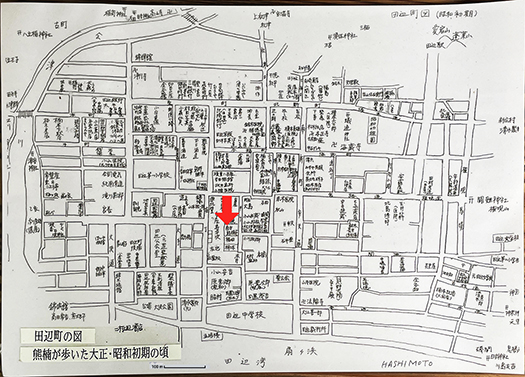
 その家系環境の中で、南方家の財産分与のようなカタチでこの400坪の屋敷地は熊楠氏にわたった。さすがに郷土を代表する人物について地域を挙げての調査活動がされていて、上のような「当時の街区地図」までもが公開されていた。わたし的にはそういった地道な調査活動に驚かされた。全国のこうした住宅探訪は、わたしの一種の「ライフワーク」化してきているけれど、ここまでの詳細ぶりははじめて。
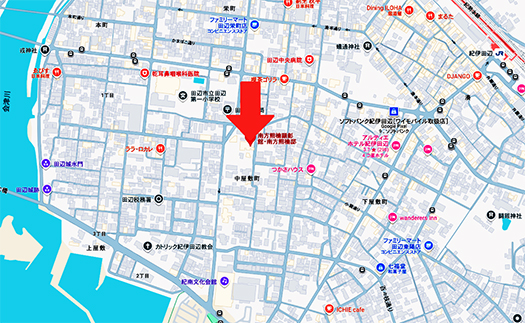
 その街区地図、おおむね1916年のこの南方熊楠邸の建設当時、このような環境で日々を暮らしていたということがリアリティを持って伝わってくる。地図に赤い矢印を付けたので、位置関係がお分かりいただけるでしょう。今日の住宅建設では当然のこととして「立地環境調査」が自明のように行われるけれど、こうした「古民家」探訪での手掛かりは非常に貴重。街区図には「めし屋」「辻の餅」「木村パン」といった店舗の所在までが推定できる記述に出会う。さらに先日の訪問では、レンタカーのカーナビ案内で白浜方面からの道で左折した交差点の名前が「銀座」だった。紀伊半島の海上交通の要衝として金融業というものの存在感が地名にまで残っているのだろう。父親、南方家の状況もそうした街並みの様子からも伺えてくる気がした。南方さんの家からほんの3-400mほどの距離。
 昨日のブログでは南方さんの毎日の食事生活・台所、流しの場もわかった様子を書いたけれど、こうした周辺街区の詳細も見えてくると、より具体的な生活実相がみえてくる。世界的な植物学者・科学者を生んだ地域の誇らしさが感じられて、自然と好感を持たされる。
 さらに南方さんの家の5-6軒南側には「原秀治郎・原豊次郎」というお宅の所在も確認できた。実はわたし自身の家系伝承で、この「紀州の原家」というのはひとつのミッシングリンクなので、強く引き込まれてしまっていた。ひとつの探訪が、またさらに古層の探究のきっかけになる。まことに醍醐味(笑)。あ、この件は今回の南方熊楠さん探訪から激しく逸脱するので、横道探訪はいたしません(キッパリ)。

English version⬇

[108 years ago, in the early Taisho era, Nanki-Tanabe City, Nanki-Tanabe City, and the present
A “street” map of the time when Kumagusu Minakata lived in this city has been researched and published. The sincerity of the people of the entire community is amazingly informative. ・・・・.

 This is the second visit to Minakata Kumagusu’s own residence. The site of this residence is about 400 tsubos (about 1,000 square meters), and the name of the town was derived from the castle town of the Ando clan, which was a “branch clan” of the Kishu clan in the Edo period. According to the legend of the woman who answered our questions at the old residence, the Minakata family was a family of vassals of the Ando clan, and Kumagusu’s father made a fortune in the financial business after the Meiji era. With such economic background, Kumagusu, the second son, studied at the Tokyo University Preparatory School at the same time as Soseki Natsume, Shiki Masaoka, and others, and even went abroad to study. It is clear that the atmosphere of the Meiji era formed a great foundation for Kumagusu’s academic studies and research.
 In this family environment, the property was given to Mr. Kumagusu as if it was a share of the Minakata family property. As one would expect, the whole community was involved in the research activities on the local representative of the local people, and even a “street map of the time” like the one above was published. I was surprised by such a steady research activity. Although this kind of house-hunting has become a kind of “lifework” for me, this is the first time I have seen such a detailed map of the area.
 The map of the area, which shows the conditions of the Minakata Kumagusu residence at the time of its construction in 1916, conveys the reality of daily life in such an environment. I have added red arrows on the map so you can see the location. Although “location and environment surveys” are conducted as a matter of course in today’s housing construction, the clues provided by such “old minka” explorations are extremely valuable. On the street map, we found descriptions of stores such as “Meshiya,” “Tsuji-no-mochi,” and “Kimura Bakery,” which we could even guess where they were located. Furthermore, on a recent visit, the name of the intersection where I turned left on the road from Shirahama, guided by a rental car, was “Ginza. The presence of the financial industry as a key point of maritime transportation in the Kii Peninsula is probably preserved in the name of the place. I felt that the situation of the father and the Minakata family could also be heard from the appearance of the streets. It is only 3-400 meters away from Minakata-san’s house.
 In yesterday’s blog, I wrote about how I could understand Minakata-san’s daily meals, kitchen, and sink area, but when I could see the details of the surrounding area, I could get a more concrete picture of his daily life. The pride of the area that gave birth to a world-renowned botanist and scientist can be felt, and this naturally makes one feel good about the area.
 Furthermore, five or six houses to the south of Mr. Minakata’s house, I was able to confirm the location of a house called “Hara Shujiro and Hara Toyojiro. In fact, the Hara family in Kishu is a missing link in my own family history, and I was strongly drawn to it. One visit to the family’s house triggers further exploration of the ancient layers of the family. It is truly a real pleasure (laughs). Oh, I will not go on a side trip, because this matter deviates from this exploration of Mr. Kumagusu Minakata.

【1916(大正5)年頃の南方熊楠の家・台所空間】


 昨日は久しぶりのわが家帰還で、体力涵養を第一に過ごしておりましたが、都合5日間で札幌ー東京ー新幹線移動ー大阪ー南紀白浜ー奈良ー播州兵庫ー神戸ー大阪・堺ー関空から帰還、という長距離移動での疲労なので、すぐには全快はいたしませんね(笑)。仕方ないので、しばらくはジミジミとひっそり気味にしていたいと思っております。
 しかし今回見て来た住空間で、印象に残っているのはやはり南方熊楠さんの居宅。和歌山県田辺市という南紀の中心地に建てられていた建物で、いまから過ぐる100年ちょっと前のこの地域の「民俗」が伝わってくる空間でした。植物学、知の巨人という南方熊楠さんの暮らしぶり、息づかいの部分が感じられた。
 全体が植物学者らしくたくさんの自然の植え込み植物が中心の家で、かれはこの庭空間での「観察」で日々研究心を持ち続け、涵養していた様子がわかる。今日の一般的住空間とはまったく違って、用途毎の平屋などの小建築群が「分棟」形式で機能としては別れながら、しかし全体としてつながっている。
 そもそも蒸暑・温暖地域である紀伊半島の太平洋に面した「黒潮」的な自然環境を探究したかれらしく、その思索と生き様が強く連関していると感じた。
 南方家というのは、御三家紀州藩の士族であり、そうした家系環境のなかでさらに父親が商才もあったようで、最終的には「金融業」で成功を収めたという出自環境。そういう環境の中で、自由闊達に旺盛な学習を重ねることができた人物。「民俗」研究者として相互交流を持ったという柳田國男は、貧困な地方医家の出自だったことから比較して、相当恵まれた環境の人物だったと言えると思う。
 この家は、そうした家庭環境の中で実家の所有する広大な土地を分与されたものだった。今日の「住宅環境」とは相当の乖離が感じられる。そのなかでも強い興味を持ったのが、水回り・台所的な空間。
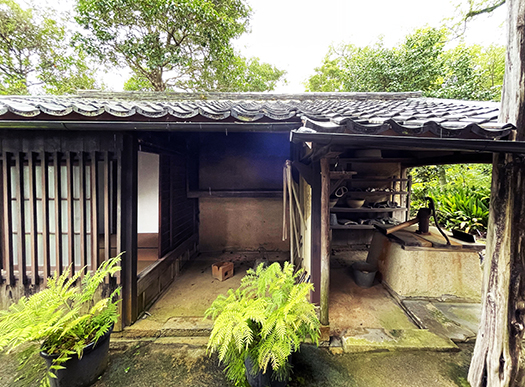
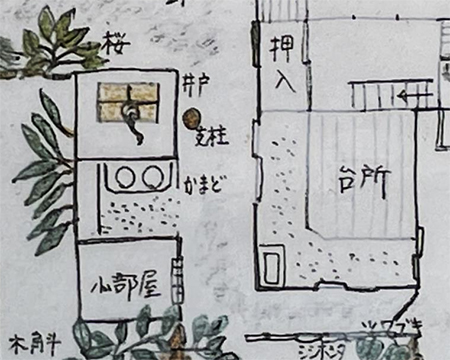
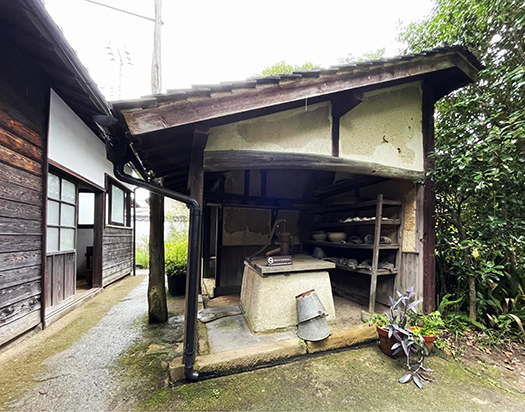
 上の写真は「台所」が外化したような小屋で、正面左には奉公の女中さんの2畳ほどの居室があり、真ん中には「カマド」が2つしつらえられていた場所。さらにその右側には井戸・ポンプが装置されているように「水回り・流し」空間という機能仕分け。写真撮影した手前側の「母屋」に正対して行ったり来たりしながら、食事作りに立ち働いていた様子が視覚的に感受することが出来る。
 3枚目の写真は、左手に「母屋」があって正面には流し機能の井戸・ポンプの空間。いまから100年前のこの南紀地域での家事仕事が空間的に直接、わかってくる。建物の端部では、構造が怪しくもなってきている。そういう様子がまた、この地域の気候環境を証言もしている。
 しげしげと参観学習させていただいていた。

English version⬇

Minakata Kumagusu’s house and kitchen space circa 1916.
The kitchen space of Minakata Kumagusu’s house around 1916 was a vivid depiction of life in the Nanki-Shirahama area more than 100 years ago, and as a Hokkaido native and a modern-day visitor, I found it interesting to see the reality of the area. The house and kitchen space of Minakata Kumagusu

 Yesterday, I returned to my home for the first time in a long time, and I spent my time with the first priority on physical rehabilitation. However, I will not be fully recovered soon because of the fatigue from the long-distance travel of Sapporo – Tokyo – Shinkansen bullet train – Osaka – Nanki-Shirahama – Nara – Banshu Hyogo – Kobe – Osaka, Sakai – return from Kansai Airport in five days (laugh). (Laughs) Since there is no other choice, I would like to stay quiet for a while.
 However, the most memorable living space I saw this time was Kumagusu Minakata’s residence. It was built in Tanabe City, Wakayama Prefecture, in the center of the Nanki region, a space that conveys the “folk customs” of this region a little over 100 years ago. The building was a place where one could feel the life and breath of Kumagusu Minakata, a botanist and a giant of knowledge.
 The entire house was filled with many natural plants, as if he was a botanist, and we can see how he kept and cultivated his research spirit through daily “observation” in this garden space. Unlike today’s general living spaces, the house is made up of a group of small buildings such as one-story houses for different purposes, which are separated in function, but are connected as a whole.
 It seems that he explored the “Kuroshio” natural environment facing the Pacific Ocean on the Kii Peninsula, a hot and humid region, and I felt that his thought and way of life were strongly related to it.
 The Minakata family was a samurai family of the Kishu clan, one of the three largest clans in Japan, and their father was a talented merchant who eventually became successful in the financial business. In such an environment, he was able to freely and vigorously pursue his studies. Compared to Kunio Yanagida, with whom I had mutual exchanges as a researcher of “folk customs,” who came from an impoverished family of doctors in a rural area, I think it can be said that he was a man of considerably privileged circumstances.
 This house was built on a large plot of land owned by his family. It is quite a departure from today’s “housing environment. Among these, I was strongly interested in the water and kitchen-like space.
 The photo above shows a hut that looks like an externalized “kitchen,” with a two-tatami mat room for a serving maid in the front left, and two “kamado” (a kind of wooden stove) in the middle. On the right side, there is a well and a pump, which is a “watering and sink” space. The “main house” on the front side of the photo is directly opposite to the “kitchen,” and we can visually perceive how the workers were standing and working to prepare meals while moving back and forth.
 The third photo shows the “main house” on the left and the well/pump space with sink function in front. We can directly understand spatially the domestic work in this Nanki area 100 years ago. At the edges of the building, the structure is becoming suspicious. This also testifies to the climatic environment of the area.
 I was able to observe and study the house with a keen eye.