本文へジャンプ

【本丸御殿に躍動する「トラトラトラ」 名古屋城探訪-4】


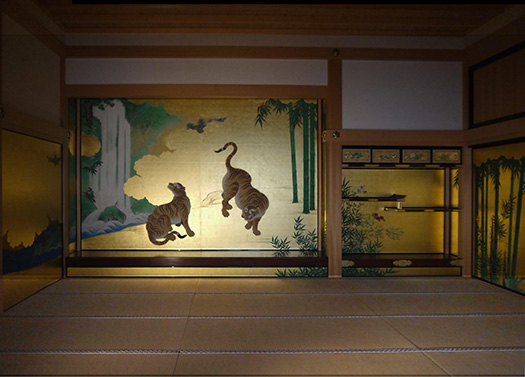
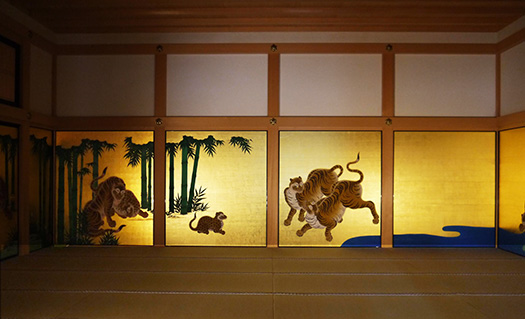
 写真は名古屋城本丸御殿の障壁画のうち、玄関の間に飾られているトラ群であります。金箔の背景色と和の空間の漆喰の白、畳の自然な黄色の色合いの相関性が、いかにも日本的な感受性のある極点なのだという印象を受ける。美術館などで金屏風絵などを見るのともまた違う、いかにもその「本来の見え方・見せ方」を発見するような思い。
 トラという画材テーマは日本には棲息していない獰猛な「怖ろしげなるもの」というのが、日本人全般の意識だった時代。しかし実際に朝鮮出兵などで大陸性のこの動物に遭遇した経験も、加藤清正のトラ退治伝承などで、この名古屋城創建時の時代のひとびとには、ある生々しさもあっただろう。武家の頂点に立つ徳川将軍家の御三家の中枢権力装置として、狩野派への「主題」提示があっただろうことは容易に想像が付く。「本丸御殿に来訪した人間たちに、主人の武威を視覚化して表現せよ」。
 そういう受け手の印象に対して、いかにもケバケバしく眼に飛び込んでくる金色の背景で、獰猛そうなトラが「ウヨウヨいる」という光景は、まことに訴求力があったに違いない。おおむね「等身大」に描画されたトラたちは、いまにも画面から飛び出してくるような姿勢、姿態で描かれて、畳の空間を徘徊しているような印象を与えてくれている。
 イマドキの現代人にとっては、おお、動物園の檻の中に飛び込んだみたいだ、というような半分ワクワクさせられるような光景だけれど、この城の創建の頃の人びと、武家や公家などにとっては、この家の主人は、こういう危険極まりない「武力」を実際に行使するパワーを持った存在であるので、高尚で高邁な芸術を通した「脅迫・プレッシャー」として機能したのだろう。
 「オレ様、こういうの、ウヨウヨ飼っているからね」
 今日ではマンガ的と言えるけれど、江戸時代初期的にはひとつの「安全保障」策として機能したものであるのだろう。現実の軍事力を誇示することで畏怖させて自分に都合の良い安寧を実現し維持するという思考。なにごとも力でしか人心を圧伏できないという冷徹な思考法。しかし今日世界でも、こういう思考法は世界の趨勢に基底的にあり続けている。
 民主主義国家体制ではそれがそのまま表に出てくることはないけれど、天安門事件で民を虐殺した権力とか、核搭載可能なミサイルを誇示し国民の反抗心を萎えさせ周辺国に脅しを掛ける権力とか、「国連常任理事国」でありながら実際に核攻撃までちらつかせ他国を平然と侵略する権力など、わたしたちはこういう輩たちの正面にいることも現実ですね。

English version⬇

Tiger Tigers” Lively in Honmaru Goten: Exploring Nagoya Castle – 4
A lively depiction of a group of dangerous animals that first greet visitors to the castle. The expressive power of the Kano school makes them seem as if they are jumping out of the gold glittering background. …

 The photo shows a group of tigers among the barrier paintings in the Honmaru Palace of Nagoya Castle, which are displayed in the entrance hall. The correlation between the gold leaf background color, the white of the plaster in the Japanese space, and the natural yellow hue of the tatami mats gives the impression of a certain extreme point of Japanese sensibility. It was as if I was discovering the “original way of seeing and presenting” of the work, which is different from the way I see gold folding screen paintings in art museums.
 The theme of tigers as a painting medium was not native to Japan at that time, when Japanese people in general were aware of tigers as ferocious and “frightening” creatures. However, the people of the time when Nagoya Castle was built must have had a certain vividness, as they had actually encountered this continental animal during the Korean invasions, and there are legends of Kiyomasa Kato’s killing of tigers. It is easy to imagine that the Kano school would have been presented as the central power apparatus of the Tokugawa shogunate’s three families, which stood at the pinnacle of the samurai class. The Kano school was asked to “visualize and express the military might of the master to the visitors to the Honmaru Palace.
 The sight of ferocious-looking tigers “teeming around” against a gold background that jumped out at the viewer’s eyes in a garish manner must have been very appealing to such an impression. The tigers, drawn in a generally “life-size” pose, seem as if they are about to leap out of the screen, giving the impression that they are roaming around the tatami space.
 For modern people, it is a half-exciting scene, as if they have jumped into a zoo cage, but for the people of the time when the castle was built, such as the samurai and court nobles, the master of the house actually had the power to actually use such dangerous “military force” and was therefore a noble and noble man. For the people of the time of the founding of the castle, such as the samurai and court nobles, the master of the house actually had the power to use such dangerous military force.
 I have a lot of these things, you know.
 Although today it could be called cartoonish, in the early Edo period it probably functioned as a “security” measure. The idea was to achieve and maintain a sense of security that suited one’s own needs by displaying real military power in order to awe the people. It is a cold-blooded way of thinking that only force can win people’s hearts and minds in anything. This way of thinking, however, continues to be a fundamental trend in the world today.
 Although it does not appear in democratic regimes, it is still present in the power that massacred the people in the Tiananmen Square massacre, the power that threatens neighboring countries by flaunting missiles to weaken the defiance of the people, and the power that invades other countries with impunity by threatening nuclear attacks despite being a permanent member of the United Nations Security Council, The reality is that we are right in front of these people.

【障壁画の復元模写 名古屋城探訪-3】


 昨日で当面の懸案事項について、一気呵成に一段落させられた。そういう特異日というのはあるもので、いろいろな作業段取りが複雑に絡み合いながら「腑に落ちる」みたいな感覚で、大団円を迎える。仕事というものは人間のやることなので、心の持ちようが微妙に反映していくものなのでしょう。ただし、これはあくまでも途中経過での一段落。引き続き、油断せずに対応して行きたい。
 ということで、ブログ記述でも「名古屋城編」に復帰。
 この城で興味深かったのは、徳川氏の全国支配の要衝地ということで天下普請としての建築から、内部の装飾がキラキラとまぶしく輝くようであったこと。まぁ金屏風絵がこれでもかと飾られていたのであります。
 こういった性格の城郭建築としては江戸城がその最高点になるものでしょうが、こちらは住宅の一種という建築の仕分けから、天皇の居所として宮殿建築に変容して、もちろんその内部空間は滅多に参照することが出来ない空間になっている。
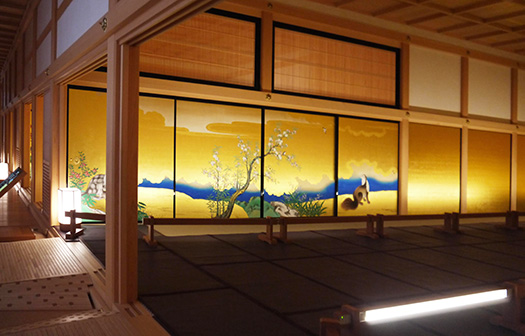
 そういう流れからすると、この名古屋城は江戸城の内装空間を想起させるような室内空間と推認できる。で、もっとも印象的なのは、金屏風障壁画のきらびやかなこと。上の写真は「玄関」から廊下に至る空間を装飾するもの。狩野派などの日本の伝統的画業がみごとに端座している。


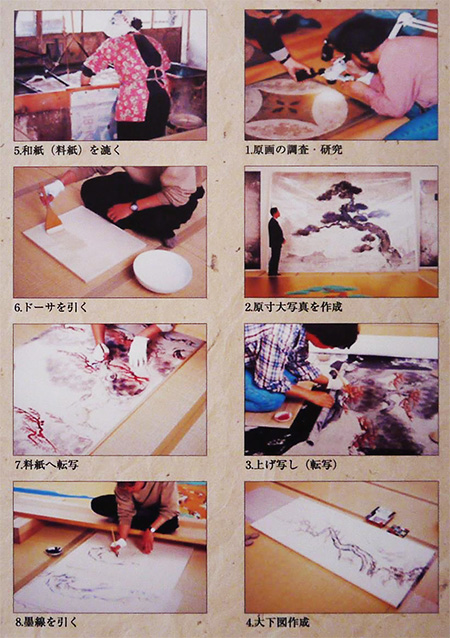
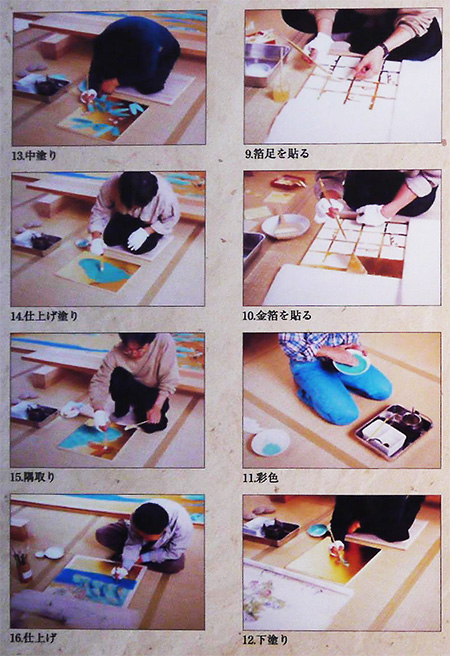
 昔の絵を写す技術を「模写」という。模写は古典絵画の名品が持つ芸術性や優れた技術を修得・継承するために行われてきた。この名古屋城では絵が描かれた当初の姿に戻すという「復元模写」の方法が取られていたのだという。愛知県立芸術大学の日本画保存模写研究会の加藤純子氏による指導でこの復元模写作業は進められた。
 そのプロセスを記録広報するパネル展示がされていて、絵が大好きな血が騒いで仕方なかった(笑)。小学校1年生の時に描いた相撲の立会いの瞬間の絵が、アメリカ・ポートランド市と札幌市の「姉妹都市」提携の時の児童画交換コンテストで特選で選ばれた出自をもつわたしとしては(💦)、まことにひきこまれる。
 芸術というのは、わかりやすく権力建築と宗教建築などの需要に応じて存続発展してきたものでしょうが、日本ではこうした金屏風絵がながく日本民族の美意識を存続させてきた。
 そういう心構えとか、臨場感のようなものが、こうした展示から伝わってきた。真摯に画布に向かって折り目正しく座して、しかし業にあたっては「三昧」の心境で当たっていただろう、その様子をルポルタージュしてくれているようで、こころが激しく反応していた。……

English version⬇

Restoration and Reproduction of the Barrier Paintings: Exploring Nagoya Castle – 3
The art of decorating palaces and religious buildings has been handed down from generation to generation. The work of restoration, which transcended the time and space of several hundred years, is intensely felt. …

 Yesterday, I was able to complete all of my pending tasks in one fell swoop. There are such special days, when all the various work arrangements are intertwined in a complex way, and the work comes to a conclusion with a sense of “it all becoming clear”. Work is a human activity, so it is a subtle reflection of how one’s mind works. However, this is only the end of the story. We will continue to deal with the situation without letting our guard down.
 So, I am back to the “Nagoya Castle” section in my blog entry.
 What was interesting about this castle was that the interior decorations seemed to shine brightly, as it was built as a fuchin under the Tokugawa clan’s rule over the whole country. The interior of the castle was decorated with gold folding screen paintings.
 Edo Castle is probably the highest point of this type of castle architecture, but this castle was transformed from a type of residential building to a palace building as the residence of the emperor, and of course, its interior space is a space that can seldom be referred to.
 In that vein, we can infer that the interior space of this Nagoya Castle is reminiscent of the interior space of Edo Castle. What is most impressive is the glittering gold folding screen barrier paintings. The picture above is one that decorates the space from the “entrance” to the corridor. Traditional Japanese paintings of the Kano school and other schools are beautifully displayed.

 The technique of copying old paintings is known as “reproduction. Reproduction has been used to acquire and pass on the artistry and superior technique of masterpieces of classical painting. At Nagoya Castle, the method of “restoration copying” was used to restore the castle to its original appearance when it was first painted. Junko Kato of Aichi Prefectural University of Fine Arts and Music’s Japanese Painting Conservation and Reproduction Society guided the process of restoration and reproduction.
 There was a panel exhibit documenting and publicizing the process, which got my painting-loving blood boiling (laughs). As a first-year elementary school student whose drawing of a sumo match was selected as a special prize in a children’s drawing exchange contest held in conjunction with the “sister city” affiliation between Portland and Sapporo, I was really drawn to the work (💦).
 In Japan, however, these gold folding screen paintings have long sustained the aesthetic sense of the Japanese people.
 This kind of attitude and sense of presence was conveyed through these exhibits. The reportage of the painters, who were seated with sincerity and poise facing the canvas, and who probably approached their work with a mind of “samadhi,” made my heart react violently to the exhibition. ……

【冬のなんでもない風景と三角屋根という人跡】


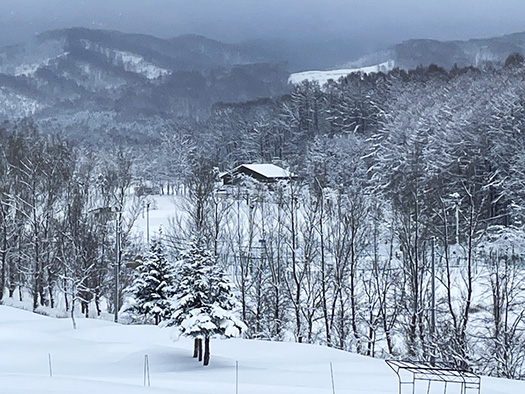
 写真は土曜日に行っていた日帰り温泉施設からの冬の北海道のなんでもない景色。雪は木立のすべてに明瞭な「陰影感」を加筆して、墨絵的な美感を際だたせていく。植物という存在が無音ながらまるでオーケストラのように視覚的な「音楽性」を感じさせてくれる。
 幼少年期からずっと見続けてきた自然からのこうしたメッセージに、また何度目かの遭遇をして、人生時間の積層のヒダの隅々から記憶再生されてくる時間。特定の事象について、ではなくそういった記憶が総合されて、ひとつひとつの事象を超えた交響楽的に訴求してくる。雪国で生きてきた人間として、その風景との心象での対話を楽しんでいるのでしょうか。
 もちろんこういう風景を楽しめるのは、自分がいまいる空間の温熱環境が快適領域である、ということが大きく与っている。断熱気密技術が大前提ということにも気付かされる。北国的な自然環境でも快適な室内環境は保障されてきたということで、こういった人生の余韻的な記憶再生も条件が整ってきたということなのでしょう。
 わたしのライフワーク的な部分として、日本的花鳥風月の北海道的自然環境の中でのあらたな発見、みたいなことがあるのですが、たとえば関東以南の風土が生み出してきた「家+庭」文化、床の間和室からその土地の植物群との対話、庭鑑賞的な住宅文化に対して、北海道の住宅では、庭に自然を「切り取ってくる」という気分がそれほど強く起きない。
 そういった「自然との対話」は必ずしも「家の中から愛でる」というものではなく、壮大な大自然の季節のいとなみの中にこそ、リアルな美感があると感じているのですね。そういう巨きさから比べたら、チマチマとした箱庭作りには興味が湧いてこない。それくらいなら、野外ジンギスカンの場としてウッドデッキの方が実利的と考えられるのですね。
 で、風景の写真のなかでは、三角屋根のシンプルな建築が、オーケストラの中でひときわ印象的に響いてくる。
 「お、あそこではどんな暮らし、いとなみがあるのだろう?」という残響のような興味。自然そのものに対してはあきらかに「異物」ではあるけれど、罪多き人為のなかでは、まだしも共感をもって受容できる、みたいな感覚をもつ。
 あのような自然環境の中で、室内気候は充足できる環境が保全されて、しずかにまわりの自然と調和している様子、それ自体が「花鳥風月」的でもあるように思える。すくなくともそういう安寧的な心理から自然と語らい得ることが、キモのように感じられるのです。

English version⬇

The winter scenery and the human remains of a triangular roof.
Having experienced the cold winters of Hokkaido since childhood, I have always wondered what “Kacho-fu-getsu” means. I had a feeling like “what is Kacho Fugetsu?” but the comfort of indoor climate may create Shin Kacho Fugetsu. I’ve been wondering what is “Kacho-fu-getsu”?

 The photo is a nondescript view of Hokkaido in winter from a day spa I was visiting on Saturday. The snow adds a distinct “shadowy” feeling to all the groves of trees, accentuating their beauty like an ink painting. The presence of the plants, though silent, gives the viewer a sense of visual “musicality” like that of an orchestra.
 Encountering these messages from nature, which I have been seeing since my childhood, for the second and third time, I feel my memory replaying from every corner of the layers of my life time. The time when these memories are replayed from the corners of the layers of life time. As someone who has lived in a snow country, I wonder if I am enjoying a mental dialogue with the landscape.
 Of course, the reason why we can enjoy this kind of scenery is because the thermal environment of the space we are in is comfortable, which contributes greatly to this kind of psychological impression. We are also reminded that insulation and airtightness technology is a prerequisite. The fact that a comfortable indoor environment is now guaranteed even in the natural environment of northern Japan means that the conditions are now in place for the replay of the lingering memories of life.
 One of my lifeworks is to discover new aspects of the Japanese “Kacho-fu-getsu” in Hokkaido’s natural environment. For example, in contrast to the “house + garden” culture that has developed in the Kanto region and southward, in which the Japanese-style room with an alcove is used to interact with the local flora and appreciate the garden, Hokkaido’s houses are designed in such a way that the garden is “cut out” of nature. In Hokkaido, however, there is not such a strong feeling of “cutting out” nature in the garden.
 Such “dialogue with nature” is not necessarily something to be “admired from inside the house,” but you feel that a real sense of beauty is to be found in the seasonal life of the grand nature. Compared to that kind of grandeur, I am not interested in making a small, tedious box garden. So a wooden deck is considered more pragmatic as a place for outdoor jingisukan than that.
 So, in the picture of the landscape, a simple architecture with a triangular roof resonates in the orchestra.
 It is like a reverberation of interest, “Oh, what kind of life and lifestyle do they have over there? This is a kind of reverberating interest. It is obviously “foreign” to nature itself, but in the midst of so much sinful human activity, I have a sense of being able to accept it with empathy.
 In such a natural environment, the indoor climate is preserved as an environment that can be fulfilled and is in quiet harmony with the surrounding nature, which itself seems to be like “Kacho Fugetsu” (flowers, birds, winds, and the moon). The key is to be able to talk with nature from such a peaceful mindset.

【2015/9/10名古屋の雲と「死は存在しない」読了】


 セカンドライフの日常にすこしづつ移行してきて、カミさんや家族とゆっくりと過ごす安寧感を抱くような時間を過ごせるようになって来た。昨日もやや遠い日帰り温泉までの往復のドライブを楽しんでおりましたが、ちょうどこの時期らしい北海道の天候に抱かれておりました。
 札幌から北70kmほどの美唄周辺まででしたが、うっすらとした降雪から青空も覗いてくるような空模様と、目的地周辺では一転して数十センチほどの活発な降雪。視界良好から一転して高速道路が通行止めになるかも、という視界不良になっておりました。北海道の人間としてはこういう季節の慣例的な空模様がけっこう「なつかしさ」を刺激してくれる。ブリザード的な猛吹雪も、しずかに受け入れる心理とでも言えるでしょうか。冬将軍の前触れが「来てくれた」と感じる心理模様。
 そういう天候状況の中で従順に、冷静にスピードダウンしてクルマの中から再会を楽しんでいる。
 で、そのあと、今度は複雑で面白い造形の「雲」が青空といっしょに顔を出してくれたりする。時々刻々と変化する雲の表情に、人生時間での視覚感覚がフラッシュバックしてくる。そういう雲の表情に、過去の心境が重なってくるのですね。
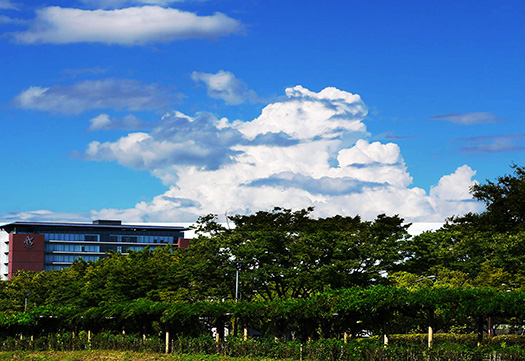
 写真は2015年9/10日に愛知県の「名古屋城」を訪問していた日の印象的だった雲の様子。まるで城郭のような晩夏の入道雲。太平洋の島々とつながるような灼熱の夏の大気が活発な雲を造形する様子。日本列島では関東の千葉あたりからずっと沖縄に至るまで「熱帯」感のある夏が出現する。そういう気候とは縁遠い北海道から来てみると、そのオモシロい雲の造形にこころ打たれる。
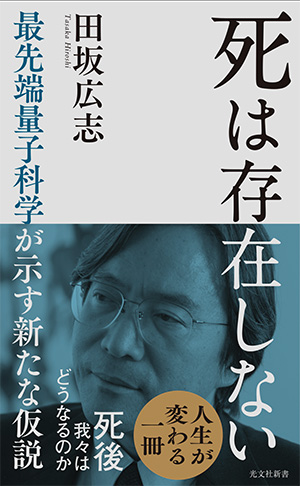
 そんな心理模様に先日ついに読了できた写真のような本の内容、受け止め方が重なってくる。

 著者の田坂広志氏は以下のような人物。
< 工学博士(原子力工学)
デモクラシー2.0イニシアティブ 代表発起人
世界経済フォーラム(ダボス会議)グローバル・アジェンダ・カウンシル メンバー
世界賢人会議 ブダペスト・クラブ 日本代表
ニューイングランド複雑系研究所 ファカルティ
米国ジャパンソサエティ 日米イノベーターズネットワーク メンバー
日本総合研究所 フェロー
元内閣官房参与 >
 非常に刺激的な「生死論」で、最先端科学が「宗教との架け橋をかけた」とでも表すべき内容。わたし自身も高齢化してきて、自ずと生死を身近なテーマ、それもある種、透明な心理で冷静にみつめるような時間がやってきている。そういう心理の中でまことに揺さぶられるような論旨。雲をつかむような心理ながら、いのちと意識のふしぎさにだんだんと近しさが感じられてきています。

English version⬇

[9/10/2015 Nagoya Clouds and “Death Doesn’t Exist” reads
Cutting-edge science is beginning to discuss religion in a serious way. Considering that religion once judged science, I am deeply moved by the evolution of mankind. …

 As I gradually move into the daily routine of my second life, I am now able to spend time with my wife and family and feel a sense of peace and tranquility. Yesterday, I was enjoying the drive to and from a rather distant day spa, and was embraced by the Hokkaido weather that is typical of this time of year.
 The weather was about 70 km north of Sapporo, in the vicinity of Bibai, and the sky was blue with a few light snowfalls, but around our destination, it turned around and was snowing actively, with a few dozen centimeters of snowfall. The visibility was so poor that the highway might be closed. As a person from Hokkaido, this kind of customary seasonal weather stimulates my nostalgia. I guess you could call it a calm acceptance of blizzard-like blizzard conditions. It is a psychological pattern in which we feel that the harbingers of the winter army have “arrived.
 In such weather conditions, they obediently and calmly slow down and enjoy the reunion from inside their cars.
 And then, after that, “clouds” of complex and interesting shapes would appear along with the blue sky. The ever-changing expressions of the clouds bring me back to the visual sensations of my life time. The expression of the clouds overlaps with my past state of mind.
 The photo shows the impressive clouds on 9/10/2015, the day I was visiting “Nagoya Castle” in Aichi Prefecture. Late summer iridescent clouds that look like castle walls. The scorching summer atmosphere that seems to connect with the islands of the Pacific Ocean, sculpting active clouds. In the Japanese archipelago, summers with a “tropical” feel appear from Chiba in the Kanto region all the way to Okinawa. Coming from Hokkaido, which is far from such a climate, I was struck by the interesting cloud formations.
 The contents of the book shown in the photo, which I finally finished reading the other day, and the way I perceive it overlap with such a psychological pattern.

 The author, Hiroshi Tasaka, is the following person.
< Doctor of Engineering (Nuclear Engineering)
Representative Founder, Democracy 2.0 Initiative
Member, Global Agenda Council, World Economic Forum (Davos)
Japan Representative, Budapest Club of the World Council of Wise Men
New England Institute for Complex Systems Faculty
Member, U.S.-Japan Society Japan-U.S. Innovators Network
Fellow, The Japan Research Institute, Limited
Former Counselor, Cabinet Secretariat
 A very stimulating “theory of life and death” that should be described as cutting-edge science “bridging the gap between science and religion. As I myself have aged, I have come to see life and death as themes close to my heart and mind, and I have come to look at them dispassionately and with a kind of transparent mind. In the midst of such a mindset, I was really shaken by the content of this essay. Although it is as if I am grasping at a cloud, I am gradually feeling closer to the mystery of life and consciousness.

【「飛鳥・藤原」、世界遺産登録へ前進】


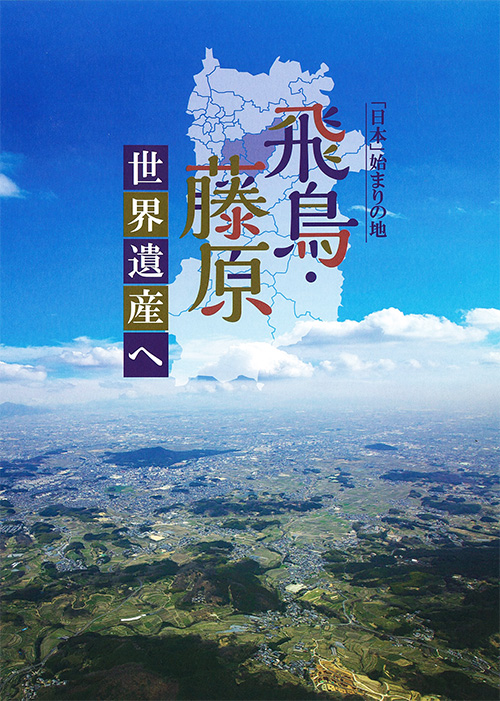
 ブログでは「名古屋城」探訪シリーズの予定なんですが、奈良県橿原市の知人から「飛鳥・藤原の官都とその関連資産群」がようやく世界遺産登録リストに記載されることになって、地元では大いに盛り上がってきていますよ、というご案内の郵便をいただいた。そこで臨時ニュース的告知。
 手掛けていたReplan関西版の出版企画がスタートした頃から、時折関西地域に出張するようになり、かねてから気になっていた「日本はじまりの地」への日本人的「郷愁」が激しく刺激される地域として、「飛鳥・藤原」の地域一帯、橿原市・明日香村・桜井市はその風土を何度も訪問してきている。その知人は橿原に住まいする画家で、奈良県立万葉文化館でボランティアガイドをされていたときに、たまたま訪問した北海道人のわたしに「導き」を与えていただいた。
 以来、こういう特別公開があるよ、などディープな歴史情報をお教えいただいている導師。額田王の顔貌を表現した仏像をみることができるお寺をご紹介いただいて、その美貌の表現に込められた日本人的ビジュアル感には、強いインパクトがあったりした。
 そういうことで、奈良県の世界遺産登録4件目として、いよいよこの地が起動し始めたようです。京都や奈良の都市機能マヒまでもたらせている過剰なオーバーツーリズムとは、この地域はまったく無縁だったので、いつも心静かにいにしえをたどることが出来るのです。この世界遺産登録は地元のみなさんにとってまことに喜ばしいと同時に、遠く北海道に暮らす「日本はじまりの地」への憧憬を抱く迷える衆生としては、一抹の不安も感じてはいますが、・・・。
 今後の予定としては以下のよう。<明日香村HPより>
 令和6年
推薦書暫定版をユネスコ世界遺産委員会へ提出(9月30日まで)
令和7年
国内での閣議了解
推薦書正式版をユネスコ世界遺産委員会へ提出(2月1日まで)
イコモスによる審査(現地調査も含む)
令和8年
世界遺産委員会において決定(夏頃)
 ぜひこの地の歴史的価値に大いにスポットが当てられることを祈念しております。
 奈良県中南部のこの地域は、畿内地域全体から見ても「奥座敷」的な位置。後背にあたる吉野熊野との調和する空気感がほんとうに素晴らしい。幸多かれと願います。

English version⬇
 
Asuka and Fujiwara Advancing Toward World Heritage Site Registration
A guide from a “guru” who lives in Kashihara. A “backstage” to heal your mind from over-tourism in Kyoto and Nara. The place where “Japan” began. The place where “Japan” began.

 I am planning to write a series of blog posts on my visit to Nagoya Castle, but I received a mail from an acquaintance in Kashihara City, Nara Prefecture, informing me that the Asuka and Fujiwara Temples and their related properties are finally listed on the World Heritage List, and there is a lot of excitement in the local community. So, here is an extraordinary news announcement.
 I have been visiting the Asuka/Fujiwara area, Kashihara City, Asuka Village, and Sakurai City many times as an area that has stimulated my nostalgia for the “birthplace of Japan,” which I have been interested in for a long time. I have visited these places many times. I have visited the Asuka-Fujiwara area of Kashihara City, Asuka Village, and Sakurai City many times, and have been guided by a friend of mine, a painter living in Kashihara, who happened to be a volunteer guide at the Nara Prefecture Complex of Man’yo Culture.
 Since then, he has been providing me with in-depth historical information, such as information on special exhibits at the museum. He introduced me to a temple where I could see a Buddhist statue depicting the face of King Nukata, and I was strongly impressed by the Japanese visual impression of the beauty of the statue.
 It seems that this place is finally starting to be activated as the fourth World Heritage Site registered in Nara Prefecture. This area has been completely free from the excessive over-tourism that has even paralyzed the urban functions of Kyoto and Nara, so we can always trace back the ancient times in peace and quiet. The World Heritage registration is a great joy for the local people, but at the same time, as a lost sentient being living in faraway Hokkaido who yearns for the “birthplace of Japan,” I feel some anxiety….
 The schedule for the future is as follows. <From the Asuka Village website
 2024
Submit a tentative nomination form to the UNESCO World Heritage Committee (by September 30).
2025
Cabinet approval in Japan
The official version of the nomination document is submitted to the UNESCO World Heritage Committee (by February 1).
Examination by ICOMOS (including field survey)
2026
Decision by the World Heritage Committee (around summer)
 We hope that the historical value of this site will be highlighted.
 This area in the south-central part of Nara Prefecture is located in an “Oku-Zashiki” position in terms of the entire Kinai region. The atmosphere of harmony with Yoshino-Kumano, which lies behind it, is truly wonderful. I wish you many happy holidays.

【東海地域はなぜ天下人を生んだのか 名古屋城探訪-2】


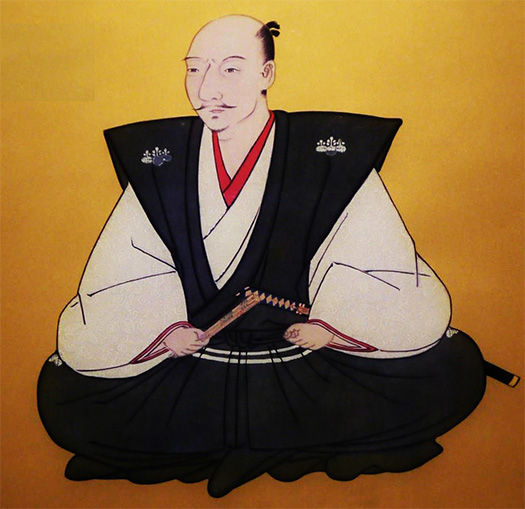
 写真は名古屋城の展示で、やはりこの人物がいなければと言える信長さんの肖像画。この城郭、名古屋城自体はその後の尾張徳川家の本拠地として、天下普請で建築されたものなので、尾張織田家とは無関係ではあるけれど、戦国末期に全国統一事業を主体的に推進した中部・東海勢力の首魁としてはやはりこの人物が基盤になっている。
 日本国家の中枢機能は畿内地域が担ってきたけれど、鎌倉幕府の成立など関東に武権が成立したように東西という構図が日本列島全体の権力争奪では根付いていった。さらには、古代における関ヶ原合戦ともいえる「壬申の乱」では、中部地域から東の勢力を統合した天武系が勝利を収めたのに、この地域の勢力の合力が大きかったとされている。東西の中間地域として、この地域は全国の政治情勢の帰趨を決する地域であり続けたといえる。
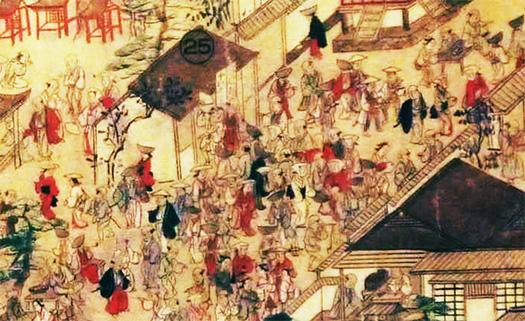
 そういった最重要地域であり続けたことが、戦国期の日本にとってのヘゲモニーを持たせたということなのだろうか。下の絵柄は展示されていた名古屋城下のにぎわいぶり。伝統的な日本絵画、洛中洛外図と同様のアングルで市井の様子が絵巻物として残されている。信長は、若年期、街のにぎわいのなかをうろつく半グレのような行状を見せていたというエピソードが語られるけれど、京都での政治軍事支配を掌握した後、同時に全国最大の商業中心地域・堺の支配権もすぐさま掌握している。堺の街の醸し出す重商主義気質が、伊勢湾岸の商業中心地育ちの信長のメンタルを刺激したのかも。
 やはり重商主義的な地域性が成長期にも色濃く性格形成に与っていたのだろう。
 さて一方で、北海道はこの地域との関係性が薄いのではないだろうか。明治以前までの北海道はひたすら「北前交易」によって畿内地域や北陸、環日本海地域との関係性が深かった。また、明治維新以降は政権中央の東京から、近代国家国防の最前線地域として最重視されて旺盛に「開拓事業」が推進されていったことで、北海道の隣県は東京というような感覚にまで至っている。
 そういうなかでは、中部東海地域というのは関係性のきっかけが見い出しにくい。明治期以降、東西という日本国内の基本的な地域間権力構図が様変わりして、政治面では東京一極集中が極限まで進んだことがこういう認識の背景になっているようにも思える。
 たぶんこれからの時代にはトヨタの中枢がこの地域を基盤としているということが、大きな要素になっていくようにも思える。北海道とこの地域、さてどんな未来形があるだろうか。興味深い。

English version⬇

Why did the Tokai region give birth to the Tengokujin? Nagoya Castle Exploration-2
The Chubu-Tokai region became decisive in the political and economic situation at the end of the Warring States period. Was this due to the heavy mercantilist climate? What is the future of regional relations with Hokkaido? …

 The photo shows a portrait of Nobunaga at the Nagoya Castle exhibit, which, after all, would not have been possible without this man. This castle, Nagoya Castle itself, was built as the base of the Owari Tokugawa family, and was built under a contract with the Tenka Fuchin, so it has nothing to do with the Owari Oda family, but it is based on this man as the leader of the Chubu and Tokai forces that proactively promoted a nationwide unification project at the end of the Warring States period.
 The central functions of the Japanese state had been carried out in the Kinai region, but as the Kamakura Shogunate was established and military power was established in the Kanto region, the East-West structure took root in the struggle for power throughout the Japanese archipelago. Furthermore, in the Jinshin Rebellion, which could be called the Sekigahara Battle in ancient times, the Temmu lineage, which united forces from the central region to the east, emerged victorious, but the combined power of the forces in this region is said to have been significant. As the middle region between the east and west, this region continued to be the region that determined the political situation of the whole country.
 The fact that it remained the most important region in Japan during the Warring States period may have given it hegemony over the country. The picture below shows the bustling Nagoya Castle area where the exhibition was held. The picture scroll depicts the city life from the same angle as the traditional Japanese painting, Rakuchu Rakugai-zu. Nobunaga is said to have behaved like a half-wit wandering around the bustling streets in his youth, but after seizing political and military control of Kyoto, he quickly seized control of Sakai, the largest commercial center in the country. Perhaps the mercantilist spirit that Sakai exuded stimulated the mentality of Nobunaga, who grew up in the commercial center on the Ise Bay coast.
 It is likely that the mercantilist character of the region contributed strongly to the formation of Nobunaga’s personality even during his period of growth.
 On the other hand, Hokkaido may not have had much to do with this region. Before the Meiji Restoration, Hokkaido had deep relations with the Kinai region, Hokuriku region, and the Japan Sea Rim region through “trade in front of the north. After the Meiji Restoration, Tokyo, the center of government, placed the highest priority on Hokkaido as a frontline region for national defense in the modern era, and vigorous “development projects” were promoted, leading to the perception that Hokkaido’s neighboring prefectures are Tokyo.
 In this context, it is difficult to find any opportunity for a relationship between the Chubu-Tokai region and the rest of Japan. The basic power structure between the East and West regions of Japan has changed since the Meiji Era, and the extreme concentration of power in Tokyo in terms of politics seems to be the reason behind this perception.
 The fact that Toyota’s hub is based in this region will probably become a major factor in the future. What kind of future shape will Hokkaido and this region take? It will be interesting to see what the future holds for Hokkaido and this region.

【尾張名古屋を「持つ」お城 名古屋城探訪-1】


 城郭は広い意味では「住宅の分類」という説に導かれて探訪記、今回は名古屋城。「尾張名古屋は城で持つ」という天下の名城であります。建築関係の探訪記録がわたしのMacには大量に保存されていて、こちらの記録は2015年9月のフォルダに入っておりました。調べてみると、この時期に新住協の全国大会が名古屋で開かれているので、そのときに時間を縫って、撮影したものと思われます。わたしの仕事人生では住宅についての技術革新の動きが並行して進行していた。北海道由来の技術が本州各地域に拡散していった時期と重なっているのですね。
 で、わたしは小学校低学年時代から、とにかく戦国期・源平期の日本史にどっぷりと脳内占拠されて過ごしていた。信長・秀吉・家康の3英傑を輩出した名古屋地域には、その地名を聞いただけでも「血湧き肉躍る」感覚がさわがしくなってしまう。ということで、尾張名古屋は城で持つ、という名古屋城探訪篇であります。
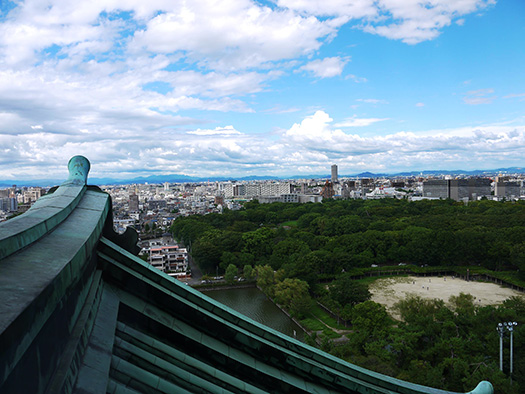
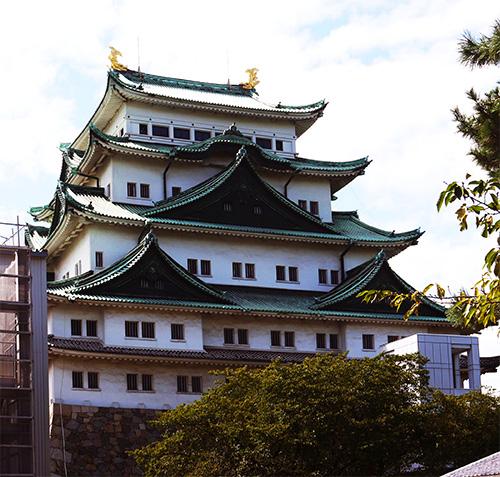
 上の写真は、名古屋城の天守閣から尾張平野を見晴らしたショットと、本丸天守の外観。当時は修復工事のまっ盛りだったようで、工事のフェンスなども見られていました。

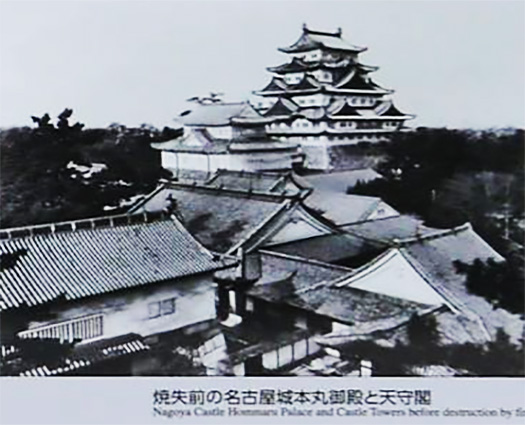
 名古屋城は徳川幕府体制が確立してその体制のひとつの存続装置として「御三家」という将軍輩出システムが家康によって創出されて、かれの九男・義直を初代としてされた尾張徳川家の本城として、1609年に家康自ら築城を決定した。翌年から石垣などの大土木工事に着手して、1612年に店主や各櫓が完成した。・・・ということなので、わたしの少年期からの素志である信長が絡んでいるという城ではない。そういう残念感があり続けていた。日本史を縦横に切り裂いた「革命家」の極地である人物の残影からは縁遠い城郭ではある。
 しかし、この尾張徳川家創建に至る歴史の波瀾万丈は、この名古屋城にも違う意味では投影されているとは言えるでしょう。尾張地域というのは、記紀の時代でも重要な地域権力として日本史に大きく影響を与えた存在だったことを考えれば、どうしてこの地がそういう日本史のカギを握っていたのか、ということがわかってくるのでしょう。
 そういえば、わたしの人生での職業選択でもこの地域に深く絡んでいた広告会社に入社し、そしてはるかな身近では、わたしの家2.0の隣地には名古屋が本拠の大企業があって、そことの「取引」によって境界線変更に立ち至った。この会社は、先述の広告会社のクライアントだったので、はるかにその企業名は知り及んでいた。「え、◎◎会社さんがお隣なんだ・・・」と。
 さてそういう尾張名古屋城、謹んで探訪させていただきたい。

English version⬇

The Castle that “holds” Owari-Nagoya: Exploring Nagoya Castle-1
Owari-Nagoya is an area that I was involved in at various points in my life. However, I have not had the opportunity to visit the area in person that often. I would like to relive it in this exploration of a famous castle under heaven. ……

 This time we will visit Nagoya Castle, guided by the theory that castles are, in a broad sense, a “classification of houses. This time, I visited Nagoya Castle, which is a famous castle under the name of “Owari-Nagoya is held by its castle”. I have a large number of records of architectural visits saved on my Mac, and this record was in the folder for September 2015. I found out that the national convention of Shinjyukyo was held in Nagoya around this time, so I must have taken these photos during that time. In my professional life, there was a parallel technological innovation movement going on regarding housing. It coincided with the diffusion of technology originating in Hokkaido to the various regions of Honshu.
 Since my early elementary school days, my brain had been occupied with Japanese history of the Warring States and Gempei periods. The Nagoya area, which produced three heroes, Nobunaga, Hideyoshi, and Ieyasu, arouses my “blood-rushing” sensation even at the mere mention of the name of the place. This is an exploration of Nagoya Castle, where Owari-Nagoya is said to have a castle.
 The photo above is a view of the Owari Plain from the castle tower and the exterior of the castle tower. The castle was in the midst of restoration work at the time, and the construction fence was visible.

 Ieyasu decided to build Nagoya Castle in 1609 as the main castle of the Owari Tokugawa family, which was headed by his ninth son, Yoshinao, after the establishment of the Tokugawa shogunate and the creation of the “Gosanke” system of producing shoguns as a means of maintaining the shogunate. In 1609, Ieyasu himself decided to build the castle as the main castle of the Owari Tokugawa family. The following year, he started major civil engineering work including stonewalls, and in 1612, the storehouse and various turrets were completed. The castle was not built with the involvement of Nobunaga, who had been a great admirer of mine since I was a boy. I continued to have such a sense of disappointment. It is a castle that is far removed from the shadow of the man who was the ultimate “revolutionary” who tore through the length and breadth of Japanese history.
 However, it can be said that the vicissitudes of history that led to the founding of the Owari Tokugawa family are also projected onto this Nagoya Castle in a different way. Considering that the Owari region was an important regional power that greatly influenced Japanese history even in the Kiki period, one can understand why this region held such a key to Japanese history.
 Come to think of it, my career choice in life was to join an advertising company that was also deeply involved in this area, and much closer to home, there is a large Nagoya-based company located next to my house 2.0, which led to a boundary change through a “deal” with the company. This company was a client of the aforementioned advertising company, so I knew the name of the company by heart. I was surprised to learn that this company was a client of the aforementioned advertising company, so I knew the name of the company for a long time.
 Now, I would like to visit Owari Nagoya Castle.

【年末へ、闌けていく季節】


 昨日、ちょっと懸案になっていて心理的にも重たくなっていた案件にようやくメドがついて、一段落であります。で、その流れから行動予定も決定できて見通しが立ってきた。
 さて一進一退で徐々に冬が深まってきている北海道札幌。写真のような降雪もときどきありつつ、7-8°くらいまで最高気温が上がったりもしております。札幌市民としては、一回くらいドカ雪が来るとハラが坐らざるを得なくなるのですが、どうもことしはハッキリしない。いつ何時くるかわからない中で、心理的には「執行猶予」付きの期間のような受け止め方(笑)。あ、わたし、交通違反は別にして、おかげさまで人生で一度も警察にご厄介になって裁判でそのような状況になった経験はありません。
 一度、大量降雪が来れば、かえって落ち着くのですね。そういう日常がごく自然に受け止められる。その上でどのように行動すべきか、計画も立てられやすいのですね。戸建て住宅に住んでいて、ご近所関係にご迷惑にならないように「共助」の自然な規範が働いてくるもの。除雪と堆雪の、そのシーズンでの行動ルールのようなものを、ご近所関係の円滑化のために確立させる必要があるのですね。
 毎朝のルーティン作業が定まるということでしょうか。最初のドカ雪がくれば否応なくそれの「この冬バージョン」が決定する。そうすると、わたしがもし不在でも、ルールが決まっているので家人はそれに準拠して行動すれば良い、ということになるのですね。毎朝の除雪作業に「筋道」が確立する。
 ・・・ということですが、このようにドカ雪ではない状況も、ありがたいのは当然。もうちょっとこの状況を楽しんだらいいのですが、どうも疑い深い性格になってしまっている(泣)。
 しかし温暖地・兵庫県では延々と騒動が継続しているようで、どうもマスメディアのありようのような局面にまで突き進んできている。現代ニッポンの状況の一断面が際だってきている。そういう意味ではまことに現代を象徴するような事案になってきていますね。さて。

English version⬇

The end of the year, the season of growing old.
The snowfall will eventually bring us to the “set condition” of Sapporo’s residential area in winter, but I’m somewhat on probation. I am in a state of mind like, “I’m all set, so come on, come on! …

 Yesterday, I finally reached a decision on a matter that had been pending for some time and had been weighing on me psychologically, and I am now at peace. And, as a result, I was able to decide on a schedule of activities and have a clear outlook for the future.
 Winter is gradually deepening in Sapporo, Hokkaido. While snowfall as shown in the photo sometimes occurs, the maximum temperature rises to around 7-8°C. As a Sapporo resident, I would like to visit Sapporo at least once in a while. As a resident of Sapporo, I am always nervous when we get a heavy snowfall, but this time it is not so clear. I am not sure when it will come, but psychologically, I am taking it like a period of “probation” (laugh). I have never been in trouble with the police in my life, except for traffic violations, and thanks to you, I have never been in such a situation in a court of law.
 Once a heavy snowfall comes, I feel more at ease. You can accept that kind of routine very naturally. It is easy to make plans on how to act. When you live in a detached house, the natural norm of “mutual aid” comes into play so as not to inconvenience your neighbors. You need to establish some kind of rules of conduct for snow removal and composting, for that season, to facilitate neighborly relations.
 Does this mean that a routine task will be established each morning? If the first snowstorm comes, the “this winter version” of it will be determined without denial. Then, even if I am not here, the rules are set and the householder just has to conform to them. A “path” will be established for the snow removal work every morning.
 I am grateful for the situation where we don’t have heavy snowfalls. I wish I could enjoy this situation a little more, but apparently I have become a skeptic (cries).
 However, it seems that the turmoil is continuing endlessly in Hyogo Prefecture, a warmer climate area, and apparently, it is pushing us into a phase like the state of the mass media. This is a very striking example of the situation in contemporary Japan. In that sense, this is truly a case that symbolizes our times. Now, let’s see.


【城郭の攻撃仕様「石落とし」 金沢城-5】


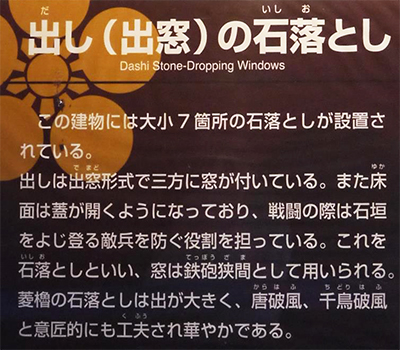
 戦国の活発な内戦状況の中で、日本の戦争技術、建築仕様は変化して行ったけれど、城壁が高く上げられていってその高低差を活かした防御側の「攻撃装置」としてこの石落としは普遍的に作られていった。高所から攻め上がってくる敵勢に対して、石を落として防御するのは常識的にわかりやすい攻撃手段だった。相当時代を遡る楠木正成の南北朝時代には、かれは攻め上がってくる鎌倉幕府軍に対して、上方から煮えたぎらせた糞尿を浴びせる手段まで用いている。
 こうした手段は当時に於いても特異的な、いかにも楠木正行という「悪党」ぶりを際だたせていて、正規軍としての幕府側が手を焼くような「知将」の計略を思い知らせてくれる。
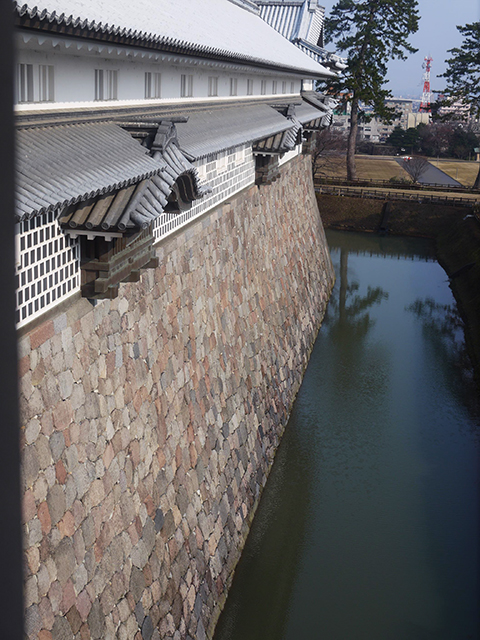
 はるかに時代を下って、ほぼ平和が実現していた江戸時代中期に建築されたこの金沢城では、美的にも様式化されて、石落としの屋根には「唐破風」「千鳥破風」というようなうつくしい意匠が施されるようになっている。

 攻撃用途の石落としにまでこうした意匠性が施されていって、文化性によって領民の牙を抜いていくというのが、加賀前田家の国政方針になっていったのだろうか。
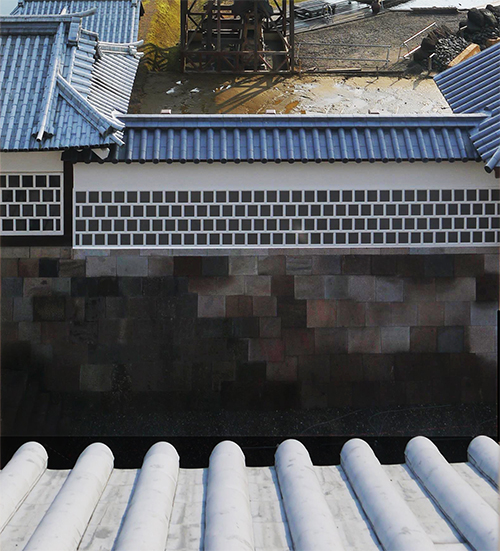
 外装的には格子のデザインが美しく連続して、石垣との調和がすばらしく美感を刺激してくれる。100万石という大大名家として、徳川家からつねに警戒される存在だったことで、このように自ら「牙を抜いた」ような見え方にしていくことで、危険回避の姿勢を取り続けたのだろう。
 江戸初期に遭遇した大阪城攻撃のころの国内政治情勢の中で、前田利家の妻が、人質として徳川家に差し出されたりしたことで、幕府からの脅迫に対してそれを避ける心理がこの藩にはより強烈だったのだろうと思えます。

English version⬇

Kanazawa Castle – 5 – “Stone Dropping,” an attack specification of castle walls.
The castle’s transformation from its violent nature as a bare warfare device during the reign of Kusunoki Masanari in the Nanbokucho period to a more aesthetically pleasing structure. From violence to a more aesthetic orientation toward obedience to the Shogunate. …

 Although Japanese warfare techniques and architectural specifications changed during the active civil wars of the Warring States period, the stone-drop was universally used as an “offensive device” by defenders as castle walls were raised higher and higher to take advantage of the height difference. It was a common sense and easy-to-understand means of attack to defend against an enemy force attacking from a high place by dropping stones. As far back as the Nanbokucho period of Masanari Kusunoki, he even used the method of pouring boiling feces and urine on the attacking Kamakura Shogunate forces from above.
 Such measures were unique even in those days, and made Kusunoki Masayuki stand out as a “scoundrel,” reminding us of the wiles of a “general of intelligence” that would have been difficult for the shogunate to deal with as a regular army.
 Kanazawa Castle was built in the middle of the Edo period, when peace had almost been achieved, and the castle was aesthetically stylized, with the roofs of stone slabs decorated with beautiful designs such as “karahafu” and “chidori-gafu” (staggered gables).

 It is likely that the Kaga Maeda family’s national policy was to use this kind of design even for the stone slabs used for offensive purposes, and to use cultural elements to win the hearts and minds of the local people.
 The latticework design on the exterior is beautifully continuous, and the harmony with the stone walls is wonderfully aesthetically pleasing.
 In the domestic political climate around the time of the attack on Osaka Castle in the early Edo period, when Maeda Toshiie’s wife was offered to the Tokugawa family as a hostage, it seems likely that the clan had a more intense psychological reaction to threats from the shogunate to avoid them.

【江戸初期の「五十軒長屋」木構造解析 金沢城-4】


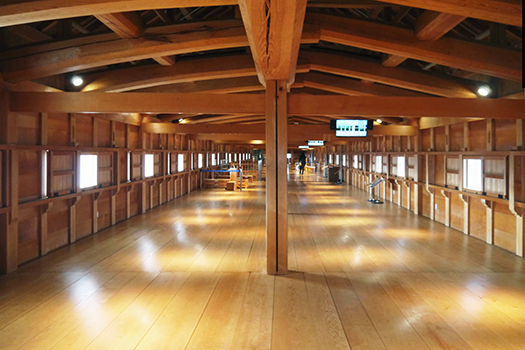
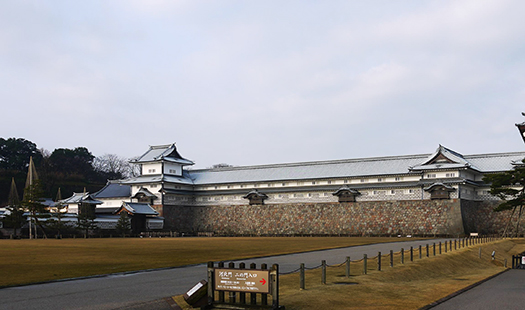
 写真は金沢城「五十軒長屋」の内観と外観。この建築の用途としては、この建築がその上に建てられている石垣・土塁が、門を破って侵入してきた敵勢の攻撃から「城内」を防御するものだったことは一目瞭然。石垣手前には堀も仕込まれているので、目的は明確でしょう。攻城側からすれば、この石垣に対してそれをよじ登って城中の守備勢を殲滅するということは、大砲ででも攻撃する以外、考えられないだろう。江戸初期ということであるので、すでに大阪の陣で決定力を発揮した大砲という軍事進化はあったにせよ、鉄砲などの攻勢への対応力として必要十分と考えたものでしょう。ほぼ全面で確保された長大な開口部から、敵勢に対して弓矢鉄砲で打撃を加える機能性。
 また防衛守備側としては、長大な「防衛ライン」死守のために広大な空間に武器弾薬を確保し、同時に兵の守備位置移動の随意性が確保されているということでしょうか。この主要な「動線」が少なくとも2方向でしっかり確保可能だろうと思えた。なによりも防衛側の機動力が機能的に確保されているというのが印象。また戦争局面の一挙的把握が可能だったとも思われる。


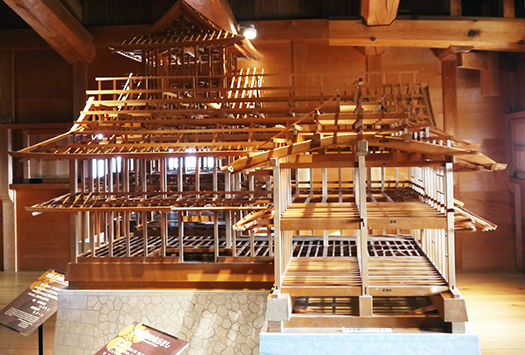
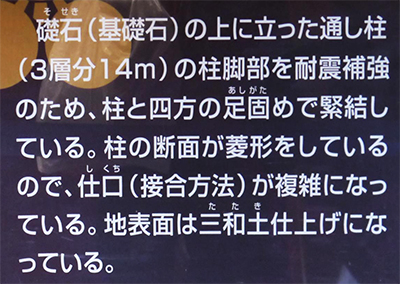
 こちらが展示されていた「構造模型」とその解説文。釘やボルトなどを使わない昔の製法で忠実に再建されているとのこと。 現在の五十間長屋は、平成13年に復元されたもの。
 解説文で興味深いのは「柱の断面が菱形をしているので接合方法が複雑」というくだり。江戸初期にこれだけの長大空間を造作するのに、その堅牢性確保のために、当時の木造建築技術での最新の工夫が盛り込まれたものだろうか。戦争施設として考えられる攻撃打撃に対しての衝撃緩和、木組みの粘着力・持久力を高める手法として採用されたと考えられる。まっすぐの木組みよりも方向性を複雑化させることで簡単に建築が崩壊しないように考えたのだろうか。木の匠技。
 さてこうした建築だけれど、やはり基本的な機能要素としてはこの石垣土塁の上に木造建築を乗っけることで、むしろその「地域権力の見える化」、領民に対して反抗する気力を萎えさせる視覚的「支配力」誇示効果が主体だったのだろうかと想像する。
 とくに「見たこともない」長大で直線的な造形の「堅固な壁面建築」は、威圧感を感じさせたに違いない。石垣土塁の上の機能性たっぷりの長大空間から、被支配者を見下ろす光景は、支配側の自己満足をもたらせたと考えられる。さらにそういう機能性の上に、美的な驚きも与えることで、より権威・権力の正統性を訴求したと言えるのだろうか。
 一向一揆という民衆型の難敵に対しその制圧に成功してきた加賀・前田家の戦略性を感じる。

English version⬇

Wooden Structure Analysis of “Gojuken Nagaya” in the Early Edo Period Kanazawa Castle-4
A long military fortification facility on top of a stone walled earthwork. Did its ironclad defensiveness and aesthetically pleasing appearance appeal to viewers and make them accept the legitimacy of the Kaga Maeda family? ・・・・.

 The photo shows the interior and exterior of the “Gojuken Nagaya” at Kanazawa Castle. As for the use of this structure, it is obvious that the stone wall and earthen mound on which it is built was to protect the “inside” of the castle from attacks by enemy forces who had broken through the gate. A moat is also built in front of the stone wall, so the purpose is clear. From the siege side, it would be unthinkable to climb up against this stone wall and annihilate the defenders inside the castle except by attacking with a cannon. Since this was in the early Edo period, even though there was already a military evolution in the form of cannons, which had already demonstrated their decisive power in the Osaka battle, it would have been considered necessary and sufficient as a response to the offensive force of guns and other weapons. The long, wide openings secured on almost the entire surface of the building provide the functionality to strike enemy forces with bows and arrows and guns.
 On the defensive side, the vast space for weapons and ammunition is secured to defend the long “defensive line,” and at the same time, the voluntary movement of soldiers to defensive positions is ensured. It seemed possible to secure this main “line of movement” in at least two directions. Above all, I was impressed by the fact that the mobility of the defenders is functionally secured. It also seems that it would have been possible to grasp the war phase in one fell swoop.

 This is the “structural model” on display and its explanatory text. It is said that the building was faithfully reconstructed using the old manufacturing method without using nails or bolts. The current 50-ken row house was reconstructed in 2001.
 What is interesting in the explanatory text is the statement that “the method of joining the pillars is complicated because of their diamond-shaped cross-sections. In order to create such a long and large space in the early Edo period, the latest innovations in wooden construction technology of the time must have been incorporated to ensure the robustness of the building. It is thought that the method was adopted to mitigate impact against possible attack blows as a war facility and to increase the adhesive strength and endurance of the wooden framework. Was the idea to prevent the architecture from collapsing easily by making the directionality more complex than straight wood framing? Master craftsmanship of wood.
 Although these structures were built in this way, I imagine that the basic function of the wooden structures on top of the stone walls and earthen mounds was to “visualize the power of the region” and to show off their “dominance” visually in order to dissuade the people from rebelling against them.
 In particular, the “solid wall architecture” of “never seen before” with its long, linear form must have been intimidating. The sight of the rulers looking down on their subjects from the long, functional space on top of the stone walls and earthen mounds must have given them a sense of self-satisfaction. Furthermore, by providing an aesthetic surprise on top of such functionality, could it be said that they appealed more to the legitimacy of their authority and power?
 We can sense the strategic nature of the Kaga Maeda family, which had succeeded in conquering a difficult popular enemy, the Ikko-Ichigoyo Revolt.