わたしはメディアという情報の世界で仕事人生を過ごしてきました。
昭和中期生まれの人間なので小学校に入る頃から自然に毎日届けられる北海道新聞に目を通し始めていた。当然、たくさん「漢字」が目に飛び込んでくる。学んでいないので書かれている内容のすべてがわかるワケではない。ようやく「ひらかな」がわかっていたくらいの段階。しかし世の中というのはどういうものか、という好奇心が強くて、ひらかなで表記されている前後の「筋道」から、アタマのなかで「この漢字はきっとこういう意味ではないだろうか」と想像しながら目を通していた。頭の体操。
小学校の先生から「三木は新聞を読んでいる」とわたしのことを教室で話題にされた記憶が鮮明に残っている。その時期の、新聞を読んでいるわたしの様子の写真も鮮明な記憶がある。
文章というものとの出会いにおいて相当早い段階で子ども向けの文学世界ではなく、すぐに新聞メディアに惹かれ大きな興味分野として「社会への興味」に導かれていたのだと思っています。後年、その北海道新聞の「進歩的」な論調が刷り込まれ、新左翼運動に自然に引かれていったという自分自身の心理解析。その論調にはいまでは距離を感じているけれど、でもいまでも北海道新聞のことは好きなのですね(笑)。愛着。
昭和中期は同時にテレビメディアの出現期でもあったので、メディアへの決定的な思いが形成された。
そんなことから歴史探索でもいつも「その時代のメディアツール」というものに着目させられている。
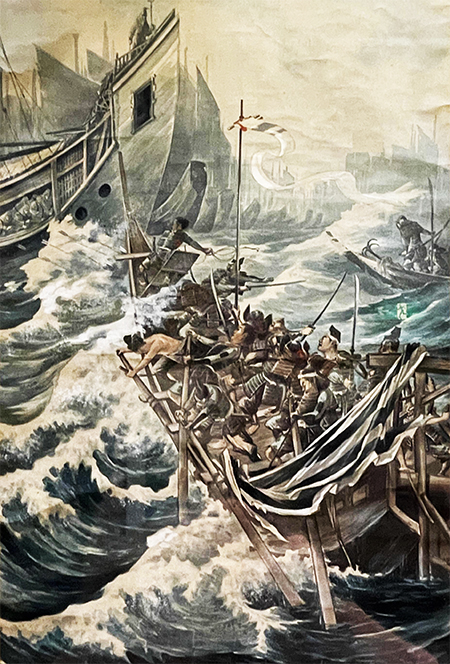
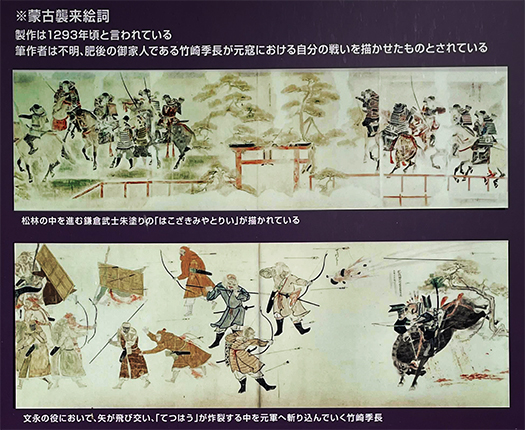
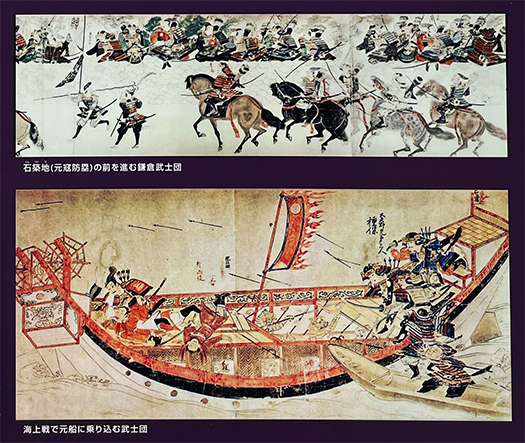
この日本人にとっての巨大な被侵略体験「元寇」について、よく知られているメディアがこの「蒙古襲来絵図」。制作された動機は、九州・肥後国の御家人竹崎季長が元寇における自分の戦いを描かせたものとされている。御家人の「恩賞」請求先としての鎌倉幕府に対して自分の武勲を「伝える」ために絵師に描かせたとされる。今日で考えれば動機の非常に単純明快な「偏向報道」ではあるけれど、まさか絵空事を描かせるような卑怯ものではないという武士として意地をかけた正々堂々たる態度で信憑性を訴えたものと思われる。
日本におけるメディアの歴史において、それまでは神社仏閣などの「公共的性格」を持った表現ツールだけだったのに対して「主張するメディア」という意味である始原性を表している。
あらたに領土が獲得できるわけではない対外的防衛戦という武勲に対し、それでも鎌倉幕府はこの竹崎季長には一定の恩賞を与えたとされているので、メディアの効果はあったと言えるのだろう。さまざまな「リアルタイム」感が現代人にも十分に感受できるなぁと思っています。
English version⬇
[Kamakura Period Press “Illustration of the Mongol Invasion” Genko Series-14]
Japanese History and Media Theory. Japanese media started from the “Engi” of religious institutions like Birds, Animals, and Caricatures. The origin of the purpose of appealing to the beneficence. …
I have spent my working life in the information world of the media.
Since I was born in the mid-Showa period, I naturally started reading the daily Hokkaido Shimbun from the time I entered elementary school. Naturally, many “kanji” (Chinese characters) jumped out at me. I did not understand everything that was written in the newspaper because I had not studied it. I was at the stage where I finally understood Hiragana. However, my curiosity about what the world is like was so strong, that I kept looking through the pages, imagining in my mind, “This kanji must mean something like this,” from the “paths” before and after the kanji written in hiragana. It was an exercise for my mind.
I have a vivid memory of my elementary school teacher saying to me in class, “Miki reads the newspaper. I also have a vivid memory of a photograph of me reading the newspaper during that period.
I believe that at a very early stage in my encounter with writing, I was immediately drawn not to the literary world for children, but to the newspaper media, which led me to “interest in society” as a major field of interest. In later years, the “progressive” tone of the Hokkaido Shimbun was imprinted on me, and I was naturally drawn to the New Left Wing movement, according to my own psychological analysis. Although I now feel distant from that tone, I still like the Hokkaido Shimbun (laughs). Attachment.
The mid-Showa period was at the same time the period of the emergence of the TV media, so I formed a definitive feeling toward the media.
Because of this, I am always made to focus on the “media tools of that era” in my historical search.
The well-known media about the “Genko” invasion, a huge invasion experience for the Japanese, is this “Picture of the Mongol Invasion”. The motive for its creation is said to be that Sueyoshi Takezaki, a feudal lord in Higo Province, Kyushu, had his own battles in the Mongol Invasion depicted on it. It is said that he had the painter paint the picture in order to “tell” the Kamakura Shogunate about his military deeds as the recipient of the retainer’s “bounty” claim. Although the motive for this “biased reporting” is very simple and straightforward when considered today, it is thought that the artist appealed to the credibility of his work in a fair and honest manner, putting his willpower as a samurai into action, not as a coward who would have his paintings depicted in a fictional manner.
In the history of the media in Japan, the media had previously only been tools of expression with a “public character,” such as shrines and temples, while this represents the primordial nature of the media as an “assertive medium.
The Kamakura Shogunate is said to have awarded a certain amount of gratitude to Takezaki Suecho for his military achievements in external defense battles that did not result in the acquisition of any new territory, so it can be said that the media was effective. I think that various “real-time” senses can be fully appreciated by people today.
共有:

Posted on 5月 21st, 2025 by 三木 奎吾
Filed under: 歴史探訪 | No Comments »