本文へジャンプ

【第2波弘安の役「防塁」で専守防衛 元寇史料館-10】


 元寇史料館での体感シリーズも合計10回目の連載記事で、トータルの文字数はたぶん10,000字を超えてきました。日を重ねながらいろいろな側面にスポットを当てて特定テーマを書き続けるというブログスタイルのメリットを感じています。
 それに対して、いま現在ではyoutube動画に対して「広告収入」が得られるということから、そちらの方が個人の情報発信のメインに変化してきていますが、どうもそういうメディア利用というのは、本来的な情報の深さ探究と考えてどうなのかなと思っています。まぁいろいろな見解のあり得るNHKですが、その番組作り、とくに衛星放送分野での番組は、非常に興味深い「深み」がある。それに対して、広告収入狙いの民放系の番組作りは完全に「オワコン」化している。どうも、そういう情報の本質論でカネ儲け最優先という姿勢に未来はないのではと思っています。
 おっと、本日の連載ブログのテーマから完全に逸脱(笑)。失礼。
 1274年の第1波文永の役から7年後の1281年、ついに第2波「弘安の役」が勃発する。文永の役で撤退した軍事行動について彼我の政治的解釈の違いが、その間の「外交交渉」への態度に表れた。1275年、交渉に訪れた外交使節をときの鎌倉幕府執権・北条時宗は「切り捨てる」という処断を下す。怖ろしい外交態度だが、このことは世論の支持を受けたとされている。各界各層は島国的心理から大いに溜飲を下げた。
 元の側は外交使節の音沙汰がないので再度使節を、それも「かれらはどうなったか?」と聞くために派遣したがその使節もまた、鎌倉に送られることすらなく太宰府で切り捨てたという。外交常識を越える狂気。
 どうも日本の国内世論の趨勢には国際常識とは異質な「偏向性・偏執性」が根ざしていると思える。目先の軍事最優先の軍人政治家・北条時宗24歳の無謀な「やらかし」。それを囃す国内世論。このあたり、江戸末期の幕府政権は少なくとも国際常識において常識的だったと対比できる。
 このような外交の結果として、元軍は怒りを露わに第1派をはるかに凌駕する大軍14万を北部九州〜山口県に侵攻させてきた。弘安の役勃発。
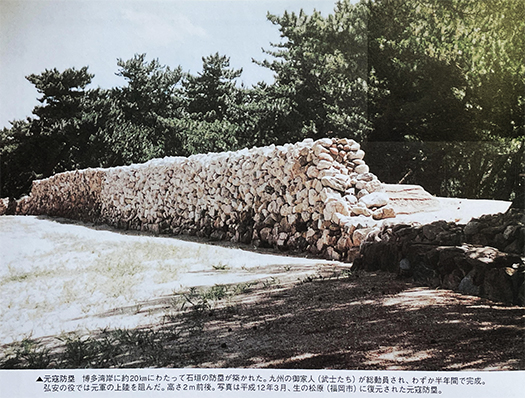
 しかし今回は太宰府・博多の街を防衛するために長大な「石塁」が築かれていた。鎌倉幕府として御家人たちにその領地の面積毎に費用負担させて築かせたといわれる。元軍側としては博多湾から遠望するこの石塁を見て驚いただろう。石塁の内側には土が盛られ、石塁に取り憑いてよじ登ろうとすれば防衛軍によって頭上から弓矢で射殺された。専守防衛的な軍備に対して途方に暮れたことだろう。
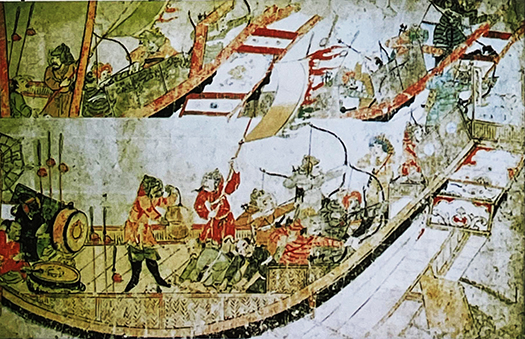
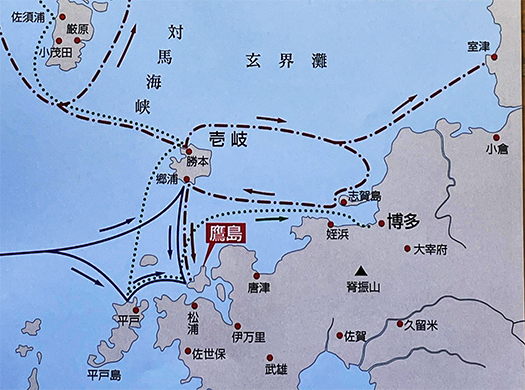
 元の派遣軍の高麗を中心とする先発隊は攻めあぐねて躊躇し、後軍の10万を超す大部隊もまた、博多湾に近づけず鷹島周辺海域に海上で長期間停軍せざるを得なくなった。地図で見ると鷹島の南海域に入れば風と波からの「安全域」が確保されていたとされる。先発隊もここに合流して日本軍を威圧していた。
 ときに1281年の新暦7/12から8/17までの1カ月間の長滞陣。
 この大軍勢の集結が、巨大な脅威として日本側に軟化をせまったと考えられる。さて。

English version⬇

[Second Wave Kouan-no-Yaku ‘defensive fortifications’ for exclusive defence Genkou Historiography – 10]
The insanity of cutting off diplomatic emissaries and the domestic public opinion that is said to have entertained it. The hard-line attitude of the Japanese people, which was very much in the style of a domestic dialectic. …

 This is the tenth article in the series on the experience at the Genko Historical Museum in total, and the total number of words has probably exceeded 10,000. I feel the merit of the blog style, which allows me to continue writing on a specific theme, highlighting various aspects as the days go by.
 On the other hand, nowadays, the main source of information transmission for individuals is Youtube videos because of the ‘advertising income’ that can be obtained from them, but I wonder how this kind of media use is considered to be an essential exploration of the depth of information. Well, there are many different views on NHK, but its programming, especially in the field of satellite broadcasting, has a very interesting “depth”. In contrast, the programming of commercial broadcasters, which is aimed at advertising revenue, has become completely “wacky”. I think there is no future for such an attitude of putting the highest priority on making money from the essentialism of information.
 Oops, a complete departure from the theme of today’s series of blogs (laughter). Pardon me.
 In 1281, seven years after the first wave of the 1274 Battle of Bun’ei, the second wave, the Battle of Koan, finally broke out. The difference in political interpretation between the two sides regarding the military action that led to the withdrawal from the battle of Bun’ei was reflected in the attitude towards “diplomatic negotiations” during that period: in 1275, the regent of the Kamakura Shogunate, Hojo Tokimune, decided to “cut off” the diplomatic mission that had come to negotiate with the Emperor. This was a frightening diplomatic attitude, but it is said to have been supported by public opinion. All sectors of society were very much disheartened by the island nation mentality.
 When the Yuan side did not hear from the diplomatic mission, it sent another one, this time to ask ‘What happened to them?’ But the envoys were not even sent to Kamakura, and were abandoned in Dazaifu. This is madness beyond the bounds of diplomatic common sense.
 It seems that the trend of Japanese domestic public opinion is rooted in a polarisation and paranoia that is alien to international common sense. The reckless “daredevilry” of 24-year-old Hojo Tokimune, a military politician who gives top priority to immediate military matters. The domestic public opinion that encouraged this. In this area, the shogunate administration at the end of the Edo period can be contrasted with the common sense of international common sense at least.
 As a result of such diplomacy, the Yuan forces were outraged and invaded Northern Kyushu – Yamaguchi Prefecture with a 140,000-strong army far outnumbering the first faction. The Kouan War broke out.
 This time, however, long “stone mounds” were built to defend the cities of Dazaifu and Hakata. It is said that the Kamakura Shogunate made the nobles bear the costs for each area of their territory to build them. The former military would have been surprised to see these stone mounds in the distance from Hakata Bay. The inside of the stone mound was covered with earth, and anyone attempting to climb up the mound was shot overhead with a bow and arrow by the defenders. They must have been at a loss against the self-defensive military preparations.
 The advance force of the Yuan army, led by the Koryo, hesitated to attack, and the rear force of over 100,000 troops also could not approach Hakata Bay and had to halt for a long time at sea in the waters around Hawk Island. Maps show that a “safe zone” from wind and waves was secured once they entered the waters south of Hawk Island. The advance party also joined here to intimidate the Japanese forces.
 At the time, the campaign lasted for a month, from 12 July to 17 August of the new calendar year 1281.
 It is thought that this large military build-up forced the Japanese to soften up as a huge threat. Now.

【立正安国論・宗教の政治への直接関与 元寇史料館-9】


 さすがに昨日は往復800km超のドライブ運転の疲労が沸きだしてきて、連載記事ひと呼吸。本日は復帰。
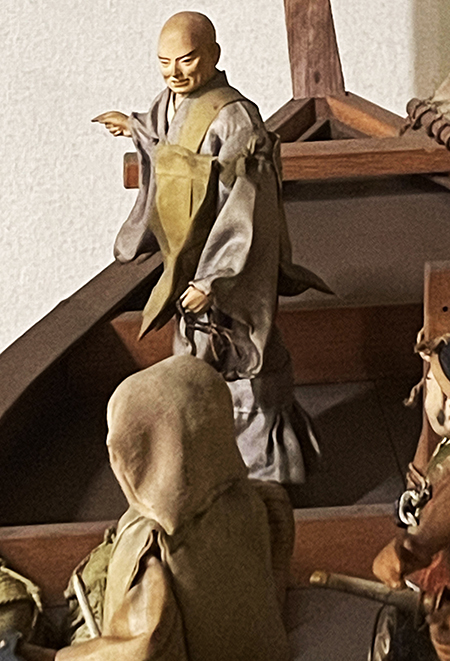
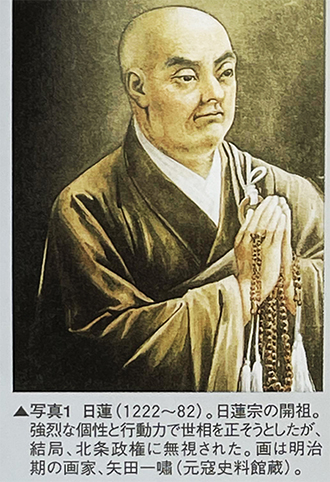
 この元寇がもたらした状況の中で、今日社会とも通底していると感じるのは「政治と宗教」の関係性。この元寇の時期、鎌倉新宗教として日蓮が活動して布教を広げていた。政治と宗教という意味合いでは、そもそも仏教を日本社会に持ち込んできたのは飛鳥時代の聖徳太子であり蘇我氏勢力だったことからあきらかではある。政治という権力争奪においては、つねに「イデオロギー」が重要な領域を占めていて、いわば「正統性」争いである部分の最重要パーツであり、また「本質」に深く関わるものであった。
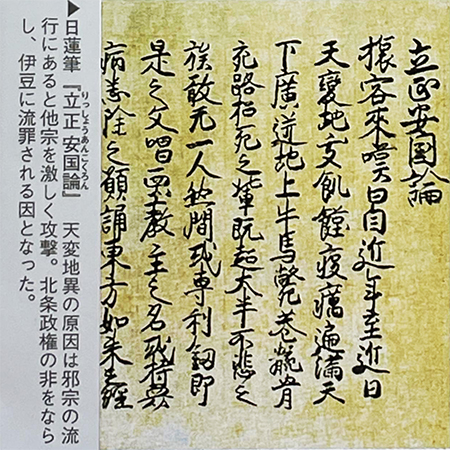
 その宗教活動において民衆への布教を基礎にしながら、政治権力に対して意見を申し立てる、というような動きにまで高まってきたのがこの日蓮による「立正安国論」の提起だったのだろう。そして書物というメディアによって広範な拡散を行って影響力の拡大を図ったという意味では、ひとつの象徴的動きだったのかも知れない。いわば「世論喚起」。
 立正安国論の要旨は以下の通り。「日蓮が鎌倉幕府の執権・北条時頼に提出した書で、国土の安泰と民衆の幸福は、正法である法華経を信仰することで実現されると説いています。具体的には、当時の天災地変や飢饉、疫病の原因は、人々が邪法を信じているからであり、それを改めなければ、内乱や他国からの侵略が起こると警告している。〜Wiki」
 飢饉や疫病、そして内乱は鎌倉期を通して頻発していたし、そこに元寇という「侵略」も加わったことから、その意見具申に強いリアリティが加わった。直接的な政治への異議申し立てだけれど、一方で他宗派への「内ゲバ」的な動きでもあったので、既成仏教宗派側からの反撃も大きく、日蓮は複数回、島流しという弾圧を受けた。しかしそのことがまた「法難」的に受け止められて民の側の心情的応援を喚起して宗派の勢力拡大につながっていったとも思える。
 政治と宗教、言論活動のわかりやすい嚆矢として日本社会が初めて経験したようなことがらと思われる。こうした動きが今日社会のある意味「起点」になっているのかも知れない。元寇を掘り起こすということは、そのような意味で、自分自身のアタマの上のこぶを見定めるような難しさがそこにあるのではないだろうか。このことが、科学的立場から歴史事実の解明分析を積極的に行う上で微妙に制御させているのかも知れない。元寇史料館が「日蓮聖人銅像護持教会」によって委託運営されていることも、そのような流れの中で考えると興味深い。

English version⬇

Rissho Ankoku-ron, Direct Involvement of Religion in Politics Genko-historikan-9]
Openly expressing one’s opinion on political power. A movement that seeks to arouse public opinion and use that groundswell to realise its own claims. It overlaps deeply with today’s society. …

 As expected, fatigue from driving over 800 km round-trip yesterday started to boil over, so we took a break from serial articles. Today I am back.
 In the situation brought about by the Genko Incident, the relationship between politics and religion is something that I feel has a common thread with today’s society. During this period of the Genko, Nichiren Buddhism was active as a new religion in Kamakura, spreading its teachings. In terms of politics and religion, it is clear that it was Prince Shotoku and the Soga clan forces in the Asuka period who brought Buddhism into Japanese society in the first place. In the struggle for power in politics, “ideology” always occupied an important area and was the most important part of the struggle for “legitimacy”, so to speak, and was deeply related to the “essence”.
 Nichiren’s Rissho Ankoku-ron, which was based on the propagation of his religious activities to the people, was probably what led to the rise of the movement to express opinions on political power. It may have been a symbolic movement in the sense that it spread widely through the media of books and sought to expand its influence. In other words, it was a “public opinion arousal”.
 The gist of the Rissho Ankoku-ron is as follows. ‘The Rissho Ankoku-ron was submitted by Nichiren to the regent of the Kamakura Shogunate, Hojo Tokiyori, and it taught that the peace of the land and the happiness of the people could be realised through faith in the Lotus Sutra, the true law of the land. Specifically, it warned that the natural disasters, famines and epidemics of the time were caused by people’s belief in the evil Dharma, and that if this was not changed, civil war and invasions from other countries would occur. ~Wiki”
Famine, pestilence and civil war were frequent throughout the Kamakura period, and the “invasion” of the Genko added to this, adding a strong sense of reality to this statement of opinion. Although it was a direct challenge to politics, it was also an ‘internal rebellion’ against other Buddhist sects, so the established Buddhist sects fought back and Nichiren Shoshu was repressed several times by being exiled to the islands. However, this was also perceived as a “legal calamity” and aroused emotional support from the people, leading to the expansion of the sect’s power.
 It is thought that this was the first time Japanese society experienced something like this, as a clear pioneering example of politics, religion and public discourse. These movements may be in a sense the “starting point” of today’s society. In this sense, digging up the Genko is like finding a bump on one’s own head. This may be a subtle control in actively clarifying and analysing historical facts from a scientific standpoint. It is interesting to note in this context that the Genko Historical Museum is operated on commission by the Church for the Protection of the Bronze Statue of Nichiren Shonin.


【好きな空間に抱かれて in 中札内美術村】


 2日間、ふたたび静かな夫婦旅へ。
 ことしはあちこちと「観桜」の旅を楽しんできていますが、日本全国を縦断するサクラ前線も、人口密集地の本州地域を離れてくるとだれも話題にしなくなりますが(笑)、北海道でも札幌が終わってくると、もうほとんど話題が消えてくる。しかし、それでも最後のかがやきが目を楽しませてくれています。
 ということで、今回は十勝地方・釧路地方をきままにマイカー行脚。往復で800km超のロングドライブでしたが、おかげさまでそう疲れを感じることもなく、ゆったり帰還しておりました。まだまだ元気。
 カミさんが調べてくれた道東の「知られざる観桜スポット」を巡ってみました。しかし釧路地方はまだまだサクラ前線が到達していない。なんでも日本全国でいちばん最終の到達地なんだそうですね。
 しかし十勝地方は中心の帯広で満開から散り始め。ちょうどよい頃合いだった。
 で、北海道内の各地はいろんなところに「馴染み」スポットがたくさんある。そういった場所の記憶は、だんだん記憶脳の中で「美化」が進むものなのでしょう、つい足が向いてしまう。そういうなかで、夫婦で十勝のお好みスポットとして中札内周辺が完全同意。
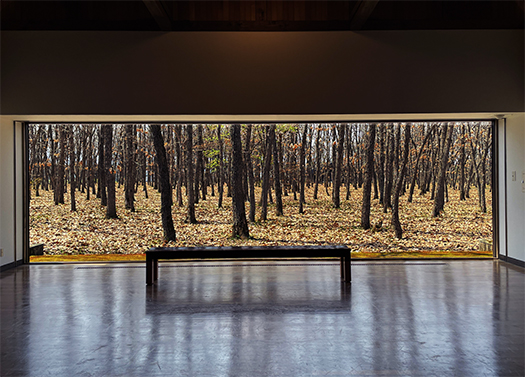
 写真の中札内美術村のワンスポット「北の大地美術館」から中札内の森を切り取った窓辺であります。こちらの美術館は地元製菓企業の「六花亭」さんが支援している「自然を活かした」美術館建築群。ひとつひとつの美術館建築がちょうど、ちょっと大きめの個人住宅サイズで多様に建設されている。いまは特定美術館エリア以外はフリーに参観することができる。
 帯広からはクルマで小1時間ほどですが、十勝らしい1本道でわかりやすい。
 ちょうど中札内の道の駅からもほど近いのでそこそこのにぎわいもある。
 絵画はいまはあんまり「展示替え」がされていなくてほぼ「常設展示」ということですが、わたしたち夫婦の好きな硝子窓で切り取られた自然景観は、いつも変わりなくこの場所の自然を伝えてくれている。一方建築内部はしっかり清掃メンテナンスなどはされている。こういった「管理費用」も相当でしょうが、維持されている。
 落葉もそのまま敷き詰められた状態で、しかしウッドチップなどで構成された遊歩道はきちんと歩きやすくメンテナンスされている。この森は動物たちの食用になる木の実のなる樹木はないようで、リスなどの自然動物もほとんど見かけない。
 そういう「なんにもなさ」がのびのびさせてくれるのでしょうか。この一幅の絵画空間でしばし無想の時間を過ごすのが愉しみになっている。こころの充填空間でしょうか。

english version⬇

Embraced by my favourite space in Nakasatsunai Art Village]
The sakura-front cherry blossom viewing trip that even feels out of season (laughs) already. Finally, the final stage in East Hokkaido. On the way, we took a moment to appreciate the tranquillity of the ‘paintings’. …

 This year, I have been enjoying “cherry blossom viewing” trips from place to place, and although the sakura front that traverses the whole of Japan is no longer talked about once it leaves the densely populated Honshu region (laughs), even in Hokkaido, once Sapporo is over, the topic has almost completely disappeared. But even so, the last of the Kagayaki is still pleasing to the eye.
 So, this time, I went on a car tour of the Tokachi and Kushiro regions as I pleased. It was a long drive of more than 800 km round trip, but thanks to that I did not feel so tired and returned home in a relaxed manner. I am still in good health.
 I went to some of the ‘little-known cherry blossom viewing spots’ in the east of Hokkaido, which my wife had researched. However, the cherry blossom front has not yet reached the Kushiro area. I heard that Kushiro is the last place in Japan where the cherry blossom front reaches.
 However, in the Tokachi region, the cherry blossoms were in full bloom in Obihiro, the centre of the region, before beginning to fall. It was just in time.
 There are many “familiar” spots in various parts of Hokkaido. The memories of such places are gradually “beautified” in the memory brain, and we tend to visit them. In this context, the couple completely agreed on the Nakasatsunai area as their favourite spot in Tokachi.
 This is a window shot of the Nakasatsunai forest from the one spot in the Nakasatsunai Art Village in the photo, the North Land Art Museum. This museum is a group of museum buildings that ‘make the most of nature’, supported by the local confectionery company Rokkatei. Each of the museum buildings is just the size of a slightly larger private house and has been constructed in a variety of ways. Nowadays, visitors are free to visit all areas except for the specific museum areas.
 It takes about an hour by car from Obihiro, but the single road is easy to follow, as is typical of Tokachi.
 It is also very close to the roadside station in Nakasatsunai, so there is a lot of activity there.
 The paintings are not often changed and are almost always on permanent display, but the natural scenery cut out through the glass windows, which my wife and I like, always conveys the nature of the place without any change. On the other hand, the interior of the building is well maintained and cleaned. These “management costs” must be considerable, but they are maintained.
 The paths are well maintained and easy to walk on, with leaves left on the ground, but with woodchips. This forest does not seem to have any trees that bear nuts for animals to eat, and there are few natural animals such as squirrels.
 This kind of “nothingness” may be the reason for the spontaneity of the place. It is a pleasure to spend some contemplative time in the space of this single painting. Is it a space to fill your mind?

【国際戦という「異次元」価値観戦争 元寇史料館-8】


 中国大陸に並立した2国・元と宋という複雑微妙な国際情勢のなかで、新興の元から国書を送られて「こっちの陣営に付いて味方してくれるよな、な?」というような関係を迫られた日本。その政権は実権を「征夷」をタテマエとする武家が支配する国。そういう意味では幕末期に征夷大将軍として黒船を迎えた江戸幕府にも似た立ち位置に立たされていたと見ることもできるのかも知れない。
 鉄という農耕と軍事の最先端物資を半島からの輸入に頼っていた時代、日本国家社会は白村江という「世界戦争」の渦中に立ったことはあるけれど、その後は百済からの移住者を抱擁し鉄も自国生産できるようになってほぼ対外的な関係としては「交易」だけという通常運転で行ってきた。金属探査もそうした移住者によって進み、結果として奥州からの産金まで結果する奇跡にも恵まれる。
 その間、文化としての漢字や仏教思想の導入など、主に経済・文化的な関係性が基本だった。その流れは律令国家制度の導入にまで進んだけれど、それは日本の社会風土には必ずしも馴染まず、やがて各地域毎の「一所懸命」思想による武家支配体制が基本になっていった。
 政治体制としては、国内的な争乱の調整型権力として鎌倉幕府というのはあったのだろう。頼朝の領地大盤振る舞い政策に呼応した各地域支配目的の御家人たちは、幕府に対し自分に有利な支配地の差配をさせることが大目的で成立してきた。それは土地の支配権の再配分が基本であってそこに「国防」という認識はなかった。この基本線は江戸幕府においても同様だっただろう。であるのに託された権力名は「征夷」大将軍。
 一方、大陸国家では皇帝権力による「独裁」がながく続き、日本のような分権的社会とはその権力構造が違いすぎた。
 このような基本において今日の共産党独裁体制のかの国は基本的に変わっていないとも思える。鎌倉や江戸の幕府政権も分権的志向の強い政権であり、今日の議会制民主主義社会とも通底している。
 さてそういう状況下で国内調整型権力として、戦争大好きの独裁型権力・元と、衰退期にあるが交易を通じて関係も深めていた宋とを比べて見れば、宋に肩入れするようなスタンスを取ることは自然だったのだろう。幕府にして見るとこの元寇戦は二律背反ではあった。というのは対外戦では獲得できる領土は存在せず、その支配権を差配することが出来ない中で、征夷という「タテマエ」の有言実行を迫られた、という状況。これは政権担当者としてきわどい局面。
 そういう状況で最前線では鎌倉期御家人たちが、未曾有の新兵器で武装し「集団戦」を仕掛けてくる外敵に対して幕府に聞こえるように「大きく名乗りを上げて」立ち向かって行った。おい幕府、おれはこんなに勇敢に戦っているぜ!
 報われない可能性の高い「一所懸命」戦争。

English version⬇

The ‘otherworldly’ value warfare of international warfare, Yuan Enmity Museum-8
The Kamakura warriors were hard-working individuals who rushed forward with their personal conspicuous ‘bravery’ against the cutting-edge armaments of the war-loving armed dictatorship, the Yuan army. …

 In the complex and delicate international situation of the two parallel states on the Chinese mainland, Yuan and Song, Japan was sent a letter of state from the newly emerging Yuan, which said, ‘You will join our camp and take our side, won’t you?’ Japan was forced into a relationship with the Yuan. The regime was ruled by a warrior clan whose real power was based on the principle of ‘conquest of the barbarians’. In this sense, Japan could be seen as being in a similar position to the Edo Shogunate, which welcomed the Black Ships as a barbarian conqueror in the final days of the Tokugawa shogunate.
 In the period when Japan was dependent on imports from the peninsula for iron, the most advanced agricultural and military commodity, Japanese society was once in the middle of a ‘world war’ called the Baekchon River, but afterwards it embraced immigrants from Baekje and was able to produce its own iron, and has continued with normal operations, almost exclusively through ‘trade’, in its relations with the outside world. Metal exploration was also advanced by these immigrants, resulting in the miraculous discovery of gold from Oshu.
 During this period, the relationship was mainly based on economic and cultural relations, including the introduction of Chinese characters and Buddhist thought as a culture. This trend led to the introduction of the Ritsuryo state system, which was not always compatible with the Japanese social climate, and eventually became based on a system of samurai rule based on the idea of ‘issho’ in each region.
 As a political system, the Kamakura shogunate probably existed as a coordinating power for domestic disputes. In response to Yoritomo’s policy of territorial largesse, the local rulers established the Kamakura Shogunate with the main aim of having the Shogunate distribute the lands they controlled in their favour. This was based on the redistribution of control over land, and there was no recognition of ‘national defence’. This basic line was probably the same for the Edo Shogunate. The name of the power entrusted to the shogunate, however, was the ‘barbarian’ shogun.
 On the other hand, in continental states, the ‘dictatorship’ of the emperor continued for a long time, and the power structure was too different from that of a decentralised society like Japan.
 On this basis, today’s communist dictatorships seem fundamentally unchanged. The Kamakura and Edo shogunate regimes also had a strong decentralised orientation, which is also common to today’s parliamentary democratic societies.
 Under these circumstances, when comparing the war-loving dictatorial Yuan as a domestic coordinating power with the Song dynasty, which was in decline but was deepening its relations through trade, it was natural for the Shogunate to take a stance in favour of the Song dynasty. From the perspective of the Shogunate, this war against the Yuan Pirates was a contradiction in terms. The Shogunate had no territory to gain from foreign wars, and was unable to control it, but was forced to carry out its ‘policy’ of conquering the barbarians. This was a critical moment for those in charge of the administration.
 In such a situation, the Kamakura court nobles, on the frontline, armed with unprecedented new weapons, ‘announced themselves loudly’ so that the Shogunate would hear them and confront the foreign enemies who were launching a ‘mass war’. Hey Shogunate, I am fighting so bravely!
 A ‘hard’ war with a high chance of not being rewarded.

【神風=外交と安全保障のリアリズム放棄 元寇史料館-7】


 日本の権力機構と東アジア世界との交流について考え、その中でこの元寇について考えてみています。
 こうしたテーマはきわめて現代的でもある。現代に至っても独裁体制下にあって政治判断において多分に不確定要素の多い隣国との対応をわたしたちは考えて行かざるを得ない。
 たぶん「外交」という国家としての行動について日本という海洋性国家は大陸性国家とは「感覚」がまったく違う。大陸性国家は、常に安全保障の問題と外交とが一体のことがらとなっていくけれど、四周を海で囲われ大陸とは一定の距離感のある日本のような国では、外交感覚がつねに「鈍り」つづける趨勢にあることがわかってくる。そして外交と不可分一体である安全保障・軍事のテーマが「遊離」してしまう傾向を強く持ってしまうのではないだろうか。
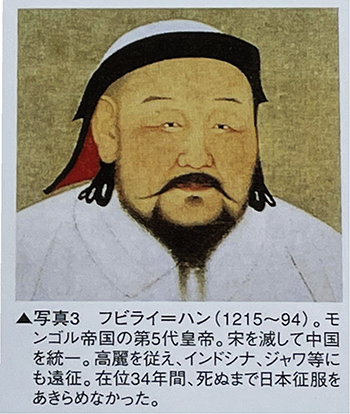
 この元寇にあたっては、そもそも「国書」を受け取ってそれへの返書を送らないという対応を取った日本の姿勢が、国際常識的に見てどうであったか、そして元寇について「神風」神話、そしてさらに飛躍して「神国日本」というような自己規定にまで至った民族性というものが浮かび上がってくる。この国書への対応についてAIに確認した概要をみると〜元寇において、元のフビライ・ハーンは日本に6回にわたり国書を送りましたが、日本側は返書をせず、使者を引き返させました。これは日本が南宋と深い関係にあり、南宋の外交政策を重視し元の国書を無視したためです。〜とあるけれど、リアリズム外交の視点から見ればとんでもない対応と言わざるを得ない。ヘタをすれば日本的な「事なかれ主義」を蔓延させてしまった嚆矢であったのかも知れない。
 この奇妙な成功を味わってしまった元寇体験から太平洋戦争末期には「神風特攻隊」というような一国神話的な精神論レベルにまで狂気してしまっている。
 その政治的判断が現在時点の政治と密接に関わらざるを得ないということで、わたしたち年代では歴史授業で明治以降の「現代史」を学ばなかった。なぜか、歴史教師が足早に逃げるように教育を放棄した様子を、わたしはまざまざと記憶している。リアリズムからの逃避。そしてそのことと、退嬰的とまで思える元寇体験からの「神国」思想神話の浸透蔓延とが、この国のリアリズム軽視傾向を表しているように感じさせられていた。
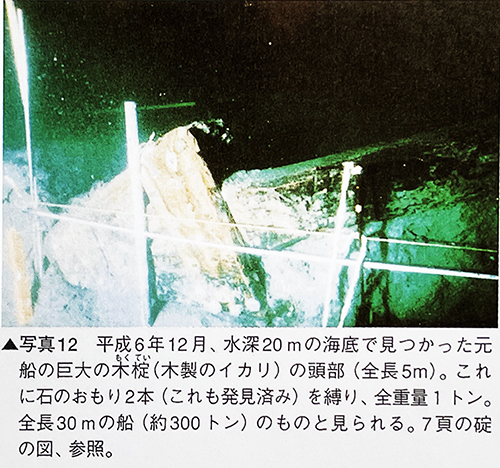
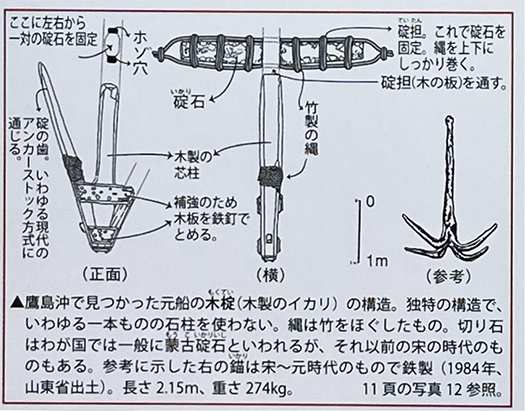
 上の写真は近年発見された元軍の沈没船の水中映像と、その碇の構造分析など。神風というような世迷い言に簡単に陥らずに、なぜかれらは撤退し、その後はどのような展開があり得るのかと科学的分析的、論理的に「外交」を考える視点をわたしたちは今後とも学んで行く必要があるのではないだろうか。

English version⬇

[Kamikaze = Abandonment of realism in diplomacy and security Yuan Enmity History Museum – 7]
Kamikaze is inferred to be irrelevant in the first wave of the ‘Bun’ei no Yaku’. What must be learnt from the nexus of the history of dialogue with the long East Asian world? …

 We consider the Japanese power structure and its interaction with the East Asian world, and in this context we consider this Genko.
 These themes are also very contemporary. Even today, we are forced to consider how to deal with neighbouring countries that are under dictatorships and whose political decisions are often uncertain.
 Japan, a maritime nation, probably has a completely different ‘sense’ of ‘diplomacy’ as a nation than a continental nation. In a continental state, security issues and diplomacy are always integrated, but in a country like Japan, surrounded on all sides by the sea and at a certain distance from the continent, the sense of diplomacy tends to be constantly ‘dulled’. This may lead to a strong tendency for the themes of security and military affairs, which are inseparable from diplomacy, to become ‘detached’ from them.
 In the case of the Genko Incident, we can see how Japan’s response to the ‘Kokusho’, in which it did not send a reply to the letter, was viewed from the perspective of international common sense, and how the myth of ‘kamikaze’ and the national character of Japan, which went even further to the self-defining ‘divine nation Japan’, came to the fore. This is the ethnicity that led to the self-definition of Japan as a ‘divine nation’. The summary of the response to this letter of state confirmed by AI is as follows: – In the Genko, Fubirai Khan of the Yuan dynasty sent a letter of state to Japan six times, but the Japanese side did not return the letter and sent the messenger back. This was because Japan had close relations with the Southern Song dynasty and ignored Yuan’s state letters, focusing on the foreign policy of the Southern Song dynasty.〜The Japanese did not return the envoys, but instead turned them back, because Japan had a close relationship with the Southern Song dynasty and was concerned about the foreign policy of the Southern Song dynasty. If anything, it may have been a pioneering example of the spread of Japanese ‘tokenism’.
 The experience of the pirates, who tasted this strange success, led to a level of madness at the end of the Pacific War, with the ‘Kamikaze Suicide Pilots’ becoming a mythological nationalistic mentality.
 In our generation, we did not study ‘modern history’ from the Meiji era onwards in our history lessons, as our political decisions had to be closely related to the politics of the present time. For some reason, I remember vividly how history teachers abandoned teaching as if they were fleeing. An escape from realism. This and the pervasive mythology of the ‘kamikuni’ ideology that has permeated the country since the seemingly degenerate experience of the Genko invasion, seem to indicate the country’s tendency to disregard realism.
 The photo above shows underwater images of a recently discovered Yuan military shipwreck and an analysis of its anchor structure. We need to continue to learn to think about ‘diplomacy’ from a scientific, analytical and logical point of view, asking why they withdrew and what developments might follow, rather than simply falling into the trap of ‘kamikaze’ myths.

【元の「国書」と世界情勢 元寇史料館-6】


 さて一段落させて、ふたたび「元寇」シリーズ復帰。
 前後2回に及んだ元と高麗の軍船団による九州北部への侵攻。東アジア世界においては中国大陸が中華としていわば中枢の位置を占めているけれど、そこでの戦いはいかにも「大陸」的な陸上戦的な権力抗争であって、その周辺の国家社会にとってそうした国家は交易の対象であって、さまざまな文化的な往来交流が基調的な関係性ということになる。そのなかでも最大の「交易」国家として日本列島社会が存在してきた。海を挟んでの社会同士の関係としては、そうなるのが自然だろうし、事実日本社会は、大陸国家との関係で経済文化そして、政治制度などでも交易的にそれらを受け入れてきた。
 この元寇の時代は以前からの「日宋関係」という活発な交易が対「南宋」間で継続的に展開していた。日本側からは旧・奥州藤原氏の支配地域から産出する黄金が輸出されていた。日宋交易では日本側からは金・真珠・硫黄・木材などが輸出され、宋からは香料・錦・磁器・書籍などが輸入されていた。この鎌倉期には禅の人材や文化などの輸入が活発だった。多くの禅僧が渡海してきている。
 そのなかでも大陸国家にとっては金の魅力が絶大だったとされる。当時の金と銀の交換比率が日本では1:5なのに大陸国家では1:13という現実があった。「日本からは金が安く入手できる」というのが、最大の関心事だったことがわかりやすい。マルコポーロはこの時代人であり元の皇帝・フビライにも謁見しているが、その「黄金の国ジパング」の想像力は共有されていたと思われる。
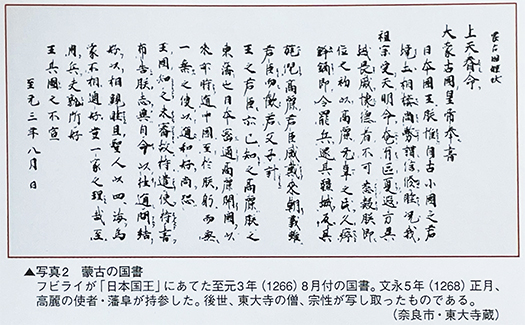
 上の写真は元から日本側に送られた「国書」。最近の文書研究では元の皇帝が送った国書としては「前例のない鄭重さ」と解されている。国書冒頭に、日本国王に対して「奉る」とあり礼を尽くしている。さらに文末に「不宣」の文字があることが注目されている。これは「友人間」の定型句であってなお「臣下」としない意思を示した語句だと蒙古の文書「経世大典」に明記されているとのこと。
 また受け取った国書に対して、それを翻訳解釈したと考えられるのは当時の社会での「大学教授」=禅宗高僧たちだろうが、かれらは「宋」から渡って来た人々であり、漢文の解釈に当たって元に対して否定的だった可能性が非常に高いと思われる。
 国書では「武力を使いたくはない」という表現もあったとされている。元の派遣軍・指揮官たちにはこうした「戦略」判断が大きなウェートを占めていたのではないか。そう考えてくると、第1波の文永の役で一定の打撃を与えたことで戦略的「役割」は終わったと考えた可能性が高い。多数の軍船団が狭い博多湾にビッシリと集結している中、荒天も予測されるような状況。早期に撤収という方針に決したと考えられる。文永の役での撤収に「神風」は無関係で意図的な撤収だったのだと思われる。

English version⬇

[Yuan’s ‘Statements of State’ and World Affairs Yuan Enemy History Museum – 6]
The latest research interprets this as unprecedented zhengjing as a world state. Even a friendly call. Yuan’s strategy at the time of the Wen-Yong War was a friendly attitude. Is kamikaze irrelevant? …

 Now that we’ve put a stop to this, we’re back to the “Genko” series.
 The invasion of northern Kyushu by the Yuan and Koryo fleets, which took place twice before and after the invasion. In the East Asian world, the Chinese continent occupies the central position as China, but the battles there were land-based power struggles in a ‘continental’ style, and for the surrounding states and societies, these states were objects of trade, and various cultural exchanges were the key relationship between them. The Japanese archipelagic societies have been the largest “trading” states among these. This is a natural relationship between societies across the sea, and Japanese society has, in fact, accepted trade in economic, cultural and political systems in relation to continental states.
 In the period of the Genko Incident, active trade between Japan and the Southern Song dynasty (960-1279) had been ongoing. From the Japanese side, gold produced from the former Oshu Fujiwara clan-controlled areas was exported. In the Japan-Song trade, gold, pearls, sulphur and timber were exported from the Japanese side, while perfumes, brocade, porcelain and books were imported from the Song. Imports of Zen personnel and culture were active during this Kamakura period. Many Zen monks travelled to the sea.
 Among these, it is said that gold was immensely attractive to the continental states. The exchange ratio of gold to silver at the time was 1:5 in Japan, but 1:13 in the continental countries. It is easy to see that the main concern was that ‘gold could be obtained cheaply from Japan.’ Marco Polo was a man of the period and had an audience with the Yuan emperor, Hubilai, whose imagination of the “golden land of Zipangu” seems to have been shared.
 The photo above shows the “Kokusho”, a letter of state sent from Yuan to the Japanese side. Recent research into the document has shown it to be ‘unprecedentedly Zheng-weight’ for a state letter sent by the Yuan emperors. The first sentence of the Kokusho states that it is ‘dedicated’ to the King of Japan, which is an act of courtesy. Furthermore, it is noted that at the end of the text there is the character ‘Fusen’. The Mongolian document “Keisei Dajiten” clearly states that this is a standard phrase for “between friends” and indicates the intention not to treat the person as a “vassal”.
 The people who are thought to have translated and interpreted the Kokusho are thought to have been the “university professors” of the society of the time, i.e. the high priests of the Zen sect, but they were from the Song dynasty, and it is highly likely that they were negative towards the Yuan when interpreting the Chinese text.
 In the Kokusho, it is said that they expressed that they did not want to use force. Such “strategic” judgements may have been of great importance to the Yuan’s dispatched forces and commanders. In this light, it is highly likely that they considered their strategic “role” to have ended with the first wave of the Bunyong War, which dealt a certain amount of blows. With a large number of military convoys tightly concentrated in the narrow Hakata Bay, and stormy weather predicted, the situation was such that they were likely to have decided on a policy of early withdrawal. It is thought that they decided on a policy of early withdrawal. It is thought that the “kamikaze” had nothing to do with the withdrawal from the Bun’ei no Yakuwari, and that it was a deliberate withdrawal.

【北国の春〜道央圏の観桜、春の風情を巡る】


 さて本日は「元寇史料館」シリーズひと休み。
 ひとつのテーマで連載的に書くというのは、ブログという表現手法が生み出した習慣性を利用した手法ですが、面白い脳味噌活性化作戦だと思いますね。文章を書くという人間社会が生み出した独特の営為にとっての「新展開・機縁」だろうと思います。
 たぶんこれまでの「書き手」のひとたちはある限られた参考文献・資料などをかき集めて、その表出してくる特定領域の「空気感」を感じ取りながら、自分の脳味噌に刺激を与えて、言の葉を生み出し続けたのでしょう。「作家と住空間」執筆ではそういう現場写真からインスピレーションを感じ続けていた。それに対して現代ではいわば「WEB文法」とでも言えるようなスタイルが成立しつつある。
 ブログという表現ツール・契機はある独特の環境を生み出しているということ。
 一方ブログは「日記」である側面も大きいので、日々いろいろ生起する体感も書き留めておきたい。そういう「バランス」も現代人の日常生活の大切な要素だと思います。いまはChatGPTの利用もしてみたいとは思っていますが、そういった現代的なツール環境が、どういう新しい文章執筆環境と気付きを生み出していくのか、興味は尽きませんね。でも、人生時間にはおのずと限りがある。いろいろな試行錯誤を積み重ねながら、今日よりも明日、という姿勢で向かっていくしかない。
 さて、4月中は北国の春を求めて東京にチョコチョコ行ったり、夫婦旅で青森・弘前〜道南と旅してきましたが、ついにサクラ最終盤前線は完全に北海道を縦断中。ことしは仕事から半ばはリタイヤしてから本格的には初めて迎える行楽日和シーズンであります。カミさんもわたしも健康留意のためもあって、連日の1万歩超の歩数を記録しておりまして、北海道内各地を歩いています。
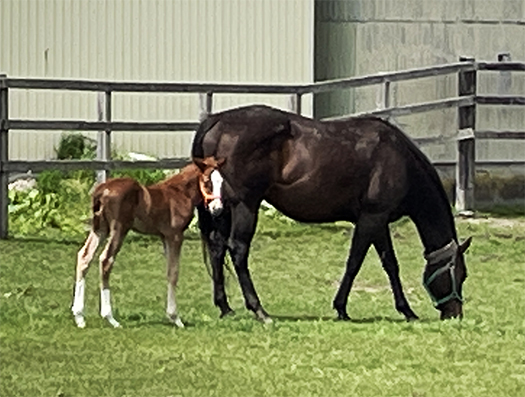
 写真は先般、静内(現在は新ひだか町の一地域)のサクラの名所「二十間道路」散策の帰り道、あちこちうれしく見ていた親子のお馬さんたち。どうも加齢と共に、イキモノとの心理的交流がこころに大きく兆してきている。サクラを見ていてもその樹間に見え隠れしてさえずりを聞かせてくれる鳥たちに語りかけたくなったりする。そういう心情がここ日高では、当然ながら道路脇に見える馬さんたちに向かう。
 こういう写真のような景色は、この時期の北海道の風物詩でしょうね。他地域ではなかなか見られない光景に違いない。ごく自然な親子の情愛の様子に深く癒され続けております。

English version⬇

[Spring in the North – Cherry blossom viewing in the Hokkaido area, a tour of the spring atmosphere]
The cherry blossom front is in its final stage, traversing Hokkaido. In the midst of this, the cherry blossom viewing route in Hidaka shows the affection between parents and children. The emotions of the living are slowly seeping in. …

 Today we take a break from the Genko Historical Museum series.
 Writing a series of articles on a single theme is a method that makes use of the habitual nature of the expressive technique of blogging, but I think it is an interesting strategy for activating the brain. I think it is a “new development and opportunity” for the unique activity of writing that human society has created.
 Until now, writers have probably gathered a limited number of references and materials, sensed the “atmosphere” of a particular area that emerged, stimulated their brains and continued to produce words. In “Writers and Living Space” writing, I continued to feel inspiration from such on-site photographs. In contrast, today, a style of writing that could be described as “web grammar” is being established.
 The expressive tool and opportunity of the blog has created a unique environment.
 On the other hand, a blog is also largely a “diary”, so it is important to write down the various experiences that occur on a daily basis. I think such a “balance” is also an important element of modern people’s daily lives. I would like to try using ChatGPT now, but I am interested to see what kind of new writing environment and realisations such a modern tool environment will produce. But there is a natural limit to the amount of time I have in my life. We have no choice but to face tomorrow with the attitude that tomorrow is better than today, while accumulating various trial-and-error experiences.
 During April, I went to Tokyo in search of spring in the north and travelled to Aomori, Hirosaki and Donan as a couple, but finally the last front of the cherry blossom season is completely across Hokkaido. This is the first full-fledged holiday season since I retired from work halfway through this year. My wife and I have been walking all over Hokkaido, recording more than 10,000 steps every day, partly to keep fit.
 The photo shows a father-and-son horse family that we happily saw here and there on our way back from a walk along Nijukan Road, a famous cherry blossom spot in Shizunai (now part of the town of Shin-hidaka). As I age, my psychological interaction with animals is becoming a major sign in my mind. When I look at the cherry blossoms, I sometimes feel like talking to the birds that are chirping among the trees. Here in Hidaka, such feelings naturally go to the horses that can be seen on the side of the road.
 Scenes like the one in these photos are probably a Hokkaido tradition at this time of year. It must be a scene that is not easily seen in other regions. We continue to be deeply healed by the very natural affection between parent and child.


【元の海外派兵に「戦略」はあったのか? 元寇史料館-5】


 さてきのうまでは元の軍装備、その戦闘衣について考えて見た。これ自体は当時の日本に対してはるかに優位性をもった「戦略価値」の高いポイントだったと言える。こうした装備についての先進性に遭遇して、個人戦での勇猛さを絶対評価尺度としていた当時の日本側の軍事思想では太刀打ちできていなかったのだろうと推測できる。
 しかし、戦争は単に装備の先進性だけでは勝敗の帰趨は決しない。
 元軍は第1派の文永の役において10月20日の上陸地上戦では幕府・御家人軍に勝利して、博多の街を焼き払い、筥﨑の宮をも焼失させる「戦果」を得ている。通常の「征服戦争」であれば、こうした戦果を確保して、そこで征服地域の支配を確実化させるように動くだろう。それは支配=政治体制の確立と言ったことがらの着手ということになる。
 しかし元軍は初戦に勝って橋頭堡を確保できたと思われるのに、軍勢は乗ってきた軍船団に帰還していたという。このことは、兵站という機能が十分に果たされていなかった可能性を示唆する。そしてこういう渡海してまで派遣した大遠征軍の「基本戦略」の不明、政治常識の不在を証明する。
 この大遠征軍の戦略的位置付けに、緻密な「兵站計画」が伴っていないことが明らか。戦争をするのに勝利後の計画がない。当たり前であれば、多くの犠牲を払って獲得した初戦の勝利からすぐに「陣地」を構築して、占領地の政治的支配の意思を露わにして行くのが当然だろう。しかしそこまでの戦略性・政治性が見られていない。
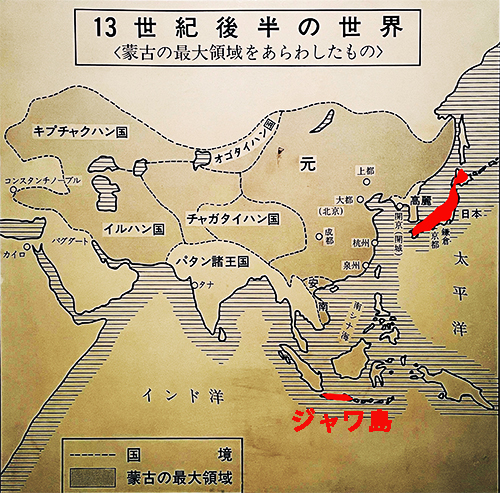
 元軍の海外派兵の類似例として、ジャワ島への侵攻がある。以下、Wikiの記述概要。
〜元軍のジャワ侵攻は1293年にジャワ島に侵攻した元軍が引き起こした。皇帝クビライが派遣した使者がジャワのシンガサリ王クルタナガラによって入墨をされて返されるという事件を切掛けとして始まったジャワ遠征。元軍がジャワ島に到着するまでに当地ジャワでは内戦的状況があって、当のクルタナガラ王はジャヤカトワン王によって弑逆されていた。元軍はクルタナガラ王の女婿・ウィジャヤの計略に誘導されジャヤカトワン王を討ったものの、その後ウィジャヤの裏切りにあってジャワ島からの敗退を余儀なくされた。全くの失敗に終わった遠征。しかし遠征失敗にもかかわらず、ジャワ遠征以後中国大陸とジャワ島の貿易交流は増大し東南アジア島嶼部歴史の大転換点の事件であった。〜
 この歴史事実を見ると、元軍には武力としての海外派兵はできてもその地の政権奪取ということはムリであり、その地域の政争のテコに利用されるのが関の山、ということが浮かび上がってくる。
 日本史研究ではこのジャワの事例との対比研究という目線が不足しているように思える。そのように見ていけば、文永の役での元軍の戦略性の乏しい動きも理解できるのではないだろうか?
 さて「神風」は吹いたのかどうか? <あした以降につづく>

English version⬇

[Was there a “strategy” in Yuan’s overseas deployment? Genkou Historiography – 5]
1274, the Battle of Bun’ei 20 Oct. Unknown strategy to turn the army back to warships even though they had achieved great successes in the first battle. What about the invasion of Java by the same Yuan army? …

 Until yesterday, we looked at the original military equipment and its combat clothing. This in itself was a point of high “strategic value” with a far superiority over the Japanese of the time. It can be assumed that the Japanese military philosophy of the time, which used valour in individual battles as the absolute evaluation scale, was not able to compete with such advanced equipment.
 However, the outcome of a war is not determined simply by the advanced nature of equipment.
 In the first phase of the Bun’ei no Yakuwari, the Yuan forces defeated the Shogunate and the Gokenjin forces in a ground battle on 20 October, burning the city of Hakata and the Hakozaki Palace to the ground. In a normal “war of conquest”, the Shogunate would have secured such a result and moved there to secure control of the conquered area. This would be the start of establishing a political system of rule.
 However, while the Yuan forces were thought to have won the first battle and secured a bridgehead, they were returning to the military fleet they had boarded. This suggests that the function of logistics may not have been fully fulfilled. It also proves the lack of a ‘basic strategy’ and absence of political common sense as a large expeditionary force that was sent across the sea like this.
 It is clear that the strategic positioning of this great expeditionary force was not accompanied by a detailed “logistics plan”. There is no post-victory plan for waging war. If it were a matter of course, it would be natural to build “positions” immediately after the first victory, which was won at great cost, and go on to reveal the intention of political control of the occupied territories. However, we have not seen that much strategising and politicking.
 A similar example of ex-military deployment abroad is the invasion of Java. The following is a summary of the Wiki description.
〜˜The Yuan invasion of Java was caused by Yuan troops invading the island of Java in 1293. The Javanese expedition began with an incident in which an envoy sent by Emperor Kubilai was inked and returned by the Javanese king Singhasari Kultanagara. By the time the Yuan army arrived in Java, there was a civil war situation in Java and King Krutanagara had been murdered by King Jayakatwan. The Yuan army was led by Wijaya, the son-in-law of King Kirtanagara, to defeat King Jayakatwan, but was then betrayed by Wijaya and forced to retreat from Java. The expedition was an utter failure. However, despite the failure of the expedition, trade exchanges between the Chinese mainland and Java increased after the Java expedition, and it was an incident that marked a major turning point in the history of the islands of South East Asia. 〜
This historical fact shows that, although the Yuan army could deploy overseas as an armed force, it was unable to seize power in the region and could only be used as a lever in political disputes in the region.
 Japanese historical research seems to lack the perspective of contrasting this with the case of Java. If we look at it in this way, we can understand the poor strategic moves of the Yuan army in the Bun’ei no Yakuza.
 So, did the “kamikaze” blow or not? <To be continued from tomorrow.


【元軍兵士の高断熱高性能「皮鎧」 元寇史料館-4】


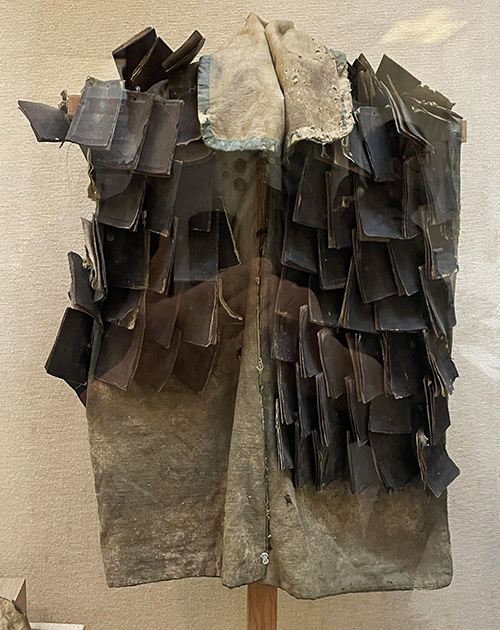
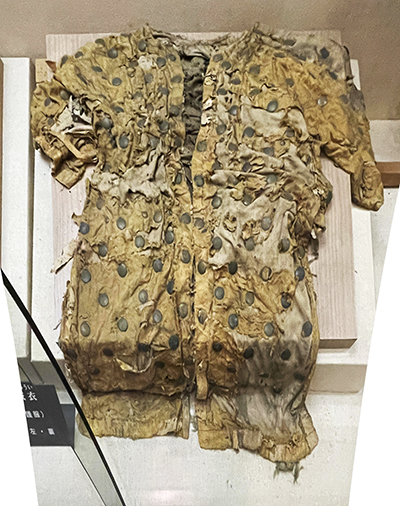
 このシリーズで元軍の兵士の戦闘衣が展示されていた様子を書いたけれど、その増補資料も整理できたので追記したい。また前回「真綿」という表記をしたけれど、そのコトバは以下のような意味合いを持つことも確認のために前提として記したい。
 <真綿:真綿(まわた)とは、絹の一種で蚕の繭を煮た物を引き伸ばして綿にした物。日本においては、室町時代に木綿の生産が始まる以前は、綿(わた)という単語は即ち真綿の事を指した。白くて光沢があり、柔らかく保温性にも富んでいるため、昔から布団や綿帽子、防寒着の中に詰め込む素材として、又はそのまま服の間に挟んで使用〈背負い真綿〉利用されてきた。〜Wiki要旨>
 中国では古くから養蚕が行われていたけれど、北方のモンゴル族支配地域ではそういう生産活動が行われず、漢民族国家からの贈与によってはじめてこうした「衣類による断熱効果」を知ったのだという。それを契機にして体温維持についての「高断熱化」がモングル民族において発達して、民族間・士族間での弱肉強食が展開した大陸国家・中国で「元」という大帝国を誕生させたことになる。
 まことに技術発展と権力抗争の相関性がわかる逸話だと思われる。
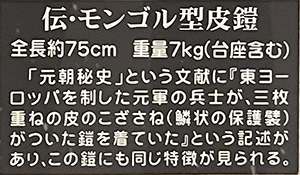
 そして、その高断熱高武装「戦闘衣」革命によってユーラシア大陸を制圧した元軍が、海洋国家ニッポンを襲撃したことになる。この戦闘衣は同時に重厚な鉄板の利用で、刀での攻撃にも矢による殺傷攻撃にも抜群の性能を誇っていた。
 第1波の侵略攻撃において、乗馬しての機動性を備えた個別武士による「名を上げる」型の戦闘を仕掛けた日本軍に対して、こうした革命的戦闘衣によって敵勢からの刀と矢での攻撃にはシステムとして完璧に上回っていた元軍が、はるかに優勢だったことは非常にわかりやすい。その上、数において大きく上回っていたのだから、戦闘局面の展開はその性能差が如実に表れた結果と言える。
 また弓矢についても日本軍の射程距離が100mだったのに対して敵勢は220mだったことから、いったん戦闘が始まった途端に趨勢は明らかだったことだろう。
 このような戦争の現実の中で、日本側の作戦としては、敵軍の弱点に絞って攻撃するしかないだろう。元軍の弱点は、それまでの征服戦争とまったく違う「海軍による侵略戦争」だったこと。その上、日本の周辺海域についての詳細な「海底地形」調査などまではムリだっただろうから、そういう反撃が効果的だったとふつうに想像できる。
 そして日本武士たちは、船で「夜襲」を掛けたのだという。<以下、あした以降>

English version⬇

[High performance “leather armour” of Yuan soldiers Yuan Pirates Historical Museum-4]
Silkworm cocoons – “cotton” brings armed revolution to Northern Mongolia. Highly insulated high “armoured” revolution of high defence and combat clothing against swords and bows and arrows. It created a dictatorial and powerful state. …

 In this series, I wrote about the display of ex-army soldiers’ combat uniforms, and now that I have organised the additional material, I would like to add to it. In addition, I mentioned the word ‘mawata’ in the previous article, but I would like to note that the word has the following connotations.
 <Mawata: Mawata is a type of silk made from silkworm cocoons, which are boiled and then stretched into cotton. In Japan, before cotton production began in the Muromachi period (1336-1573), the word ‘wadding’ referred to cotton. Because it is white, shiny, soft and insulating, it has long been used as a material for stuffing into bedding, cotton hats and winter clothing, or as ‘backpack cotton’, which is placed directly between clothes. 〜The silkworm was first discovered as a gift from the Han Chinese state, which led to the development of the ‘thermal insulation effect of clothing’. This led to the development of ‘high insulation’ for maintaining body temperature among the Mongols, and the birth of the great empire of Yuan in China, a continental state where the weak and strong were the rule among ethnic groups and warlords.
 It is an anecdote that truly illustrates the correlation between technological development and power struggles.
 The Yuan army, which had conquered the Eurasian continent through its highly insulated, highly armed “battle dress” revolution, then attacked the maritime nation of Nippon. This battle garment simultaneously boasted outstanding performance in both sword attacks and killing attacks with arrows, thanks to the use of heavy steel plates.
 It is very easy to see that in the first wave of invasion attacks, the Yuan forces were far superior to the Japanese forces, which had set up a “make a name for themselves” type of battle by individual warriors with mobility on horseback, and were perfectly superior as a system to sword and arrow attacks from the enemy forces due to these revolutionary fighting garments. In addition, since they were greatly superior in numbers, the development of the battle phase was the result of the difference in performance.
 In terms of bow and arrow, the Japanese forces had a range of 100 metres, while the enemy forces had a range of 220 metres, so once the battle began, the trend was clear.
 In this reality of war, the only strategy for the Japanese side would have been to focus on the weak points of the enemy forces and attack them. The weakness of the Yuan forces was that it was a “naval war of aggression”, completely different from the previous wars of conquest. Moreover, it would have been impossible to conduct a detailed survey of the ‘underwater topography’ of the seas surrounding Japan, so such a counter-attack could normally be imagined to have been effective.
 The Japanese warriors then made a “night attack” with their ships. <The following is from tomorrow onwards.


【第1波「文永の役」戦況図 元寇史料館にて-3】


 今回「作家と住空間」という電子書籍を出版して以降、昔人の考えたこと、やってきたことへの思いが強くなってきます。芥川龍之介とか、司馬遼太郎などの作品と住空間に触れることで、その「場所で」かれらはどんな心象に至っていたのか、という想像力に加速度が付いてくる。人生時間に能動的に関われる期間内に、そういう過去の人びととの対話を心がけたい。「高齢期」の生き甲斐としてそのことに集中したい。一般的には「歴史数寄」ということになる。
 元寇っていう大きな歴史事実について、もうちょっと深い事実を探査してみたくなった心理的起点。よく「神風なんて国粋主義的な刷り込みに過ぎない」という考えから元寇という歴史事実そのものの発掘をスルーさせるような「圧」がありますが、なんかおかしい。この元寇史料館もその存在自体がまったく知られていない。そもそも管理運営すら公共ではなく、公共から日蓮の開いた宗派寺院に「委託」されているようなのだ。受付窓口は僧侶の方。そろそろ平明に事実の解明・一般化に向かうべきではないか?
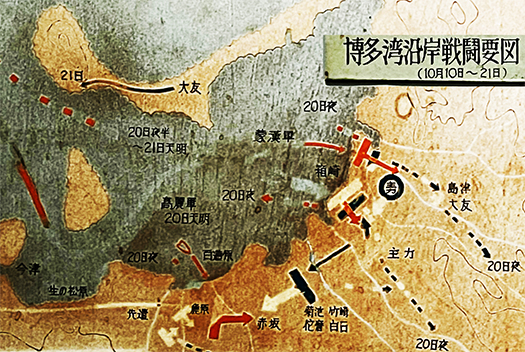
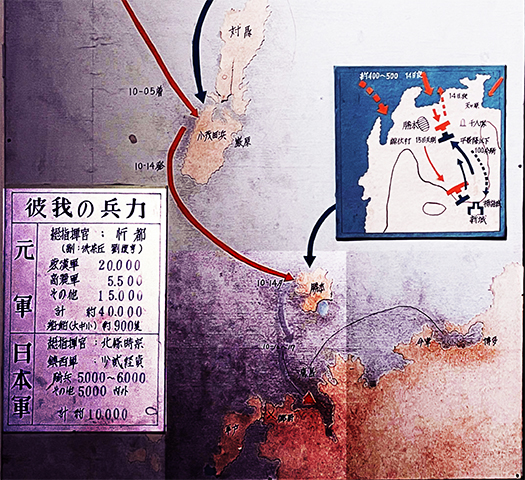
 上の図は、展示資料の断片的図柄からPhotoshopで復元再生させたデータ。この資料に寄れば元寇第1波での彼我の兵力は敵勢40,000に対し、九州の御家人たちの動員兵力が10,000程度になっている。
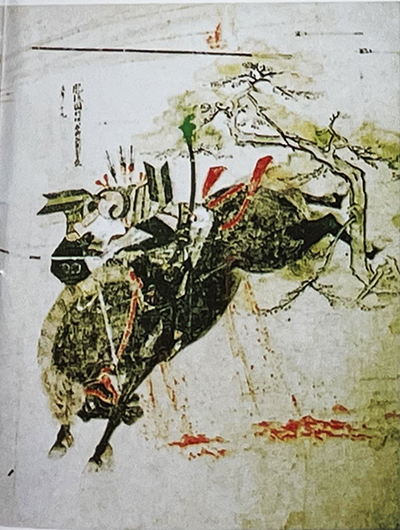
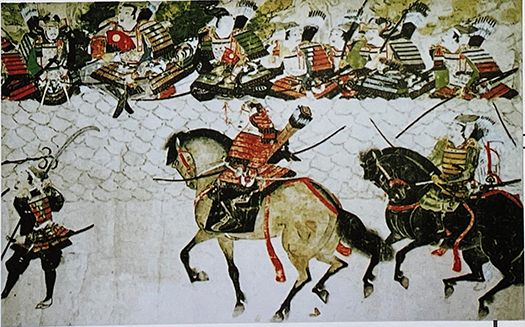
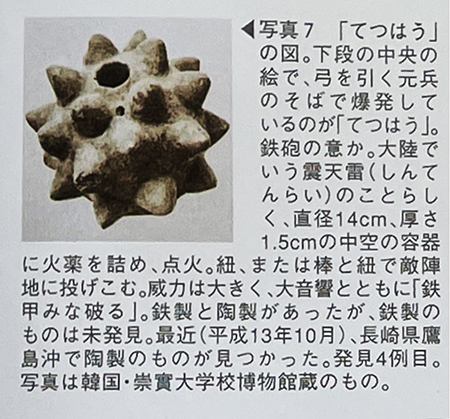
 博多の町衆・市民たちは当然さまざまに日本軍に協力しただろうから、そういう総体としての防衛勢力は元軍に対して必ずしも劣勢だったとは思えないが、純軍事勢力では格差があった。結果として1274年10月20日の戦闘においては、数において圧倒的優勢な元軍の跳梁跋扈を許してしまう。薩摩の島津や豊後の大友などの日本側は敗退を繰り返した。きのう見たようにそもそも軍装において大きな技術格差まで存在した。その上、弓矢の弾道距離も2倍程度の格差であり、さらに矢には毒が塗ってあったので損害は甚大だった。「てつはう」といわれる火薬兵器もその威圧力で圧倒されたという。
 しかし元軍の「士気」はどの程度だったかは不明。そもそも海軍的な戦争は元としてもはじめての経験。というか海軍をいくら大人数で派遣しても、その地域に根ざす勢力の裏切り協力などが得られなければ、食糧物資の確保など非常に困難だったことだろう。日本国内の内戦でも木曽義仲の失敗などを見れば、あきらかだと思う。強盗のように物資を現地で巻き上げるというのでは民心を把握することは到底ムリ。そういう教訓に踏まえ信長は、初上洛時、軍の非道行為を厳禁し、違反者は発見時に即座に死刑に処している。
 その程度のことを元軍が理解していないハズはない。かれらは軍事作戦的には圧倒して博多の街を炎上潰滅させたが焼いてしまっては略奪も不可能。その後全軍が海上の軍船に帰還していたという。<以下、あした以降に>

English version⬇

The first wave of the battle of Bun’ei no Yakuwari, at the Museum of Genko History – 3]
On 20 October 1274, the Yuan forces landed in Hakata, overwhelmed the armies of the Imperialists in Kyushu, and set the city of Hakata ablaze. But was naval “conquest” essentially possible? …

Since the publication of the e-book “Writers and Living Space”, my thoughts about what people thought and did in the past have grown stronger. By coming into contact with the works and living spaces of Ryunosuke Akutagawa, Ryotaro Shiba and others, my imagination about what kind of mental images they had in those “places” has been accelerated. I would like to try to have a dialogue with these people of the past during the period when I can actively engage in the time of my life. I want to concentrate on this as the purpose of living in my “old age”. Generally speaking, this is called “historical pondering”.
 This is the psychological starting point of my desire to explore more in-depth facts about the great historical fact of the Genko. There is often a “pressure” to let people go through the excavation of the historical fact of the Genko, based on the idea that “kamikaze is just a nationalistic imprinting”, which is something strange. The existence of this museum itself is not known at all. In the first place, even the management and operation of the museum is not public, but seems to have been “entrusted” by the public to a sectarian temple founded by Nichiren Shoshu. The reception desk is staffed by priests. Isn’t it time to start clarifying and generalising the facts in plain sight?
 The figure above is data reconstructed and reproduced by Photoshop from fragmentary patterns in the exhibition material. According to this data, the number of troops mobilised by the Imperialists in Kyushu in the first wave of the Genko was around 10,000 compared to 40,000 by the enemy.
 The townspeople and citizens of Hakata would naturally have cooperated with the Japanese in various ways, so it does not seem that the defence force as a whole was necessarily inferior to the Yuan forces, but there was a disparity in terms of pure military strength. As a result, in the battle of 20 October 1274, they allowed the Yuan forces, which had an overwhelming superiority in numbers, to ransack the city. The Japanese side, including Shimazu of Satsuma and Otomo of Bungo, were repeatedly defeated. As we saw yesterday, there was even a large technology gap in military equipment. In addition, the ballistic range of their bows and arrows was about twice as great, and the arrows were coated with poison, so the damage was enormous. The explosive weapons known as “tetsu-hau” were also said to have been overwhelmed by their overpowering power.
 However, the extent of the “morale” of the Yuan forces is unknown. In the first place, this was the first experience of naval warfare for the Yuan. In fact, no matter how large a navy was dispatched, it would have been extremely difficult to secure food supplies without the treacherous cooperation of forces rooted in the area. The failure of Kiso Yoshinaka in the Japanese Civil War is a clear example of this. It would have been impossible to grasp the people’s mindset if they were to collect supplies on the spot, like robbers. Based on this lesson, Nobunaga strictly forbade any atrocities committed by his troops when they first arrived in Kyoto, and immediately executed those who violated the law on discovery.
 There is no reason to believe that the Yuan forces did not understand this. They overwhelmed the city of Hakata in terms of military operations and destroyed it in flames, but looting was impossible once the city was burnt to the ground. Afterwards, the entire army returned to their warships at sea. <