本文へジャンプ

【お米価格高騰に民の怒りの爆発が始まったか?】


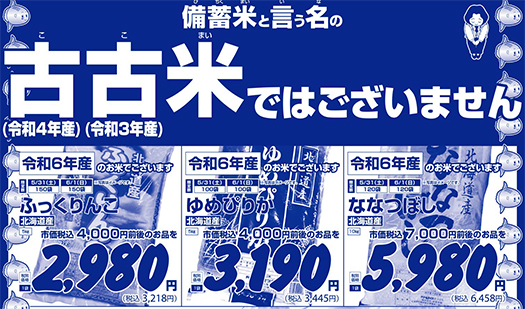
 写真はわたしが好きでよく買い物させてもらう近所の安売りスーパーさんの電子チラシ。
 わたし自身は先日も書いたように、まだ25kgほどの買い置き備蓄米が自宅にあり、わが家だけのペースだとたぶん半年程度は持つのですが、事務所兼用住宅なので働いてくれているスタッフ(一応離れたので別会社ですが)のために今後、感謝のふるまい握り寿司づくりなどを考えると、もうちょっと早くに足りなくなるかもと、心細いかなぁという心理も持っております。
 なんにせよ、お米は日本人の生活文化の基盤としてあり続けた主食。その主食がどのような市場価格の構造変化で高騰したのか、まだメディアでも識者からも解明の全体像が見えてきていない。早急にこの暴騰プロセスは解明されて欲しいです。この局面ではナタを振るうみたいな立場の政治家は大きなアピールポイントにはなるでしょう。前の利権構造どっぷりのようだった農水大臣の失脚と別人のポピュリスト系新大臣という動きにはそういった「思惑」が表出しているのでしょう。
 まぁ庶民としてはなんとか価格高騰が抑えられ、お米が低価格で潤沢に流通することが希望。
 そういう希望に対して非常にわかりやすい「消費者の願いに沿う」小売店舗の動きには注目が集まる。この局面では消費者心理に的確に対応する店舗が支持を高めるのは間違いがない。ということで、さっそくに「2000円台」の価格で訴求する宣伝チラシであります。「備蓄米という名の古古米ではございません」というメッセージはわかりやすい。まぁわたし自身は古古米に対してあんまり否定的な感覚はありません。
 たしかに知人の宮城県農家から直接、毎年の新米を大量購入してきましたが、それはむしろ農家のみなさんへの応援の気持ちが大きく、新米のおいしさ大好き、という嗜好性ではありません。それよりもお米農家への感謝の気持ちの表現というのに近い心理でした。おいしいのであればさらにウレシイというような心理。
 なので、こうしたスーパーのチラシに表現された米価への庶民の気持ちに、はるかに共感するものです。
 カミさんは、参議院選挙頃に相当に米価は下がっていくだろうという見通し判断。当面のお米というよりも、家庭備蓄の強化が目的であるのでこうした「市場動向」を見据えながら、慎重に購入タイミングを計っていきたいと思います。
 なにより農家のみなさんの経営の安定、庶民の暮らしの安定実現を。

●お知らせ
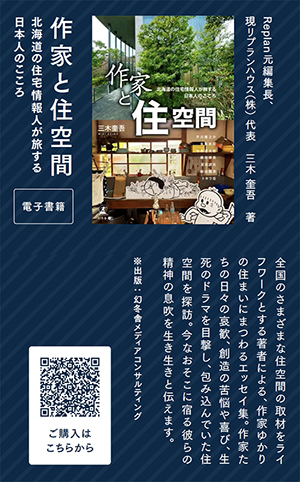
拙書「作家と住空間」幻冬舎から電子書籍で発刊
お求めはAmazonで。
https://amzn.asia/d/eUiv9yO
English version⬇

Has the outburst of public anger over soaring rice prices begun?
The retailers’ direct response to the anger of the general public at the soaring rice prices is the focus of attention. The flyer expresses the sentiment that one cannot survive if one is insensitive to this phase. …

 The photo is an electronic flyer from a local supermarket that I like to shop at.
 As I wrote the other day, I still have 25 kg of stockpiled rice at home, which will probably last for about half a year at the pace of my own home, but when I think about making nigiri sushi for my staff (who work for a different company, since we have moved away from the office) in the future, I am not sure if I will run out anytime soon. I am also worried that we may run out of rice a little sooner than I would like.
 Whatever the case may be, rice is a staple food that has remained the foundation of Japanese life and culture. We have yet to see the whole picture of how this staple food has skyrocketed in price due to structural changes in the market price, either from the media or from intellectuals. I would like to see this runaway process clarified as soon as possible. It would be a great appeal point for politicians who are in a position to take a machete to the ground during this phase. The loss of the former Minister of Agriculture, Forestry, and Fisheries, who seemed to be full of interest structures, and the appointment of a new populist minister, who is a different person, may be indicative of such “speculation”.
 Well, as for the common people, their hope is that the price hike will be somehow controlled and rice will be distributed in abundance at a low price.
 The moves of retail stores that “follow the wishes of consumers” are very understandable in response to such hopes are attracting a lot of attention. There is no doubt that stores that accurately respond to consumer sentiment will gain support in this phase. So, here is an advertising flyer that immediately appeals with a price in the “2,000-yen range. The message is easy to understand: “This is not old rice in the name of stockpiling. Well, I myself am not too negative about old rice.
 I have purchased a large amount of new rice every year directly from a farmer in Miyagi Prefecture whom I know, but that is more out of support for the farmers, and not out of a preference for the deliciousness of new rice. It was more like an expression of gratitude to the rice farmers. If the rice is delicious, it is even more gratifying.
 Therefore, I am much more sympathetic to the feelings of the general public toward the price of rice expressed in these supermarket flyers.
 Kami made the judgment that the price of rice will probably drop considerably around the time of the House of Councillors election. Since our goal is not so much to buy rice for the time being, but rather to strengthen our household stockpile, we would like to carefully consider the timing of our purchases while keeping an eye on these “market trends”.
 We hope that farmers will be able to stabilize their business and the lives of the general public will become more stable.

Notice
My book “Writers and Living Space” is published in e-book format by Gentosha
Available at Amazon.com.

【見知らぬ町、散歩道河辺の寺・鐘楼に「白象」発見】


 平安ー鎌倉期の西行さんや、江戸期の芭蕉さんなど日本史上では多くの「漂泊」の旅人文化があります。踊り念仏の一遍さんなどもそうした系譜の中で捉えた方がふさわしいとも感じます。で、高齢化社会という日本人のあらたな社会環境のなかで再発見されるべき「生き様」文化のひとつの領域ではないかと思っています。
 かれらの時代にはひたすら歩きまわるという道行きで、しかも和歌や俳句などの詩文文化によってこころの陰影感を表現する活動だった。そういったはるかな先人たちの道行きとは違って現代のわれわれらしい行程というのもあるでしょう。わたしはビジネス生活としては住宅情報の世界で生きてきましたが、その基本は「現地での取材・撮影」行動。そういったライフスタイルは血肉になっているので、日本文化の「建築」に関連した公開的施設を巡り歩き、その周辺で可能な限り「住宅」の撮影機会を探る、という生き方を選択してきています。そういった流れから「公開された住宅」としてそこで生きていたことが明示されている「作家」住宅に着目したところ。
 基本はブログという文章表現で「書き留めて」そのあとで写真を交えた空間性表現の「深化」をこころみる、というような指向性。一方建築としても各地の宗教寺院や神社などの公共的空間を歩くことになる。
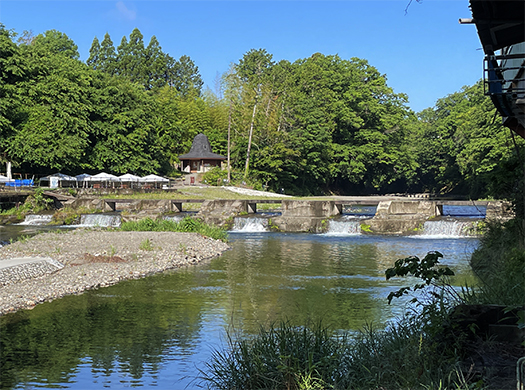
 今回はそうしたなかから埼玉県飯能市という地方を歩いてみた。こういう目立たない(失礼)地方都市は、庶民的な生き方探訪には格好の対象。で、早朝ホテルでヒアリングした周辺を散歩。飯能河原という素朴な自然美のそばに真言宗寺院をみつけ朝の礼拝をと願った次第。あ、わたしけっこう神社とか宗教は好きなんです。奥の細道(笑)。
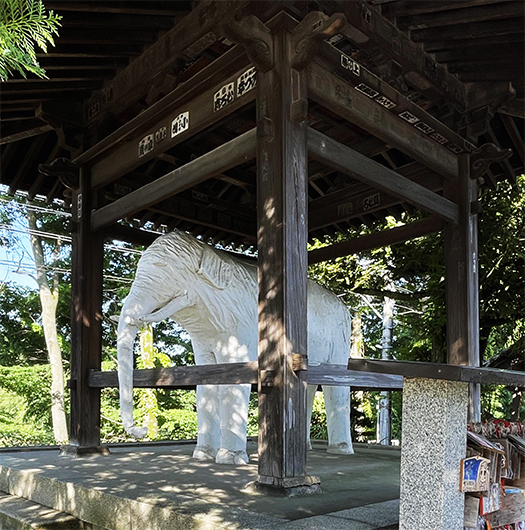
 そうしたら上の写真のような光景に遭遇。この「観音寺」では通常鐘楼とされる場所に、なんと白象が端座していたのであります。
 寺のHPには以下の記述要旨。「白象はお釈迦様の生母マーヤ夫人の夢に現れ釈迦の誕生を予言した。こうした説話の白象を、昭和40年代に祭事にからんである檀家の方が作られた。それを縁あって鐘楼堂に収めさせていただいた。以来、観音寺檀家信徒の方々や飯能幼稚園生徒たちを優しく見守っている」。
 戦争最中で鐘楼の鐘は供出されて空虚になっていた場所に白象が収まったことになる。なかなか良い姿であり、またその縁起も楽しい。手づくり感のあふれる姿とその周辺の空気感に深く癒されていました。

●お知らせ
拙書「作家と住空間」幻冬舎から電子書籍で発刊
お求めはAmazonで。
https://amzn.asia/d/eUiv9yO

English version⬇

[In a strange town, a “white elephant” is found in the bell tower of a temple on the riverside of a walking path]
Drifting journey like Saigyo’s is a lifestyle that should be reviewed in an aging society. On the road, white elephants are showing us nirvana (laughter)….

 There have been many “drifter” traveler cultures in Japanese history, such as Saigyo in the Heian and Kamakura periods and Basho in the Edo period. I feel that Ippen, the dancer and nembutsu practitioner, should be considered as part of such a lineage. I believe that this is one area of “way of life” culture that should be rediscovered in the new social environment of an aging Japanese society.
 In their time, they used to walk around and express the shadows of their hearts through poetic and literary culture such as waka and haiku. Unlike the paths taken by their predecessors, there may be a path that is unique to us today. I have lived in the world of housing information in my business life, but the basis of my business life has been to “go to the site and take pictures. This lifestyle is in my blood, and so I have chosen to live my life by visiting public facilities related to the “architecture” of Japanese culture and seeking out opportunities to photograph “houses” in the vicinity of such facilities whenever possible. In that vein, I have just focused on “artist” residences that clearly indicate that they were lived there as “public” residences.
 The basic orientation is to “write down” in the form of a blog, and then try to “deepen” the expression of spatiality with photographs. On the other hand, as for architecture, I will walk through public spaces such as religious temples and shrines in various regions.
 This time, I walked around Hanno City in Saitama Prefecture. Such an inconspicuous (pardon the pun) regional city is an ideal target for exploring the way of life of the common people. So, I took a walk around the area I had heard about at the hotel early in the morning. I found a Shingon temple near the simple natural beauty of Hanno Kawara and wished to pray there in the morning. I like shrines and religions a lot. I love shrines and religion.
 Then, I came across the scene shown in the photo above. In this “Kannon-ji” temple, a white elephant was sitting in the place that is usually used as a bell tower.
 The temple’s website has the following description. The white elephant appeared in the dream of the Buddha’s mother, Mrs. Maya, and predicted the birth of the Buddha. In the 1965’s, a parishioner made the white elephant from this story in connection with a festival. The elephant was placed in the bell tower of the temple. Since then, it has been gently watching over the parishioners of Kannonji Temple and the students of Hanno Kindergarten.
 The white elephant was placed where the bell of the belfry had been left empty after the bell was offered during the war. It is quite a nice figure and its auspiciousness is also enjoyable. I was deeply healed by the full of handmade appearance and the atmosphere of the surrounding area.

●Notice
My book “Writers and Residential Space” is published by Gentosha in e-book format
Available at Amazon.


【空の旅路〜津軽半島「十三湖」と同定か?】


 昨日夕刻、東京から富士山地域をめぐるツアーから帰還しました。
 旅中はいま話題の臨床医師・和田秀樹氏の著書「70歳が老化の分かれ道」を読書しておりました。わたし自身は、読書の対象としては自然科学系などの本が多くて、いわゆる「文学作品」に偏ることはしません。基本的には「事実に即した」表現物に惹かれる。
 自分自身もこの書に書かれた年代に差し掛かってきて、健康管理というよりもさらにそれを超えて「自己の生き方管理」みたいな部分に強く感応させられてきています。まぁ、当然ではありますが。日々、自分の生命力の状態をしっかり把握しながら、できれば前向きな生き方を実践していきたい、というところ。そういう事柄についてこの方の著作は非常にわかりやすく述べられていて参考になる。わたし自身、いくつかの病理と対話しながら「元気よく生きる」という方針でいたいと思うので、そういった事柄の参考意見と言えるでしょう。
 ただ、この先生はいまその動向でなにかと政治的にも話題になってきているようで、その点はよくわからないのであくまで慎重でありたい、純粋に「書かれた内容」が面白かった、ということです。
 ・・・あれ、本日のテーマから大きく逸脱(笑)。
 昨日の帰りのフライトではフィリピンからの観光の方たちと同乗になり、片言ながら楽しく交流。でもあんまり話題が深まりすぎるのも言語系脳の酷使になって困るので、基本的には最近のフライトの定番である「窓際」席からの「空中散歩」視覚ツアーを楽しんでおりました。どうも昨日の富士山ブログといい、こういうのに興味分野が大きくなって来ているかなぁ。
 現代人の人生行路の中で「空の旅」体験というのもかなりの時間積層にはなっているし、過去の作家さんたちとは大きく違って現代人はこの環境への経験知が大きくなって来ている。案外面白い「深掘り<可能性>分野」であるかも知れませんね。自分も出版表現の領域では文末記載の電子書籍刊行と、ようやく端緒についたところなので、いろいろと、無意識に探ってきている段階なのかも知れません。
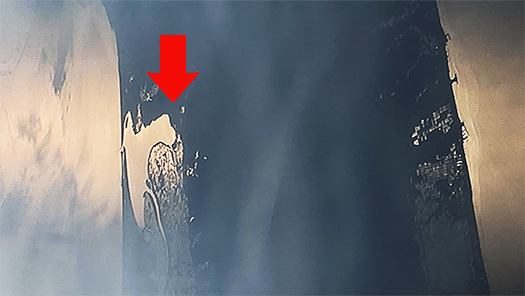
 空の散歩道の景観と天候具合・自然の表情の合わせ技で織りなされる光景は、非常に「音楽的」と感じられます。音楽鑑賞でその「テーマ性」に思いを巡らせるのと同様に、空から見た地形からその地域を「同定」させるのはそこそこ想像力とか、地理の知識などを活用する領域ではないかと。

●お知らせ
拙書「作家と住空間」幻冬舎から電子書籍で発刊
お求めはAmazonで。
https://amzn.asia/d/eUiv9yO

English version⬇

The Sky Walk – Identified as “Lake Jusan” on the Tsugaru Peninsula?
The experience of “walking in the sky,” which is becoming more and more common among modern people, is quite “musical. The brain work of “identifying” a familiar place from the sky is unexpectedly interesting. …….

 Yesterday evening, I returned from a tour from Tokyo to the Mt.
 During the trip, I was reading a book by Hideki Wada, a clinical doctor who is currently a hot topic in Japan, titled “70 is the turning point of aging. As for myself, I read mostly books on natural sciences, and I am not biased toward so-called “literary works. Basically, I am attracted to “factual” works of expression.
 I myself am approaching the age described in this book, and I have been strongly influenced by health care, or even more beyond that, “management of one’s own life style”. Well, it is only natural. I would like to practice a positive way of life, if possible, while keeping a close watch on my own vitality on a daily basis. His writings on such matters were very easy to understand. I found it to be a useful reference. I myself would like to live a “vigorous life” while interacting with some pathologies, so I can say that this is a reference opinion on such matters.
 However, this doctor seems to be in the political spotlight at the moment, and I am not sure about that, so I would like to be cautious.
 I want to be cautious because I am not sure about that point, but I was genuinely interested in what was written.
 On the return flight yesterday, I shared the same flight with some tourists from the Philippines, and we had a pleasant exchange, even though we were speaking only one language. However, I didn’t want to get too deep into the topic of conversation, as it would be too much of a strain on my linguistic brain, so I basically enjoyed the “aerial walk” visual tour from the “window seat,” which has been a staple of my recent flights. I’m getting more and more interested in this kind of thing, like yesterday’s blog on Mt.
 In the course of my life, the experience of “air travel” has become a considerable time stacking experience, and unlike the writers of the past, people today have a greater experiential knowledge of this environment. It may be a surprisingly interesting “field of deep exploration ”. I myself am just at the beginning of the field of publishing expression, with the publication of the e-book mentioned at the end of this article, so I may be at the stage of exploring various things unconsciously.
 I feel that the scenery woven together by the combination of the landscape of the sky walk and the expression of nature, such as the weather conditions along the way, is very “musical. In the same way that music makes you think about the “thematic nature” of the music, I think that “identifying” an area from its topography as seen from the sky is an area where you can utilize your imagination and knowledge of geography.

My book “Writers and Residential Space” is published by Gentosha as an e-book.
Please visit Amazon to purchase the e-book.
For more information, please visit Amazon.com.

【富士山、ああ、富士山】


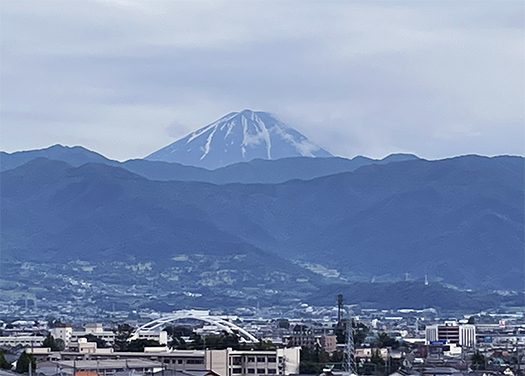
 北海道人はめったに富士山を仰ぎ見る機会がないので、ニセコの羊蹄山をときどき見に行く(笑)。まぁそれでも「だいたい似た感じ」なので「ま、いっか」と自分を納得させて過ごしている。そういうことなので、たまたまホンモノの富士山を見ることができる地域に来ると興奮する。「あ、ココではこういう風だ」「ほえ〜、こんなとこからでも見てくれている」などと無性によろこぶ。
 津軽人の太宰治は「富士には月見草」と、甲府に在住の頃に書き記してそれが一気に日本人に染みわたって行った。テレビなどのメディア出現以前の社会での「作家」の影響力の強さを教える逸話。その刷り込みから月見草どころではなく北海道人なので、できれば「イタドリ」を合わせ見てみたいと思ったりする。今時期、札幌の散歩道では旺盛にこの雑草が道端を埋め尽くしてくれている。しかし、富士山が見える場所では、わたしは見たことはない。農作地か整備された道端からの美しい立派な光景ばかり、さすが富士。
 昨日は伊豆半島付け根の沼津から静岡経由で山梨県・甲府に移動してちょうどグルッと富士山を回って観察するような行程を移動。たまに富士山を遙拝する日本人として、1日中そのご尊顔を拝し続けていました。まことに言うことなし。
 そんな行程を過ごしてレンタカーを運転していて亡き母にせがまれて富士を見に行ったことが回想されていた。東京の大学生だった50年以上前の頃、母が単身で上京してきた。すぐ上の兄も大阪で働いているので両方の顔を久しぶりに確認したいという旅。わたしは学生で時間に余裕もあるので、東京から大阪まで同行。その途次「富士山が見たい」という母の懇願。で、静岡で新幹線を降りレンタカーを借りて「日本平」という北海道人にすると「いかにも富士山がくっきりと見えそうな」ところまで移動する運転手をさせられた。50年以上前の頃で、はじめて借りたレンタカーで途中いろいろなドタバタも記憶が再生されていた。カーナビもない時代のはじめての道行き。普段運転していたクルマとサイドブレーキが違う形状だったことに気付かず、なんと運転中「黒煙」が立ち上ったりした(泣/笑)。摩擦熱だったのだけれど、サイドブレーキを引いているのに運転できていたのも不思議。まぁ、引きが甘かったのでしょうが・・・。天国の母の心配顔を思い出して、オカシくて不思議な邂逅感。
 ああ富士山、でありました。

●お知らせ
拙書「作家と住空間」幻冬舎から電子書籍で発刊
お求めはAmazonで。
https://amzn.asia/d/eUiv9yO

English version⬇

Fuji, Oh, Mt. Fuji]
Moonflowers are nice, but Hokkaido people want to see itadori too. Rental car with my late mother, a rare trip to see Mt. Fuji, and a rare road trip with my late mother. Fuji. Fuji

 Since Hokkaido people rarely have a chance to look up at Mt. Fuji, I sometimes go to Niseko to see Mt. Fuji in Niseko. (Laughs.) But even so, since it looks “roughly the same,” I spend my time convincing myself that it’s “okay. So I get excited when I happen to be in an area where I can see the real Mt. I am irresistibly happy when I come to an area where I happen to be able to see the real Mt.
 Osamu Dazai, a Tsugaru native, wrote, “Fuji has evening primrose,” when he was living in Kofu, and it quickly became a part of Japanese culture. This is an anecdote that shows the strong influence of “writers” in the society before the emergence of TV and other media. Because of this imprint, I am a Hokkaido native and would like to see “Itadori (Japanese knotweed)” together with “Tsukimikusa (evening primrose),” if possible. This time of year, this weed vigorously fills the roadsides of Sapporo’s walking trails. However, I have never seen it in places where Mt. Fuji, only beautiful and splendid scenes from farmlands or well-maintained roadsides.
 Yesterday, I traveled from Numazu at the base of the Izu Peninsula to Kofu in Yamanashi Prefecture via Shizuoka, just to observe Mt. As a Japanese who occasionally visits Mt. Fuji, I spent the entire day admiring its majestic face. I really don’t have anything to say.
 He recalled how he spent such an itinerary and drove a rental car to see Fuji at the behest of his late mother. When I was a college student in Tokyo more than 50 years ago, my mother came to Tokyo by herself. My older brother was also working in Osaka, so she wanted to see both of them for the first time in a while. I was a student and had plenty of time to spare, so I accompanied her from Tokyo to Osaka. Fuji,” my mother begged me to go with her. It was more than 50 years ago, and it was the first time for me to rent a car, and I was replaying my memories of the various mishaps that occurred along the way. It was my first road trip in an era when there were no car navigation systems. I didn’t realize that the side brake was different from the one I usually used to drive, and to my surprise, “black smoke” was billowing out while I was driving (tears/smiles). It was frictional heat, but it was strange that I was able to drive the car even though the side brake was pulled. Well, I guess I was not pulling hard enough…. I remembered my mother’s worried face in heaven and had a funny and mysterious encounter with her.
 Ah, Mt. Fuji.

Notice
My book “The Writer and the Living Space” is published as an e-book from Gentosha.
Please visit Amazon to purchase it.


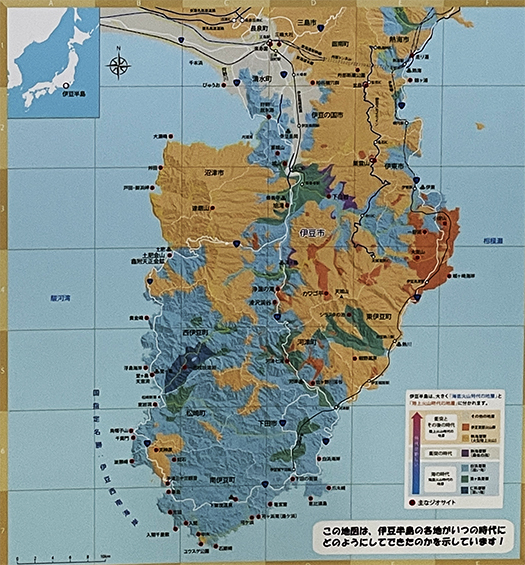
【伊豆半島あちこち 作家・井上靖を探訪】


 北海道人にとって「伊豆」というのは、まことに縁遠い。
 4月に「作家と住空間」を出版しましたが、月イチほどの関東関西などの訪問機会が別件であるので、そのテーマ領域での探訪をセットする「自由な取材」を継続しています。いわゆる文学好きという種類の興味ではなく、わたしの場合は「人間がそこで暮らした住空間の実相を訪ねる」というのが主体。今回は、旭川で発見した「井上靖文学館」を知ってから、そのかれの人生模様に沿って「そこで生きた」空間を探訪してみた次第。
 人間、いくつになっても生きてきた興味分野というのは面白いもの。こんなふうな行脚を続けていると、深掘りができるようになってきて、だんだんと「対話型」の取材活動にもつながってくる。昨日も、都合4箇所を巡り歩いていましたが、そのうち2箇所ではかなり「話し込む」取材になった。とくに井上家のご親族の方とも偶然にお目にかかれて、さらに「また、今度じっくり訪ねて来てください」と言ってくれるまで、ディープな取材をすることができました。通り一遍の空間取材だけでなく、このような人間取材が加わると理解が一気に深みに入っていく感じがありますね。
 「この窓からから井上靖は富士を見て育っていた、と聞いている。きょうは曇りで見えないけど・・・」という証言もいただいたのですが、取材からの別れ際、ふと見るとなんと富士山が遠く姿を現してくれていた。その旨告げると満面の笑みを返していくれていました。出会いの深まり感。
 作家という存在は、日本社会では非常に存在感が大きい。海外の作家たちはそういう状況を見てたいへん驚き、うらやましがるのだそうです。この列島社会では人間の生き様というような領域についての共通性・共有感が大きいということなのでしょうか。そういう「機縁」で人と人のコミュニケーションが機能するというのは、考えて見ると興味深いことだと思える。
 こういう伊豆半島の隅々にまで海外観光客の姿が多く見られる。
 日本社会でのこのようなコミュニケーションについてまでは理解は難しいだろうと想像しますが、先般は三島由紀夫文学館を山中湖畔に探訪しましたが、そこではある程度海外でも知られている三島らしく、それらしき外人の方もチラホラしていた。そこまでディープに日本を探訪されている様子。
 こういう領域のニーズはそういう対象としても意味があるかも知れませんね、勝手な妄想(笑)。

●お知らせ
拙書「作家と住空間」幻冬舎から電子書籍で発刊
お求めはAmazonで。
https://amzn.asia/d/eUiv9yO

English version⬇

The writer, Yasushi Inoue, was born in 1931 in Izu, Hokkaido.
He once lived in Tokyo, but Hokkaido people have no connection to the depths of Izu. The writer’s visit was a good guide. I was delighted to hear the writer say, “Come again. I am very happy to hear from him again.

 For Hokkaido people, “Izu” is a very remote place.
 I published “Writers and Living Spaces” in April, and since I have other opportunities to visit Kanto, Kansai, etc. about once a month, I am continuing my “free coverage” to set up explorations in that thematic area. My main interest is not the so-called “literature lover” kind of interest, but in my case, “visiting the reality of the living spaces where people have lived there. This time, after learning about the “Yasushi Inoue Literature Museum” in Asahikawa, I decided to visit the space where he “lived there” in accordance with the pattern of his life.
 It is always interesting to know about the fields of interest in which we have lived, no matter how old we are. As I continue to make such trips, I become able to dig deeper, which gradually leads to “interactive” reporting activities. Yesterday, I visited four places, and at two of them, I was able to “talk” with the people I met. In particular, I was able to meet a relative of the Inoue family by chance, and was even able to conduct in-depth interviews until he said, “Please take the time to visit us again next time. I feel that my understanding of the place is deepened when I add this kind of human interview to my coverage, rather than just covering the space in general.
 I heard that Yasushi Inoue grew up watching Fuji from this window. Fuji appeared in the distance when we were parting from the interview. When I told him this, he gave me a big smile. It was a deepening sense of encounter.
 Writers have a very strong presence in Japanese society. Writers from overseas are very surprised and envious of such a situation. Perhaps it is because there is a great deal of commonality and shared understanding of the human way of life in this archipelagic society. It is interesting to think that communication between people functions through such “kiki-en” (opportunity).
 Many foreign tourists can be seen in every corner of the Izu Peninsula like this.
 I imagine it would be difficult to understand up to this kind of communication in Japanese society, but I recently explored the Yukio Mishima Literature Museum by Lake Yamanaka, and there were a few foreigners who seemed to be Mishima, who is known overseas to some extent, there. They seemed to be exploring Japan that deeply.
 I think the needs in this area may be meaningful as a target for such a visit.

●Notice
My book “Writers and Residential Space” is published by Gentosha as an e-book.
Please visit Amazon to purchase it.

【相国寺展―金閣・銀閣 鳳凰がみつめた美の歴史・参観】


 わたしは、東京に来るといくつかの美術館・博物館などを参観するのがルーティン。やはり首都と地方のいちばんの「格差」はこと「文化」面ということはあきらかだと思います。その国の歴史的文化についての蓄積利用においてこうした「格差」はいかんともしがたいし、そのことには蓋然性があるとも思っています。その国の伝統文化について、首都機能がその維持保全の役割を担うのは、自然だと思える。
 ただし地方居住者としては、上京の折にそうした文化施設を参観するには、それなりの「格差是正」の姿勢の表現があってしかるべきだとも思っています。具体的には国立の施設においては地方からの上京者の入場料などに「優遇処置」をもって対応すべきだと考えます。ぜひご検討ください。金額の問題ではないと思います。たとえ数パーセントだとしても、有意義だと考えます。 
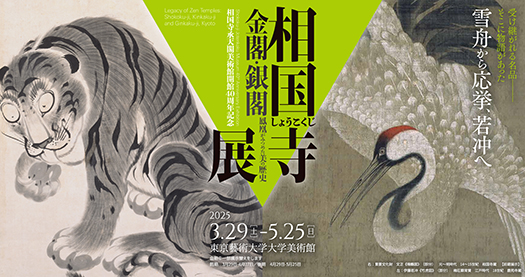
 さて、本題の「相国寺展」〜金閣・銀閣 鳳凰がみつめた美の歴史。東京上野の「東京藝術大学大学美術館」にて開催されていた。昨日5/25が開催最終日。ギリギリの日程でようやく参観することが出来た次第。さすがに会場はけっこうな入場者でしたが、会場自体、上野でもあんまり知られていないので、参観はスムーズに終えることができました。なんとか「図録」も購入できたので芸術作品自体は書物の形式で「じっくり」受容し学習させていただくことにしております。
 ブログに以前書いたこともあるのですが、こうした展覧会の図録自体、芸術作品収録の貴重きわまりない事物だと考えられます。実際にわたしの書棚の中で、いちばん参照回数が多いのはこうした図録の類い。こうした展示会では日本の斯業の最先端知見が集約されるので、その記録としてありがたいのです。
 さらに今回は会場にはじめて入った「東京藝術大学大学美術館」。個人的に青春期に大きな位置を占めていたあるひととの「出会い」のシンボルでもあるのです。高齢期を迎えて、なにか「人生の経験を再度、ふりかえり見る」のに、ひとつの機会とも思えた。その意味でも「最終日」はふさわしかった(笑)。
 展覧会自体の様子は〜創建相国寺 ―将軍義満の祈願「吾れ、新たに小寺を建てんと欲す」——室町幕府3代将軍・足利義満(1358~1408)が発したその一言に、相国寺の歴史は始まります。寺は夢窓派の高僧たちの進言により小さな寺ではなく大伽藍の禅寺であることが望まれ、御所の北側、室町幕府の傍らに開かれました。明徳3年(1392)、発願から10年を経て伽藍が完成し落慶供養が行われました。〜というフレーズから始まる案内がWEBサイトなどでも確認できます。・・・深く興味深いです。

●お知らせ
拙書「作家と住空間」幻冬舎から電子書籍で発刊
お求めはAmazonで。
https://amzn.asia/d/eUiv9yO

English version⬇

The exhibition of Shokokuji Temple: The History of the Golden Pavilion and the Silver Pavilion, the history of beauty as seen through the phoenixes.
I visited the Tokyo National University of Fine Arts and Music on the “last day of the exhibition” at an architectural facility that is connected to my personal experience. The sudden revelation of the change of the situation was funny even to myself. I was surprised to find myself in a strange situation.
 Whenever I come to Tokyo, I make it a routine to visit several art galleries and museums. I think it is obvious that the biggest “gap” between the capital and the countryside is in “culture. I believe that this disparity in the use of a country’s accumulated historical culture is unavoidable and probable. It is natural for the capital city to play a role in the maintenance and preservation of a country’s traditional culture.
 However, as a resident of a rural area, I also believe that there should be a certain level of “correction of disparities” in the cultural facilities that I visit when I come to Tokyo. Specifically, I believe that national facilities should offer “preferential treatment” in terms of admission fees to visitors from the provinces. Please consider this. I don’t think it is a question of the amount. Even if it is only a few percent, it would be meaningful. 
 Now, the main subject of this exhibition, “Shokokuji Temple Exhibition” – History of the Golden and Silver Pavilions and the Phoenixes. The exhibition was held at the University Art Museum of Tokyo University of the Arts in Ueno, Tokyo. Yesterday, May 25, was the last day of the exhibition. I was finally able to visit the exhibition at the very last minute. As expected, there were quite a few visitors, but the venue itself is not so well known even in Ueno, so the visit went smoothly. I managed to purchase a “catalogue” of the exhibition, so I will be able to “carefully” accept and study the works of art themselves in book form.
 As I have written in my blog before, the catalogue of such an exhibition itself is considered to be an invaluable object that contains a work of art. In fact, these catalogs are the most frequently referenced items on my bookshelf. I appreciate them as records of the cutting-edge knowledge of Japan’s art and culture that is gathered at these exhibitions.
 In addition, this was my first time to visit the University Art Museum of Tokyo University of the Arts. It is also a symbol of an “encounter” with a person who occupied a significant place in my personal youth. As I entered my old age, it seemed like an opportunity to “look back and reflect on life’s experiences”. In this sense, too, the “last day” of the exhibition was appropriate (laughs).
 The history of Shokokuji Temple begins with the words of Ashikaga Yoshimitsu (1358-1408), the third shogun of the Muromachi Shogunate, “I desire to build a new small temple. The temple was opened on the north side of the Imperial Palace, beside the Muromachi Shogunate, in accordance with the advice of the high priests of the Muso school, who wanted the temple to be a large Zen temple rather than a small one. In 1392 (Meitoku 3), 10 years after the temple was founded, it was completed and a memorial service was held to celebrate the completion of the temple. 〜The information starting with the phrase “The temple was built in 1392,” can be found on the website. It is deeply interesting.

Notice
My book “Writers and Residential Space” is published by Gentosha as an e-book.
Please visit Amazon for more information.

【ブログなどSNS文章文化の衰退傾向】


 昨日土曜日に東京に移動しております。本日日曜日にある会合があって参加のため。
 先日の投稿で、Facebookの不具合について書きましたが、どうなのでしょうか、どうも「書き文字・文章系文化」の不活性化が徐々に感じられるようになってきたと感じさせられています。他方で動画系のyoutubeには「再生回数」に連動して「広告収入」が約束されるようになってきてSNSでの情報発信では、そちらの方が主流のようになって来ている。さらには「ニコ生」などの直接的な「有料配信」文化も力を伸ばしてきている。どうもSNSという領域に貨幣経済原則が旺盛な活力で浸食を始めていると思われる。SNS動画という領域を「政治」の側で利用する動きも加速している。まぁ、それは現代社会が直面している「変容」を表現しているようです。
 一方で、記憶はあいまいながら(笑)わたしも参加している、とされている「にほんブログ村」というブログ文化の団体からちょっと「大事態発生」みたいにしてご案内をいただいた。その文中に以下の記述。
 「この10年ぐらいブログサービスの終了や縮小が相次いでいます。
ブログ関連サービスを提供する会社がどんどん減っています。
厳しい環境です。」と厳しい現状を正直に吐露されている。
 わたしのブログも数カ所のブログ発信サイトで発信していますが、その代表格であるFacebookページも既報のように失速傾向が見られ、またNTTが関係しているgooブログも10月で終了するというアナウンス。こういう栄枯盛衰はどんな世界でも避けられないとは思います。文章系ではより短文化した「X」が辛うじて存在感を発揮している。これは和歌などの文化伝統もあって、日本人には比較的にわかりやすい。短文文化に世界も目覚めてきたのか、と。
 というような趨勢のなか、わたしの場合は文章を継続的に表出して自分自身の興味領域を掘り下げることが主要な興味なので、そのちょうど良い「場所」として活用してきました。たしかに情報拡散ということもあるけれど、ブログはなんとか継続維持していきたい。文章系のSNS、その存続可能性について話題になってきているようですね。
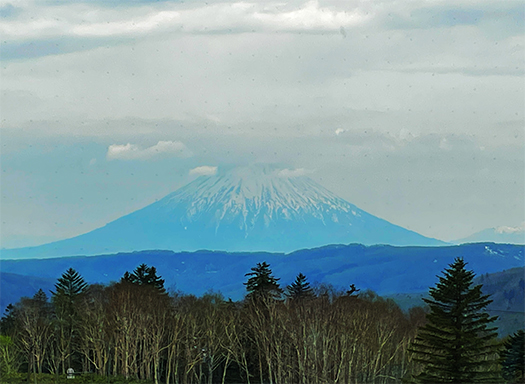
<写真は文と無関係。中山峠から羊蹄山をみる>

●お知らせ
拙書「作家と住空間」幻冬舎から電子書籍で発刊
お求めはAmazonで。
https://amzn.asia/d/eUiv9yO

[The declining trend of blogs and other SNS writing culture]
The growth of the more short-text-based “X” and the oligopoly of the more direct video-based SNS by the monetary economic principle of “ad revenue-ization”. Is this a crisis of long-form blog culture? …

 I moved to Tokyo yesterday, Saturday. Today, Sunday, there is a meeting to attend.
 In my post the other day, I wrote about the problems with Facebook, but I am not sure how it is going, but I am gradually beginning to feel the inactivity of the “written word/writing culture. On the other hand, Youtube, which is a video service, promises “advertising revenue” linked to the “number of views,” and this is becoming more mainstream in the transmission of information on social networking sites. In addition, direct “paid distribution” culture such as “Nico Live” is also gaining strength. It seems that monetary and economic principles are beginning to erode the realm of SNS with vigor and vigor, and the use of SNS video for “politics” is accelerating. Well, that seems to express the “transformation” that contemporary society is facing.
 On the other hand, I received an announcement from a blog culture organization called “Nihon Blog Village,” in which I am a member, although my memory is a little fuzzy (laugh). The following statement is included in the letter.
 In the text of the announcement, the following statement was made: “For the past 10 years, blogging services have been terminated or downsized one after another.
The number of companies offering blog-related services is decreasing rapidly.
It’s a tough environment. He honestly states that the current situation is very difficult.
 My own blog is also posted on several blog transmission sites, but as previously reported, Facebook pages, which are representative of such sites, are also showing signs of slowing down, and goo blog, which is related to NTT, announced that it would end in October. I believe that this kind of rise and fall is inevitable in any world. In the area of writing, “X,” which is a shorter version of “X,” is barely making its presence felt. This is relatively easy for Japanese people to understand, partly because of cultural traditions such as waka poetry. I wonder if the world is waking up to the culture of short sentences.
 In the midst of these trends, my main interest is to delve deeper into my own area of interest by continuously expressing myself in writing, so I have been using the site as a good “place” for this purpose. While it is true that I want to spread information, I also want to keep my blog alive and well. It seems that there has been a lot of talk about the viability of text-based social networking sites.
<The photo is unrelated to the text. Yotei from Nakayama Pass.

Notice
My book “Writers and Living Space” is published in e-book format by Gentosha
Available at Amazon.com.

【設計と建設「一括発注」でコストダウン 古平町新庁舎 Part-2】


 さて公共建築にあんまり馴染みのない仕事人生人間の目に飛び込んできた古平町の庁舎建築その2です。
 わたしたちのように一般木造住宅を基本にした分野で加速度的に取り組まれてきた「省エネ化」手法としての高断熱高気密化や、自然エネルギー活用などはRC建築の分野ではあまり取り組まれてこなかった。
 ZEH基準などの一般化は一般木造住宅での住宅性能革命が運動的なコアを形成してきた。その運動は寒冷地・北海道で「あたたかい暮らし」を希求する庶民が求め、先端的な研究者や建築実務者、その需要に正対した地域公共団体という官・学・民が「協働」してきて普遍化してきたもの。その成果がやがて全国に拡散してきた。
 一方のRC建築では北海道ですらコスト面から、マンション建築でもいわゆる「外断熱」手法などへの取り組みが遅れてきた流れがある。戸建て住宅での実践がはるかに先行してきた。そういう性能進化の動きの中から生み出された手法、窓の性能強化=複層化などがリフォームで部分的に広がってきた程度。それがようやく新築段階でもこの古平町新庁舎のように、RC外断熱を初めとする手法が実践されるようになってきた。北国の公共建築として必然的な性能向上といえるけれど、まだまだ都市部のマンション建築などでは導入されていない。その要因はコストアップが大きい。ZEB化(Net Zero Energy Building〜ネット・ゼロ・エネルギー・ビル〜の略称で、建物のエネルギー消費量を正味でゼロにすることを目指した建築物)の最大の障害となっている。
 その障害を地方公共団体の建築工事において克服したいと考えたとき、設計と建設の「分離発注」が常識とされてきた「専兼(せんけん)の壁」を取り払うことを、この古平町の新庁舎では採択した。ここでは建設会社の設計部門と建設部門が1社でワンストップ的に機能して、性能向上とデザイン性のレベルアップを実現した。戸建て住宅では一般化している手法が公共建築で実現したということ。
 木立ちのようなRC壁柱に組み込んだ輻射暖冷房。これは外断熱で室内側は北海道産カラマツを型枠として使用したコンクリート打ち放し。暖冷房機能も兼ねる。地中熱ヒートポンプによる温冷水を壁柱内に流し室内側の壁を温めたり冷やしたりする「輻射暖冷房」。さらに南東と南西面の開口部には、太陽光発電ガラスを採用し外が見える状態で発電する。住宅レベルの性能技術革新がこうして実現されている。
 久しぶりに公共建築で「面白い」と感じさせられていた次第。

●お知らせ
拙書「作家と住空間」幻冬舎から電子書籍で発刊
お求めはAmazonで。
https://amzn.asia/d/eUiv9yO

English version⬇

Cost Reduction by “Lump-sum Ordering” of Design and Construction Furuhei-cho New Town Hall Part-2]
The “performance improvement” that detached houses have led by far is now beginning to be realized in RC construction as a result of cost reductions. …

 This is the second building in the town of Kodaira, which caught the eye of a person whose work life is not very familiar with public buildings.
 The “energy saving” methods of high thermal insulation, high airtightness, and the use of natural energy, which have been pursued at an accelerated pace in the field of general wooden houses, such as ours, have not been pursued so much in the field of RC buildings.
 The generalization of the ZEH standard and other standards has formed the core of a movement to revolutionize housing performance in general wooden houses. This movement has been universalized through the “collaboration” of the public, academic, and private sectors, including advanced researchers, construction practitioners, and local public organizations that have responded to the demand of the general public for “warm living” in the cold region of Hokkaido. The results of these efforts eventually spread throughout Japan.
 On the other hand, even in Hokkaido, there has been a trend of delayed efforts in RC construction, even in condominium construction, due to cost considerations, such as so-called “exterior insulation” methods. The practice in detached houses has been far ahead. The methods developed in this trend of performance evolution, such as window performance enhancement (i.e., multi-layered windows), have only partially spread to remodeling. Finally, methods such as RC exterior insulation are now being used in new construction, as in the case of the new town hall in Kodaira. Although this is an inevitable performance improvement for public buildings in northern Japan, it has not yet been introduced in condominiums in urban areas. The main reason for this is the cost increase, which is the biggest obstacle to ZEB (Net Zero Energy Building, a building that aims to reduce the net energy consumption of a building to zero).
 In an attempt to overcome this obstacle in building construction by local governments, the Furuhira Town Hall was designed to break down the “Senken Wall,” which had been the common practice of separating the design and construction of a building. Here, the design and construction divisions of the construction company functioned as a one-stop shop to improve performance and design. This means that a method that has become common in detached houses has been realized in public buildings.
 Radiant heating and cooling incorporated into RC wall columns like a grove of trees. The interior is insulated externally with fair-faced concrete using Hokkaido larch as the formwork. It also serves as a heating and cooling system. Geothermal heat pumps are used to heat and cool the walls on the interior side of the building by pouring hot and cold water into the wall columns. In addition, the openings on the southeast and southwest sides of the house are fitted with photovoltaic glass to generate electricity while allowing the outside to be seen. This is how the performance innovation at the residential level is realized.
 For the first time in a long time, I was impressed by a public building that I found interesting.

Notice
My book “The Writer and the Living Space” is published in e-book format by Gentosha.
Available at Amazon.com.

【北海道積丹半島「古平町」新庁舎を参観】


 わたしは住宅雑誌を創刊してながくその出版事業をしてきましたが、類縁的な「建築」公共建築などについては、限定的な興味範囲と認識してきました。建築企業にとっては、こうした公共の仕事というのも住宅と並んで興味分野でしょうが、まぁつかず離れずのスタンス。
 ということなので、ニュース的な建築の動きにもあまり注意を払っておりませんでした。
 わたしは積丹半島地域はよく行く余市の鮮魚店・新岡商店など、馴染みがある。先日、大好きな日帰り温泉「岬の湯」が冬期休業が終わって再開しているということで立ち寄ってきた。その帰り道に面してレトロな雰囲気を漂わせていた「古平町」の庁舎が解体されてしまったことが目に飛び込んできた。「あれ、なくなったの?」
 代わりにちょっとした「道の駅」ができていたので参観。で、そのあと、そこから10数メートルほどの高台に新庁舎が建てられているということを知って参考に見てみようと向かった次第です。
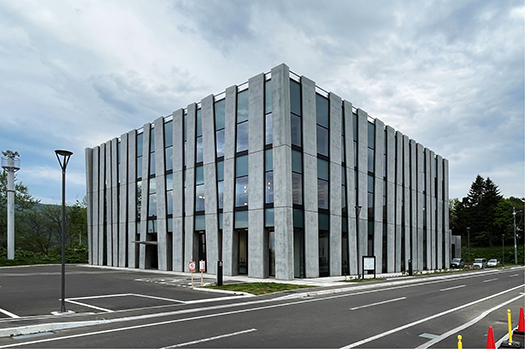
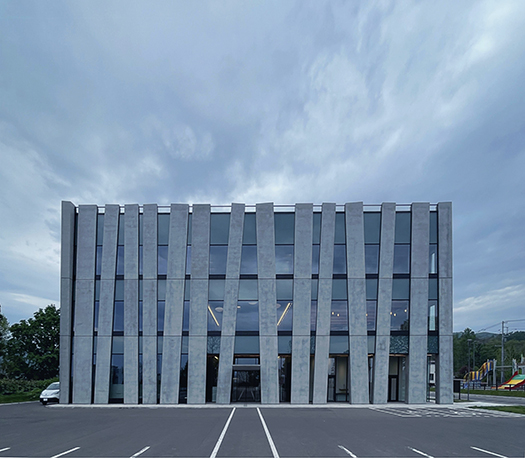
 外観を見て「おお、なんか新鮮」という素朴な印象。単純な四角いボックス形状なのに、その外皮面が変化に富んでいる。ガラス面の外側に不整形な柱とも外壁とも言えない部分が、柱状に張り付いている印象。面白みを感じて土曜日だったけれど見てみたくなって内部に入ってみた。ガラス面でうかがわれる2階の半分程度に照明が点っていたのです。あとでわかったのですが、この部分には「図書館」があって無人だけれど利用可能になっていた。
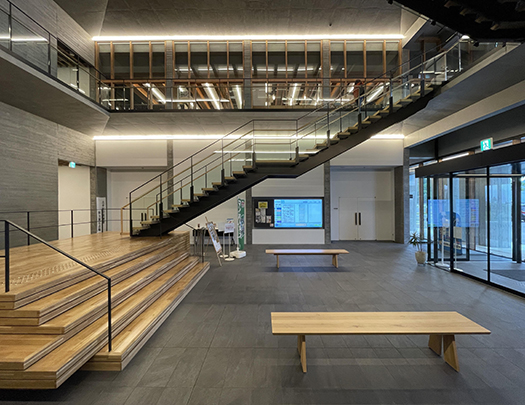
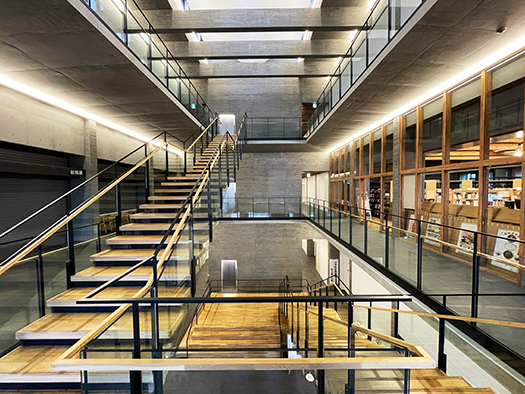
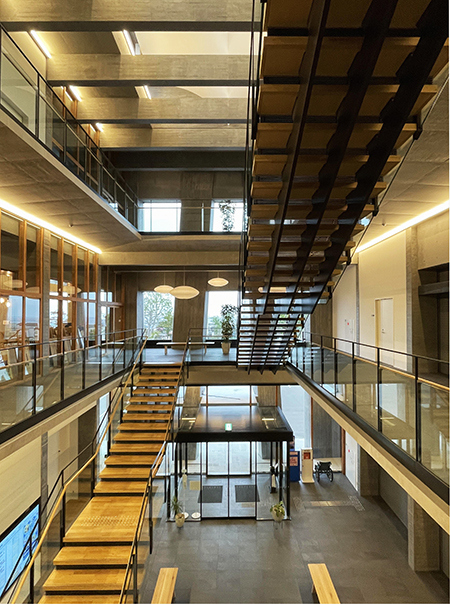
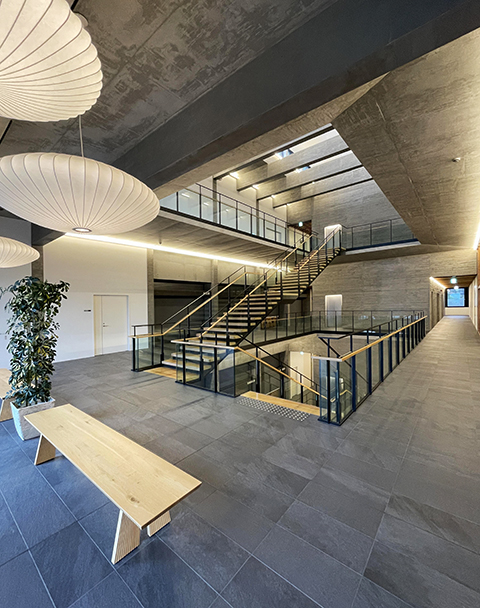
 内観は、小さめの入口を入るとエントランスが大きな吹き抜け空間になっていて天井からも外光が取り入れられていた。内観ではこの吹き抜け部分の各階に回廊が仕掛けられ、また角度がゆったりと造作された木質のステップ面の階段がアクセントになっている。公共の庁舎建築だけれど、なかなか美観デザイン配慮系。
 照明器具選択でも、やわらかさの演出仕掛けが施されていた。ワルくないではありませんか(笑)。
 不勉強にもそこでこちらの建築についてWEBで調査をした。
■建築概要
名称:古平町中心拠点誘導複合施設

建設地:北海道古平郡古平町大字浜町356他

階数:地上3階+塔屋

発注者:古平町

設計・施工:大成建設

延床面積:3887㎡

工期:2020年4月~2022年1月
 という概要の建築。「ZEB化を条件にした設計・施工一括型・公募プロポ」という話題の建築だった。
 単に役場の新庁舎ということではなく「古平町中心拠点誘導複合施設」ということで図書館などが集約されているようです。そういったいくつかの機能性を持たせることで、予算の集約化・効率化を図ったのか?
 また、人口3000人弱の小さな自治体が、新庁舎建設にあたって「設計・施工一括型」の提案競技を行ったということが特徴として挙げられている事例。挑戦的な姿勢がすばらしいと感じた次第。また、2022年と3年前に新築していたのに不勉強であった自分に深く反省しておりました。

●お知らせ
拙書「作家と住空間」幻冬舎から電子書籍で発刊
お求めはAmazonで。
https://amzn.asia/d/eUiv9yO

English version⬇

The new town hall of Furuhira-cho, Shakotan Peninsula, Hokkaido, Japan.
An ambitious new building for a municipality with a population of about 3,000, located 70 km from Sapporo. It is an ambitious new government building of a municipality with a population of about 3,000, about 70 km from Sapporo. The building is a future project called a “central hub induction complex.

 I have been in the publishing business for a long time, having started a housing magazine, and I have always considered the analogous “architecture” and public buildings to be of limited interest. For architectural firms, such public works are probably an area of interest, along with housing, but I have stayed out of it.
 Therefore, I have not been paying much attention to architectural movements in the news.
 I am familiar with the Shakotan Peninsula area, including the Shinoka Shoten, a fresh fish store in Yoichi, which I often visit. The other day, I stopped by my favorite day spa, “Misaki no Yu,” which had reopened after a winter break. On the way back, I noticed that the town hall of Kodaira, which had a retro atmosphere, had been demolished. It’s gone?”
 Instead, a little “roadside station” had been built, so we visited it. After that, I found out that a new government building was being built on a hill about 10 meters from there, so I headed there to take a look for reference.
 When I saw the exterior, I had a simple impression of “Oh, what a fresh look. It is a simple square box shape, but its outer skin surface is rich in variety. I had the impression that the irregularly shaped columns, which could not be called columns or exterior walls, were attached to the outside of the glass surface in the form of pillars. I was intrigued by this building, and even though it was Saturday, I wanted to take a look at it, so I went inside. I found that about half of the second floor, which could be seen through the glass surface, was illuminated. I later found out that there was a “library” in this part of the building, which was unmanned but available for use.
 On the inside, upon entering the smaller entrance, the entrance was a large atrium space with outside light coming in from the ceiling. The interior of the building is accented with a corridor on each floor of the atrium and a staircase with wooden steps built at a generous angle. Although it is a public building, it was designed with aesthetics in mind.
 The choice of lighting fixtures also plays a role in creating a soft atmosphere. It’s not badass at all (laughs).
 I did some research on the web to find out more about this building.
Architectural Outline Name: Furuhira Town Center Guiding Complex

Construction site: 356 Hamacho, Furuhira-cho, Furuhira-gun, Hokkaido, etc.

Number of floors: 3 floors above ground + tower

Client: Kodaira Town

Design/construction: Taisei Corporation

Total floor area: 3887 m2

Construction period: April 2020 – January 2022 The project was a “design-build proposal with ZEB as a condition of construction”.
 It is not simply a new town hall building, but a “Furuhira Town Center Induction Complex,” where the library and other facilities are integrated. Did you try to consolidate and streamline the budget by having several such functionalities?
 Another example cited as a feature of the project is that a small municipality with a population of less than 3,000 held a “lump-sum design/build” proposal competition for the construction of a new government building. I felt that the challenging attitude was wonderful. I also deeply regretted my lack of study of the new building, which had been constructed three years earlier in 2022.

【人生・高齢期での「潮時」の意味とは?】


 潮時、という言葉はいい意味でも、悪い意味でも使われる。「goo辞書」で見てみたら以下のよう。
 <漁師たちは潮の満ち引きをよくみて漁をする。潮の変わり目が実は絶好のタイミングであることからこれを「潮時」と呼んだ。つまり本来の意味は「好機」なのである。しかし時が流れて人々はマイナスの意味での「やめるタイミング」を「潮時」という言葉に重ねてしまった。>とのこと。
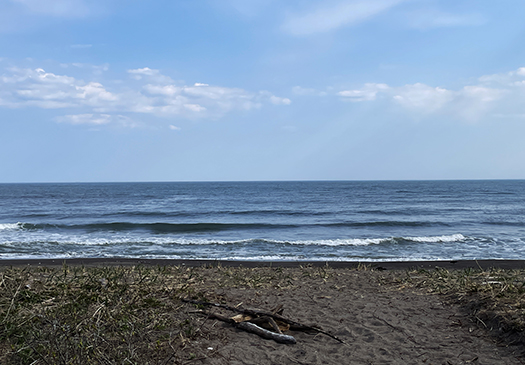
 写真は北海道釧路周辺での太平洋を見晴らした海岸線の光景ですが、こういう海の様子から航路の決断を下していく人びとの洞察力には本当に深く打たれる。そういう「先覚者」たちが時代というものを切り開いていくのでしょう。
 現代の高齢化社会という局面では、国の運営というのはなかなか難しいだろうなぁと思う。わたし自身も高齢者になり、もうすぐ「後期高齢者」にも突入しそう。まぁ自分では可能な限り行動的に、まだまだ「未来投企」的に生きていたいと思ってはいますが、いろいろな外的・内的な環境要因は迫っても来る。やはりカラダからの「叫び声」というものには否応なく従っていく必要がある。輪廻、もしくは「定め」ということでしょう。
 そういう声に耳を傾けながら、できることに取り組む、という一択なのでしょうね。

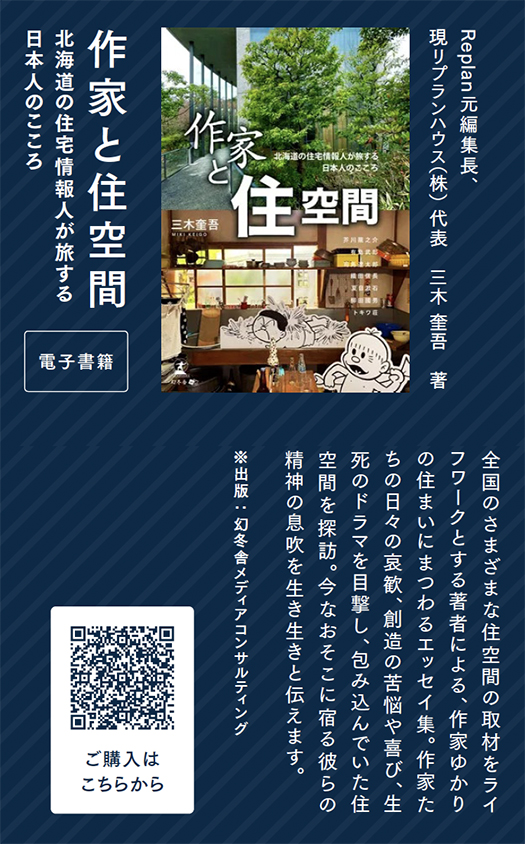
 そんなことを考えながら、高齢期の自分に可能なこととして、ある特定テーマ、それも自分がこれまでやってきた人生行路の未来形ということで、先人の住宅事例を掘り下げて考えて見るという領域に取り組んでみた次第です。写真はReplan誌次号で告知していただける拙書の案内。「作家と住空間」というテーマ。まぁ「作家」という領域特定は比較的自由に考え、「織田信長と安土城」まで拡張していますが、テーマとしては逸脱はしていないと信じています。
 まぁ自分自身の書籍出版というのははじめてで、高齢期とはいえ「未来投企」的なこころみ。
 芭蕉はあの時代にあっては「高齢期」なのに、全国を巡り歩いてさまざまな句を読み続けていた。その足跡などもすこしづつたどっていますが、強く惹かれている。住宅という特定分野に特化はしていますが自分自身もこういう「表現」の分野で生きてきたので、この分野の先人の事跡がより大きな存在になって来ているのですね。
 まぁムリをせずに、こういうテーマ探究を続けられたら良いなと思い定めている。いい潮時かな(笑)。

English version⬇

What is the meaning of “time of the tide” in life and in old age?
How should the country be steered and how should individuals live amidst the demographic change of an aging population? Is it a certain “time of the tide” for both the nation and human beings? …

 The word “tide” can be used in a good or bad way. The goo dictionary says the following.
 <Fishermen fish by carefully watching the ebb and flow of the tide. The turning of the tide is actually the best time to fish, so they call it “tidal time. In other words, the original meaning of the word was “good opportunity. However, as time went by, people began to use the term “tidal timing” in a negative sense, meaning “the right time to stop fishing. >The photo is from the Kushiro area in Hokkaido, Japan.
 The photo is a view of the coastline overlooking the Pacific Ocean in the Kushiro area of Hokkaido, and I am truly struck by the insight of people who make decisions about navigation based on the state of the sea. Such “pioneers” are the ones who will pave the way for the times.
 In today’s aging society, I think it must be quite difficult to manage a country. I myself have become an elderly person and will soon enter the “late elderly” period. Well, I would like to be as active as possible and still live in a “future-projecting” way, but various external and internal environmental factors are also approaching. I still need to follow the “cries” from my body, whether I like it or not. It may be called samsara, or “predestination.
 I guess the only choice is to work on what we can do while listening to such a voice.

 With this in mind, I have decided to delve into a particular theme as something I can do in my old age, and that is to look into the future of the path I have taken in my life, and to look at the housing examples of my predecessors. The photo is a guide to my book, which will be announced in the next issue of Replan magazine. The theme of the book is “Writers and Living Space. Well, I have taken a relatively liberal approach in specifying the domain of “writers” and extended it to “Nobunaga Oda and Azuchi Castle,” but I do not believe that I have deviated from the theme.
 Well, this is the first time for me to publish my own book, and even though I am in my old age, it is a “future project” of mine.
 Basho was in his “old age” at that time, but he continued to travel around the country and read a variety of haiku. I have been following his footsteps and am strongly attracted to his work. Although I specialize in a specific field of housing, I myself have lived in this field of “expression,” so the traces of my predecessors in this field are becoming more significant to me.
 Well, I have decided that it would be good if I could continue to explore this kind of theme without being unreasonable. I guess it is a good time (laughs).